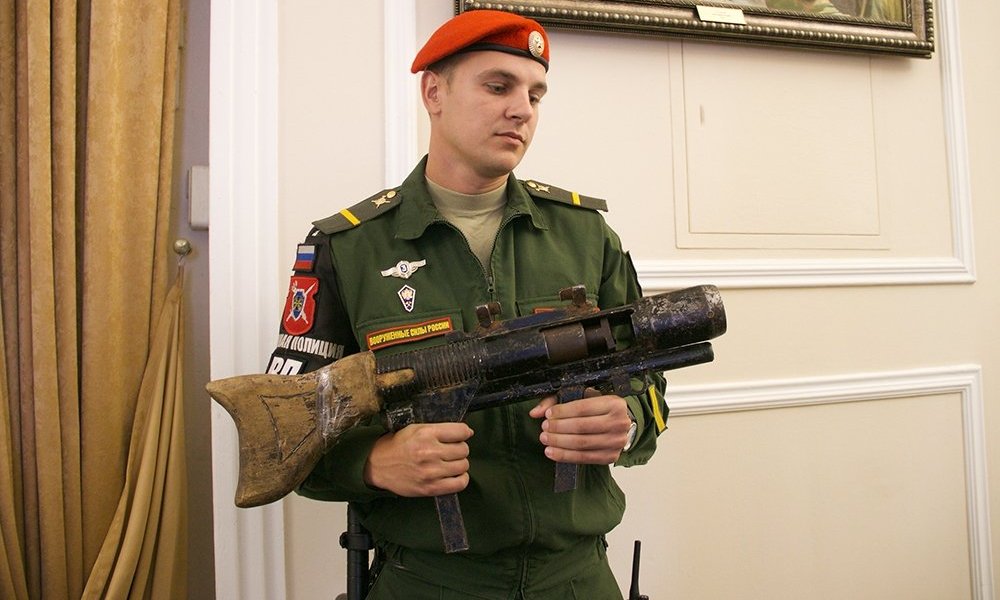
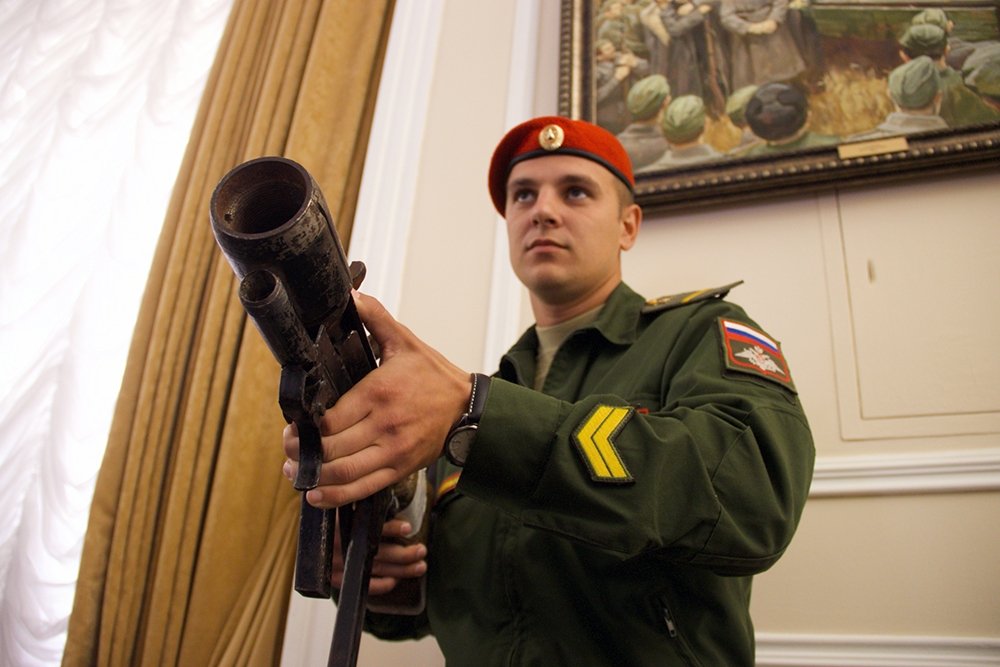
In late 2018, in the Russian cities of Yekaterinburg and Novosibirsk, the Russian military arranged expositions of arms and equipment captured during the Syrian War. These included a huge variety of production firearms as well as craft-produced examples such as the grenade launcher shown in the header image. Let’s take a look at these pictures and identify some of the weapons that were on display.
Firearms Shown in Yekaterinburg
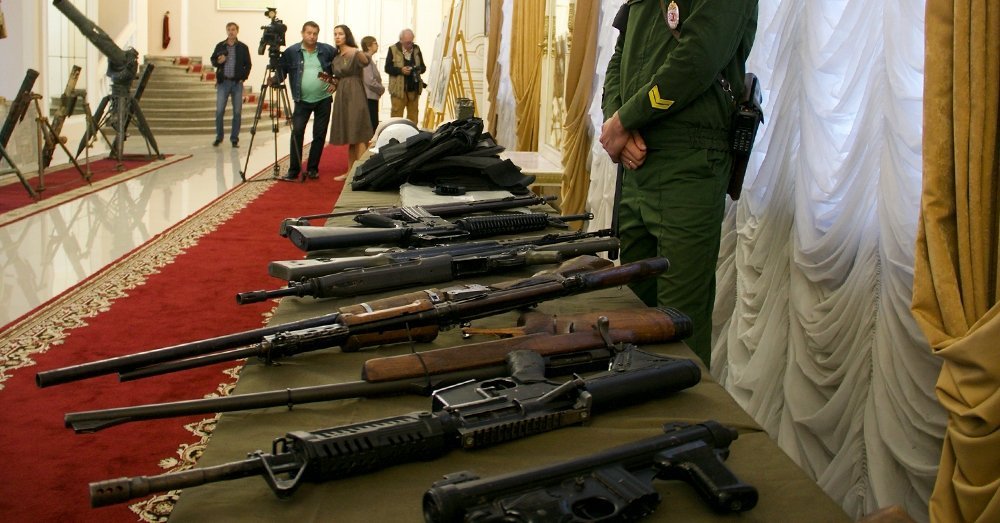
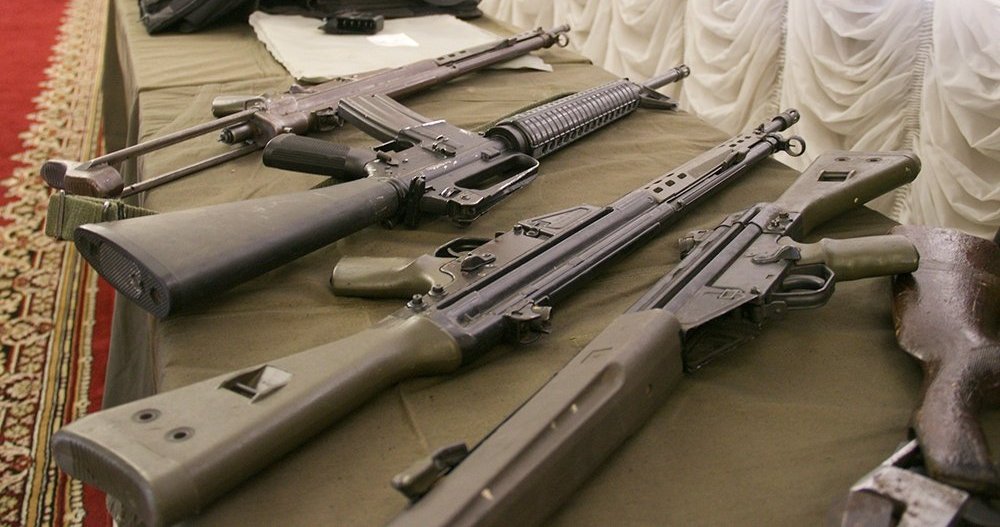
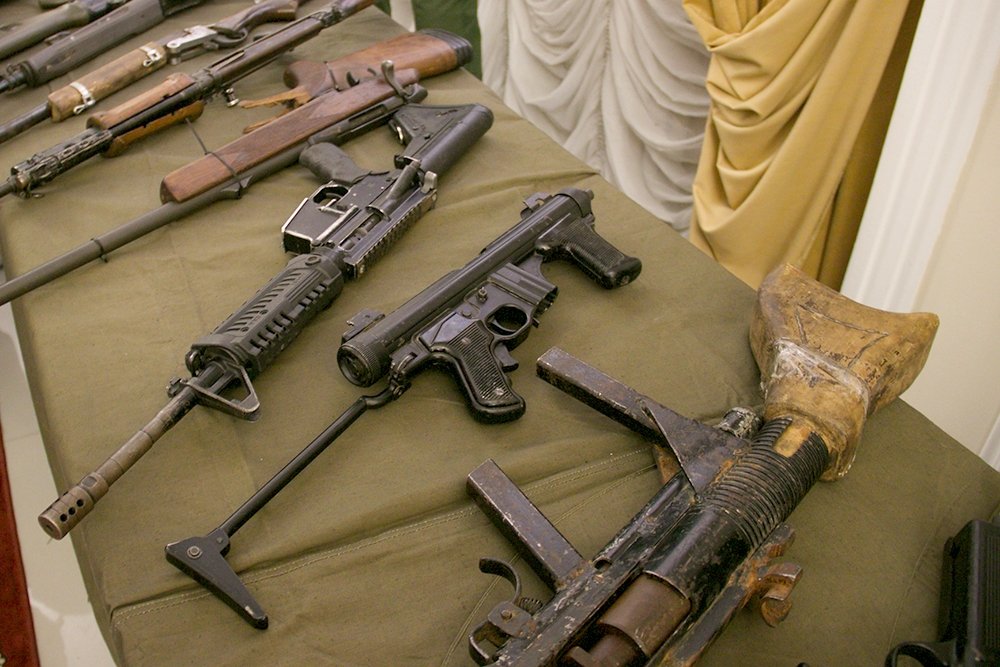
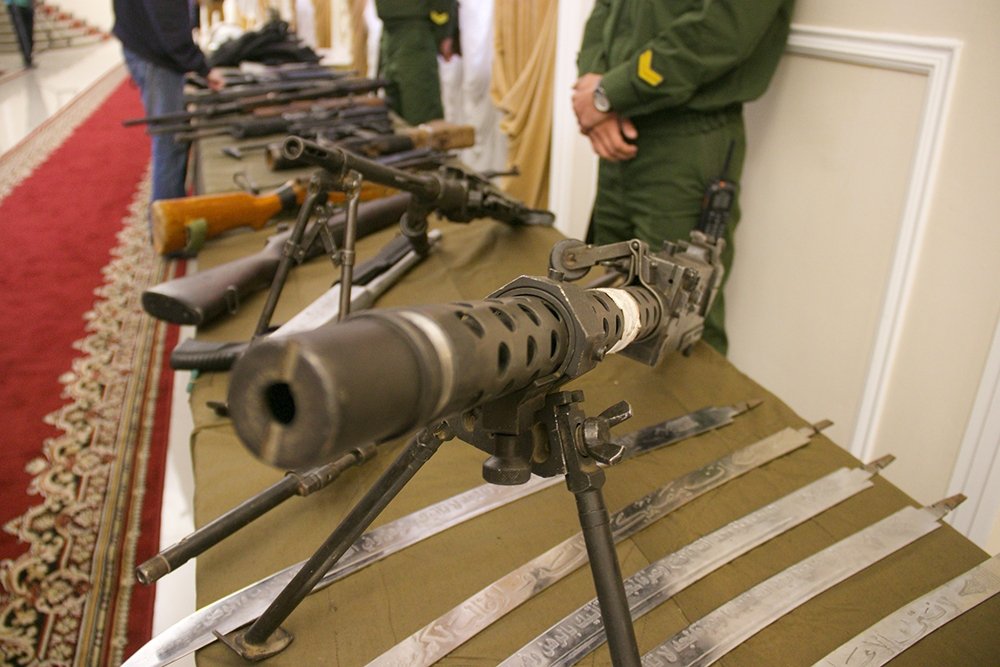
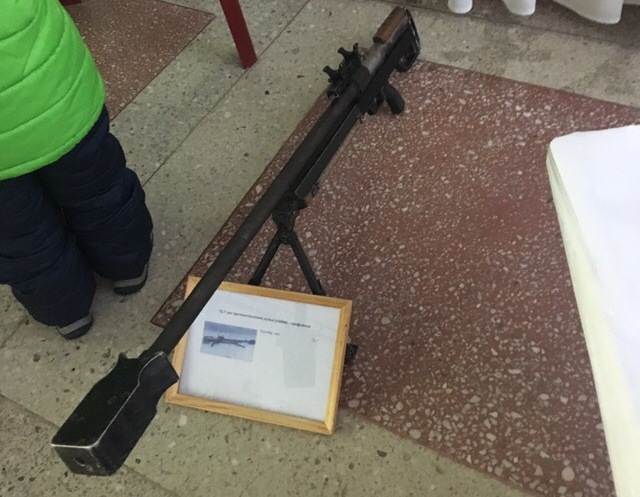
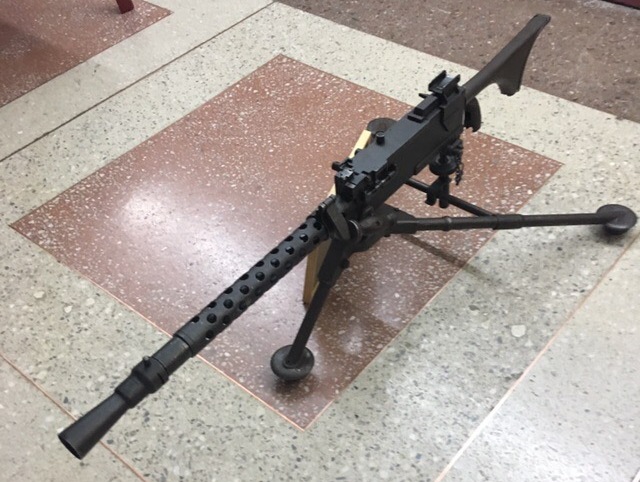
Figure 1.1 What appears to be the receiver of a craft-produced anti-materiel rifle that at first glance looks more like an improvised grenade launcher (source: rg.ru).Figure 1.2 A selection of captured small arms and light weapons on display in Yekaterinburg (source: rg.ru).Figure 1.3 An M16A2 rifle amongst several G3-type rifles, one of which is fitted with a collapsible stock (source: rg.ru).Figure 1.4 Next to the craft-produced anti-materiel rifle lies a Beretta PM12S sub-machine gun, followed by an AR-15-type rifle fitted with a CAA Command Arms M4S1 handguard. An Israeli FAL self-loading rifle is visible at the top left corner of this photo (source: rg.ru).Figure 1.5 An M1919A4 machine gun (source: rg.ru).
Firearms Shown in Novosibirsk
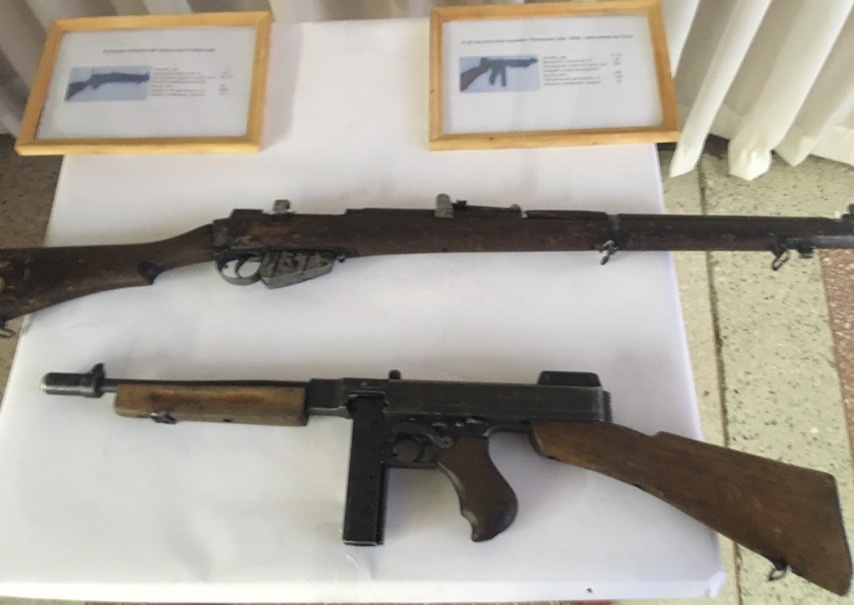
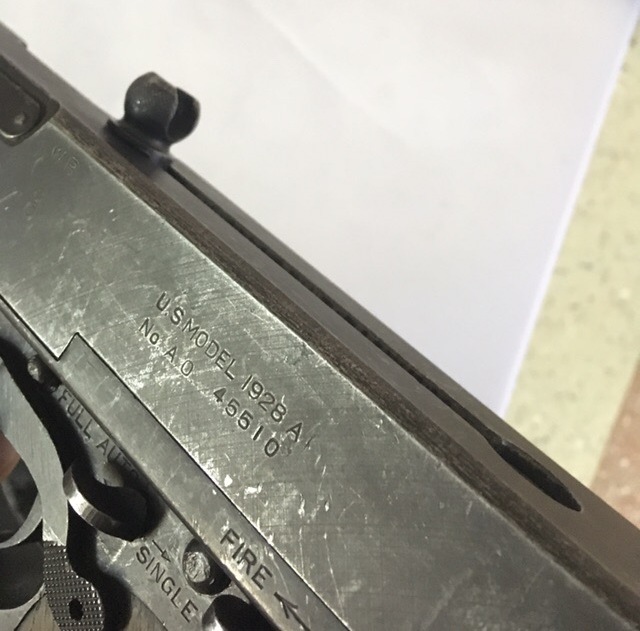
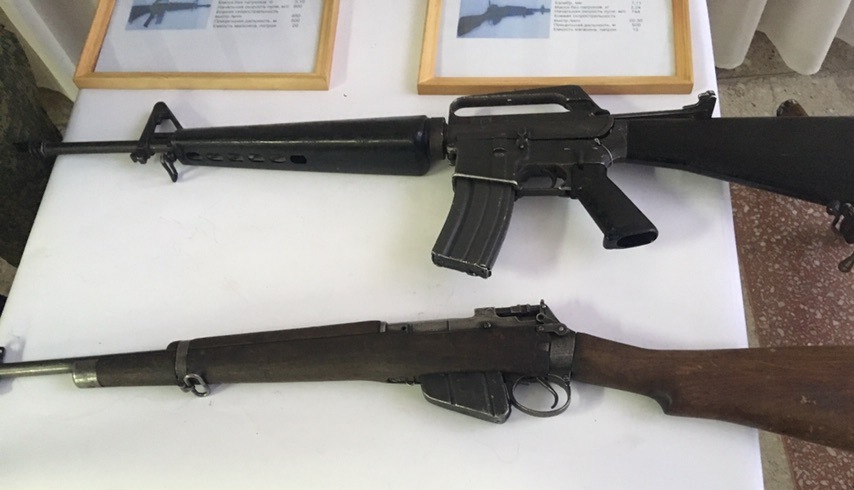
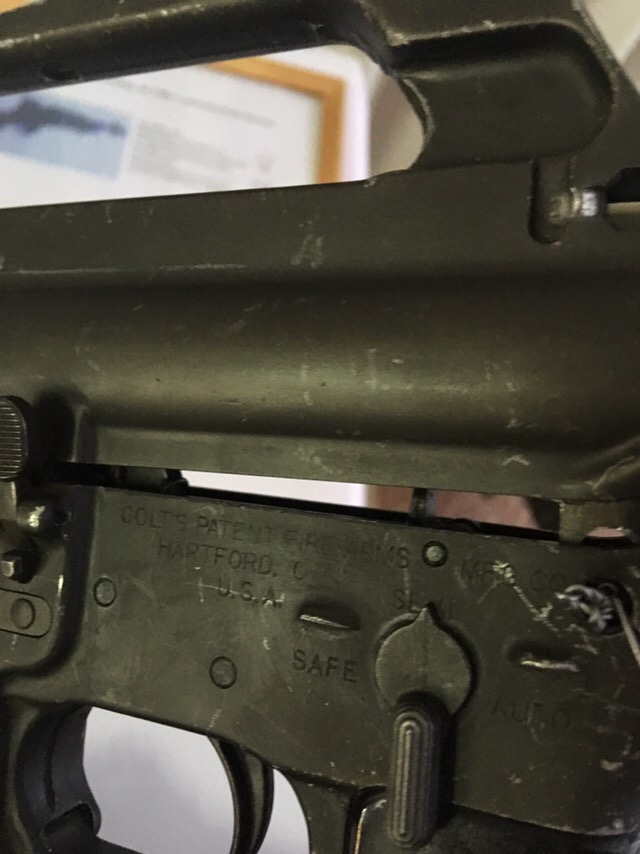
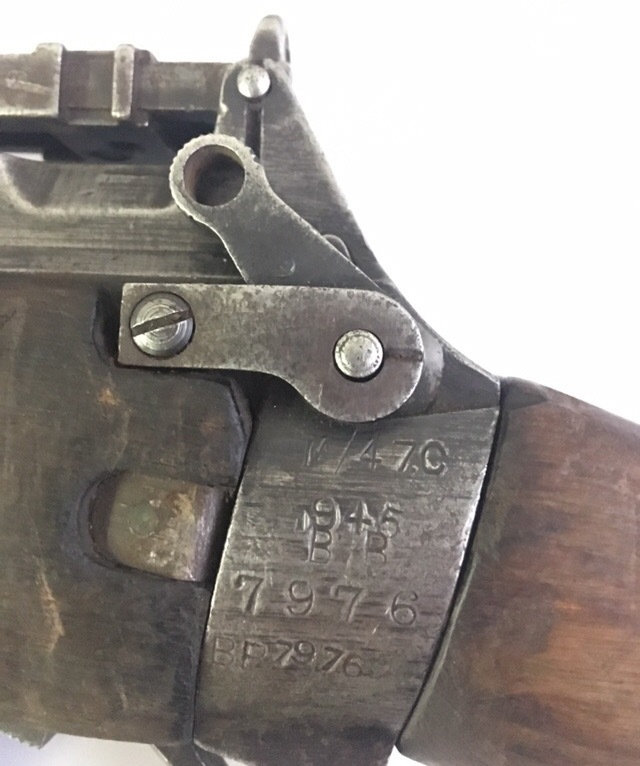
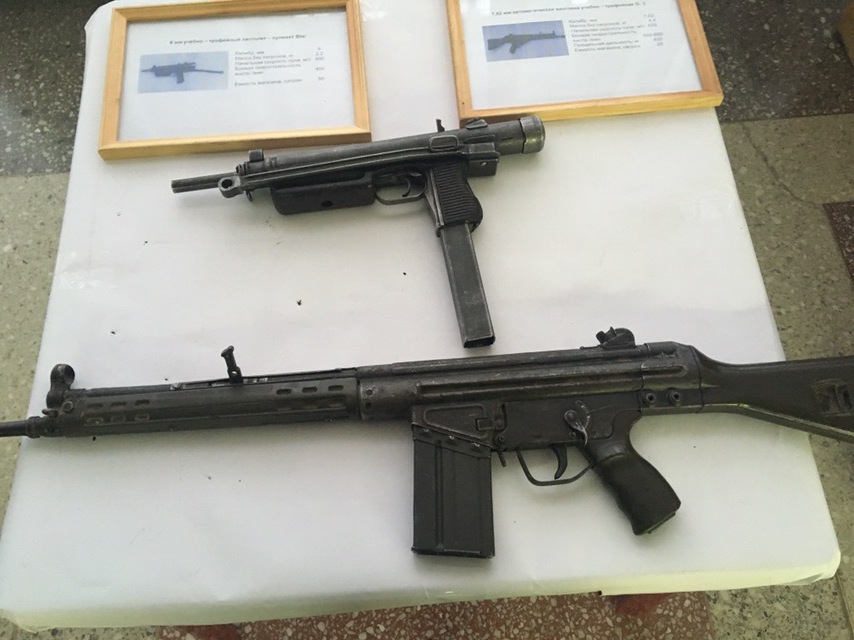
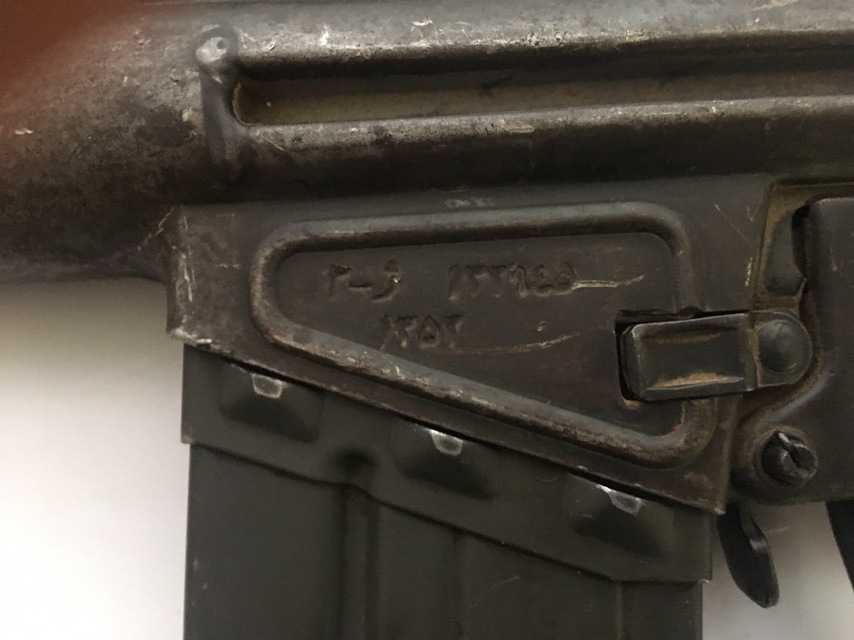
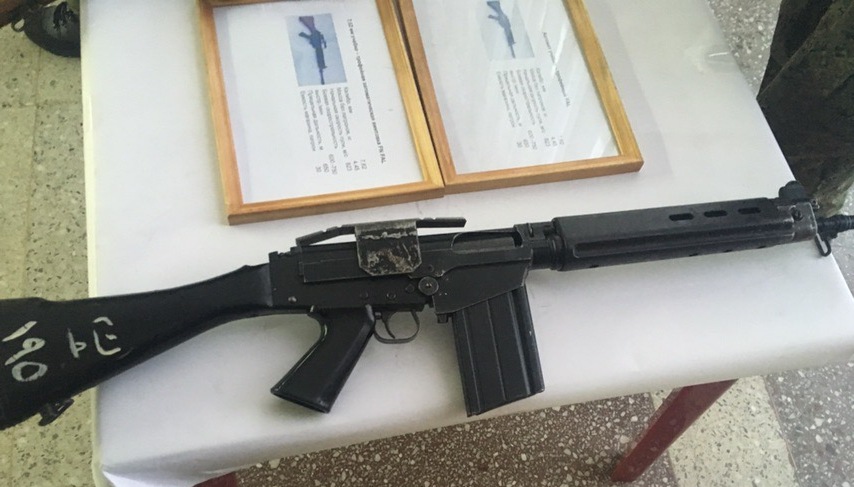
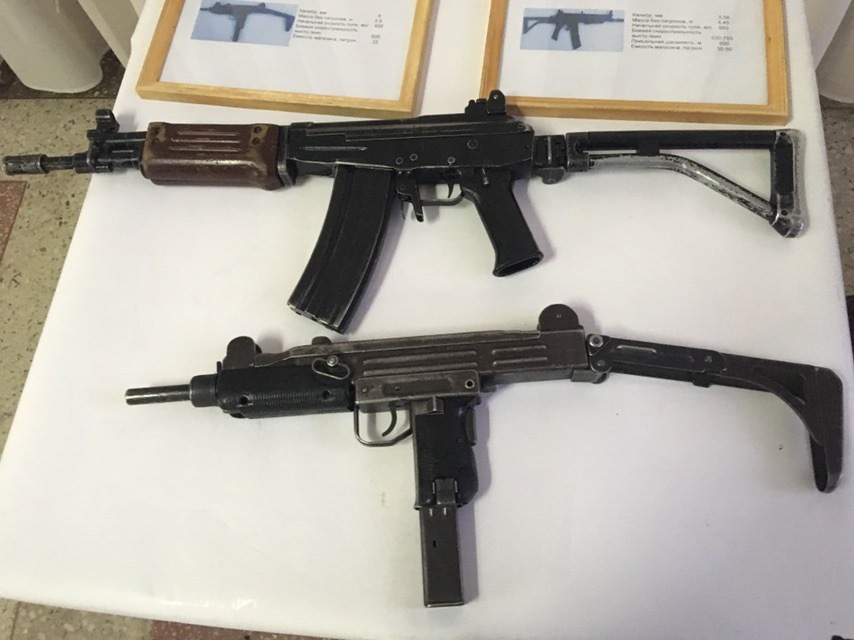
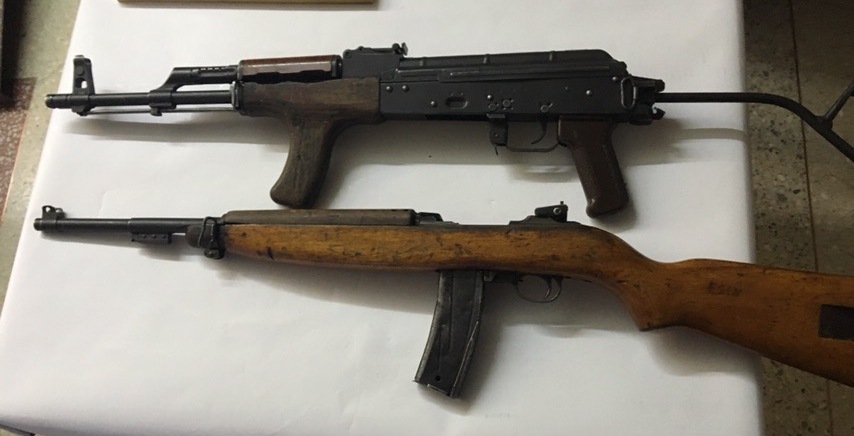
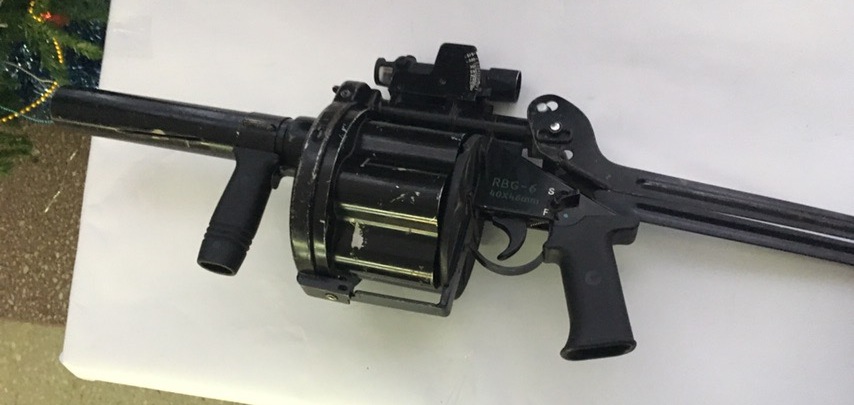
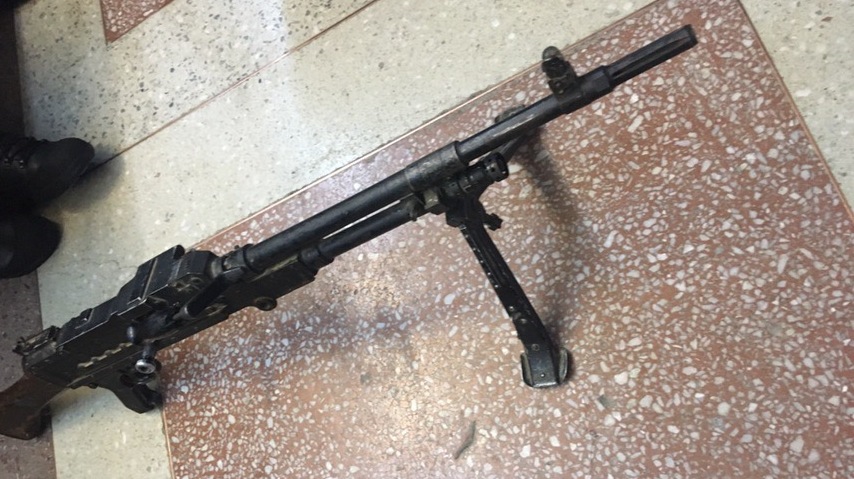
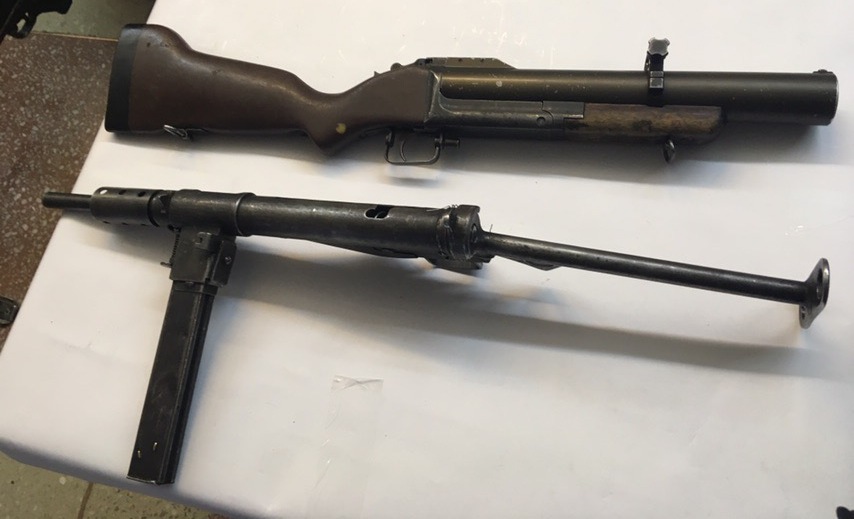
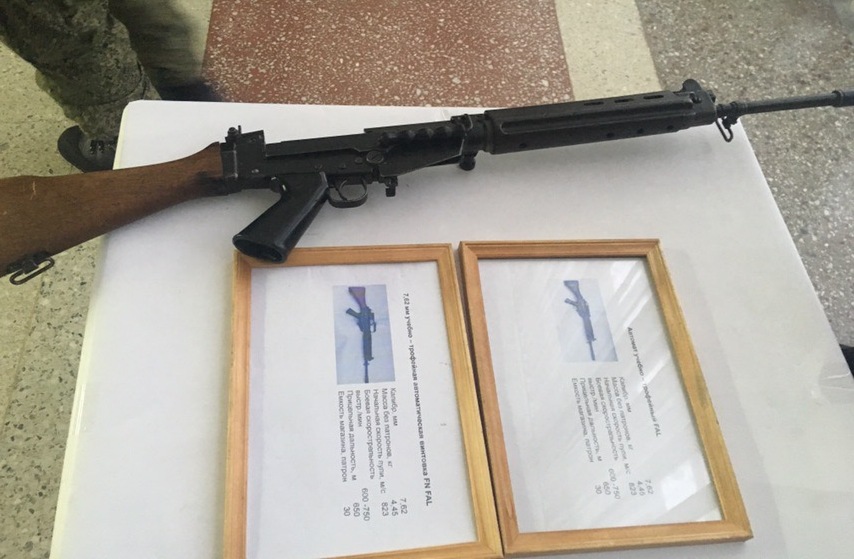
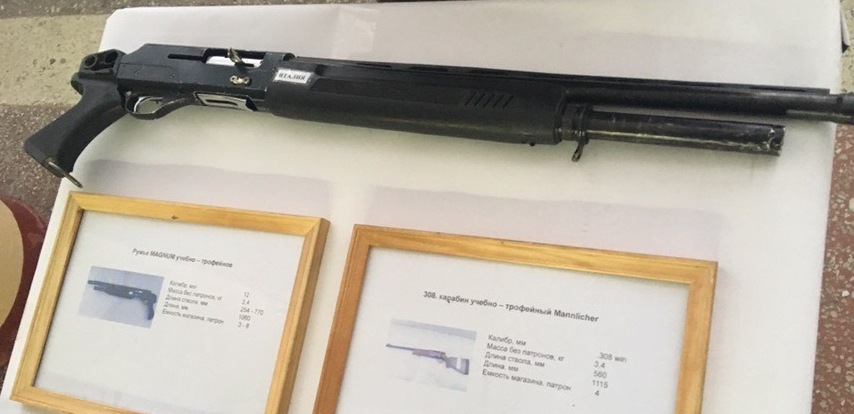
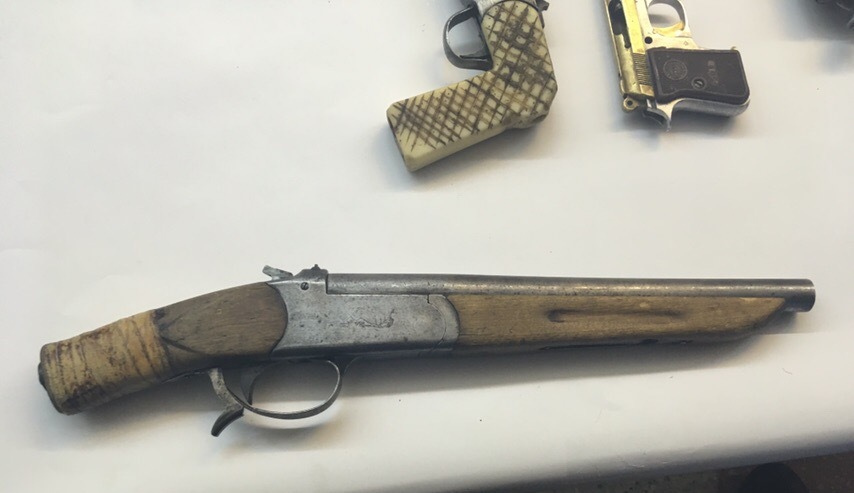
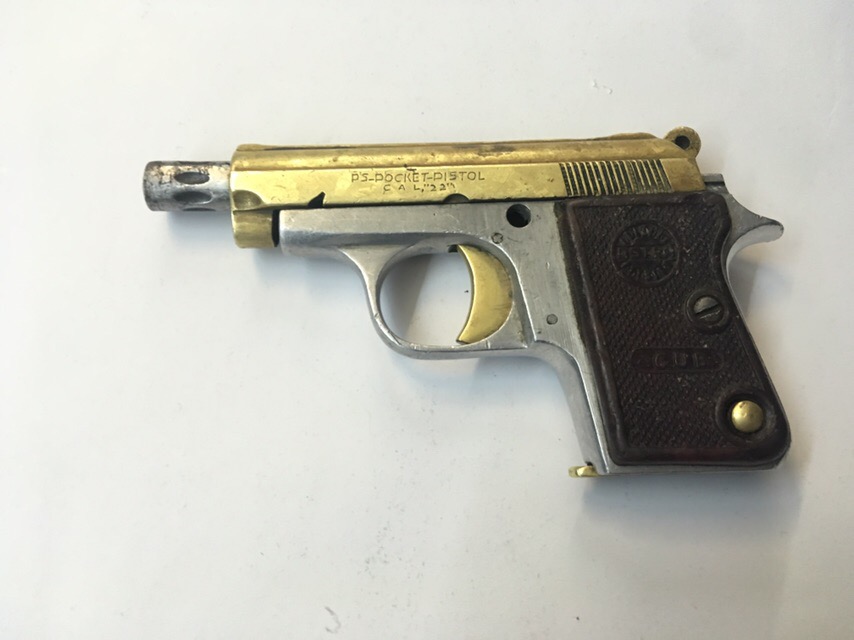
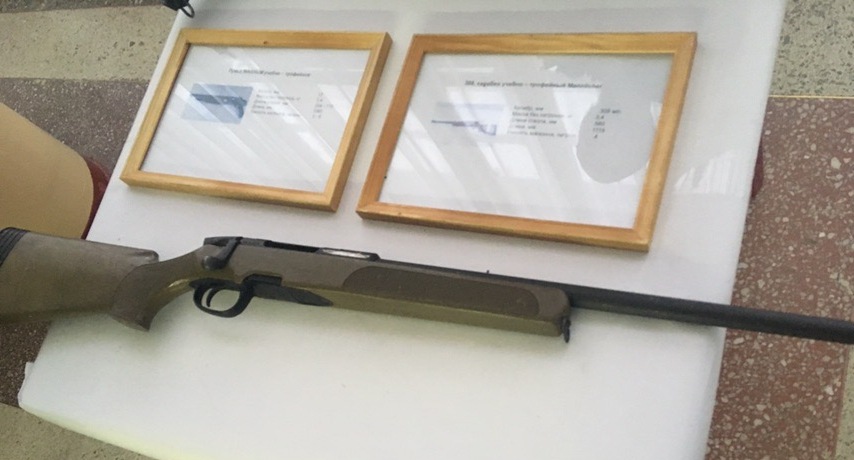
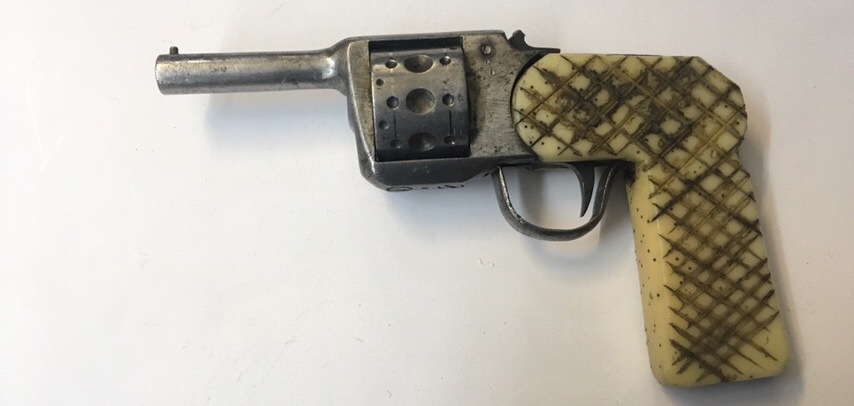
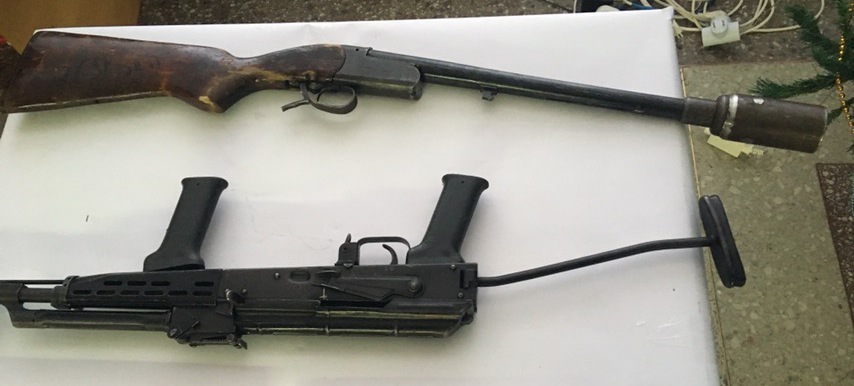
Figure 2.1 Two WW-era firearms on display in Novosibirsk. Top, a Lee-Enfield .303 bolt-action rifle and bottom, a M1928A1 Thompson .45 ACP sub-machine gun. Weapons of this vintage remain in limited service in Syria (source: Russian social media via ARES CONMAT).Figure 2.2 Close-up of the M1928A1 (source: Russian social media via ARES CONMAT).Figure 2.3 A Colt M16A1 self-loading rifle and a Lee-Enfield No. 5 Mk I “Jungle Carbine” bolt-action rifle (source: Russian social media via ARES CONMAT).Figure 2.4 Markings on the Colt M16A1 self-loading rifle (source: Russian social media via ARES CONMAT).Figure 2.5 Close up of the markings on the Lee-Enfield rifle’s wrist socket (source: Russian social media via ARES CONMAT).Figure 2.6 A Czech sa. 25 submachine gun (top) which is missing its butt-plate, and an Iranian G3 self-loading rifle (bottom) (source: Russian social media via ARES CONMAT).Figure 2.7 Markings on the Iranian G3, indicating a year of production of “1352” in the Shamsi calendar, or 1973 in the Gregorian (source: Russian social media via ARES CONMAT).Figure 2.8 A FN Herstal FAL self-loading rifle with a DIY scope rail. Note that the rail is bent, which is often seen when airsoft or other ‘toy’ accessories are used in combat zones. Such products are often adapted to real firearms during various Middle Eastern conflicts. The ‘rack number’ or armoury marking on the stock reads “195” (source: Russian social media via ARES CONMAT).Figure 2.9 An Israeli Galil self-loading rifle (top) and UZI sub-machine Gun (bottom) (source: Russian social media via ARES CONMAT).Figure 2.10 At top, a Romanian AK—or at least one fitted with the distinctive Romanian lower handguard and side folding stock. This stock design is very popular in Middle Eastern countries and is replicated by local craft-producers. At bottom, an M1 Carbine with a 30-round magazine (source: Russian social media via ARES CONMAT).Figure 2.11 A Croatian RBG-6 40 mm rotary grenade launcher (source: Russian social media via ARES CONMAT).Figure 2.12 A Swedish Ksp 58 general-purpose machine gun (source: Russian social media via ARES CONMAT).Figure 2.13 A US M79 grenade launcher (top) and a British STEN MkII sub-machine gun (bottom) (source: Russian social media via ARES CONMAT).Figure 2.14 An incomplete FN Herstal FAL self-loading rifle (source: Russian social media via ARES CONMAT).Figure 2.15 A semi-automatic 12-gauge shotgun, likely of Turkish origin (source: Russian social media via ARES CONMAT).Figure 2.16 A single-barrel break-action shotgun, sometimes known as an ‘Obrez’ (source: Russian social media via ARES CONMAT).Figure 2.17 A craft-produced pistol chambered for an unknown calibre, clearly inspired by Beretta designs (source: Russian social media via ARES CONMAT).Figure 2.18 An HS .50-patterned anti-materiel rifle. Austrian, Iranian, and locally-made variants of this design have been documented in Syria (source: Russian social media via ARES CONMAT).Figure 2.19 A M1919A6 machine gun (source: Russian social media via ARES CONMAT).Figure 2.20 A Steyr SSG 69 bolt-action rifle (source: Russian social media via ARES CONMAT).Figure 2.21 A crude, craft-produced revolver (source: Russian social media via ARES CONMAT).Figure 2.22 At top, a single-barrel break-action shotgun fitted with a ‘cup’-type muzzle attachment used to launch explosive munitions. At bottom, a Hungarian AMD-65 rifle. Note the gap between the metal handguard and the forward grip, which is attached at the same angle as the pistol grip. The grip may have been broken and reattached or reversed for some other reason. The original AMD-65 has a front grip attached at a reverse angle than the pistol grip (source: Russian social media via ARES CONMAT).
Let us know in the comments section what interesting firearms or details you have spotted in the pictures!
Sources
ARES CONMAT Database.
RG.ru. 2018. ‘Syrian army trophies brought to Yekaterinburg’. 12 Dec.<https://rg.ru/2018/12/11/reg-urfo/v-ekaterinburg-privezli-trofei-sirijskoj-armii.html>
War Informant via VK.com, ‘Syrian exposition in Novosibirsk’. <https://vk.com/milinfolive?z=album-123538639_259277304>