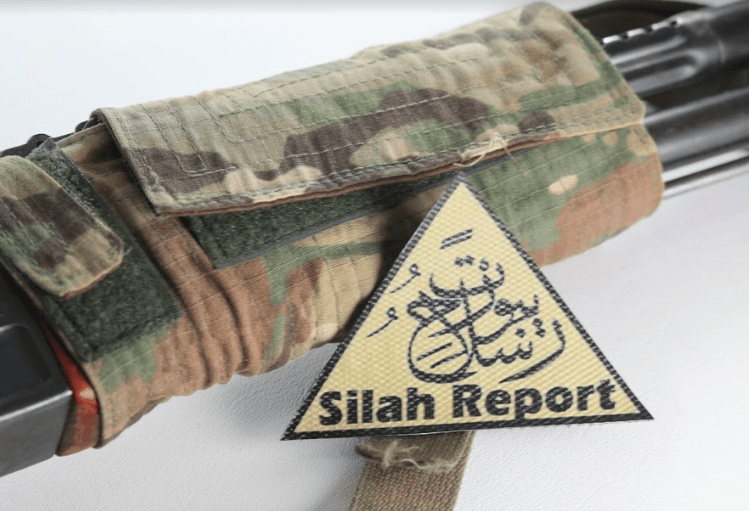
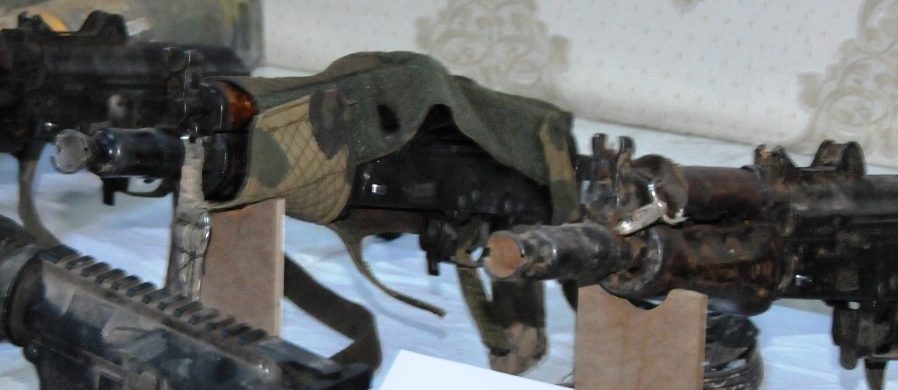
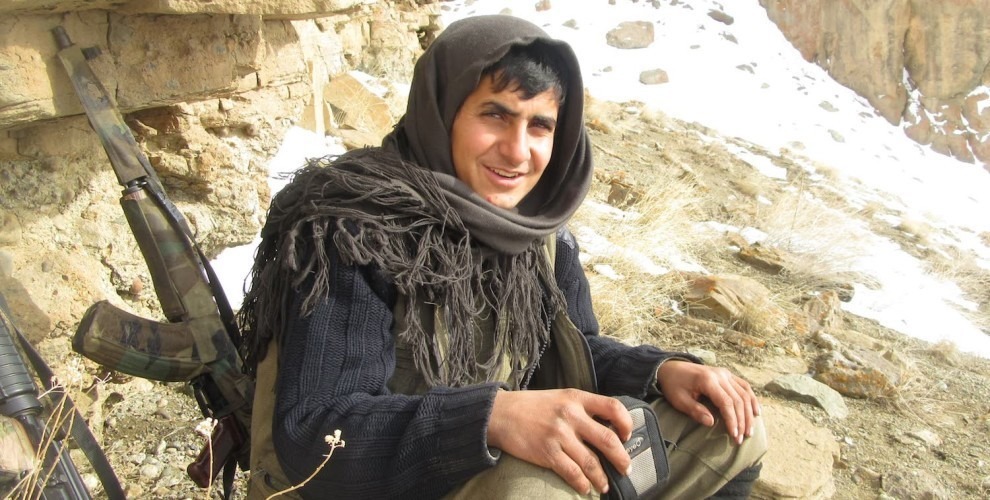
A phenomenon that has been observed with YPG/YPJ Fighters in recent years has been the practice of wrapping service rifles with fitted fabric. The extent to which rifles have been fitted goes from small pieces that might just cover the magazine or handguard to full-length covers that can sometimes enclose the entire rifle. The reason behind these wraps range from a sort of camouflage to a purely aesthetic venture.
In this series of articles we will detail the fabric wraps of the YPG/YPJ ranging from Kalashnikov wrap to M16/M4 wraps, and finally those for Dragunov rifles. Please check out all three to learn more about the peculiarities of each system.
Camouflaging rifles is in use throughout the world, whether it be with patterns of spray paint (otherwise known as bo-flauging among U.S. Marine sniper platoons), hydro dipping (as is commonly seen in Idlib workshops), or even taping the rifle with different colors of rugged adhesive tape (as is practiced by British Army troops, specifically snipers). In the case of the YPG/YPJ a more popular reason stems from an aesthetic nature. The practice appears to have started when the defense movement began to pick up steam as the fight against the so-called Islamic State intensified in Syria. Interestingly, it has not previously been seen with the HPG (PKK military arm), where some of the origins of the YPG/YPJ lay.
However, it was seen in use with IS precision riflemen both before and concurrently when the YPG/YPJ fabric covers came into use. As is common with many other tactics and techniques in the Syrian Civil War, we see many of the same effective methods seen in use throughout different opposing forces as they adopt what might have been useful against them. In the case of IS, the practice appears to have been confined to precision rifles in order to camouflage them while in hide sites. Propaganda videos online show these ‘snipers’ with the different weapon wraps, but more information is needed to be certain about more IS use. Interestingly, we see YPG/YPJ precision marksmen also wrapping Dragunov-derivatives in camouflage fabric, so there might be a possible connection that jumped from IS-shooters, to YPG/YPJ-shooters, and then spread throughout the force as the wrap became less of a tactical advantage and into an aesthetic.
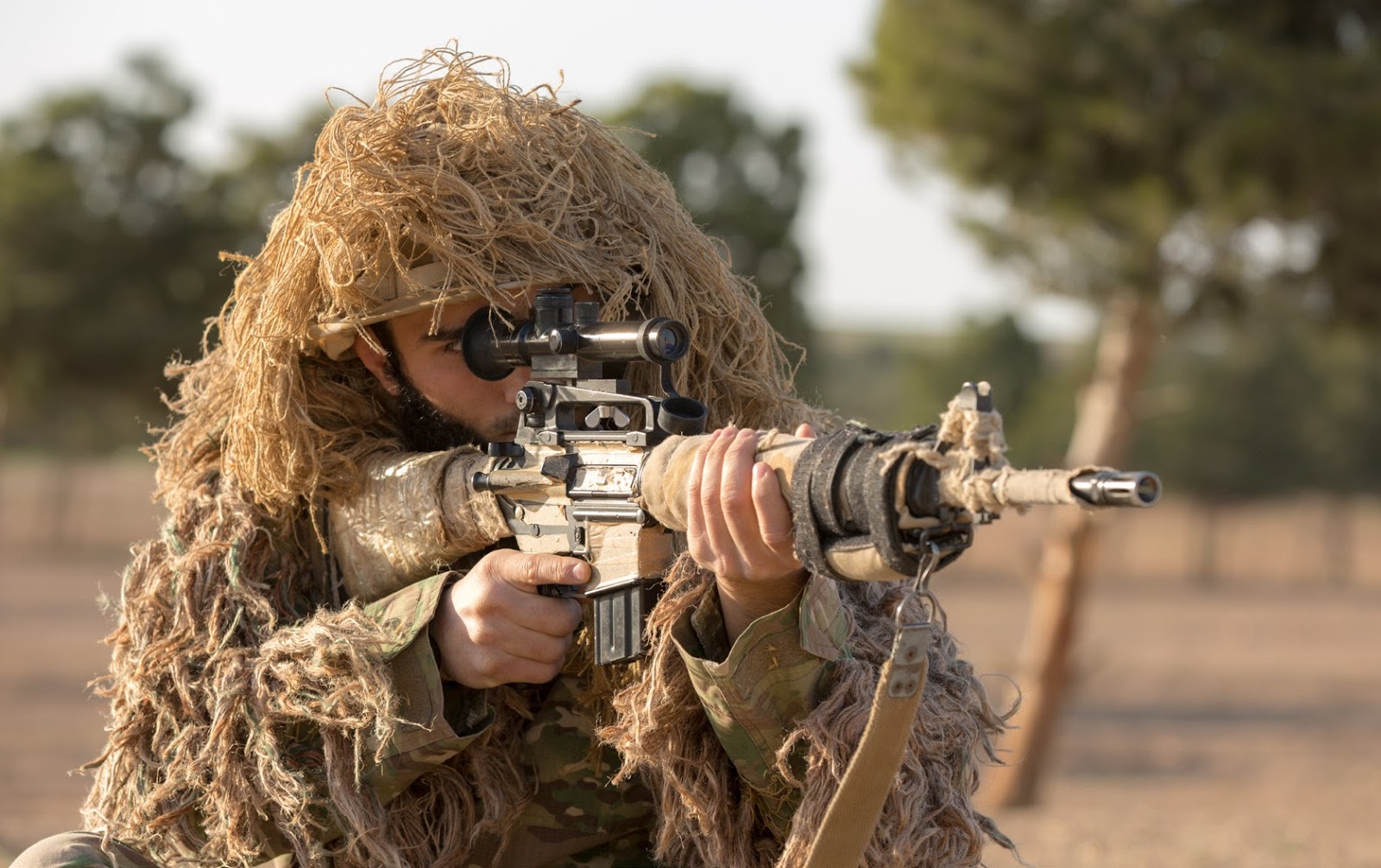
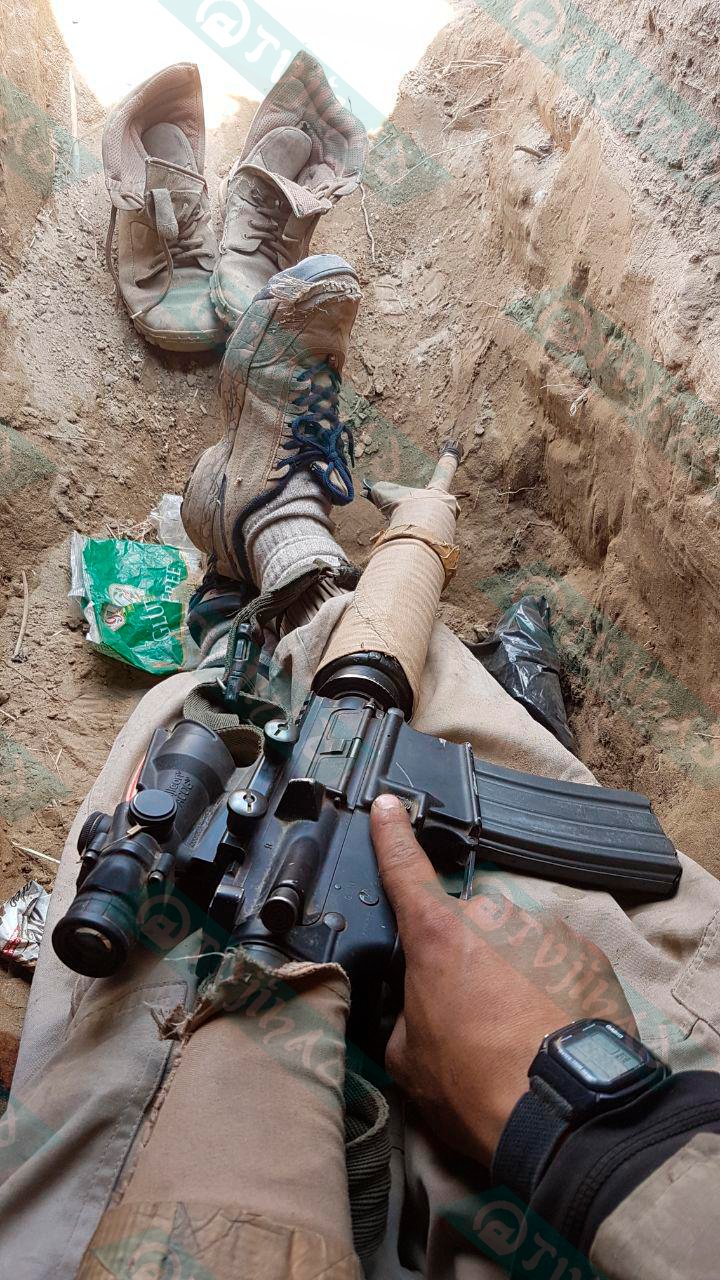
Some of these wraps make for very questionable tactical decision making. Such as magazine wraps that won’t allow for the magazine to drop free during a reload, or full rifle wraps that cover the receiver in a way that they even prevent basic operation of the weapon’s safety, magazine catch, or even muzzle. One such fighter interviewed by the author admitted that it might be slightly slower to access his fire controls, but that the fabric was protecting his rifle against the elements.
In regards to standardization of these wraps, there is none. Conversations with Kurdish fighters reveal that experienced fighters will often take their old uniforms to local tailors and have them sew the specific wrap that is wanted by that individual fighter. Fabric material and camouflage pattern is entirely dependent on that fighter or what the local tailor might have to offer. There was one shop that the author came across in Qamishilli where tailors and velcro patch makers had on sale premade handguard Kalashnikov wraps using Multicam and a velcro adherence clasp. Another example of one of these cottage industry tailors was from the town of Tel Tamir during the recent (October 2019) Turkish offensive when the combined Turkish-FSA force was mere kilometers from the city limits, a tailor in the town was still open for business and was booked up with sewing jobs despite the impending threat of attack every day (author’s observations).
This is not the first time in the MENA region that combatants have wrapped parts of their weapon systems in fabric. The practice actually dates to before both the advent of IS and the YPG/YPJ and actually to certain subcultures within the Israeli Defence Forces (IDF). In Hebrew they are colloquially described as “Magazine Condoms”/קונדום למחסנית. IDF soldiers nearing the end of their tour of conscription are allowed more liberties than when they first entered the service, such as dressing up their rifles as a symbol of experience. This sometimes may include magazine covers, embroidered slings and other such identifying characteristics. This is certainly a topic for another article, but there doesn’t appear to be a connection between the YPG/YPJ practice and the IDFs – likely an independent development in the different locales.
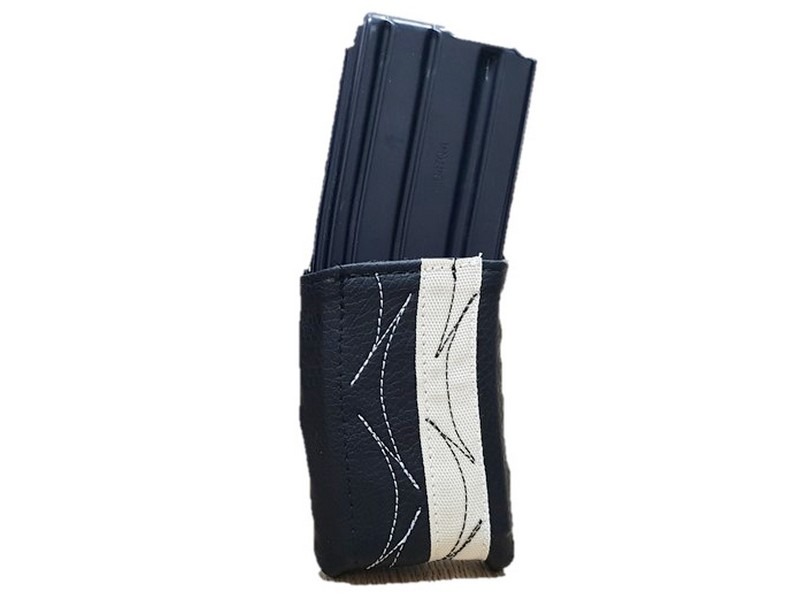
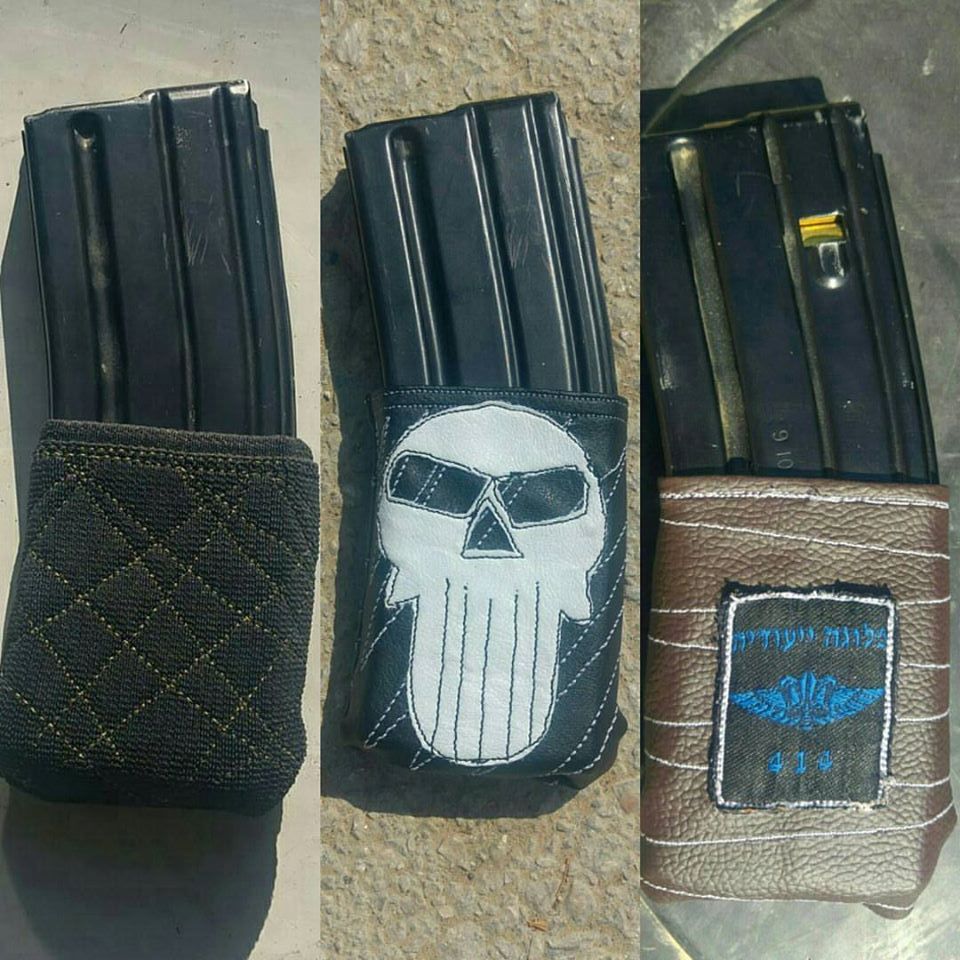
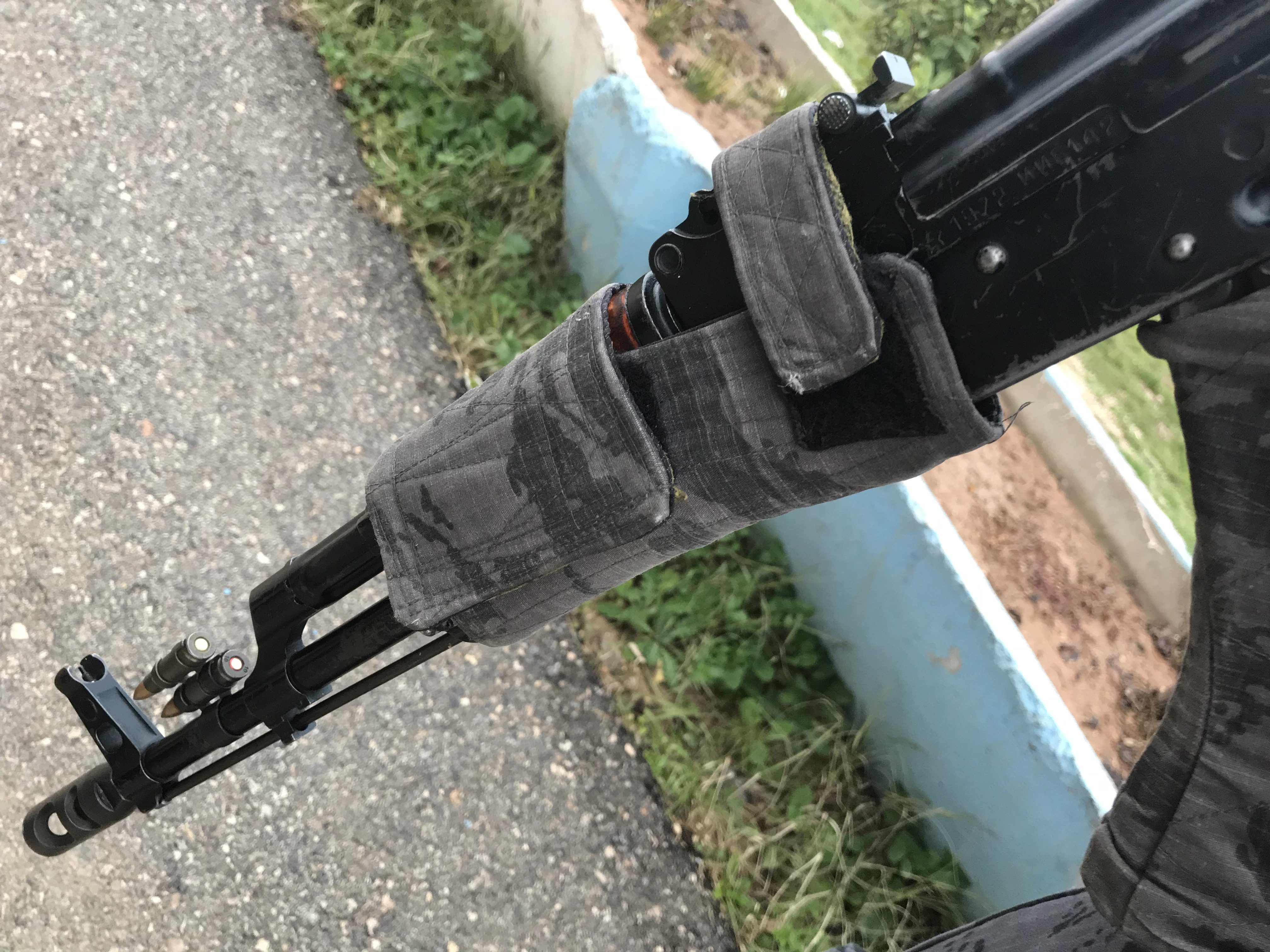
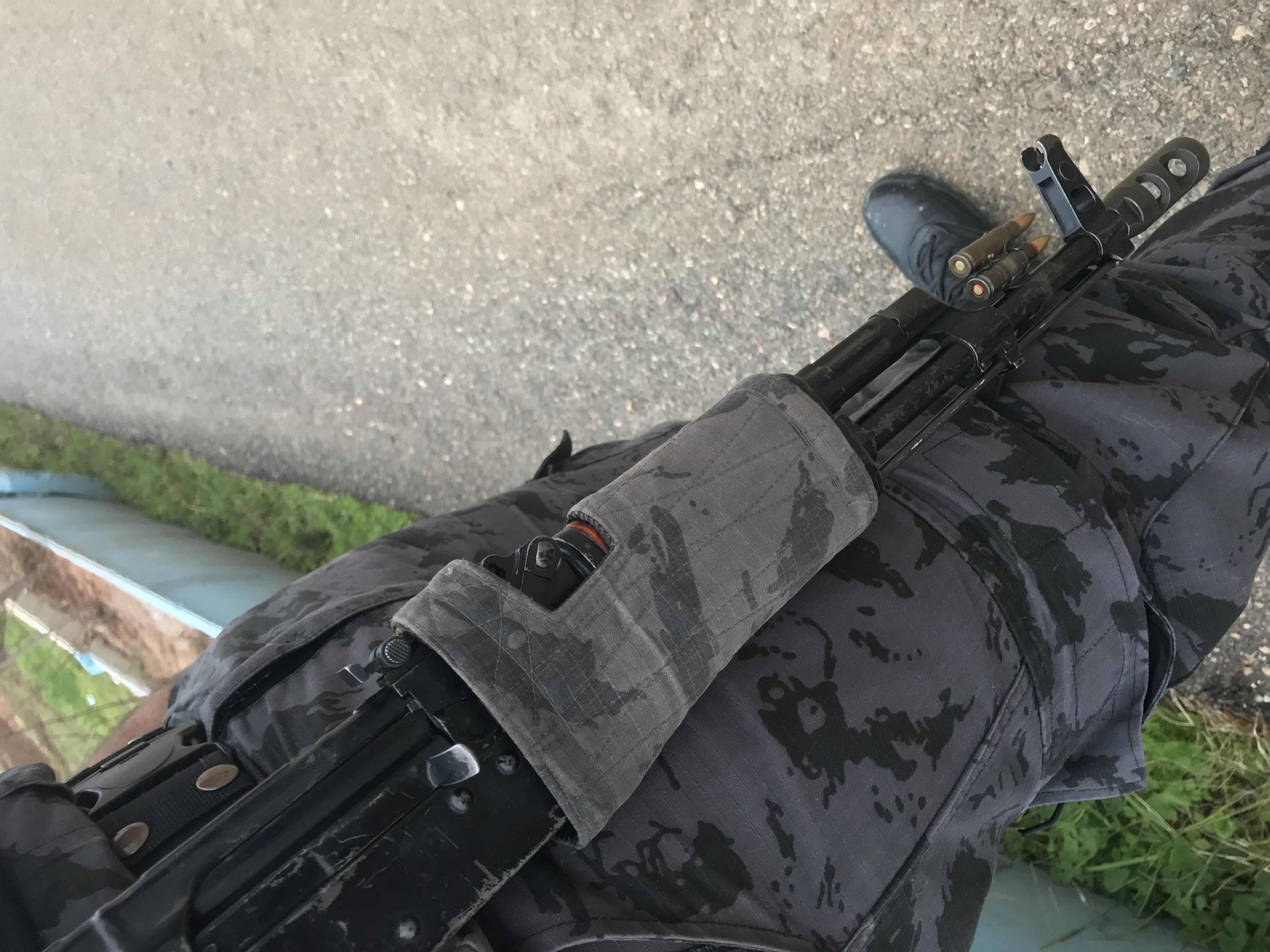
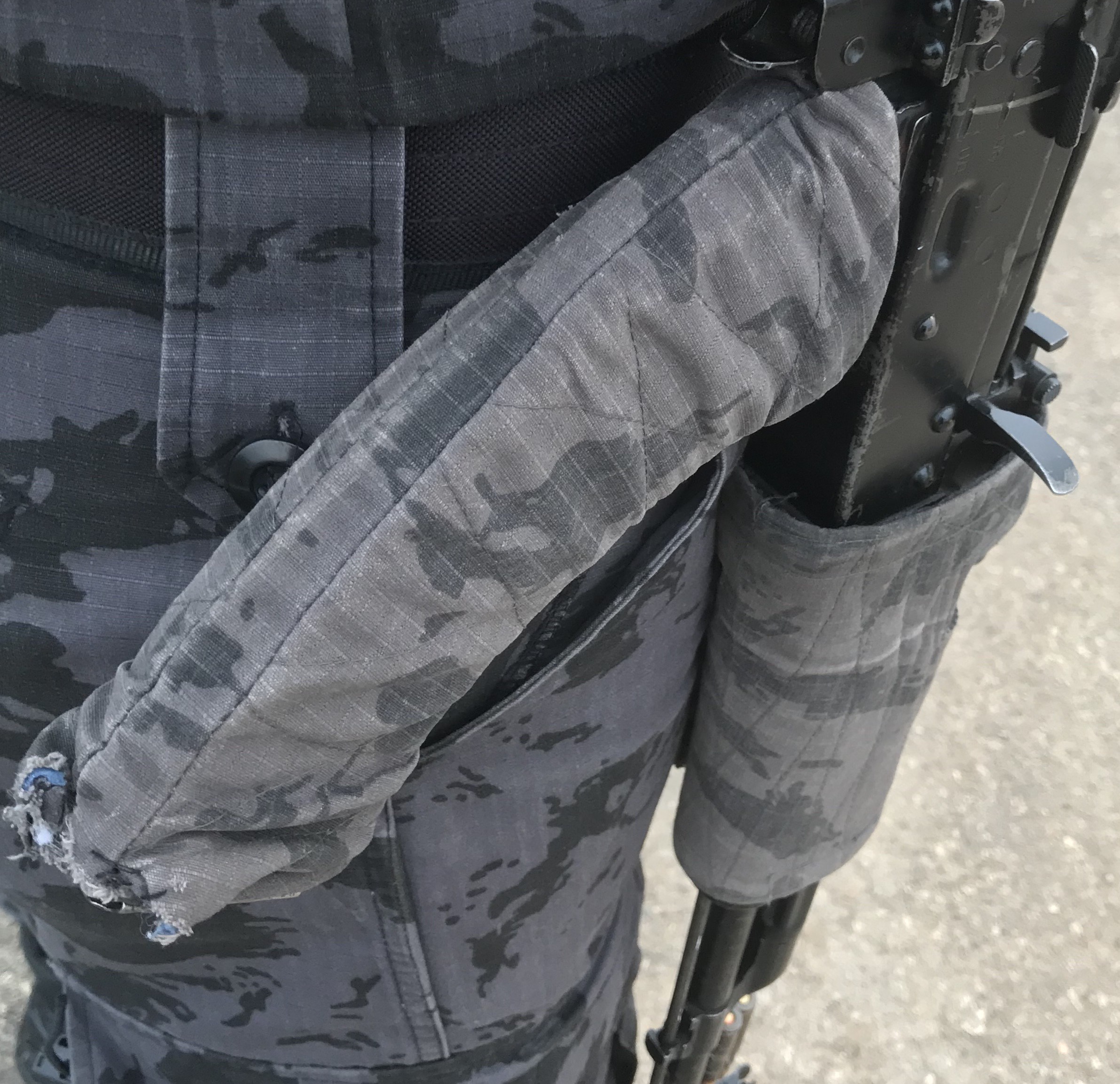
In an effort to establish a sort of classification, we’ve gathered a sample data set from field photographs and open-source imagery and broken them into categories. We’ve classified the types of wraps based on how many components exist and if it is a full wrap or not.
Kalashnikov Rifles
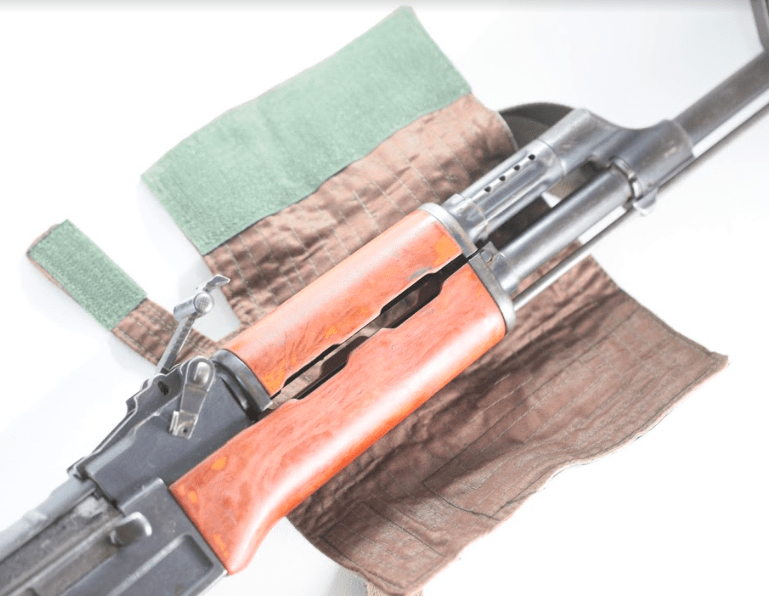
Kalashnikov-patterned rifles we tend to see sowing work which is a little less intricate than that seen on wraps for other weapons, however, they still fall into the classes mentioned above.
One Piece-Furniture Wraps
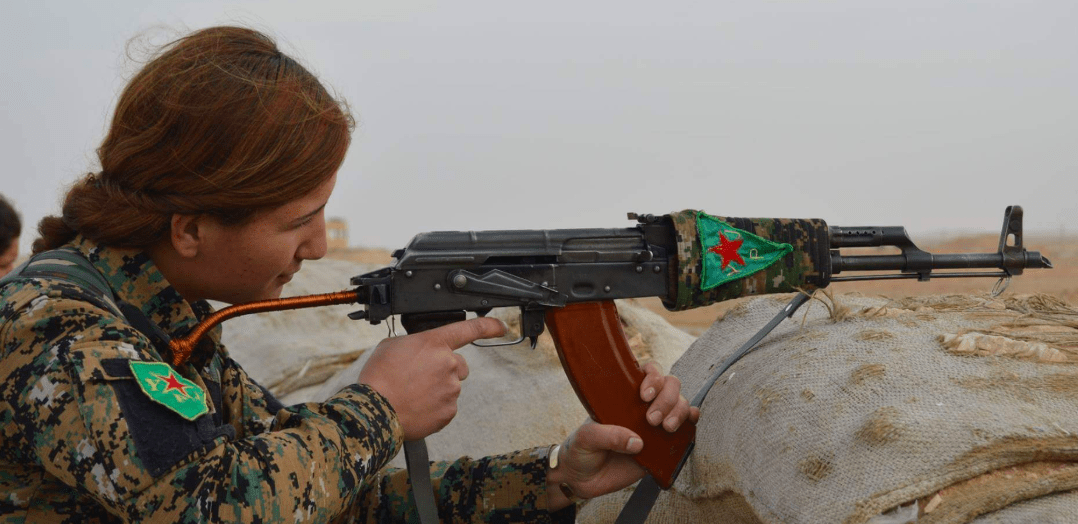
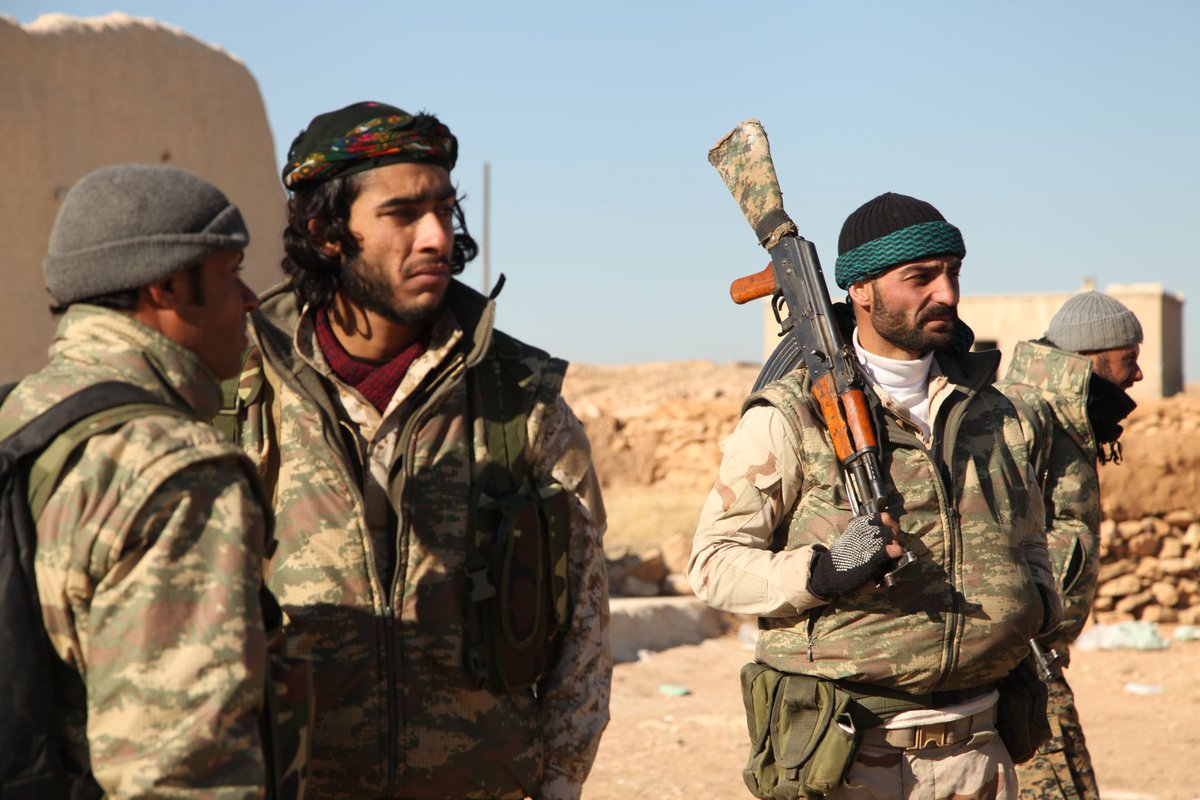
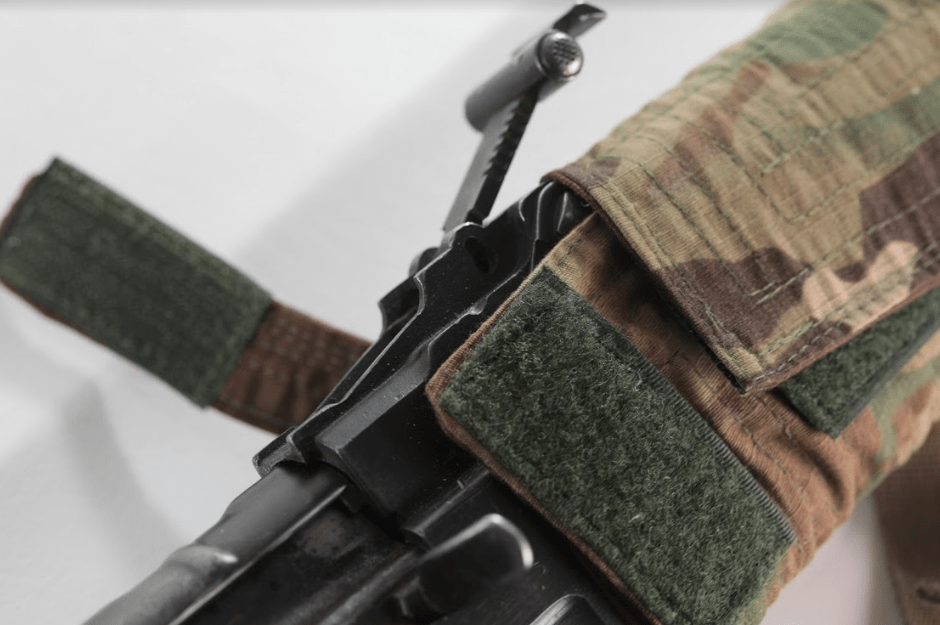
Three-Piece Rifle Wraps
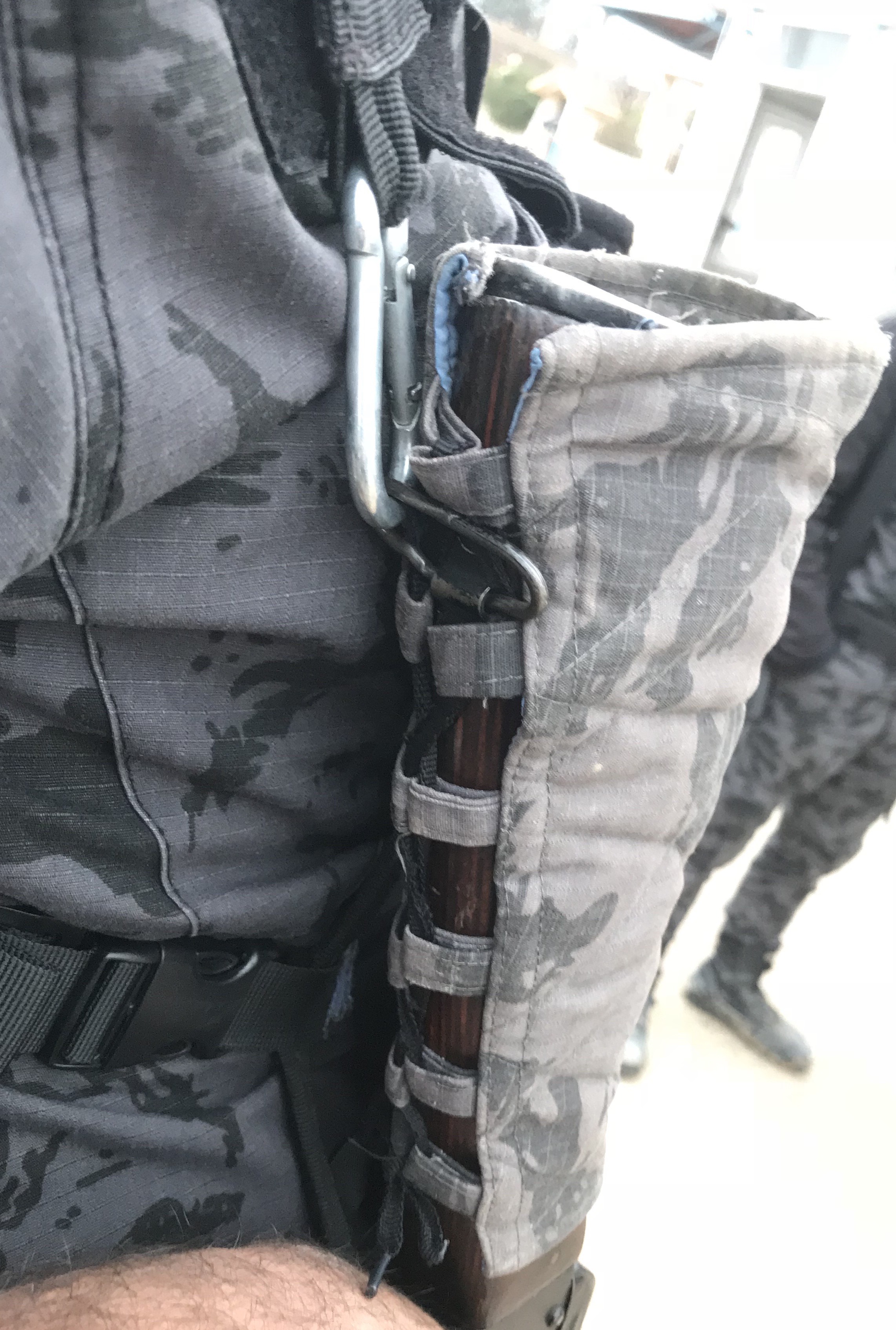
Full Rifle Wraps
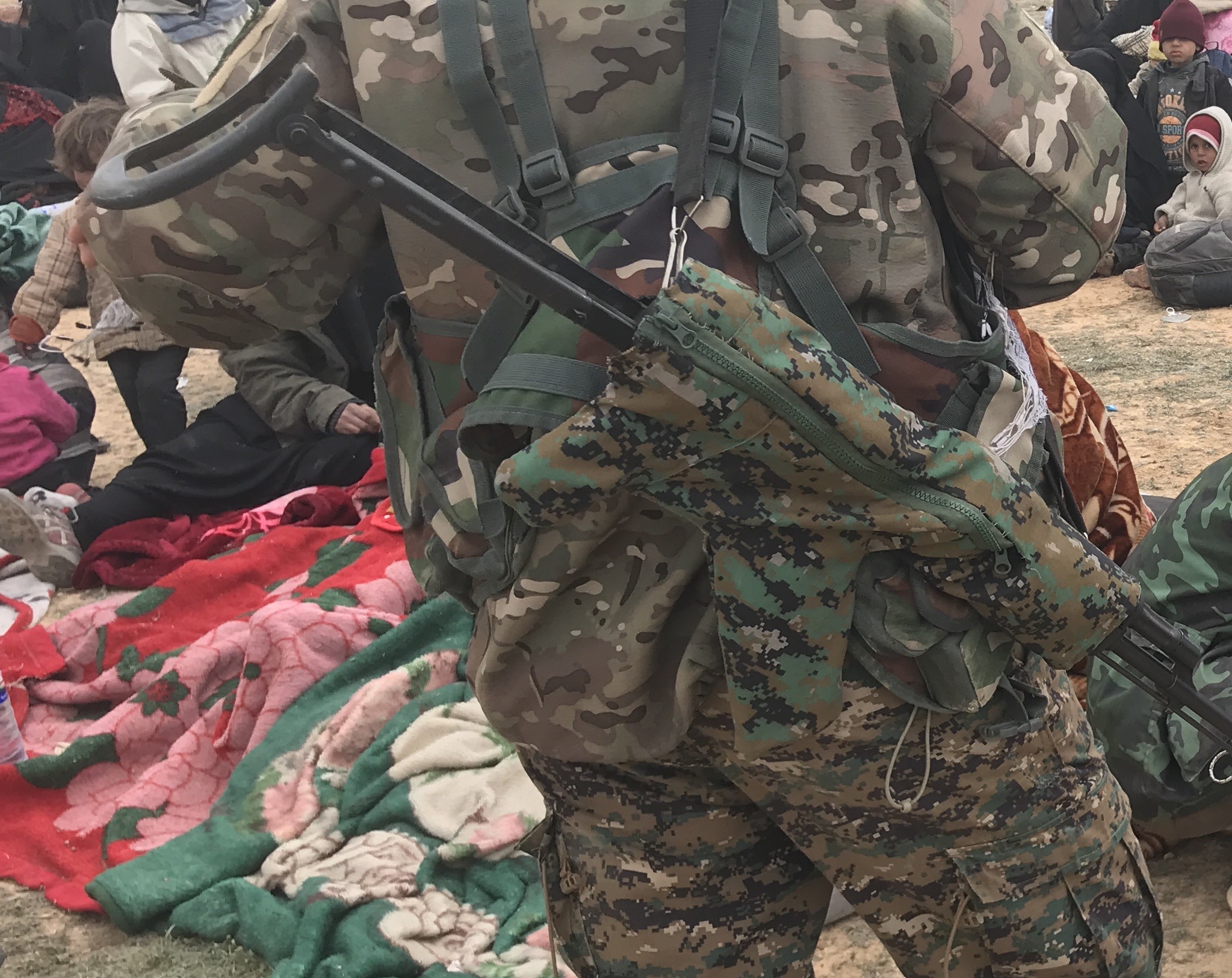
The wrap seen above is fully enclosed with a double zipper clasp on the right side, extending from the stock trunnion to the handguard. This is possibly the most tactically unsound of the wraps researched, complete with the charging handle, safety, magazine release, magazine, and trigger enclosed by fabric. When questioned on this tactical disadvantage, he replied that he could simply unzip the wrap and engage an enemy combatant.
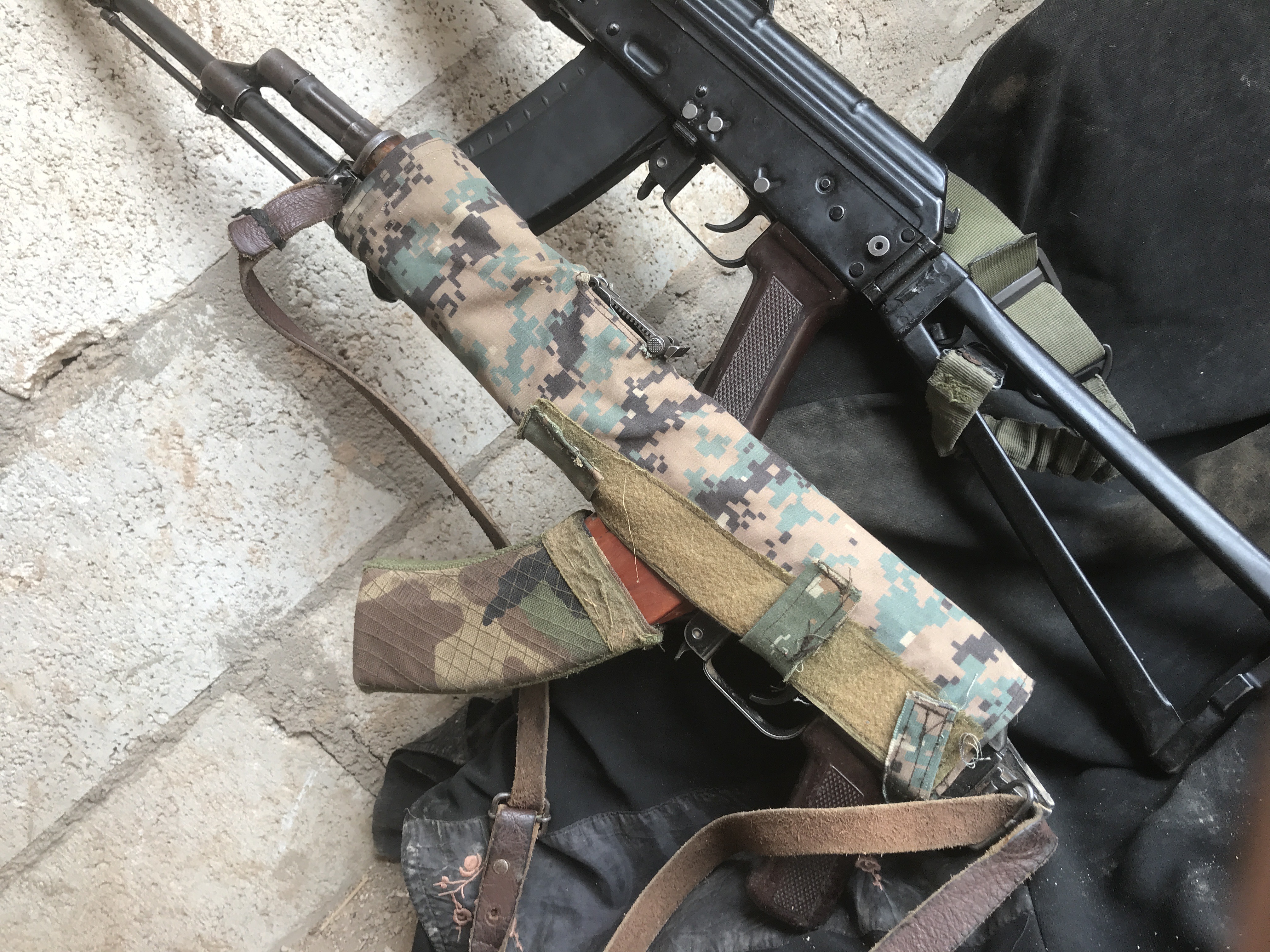
The wrap seen above uses three velcro clasps that connect on the left side of the rifle, just ahead of the magazine, through the trigger guard, and just behind the pistol grip. The stock on this is most likely an indigenously craft-manufactured East German MPiKM-copied design that is popular in the region. It has been affixed to what is the trunnion for a fixed stock rifle. Note that the magazine wrap is actually separate from the wrap and is of a BDU-patterned fabric instead of a Marpat one, in addition to having criss-cross stitching. It appears to use a velcro top strap to fasten together.
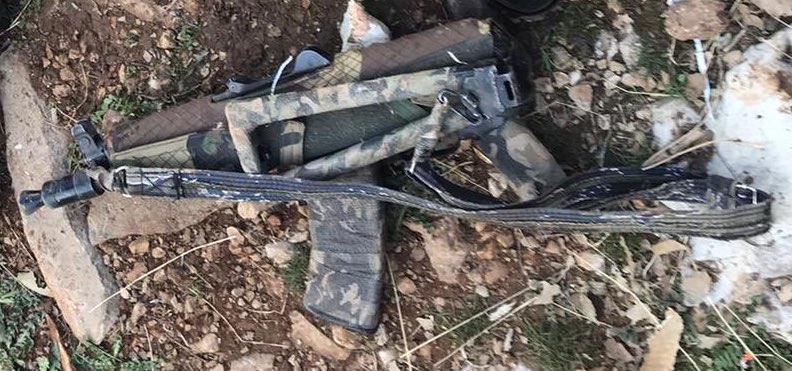
In the AKS-74U above note the identical BDU/criss-cross fabric that has been used in the magazine wrap in the picture above. The clasp method is also very similar, using velcro in front of the magazine, through the trigger guard, and just behind the pistol grip. What has changed is the handguard portion, which uses a left side velcro clasp. Magazine, pistol grip and stock are all wrapped in a thick camouflaged tape as well. Note there is a cutout of the rear size ears.
Great article. Thank you.