Keeping it Quiet is a series of articles by the Twitter account Everest65. First published on the webpage Calibre Obscura, he has been extremely generous in allowing Silah Report to republish his findings here. Content has been lightly edited. This is the concluding article.
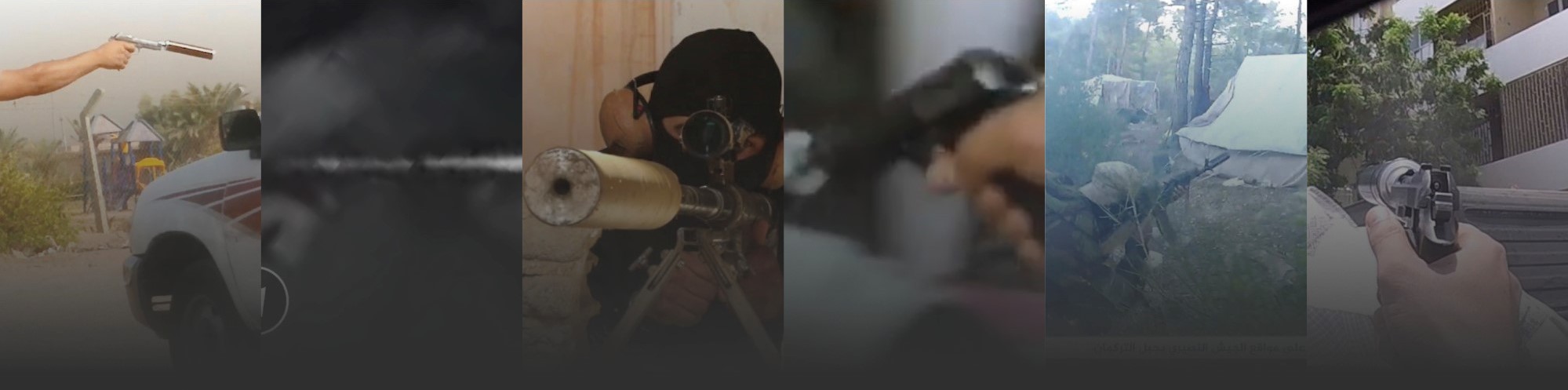
The use of suppressors by various actors should be viewed not through the technical lense of their attributes and calibers, but rather the broader strategic realities that lead to suppressors being of use to non-state groups, and their particular needs. As ISIS returns to destabilization and chaos-inducing efforts with its loss of ground and numbers, the use of attacks such as these will increase, as well as the use of suppressed weapons in them. This is also reflected in the YPG’s recent operations against Turkish/FSA forces in Afrin and surrounding areas- attempts to degrade the operational control of their opponents. This trend may be down to observe of ISIS’ successful use of this model of operation, but either way looks to be effective. Suppressed Pistols and IEDs look to be a large part of both of these campaigns, with ISIS in particular reverting to this tactic against multiple foes, HTS most recently, alongside more conventional attacks. The YPG has also shown suppressed medium range “sniper” operations, though in the western sense this looks closer to DMR use. It’ll be interesting to observe these trends when the coming Idlib battle(s) happen- will Rebel and Islamist groups revert to more insurgent-style tactics such as these? If so, we can expect to see more suppressors in use and a greater insight into their design and capabilities.
The uses of a suppressor (Typically in pistol calibers) when in the hands of insurgent or militant hands are multiple; a suppressor obviously reduces sound signature, which will reduce the speed and accuracy of any potential interdiction or counter-operation, and means that an operation using firearms can remain covert. If removing outposts, isolated small groups or sentries is the goal of the operation, then use of suppressors means that the chance of detection is lower. Another use is very close range, such as the executions indoors we see ISIS carry out. Suppressors also greatly remove muzzle flash and make militants harder to see in low light conditions, again meaning night time or evening operations can more effectively use the element of surprise and remain undetected.
A forum participant nicknamed “Obaid al-Baghdadi” recounted an attack by two jihadis on an Iraqi military barracks in the al-Saidia district of Baghdad where silenced weapons were used prior to an unnoticed withdrawal. “They perpetrated the operation quietly. The [other Iraqi soldiers] didn’t find out the two were shot until lunchtime. May God grant the two jihadis heaven and beautiful virgins,” says al-Baghdadi.
If the physical advantages of suppressor use in covert operations are clear, then there is another important factor- morale-wise. The idea of suppressors being a “James Bond” type of device remains very strong across the world- it’s commonly believed the continuing restrictions on their purchase in the United States (Remaining an NFA item) are at least partially down to the image of them being a whisper-silent assassination device.
The thought of a silent assassin stealthily picking off lone or isolated outposts cannot be discounted as a useful attribute for these groups, particularly when attempting to gradually erode the territorial and societal control of a state over an area (Who are probably using conscripts), cannot be discounted, even if the actual reality is that suppressors merely make pistol shots less detectable not whisper-silent. A covert operation using multiple pistol caliber weapons (Such as the MP5, and Pistols) follows a similar approach to those carried out by Western SOF, and is sure to mean an increased response time from the adversary, be it a state or a rival group.
The use of suppressors in the case of their use on the Battlefield is different to their use in a covert fashion, but their benefits are just as evident, if not more so.
“There are virtually no instances where an ambushed unit actually sees the enemy,” Scales, a Vietnam War veteran, said. “Both sides shoot at flashes and sounds.”And most firefights are at night.
If a soldier’s weapon is quieter than the enemy’s, and the enemy can’t see the muzzle flash, the soldier has the advantage, Scales said.
This quote is from this great article from the Military Times in the context of the United States Marine Corps and Army expanding the use of suppressors, but it does apply to their use by irregular forces too.
It later touches on the use of communication, too. The use of suppressors greatly enhances the ability to communicate coherently without raising the voice dramatically- if the attackers are carrying out covert assassinations, then this certainly assists with interrogation and coordinating the operation. I have yet to find any reliable source on the exact amount that improvised suppressors can actually reduce the sound signature, but assuming a similar Db reduction to commercial suppressors (Indeed, observing ISIS’ manufacturing process, this seems entirely possible) of 20-35 Db, they would certainly be effective for this. The video first touched on in 2012 shows this clearly. Firing an unsuppressed weapon indoors can cause permanent hearing damage. Sound waves rebound in the close confines of buildings, sending them directly back and onto the eardrum. These very close circumstances can be an ideal application for a suppressor to keep this to a minimum. However, I believe this is a minimal application in our context, as unsuppressed weapons are used very very commonly by all actors in Syria, Iraq and similar theatres. Overall, suppressors merely add a higher time for the opponent to detect, respond to and neutralize, especially if they are badly or barely trained, such as the SyAA.
An important question is the implications for the West and other Counter-Terror organizations and the capabilities of actors they are likely to face. Urban Battlefields like those seen in Raqqa, Mosul and so on pose challenges that are decidedly different to the slower-paced, longer range combat that western forces have enjoyed recently, with the technology gap now closer than before, though most combat remains at range. How Western troops deal with multiple high-intensity Raqqa-style battles is outside of the purview of the author, but the use of common, effective suppressors in kill holes and CQB simply add another difficult angle to targeting irregular opponents. The use of suppressed rifles in fast assassinations such as those shown by HTS against the Assad Regime in Latakia show an effective and rapid ability to cause costly damage and to erode overall perceived control of an area. Though we are yet to see this kind of tactic and equipment in wide use against Western forces, and Western forces are likely to have superior perimeter control and procedures, this tactic will only become more defined over time.
Credits:
Assistance: @JakeHanrahan, @ShakiraSecurity, @HKamaan, @AbraxasSpa, @iBRABO_com
Translation: @Mortis_Banned, @AlMasalim13
I am very new to this, having been inspired by many on the OSINT/Weapon ID/etc scene on Twitter. Many thanks to all of you- (Too many to list!) for providing such useful information and a real window into so many conflicts and peoples across the world.
Sources:
Please @ or message me on Twitter for sources/urls for screenshots/events etc.