Jeffory is an avid reader and support of SR. This is his second guest article, the first being about a P’08 Luger found still working in Helmand province.
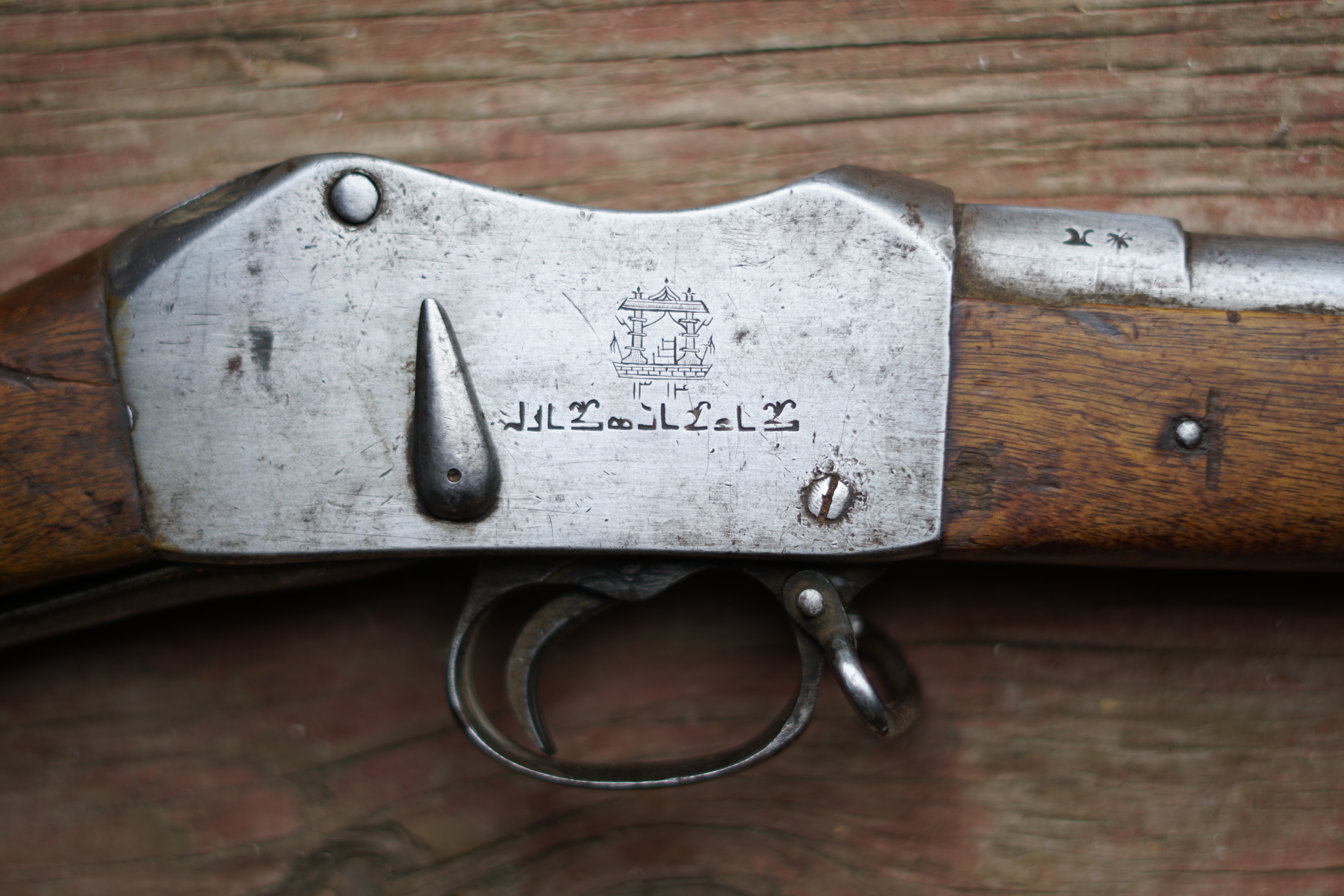
There was a time when anything that came out if Afghanistan was considered a “fake” Khyber Pass copy. Well, today we know this is simply not true. The British crown with the help Emir Abdur Rahman set up a modern arms and munitions factory in Kabul. Called, Mashin Khana by the locals. Today, we know it as the Kabul arsenal.
The Kabul machine works is a little-known and often very misunderstood producer of small arms. However, due to our recent involvement and presence in the region, products of this Armory are now making their way to the collectors Market in the United States. Often, when these rifles are encountered, they are Miss labeled as Khyber Pass made knock-offs and tossed aside as junk. This however could not be further from the truth. They are in fact rare and very under-appreciated firearms.
It is estimated that, between 5 and 8000 of each type of Martini-Henry variants may have been produced. Which, seven major types have been identified and classified. Extrapolating from there puts production figures between 35 and around 56,000 pieces. (V.Easley)
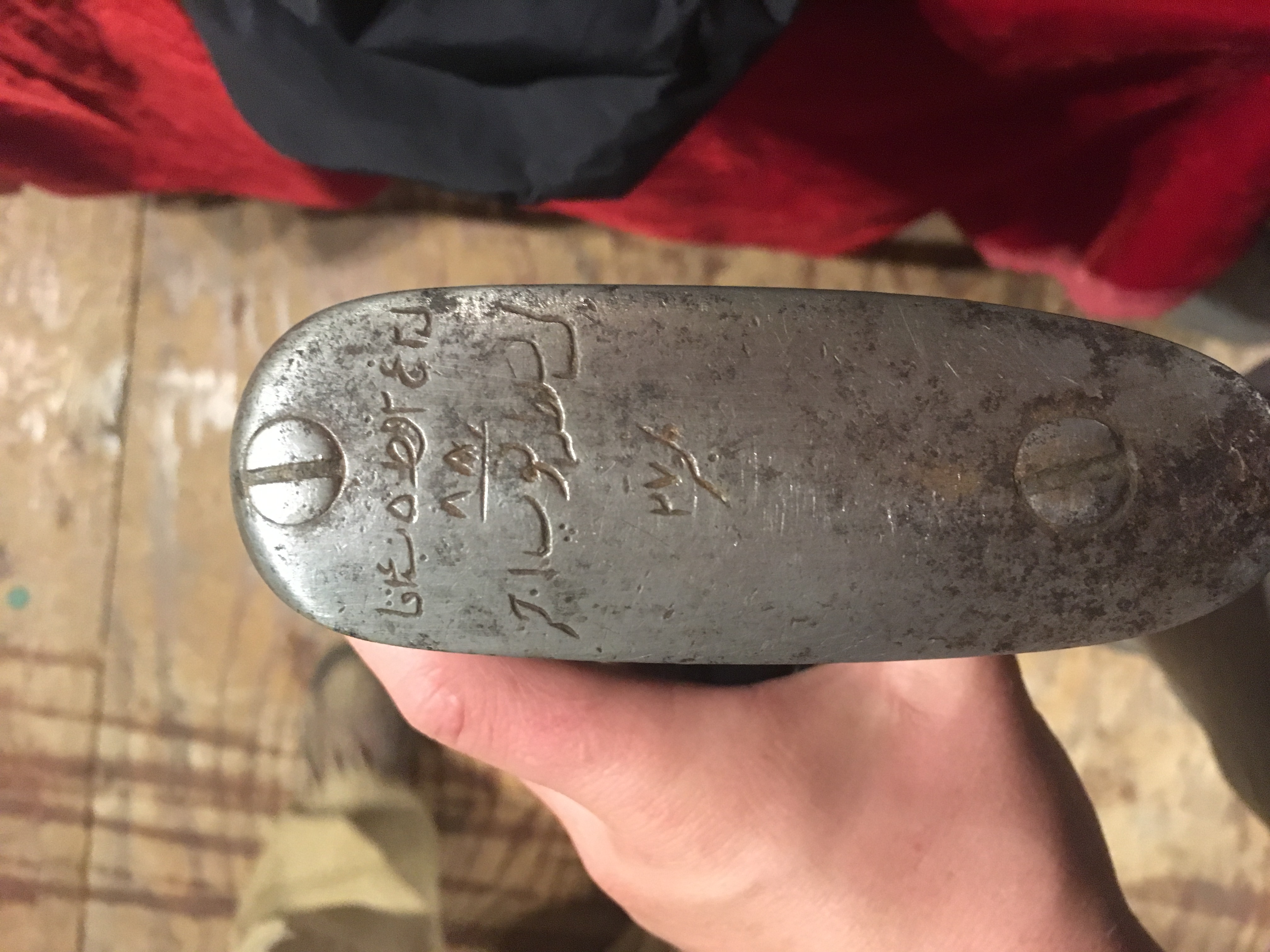
These figures do not take into account attrition, damaged or any rifles that were “lost.” Furthermore, these rifles were frequently scrubbed of there legitimate Kabul arsenal stamps. Then, they were re-stamped to make fake I.C.1 carbines and “Enfield” stamped Martini’s.
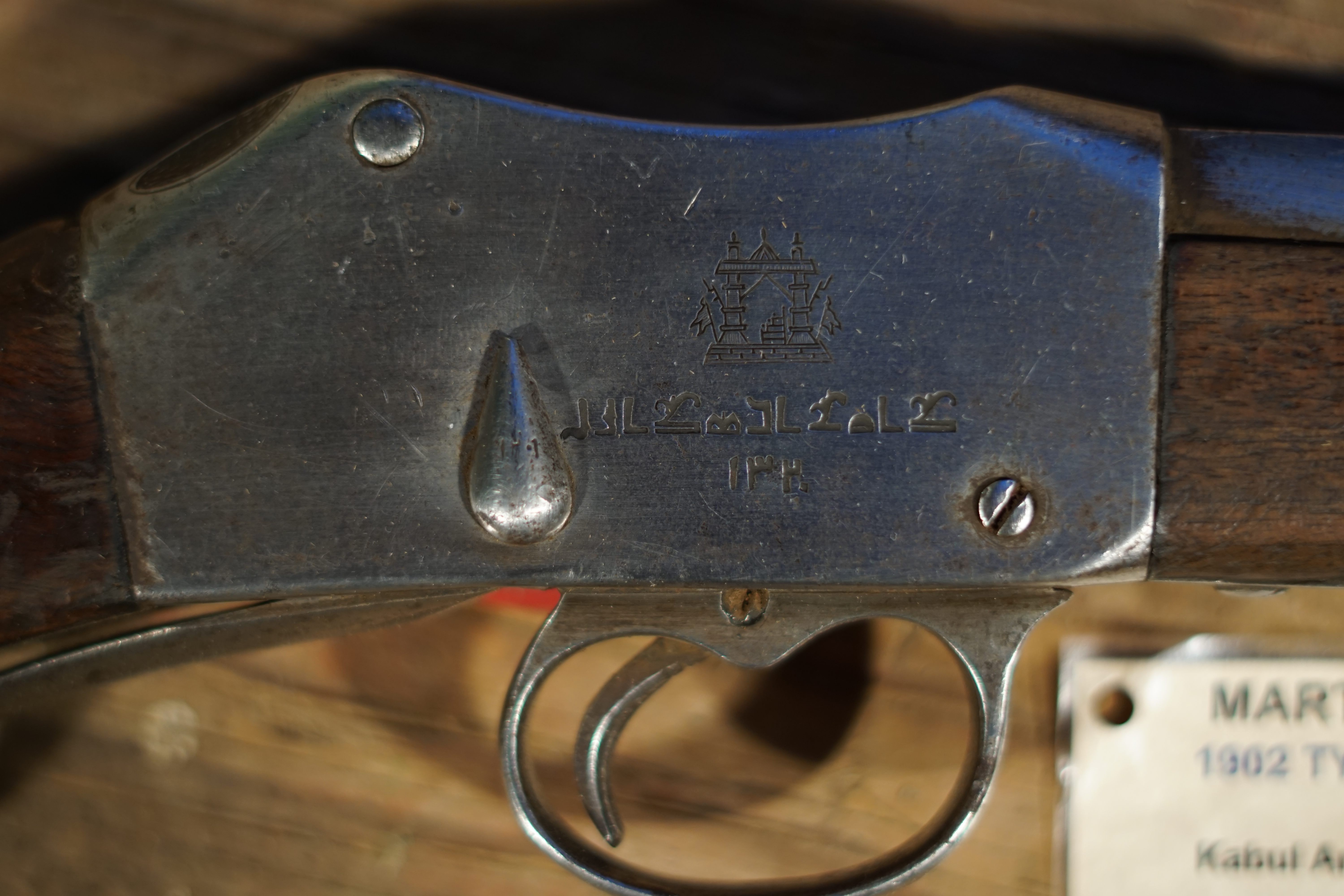
This was done by enterprising tribesmen for three reasons. The first being, to take advantage of the world known name and reputation of R.S.A. Enfield. The second, to take advantage of the antique rifle status of pre-1899 dated firearms. And the final, most important reason to go through all this work, to make money. More specifically, to make money off of American servicemen.
Taking these variables into account would put the number of surviving, originally produced examples somewhat lower. It is unknown at this time how many examples are currently in the United States, but one would reasonably assume far less than original production numbers. Making such examples, in my opinion, fairly rare to encounter.
(*NOTE- well these rifles have fake stamps on them to make them into “more desirable” models. They are still fully operational firearms. They are not to be confused with the poorly made and unsafe Khyber Pass knock-offs).
Afghanistan, as we might recognize it today, begin to take shape after the second Anglo-Afghan war. (1878-1880)This was a decisive British victory. From which, they installed a new, far more cooperative Emir, Abdur Rahman. He is considered to be the father of the modern state of Afghanistan. And with a modern State, you need a modern Army, and to have a modern Army so, you must have modern Small Arms. And the capability to produce them indigenously. All of which, the Emir was far too aware of.
Images credited to V. Easley Collection.
To be continued…