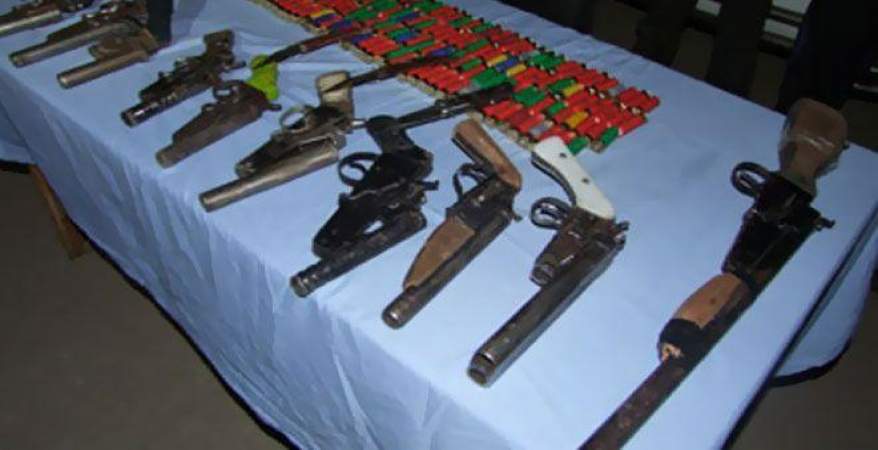
It’s cheap and easy to manufacture, it’s relatively concealable (different sizes exist), and it allows you to carry a machete or any other melee weapon in the other hand, how practical! The iconic DIY shotgun pistol of Egypt since the 25th January Revolution became extremely popular among the poor, the violent activists and of course, criminals.


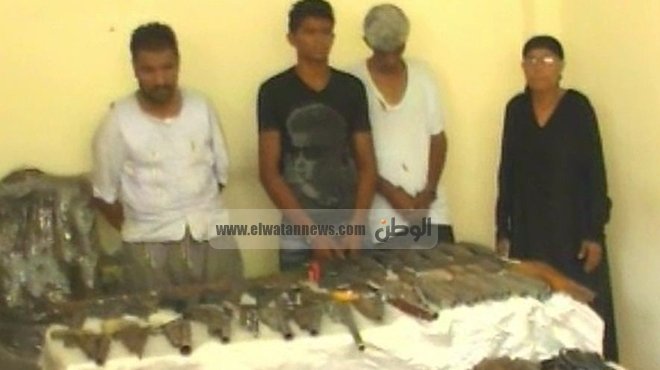
During the Revolution in 2011, an unprecedented number of jailbreaks happened throughout the country, with thousands being freed from their jails and out to seek revenge on the police force or exploiting the chaos in the country for their own benefit. Although there are many theories and reports regarding what happened, ranging from a “final solution” by Mubarak’s regime to break the revolution all the way to the Muslim Brotherhood or other Islamist groups assaulting a number of prisons in the country, one thing is definitely true, you have former inmates running amock with machetes, submachine guns, assault rifles and of course, the workshop made Shotgun Pistol.
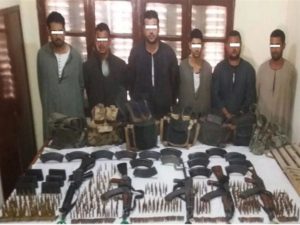
AR70 and AKs of different variants, plus webbings and plate carriers.
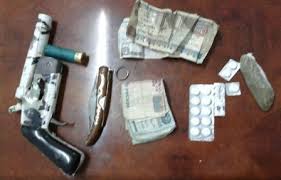
Pills, weed, some cash, a knife and a shotgun pistol. The ‘starter kit’ for many criminals in Egypt.
Seven years later since the madness of 2011, the shotgun pistol is still quite popular, although FN FALs, AKMs, AMD-65s, Turkish made shotguns, and even light machine guns are still fairly common (but extremely expensive), they are in no way as easy to acquire and definitely easier to conceal. It is extremely rare to find a photo of apprehended thugs/criminals without having at least one of the pistols confiscated, along with a variety of other weaponry.
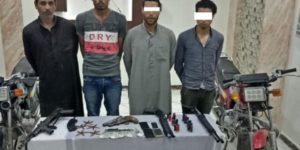
Notice the AMD-65 on the left side of the table, with the shotgun pistol placed in the center. 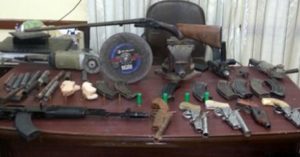 Notice the different grips, barrel lengths and even the material used to make the pistols? The arms making industry attracted a lot of blacksmiths into the industry as they found it to be highly lucrative. Back in 2014, according to an interview with an anonymous dealer, the cost of producing one pistol is as cheap as 20 EGP back then (roughly around 5 US Dollars).
The Shotgun Pistol managed to build up notoriety so fast that Egyptian Journalists raced to present documentaries about its manufacture, role in Egyptian politics (was used by protesters on different sides-graphic scene and audio), the kind of damage it can do and its market.

Webley revolver, AKM, pump action shotgun and a handful of shotgun pistols of mixed sizes and quality.
A good question that pops up in mind, ammunition, from where do they get the ammunition for their monstrosities? Easy, hunting clubs, shooting ranges and nowadays thanks to the Libyan Civil War, from (you guessed it) Libya! Some are even locally manufactured by the very same workshops that make the pistols.
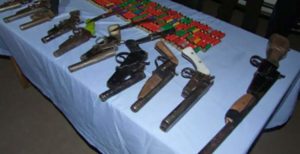
Doesnt look like there will be a shortage of shotgun shells anytime soon in Egypt.
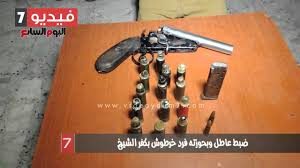
Workshop made munitions with a single or perhaps several pellets in a single cartridge and two ‘ factory quality’ cartridges that appear to be 7.62X25 Tokarev. It is very possible that the former owner of the pistol would or had attempted firing other kinds of munitions through the pistol.
Regarding quality, at least in the documentaries, the dealers or manufacturers involved do admit that there is no standard quality for the shotgun pistol. Ranging from what they call “factory made” (perhaps made with high tech workshops) all the way down to an inexperienced blacksmith who’s Shotgun Pistol might prove to be fatal to the user.
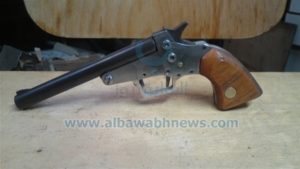
An example of a ‘factory made’ shotgun pistol.
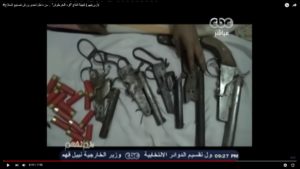
In this scene from a documentary I already linked in this article, the anonymous dealer/manufacturer mentions how the pistol at the far right is ‘factory made’ and “you wouldn’t find a single mistake” while the second one from the left “might hurt its user”.
Looks like the Shotgun Pistols will probably plague Egypt for a long time to come, especially if legal firearm ownership remains difficult to obtain.
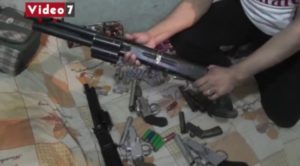
The evolution of the shotgun pistol, the shotgun revolver! Still, they are nowhere as common as their ‘ancestors’.