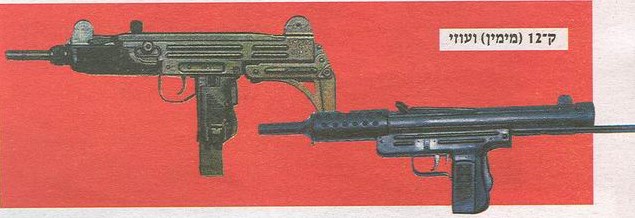
It has been the most successful and recognized submachine gun of all time. The Uzi has been sold more than any other small arm of its type and its bulky silhouette has become a cultural icon.
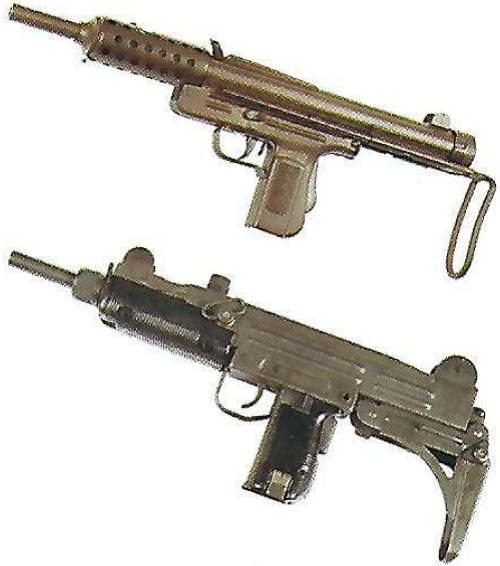
While the Uzi is well known around the world, its fierce rival in the 50’s IDF approval trails was totally forgotten both domestically and abroad. A price gap of 3 Israeli Pounds per gun (currency before Shekels) in favor of the Uzi entry sealed the fate of the competitor to obscurity.
In June 1949 the IDF’s first Chief of Staff, Yaakov Dori, established a committee to determine the characteristics of the IDF’s next submachine gun. The early IDF forces were armed with a mish-mash of homemade, captured or smuggled submachine guns, a legacy of the pre-state resistance group’s armaments.
In October 1949 the committee submitted their conclusion – the new SMG should be chambered in the 9mm Parabellum round, be selective fire and most importantly it will be Israeli made.
Two guns were submitted for the IDF trials: the IMI ‘UZI’ designed by Uziel Gal and the Science Corp. K-12 (Hebrew ק-12) designed and named after the Corp. head of small arms department Haim Kara.
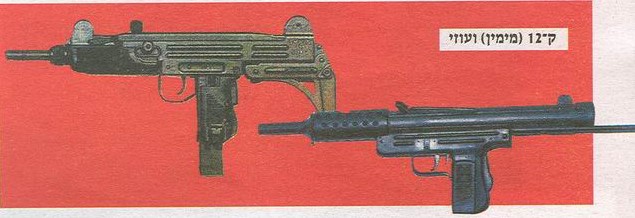
Both of the guns were remarkably similar in layout and design, both featured a stamped metal body with straight pistol grip centered in the middle of the gun at the center of mass
Both guns fed from straight double stacked magazine inserted into the pistol grip and both equipped with grip safety button.
And both guns used the telescopic bolt arrangement in which the bolt in its forward position (in battery) has most of its mass above and in front of the chamber reducing the gun total length and balancing its recoil.
The major key difference between the two is the shape of the receiver – the K-12 have tubular cross-section while the Uzi is rectangular.
Another difference was the stock, the Uzi had a fixed wooden stock (removal stocks and collapsible stocks were added in later models) while the Kara had an M-3 ‘Grease Gun’-patterned telescopic stock.
The source of the similarity can be traced a few years back to the young Gal’s first steps in the small arms development.
Science Corp. (Hebrew: חיל המדע or, חמ”דlit. Hemed) established in 1946 as a unit of the Haganah organization in charge of the armament development of the organization, after the establishment of Israel and the dismantling of the paramilitary groups the Science Corp. become part of the IDF and Ephraim Katzir, who years later would become the fourth President of Israel, was appointed was the Corp. first commander.

Haim Kara (Hebrew: חיים קארה), was born in Budapest in 1912, studied Mechanical Engineering in Germany and immigrated to Mandatory Palestine in 1937.
In the mid 1940s, Kara joined the Haganah. In 1948 Kara was recruited by the Science Corp. as head of the small arms department with a rank of Captain, he was later promoted to Major in the early 1950s.
Designing a submachine gun was the primary mission of Kara’s department and several foreign submachine gun models were acquired for study, one in particular drew their attention.
In February 1949 a Czech delegation arrived in Israel to present and hopefully sell Czech weapons. One example brought was a prototype SMG – the ZK-476.
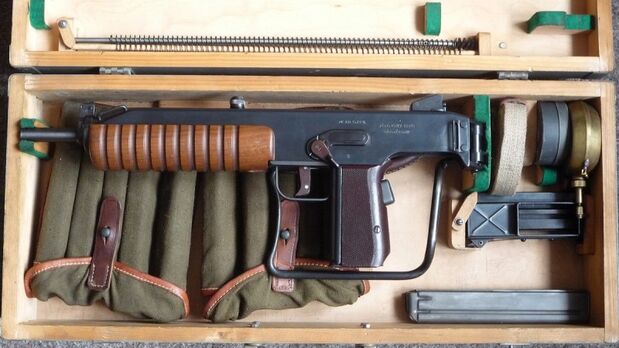
The gun never proceeded beyond a prototype in its homeland but all of the then-revolutionary features: the telescopic bolt, pistol grip in the middle of the gun, pistol grip safety etc. were present.
Borrowing many of the ideas from the ZK-476 Kara’s team set to simplified the gun and its manufacturing process. Instead of using the ZK-476 milled parts as a base, the Hemed decided to go with stamped steel.
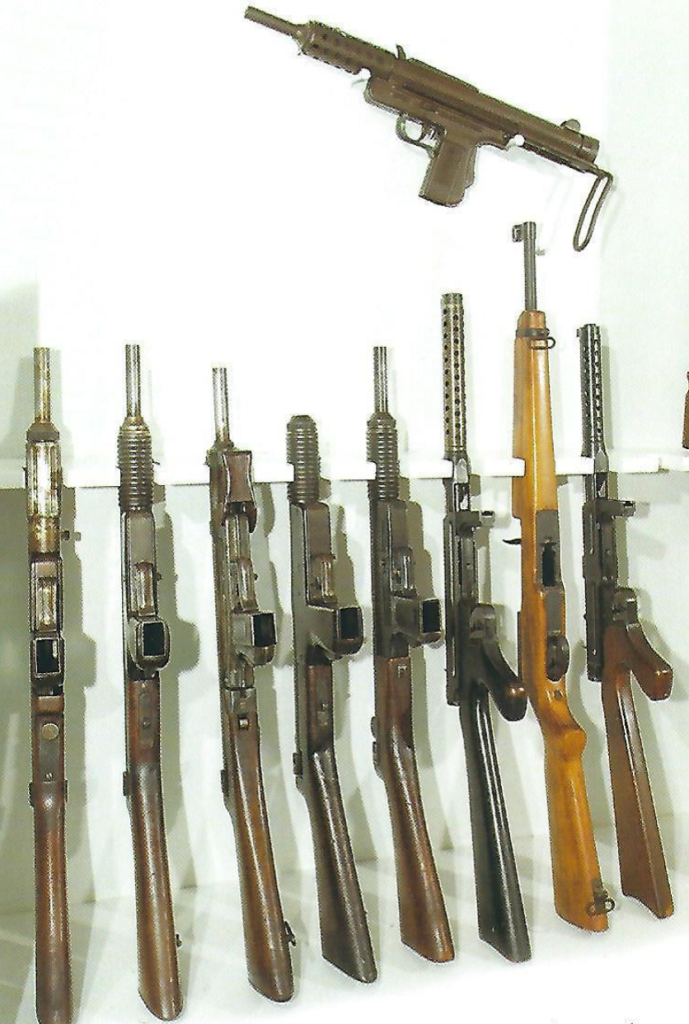
Between the years 1948 and 1951 the department constructed and tested several submachine gun models, the numerical designation of ’12’ in the K-12 name indicate that at least 11 prototype guns were developed by Hemed. A few pictures are known and present what appear to be the incremental evolutionary steps toward the final IDF ready trials but it is yet unknown to the author if those guns are in fact the missing links on the road to the K-12 or not.

Uziel Gal (Hebrew: עוזיאל גל) was born in Munich and immigrated with his family in 1936 to Mandatory Palestine. During his school years, Uziel collected and produced improvised firearms on his own. In 1949 at Infantry cadet school he wrote to his commanding officer about his own improvised submachine gun, the officer was impressed by the simplicity of the design, sending a supporting recommendation letter to his supervisors. As a result in spring, 1950 young First Lieutenant Gal was sent with his gun to serve under Kara’s command.
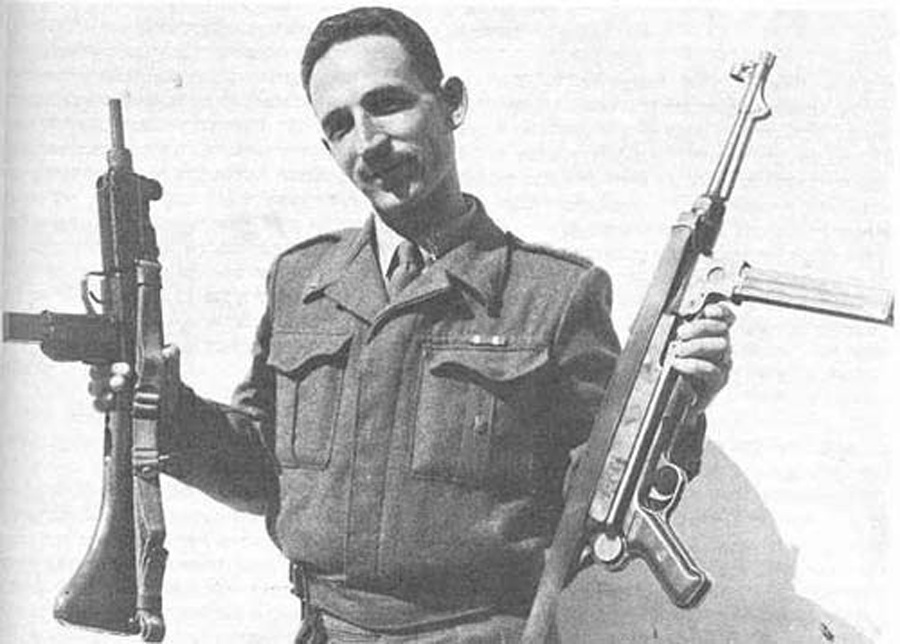
This initial prototype firearm has little details known about it. The only source available describes it as a scaled-down MG-34 with a Sten like magazine well protruding from the left side of the receiver. The gun had a barrel shroud and MG-34 buttstock. It was chambered in 9mm Parabellum and fed from Beretta Model 38 magazines.
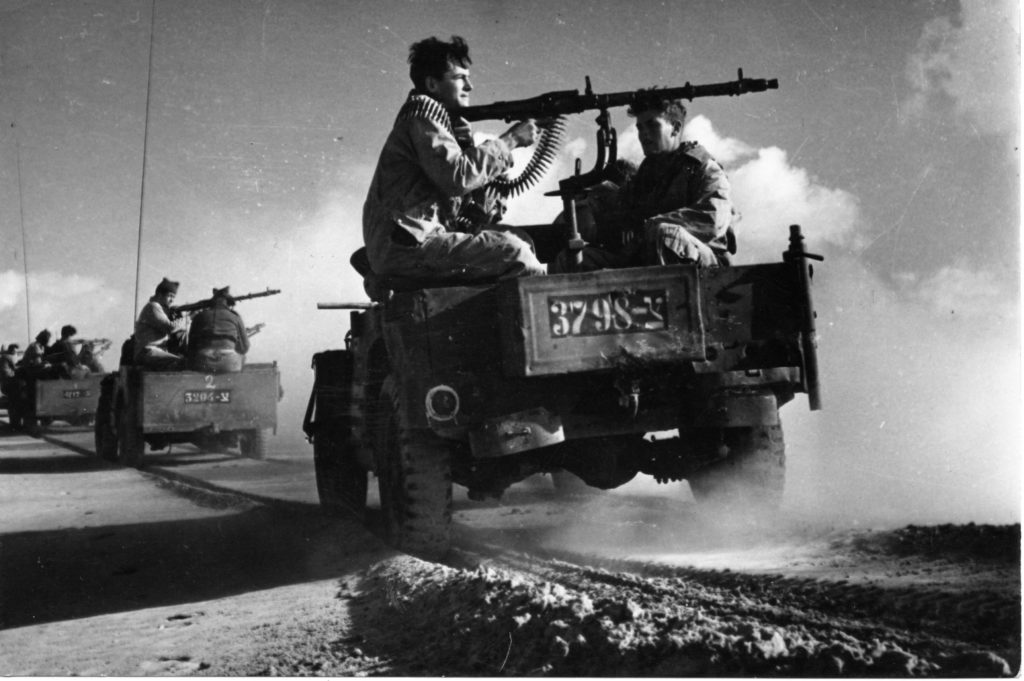
Kara wasn’t impressed by either Gal or his gun, criticized Gal for a lack of formal engineering education and the gun as crude and inferior to the now ready to be submitted K-12. Nevertheless, Gal was accepted as a team draftsman and participated at the firing tests in the Spring of 1950.
According to Kara, years later, Gal took part in the final stages of the K-12 development. In the Summer of 1950, after just a few months of work in Hemed Uzi left the unit in favor of IMI (Hebrew: תעשיה צבאית or, תע”שlit. Thas), Hemed’s competitor.
In the following month’s, rumors leaked out that IMI was designing a simplified version of the K-12, what was called ‘The People’s Gun’.
The IDF trials started in late October 1950 (26.10.50) between the two guns, three other foreign submachine guns were tested for comparison to the two Israeli made: the British Sten, the German MP-40 and the Italian Beretta Model 38. The guns evaluation include both the tactical aspects conducted by the IDF while the manufacturing aspects were evaluated by none other than IMI.
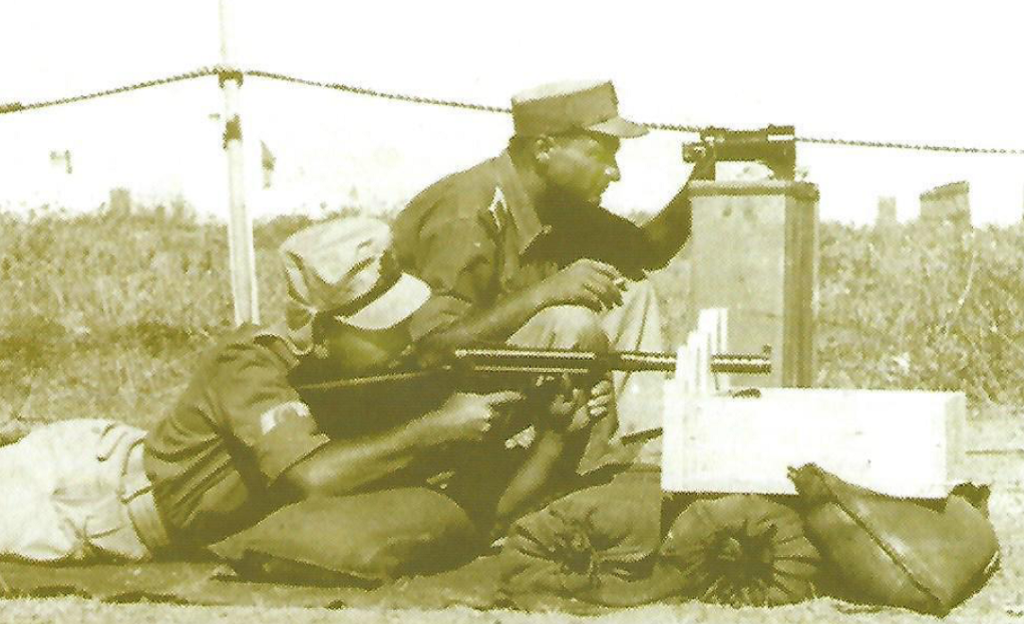
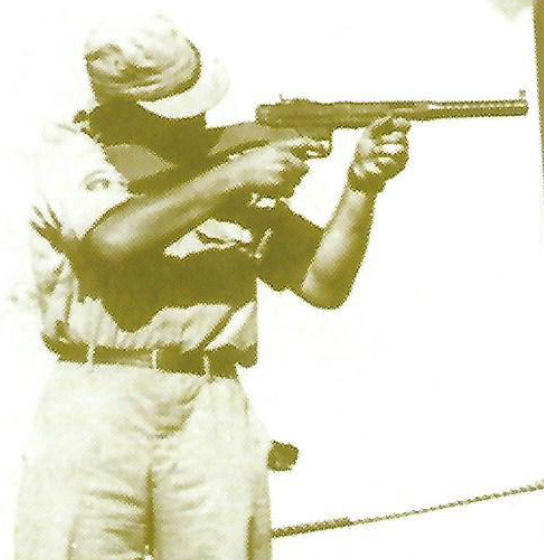
After a week of trials and comparison, the decisions among the committee members were split between the guns. The decision then rests on IMI, their report stated that the K-12 is lighter than the Gal by half a kilo but that at a price of body and stock strength.
The final nail in the coffin was at the cost estimations for production of 10,000 guns:
The Gal cost was 14 Israeli Pounds per unit while the K-12 was 17 Pounds. This 3 Pounds difference is approximately 100 Israeli Shekels in 2019 values or 28 USD.
After the loss of his gun, Kara filed patents for several key elements of the K-12: the removal pistol grip and unique stamping manufacturing technique. Patents were filed in: Israel (December 1951), USA (March 1953) Switzerland (September 1953) and French & Belgium (November 1953). It is unclear why Kara filed those patents since under Israeli law those inventions developed during Kara’s service in the Science Corp. were the intellectual property of the state. It is reasonable to assume that Kara wasn’t after royalties but to solidify his rule in the development of the now would be official gun of the state of Israel.
In the mid-1950s Kara left Hemed and established a private factory for aluminum extrusions. A decade later he sold the factory and opened an engineer advisory office in Tel Aviv, eventually passing away in 1986.
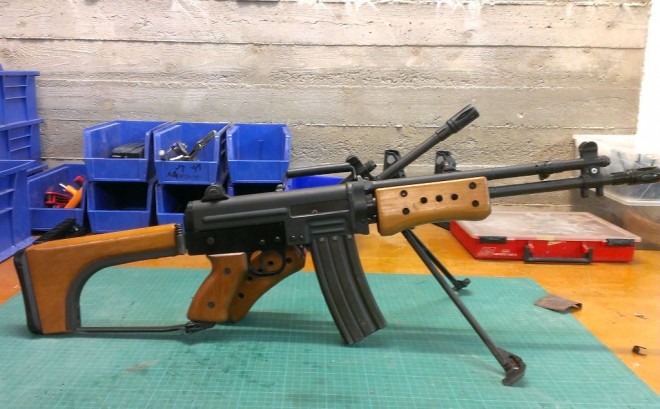
In a sad case of Karma boomerang, Gal himself saw a similar fate years later. In the late 1960s the IDF submitted to IMI a request for a new assault rifle a replacement to the notoriously unreliable FN FAL. Gal’s design the Gal AR competed against another IMI gun, the Yisrael Galil (Hebrew: ישראל גליל). According to some sources Yisrael Galil and others at IMI forced out Gal and its team in subtle ways such as delaying his parts orders in favor of other orders and such.
The Gal AR lost the trials to the Galil AR in 1970 and a few years later Uziel Gal left IMI and Israel, immigrating to the United States with his family. Uziel passed way in 2002.
Two K-12 and two Uzis from the IDF trials ended up at the IDF History Museum in Tel-Aviv.
The story of the developmental submachine guns of the K-12 evolutional path is more convoluted:
Meir Peled (Hebrew: מאיר פלד), a metalworker in Kara’s team, left Hemed in 1959 after the closure of small arms department. Peled worked afterward at the Biological Institute in Ness Ziona. In the mid-1980s the security officer of Rafael Advanced Defense Systems Ltd. (Hebrew: רפא”ל) ask Peled to check some ‘Russian guns’ found during warehouse clean up.
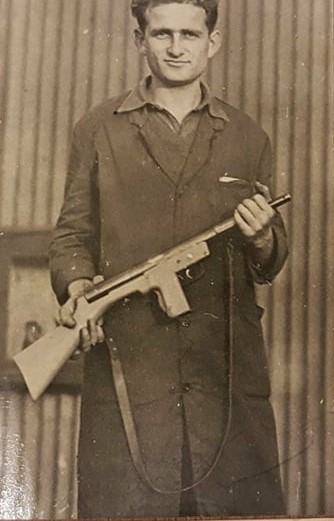
Rafael, the incarnation of the Science Corp., inherented the developmental submachine guns stockpile. Peled recognized those guns for what they were since he literally built most of their parts, he took the guns and kept them locked in his office in Ness Ziona.
A decade later when Peled retired and Rafael opened its own museum the guns returned back home.
Acknowledgement:
Colonel (Rit.) Mati Hemed (not related to Hemed institute), IDF History Museum Curator.
Israel Zeierman, Head of Rafael museum.
Ron Peled, Meir Peled son.
Links:
https://www.himush.co.il/himush.co.il/originals/Uzi%20development%20-%20Mati%20Hemed%202006%20booklet%20-%20Ministry%20of%20Defense%20Israel.pdf
https://www.makorrishon.co.il/nrg/online /1/ART/955/943.html
https://uzitalk.com/reference/pages/article_uzihistory2.htm