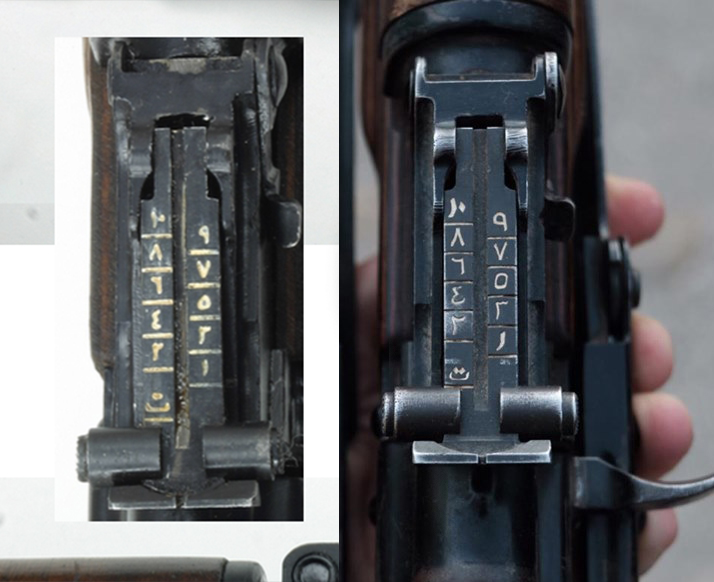
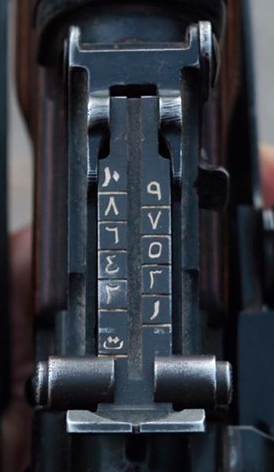
This article was recently spurred to fruition by the submission of a reader’s photograph taken in the city of Ar-Raqqa, Syria. The subject of the photo features a prominent rear sight base of an AKMS-patterned rifle with Eastern Arabic numerical markings. Important to our discussion is the origin of this particular rifle because one would be led to the conclusion that from the photograph alone, it might be an Egyptian 7.62x39mm Maadi rifle from the rear sight markings. However, our source on the ground informs us (albeit without photographs) that the rifle is in fact of Polish origin with the “Circle 11” marked trunnion. This post will explore the difference in rear markings between Polish export KbK AKM-patterned rifles and Egyptian Maadi rifles, in addition to looking at some of the U.S. reproductions. The importance of comparing these rear sights is that these three varieties are some of the only major categories of Kalashnikov-patterned rifles with rear sight designations in Eastern Arabic numerals. Unlike Western Arabic numerical font stampings, the fluid curvature found in Arabic-based fonts across the world allows for a greater degree of variety and thus gives us easier clues for identification based on rear sight range designations.
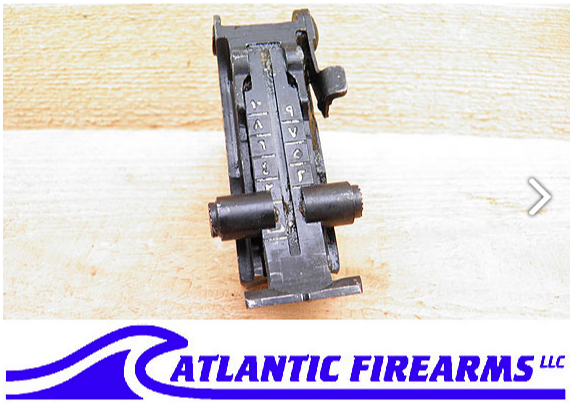
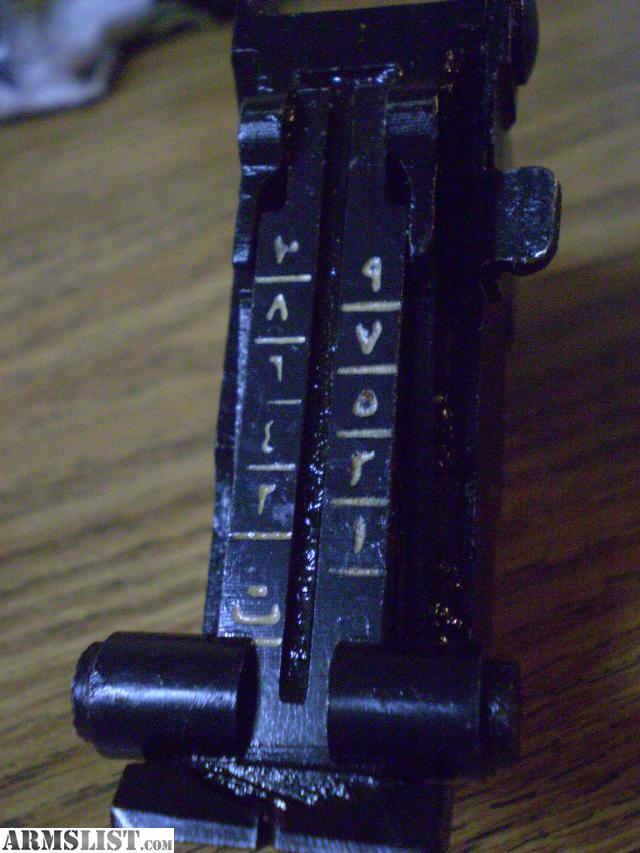
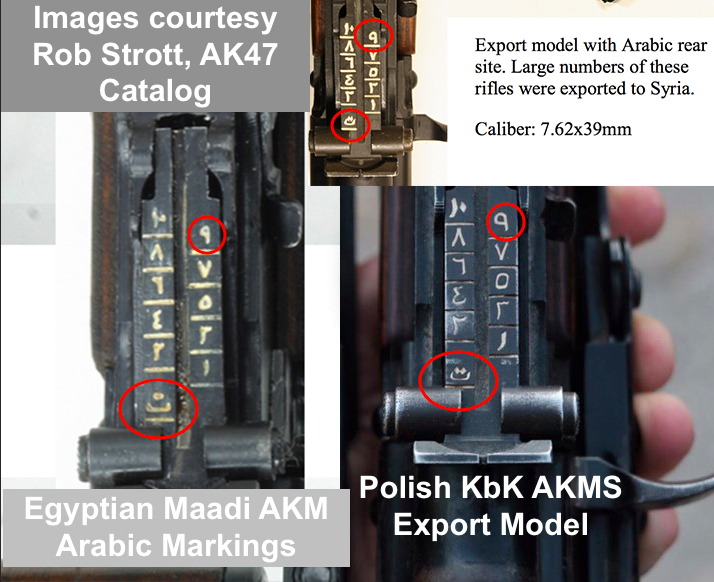
Due to the prevalence of the Maadi rifle, we’ll begin by examining Maadi rifle rear sights. These are characterized by settings from 100-1,000 meters in 100-meter increments stamped in Eastern Arabic numerals, with a ت letter representing a battle sight zero setting. There were some variants that were in Western Arabic (colloquially referred to as English) that exist but these do not represent the majority of Maadi rear sight markings. In the proceeding photographs pay close attention to the ت letter and notice that the “dots” within it are actually touching each other as a result of the stamping in use.
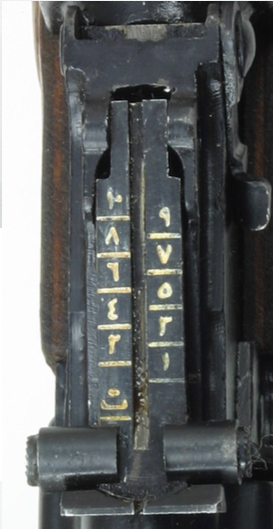
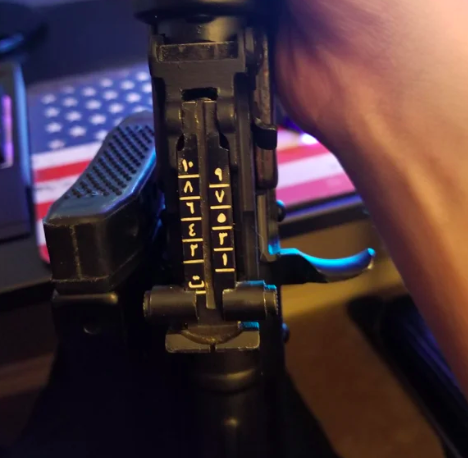
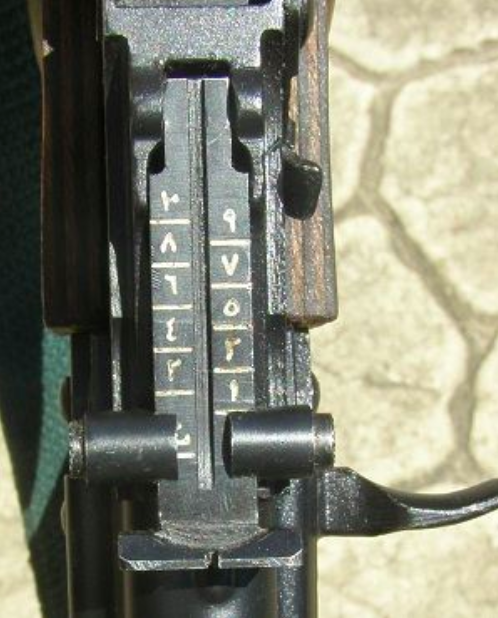
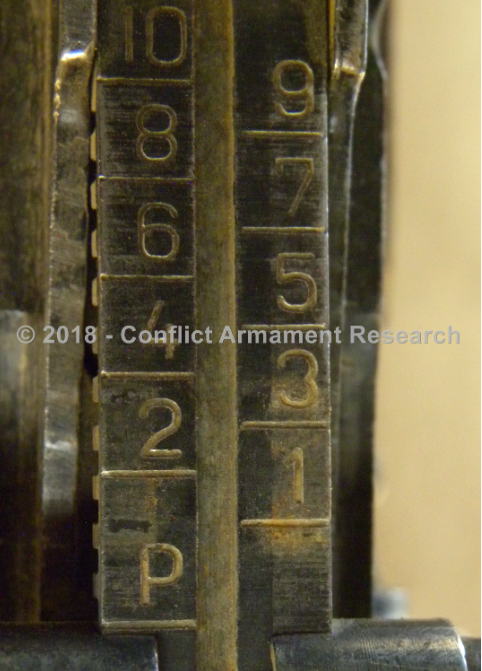
The United States has seen several types of reproduction Maadi rear sights which we’ll post here for the sake of inclusion. After reading the Polish explanation section, circle back around and notice that due to modern font settings, this particular US version is actually a blend of both the Egyptian and Polish numerals by coincidence. This fact is not extremely noteworthy but has implications for future mixed identification cases of either Egyptian, Polish, or even US rear sights.
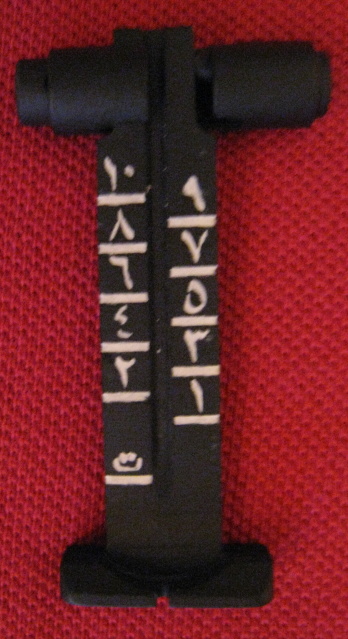

Now that we have seen several examples of Maadi rear sights marked in Eastern Arabic numerals, we shall examine the KbK AKM and AKMs export contract rifle markings. A very important note here is the shape of the “dots” that appear to the right of the 1,000-meter designation, and the battle sight zero ت-letter. In the case of the Polish stampings, we see a very distinctive diamond-like dot as opposed to the Egyptian dot which is shaped in much more relative round shape. But more importantly, the shape of the “9” numeral is important here because in the Polish version, the 9 has a significant hole within the digit, while in the Egyptian stamping, it is almost unrecognizable.
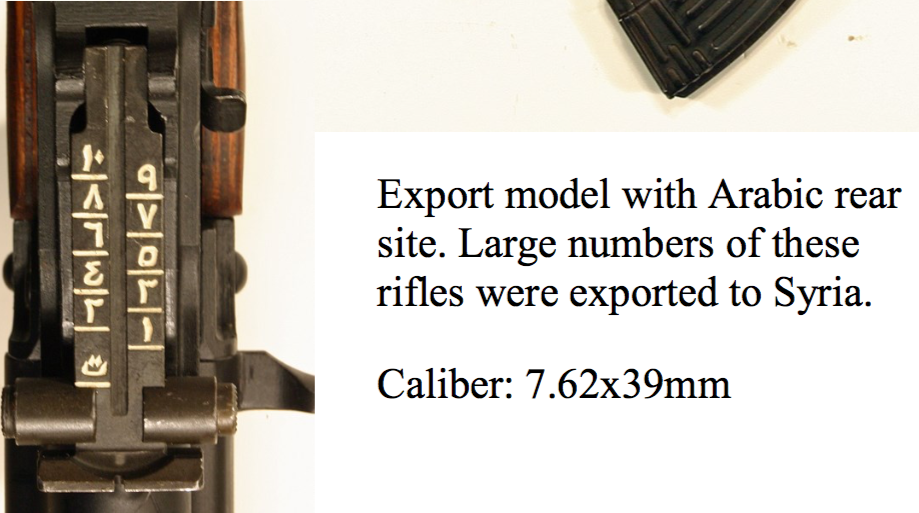
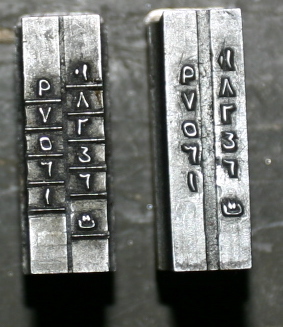
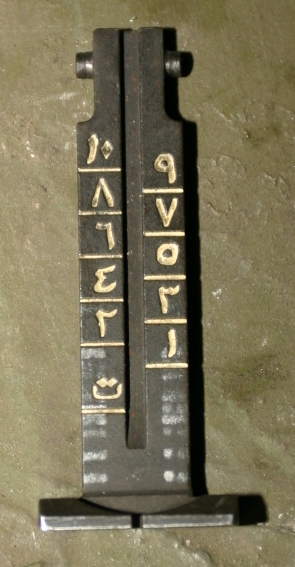
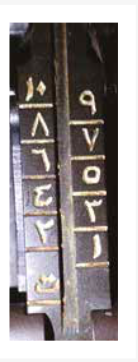
As to more information about the Polish export Kbk rifles, Conflict Armament Research’s report of “Cross-Border Weapon Transfers in the Sahel” includes this revelation about Polish export Kbk-AKMS rifles-
A simple example illustrates the possibilities and limitations of cross-referencing matching weapons across the region. In July 2015, CAR investigators documented a distinctive Polish- manufactured Kbk-AKMS assault rifle that Misratan 166th Brigade forces had captured from IS fighters in Sirte in March 2015. The weapon featured Arabic rear-sight markings.
Although export records for individual rifles of this type are not available, Polish authorities confirmed that Poland had exported Arabic-marked Kbk-AKMS rifles to Algeria, Egypt, Iraq, Libya, and Yemen during the last half of the 1970s.2
It is likely, therefore, that rifles whose serial numbers are sequentially close to the serial numbers of rifles documented in Libya are
also of Libyan provenance. Rifles with serial numbers that are sequentially distant or whose years of production di er from those of the Libyan samples may come from one of the other four importing countries.….
2 . Correspondence with the Government of Poland, 29 December 2015; UNSC (2013, para. 62).
Along with this explanation of Libya-Syria small arms transfers-
These include Iraqi-origin assault rifles and a batch of Chinese rifles manufactured in 2011 whose serial numbers interleave with matching rifles that Syrian Kurdish People’s Protection Units (YPG) seized from IS fighters in Syria in 2015. These findings indicate that the Islamist groups responsible for the Sahelian attacks have a common source of supply or constitute a single cell, and point tentatively to possible links or commonalities of supply sources between Islamist fighters in West Africa and those operating in Iraq and Syria.
Robb Stott indicates in his publication that a larger number were exported to Syria, which is contradictory to the CAR report that specifically mentions a number of countries in the MENA region (Algeria, Egypt, Iraq, Libya, and Yemen) that do not include Syria at all. Polish parts kits in the United States do indicate the presence of these export Kbk rifles, many of which might have come to the US and Europe via Israel after the 1982 invasion of Lebanon in which massive amounts of PLO equipment was captured and sold off.
Robert Stott of The AK47 Catalog, Conflict Armament Research resources, and Dani Ellis significantly contributed to the sources of this article.