Daniel Hughes is a Research Assistant with Armament Research Services. He has worked on several OSINT projects examining the use of arms and munitions in the Middle East and Central Asia.
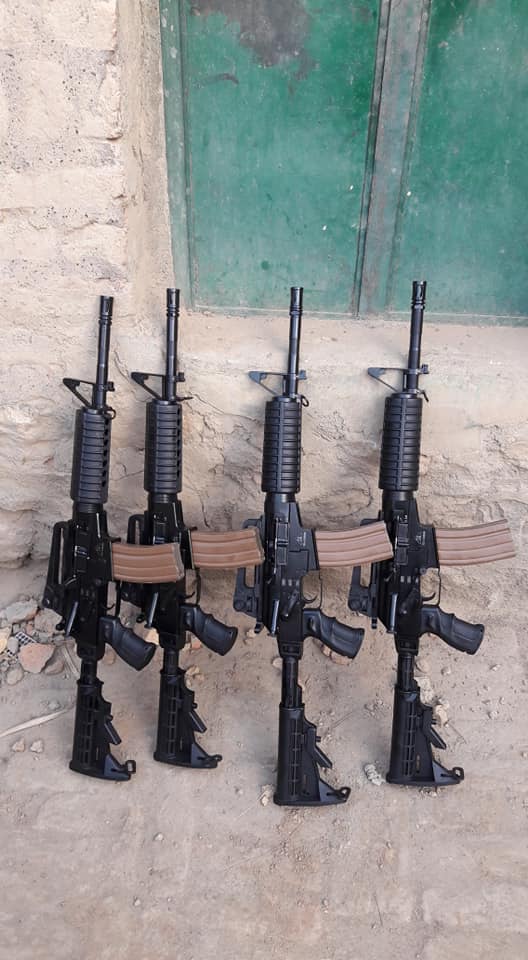
The town of Darra Adam Khel in Pakistan’s Khyber Pakhtunkhwa province has been involved in the craft production of firearms for over a century. The craft production that takes place in Darra provides an important source of small arms and light weapons for many regional actors. Continued monitoring of open and closed source media in the region has yielded many interesting data. One such observation is the increasing popularity of AKM-pattern self-loading rifles which imitate the appearance—and some of the features—of the 5.56 × 45 mm AR-15 self-loading rifle. These Darra ‘AKM-15’ rifles are explored below.
Cosmetics
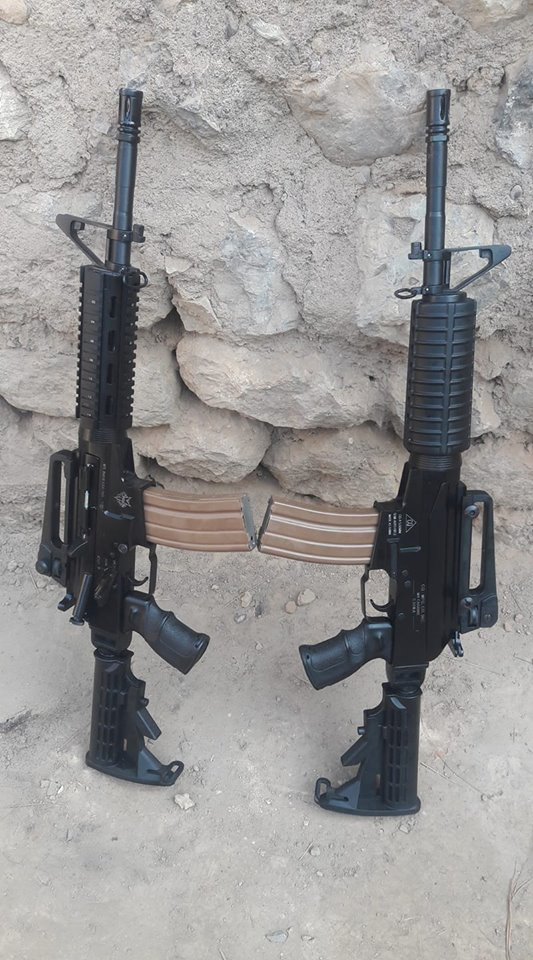
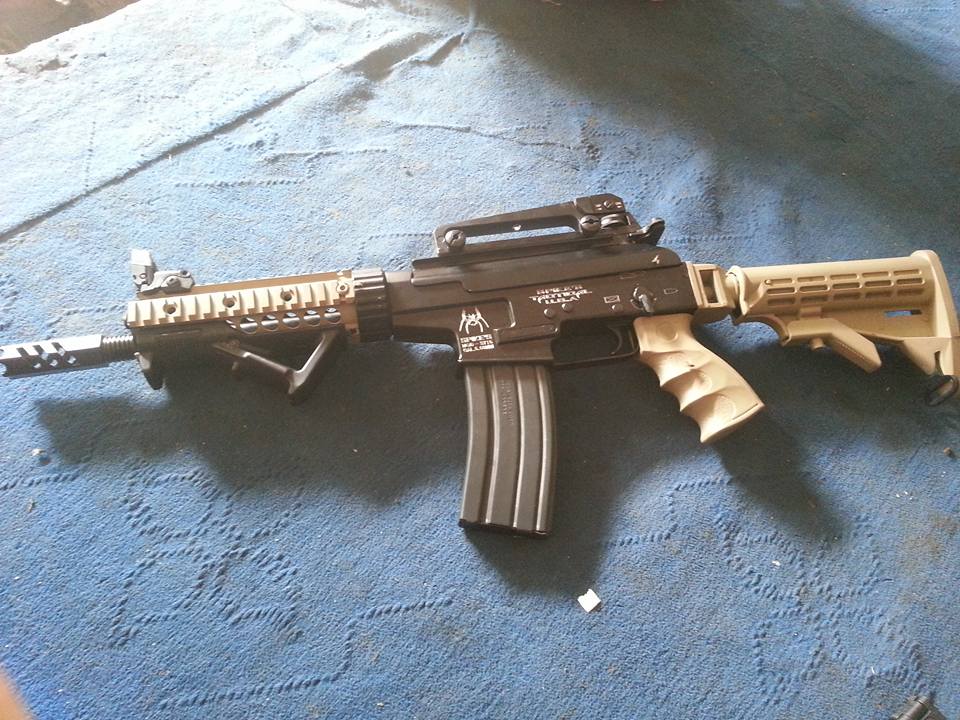
The manufacturer(s) of these rifles have gone to great lengths in order to imitate the appearance and some of the modularity of the AR-15 self-loading rifle. Generally the modifications to these rifles include an mid-length polymer handguard, a ‘Picatinny’ type rail affixed to the top of the dust cover in imitation of a ‘flat-top’ design, an A2-type front sight base, A2 ‘birdcage’ type flash hider and other muzzle devices, and sometimes AR-15-style collapsible stocks mounted on buffer tubes.
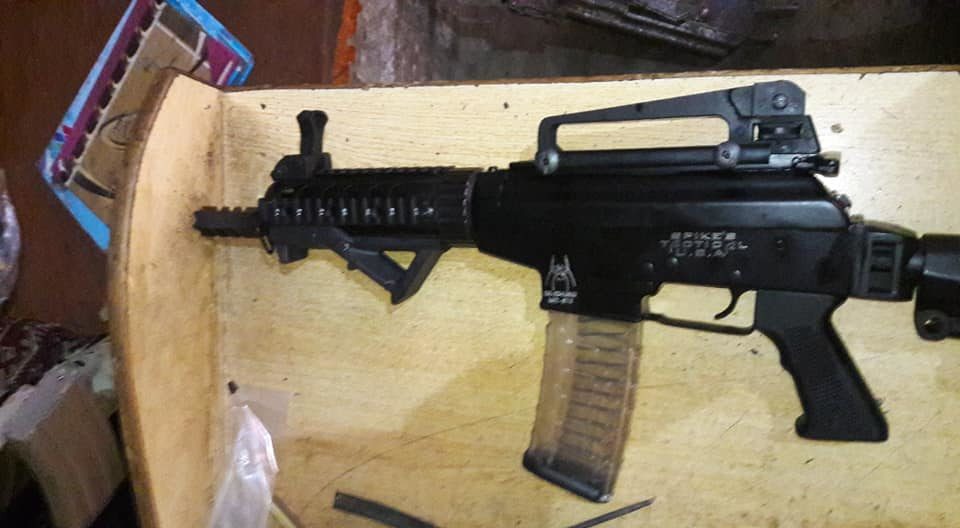
The cosmetic influence of the AR-15 is best seen in the front section of the rifles. The handguards are most often of the standard M4-type polymer design with an aluminum heat shield. Less common are those quad-rails. Both are likely of Chinese origin. In the examples found, all handguards are mounted using a delta-ring system. There are no known instances of ‘free-float’ handguards on the Darra rifles.
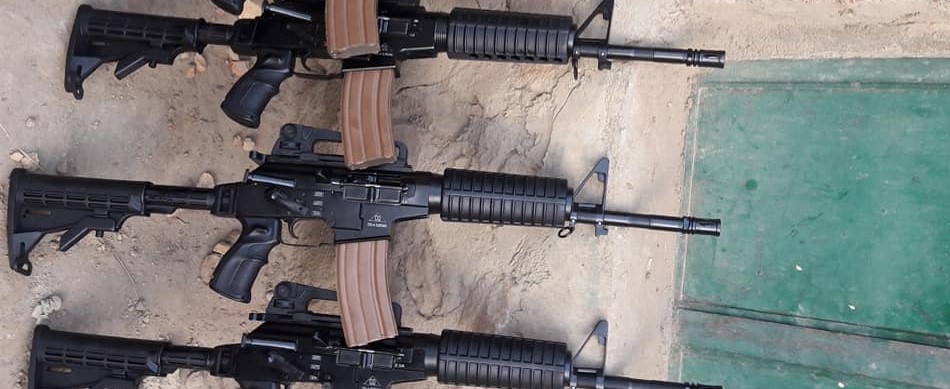
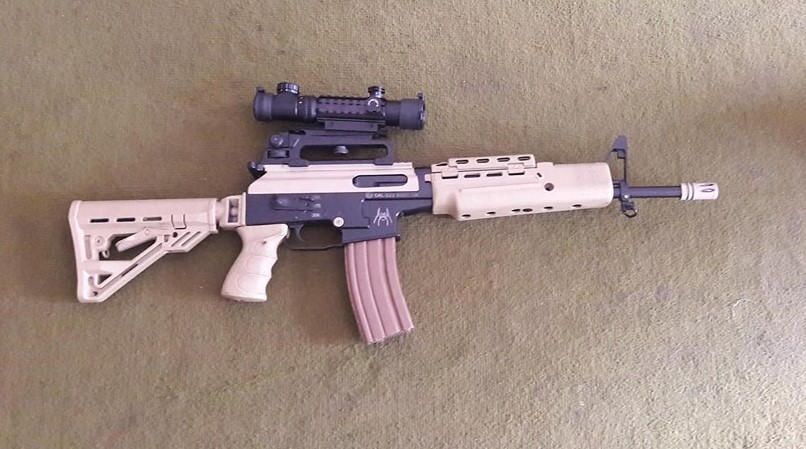
A flat-top receiver with a picatinny rail is the most commonly seen configuration on the Darra rifles. The manufacturer(s) imitates the appearance of a flat-top upper receiver by integrating a Picatinny rail mount on to the top of the weapon’s dust cover. The ability of this mounting system to hold zero is questionable at best. While more secure side-rail options exist for mounting optics to AK-type rifles, the manufacturer appears to have prioritised replicating the cosmetic features of Western guns. An A4-style detachable carrying handle, backup iron sights, or an optic are often mounted to the picatinny rail.
Another cosmetic feature the Darra rifles share with production AR-type rifles is the presence of an M16A2-style front sight base (FSB). In a production AR-15 with such a feature, the FSB serves two additional purposes in addition to its primary function as a sight: it incorporates a gas block, which is integral to the AR’s gas system; and serves as a contact point for the handguard to attach. In the imitation rifles, the FSB almost certainly does not function as part of the AKM’s gas system. However, it is seen retaining the front end of the handguard in many examples. Most Darra rifles are fitted with the A2-style FSB, but limited numbers are also seen using ‘low profile’ mounts without a FSB.
The flash hiders seen on these Darra rifles also frequently imitate M16/M4 stylings. The flash hider is usually an M16A2-style ‘birdcage’ design, and looks identical to commercially manufactured counterpart. Production varies, and the device is often indexed incorrectly, being installed upside down or sideways. This would negatively impact its ability to moderate recoil. The muzzle device is not always a standard ‘birdcage’ type, and many variations of ‘cookie cutter’-style muzzle brakes have also been observed. These brakes are also likely reproductions from China.
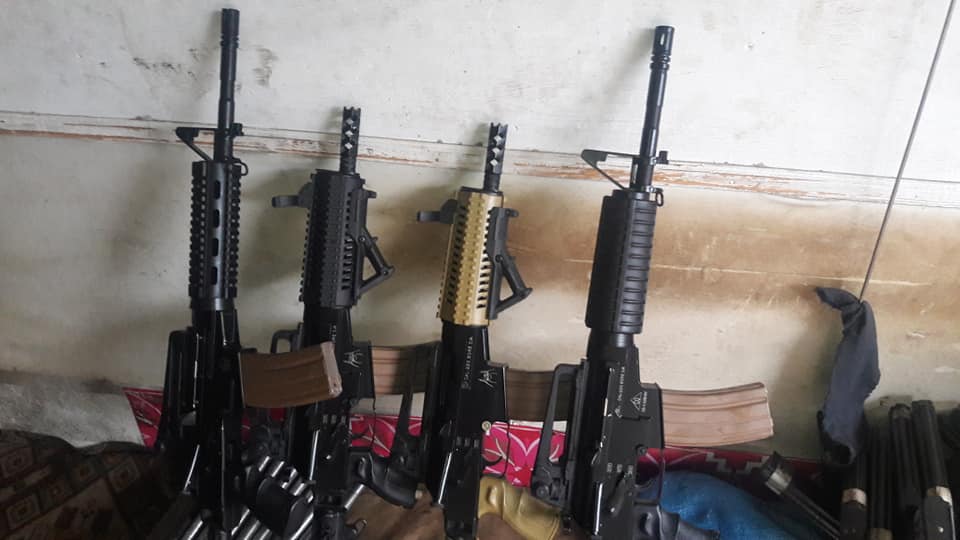
A final cosmetic feature that is often imitated is the collapsible buttocks present on all observed examples of these rifles. These stocks are standard AR-style stocks fitted on a buffer tube. The buffer tube is attached to the rear trunnion with an adapter that is common on many commercially available AK-type rifles. It is unknown if this is a foldable adapter. Like the handguards, the stocks are likely of Chinese origin (ie. Norinco CQ stocks or similar) as Darra is not known for its polymer manufacturing. Some rifles are fitted with more ‘tactical’ adjustable stocks; these are also likely to be Chinese-manufactured copies of production stocks.
Mechanics
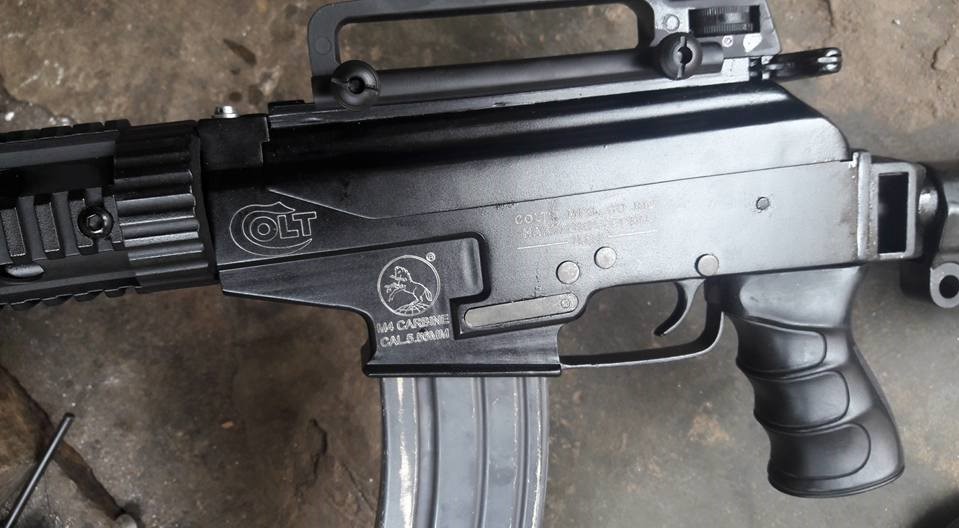
There are numerous mechanical differences between the Darra rifles and the standard AKM pattern they are based on. These seem to be primarily seeking to replicate the form and function of the AR platform. Perhaps most obviously, these rifles accept STANAG pattern 5.56 × 45 mm magazines that fit a modified magazine well. A closer view shows some of the finer details of this system, which replicates that of the AR platform by using a button-and-crossbar arrangement (circled in red in Figure X.X).
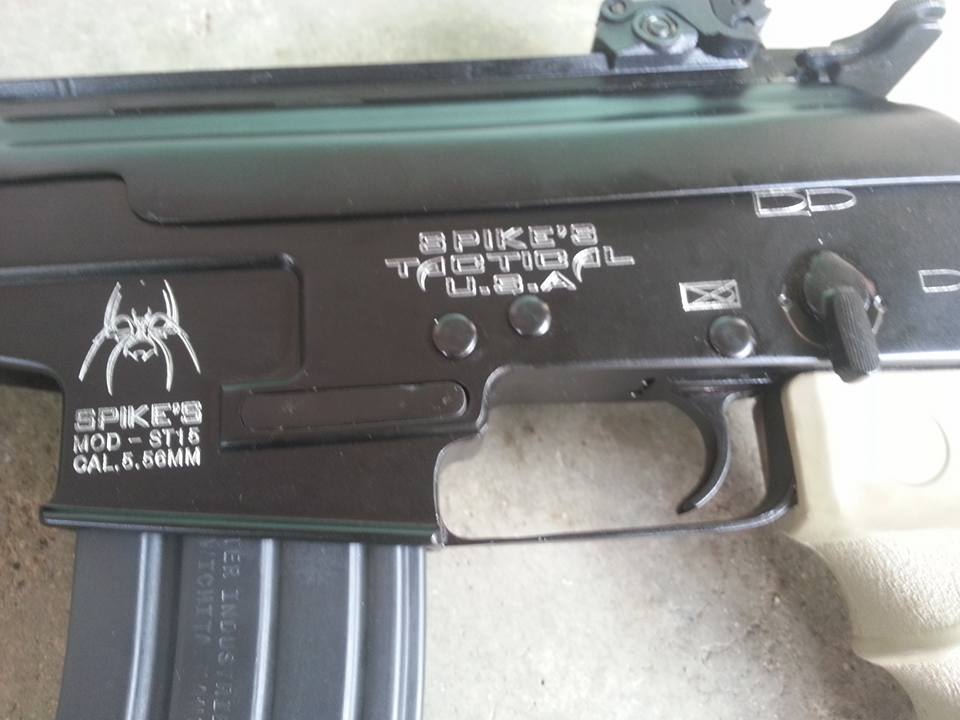
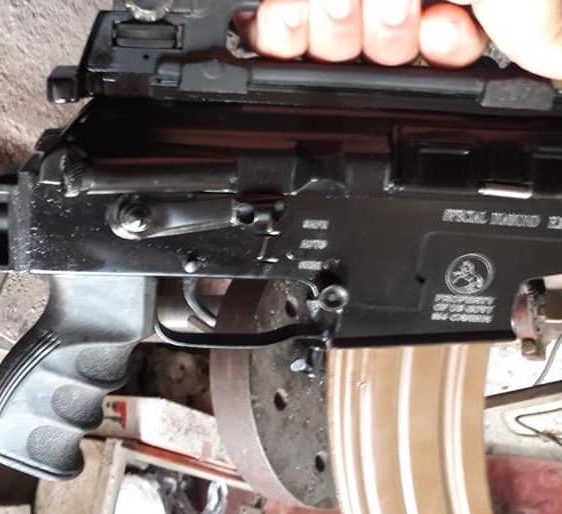
The next mechanical difference seen in all examples of these rifles is the fire selector. In Figure X.X, the fire selector is of the standard AKM three-position type, marked “Lock” (safe), “Auto” (automatic), and “Semi” (semi-automatic). However, there are two notable differences present on the selectors of the AR-inspired Darra rifles.
Another prominent mechanical difference seen on all examples of the rifle is the fire selector. The fire selector of the ‘AKM-15’ does not have a typical AKM-style selector/dust cover, because the receiver is of a more enclosed design, in order to mimic the AR-15. Instead it has an AR-15-style ejection port dust cover. On the left-hand side of the weapon is a three-position A-15/M16-type selector, while on the right is a shortened AKM-style selector lever. It is unclear how the two selectors are connected, as the AKM-style pivots while the M16-type rotates. The utility of M16-style selector in practice is unknown; due to its smaller surface area, pushing against a notoriously stiff AK-pattern fire selector may prove difficult. This fire selector still follows the AK order of arranging fire modes (‘safe’, ‘automatic’, and ‘semi-automatic’), as opposed to ‘safe’, ‘semi-automatic’, ‘automatic’, as seen on an AR-type rifle.
Little is currently known about the barrels of these rifles. Most seem to fit the standard ‘government profile’ AR barrel with the corresponding change in outside barrel diameter for ease in mounting a grenade launcher, but the exact diameters of the barrels are unknown. It is also unknown how the barrels are fitted to the rifle’s front trunnion. The presence of a delta ring suggests they may be fitted in a fashion similar to an AR, but Darra gunsmiths are likely tooled for AK-style press-fitting.

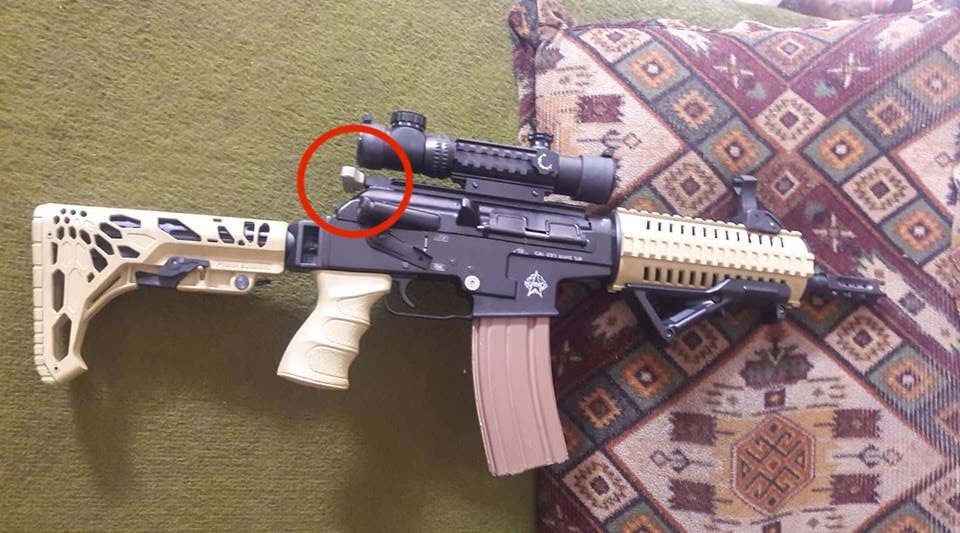
Unfortunately, images of the rifles’ internals are not available. Despite the lack of hard evidence, we can venture a few hypotheses. The rifles are charged using an AR-15-style rear-mounted charging handle (circled in red in Figure X.X), allowing for the rear of the action to be sealed. This means the bolt of the rifles must be modified from a standard AKM design, as the AKM right-hand side charging handle is not present. In addition, a forward assist is visible on most rifles; it is not known if this is functional. If the forward assist is functional, it is likely through a rod pushing on the rear of the bolt as opposed to serrations on the bolt ratcheting it forward, due to differences in AR-15 and AKM bolt shape. Finally, no bolt release is visible, so the rifles likely do not have a last-round bolt-hold-open feature as seen on standard AR-15 models.
Another of our contributors, Khyber
Markings
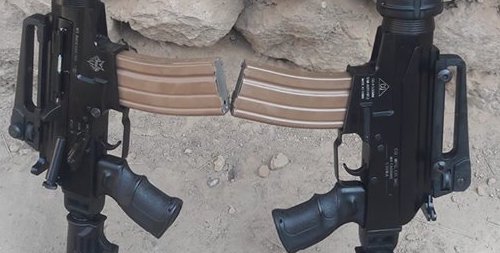
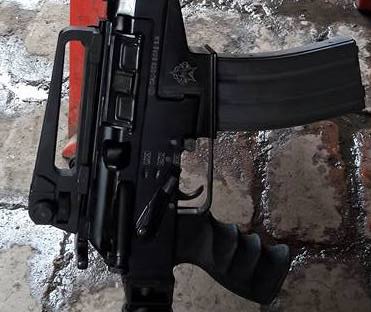
Not all examples of these rifles bear receiver markings, however all of those that have been documented are marked spuriously. In some online sales postings, sellers have been documented saying the rifle is “local made” or “Pak made”. Nonetheless, the markings make outlandish claims about the origins of the weapons. One of the most common spurious markings seen on these rifles is in imitation of Spikes Tactical, showing both their spider logo and spelling out “SPIKES TACTICAL USA”.
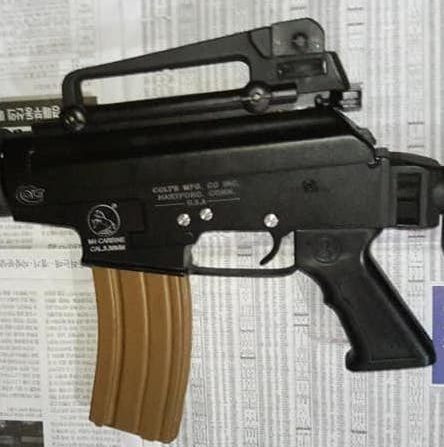
The next common marking on these AR clones is a Colt marking, which is often coupled with “Property of US Govt.” and “M4 Carbine”.
The next most common spurious markings are those that imitate Chinese rifles. Both the CQ logo (as in Norinco CQ, the Chinese AR clone) and the Norinco “arrow” logo seen on Chinese AKMs. The choice of Chinese logos may seem odd to the Western observer, but Norinco CQs are quality M16 copies that are relatively popular in the region.
Conclusion
Mechanically, the Darra rifles are unique. It is unknown if these rifles are entirely manufactured in Darra Adam Khel, or are highly modified extant AKM rifles. Either way, the conversion to make these appear more like AR-pattern rifles is extensive and appears to take place locally. There are two likely explanations as to why these rifles were manufactured.
Firstly, the prestige associated with US military M4 and M16 rifles is significant in the region. In much the same way that AK-74 and, especially, AKS-74U rifles became more highly valued during and following the Soviet-Afghan War, so too have AR-type rifles come to be more popular. Due to a range of perceived and real factors, AR-type rifles are often considered to be of higher quality than their Soviet counterparts. For some buyers, the notion of a weapon that appears to be taken from their adversary may also be appealing.
Perhaps more importantly, however, are economic factors. Offsetting the demand outlined above is the reality that US-made (and even Chinese-made) AR-type rifles are significantly more expensive than the more readily-made AK rifles of the region. Authentic M16 or M4 rifles are often priced at around 300,000 PKR (2,200 USD). AKM rifles in the same markets cost around 25,000 PKR (179 USD). The modified AKM types examined here are typically priced between 45,000 and 60,000 PKR (320–430 USD) depending on the accessories fitted. Their similarity to the pricier and more desirable AR-type means they command a higher premium than traditional AK-type rifles, and the popularity of these weapons is reflected in their growing availability. Currently, there seems to be more interest in these AR-inspired AK rifles than actual AR types in local markets, likely due to the price difference.
For more information on these rifles check out our
This article is a guest post, written by Daniel Hughes.