Back in November, friend of Silah Report and frequent author Analyst Mick, shared some photos of a British World War Two-era submachine gun, a Lanchester Machine Carbine. The photos placed the venerable submachine for sale in the Syrian-regime held city of Aleppo. The Lanchester was Britain’s first submachine gun, with plans for its production put in place just before the development of the STEN gun.
By May 1940, following the evacuation of British forces from France at Dunkirk, the British Army was desperately in need of weapons including small arms. While Thompson submachine guns had been ordered from the US it was realised an indigenously produced weapon was also needed. The result was the 9x19mm Lanchester Machine Carbine, a copy of a German MP 28/II, named after George Herbert Lanchester – the engineer who oversaw its production, at the Sterling Company who would later produce the Cold War-era Sterling submachine gun.
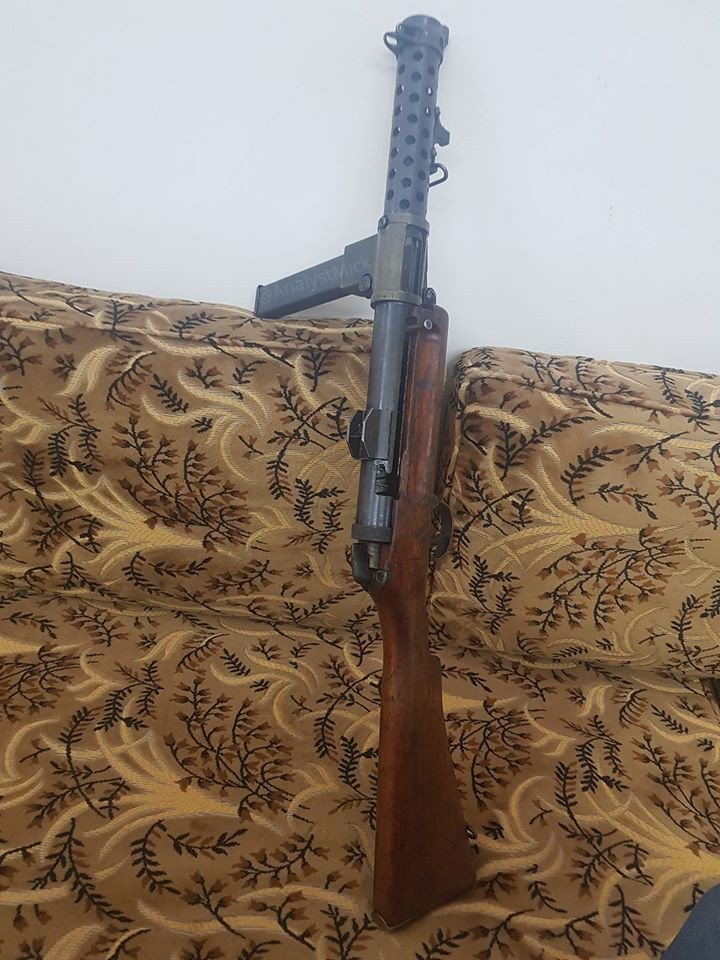
Production of the Lanchester began in 1941 with 50,000 initially ordered. The Lanchester, however, proved to be an expensive submachine gun to produce with its wooden stock, finely machined barrel, shroud and receiver and its cast-brass magazine housing. As such the cheaper to produce STEN quickly surpassed it. Despite this the Lanchester Machine Carbine remained in service with the Royal Navy through to the end of the 1970s.
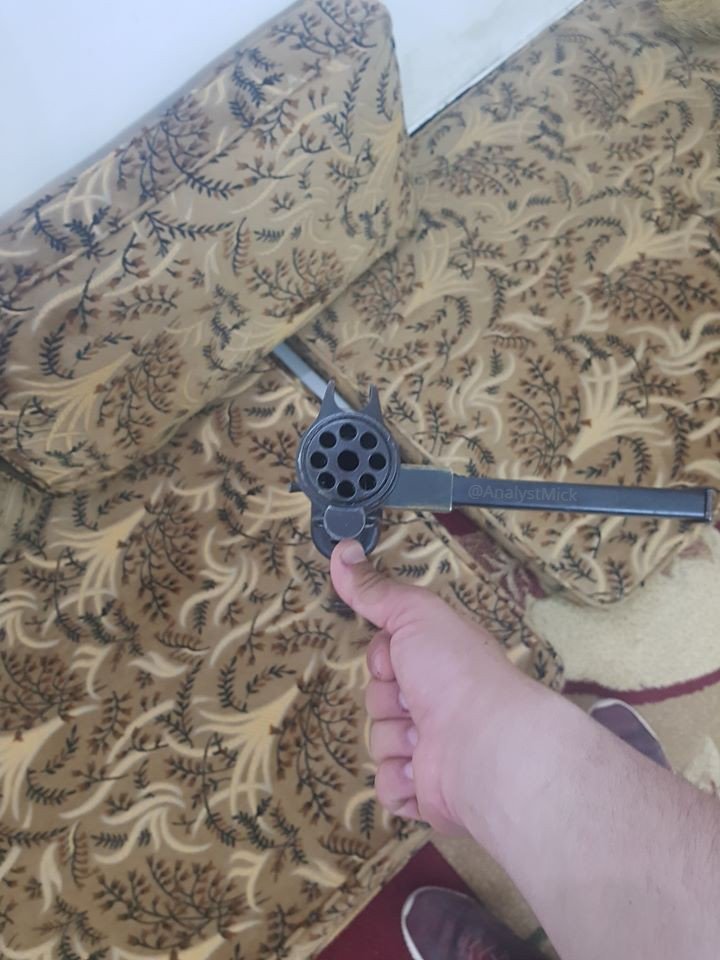
The Lanchester had an 8in barrel and fed from a long 50-round magazine – although it could also feed from the STEN’s shorter magazine. It also mounted the formidable Pattern 1907 sword bayonet used by the SMLE. The gun seen in these photographs is the second pattern of gun, the Mk1*, which was developed in an effort to simplify and cheapen production of the guns. The Mk 1* had a simpler flip sight with sight protectors it also lacked the Mk1’s fire selector switch and fired in fully automatic only.
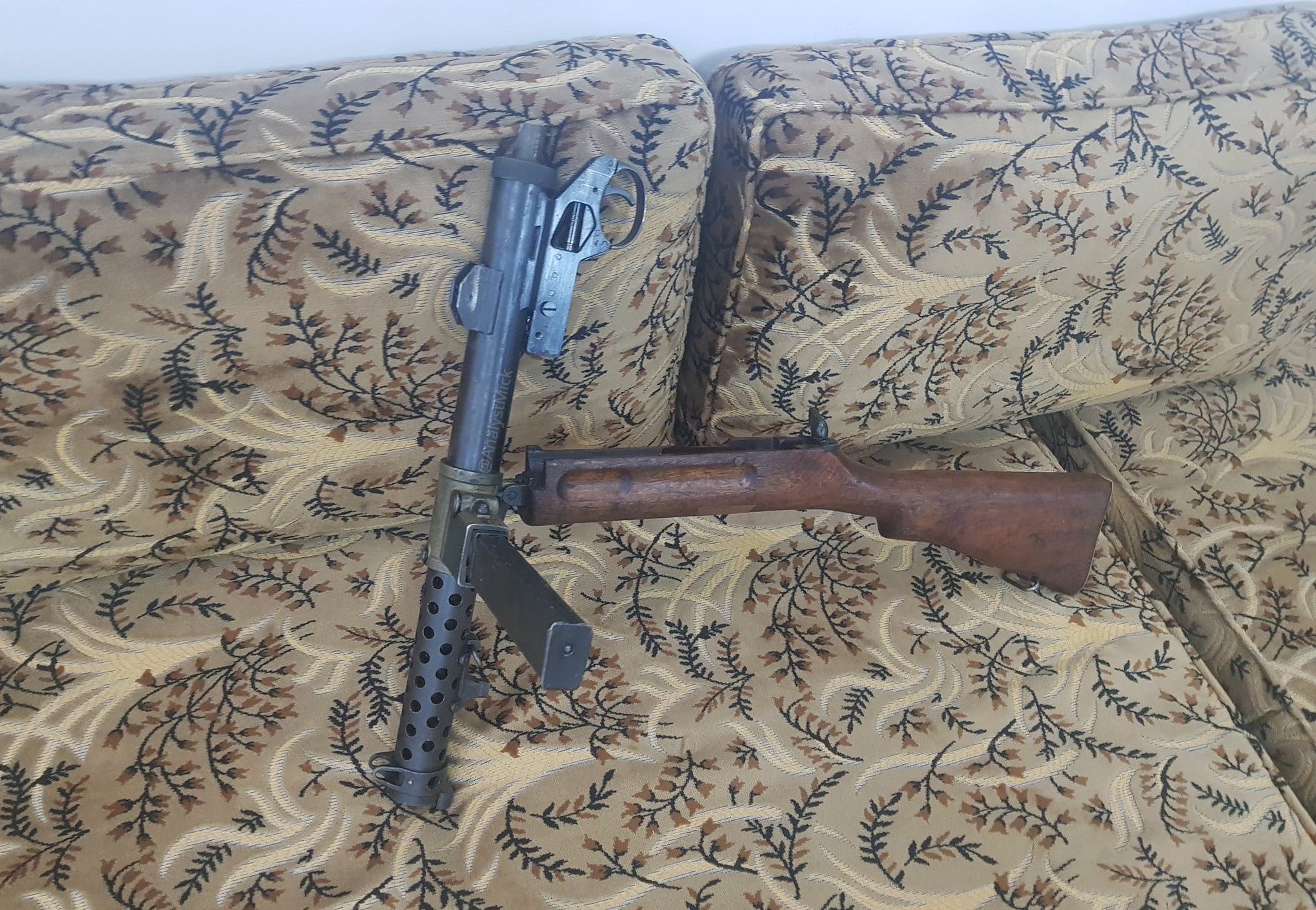
The photos discovered by Analyst Mick beg the question of how did a British World War Two submachine gun find itself in Aleppo? The gun is most likely one of three batches received by Egypt throughout the late 1940s and early 1950s. Some had initially been issued to the Transjordanian Desert Force which protected the region’s oil pipelines during the war. The larger extent of them found their way into Egyptian hands through surplus sales in the late 1940s. These weapons were used by Egyptian troops and later by security forces and police and have been seen with Egyptian markings although the limited photos we have of this example don’t show any. A total of 79,790 weapons were built by the end of production in early 1944, one of which survives today, in Syria.