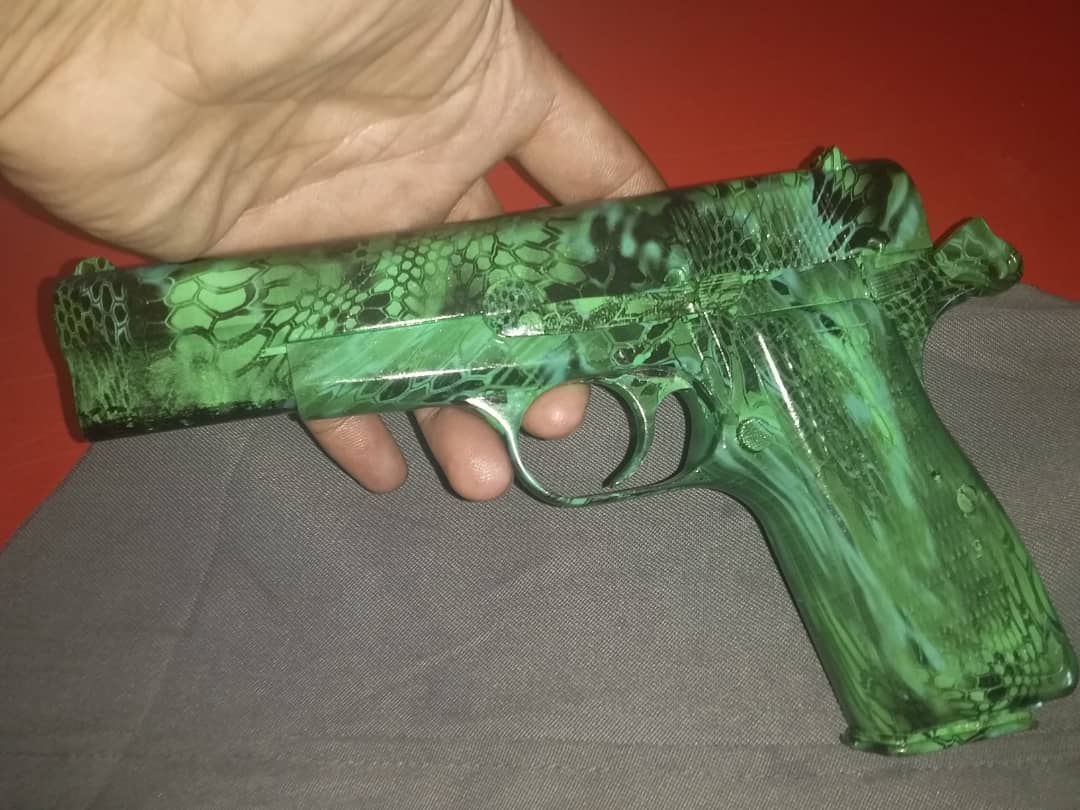
Welcome to the 22nd episode of the Silah Report Podcast, we recently had the pleasure of speaking with a gunsmith currently living in Idlib who has a long history fighting the SAA, not as an armed militant but as a gunsmith. Before the rebel pocket in Damascus fell to the SAA, he worked on manufacturing ammunition, weaponry, and even mortars for the resistance. He also worked on hydro-dipping rebel firearms. Currently, he resides in Idlib and had a short-lived business project hydro-dipping firearms. He agreed to be interviewed and to inform us about his journey specifically in that field, given that there are hundreds of photos of Syrian rebels with painted firearms floating throughout the internet and it is quite common now to see hydro dipped AK-pattern rifles. We at Silah Report wanted to know more about the industry and the people involved in it.
If you’d like to have your questions answered by our panel during an edition of the podcast, please support Silah Report on Patreon and submit questions as often as you like!
If you missed the previous episode, you can find it here.
Check out the podcast here and listen along with the photographs below!
https://soundcloud.com/silah-report/v22-abu-ahmad-the-gunsmith-in-idlib
Podcast Running Order:
Presentations:
The Background
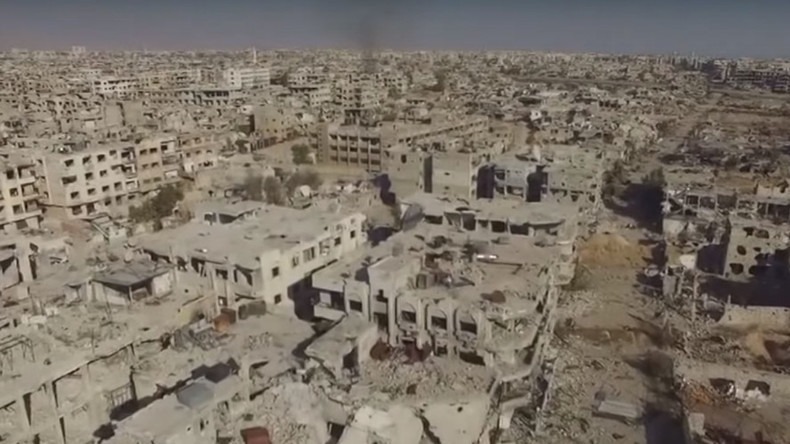
War in Damascus
Gunsmith at Idlib
Hydro Dipping Guns in Idlib
The Background
The gunsmith (as we shall refer to him in this print article, as he wishes to remain anonymous) gave us a very brief introduction to his background; originally, he worked as a metal painter for 22 years. After graduating from high school, he enrolled in an institute where he learned metal painting and liquid painting. After that, he metal painted furniture, accessories, and rarely firearms before the Syrian Civil War as gun ownership in Syria was extremely strict. After the war started he joined the ‘resistance’ (he did not specify which group/militia he worked with) in Damascus and helped in manufacturing ammunition and projectiles out of brass as well as mortars. After many long years of fighting in Damascus, the SAA (and their allies) managed to take the rebel-controlled areas. The gunsmith managed to reach Idlib, where he had to relocate himself several times due to the intensity of the fighting.
War in Damascus
The gunsmith did not get into the details of the manufacturing he did there but informed us that he did metal paint weapons for the ‘Mujahideen’ (the term doesn’t necessarily have to refer to Jihadists or Islamists – and literally means those engaged in a struggle). He mentioned that liquids and paints were easily accessible over there, which gave him the opportunity to metal paint the weapons of the rebels. Due to the availability of the materials needed and the novelty of his work this created demand amongst the rebels to have their firearms painted. The gunsmith mentioned that the metal painting business is extremely expensive (will mention numbers in later part) and the painter needs to have a lot of experience to ensure they do not ruin the firearms with too much acidity and multiple layers that need to be carefully applied.
Gunsmith in Idlib
The gunsmith found himself in a different world when he arrived in Idlib. A completely different environment and a different situation than the one in Damascus. Acquiring the needed materials for metal painting was extremely difficult and its transportation dangerous. He worked with some individuals on metal painting firearms but unsurprisingly not many of the ‘Mujahideen’ could afford it, given how expensive it is. He noted that setting up a workshop would cost around $30,000 to $50,000! He mentioned that most ‘Mujahideen’ (locals and foreigners) were in dire economic situations, with only a very few who could afford the metal painting and would do so out of luxury. No militant organization/militia contracted him to metal paint for its members and any client was merely a single individual who wanted his firearm to be metal painted.
Hydro-dipping Guns in Idlib
Humidity reaches eighty and ninety percent in Idlib, this encouraged him to look into other ways to paint firearms (especially sniper rifles) to protect them from rust. On the internet, he learned about the process of hydro dipping and went on to start his own business with just $1,000. He acquired the needed materials from Turkey as well as the designs.
For those not familiar with the common process of hydro-dipping, please check out this video. It is a simple process that many can become quite adept at given the proper amount of instruction, experience, and materials. Small arms actually only make up a very small portion of the hydro-dipping field.
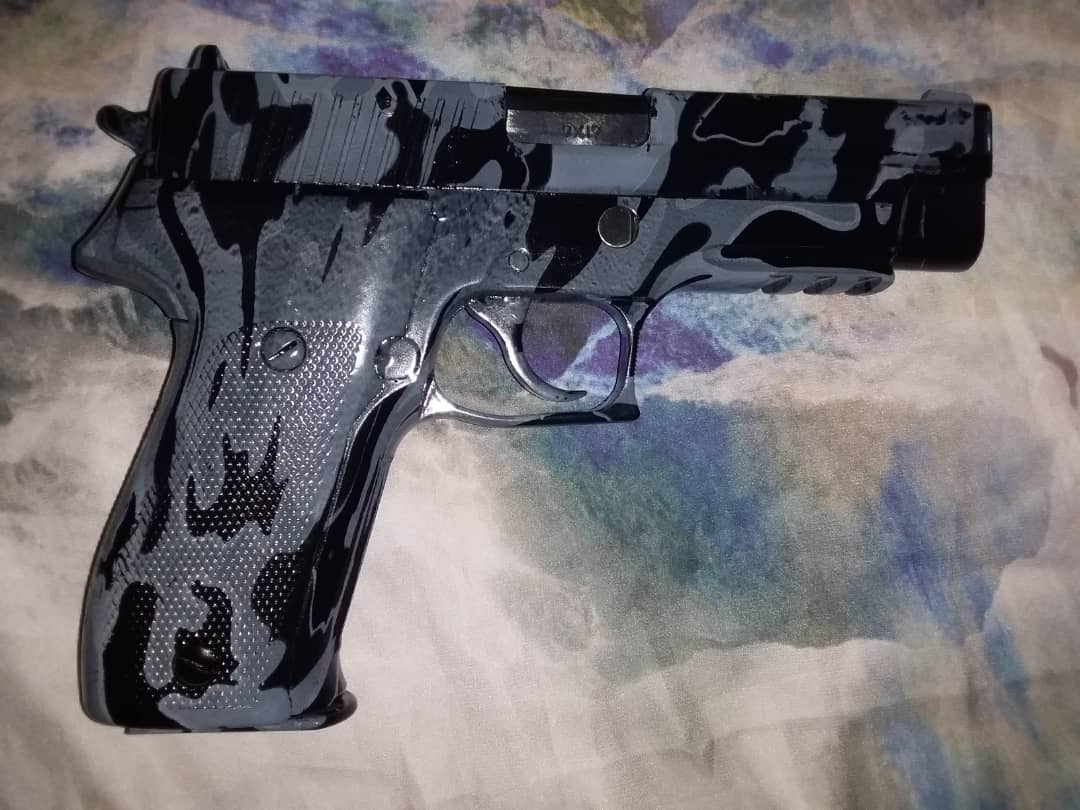
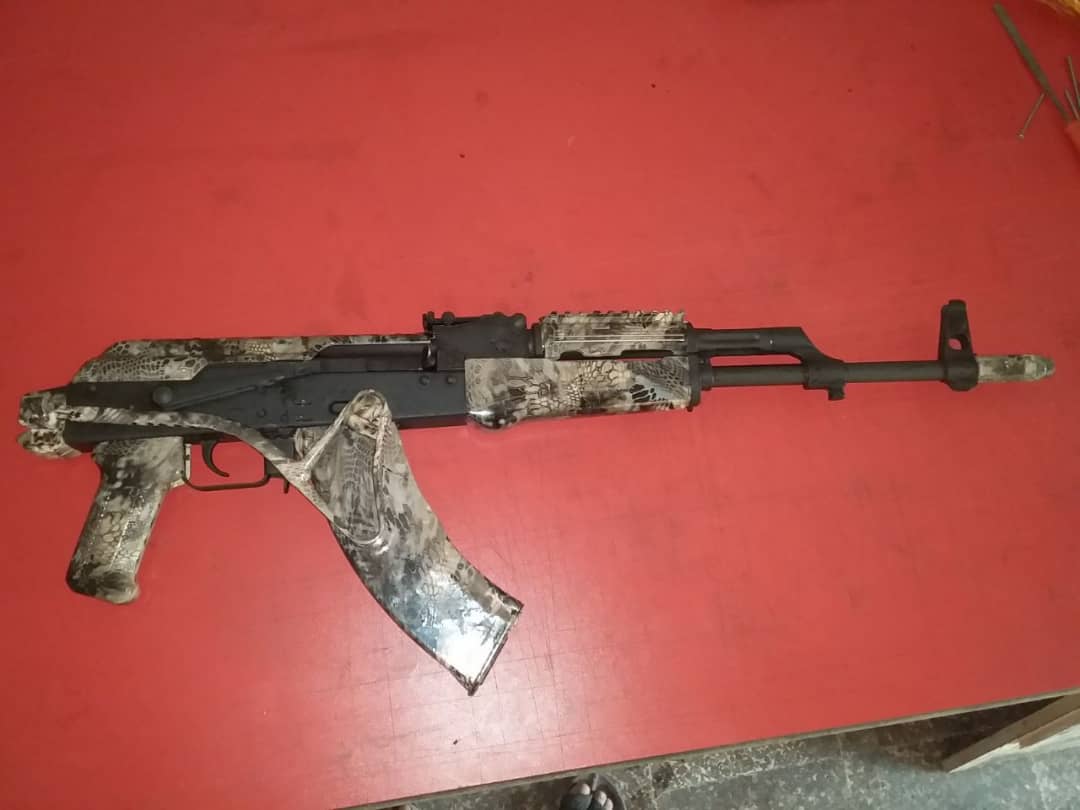
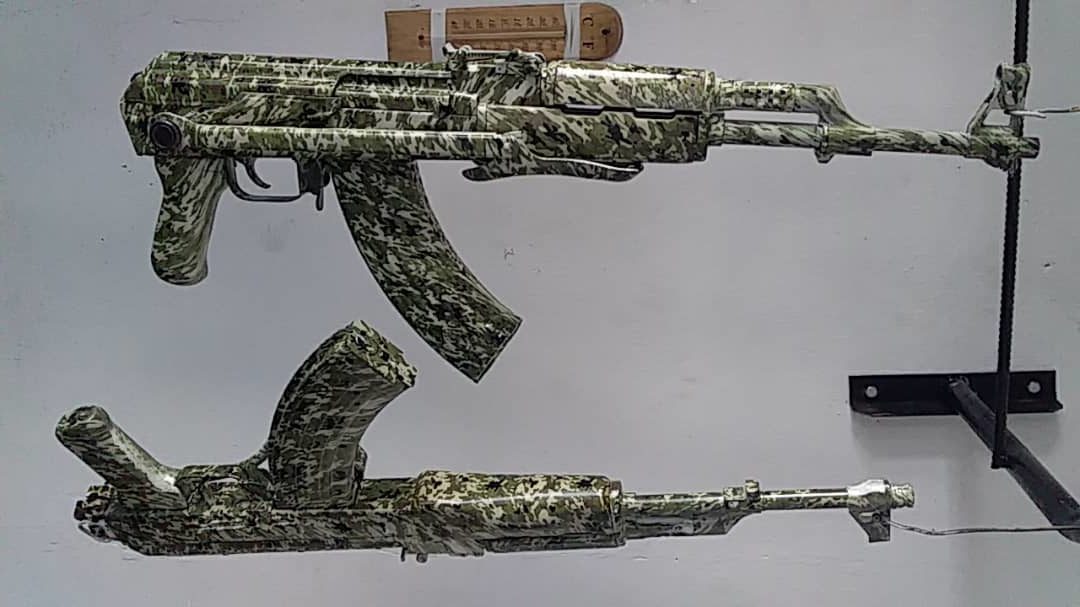
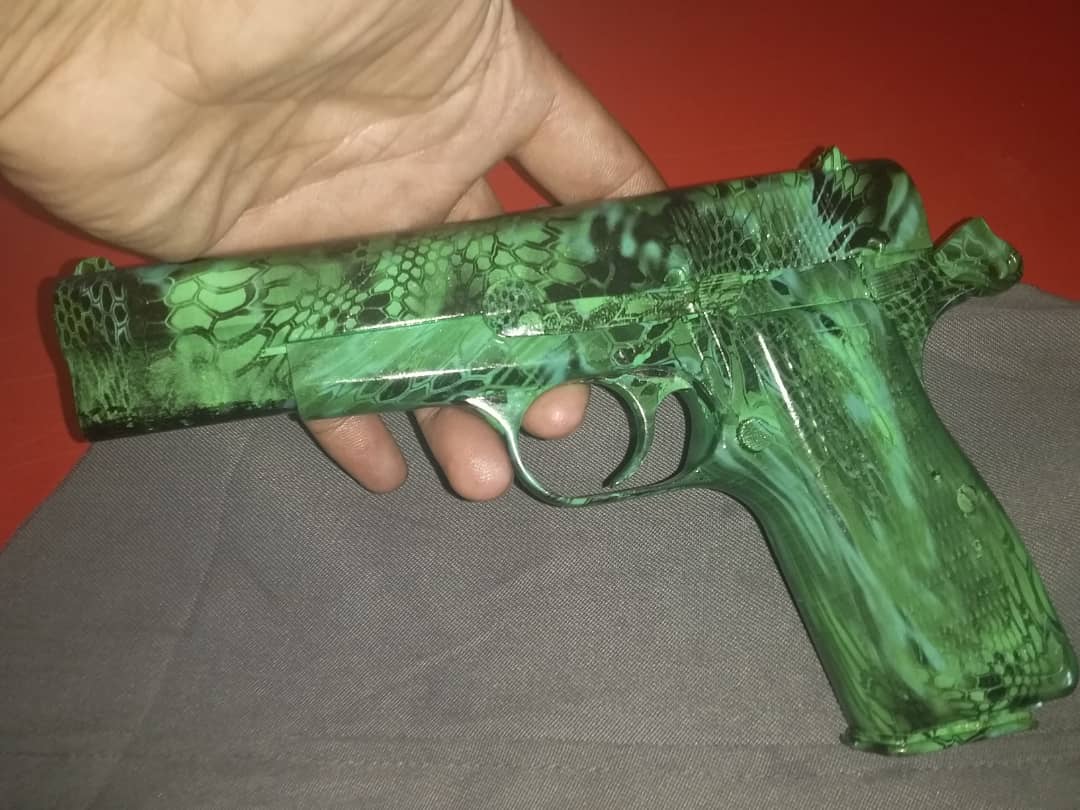
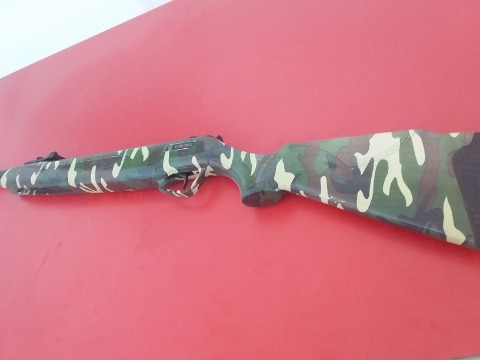
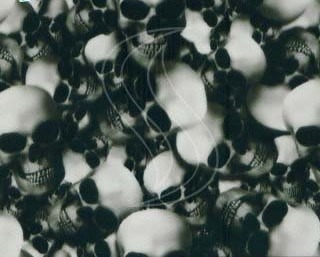
Fig. 1.2-1.6. A few samples of the gunsmiths hydro dipped guns for clients that he shared with us (Source: Gunsmith)
After discussing the importance of ‘car grease’ and nitrocellulose lacquering in the process of hydro dipping a firearm with us he explained that the final product is a firearm that would endure humidity and all kinds of weather conditions for three to four years. Sadly, the gunsmith explained that he is no longer in business. He explained that he originally had a huge Telegram group with most of his clients on it, which was deleted by Telegram. Then, due to the conditions in Idlib and the difficulties many of the rebels were in he would usually offer his services at a loss (it appears from our discussion that he is trying to simply make a living and not to profit out of the war, and made the war effort his top priority for as long as he could). He noted that he made a continual loss for six months straight and subsequently had to make a living by other means. After shutting down, the gunsmith decided to work in the humanitarian field.
Hopefully, he will join us again in future episodes.
Patreon Shoutout
If you want to support our work on researching small arms and light weapons in the MENA and Central Asian regions, please consider joining our Patreon support network that allows us to get articles, videos, and podcasts such as these to an international audience. Check us out at www.patreon.com/SilahReport