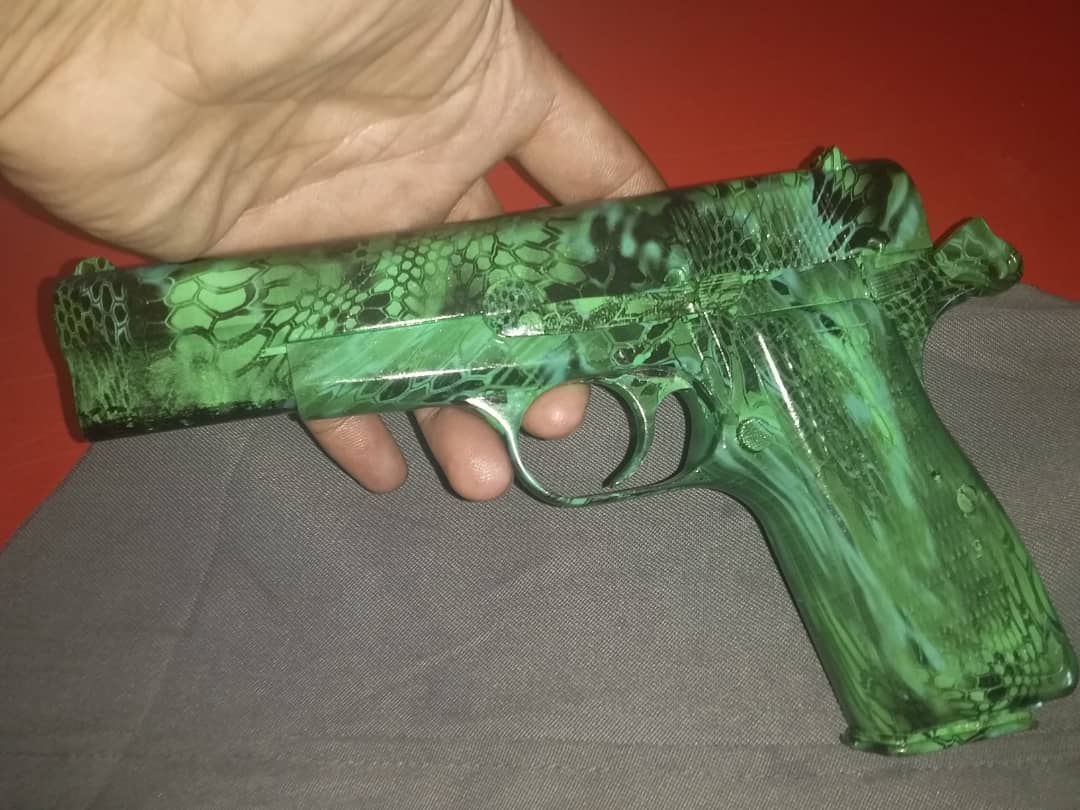
Welcome to the 22nd episode of the Silah Report Podcast, we recently had the pleasure of speaking with a gunsmith currently living in Idlib who has a long history fighting the SAA, not as an armed militant but as a gunsmith. Before the rebel pocket in Damascus fell to the SAA, he worked on manufacturing ammunition, weaponry, and even mortars for the resistance. He also worked on hydro-dipping rebel firearms. Currently, he resides in Idlib and had a short-lived business project hydro-dipping firearms. He agreed to be interviewed and to inform us about his journey specifically in that field, given that there are hundreds of photos of Syrian rebels with painted firearms floating throughout the internet and it is quite common now to see hydro dipped AK-pattern rifles. We at Silah Report wanted to know more about the industry and the people involved in it.
SAA
Small Arms Captured by SAA During Operation BASALT
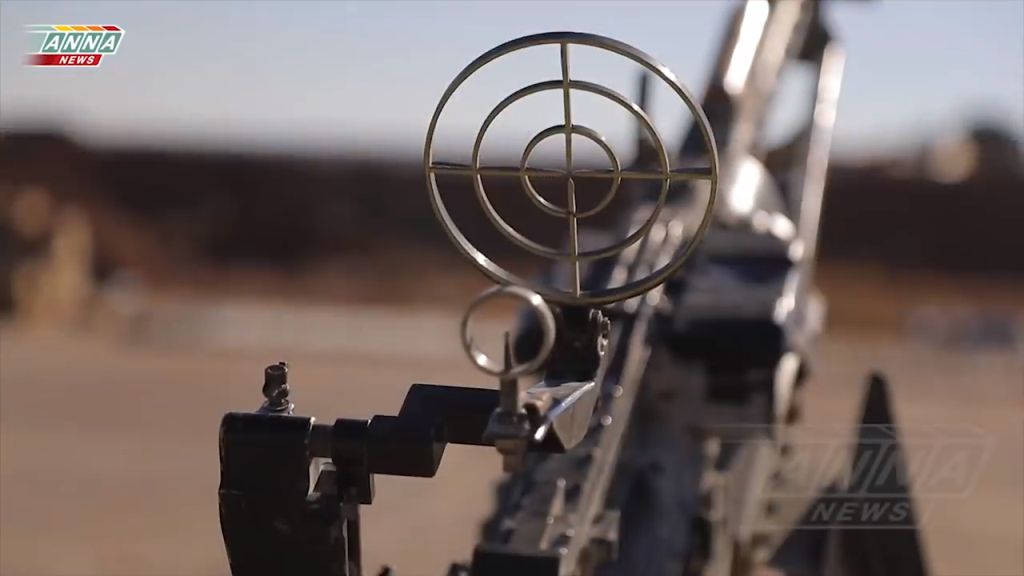
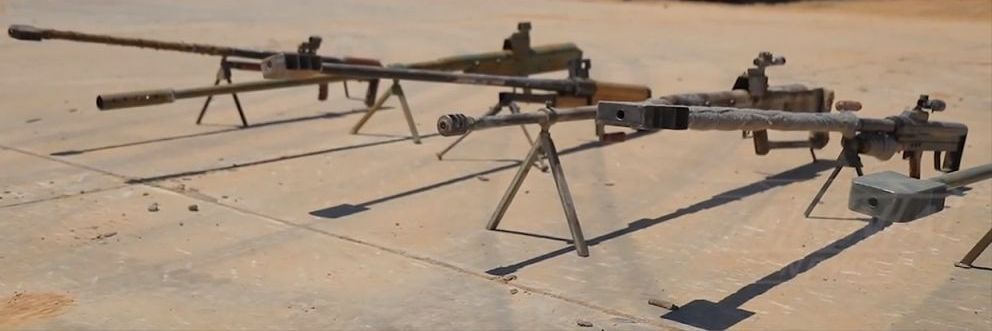
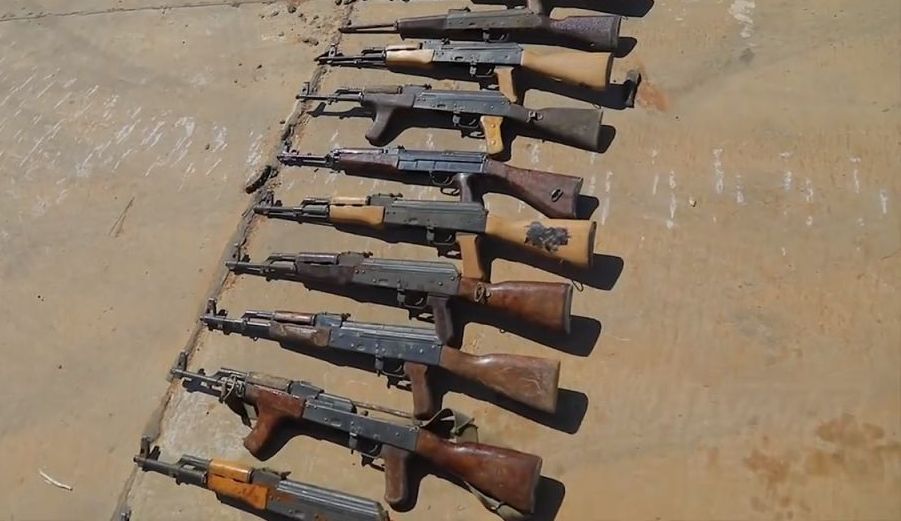
ANNA News (Abkhazian Network News Agency) has published a video where they show the arms and munitions captured by the Syrian Arab Army (SAA) as a result of Operation Basalt launched by the SAA against various armed groups in Southern Syria. Besides the tanks, armored vehicles and anti-tank weapons, there is also a wide variety of small arms which is especially interesting in the context of Silah Report. Let’s watch the mentioned video first then discuss what interesting small arms were shown in the video.
https://www.youtube.com/watch?v=JIWP9Jzbzaw
Below you will find screenshots from the video with captions describing the weapon systems shown in the image.
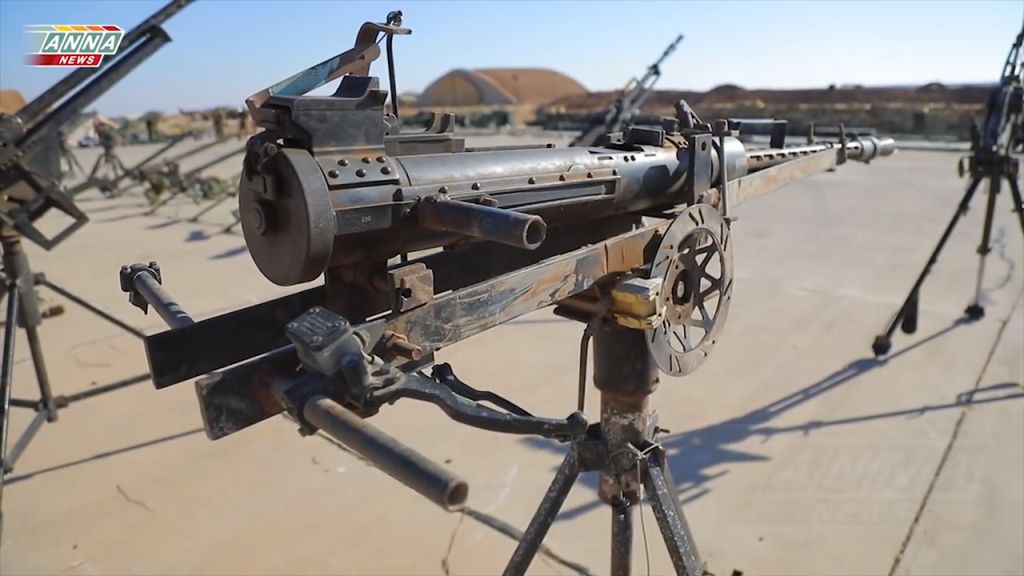
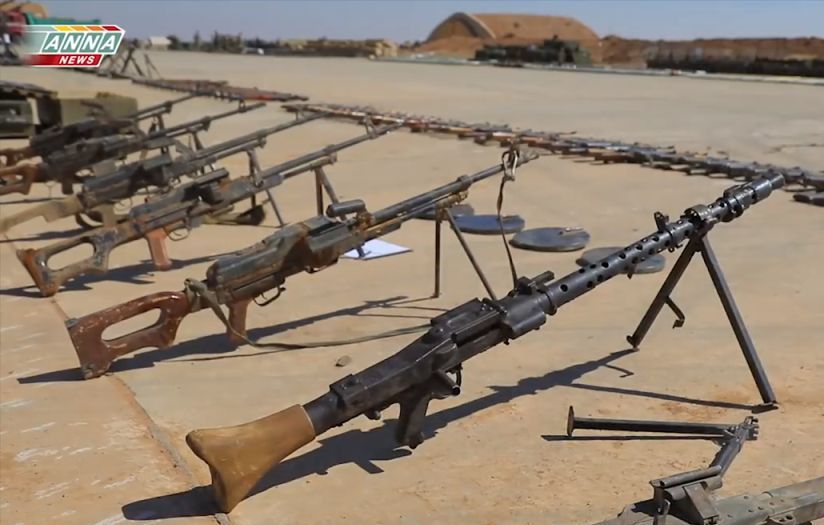
MG-34 with a number of PKM machine guns on the background. I think at some point a new wood stock for the MG-34 was made locally which should be the reason why it has a more simplified look.

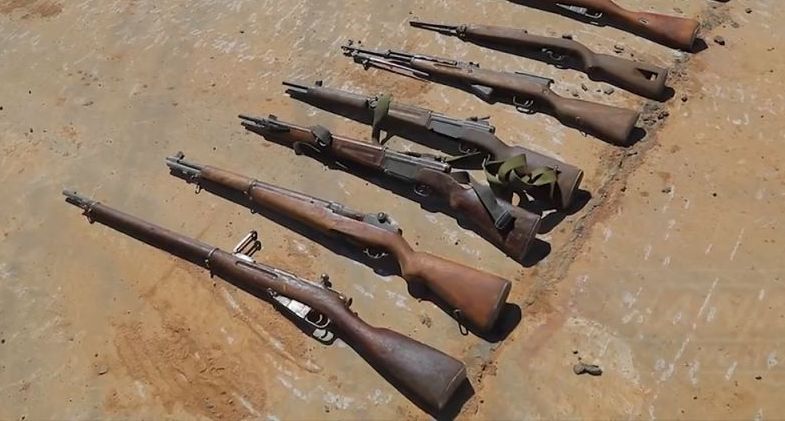
Last but not least, some WW2 weapons still in use in the Syrian war. The very bottom rifle is a Mosin-Nagant 91/30 followed by an M1 Garand and a couple of MAS-36 bolt action rifles. On top of the MAS-36 rifles, there is a Chinese SKS (Type 56) with a folding spike bayonet and an M1 Carbine.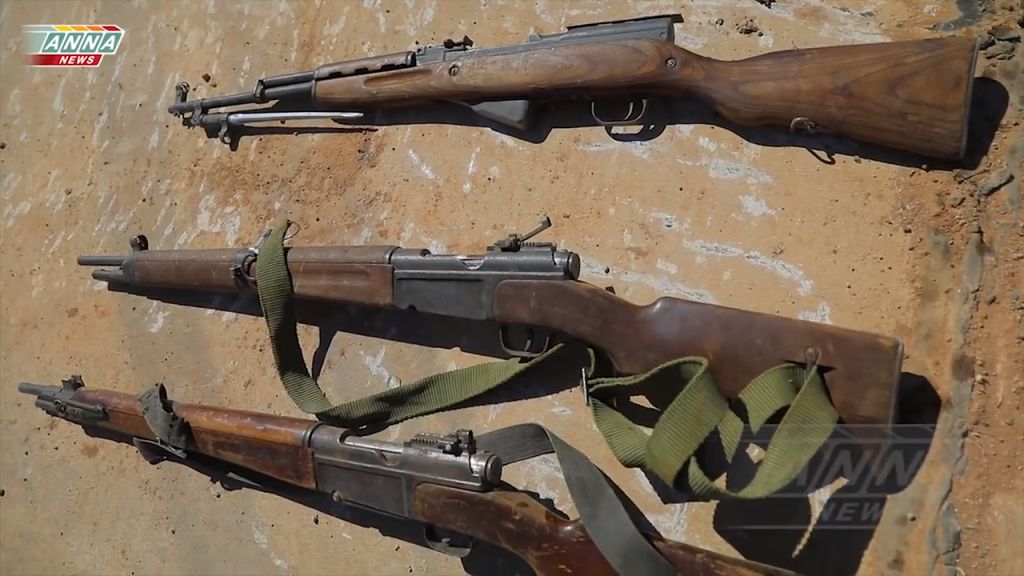
If you spotted any other interesting firearm in the video or noticed a misidentified firearm, please let us know in the comments section.
Guest Post: Iraqi Contract Sterling MK 4 in Syria
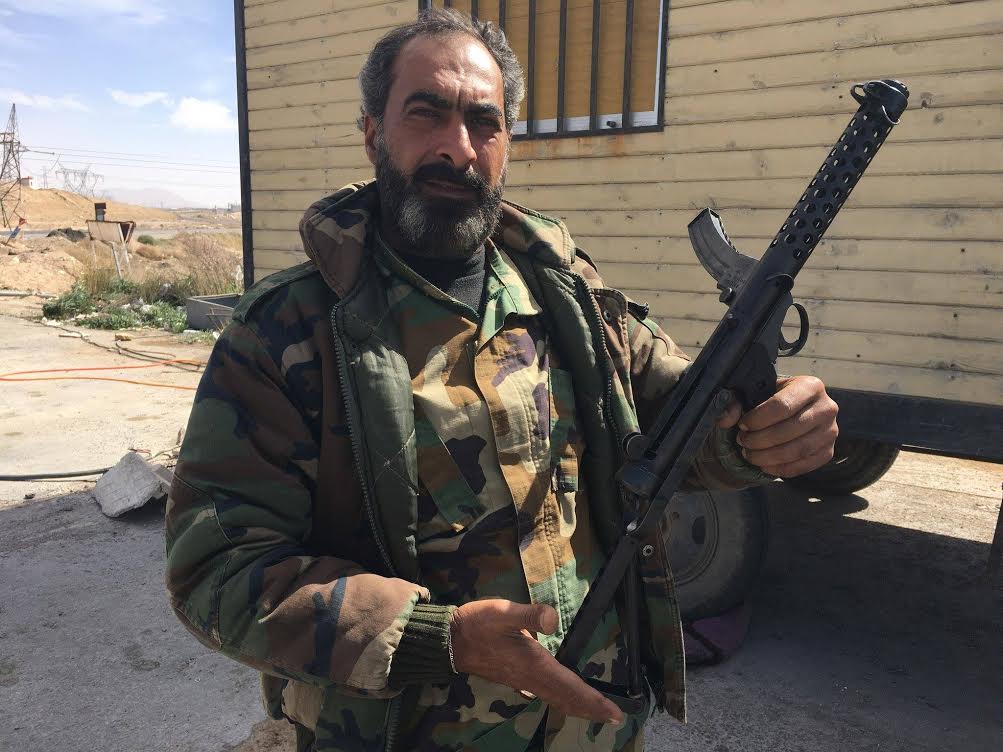
Mathew Moss comes to us as a highly esteemed writer from The Firearm Blog, but he also founded his own fascinating historical small arms research source, The Armourers Bench, in addition to runs his Twitter feed at Historical Firearms. This is his first work for Silah Report, and we hope it won’t be the last!
On the 10th March, Broń. Milmag, the Polish defense magazine, posted an intriguing photograph on their facebook page. The photograph had the short caption, which once translated, reads: “Syria Ad2018. 9-MM MACHINE GUN STERLING MK 4 / l2a3 used by a government soldier.”
Plenty of surplus World War Two weapons including the StG-44, MG42, Mosin-Nagant, K98ks and even French MAS-36s have been sighted in Iraq and Syria during the regions current multi-sided conflict. Sightings of the Cold War era- Sterling submachine gun, however, have been few and far between.
The Sterling submachine gun was developed by George Patchett at the Sterling Arms Company during the latter half of World War Two. Following extensive testing in the late 1940s and early 1950s the British Army adopted Patchett’s submachine gun to replace the Sten gun. It entered British service as the L2A1 in 1953, evolving quickly to its final form the L2A3. The L2A3 was produced commercially by Sterling at their plant in Dagenham, UK from 1956 until 1988 with an estimated 211,000 produced.
The Sterling was subsequently sold commercially and licensed for overseas production in both Canada (leading to the C1 Submachine Gun) and India (leading to the 1A Machine Carbine). Sterling successfully marketed the commercial version of the L2A3, the Mk4, to over a dozen countries around the world from Malaysia, to Libya, to Iraq.
The weapon featured in the photograph appears to be in remarkably good condition. Following some digging I was able to find what I believe to be the original posting of the photograph online. Posted on Twitter by @Edward_Sn0wden on the 9th March. The twitter post includes a second photograph showing the Sterling’s magazine housing and markings. The photographs are credited to Alexander Kharchenko but sadly no location is mentioned. The caption suggests that the weapon might be a captured trophy.
From the available photographs the weapon appears to have a matte, rather than crackle paint, finish – this is either an original contract choice or a later armory refurbishment. The weapon is also fitted with an original Sterling produced commercial production 34-round curved double stack, double feed magazine – one of the most reliable submachine gun magazines ever developed.
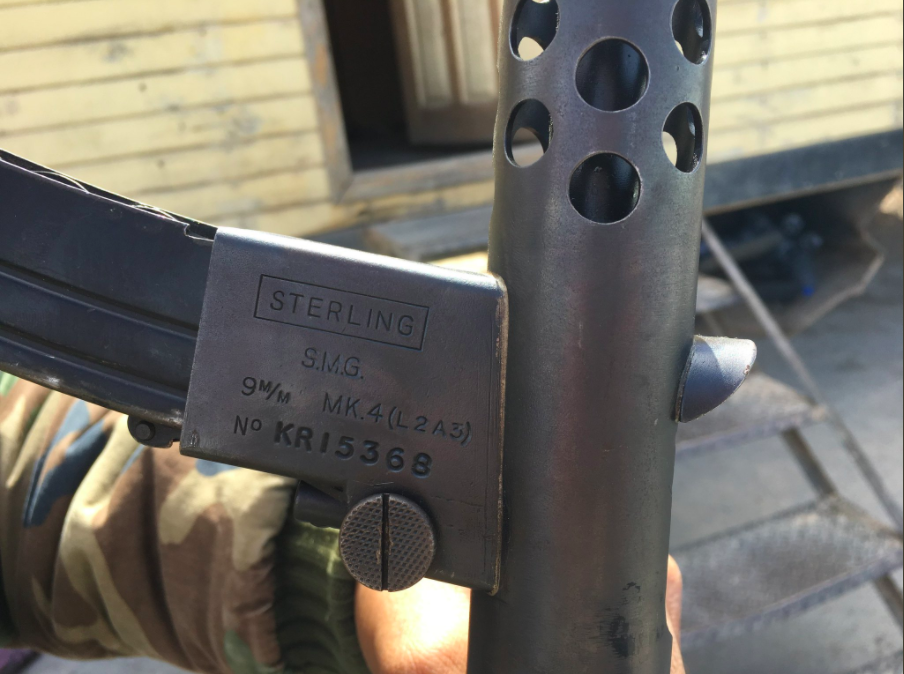
We are lucky enough to have a second photograph showing the weapon’s markings in full: ‘STERLING SMG 9m/m MK4 (L2A3) KR15368’. The serial number, beginning with ‘KR’ dates the gun as a pre-1972 Sterling and refers to Kenton Redgrave, the Sterling company’s long-time director. The serial number dates the weapon, according to the serial number ranges, listed in The Guns of Dagenham (1996) by Peter Laidler, to 1957. This date would fit with the 1956-63 Iraqi contract which supplied 13,241 Mk4s to Iraq, first to King Faisal II’s military, and then to the Iraqi Republic, following a coup that deposed Faisal in 1958. The Iraqi Sterlings later saw action during the Iran-Iraq War and to a limited degree during both the Gulf War and during the 2003 Iraq War.
While rare the Sterling has been spotted in the region before, three years ago CJ Chivers, the New York Times investigative conflict journalist and author of The Gun, shared a photograph of a Mk4 with a straight Sten magazine in use by the Mahdi Army in Sadr City, Iraq.
While investigating the photograph above, an Iraqi fighter came forward and told me about his ‘heirloom’ Sterling Mk4 which had belonged to his father, an Iraqi soldier killed during the Iran-Iraq war. Interestingly, this Iraqi heirloom Mk4 dated from June 1964, suggesting that the Iraq contract may have extended beyond the 1963 end date indicated by Laidler.
The Iraqi gentleman also advised that the Sterling was known to him, and possibly regionally as the ‘غداره مصريه’, which translates to ‘Egyptian Contract’ or Egyptian Submachine Gun. It seems that the Sterling has come to be confused with, or at least associated with an Egyptian submachine gun. While the Egyptian Army did purchase a number of commercial Mk3 Sterlings in 1954-5, Egypt never produced a copy of the Sterling, instead opting to copy the Carl Gustav m/45 to create to the Port Said, produced by Al Maadi.
How a Syrian government soldier might have come into possession of what is likely an Iraqi Sterling submachine gun is one of war’s intriguing mysteries. Regardless of how he acquired it appears to be in excellent condition for a 50 year old weapon.
Images:
Milmag post:
Possible original source on twitter:
https://twitter.com/Edward_Sn0wden/status/972075403971055616
Rock Island Auctions photo of commercial Mk4 Sterling for Reference:
Weapons and Ammunition Seized in Ghouta by the Syrian Army
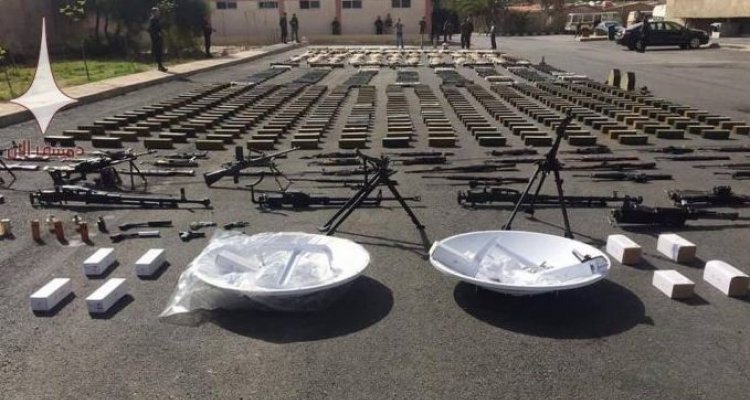
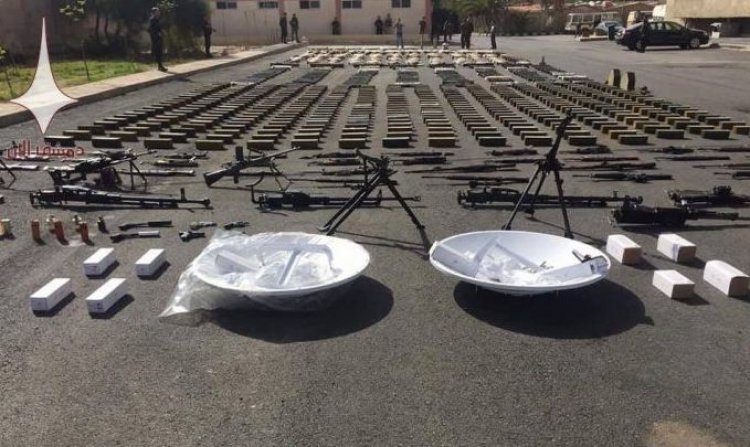
Recently, a number of news agencies reported that Syrian Army has seized a truck carrying a variety of weapons and ammunition addressed to one of the forces opposing the Syrian government. Reportedly, the truck was heading from eastern Qalamoun to East Ghouta. Let’s take a look at the photos of the seized weapons and see what types of small arms we can spot there.
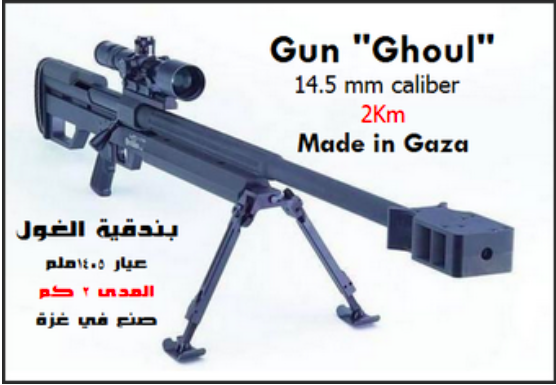
In the image below you can clearly see two PKM machine guns, a number of AK rifles and what looks to be a DShK heavy machine gun. Interestingly, there are two suppressed pistols one of which has a bright nickel colored suppressor. It should simply lack a finish which may indicate that it is a “homemade” suppressor. Arguably the most interesting piece in this picture is the scoped anti-materiel rifle. It is extremely similar to Steyr HS-50. It is also possible that this rifle is an Iranian copy of HS-50 called Sayyad or Palestinian copy called Ghoul. The Ghoul rifle is chambered in a larger caliber – 14.5x114mm. The Firearm Blog has recently published an article telling about the Ghoul anti-materiel rifle.
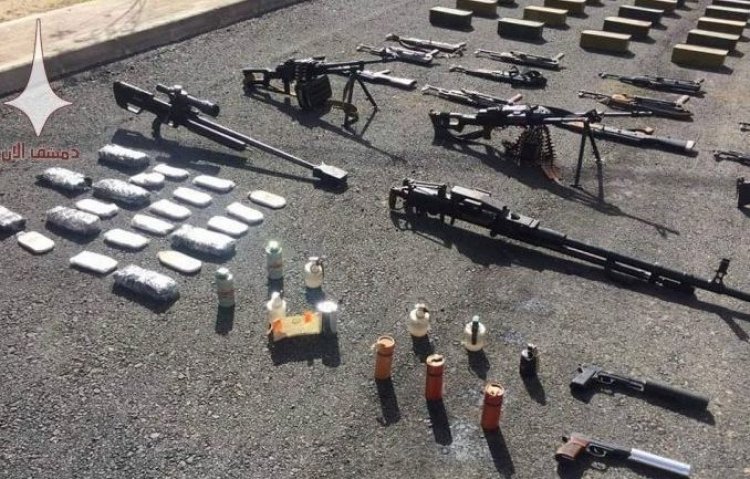
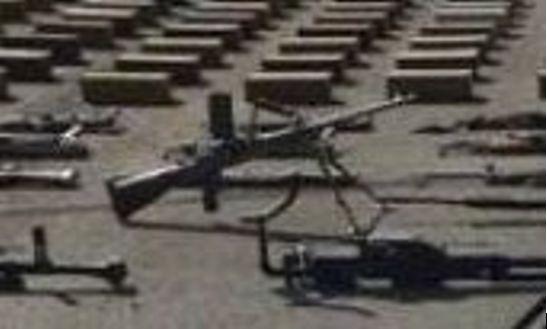
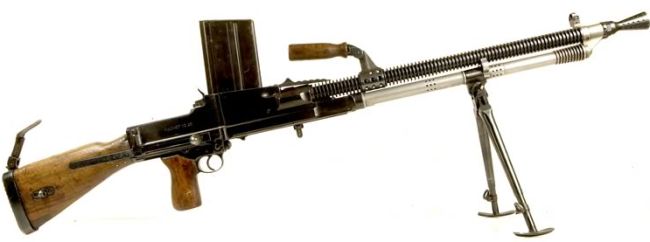
In another picture taken at a different angle, we see the silhouette of what looks to be a Czech ZB vz. 26 or ZB vz. 30 or Vz. 52 (Vz. 52/57) light machine gun.
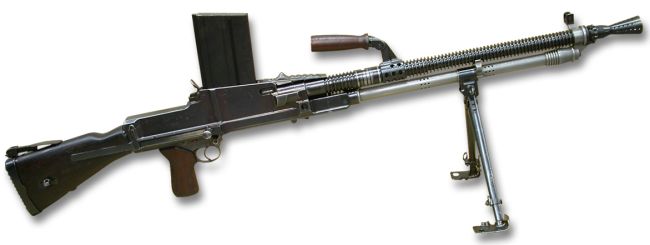
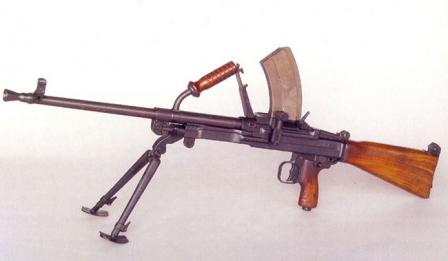
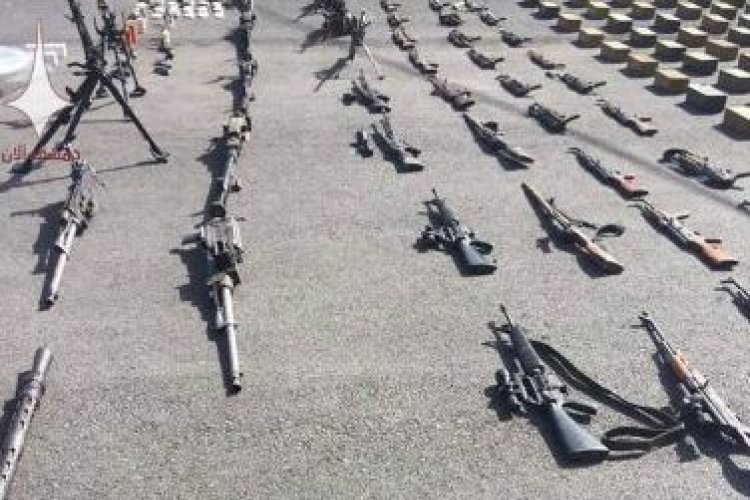
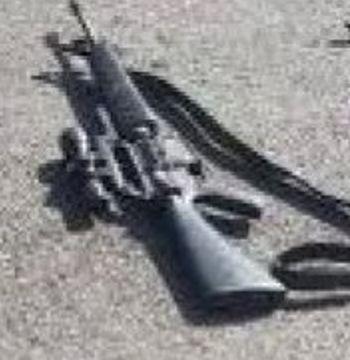
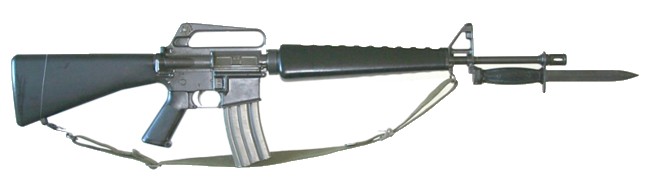
In the next image, there are several AR-15 pattern rifles among the more common (for the region) AK rifles. Judging by the stock shape, existence of a forward assist and carry handle, and by the distinctive triangular handguard, at least the closest one must be an M16A1.
Here is also a video published by the Russian Federal News Agency showing other types of seized weapons and munitions:
https://www.youtube.com/watch?v=1A-4pZWyxzs
Sources:
“Syrian Army foils rebel attempt to smuggle heavy weapons into East Ghouta (video)”. (2018, February 28). Al-Masdar News. Retrieved from: https://www.almasdarnews.com/article/syrian-army-foils-rebel-attempt-smuggle-heavy-weapons-east-ghouta-video/
Images from: www.almasdarnews.com. www.modernfirearms.net, www.thefirearmblog.com