Egypt at one point produced clones of an incredibly rare rifle, the ZG-51, which is the older brother so to say for the better-known Czechoslovakian Vz54. The ZG-51 is a bolt action rifle that uses the 7.62×54mmR cartridge and is considered a variant of the Russian Mosin-Nagant 91/30. Indeed, the rifle is shrouded in enough obscurity that researching it online will yield very limited results, thus making the ZG-51 (and the ‘Riyadh’) one of the most mysterious firearms related to Egypt right after the crudely made “Egyptian Thompson” which we have examined in other articles. We will present here all the materials and information we managed to find on the ZG-51 and its connection to Egypt.
First of all, we have to explain that there are two variants of the “ZG-51” as if things were not confusing enough already. There is the ZG-51sn and there is also the ZG-51 91/30. The Egyptian Riyadh rifle, the focus of this article, is actually the ZG-51 91/30. The ZG-51sn is a derivative of the ZG-49sn, a Mauser-actioned rifle chambered in 7.62×64mm, which was designed by Otakar Galaš, in Czechoslovakia in 1949. Due to Soviet influence, however, the rifle was modified to be chambered in 7.62×54mmR and designated as the ZG-51sn. This is according to the Military History Institute of Prague and was mentioned by David Pazdera in an interesting article on Small Arms Review about the Vz.54 and its predecessors.
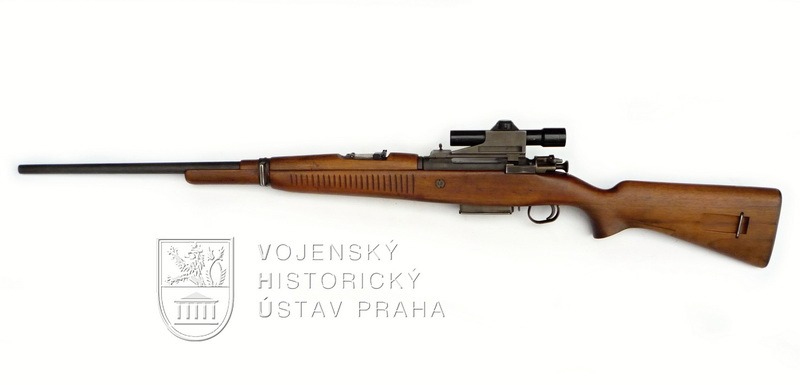
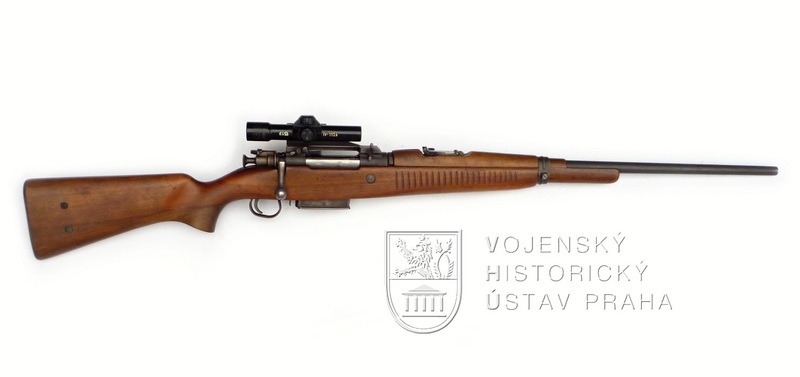
Fig. 1.1-1.2. This is a ZG-51sn that belongs to the Military History Institute of Prague. (Source: Military History Institute of PragueMilitary History Institute of Prague)
The ZG-51 91/30
To uncover some of the mysteries behind it, we need to uncover some on the ZG-51 91/30. According to The Sniper Encyclopaedia: An A-Z Guide to World Sniping by John Walter, the Soviets were not satisfied by the ZG-51sn and wanted a rifle to use a Mosin-Nagant action. This lead to the development of the ZG-51 91/30 and the Vz.54 with the latter being adopted by the Czechoslovakian army until it was replaced by the SVD Dragunov.
In his video, Ian McCollum explains briefly the history of the Vz.54 and mentions that it was produced from 1954 until 1957, unfortunately, we do not have the years of production for the ZG-51 91/30 by Czechoslovakia but it is highly likely that it was produced in prototype numbers up to 1954 when the Czechoslovakian army decided to adopt the Vz.54 and manufacture it.
Unfortunately as of now, there is difficulty finding materials for a non-Egyptian ZG-51 and all we managed to find were pictures of a ZG-51 offered for sale as claimed prior to 2010, a picture of a Libyan rebel possibly using a non-Egyptian ZG-51 during the early days of the Libyan Civil War in 2011, and a non-color picture with the details unclear from Russian Mosin Nagant Forums.
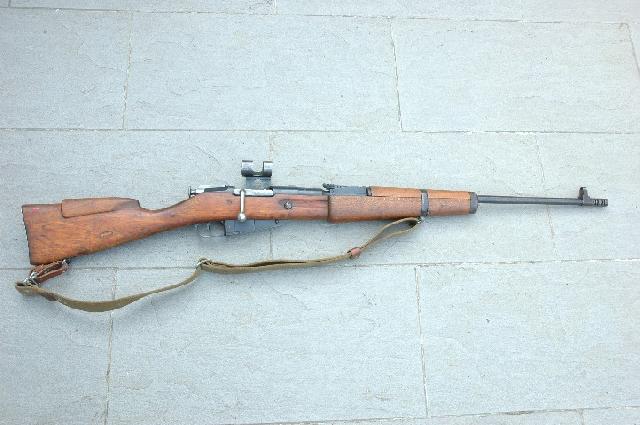
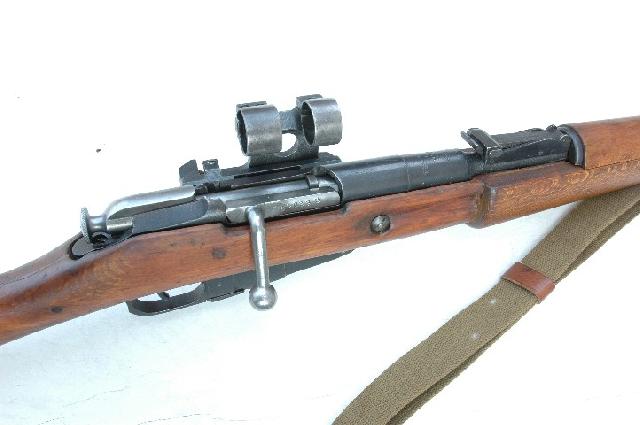
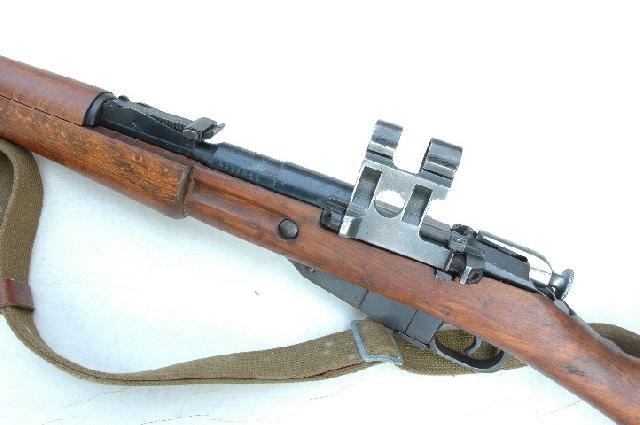
Fig. 1.3-1.5. Images for the ZG-51 91/30 that was offered for sale as claimed by the individual who posted the photos (Source: Gunboards.com)
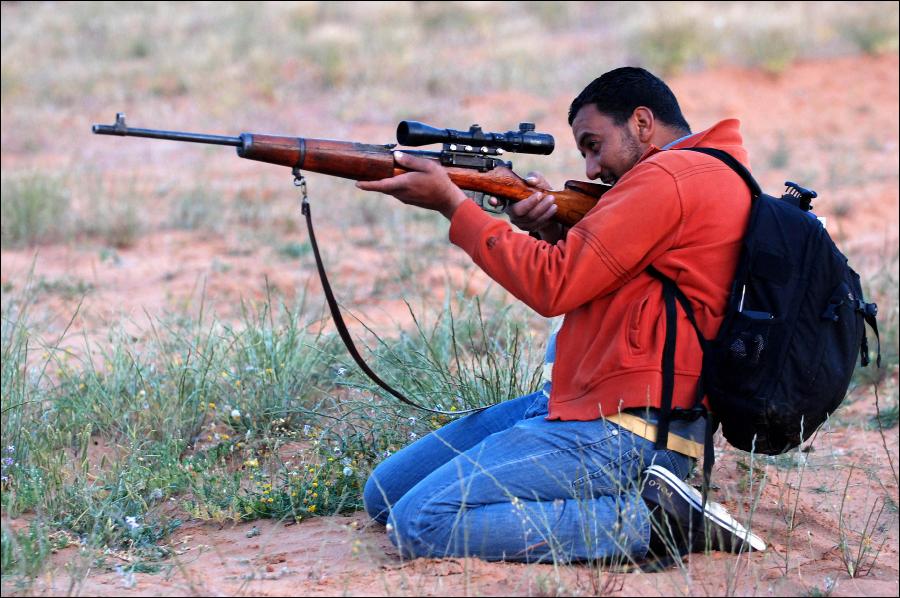 Fig. 1.6. A Libyan rebel using a ZG-51 91/30 during the conflict back in 2011 (source: theguardian.com)
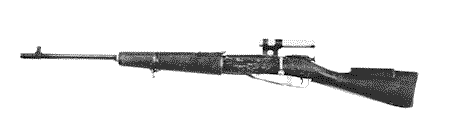
Fig. 1.7. An older image of the ZG-51 91/30 from Russian mosin-nagant.com. Note that the image has most likely been “flipped” or “mirrored” as the bolt handle appears on the left side of the rifle. (Source: russian-mosin-nagant.com)
Enter The Riyadh – The Collectors
In terms of Egypt’s Riyadh we have images collected from three different sources including footage taken during the War of Attrition (1967-1970), Yom Kippur War/October War (1973-actual war footage and reenactment in 1974), Egyptian war movies, and finally collectors. The latter gave us obviously the best quality of images as well as showing much-needed details to find out more about the rifle’s history.
Before we cover the rifle’s details, we will present the visual materials we managed to gather and use them as a visual reference for the readers when we do cover the details. Note that in this article we will be just covering material from collectors and we will discuss the appearance of the Riyadh in vintage conflict videos and Egyptian popular media and movies will be in another upcoming article.
Given the rarity of the rifles, only a handful of collectors own a Riyadh and have posted images online. Their photographs proved to be instrumental in finding out its designation and that it was actually produced in Egypt by Factory 54. Two collectors had already posted their Riyadh’s images on Gunboards.com while a third collector contacted Silah Report directly and sent us images of the Riyadh he owns. It is worth noting that we have managed to see the serial numbers of all of these example rifles and all have serial numbers that begin with a 5 in Eastern Arabic / Hindu-Arabic numerical system, and in a thousand (e.g. 5550, 5118). Unfortunately, we could not “decipher” the serial system for Riyadh but we are trying to reach contacts in Egypt and Germany that may enlighten us about it.
Why in Germany? Due to the correspondence that occurred between Miles and the collectors, including DaveFromSheffield, we found out that a number of Riyadh rifles were believed to have been imported into Germany in 1977, by a company called Frankonia. The proof/import date on the rifle supposedly states that it was proofed/imported into Germany in 1977 (check fig. 2.4). Here is an excerpt that is taken from a book called Drei Linien – Die Gewehre Mosin-Nagant Band II by Karl-Heinz Wrobel that gives a bit more insight on the export of the Riyadh and its history:
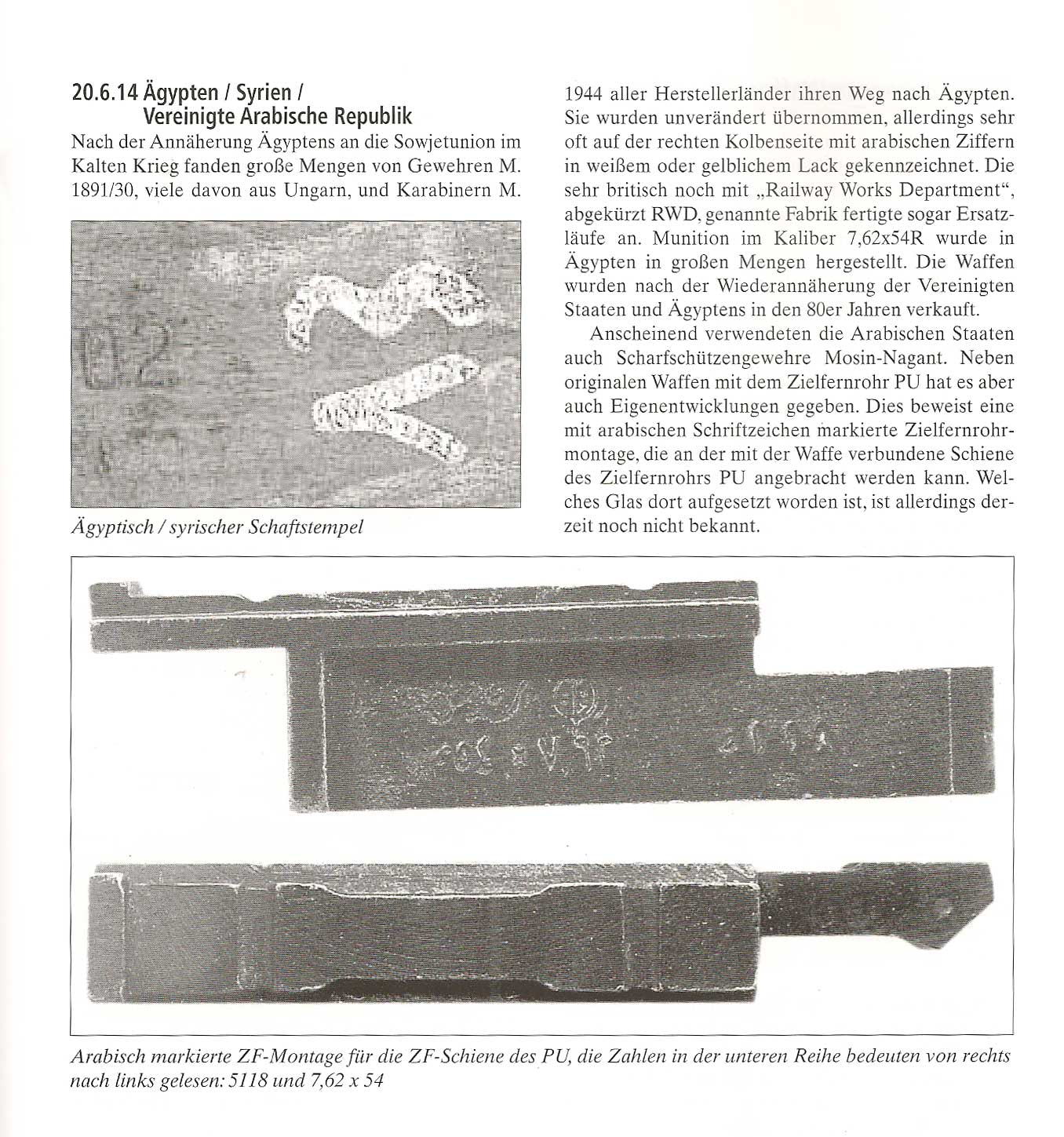
Fig. 2.1. An excerpt that is taken from a book called Drei Linien – Die Gewehre Mosin-Nagant Band II by Karl-Heinz Wrobel
Here is a translation of the extract:
“20.6.14 Egypt/Syria/United Arab Republic
After Egypt got closer to the Soviet Union during the cold war, a large amount of M. 1891/30 rifles, among them many from Hungary, and many M. 1944 from various (manufacturing) countries made their way to Egypt. They were used without alteration, although Arabic numbers were written on the right side of the butt with white or yellowish lacquer. The – in a very British way – “Railway Works Department” (RWD) named factory manufactures replacement barrels. Large quantities of ammunition of the 7.62x54R caliber were manufactured in Egypt. The arms were sold in the 80s after Egypt got closer to the United States.
It appears that the Arabic countries also used Mosin-Nagant sniper rifles. In addition to the original rifles with PU (?) sighting telescopes, there were independent (own) developments. That is proven by a telescope mounting attachment that is marked with Arabic writing. The mounting attachment can be connected to the rail on the rifle that is used for the PU telescope. However, it is not known yet which glass (telescope) would have been connected.
Picture:
Sighting telescope mounting attachment (for the telescoping rail of the PU) with Arabic writing, the numbers in the bottom row read from right to left: 5118 and 7.62 x 54″
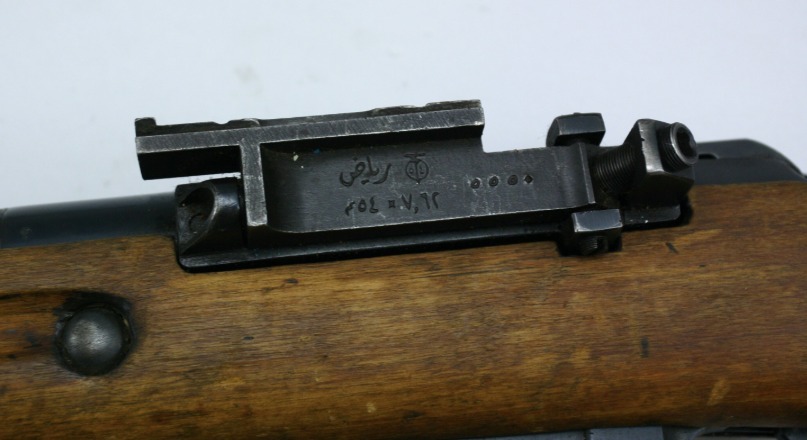
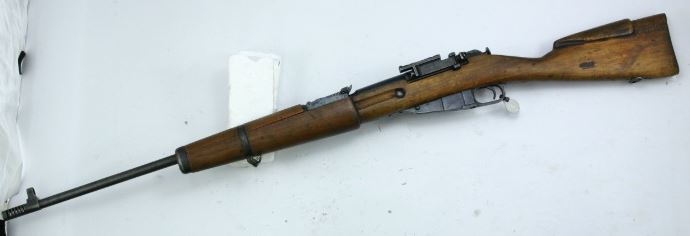
Fig. 2.2-2.3 This Riyadh belongs to a European collector who worked with Rob Stott . Notice in the first image the stamp of Factory 54, which to this day produces small arms in Egypt and “Riyadh” written in Arabic, 7.62×54mmR under it and to the right side the serial is 5550. (Source: Rob Stott)
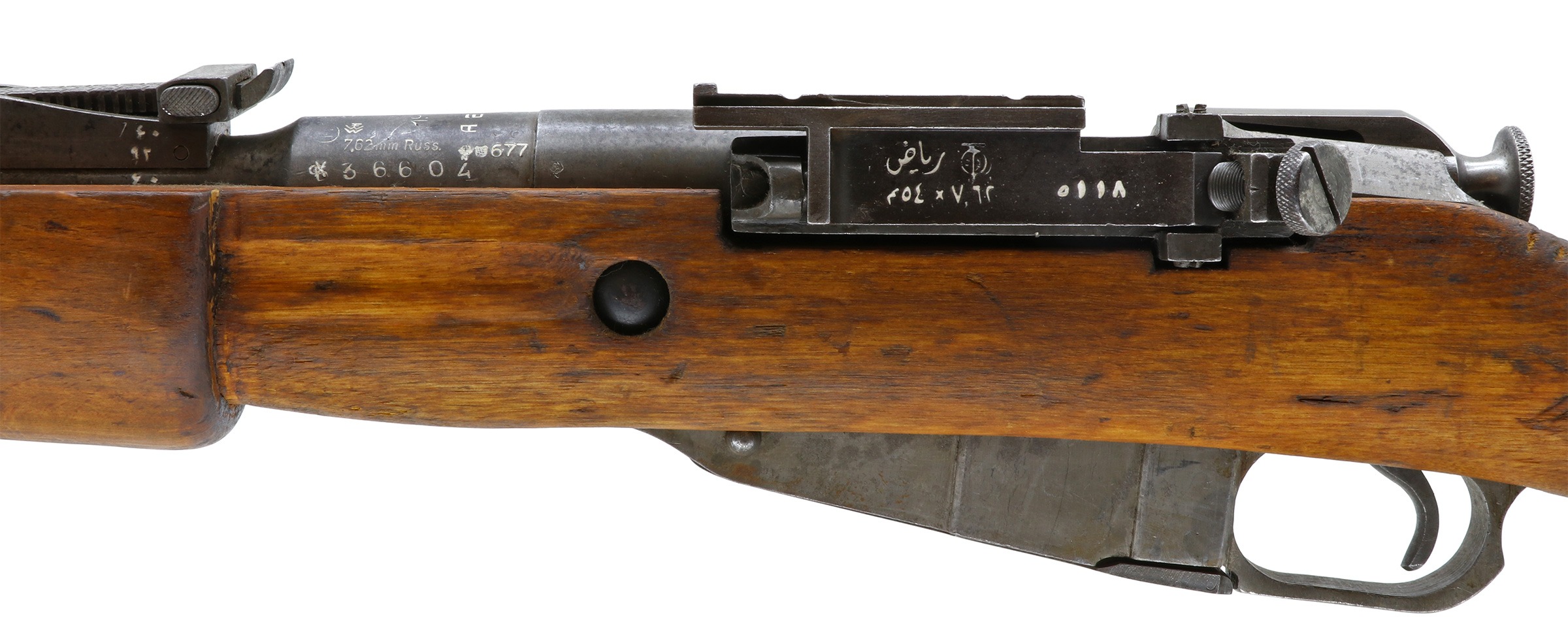
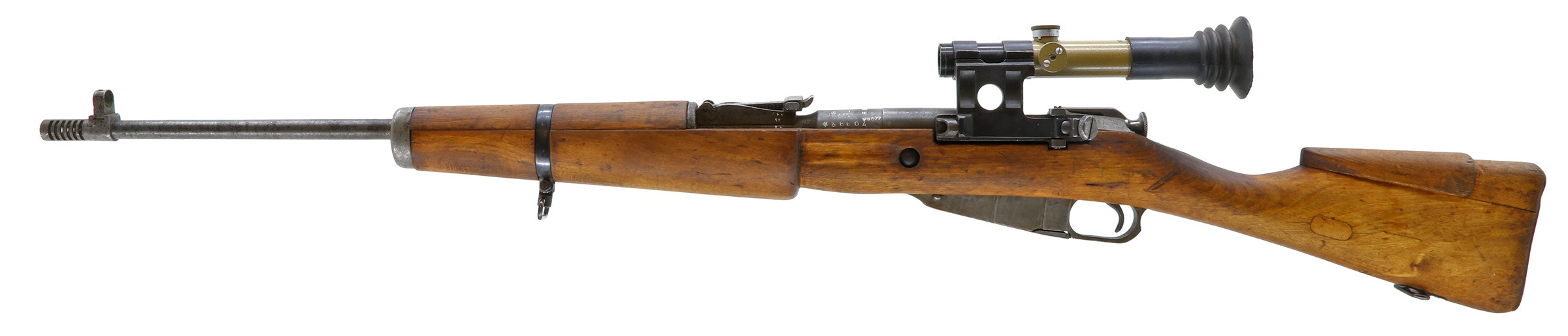
Fig. 2.4-2.5. This Riyadh belongs to a collector who shared pictures on Gunboards.com. The serial on this rifle is ‘5118’ and has the same exact factory markings as on the previous Riyadh. Do notice the German import/proof markings where “77” is supposedly the year 1977 when the rifle was possibly imported. (Source: DaveFromSheffield)
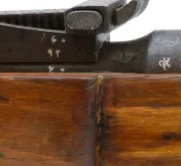
Fig. 2.6. Under the back sights we can see serial numbers in vertical order, unfortunately, due to the quality of the photo we cannot really tell what they are for sure but the numbers appear to be in an up to down fashion, “40”, “93” and “70”. The serial numbers do present a mystery that we couldn’t solve yet. (Source: DaveFromSheffield)
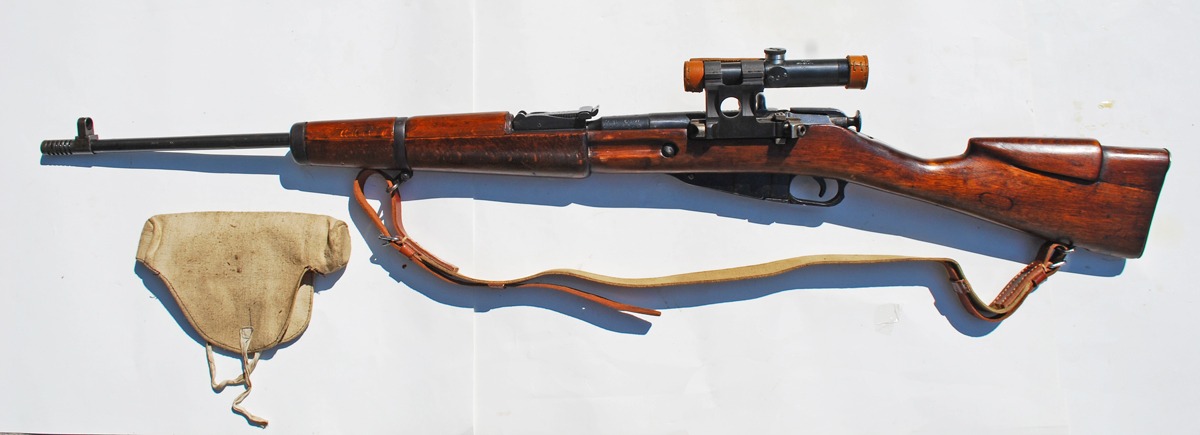
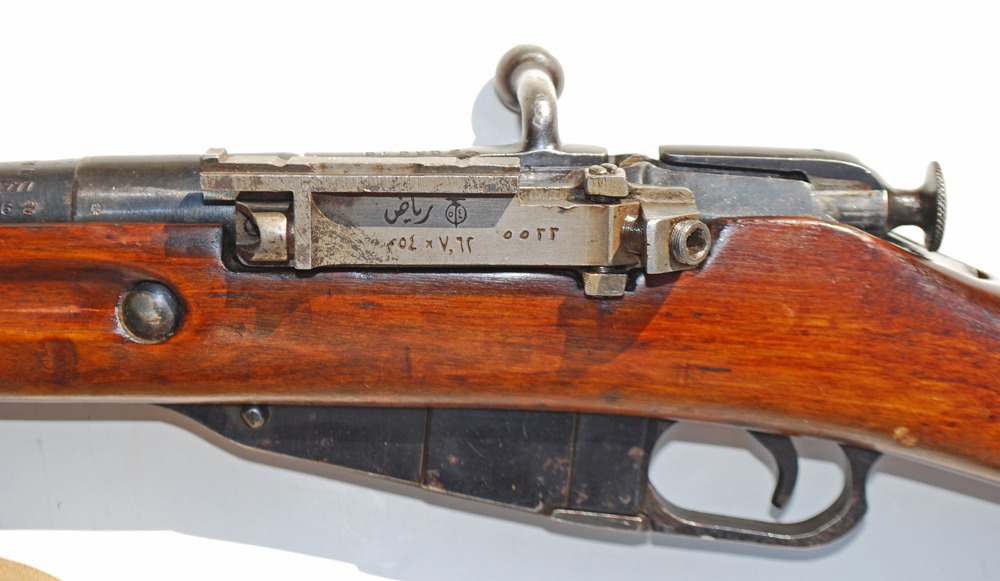
Fig. 2.7-2.8. This Riyadh belongs to another collector who also shared ipictures on Gunboards.com. The serial on this rifle is ‘5533’ and has the same exact markings as on the two previous Riyadh. It appears, however, to be built from an original Second World War-era Soviet PU Mosin-Nagant M1891/30 sniper rifle (Source: DaveFromSheffield via Gunboards.com)
Factory 54
Factory 54 (also known as Maadi Company for Engineering Industries) is one of Egypt’s oldest small arms and munition factories (and later on civilian products as well). They produced a variety of small arms ranging from the 7.92×57mm Hakim and 7.62×39mm Rasheed self-loading rifles to the Helwan series of handguns (patterned on the 9×19mm M1951 Beretta and early model Beretta 92), Port Said and Akaba submachine guns chambered in 9×19mm (clones of the Swedish Carl Gustav M/45), the Suez (an 7.62×54mmR RPD light machine gun clone), Maadi rifles (7.62×39mmR AKM-patterned self-loading rifles) for the civilian market in semi-auto and full-auto for the military and paramilitary. In addition, they produce 7.62×51mm FN MAG general purpose machine guns, MK19 and the M203 40mm grenade launchers as presented on their website.
But given the recent findings on the ZG-51 91/30 – Riyadh, It appears that Factory 54 produced it for some time and it remains unclear why they never released any information to the public about it.
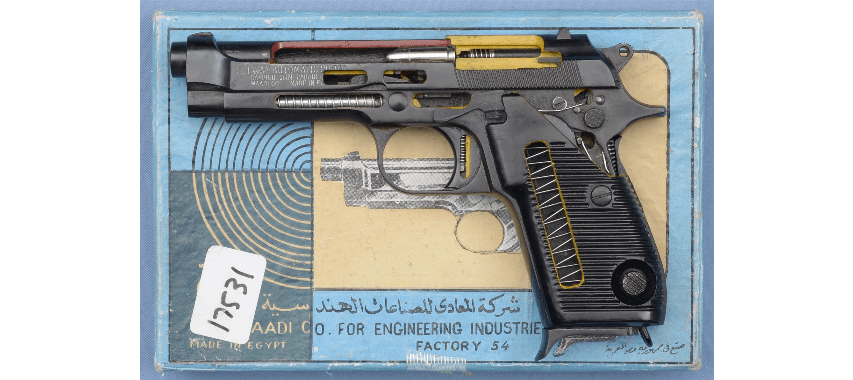
Fig. 3.1. A Helwan 920 that was cut through to reveal its inner workings auctioned. Notice the ‘Factory 54’ and ‘Maadi Company for Engineer Industries’ markings on the box (Source: rockislandauction.com)
Conclusion
So from the images we have collected we can conclude that Egypt definitely did issue the ZG-51 91/30 to its military and also produced them at the state-owned Factory 54, as evidenced by the factory stamp present on all the examples we have seen. We have no solid explanation as to why Egypt named the ZG-51 91/30 “Riyadh” but it definitely has nothing to do with Saudi Arabia or else it would have been designated “Arriyadh” الرياض and not “Riyadh” رياض. Was it the mainstay marksman/sniper rifle of the Egyptian army during its service life? It is very difficult to answer that question. We are attempting to reach out to surviving veterans who may be able to confirm this. It is also possible that certain units used the Riyadh, especially frontline units, as we have seen in actual footage from the footage while other units were issued other Mosin-Nagant variants. In the end, all we can establish are two points: 1. Egypt produced (or adapted/assembled) the ZG-51 90/30 and 2. Egypt appears to have used it in its conflicts with Israel.
We hope in the future we will be able bring you more information on the rifle, and hope to speak with individuals whether from Egypt or Israel, or the Czech Republic. The Riyadh is definitely one of Egypt’s most obscure firearms on the level of the “Baghdad Rasheed” carbine.
We hope that one day we will be able to examine a Riyadh in person and see how it shoots at the range.
Sources:
<https://www.gunboards.com/threads/czech-zg51sn-sniper-rifle.1144159/#post-10521750>
<https://www.gunboards.com/threads/czech-zg-51-older-brother-to-the-vz-54.280423/>
<https://www.gunboards.com/threads/interesting-scoped-91-30-spotted-in-libya.226910/#post-1790774>
<https://www.gunboards.com/threads/m38-mosin-with-egyptian-markings.401711/>
<http://www.smallarmsreview.com/display.article.cfm?idarticles=3024>
<http://www.vhu.cz/exhibit/pokusna-odstrelovacska-puska-zg-51-sn/>
If you enjoy our work here at Silah Report please consider supporting us on Patreon!