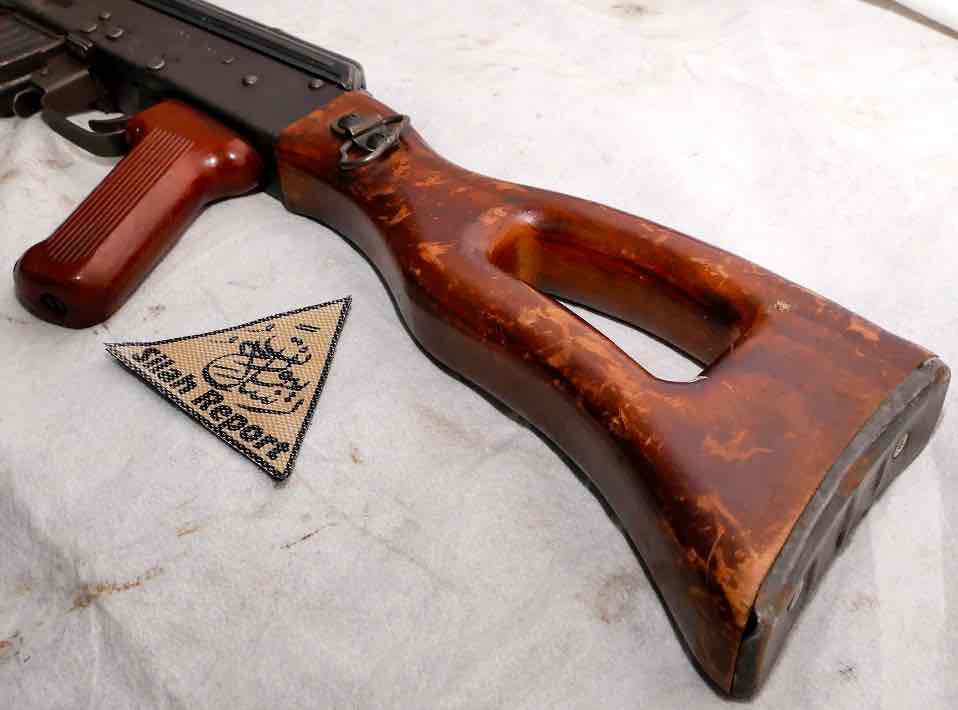
The supply conditions of the ongoing Syrian Civil War set the stage for a necessity of improvisation and invention. Where there is low supply, there is high demand that reflects through inflated market prices for small arms and equipment. This equation lends itself to the iconic PKM-inspired YPG Kalashnikov wooden stock that can be seen in service throughout initially what was the YPG, YPJ, and later morphed into the Syrian Democratic Forces (SDF). The stock itself comes from the Russian 7.62×54mmR general-purpose machine gun.
The reasons for the invention of the ‘YPG-stock’ appear to be efficiency-based rather than a particular flavor of choice or tactical advantage. One reason for this is the needed replacement of existing fixed stocks that might also be broken as well. The choice of the wooden stock resembling a PKM wooden laminate stock from afar appears to derive from a veneration of the very reliable Cold War-Era general-purpose machine gun that is shared by all sides in the conflict and used to a maximum and deadly extent on the battlefield.
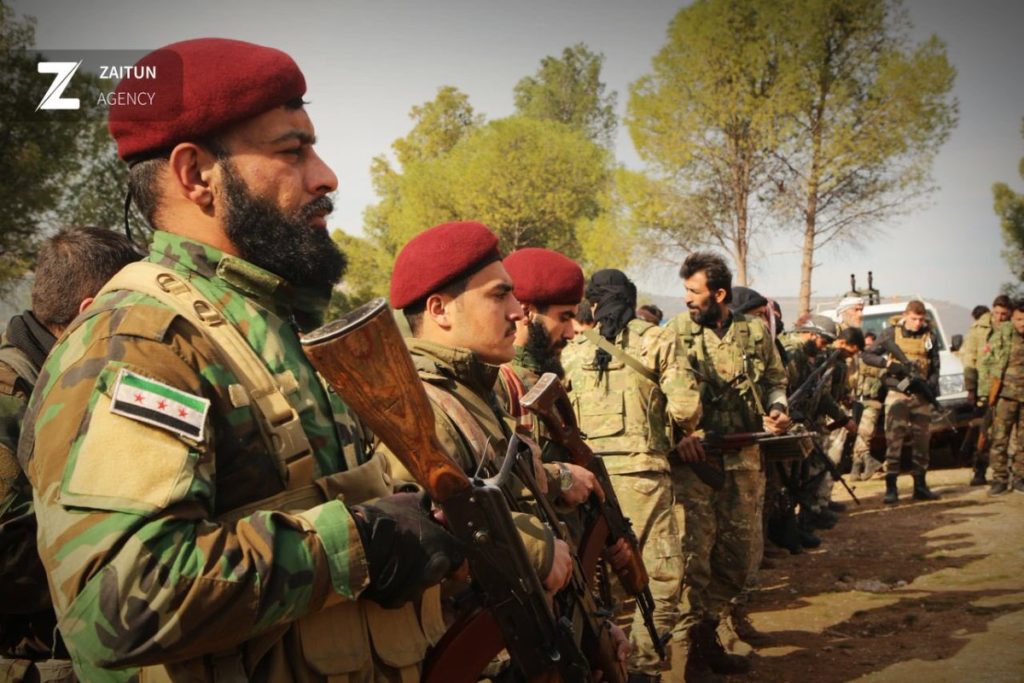
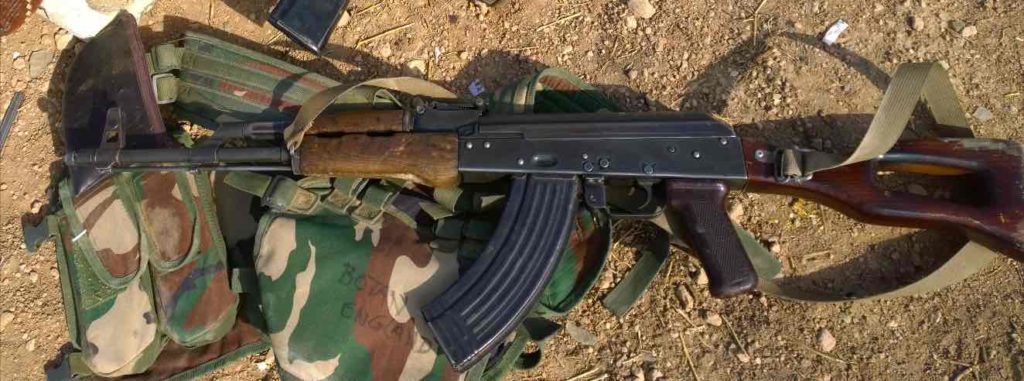
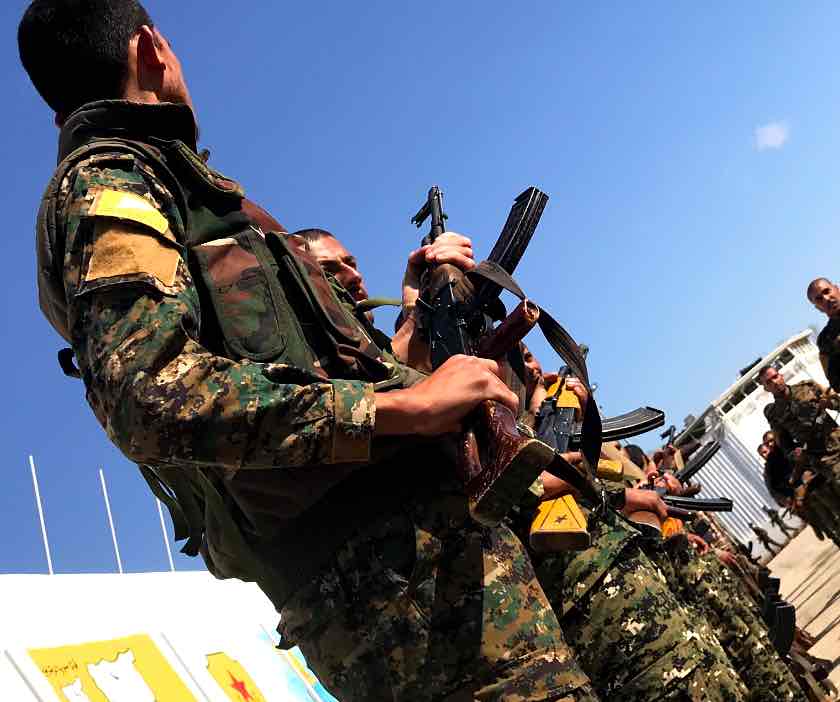
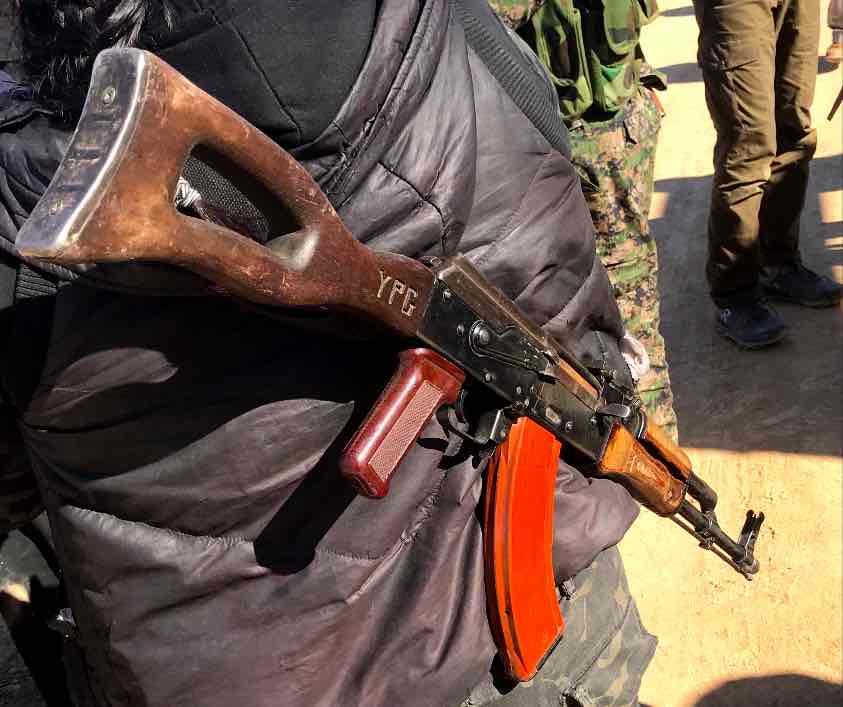
When describing the ‘YPG-stock’ there are several attributes that remain consistent throughout variants observed in service. However, stocks do have variations in design and configuration on a small scale. Both the attributes and variances will be covered in this article.
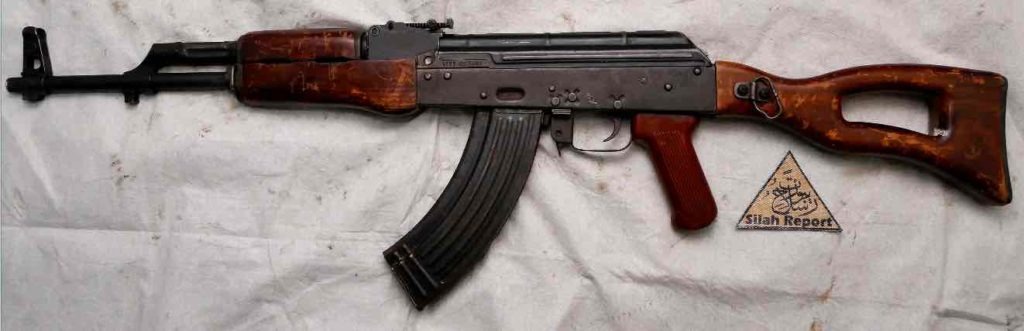
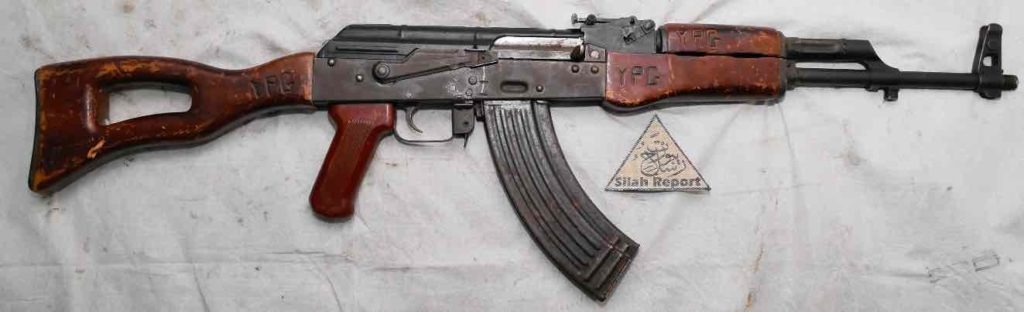
To date, YPG-stocks have been observed installed on Kalashnikov-patterned variant rifles originating from: Hungary, China, Albania, and Romania. There hasn’t been a recorded sighting of a YPG-stock installed on an East German MPiKM or Soviet AKM-patterned rifle, possibly because the stocks on these rifles are either highly valued in the case of the right-side folding MPiKM variant, or the stocks do not break as much in the field as the third party Kalashnikov derivatives do. From what we can gather these stocks are intended to replace broken full stocks on the older surplus rifles.
Enquiries were made into the location of the stocks’ manufacture and the responses ranged from craft shops in Qamishilli to other shops in Kobani. Examples of what appear to be locally produced AKM-patterned furniture have been seen for sale in shops in Qamishilli, but these are of a different choice of material and manufacture than the YPG-stocks observed in service. A more likely origin of these stocks is in the SDF Remelan base outside of Hasakah city where Sher, Sher Portative, and Zagros anti-materiel rifles are alleged to have been produced. As to a timeline of the stocks beginning production, the earliest examples we have observed are from 2016. It is unknown if the stocks are currently being produced.
These stocks are not particularly significant among fighters other than the similarity to the PKM, which fighters are quick to point out. If anything they are actually less reliable and robust than original surplus stocks or folding variants because the trunnion attachment screws tend to not be as tight a fit as they could be. This has been observed by both the author and in conversations with Ed Nash, author of Desert Sniper. Reasons for the loose fit appear to be due to the screw channel in the wood which isn’t a precise fit, in addition to the types of screws used which are unlike standard AKM trunnion stock screws.
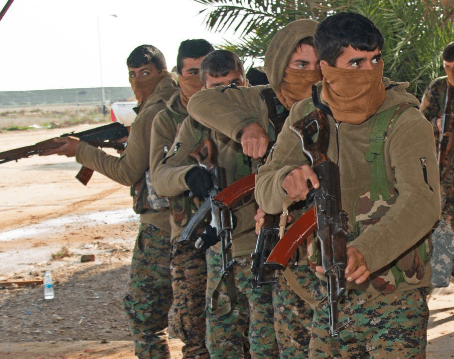
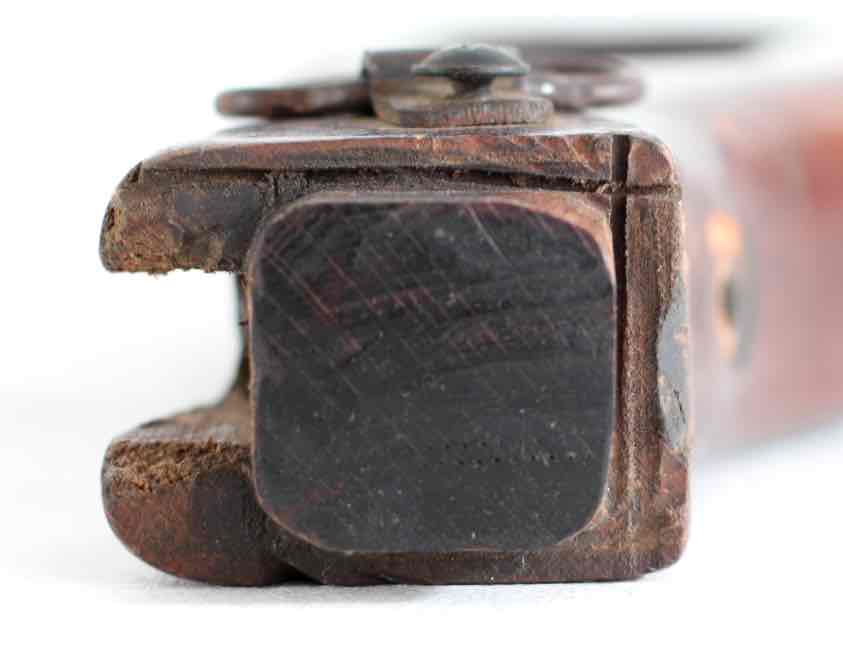
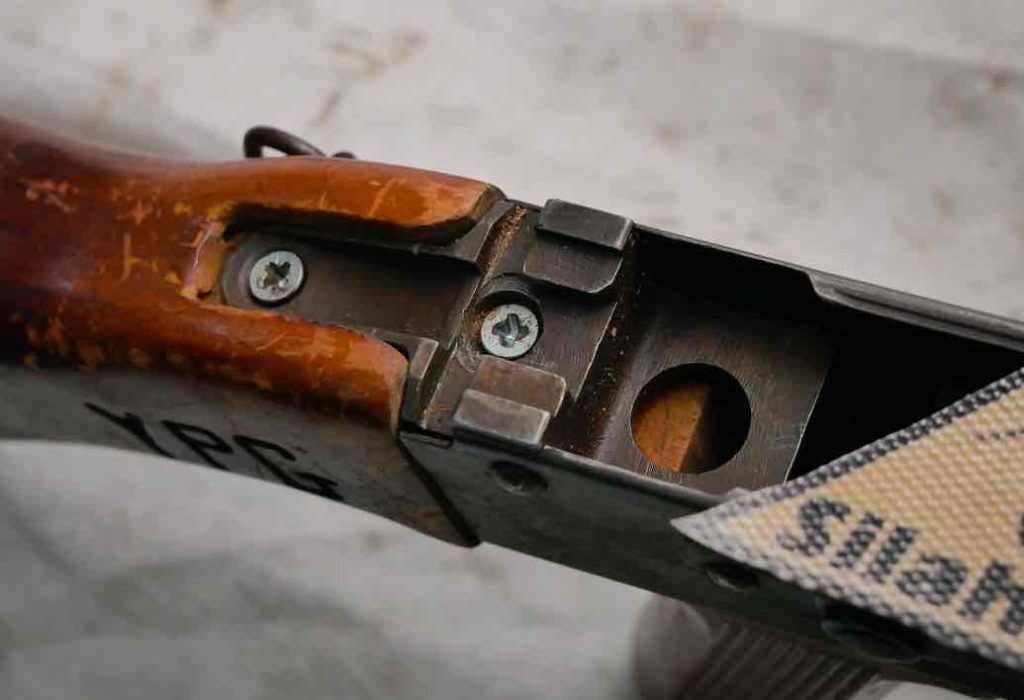
The general curvature of the stock begins with the trunnion section, which fits into the receiver’s rear trunnion. There are two screw channels at the 12 o’clock position, one visible from outside the receiver and the other inside. There is no screw channel at the 6 o’clock position, underneath the stock. On the stocks, near the trunnion, is a stencilled carving of “YPG” on the right side of the stock and a sling swivel on the left side which is held in place by two screws of Philips-type heads. This stencilled carving has been observed on wooden pistol grips and handguards as well. There hasn’t been a ‘YPJ’ marked version observed to date, on handguards, stocks, or pistol grips.
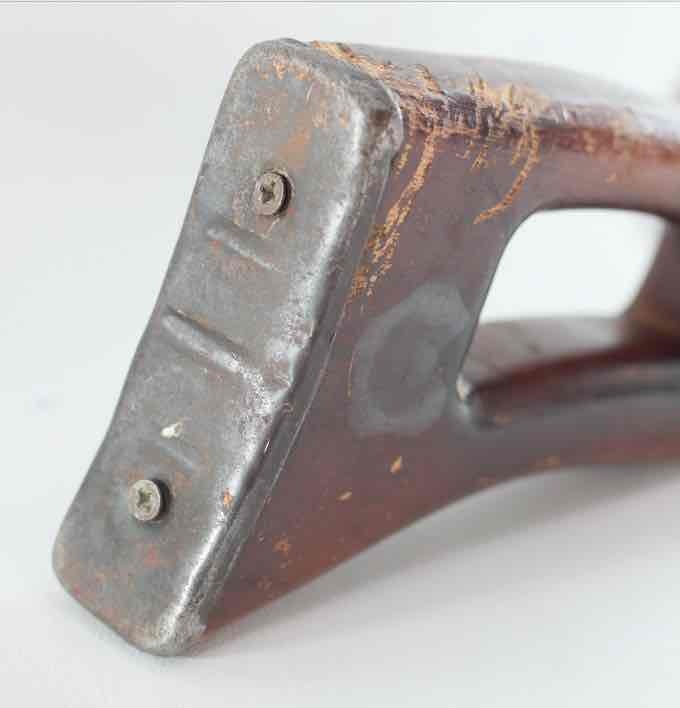
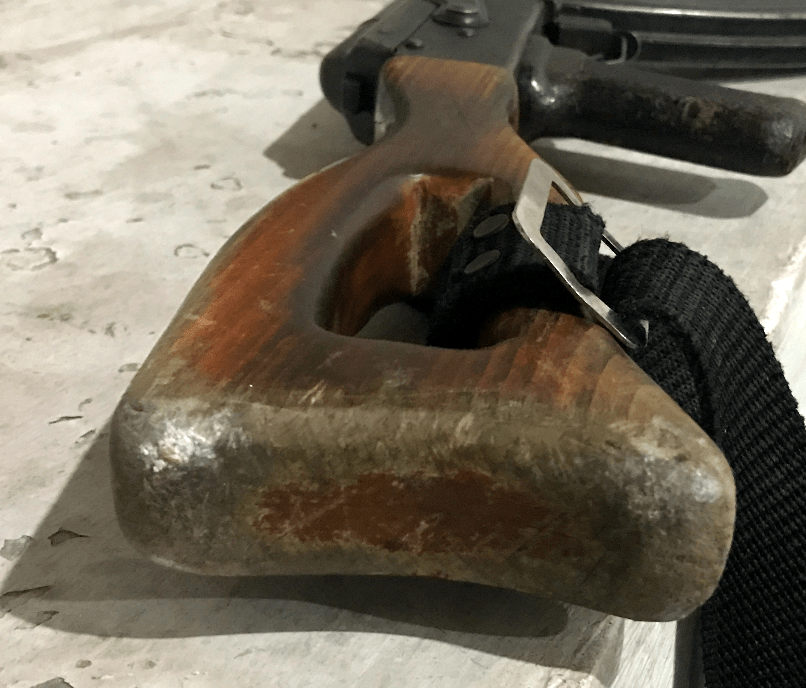
Finally, we come to the butt plate. The majority of stocks have a primitive metal plate with two Philips screws securing it in. Variants exist without a butt plate and these can be seen with rounded edges in addition to a flat wooden butt pad with a flat cut and horizontal cuts.
If you enjoy our work here at Silah Report please consider support us on Patreon
Yess, you are correct, it should have stated “rarely” instead of never.
Another very interesting article,thanks. One question though. A photo caption states a YPG stock on a Soviet AKM but two paragraphs down it is stated that no YPG stocks have been witnessed on either a E German or Soviet made AK pattern. Is that a Russian AK in the photo?