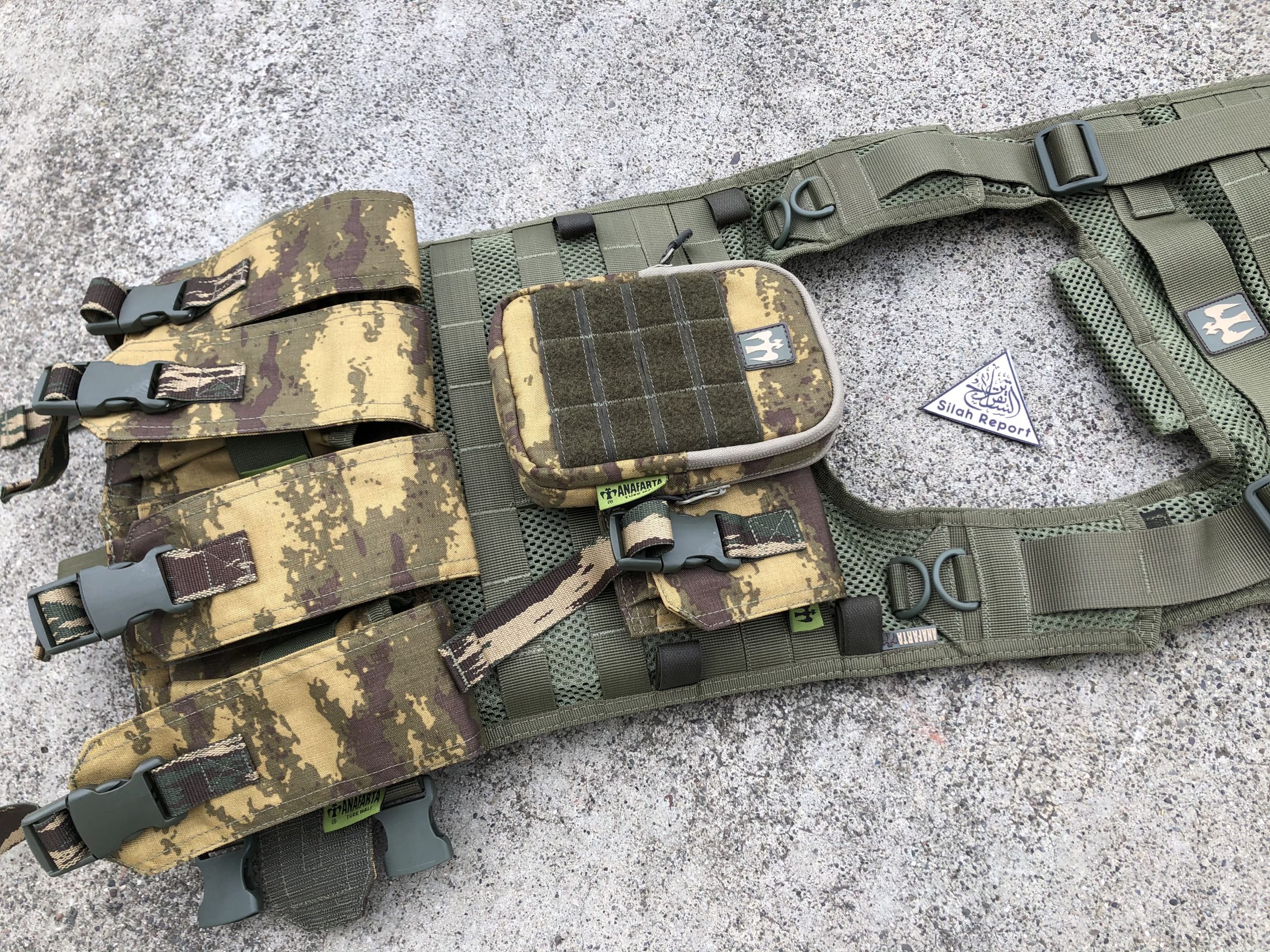
As a NATO country and having the second largest military among NATO, Turkey, and its armed forces’ weapons and personal equipment, is naturally shaped by western influences. Turkish load bearing equipment for the G3 rifle seemed to be a close relative of the Vietnam-era M1956s used by US forces. These LBEs would be replaced with a Turkish “hunter vest” which consisted of 4 G3 magazine pouches, a radio and grenade pouch, day pack, canteen pouches and bayonet mount, and US made or local copies of the TLBV for special forces came later in the 90s. Neither were very modular or modifiable.
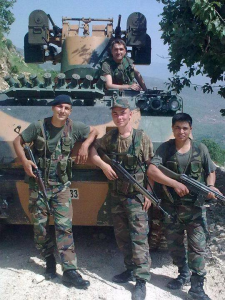
These Cold-War era 2nd line equipment remained largely in use towards the earlier years of the new century, so much so that Turkish special forces were using legacy equipment such as the TLBV vests well into the late 2000s before being replaced for more customizable MOLLE plate carriers. When Gendarmerie General Command, or Jandarma Genel Komutanlığı in Turkish, was its own armed forces branch before the transfer to the Ministry of Interior, it adhered to the same strict regulations as the military. Each gendarme adhered to standardized vests, standardized boots, and little to no room for private purchase equipment. The hunter vest remained as their primary 2nd line equipment until Anafarta’s 4B vest was introduced.
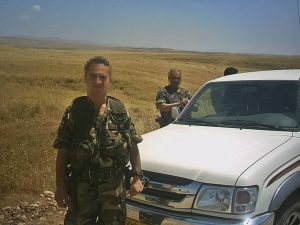
High command tasked with procurement for the armed forces were adamant and traditionalist when it came to adopting contemporary equipment for their troops, which was largely the reason why legacy gear were retained, even for top tier special forces units. However, conflicts in high altitude and mountainous regions fighting the Kurdish PKK rebels meant that newer, modular and more customizable gear was needed, especially for Gendarmerie units who were often finding themselves in those scenarios and needing specialized gear.
Murat Bozbulut, a retired Gendarmerie specialist, would be the one that would fill that niche left open by the Turkish gear industry. In 2008, he conceptualized Anafarta Taktik as a brand. In its early years, the company started off making copies of the American Blackhawk Omega Elite crossdraw vest, as well as the Blackhawk STRIKE plate carrier for Turkish police. Around 2009-2010, his Anafarta 4B assault vest design underwent research, development, then purchased by Jandarma with the majority bought by their special forces units. This would be Anafarta’s first originaly designed equipment, and Turkey’s first indigenous, modular serial production vest.
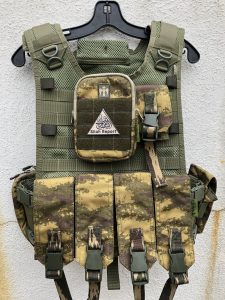
This assault vest was made specifically with mountain warfare in mind. Gendarme units would march long distances carrying a rucksack and full battle load, so weight reduction and comfortability were a top priority. Its body is made of a mesh construction which allows for better air flow and reduces overall weight, bringing an empty mesh vest to a light 800 grams. MOLLE, or Modular Lightweight Load-carrying Equipment, are horizontal rows of reinforced fabric stitched every 40mm to allow for the mounting of any MOLLE compatible accoutrements, these line the side cummerbund, front and back of the vest and allows for different configurations of pouches. For the first time, user defined gear can cater to roles that need a specific pouch lot. Interestingly enough, these assault vests snugly accept 10 x 12 SAPI armor plates, which is unique considering that other mesh vests on the market are not designed with ballistic protection features. Though they are not primarily designed for direct action, close quarter situations requiring armor, having a mesh construction meant that the addition of armor would still leave the overall weight to a minimum for the individual while maximizing breathability and comfort. They are sold as complete sets with pouches meant for 5.56 x 45mm magazines or 7.62 x 51mm or larger magazines, configurations to hold 40 x 46mm grenades for grenadiers, large pouches to hold machine gun ammunition belts, or are sold plain so that the end user can customize a vest for their purpose.
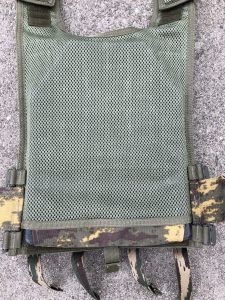
Prior to vests like the 4B mesh vest, conventional Turkish servicemembers who had different roles such as machine gunners or grenadiers would often need to improvise or work around their gear to carry ammunition due to the stringent limitations of their kit. Special forces would also have the same predicament, but bought one off, custom made gear from local tailors when the chance arose. Turkish police simply went with clones of the Blackhawk STRIKE armor carriers which, while bulky, had MOLLE to be able to customize their gear, and had Blackhawk crossdraw copies when armor vests and tailored setups were not required.
Anafarta 4B assault vests were purchased at unit levels by Gendarmerie Special Operations and Special Public Security Command, abbreviated as JÖH and JÖAK in Turkish respectively. Up until their adoption, the Turkish tactical gear market lacked anything utilitarian and modular like the Anafarta 4B vest.
While Jandarma did adhere to a conservative and military standard operating procedure in terms of individual equipment, a couple of of the modernization jumps that the Turkish Armed Forces underwent can trace its lineage to the Gendarmerie. As an example, modern red dot sights first made an appearance in the late 90s with army and navy special forces units used Israeli Elbit Falcon red dots on Colt 727 carry handles, with 70s era Colt 4X zoom scopes kept on retainer until the mid to late 2000s. Some infantry commandos experimented with EoTech 552s in the mid 2000s, and ended up locally producing and issuing them around 2012.
Jandarma followed suit and private purchased EoTechs in the mid to late 2000s, which were well liked. Positive reception to using contemporary red dot scopes led to EoTech 552 holographic sights being bought on a company level for the JÖH Roketler (Rocket) unit for their HK33 and G3 rifles, and a noticeable amount of EoTech 556s to pair with their AN/PVS-18 night vision units, since their Aselsan M995 scopes paired with night observation devices were bulkier than the 556 holographic.
At the time, army and navy special forces and the Gendarmerie were the units mass issuing electro optical sights on their rifles, and to a lesser extent circulating for infantry commandos.
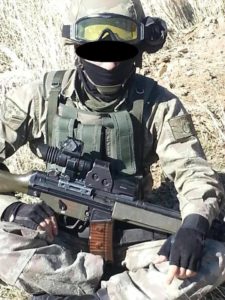
This maverick streak of Gendarmerie and their need for their special operations unit for a mountaineering vest meant that the Kozak’s mesh vest design was the perfect fit for Jandarma Special Operations and any other units fighting guerrillas in the mountainside.
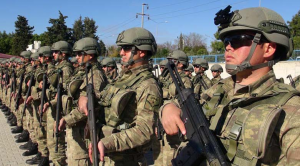
Soon after, other domestic gear manufacturers sprung up. YDS produced plate carrier vests for the army special forces unit Özel Kuvvetler Komutanlığı, that vest design was made as a joint venture with Anafarta’s developers and an army special forces officer. KTM supplemented gendarmerie troops and police with their line of plate carriers. Pars Tactical, whose owner is former ÖKK, makes bespoke plate carrier vests for military and police customers both conventional and special forces.
The Turkish Army as a whole came late to equipping their troops with modernized gear, as Garanti Kompozit was contracted to supply plate carriers around 2018-2019. Anafarta 4Bs were Turkey’s first commercial, Turkish-developed and modern vest system used by any branch of the TAF, and became a catalyst for other subsequent gear manufacturers to emerge.
Tolga, who was former Jandarma, shares his experience with the Anafarta 4B vest:
During the time that mesh vest came out the primary function of the JÖH units was Mountaineering SAD operations and it involved hiking 20-30km a day in full gear with limited resources. This is why a mesh material was used and it ultimately, as far as I know the first ultra light weight plate carrier to be used by any NATO military of its time. We’re talking 2008 when even SOF guys in Europe/America were using heavier ballistic plate carriers with side plates and shoulder plates and what have you.
So from this perspective I think Anafarta is very revolutionary, producing a light weight PC before they saw use anywhere else for Mountaineering units, and now light weight PC’s can be found in pretty much any military. However, there were drawbacks. I always found it troubling to seat it correctly on my chest with a full load, and it had a tendency to start stretching down below the belly button line after heavy use, which is expected as no piece of gear is intended to last more than a year or a few years.
Tolga also mentioned that the newer 7B vest made by Anafarta was the company’s response for more durable, purpose built plate carriers intended for use in urban terrain, as the mesh vests were built specifically for mountaineering in mind, not for urban warfare. Newer Anafarta 4B models addressed these issues, with updated design features such as reinforced stitching and an acetal plastic skeleton inside the side cummerbund for added durability. These 7B plate carrier models also see liberal use with Gendarmerie and military individuals private purchasing their own vest.
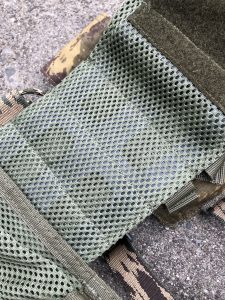
Despite showing a slight shift towards purpose built plate carrier vests among the Turkish armed forces, the Anafarta 4B mesh vests and copies of it are still very popular in the hands of soldiers and Gendarme today, and remain as a staple tactical vest. Ever since its introduction, these iconic mesh vests have found use with other units beside Jandarma. Anafarta mesh vests are offered for police customers in approved black or police camouflage color options. Turkish Army and Navy doing VIP protection duties have also been documented using Anafarta mesh vests. Recently, numerous examples of infantry commandos were seen sporting these mesh vests while deployed to conflicts in northern Syria
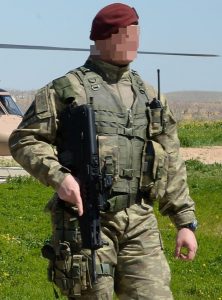
Murat Bozbulut’s Anafarta 4B vest was born out of his and his comrades’ experience as a Gendarme and the lack of any contemporary, modular gear which could be tailored to the user’s needs, something many other NATO countries had for their troops, if at least private purchasable commercial options. Gendarmerie’s subtle sense of rebellious kit acquisition and their dire need for customized mountaineering gear, paired with Bozbulut’s prior Gendarmerie experiences going into his assault vest design easily set the stage for its adoption.
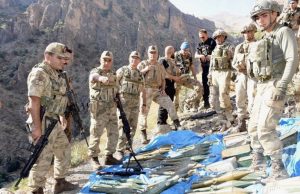
Anafarta Taktik pioneered indigenous tactical gear for Turkey and numerous other companies followed after, making their own domestic designs. And while other companies are joining the tactical gear industry and competing in the market, and the Turkish armed forces are shifting away from mountain warfare and emphasizing standard plate carriers for the urban settings troops face more often, these ubiquitous mesh vests still remain as the most popular vest for the Gendarmerie and a common sight with conventional army soldiers.
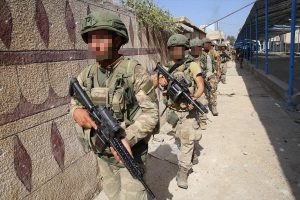
Very special thanks to Tolga and Deniz for assisting with this article, and to Mert for facilitating some Anafarta gear to us.
Bibliography:
Korucubasi, Tolga. Written interview online. 12 November 2020.
Temiz, Deniz. Witten interview online. 12 December 2020.
History section, Anafarta,
<https://www.anafarta.com.tr/sayfa/hakkimiz>

Djiego is a Silah Report writer and university student studying criminal justice, and a part-time animal docent at a zoo. He studies modern military arms and equipment, particularly those found in the Philippines, where he lived for a part of his youth.