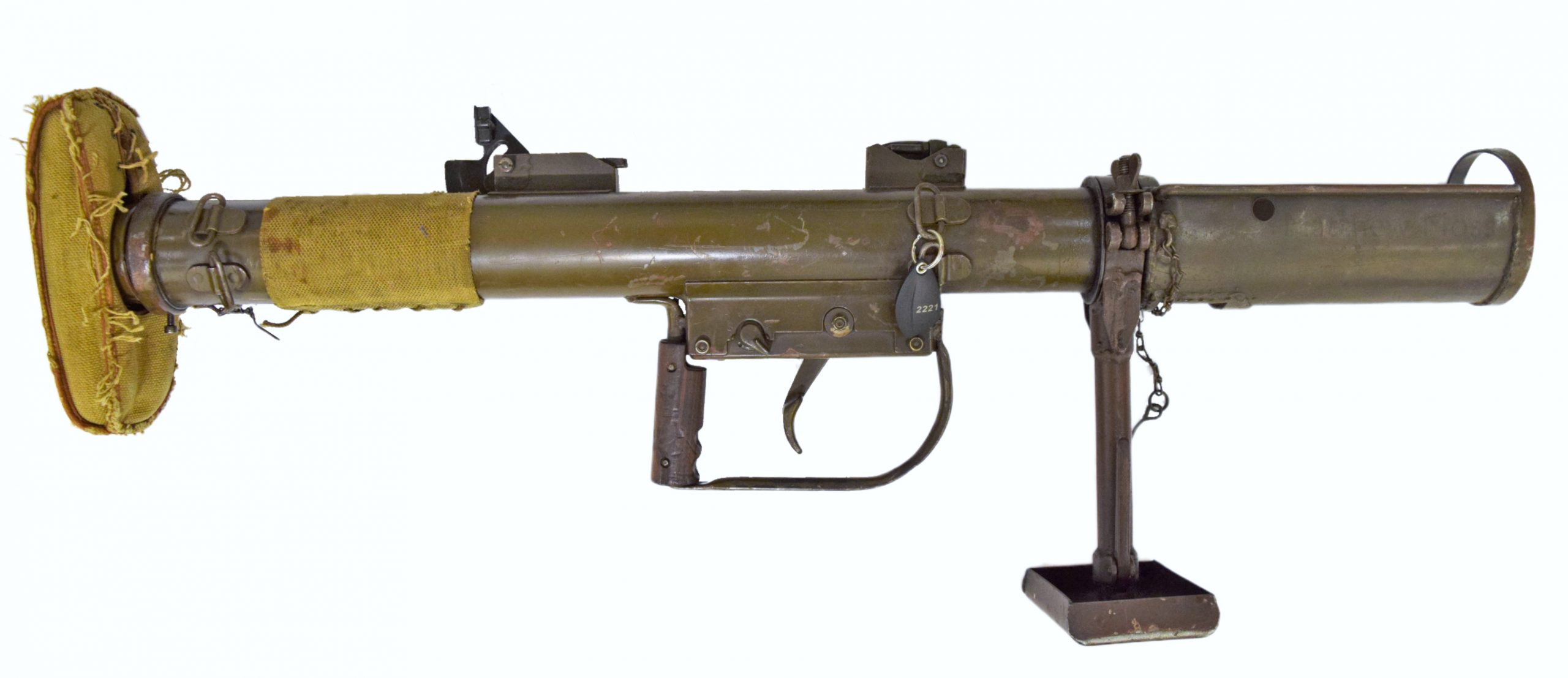
The Projector, Infantry, Anti-Tank or PIAT was Britain’s primary infantry anti-tank weapon during the latter half of the Second World War. Firing a 2.5lbs bomb containing a shaped charge warhead capable of penetrating armour up to 4 inches thick. During the Second World War, it equipped British and Commonwealth troops as well as arming resistance and partisan fighters behind enemy lines in Nazi-occupied Europe. Based on a spigot mortar system of operation it was largely obsolete with the refinement of rocket launched and recoilless rifle systems. Despite increasing obsolescence, it continued to see use after the war. In this article, we will examine its use by the Israeli Haganah during the 1947–49 Arab-Israeli conflict.
The 1947–49 Arab-Israeli conflict was one of the most prominent post-war conflicts the PIAT was used in. It appears that there is evidence that both the Israeli and Arab forces made us of the weapon. For the purposes of this article we will confine our focus to Israeli use. Jewish forces were critically short of weapons of all types and what was procured was obtained through number of clandestine methods including the purchase of surplus war materials in Europe, indigenous clandestine manufacture and stealing from British depots. How the Haganah’s inventory of PIAT’s were acquired remains unknown, however, a small,but significant, number were available at the beginning of the conflict. The PIAT was one of the few anti-tank weapons which the Jewish paramilitary forces could call upon to face Arab armoured vehicles. In some cases it was the only anti-tank weapon, other than primitive molotov cocktails, that Jewish forces had.
As the war began, outlying Israeli settlements came under attack, settlements including Kfar Etzion, Kfar Darom, Yad Mordechai and Negba only had a single PIAT to defend themselves from Arab armoured vehicles. On 19th May, 1948, a Jordanian attack, supported by armoured cars, on Israeli positions in Jerusalem, near the Mandelbaum Gate, was beaten back by members of the Haganah with a PIAT and Molotov cocktails. On the 22nd of May, a PIAT team defending the Notre Dame compound knocked out two more armoured cars. Later fighting in the south saw the Hanegev Brigade launch jeep raids behind Egyptian lines, the jeeps are reported to have been armed with surplus German machine guns and PIATs.
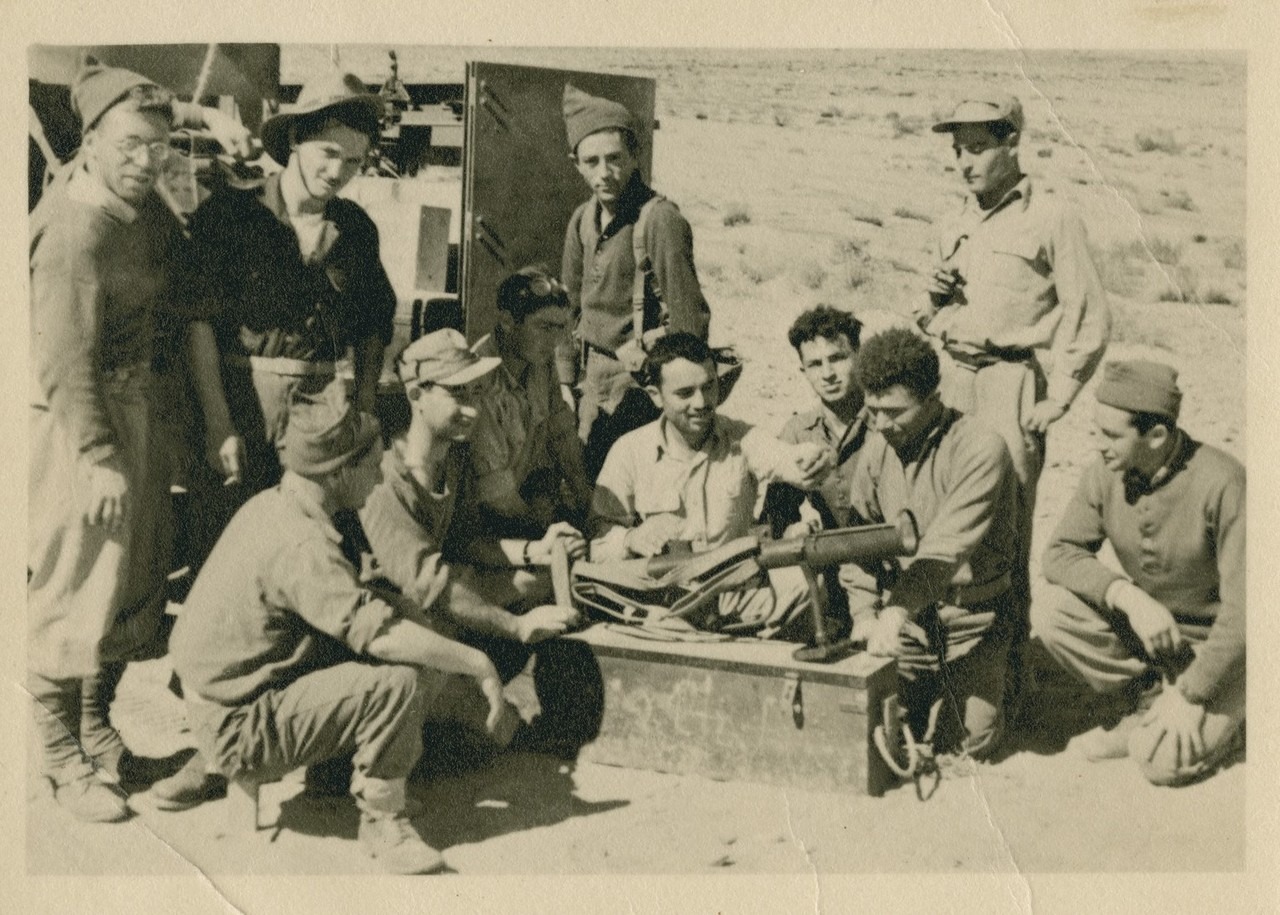
There are very few photographs of the PIAT in action during the 1947–49 Arab-Israeli conflict. We are, however, lucky enough to have a photograph of members of the Alexandroni Brigade learning how to use the PIAT. The photograph comes courtesy of the United States Holocaust Memorial Museum and features a former British soldier, Hersh (Harry) Makowski. He is instructing his fellow Haganah members on how to use the British PIAT. Makowski found himself in the role of instructor as he had previous experience with the PIAT. He had joined the British Army’s Jewish Infantry Brigade Group in 1945, at the age of 23, and as a result had received British infantry training which included instruction of the PIAT.
Makowski found himself in Holland shortly before the British Jewish Brigade disbanded in the summer of 1946. He subsequently travelled to Palestine and joined the Jewish paramilitary organization, the Haganah. Makowski trained other members of the Haganah serving in the Alexandroni and Golani Brigades. After the 1948 war Makowski settled in Israel before emigrating to America in the late 50s, he died in 2015.
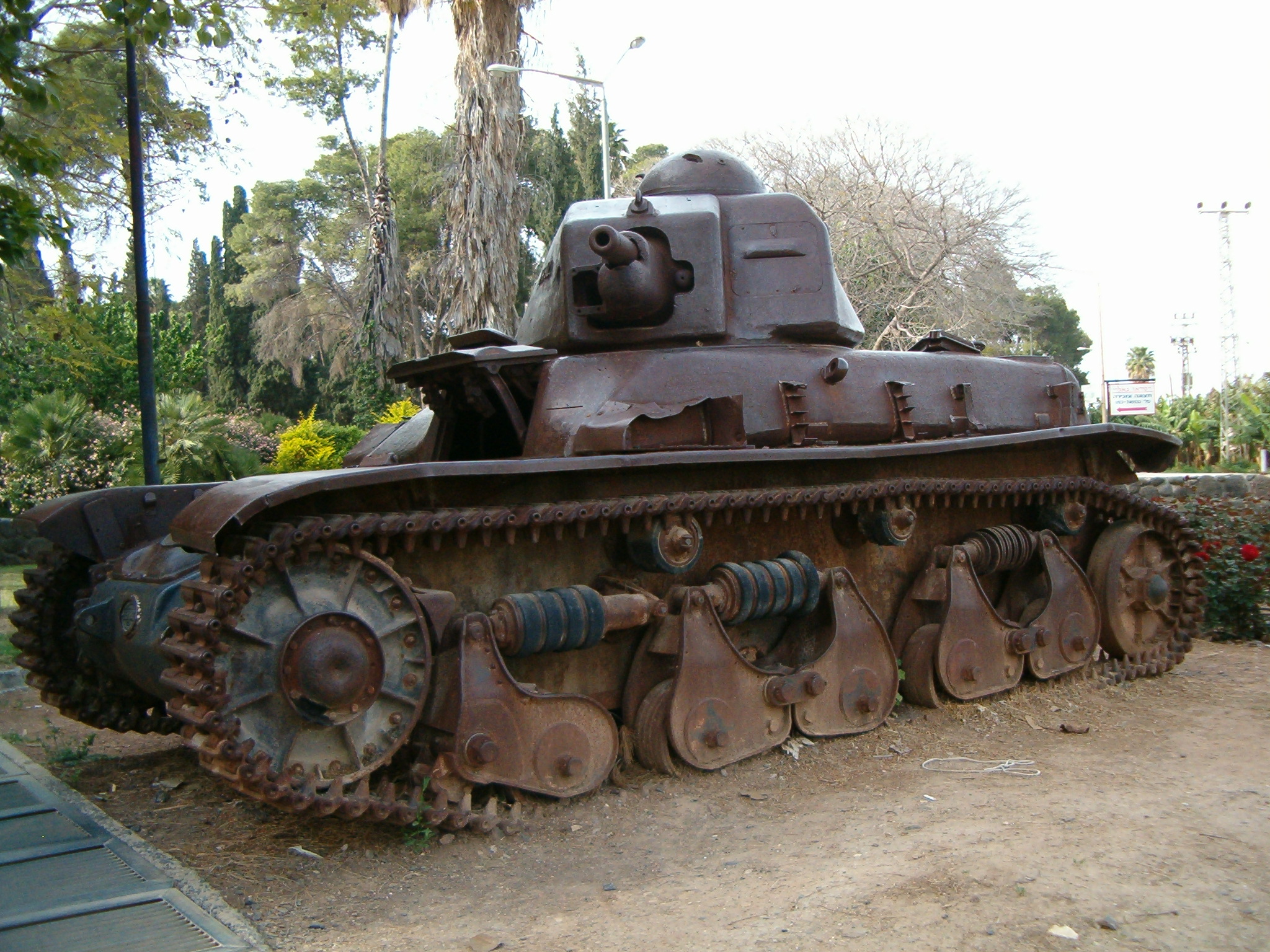
Perhaps one of the best-known engagements involving the PIAT took place at Degania Alef on 20th May 1948, during the Battles of the Kinarot Valley. Israeli forces in the kibbutz were reinforced by an infantry company and three PIATs. When Syrian armour briefly broke through the Israeli perimeter Yitzhak Eshet, a PIAT gunner, moved up and engaged the lead light tank, a Syrian French-surplus Renault R 35. Eshet fired from a slit trench at a range of 40yd, but his first round failed to explode. He was forced to fire again this time succeeding in disabling the approaching tank. The PIAT’s claim to this ‘kill’ has been hotly debated over the years as the tank was also reportedly struck by a Molotov cocktail and a grenade. As many as five Israeli veterans claimed to have been responsible for knocking out the tank, including two armed with PIATs, one of these was Eshet and another was Shlomo Anshel. An IDF Technology and Maintenance Corps investigation in the early 1990s reportedly found that the R35 had indeed been knocked out by Eshet’s PIAT bomb, which appears to have struck the cupola dome on top of the turret.

As the war continued further engagements involved the PIAT, in July, 1948, during the Battle of Karatiyya, Egyptian tanks pushed into the village. Armed with a PIAT and just two bombs, Sergeant Ron Feller crawled along a low cactus fence line until he was within 25yd of the Arab tanks. His painstaking crawl reportedly took him 35 minutes, but once within range he pushed his PIAT through the cactus and fired. His first shot missed and he had to manually re-cock the PIAT under fire – no mean feat a this required the compression of the weapon’s formidable main action spring. His second shot disabled the tank and the rest of the Egyptian armour subsequently retreated. Feller was awarded the Hero of Israel – at the time Israel’s highest military honour – for his actions. Once again, the PIAT gave an under-equipped force a fighting chance in the face of seemingly overwhelming odds. By the time the Israel Defense Forces took part in the Suez Crisis, in October–November 1956, the PIATs had been replaced by American rocket launchers.
The author has recently published a new book exploring the design, development and operational history of the PIAT, see here for more information.
Sources:
Wallach, Jeuda; Lorch, Netanel; Yitzhaki, Aryeh, (1978), Battles of the Jordan Valley
Reichner, Elyashiv, ‘Five Shades of Victory: The Conflicting Versions of the Tank Story in Degania’, makorrishon.co.il, <https://www.makorrishon.co.il/magazine/dyukan/38971/>
Mess, Michael, ‘Renault tank at Degania gates’, Laturn Park – Yad La-Shiryon, Armour Museum, <https://yadlashiryon.com/news>
Morris, Benny, (2008), 1948: The First Arab-Israeli War
Gilbert, Martin, (1998), Israel: A History
If you enjoy our work here at Silah Report please consider supporting us on Patreon!