In the late 1940s and 1950s, the Cold War was well underway. The Western powers had sponsored the creation of the Federal Republic of Germany (West Germany) and formed NATO. In response, the Soviets initiated several countermoves such as the creation of the German Democratic Republic (East Germany) and the formation of the Warsaw Pact which bound the Soviet satellite states of Albania, Bulgaria, Czechoslovakia, East Germany, Hungary, Poland, and Romania into a mutual defense agreement.
In the fall of 1955, the Soviets issued a top-secret memorandum that informed the Warsaw Pact leaders that they would be responsible for domestically producing Soviet-pattern weapons for their domestic forces. This meant that troops of the Eastern Bloc would be armed with Soviet-pattern weapons that all fired the same ammunition. Plants producing Kalashnikovs and ammunition were subsidized in East Germany, Hungary, Poland, Romania, and Bulgaria.
In Bulgaria in particular, this subsidization and the communist obsession with keeping everyone employed led to a sheer overabundance of weapons. After the military was sufficiently armed, the surplus weapons stockpiles found their way overseas and would provide arms for conflicts long after the collapse of the Soviet Union and its satelite states, extending the Warsaw Pact’s influence outside the region in ways that continues to persist.
In the 1970s, the task of weapons manufacturing in Communist Bulgaria was handed over to a factory called the Friedrich Engels Machinery Works nestled in the rose valleys of a town called Kazanlak. The plant began to churn out vast quantities of 7.62×39mm AK-pattern and 5.45×39mm AK74-pattern self-loading rifles, Makarov PM pistols, 23mm anti-aircraft systems, as well as the ammunition, to go with all of them.
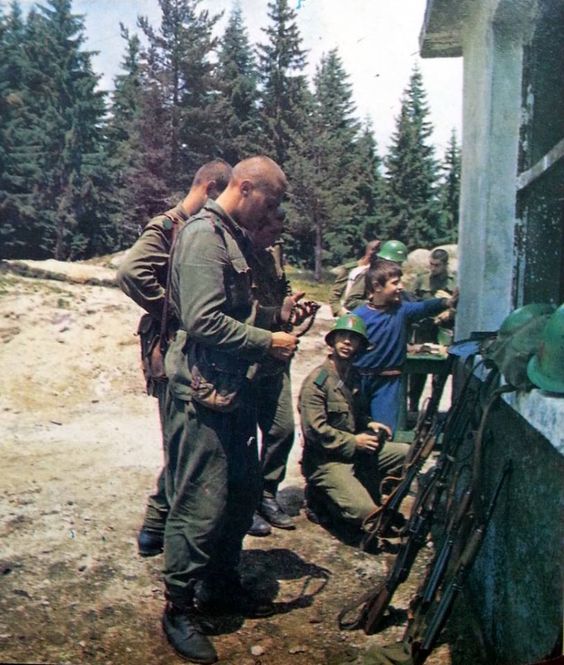
In comparison to other Communist regimes ruled by terror, like Enver Hoxha’s Albania or Nicolae Ceausescu’s Romania, Bulgaria was considered relatively liberal compared to its neighbors and was even given the nickname of the ‘silicon valley of the Eastern Bloc’ due to its innovative manufacturing sector. However, this liberal attitude meant international communist insurgents saw Bulgaria as a soft touch and soon began tapping them for an arms supply. With surplus available, Bulgaria was keen to oblige.
During the 70s and 80s, Bulgaria flooded Africa and Latin America with their domestically-produced Kalashnikovs to fuel various wars and revolutions. In 1983, thousands of Bulgarian rifles and over a million rounds of ammunition went to Chad to arm a Libyan-supported group fighting a CIA-supported group in a classic case of a proxy war during the Cold War. Today, those weapons remain in circulation and regularly make appearances in 21st-century conflicts in the Middle East. However, whilst the Bulgarian communist regime played a large part in the proliferation of Bulgarian-made weapons across the Middle East, not all of the weapons seen in circulation date to the Cold War.
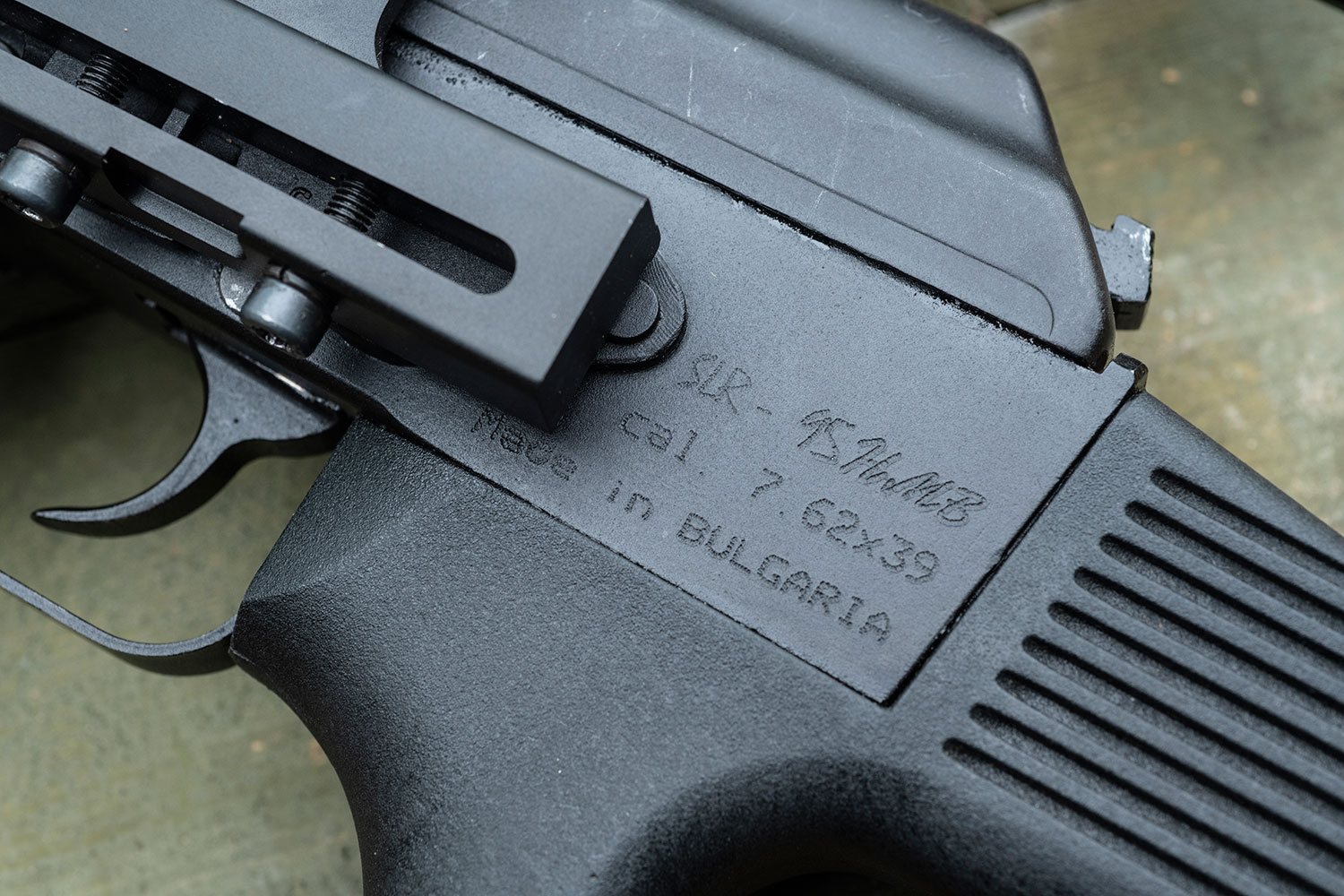
In 1990, Communism collapsed in Bulgaria and the country’s main arms manufacturer changed its name to Arsenal, Freidrich Engels just wasn’t in fashion anymore. Interestingly, the license to produce Kalashnikov-patterned self-loading rifles expired following the disintegration of the Warsaw Pact. Despite this Bulgaria carried on producing them but changed some components and of course, the name. The AKM was renamed the AR-M1.
The early post-communist years were not kind to the plant. To survive and due to the widespread organized crime seen in Bulgaria during the 1990s, Arsenal allegedly became involved in under-the-counter arms deals around the world which soon earned Bulgaria the nickname of ‘Europe’s arms bazaar’. Infamous arms dealers flocked to the country. Bulgarian oligarchy and foreign arms dealers soon set about making fortunes from exporting Bulgarian-made weapons to the Middle East, Africa, and beyond. One of these arms dealers was none other than notorious Viktor Bout, whom the Nicholas Cage’s character in the 2005 movie ‘Lord of War‘ was based on.
The proliferation of post-communist Bulgarian Kalashnikov-pattern self-loading rifles in the Middle East can be pinned on two points. Nikolay Ibushev, the director of Arsenal who has been a feature of the company since communist times – when he spent five years as a company representative in Syria, where he was rumored to be close to the late President Hafez al-Assad. This friendship was utilized in the 1990s and untold quantities of Bulgarian weapons found their way to the Syrian government in an arms deal designed to keep Arsenal afloat.
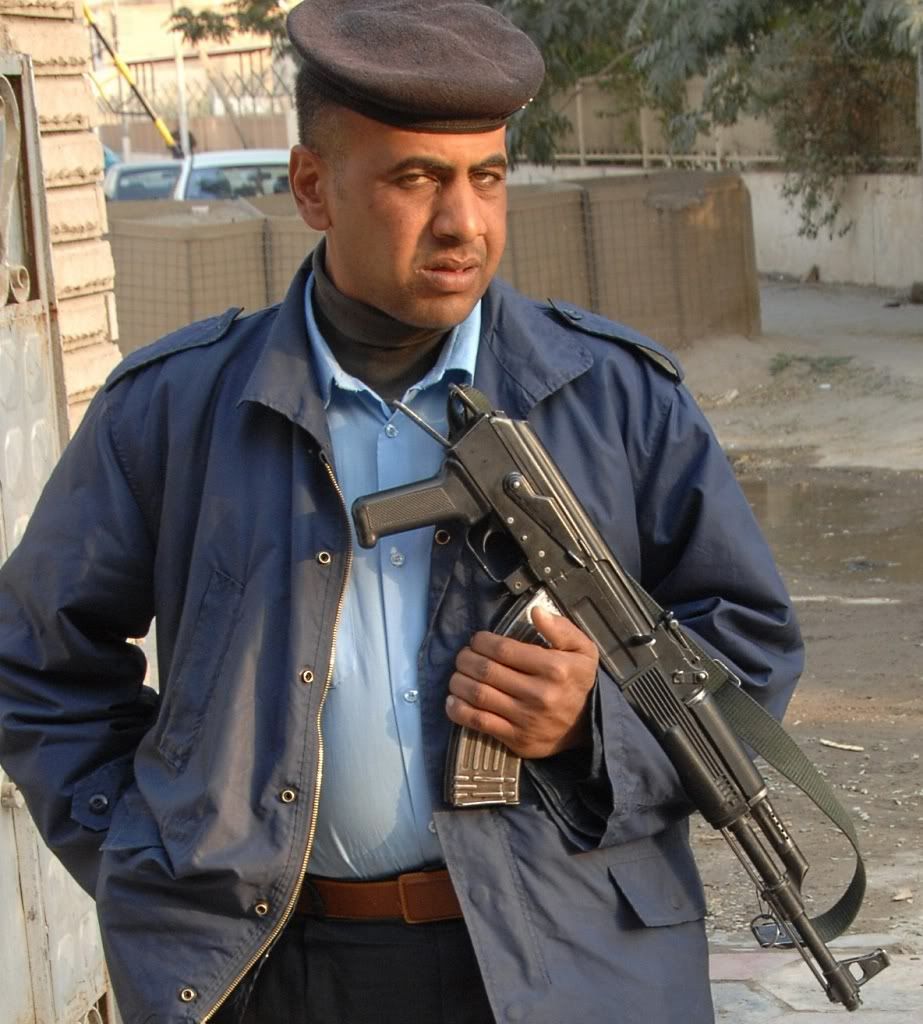
The second key axis on which proliferation of Bulgarian small arms in the region turns on came in late 2003, following the US invasion of Iraq, Arsenal signed a major US-approved contract to supply the post-Saddam Iraqi Army with Kalashnikov-patterned rifles, pistols, rockets, and other weapons. This contract irked Russian arms exporters who preached that the Kalashnikovs should come from the original factory. Bulgarian Kalashnikovs were promised to Iraq at between $75-100 apiece. Modern Russian versions were priced significantly higher, at around $500 each.
In 2014, as ISIS rampaged across Iraq and Syria, the bulk of these Bulgarian weapons stockpiles given to the Syrian and Iraqi forces, as well as US military aid given to Iraq, such as armored Humvees and M16s, fell into ISIS’s hands as well as that of other Jihadist groups. Subsequently, many were captured by irregular Kurdish forces.
Iraqi stockpiles, in particular, were heavily looted and subsequently dispersed across the Levant. To make up their losses, they turned back to Bulgaria who in turn made a significant profit from the carnage across the Middle East. In 2015 and 2016 combined, Bulgaria made arms deals to the Middle East were worth almost a billion Euros. Iraq was the main recipient of arms and ammunition, originating or transferred from Bulgaria.
In 2016, Iraq provided a case study on how fast these weapons can change into vastly different hands. Research carried out by the Conflict Armament Research (CAR) found that a Bulgarian anti-tank missile that was sold to the U.S. military through an unknown arms broker on 12th December 2015, and was recovered by Iraqi police during the battle of Ramadi on 9th February 2016. Meaning the weapon made its way to ISIS in just 59 days.
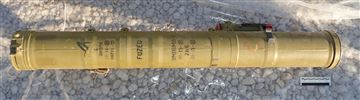
In September 2017, a representative of CAR made another discovery in an ISIS weapons factory in the Iraqi city of Tal Afar. Dozens of rocket-propelled grenades of various models lay on a table inside the factory. Some of the RPGs were decades old and most of them bearing some identifying mark. Rockets manufactured in Bulgaria bear a “10” or “11” in a double circle and many of the rockets found bore these exact marks.
In conclusion, the Cold War decision to subcontract small arms manufacture to Bulgaria’s Friedrich Engels Machinery Works had severe far-reaching consequences. The collapse of communism led to weapons flooding global conflict zones and causing significant instability in a number of regions. Whilst this can be attributed to the chaos of the 1990s, the current arms manufacture in Bulgaria, that is now an EU member state, also raises some serious questions.
From its birthplace in the rose strewn valleys of Kazanlak, the Bulgarian Kalashnikov will continue to travel and be a feature of warzones around the world for years to come. At the SOFEX international arms expo in 2018, Reaper Feed spoke to a representative of Bulgaria’s Arsenal which is expanding its business opportunities and restarting old contracts with sales representatives being dispatched to Asia, Latin America, and Asia.
This article was written by Batya, an international security consultant and the founder of Reaper Feed which is a site bringing you an unfiltered birds-eye view on global war, crime, weapons, and battlefield technology. You can find Batya on Twitter @Reaperfeed1.
Sources:
- Licensed to Kill, Telegraph, C. Freeman
- Weapons of the Islamic State – Conflict Armament Research
- ISIS weapons arsenal included some purchased by U.S. government, NBC, G. Joselow
- Everyman’s Gun – the AK-47, HistoryNet, C.J. Chivers
- Bulgaria’s Arms Exports Reach Record High, Balkaninsight.com, M. Cheresheva
- Tracing ISIS’ Weapons Supply Chain, Wired.com, B. Castner
If you enjoy our work here at Silah Report please consider supporting us on Patreon!