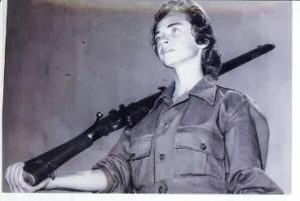
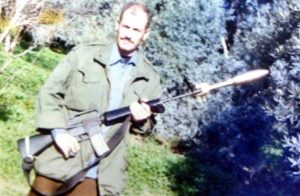
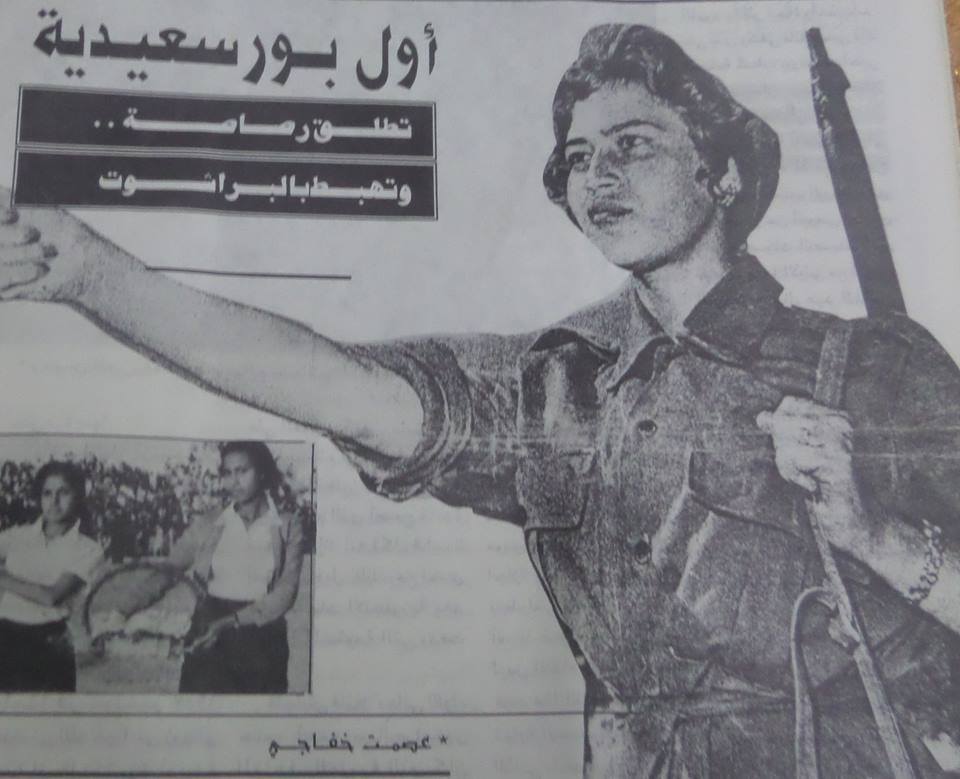
Egyptian Female Volunteers in Suez Crisis and Their Armaments  

Whenever you think of female warriors in the Middle East, the very first thing that crosses the Western mind is the YPJ (Women’s Protection Units), an all-female Kurdish militia that fights with other Kurdish militias such as the YPG (People’s Protection Units). Of course, with the war raging against ISIS, and the terrible atrocities committed against women, the global media fixated their spotlights on the female warriors who fought tooth and nail against a patriarchal, barbaric and medieval-minded opponent.

Within modern Arab history we have examples where women carried arms and fought as well.

Read more

Taliban Raid on Afghan Militia Post Reveals Modern Small Arms Inventory

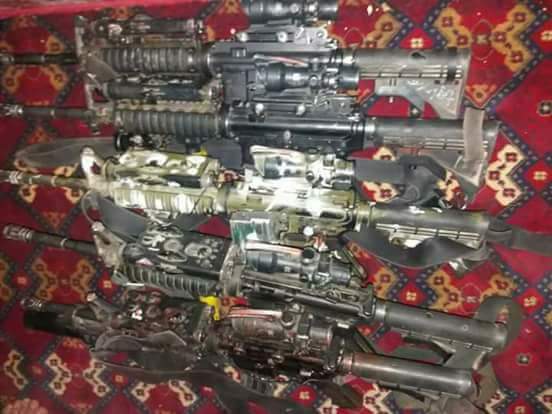
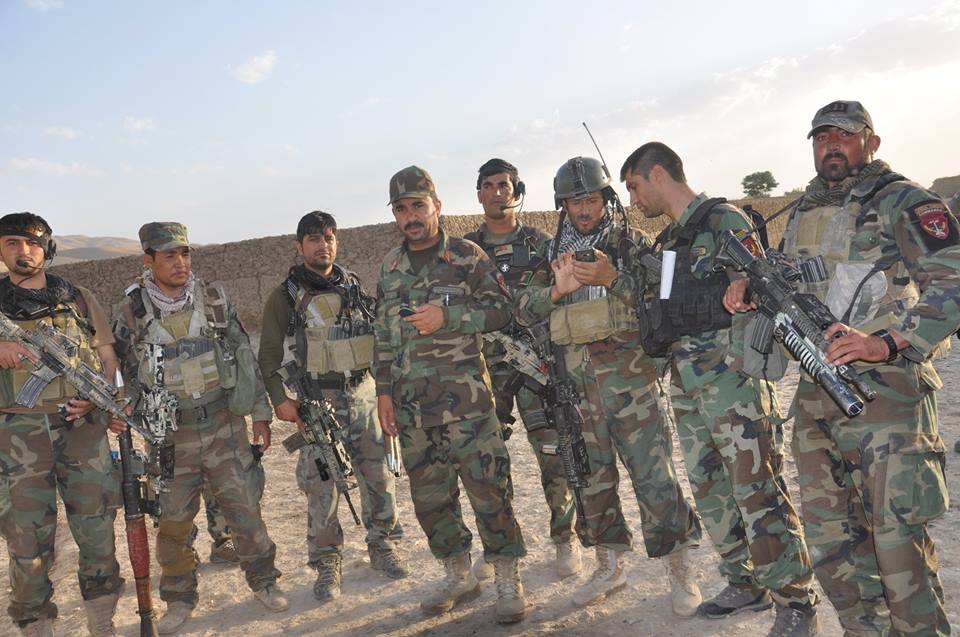
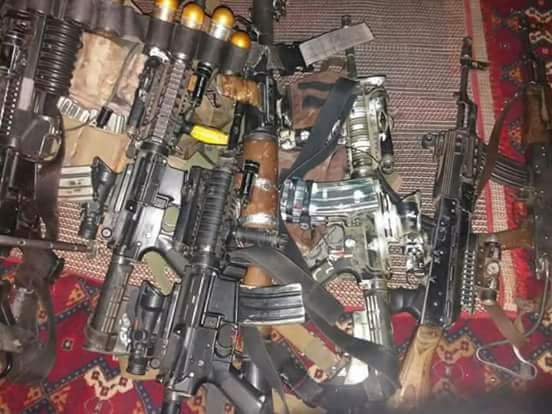
Recently disclosed photographs supplied to Silah Report have suggested that the local GoIRA supported militias are armed with more than the standard Kalashnikov self-loading rifles often seen throughout the country. One example of these forces is the Afghan Local Police, or ALP. Although these forces are seen as cost-effective, many local Afghans compare them to the days of the War Lords that roamed the country in the Civil War.

The photograph below depicts five 5.56x45mm NATO M4-patterned carbines in configurations that are identical to that of the ANA Commandos. This includes the AN/PEQ-2 TPIAL mounted at the 12 o’clock position on the Picatinny rail, the Trijicon 4x RCO day optic, the MaTech BUIS, and even the spray painted rifle in the center. Also present is a 40x46mm NATO M203 UBGL mounted to the carbine at the bottom. Notice on the painted carbine the coupled STANAG magazine inverted from a usual “rounds up” position.

As indicated by this photograph, a small arms inventory such as this is consistent with what the ANSF Commandos are generally issued.

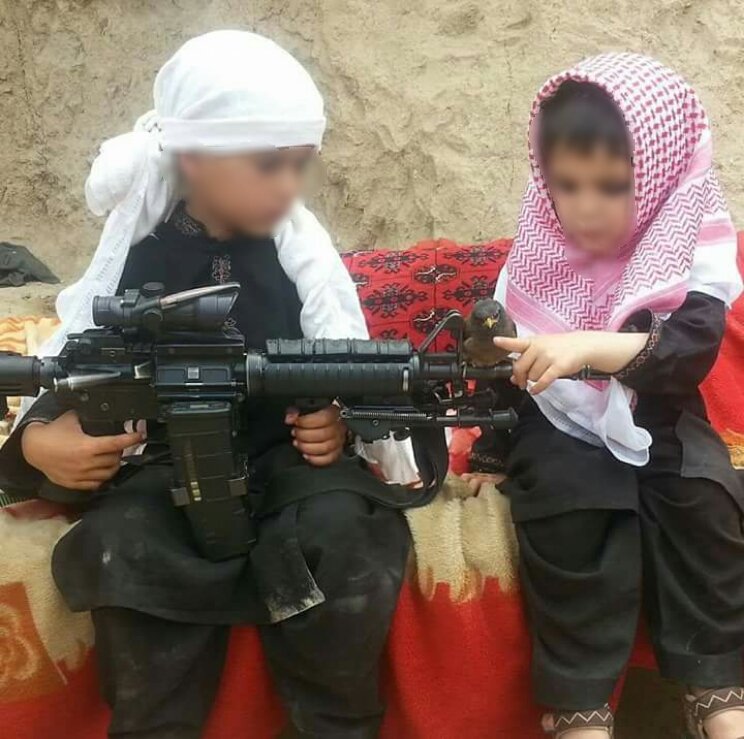
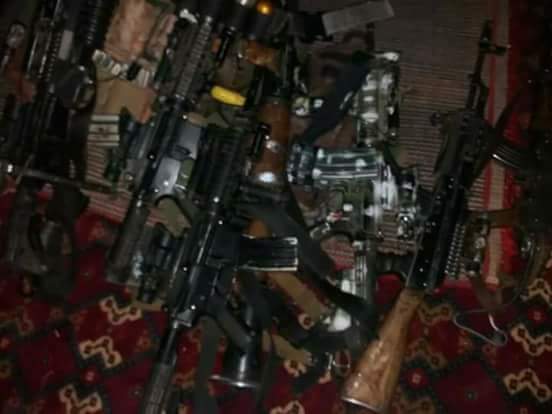
This photograph was provided by the same source and features a similar magazine coupling technique as illustrated above. What appear to be UTG rail covers and what is most likely a Harris bipod copy appear to be third party modifications from the standard issue. Myna Bird perched on the 6-inch barrel comes unissued.

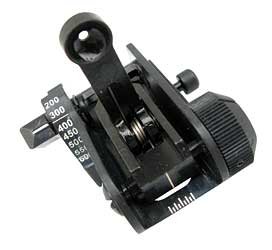
MaTech BUIS as in use.

However in this angle present are Streamlight TLR Picatinny mounted weapon lights, in addition to Kalashnikov patterned rifles, which are rarely in use by ANSF Commandos, if at all. Although rare, there are some TLRs that have been spotted among the group.

Although contextual information about the photographs are scare, a source has suggested that the militia checkpoints are perhaps funded by a shadow entity with a large supply budget. Such as the “Kandahar Strike Force” that was indeed set up by the CIA. In Afghanistan, this is immediately assumed to be the “CIA”, but until we have further information, we cannot venture more into the origins of these carbines.

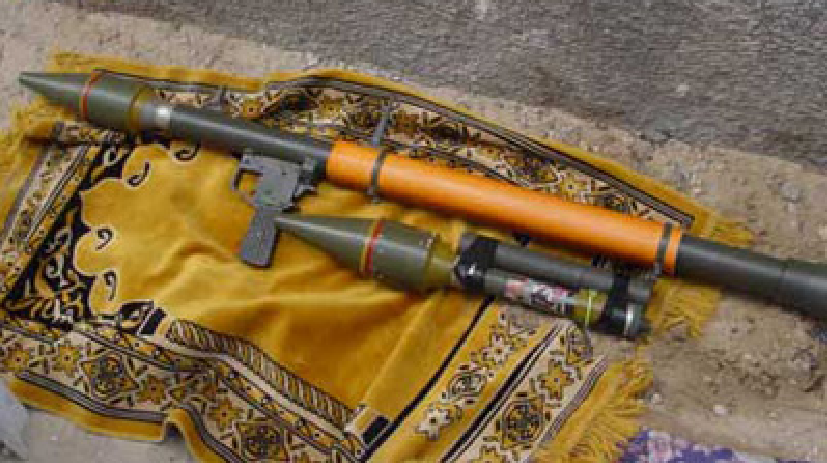
Yassin RPG – The Underground RPG of Gaza

Due to the Arab-Israeli conflict in Palestine, Hamas with its military wing al-Qassam brigades has developed their own tools of war in order to preserve self-sufficiency in order to not be affected by the blockade made on Gaza strip.

This article will spotlight on one of the more interesting craft produced rocket launchers in Gaza , which is literally underground since their production facilities are protected in underground bunkers from IDF air raids and artillery strikes.
It is designed and manufactured by Hamas, but they distribute the launchers to other resistance troops working in Gaza, including Fatah and the PFLP (Popular Front for Liberating Palestine).

History

The weapon is named after Sheikh Ahmed Yassin, the founder and the spiritual leader of Hamas who was assassinated by Hellfire missiles shot from an Israeli AH-64 Apache Helicopter gunship on March 22, 2004, at the age of 67.

It was designed by Adnan al-Ghoul who was also assassinated by an Israeli air strike on October 21st, 2004.

Characteristics

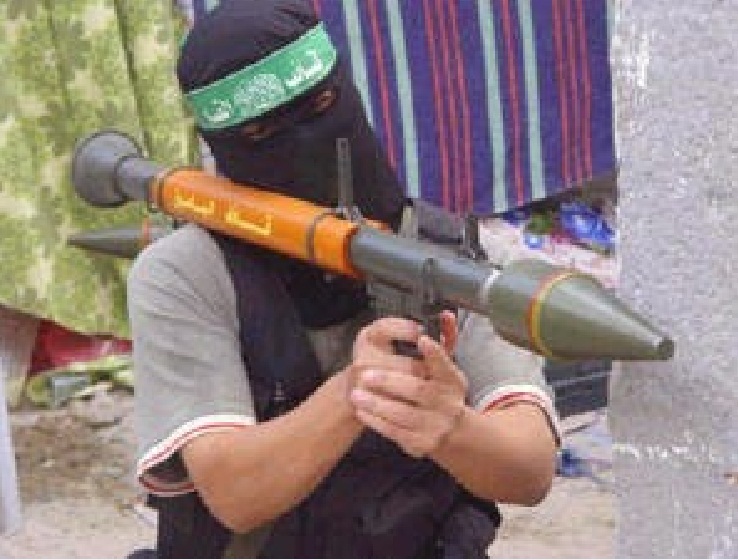
The Yassin RPG is a unique design that resembles the RPG-2 combined with RPG-7 with some improvised design features, From RPG-2 it took the launching tube design and the warhead external shape and the rocket motor which are very simple, but to improve the performance they added some features from the RPG-7 such as the nozzle at the launcher’s rear to deflect recoil generated by launching the rocket, they also added a rocket booster to be attached to the propelled grenade to extend it’s range, and the internal shaped charge of the warhead is enhanced as well.

The manufacturing process occurs in underground workshops using ordinary shop tools, but the conception and engineering of the weapon seem to have a high degree of sophistication and professionalism given the lack of technology of the design.

In Action
According to the continuous improvements of armor in Israeli armored vehicles, the RPG is believed to be not effective against them. However, Saladin brigades (the military wing of the Popular Resistance Committee in Gaza) claimed to destroy a Merkava Mk.3 MBT by targeting a weak point of the tank. Yet, the weapon is very effective against brick fortifications and soft-skinned armor as it can penetrate a 21 cm steel plate from 150 meters.

Specifications 

Model : Yassin RPG

Designer : Adnan al-Ghoul

Type : Anti-Tank, Anti-Personnel

Place of Origin : Gaza, Palestine

Manufacturer: al-Qassam brigades, R&D unit

In Service: 2004 – Current

Weight : 7 kg (15 lbs)

Length : 95 cm (37″)

Caliber: 40 mm rocket engine ; 85 mm warhead

Muzzle velocity: 295 m/s

Effective range: 300 m

Sights: Iron sights

Differences between RPG-2 (top) and RPG-7 (bottom)
Yassin RPG featuring the combination of RPG-2 and RPG-7

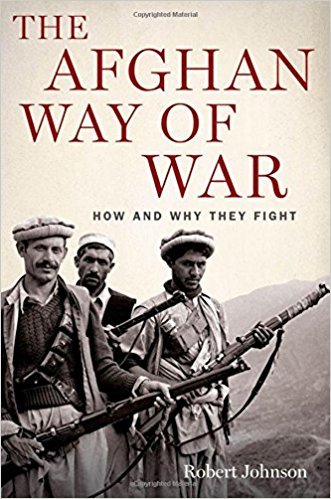
Book Review: The Afghan Way of War

Although former British Army officer Robert Johnson wrote his book, “The Afghan War of War” in 2011, his conclusions and observations are just as valuable, if not more valuable today than ever. The premise of his book is that very few authors, officers, or politicians have throughly studied the Afghan side of many of the conflicts that have taken place in Afghanistan, whether it be Afghans against foreign invaders/occupiers, or civil war within the country such as during the 1990s. What I especially liked about the book was a number of very useful points that Johnson raises, that I honestly had not thought of before. I’ll summarize some of these points below, as these were my key takeaways from the book.

A Nation of a Thousand Tribes

Johnson goes to great lengths to make the point that Western observers have seen Afghans as “unchanging”, the “Graveyard of Empires”, and “fierce tribal fighters”, and this has stereotyped impressions of the Afghans since the first Anglo-Afghan War in the 1840s. Throughout the book we have countless counter-examples where this doesn’t seem to be the case. Where Afghan tactics have changed, altered, and have been reactive to the threats faced, in addition to being proactive and forcing Western troops to be constantly on the defensive.

But there is one constant that hasn’t changed, and that is the tribal and group dynamics that have existed for several hundred years. What we see is that instead of seeing Afghanistan as a single entity, or even an ethnic group as an entity, what is really going on is hundreds of individual tribes, sub-tribes, clans, and families that are essentially looking out for the best option for their individual group. Whether they ally with the British, or with the King, whether the Mullahs decide to go to war at all, whether peace is on the table, etc… Any of these decisions are made for the benefit of the particular group (tribe, clan, village, etc…). And these often change. What is beneficial for a village one month, may be detrimental for it the next. This means that to the British, Soviets, or Americans, it can be increasingly frustrating trying to maintain alliances and agreements.

Something that Johnson doesn’t mention, but a personal observation that I’ve made is how economy plays into these decisions. The lack of a stable exportation or cultivation of any natural resource (other than crops and opium) has been a limiting detractor throughout the countries history and still affects national security today. But when local tribes and villages can’t rely on natural resources like oil, mining, etc… the need to fight tooth and nail for alliances, positions, and funds becomes even more apparent.

Foreign Invaders Unify Afghans

In the example of every invading or occupying force, one of the constant themes is that one of the only forces that has ever truly united Afghans of different ethnic origins in some fashion has been the need to expel a foreign one. Johnson doesn’t point this out explicitly but this is evident in his descriptions of the country before several conflicts. The state of the country under the King appeared to be on the brink of falling apart on numerous occasions, when senior leadership pushed for further hostilities against the British or during the time of communism, against the Soviets. Even under the Taliban during OEF, the need to unite under an Islamic banner instead of an Afghan, or Pashtun one was strategically necessary to be able to sweep tribal differences aside.

Differences in Technology

The first Anglo-Afghan War saw the widespread use of muzzleloading rifles and muskets on both sides of the conflict, with the British armed with the Brown Bess, and the Afghans with the Jezail muzzle loading rifle. Apart from the British cannon and cavalry, the two forces were somewhat equal in terms of actual hardware.

However in the second Anglo-Afghan War this dynamic dramatically changed with the introduction of breech-loading rifles that could not only be reloaded quicker, fired faster, but also more accurately and further. This changed the way Afghan tribesmen attacked British columns. They had to close in faster, not allowing the British to use their artillery, and often attacked at night.

Similarly, in the war against the Soviets, the use of Stinger MANPODS was brought up. The popular misconception is that Stingers helped win the war. Although they did strike fear among Soviet helicopter pilots, especially the Hind attack helicopters, their introduction was too late to make a difference in 1986, when the Soviet Union had already decided to being fighting a delaying action instead of an all-out offensive. In addition, by altering their flying practices to fly at higher altitudes, the Soviets realized they could go outside of the Stinger’s capabilities and lessen the risk.

In Operation Enduring Freedom, the prevalence of IEDs took precedence over light Infantry attacks that the Taliban initially tried to use against the British in Helmand, but suffered costly casualties due to the artillery and air assets. IEDs used by the Taliban deserve to be studied much more in detail due to the complex escalation’s and counter escalation’s executed on each other throughout the entire campaign.

Operation Enduring Freedom/Operation Herrick Observations

One point I think the book could have been improved on is the OEF/Op Herrick. In retrospect, this isn’t really Johnson’s fault because the war is still ongoing, and he can’t have access to many of the after action reports, or even just the massive amount of experience associated with the current operations from hundreds of thousands of veterans and currently serving troops. He picks out specific situations and TTPs that are usually from the British perspective, that doesn’t typify what other forces might have faced in their fight against the Pashtun lead Taliban insurgency.

His conclusion though is flawless in that he identifies that any considerable gains going forward will have to be an Afghan solution to an Afghan problem. Personally I think this has to have enormous emphasis on the countries economy, and being able to become prosperous on exporting natural resources already present in order to actually provide some capitol for a government entirely propped up on international aid money.

The Afghan Way of War is available on Amazon for $35.95.
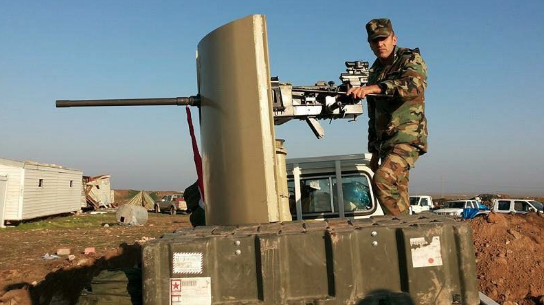
SUSAT On Peshmerga M2

A photograph has recently come out showing a Peshmerga fighter with what appears to be a SUSAT mounted on his M2 .50 BMG Heavy Machine Gun. The mount that the machine gun is cradled in also appears to be a of British design, formerly seen in use on British armored vehicles. SR’s suspicion is that the entire contraption is supplied by British forces to the Peshmerga as defensive material. However, it would also appear that the SUSAT isn’t calibrated to the trajectory of the .50 BMG cartridge, nor is it very well suited for a heavy machine gun in the first place, being designed for a 5.56x45mm rifle.

Homemade Anti-Materiel Rifle With Iraqi Militia

C5rKjNRWAAAvjh5.jpg

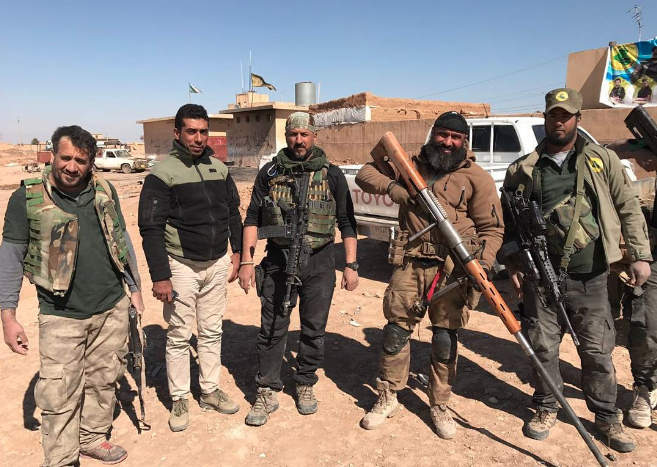
A Polish small arms magazine recently posted this to their social media page. It appears to be of a group of Iraqi militiamen from the Imam Ali Brigade, as is evidenced by the circular yellow patch with a Kalashnikov over an image of a green country profile of Iraq . The bearded militiaman is posing with a huge bolt action anti-materiel rifle. These DIY conversions had been seen multiple times during the Syrian conflict. Supposedly this gun uses either 14,5mm (from KPV or KPVT) or 23 mm (from ZU-23-2) barrel with an improvised receiver, bolt, trigger mechanism, furniture and bipod. You can also see a picatinny rail section mounted on top of the receiver for attaching a scope.

I guess they use the survived barrels from guns with damaged or destroyed mechanisms. Otherwise, it won’t be justified to take the barrel from a functional heavy machine gun or automatic cannon. Although depending on the situation it can be the case, too.

When making the new stock and forearm, the gunsmith definitely tried to make it look like an SVD/Al-Kadesiah.

Note also the other guys’ weapons: an AK, M4 Carbine and an M249 SAW LMG.

334

The Shi’a Imam Ali Brigade (Cited Source- The Observers)

The Iraqi Shiite militia known as the Imam Ali Brigades is accused of having committed multiple war crimes in the fight against the Islamic State organisation in Iraq, including summary executions and torture of captives. But its brutality isn’t the only thing fuelling the militia’s notoriety – it also has a well-oiled communications strategy.

In June 2014, Shiite leader Ayatollah Sistani made an appeal for mobilisation against the Islamic State organisation. Numerous Iraqi Shiite militias were formed after this announcement.

These new formations joined the four large, already-existing Shiite militias in Iraq: the Badr Brigade, founded in Iran in 1982; Saraya al-Salam (the “Peace Brigades”), which is directed by the radical Shiite religious cleric Moqtada al-Sadr; Asaib Ahl al-Haq (the “League of the Virtuous”); and, lastly, the Iraqi Ketaeb Hezbollah.

The Imam Ali Brigades have distinguished themselves by resorting to extreme violence. The militia, made up of combatants trained in Iran or Lebanon, has faced widening criticism since the release of a YouTube video showing men wearing the Imam Ali Brigades insignia burning a man.