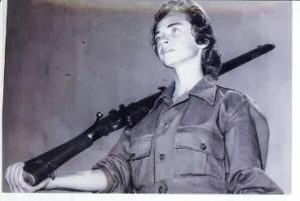
Egyptian Female Volunteers in Suez Crisis and Their Armaments  

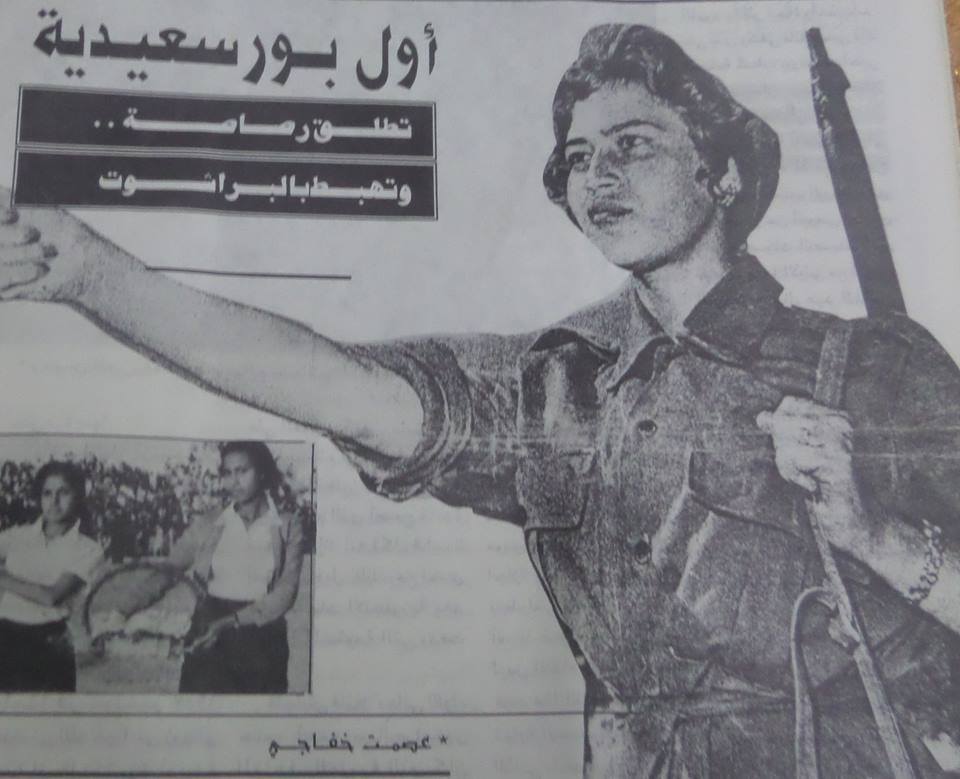
Whenever you think of female warriors in the Middle East, the very first thing that crosses the Western mind is the YPJ (Women’s Protection Units), an all-female Kurdish militia that fights with other Kurdish militias such as the YPG (People’s Protection Units). Of course, with the war raging against ISIS, and the terrible atrocities committed against women, the global media fixated their spotlights on the female warriors who fought tooth and nail against a patriarchal, barbaric and medieval-minded opponent.

Within modern Arab history we have examples where women carried arms and fought as well.

Read more

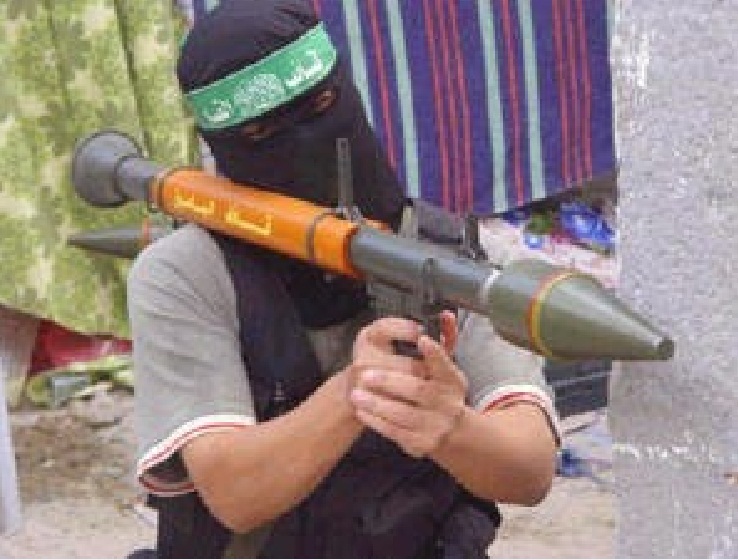
(Palestinian Yassin RPG) السلاح الفلسطيني قاذف الصواريخ ياسين


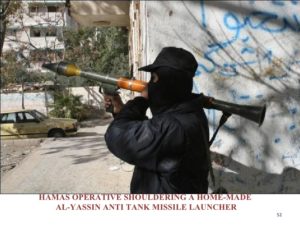
This is an article translated into Arabic about the locally produced Yassin RPG in use by Hamas in the Gaza strip. The English version can be accessed here.

بسبب الحروب العربية الاسرائيلية, اهتم الجناح العسكري لمنظمة “حماس” الا وهي  “الوية عز الدين القسام” , بالتصنيع العسكري حتى  تحصل على اكتفاء ذاتي  لتقلل فعالية و تاثير الحظر الاقتصادي التي تفرضها اسرائيل على “غزة” من حين لاخر.

هذه المقالة  تسلط الاضواء على  احد الصناعات العسكرية المثيرة للانتباه وهي صناعة قواذف الصواريخ من نوع “ياسين” في غزة في منشئات انتاجية تحت الارض  حتى لا يتم استهدافها من قبل سلاح الطياران و المدافع الاسرائيلية.  هذا القاذف تم تصميمه و تصنيعه من قبل “حماس” و يتم توزيعه الى حركات مقاومة اخرى من ضمنها “فتح” و “الجبهة الشعبية لتحرير فلسطين”.

تاريخ السلاح

يحمل القاذف اسم  القائد الروحي و مؤسس حركة حماس الشيخ “احمد ياسين” الذي اغتيل عن طريق صاروخ من نوع “هيل فاير” من هيليكوبتر اسرائيلية نوع “اباتشي”  في الثاني و العشرين من مارس سنة 2004 وهو في عمر السابعة والستون.

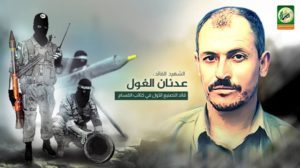
مصمم السلاح هو  المهندس “عدنان الغول” والذي قتل ايضا في نفس السنة  في الواحد وعشرون من شهر اكتوبر عن طريق غارة جوية اسرائيلية.


موصافات السلاح

تصميم القاذف “ياسين” فريد من نوعه ولكن يشبه كثيرا القاذف الروسي القديم “ار بي جي-2” مع بعض مواصفات القاذف الاحدث “ار بي جي-7”.  اخذ السلاح تصميم الانبوب و شكل الخارجي للصاروخ من “ار بي جي-2” وايضا محرك الصاروخ , وتعتبر تصاميمها بسيطة للغاية ولكن لتحسين الاداء  اضافوا  تصميم “ار بي جي-7” للفوهة الخلفية التي تعكس الارتداد عند اطلاق الصاروخ. واضافوا ايضا معزز صاروخي للذخيرة لزيادة مدى السلاح و طوروا من الشكل الداخلي للراس المتفجر للصاروخ.

 مع انه يتم تصنيع السلاح في ورش تحت الارض باستخدام ادوات عادية وفي متناول المدنيين , ولكن  تصميم وابتاكر “الياسين” وجودة التصنيع يدل على مستوى عالي من الاحترافية و التطور مع ان تصميم السلاح يتعبر من ناحية التقنية بسيط للغاية.

ياسين” في ساحة القتال”

 يعتبر السلاح غير فعال ضد المركبات المدرعة لان اسرائيل في تطوير دائم و تحسين لها , ولكن “كتائب صلاح الدين”  و يعتبر الذراع العسكري لمنظمة “اللجنة الشعبية للمقاومة في غزة”  زعموا تدمير دبابة اسرائيلية من نوع “ميركافا مارك 3” عن طريق استهداف نقطة ضعف فيها.

مع ذلك, يعتبر السلاح فعال ضد الحصون المصنوعة من طوب و الاهداف التي تمتلك تدريع خفيف كسيارات “الهامفي” الاسرائيلية لانها تستطيع اختراق فولاذ بسماكة 21سم على بعد 150 متر.


التقاصيل

النوع : قاذف صاروخ (ار بي جي) ” ياسين”

المصمم: عدنان الغول

دور السلاح: مضاد للدبابات, تحصينات و الافراد

مكان التصنيع: غزة , فلسطين

فترة الخدمة : 2004- الى الان

الوزن:  7 كيلوجرم – 15 باوند

الطول: 95سم- 37″ انش

العيار: 40مم محرك الصاروخ و 85مم للراس المتفجر

سرعة الفوهة: 295 متر/ث

المدى الفعال: 300 متر

اداة التصويب:  مسددات


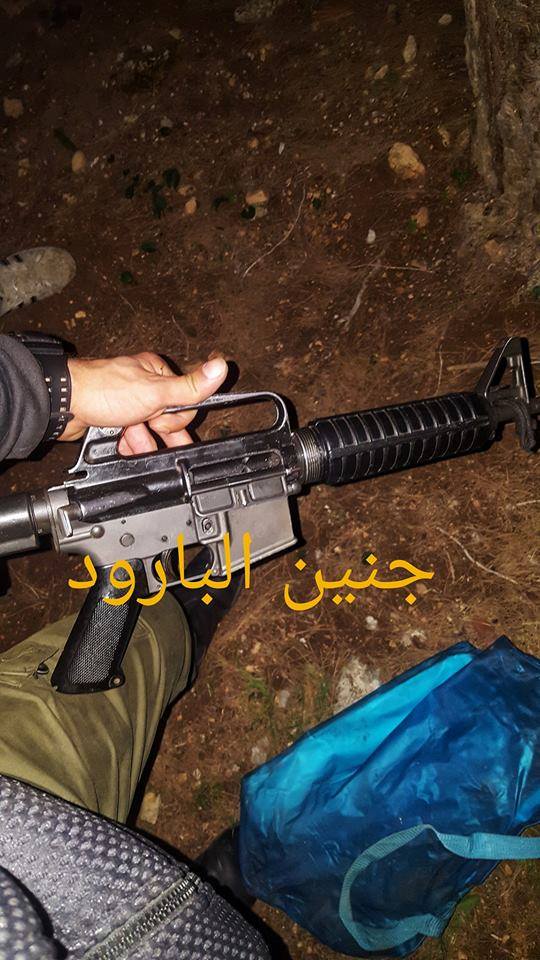
Palestinian Authority “Returns” Israeli CAR15 (Sans Bolt) after Patrol Attacked in West Bank

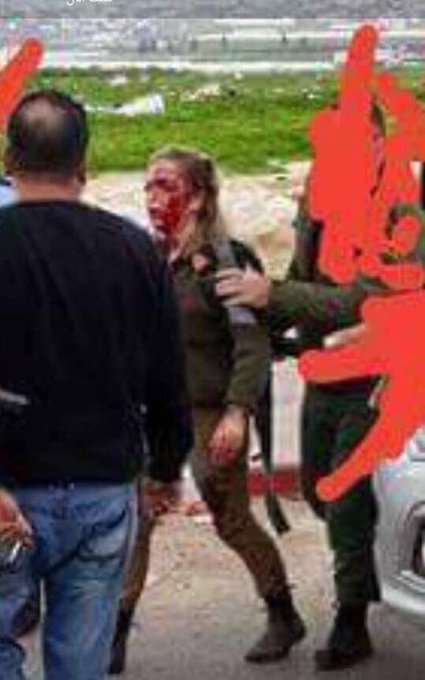
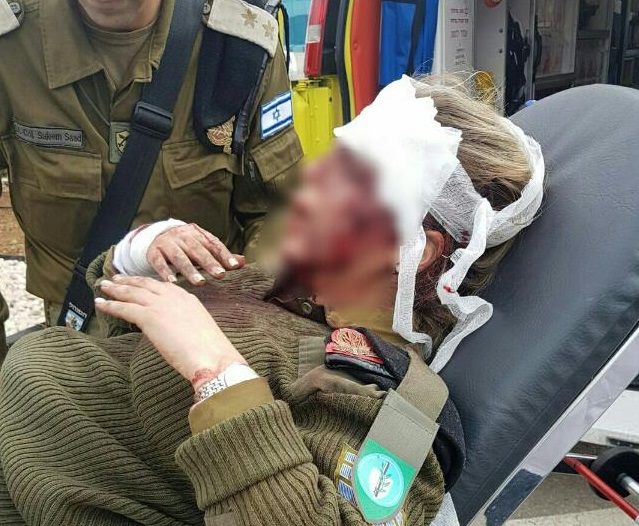
An Isreali Defense Forces patrol was attacked with several members severely beaten before an armed Palestinian Authority element came to their aid in the vicinity of Jenin, West Bank. From the Alemeiner-

The two soldiers, a man and a woman, were lightly to moderately injured. Images of the female soldier’s bloody face circulated on social media after she was injured by shattered windshield glass. She was evacuated to a hospital in Afula.

Video from the attack shows the mob haranguing and attacking the soldiers as they cried out.

An initial investigation found that the soldiers had been misdirected to the Palestinian city by the Waze navigation app on their journey from Shavei Shomron in Samaria to Afula in the Jezreel Valley.

A Palestinian Authority policeman intervened to protect the Israeli soldiers, ultimately firing into the air to disperse the crowd. Over 100 members of the PA security forces were called out to escort the soldiers to safety and return their jeep to Israel, according to a PA security official interviewed by the Jerusalem Post, who also said that the effort was made both to protect human life and prevent Israeli reprisals against Jenin.

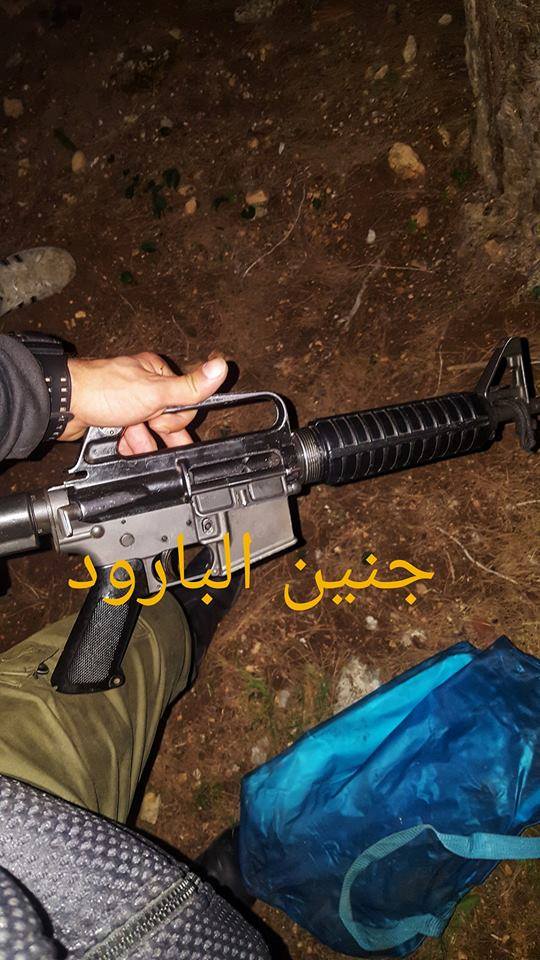
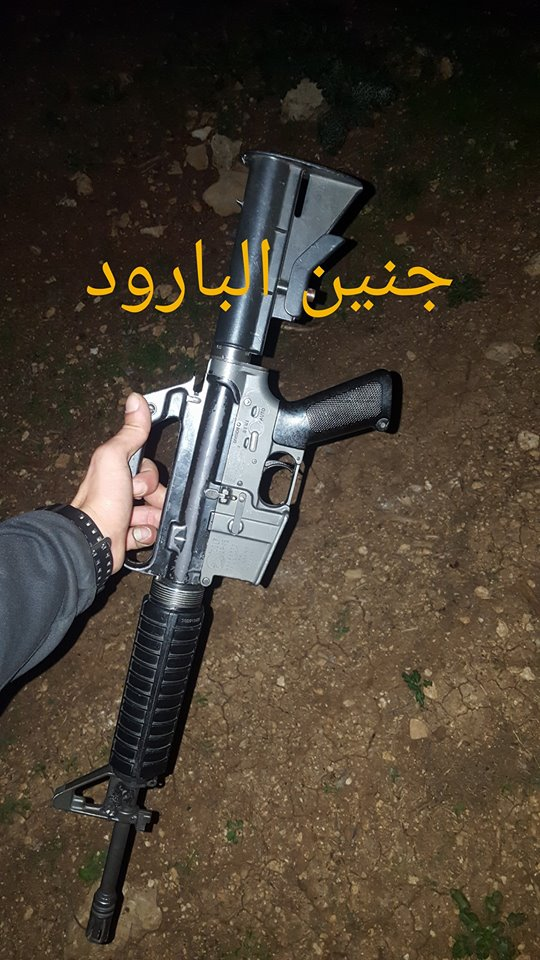
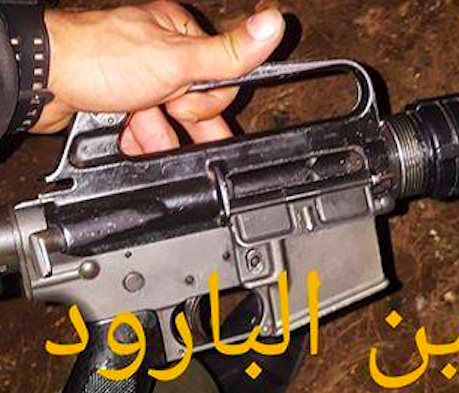
Various Palestinian social media outlets have released images of a Colt CAR15 that appeared to have been returned to IDF forces after the encounter. The IDF has made extensive use of U.S. CAR15s, M16A1s, M16A2s, and even M4s for a number of decades, currently supplementing the IWI Tavor now in service with frontline troops.

From Gaza Now, a Palestinian social media account–

بعد محاصرة الشاب الفلسطيني الذي استولى و تمكن من إغتنام سلاح مجندين جيش الاحتلال .

#عاجل : أجهزة أمن السلطة الفلسطينية تسلم الاحتلال الإسرائيلي السلاح الذي استولى عليه الفلسطينيين في مدينة #جنين اليوم .

#صور: مسربة للسلاح قبل تسليمه لجيش الاحتلال

Notice the earlier A1 forward assist and A1 rotary dial rear sight. In addition, notice the shorter telescoping stock which is signatory of the CAR15 series. Also note that the upper and the lower receiver don’t match, possibly indicating that the two parts were interchanged throughout the life of the rifle.

But more interesting than the rifle is the fact that the bolt and charging handle appears to be missing from it. This could have been intentional on the part of the Palestinians who captured the rifle.

The Israeli soldiers appear to have taken a beating but fortunately are still alive. They probably could do with a remedial land navigation course, and not rely on Waze to get from one tactical objective to another.

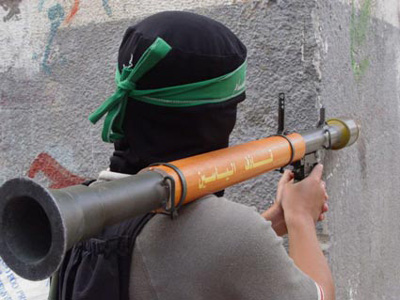
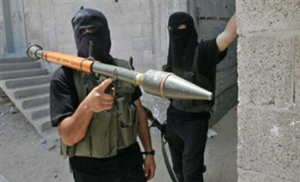
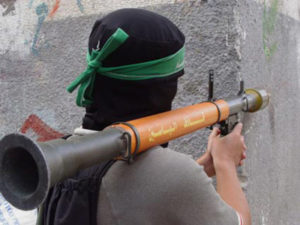
Yassin RPG – The Underground RPG of Gaza

Due to the Arab-Israeli conflict in Palestine, Hamas with its military wing al-Qassam brigades has developed their own tools of war in order to preserve self-sufficiency in order to not be affected by the blockade made on Gaza strip.

This article will spotlight on one of the more interesting craft produced rocket launchers in Gaza , which is literally underground since their production facilities are protected in underground bunkers from IDF air raids and artillery strikes.
It is designed and manufactured by Hamas, but they distribute the launchers to other resistance troops working in Gaza, including Fatah and the PFLP (Popular Front for Liberating Palestine).

History

The weapon is named after Sheikh Ahmed Yassin, the founder and the spiritual leader of Hamas who was assassinated by Hellfire missiles shot from an Israeli AH-64 Apache Helicopter gunship on March 22, 2004, at the age of 67.

It was designed by Adnan al-Ghoul who was also assassinated by an Israeli air strike on October 21st, 2004.

Characteristics

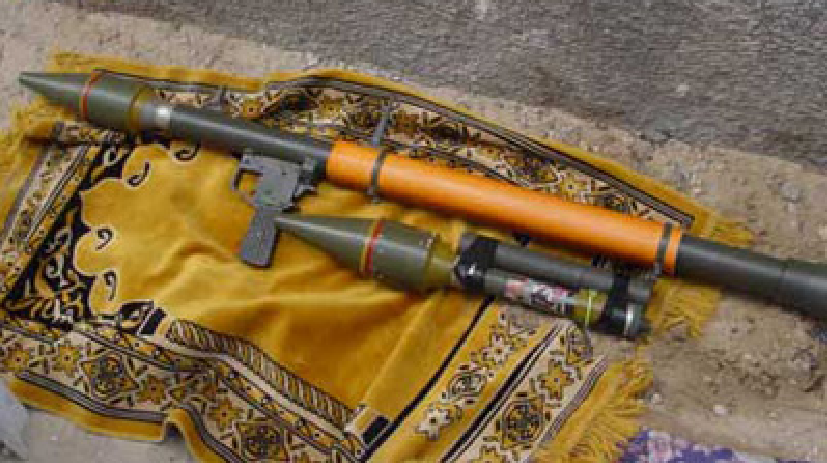
The Yassin RPG is a unique design that resembles the RPG-2 combined with RPG-7 with some improvised design features, From RPG-2 it took the launching tube design and the warhead external shape and the rocket motor which are very simple, but to improve the performance they added some features from the RPG-7 such as the nozzle at the launcher’s rear to deflect recoil generated by launching the rocket, they also added a rocket booster to be attached to the propelled grenade to extend it’s range, and the internal shaped charge of the warhead is enhanced as well.

The manufacturing process occurs in underground workshops using ordinary shop tools, but the conception and engineering of the weapon seem to have a high degree of sophistication and professionalism given the lack of technology of the design.

In Action
According to the continuous improvements of armor in Israeli armored vehicles, the RPG is believed to be not effective against them. However, Saladin brigades (the military wing of the Popular Resistance Committee in Gaza) claimed to destroy a Merkava Mk.3 MBT by targeting a weak point of the tank. Yet, the weapon is very effective against brick fortifications and soft-skinned armor as it can penetrate a 21 cm steel plate from 150 meters.

Specifications 

Model : Yassin RPG

Designer : Adnan al-Ghoul

Type : Anti-Tank, Anti-Personnel

Place of Origin : Gaza, Palestine

Manufacturer: al-Qassam brigades, R&D unit

In Service: 2004 – Current

Weight : 7 kg (15 lbs)

Length : 95 cm (37″)

Caliber: 40 mm rocket engine ; 85 mm warhead

Muzzle velocity: 295 m/s

Effective range: 300 m

Sights: Iron sights

Differences between RPG-2 (top) and RPG-7 (bottom)
Yassin RPG featuring the combination of RPG-2 and RPG-7

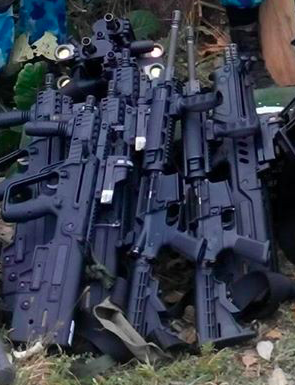
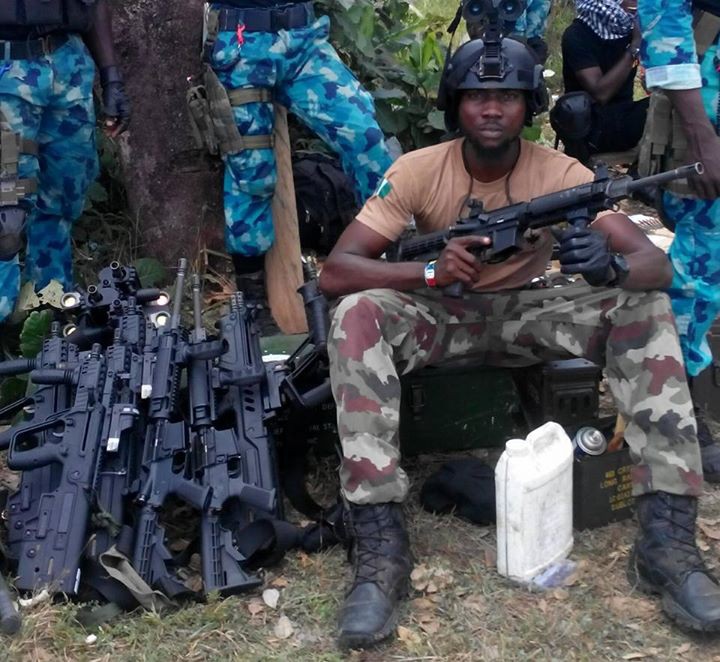
IWI X95s, TAR-21s in Nigeria

The Israeli 5.56x45mm Tavor is no stranger to the Nigerian defense forces, with the TAR 21 being introduced from Israel in a short barrel variant (around 14 inches) several years ago, and the X95 version seen in Nigeria in 2016 (possibly issued earlier). This photograph of a Nigerian soldier posing with stacked IWI rifles, some being the TAR 21 while others being the X95 versions came out in 2016 on the Nigerian public forum Nairaland, along with numerous other photographs of the defense forces.

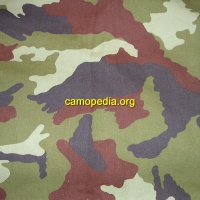
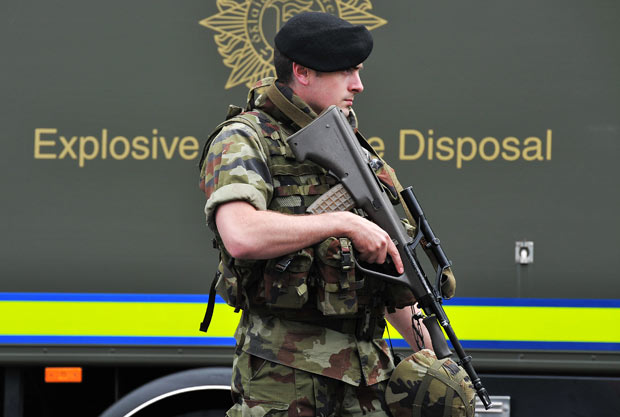
Interestingly he is wearing an Irish Army camouflage pattern introduced in the early 2000s, known as DPM or “Paddyflage” among Irish troops. Image from Camopedia–

The “Carlo” of Palestine

A fatal stoning attack against a civilian car and its driver at the Jewish New Year eve, September 13th 2015, marked the semiofficial beginning of the “Third Intifada”, also known as the “Knife Intifada” or “Stabbing Intifada” or as more accurately could be could the “Individuals’ Intifada”. Unlike previous rounds of violence led by major terror groups like Hamas or militia groups associated with the Palestinian Authority, the “Individuals’ Intifada” attacks are almost exclusively done by lone wolfs or at most pairs of attackers, unlinked to any political or armed group. Mostly those attacks committed by young men and women are motived by social media networks.

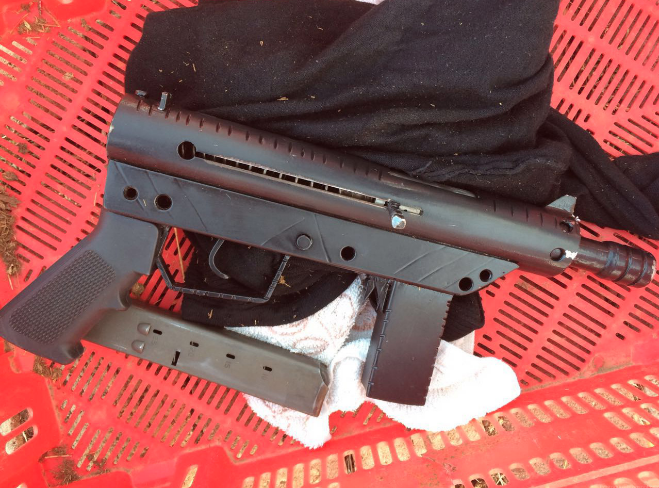
The tools of those attacks are opportunistic by nature: knives, stones, vehicle-ramming attack etc. One of those tools is the subject of this article, the Carlo sub-machinegun. The Carlo (كارلو) is a homemade sub-machine gun slightly modeled and resembling the Swedish Carl Gustav M/45 (كارلوجستاف) – a well-known sub-machinegun in the Arab world with licensed produced by Egypt under the name ‘Port-Said’ and later under ‘Akaba’ & ‘Kara’ as the simplified versions.

As a sidenote the similarity in names and appearance between the real Carl Gustav M/45 and its watered down copy create great confusion among Israeli news organizations commonly mistakably identify and report a Carlo as factory made M/45. One news outlet even reported that the Sarona-market attack terrorist’s weapon of choice was a ‘recoilless rifle’! Clearly, the reporter copy-pasted from the first item Google had to offer when searching ‘Carl Gustav’ and came up with one of the recoilless rifles under the name of ‘Carl Gustav’.       

History

Israeli police first encountered the gun at the beginning of the 2000’s in the hands of Arabs criminals in the West Bank as a self-defense gun and for celebratory gunfire. The gun, its manufacturing, and usage weren’t on the police high priority list as the phenomena seemed contained within the West Bank and as an inner Arab problem. Police operations at the West Bank also fall in the thick border line between the civilian police and the Israel Security Agency (‘Shin Bet’) areas of jurisdiction. Up until the latest Intifada, there was a minimal effort of both organizations to cooperate.

Several shooting attacks, the most notable is the June 8th 2016 attack at the Tel Aviv Sarona market where two gunmen armed with Carlos murdered four diners proved the guns efficiency at very short range attacks against unarmored people despite being inaccurate and unreliable (one of the shooters at the Sarona market attack was even caught on camera angrily throwing his Carlo after it jammed after only a few rounds).

Characteristics   

The common feature all known Carlos share is the ammunition, all known guns are chambered in 9×19mm Parabellum, which is the by far the most common pistol cartridge in Israel and used by all branches of the military, law enforce agencies, government institutions, security, private security companies and private gun owners.

The magazines used are mostly Uzi 25 rounds magazines, inserted to a magazine well in front of the pistol grip. Pistols grips appear to be high quality factory made durable plastic M16 pistol grips as well as some M16 telescopic buttstocks when the guns are stocked. The barrels are smoothbore, usually very short, barrels which are not much more than regular steel pipes.

All Carlos are full auto only fired from an open bolt, ejection port is locate on the top side of the gun and a short charging handle is locate at the gun’s right side and it reciprocating when firing. The question of why have a right side charging handle for a gun mostly used as a machine pistol? A right-handed charging port will gain no value of a charging handle at the right side he can’t easily charge with or clearing jams without buttstock and handgrip.

Since the gun’s ejection port on top a charging handle and its slot cutout could easily place left side enabling the shooter reciprocate the bolt with left hand while holding the gun right-handed. No clear answer, the first option is by trying to leech of the M/45 popularity the makers of the Carlo also copied the location of the handle scarifies functionality in order to resemble the recognized M/45.

Second option is that machine pistol concealed under a coat is best placed left of the body in order to pull it quickly (by a right-handed), having a left side handle will poke the user side so right side handle is preferable. Another source of speculations is what appear to be sort of rectangular upper hunch on the top rear part of the gun which is quite common for the higher end Carlos. Its purpose is unknown, it raised a bit the rear sight but noting that required such large protrusion. It maybe housing of some sort of crude delayed blowback mechanism, probably leaf spring, used to lower the fire rate of fire and make it more controllable gun.

Yoel M. is a contributing writer for Silah Report, and is a firearms enthusiast based out of Israel. His first report on S.R. was about the Israeli “Hitchhiker” magazine.


If you enjoy our work here at Silah Report please consider supporting us on Patreon!
Israeli “Hitchhiker” Modified M16 Magazine

(SR welcomes our first guest author, Yoel M. who will be discussing an interesting historical phenomena when it comes to the Israeli Defense Forces)

To understand the root of the IDF “hitchhiker’s magazine” we must begin with some context. Israel is a

small nation geographically, from North to South the country is only 263 miles (420Km). This same geography

that dictates military strategic plans also dictates military leave arrangements.

Because the front line are based just an hours drive from population centers, this enabled the IDF to release

soldiers for weekend vacations to return home. Not all the bases have good public

transportation options and as a result soldiers use to hitchhike on their way home and back

to base.

In the late 1980s and early 1990s, Palestinian fighters would take advantage of this situation and start to

kidnap soldiers to bargain for their comrades at Israeli prisons. These fighters

pretending to be Israelis would offer soldiers a ride. The tactic was usually to

arriving with no passengers to bus stations and offer a soldier a ride, the soldier would seat in

the front seat next to the driver, a few minutes down road the driver would stop and take in another

hitchhiker, this time the driver’s companion would sit behind the soldier and when the time

is right to attack and strangle the soldier from the rear.

IDF orders at that times were that soldiers are prohibited from moving with magazine inside the

rifle on their way to or from home. Most Israeli drivers having been IDF veterans themselves

usually also demanded the soldier to remove the magazine and cycle the

gun manually to check there is no round in the chamber before allowing the soldier in.

To counter the threat of kidnapping soldiers and against military orders, some troops would retrofit their

M-16 STANG magazines. They would saw off the magazine box and spring and weld the magazine

bottom floor plate to the new shorter box forming a magazine short enough to be totally

concealed inside the M-16 magazine housing.

There is, of course, no official data regarding the capacity of those homemade devices but it

fair to assume that 10 rounds is their maximum theoretical capacity.

Extracting the magazine was also an issue as those magazines were lighter than regular

STANG and often the welds on the floor plate brushed against the magazine housing inner

walls they often won’t drop when needed. With no exposing surface to grip to

extract the “hitchhiker magazine” some soldiers chose to shorter the magazine further and

weld or rivet small knob to the floor plate for easier magazine extraction.

The way the magazine would potentially work is that the soldier would insert it into the magazine

well and simply walk with it as a seemingly unloaded rifle to avoid any military police

checks and drivers demanding that a magazine be removed before entering the vehicle. If

the driver demands to manually cycle the bolt, the soldier will pull the charging handle while

pretending to verify that the chamber is empty only to load a round into the chamber from

the magazine.

Either way, the soldier plan to enter with his rifle loaded, only to be used in case of a hijacking

attempt. Iif the soldier is right handed when he sits in the passenger seat, the rifle would lay on his lap with the

barrel pointing towards the driver. In case of strangling from the rear the soldier could

theoretically operate the gun to shoot the driver.

The main problem with these magazines was the reliability. Those homemade fabrications

often misfed rounds, stacked in the housing and would drop or break open un-

expectantly when the welding failed.

Another problem was the increase in firing accidents the magazine caused, soldiers at home or

back at base could forget there is a magazine in the gun. More dangerous is the soldier’s

young siblings that might find the seemly unloaded gun and try to play with it.

Needless to say, the IDF didn’t take kindly to its soldiers initiative or the hitchhiking for that

matter and set to prohibit both. The military police was ordered to find and confiscate

hitchhiker’s magazines and penalties of up to a month in military prison to whom it was in

possession or those who tried hitchhiking.

Simultaneously officers were instructed to release soldiers for vacation only at days and

hours when public transportation was due. Moreover the army reluctantly spent money

paying private bus companies for transporting to and from central bus stations during the weekends.

Eventually, usage of the magazine became redundant as there was no longer a threat to IDF soldiers and the practice

went away.

As for its actual combat test and evaluation the magazine was never reportedly used in any kidnapping

attempt. One potential use I found in an online forum which I can’t verify or disprove was to

insert the magazine in the gun in what called “Peaceful Patrols” in Gaze and West Bank urban areas,

as the brass had the novel idea of “Winning Hearts and Minds” by send patrols without

magazines in the guns (only in the pockets of their vests). Some soldiers realized that their lives were worth more than

any hearts and minds campaign, and thus used these “Hitchhiker Magazines” while they were patrolling, to give them a

better chance of reacting to a threat.

Sadly there is no photos of the “Hitchhiker Magazine” online, the manufacturing of it done

against IDF orders and the magazine before social media and cell phones with

cameras appeared. In the end the concealed “Hitchhikers Magazine” achieved its goal as it still

invisible from Google’s all seeing eye.

Although not an Israeli magazine modification, this commercial five round magazine would have approximated what the “Hitchhiker’s Magazine” would have looked like in the 1980s and 1990s.