Yassin RPG – The Underground RPG of Gaza

Due to the Arab-Israeli conflict in Palestine, Hamas with its military wing al-Qassam brigades has developed their own tools of war in order to preserve self-sufficiency in order to not be affected by the blockade made on Gaza strip.

This article will spotlight on one of the more interesting craft produced rocket launchers in Gaza , which is literally underground since their production facilities are protected in underground bunkers from IDF air raids and artillery strikes.
It is designed and manufactured by Hamas, but they distribute the launchers to other resistance troops working in Gaza, including Fatah and the PFLP (Popular Front for Liberating Palestine).

History

The weapon is named after Sheikh Ahmed Yassin, the founder and the spiritual leader of Hamas who was assassinated by Hellfire missiles shot from an Israeli AH-64 Apache Helicopter gunship on March 22, 2004, at the age of 67.

It was designed by Adnan al-Ghoul who was also assassinated by an Israeli air strike on October 21st, 2004.
Characteristics

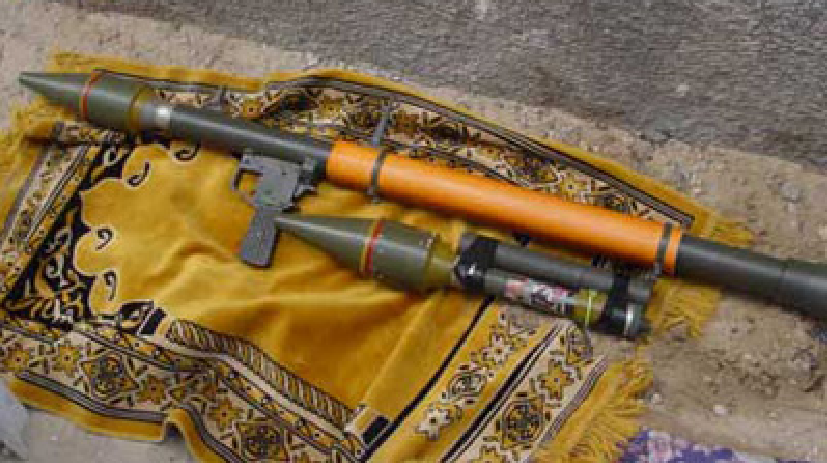
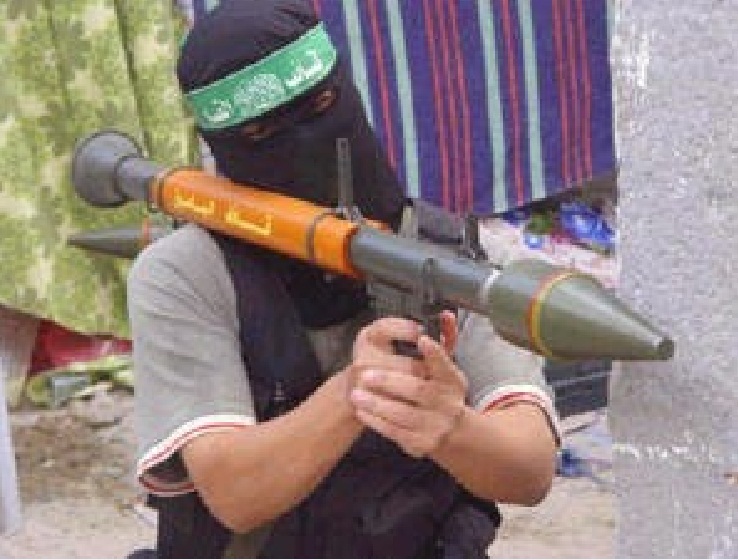
The Yassin RPG is a unique design that resembles the RPG-2 combined with RPG-7 with some improvised design features, From RPG-2 it took the launching tube design and the warhead external shape and the rocket motor which are very simple, but to improve the performance they added some features from the RPG-7 such as the nozzle at the launcher’s rear to deflect recoil generated by launching the rocket, they also added a rocket booster to be attached to the propelled grenade to extend it’s range, and the internal shaped charge of the warhead is enhanced as well.

The manufacturing process occurs in underground workshops using ordinary shop tools, but the conception and engineering of the weapon seem to have a high degree of sophistication and professionalism given the lack of technology of the design.

In Action
According to the continuous improvements of armor in Israeli armored vehicles, the RPG is believed to be not effective against them. However, Saladin brigades (the military wing of the Popular Resistance Committee in Gaza) claimed to destroy a Merkava Mk.3 MBT by targeting a weak point of the tank. Yet, the weapon is very effective against brick fortifications and soft-skinned armor as it can penetrate a 21 cm steel plate from 150 meters.

Specifications 

Model : Yassin RPG

Designer : Adnan al-Ghoul

Type : Anti-Tank, Anti-Personnel

Place of Origin : Gaza, Palestine

Manufacturer: al-Qassam brigades, R&D unit

In Service: 2004 – Current

Weight : 7 kg (15 lbs)

Length : 95 cm (37″)

Caliber: 40 mm rocket engine ; 85 mm warhead

Muzzle velocity: 295 m/s

Effective range: 300 m

Sights: Iron sights

Differences between RPG-2 (top) and RPG-7 (bottom)
Yassin RPG featuring the combination of RPG-2 and RPG-7

The “Carlo” of Palestine

A fatal stoning attack against a civilian car and its driver at the Jewish New Year eve, September 13th 2015, marked the semiofficial beginning of the “Third Intifada”, also known as the “Knife Intifada” or “Stabbing Intifada” or as more accurately could be could the “Individuals’ Intifada”. Unlike previous rounds of violence led by major terror groups like Hamas or militia groups associated with the Palestinian Authority, the “Individuals’ Intifada” attacks are almost exclusively done by lone wolfs or at most pairs of attackers, unlinked to any political or armed group. Mostly those attacks committed by young men and women are motived by social media networks.

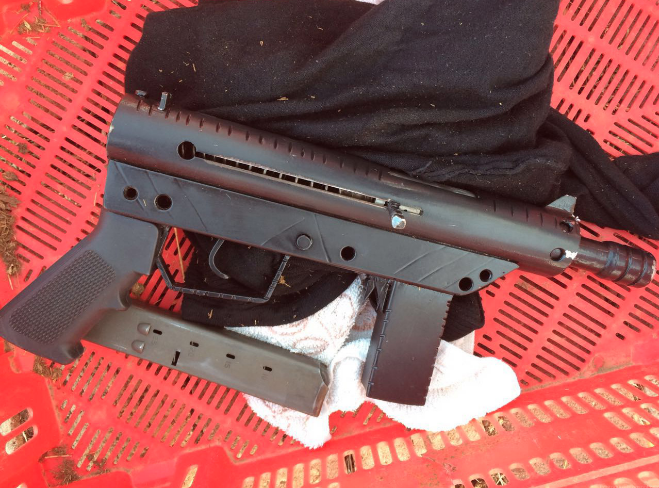
The tools of those attacks are opportunistic by nature: knives, stones, vehicle-ramming attack etc. One of those tools is the subject of this article, the Carlo sub-machinegun. The Carlo (كارلو) is a homemade sub-machine gun slightly modeled and resembling the Swedish Carl Gustav M/45 (كارلوجستاف) – a well-known sub-machinegun in the Arab world with licensed produced by Egypt under the name ‘Port-Said’ and later under ‘Akaba’ & ‘Kara’ as the simplified versions.

As a sidenote the similarity in names and appearance between the real Carl Gustav M/45 and its watered down copy create great confusion among Israeli news organizations commonly mistakably identify and report a Carlo as factory made M/45. One news outlet even reported that the Sarona-market attack terrorist’s weapon of choice was a ‘recoilless rifle’! Clearly, the reporter copy-pasted from the first item Google had to offer when searching ‘Carl Gustav’ and came up with one of the recoilless rifles under the name of ‘Carl Gustav’.       

History

Israeli police first encountered the gun at the beginning of the 2000’s in the hands of Arabs criminals in the West Bank as a self-defense gun and for celebratory gunfire. The gun, its manufacturing, and usage weren’t on the police high priority list as the phenomena seemed contained within the West Bank and as an inner Arab problem. Police operations at the West Bank also fall in the thick border line between the civilian police and the Israel Security Agency (‘Shin Bet’) areas of jurisdiction. Up until the latest Intifada, there was a minimal effort of both organizations to cooperate.

Several shooting attacks, the most notable is the June 8th 2016 attack at the Tel Aviv Sarona market where two gunmen armed with Carlos murdered four diners proved the guns efficiency at very short range attacks against unarmored people despite being inaccurate and unreliable (one of the shooters at the Sarona market attack was even caught on camera angrily throwing his Carlo after it jammed after only a few rounds).

Characteristics   

The common feature all known Carlos share is the ammunition, all known guns are chambered in 9×19mm Parabellum, which is the by far the most common pistol cartridge in Israel and used by all branches of the military, law enforce agencies, government institutions, security, private security companies and private gun owners.

The magazines used are mostly Uzi 25 rounds magazines, inserted to a magazine well in front of the pistol grip. Pistols grips appear to be high quality factory made durable plastic M16 pistol grips as well as some M16 telescopic buttstocks when the guns are stocked. The barrels are smoothbore, usually very short, barrels which are not much more than regular steel pipes.

All Carlos are full auto only fired from an open bolt, ejection port is locate on the top side of the gun and a short charging handle is locate at the gun’s right side and it reciprocating when firing. The question of why have a right side charging handle for a gun mostly used as a machine pistol? A right-handed charging port will gain no value of a charging handle at the right side he can’t easily charge with or clearing jams without buttstock and handgrip.

Since the gun’s ejection port on top a charging handle and its slot cutout could easily place left side enabling the shooter reciprocate the bolt with left hand while holding the gun right-handed. No clear answer, the first option is by trying to leech of the M/45 popularity the makers of the Carlo also copied the location of the handle scarifies functionality in order to resemble the recognized M/45.

Second option is that machine pistol concealed under a coat is best placed left of the body in order to pull it quickly (by a right-handed), having a left side handle will poke the user side so right side handle is preferable. Another source of speculations is what appear to be sort of rectangular upper hunch on the top rear part of the gun which is quite common for the higher end Carlos. Its purpose is unknown, it raised a bit the rear sight but noting that required such large protrusion. It maybe housing of some sort of crude delayed blowback mechanism, probably leaf spring, used to lower the fire rate of fire and make it more controllable gun.

Yoel M. is a contributing writer for Silah Report, and is a firearms enthusiast based out of Israel. His first report on S.R. was about the Israeli “Hitchhiker” magazine.


If you enjoy our work here at Silah Report please consider supporting us on Patreon!