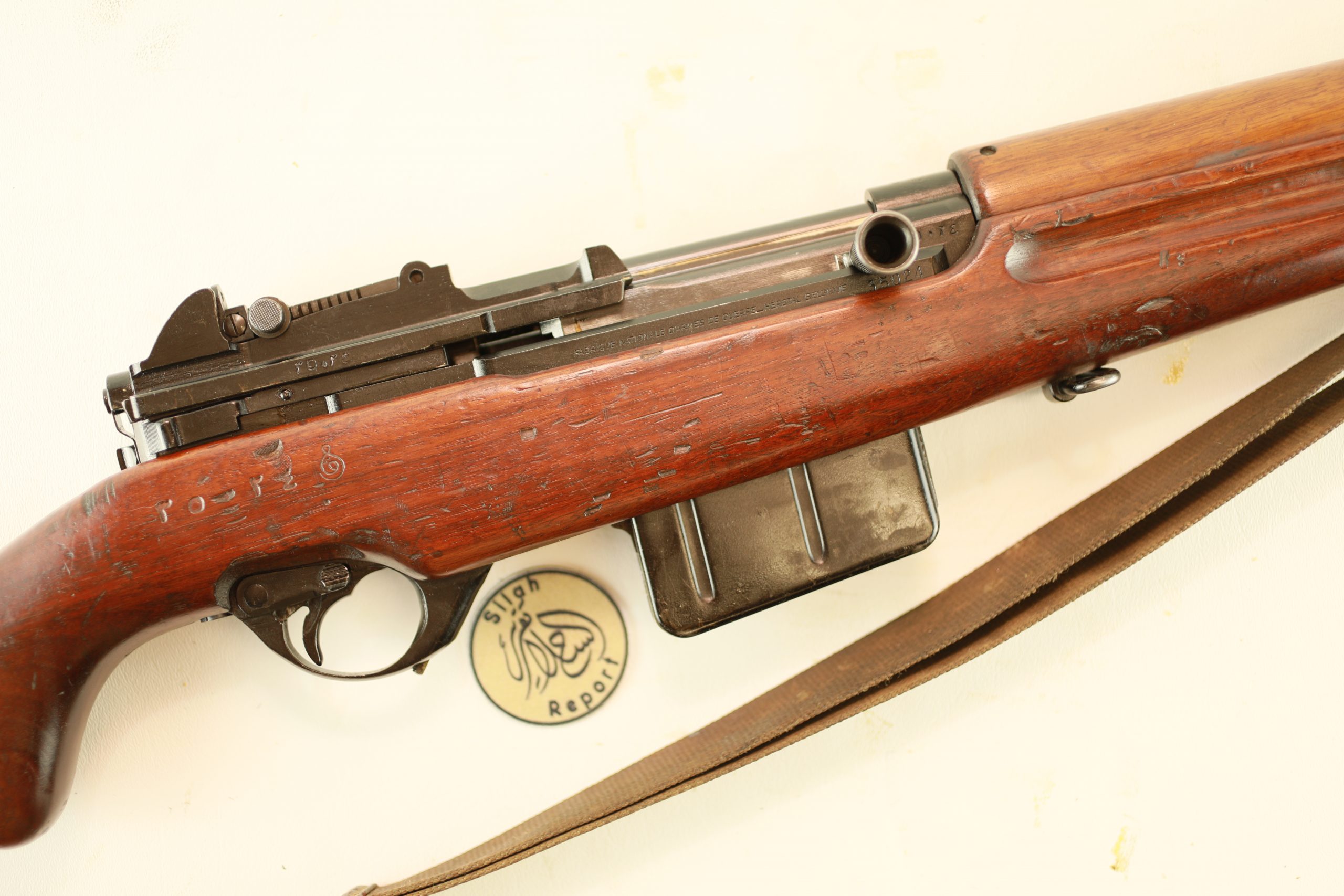
The year is 1948. The world has only just begun to recover from the global cataclysm of the Second World War. For many of the western nations just pulling themselves out of the rubble, their largest security concerns were now the Iron Curtain that had descended over Eastern Europe, and the fear of Communism spreading to developing countries. Tensions would soon lead to what would become known as the Cold War, which would shape the second half of the 20th century. While Egypt would not escape these growing global tensions they also had their own local concerns. These included enduring European imperialism, which they had been subjected to since the 1800s, but also the emerging threat of Zionism, embodied by the recently declared Jewish nation of Israel. Against the backdrop of these global and local events, Egypt’s military began to examine a new, modern rifle – the FN-49.
When the Suez Canal officially opened in 1869, it was seen as a vital lifeline to the British Empire by allowing a much shorter shipping route than had previously been possible between the home islands and its imperial jewel, India. Egypt, while not an actual part of the British Empire, was increasingly being pressured to follow the demands made by the most powerful nation in the world at that time. These conflicts of interest between Egypt and Great Britain soon came to a head, and the Anglo-Egyptian War broke out in 1882. Unfortunately for Egypt, the British quickly overwhelmed them, and Egypt was forced to capitulate after their final defeat at Tel El Kebir on 13 September 1882. While still not officially a part of the British Empire, the British would now maintain de facto control over Egyptian affairs right into the post-WW2 era nearly seven decades later. By this time, the Egyptian people wanted nothing more than to rid themselves of British imperialism and to decide their own policy with their own leaders.
While still struggling with unwanted British influence, Egypt was faced with a new concern when, in 1947, the UN declared that the new Jewish nation of Israel would be formed out of Palestine. Palestine was an Arab state that, much like Egypt, had long been subject to British control, thanks to the Mandate for Palestine written and enforced shortly after World War I. Through a vote by the UN, with no input from any Arab nation, the Arabs of Palestine essentially lost their dream for an independent state. On 15 May 1948, the British Mandate for Palestine was officially repealed, and Israel immediately declared its own independence. Seeking to defend their fellow Arabs from what was seen as Zionist expansion, Egypt immediately joined several other Arab nations and invaded Israel in what would be called the 1948 Arab-Israeli War. Now that they were engaged in a bitter fight, the Egyptians soon realized that they would need new modern firearms quickly.
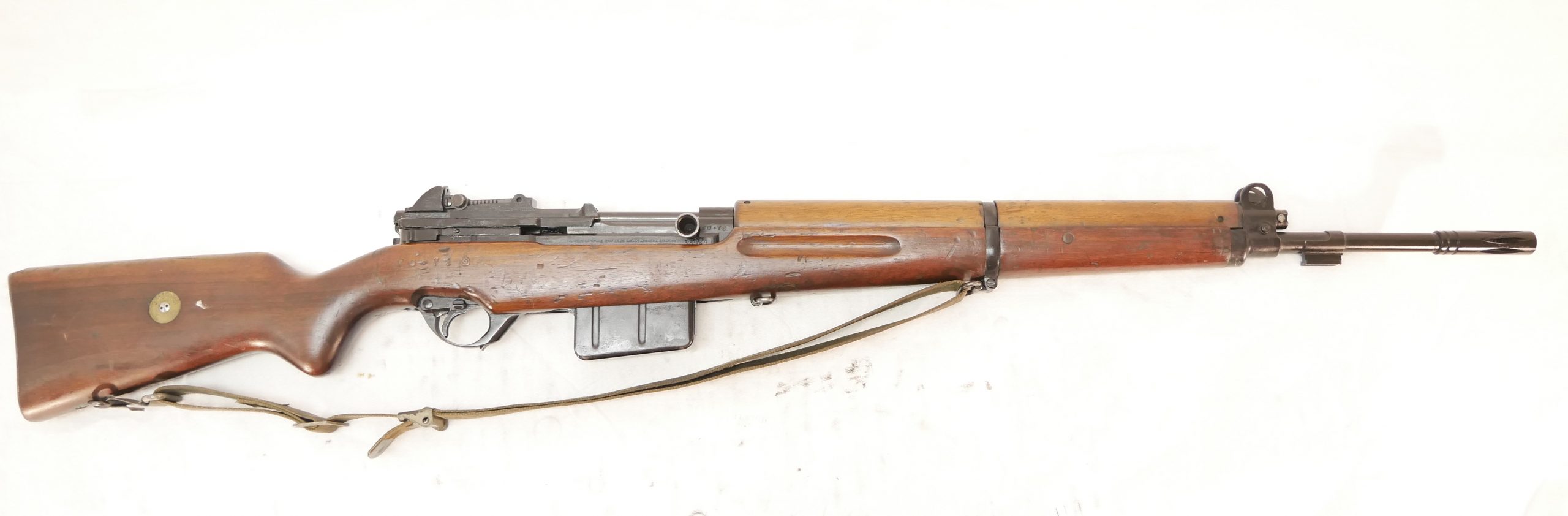
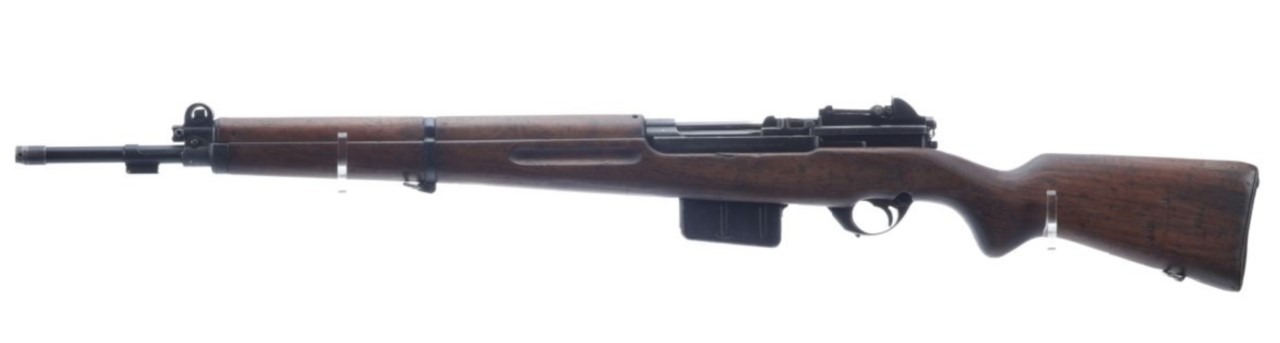
Fig. 1.1. Example of an Egyptian contract FN-49 (Source: Rock Island Auction Company)
During WWII, while Egypt itself had remained officially neutral until late in the war, the ever-present British maintained a strong armed force there in order to protect the Suez Canal. The British would fight many campaigns based out of Egypt against the German Afrika Korps, and along with American forces coming from Morocco to the west, they would eventually drive the Germans out of Africa. As a result of those battles, the British stockpiled large amounts of captured German weapons and ammunition in Egypt. These included many German K98k bolt action rifles and a vast inventory of 7.92×57mm ammunition. By the outbreak of hostilities with Israel in 1948 the Egyptians had large quantities of both British and German weapons in supply, but these were already largely obsolete. Bolt-action rifles, with their late-19th century designs, low ammunition capacity, and low rates of fire versus modern self-loading rifle technology, simply had no place as a standard-issue military weapon on a mid-20th century battlefield. As the Egyptian authorities considered acquiring more modern firearms for both their current and future battles, it was decided to seek out a semi-automatic rifle. So, with their military forces woefully ill-equipped for a modern war, and relatively few options available, the Egyptian approached the Belgian firm of Fabrique Nationale interested in their new FN-49 self-loading rifle.
The semi-automatic FN-49 would be the answer the Egyptians were searching for in 1948. It was easily made to accommodate the 7.92×57mm round, and it’s fixed 10-round box magazine not only doubled the ammunition capacity of the K98k, but it could be loaded via the very same stripper clips that Egypt already possessed in quantity. By 1948 the Belgian company was ready for full-scale production of the FN-49 and were eager for large orders. The origins of the FN-49 can be traced back to the fertile mind of Dieudonne Saive. Monsieur Saive began his long career at FN as a toolmaker in 1906 and quickly moved up the ranks there. Soon enough, he found himself working alongside John Moses Browning during Browning’s time in Herstal (the Belgian city where FN is still located today). After Browning’s sudden death in 1926, Saive was promoted to chief arms designer at FN, and he took over the development of a self-loading pistol design Browning had been working on. This pistol would eventually enter production as the Browning Hi-Power in 1935. During this same time frame, he began work on several military rifle designs of his own. The first rifles were recoil-operated self-loaders (semi-automatic), but by 1936, Saive decided to change course and pursue a gas-operated rifle. The first known prototype of this gas-operated design was produced in 1937. This prototype included a bolt carrier-operated tilt-locking bolt and a gas-operated piston system. These features would eventually carry over to the final version of the FN-49.
On the 10th of May 1940, the German Wehrmacht invaded Belgium. Before the end of the month, Belgium had surrendered and FN would endure just over four years of German occupation. A little more than a year after the start of this occupation, a handful of FN personnel, including Dieudonne Saive, managed to escape to Great Britain. While there, development work would continue on the future FN-49 with assistance from Royal Small Arms Factory Enfield. Although Saive had produced a working prototype of the FN-49 in 1937, the first patent on this rifle was not issued by Belgium until 1946, with several other similar patents being granted in the following years. For example, US Patent #2515315 was granted to Saive on 18 July 1950. These patents covered the unique extraction lever which provided extra primary case extraction force, as well as safety aspects of the bolt, bolt carrier, and firing pin stop. It should be noted that this patent did not cover either the tilt-locking bolt or the gas tappet system. Regarding the extraction lever, Saive found it necessary in his design at that time due to extraction issues encountered using British-made soft-cased 7.92×57mm ammunition meant for proper functioning in the Besa machine gun. This extraction lever was later omitted from the final FN-49 design, as the standard extractor was more than sufficient with military ammunition of standard case hardness.
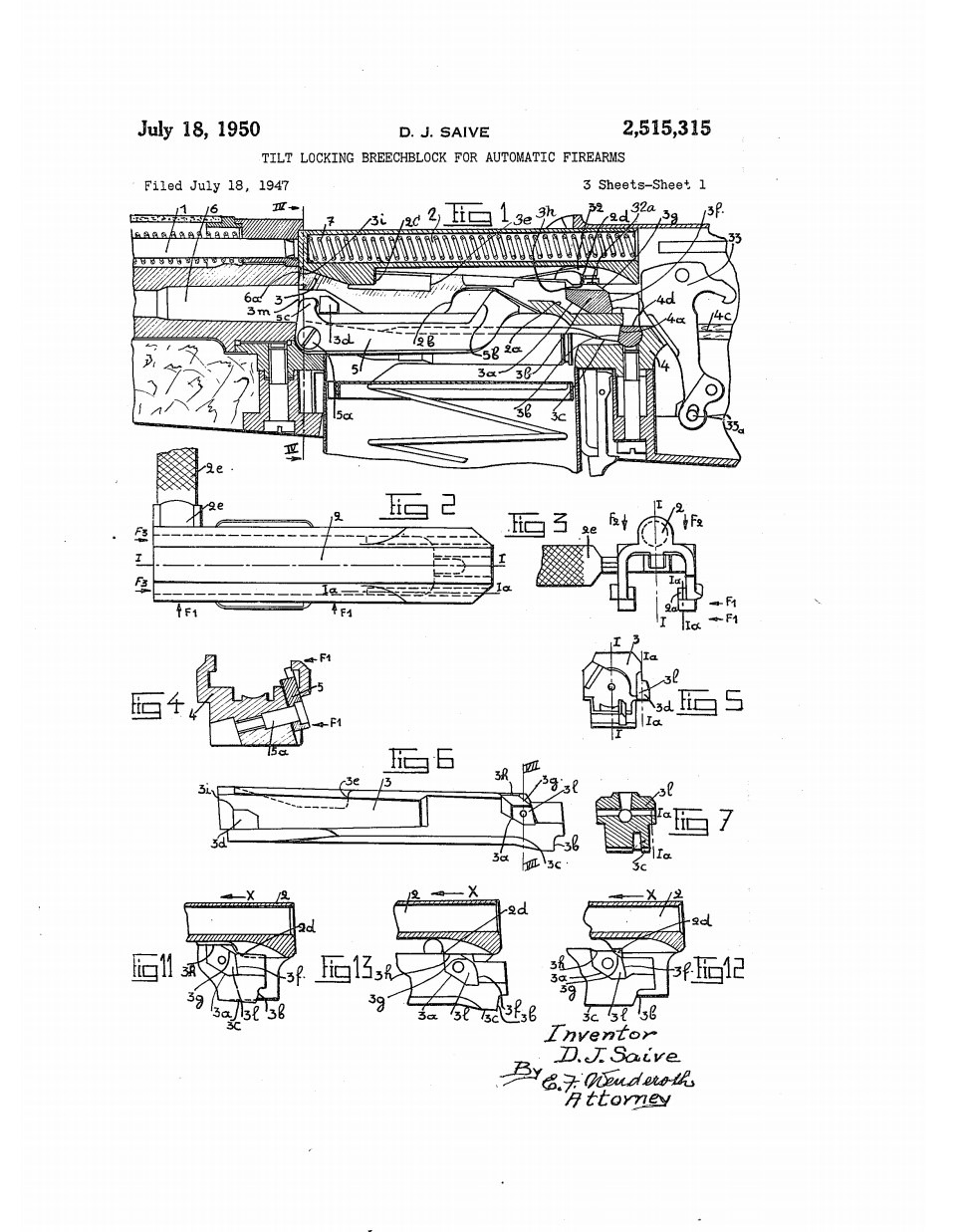
Fig.1.2. Page 1 of US Patent #2,515,315, Granted to Dieudonne Saive on 18 July 1950. Make special note of the extraction lever (Part #5) here and in the following two figures. (Source: US Patent Office)
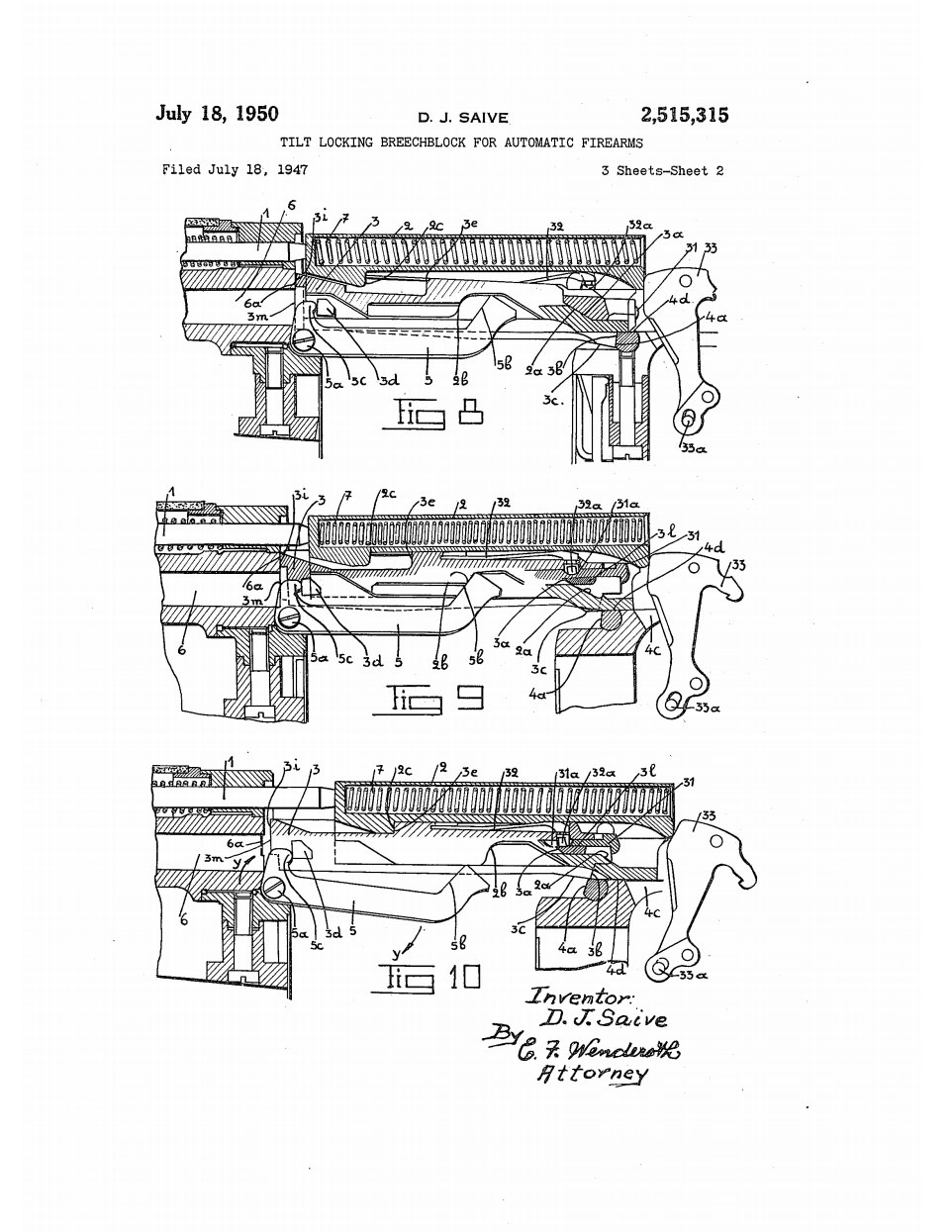
Fig.1.3. Page 2 of US Patent #2,515,315. The illustrations show the timing and positioning of the action just as it begins the extraction process. (Source: US Patent Office)
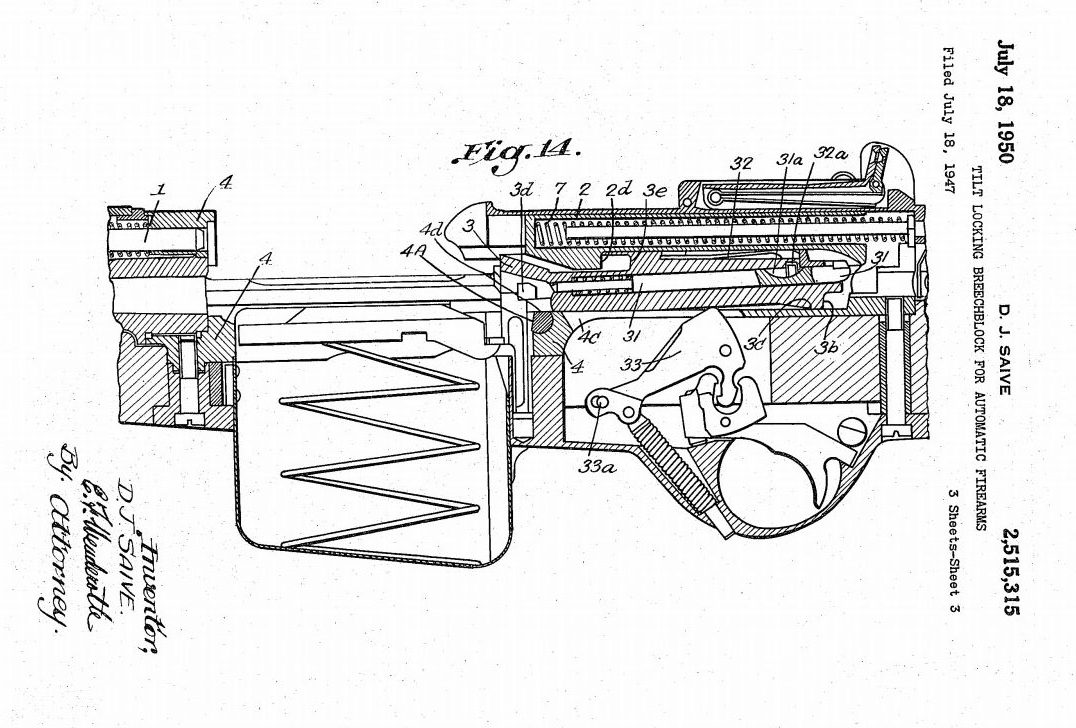
Fig.1.4. Page 3 of US Patent #2,515,315. This illustration shows the position of the components with the bolt retracted. (Source: US Patent Office)
Once FN had recovered from the German occupation and late bombing attacks, work finally resumed on bringing the FN-49 into line production. Many lessons had been learned during experimental trials with the British (those had continued for a time after the war ended in Europe in April 1945) and by 1948, the FN-49 line was ready for full-scale production. The very first contract (Order Number 1623) was arranged with Venezuela on 7 April 1948 for 4,000 rifles chambered in 7.92×57mm. The next major order, Number 1649, came from Egypt on 30 May 1948 for 17,600 rifles also chambered in 7.92×57mm. As was stated previously, Egypt had gone to war with Israel on 15 May 1948, so it seems that it took the Egyptians a mere two weeks to decide that the FN-49 would be their next standard-issue battle rifle as a result of the fighting. Of course, the rifles still had to be built, and by the time the Egyptians received their first FN-49 rifles in June of 1949, they found themselves on the losing side when the 1948 Arab-Israeli War concluded on 10 March 1949. Despite that outcome of the war, the Egyptians were clearly pleased with both FN and the FN-49 because on 31 July 1949, they placed a further order with FN (Number 1795) for an additional 20,000 rifles. Note that those FN-49s in the second contract were placed in lieu of a canceled order for an equivalent number of Mauser pattern bolt-action rifles from FN. Egypt would end up ordering a total of 37,602 FN-49s and this signaled that they had finally moved on from 19th-century small arms technology.
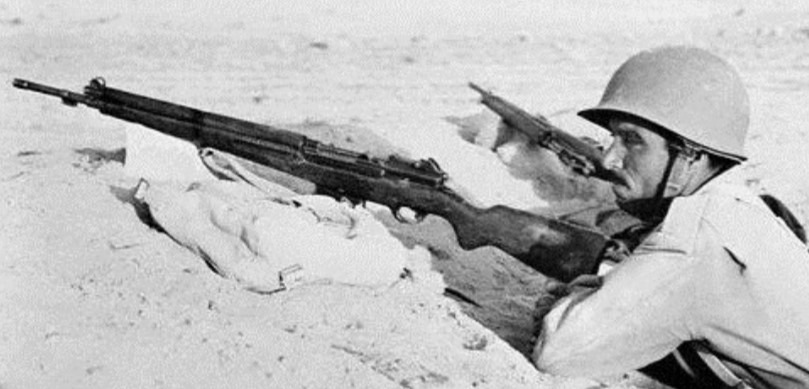
Fig.1.5. An Egyptian soldier in a foxhole with an FN-49. The rifle, M1 pattern helmet, and uniform indicate that this photo was taken sometime in the early to mid-1950s. No further details or context were available at the time of publishing. (Source: Egypt-Military Pictures Facebook Page (now apparently defunct)
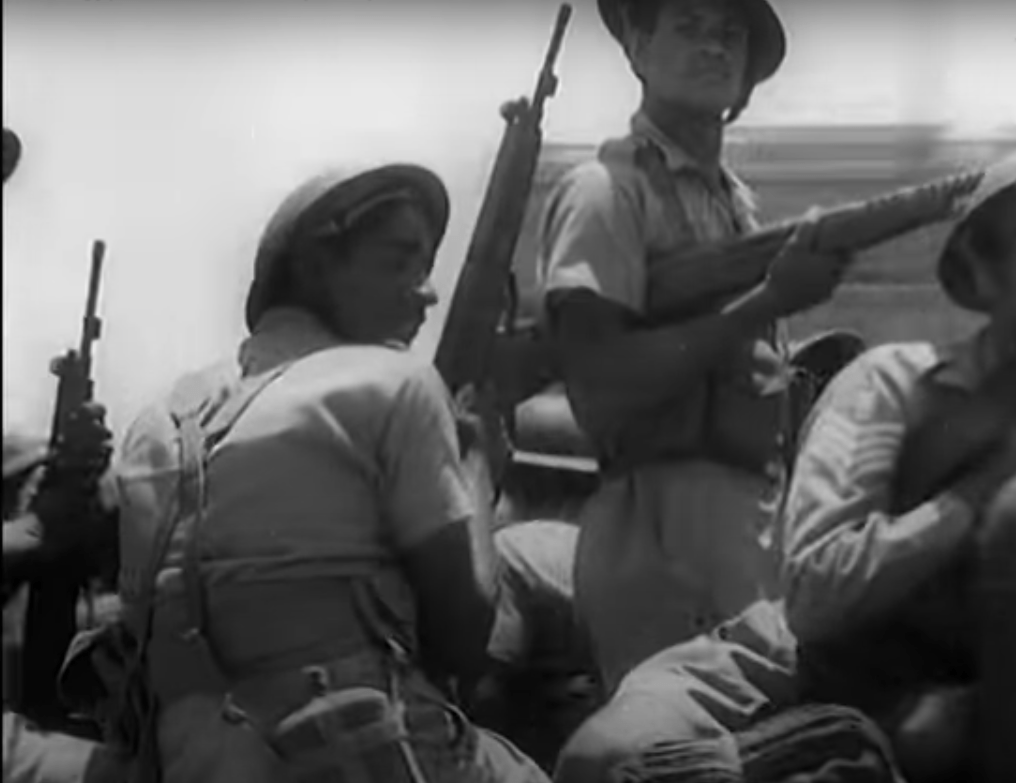
Those same rifles would soon see use in the 1952 coup which ousted King Farouk (leading to Gamal Abdel Nasser’s ascendency in Egypt and the Arab world), as well as the Suez Crisis in 1956. Egypt also became embroiled in the North Yemen Civil War (26 September 1962 – 1 December 1970), and period photos have shown Egyptian FN-49 rifles in the hands of North Yemeni Republicans. By the start of the Six-Day War with Israel in June 1967, the selective-fire 7.62×39mm AK-pattern rifle had relegated semi-automatic rifles like the FN-49 to duty in the rear echelons and reserves. The end of the FN-49 in Egypt would finally come in the mid-1980s when Egypt sold off their remaining inventory of FN-49 rifles and parts as surplus.
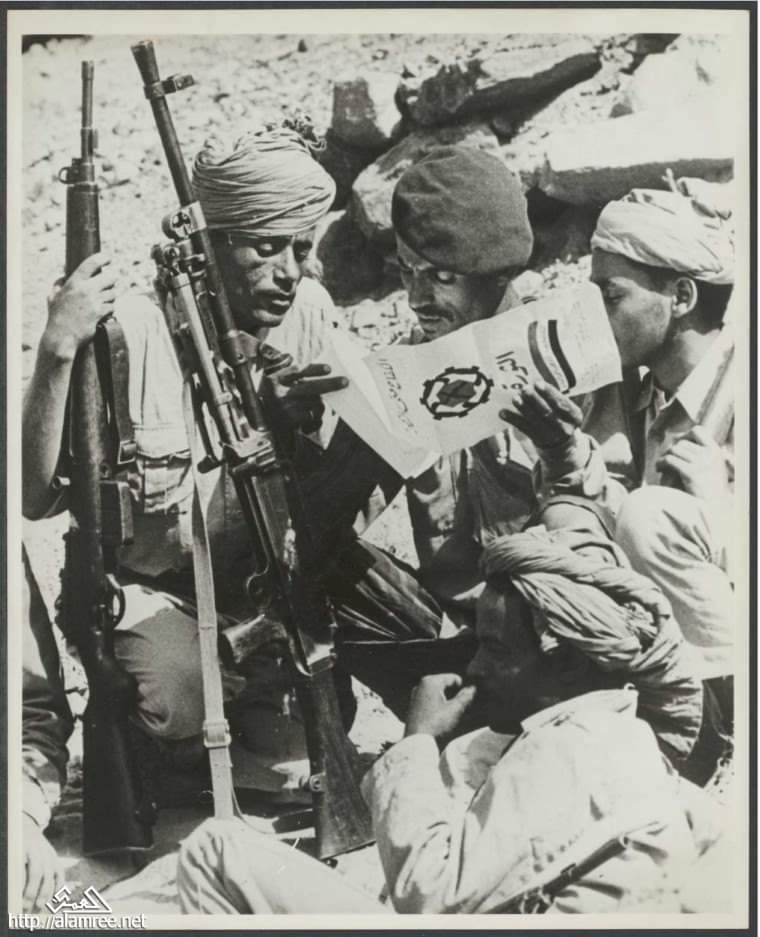
Fig.1.6. Note the FN-49 in the hands of the North Yemeni Republican soldier. This photo was taken sometime during the North Yemen Civil War (1962-1970), but a specific date could not be found. (Source: www.alamree.com (Yemeni website)

Fig.1.7. An armed Egyptian civilian, identified as Galal Abdo Hashem, with an FN-49. This photo was taken in Ismailia during the Six-Day War with Israel on 21 June 1967. (Source – History of Ismailia City Facebook Page)
In the next part of this article on the Egyptian contract FN-49, there will be a detailed analysis of the rifle itself, as well as a look at the various accessories available for it today.
For greater details on the history and development of the FN-49, the author highly recommends the following books:
1) The FN-49: The Last Elegant Old-World Military Rifle 2nd Edition, Wayne Johnson, Wet Dog Publications, 2019
2) The FN49: The Rifle That Ran Out of Time, R. Blake Stevens, Collector Grade Publications, 2011. NOTE – This book recently went out of print. Copies can still be found, but prices are increasing.
The author would like to extend credit and thanks to Adham Sherif for his assistance in locating and researching period photographs of the Egyptian contract FN-49.
If you enjoy our work here at Silah Report please consider supporting us on Patreon!
Nick, the Egyptian FN 49 (and the Hakim) used a Mauser pattern clip with two bumps on the edges. The clips were tipped into the guide rather than pressed straight down into the slot
Thanks for this great article. Where can I find the second part? I am interested to see the 8mm clips for the Egyptian FN49 as I heard they were special. Searching on your site I did not see part 2.
Even if the rifles had been available to Egypt in 1948, there was still a UN arms embargo in place against Israel and the Arab states since December 1947. It’s debatable whether the Belgian government would have risked violating it.