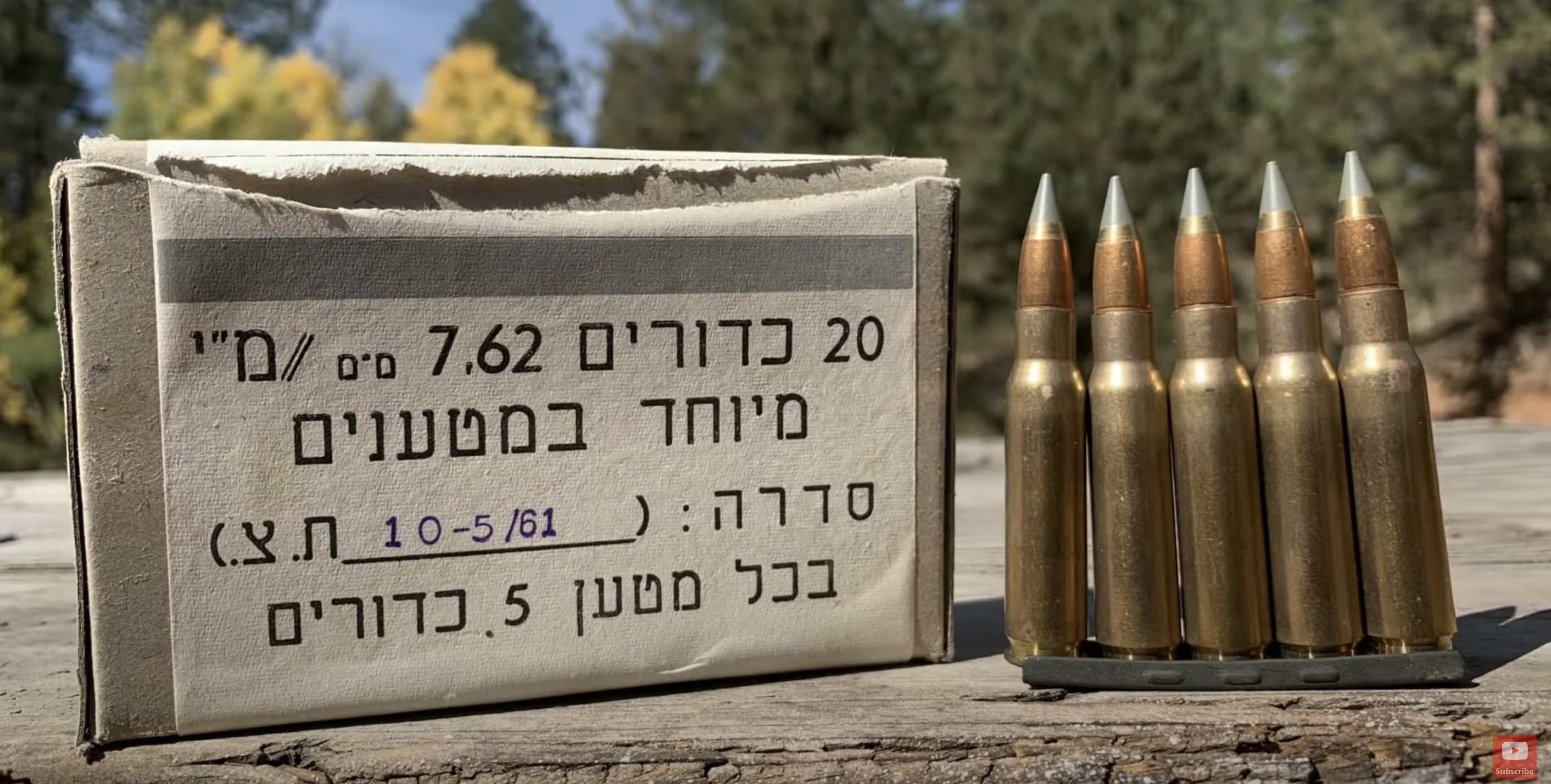
Israeli-made 7.62×51mm tear gas ammo has been available on the US commercial market for a number of years but its exact origins have remained a mystery. In this article we explore what we know, and don’t know, about IMI tear gas ammo.
This unique and interesting ammo has been met with rampant speculation online as to what or who it was made for. Almost everyone seems to believe it was made for the Israeli police. Some suggest it was for the police to shoot through softcover, like doors or windows, to fill small spaces with tear gas before police stormed a building. Others say it was for shooting into caves where terrorists might be hiding since bullets can travel further than traditional tear gas grenades could. The third proposed situation would be a riot or protest, where the police would need to shoot the ground to release the gas. The main benefit in all situations here is a bullet cannot be smothered or tossed back as a canister can be. The obvious downside is shooting into a building or at a protest could potentially kill innocent civilians. To the author’s mind, the most likely situation for using this ammo would be shooting into a car trying to run or ram into a checkpoint. (See the video [Fig.1.8.] for testing done by a YouTube channel that demonstrates the effectiveness of the ammo, despite its age, when shot into a car windscreen)
Now let’s cover what we know. It’s known for certain IMI made the ammo in 1961 as they are all marked with the early IMI (תצ) headstamp and 4-61. There is some speculation among ammo collectors about the meaning of the first number, but the second is definitely a year. Some think it is a factory number, while others think it’s simply the month of manufacture. To date, all of the tear gas ammo reported by collectors has the number 4 in that spot followed by year code 61. This means the manufacture of this ammo only lasted at most 1 year, potentially less.
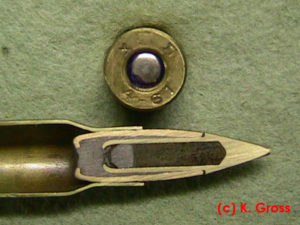
Fig.1.1. Headstamp showing תצ and 4-61 markings, alongside a cross-section of the ammo. (Source: K. Goss via Fresh.co.il)
It is also definitive the ammunition was made for Israel’s military, as denoted by the cartridge boxes. The abbreviation on the top line of each box מ׳׳י (M”I) stands for מדינת ישראל (State of Israel). It should be briefly noted that מ׳׳י can also stand for משטרת ישראל (Israel Police), but in this context, the research has shown it is State of Israel (Source: Chetrit Interview). The full text of the box reads as follows from top to bottom: 20 cartridges [trans. literally as ‘balls’ or ’rounds’] 7.62mm//M”I, special in chargers, series (10-5/61 .ת.צ), in all chargers [there are] 5 cartridges. Thus, each box contains 4 stripper clips/chargers of 5 rounds each. Being 7.62×51 also means that the ammo was likely designed for the FN FAL, also called the Romat in IDF service at this time. It is interesting to note the box only refers to the ammo as “special” and nothing more. This is similar to other IMI trials ammo, such as the so-called “sky marshall” 9×19mm which has another such euphemism on the box.
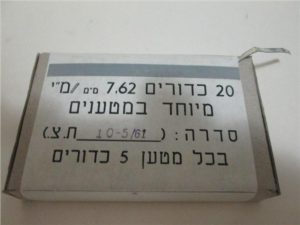
Fig.1.2. A typical box of the 7.62×51 tear gas ammo (Source: GunAuction.com)
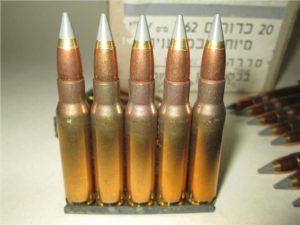
Fig.1.3. 5 rounds on a charger/stripper clip. Note the greyish blue and polished brass tip (Source: Gunauction.com)
These boxes came packed in a “spam can” style container of 10 boxes per can. The can reads similarly to the boxes, translated from top to bottom: 200 cartridges 7.62mm/M”I, special in chargers, series (10-?? .ת.צ), hermetically sealed, 10 boxes [made of] cardboard – 20 cartridges in each one.
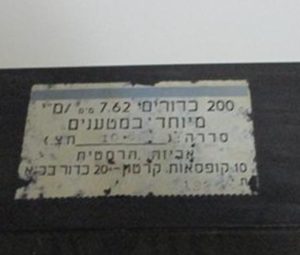
Fig.1.4. A close up of the “spam can” label (Source: Gunauction.com)
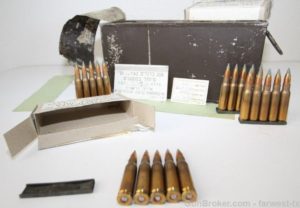
Fig.1.5. Opened spam can showing one of the boxes inside, along with the ammo on chargers (Source: Gunbroker.com posting, since removed from the site)
Examining an individual round shows some interesting details as well. As noted above in Fig.1.3., the bullet’s tip is blue/grey with a gold or polished brass-colored band beneath. Under the polished band, you can see a distinct line (Fig.1.6.) at the .75 inch or roughly 2cm mark. This is where the tear “gas” powder chamber is able to break off when the fired bullet hits a target. Fig.1.7. clearly shows the weakening cut around the bullet’s tip which then allows the tear gas powder (shown in black) to escape a fired bullet.
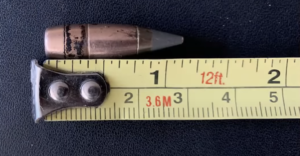
Fig.1.6. A single tear gas bullet, 1.25in long (Source: Going Ballistic YouTube Channel)
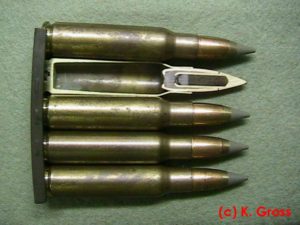
Fig.1.7. Cutaway round on a stripper clip/charger (Source: K. Goss via Fresh.co.il)
The most interesting aspect of this cartridge by far is the fact it’s filled with tear gas powder. According to Superintendent Shlomi Chetrit of the Israel Police Heritage Centre, “these rounds were used by the IDF and Border Police (MAGAV), mostly on frontier duty. Their main use was to force suspected terrorists out of caves, bunkers, etc.”
This confirms some online speculation about the ammunition being used for shooting into caves. To the contrary of online rumours, the ammunition was not made for the National Police per se, but the IDF and Border Police. Magav is a hybrid civilian-military gendarmerie that draws National Police officers and IDF draftees into its ranks in lieu of a recruit’s traditional military service. The frontier mentioned refers to the remote border regions of Israel. Apart from this significant yet limited information, we are left with many more questions. Nobody really knows exactly why the Israeli State commissioned this ammunition and why they stopped production so quickly, or if it was designed for sales to a foreign customer of IMI. As seen in the video below, the ammo is still potent and effective after 60 years, so it seems unlikely they did not like the round’s effect.
http://https://www.youtube.com/watch?v=B39rtp8vgbs
Fig.1.8. Video test of 7.62×51 tear gas ammo (Source: YouTube channel “Going Ballistic”)
Finally, to do some myth-busting. There is no evidence this particular ammunition was produced and distributed on belt links for a machinegun. For some reason, people in the US have been selling 7.62×51mm tear gas ammo that was put on belt links as shown below in Fig.1.8. and Fig.1.9., though the time-consuming effort to link that much ammunition is applauded. This configuration coming out of the factory is unsubstantiated by any container markings seen so far. Logically, the Israeli Border Police would also be unlikely to use a belt-fed machine gun in any police operations where tear gas might be required. A military customer, on the other hand, would be prohibited from using this ammo in combat as the Geneva conventions restrict the use of chemical weapons and “poisoned bullets” in warfare.
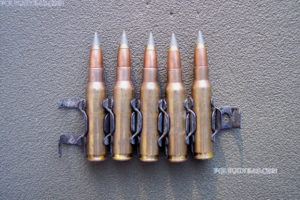
Fig.1.9. 5 rounds on belt links (Source: Polygunbag.com)
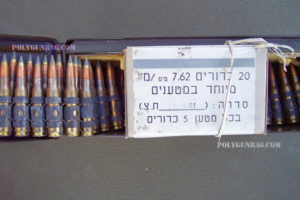
Fig.1.10. Belted ammunition (Source: Polygunbag.com)
There is so much more to the story of this special ammo that we do not know. Why exactly was it made in the first place, why did they stop production after such a short time, did anyone use it to good effect? These are questions we don’t have the answers to just yet, at least. It should also be noted that IMI made an 7.92×57mm tear gas round, but even less is known about that cartridge and it seems that those were not imported into the US in any large quantities. If you know more about the 7.62×51mm or 7.92×57mm ammo in IDF or Magav service please do let us know in the comments, we would certainly like to hear about it.
If you enjoy our work here at Silah Report please consider supporting us on Patreon!
Sources:
CDVS.us: “308 Tear Gas ammo.” Sales posting
Collectibleammunition.com: “7.62X51MM GRAY TIP TEAR GAS y n 4-61”, unk. author
Fresh.co.il: Forum post “כדורי גז מדמיע ישראליים”, unk. author
Gunauction.com: “Israel 308 7.62×51 Tear Gas Ammo Unopened Box Mint” sales posting
Chetrit, Superintendent Shlomi, Israel Police Heritage Centre. E-mail interview. Conducted by Matthew Fishback, 25 March 2021.
Polygunbag.com: “.308 tear gas ammo linked, Israeli, rare collectors item.” Sales posting
YouTube: “308 Tear Gas Rounds Do They Really Work??”, Going Ballistic channel
Cover image photo credits: Ibid.