Pakistan’s locally made Beretta 92 FS or M9

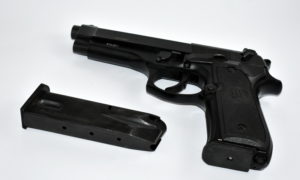
With the advent of 9 mm in Pakistan the markets were filled with imported 9 mm pistols. These handguns were imported in big numbers from China, Russia, Turkey, Philippines, Brazil, South Korea and Czechoslovakia  (to name a few). And off course a scarce quantity of European and Amercian handguns, much coveted and wanted by anyone and everyone who could afford them, namely the Beretta, Sig Sauer, HK, Smith & Wesson, Springfield, Browning and  Glock (which somehow has attained a cult status in Pakistan, for whatever reasons) made it to our shores. So it was obvious that the “Darra boys” had to make copies of the hottest selling items and the logical choice was Beretta 92 FS and Glock 19. So a lot of arms manufacturers started with the 92 FS thanks to modern machinery and methods. This small pictorial review will cover the 92 FS.

Read more

Pakistan’s locally made 7.62 x 25 Tokarev

The Tokarev (colloquially known as TT in Pakistan), received a cult following since its arrival in Pakistan somewhere in the late 1970’s, that somehow has still maintained its status as a fearsome self-defense weapon. In fact, during that period, post-Soviet invasion of Afghanistan, the two weapons that made it to Pakistani markets were the AK-47 and the Tokarev pistol. For gun aficionados, no collection was complete without these two weapons in one’s inventory. The TT was a much sought after weapon, it was semi-auto, had a very potent round and the thing to possess.

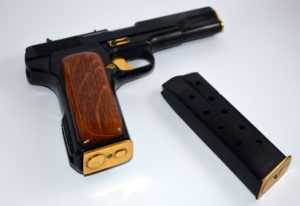
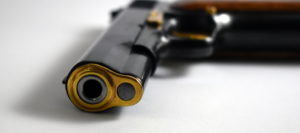
Later Chinese, as well as Serbian variants of the Russian TT, found their way in the country. For quite some time the TT ruled as a weapon of choice till the venerated 9x19mm hit the markets and turned the tide in its favor as a caliber of choice. Around the early 1980’s Pakistani made TTs found their way into the local markets simply because these were inexpensive, the ammo was dirt cheap and available in thousands or perhaps millions. Even today the average Pakistani is confident and wants a TT as a trusted reliable weapon, the fact that it is easily available and inexpensive, around $ 20-35 only, adds to its popularity.  Later these weapons started appearing in various shapes and sizes, which somehow made them appear more fearsome and attractive for the buyers. The weapon being reviewed is a local made TT, with a double stack magazine that increases its capacity from 8 to 18!! To make it more attractive this piece works only on full-auto!! Its gold plated and looks as much good as it feels good to hold in one’s hands.

Specifications

Caliber:              7.62 x 25 (.30 bore)

Length:              7.6″

Height:               5.3″

Barrel length:   4.6″

Magazine capacity:    18 rounds, double stack

Front blade, rear notch type sights

This particular piece is Fully Automatic

Weight:             1.15 kg

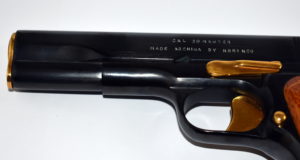
The weapon being made is a copy of the Chinese TT, and bears the words “Cal 30 Mauser, Made as Chine by Norinco”. Observe the gold plated, slide release, mag release, trigger and the barrel bearing. It adds to the looks of this finely finished handgun.

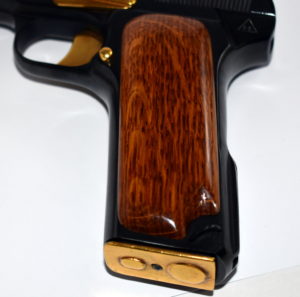
The magazine base plates are also gold plated and help to spruce up the looks on this TT. Observe the polished wooden grips.

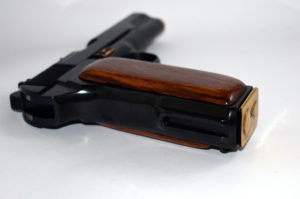
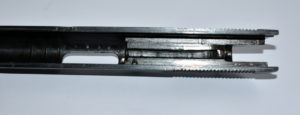
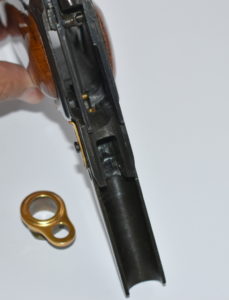
Since the handgun is full auto it has a recess for fitting in a buttstock. This piece doesn’t come with one, but it can be made to order.

The barrel bearing is gold plated and gives a good contrast against the black finish.


The pistol has a standard front sight blade and rear notch fixed sights like the standard Tokarev.

The quality of workmanship isn’t all that bad. But one area in which the local weapons lack is good quality control. If this can be handled then they can really produce weapons which give consistent results.


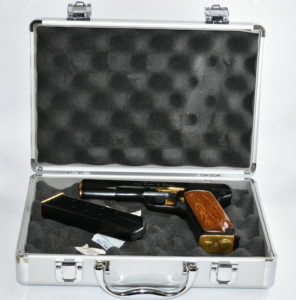
This particular piece comes packed in an Aluminum box. Considering its features, look and price it isn’t a bad value for money weapon. TT’s have been around for quite some time, here in Pakistan. And now since POF is making 7.62 x 25 ammo so there’s choice of ammo to choose from Chinese, Russian and Pakistani and since ammo is inexpensive so TTs are common. So, for now, the TT is here to stay.

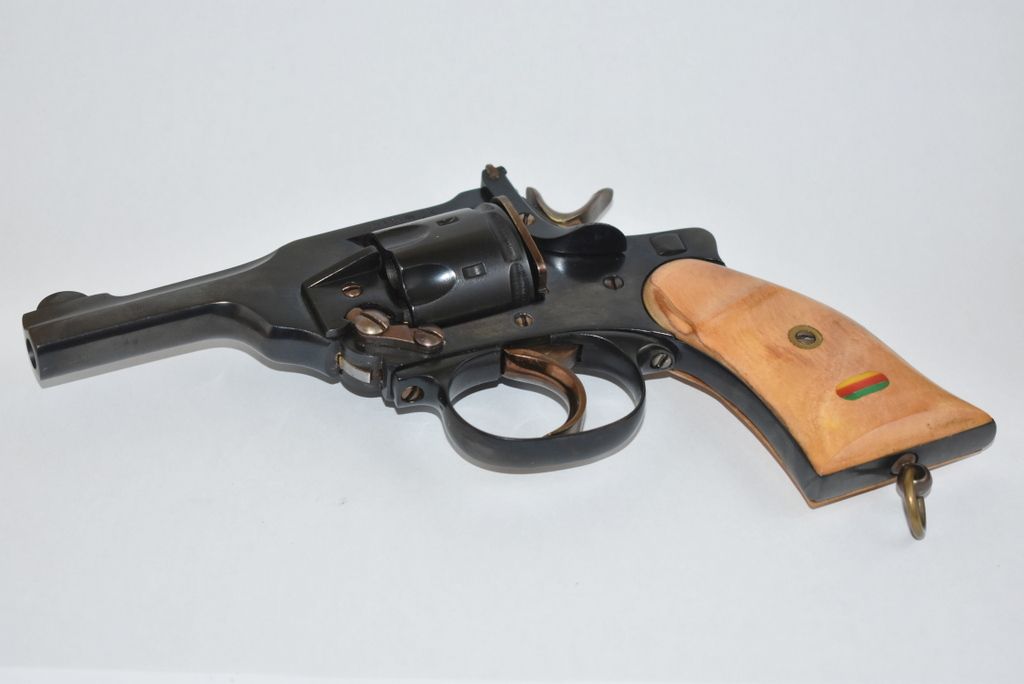
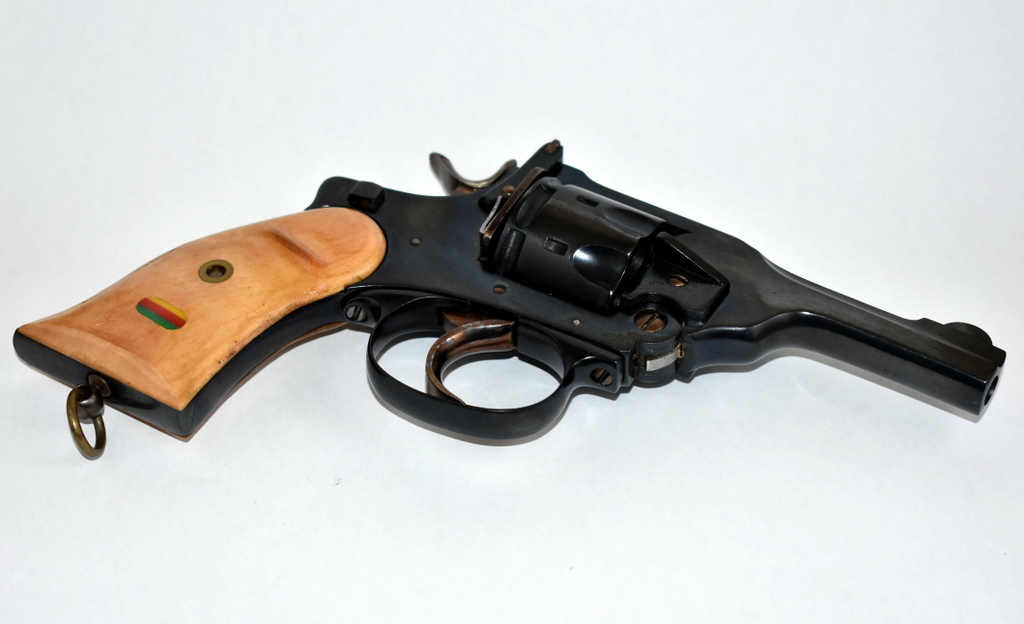
“Made in Darra” Webley and Scott .32 S&W Long

Nauman Afzal is a Pakistani based writer, and writes at his own very successful blog, My Random Ramblings as well. This is his first article for Silah Report.

In our part of the world, weapons have always followed a rather strange evolutionary path, if we talk about their development only. Darra Adam Khel or as I would like to call it, “Our Wild West” is the place where one can get a copy of almost any weapon made, at a price. The evolution of weapons here has always depended on the type of ammunition being used. In other words, it was the availability of a particular caliber of ammunition that dictated its development, unlike other places. That is akin to making cars on the availability of a certain kind of fuel. So in the 1960’s and 1970’s .32 ACP and .32 S&W Long were available in wide abundance throughout Pakistan. And one could either buy a foreign made weapon, which off course was expensive (as it is still today) or a Darra made revolver, which were available and still are being produced.

This particular piece is around 40 years old and is quite well made and kept. In those days many a “Khan” could be seen wearing this type of revolver across their chest with a dozen or more rounds inserted in the very belt holding it in place. Semiautomatic pistols were expensive and rare, so the de-facto choice was a Darra made wheeler, in .32 S&W Long, made to perfection. The local gunsmiths (who now have improved to the extent that they can and are in fact making copies of CQA the Chinese equivalent of AR15) perfected their skills to make excellent quality revolvers.

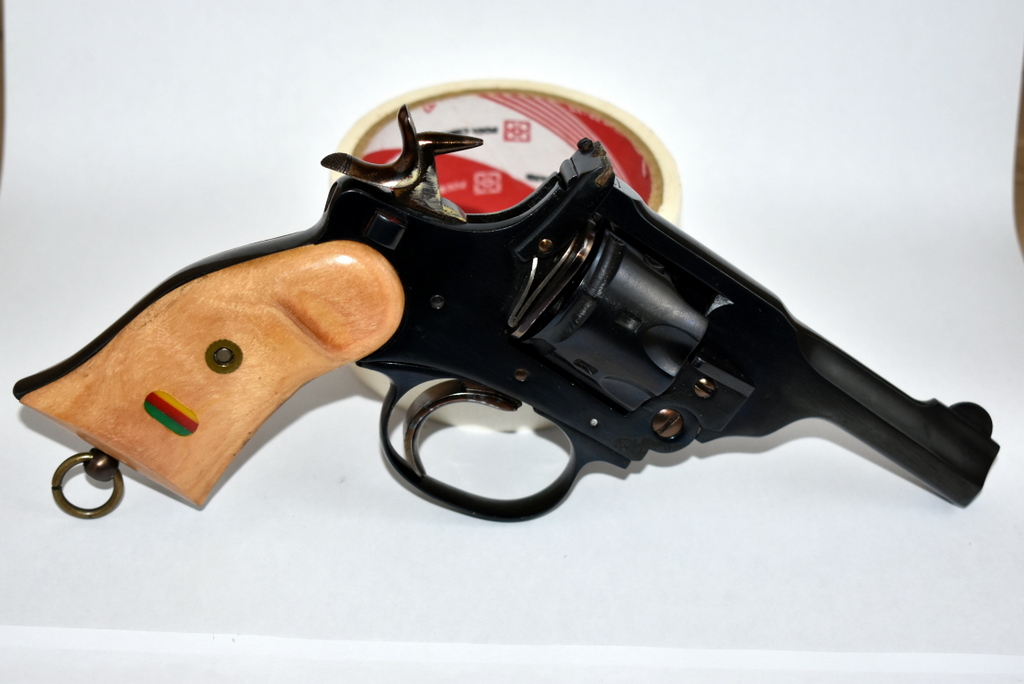
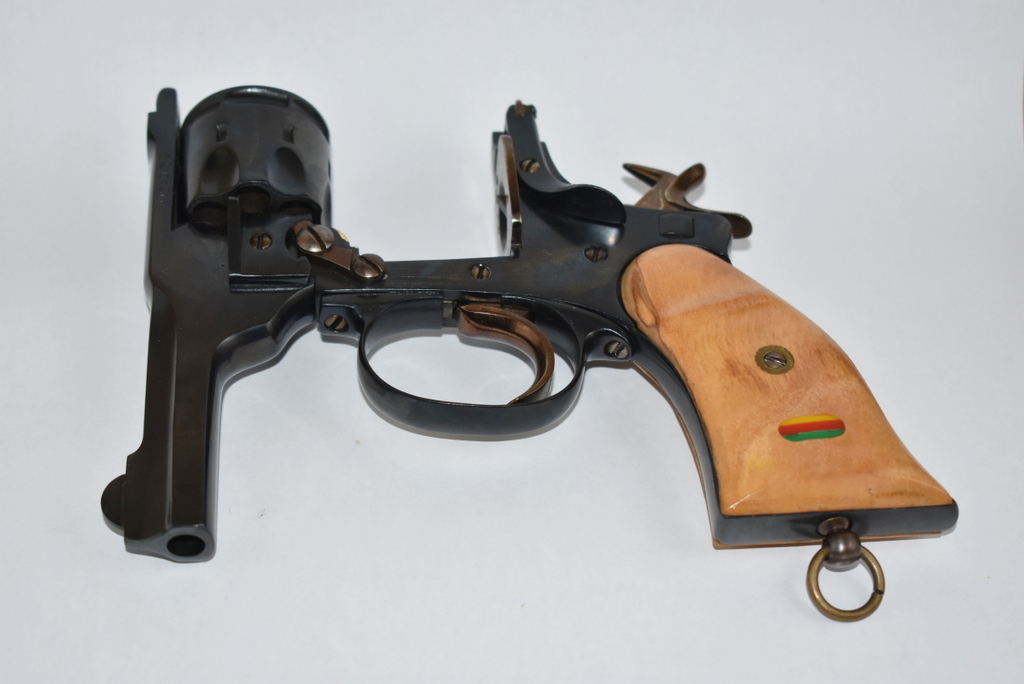
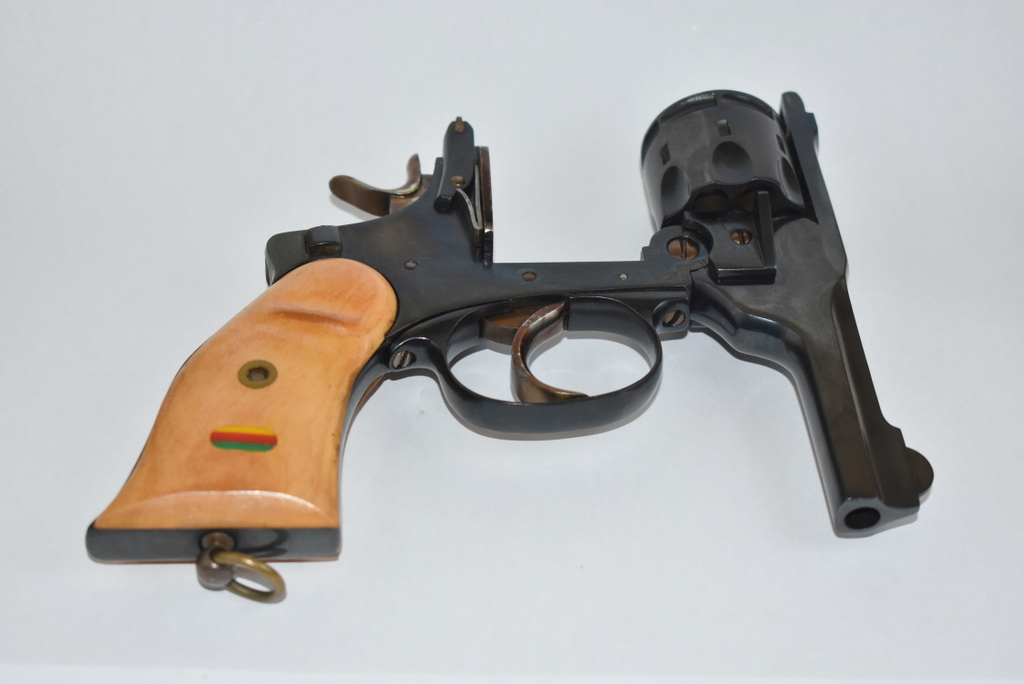
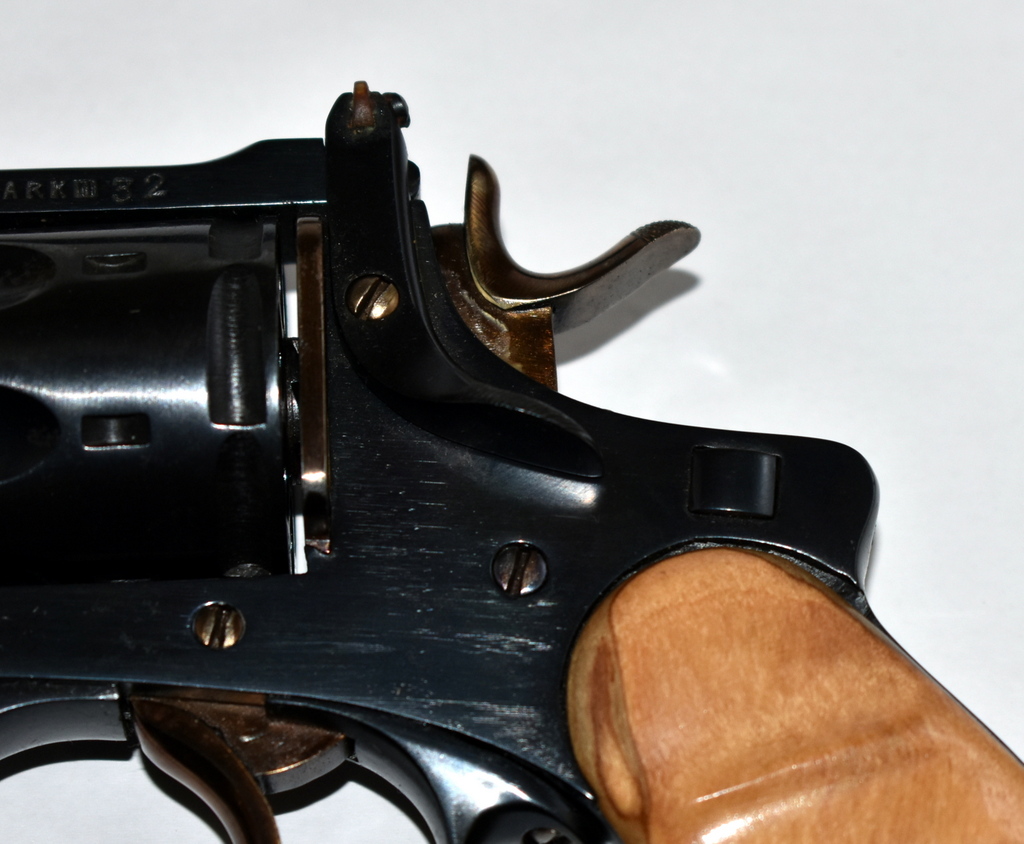
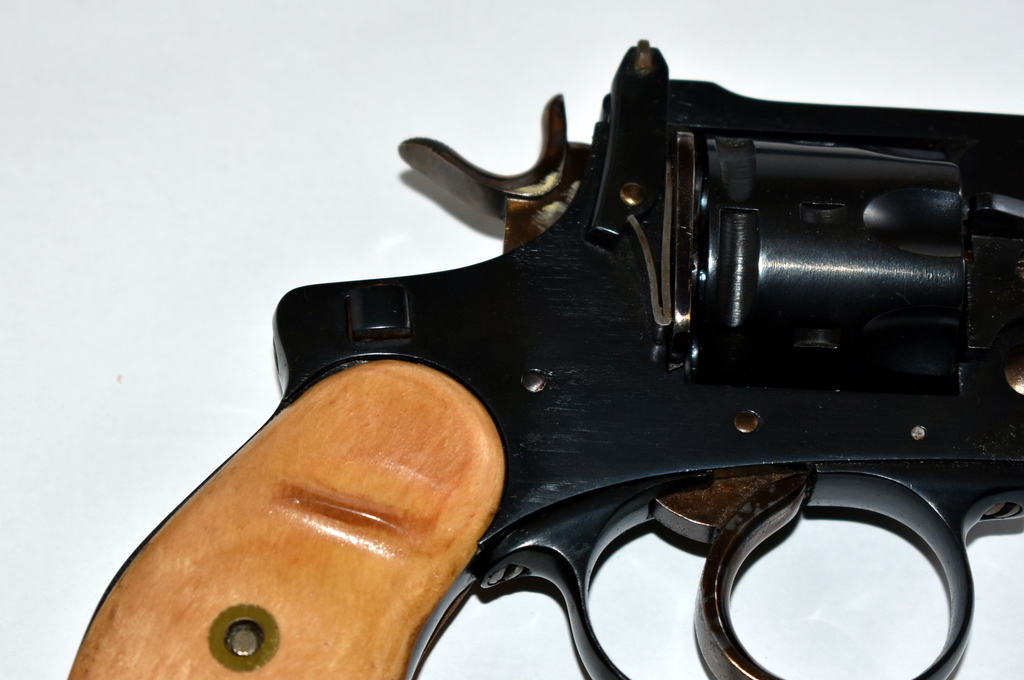
This little piece is an exact copy of the .32 Webley and Scott (Mark IV precisely), a top-break, seven shot revolver, single as well as double action brass hammer, a brass trigger and safety. 

Caliber:        .32 S&W Long

Weight:        720 grams approx

Action:                  SA/DA

Cylinder Capacity: 7 shots

Barrel length:      3.5”

Front and Rear Sight: Fixed

Top Break: With extractor for removing cartridges from the cylinder

Safety: Manual, Lateral Safety just behind the hammer

A dozen screws all along the body hold it in place, grips included. This revolver has its fair share of brass used in it; the hammer, trigger and the rear sight plate are made out of brass which gives it a shiny look when polished. The hammer, as well as the top-break lever, are knurled for a better grip.

Observe the Mark IV 32 marking over the left side on top of the cylinder, which is quite reminiscent of the original Webley & Scott. Other than this there are no markings or writings on the body. The hammer itself is pointed much like a nail or needle quite unlike the original Webley.

The revolver weighs 720 grams approximately, and in this size it is a good choice for a carry weapon, even nowadays. I have seen a few newer versions of this revolver selling for around Rs. 1500 that makes it around $ 15 plus or minus few today. (But off course .32 S&W Long is expensive here. ) The newer versions lack brass and hence give it a finish that appears quite dark in texture.

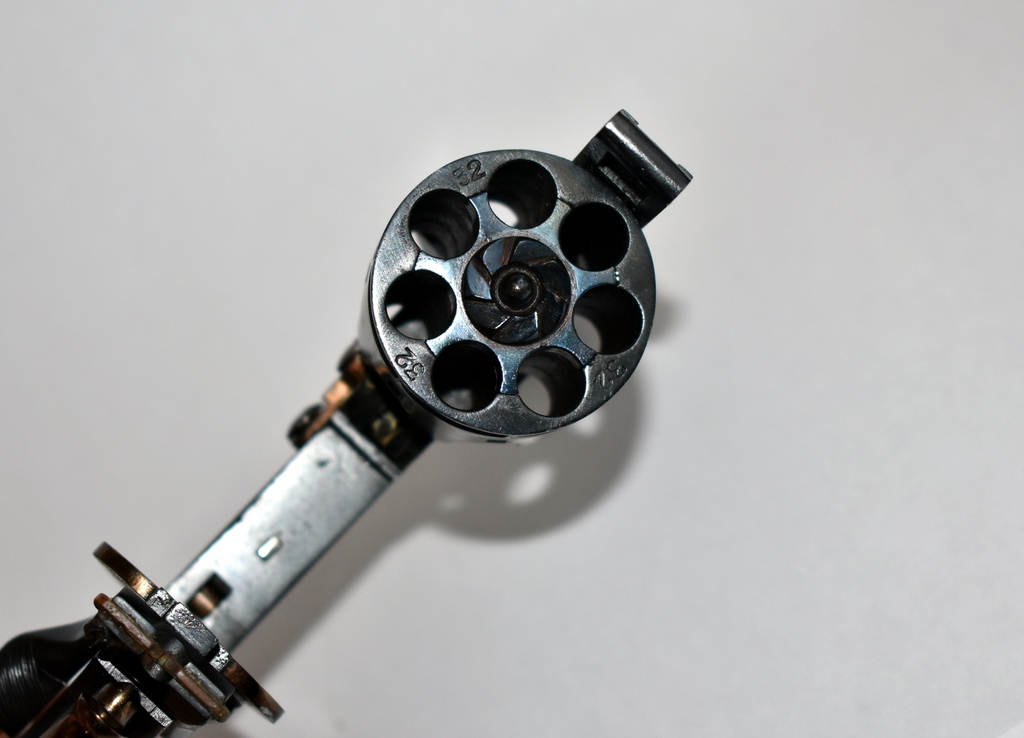
Frankly, I never tried disassembling one recently, but since everything is held in place by screws taking it apart is not an issue. But then there is not much point in taking apart a revolver. This particular piece has its grips changed, the original ones are made of poor quality plastic. The wooden grips were custom made for $3, both sides. Marking 32 on the inside the cylinder indicates its caliber.

These revolvers are known to stand out in reliability, a testament to the good quality workmanship in Darra. Since the advent of semi-auto pistols and the craftsmen ability to make good copies Revolvers are less in demand, still one can find them in the market. Somehow people tend to think that revolvers are inferior in performance as compared to semi-auto pistols.

This particular piece has been in my family and has passed hands from one generation to another, with no more than a hundred rounds fired through it. It now has an emotional value attached to it, and is held in much reverence amongst gun enthusiasts.

Diamond Arms Company of Darra Adam Khel

Darra Adam Khel is a town in Pakistan where the trade of many locals is the manufacturing of firearms and ammunition. It is normally hard to find information concerning any new guns of the local masters. However, some of these shops started using the Internet as a marketing tool and are now presented in social … Read more

Barrel Rifling Device from Darra Adam Khel

As you may know, Darra Adam Khel is a town in Pakistan which is famous for its indigenous firearms manufacturing. Many people living in this area are busy making guns and loading ammunition. There are some rough firearm clones made in Darra Adam Khel, but there are also really impressive ones both in terms of design and execution. Sometimes it is really unbelievable how these people manage to make firearms using only basic tools.

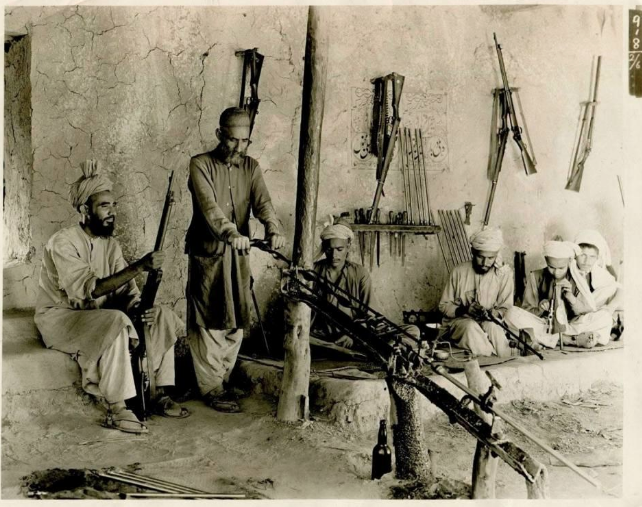
The top image of this article shows a local gunsmith operating a barrel rifling device. Although it is not confirmed, some sources say the picture is taken in 1902.

Note the barrel secured in the lower portion of the device and the gunsmith holding the handles of the cutting tool. The cutting tool itself has a spirally shaped shaft, which I assume runs on a guide pin so that when worked back and forth the cutting tool will do a spiral motion thus cutting the rifling at a certain twist rate.

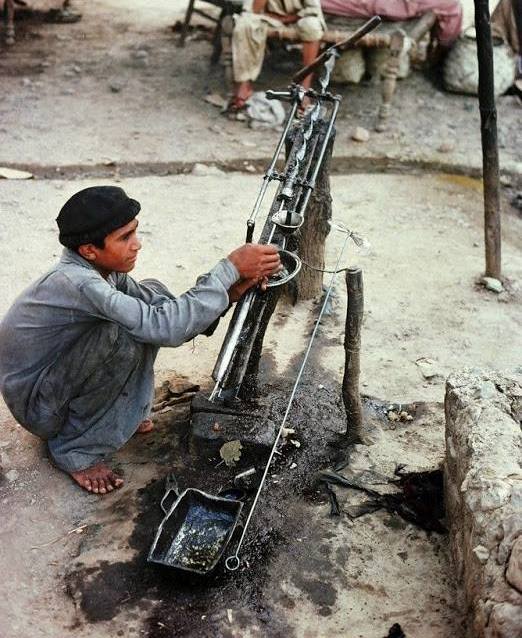
What is even more interesting is that there are newer images from Darra Adam Khel showing an exactly identical device. So even if it is a homemade rifling tool, it should be working great to be used until modern days.


Type 1, 2 Kalashnikovs Spotted

This photograph recently appeared on the social media account of a Kalashnikov aficionado, showing both a Type 1 and Type 2 Ak47 (not AKM) featured in the photograph. The Type 1 and Type 2 are exceedingly rare today, having been taken over by the much more produced AKM and associated variants across the world.


This was taken in Helmand province, Afghanistan by a contractor based there, probably in the Kajaki district. His testimony to this photograph is as follows-

I took that pic in Helmand Province, Afghanistan while I was there between 2012-2014. We had 7 or 8 Type I’s, 6 of which were issued to local national security force members we were mentoring. There were maybe 5-6 Type II’s including one that I estimated had less than 500 rounds through it (the underside of the trigger and disconnector still had cosmoline on it, and the auto sear and other internal parts still showed 99% blued finish with ZERO signs of wear.

The Type 1 is easily recognizable by the curved trunnion, while the Type 2 is identified by the square depression above the magazine, on the receiver. The Type II is a stamped receiver, while the AKM, Type I and Hungarian AMD65 above them are stamped.


Much Thanks to Buck T. for the input on this post!