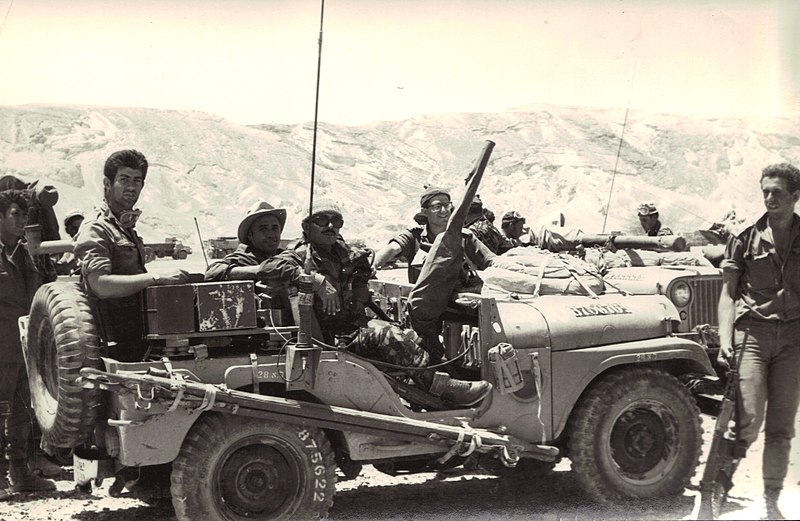
Israel’s infantry tactics had changed drastically since the 1955 Suez Crisis, in which Army Chief of Staff Mosha Dayan focused almost entirely on traditional infantry and airpower, neglecting armor and logistics. The British and French had significant success with armored assaults on Egyptian forces during the Crisis. This proved to Dayan that a strong mechanized infantry and armor corps would be the key to success for Israel in the inevitable future warfare over Sinai. Finkel and other commentators refer to this as the “cult of armored warfare”, which neglected defense for offensive capability entirely.[1] By the time the 6 Day War began, in 1967, Israel’s forces were better equipped but no more well trained than the army had previously been. This would prove to be a major issue.
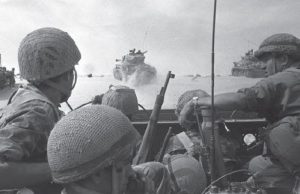
At the start of the 6 Day War, almost all IDF soldiers were part of the mechanized infantry (interchangeably called armoured infantry) and assigned to a tank company. This meant they would ride in US M3A1 half-tracks alongside tanks into combat. Typically, a full squad of seven or eight men would be in a single half-track, with support from 81mm mortars, Browning M1919A4 .30-6, and M2 12.7×99mm machine guns mounted on M3A1 Mk B models.[2] According to the veteran interview conducted by Silah Report, a squad was doctrinally supposed to be composed of 8 men but in reality, men would drop out for various reasons leaving squads consistently undermanned. There were also reconnaissance detachments with the armored infantry, consisting of jeeps, more half-tracks, and AMX-13 light tanks.[3] The hierarchy of IDF field command started at the top with an ‘Ugadah’ [sic.] composed of two or more brigades. A brigade was the “backbone of strategic planning” and contained two regular and one reservist battalion. A battalion was broken into sub-units of companies, platoons, and squads of around eight men as the smallest unit.[4] Since the IDF focused on decentralized field control and fluidity, the exact numbers of any unit or sub-unit are imprecise.[5]
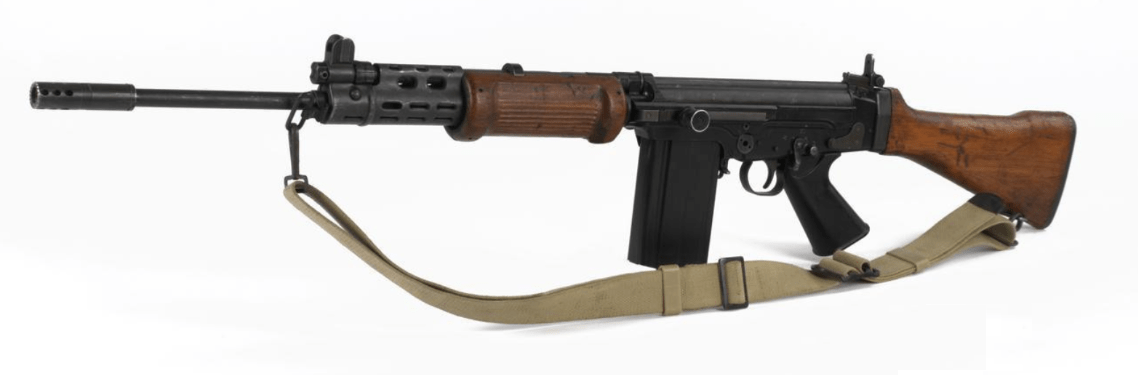
In the same theme of flexible field control, along with a low budget – all conscript army, IDF units were equipped with a wide variety of small arms and equipment. There were, however, some mainstay small arms on the Egyptian front. Almost every soldier could expect to be equipped with a 7.62×51mm FN FAL (known as a ‘Romat’), a heavy-barrelled FAL otherwise known as a Makleon, 9×19mm Uzi submachine gun, the 7.62×51mm FN MAG general-purpose machine gun, or an 7.92×57mm Mauser-patterned bolt action rifle as their main weapon – along side grenades. Anti-tank weapons were also issued out, but in much smaller numbers than were required for field needs.
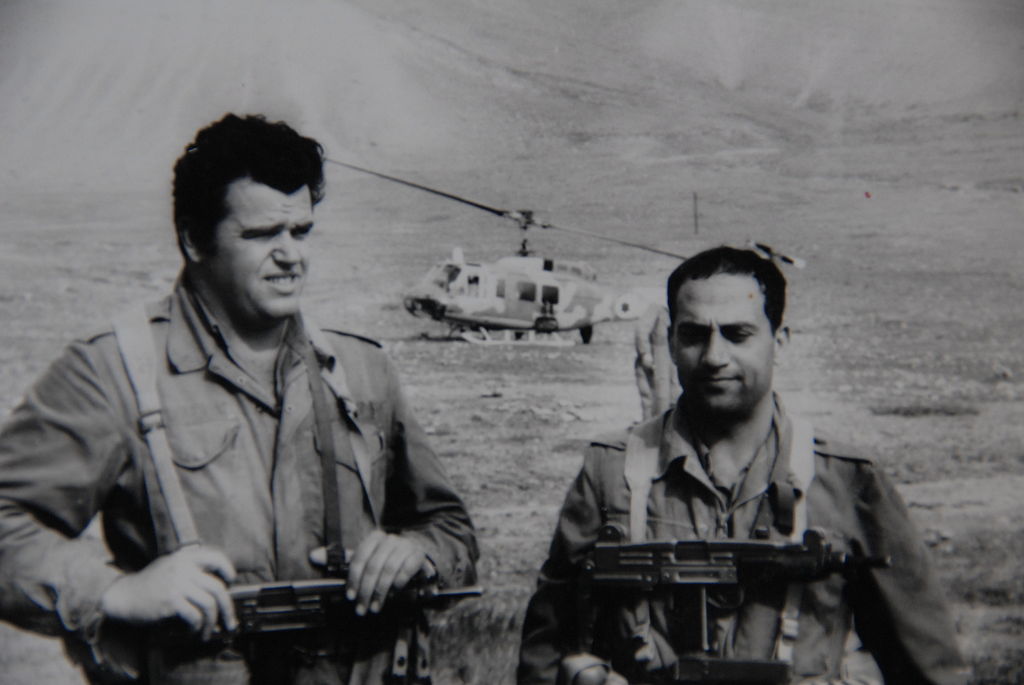
In her journal, Yael Dayan notes that one colonel was “assigned a pistol but no ammo, and all Uzis were assigned out”, showing the makeshift nature of the army at the time. She goes on to mention that the IDF had not issued gas masks even though Egyptian forces did, prompting fears of gas attacks in the Sinai. At this point in time, to her knowledge, all of the Uzis had the original configuration wooden stocks, and metal folding stock variants had not yet been issued.[6] In Silah Report’s interview with an infantry veteran, he states that he saw some metal folding stocks in the field, which period pictures confirm, but they were still limited to regular paratroopers and tankers.
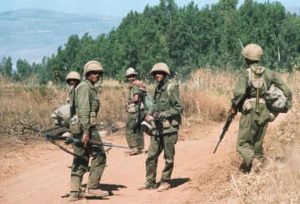
If a platoon was set up to meet the exact specifications of doctrine it would be comprised as follows: an infantry squad would be mounted in an M3 half-track with eight men, a leader with an Uzi, two heavy FAL’s, a rifle grenadier, and four with standard pattern FALs. The command squad would have an officer, radioman, medic, mortarman, and mortar ammo carrier all with Uzis. Many K98/Mauser-pattern rifles had been turned into sniper platforms with a x12 power scope and were given to men who were the best shots. In reality, though, this was not always the case and many men would swap the FAL for an Uzi or even an 7.62×39mm SKS or AKM in the field.[7] Paratroopers, being elite forces, were given Uzis with metal folding stocks first, followed by tank crews, commandos, junior infantry leaders, and vehicle crews. FALs were then issued to everyone else when Uzis were unavailable.[8]
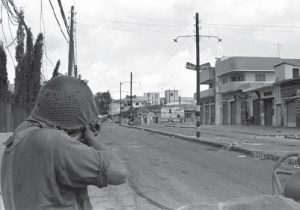
Reservists were often the worst equipped, as they were the lowest priority, except for one category – anti-tank weapons. Reservist paratroopers were given the FAL with 22mm BT/AT 52 rifle grenades, while infantry reservists were often armed with World War Two surplus 7.92×57mm Mauser K98k/other Mauser-pattern rifles in their original condition without a scope. One lucky reserve division were equipped with US M20 rocket launchers, anti-tank mines and grenades, and 106mm recoilless rifles which made up an Ugadah’s entire anti-tank capability.[9] The 7.62×51mm FN MAG general-purpose machine gun was supposed to be reserved for defensive positions along the border but was quickly brought into frontline service since the 20-round magazines of the heavy-barrelled FALs, which were essentially used as light machine guns, were found to be too small for sustained fire.[10]
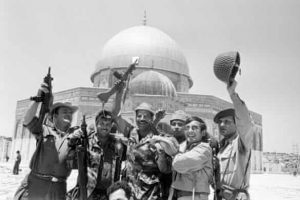
During the course of the 6 Day War, the combat loadout of a soldier armed with an Uzi submachine gun was five 25-round magazines in pouches (the 32 rounders were believed to be unreliable), two clipped together in the gun, and some grenades. Those equipped with a FAL had four to six pouches holding two 20 round magazines each, while the Makleon FAL was carried with eight regular pouches, plus a large pouch holding ten 20 round magazines. When the IDF prepared for a night assault on the fortified El-Arish and Um-Katef complexes they took their equipment capabilities into serious consideration.
On the Egyptian side though, General Mohamed Fawzi readily admitted after the war that “some units had not trained on weapons of any kind since the 1956 Suez Crisis” and that “reserve units… had severe shortages of weapons, equipment, and radios.” On top of this, Egyptian forces that were better trained were “able to conduct one type of operation – [defense].”[11] The El-Arish attack serves as a textbook example of an IDF assault on a fortified position that would take place numerous times across the Sinai desert.
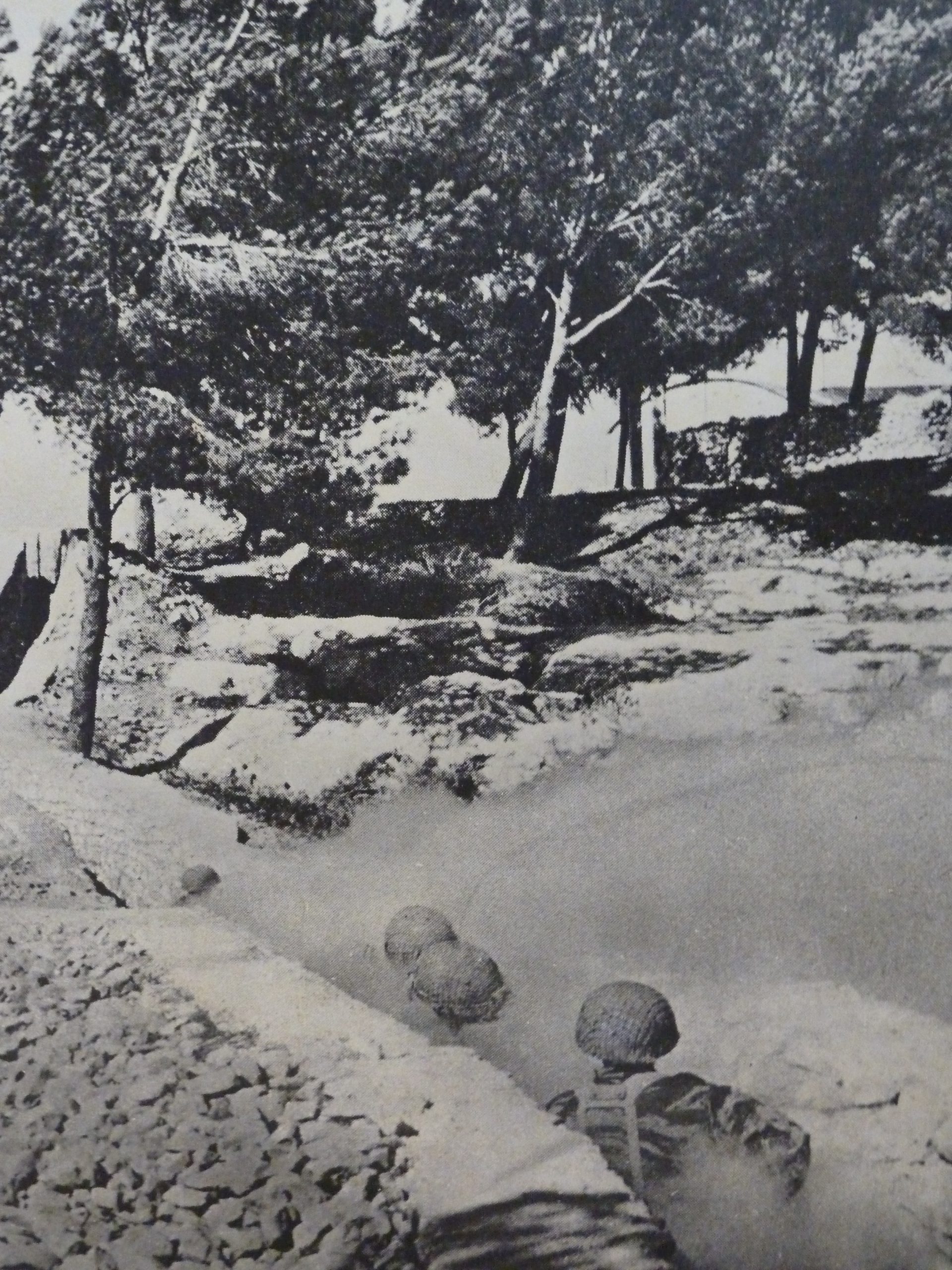
During the night-time El-Arish assault, paratroopers dropped behind Egypt’s Um-Katef defenses from helicopters, while artillery marked out the northernmost part of a trench line for infantry to storm. Moshe Dayan specifically trained all infantry for trench assaults in the lead-up to the war so troops were well prepared for these operations. Each of the three battalions storming the trenches carried 50 flashlights of one color, red, green, or blue, to mark their battalion’s progress in the trench. This helped prevent friendly fire, as the paratroopers were coming in from behind the lines.[12] Targets were identified at night by throwing a lit ‘gooznik’ – a “goose-neck lamp”, which was a can of kerosene-soaked sand.[13] As paratroopers landed they “jumped right at the beginning of the trench and started running inside throwing hand grenades before us, then running ten to twenty yards and squeezing the trigger of our Uzi submachine gun from the bends and corners of the communication trenches.”[14]
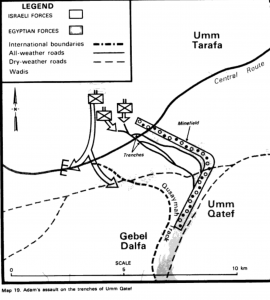
Israeli wars.” by Walter Gawrych)
The FAL and Heavy FAL were too long, at around 110cm or 42.5in overall) to be wielded effectively in the trenches, but infantry successfully used them to suppress Egyptian lines as paratroopers advanced.[15&16] IDF paratroopers relied on knives, shovels, grenades, and Uzis alike to clear Egyptian trenches. Their tactic was to fan out and rush trench networks with one platoon per gun emplacement, relying heavily on brutal hand to hand combat.[17] The rapid and brutal night attack disoriented the Egyptian forces, which were defeated in a few hours, unable to effectively use artillery or direct fire in the dark.[18] This assault on the Um-Katef lines broke the Egyptian forces and all but won the war for Israel in the Sinai.
Endnotes
1. Finkel
2. Campbell
3. Dayan
4. Gawrych
5. Silah Report
6. Dayan
7. Silah Report
8. Laffin
9. Gawrych
10. Silah Report
11. CDR Aboul-Enein
12. Gawrych
13. Silah Report
14. Ibid.
15. Dayan
16. Obadal
17. Gawrych
18. Obadal
Bibliography
Campbell, D., & Shumate, J. (2016). Israeli Soldier vs Syrian Soldier – Golan Heights 1967-73.
Bloomsbury Publishing Plc.
CDR Aboul-Enein, Youssef USN. (n.d.). Egyptian General Mohamed Fawzi: Part III: Reflections
on mistakes made in planning, training, equipping, and organizing Egyptian combat formations
prior to the 1967 Six-Day War. Retrieved August 30, 2020, from
<https://play.google.com/books/reader?id=v8gymMNRvD4C&hl=en&pg=GBS.PA8>
Dayan, Yael. (1967, June). Israel Journal: June, 1967.
Dunstan, S., & Dennis, P. (2009). The Six Day War, 1967: Sinai. Oxford, UK: Osprey
Publishing.
Finkel, Meir. (2011, February 28). On Flexibility: Recovery from Technological and Doctrinal
Surprise on the Battlefield.
Gawrych, G.W. (1994). Key to the Sinai: The battles for Abu Ageila in the 1956 and 1967 Arab-
Israeli wars. Fort Leavenworth, KS, KS: U.S. Army, Command and General, Staff College.
“In Pictures: The Six-Day War.” The Guardian. Guardian News and Media, June 4, 2007. <https://www.theguardian.com/news/gallery/2007/jun/04/internationalnews.israel>
Laffin, J., & Chappell, M. (2002). The Israeli Army in the Middle East Wars 1948-73. London:
Osprey.
Obadal, M. (2012, May 04). DTIC ADA564040: Israeli Operational Art: The Six Day War — How
the Israeli Defense Forces Achieved Overwhelming Success Against Overwhelming Odds, <https://archive.org/details/DTIC_ADA564040>
Silah Report. (2020, June 21). Interview with a 6 Day War Veteran. Retrieved from
<https://www.ragic.com/SilahReport/open-access/5/75>
If you enjoy our work here at Silah Report please consider supporting us on Patreon!