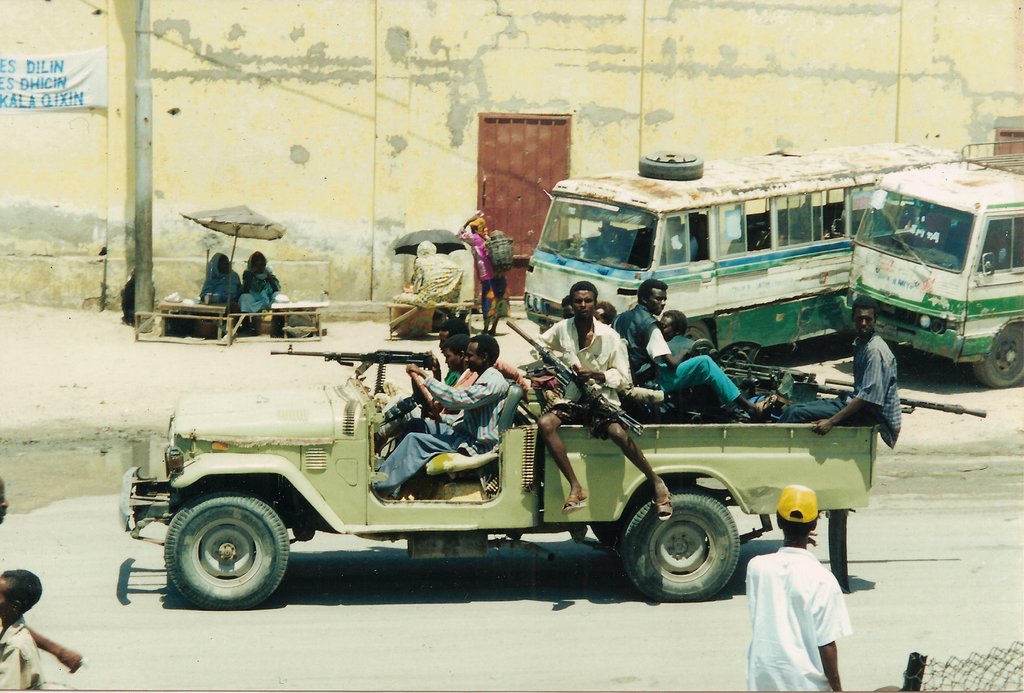
The term technical as a designation for light improvised fighting vehicles is quite the neologism (a word or term which has entered use relatively recently), which has increasingly entered common vernacular, though not yet fully accepted into mainstream military parlance of professional First World armies. The latter often speak instead of a Non-Standard Tactical Vehicle (NSTV), which quite sufficiently covers what a technical actually is. In this article we’ll examine the etymological origins of the ‘technical’.
The reason for a divergence in the use of the two different designations: technical and NSTV, for one and the same concept and the popularity of the word technical is simple: the term NSTV is outdated and underestimates the important position of the technical in irregular forces. Contrary to the term, the open-backed civilian pick-up truck mounted with a heavy support weapon has become very much the standard tactical vehicle of irregular and even some regular armies in countries less well-of in the treasury department. Despite mobility and lightning speed being the main drivers for the use of technicals in offensive military operations, the vehicle has gained the prestigious reputation of being a status symbol for any self-respecting militia. Its use grew so substantially that it even prompted US officials to question Toyota on the acquiring of an excessive amount of pick-up trucks by a notorious terrorist group in the Middle-East. This is no mere non-standard vehicle. It’s the pinnacle of technical prowess and engineering capacity in asymmetric warfare for decades to come. So if we’re going to use the term technical, we should start by exploring its etymological origin.
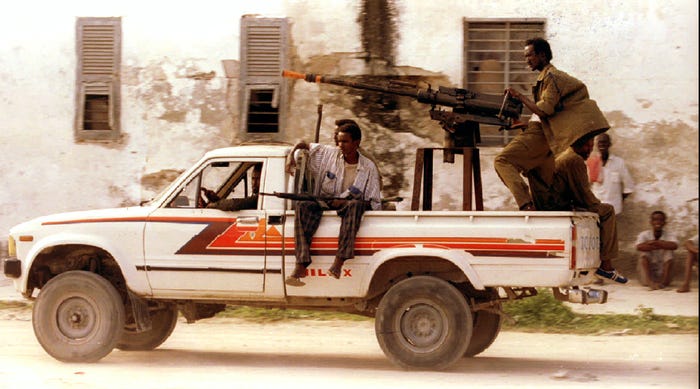
Fig.1.1. Somali militants on a technical in Mogadishu (Source: Business Insider)
A technical is never armored nor tracked. It is in fact a four-wheel drive pick-up or jeep, most popularly Toyota models like the Hilux or Land Cruiser, with a medium to heavy support weapon mounted on its back. This weapon could be machine guns, anti-aircraft guns or even a short-range multiple rocket launcher. Crews mostly consist of the driver, an armed soldier riding shotgun and an operator standing on the back of the pick-up to operate the mounted weapon. This allows for highly offensive fire and movement maneuvers, so-called tank desant tactics when transporting several troops and versatile fire and reverse moves from different non-fixed firing positions. IFV’s, SVBIED’s or even HMMWV’s can by this definition therefore not be considered technicals. So basically, a technical is an unarmored fighting truck with a mounted weapon and an active crew of at least two individuals.
This method of waging war has been around for about a century. Historians trace the first “proto-technicals” to the Great War’s Eastern Front. The impoverished regions of Southern Russia and Ukraine, where the fronts were fluid and mobile warfare gained much significance, saw the use of so-called tachankas, turret carts drawn by horses across open terrain. During the First World War the Canadian Army on the Western Front operated lightly armoured, machine-gun armed converted civilian trucks known as Armoured Autocars. Since then, this way of fighting constantly evolved and grew overtime into the technicals we know today. All researchers agree that the origin of this word should be looked for within Somalia during its 1980’s civil war. According to Leigh Neville’s 2018 book Technicals: Non-Standard Tactical Vehicles from the Great Toyota War to modern Special Forces, the neologism arose when non-government organizations (NGO’s) attempted to get a grip on the increasingly severe humanitarian situation inside the war-torn and ravaged country. Because aid shipments and operational facilities were no match for neighboring warlords and roaming looters, some NGO’s decided to call in armed guards. Being required to remain visibly neutral and prohibited to carry weapons by international law, the NGO’s instead resorted to hiring local clansmen and fortune seekers to protect their assets. An AFP article published 24 October 1992, under the title UN Peacekeepers’ Mission Sand-bound in Mogadishu confirms this use of the vehicles, stating: “there are no peacekeepers at any of the key aid delivery and transit points. When one of the only too rare UNOSOM vehicles goes past, it is escorted by ‘technical’ vehicles full of armed fighters — mercenaries at the service of humanitarian organisations ensuring the safety of international organisations and visiting journalists.”
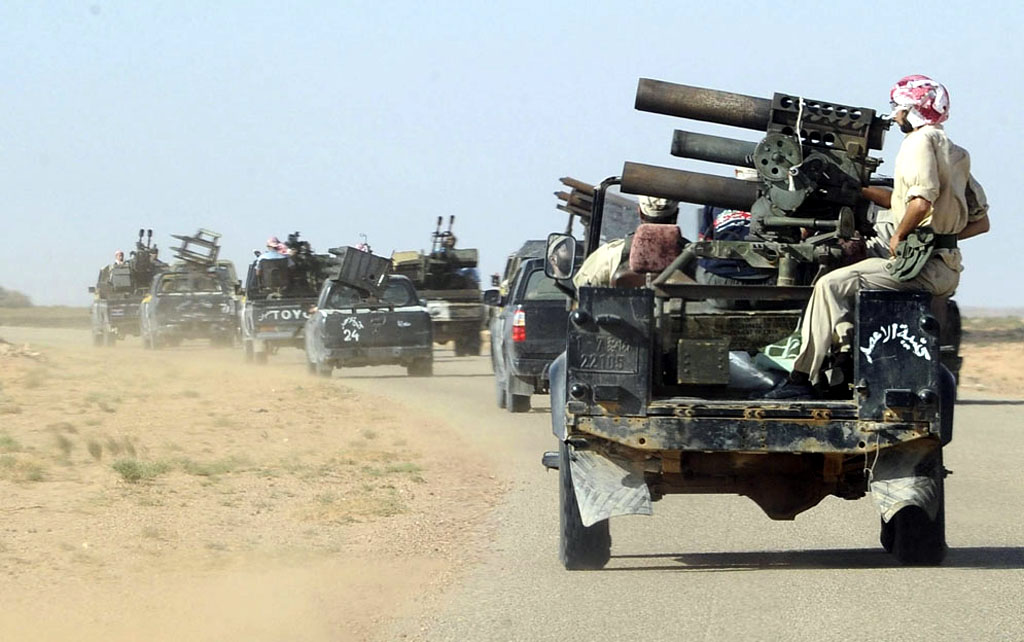
Fig. 1.2. A convoy in the Libyan desert consisting of technicals with MRL’s, heavy machine guns and anti-air guns (Source: Geopolitica)
The existence of this practice was carefully admitted by the NGO’s themselves, though nuanced. In a press release by the International Committee Red Cross as reported in the 21 May 1993 edition of the French newspaper Le Monde, the ICRC stated that: “three thousand men (two thousand for the north of the city of Mogadishu and a thousand for the south), provided by clans and sub-clans played in effect the role of ‘police force’ in exchange for ‘a small quantity of food’ which constituted the only way to successfully deliver assistance to the victims.” This press release was organized at the exact same time the American press was publishing several articles denouncing the use of mercenaries or armed men to protect the convoys and distribution centers.
Despite the dubious yet well-meant intentions of the NGO’s, these men basically served as mercenaries who required pay one way or the other. The costs to hire them “were”, as Neville’s puts it, “listed in the NGO’s expense claims innocuously as ‘technical support’. From this the clansmen and their iconic vehicles, the Mad Max-style armed pick-up trucks, became known as technicals.” He quotes the US Army’s Combat Studies Institute as having stated: “The term technicals, referring to the armed vehicles employed by Somali bandits and factional militia, was a fallout of the NGO’s referring to the armed personnel they hired for protection as technical advisers.” This etymology of the word technical is undoubtedly the most popular and agreed upon version by US military analysts and writers, both online and offline. Richard W. Stewart, an expert on American military history, writes in his 2002 book The United States Army in Somalia, 1992-1994: “Since UN and private volunteer organizations were generally prohibited from hiring armed security forces, they instead hired local tribesmen as technical assistants hence the nickname technicals. The technicals were armed bodyguards, often driving pick-up trucks or land cruisers with machines guns or other heavy weapons mounted.” This account of the American intervention in Somalia was endorsed by John S. Brown, Chief of Military History of the US Army. From this term, the Somali word tigniko or tikniko derived, referring to the technical vehicle. In Arabic, the second language of Somalia, however, the word is not used, and is instead referred to simply as āliya rubāʿiyya al-dafʿ or sayyāra dafʿ rubāʿī, i.e. a four-wheel drive.
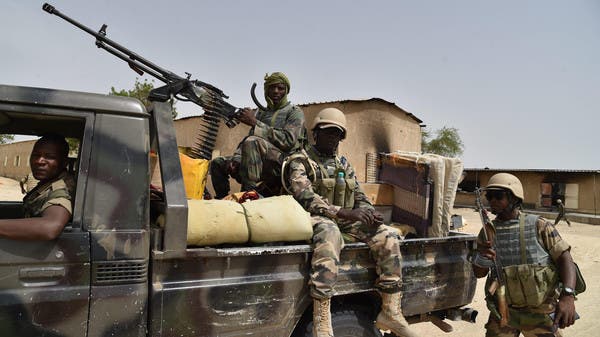
Fig.1.3. Chadian soldiers on an army technical (Source: Al Arabiyya)
In his book, Neville mentions an alternative etymological origin for the word technical. This version was first disseminated by journalist and long-time foreign correspondent for Africa Michael Maren in his 1997 book The Road to Hell, in which he describes the detrimental effects of foreign aid and international charity on local economies. Despite being very critical of international development assistance and food relief, Maren doesn’t link the term technical with the NGO’s. Instead, he states that “the Somali National Movement had gotten their hands on some heavy artillery but needed to make them mobile. Some engineers in the region had been trained by the Russian arms manufacturer Tekniko, and they undertook the task of mounting the weapons on Land Cruisers.” Maren concludes that the company name Tekniko eventually got anglicized into technical. This alternate explanation of the word’s etymology has gained some foothold among other journalists, mainly those writing about the drawbacks of humanitarianism as well, like Robert DiPrizio in his 2002 Armed Humanitarians.
Neville describes this alternate etymology as “intriguing”, which hits the nail on the head to say the least. There seems to be little known trace of any Soviet company or manufacturer called Tekniko. We have conducted a significant search for online references to the company and spoken with both Russian and non-Russian sources on the subject, including our own contributors here at Silah Report, and browsed through some specialized books, but the name fails to show up at all. A group of redditors in the Reddit group r/shittytechnicals, an online community dedicated to Improvised Armed Vehicles, or Technicals, also came to the same conclusion: Maren’s explanation is based on quite a bungled record. One user called Elaphoil, however, makes an interesting point. Maren’s story of Tekniko would hold water only if it wasn’t an official Soviet manufacturer, but was instead “a black market industry of Russian ex-pat workers going through African conflicts to enrich themselves using contacts from back home and their own skills”
It’s to be believed that the name Tekniko was never used at all. There is simply too little information or evidence to make such an assumption. However, the possibility of Russian ex-pats having worked in the region makes sense. The Soviet Union sent about 1,500 military advisors to the Horn of Africa during the late 1970’s Ogaden War to support Ethiopia with Russian-supplied artillery and armor. There was no official Soviet support for the Somali Barre-regime or any of the militia factions during the civil war, but it wouldn’t come as a surprise that some of those Russian advisors decided to trade the Russian winter for the Somali sun as engineers for the Somali factions after the Ogaden War. Despite Tekniko not showing up as the name of a specific company, the word very much exists in Russian military parlance. In Russian, военная техкика (voennaya teknika) means such a vehicle used for military purposes. Armored vehicles, like tanks or APC’s, are called бронетехкика (broneteknika), again the word teknika here referring to the vehicle in a military context. So it is certainly possible that Michael Maren did indeed hear the word teknika being thrown around during his time in Somalia, not as the name of a manufacturer, but as a noun used by Russian engineers and their Somali allies to refer to the improvised armed pick-up trucks. This then anglicized into technical and the Somali cognate tigniko or tikniko.
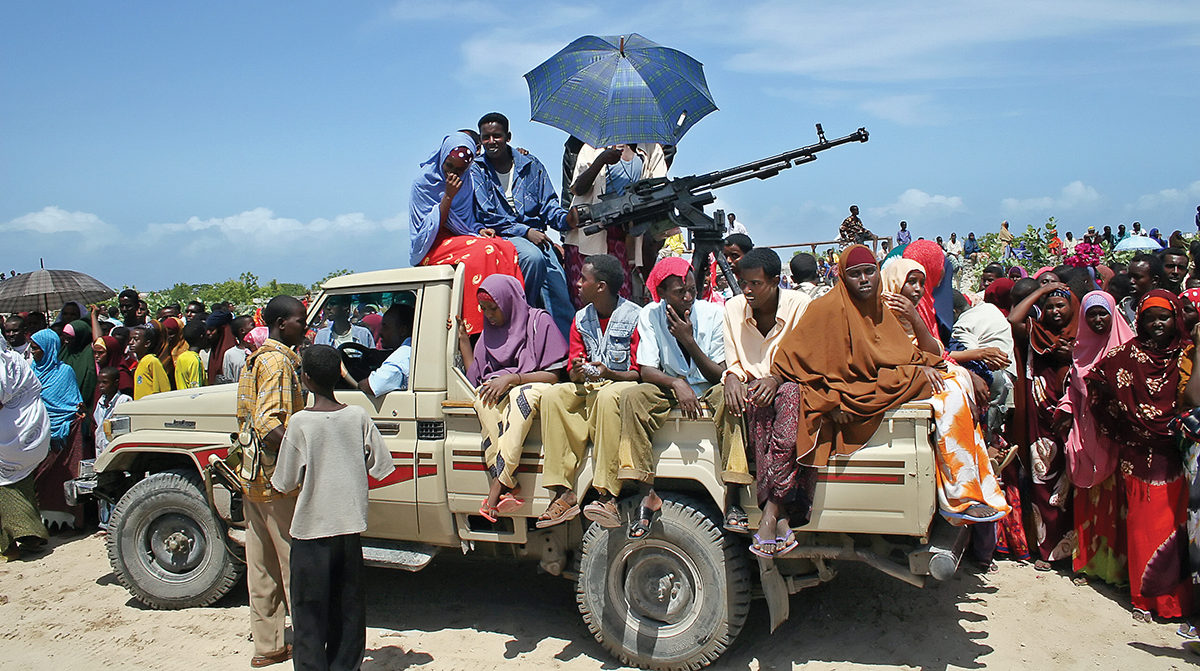
Fig 1.5. Armed vehicles like this technical north of Mogadishu are an everyday sight in Somalia (Source: ACCORD)
In conclusion, however, Maren’s opinion on the word’s origin remains controversial and it remains hard to establish any concrete evidence that would lead us to attach great importance to the possible Russian origin of the technical neologism. There is no trace of a company, either operating officially or on the black marker, called Tekniko, nor are there any real indications of substantial Russian expatriate activity across Somalia throughout the civil war. Leigh Neville’s opinion on the NGO connection to the etymological origin of the technical looks to be the most solid explanation out there.
If you enjoy our work here at Silah Report please consider supporting us on Patreon!
Technicals was there way before Aid workers, aid workers trying to take credit for something they were a late comer. Most aid workers come there after 1992 when the war was on going for 2 yrs. And militia were already fighting on technicals
veteran Gutale led by official
SNM’s tactical contribution to the world has spread to the world today with the major countries in the picture and film fighting in Asia and Africa such as Iraq, Syria, Libya, Afghanistan, Yemen, Chad, Mali. Central African Republic, and the United States, Russia, and even Japan, who wrote the design or equipment for the technological breakthrough that Engineer Gutale brought to the world while leading the SNM, which is a very serious film. defeated and defeated by their allies is now at war,
Later he did, with various types of weapons such as Artillery and BM shielded in different books, each with a pipeline. Engineer Gutale introduced and started from 1980, to 1982, the cutting of beheaded cars for Toyota Sakakawa, anti-aircraft or light trips such as the building. This is one of the reasons why the somali army won so quickly. somalia reached that point in 1990, when snm provided 40 technical vehicles to general Aideed
Engineer Mohamed Ahmed Gutale, 1983, immediately started and cut off Kurta’s first car, SNM, Yeelato and removed the gun, Sakakawa from the town of HERER and Jigjiga in Ethiopia and decided in his mind to put on light cars. guns, the first struggle to turn a car into a big gun, a war car in Sakaawa, a small car such as a Land Cruiser or a Pickup truck, guns, anti-Air Graph, to fight the ground forces, He knew in his mind that he could use the anti-aircraft guns on the ground to attack and attack the heavily armed fugitives and lay down on them. Gutale’s Fear and Concern for the Somali Army, which is heavily armed with Russian weapons, is a new weapon. He found out that his army had been intimidated and that the SNM Rebels had seized weapons from Gutale. Guutaale.
Gutale’s tactical contribution to the world has spread around the world today to major arms manufacturers and organizations fighting in Asia and Africa, including Iraq, Syria, Libya, Afghanistan, Yemen, Chad, and Mali. Central Africa, and other major arms manufacturers, such as the United States, Russia, and Japan, have developed the concept of Engineer Gutale’s contribution to the world, which has benefited the warring factions. to fight now,
He later developed a variety of weapons, such as machine guns and machine guns. Engineer Gutale introduced and started in 1980, until 1982 the cutting of beheadings on Sakakawa rifles, anti-aircraft guns or light bulbs such as builders. The reason for the rapid defeat of the somali army was that somalia reached the industry in 1990, when snm provided 40 technical vehicles to general Aideed and spread to many parts of the world to the extent that today the world’s largest countries are equipped with such systems. Muj, Gutale, 1982, is the engineer who invented the technology. He is the man who contributed to the world. the world,
David Aaron, a CIA staffer, and Johnson Brain, a CIA staffer, said SNM officials, led by Mujahid Gutale, a new tactician in the world, are now fighting the world. Siad Barre’s government was defeated, Gutale was captured and the SNM forces acquired new weapons in the world.
WHO PRODUCED SUCH TECHNICAL VEHICLES.
Veteran: Mohamed Ahmed (Gutale) Invented Ordinary Vehicles With Guns
Posted by: Mohamed Guleed
Friday, July, 23,2021
The historical. Engineer: Mohamed Ahmed Gutale, 2021
is the inventor or inventor of many Engineers. Mohamed Ahmed Gutale, who studied in Russia, Iraq, Egypt and Italy during the revolution, was an engineer specializing in weapons, in terms of design, maintenance and creativity, and was the only knowledgeable officer. studied by Snm.
Michael Maren, an American journalist, also wrote a book on the subject. RoadTo Hello.
When Mujahid Gutale took over the SNM, he immediately cut off Kurta’s first car and, SNM, Yeelato, cut off his Kurta and drove it to the cities of HERER and Jigjiga in Ethiopia. For the first time in the history of the country, there have been a number of anti-aircraft guns, anti-aircraft guns, anti-aircraft guns, anti-aircraft guns, anti-aircraft guns, anti-aircraft guns, anti-aircraft guns and anti-aircraft guns. He knew in his mind that he could use anti-aircraft guns on the ground to attack the heavily armed fugitives and lie on his back. The Somali military, he did not know the technique and he was scared. The rifle we gave him. br> The SNM Rebels took control of Gutale, and he knew in his mind that guns were to be loaded on light vehicles to fight the planes and it was a success and its reaction was a special victory for the Mujahideen. Guutaale Tactics. Gutale is a newcomer to the world of arms manufacturers and militant groups in Iraq. Syria. Libya. Yemen,, and other countries are currently at war
He later developed a variety of weapons, such as assault rifles and bm, which he designed to distribute bm and ammunition to cars. Also, the countries where he taught weapons to be used in cars included Ethiopia and Libya. , he put it in a different way from the way somalis use it, and he put it in the way somaliland uses it now. Syria, Libya. yemen. Central Africa like Chad .Michael maren. an American journalist who also wrote a book on Road to Hell which is the brainchild of Gutale Engineer who has contributed to the world. Now, Gutale has also developed various strategies. The SNM, which fought in the military, the idea that the SNM won is the name of Mujahid Gutale.
Since I wrote my article on the history of the 70 Series Land Cruiser as a technical, I have been contacted by several Somalians who attest to the “tekniko” origin of the name. It is a corruption of the word “Tekhnikum”, as in a technical trade school, not any specific company. I did not place much value in that explanation before hearing it from native speakers, now I believe that both the “tekniko” name and the “technical support” story contributed to the establishment of the word “technical”.