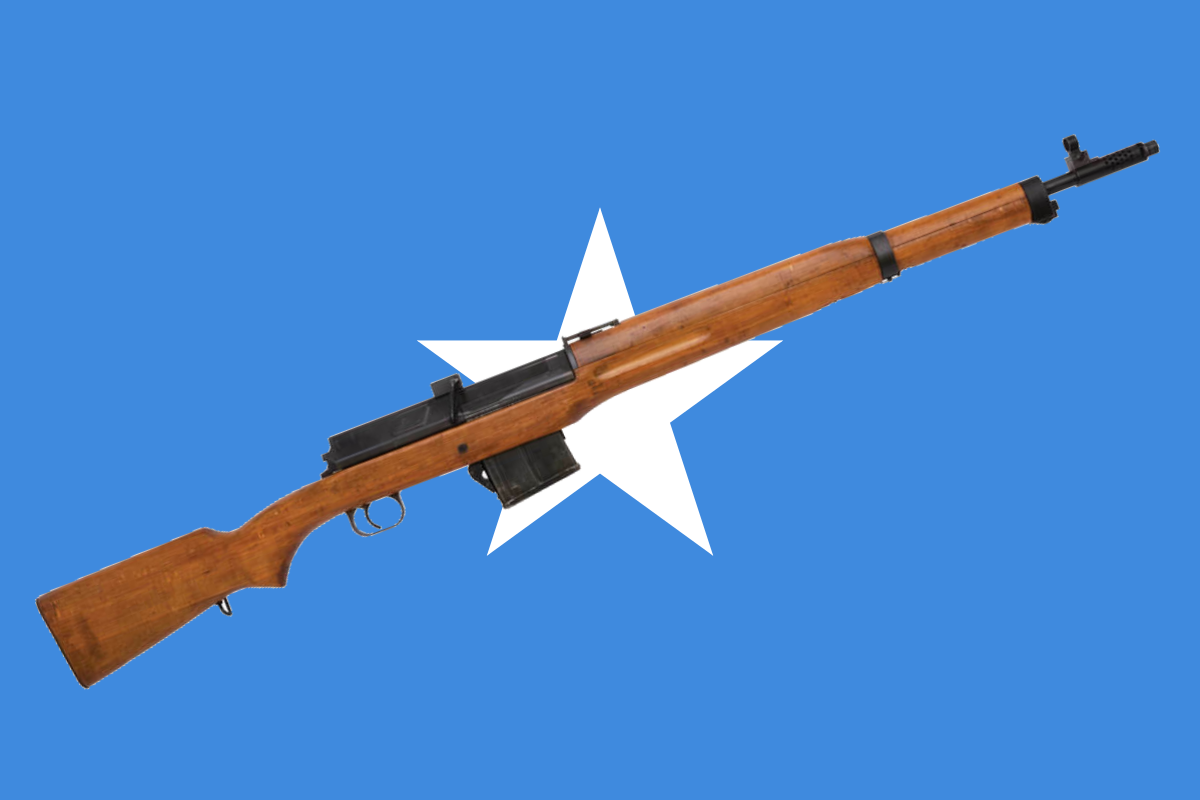
The Hakim self-loading rifle is often thought of as having been symbolic of Egypt’s military presence in the Sinai peninsula during the 1956 War and as a middle ground between its 7.92×57mm FN49 self-loading rifles and later 7.62×39mm Kalashnikov pattern self-loading rifles. However, there exists little evidence that the rifle was used in such capacity by the Egyptians, only a few photographs exist of the Hakim in use in the Sinai, usually in rear echelon or training contexts. Much more evidence suggests that the Hakim was employed heavily in Yemen by both Egyptian soldiers and their Yemeni allies through photographs and Hakim rifles that occasionally surface on the Yemeni market. A further yet unexplored destination and user of Hakim rifles is Somalia and this article will illustrate how evidence suggests that it was actually one of the most prolific users of the Hakim.
Photographic Evidence: Egypt vs Somalia
Despite its identity as an iconic domestically produced Egyptian rifle, there are very few photographs of the Hakim in Egyptian service. The following photographs depict the Hakim in rear echelon roles in 1967 and 1973 respectively.
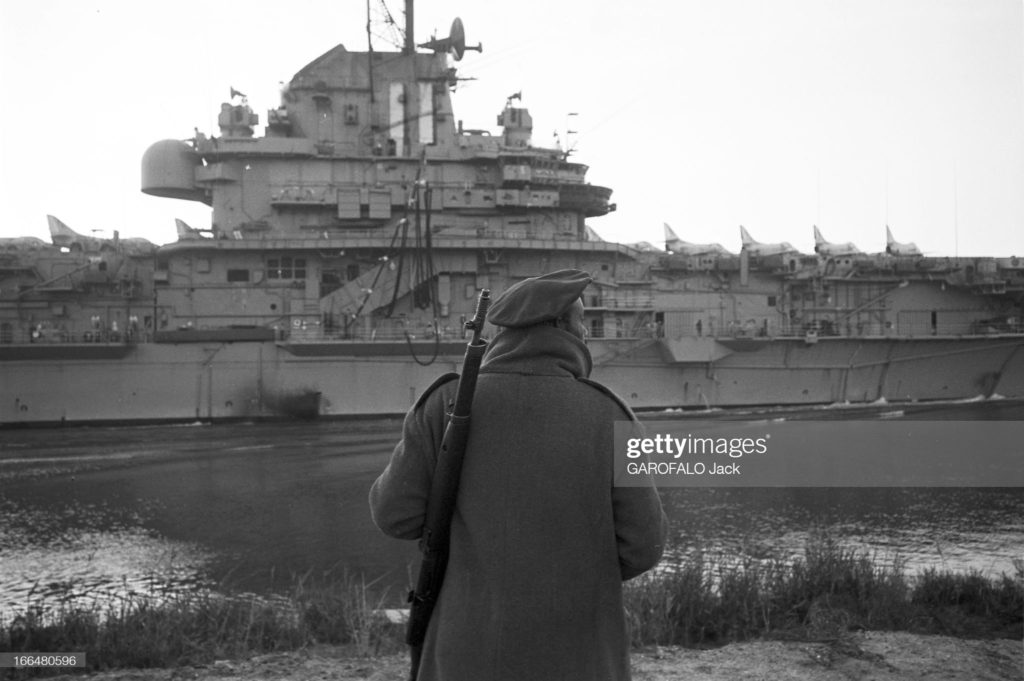
Fig.1.1. An Egyptian soldier carrying a Hakim watches the USS Intrepid pass through the Suez Canal in June 1967 just before the Six Day War. (Source: Getty Images)
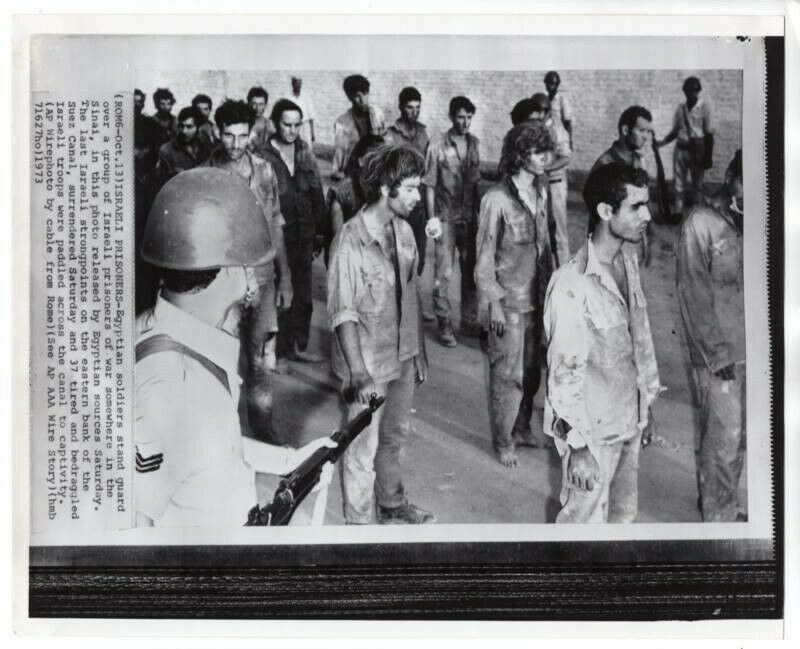
Fig.1.2. Egyptian soldiers stand guard over Israeli POWs during the 1973 war. (Source: ARES CONMAT)
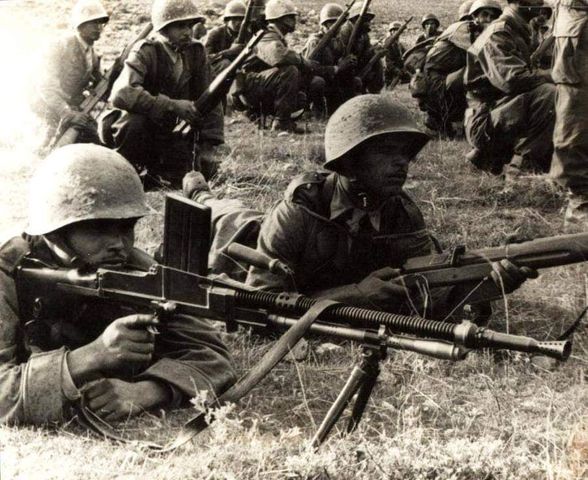
Fig.1.3. Egyptian soldiers drill with Hakim rifles and a Vz26 light machine gun. While the original context of this photo is unfortunately unknown, it does illustrate how the Hakim rifles were paired up with support weapons with compatible ammunition. (Source: S21K on Facebook)
These three photographs are themselves quite rare, but surprisingly, photographs of the Hakim in Somalia are not nearly as hard to find. Indeed, a google search for “Hakim Rifle Somalia” readily returns the following three images:
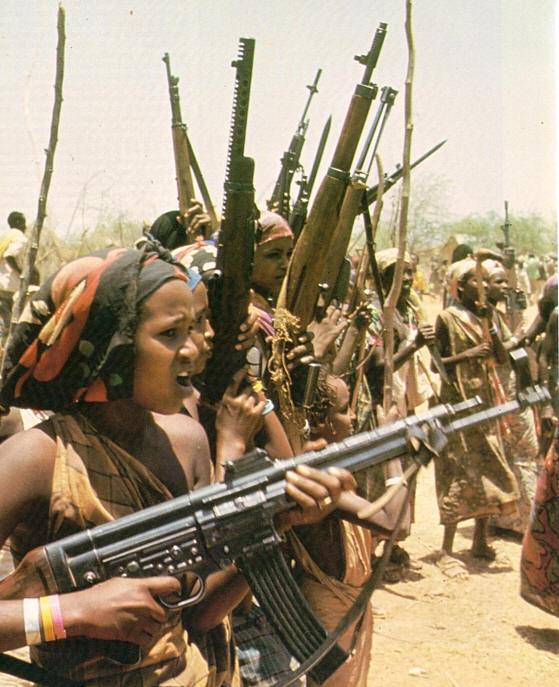
Fig.1.3. While more famous for the remarkable presence of an STG-44 rifle in the foreground of the picture, this photograph of female fighters of the WSLF (Western Somali Liberation Front) during the Ogaden war in 1977 also features a Hakim rifle in the center next to the Beretta 1938 pattern submachine gun. (Source: wwiiafterwwii on WordPress)
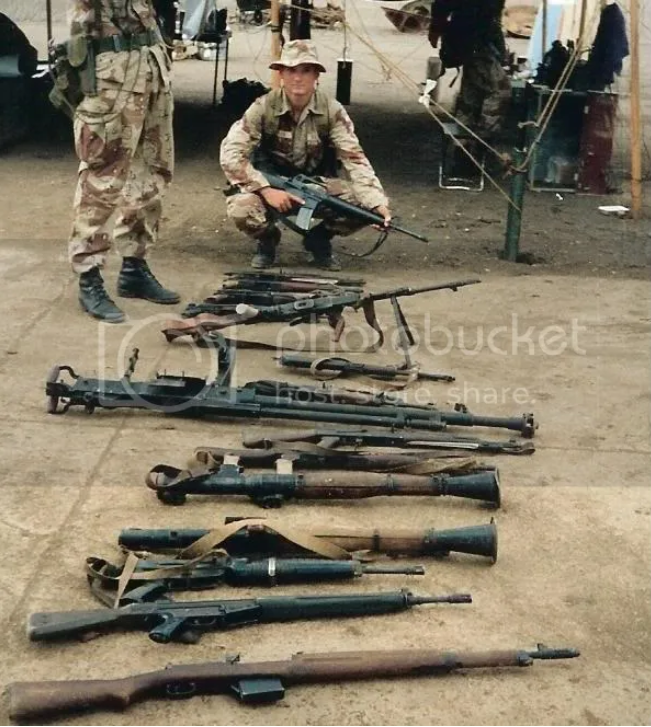
Fig.1.4. US Marines in 1993 in Somalia posing with captured weapons. A Hakim rifle can be seen at the bottom. (Source: ar15.com)
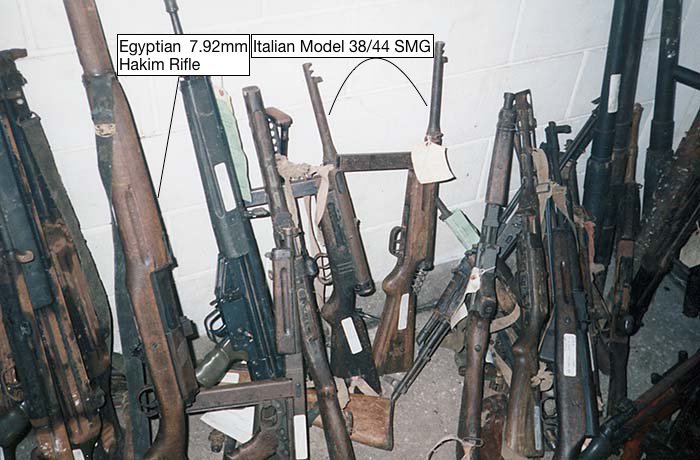
Fig.1.5. Another weapons cache from Somalia, notice the Hakim rifle to the left. (Source: @Rufus_McDonald on Twitter)
When contrasting the prevalence of photographic evidence of the Hakim in either country, the Hakim shows up just as often in Somalia as it does Egypt itself, this could simply be a coincidence based on how Somalia has become a final destination for arms from all over the world, but the author believes that there is much more to the story of these rifles, as subsequent evidence here will show.
Further photographic evidence of the Hakim in Somali service comes from this photograph:
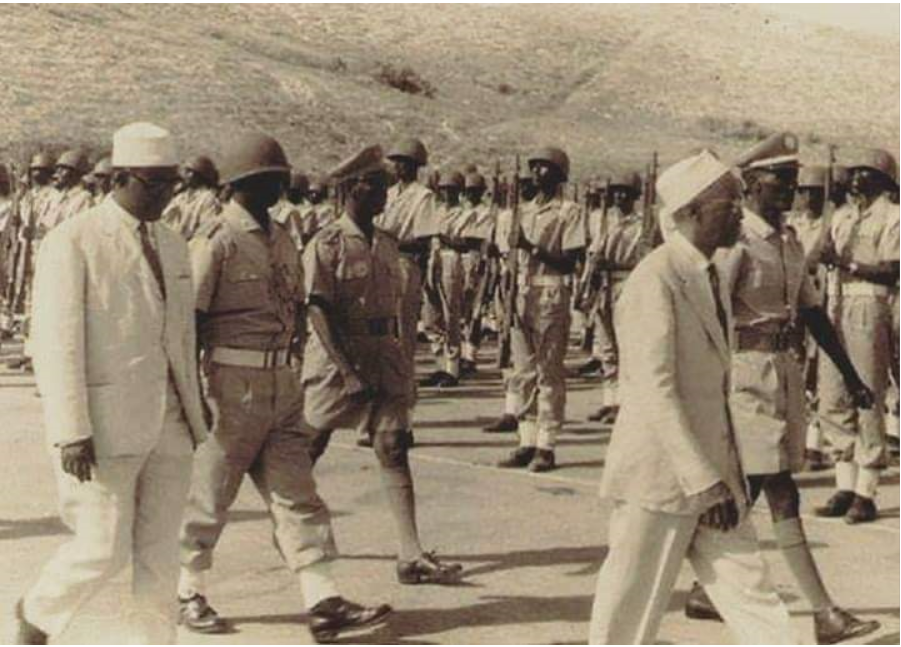
Fig.1.6. A photograph most likely dating from the period of Somalia’s independence in 1960. From left to right we can see then prime minister Abdirashid Ali Sharmarke, an unknown military figure, vice commander of the military and future military dictator Siad Barre, Somalia’s first president Aden Adde, and commander in chief of the Somali military Daud Abdulle Hirsi. Though a bit blurry, the rifles in the background appear to be Hakim rifles due to their overall length, the short box magazines and muzzle brake/front sight posts that are visible, especially for the soldier in between Barre and Aden Adde. (Source: ARES CONMAT)
But what explains this photo? How exactly did those rifles, if in fact they are Hakims, get there? Some clues can be found in Heba Mustafa Anwar Diab’s 2014 study Somali-Egyptian Relations 1865-1980. In it he details how upon Somalia’s independence in 1960, Nasser offered to train and equip a detachment of 5,000 Somali soldiers amongst other forms of military aid for their new national army. This gives us a time and a reason for Hakim rifles to be imported from Egypt that aligns with the political figures we see pictured in the photograph. Furthermore, the helmets that the Somali soldiers in the photograph are wearing appear to be either Czech Vz53 or Soviet SSh 40 helmets. Since Somalia would not make its first arms deal with the Soviet Union until a year after its independence, it would be reasonable to hypothesise that said helmets came from Egypt and that the somewhat blurry rifles are in fact Hakims. This would also then give these Somali soldiers a nearly identical loadout of equipment as seen with the Egyptian soldiers in the third photograph.
Another explicit record of Hakim rifles being sent to Somalia is found in Tikrit University’s Ahmed Tahseen Dhunun Ahmed’s dissertation Somali-Egyptian Relations 1960-1991. In this he states that during Somalia’s brief 1964 border war with Ethiopia, Egypt sent a special shipment of Hakim rifles and ammunition to Somali forces. It also states that these rifles had a specific impact on the course of the war, though it does not specify as to how. Considering how Somali forces were heavily outnumbered in this conflict, it could be that this shipment helped further arm or resupply the beleaguered fighters in the north of the Ogaden region.
Egypt took its habit of supplying Somalia with arms to the next level during the much larger 1977-1978 Ogaden war between Somalia and Ethiopia, sending numerous plane and shiploads of vehicles, weapons, and other armaments into the country. There is no indication that any Hakim rifles would have been part of these shipments as Somalia had already been using Soviet patterned equipment during the previous 1964 war, but it is not an impossibility that some may have been included in these shipments as well.
From this evidence, it is clear that the Hakim rifle was at one point one of the standard service weapons of the Somali army. However, it appears this period was a short lived relic of its early independence days as it was replaced rapidly with Soviet patterned equipment. It more than likely stayed in second line service up through 1964, but by the time of the Ogaden war it had been relegated to arming militias inside Ethiopia along with the mish-mash of other small arms that proliferated in Somalia. By 1993 it appears that most of these rifles had made their way into the hands of the varying militias that carved up the country in the fallout of the failure of the Ogaden War, playing second fiddle to the much more common and popular Kalashnikov and G3 pattern self-loading rifles.
However, that is not the end of these rifles’ story. Records on the Somali side of things are nigh impossible to come by, but Somalia and its diaspora community have a strong internet culture from which further evidence can be gained. There is even actually a Somali Wikipedia page about the rifle. Most mentions of the rifle in Somali circles (in Somali, it is called the “Xakiim“) refer to the importation of these rifles from Egypt during the 1964 War, very few mention anything about the likely 1960 shipment. These stories are almost always accompanied by the phrase “حكيم حياة الصومال وموت الحباش” (‘The Hakim is the life of the Somali and death of the Habash’ (Ethiopian)), which is purportedly how Egyptian advisors introduced these rifles to Somali soldiers. Reflections on the rifle in Somali military service seem to be mixed. Some attribute a sense of national pride and defense to it and praise it for its accuracy, while others criticize the rifle for having a slow rate of fire or oddly enough, overheating.
The Ethiopian Batch
Around late 2019 through early 2020, a significant amount of surplus military rifles were imported into the United States from Ethiopia by Royal Tiger Imports/InterOrdnance and Classic Firearms. This import was covered by numerous firearms media outlets as the variety of weapons imported showcased the different ebbs and flows of history that brought different firearms into Ethiopia at different points.
One of the rifles from this batch that did not receive much attention in all of this was the Hakim, of which more than a few were imported. Considering that Ethiopia and Egypt have always had a geopolitical rivalry due to the geography of the Nile river and the fact that both countries pivoted from their respective pro-West and pro-Soviet alignments at roughly the same time in late 1970s, it is highly unlikely that Egypt would have ever willingly sent Hakim rifles to Ethiopia. It is far more likely that these rifles, which RTI have imported, are actually originally Somali contract guns that were subsequently captured during Ethiopia’s various wars with Somalia and then sat in warehouses for decades until they were imported into the United States.
When Silah Report reached out to RTI about these rifles, we were met with the unfortunate news that records of their original serial numbers and production years were not kept. However, subsequent surveys of available purchasers of these rifles have revealed that all known RTI imported Hakim rifles were made in or before 1960, with the most common year being 1959, suggesting that many of these rifles were from the original 1960 lot of guns given to Somalia upon its independence. Ethiopia would have had ample opportunity to capture these weapons as our previous evidence has shown they were definitely used by the Somali army against them and that they were used inside Ethiopian borders by Somali-backed insurgents. Hakim rifles would also have had ample opportunity to make their way across the border after Somalia’s defeat in the Ogaden war as the increasingly chaotic state the country fell into would have allowed many weapons to flow into Ethiopia. It is also a possibility, though much less likely, that some Hakim rifles may have diffused into Ethiopia from Yemen.
https://www.youtube.com/watch?v=NE50i-xmdwY&w=560&h=315
Conclusions
From all the evidence collected here, it is clear that the Hakim rifle played an important role in Somalia’s early independence era. There are still many more avenues to be explored about the history of these rifles as the documentation surrounding their history remains scarce and there are likely to be new developments in the future as more archival material comes to light. One avenue that needs to be explored further is the post-military service lives of these rifles in the Somali civilian context.
The apocryphal and sometimes contradictory reputation the Hakim rifle has in Somali internet circles is the next area Silah Report will focus on in its research, where interviews will be conducted with members of the Somali diaspora to uncover the history behind the obscure role the Hakim played in Somalia’s prolific civilian firearms culture. Furthermore, it has become clear that the Hakim rifle was the focus of considerable foreign export both to Somalia and Yemen, contrary to some earlier characterizations of the rifle that suggested that it stayed mostly in Egypt and that export of it was rare. When this fact is placed into context with the recent work that Silah Report has been doing with the mysterious Baghdad rifles (copies of the Egyptian Rasheed carbine made for or in Iraq that are themselves derived from the Hakim), a picture starts to form of explicitly political arms exports from Egypt to other countries.
The small arms that Egypt was exporting during this period were almost all domestically produced and/or designed and sent to governments of fellow Arab League states. The fact that this mutual aid was of distinctly Arab origin in production and design no doubt fed into Egypt’s role as the leader of pan-Arab nationalism in this period. Indeed, even after the Hakim’s time had passed, Egypt would continue to send Somalia and other friendly states/movements many Egyptian-made Maadi pattern Kalashnikov self-loading rifles. The history of the Hakim remains somewhat enigmatic in firearms circles, but with this integration of knowledge about the rifle’s history in Somalia into the wider firearms community, we are hopefully one step closer to knowing the complete story of the Hakim rifle.
If you enjoy our work here at Silah Report please consider supporting us on Patreon!
Sources
“C Grade Hakim Rifles 7.92×57,” Royal Tiger Imports, <https://www.royaltigerimports.com/product-p/hakim0001.htm>
“Operation Restore Hope pics,” ar15.com, Jan. 9, 2010, <https://www.ar15.com/forums/general/-ARCHIVED-THREAD-Operation-Restore-Hope-pics/77-981696/?>
“Xakiim (Qori),” Wikipedia, <https://so.wikipedia.org/wiki/Xakiim_(qori)>
@rufus_mcdonald, “Some Interesting guns captured in Somalia. What caught my eye were an Egyptian Hakim 7.92mm Mauser semi-auto rifle and two Italian WWII-era Beretta Model 38/44 (perhaps 43) 9mm SMGs. H/T @High_Lethality,” Twitter, Jan. 7, 2019, <https://twitter.com/Rufus_McDonald/status/1082463924421767168>
Ahmed Tahseen Dhunun Ahmed, Somali-Egyptian Relations 1960-1991, University of Tikrit, 2020.
ClassicFirearms, “This Egyptian Surplus Hakim Is Incredible,” Youtube, May 3, 2020, <https://www.youtube.com/watch?v=NE50i-xmdwY&ab_channel=ClassicFirearms>
Heba Mustafa Anwar Diab, Somali-Egyptian Relations 1865-1980, The Egyptian General Book Authority, 2014
ForgottenWeapons, “An Aladdin’s Cave of Ethiopian Arms from InterOrdnance,” Youtube, July 7, 2020, <https://www.youtube.com/watch?v=5GpKGePUr_Q>
Jacak Garofalo, “CROSSING OF THE SUEZ CANAL BY THE AIRCRAFT CARRIER ” INTREPID”,” Getty Images, June 2, 1967, <https://www.gettyimages.com/detail/news-photo/crossing-of-the-suez-canal-by-the-aircraft-carrier-intrepid-news-photo/166480596>
JWH1975, “STG-44 in Africa After WWII,” wwiiafterwwii.wordpress.com, Sep. 27, 2015, <https://wwiiafterwwii.wordpress.com/2015/09/27/stg-44-in-africa-after-wwii/>
nky-photos, “1973 Arab Israeli War IDF POWs Captured in Sinai by Egyptians Wirephoto,” Ebay, <https://www.ebay.com/itm/362883494038?nma=true&si=NJ5gcsRnqfQ7Zs9QjMZPglvbgaU%253D&orig_cvip=true&nordt=true&rt=nc&_trksid=p2047675.l2557>
S21K, “Old School Middle Eastern & North African Armies & Police Forces,” Facebook, May 11, 2021, <https://www.facebook.com/S21K.Co/photos/a.848672875729590/853816905215187>
If you want more stock photos of Hak8m Rifles in Somalia, search Google images using Somali Police search words
Hakim was standard issue rifle for Somali Police before civil War in 70s and early 80s. Later due to German aid, they were replaced by Heckler and Koch G3 rifle but still Hakim was in use by police until 1991 civil war
The Hakim/Rasheed gas valve tool can be purchased from contactfredm@gmail.com