Sudanese AR10 in the wild, Yemen edition

This photograph was recently found on social media and features a local Yemeni man posing with an 7.62x51mm NATO AR10 next to his friend with what appears to be a modified 7.62x39mm RPK (due to the compensator) mounted with a 45 round magazine. The AR10 in question appears to be one of the largest contracts that Armlite produced of AR10s, which was the Sudanese contract of approximately 2500 rifles in the 1950s. This inference is taken from the proximity of Sudan to Yemen, so it must be stated that this is only a guess as to it’s origins and not a complete conclusion. If we could have seen the rear sight, that would remove all doubt, depending on whether or not the graduations are in Arabic numerals.

This is a little bit about it from Wikipedia-

Firearms historians have separated AR-10 production under the A.I. license into at least three basic identifiable versions, along with various sporting, carbine, and other experimental designs and calibers. The three main variants have been termed the Sudanese model, the Transitional, and the Portuguese model AR-10. A.I. built all of these rifles, beginning with the Sudanese model AR-10. The Sudanese version derives its name from the sale of approximately 2,500 AR-10 rifles of to the government of Sudan in 1958. The Sudanese model was equipped with a very lightweight, fluted steel barrel fitted with a trim, prong-style flash suppressor, a bayonet lug, lightweight fiberglass furniture, and sight graduations in Arabic.[21][22] The Sudanese model weighed only 3.3 kg (7.3 lb) with an empty magazine.[21] The price, including cleaning kit and four magazines, was US $225 per rifle.[23] All AR-10s, whether produced by ArmaLite or by A.I., used the same Stoner-designed 20-round lightweight aluminum ‘waffle’ magazine with pressed-in, corrugated sides, intended to be discarded in combat once emptied.[24]

This particular rifle appears to be in excellent condition considering that it is most likely 60 years old and has existed in a very rough part of the world when it comes to firearms care and maintenance. The young man looks to have affixed a canvas sling to the rifle, in addition to embedding a circular metal piece in the stock, also wrapping something around the buttstock by the rear sight and charging handle.

Weight 3.29–4.05 kg (7.25–8.9 lb) w/o magazine
Length 1,050 mm (41.3 in)
Barrel length 528 mm (20.8 in)

Cartridge 7.62×51mm NATO

.308 Winchester

Action Gas-operated, rotating bolt
Rate of fire 700 rounds/min
Muzzle velocity 820 m/s (2,690 ft/s)
Effective firing range 600m/656yd (ca 700m/765 1/2yds with A.I. 3.6× telescopic sight)
Feed system 20-round detachable box magazine
Sights Adjustable aperture rear sight, fixed post front sight


CZ Scorpion in use by Afghan Commandos

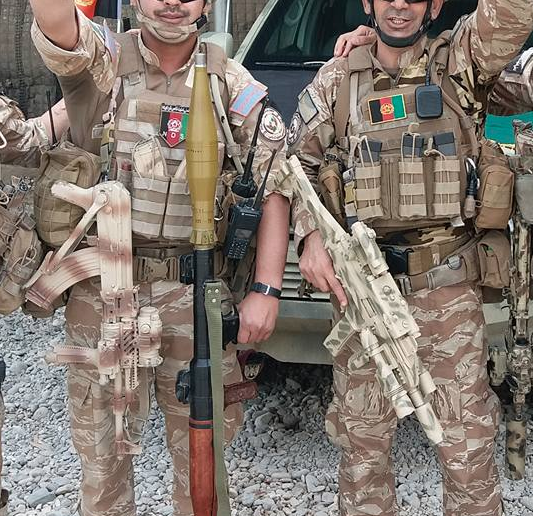
This photograph appeared very recently on Afghan social media pages, showing two ANA Commandos in desert Tiger Stripe camouflage uniforms and most interestingly a 9x19mm CZ Scorpion submachine gun with corresponding magazine pouches. The submachine gun has a number of accessories mounted to the M1913 Picatinny rails, such as the AN/PEQ-2 ATPIAL at the 12 o’clock position, what appear to be two sets of lights at the 3 o’clock and 9 o’clock positions, and what might be an Aimpoint M62 CCO red dot optic. The entire package was given a decent camouflage application that wasn’t applied to the spare magazines.

Judging from the amount of accessories, the lack of camouflaging spare magazines, and the overall presence of a submachine gun in an environment where it would not be very effective, my initial thoughts are that the ANA Commando who is armed with it, is a commander who is carrying the Scorpion as a status symbol. He isn’t actually engaging Taliban with it on combat patrols, but instead allows the weapon to signify his rank. The follow on question however, should be how it and the spare magazines got to the ANA. It would seem highly doubtful that it came through a U.S. supply line due to resources directed towards the ANA are already limited and at that are usually not afforded to such ineffective submachine guns in the battlefield that the ANA and Taliban often find themselves arranged in.

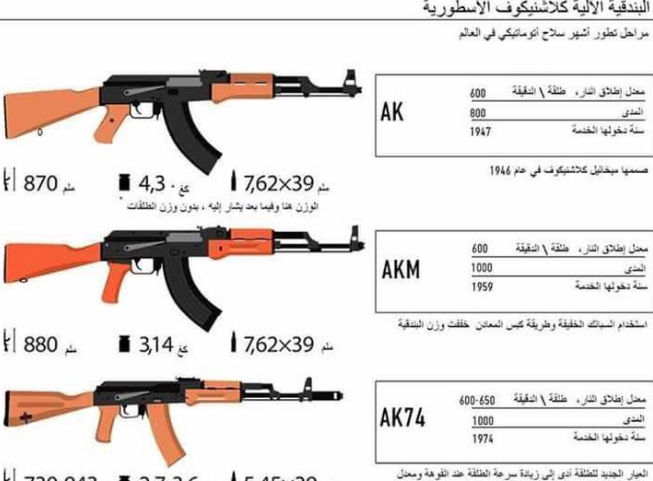
More Kalashnikov Nomenclature Charts In Arabic

Earlier on Silah Report we showcased a number of Kalashnikov and small arms nomenclature and terminology charts in use by Iraqi small arms traders and enthusiasts. Since then we’ve gathered some more material, this time much more Kalashnikov centric. These charts continue to show perceptions of the rifles in use throughout the region and what is available. Although we have similar charts in the United States the unfortunate reality is that many of those charts are tailored to the Kalashnikov civilian market. By observing what Iraqis, Syrians, or Yemenis are concerned with identifying, we can gain a better perspective on what rifles are in the region that people want to know about.


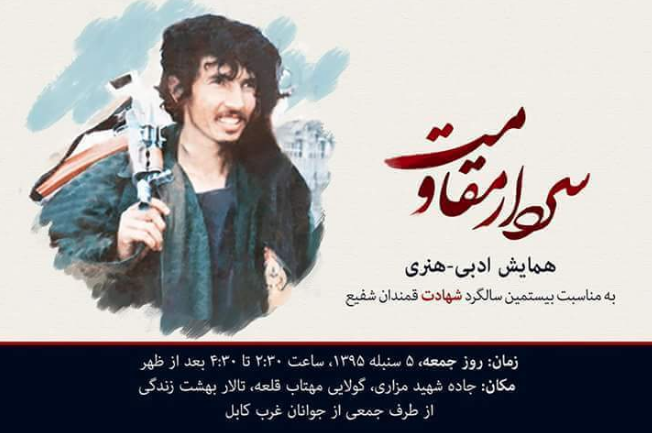
Commander Shafi’s AKSU

Earlier we covered the significance of the AKSU in the hands of Rashid Dustom’s security detail, and especially with one of his favored guards. In this example, we have another case of the AKSU being utilized as a status symbol. These photographs are a memorial to Hazara Commander Shafi who was commemorated and memorialized between 2:30 and 4:30 in the afternoon, Friday, Sombole 5 1395 After Hijra (subsequently after Jummah Prayer that day as well). This would be August 26, 2016 in the Gregorian year. The photo above is advertising that the venue would be in West Kabul along an address on Martyer’s Road. The occasion is that it is the 20 year anniversary of his death in what would appear to be 1996. Very little information is available on the English internet but from the date of his death in 1996, of the year of the Taliban taking over Kabul, this commander was possibly killed while fighting the Taliban. Thus, in a post-OEF setting, it would appear to make sense that Hazaras would be celebrating the life of a famous Hazara who was fighting the ideologically same Islamic Emirate of Afghanistan that exists today.

From the original Dari-

به مناسبت بیستمین سالگرد شهادت

زمان: روز جمعه، ۵ سنبله ۱۳۹۵، ساعت ۲:۳۰ تا ۴:۳۰ بعد از ظهر

مکان: جاده شهید مزاری، گولایی مهتاب قلعه، تالار بهشت زندگی از طرف جمعی از جوانان غرب کابل

Similar with Dustom and Osama bin Laden, the symbolism of the AKSU (note especially the 45 round magazine) with this commander is especially evident through the photograph chosen to represent his life at an anniversary of his death. There might be multiple photographs taken of him but yet this one, with an AKSU was chosen. We don’t know when this was taken, but we are taking a chance that it might be after the Soviet withdraw due to the fact that many of the major players fighting each other in the 1990s were lower level commanders in the 1980s with the exception of such examples of Massoud and Hekmatyar of course. Note that this commander could have just had easily carried an AKMS that fits a similar profile of the AKSU but he didn’t.


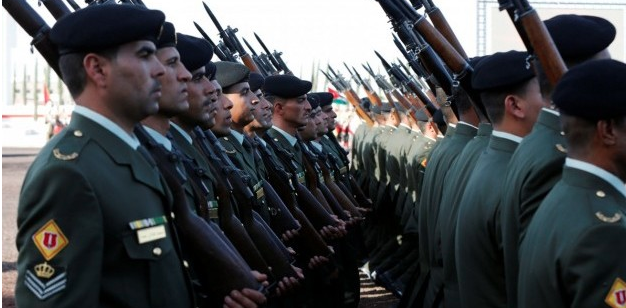
M1 Garands in Jordanian National Parade

Although not recent (Summer 2016), M1 Garands were plentiful at a parade put on by the Royal Jordanian Armed Forces in honor of King Abdullah II. Among numerous small arms used in the ceremony were M1 Garands (among a contingent of SMLEs) in use by both marchers and cavalry. Obviously, these rifles have been downgraded to a ceremonial status in recent times but they are indicative of an era in which the Jordanians actually used M1s as frontline rifles. How they got there could either be through a Foreign Military Sales purchase from the United States, or it could have been surplus Greek M1s as well. Notice that most of the marchers have their M1s mounted with their bayonets as well.

arab legion1229200_900

This image is from Getty Images, showing Jordanian troops armed with M1s in previous years.

Screen Shot 2017-04-26 at 9.43.26 PM

Airsoft Accessorized to the Max!

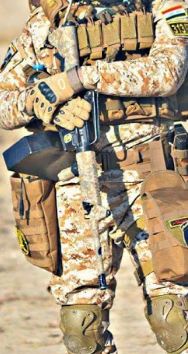
This photograph has been on the internet for awhile and appears to be depicting an Iraqi with an odd M249 SAW drum mounted around the STANAG magazine of his Airsoft M4 carbine. We doubt that this is a functioning 200 linked belt inside the drum that is being fed into the rifle and is most likely glued or taped to the magazine that is actually inserted.

Screen Shot 2017-04-22 at 9.03.19 PM.png

From the appearance of the soldier, it doesn’t look like a combatant, possibly not even an enlisted soldier in the Iraqi Army. Rather this might be an enthusiast that is “dressing up” the part. Although his equipment bears some resemblance to gear issued within the Iraqi Army, he is overloaded with equipment that isn’t standard issue. The rifle itself appears to be a U.S. civilian legal 16.5 inch barrel AR15 with a permanently attached carrying handle, he has what looks like Kalashnikov magazines in his pouches, his visor and helmet don’t look to be ballistically rated at all, and it looks like he has mounted a Kalashnikov bayonet over his right shoulder as well. Essentially, nothing matches!


UPDATE

Due to an ever watchful reader, we were able to identify several of the products pictured. The rifle is indeed an airsoft product, with an AEG magazine and an AWT Armor Warrior Tactical G4 Protection Helmet. Much thanks to Irfan!

Did Jordanian SF Purchase SIG MCXs? Or Just King Abdullah II?

A recent video has been published by Jordanian media services showing head of state King Abdullah II in his element, conducting a training operation consisting of a dismounted sweep and clear of an enemy-held town. The King himself is a large fan of his countries Joint Special Operations Command (العمليات الخاصة المشتركة الاردنية). Between 1994 and 1999 he took command of the special operations forces, restructuring them into what they are today before taking the throne of his country in 1999, in addition to establishing KASOTC, one of the premier special forces specific training sites in the MENA region.

https://www.youtube.com/watch?v=4rExw-0ptWU&feature=youtu.be

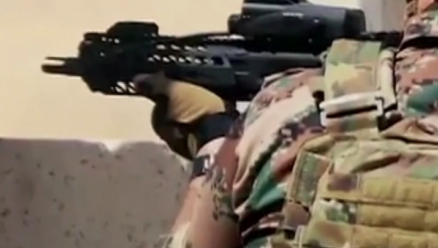
This video shows his Highness armed with what appears to be a 12-inch barrel configuration of the Sig Sauer MCX carbine, most likely in 5.56x45mm NATO, with an Elbit Systems optical sight mounted. The remainder of his SF squad appears to have standard issue M4A1s and not MCXs as evidenced by the handguards and fixed triangular front sight posts. From the RT Arabic post-
A video released by the Jordanian Royal Court showed Jordan’s King Abdullah II, who was playing with Jordanian soldiers in a military exercise with live ammunition that appeared to be an operation against terrorists. King Abdullah appeared in full military uniform with a machine gun that appeared to be M16, in a real atmosphere of war, which received tens of thousands of views, banners and posts within an hour of publication.

أظهر فيديو نشره الديوان الملكي الأردني، العاهل الأردني الملك عبدالله الثاني وهو يشارك إلى جانب جنود أردنيين في مناورة عسكرية بالذخيرة الحية بدت أنها عملية ضد إرهابيين.

وظهر فيه الملك عبدالله بكامل عدته العسكرية مع رشاش بدا أنه M16 ، في أجواء حرب حقيقية، حظي بعشرات آلاف المشاهدات واللايكات والمشاركات خلال ساعة من نشره.


This photograph shows one of the members of the SF team with a standard issue M4A1.

The entire production appears to have been a propaganda stunt to raise support for the Kingdom by portraying the King in a positive light. Similar to earlier stunts where the King was pictured flying bombers into Syria when a Jordanian pilot was burned alive by the so-called Islamic State. The MCX rifle, however, is most likely not a part of the propaganda because the overwhelming majority of viewers watching the video clip probably will have no clue what the Sig MCX even is. The carbine could be a personal purchase or favorite of the King’s, or it could be something more serious, such as one of several T&E rifles ordered by Jordan, or even the results of a legitimate order. If we want to stretch it, there could also be a possibility that the MCXs could be in .300 BLK as well.

As per Wikipedia, the King actually has an interesting military career, even serving in the British Army-

He began his military career at Royal Military Academy Sandhurst in 1980, while he was a training officer in the Jordanian Armed Forces.[8] After Sandhurst, Abdullah was commissioned as a second lieutenant in the British Army[4] and served a year in Britain and West Germany as a troop commander in the 13th/18th Royal Hussars.[6]Abdullah was admitted to Pembroke College in 1982, where he completed a one-year special-studies course in Middle Eastern affairs.[4] He joined the Royal Jordanian Army on his return home, serving as first lieutenant and then as platoon commander and assistant commander of a company in the 40th Armored Brigade.[4] Abdullah took a free-fall parachuting course in Jordan,[9] and in 1985 he took the Armored Officer’s Advanced Course at Fort Knox.[4] He became commander of a tank company in the 91st Armored Brigade, with the rank of captain.[4]Abdullah also served with the Royal Jordanian Air Force‘s anti-tank helicopter wing, where he was trained to fly Cobra attack helicopters.[9]The prince then attended the Edmund A. Walsh School of Foreign Service at Georgetown University in Washington, D.C. in 1987, undertaking advanced study and research in international affairs.[4] He returned home to serve as assistant commander of the 17th Royal Tank Battalion in 1989, later being promoted to major.[4]Abdullah attended a staff course at the British Staff College in 1990,[9] and served the following year in the Office of the Inspector General of the Jordanian Armed Forces as the Armored Corps representative.[9] He commanded a battalion in the 2nd Armored Cavalry Regiment in 1992 and was promoted to colonel the following year, commanding the 40th Brigade.[4]In 1994 Abdullah assumed command of Jordan’s Special Forces and other elite units as brigadier general, restructuring them into the Joint Special Operations Command two years later.[9] He became a major general, attended a course in defense resources management at the American Naval Postgraduate School[9] and commanded an elite special-forces manhunt in the pursuit of outlaws in 1998.[10] The operation reportedly ended successfully, with his name chanted on the streets of Amman.[10]


FNH SCAR-Hs among the Taliban

Although very few in number, several news sources have documented the usage of 7.62x51mm SCAR-Heavy rifles in use by the Taliban in Afghanistan. The most recent documentation we have in the summer of 2016 covered by Lost Weapons on Twitter, in addition to the summer of 2015 as covered by Nathaniel F. on The Firearm Blog. There is a possibility that both of these SCAR-Hs are the same rifle over the course of two years, but we can’t exclude the fact that there may be more. How it got into the hands of the Taliban is possibly by way of the Afghan Commandos who are primarily armed with M4A1s but might have been supplied a SCAR-H by their U.S. Army advisors.
e460abf1-c671-4407-be75-7198403d12eaCy0LqQJVEAIXWu7-1

How Ruger P95s and Sig P2022s Got to Iraq

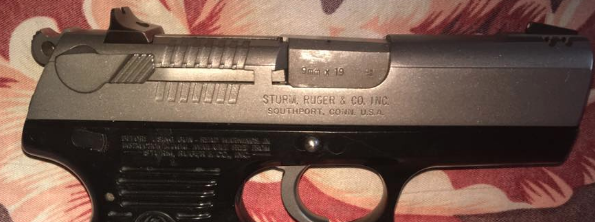
For a while now we’ve seen a number of Ruger 9x19mm NATO P95 handguns flourishing among the social media groups within Iraq. This isn’t a recent phenomena but still, the question remains over where they originated from. Daniel Watters, a noted small arms historian has provided us with some excellent context on the issue, even detailing the specific contracts that pushed 5,000 Ruger P95s, and 5,000 Sig Sauer SP2022s into Iraq.

Back in December 2004, the US Army’s Tank-Automotive & Armament Command (TACOM) posted solicitation W52H09-05-R-0067. They basically wanted 10,000 9x19mm pistols in a hurry, and were willing to place multiple contracts to fill it. Vendors were allowed to bid for as few as 100 pistols up to the full total of 10,000. The most telling portion of the solicitation was that they requested a price for the pistols to be shipped directly to Baghdad.

Before the end of the month. Ruger received contract W52H09-05-C-0058 for 5,000 P95, and SIG-Sauer received contract W52H09-05-C-0059 for 5,000 SP2022.

When outsiders saw the name Tank-Automotive & Armament Command, they assumed the pistols must be for tankers. Nothing could be further from the truth. A subordinate command of the Army Materiel Command, TACOM-Rock Island was responsible for all Army small arms procurement. It also handled orders from other US military service branches, and managed foreign military sales (FMS).
It turns out that the rush order was meant to arm Iraqi security forces ahead of the country’s first post-Saddam parliamentary elections in January 2005. Confirmation can be found in the government report “Iraqi Security Forces: Weapons Provided by the U.S. Department of Defense Using the Iraq Relief and Reconstruction Fund.

The report listed can be accessed here and lists the 5,000 P95s as being purchased for $1,271,700, and the 5,000 SP2022s being purchased for $1,756,550, both on December 12 2004. Both of these appeared to have been designated for the Ministery of Interior and the Ministery of Defense although it doesn’t specify which. We should also note that these 10,000 handguns were only a third of the 38,053 “Generic 9mm Pistols” that were on contract. What those other thirty-something thousand odd handguns were would have to take some researching.


Although very similar in appearance to a Sig Sauer handgun, our sources tell us that this is in fact a blank firing copy.

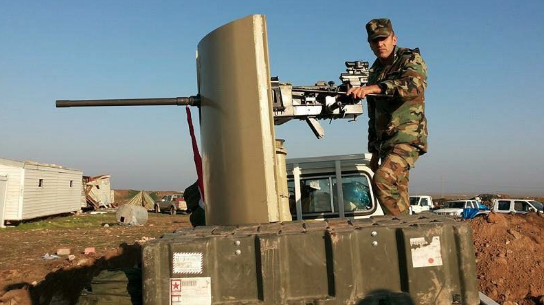
SUSAT On Peshmerga M2

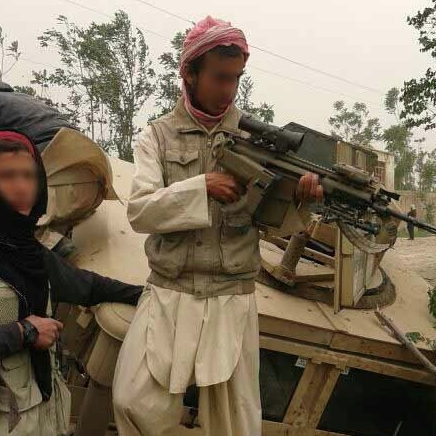
A photograph has recently come out showing a Peshmerga fighter with what appears to be a SUSAT mounted on his M2 .50 BMG Heavy Machine Gun. The mount that the machine gun is cradled in also appears to be a of British design, formerly seen in use on British armored vehicles. SR’s suspicion is that the entire contraption is supplied by British forces to the Peshmerga as defensive material. However, it would also appear that the SUSAT isn’t calibrated to the trajectory of the .50 BMG cartridge, nor is it very well suited for a heavy machine gun in the first place, being designed for a 5.56x45mm rifle.