V9 Silah Report Podcast: Sinai’s ISIS latest Video, Baluchistan’s Fighters and More!

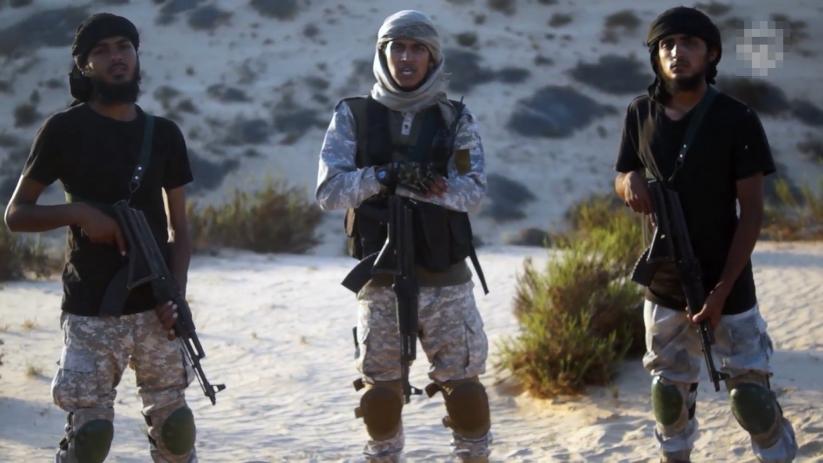
Just one day after ISIS in Sinai (also known as Sinai Province or “Wilayat Sinai”) had published its latest video, Silah Report recorded its 9th podcast and discussed the video’s content and analysed it. Miles, Hrachya, and Adham from Silah Report were joined by guests Calibre Obscura, Analyst Mick, Ataka, MENA Conflict, and KhyberAbdullah. ARES Director N.R. Jenzen-Jones also made a special guest appearance.

If you missed last week’s podcast, check it out here.

Read more

Erbil’s Gunsmith: Wasta Bakhtiar-Azizz

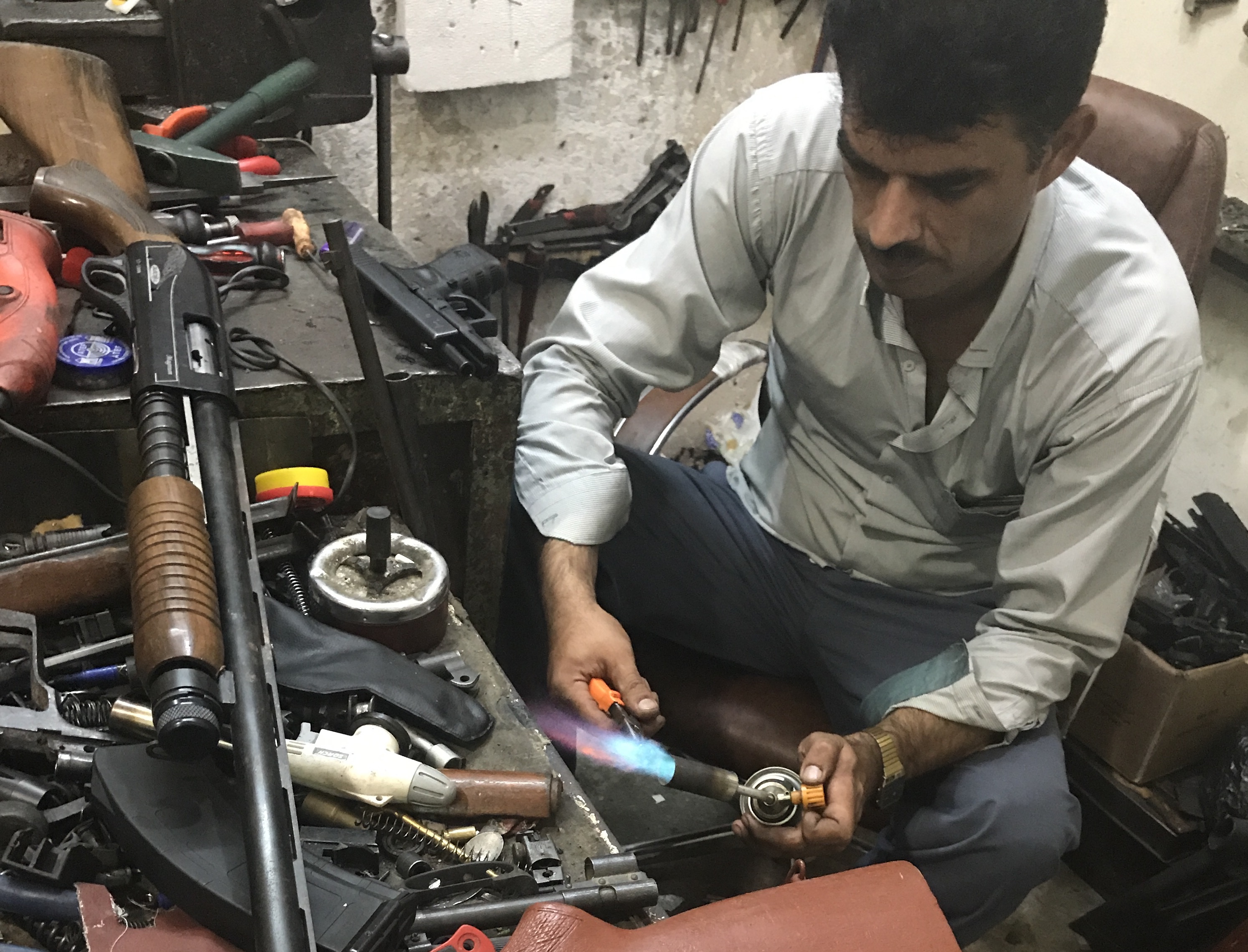
While in Erbil, we sat down with Wasta Bakhtiar-Azizz (وە ستا بە ختیار), one of the best-known and  most highly respected gunsmiths in the Kurdistan region. Within Erbil and beyond, there are a number of gunsmiths that either work on small arms in need of maintenance and repair or perform services such as re-bluing, gold plating, modifications, and a number of other odd jobs that Kurdish gun owners request. Bakhtiar has worked in this community since he was a child, continuing the family’s business of his father, who was himself a renowned gunsmith. His son joins him in running the shop, and his brother owns a separate gun shop on the eastern side of Erbil. In addition to offering commercial gunsmithing services, he also volunteers his services to the Asyeish and Peshmerga, helping in maintaining and repairing their small arms.

Read more

Notes on the Denel PAW-20 in use by Kurdish Forces

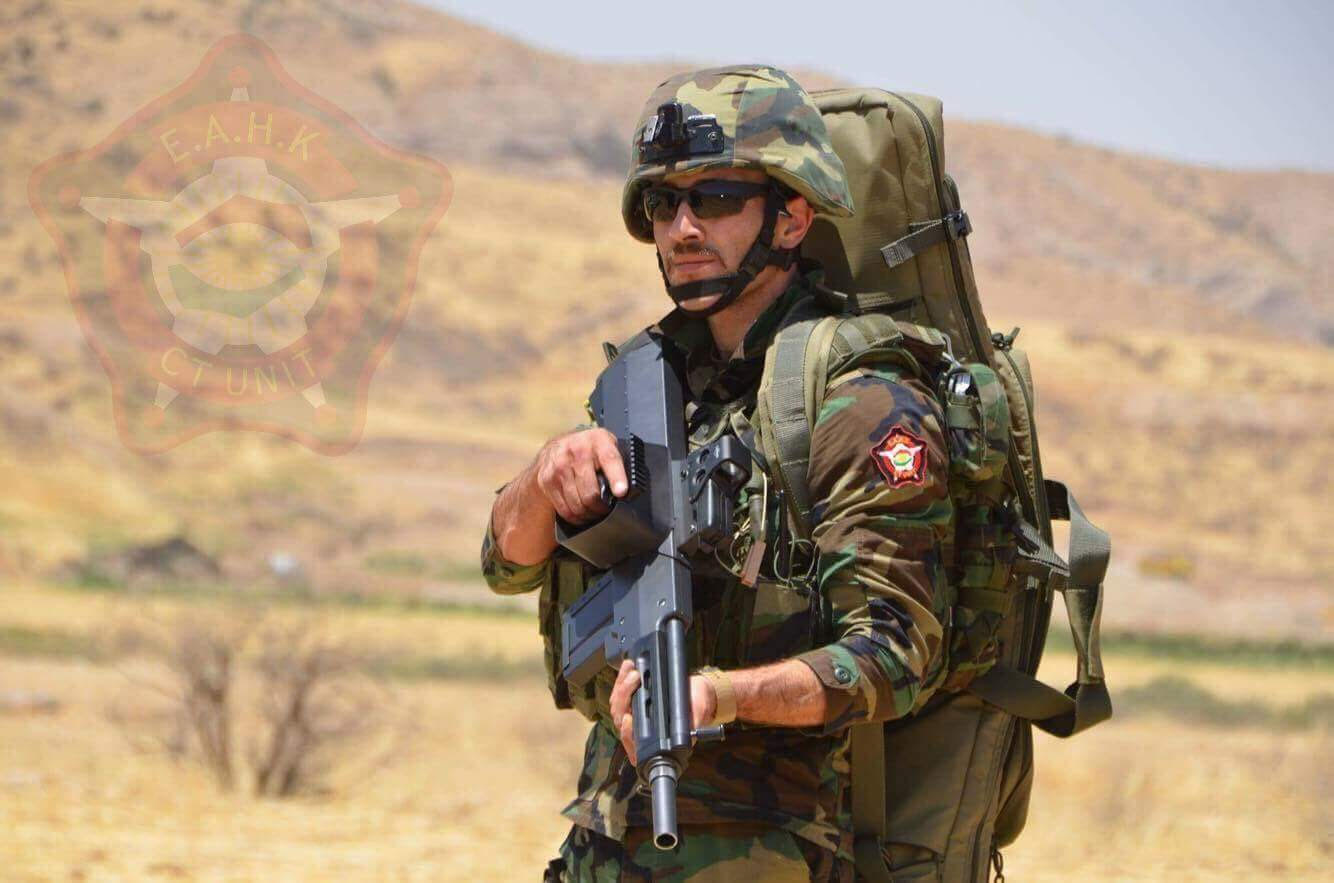
Variants of the South African Denel Praetoria Metal Pressings produced “Inkunzi” direct fire 20x42mm Personal Assault Weapon (PAW)-20 have been spotted in use by the Kurdish E.A.H.K Counter Terrorism Unit. This is one of a number of Kurdish Peshmerga units organized along a special operations or strike force concept, some of the others being the Western Kurdistan Special Forces and the Counter-Terrorism Group (CTG).

Read more

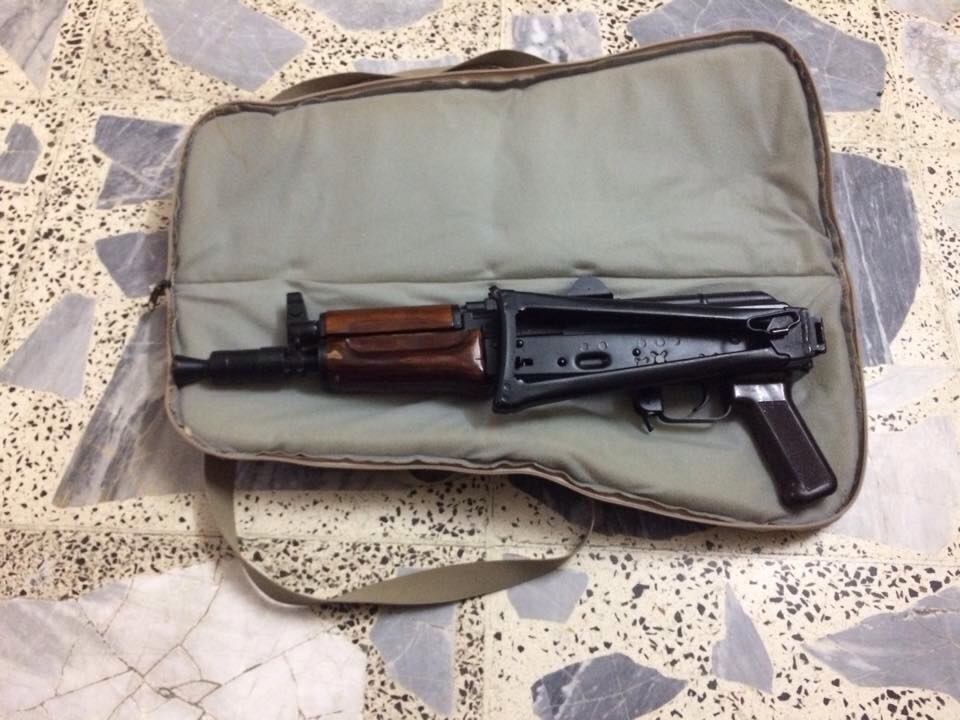
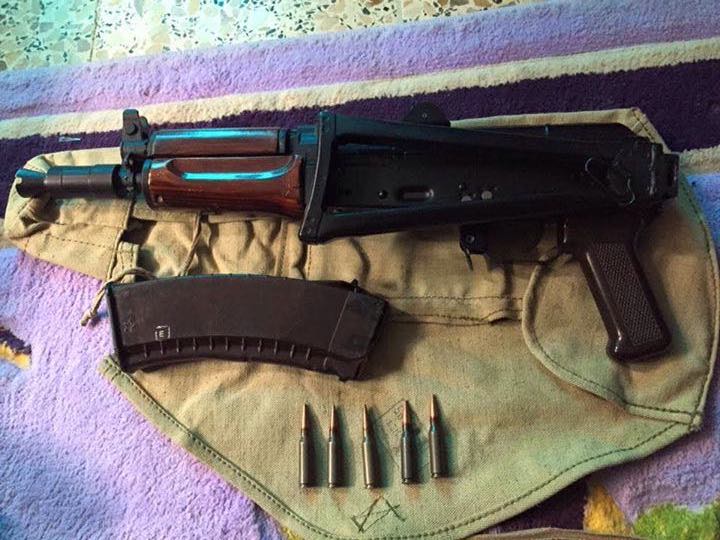
Essay: Use of the AKS74U “Krinkov” in Iraq and Lebanon

This article has been submitted to SR by a loyal friend and fellow small arms enthusiast in Iraq, discussing some of the proliferation of the AKS74U “Krinkov” within Iraq and Lebanon, in addition to its use in the region.

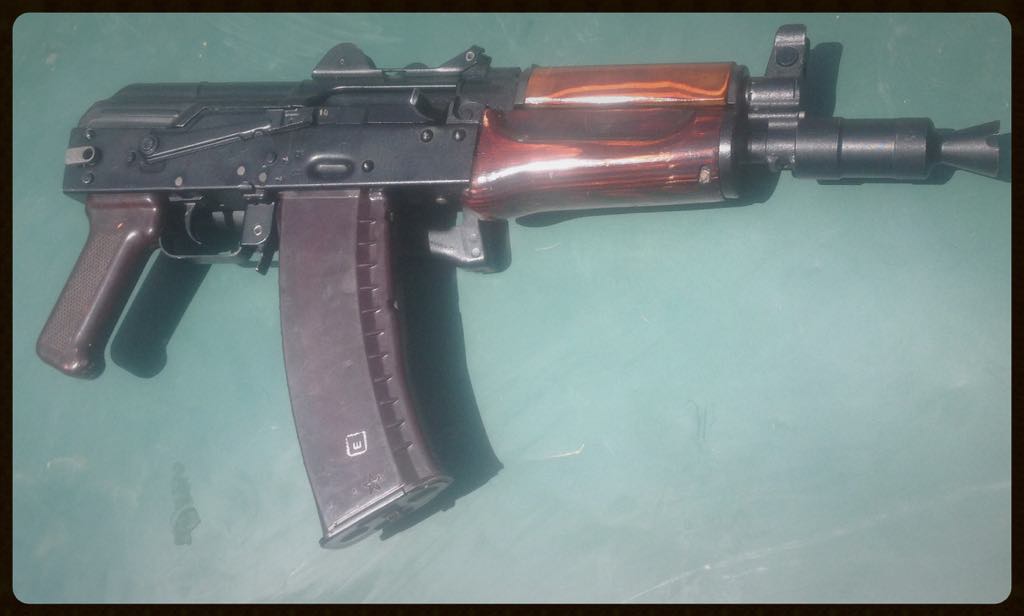
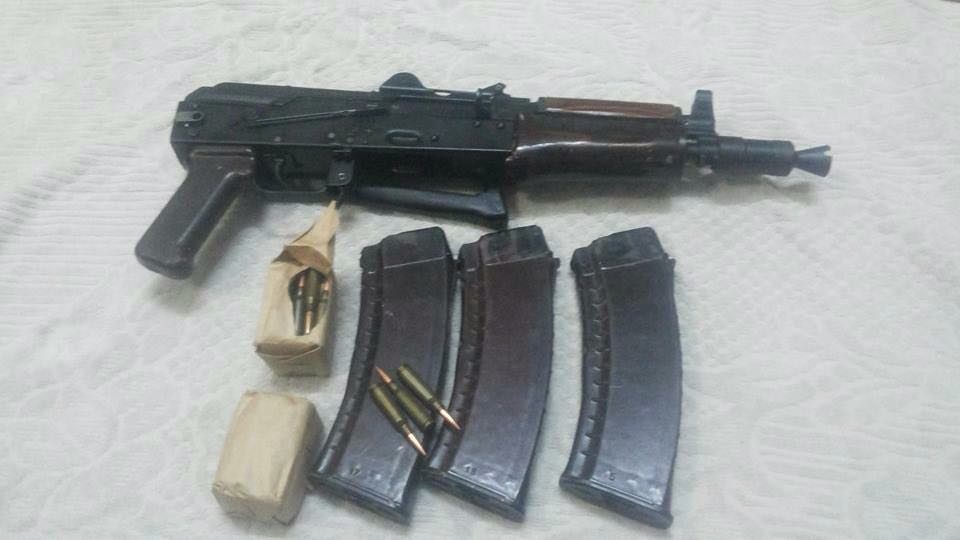
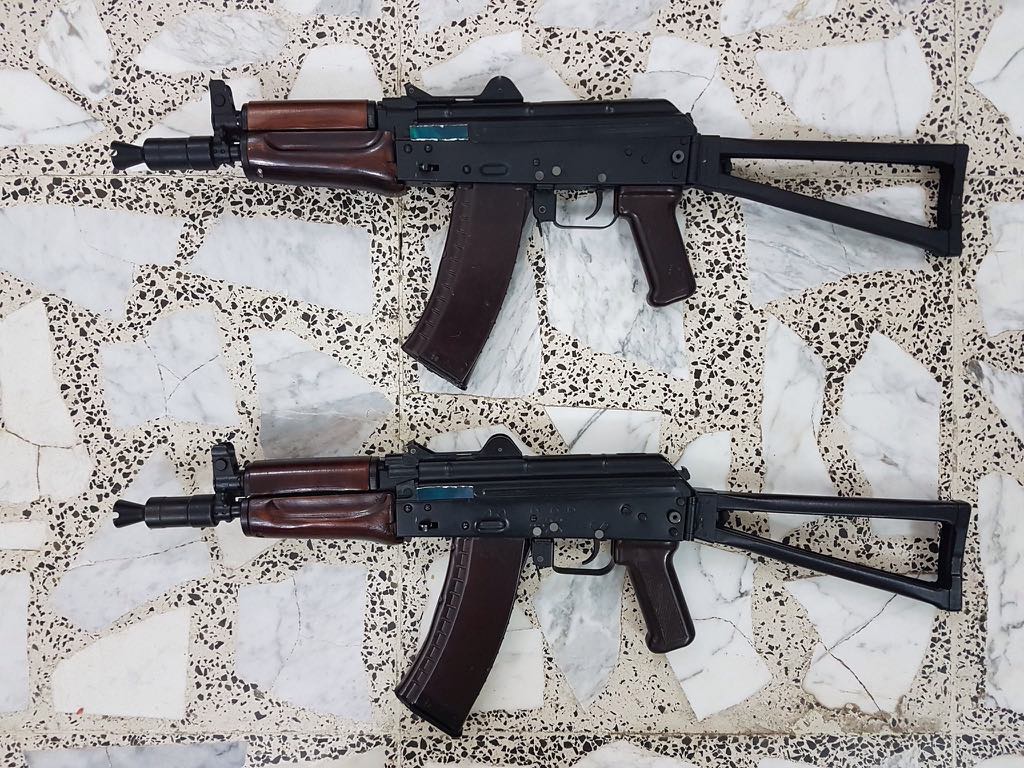
The AKS74U is often called the little beast in Iraq. Many people spoke about it’s history, action, production, development, etc. But I want to speak about two main topics: First is AK74 in general and AKS-74U within contemporary history in the Middle East. The second topic is AKS74U history and variants in Iraq.

In the Middle East, the AK47 platform had a long history since the 1950s as most of the countries supplied their armies with it either from USSR or other manufacturers (Polish, Bulgarian, Chinese, etc… ) but as I mentioned it was AK47 that was mainly in use until the Syrian conflict in 2011 and the Russian role in 2015 when the AK74 was introduced in significant numbers from the Russian forces and also from some ISIS members who came from Chechen or other former Soviet territories. The version is mostly AK74s with some AKS74Us in very small numbers.

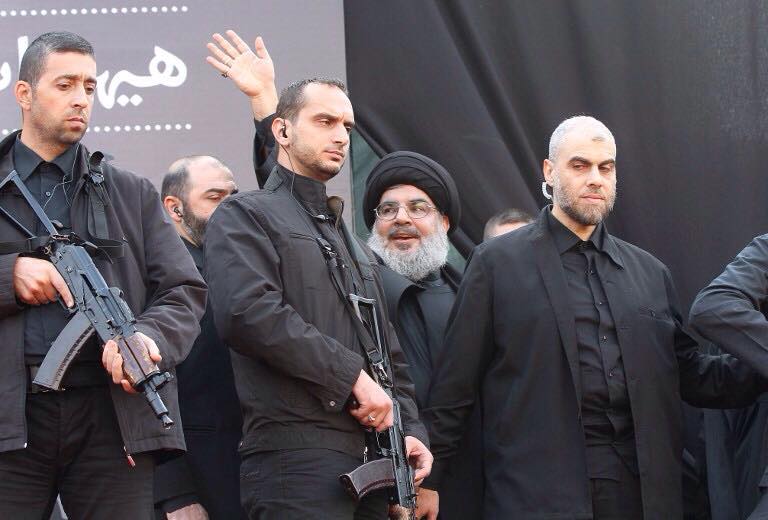
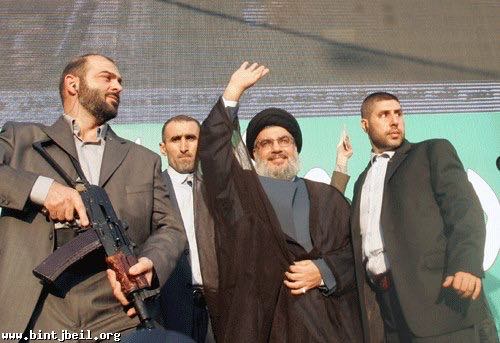
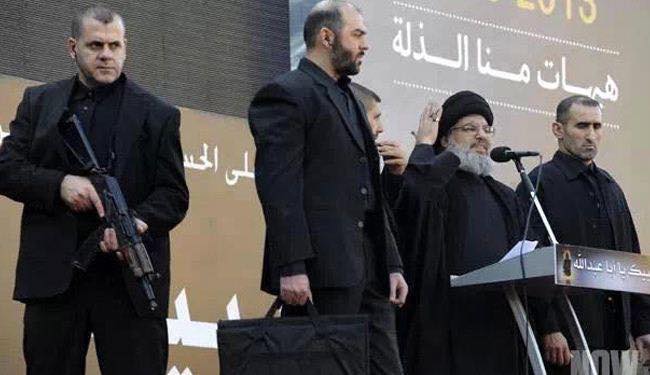
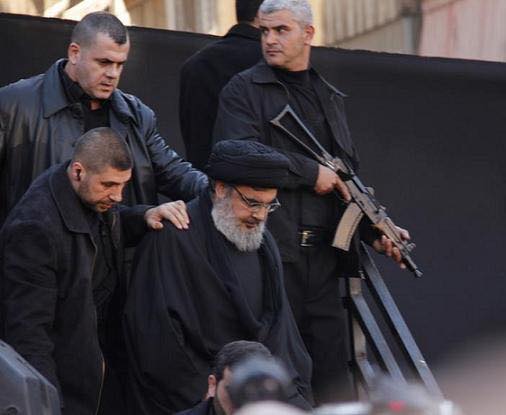
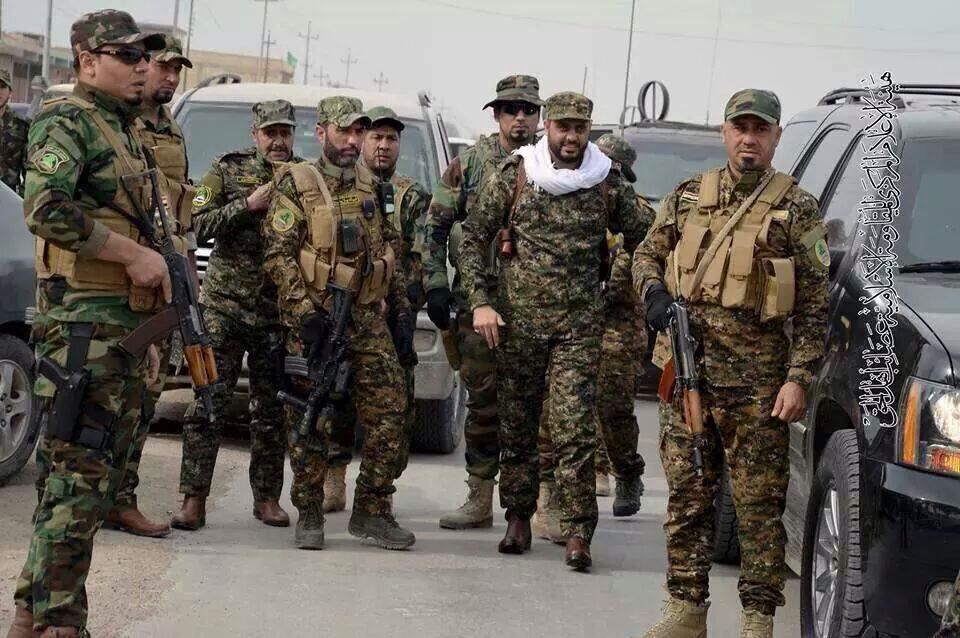
Lebanon had a little history with AKS74U as Mr.Hasaan Nasrallah’s (leader of Lebanese Hezbollah party ) bodyguards use it as their main firearm , there are is some information that Mr.Hasaan Nasrallah sent a couple of hundred of Krinkovs to the Iraqi section of the Hezbollah party after liberating Takrit from ISIS in April 2015 as a gift to Iraqi fighters who showed bravery in the battlefield.

In Iraq, many Krinkovs found their way to the black market either from the Lebanese gift or from smuggling through unknown routes, the main difference among those is that the Lebanese Krinkovs were 1987 and 1988, never fired with 2 spare mags (in most of these cases) but the others were earlier production 1986 and 1985.

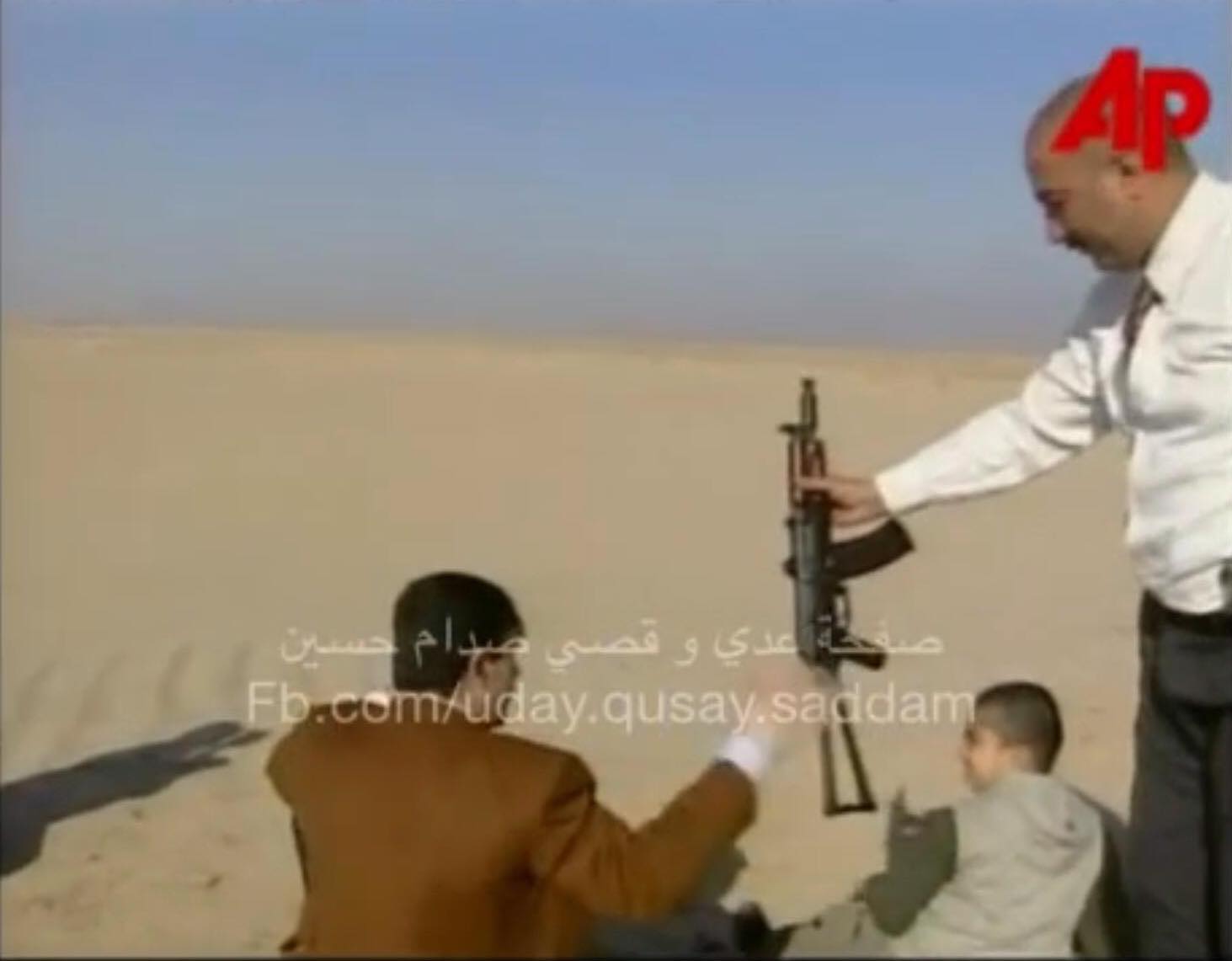
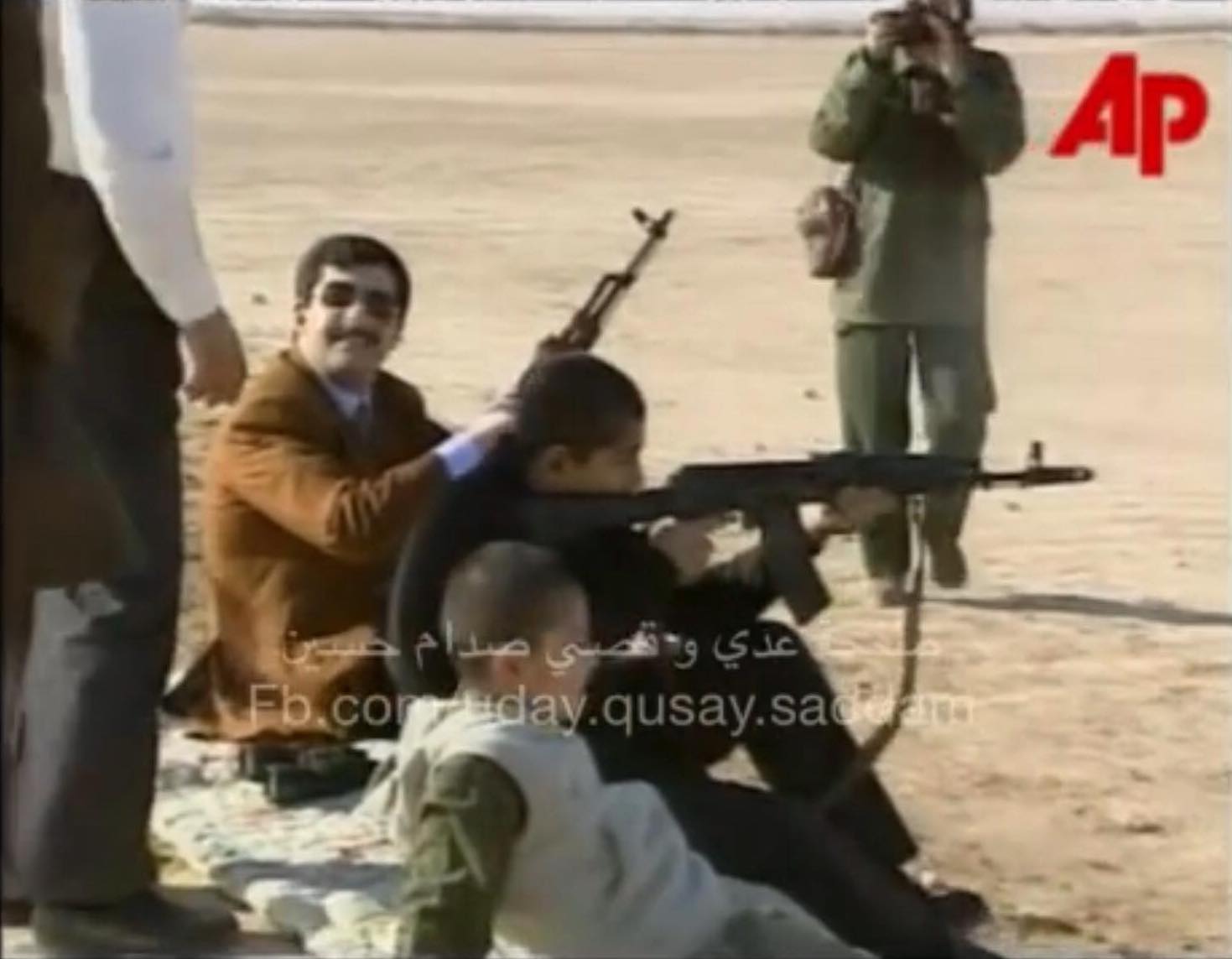
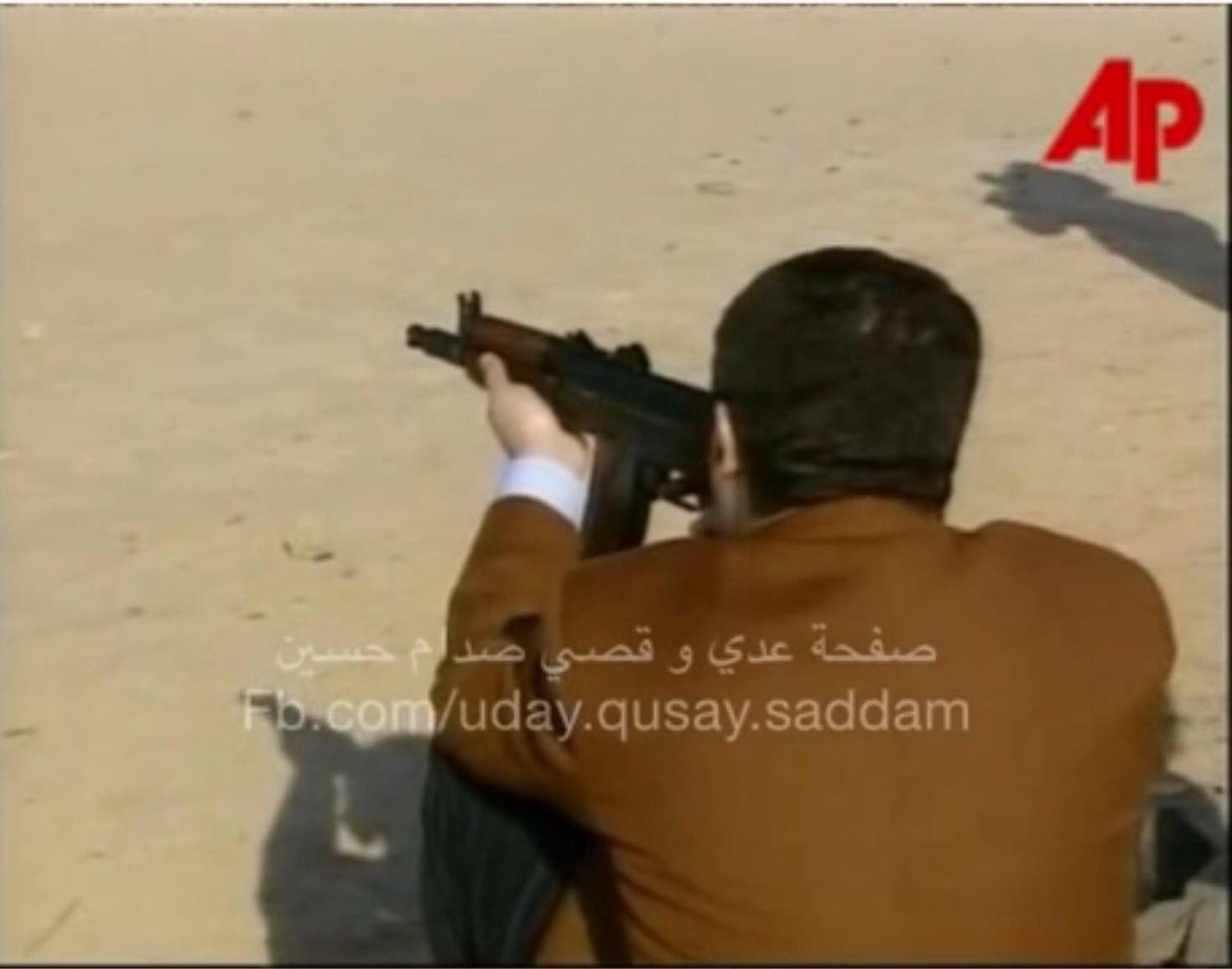
After the United States took down Saddam Hussein in 2003, a videotape was leaked showing Saddam’s son, Qusay, shooting Krinkovs with his son, Mustafa. The video is recorded in the late 1990s or early 2000s when I can be sure that it was a special order with other AK74s.

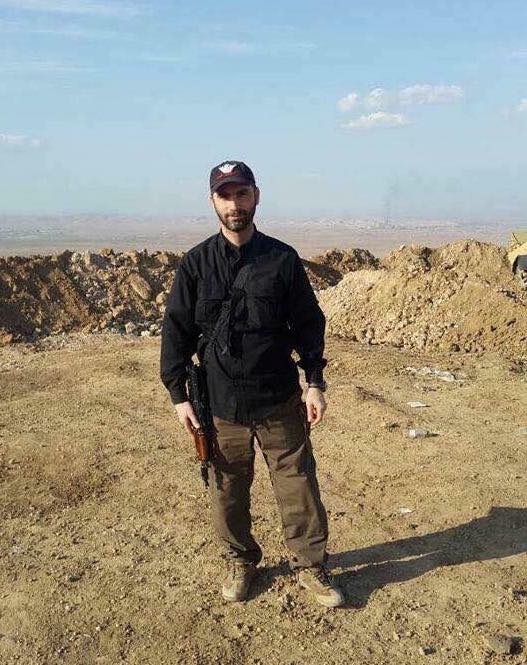
I think the number of Krinks in Iraq is less than one thousand pieces which is not used by the official government military or police forces but used by some politicians and Muslim clerk’s bodyguards. In addition to private individuals who can offer about $4000-5000 to own “The Beast”

Guest Post: Iraqi Contract Sterling MK 4 in Syria

Mathew Moss comes to us as a highly esteemed writer from The Firearm Blog, but he also founded his own fascinating historical small arms research source, The Armourers Bench, in addition to runs his Twitter feed at Historical Firearms. This is his first work for Silah Report, and we hope it won’t be the last!

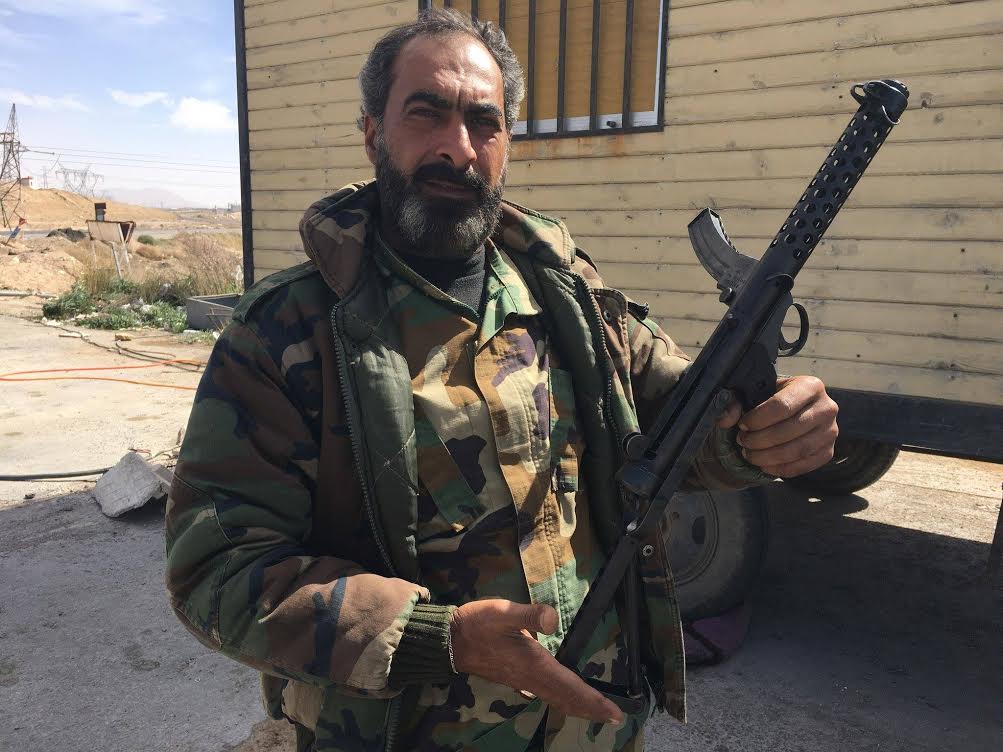
On the 10th March, Broń. Milmag, the Polish defense magazine, posted an intriguing photograph on their facebook page. The photograph had the short caption, which once translated, reads: “Syria Ad2018. 9-MM MACHINE GUN STERLING MK 4 / l2a3 used by a government soldier.”

Plenty of surplus World War Two weapons including the StG-44, MG42, Mosin-Nagant, K98ks and even French MAS-36s have been sighted in Iraq and Syria during the regions current multi-sided conflict. Sightings of the Cold War era- Sterling submachine gun, however, have been few and far between.

The Sterling submachine gun was developed by George Patchett at the Sterling Arms Company during the latter half of World War Two. Following extensive testing in the late 1940s and early 1950s the British Army adopted Patchett’s submachine gun to replace the Sten gun. It entered British service as the L2A1 in 1953, evolving quickly to its final form the L2A3. The L2A3 was produced commercially by Sterling at their plant in Dagenham, UK from 1956 until 1988 with an estimated 211,000 produced.

The Sterling was subsequently sold commercially and licensed for overseas production in both Canada (leading to the C1 Submachine Gun) and India (leading to the 1A Machine Carbine). Sterling successfully marketed the commercial version of the L2A3, the Mk4, to over a dozen countries around the world from Malaysia, to Libya, to Iraq.

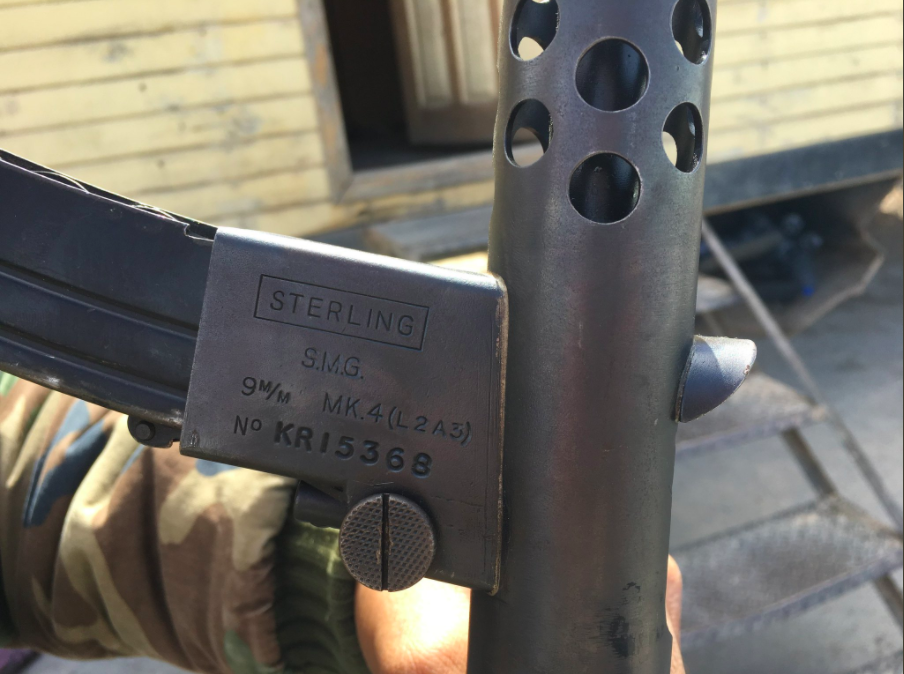
The weapon featured in the photograph appears to be in remarkably good condition. Following some digging I was able to find what I believe to be the original posting of the photograph online. Posted on Twitter by @Edward_Sn0wden on the 9th March. The twitter post includes a second photograph showing the Sterling’s magazine housing and markings. The photographs are credited to Alexander Kharchenko but sadly no location is mentioned. The caption suggests that the weapon might be a captured trophy.

From the available photographs the weapon appears to have a matte, rather than crackle paint, finish – this is either an original contract choice or a later armory refurbishment. The weapon is also fitted with an original Sterling produced commercial production 34-round curved double stack, double feed magazine – one of the most reliable submachine gun magazines ever developed.

We are lucky enough to have a second photograph showing the weapon’s markings in full: ‘STERLING SMG 9m/m MK4 (L2A3) KR15368’. The serial number, beginning with ‘KR’ dates the gun as a pre-1972 Sterling and refers to Kenton Redgrave, the Sterling company’s long-time director. The serial number dates the weapon, according to the serial number ranges, listed in The Guns of Dagenham (1996) by Peter Laidler, to 1957. This date would fit with the 1956-63 Iraqi contract which supplied 13,241 Mk4s to Iraq, first to King Faisal II’s military, and then to the Iraqi Republic, following a coup that deposed Faisal in 1958. The Iraqi Sterlings later saw action during the Iran-Iraq War and to a limited degree during both the Gulf War and during the 2003 Iraq War. 

While rare the Sterling has been spotted in the region before, three years ago CJ Chivers, the New York Times investigative conflict journalist and author of The Gun, shared a photograph of a Mk4 with a straight Sten magazine in use by the Mahdi Army in Sadr City, Iraq.

While investigating the photograph above, an Iraqi fighter came forward and told me about his ‘heirloom’ Sterling Mk4 which had belonged to his father, an Iraqi soldier killed during the Iran-Iraq war. Interestingly, this Iraqi heirloom Mk4 dated from June 1964, suggesting that the Iraq contract may have extended beyond the 1963 end date indicated by Laidler.

The Iraqi gentleman also advised that the Sterling was known to him, and possibly regionally as the ‘غداره مصريه’, which translates to ‘Egyptian Contract’ or Egyptian Submachine Gun. It seems that the Sterling has come to be confused with, or at least associated with an Egyptian submachine gun. While the Egyptian Army did purchase a number of commercial Mk3 Sterlings in 1954-5, Egypt never produced a copy of the Sterling, instead opting to copy the Carl Gustav m/45 to create to the Port Said, produced by Al Maadi.

How a Syrian government soldier might have come into possession of what is likely an Iraqi Sterling submachine gun is one of war’s intriguing mysteries. Regardless of how he acquired it appears to be in excellent condition for a 50 year old weapon.

Images:

Milmag post:

https://www.facebook.com/TheMilMag2/photos/a.871586039536290.1073741828.871547992873428/1980952581932958/?type=3&theater

Possible original source on twitter:

https://twitter.com/Edward_Sn0wden/status/972075403971055616

Rock Island Auctions photo of commercial Mk4 Sterling for Reference:

https://www.rockislandauction.com/detail/70/2504/sterling-mk-4l2a3-full-auto-sales-sample-smg-with-bayonet#detail
Tabuk Sniper Rifles Turn up in Baghdad Small Arms Cache

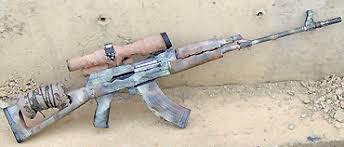
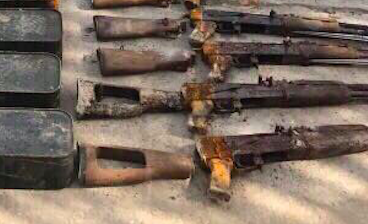
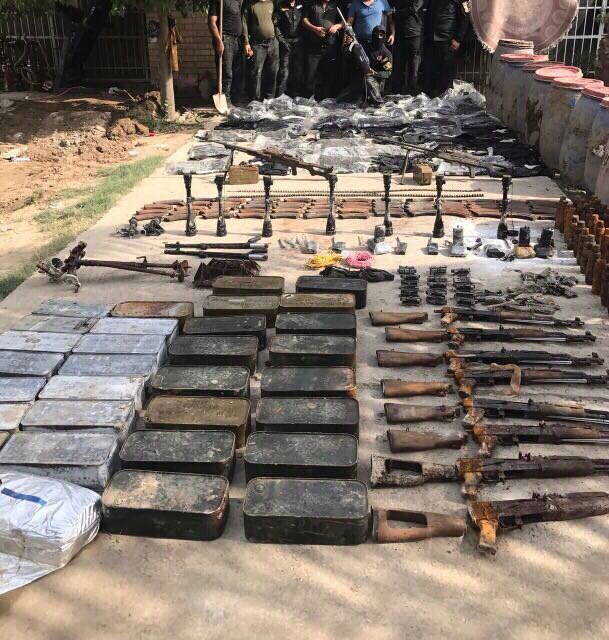
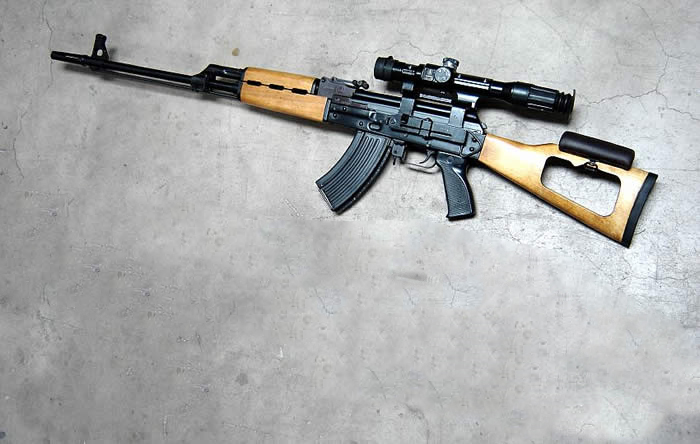
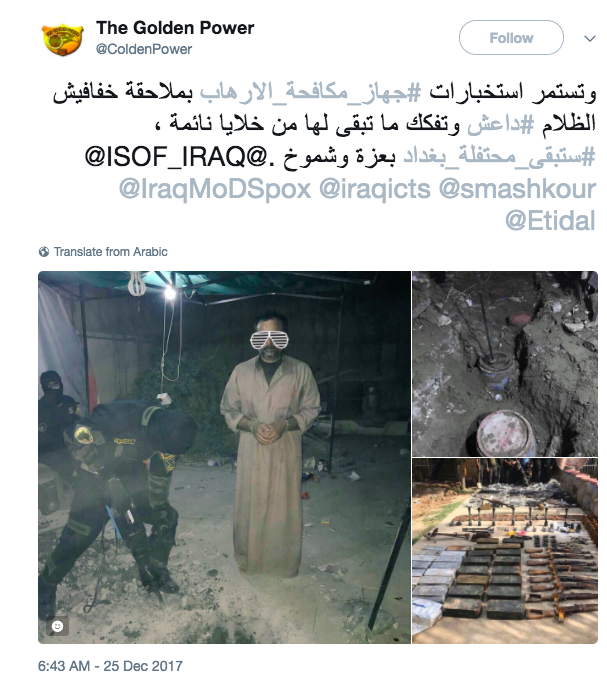
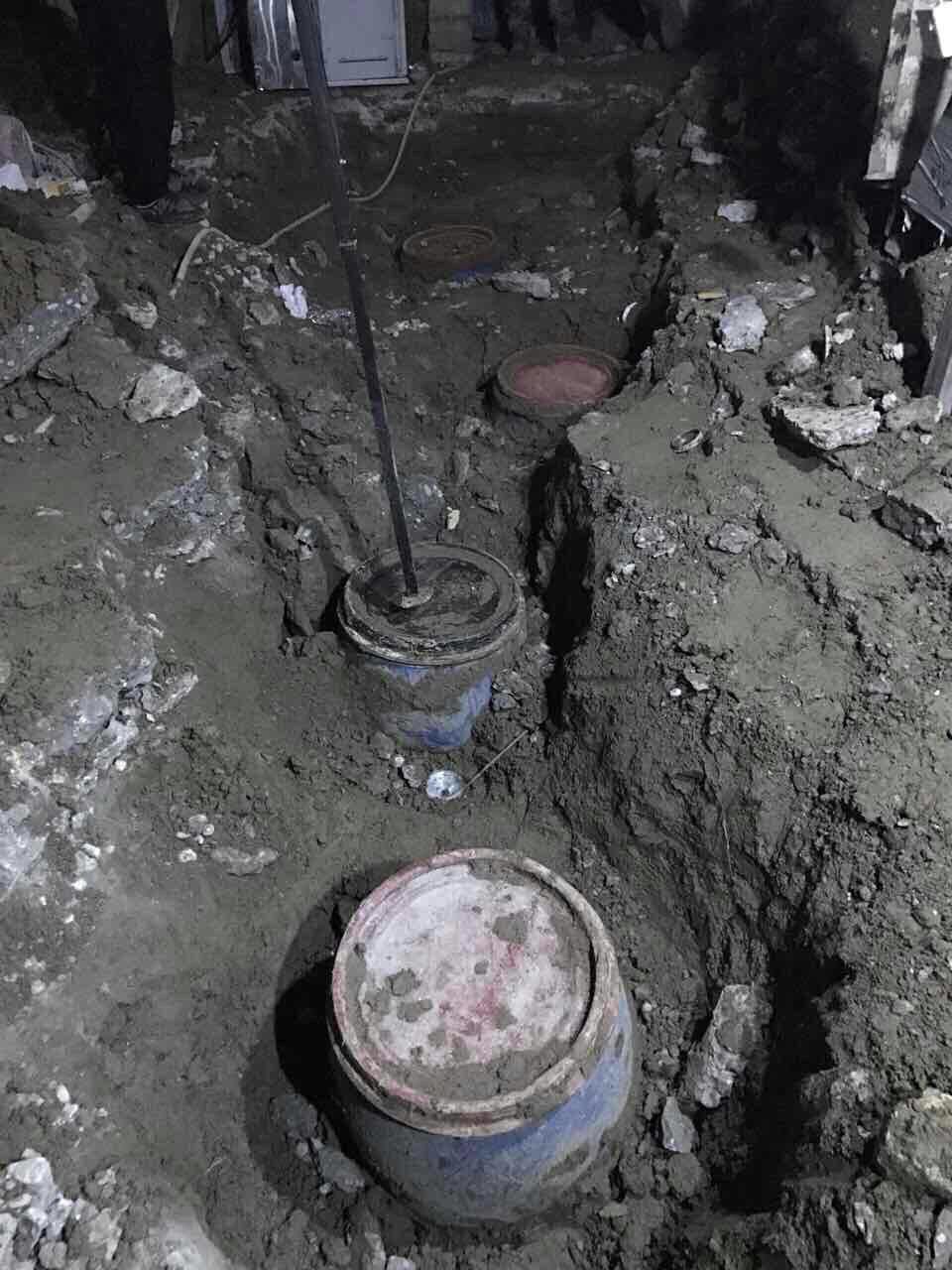
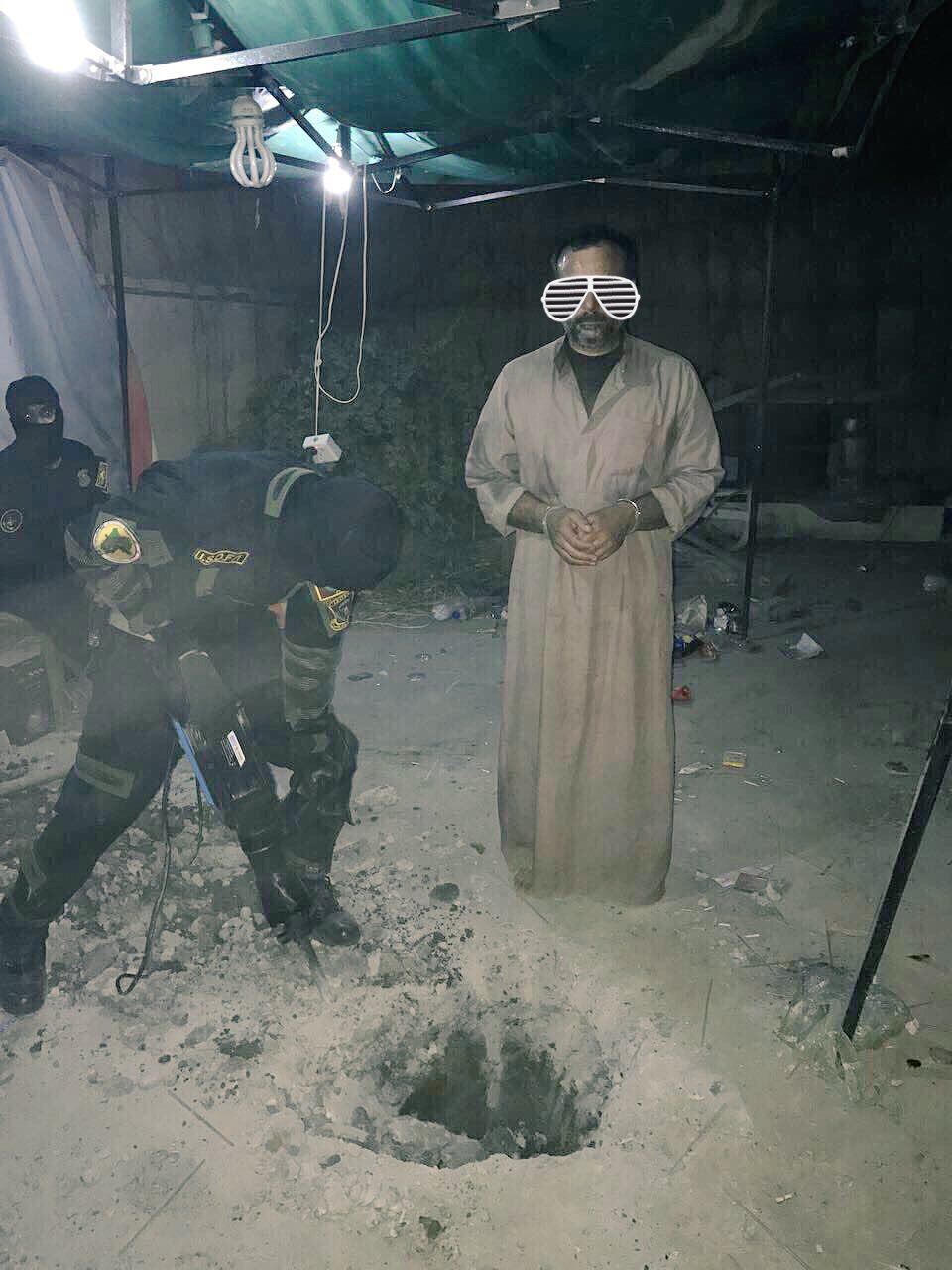
At a recent weapons cache that was turned up by Iraqi Counter-Terrorism Forces in Baghdad, what appears to be two Iraqi Tabuk Sniper rifles were among the rifles discovered in the buried cache. The Tabuk Sniper is uniquely identified by the cutout in the rear stock. Based on the Yugoslavian M70, the Tabuk sniper is a variant of the standard Tabuk rifle with full wooden stock, and the shorter version with a folding stock. It is unique among designated marksmen rifles in that it is chambered in 7.62x39mm, a round not known for its accuracy in the years it was adopted and used.

The two Tabuk Snipers in this photograph are distinguished by the aforementioned stocks and the three vents in the wooden handguard. On the above rifle there does seem to be some doubt as the receiver looks to be milled instead of stamped due to the magazine cut out portion. In addition, it is difficult to tell if the pistol grips are plastic or wooden, a key identification point about the Tabuk and M70 series. The stocks themselves are actually reversed, you are looking at the left side of the stock when it should have been the right side if aligned properly with the rifle.

The Twitter account “The Golden Power” shared the images.

Improvised Mauser Suppressor (OIF)

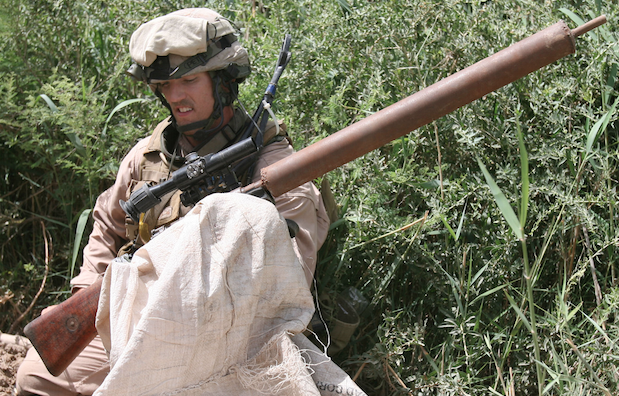
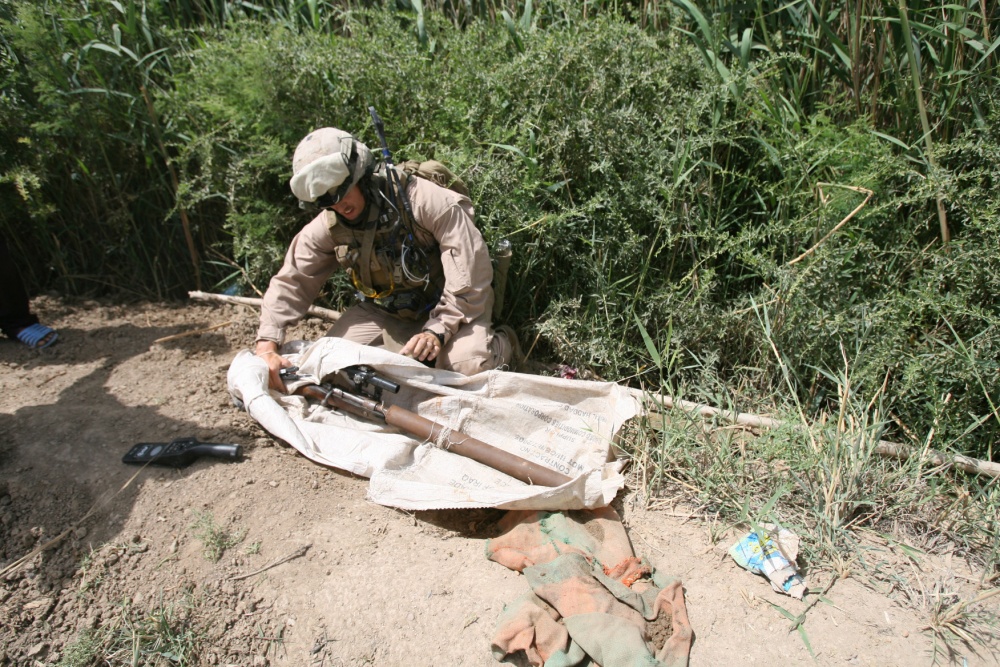
This photographs was posted on the U.S. Department of Defense Media Activity’s public domain website DVIDS along with another one featured on Silah Report. Both depict improvised suppressors captured by U.S. Infantrymen while on operations in Iraq.

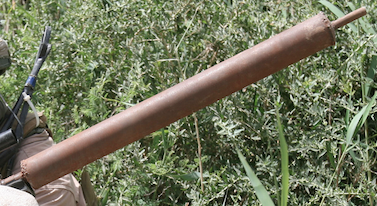
The rifle appears to be a Mauser 98K with the stock sawed off just past the chamber. Because of the proximity to Iran and the incredible amount of Iranian surplus found in Iraq, it would appear from conjecture that this rifle is a Persian Mauser, manufactured in the time of the Shah in the 1940s-50s, later being replaced by the M1 Garand through U.S. Foreign Military Sales programs in the 1960s. Unlike the previous M16A1 rifle we posted about, this improvised suppressor appears to have involved much more work, with a much larger diameter pipe being welded around the actual barrel of the rifle at both the front and rear of the pipe. There is a section of much smaller diameter pipe protruding from the main one, but this doesn’t appear to be the barrel.

The scope mounted on this rifle is a Cold War era PSO-1 optic designed to mount on the optics rails usually riveted to the left side of a Kalashnikov or Dragunov receiver. It is unclear how this is mounted to the Mauser’s wood stock, unless an actual Warsaw Pact rail were somehow screwed into the wood stock itself.

Iraqi Insurgent Improvised M16A1 suppressor (OIF)

This photograph was posted on the U.S. Department of Defense Media Activity’s public domain website DVIDS along with another one that will be featured on Silah Report. Both depict improvised suppressors captured by U.S. Infantrymen while on operations in Iraq.

From the photograph description-

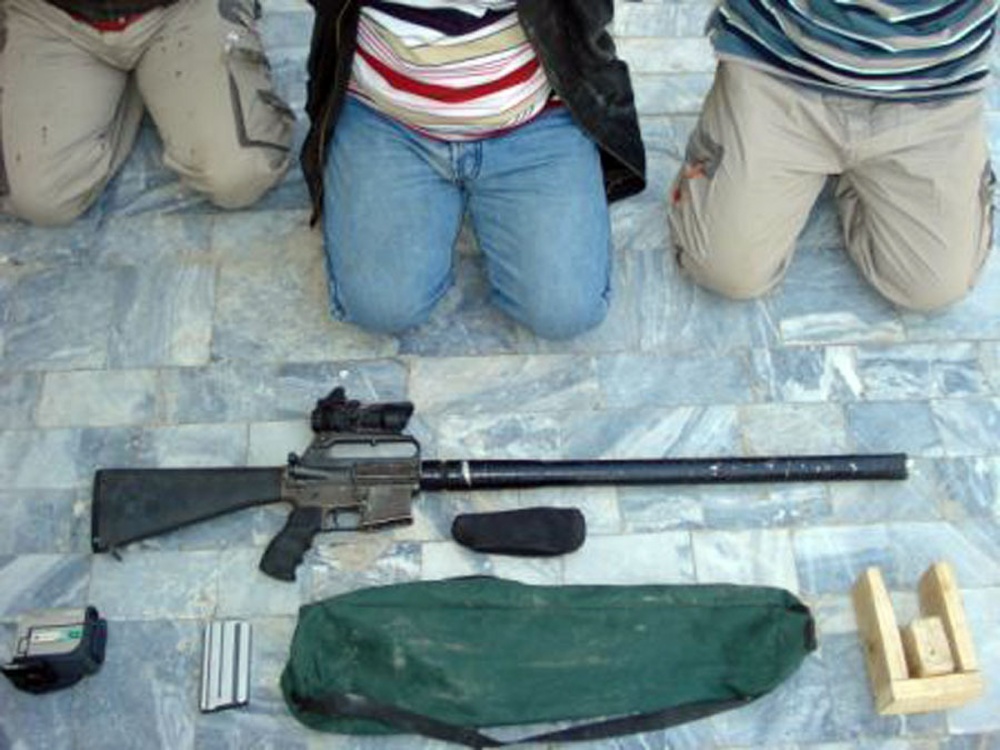
The confiscated items lay on the ground in front of three men arrested as a suspected sniper team in the northeast Baghdad neighborhood of Haay Ur, Jan. 17. The men were arrested by the 3rd Battalion, 4th Brigade, 1st National Police Division and the 3rd Battalion, 42nd Brigade, 11th Iraqi Army Division as the men attempted to carry out an attack on American forces in the area.

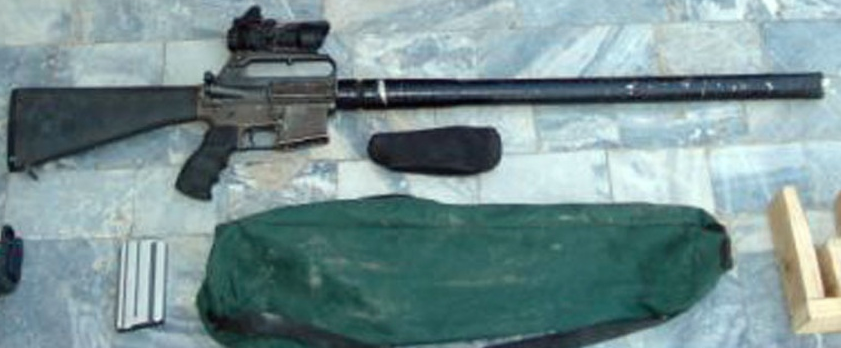
This first photograph depicts what appears to be a 5.56x45mm NATO M16A1 self-loading rifle due to the lack of a rear sight as a separate unit although the photograph is a little blurry to confirm this. The improvised suppressor appears to be some sort of muffling material wrapped around the standard 18 inch barrel of the M16A1, and then continues past the standard muzzle for about a foot of length. From the bulge just past the chamber, it appears that the standard barrel nut has been retained, and one can notice the taper of the barrel and gas tube in the shape of the suppressor. Mounted atop the carrying handle is a Trijicon 4×32 RCO. The grip is not a standard A2 grip and is most likely of commercial after market manufacture.

If the self-loading rifle is indeed an M16A1, the rifle might be a black-market trade from Lebanon or Israel where the M16A1 has seen extensive use by multiple armed entities. The presence of the pistol grip would support this assertion, as it could have been added along the way. It certainly isn’t from a captured U.S rifle. The chances of a Soldier or Marine mounting an after-market accessory such as a grip are extremely slim, and the chances of it being captured are even slimmer. In addition, the 20 round “Vietnam Era” magazine is further indicative that the rifle was initially fielded in Lebanon or Israel due to the amount of surplus equipment being sold to those countries.  It probably isn’t from a private military company either as M16A1s are rarely seen in use among these entities, 14 or 16 inch barrel length M4s being the preferred AR variant.  The Trijicon however would certainly appear to be a U.S capture or otherwise lost piece of gear, with the scope neoprene cover indicating that it was most likely newly issued or rarely used when acquired.

Construction of the improvised suppressor is harder to identify. It would appear that it is some sort of muffling or noise absorbing material stuffed inside a pipe( possibly metallic) the length of the entire suppressor. There appears to be another pipe, one of larger diameter than the main one, that connects both the main pipe and the barrel nut, thus enabling the contraption to stay in place. The entire pipe further appears to be wrapped in black tape of some sort, possibly to prevent any shine from a position of concealment. Whether or not the suppressor actually works, or how long it can adequately suppress is unknown at this point.

Sealing the deal on this capture is the video camera present, showing that the insurgents captured here were probably using the camera to film their shots on U.S troops for propaganda value, eerily  to the “Jubba” sniper videos that plagued troops based in Baghdad. Unconfirmed rumors about the “Jubba” sniper have stated that the actual shooter was using a Remington 700 shooting out of a loophole of a taxicab. A set up such as this suppressed M16A1 could just have been used in the very same way.

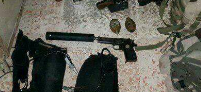
Suppressed Tariq Handgun

This image appeared on a recent propaganda video with images attributed to Hayat Tahrir al-Sham (HTS), or an Al Queda affiliate group. Among a collection of weapons seized by HTS from a Daesh cache is what appears to be a suppressed Iraqi Tariq handgun. The location of the seizure was in Idlib. The Tariq is an Iraqi … Read more