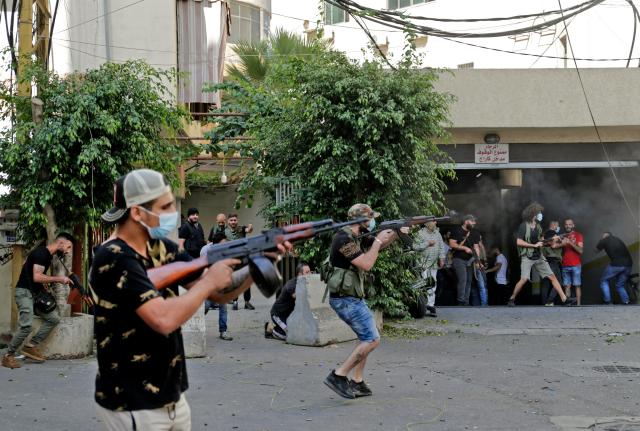
This morning in Beirut, Lebanon was far from normal as the streets turned into a warzone and clashes erupted taking the lives of many people, injuring even more and forcing hundreds of families to flee their homes. We examine the causes and look at some of the small arms seen on Beirut’s streets.
Lebanon
Syrian Civil War Crest Symbology: Comparative Conclusion
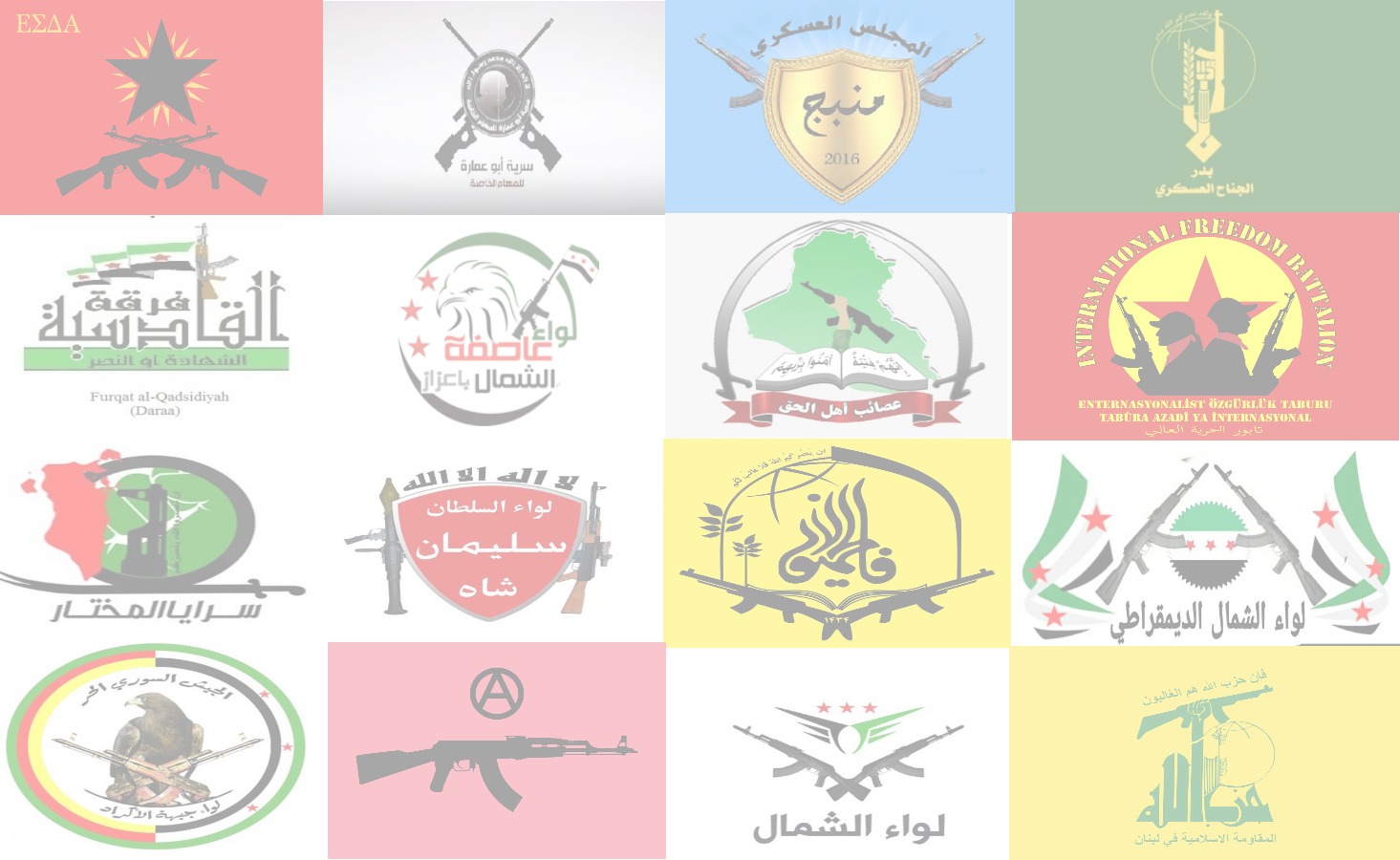
In this series we have examined Syrian armed groups from across the entire political spectrum who at one point or another during the war featured a firearm in their official crest. Our goal is to present a statistical overview of the small arms used in this military imagery and to share some interesting information I was able to deduce. You can find the first three parts of this series here, here and here. In this fourth and final part, we will make a comparative overview of all the political affiliations fighting previously focused on throughout the previous posts.
Small Arms Crest Symbology: The Syrian Regime
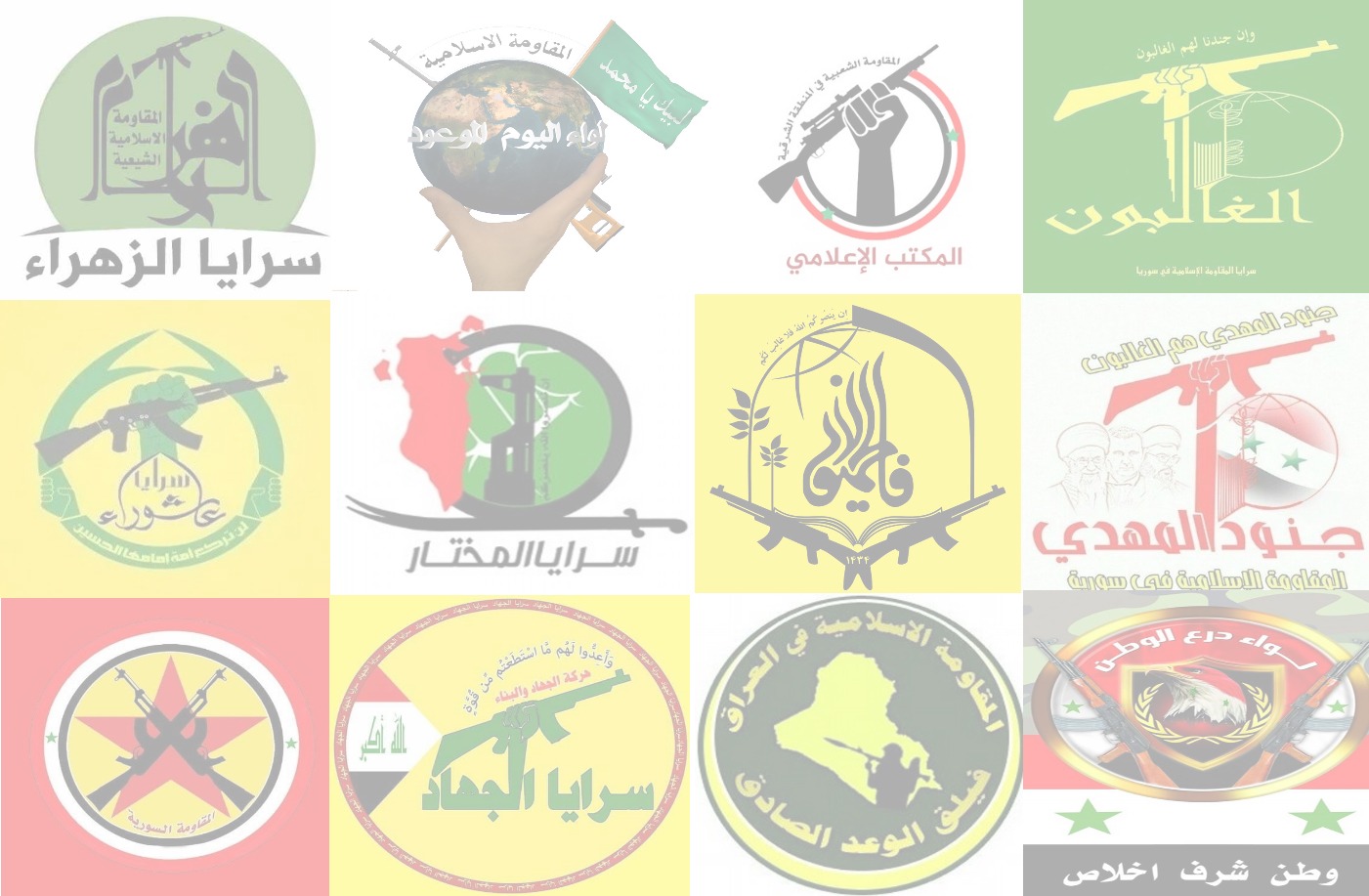
The Syrian Civil War is many things, not least an extremely complex conflict. In this series we examine the imagery used by various groups from across Syria’s political spectrum. In the first part of the series we examined the crests Opposition-affiliated groups and organisations. If you missed the first part of the series you can find it here. In this part we will examine groups affiliated with the Assad Regime and present a statistical overview of the small arms used in their military imagery. You can find the first part of this series here.
The Emblem of the Shiite Muqāwama: The Cold War’s Third Alternative
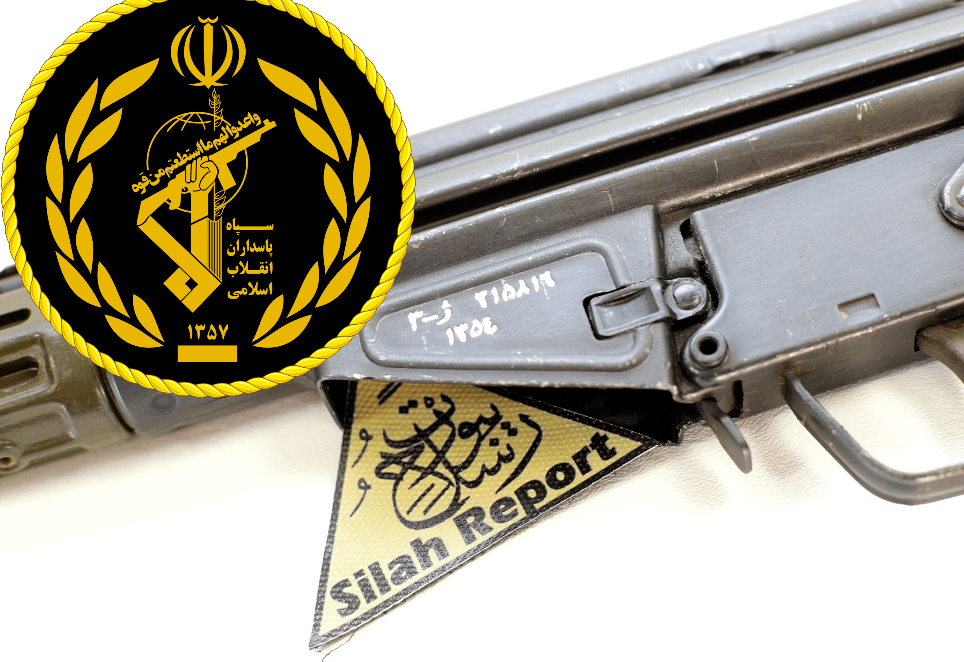
When designing a new flag or representative banner of any given social group, one of the most important pillars of vexillology (the study of flags) one should keep in mind is clarity. Any serious flag should at least be indicative of what it represents, and how the people brandishing it wish to be perceived by the outside world. A clueless spectator means failure in offering a sufficiently suggestive flag for the group’s representation to the public. A flag is an important attribute for any group, presenting a visual introduction and identification through colors, symbols and objects featured on the banner.
Operation Balak: The IDF’s Star of David on Nazi Rifles
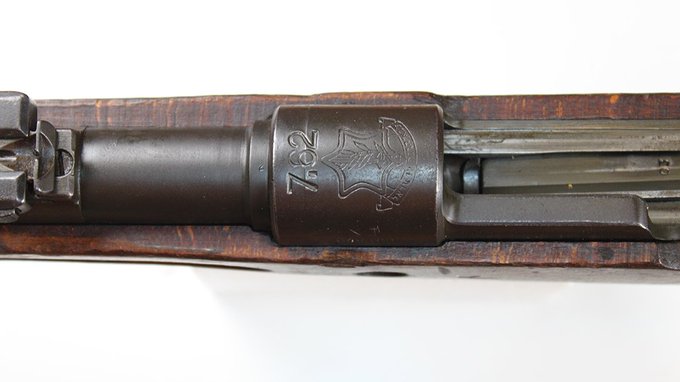
“All is fair in love and war” is an idiom in English that refers to the practice of otherwise questionable actions being considered acceptable under exceptional circumstances. When talking about weaponry in general, one example to illustrate the aforementioned saying would be the direct use of an enemy’s arms of war to forward one’s own agenda. Anti-Communist Afghan Mujahideen fighting their Soviet enemies with Soviet-made weaponry, Islamic State attacking regional adversaries with US M4’s and M16’s or the post-war US government employing former German and Japanese scientists and technologies for their fight against the Red Menace are all examples of this common practice. The Israeli Defense Forces‘ hexagram emblem on Nazi Mauser-manufactured Kar98k carbines is another interesting manifestation of this idiom.
French MAS Rifles in Syria, a Historical Perspective
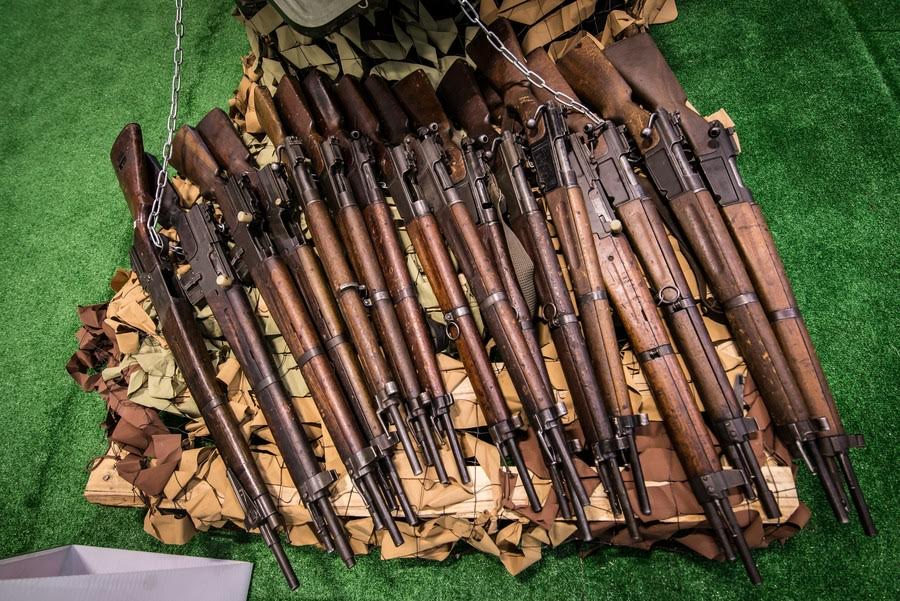
This guest article is brought to us by Bruce Marduel, taking a look at the French MAS series of bolt action and semi-automatic rifles in service throughout Syrian history.
There are plenty of exotic and obsolete weapons in the Middle East, and ancient French weapons produced by Manufacture d’Armes de St-Etienne can be spotted regularly in Syria along with StG 44, Mosin-Nagant and other relics.
Most of the rifles produced for the French Army during the XXth century were produced by Manufacture d’Armes de St-Etienne (MAS) : from the bolt-action Fusil à répétition 7.5mm M.36 a.k.a MAS 36, to the Fusil d’Assaut de la Manufacture d’Armes de St-Etienne also called FAMAS. The MAS 36 equipped the French Army since the 1930’s, followed by MAS 49 and MAS 49/56 after WWII. These rifles have a very long service life both in France and overseas.
MAS 36 arrived in the Middle-East during the Mandates and Second World War, back then France ruled over Syria and Lebanon, and French troops used MAS 36. During WWII, the French authorities of the Regime de Vichy (allied with Nazi Germany) declared Lebanon independent in 1941, the decision was confirmed by Free France and Charles de Gaulle, so the country became independent after WWII. The armed forces from newly-independent Lebanon used MAS 36 as a standard-issue rifle until the 1950’s when FN FAL replaced them. Lebanese MAS were kept as a reserve rifle or sold on the civilian market, so that they are visible among militias during the 1958 troubles in Lebanon.
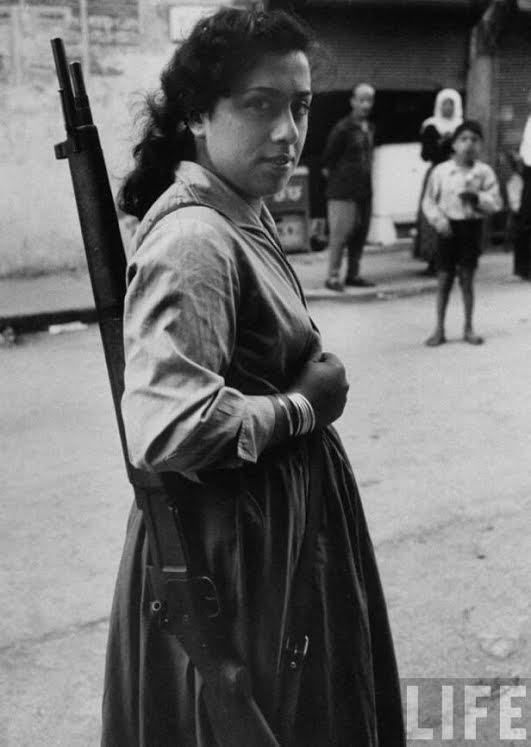
Civilian MAS 36 in Beirut, 1958
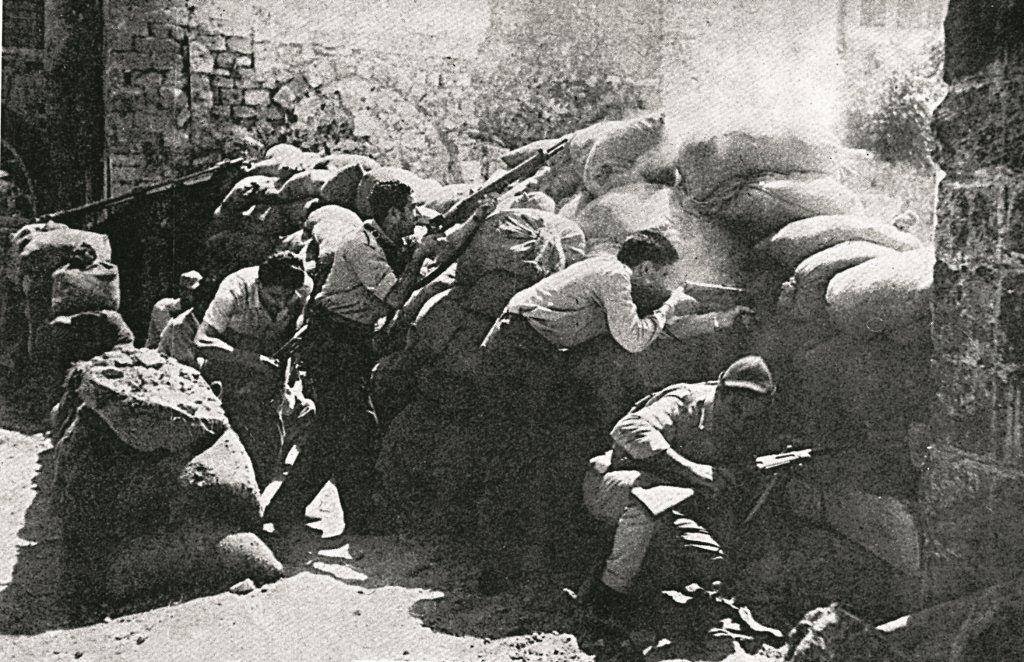
1958 unrest in Lebanon
The most significant shipment of MAS rifles to the Middle-East took place in the early 1950’s, when France delivered weapons to Syria : six-thousand « Syrian contract » MAS 49 (serial number F3XXXX), twelve-thousand MAS 36 and a production line for 7,5x54mm ammunition. Photos of the Syrian Independence Day show the subsequent evolution in the armament of Syrian troops from 1946 to 1966 :
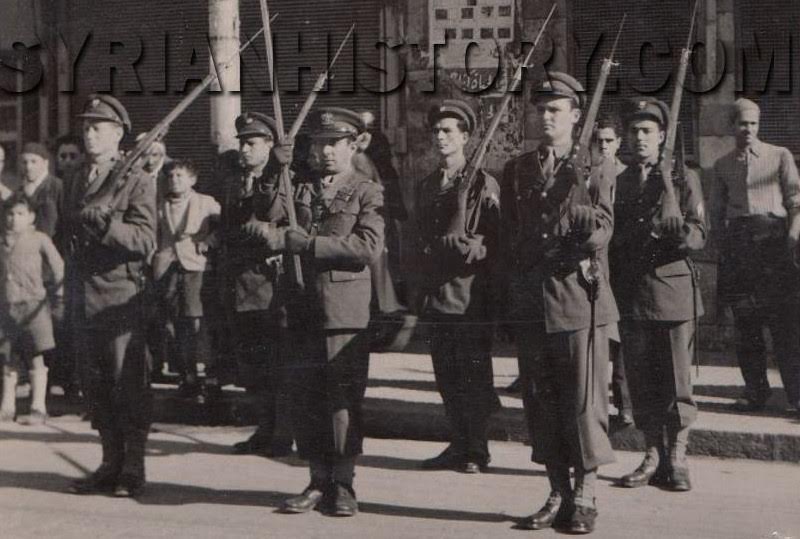
1946 parade with WWI Lebel
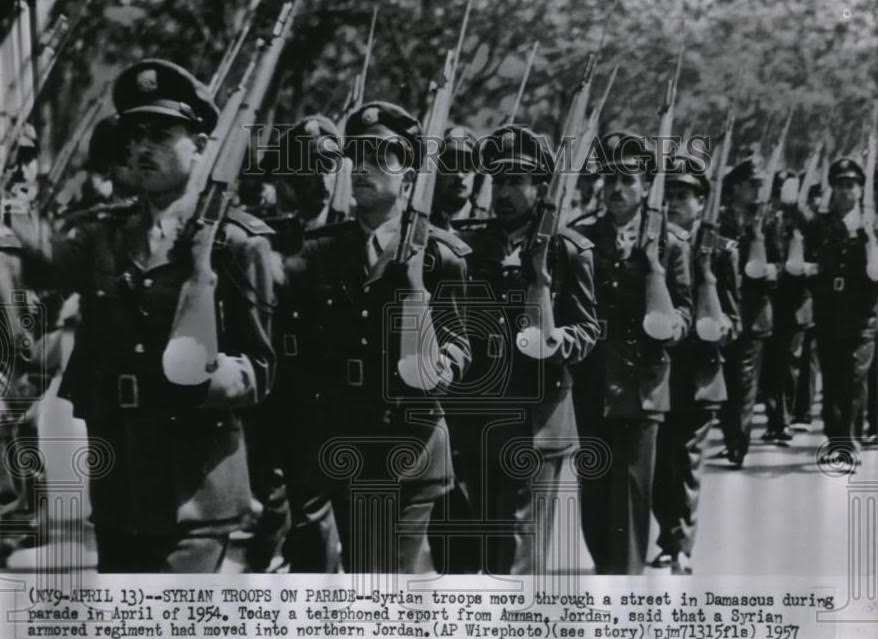
1954 parade with MAS 36
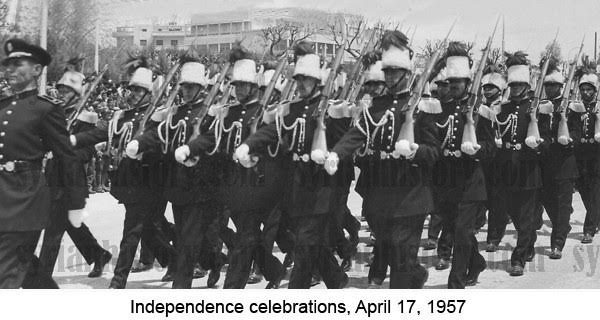
1957 parade with MAS 36
When Syria got closer to the Eastern Bloc (Baath putsch in 1963, and pro-soviet wing takeover in 1966) the Syrian army abandoned french rifles and adopted Kalashnikov, as showed in the video of the 1966 parade.
Use in Syrian Civil War
.
Essay: Use of the AKS74U “Krinkov” in Iraq and Lebanon
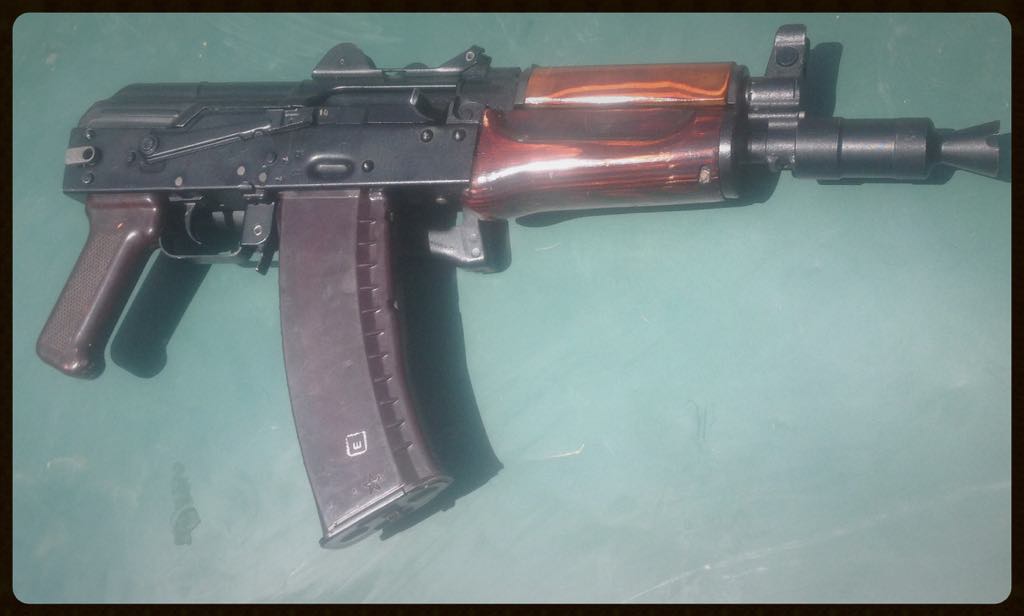
This article has been submitted to SR by a loyal friend and fellow small arms enthusiast in Iraq, discussing some of the proliferation of the AKS74U “Krinkov” within Iraq and Lebanon, in addition to its use in the region.
The AKS74U is often called the little beast in Iraq. Many people spoke about it’s history, action, production, development, etc. But I want to speak about two main topics: First is AK74 in general and AKS-74U within contemporary history in the Middle East. The second topic is AKS74U history and variants in Iraq.
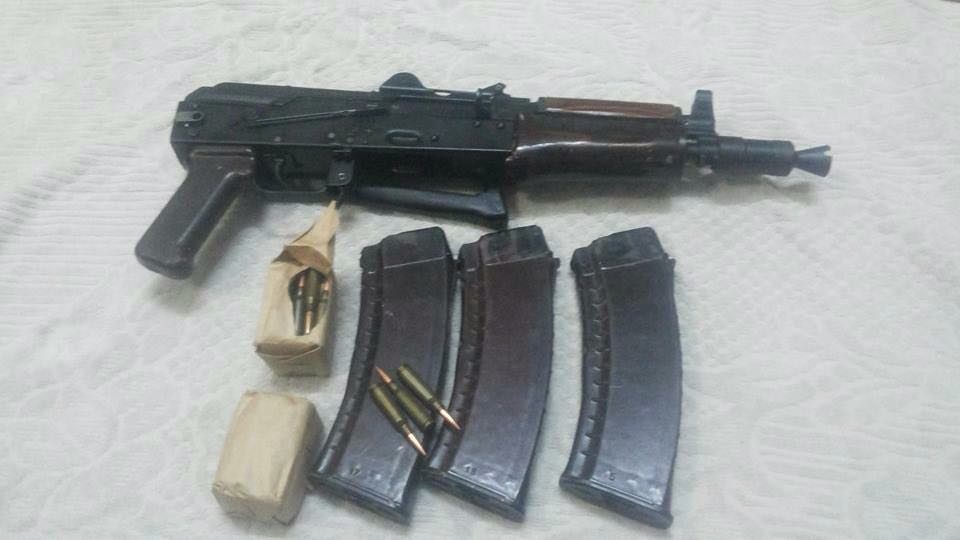
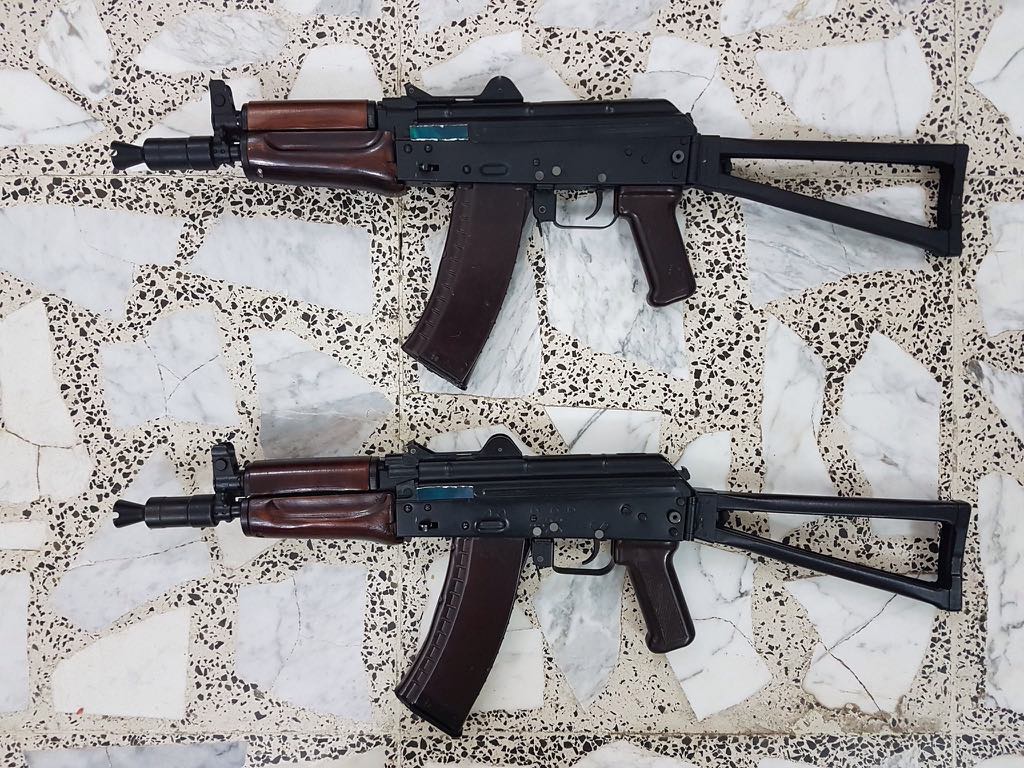
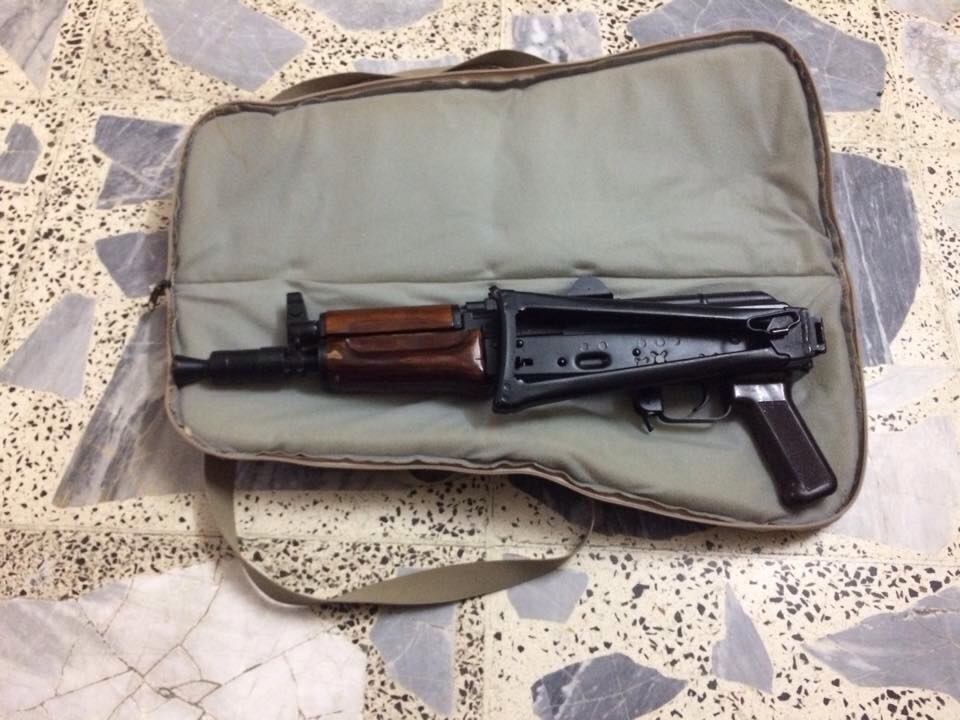
In the Middle East, the AK47 platform had a long history since the 1950s as most of the countries supplied their armies with it either from USSR or other manufacturers (Polish, Bulgarian, Chinese, etc… ) but as I mentioned it was AK47 that was mainly in use until the Syrian conflict in 2011 and the Russian role in 2015 when the AK74 was introduced in significant numbers from the Russian forces and also from some ISIS members who came from Chechen or other former Soviet territories. The version is mostly AK74s with some AKS74Us in very small numbers.
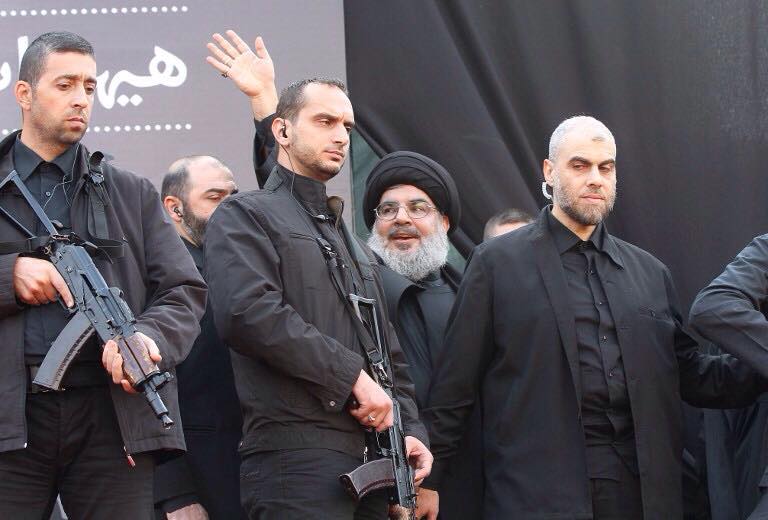
Lebanon had a little history with AKS74U as Mr.Hasaan Nasrallah’s (leader of Lebanese Hezbollah party ) bodyguards use it as their main firearm , there are is some information that Mr.Hasaan Nasrallah sent a couple of hundred of Krinkovs to the Iraqi section of the Hezbollah party after liberating Takrit from ISIS in April 2015 as a gift to Iraqi fighters who showed bravery in the battlefield.
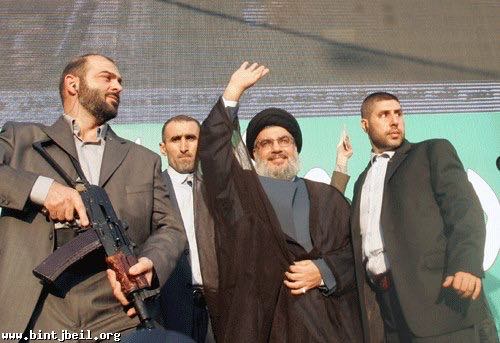
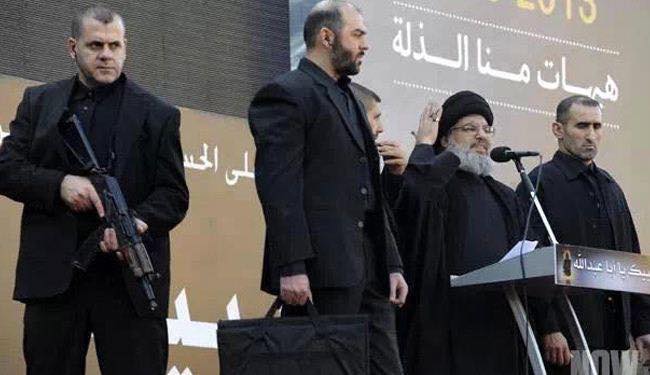
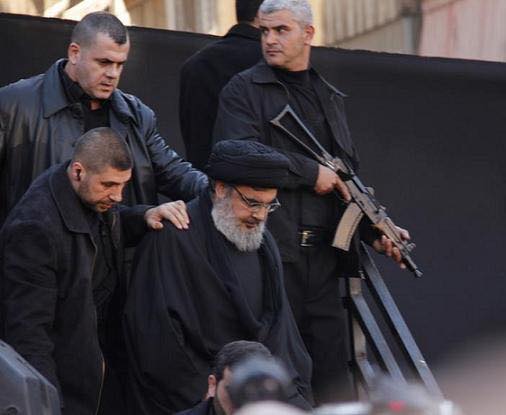
In Iraq, many Krinkovs found their way to the black market either from the Lebanese gift or from smuggling through unknown routes, the main difference among those is that the Lebanese Krinkovs were 1987 and 1988, never fired with 2 spare mags (in most of these cases) but the others were earlier production 1986 and 1985.
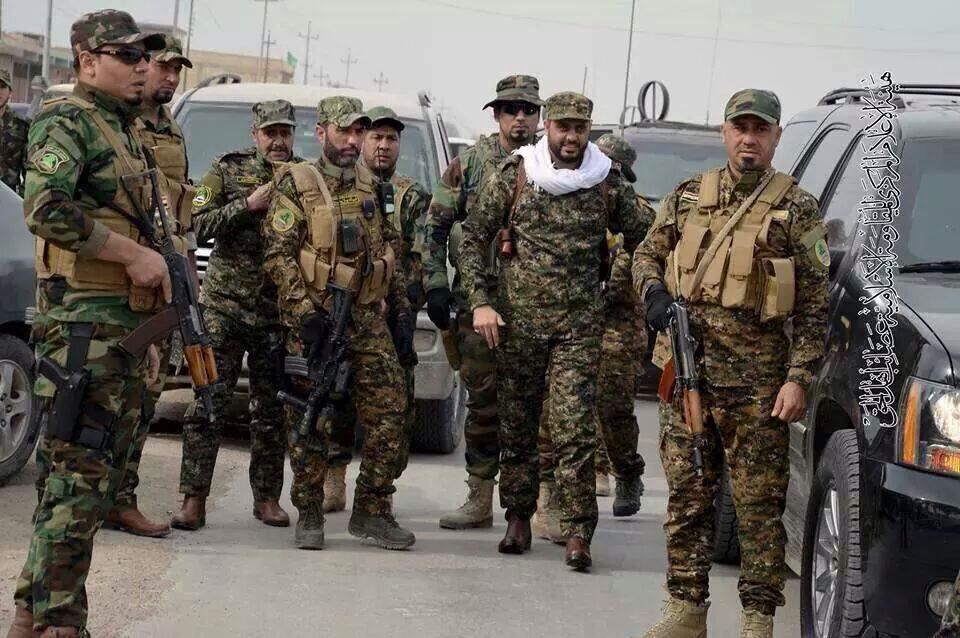
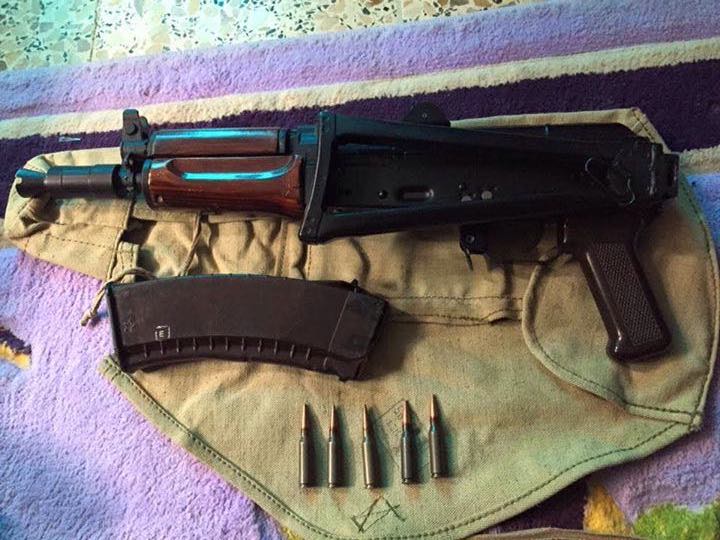
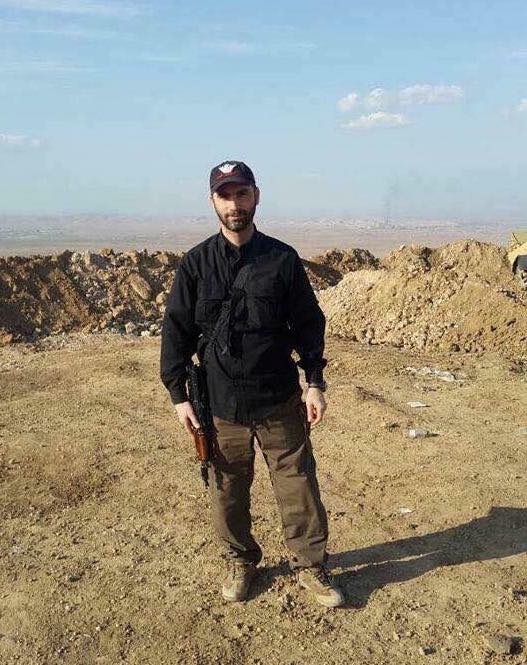
After the United States took down Saddam Hussein in 2003, a videotape was leaked showing Saddam’s son, Qusay, shooting Krinkovs with his son, Mustafa. The video is recorded in the late 1990s or early 2000s when I can be sure that it was a special order with other AK74s.
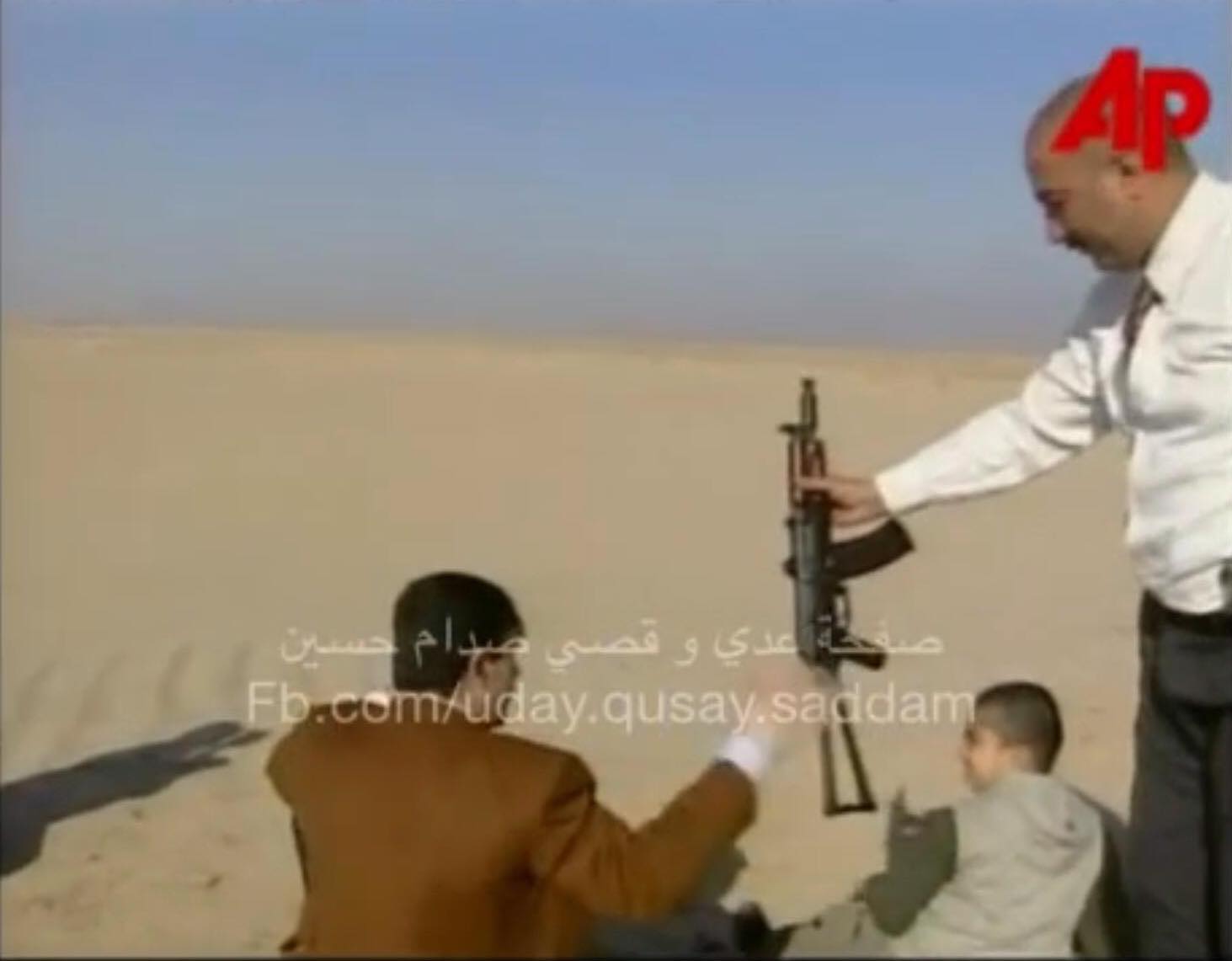
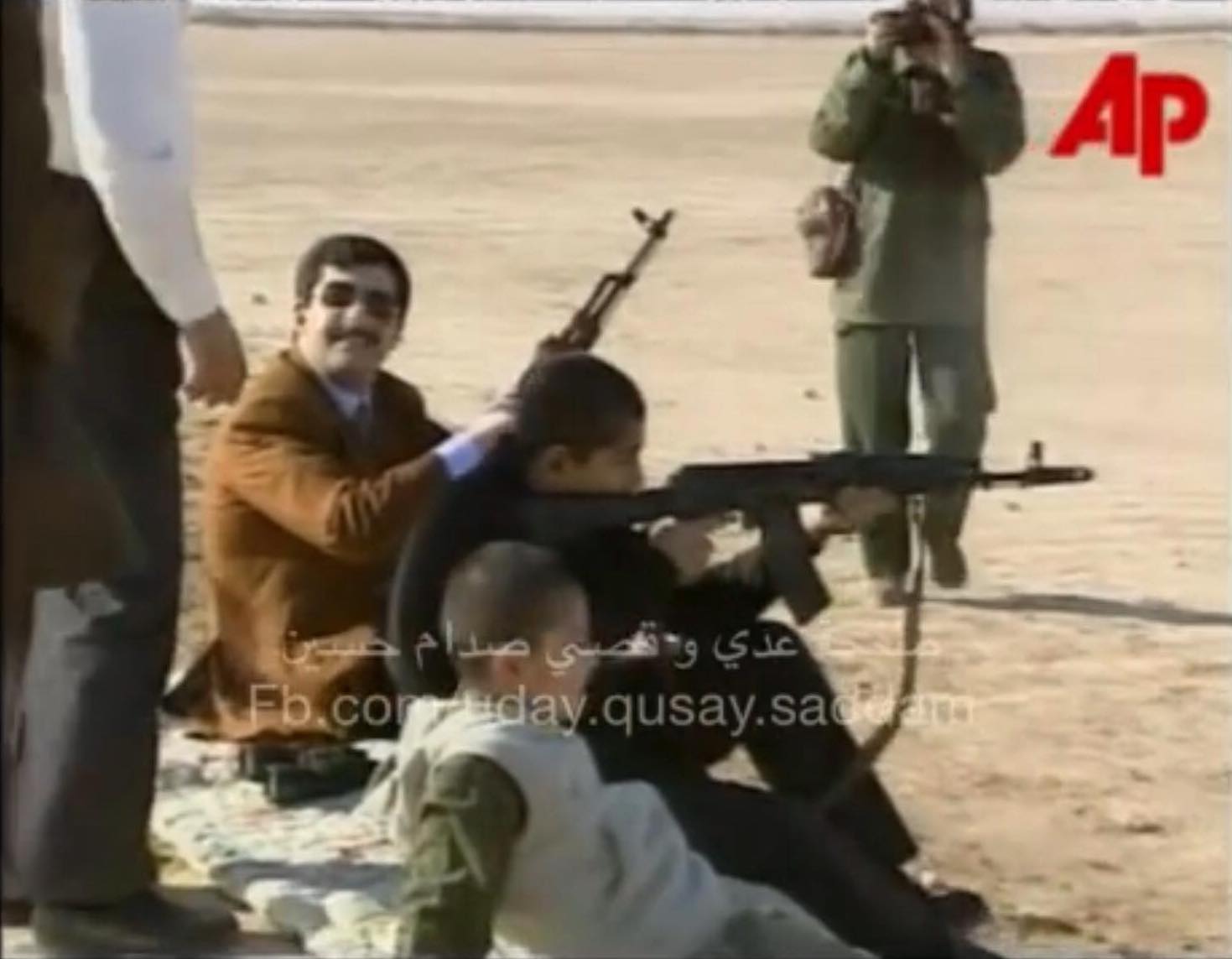
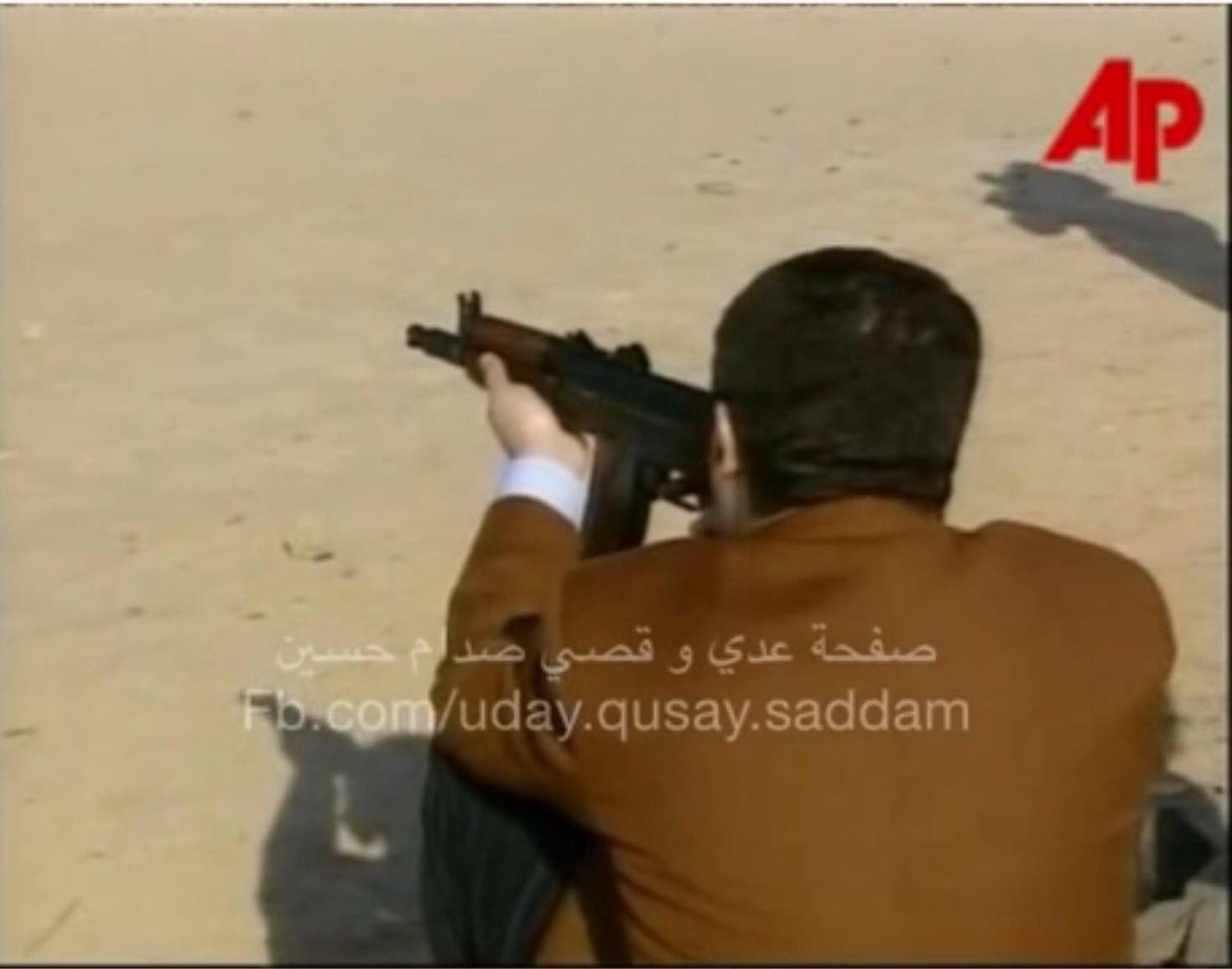
I think the number of Krinks in Iraq is less than one thousand pieces which is not used by the official government military or police forces but used by some politicians and Muslim clerk’s bodyguards. In addition to private individuals who can offer about $4000-5000 to own “The Beast”