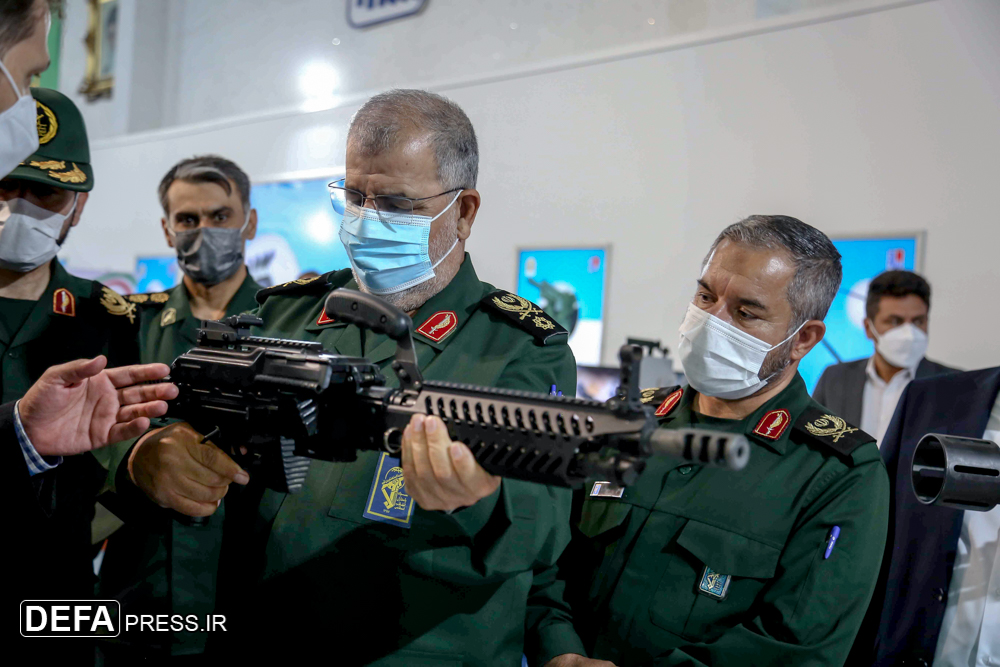
In this second part of our series looking at the Iranian Defense Industries Organization (DIO)’s current offerings we will examine AR-15 pattern rifles, precision rifles, and machine guns. In the first part of this series we examined the origins of Persian and Iranian small arms manufacturing and explored some of the DIO’s submachine guns and rifle offerings.
Made in Iran
A Review of the Latest Products from Iran’s Defense Industries Organization (DIO) – Part One
In this first part of a series looking at Iran’s Defense Industries Organization (DIO) and its products we examine some of the DIO’s submachine guns and rifles.
Iranian PPSh-41 Production During the Second World War
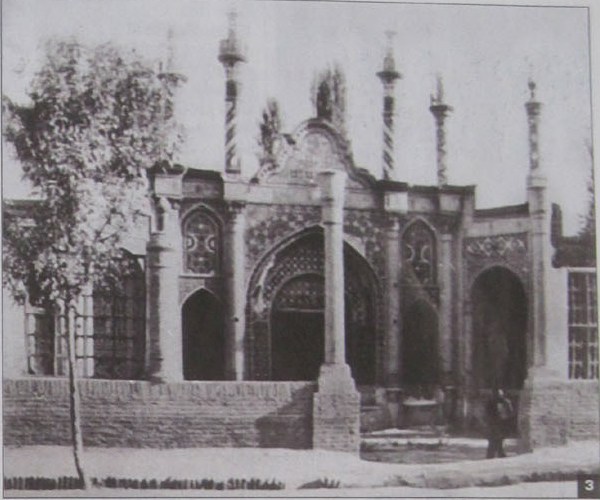
In the interwar period, Iran’s military industry was primarily dominated by the German investments. In 1933, with the German support, Iran established a powder plant in Parchin (25 kilometers to the south-west from Tehran). Starting from 1934, Tehran Military Arsenal started assembling Mauser rifles from parts kits imported from the Czechoslovak Republic with only stock being locally made. Later they started manufacturing these rifles in Fritz Werner factory which was another plant built by Germans. There was also an ammunition plant and Krupp artillery shell manufacturing plant established in Sultanabad. In 1940 Germany built a gas mask manufacturing factory near Tehran. A German and Czech joint company called “Nabar” was building a new plant in one of the districts of Tehran that was supposed to make ZB-26 and ZB-50 machine guns.
Besides the above-described investments in small arms and ammunition manufacturing, Germany had large investments in other segments of the Iranian military industry, too. UK and USSR were concerned with such strong German presence which probably was one of the reasons of the Anglo-Soviet invasion of Iran. Here is an excerpt from the Wikipedia article describing this invasion:
The Anglo-Soviet invasion of Iran, also known as the Anglo-Soviet invasion of Persia, was the joint invasion of Iran in 1941 during the Second World War by the British Commonwealth and the Soviet Union. The invasion lasted from 25 August to 17 September 1941 and was codenamed Operation Countenance. Its purpose was to secure Iranian oil fields and ensure Allied supply lines (see the Persian Corridor) for the USSR, fighting against Axis forces on the Eastern Front. Though Iran was neutral, the Allies considered Reza Shah to be friendly to Germany, deposed him during the subsequent occupation and replaced him with his young son Mohammad Reza Pahlavi.
In 1941 Soviet small arms industry was not in its best shape, to say the least. Many plants were evacuated but hadn’t yet settled in new locations and there was a huge demand for new weapons and ammunition in the frontline. The Soviet Union decided to purchase small arms from its ally nations. Particularly, they were planning to buy from Iran 100,000 rifles, 500 LMGs, 400 medium machine guns, and 15 million cartridges. They were especially interested in buying as much of estimated 8,000 Iranian Maxim machine guns that they could.
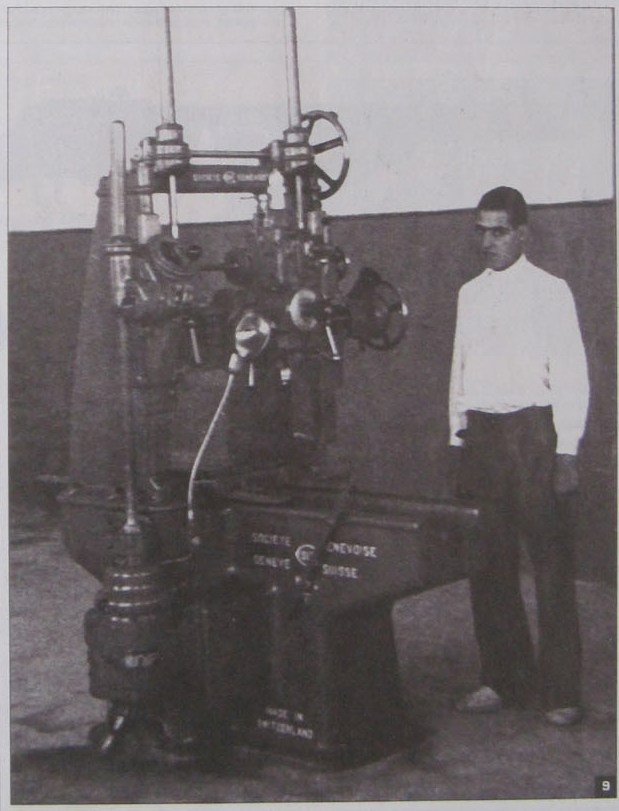
In 1942, the evacuated Soviet plants were already established in new locations and started working. However, the war has been escalating and there were even more losses of personnel and small arms. The demand for small arms was the all-time high. The Soviet Union officials started to think about sourcing more weapons and equipment from their allies. They were initially planning to buy from Iran the Tehran Arsenal, the unfinished machinegun plant, as well as powder and ammunition plants. Later, they decided not to buy them but place orders in Iranian plants, help to finish the machinegun plant construction, deliver equipment, assign specialists and qualified workers to Iran as well as supply the raw materials necessary to fulfill the Soviet orders. As a result of these negotiations, on January 23, 1943, a contract was signed between the two countries.
According to the contract, by January 1944, the Iranian machine gun factory was supposed to have manufactured 30,000 PPSh SMGs each equipped with six box magazines, spare parts and accessories. They were planning to start the manufacturing process in August 1943 with a production rate of 4,000 PPSh SMGs per month. That rate had to be increased to 6,000 SMGs per month. The #367 plant in Vyatskiye Polyany (today’s Molot Oruzhie) which was the main manufacturer of PPSh SMGs, sent the technical drawings and raw materials necessary for accomplishing the manufacturing plan of first two months (8,000 SMGs and 48,000 magazines). According to the contract, Iran could also make these weapons for their own use both during the war and after its end. The only restriction was that it was forbidden to transfer the technology to third countries.
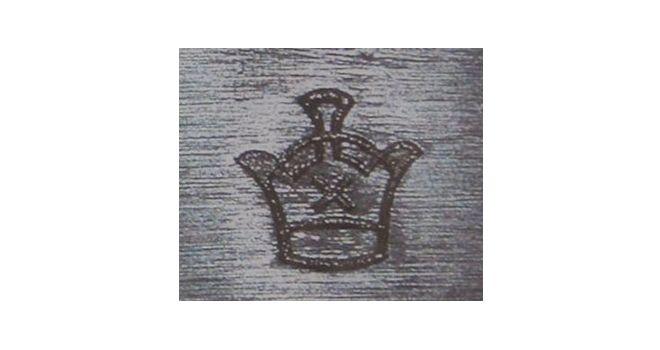
Despite the terms of the contract, the deadlines were not met and there were continuous delays for multiple different reasons. In 1943, only 214 PPSh SMGs were made in the Iranian plant. 11 from these 214 guns were sent to the Main Artillery Directorate of the Red Army as presentation guns for high ranking military and political officials. One of the SMGs was presented to Shah of Iran. The PPSh shown in the images of this article was presented to Anastas Mikoyan, the Minister of Foreign Trade of Soviet Union. These guns were hand finished and had multiple unique markings. The models that were supposed to be supplied to the Soviet army had only the crown on top of the receiver with other markings being identical to the Soviet guns.
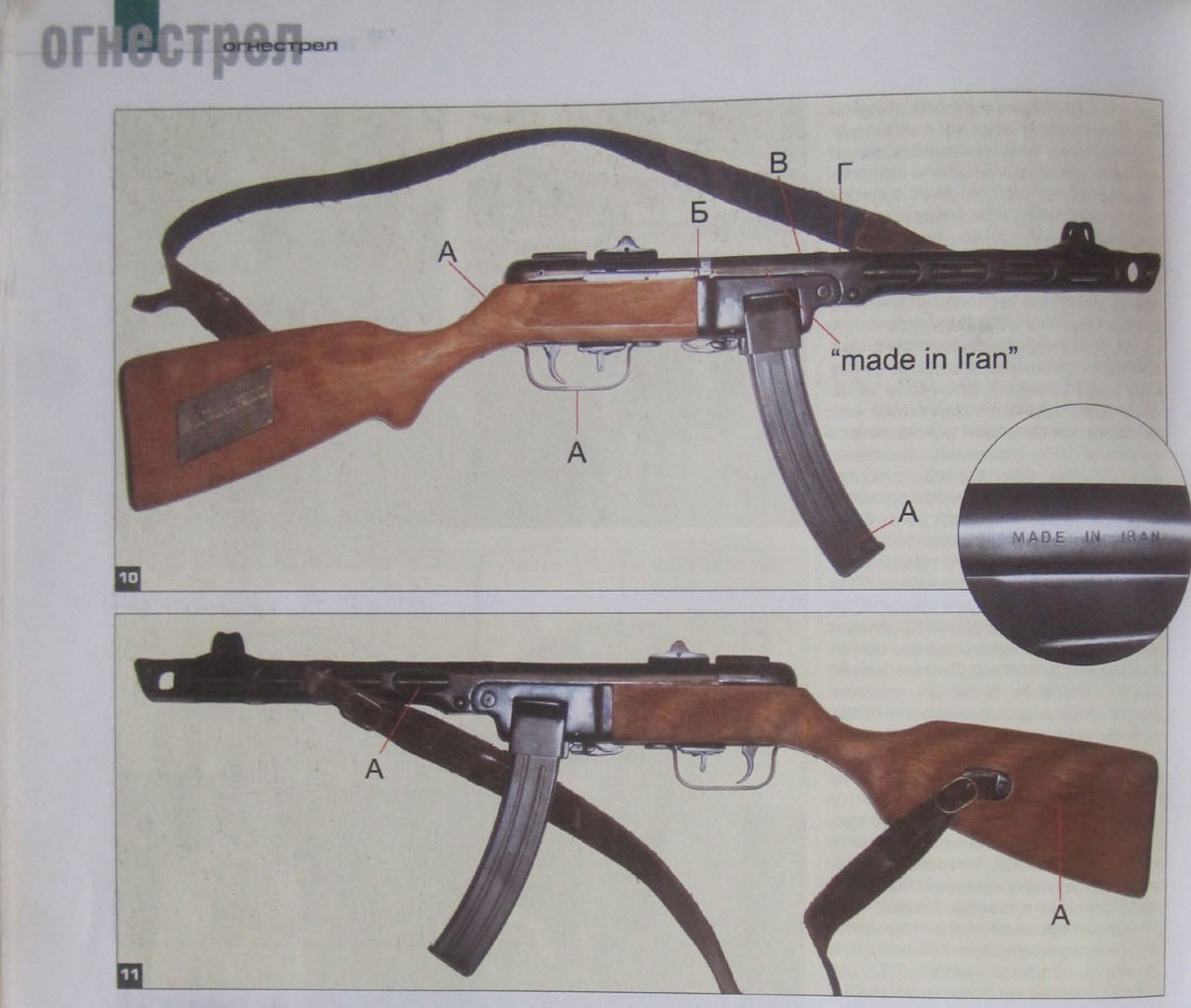
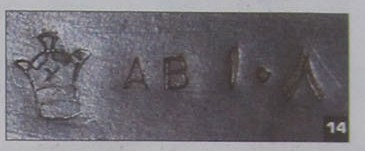
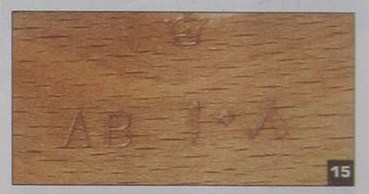
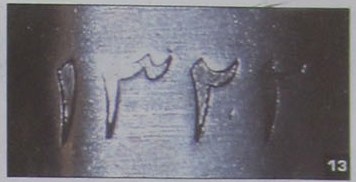
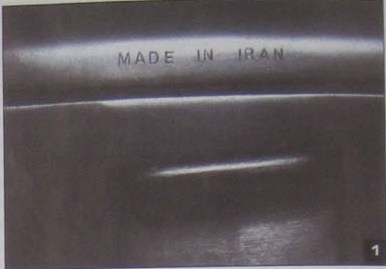
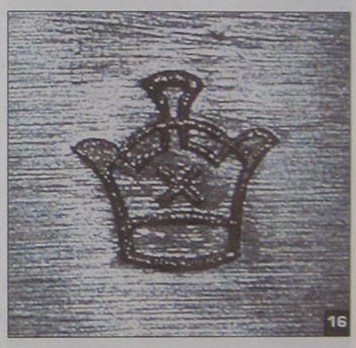
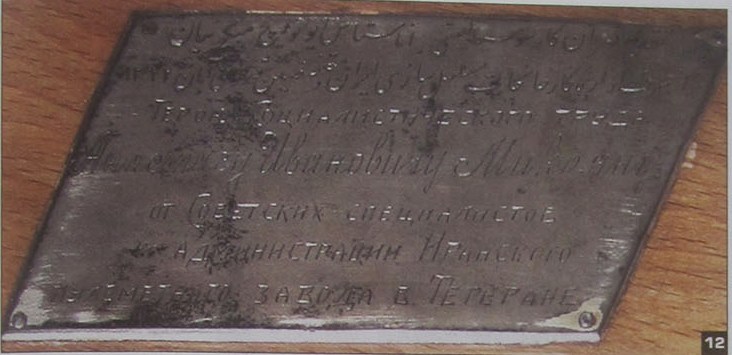
The production of these Iranian PPShs never met the set deadlines and it is unknown how many of them were supplied to the Soviet Union (various sources have various numbers). Reportedly, Iran made some PPShs for their own needs after the war, but there are no confirmed numbers either. The Iranian PPSh presented to Anastas Mikoyan is kept in the Central Armed Forces Museum of Russian Federation located in Moscow, Russia.
Sources:
Davidov B.V. (December 2005). “PPSH – Made in Iran”. “Mir Oruzhiya” Magazine.