PKP Pecheneg Machine Gun in Syria

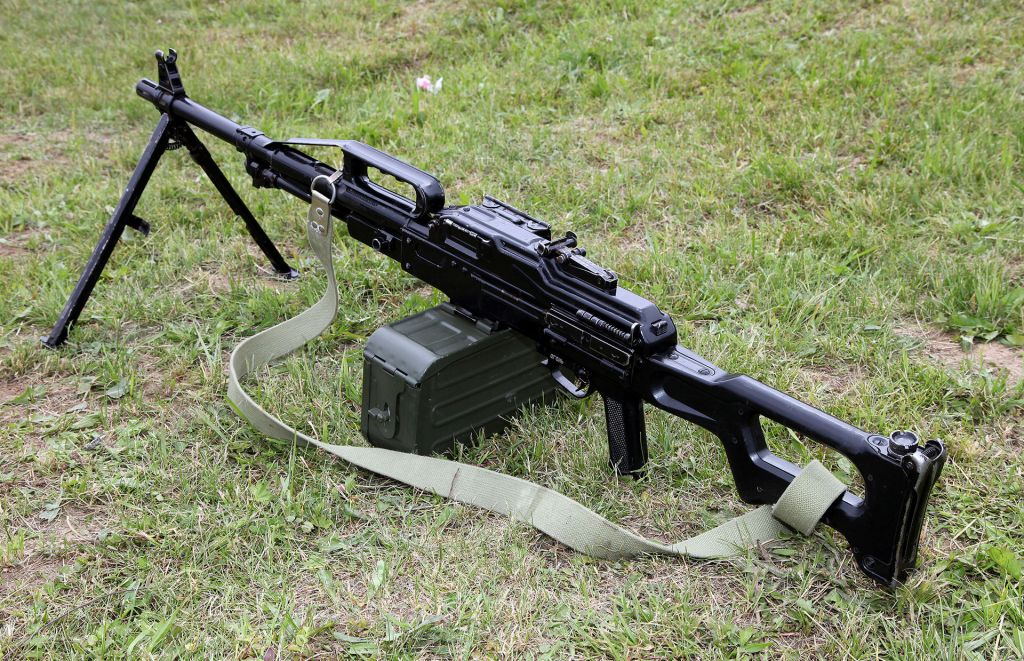
Russian PKP Pecheneg machine gun was earlier spotted in the hands of Syrian Armed Forces soldiers back in 2015. The top image of this article is taken in 2015. Lately, another image appeared in the web (see the image below) showing this machine gun again with Syrian Armed Forces. Reportedly, Pecheneg was acquired by Syria even before the civil war. It was purchased in small numbers to arm some special forces units.
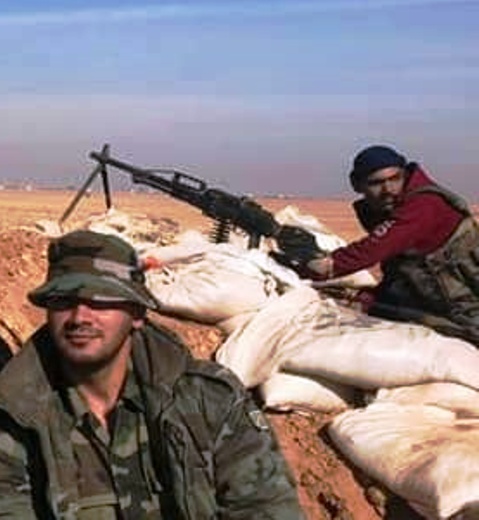
PKP Pecheneg Machine Gun in Syria
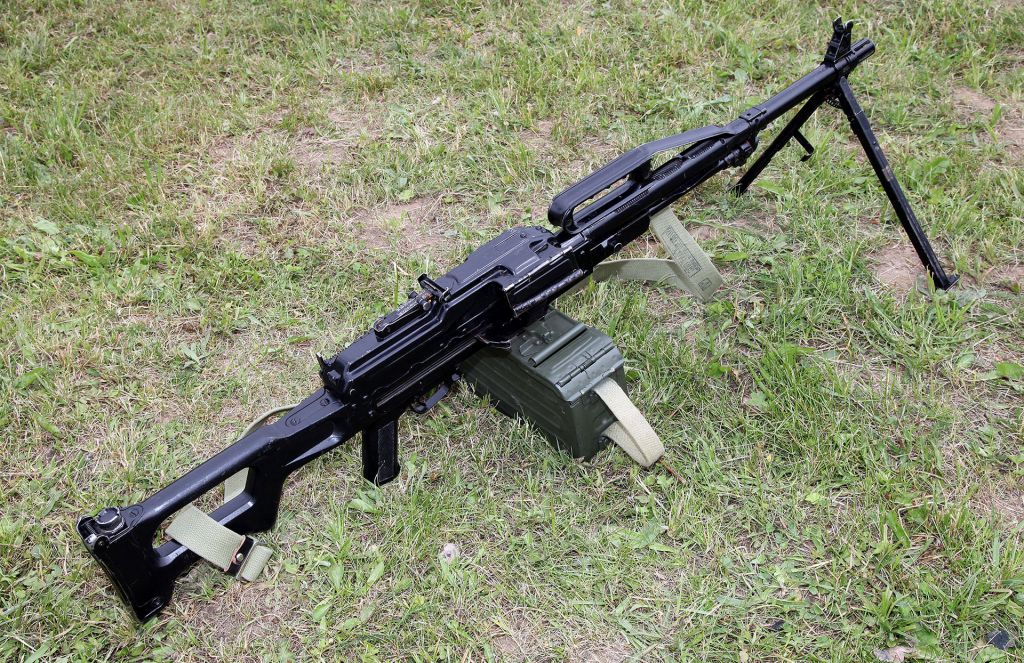
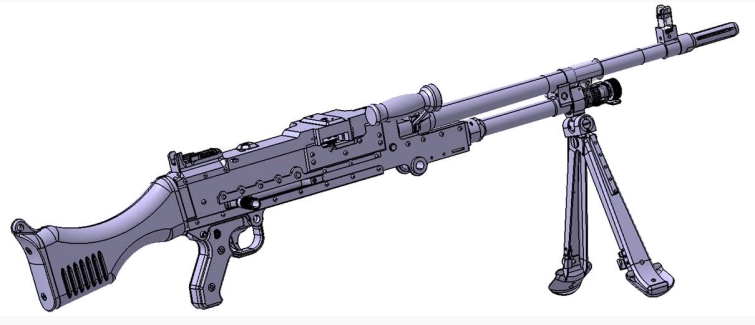
Note the distinctive carry handle shape over the barrel jacket of PKP Pecheneg machine gun

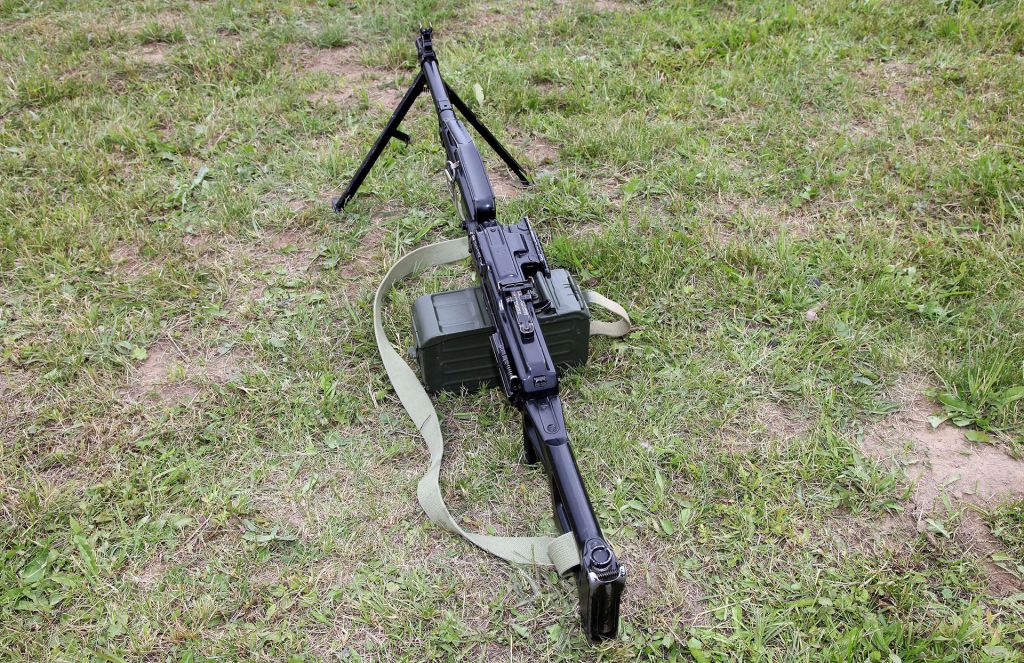
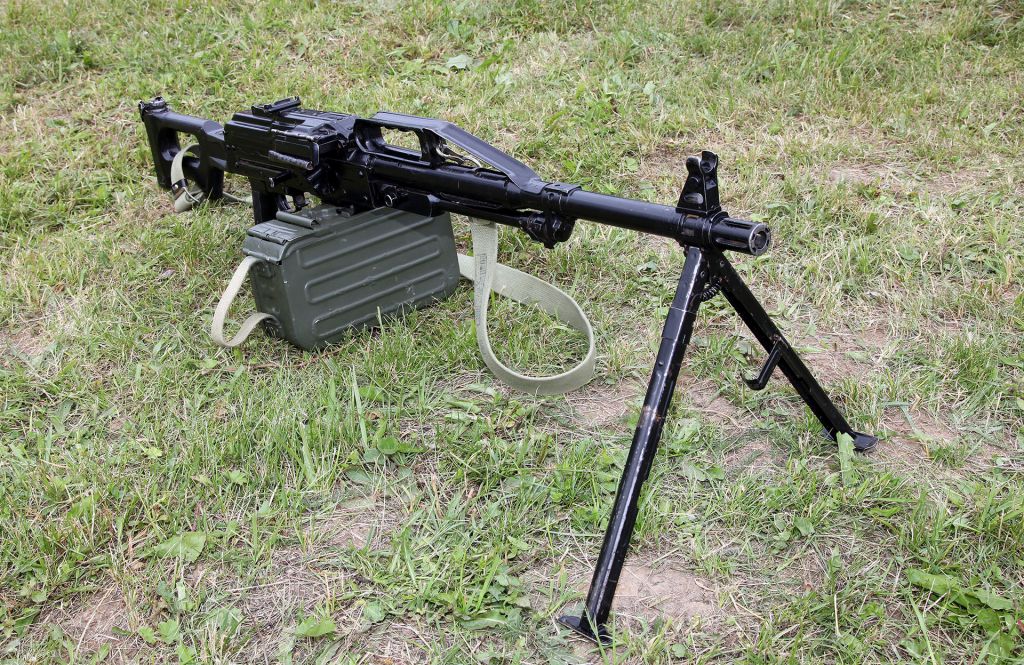
PKP Pecheneg is a general purpose machine gun chambered in 7.62x54mmR. It was designed in the late ’90s by a Russian company called TsNII TochMash. This gun is based on the PKM machine gun. Most machine guns of this category feature a quick change barrel which allows to change the heated barrel in the battlefield and keep shooting the gun with the new barrel. In the case of the Pecheneg, the designers’ goal was to get rid of the barrel changing mechanism without compromising the firepower. To achieve that goal, they had to develop a system that would allow cooling the barrel. They incorporated a forced air cooling system into the design of this machine gun. After each shot fired, the gasses escaping from the muzzle create a pumping effect forcing the air to enter the barrel jacket and pass through its length thus cooling the barrel. The barrel of PKP Pecheneg is also ribbed.

The barrel jacket also reduces the mirage coming from the heated barrel. Another difference from the PKM is the location of the bipod. Unlike the PKM, Pecheneg’s bipod is moved forward to the muzzle – much like it is seen in RPK light machine guns. Despite the described design changes, Pecheneg still has a high rate of parts compatibility with the PKM (up to 80%).

Below are several images of the PKP Pecheneg machine gun.
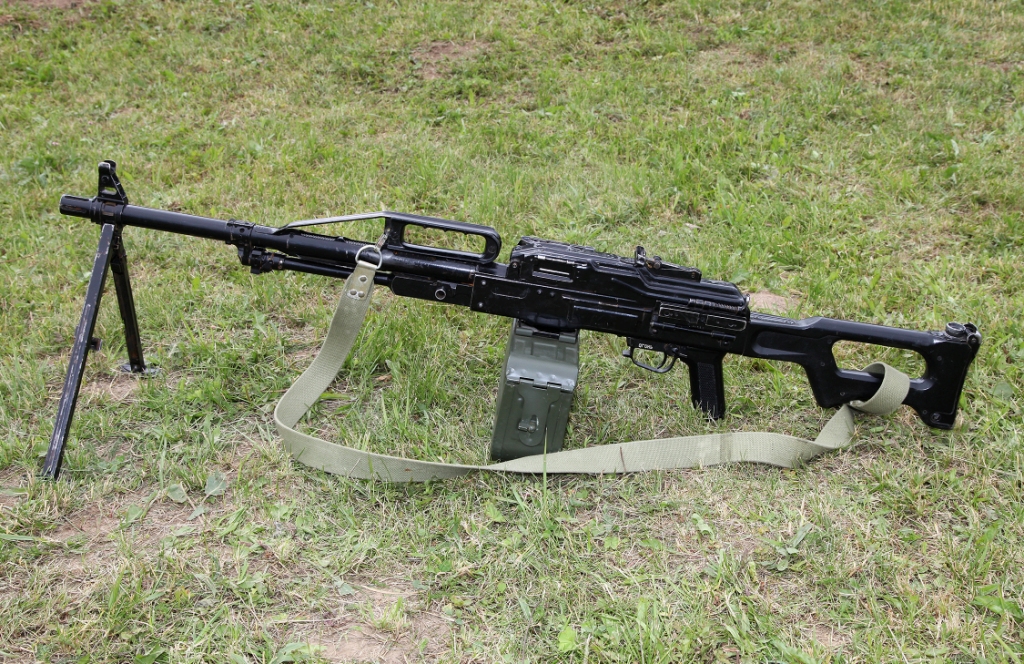
Images retrieved from Wikipedia.org

Deciphering Colloquial Afghan Names for Popular Small Arms

Silah Report took some time to ask a native Afghan from the province of Mazar-i-Sharif to talk about various colloquial names that Afghans have for popular small arms in use by the Mujahideen and in the modern era. This interview is not verbatim and has been edited for clarification.

SR- Please explain the Dragunov?

Interviewee- So the Russian name Dragunov actually isn’t used in Dari, or in Afghanistan. Instead, we call it “Draz-nuf” (درازنف) In this case, “Draz” (دراز)  Dari means long or lengthy, and that name is given to that rifle due to its overall length being longer than most small arms such the Kalashnikov, Krinkov, and Shinkov. That’s why they call it “Draz-nuf”, the “Draz” for “Lengthy” or “Long”. Likewise, with names like Krinkov, or Shinkov, these are names given to various small arms by the Mujahideen in the Soviet War. They don’t represent the actual Russian name for them.

SR- Was the “Draz-nuf”/Dragunov a special rifle among those who used it? Only choose Mujahids would use it?

Interviewee- I think so because they used it as a sniper rifle due to the optics that came with it. You can focus your target very well and then shoot it. That’s what I have seen in movies as well. But it isn’t as expensive or as sought after as the Krinkov as far as I know. Carrying a Krinkov is sort of a show-off, something a Captain, a commander, would do. Everyone would talk about how “That guy was carrying a Krinkov, or his bodyguards carry a Krinkov”. But that status symbol isn’t the same with the “Draz-nof”.

SR- What are some other names? Such as PKah, Makarov, etc…?

Interviewee- Yes, PKah, they call it by another name of “Grin-nuf”.

SR- What about the RPG?

Interviewee- This is sometimes called a “Rockeet” (راکت) or “Rockeet-Tandaz” (راکت تندز) This is because “Rockeet” is obviously the missile that is fired out of that barrel, and “Andakhtan” is the Dari verb “To Throw” (انداختن) so “Rockeet-Tandoz” is an instrument that is used to throw a “Rockeet”.

SR- What about the .303 Lee Enfield?

Interviewee- We call these “See-Sahd-See-Bor” (  سه صد سه بور) See-Sahd-See means three hundred and three in Dari, meaning the caliber .303, and “Bor” for the diameter of the barrel. I’ve seen these rifles in old people’s houses and people would say “My grandfather carried this”. And “Karabine”, is another kind of gun, but it isn’t a rifle, it is shorter, shooting single rounds instead of automatic fire. We also have “Dushka” for the DShK Heavy Machine Gun.

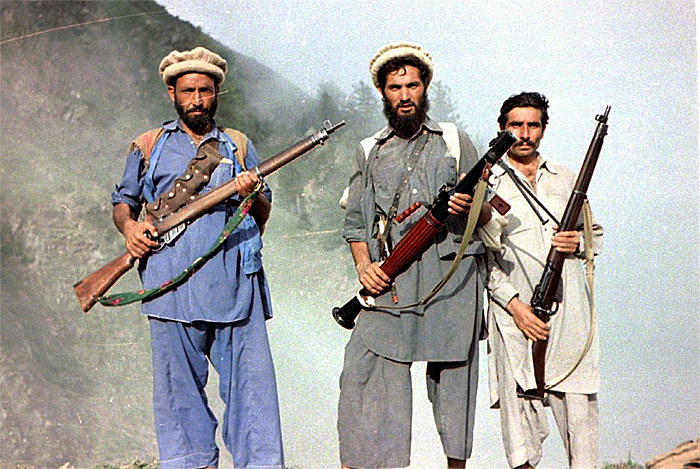
Afghan fighters hide during Soviet bombardment, Jalalabad, Nangarhar, Afghanistan, 1981

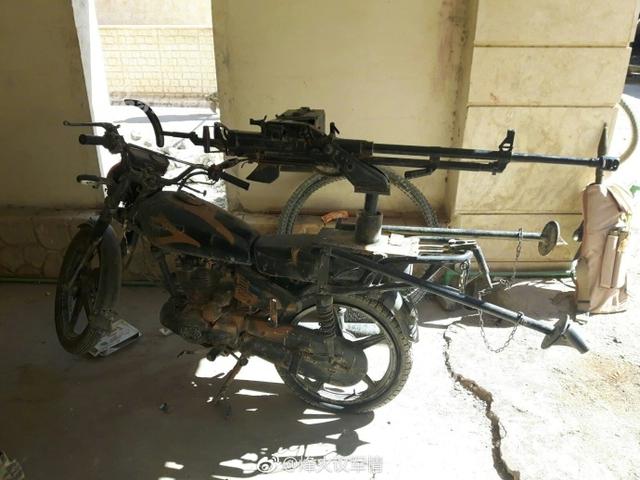
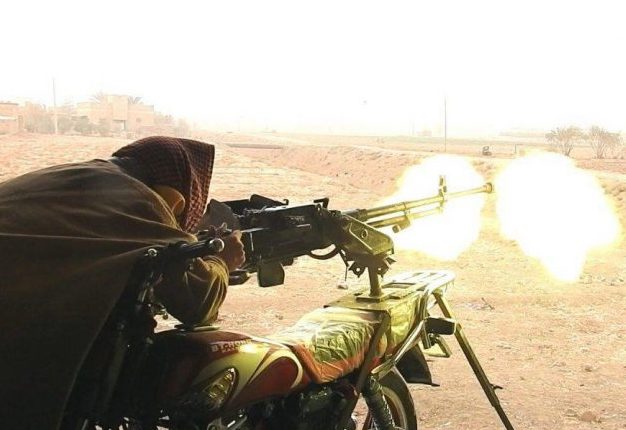
Details emerge on DShK Mounted Motorcycle

Numerous photographs of DShK mounted motorcycle “Technicals” have emerged from Syria, most extensively being shared on The Firearm Blog through this initial post of an amateur video, in addition to this one of a more detailed look through a so-called Islamic State’s Amaq propaganda video. We get a good idea of the weapon in action, but recently a photograph has emerged that shows the system in a transport mode on the motorcycle.

Notice how the bipod legs fold onto the back rack of the motorcycle while the Chinese 12.7x108mm Type 87 is pointed to the rear to be transported easier. Now, it would appear that any driver on the motorcycle would have to push the machine gun to the left or right while he is driving it

DI Optical Reflex Optics on M2 HMGs at Turkmen Parade

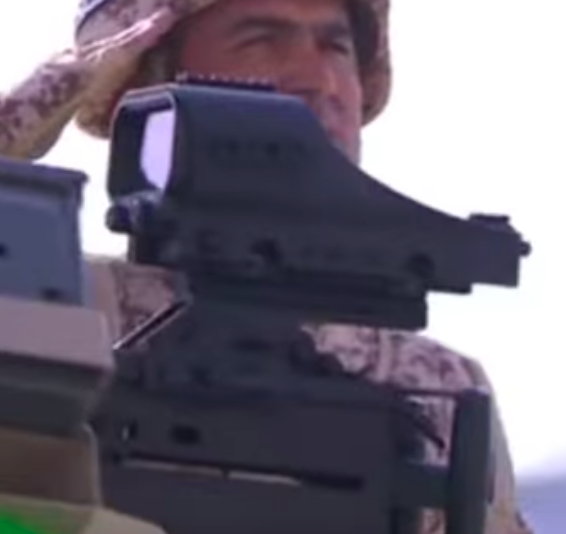
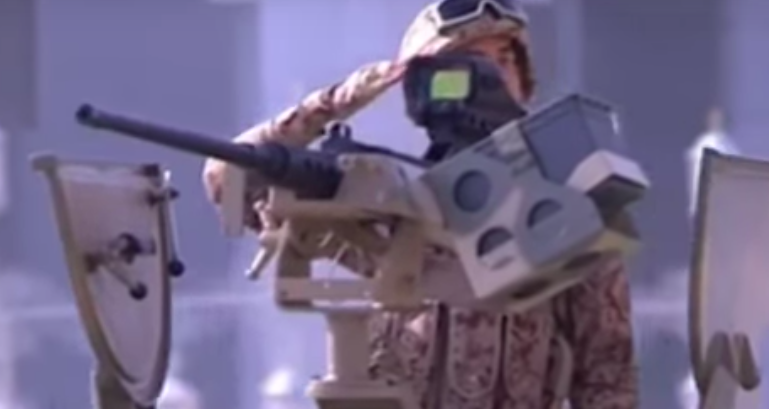
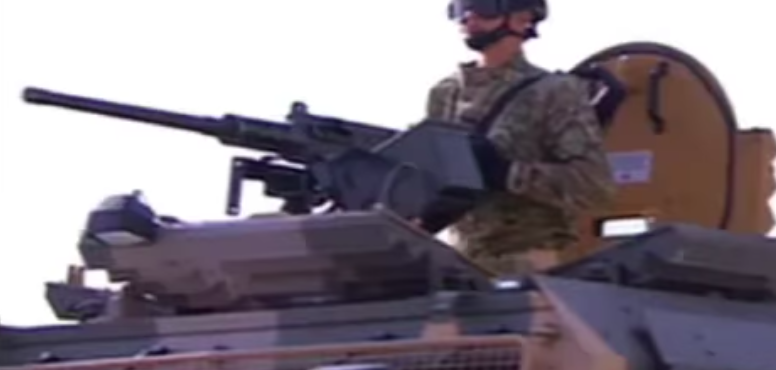
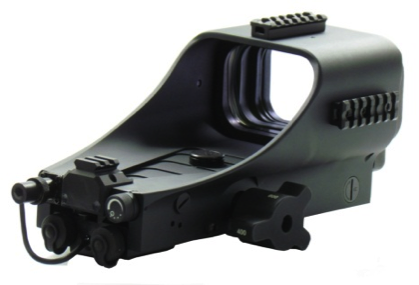
Among the latest small arms displayed at the recent Independence Day Parade were DI Optical USA DCL-120 reflex sights mounted to .50 BMG M2 Heavy Machine Guns. Currently, it isn’t known what type of mount is clamped to the receiver of the machine guns. But it certainly appears to be a Picatinny rail that allows the DCL-120 to be mounted to it.

Some of the M2 machine guns didn’t have the optics mounted on them.

From the manufacturer website-

Optical Data

System Reflex, Collimator System
Magnification No Magnification (1X)
Eye Relief Unlimited
Red Dot Size 3 MOA Dot / 40 MOA Circle
Field of View (FOV) 96 m @ 200m
Objective Lens 120 × 70 mm
Optical Coating Anti Reflex Coating All Surfaces, Multi-layer Coating for Reflection of Red Light

Electronic Data

Battery Two CR 123A 3V Lithium Battery, or External Power Source : 10~28V (Option)
Battery Life 1,000 hours
Dot Brightness Settings 1 Off & 5 Daylight Mode, 3 Twilight Mode, 3 Nightvision Mode

Mechanical Data

Housing Material High Strength Aluminum
Surface Finish Hard Anodized, Matte, Carbon Black
Mounting Solution Built-in Type (For MIL STD 1913 Picatinny Rail)
Click Adjustment 1 click = 25mm at 200m
Trajectory Ranges 200, 400, 600, 800, 1,200 meters

Dimensions

Length/Width/Height 330 mm / 180 mm / 150 mm
Weight 3,000 g

Environmental Data

Temperature Range −41 ℃ ~ +71 ℃

Optic Mounted PKM in Syria (2016)

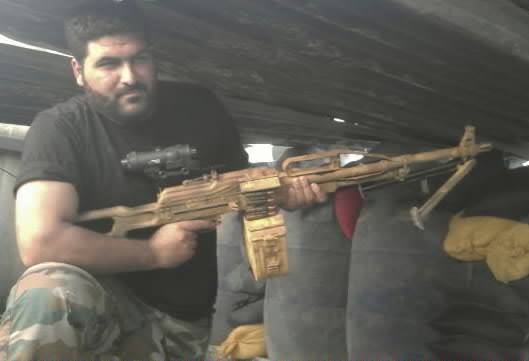
Kurdistan Insider posted this video of a Syrian Army advance in Aleppo in 2016. Most of the PKM variants being used in the Syrian conflict have been seen without any sort of optics platforms mounted to them, this is mostly because of the lack of equipment that many of these rebel groups can capture.

However in this case, it appears to be a thermal or at least an IR capable optic platform due to the bulbous appearance, in addition to the numerous knobs which might be battery caps for power. In addition the eye piece appears to be fitted or contoured to the shooter’s eye, indicating a bright screen that needs to be shielded during times of low light. Because this is a Syrian Army position, it is most likely that the optic is Russian supplied.

Screen Shot 2017-02-20 at 11.34.11 PM.png

In the same video clip, what appears to be an AK century series rifle being used by frontline soldiers, possibly in 5.45x39mm due to the straighter magazine in use.
Screen Shot 2017-02-20 at 11.34.31 PM.pngScreen Shot 2017-02-20 at 11.34.21 PM.png

WW II Small Arms in Libya

Although this these images are from a post that is several years old and on an Airsoft forum, the historical relevance is still very important to consider when examining small arms in the MENA region. These photographs came out during the massive unrest in Libya during and following the Libyan unrest otherwise known as “17 February” that overthrew long-time ruler Muammar Gaddafi. Although many of these small arms were actually used in fighting, the photographs appear to show a lull, where militia forces aren’t actually engaged but are rather conducting target practice or celebrating.

Two variants of the U.S. 1919 are shown, the first one appears to be a heavily modified 1919A4 variant, while the second one is a 1919A6. At first glance, these may appear to be 7.62x51mm NATO variants that Israel modified to use in the IDF during the 1950s and 1960s. However, a closer look at the belt of ammunition reveals the length of the rounds do appear to be .30-06 Spr and thus are most likely original manufacture 1919A4s and A6s.

libyanrebs15 libyanrebs07 libyanrebs06The photo below shows a Browning Hi Power, Sterling SMG, and a Caracano rifle in the background.
libyanrebs

The proceeding two photographs are of a Russian 7.62x54Rmm DP28 light machine gun. These might have arrived in Libya as a form of surplus support from the Soviet Union during the Cold War.

libyanrebs17
libyanrebs05

At an initial glance, this would appear to be a German 9x19mm MP40, but instead, due to the circular opening in the magazine well it is in fact, the predecessor to the MP40, the MP38.

libyanrebs10

This rifle appears to be a Mauser K98 with a broken stock that has been replaced

libyanrebs02

17 February Unrest Summary (Wikipedia)-

The first Libyan Civil War, also referred to as the Libyan Revolution[33] or 17 February Revolution,[34] was an armed conflict in 2011, in the North African country of Libya, fought between forces loyal to Colonel Muammar Gaddafi and those seeking to oust his government.[35][36] The war was preceded by protests in Zawiya on 8 August 2009, and finally ignited by protests in Benghazi beginning on Tuesday, 15 February 2011, which led to clashes with security forces that fired on the crowd.[37] The protests escalated into a rebellion that spread across the country,[38] with the forces opposing Gaddafi establishing an interim governing body, the National Transitional Council.

The United Nations Security Council passed an initial resolution on 26 February, freezing the assets of Gaddafi and his inner circle and restricting their travel, and referred the matter to the International Criminal Court for investigation.[39] In early March, Gaddafi’s forces rallied, pushed eastwards and re-took several coastal cities before reaching Benghazi. A further UN resolution authorised member states to establish and enforce a no-fly zone over Libya, and to use “all necessary measures” to prevent attacks on civilians.[40] The Gaddafi government then announced a ceasefire, but fighting continued.[41][42] Throughout the conflict, rebels rejected government offers of a ceasefire and efforts by the African Union to end the fighting because the plans set forth did not include the removal of Gaddafi.[43]

FP’s Take on Malhama Tactical

Malhama Tactical has been covered through numerous defense and small arms websites recently but this is the first time the print magazine Foreign Policy has ran an article on its unique guns for hire status. The group is led by an Uzbek fighter, who appears to have had some previous military training at an enlisted level.

Screen Shot 2017-02-10 at 7.14.56 PM.png

From FP-

The group’s leader is a 24-year-old from Uzbekistan who goes by the name Abu Rofiq (an Arabic pseudonym that means father of Rofiq). Little is known about him other than that he cycles through personal social media accounts rapidly, using fake names and false information to throw off surveillance efforts. In virtually every video and photo posted online, he wears a scarf or balaclava to cover his face from the nose down, leaving visible only his narrow dark eyes and long, somewhat tangled, pitch-black hair. He speaks fluent Russian, but with a slight Uzbek accent.

Since launching in May 2016, Malhama has grown to do brisk business in Syria, having been contracted to fight, and provide training and other battlefield consulting, alongside groups like the al Qaeda-affiliated Jabhat Fateh al-Sham (formerly known as the Nusra Front) and the Turkistan Islamic Party, a Uighur extremist group from China’s restive Xinjiang province. And despite recent rebel setbacks in Syria, including the loss of Aleppo, demand for Malhama Tactical’s services in the country is as strong as ever, Abu Rofiq told Foreign Policy in an interview conducted over the messaging app Telegram.

But he is also beginning to think about expanding elsewhere. His group is willing to take work, Abu Rofiq says, wherever Sunni Muslims are oppressed. He cites China and Myanmar as places that would benefit from jihad. He also suggests that Malhama Tactical might go back to its roots, returning to fight in the North Caucasus against the Russian government.

The group’s videos do show a certain degree of tactical proficiency, but lack the finesse that comes with being an NCO, such as this video covering casualty aid under fire. The casualty is assessed and treated, but there is very little respect to security being provided.

https://www.youtube.com/watch?v=4OxLah2rgMM