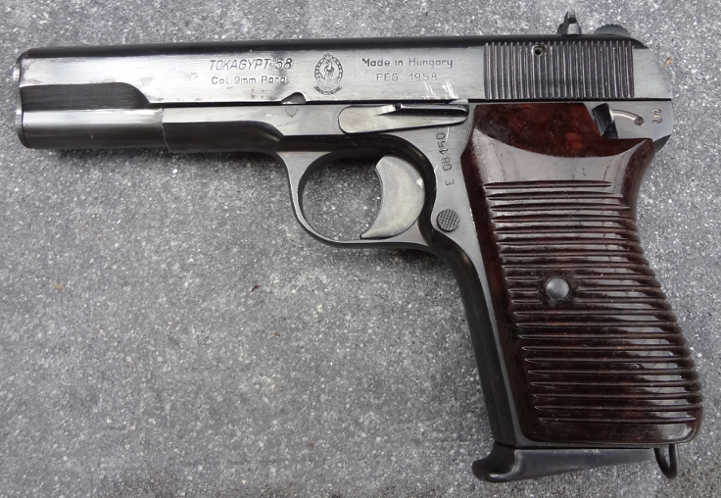
In 1957, the Hungarian conglomerate “FEG” (Fegyver- és Gépgyár-Arms and Machine Manufacturing Company) received a contract from the Egyptian Armed Forces requesting 30,000 Tokarev handguns. The Tokarevs would be in 9mm Parabellum instead of the 7.62 Tokarev round, magazines would have finger supports, a one-piece plastic grip, and a safety catch on top of the left side of the receiver.
9mm
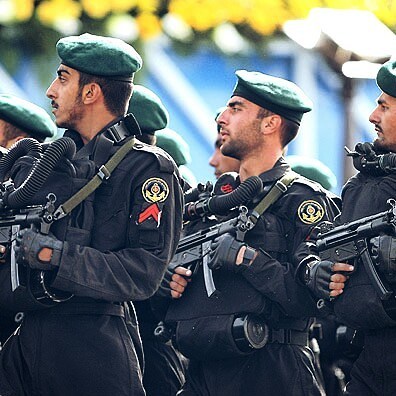
Straight MP5 Magazine spotted in Isfahan LE Demonstration
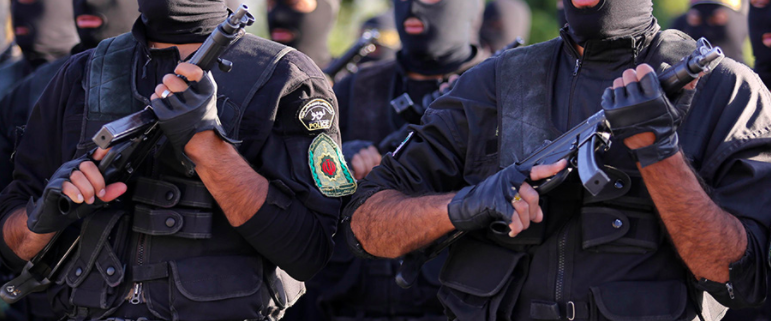
Within the Law Enforcement demonstration recently held in Isfahan (in which we posted about a thermal optic in use ), a straight walled magazine was spotted in use by one of the officers taking part in the demonstration. Iran’s Defense Industries Organization produced licensed copies of the MP5 from the time of the Shah (along with the G3), and it is still heavily employed by Iranian forces. Most of the MP5s today appear to be equipped with the curved 30 round magazine, but that is what makes this particular one stand out, due to the original straight wall design that Heckler & Koch introduced the very first MP5 variants with.
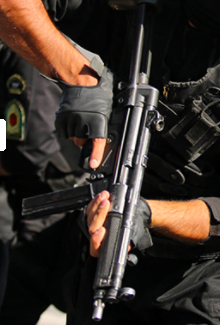
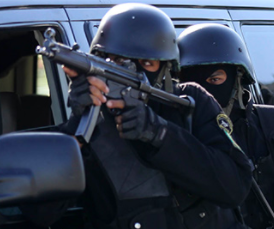
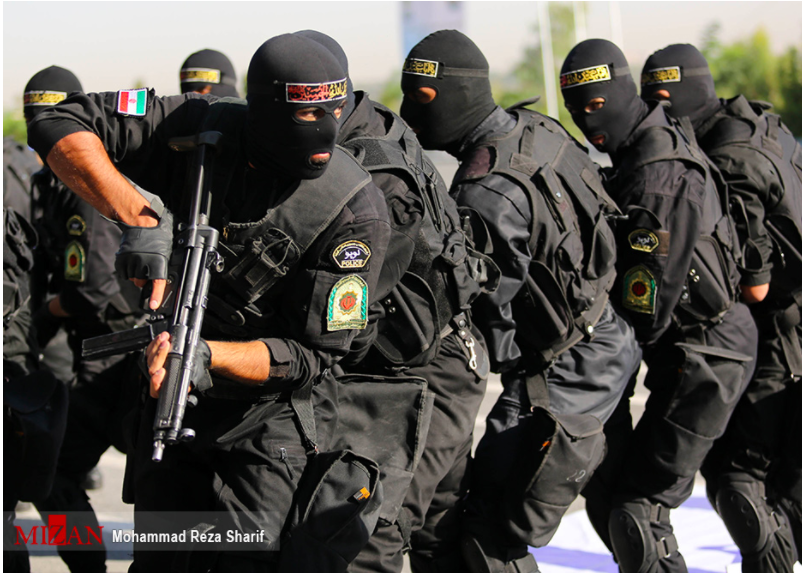
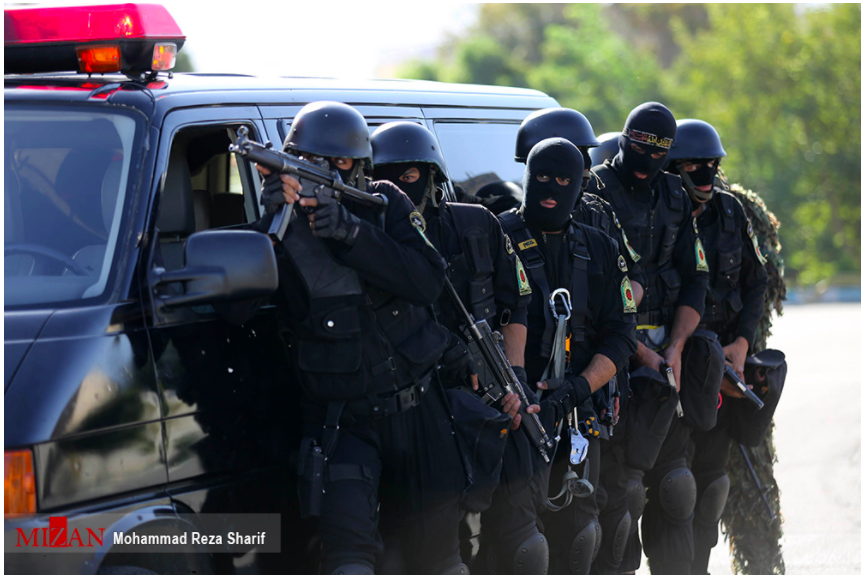
The MP5 has several variants within Iran, one of which has green polymer furniture, while there is an MP5K variant with a forward grip.


Improvised Replica Firearms from the West Bank
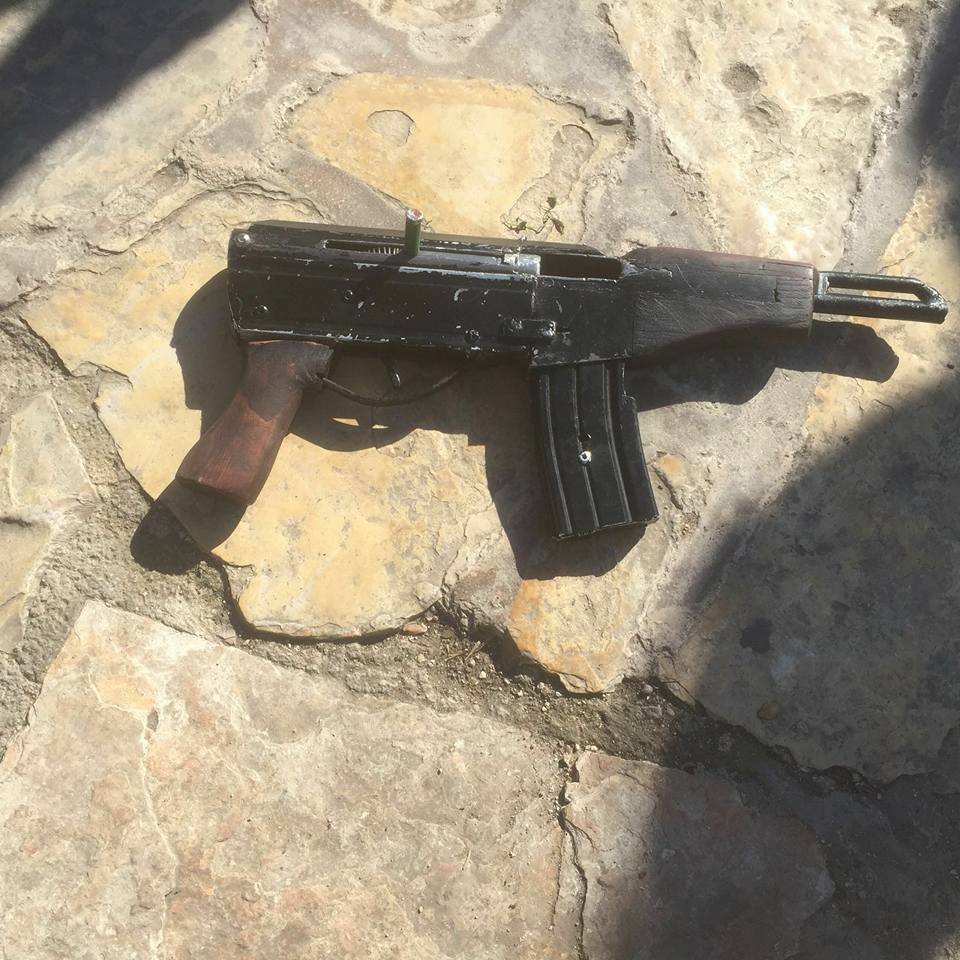
In my previous article, we examined the Palestinian homemade Carlo submachine gun in use in the West Bank.
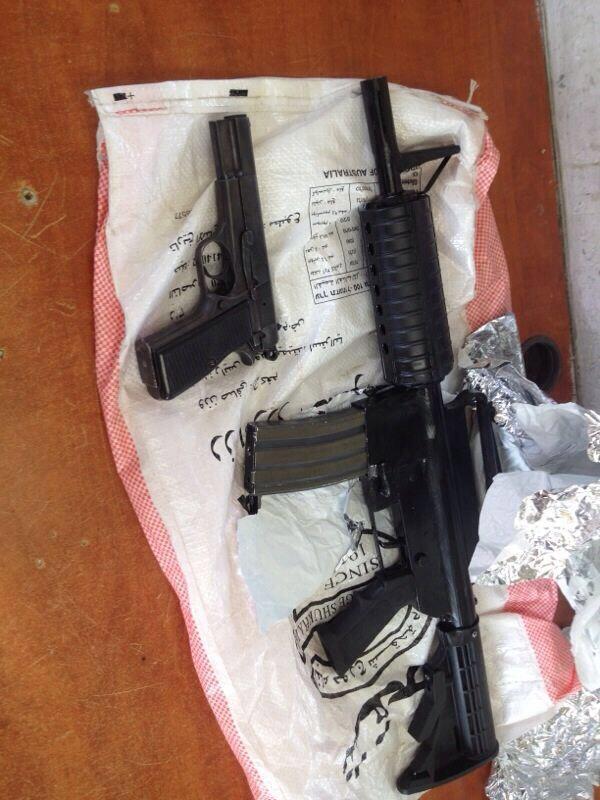
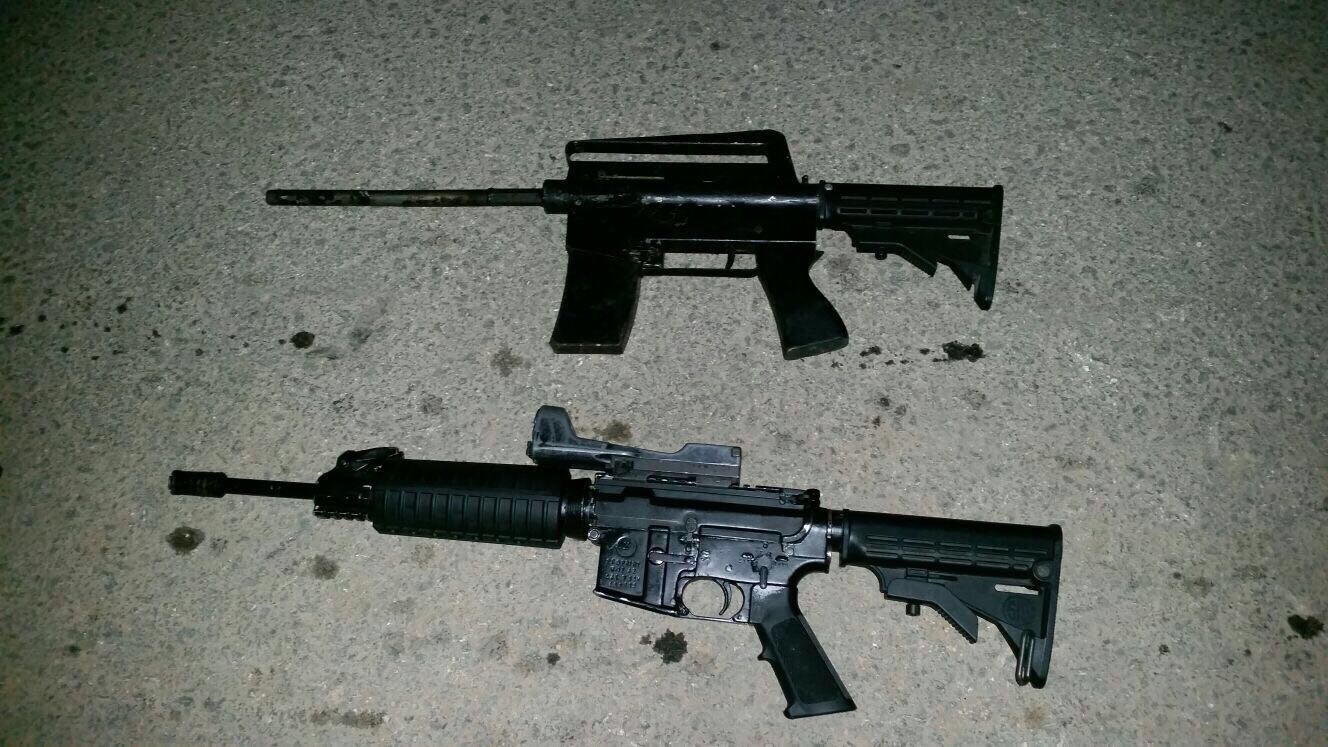
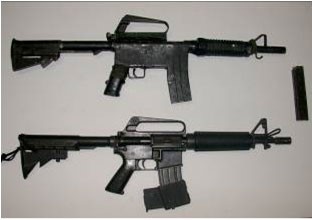
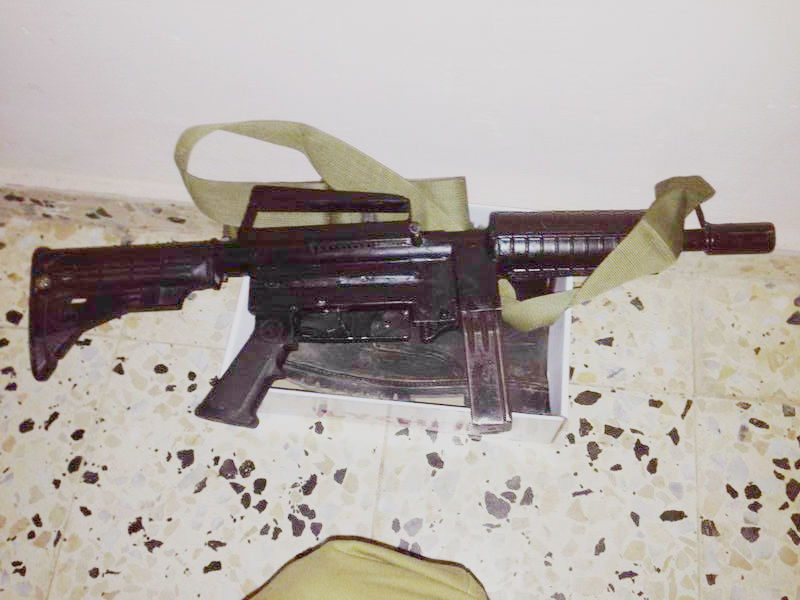
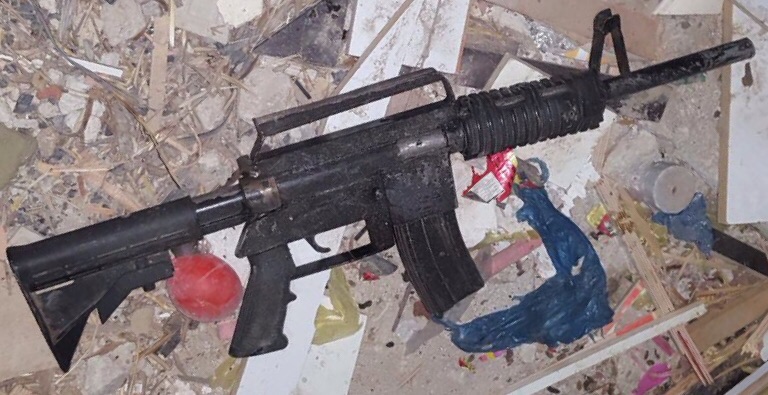
This article will examine the design and use of improvised firearms among Palestinians in the West Bank, that are otherwise known as “Replica” Carlo’s due to their similarity in appearance to the M4s and M16 rifles in use throughout Isreal that the designs are replicating. The majority of these weapons are 9x19mm NATO, fully automatic only, magazine fed, open bolt designs that are improvised from underground manufacturers that use machinery and materials purchased on the black market or outright stolen. Due to the variance in production and origins, there is no set standard of appearance for these weapons. Rather there is a general consensus that the appearance is identical to an M4 or M16 from afar, but that there are significant differences between individual models.
Motives for Producing Replicas and the Cultural Context
Availability
The prime reason to manufacture the Carlo is to resemble as closely as possible an M-16 or M-4 is the availability of furniture and magazines in Israel and the West Bank. Both guns were and still are a major part of the Israeli armament, used by the IDF, police, civil guard etc… Because of this availability of parts, Armalite based designs are favored when theft becomes an option.
From a manufacturing point of view, it makes sense to design your gun to match the existing furniture and magazines already available than to manufacture them along with the gun.
Status and Prestige
Guns have a significant role in the Arab tradition, centuries of existence in lawless regions made it essential to own weapons for self-defense and as a deterrence against other tribes who were also armed themselves with whatever they could get their hands on.
Although civilian gun ownership is largely restricted and banned by both Israel and the Palestinian Authority many Arab families in the West Bank and Israel are determined to keep their arsenals and enlarge them as much as possible.
Alongside the practicality of owning a gun the guns are symbols of status and wealth. A family or an individual that can afford high-end weapons rather than a homemade one enjoy prestige over those who compromise with the local workshop products.
Acquiring a real military grade firearm might be expensive and the common garden variety Carlos are too widespread. The Carlo replicas are a way to bridge that gap, have a more expensive and awe-inducing gun without the cost of acquiring the M4 that the replica is based on.
Imitating Popular Palestinian Figures
Many in the Arab population view the terror organizations and terrorists as freedom fighters and role models, naturally, there are those who want to imitate these heroes and want to have their guns be as identical to those who they admire. If the genuine guns and ammo are out of reach then the replicas become the alternative, relatively cheap and available supplies of ammunition to practice and show off. It is then easy to understand why some workshops making the replicas make great efforts to produce almost identical copies.
Infiltration
It has been speculated that the M4 replicas could be used for terror attacks against Israeli civilians or IDF soldiers. Due to the apparent shape of the replicas being similar to the M16 service rifle used by the IDF. This will confuse soldiers and security guards, mistaking the identity of terrorists as IDF soldiers, making them hesitate to shoot.
A fair theory, however, none of the individuals caught with these replicas has ever been caught with an IDF uniform to match the gun. Currently, the records show that after numerous attacks done by Carlo wielding terrorists none were carrying any replicas. All of the photos released by IDF and police spokesmen show a regular Carlos.
Stolen or Lost Weapons and Magazines
An obvious source for both guns and their magazines are various stocks of small arms already existing in Israel. IDF, police, border guards, private security, armed civilians and many other groups are armed with M16s and M4s. This creates an abundance of stock from which guns and magazines can be acquired, by searching IDF training areas or breaking into a police officer’s home for example.
Commercial market
Several Israeli companies, such as FAB and CAA, known in the U.S. commercial gun market for their products, are also producing and selling M16 and M4 furniture in Israel. Many IDF soldiers individually choose to upgrade their weapons at their own expense. Such equipment is sold regularly and without any background checks and it stands to reason that some of the replicas are using such legally purchased furniture.
Paintball and Airsoft Replicas
There were some on Israeli gun web forums who speculate that paintball and airsoft replicas could be the source for the Carlos replicas’ receivers.
Indeed such guns could be cannibalized to provide the Carlo replica receivers.
The 9x19mm NATO ammunition produces less pressure than intermedium cartridges do so the light structure of the paintball and airsoft might withstand the additional pressure.
However, thought technical plausible, photos taken of captured Carlos or those surface in the Arab social media don’t indicate that paintball and airsoft are used.
The replicas’ ‘receivers’ all appear to be workshop made with all the typical welding seams, rivets and out of proportions dimensions.
Embedded Magazine
Curious readers might wonder how open bolt 9x19mm submachine guns are fed with 5.56x45mm NATO STANAG magazines.
The answer is simple, the craftsmen making the guns mimic the real guns embed pistol or Uzi 9x19mm magazine inside the real STANG magazines.
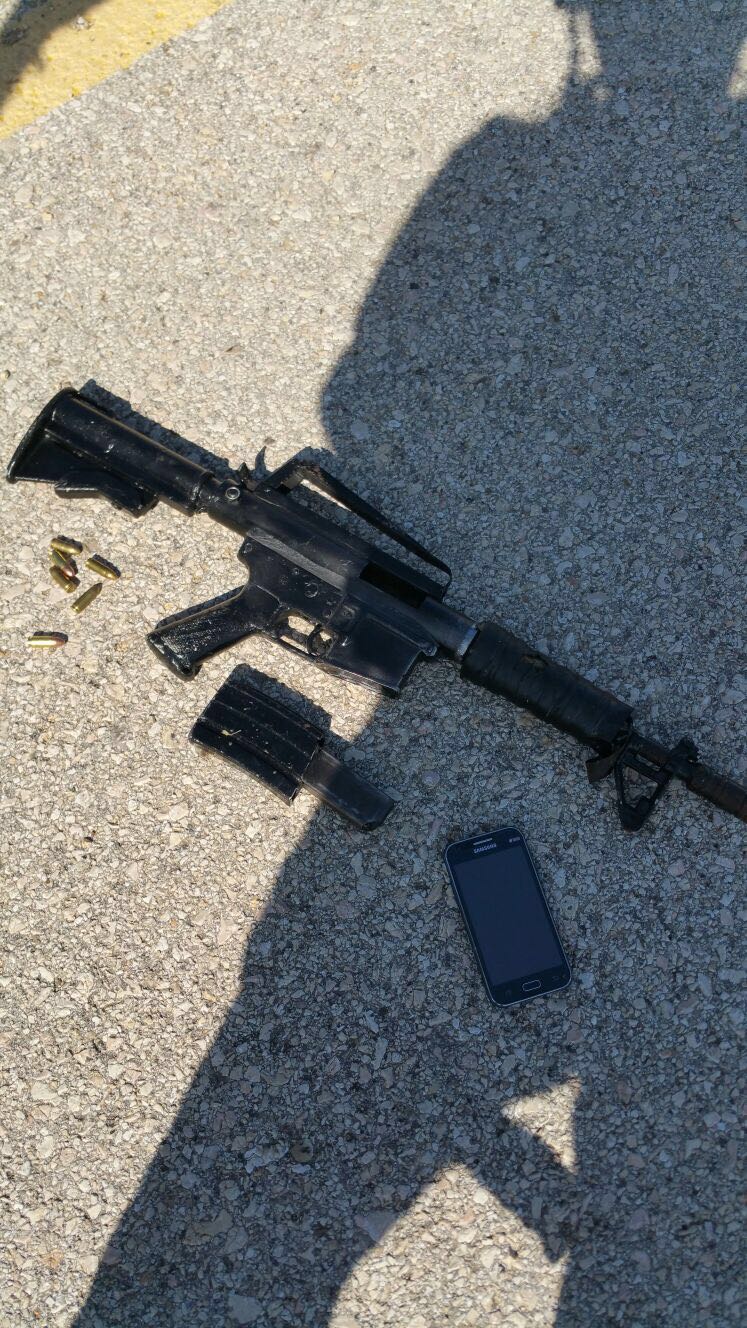
Similar to Matryoshka dolls, these magazines are inside of the weapon with few exterior modifications to the STANG magazine.
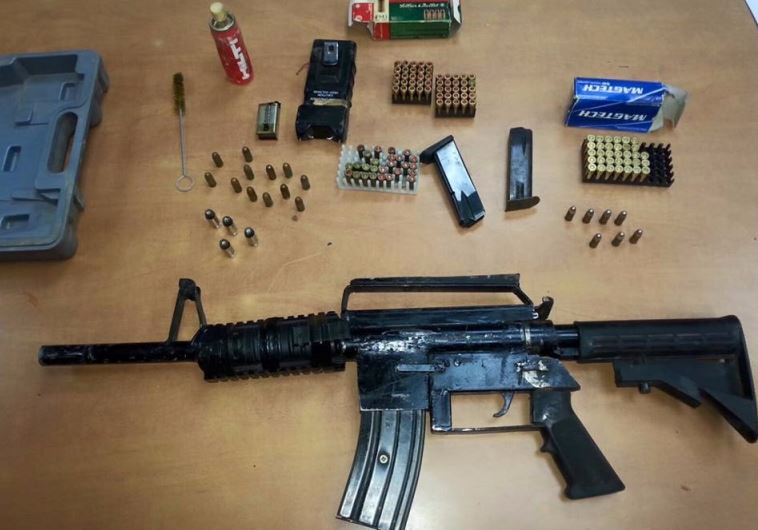
Those rivets hold the inner magazine in place.
Outside of the weapon the inner magazine is revealed protruding out of the STANAG housing magazine.
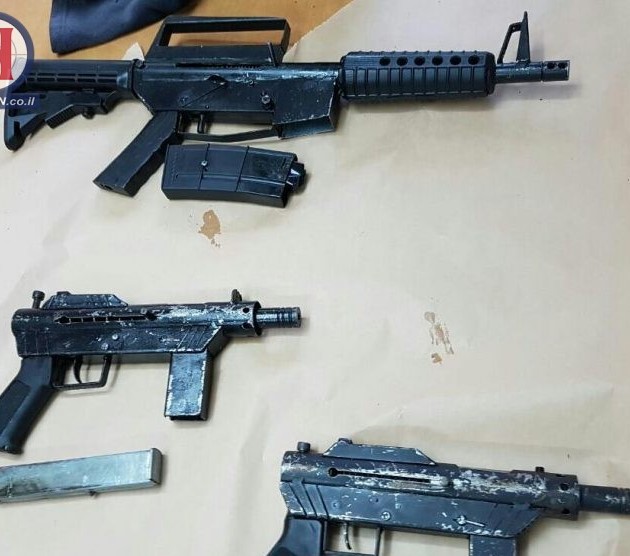
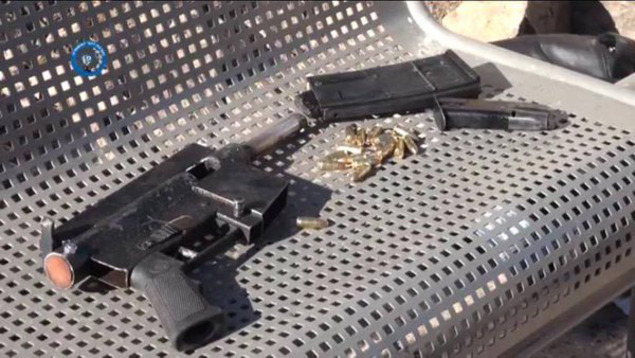
Such arrangement of small caliber magazine housed inside bigger caliber magazine shell is unusual but not unique, for example, the Philippines Armscor M16 22 is a 22LR semi-auto rifle dressed as an M16A1 with a matching STANAG size magazines containing 22LR magazines inside
WW II Small Arms in Libya

Although this these images are from a post that is several years old and on an Airsoft forum, the historical relevance is still very important to consider when examining small arms in the MENA region. These photographs came out during the massive unrest in Libya during and following the Libyan unrest otherwise known as “17 February” that overthrew long-time ruler Muammar Gaddafi. Although many of these small arms were actually used in fighting, the photographs appear to show a lull, where militia forces aren’t actually engaged but are rather conducting target practice or celebrating.
Two variants of the U.S. 1919 are shown, the first one appears to be a heavily modified 1919A4 variant, while the second one is a 1919A6. At first glance, these may appear to be 7.62x51mm NATO variants that Israel modified to use in the IDF during the 1950s and 1960s. However, a closer look at the belt of ammunition reveals the length of the rounds do appear to be .30-06 Spr and thus are most likely original manufacture 1919A4s and A6s.


 The photo below shows a Browning Hi Power, Sterling SMG, and a Caracano rifle in the background.

The proceeding two photographs are of a Russian 7.62x54Rmm DP28 light machine gun. These might have arrived in Libya as a form of surplus support from the Soviet Union during the Cold War.


At an initial glance, this would appear to be a German 9x19mm MP40, but instead, due to the circular opening in the magazine well it is in fact, the predecessor to the MP40, the MP38.

This rifle appears to be a Mauser K98 with a broken stock that has been replaced

17 February Unrest Summary (Wikipedia)-
The first Libyan Civil War, also referred to as the Libyan Revolution[33] or 17 February Revolution,[34] was an armed conflict in 2011, in the North African country of Libya, fought between forces loyal to Colonel Muammar Gaddafi and those seeking to oust his government.[35][36] The war was preceded by protests in Zawiya on 8 August 2009, and finally ignited by protests in Benghazi beginning on Tuesday, 15 February 2011, which led to clashes with security forces that fired on the crowd.[37] The protests escalated into a rebellion that spread across the country,[38] with the forces opposing Gaddafi establishing an interim governing body, the National Transitional Council.
The United Nations Security Council passed an initial resolution on 26 February, freezing the assets of Gaddafi and his inner circle and restricting their travel, and referred the matter to the International Criminal Court for investigation.[39] In early March, Gaddafi’s forces rallied, pushed eastwards and re-took several coastal cities before reaching Benghazi. A further UN resolution authorised member states to establish and enforce a no-fly zone over Libya, and to use “all necessary measures” to prevent attacks on civilians.[40] The Gaddafi government then announced a ceasefire, but fighting continued.[41][42] Throughout the conflict, rebels rejected government offers of a ceasefire and efforts by the African Union to end the fighting because the plans set forth did not include the removal of Gaddafi.[43]
Iraq Spotlight: STG44 & MP40 Pair

Recently coming out of Baghdad are these images of a very well worn down German STG44 and what comparatively appears to be a less used 9x19mm MP40 submachine gun. There were not any close up photographs of the internals of the small arms so it is hard to ascertain what year in WWII either was made in.


STG44s have been reported in abundance in neighboring Syria, often arming Daesh troops in Raqqa. There is even an inside report on these rifles by a source in Syria from TFB. The largest issue with them is that 7.62x33mm Kurz is extremely hard to come by, although the rifles themselves are very plentiful and in like new condition.
Notice on the MP40 the grip sleeve. These are used on a number of handguns in Iraq and is actually an Airsoft import from China. They come in a number of colors, from green to tan, to black.

