
In our previous article we reviewed the history of different submachine guns which entered Iranian service during the Pahlavi era. In 1979, when the Pahlavi dynasty was overthrown by Islamic Revolutionaries, many small arms purchased by the former regime continued their service with Artesh (armed forces) and newly branded armed forces such as Sepah Pasdaran (the Islamic Revolutionary Guard Corps). There were a couple of submachine gun purchases made by the new regime in the 1980s from unknown sources, these purchases mostly were conducted by IRGC to arm their units, including a new unit called Ansar-Al Mahdi who are tasked with VIP protection as well Saberin and S.N.S.F. In this article, accompanied by an interview with the author on a recent episode of the Silah Report Podcast, we will examine the submachine gun platforms which entered Iranian service after the Islamic Revolution using photographic evidence.
submachine gun
Silah Report Podcast V33: Iranian Submachine Guns (1941-1979)
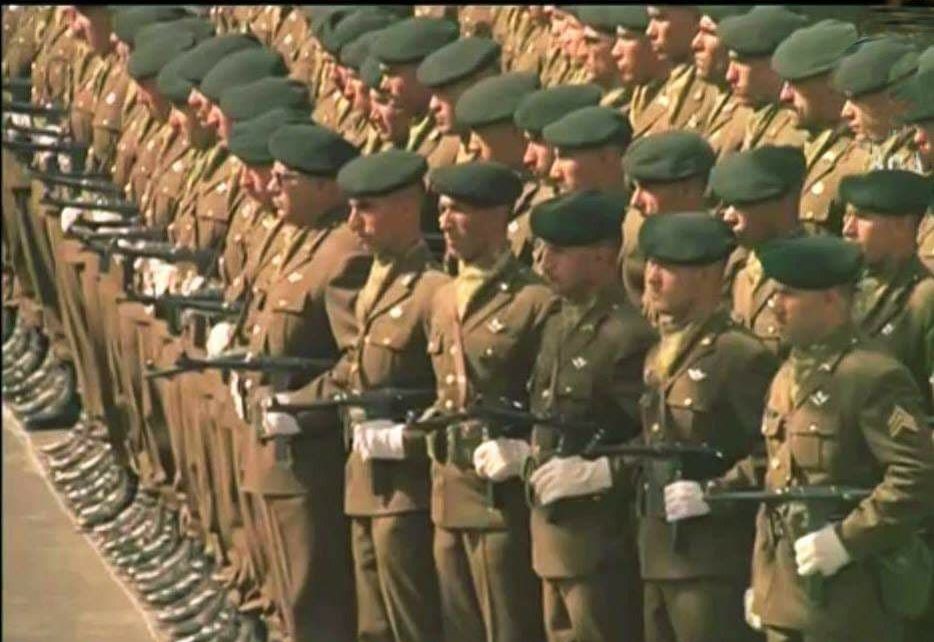
During the rule of Mohammad Reza Pahlavi, the Iranian military and law enforcement were equipped with a variety of submachine guns of Western and Eastern origins. Some were locally produced while others were imported in limited numbers. The main Persian word to describe a submachine gun is mosalsal (مسلسل in the Persian alphabet) which loosely means a ‘small arm that shoots continuously’. Here we will take a close look at examples of submachine guns that were imported or produced locally by the Iranian government during the rule of Mohammad Reza Pahlavi between 1941 to 1979 based on the existing information and photographic evidence. Also included in this article is a podcast interview with the piece’s author Yousef Riazi.
The American ‘Tommy Gun’ In The Pak-Afghan Region
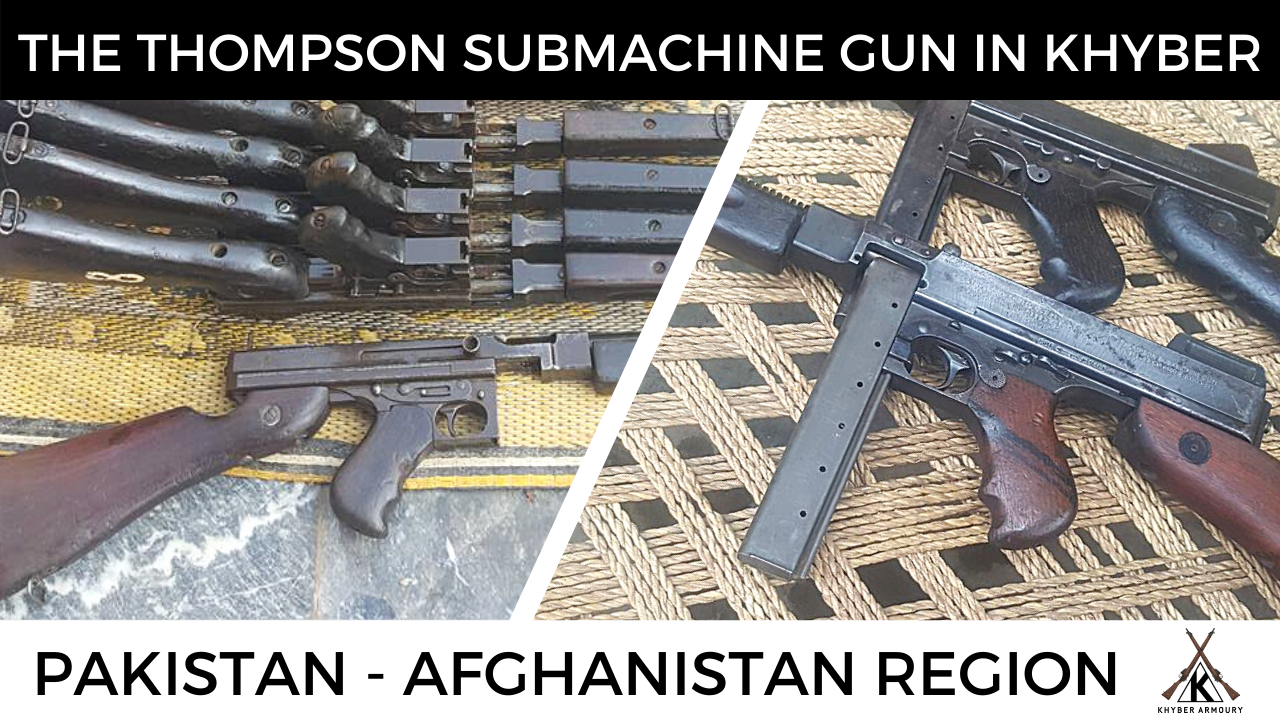
The Thompson models 1928, 1928A1, M1 and M1A1 submachine guns, famously also nicknamed the ‘Tommy Gun’, are a heavy weight milled all-steel submachine gun design, chambered in the U.S. military’s then standard issue pistol round – the .45 ACP cartridge, and designed in the USA in the wake of World War One. They were first adopted by the U.S. military in a widely used capacity during the World War Two, eventually being supplanted by the cheaper and simpler M3 and M3A1 ‘Grease-Gun’ submachine guns. A small but significant number have also been seen in the Pak-Afghan Region.
Scarce Spanish STAR Submachine Gun In The Pak-Afghan Region
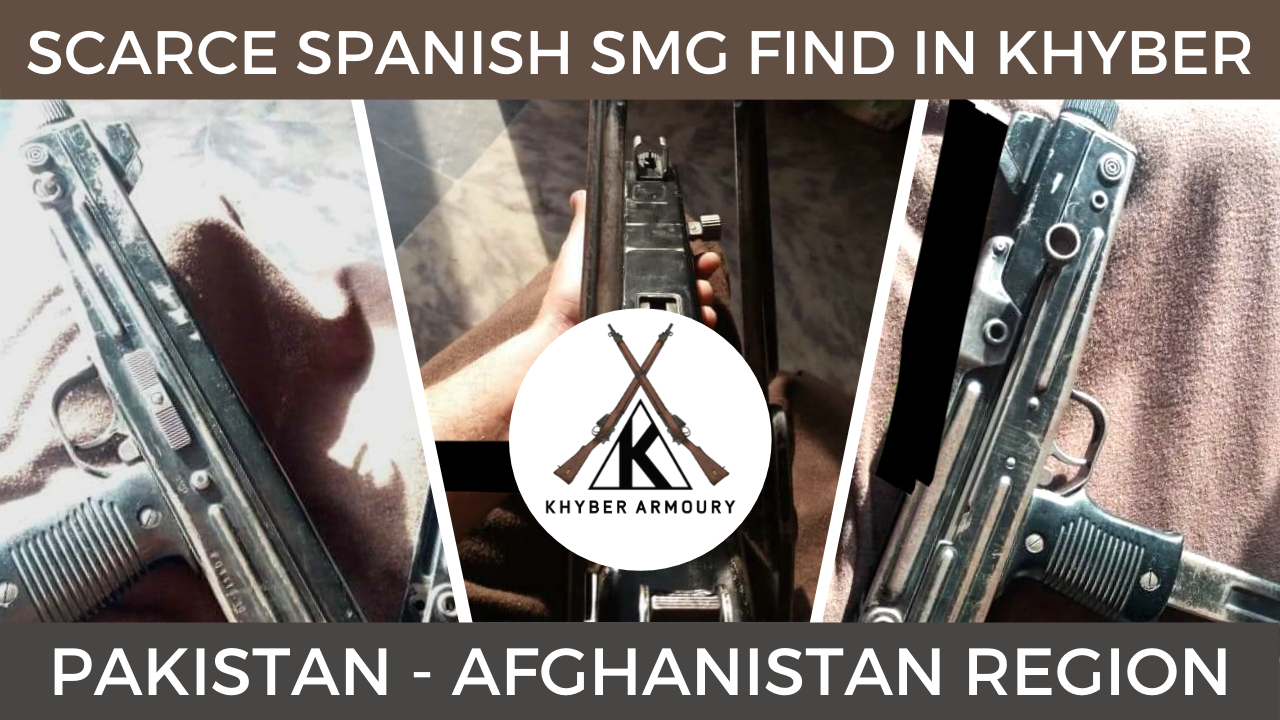
STAR, short for Star Bonifacio Echeverria, is a well known Spanish company which manufactured firearms for around 116 years, from about 1905 to 1997 when they closed up shop. The various firearm designs and platforms they manufactured, apart from some pistol designs, aren’t too common and don’t typically pop up in more out-of-the-way regions of the world. That being said, a small more unknown gem of theirs happened to end up in an arms dealership located in the infamous town of Darra Adam Khel in the Khyber Pakhtunkhwa province of Pakistan, of all places.
Origins: Darra’s PPSh-41 Franken-Builds
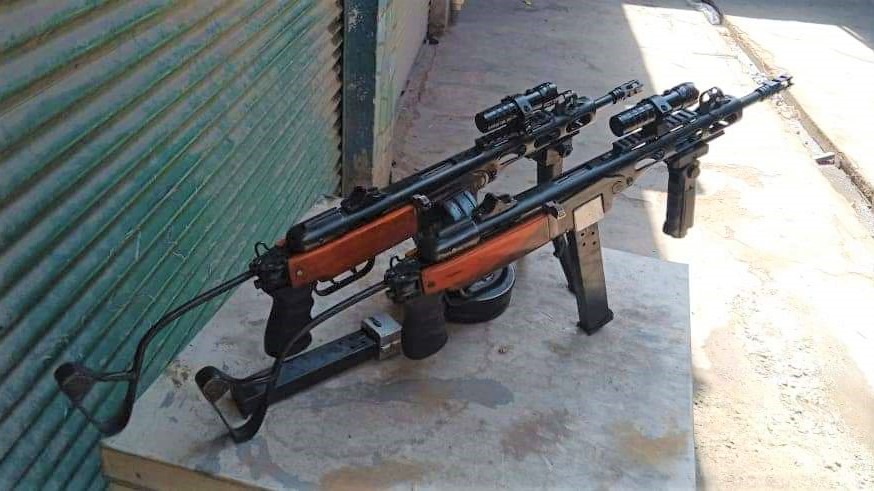
There have been a few images circulating on social media depicting several PPSh-41-patterned submachine guns modified with blasphemous ‘tacticool’ configurations. Locally, these submachine guns are called the ‘Papusha‘ and are chambered in the same 7.62×25mm pistol cartridge as the original guns. The 7.62×25mm round is locally known as .30 bore. Almost all of these images can be traced back to Pakistan, specifically Darra Adamkhel, where dealers have them displayed in their shopfronts and also on their social media pages.
Iraq, Idlib, Afrin and Yemen: Late January – Early February Market Highlights
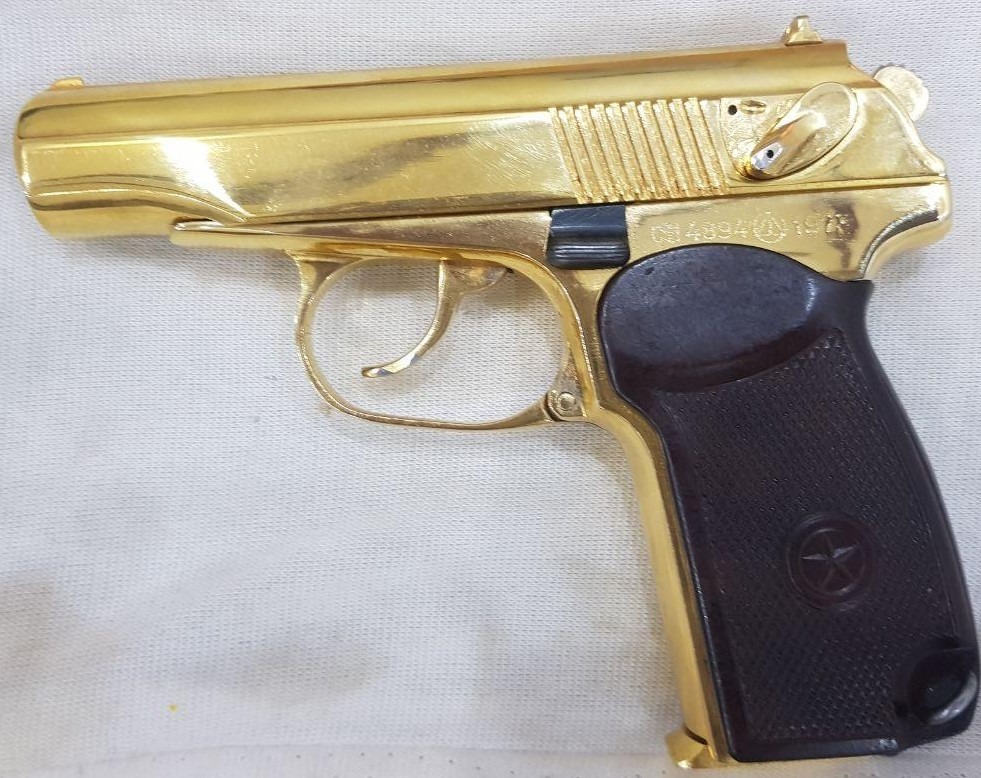
Welcome to another installment of our series examining gun market trends across the MENA region. At the moment we are focusing on Iraq, Idlib and Afrin and Yemen. The time-frame of the data in this article runs from 25th January to 7th February 2020. The prices are average and are rounded up or down (for example 126=150, 124=100). If you missed our first installment you can find it here.
Gun Market Trends in Iraq, Syria’s Idlib and Afrin and Yemen: mid January Browning M1919A4 and Iranian MP5
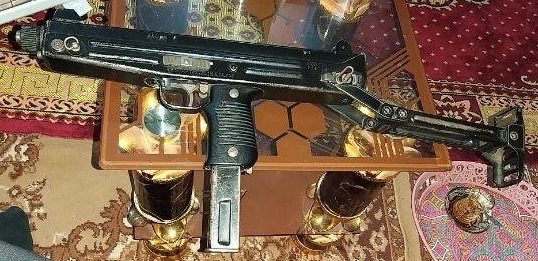
Welcome to the second instalment of our series examining gun market trends across the MENA region. At the moment we are focusing on Iraq, Idlib and Afrin and Yemen. The time-frame of the data in this article runs from 13th January to 24th January 2020. The prices are average and are rounded up or down (for example 126=150, 124=100). If you missed our first instalment you can find it here.
V8 Silah Report Podcast: sniper ‘battalions’ in Idlib, G36 rifles & more!
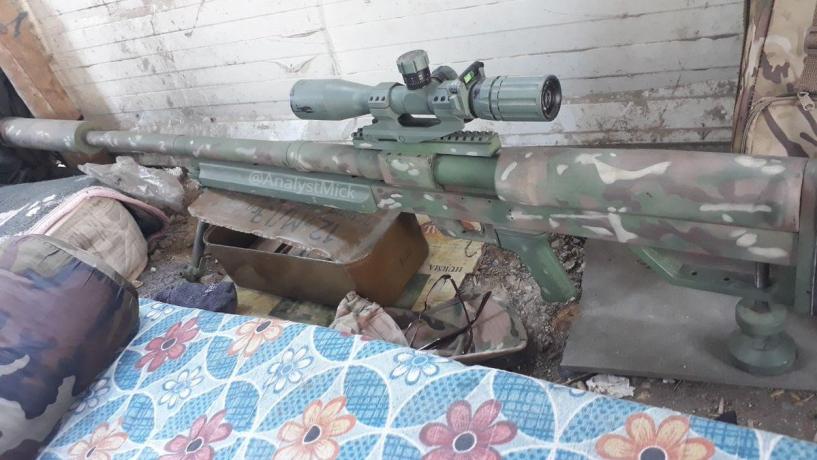
In episode 8 of the Silah Report Podcast, Miles and Adham are joined by guests AnalystMick, Daniel, and AbuZaben to discuss their recent findings in the MENA region. We cover sniper ‘battalions’ in Idlib, interesting SALW being offered for sale in Yemen, German vs. Saudi G36 rifles, and more! We also answer questions provided by our Patreon backers at the $5 or more per month level. Want to ask us a question related to small arms and light weapons in the Middle East, North Africa, or Central Asia regions? Become a backer today!
https://soundcloud.com/silah-report/v8-silah-report-podcast-sniper-battalions-in-idlib-g36s-and-more
Straight MP5 Magazine spotted in Isfahan LE Demonstration
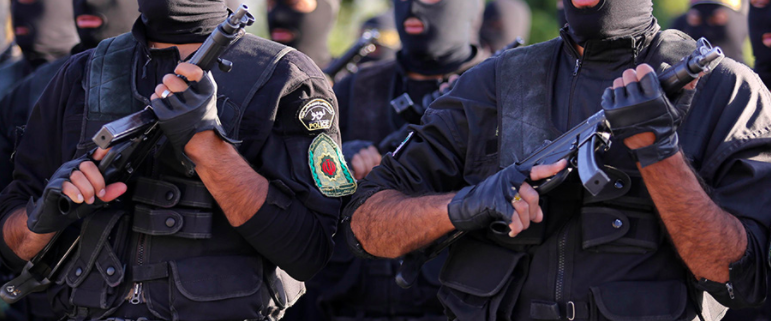
Within the Law Enforcement demonstration recently held in Isfahan (in which we posted about a thermal optic in use ), a straight walled magazine was spotted in use by one of the officers taking part in the demonstration. Iran’s Defense Industries Organization produced licensed copies of the MP5 from the time of the Shah (along with the G3), and it is still heavily employed by Iranian forces. Most of the MP5s today appear to be equipped with the curved 30 round magazine, but that is what makes this particular one stand out, due to the original straight wall design that Heckler & Koch introduced the very first MP5 variants with.
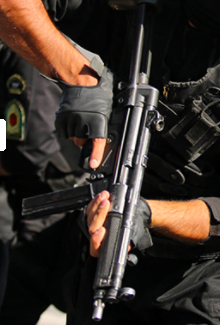
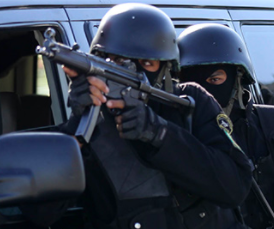
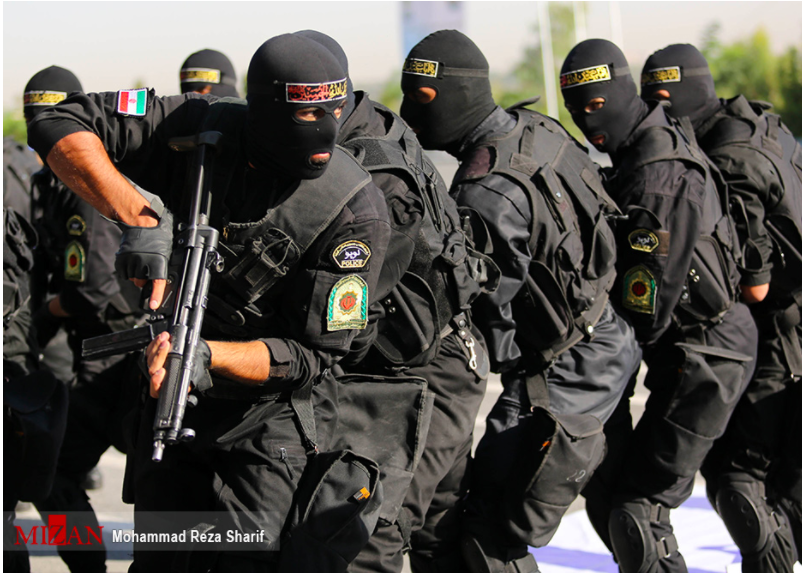
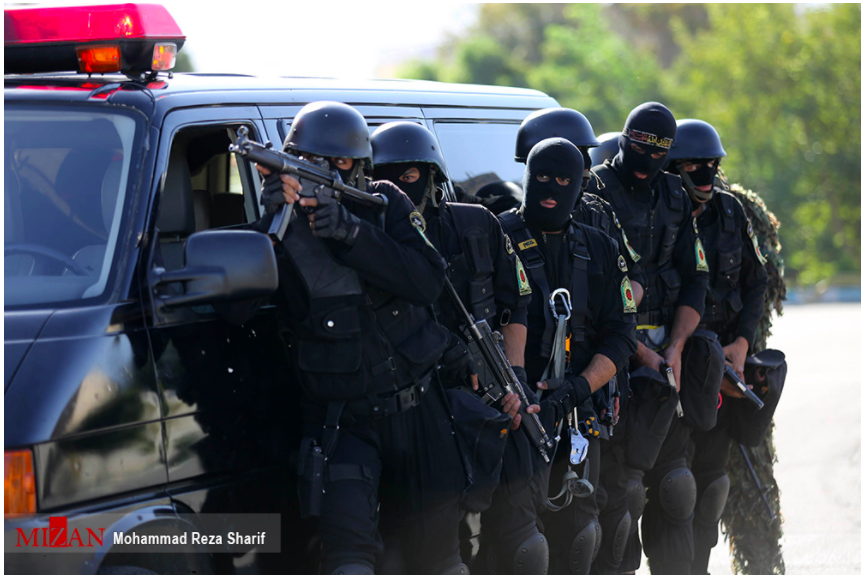
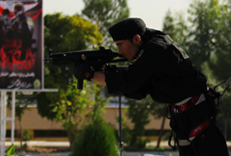
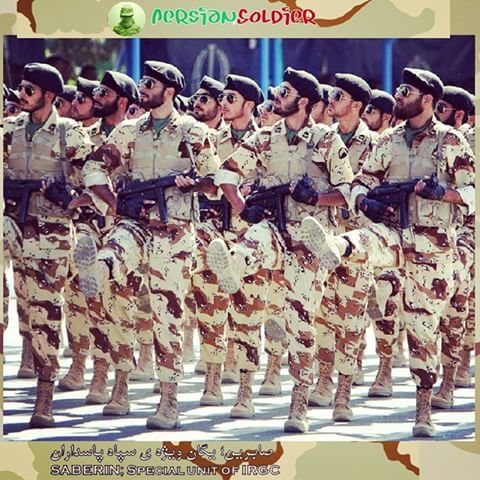
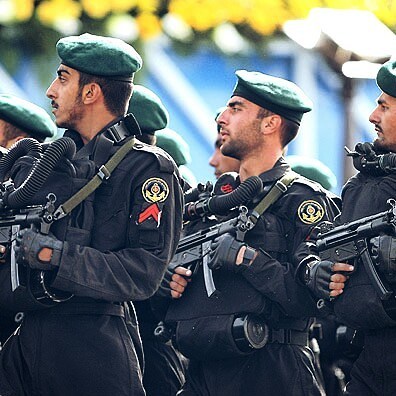
The MP5 has several variants within Iran, one of which has green polymer furniture, while there is an MP5K variant with a forward grip.


Optic Mounted PKM in Syria (2016)

Kurdistan Insider posted this video of a Syrian Army advance in Aleppo in 2016. Most of the PKM variants being used in the Syrian conflict have been seen without any sort of optics platforms mounted to them, this is mostly because of the lack of equipment that many of these rebel groups can capture.
However in this case, it appears to be a thermal or at least an IR capable optic platform due to the bulbous appearance, in addition to the numerous knobs which might be battery caps for power. In addition the eye piece appears to be fitted or contoured to the shooter’s eye, indicating a bright screen that needs to be shielded during times of low light. Because this is a Syrian Army position, it is most likely that the optic is Russian supplied.

In the same video clip, what appears to be an AK century series rifle being used by frontline soldiers, possibly in 5.45x39mm due to the straighter magazine in use.

