Recent Turkish Tactical Bolt Action Rifles of 2018

The Turkish bolt action rifles market is probably the most emerging segment of the country’s small arms industry. Every year, Turkish companies introduce new models of bolt action rifles designed both for the hunting and tactical applications. Earlier we reported about the Yazicilarav’s Cosmos bolt action rifle. Today we’ll take a brief look at two other Turkish bolt action rifles designed for the military/LE/tactical use.

Huglu OVIS Tactical Black

Turkish bolt action tactical rifles (5)

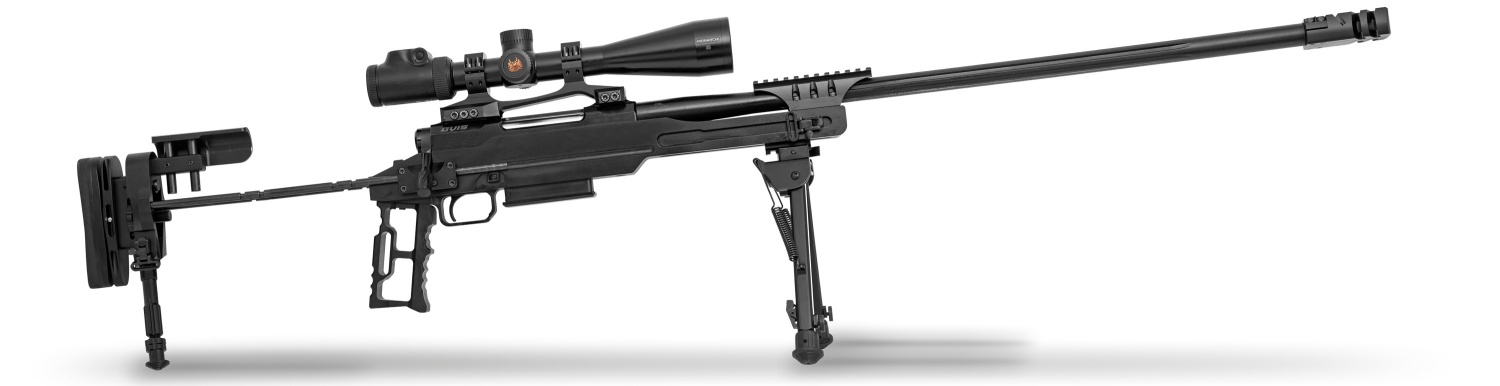
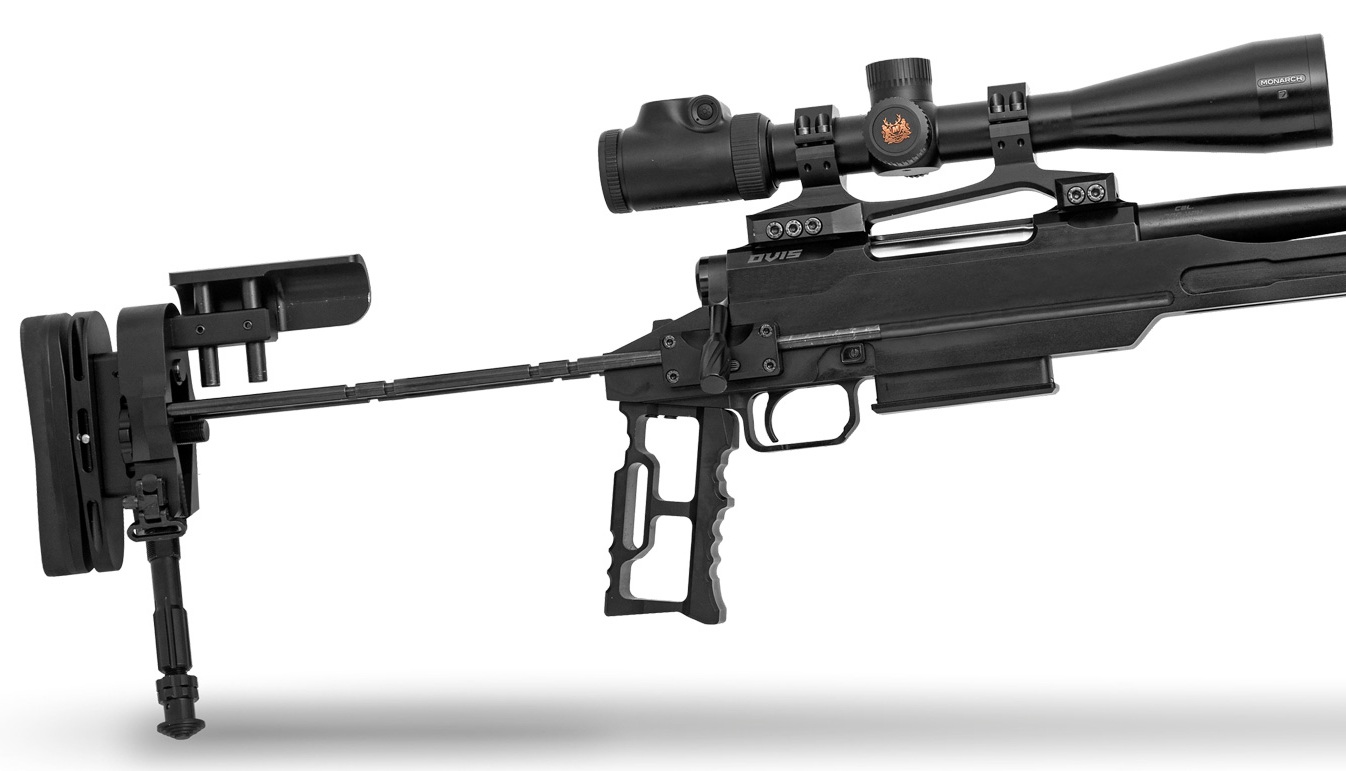
The OVIS Tactical Black rifle is designed by the Turkish company called Huglu. It features a skeletonized pistol grip, 6-lug bolt, adjustable trigger, collapsible wire stock, adjustable cheek rest and monopod. The rifle is chambered in .308 Winchester. It is fed from 5-round detachable box magazines. The free-floated barrel is 71 centimeters long (28″) and comes with an installed muzzle brake. The overall weight of this rifle is 7.5 kilograms (about 16 lbs 8 oz).

Turkish bolt action tactical rifles (7)

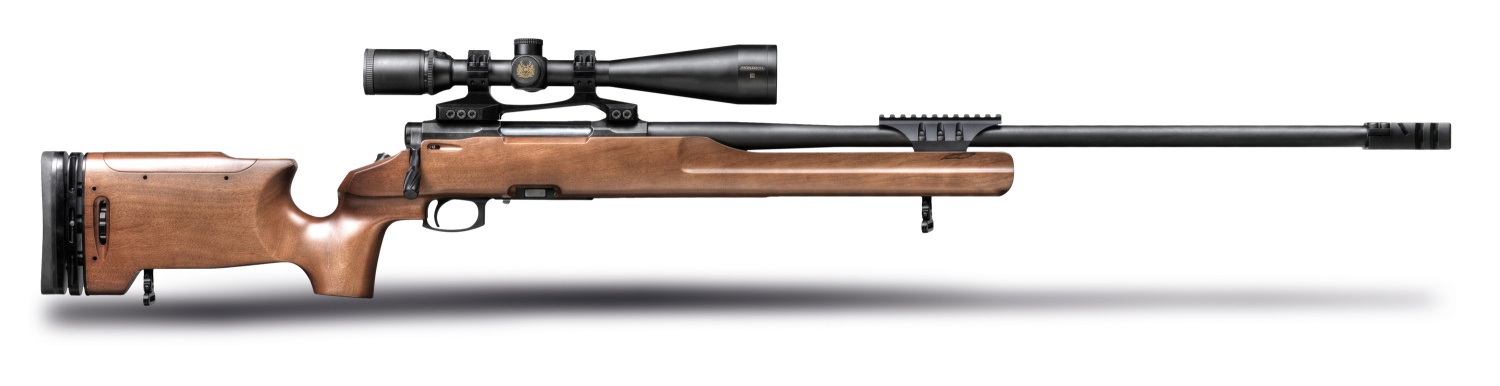
Hugku also makes a version of this rifle with a wooden stock. This iteration is called Huglu OVIS Tactical. You can see its image embedded below.

Turkish bolt action tactical rifles (4)


Ata Arms ASR308

Turkish bolt action tactical rifles (1)

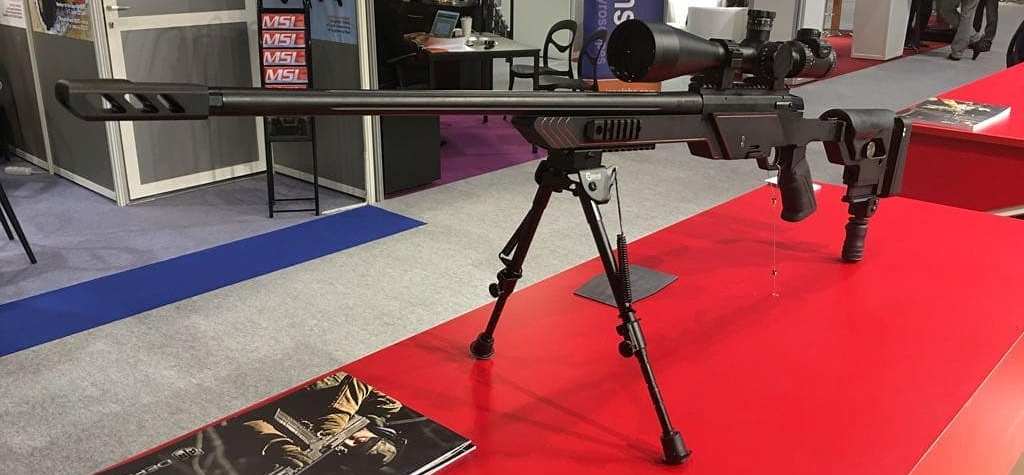
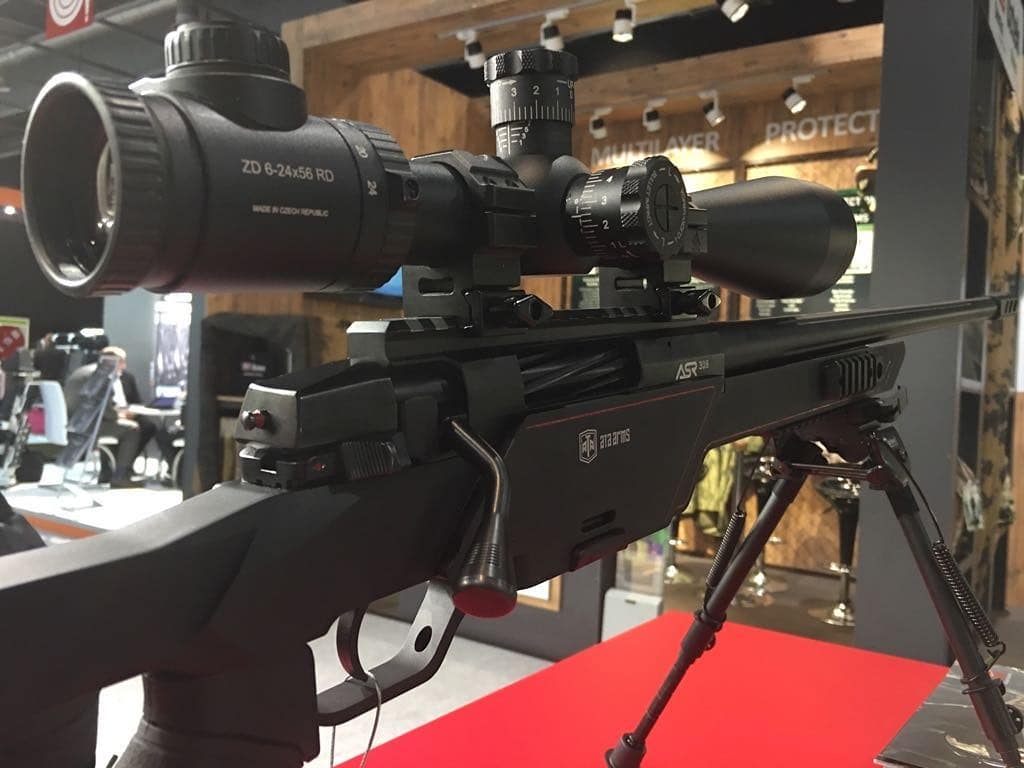
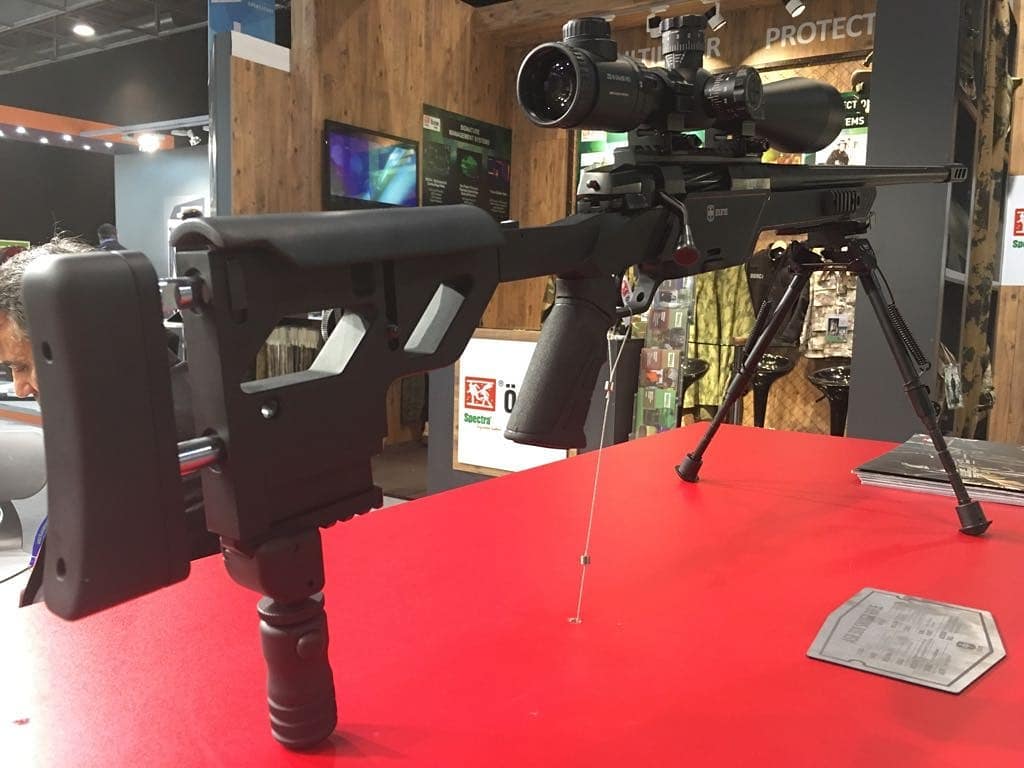
Another Turkish bolt action rifle made by Ata Arms was introduced at the recently held Eurostatory 2018 arms exhibition. Presumably, the action of the ASR308 rifle is identical to or based on the Ata Arms Turqua rifle.

Turkish bolt action tactical rifles (3)

Judging by the images published on the manufacturer’s social media pages, we can tell that the chassis of this rifle has a fixed stock with adjustable length of pull and cheek rest height. The barrel is free floated and has a three-port muzzle brake. The rifle is fed from detachable box magazines and it is most likely chambered in .308 Winchester. ASR308 has a Picatinny rail on top of the receiver for mounting a scope. There are also small rails located on 3, 6 and 9 o’clock positions of the forearm and another rail on the stock for mounting a monopod.

Turkish bolt action tactical rifles (2)


Images from www.huglu.com.tr, www.facebook.com/ataarmstr

Assorted Firearms Observed in Oman

This guest post was written by Christopher Cowan, an avid reader and supporter of Silah Report.

In reviewing material for an article about the Martini-pattern rifles I came across several other pictures I took unrelated to the subject of that article. These include several photos taken at the National Museum as well as Nizwa Sooq.

A Chinese .177 caliber BAM-3 airgun on display for sale at Nizwa Sooq. Possibly a Chinese airgunPhoto by author.
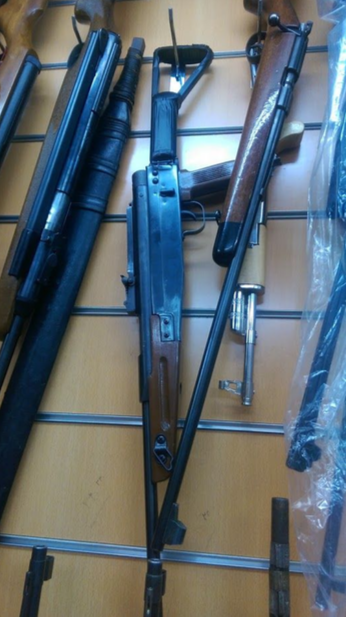
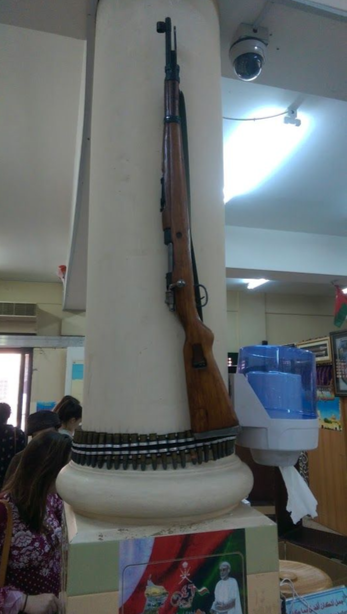
Zastava M48-pattern rifle on display in Nizwa Sooq. Note the non-corresponding Martini-Henry cartridge belt. Photo by author.
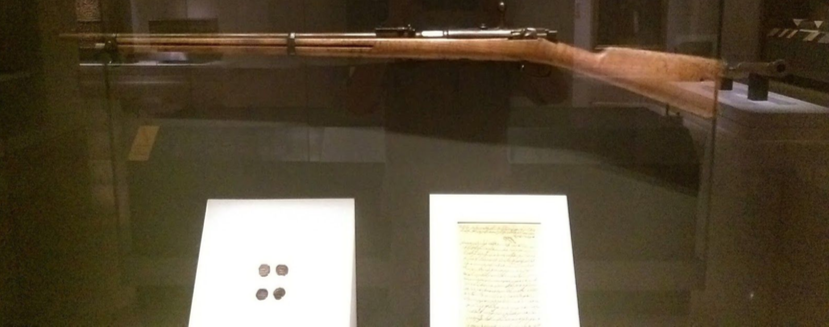
A Turkish Mauser Rifle Model 1887 originally produced in Germany in 1890 or 1891. Rifle features Turkish production markings and year according to museum description. Photo by author.
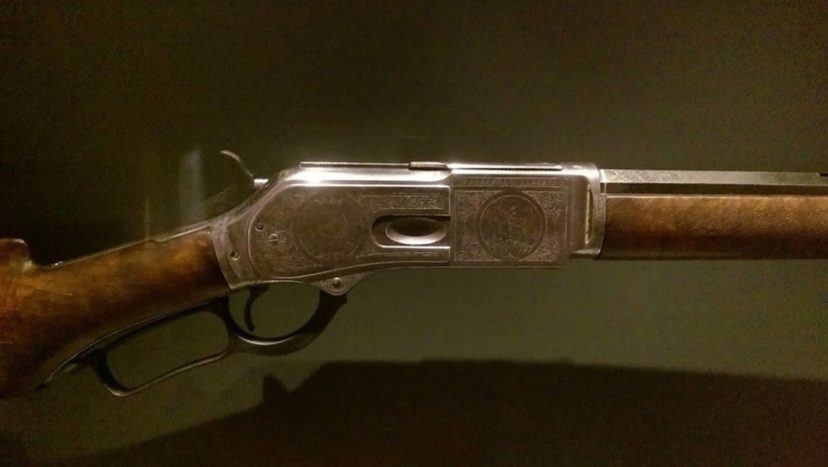
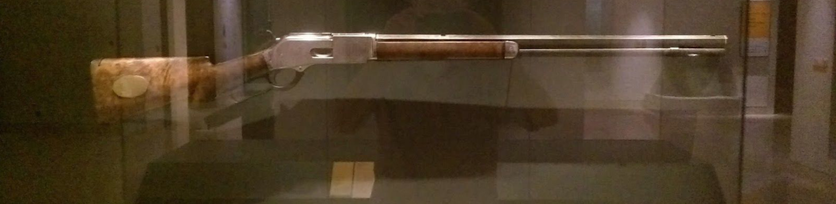
A Winchester 1876 Deluxe Model gifted by President Chester Allen Arthur to Sultan Sayyid Turki bin Said al-Busaied, Sultan of Muscat and Oman. According to the museum description, “the rifle features a nickel frame engraved with scenes of hunting and wild animals.” The rifle also features a walnut stock affixed with a brass label which reads “Presented by Chester A. Arthur President of the United States to His Majesty SEYUD TOORKEE EN SEYOUD Sultan of Muscat in token of friendship.” Photo by author.
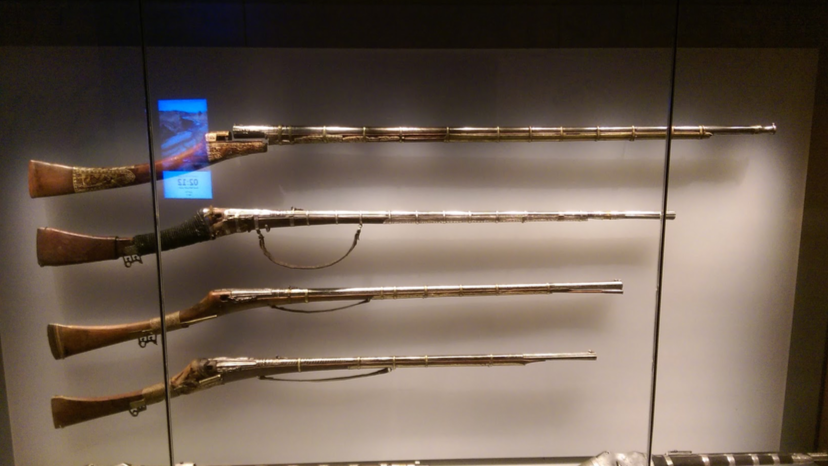
Assorted patterns of matchlock muskets. Photo by author.

Pakistani Ordnance Factories Azb MK1 Designated Marksman Rifle

This guest post is written by Sikander Abbas, an avid reader, and supporter of Silah Report.

Pakistan Ordinance Factories (POF) is Pakistan’s largest defense industrial complex under the Ministry of Defence Production. Founded in 1951 by the government of Pakistan, POF produces and promotes a wide range of different types of infantry and special-purpose weapons, explosives, ammunition, mortars, rockets, and other military gear for Pakistan’s military.

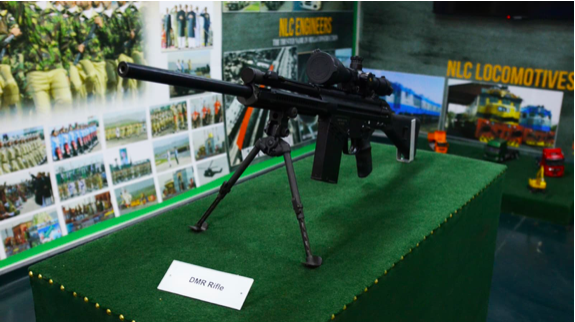
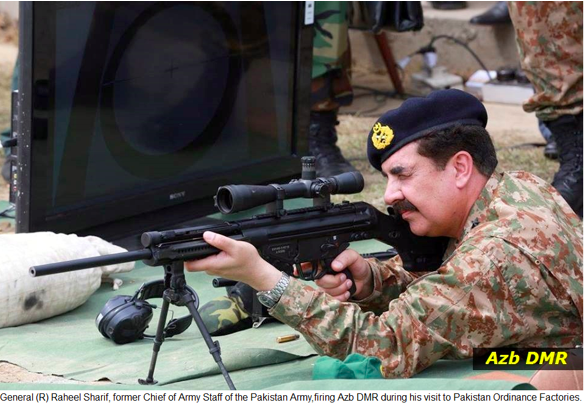
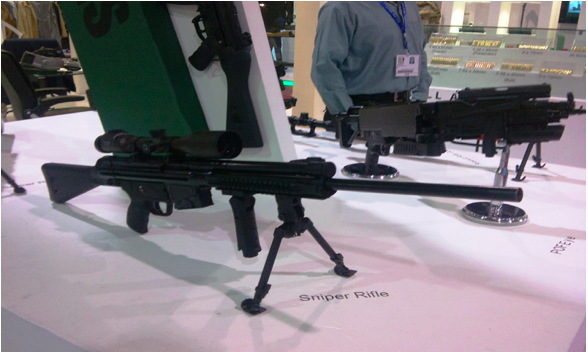
Chambered in 7.62x51mm (NATO), the Azb DMR-MK1 is the new medium-range Designated Marksman Rifle (DMR) and is developed by POF in 2014 which features a 20 inch cold hammer forged match grade bull barrel. The rifle was first introduced in the International Defence Exhibition and Seminar, more commonly referred to as IDEAS in December 2014.

The rifle was produced during the time of when there was a joint military offensive conducted by the Pakistan Armed Forces against various militant groups in North Waziristan in 2014. The military operation was named Operation Zarb-e-Azb and according to members of the POF Production Board, the rifle is given the name Azb as a dedication to the soldiers who took part in the operation.

The sniper rifle is not a new design and it is basically a modification of Pakistani variant of H&K G3 assault rifle which is produced under license in POF. All parts are compatible and interchangeable with POF made G3A3 Rifle.
As said in the weapon description on POF website:

“With the changing nature of low-intensity operations, a strong need exists for a lightweight, accurate and semi-automatic hybrid sniper service rifle. Accordingly, a Designated Marksman’s Rifle (DMR) concept emerged. The POF DMR MK-1 meets the laid down conceptual requirements. It is manufactured from standard G3 parts and requires little deviation for manufacturing, maintenance and training. It can quickly and effectively engage fleeting multiple targets at range up to 600m.”

Technical Data:

Caliber     7.62 x 51 mm(NATO)
Operation Roller Locked Delayed Blow Back
Magazine 5/20 rounds Capacity
Overall Length 1055 mm (41.5 in)
Barrel length 508 mm (20 in) (4 Groove Rt. Hand Std.)
Weight (Empty Magazine) 4.94 Kg
Effective Range 600m
Accuracy 2 M0A at 100 Meter
Sights Telescopic sights
Butt Stock Plastic Fixed Butt Stock

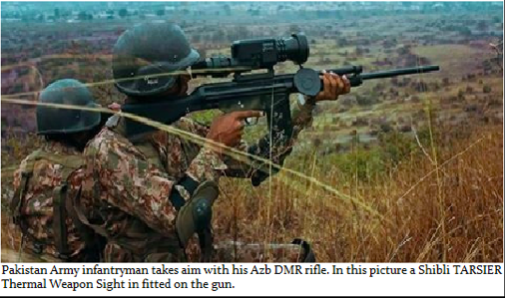
Azb DMR is cost-effective, easy to produce, deploy and maintain and is compatible with a range of scopes, night vision and thermal optics.

Being a medium range, lightweight and with great accuracy, this DMR is ideal to cover incursion teams in close operations as well as in urban warfare.

Since its production, the rifle is used by military and other law enforcement agencies in Pakistan. The rifle also took part in several international defense exhibitions and is offered for exports.

The Muscat Martini: Martini Pattern Rifles in Oman

This guest article is written by Christopher Cowan, an avid reader and supporter of Silah Report.

Alongside Brown Bess muskets and Lee-Enfield pattern rifles, Martini pattern rifles are perhaps one of the most iconic and ubiquitous guns of the British Empire. First fielded in the 1870s, the Martini-Henry saw service in all corners of the Empire, from the plains of the Serengeti to the peaks of the Hindu Kush.

The Martini-Henry Rifle. Photo courtesy Creative Commons.


A single shot rifle, the Martini Henry utilizes a falling block action. It is chambered in the rather burly .577/.455 Martini Henry, a .45 caliber round-nosed slug fitted into a necked-down .577 Snider casing. The Martini Metford and Martini Enfield were the natural progression of the platform. Both firearms utilize the same falling block action, merely rechambered and/or rebarreled in .303 British. By the time they were fielded in the mid 1880s, they were of little practical use to frontline combat units given the adoption of the magazine-fed Lee-Metford (1).

That said, both the Martini Metford and Martini Enfield saw continued use among local colonial forces, as well as by civilians as sporting rifles (2). Perhaps owing to its proliferation, reliability, and simplicity, Martini-pattern rifles existed long past their official retirement as a service rifle. Widely manufactured and traded across the Middle East and South Asia for a good deal of the 20t h century, these rifles saw usage among irregular fighters as late as the Soviet invasion of Afghanistan. While likely the last time Martini-pattern rifles saw any serious usage in armed conflict, examples continue to turn up on occasion (3).

The proliferation of Martini-pattern rifles throughout South Asia is a subject for another article if not a book. Beyond Afghanistan and Pakistan, Martini-pattern rifles have remained prolific in the Sultanate of Oman. Martinis are as common a sight in souvenir shops in Muscat’s Sooq Mutrah as they are for sale alongside other assumedly functional firearms in Nizwa Sooq.

Martin-pattern rifles for sale alongside other firearms in Nizwa Sooq, Nizwa, Oman. Note modifications to the rifle in all three photos, including the polished receiver and refinished stock and handguard of the latter example. Photos by author.

Given Oman’s history, the widespread presence of the Martini-pattern rifles is understandable. Oman has historically occupied a major crossroads of Indian Ocean trade; at one point the Omani Empire itself stretched from Zanzibar off the coast of modern-day Tanzania to Gwadar, modern-day Pakistan. At the center of this empire was Muscat. Even following decline in imperial power and prestige, Muscat remained an important center for trade well into the early 20t h Century. Trade in all manner of goods, including weapons, was largely unrestricted; Muscat subsequently grew into a major regional hub for arms trading at the turn of the century (4).

While the early Twentieth Century marked a high-point in the proliferation of Martini-pattern rifles in the Arabian Peninsula as well as South Asia, Martinis remained popular weapons in Oman until rather recently. There are cases of them being used to hunt the now-protected Arabian Oryx in the 1960s, as well as documented cases of their use by irregular fighters in the Dhofar War during the 1960s and 1970s (5).

Al Wahibi Bedu man with his Martini-pattern rifle. Note the ornate barrel bands as well as the khanjar – or dagger – affixed to his belt. From “Bedouin: Nomads of the Desert” by Alan Keohane.

To this day, it is possible to occasionally see Martini-pattern rifles toted for ceremonial as well as practical purposes. In Dhofar, for example, shepherds can be observed carrying Martini-pattern rifles to protect their animals from predators. As a ceremonial piece ornately decorated Martinis are a commonplace, as are their accompanying cartridge belts. Both are often highly decorated, and frequently observed for sale to tourists. Good examples of both can also be observed in the National Museum in Muscat.

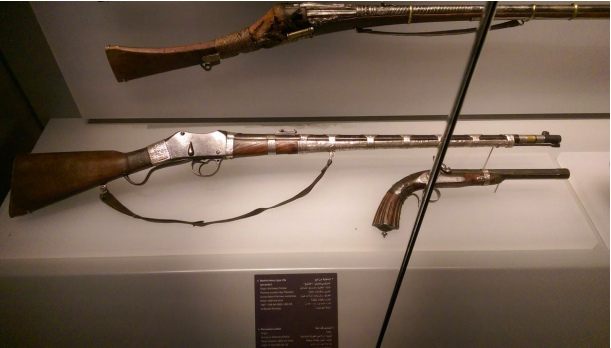
Examples of Martini-pattern rifles and cartridge belts at the National Museum in Muscat, Oman. Photos by author.

Despite being outdated by modern firearms technological and doctrinal standards, the Martini-pattern rifle has persisted long past its official military retirement in both a practical and cultural capacity. There just as much to be said of the simple elegance of the design as there is the skill required to use one effectively. Likewise, the continued prominence of the Martini-pattern rifle in Arabian firearms-culture alongside other weapons speaks to the eminence of the rifle.

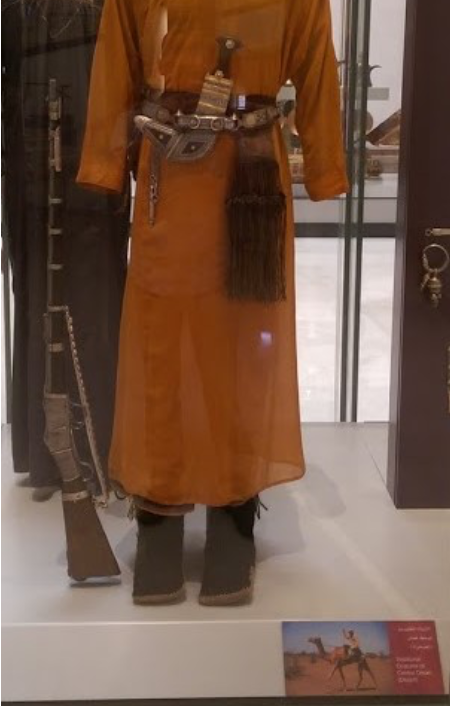
Various examples of Martini-pattern rifles and cartridge belts at the National Museum in Muscat – including alongside the traditional garb of central Oman. Photos by author.

Sources

(1) Rifles and Machine Guns
(2) Rifles and Machine Guns
(3) https://atwar.blogs.nytimes.com/2010/12/10/rifles-of-advanced-age-remain-in-use-in-afghanistan/

(4) R.M. Burrell 10; Arming the Periphery 116 5 Oryx Martini; 9781780969053

Works Cited

Burrell, Robert M. “Arms and Afghans in Makrān: an episode in Anglo-Persian relations 1905–1912.” Bulletin of the school of oriental and African Studies 49, no. 1 (1986): 8-24.

Cashner, Bob. The FN FAL Battle Rifle. Botley, Oxford: Osprey Publishing, 2013.

Chew, Emrys. “3: The Arms Trade in the Western Indian Ocean.” In Arming the Periphery: The Arms Trade in the Indian Ocean during the Age of Global Empire, 98-159. Basingstoke (GB): Palgrave Macmillan, 2012.

Chivers, C.J. “One Way to Retire an Old Rifle.” The New York Times. December 10, 2010. Accessed June 02, 2018.

https://atwar.blogs.nytimes.com/2010/12/10/rifles-of-advanced-age-remain-in-use-in-afg hanistan/.

F, Nathaniel. “Jumping The Gun (Literally): Saudis Dancing With Guns.” The Firearm Blog. August 12, 2015. Accessed June 02, 2018. http://www.thefirearmblog.com/blog/2015/08/12/jumping-the-gun-literally-saudis-dancin g-with-guns/.

Fowler, Will, and Patrick Sweeney. The World Encyclopedia of Rifles and Machine Guns. London: Anness Publishing, 2007.

Keohane, Alan. Bedouin: nomads of the desert. Trafalgar Square, 1994.

Leung, Canice. “Jumping the Gun | Pictures.” Reuters. August 11, 2015. Accessed June 02, 2018. https://uk.reuters.com/news/picture/jumping-the-gun-idUKRTX1NTN7.

Loyd, M. “The Arabian oryx jn Muscat and Oman.” African Journal of Ecology 3, no. 1 (1965): 124-127.

The Voice of the Gun in Central Asia

This guest post was written by Marcello Fantoni, an avid reader and supporter of Silah Report.

“The question is not about the weapon, but the spirit in which you use it.”(1)

For those raised within the dichotomous paradigm of Westphalian war and peace, war is the end of sociability, the exhaustion of every social recourse. Likewise, when that war is over, and sociability is said to return the memories of fracture become encased in temporal and Cartesian distinctions, the material culture of conflict sequestered to the appropriate sterile cases in the vaults of armouries and museums. Yet, conflict is inherently and inescapably sociological (2). It is the birth of a new form of sociability, on the level of both the individual and the collective, and this is a relationship in which the material culture of conflict retains an agency beyond the moment of fighting itself. It is not a relic but becomes the assurance against repeat and symbolic of the new addition to the cultural history and citrisis of a society. We have seen time, and again that material culture is good for thinking, feeling and expression, even eating and drinking (3), but we must, however, remember that it is also for fighting.

Conflict and the conceptualising, organisation and negotiation of it are shaped by the society which engages in it, and the community itself in is turn influenced by it. Conflict and its material culture become inexorable parts of the society’s post-conflict identity, having a fundamental impact on the ordering of the post-conflict reality (4). In this change, the material culture which provided the means to act for the individual attains a symbolic position. It may bestow both a new social life and physical death. Through the analysis of how specific weapons have come to be identified with cultures and the role of conflict in that culture, we shall see that those weapons are far more than the nefarious amalgamations of elements, but intrinsic parts in the development, manipulation and organisation of a society from both the emic and etic perspective. The thick sociological (5) description of the tools which both create and destroy sociability. The voice of the gun.

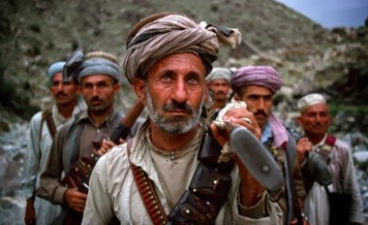
In Central Asia and the Caucuses, firearms have become ingrained in the identity of societies, for many as a response to the years of oppression under successive regimes, but also as part of customary law and social differentiation. But, the adoption of these weapons also reflects the rebirth of an often constructed martial tradition and ideology which often idealises of a fictive golden historical age as a central rallying point for future conflicts. Military traditions are written deep into their histories, and those histories are contained in the weapons which come to symbolise them. In Chechnya and Dagestan, the APS Stechkin machine-pistol has replaced the Shalt Kama traditional dagger and is illustrative of the independence movements of the 1990s and early 2000s as a high-status prestige item linked to the presidential guard of Dudayev and Maskhadov. But, its concealability also reflects the banditry which was born of those same conflicts. For the ethnocultural group of the Cossacks, the traditional Nagaika whip now serves side by side the AK-74M as their identity as an irregular military force is becoming ever more tied to their exploitation as the Russian State’s ready supply of disposable mercenaries and the new Tsar’s enforcers (6). For the cultures of the Northwest Frontier, the AK-74SU and Glock pistols as prestige pieces have usurped the venerable Enfields and Jezails, reflecting both the recent history of the region since 1979 and the preferences of FATA’s ever more discerning customers. Yet, constants remain, the Kukri of the Gurkha and the Kirpan of the Sikhs. Though, for both the colonial manipulation of the, as a “martial race” was born of their use of the 1856 Enfield rifle, which set them apart from the bulk of the British Indian Army who revolted in 1857 over the rumour that the bullets were lubricated with the fat of pigs and cows. Abhorrent to Muslims and high-caste Hindus, but not to the Gurkha and Sikhs.

Through the analysis of the social function and conceptualisation of weapons and those who use them within Central Asian and Caucasian societies, we shall see how they have become inexorably linked to both the past and present of a culture and how it is viewed internally and externally.

Marcello Fantoni can be reached at Marcello.p.a.fantoni@gmail.com

Sources

______________________

(1) Thoreau, H. D. 1860. The Echos of Harper’s Ferry.

(2) Richards, P. 2005  (ed) No Peace, No War: An Anthropology of Contemporary Armed Conflicts. Oxford: James Currey.

(3) Douglas, M. and Isherwood, M. 1979. ‘the world of goods’. London: Allen Lane.

(4) Hallpike, C. R. 1973 Functionalist interpretations of primitive warfare, Man (n.s.) 8/3, 451-70

(5) Geertz, C. 1973. ‘The interpretation of cultures’. New York: Basic Books.

(6) RFE/RL. 2018. Cossack Fighter Laments Russian ‘Utilization’ Of Mercenaries In Syria. https://www.rferl.org/a/syria-Russian-mercenaries-cossack-shabayev–interview/29056934.html. Retrieved 03/05/18.

Suggested Readings.

•    Jersild, A. 2002. Orientalism and empire, North Caucasus Mountain Peoples and the Georgian Frontier, 1845-1917.  McGill-Queen’s University Press.

•    Bourgois, P & Scheper-Hughes, N (2004) ‘Introduction: Making Sense of Violence.’ In Scheper-Hughes, N & Bourgois, P (eds) Violence in War and Peace: An Anthology. (Oxford, Blackwell, 2004)

•    Lee. E. W. 20110. Warfare and culture in world history. New York University Press.
A German DWM Luger in Helmand Province

This guest post was written by Jeffrey Reardon, an avid reader and supporter of Silah Report. 

In the past one hundred and eighty years, Afghanistan has been the target of multiple foreign invasions. From the British, (1839-1842, 1878-1880 and 1919) Soviet (1979-1989) and United States (2001-Present) involvement in Afghanistan. As such, we have a unique opportunity to see the small arms of yesterday back in action. Let’s look at one such example today. 

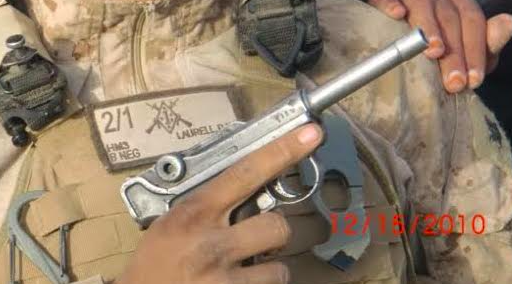
An American Marine of personal acquaintance was assigned to a Police Mentor Team (PMT) apart of 2nd Battalion, 1st Marines. These units were responsible for mentoring and training the Afghan National Police (ANP). The PMT duty consisted of patrolling to different ANP checkpoints. The PMT would spend a few days at each checkpoint then move on to thier next scheduled checkpoint. This Marine also happened to be an avid military surplus collector. This assignment would give him many opportunities to meet new people and see a myriad of Curio and Relics (C&R) in Afghanistan. In 2010, while in Garmsir, Helmand Province, Afghanistan, that’s exactly what happened to this Marine.

While on patrol with the ANP unit, this Marine noticed the unmistakable silhouette, of a Luger pistol that one of the ANP members was carrying. Naturally, the Marine was curious and just had to have a look at this interesting piece of military history.

In this picture, we can clearly make out the DWM rollstamp. The Deutsche Waffen- and Munitionsfabriken (German weapons and ammunition factories) was created in 1896 by, Ludwig Loewe & Company. They combined their weapons and ammunition facilities under one company. Simultaneously, Loewe transferred all shares it owned in other weapons producing companies to the newly formed DWM. These included, lesser know production facilities along with the Waffenfabrik Mauser and Fabrique National(FN). This pistols date is a little obscure in the picture. However, I was told this example is dated 1916. Just during WWI, from 1914-1918, there were approximately 2,000,000 Luger pistols made.

In this picture, another Marine poses with Luger. Here, we can see clearly see the front sight is missing. We can only guess as to what happened and how long it’s been missing. This goes along with my theory that this particular Luger is more if a badge of honour and sign if rank. Although, it would certainty get the job done in close quarters. Not having a front sight at all will put you at a disadvantage for the Marine Corps 25 meter pistol qualification.

As evident by the pictures, there is absolutely nothing left of the original finish. Which would have been a very beautiful and high gloss blue oxide on the major components. With small pieces such as the trigger and takedown lever being strawed. This process turns the metal a soft, golden colour which closely matches that of dried hay or, “straw.” In all actuality, this is exactly what one would expect. After all, it is almost a century old. Very easily a veteran of two world wars and countless other conflicts. It’s current location in southern Afghanistan, with its frequent sand storms, certainly does not help.

The Marine function tested the pistol. On a Luger, this is accomplished by grabbing the top of the toggle link and pulling up. With an empty magazine in place,  the slide will stay fully locked back in then open position. I was assured that it is in operable condition. Although, the Marine did not test fire it. 

There are, by this point, more than a few things I’m curious about. One question I would love to know the answer to is, to know if the ANP had the holster and spare magazine? If he didn’t, what was he using for a holster? If he wasn’t in possession of the spare magazine, was he worried about the lack of capacity? 

I was told that the ANP officer was very proud of his pistol. He made it known that he was not at all interested in selling it. I often wonder, by what route did that pistol get to Afghanistan? How did that ANP officer acquire it? 

Sadly, we will never know the answers to these questions.  We can only be happy that our beloved military surplus small arms are still serviceable after all this time.

*Special thanks and photo credit to Timothy Arndt

Muzzle Brake Designed by Diyar Gilmanov (Kazakhstan)

Diyar Gilmanov Muzzle Brake (Kazakhstan) (3)

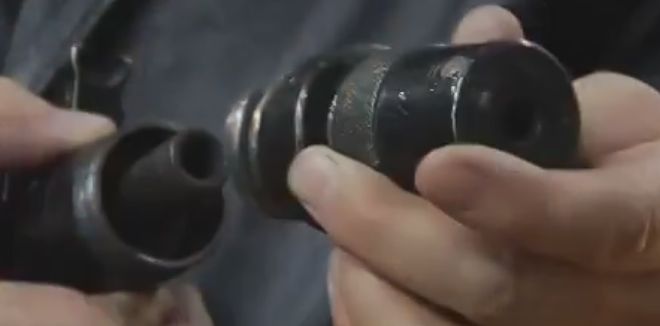
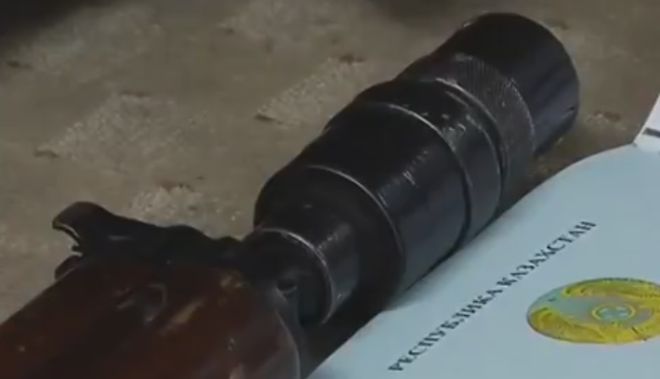
While doing research for another article, I came across an invention of a Kazakh arms designer named Diyar Gilmanov. This gentleman has designed a muzzle device which has quite an interesting construction.

Diyar Gilmanov Muzzle Brake (Kazakhstan) (2)

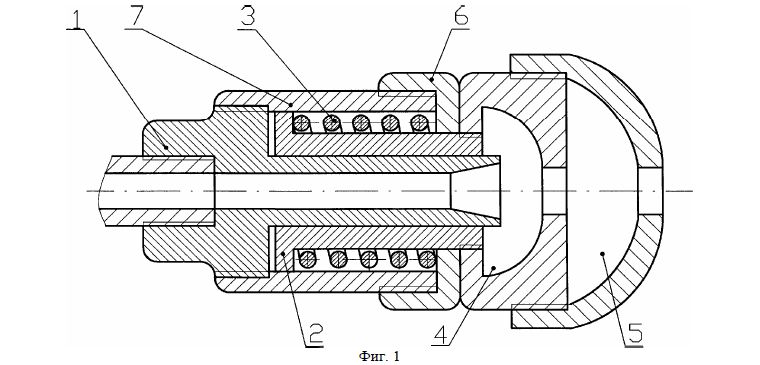
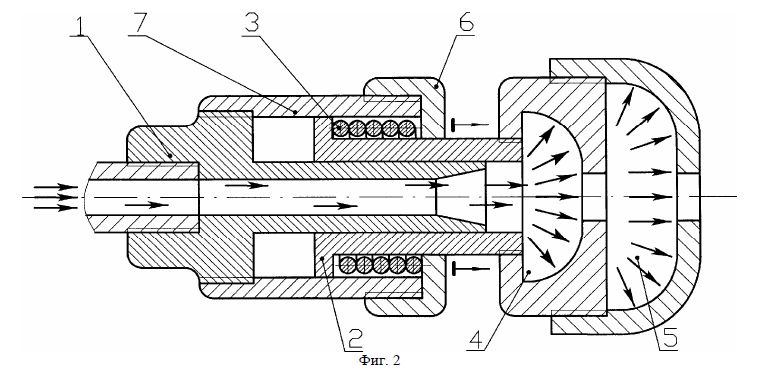
Gilmanov’s muzzle brake has a telescoping design. It consists of an inner part that is mounted onto the muzzle of the weapon and a spring-loaded mobile part. Upon firing the weapon, gasses escaping the muzzle enter the two expansion chambers (4 and 5 in the drawings) and force the spring loaded part to move forward. The spring then extends and returns the mobile assembly back to its collapsed position.

Diyar Gilmanov Muzzle Brake (Kazakhstan) (4)
Gilmanov muzzle device before firing

According to the designer, this forward motion mitigates the recoil. It is probably accomplished by the mass of the forward moving assembly which counters the rearward motion of the bolt carrier group or the recoil mitigation occurs due to the forward impact of the mobile part onto the housing on its foremost position. The recoil reduction may also be achieved by the combination of the described two processes.

Diyar Gilmanov Muzzle Brake (Kazakhstan) (1)
Gilmanov muzzle device during firing. Arrows show the directions of gasses escaping the muzzle.

The drawings used in this article are from the Kazakh patent #16012 granted to Diyar Gilmanov in 2009. You can view or download that patent (in Russian) by clicking here. Here is also a link to a short video (found on OK.ru social media website) showing this muzzle brake in action.

https://ok.ru/video/1155074560

Judging by the construction of this muzzle device, I assume it may also partially reduce the flash signature and the report. Also, it should double as a booster for AK carbines and AKS-74U (Krinkov) rifles.

Pakistani Ordnance Factories POF-4 Pistol

POF 4 is a semi-auto weapon made by Pakistan Ordnance Factories (POF) which has been classified as a pistol after some changes in the basic select fire version. The automatic version is being used extensively by Law Enforcement Agencies (LEA). It was a few years ago that POF decided to remodel this compact machine pistol for civilian use. It is based on the H&K MP5 design and employs a delayed blow back , roller locked system. POF has been making various weapons under HK licenses, such as the SMG PK/PK1, the SMG MP5A2/MP5P3 and the G3 rifle. The civilian version dubbed as the POF 4 has a 15 round magazine, it is semi-auto (irreversible) and has no buttstock. These changes have enabled it to be classified as a pistol. A similar weapon has been exported to the US named as POF 5KX pistol (minus the front hand grip). The weapon has received good reviews in the US according to some websites. In fact some time ago POF was not selling this weapon to anyone within the country because of orders received from overseas. This may explain its popularity, perhaps.

Read more

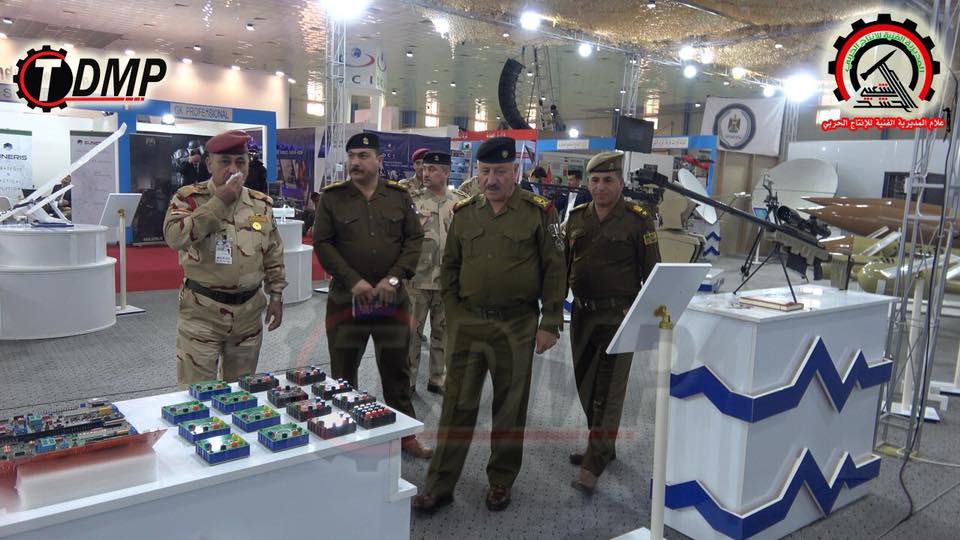
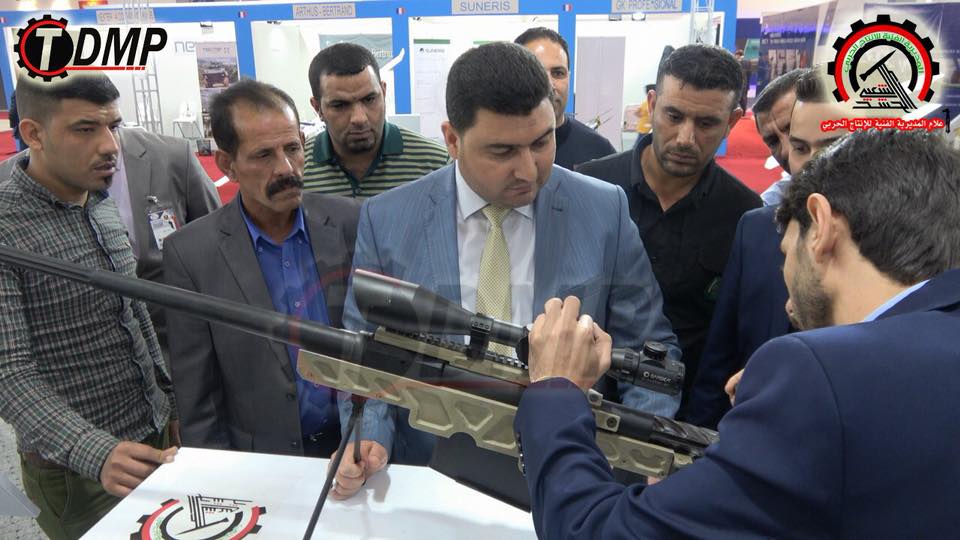
New Iraqi Bolt-Action Anti-Materiel Rifle Made by TDMP

New Iraqi Anti-Materiel Rifle Made by Technical Directorate for Military Production (TDMP) (1)

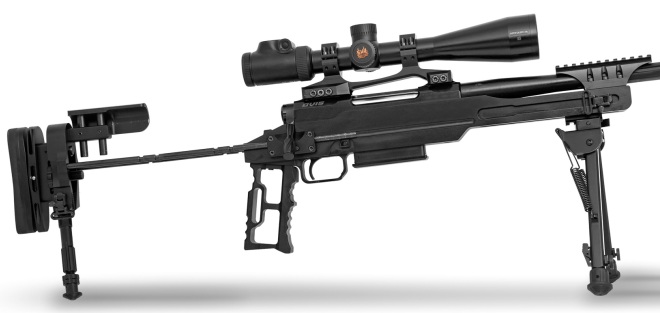
The Firearm Blog reports that Iraqi Technical Directorate for Military Production (TDMP) has released a new anti-materiel rifle during the International Defense Exhibition (IQDEX 2018) held in Baghdad, Iraq. Let’s take a closer look at the published images and see what we can notice.

New Iraqi Anti-Materiel Rifle Made by Technical Directorate for Military Production (TDMP) (1)

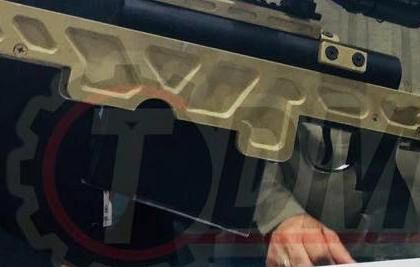
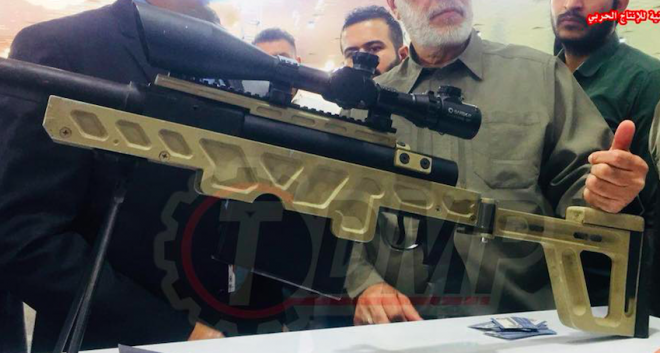
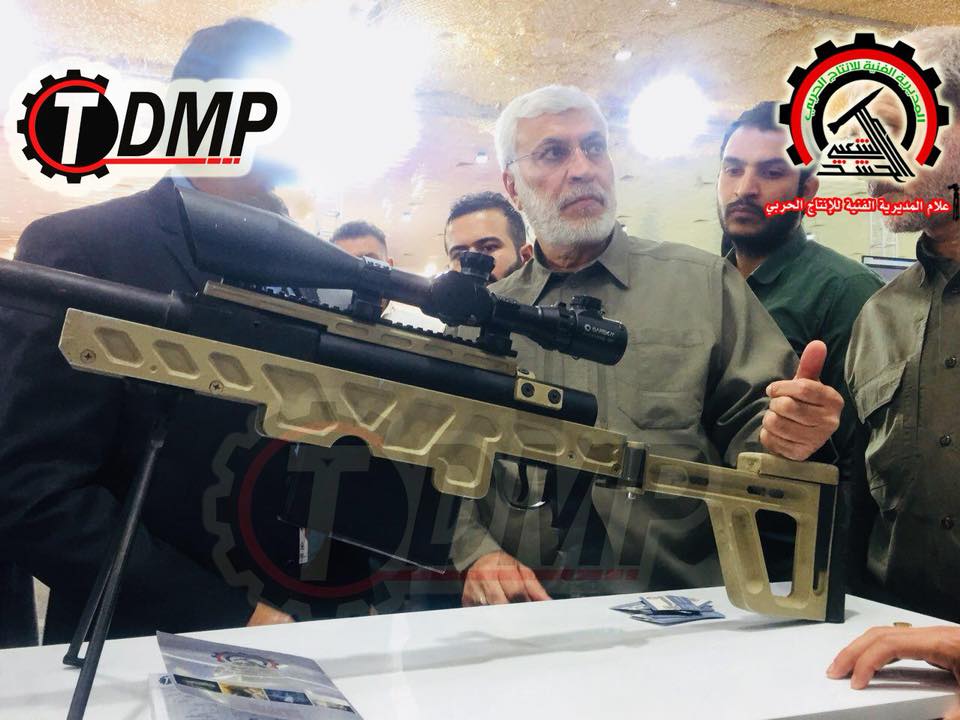
The chassis of the rifle looks to be made of two identical pieces of metal (most likely aluminum) with milled cuts to make it lighter. The two halves are probably assembled by the screws which heads are visible on the rifle. If so, then there must be a third inner part, too.

The folding stock looks to be simply shaped from an aluminum plate of a certain thickness. Note that the receiver also looks to be a very simple one. It is probably machined from a cylindrical steel bar. If my assumptions are correct, then this rifle must be quite easy to manufacture.
New Iraqi Anti-Materiel Rifle Made by Technical Directorate for Military Production (TDMP) (111)

If you look closer, you can notice the magazine in the top image. It is obstructed by the watermark and blends with the background, but it is still visible. Its size suggests that it is chambered either in .50 BMG or in 12.7x108mm or maybe even a larger caliber.

New Iraqi Anti-Materiel Rifle Made by Technical Directorate for Military Production (TDMP) (3)

The rifle has a large muzzle break normally seen on anti-material rifles. The bipod is probably used for demonstration purposes only. Such a weak looking design probably wouldn’t work with the heavy and violently recoiling anti-materiel rifle.
New Iraqi Anti-Materiel Rifle Made by Technical Directorate for Military Production (TDMP) (2)

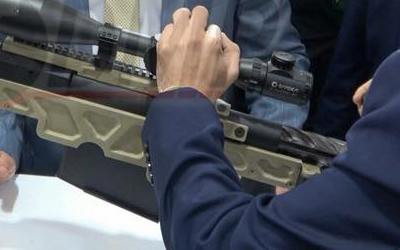
The new TDMP rifle also has a top Picatinny rail. In the above image, you can also see the fluted bolt of the rifle with an extractor groove cut in it. The small part bolted to the left side of the receiver should be the extractor and bolt disassembly lever – a pretty common design seen in many bolt action rifles.

New Iraqi Anti-Materiel Rifle Made by Technical Directorate for Military Production (TDMP) (222)

So far these images are the only information available on this rifle. Stay tuned to learn more about this rifle.

The “Female” Variant of the Galil


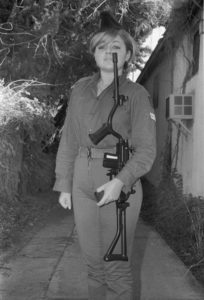
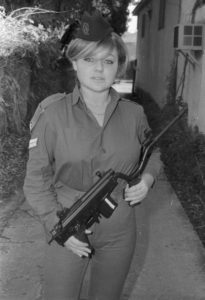
The integration of female soldiers in IDF combat roles is a much-debated topic in Israel the last decade or so. Today we will ride on the wayback machine to a time when the place of women in military service was very different.

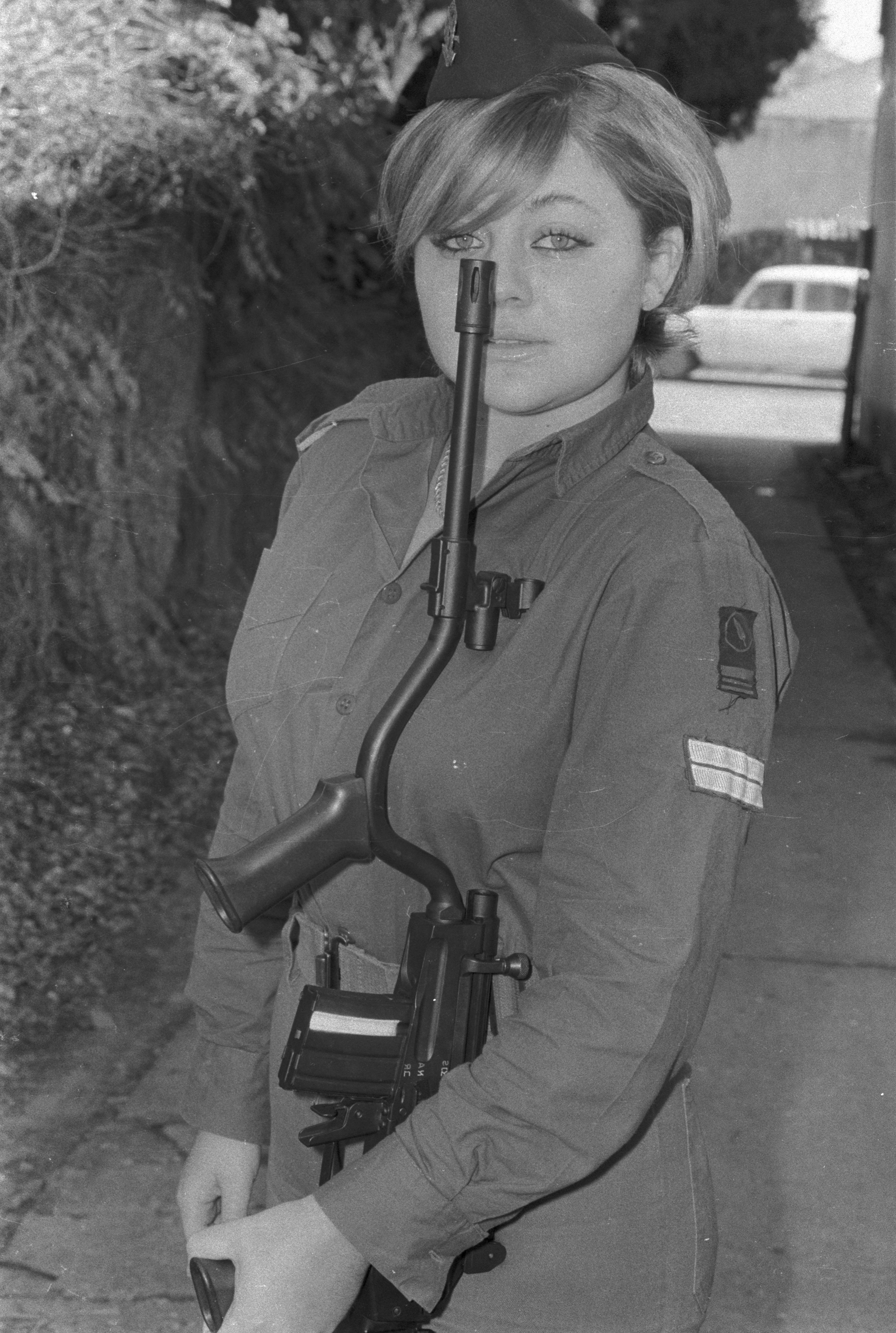
In the December 8 1982 issue of the IDF weekly magazine, Bamahane,  a short news piece was published with bold letters titled: “The end of discrimination! A major victory to the women’s liberation movement; a Galil assault rifle developed especially for female soldiers!”

The paper includes several pictures taken of an IDF female soldier ‘modeling’ a bent barrel Galil AR and further explanation states that the most problematic issue with designing a feminine rifle is that regular rifles keep colliding in the soldier’s breast whenever it was carried and practice in foot drills.

According to the news piece the development of the gun took two years and was tested by 350 female soldiers that were “carefully selected for their outstanding physical characteristics”

That ‘news piece’, as you might guess by now, wasn’t a real news report. It was the weekly satiric column called ‘על הגבול’ which literally means ‘On The Border’ but the more accurate translation means ‘Borderline’.


The prop gun was manufactured by none other than Yisrael Galil , the inventor of the Galil, for the satiric column.

The gun was a modified Galil AR with an absurdly bent barrel and vertical foregrip attached instead of the regular foregrip. The bolt carrier lacks a gas piston and there was no gas tube. All removed to achieve the described breast clearance. In one of the photos, the rifle is lacking a buttstock.

The gun was issued with a 12 round magazine, presumably to lighten the load on those top-heavy girls in uniform. The magazine is in fact a blank magazine used to propel rifle grenade.

The column summarized that since the rifles were introduced into military service they already proofed their value and the developer is flooded with purchase orders.


This article made possible by the courtesy of IDF & Defense Establishment Archives.

The photographer was Reuven Yehudai.