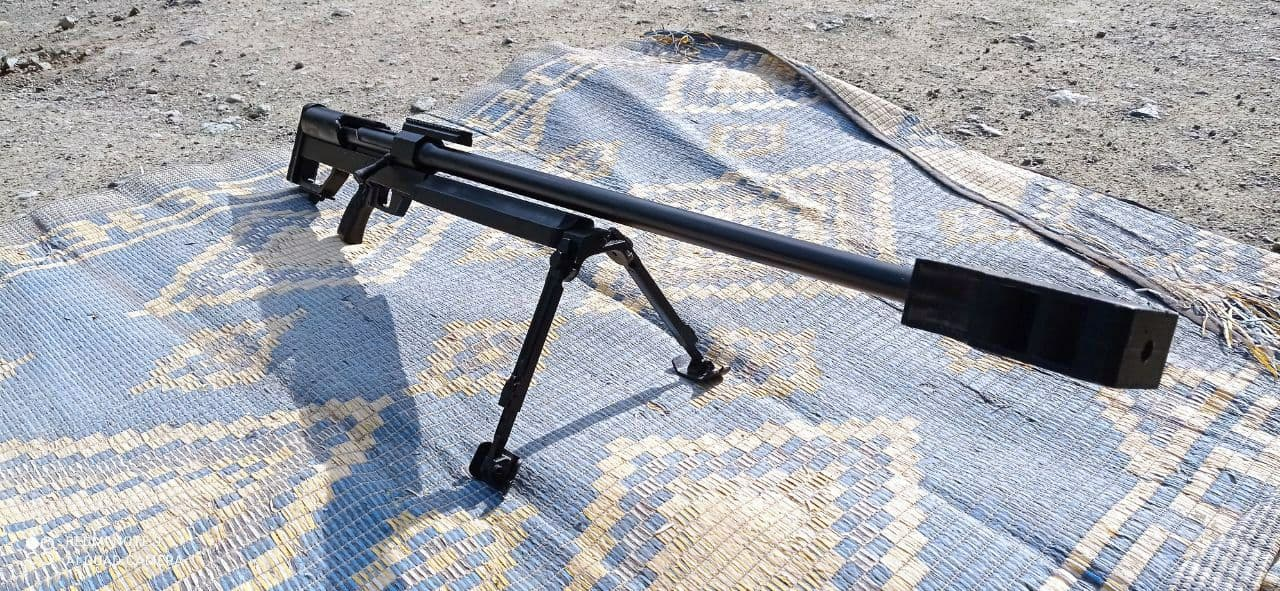
Throughout the MENA region, we see the private sale of firearms online but they often get in the way of the more interesting things in the photographs – the furniture! In this article, we will examine some of the vibrant and varied furniture spotted in numerous Middle-Eastern countries, written as a joint project by several Silah Report contributors.
Culture
Podcast V28: Noori, The Iraqi Gun Engraving Artisan
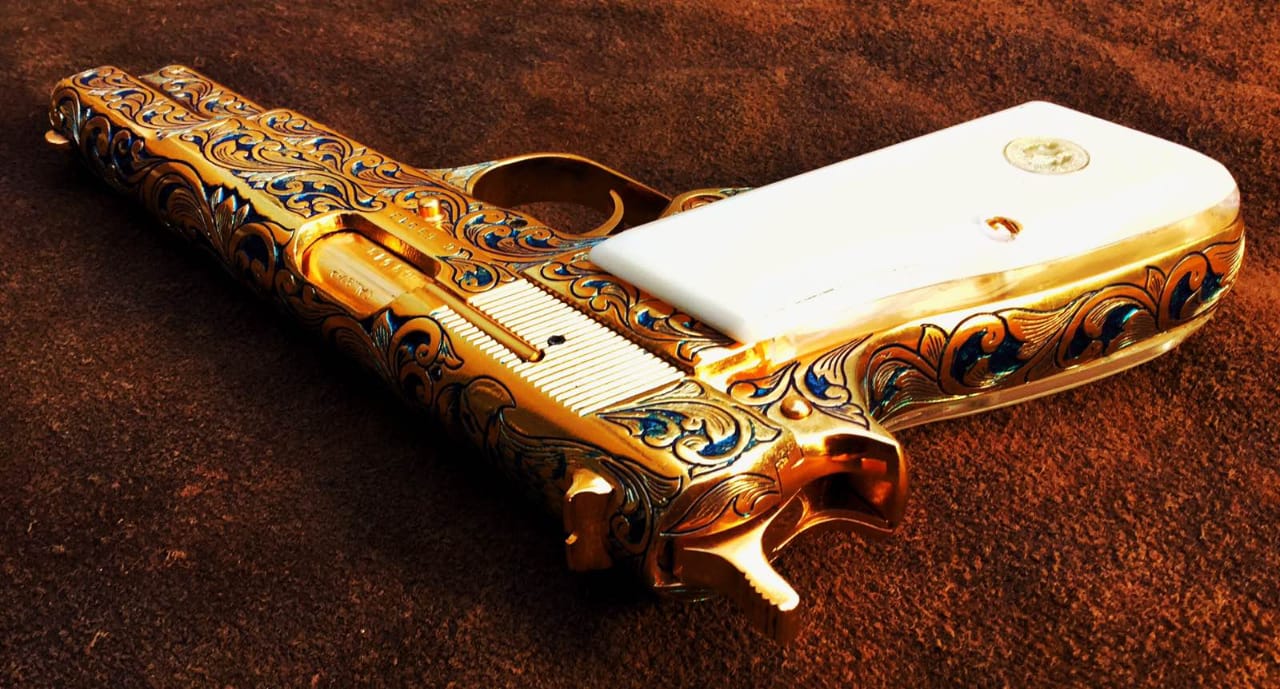
Welcome to the 28th episode of the Silah Report Podcast, we recently had the pleasure of speaking with Noori, an artisan who runs a business of handcrafting decorations on firearms in Iraq. We have covered Noori’s interesting work in past articles here at Silah Report. To say that the quality of his artwork is incredibly professional and its quality is extremely beautiful would be an understatement. In our interview with him, we enquired in-depth abut Iraqi gun culture, his background, how he entered the field, his business in a war-torn country, the challenges he faced and what does think the future holds for him.
Stars and Rifles Part 1: Ottoman Hexagram Proof Marks
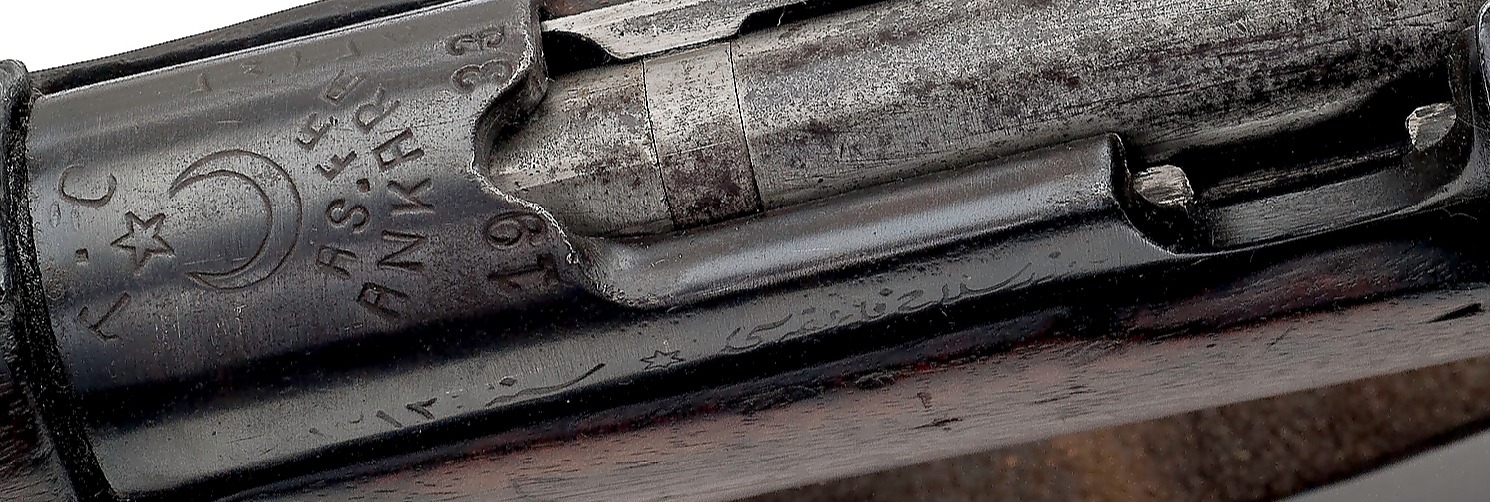
One of the peculiarities of a front line soldier’s life throughout the history of increasingly intense warfare is the heightened susceptibility to superstition and the supernatural, expressed through a plethora of different talismans, charms and other curious oddities. One might think of the strange British Touch Wud [wood] charms of World War I, the lucky rabbit feet worn by American soldiers in Vietnam or Japanese charm pouches worn during World War II. It is a common occurrence across all civilizations to feel shielded by the pretense of spiritual protection, as fleeting and illusory as it may seem. When the flesh is at its most vulnerable, man seeks different ways to somewhat dampen the fear for the imminent threat of death and disfigurement.
V12 Silah Report Podcast: Patreon Questions and Large ISIS Arsenal Captured
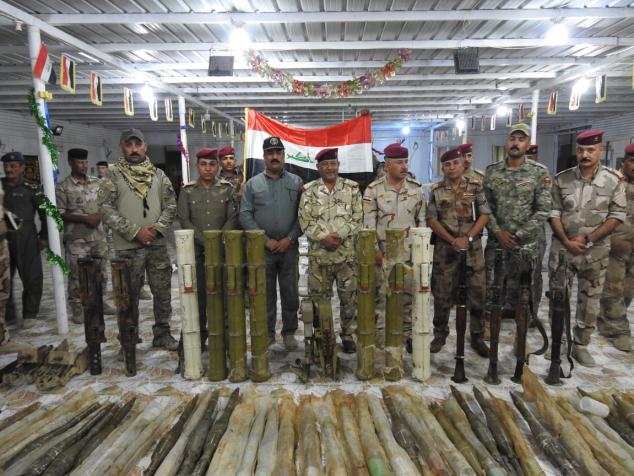
In the 12th episode of Silah Report Podcast we were joined by Adham, Vlad, Daniel, Miles, Ataka, MENA, Analyst Mick, and Abdullah Khyber. We answered four questions submitted by Patreon supporters of Silah Report and discussed an ISIS weapons and munitions cache recently captured by Iraqi security forces.
If you’d like to have your questions answered by our panel please support Silah Report on Patreon and submit questions as often as you like!
If you missed last week’s episode, you can find it here.
The Voice of the Gun in Central Asia
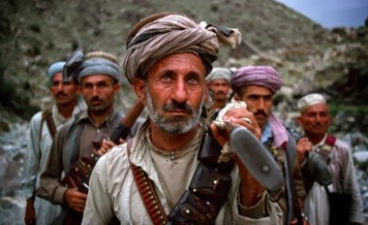
This guest post was written by Marcello Fantoni, an avid reader and supporter of Silah Report.
“The question is not about the weapon, but the spirit in which you use it.”(1)
For those raised within the dichotomous paradigm of Westphalian war and peace, war is the end of sociability, the exhaustion of every social recourse. Likewise, when that war is over, and sociability is said to return the memories of fracture become encased in temporal and Cartesian distinctions, the material culture of conflict sequestered to the appropriate sterile cases in the vaults of armouries and museums. Yet, conflict is inherently and inescapably sociological (2). It is the birth of a new form of sociability, on the level of both the individual and the collective, and this is a relationship in which the material culture of conflict retains an agency beyond the moment of fighting itself. It is not a relic but becomes the assurance against repeat and symbolic of the new addition to the cultural history and citrisis of a society. We have seen time, and again that material culture is good for thinking, feeling and expression, even eating and drinking (3), but we must, however, remember that it is also for fighting.
Conflict and the conceptualising, organisation and negotiation of it are shaped by the society which engages in it, and the community itself in is turn influenced by it. Conflict and its material culture become inexorable parts of the society’s post-conflict identity, having a fundamental impact on the ordering of the post-conflict reality (4). In this change, the material culture which provided the means to act for the individual attains a symbolic position. It may bestow both a new social life and physical death. Through the analysis of how specific weapons have come to be identified with cultures and the role of conflict in that culture, we shall see that those weapons are far more than the nefarious amalgamations of elements, but intrinsic parts in the development, manipulation and organisation of a society from both the emic and etic perspective. The thick sociological (5) description of the tools which both create and destroy sociability. The voice of the gun.

In Central Asia and the Caucuses, firearms have become ingrained in the identity of societies, for many as a response to the years of oppression under successive regimes, but also as part of customary law and social differentiation. But, the adoption of these weapons also reflects the rebirth of an often constructed martial tradition and ideology which often idealises of a fictive golden historical age as a central rallying point for future conflicts. Military traditions are written deep into their histories, and those histories are contained in the weapons which come to symbolise them. In Chechnya and Dagestan, the APS Stechkin machine-pistol has replaced the Shalt Kama traditional dagger and is illustrative of the independence movements of the 1990s and early 2000s as a high-status prestige item linked to the presidential guard of Dudayev and Maskhadov. But, its concealability also reflects the banditry which was born of those same conflicts. For the ethnocultural group of the Cossacks, the traditional Nagaika whip now serves side by side the AK-74M as their identity as an irregular military force is becoming ever more tied to their exploitation as the Russian State’s ready supply of disposable mercenaries and the new Tsar’s enforcers (6). For the cultures of the Northwest Frontier, the AK-74SU and Glock pistols as prestige pieces have usurped the venerable Enfields and Jezails, reflecting both the recent history of the region since 1979 and the preferences of FATA’s ever more discerning customers. Yet, constants remain, the Kukri of the Gurkha and the Kirpan of the Sikhs. Though, for both the colonial manipulation of the, as a “martial race” was born of their use of the 1856 Enfield rifle, which set them apart from the bulk of the British Indian Army who revolted in 1857 over the rumour that the bullets were lubricated with the fat of pigs and cows. Abhorrent to Muslims and high-caste Hindus, but not to the Gurkha and Sikhs.
Through the analysis of the social function and conceptualisation of weapons and those who use them within Central Asian and Caucasian societies, we shall see how they have become inexorably linked to both the past and present of a culture and how it is viewed internally and externally.
Marcello Fantoni can be reached at Marcello.p.a.fantoni@gmail.com
Sources
______________________
(1) Thoreau, H. D. 1860. The Echos of Harper’s Ferry.
(2) Richards, P. 2005 (ed) No Peace, No War: An Anthropology of Contemporary Armed Conflicts. Oxford: James Currey.
(3) Douglas, M. and Isherwood, M. 1979. ‘the world of goods’. London: Allen Lane.
(4) Hallpike, C. R. 1973 Functionalist interpretations of primitive warfare, Man (n.s.) 8/3, 451-70
(5) Geertz, C. 1973. ‘The interpretation of cultures’. New York: Basic Books.
(6) RFE/RL. 2018. Cossack Fighter Laments Russian ‘Utilization’ Of Mercenaries In Syria. https://www.rferl.org/a/syria-Russian-mercenaries-cossack-shabayev–interview/29056934.html. Retrieved 03/05/18.
Suggested Readings.
• Jersild, A. 2002. Orientalism and empire, North Caucasus Mountain Peoples and the Georgian Frontier, 1845-1917. McGill-Queen’s University Press.
• Bourgois, P & Scheper-Hughes, N (2004) ‘Introduction: Making Sense of Violence.’ In Scheper-Hughes, N & Bourgois, P (eds) Violence in War and Peace: An Anthology. (Oxford, Blackwell, 2004)
• Lee. E. W. 20110. Warfare and culture in world history. New York University Press.