Saudi Adds AK-103 to MIC Production Line Up

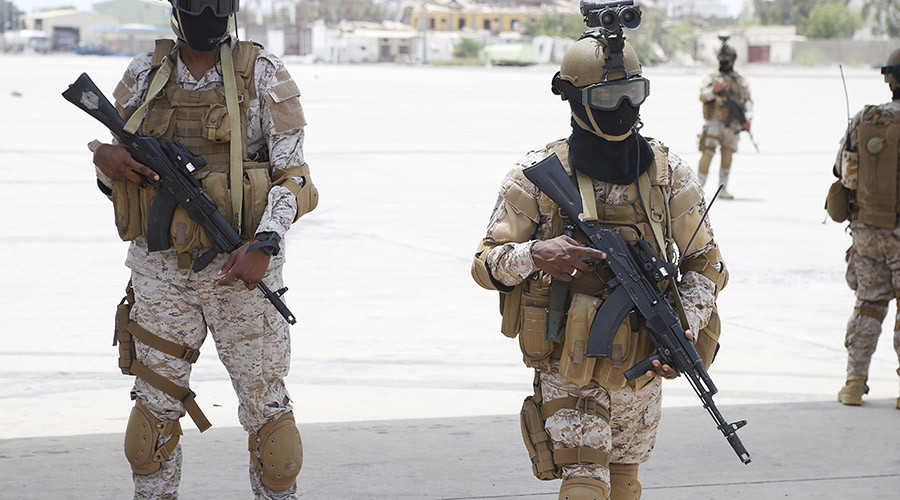
The Russian defense export company Rosoboronexport has recently announced within a larger agreement that the Saudi Arabian state owned Military Industries Corporation will soon be manufacturing 7.62x39mm AK-103 rifles in the Kingdom, along with ammunition. Saudi Arabian armed forces are already using the AK-103, along with the 5.56x45mm NATO G36K within the National Guard, but these are mostly imported from Russia itself. G36Ks have already been seeing local production for some time, many of which are ending up on arms markets in Yemen on the side of the Houthis. One of the main reasons for this move is possibly due to the cheaper cost of producing the rifles rather than buying them outright.

From the news report on Arab News-

Russia’s Rosoboronexport said it has struck an initial licensing agreement that could lead to the Kalashnikov being made in the Kingdom.
The agreement covers the “production of Kalashnikov AK-103 assault rifles and cartridges for various purposes,” a statement said.
A memorandum of understanding between the two sides could also see Russia supply Saudi Arabia with Kornet anti-tank guided missile systems, rocket launchers and automatic grenade launchers.
The preliminary deal also involves the transfer of knowledge in the defense field to Saudi Arabia. The Kingdom has set a target for half of its significant defense budget to be spent within the country.
This plan now includes the “localization” of the AK-103 assault rifle and its ammunition, according to the Saudi Press Agency.

Improvised Mauser Suppressor (OIF)

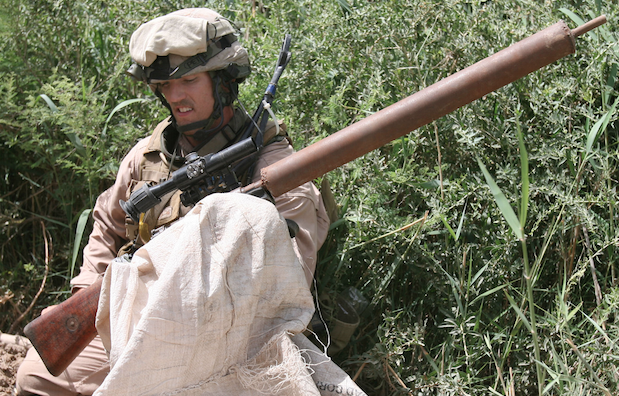
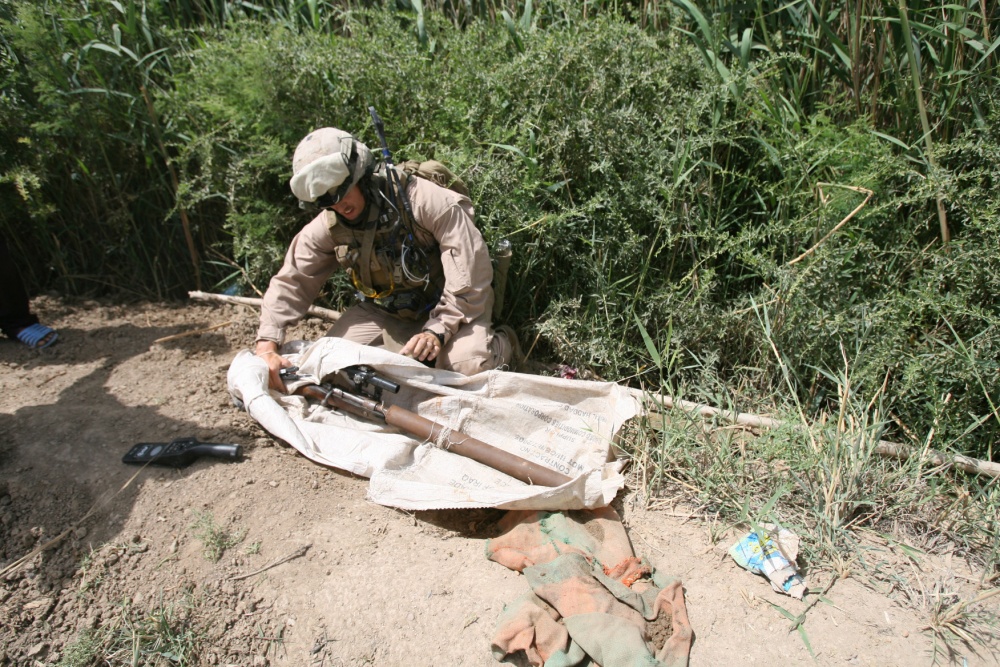
This photographs was posted on the U.S. Department of Defense Media Activity’s public domain website DVIDS along with another one featured on Silah Report. Both depict improvised suppressors captured by U.S. Infantrymen while on operations in Iraq.

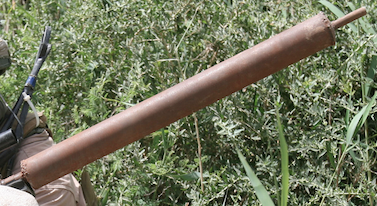
The rifle appears to be a Mauser 98K with the stock sawed off just past the chamber. Because of the proximity to Iran and the incredible amount of Iranian surplus found in Iraq, it would appear from conjecture that this rifle is a Persian Mauser, manufactured in the time of the Shah in the 1940s-50s, later being replaced by the M1 Garand through U.S. Foreign Military Sales programs in the 1960s. Unlike the previous M16A1 rifle we posted about, this improvised suppressor appears to have involved much more work, with a much larger diameter pipe being welded around the actual barrel of the rifle at both the front and rear of the pipe. There is a section of much smaller diameter pipe protruding from the main one, but this doesn’t appear to be the barrel.

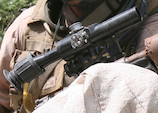
The scope mounted on this rifle is a Cold War era PSO-1 optic designed to mount on the optics rails usually riveted to the left side of a Kalashnikov or Dragunov receiver. It is unclear how this is mounted to the Mauser’s wood stock, unless an actual Warsaw Pact rail were somehow screwed into the wood stock itself.

Silah Report Has a New Look!

Silah Report recently undertook a massive transformation, moving servers, changing appearances, working out the new kinks. Because this website is personally run, all this had to take place between actual jobs and other commitments. But we hope you like the new appearance, it certainly is much more professional than the previous one.

We will also update the country database. Originally we intended the country database to be an all encompassing snapshot at the small arms history within a particular country. Although ideal in theory, in practice we found out that it was far too much work. Instead, what we want to do now is to maintain the individual country pages, but ONLY concentrate on small arms exported/imported in large quantities into a country, and small arms produced domestically, either under license or designed indigenously. Essentially we want to recreate what World.Guns.Ru, which is fantastically run by Maxim Popenker, but centered around small arms from the MENA and Central Asian region.

The goal of this database is to allow researchers and future writers to be able to reference back to it, so they can historically piece together how a particular small arm came into a country, or where it might have been bought from, and especially in what time period.

Analysis of Taliban Firing Positions in OEF

Due to the efforts of ISAF forces during Operation Enduring Freedom, Taliban fighters had to change their tactics constantly to stay tactically ahead of coalition efforts. Because of the reliance on fire support assets and modern armament that much of ISAF could afford, the Taliban in Helmand and Kandahar provinces couldn’t sustain a protracted fight as they could against ANA or AUP positions. Thus the insurgent force had to adapt and overcome. One of the ways in which they employed small arms against ISAF forces was through their usage of compounds and firing positions. Being in Helmand or Kandahar, firing from an open position or fields is almost certainly suicide against ISAF forces because of the lack of egress routes and being cut down. Thus, many Taliban fighters adopted the technique of utilizing “murder holes” as firing positions from compounds. Most of these compounds were taken over from the families that owned them, often threatening them with death if they spoke to coalition forces about the compound’s usage.

Compound/housing structures in rural southern Afghanistan have a number of advantages for maneuver insurgent warfare. Because the walls are made from mud, they can have holes busted through them to use as firing ports, but at the same time can be extremely resistant to incoming rounds, even up to .50 BMG. These compound walls can be anywhere from six feet to twelve feet in height and easily conceal the numerous motorcycles that the Taliban used. Motorcycles are essential for the kind of “shoot n’ scoot”maneuver warfare because of the ease of transportation and the possibility of swiftly getting away from lumbering  MRAPs and MAT-Vs along twisting narrow roads. In addition, a single PKM machine gun team could be concealed and broken up among three or five motorcycle driving Talibs. One carrying the receiver, another the barrel, another the ammunition. This way, all three could move to a new firing location discreetly, and most importantly separately.

The Taliban’s worst threat was being fixed in place and destroyed. The force knew that it could not sustain a long drawn out, small arms fight even against a single ISAF patrol. Once their position has become known, the key to surviving a protracted fight is to quickly pick up, mount up, and push to another firing position to further engage the patrol, preferably from a completely different angle than the first one. The problems thus presented to the ISAF patrol were twofold. One the one hand, it would be very difficult to determine the source of the fire, especially if it was from a PKM beyond 400-600 meters. And second, even if the Taliban location was found and positive identification was made, the patrol would have to maneuver around to get into a position to return accurate rifle and light machine gun fire, by which time the PKM position would already be broken down, and repositioned at a completely different angle to the patrol. This entire scenario is also not even taking into account the IED threat that complex ambushes would often be initiated with, thereby adding another layer of complexity to the mix of that ISAF patrol maneuvering.

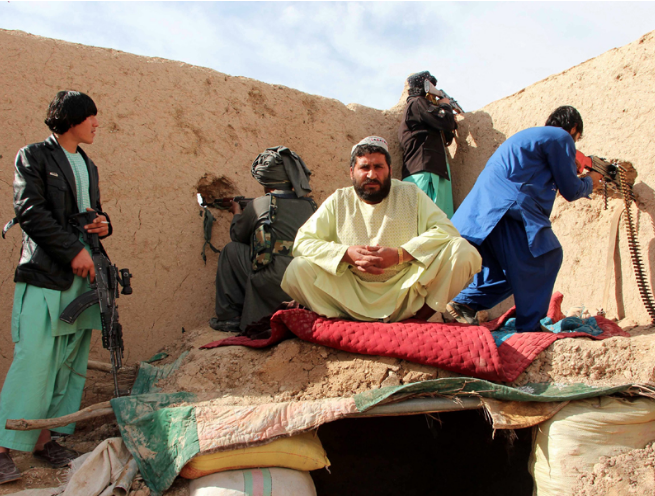
Firing positions themselves are very well thought out. As an example in the title photograph, typically Talib fighters will use a pre-existing “murder hole” or they will create one themselves as the other photograph shows. Using blankets, they will place them underneath the PKM, and then on the base of the murder hole as well. This way, the ground blanket will catch all the spent shells, and the murder hole blanket will prevent the PKM from leaving black residue on the caked mud. When the MG team leaves the position, all they have to do is wrap up the blanket with shells in it, then use the murder hole blanket to conceal the PKM parts in it and the firing position will appear to have been relatively unoccupied even if an ISAF patrol were to literally get to it after a firefight.

And to conclude this analysis, this a Talib fighter wearing a Marine Corps woodland digital utility jacket!

Note- The title photograph of the firing position is actually of Government ALP fighters, and not Taliban fighters. This photograph was used because it does display what the TTPs that the Taliban utilize. 
Airsoft Accessorized to the Max!

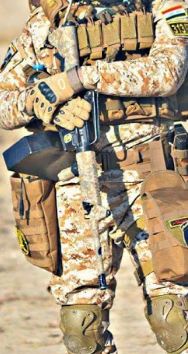
This photograph has been on the internet for awhile and appears to be depicting an Iraqi with an odd M249 SAW drum mounted around the STANAG magazine of his Airsoft M4 carbine. We doubt that this is a functioning 200 linked belt inside the drum that is being fed into the rifle and is most likely glued or taped to the magazine that is actually inserted.
Screen Shot 2017-04-22 at 9.03.19 PM.png

From the appearance of the soldier, it doesn’t look like a combatant, possibly not even an enlisted soldier in the Iraqi Army. Rather this might be an enthusiast that is “dressing up” the part. Although his equipment bears some resemblance to gear issued within the Iraqi Army, he is overloaded with equipment that isn’t standard issue. The rifle itself appears to be a U.S. civilian legal 16.5 inch barrel AR15 with a permanently attached carrying handle, he has what looks like Kalashnikov magazines in his pouches, his visor and helmet don’t look to be ballistically rated at all, and it looks like he has mounted a Kalashnikov bayonet over his right shoulder as well. Essentially, nothing matches!


UPDATE

Due to an ever watchful reader, we were able to identify several of the products pictured. The rifle is indeed an airsoft product, with an AEG magazine and an AWT Armor Warrior Tactical G4 Protection Helmet. Much thanks to Irfan!

Kazakh Armed Forces Preparing for a Military Parade

Kazakhstan Army Parade 660x340.jpg

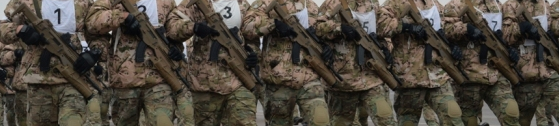
Various branches of Kazakh Armed Forces are preparing for the military parade which will be held on May 9, 2017. The parade is dedicated to the 25th anniversary of the establishment of Kazakh Armed Forces. Although there was no new firearm spotted (yet), it is still interesting to take a look at some of them in the hands of Kazakh military personnel.

Kazakhstan Army Parade.jpg

In the above picture, the special forces units carry Beretta ARX 160 rifles chambered in 7.62x39mm, which also feeds from AKM pattern magazines. They also have EOTech 512 series reflex sights and GLX160 grenade launchers mounted on the rifles.

Kazakhstan Army Parade1.jpg
On this picture, you can see the soldiers (possibly also special forces) with accessorized AK-74 rifles.


Kazakhstan Army Parade 2.jpg
Female soldiers with AKS-74U also known as “Krinkov” rifles.
Kazakhstan Army Parade 3.jpg
As in many post-Soviet countries, SKS rifles are used for the ceremonial roles in the parades and other events.
Kazakhstan Army Parade 4.jpg
Military police personnel armed with pump-action shotguns.

Other than mentioned firearms, the rest (majority) of the soldiers taking part in the parade are equipped with AK-74 and AK-74M rifles.

Kazakhstan Army Parade 5 (1).jpg

Kazakhstan Army Parade 5 (2).jpg

Kazakhstan Army Parade 5 (3).jpg

Kazakhstan Army Parade 5 (4).jpg

Kazakhstan Army Parade 5 (6).jpg

Kazakhstan Army Parade 5 (7).jpg

Interesting to note how the weapons from the ’70s are still capable and are the main weapons of many armies. Also, newer weapon systems find their way into the arsenals blending with existing ones. In that sense, it was a wise choice made by Beretta to not only chamber their ARX160 rifle in 7.62x39mm caliber, but also design it to take AK magazines. As you can see that configuration allows countries like Kazakistan to adopt modern rifles without any trouble concerning logistics, compatibility and interchangeability.

If anything small arms related appears during the actual parade, we’ll post about it here on Silah Report.

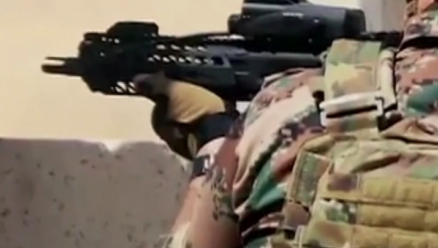
Did Jordanian SF Purchase SIG MCXs? Or Just King Abdullah II?

A recent video has been published by Jordanian media services showing head of state King Abdullah II in his element, conducting a training operation consisting of a dismounted sweep and clear of an enemy-held town. The King himself is a large fan of his countries Joint Special Operations Command (العمليات الخاصة المشتركة الاردنية). Between 1994 and 1999 he took command of the special operations forces, restructuring them into what they are today before taking the throne of his country in 1999, in addition to establishing KASOTC, one of the premier special forces specific training sites in the MENA region.

https://www.youtube.com/watch?v=4rExw-0ptWU&feature=youtu.be

This video shows his Highness armed with what appears to be a 12-inch barrel configuration of the Sig Sauer MCX carbine, most likely in 5.56x45mm NATO, with an Elbit Systems optical sight mounted. The remainder of his SF squad appears to have standard issue M4A1s and not MCXs as evidenced by the handguards and fixed triangular front sight posts. From the RT Arabic post-

A video released by the Jordanian Royal Court showed Jordan’s King Abdullah II, who was playing with Jordanian soldiers in a military exercise with live ammunition that appeared to be an operation against terrorists. King Abdullah appeared in full military uniform with a machine gun that appeared to be M16, in a real atmosphere of war, which received tens of thousands of views, banners and posts within an hour of publication.

أظهر فيديو نشره الديوان الملكي الأردني، العاهل الأردني الملك عبدالله الثاني وهو يشارك إلى جانب جنود أردنيين في مناورة عسكرية بالذخيرة الحية بدت أنها عملية ضد إرهابيين.

وظهر فيه الملك عبدالله بكامل عدته العسكرية مع رشاش بدا أنه M16 ، في أجواء حرب حقيقية، حظي بعشرات آلاف المشاهدات واللايكات والمشاركات خلال ساعة من نشره.


This photograph shows one of the members of the SF team with a standard issue M4A1.

The entire production appears to have been a propaganda stunt to raise support for the Kingdom by portraying the King in a positive light. Similar to earlier stunts where the King was pictured flying bombers into Syria when a Jordanian pilot was burned alive by the so-called Islamic State. The MCX rifle, however, is most likely not a part of the propaganda because the overwhelming majority of viewers watching the video clip probably will have no clue what the Sig MCX even is. The carbine could be a personal purchase or favorite of the King’s, or it could be something more serious, such as one of several T&E rifles ordered by Jordan, or even the results of a legitimate order. If we want to stretch it, there could also be a possibility that the MCXs could be in .300 BLK as well.

As per Wikipedia, the King actually has an interesting military career, even serving in the British Army-

He began his military career at Royal Military Academy Sandhurst in 1980, while he was a training officer in the Jordanian Armed Forces.[8] After Sandhurst, Abdullah was commissioned as a second lieutenant in the British Army[4] and served a year in Britain and West Germany as a troop commander in the 13th/18th Royal Hussars.[6]Abdullah was admitted to Pembroke College in 1982, where he completed a one-year special-studies course in Middle Eastern affairs.[4] He joined the Royal Jordanian Army on his return home, serving as first lieutenant and then as platoon commander and assistant commander of a company in the 40th Armored Brigade.[4] Abdullah took a free-fall parachuting course in Jordan,[9] and in 1985 he took the Armored Officer’s Advanced Course at Fort Knox.[4] He became commander of a tank company in the 91st Armored Brigade, with the rank of captain.[4]Abdullah also served with the Royal Jordanian Air Force‘s anti-tank helicopter wing, where he was trained to fly Cobra attack helicopters.[9]The prince then attended the Edmund A. Walsh School of Foreign Service at Georgetown University in Washington, D.C. in 1987, undertaking advanced study and research in international affairs.[4] He returned home to serve as assistant commander of the 17th Royal Tank Battalion in 1989, later being promoted to major.[4]Abdullah attended a staff course at the British Staff College in 1990,[9] and served the following year in the Office of the Inspector General of the Jordanian Armed Forces as the Armored Corps representative.[9] He commanded a battalion in the 2nd Armored Cavalry Regiment in 1992 and was promoted to colonel the following year, commanding the 40th Brigade.[4]In 1994 Abdullah assumed command of Jordan’s Special Forces and other elite units as brigadier general, restructuring them into the Joint Special Operations Command two years later.[9] He became a major general, attended a course in defense resources management at the American Naval Postgraduate School[9] and commanded an elite special-forces manhunt in the pursuit of outlaws in 1998.[10] The operation reportedly ended successfully, with his name chanted on the streets of Amman.[10]


How Ruger P95s and Sig P2022s Got to Iraq

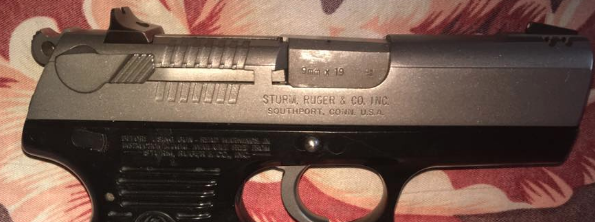
For a while now we’ve seen a number of Ruger 9x19mm NATO P95 handguns flourishing among the social media groups within Iraq. This isn’t a recent phenomena but still, the question remains over where they originated from. Daniel Watters, a noted small arms historian has provided us with some excellent context on the issue, even detailing the specific contracts that pushed 5,000 Ruger P95s, and 5,000 Sig Sauer SP2022s into Iraq.

Back in December 2004, the US Army’s Tank-Automotive & Armament Command (TACOM) posted solicitation W52H09-05-R-0067. They basically wanted 10,000 9x19mm pistols in a hurry, and were willing to place multiple contracts to fill it. Vendors were allowed to bid for as few as 100 pistols up to the full total of 10,000. The most telling portion of the solicitation was that they requested a price for the pistols to be shipped directly to Baghdad.

Before the end of the month. Ruger received contract W52H09-05-C-0058 for 5,000 P95, and SIG-Sauer received contract W52H09-05-C-0059 for 5,000 SP2022.

When outsiders saw the name Tank-Automotive & Armament Command, they assumed the pistols must be for tankers. Nothing could be further from the truth. A subordinate command of the Army Materiel Command, TACOM-Rock Island was responsible for all Army small arms procurement. It also handled orders from other US military service branches, and managed foreign military sales (FMS).
It turns out that the rush order was meant to arm Iraqi security forces ahead of the country’s first post-Saddam parliamentary elections in January 2005. Confirmation can be found in the government report “Iraqi Security Forces: Weapons Provided by the U.S. Department of Defense Using the Iraq Relief and Reconstruction Fund.

The report listed can be accessed here and lists the 5,000 P95s as being purchased for $1,271,700, and the 5,000 SP2022s being purchased for $1,756,550, both on December 12 2004. Both of these appeared to have been designated for the Ministery of Interior and the Ministery of Defense although it doesn’t specify which. We should also note that these 10,000 handguns were only a third of the 38,053 “Generic 9mm Pistols” that were on contract. What those other thirty-something thousand odd handguns were would have to take some researching.


Although very similar in appearance to a Sig Sauer handgun, our sources tell us that this is in fact a blank firing copy.

SUSAT On Peshmerga M2

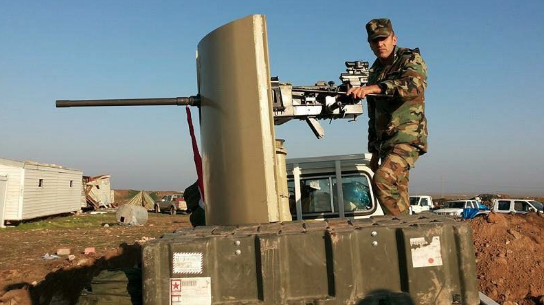
A photograph has recently come out showing a Peshmerga fighter with what appears to be a SUSAT mounted on his M2 .50 BMG Heavy Machine Gun. The mount that the machine gun is cradled in also appears to be a of British design, formerly seen in use on British armored vehicles. SR’s suspicion is that the entire contraption is supplied by British forces to the Peshmerga as defensive material. However, it would also appear that the SUSAT isn’t calibrated to the trajectory of the .50 BMG cartridge, nor is it very well suited for a heavy machine gun in the first place, being designed for a 5.56x45mm rifle.

Arabic Guides to Kalashnikov and Ammunition Nomenclature

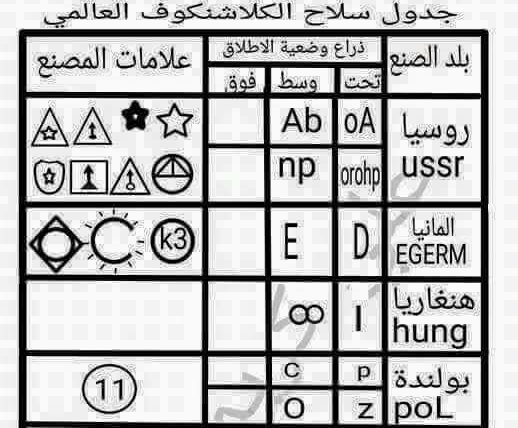
Much like in the United States Kalashnikov collector or enthusiast market, Iraqi Kalashnikov owners understand the differences in quality between AKs from different countries. The European ones take precedence over Chinese, and Russian variants when original remain supreme and commandeer a premium when it comes to cost.


These sets of markings are designating the country of origin stamps in addition to examples of serial number blocks.

While still maintaining the country origin markings, this chart explicitly shows the selector markings as well. Understanding and making sure all the markings add up is very important if a seller is to ensure the Kalashnikov he is purchasing is indeed genuine.

In addition to country of origin markings, these are guides in Arabic to ammunition markings and nomenclature. With the Iraqi flag imprinted in the graphics, the photographs appear to have been edited and translated by an Iraqi enthusiast.