U.S. M16A4 Reportedly Among Iranian Protests
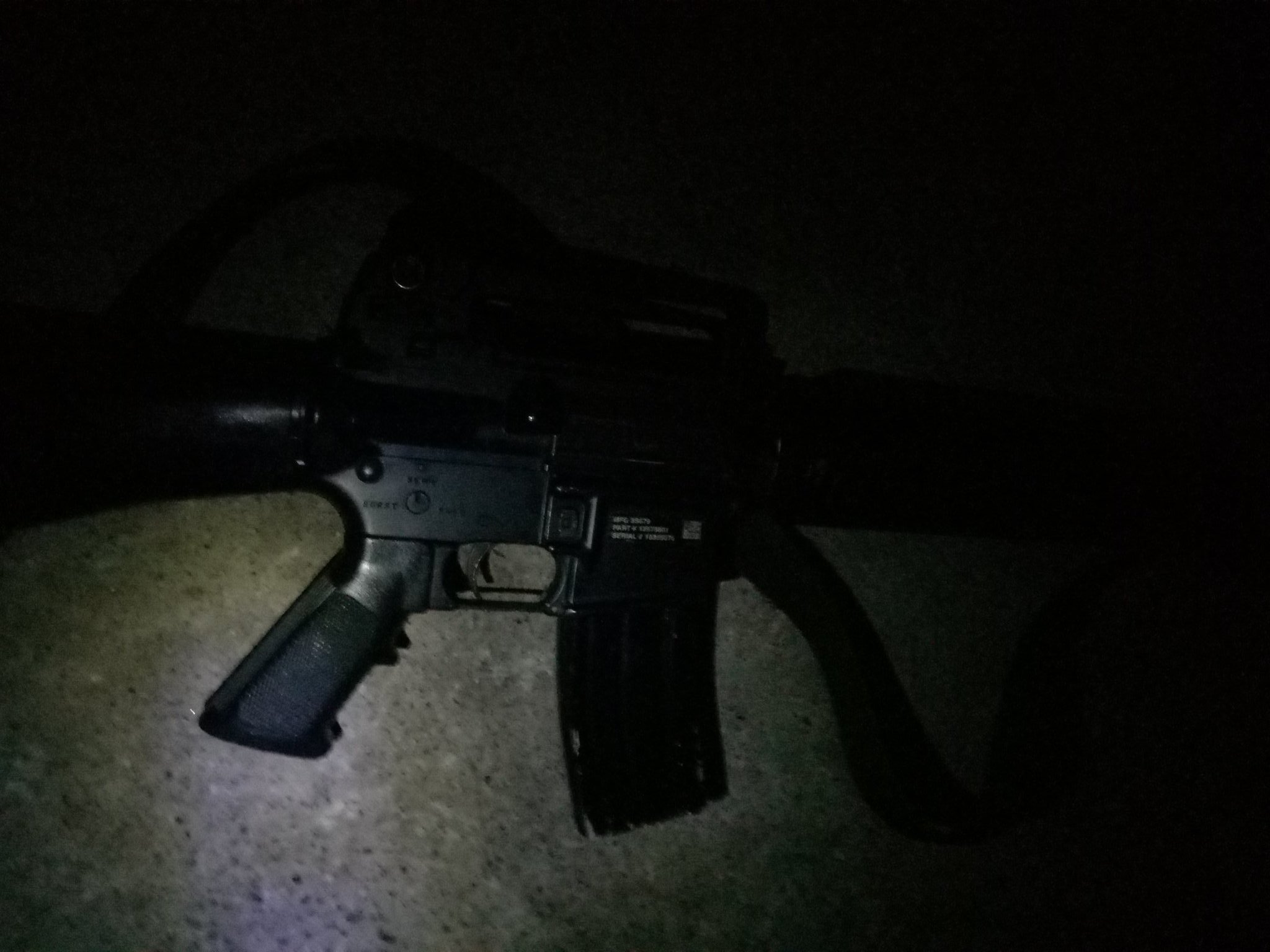
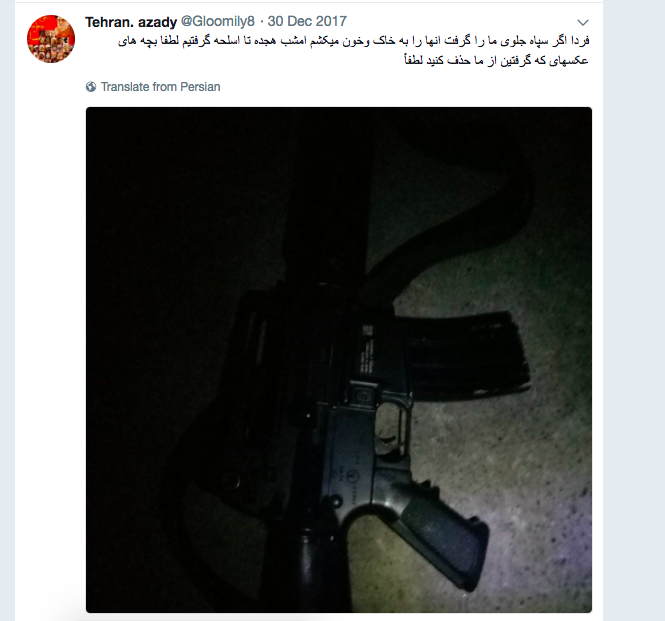
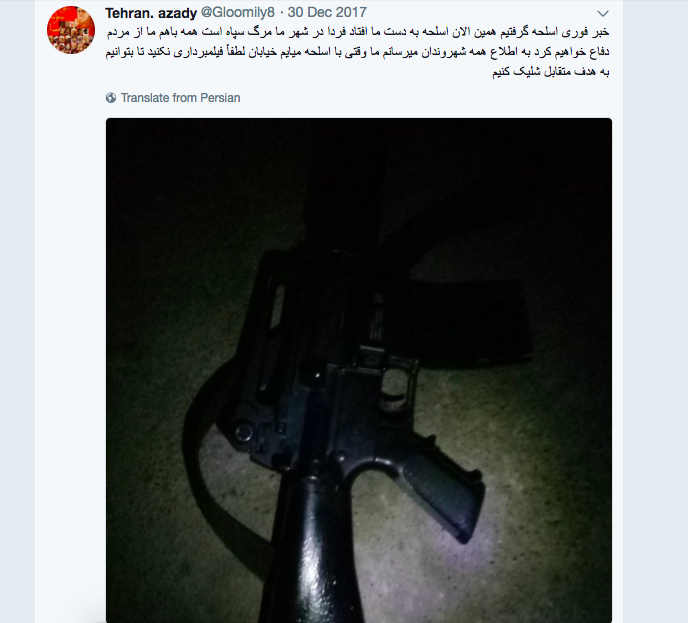
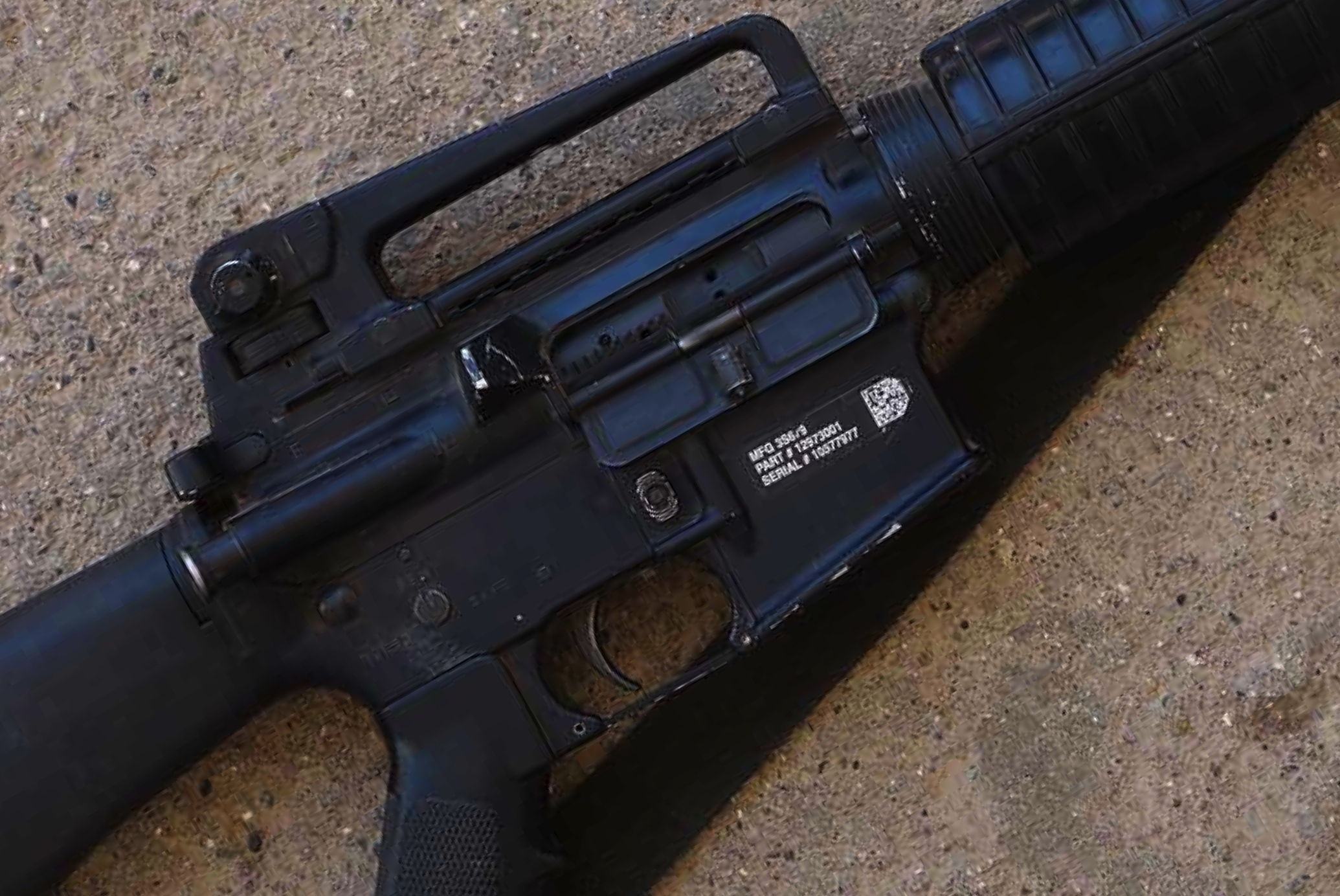
A Twitter account by the name of Tehran. azady/@Gloomily8 (Free Tehran) has posted two posts and accompanying photographs on their page depicting what appears to be an FN Herstal, former U.S. Government 5.56x45mm M16A4 Service Rifle. It is not known or confirmed if the image is actually from Tehran for that matter, but a cursory Google Image Search revealed this Twitter account appears to have been the first online poster of this particular photograph. It would also appear that these photographs are actually screenshots from a motion picture, due to the apparent movement of the light source.

Neither post makes much mention of the weapon and is more concentrated on what is going to be happening or will be planned to happen in the future in regards to the protests.

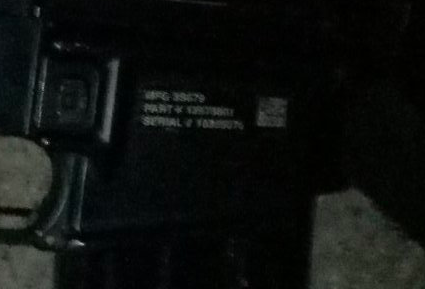
Notice the SKU imprint-

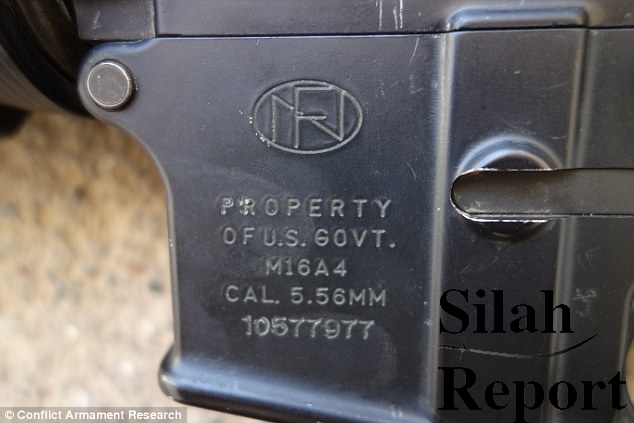
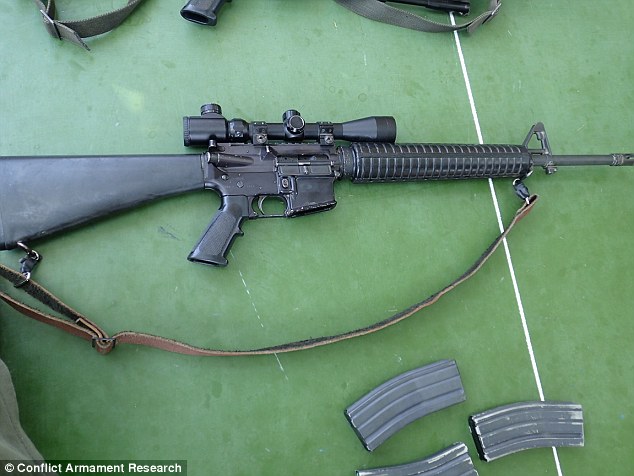
It would appear that this M16A4 is most likely diverted from U.S. Foreign Military Sales to Iraq. What could possibly confirm this is the design of the handguard. We know it is an M16A4 due to the M1913 Picatinny Rail a part of the upper receiver, of which an “A2” carrying handle is fastened to. What is being left out however, is the design of the handguard. If it is a Knight’s Armament “A4” handguard, it would be a very rare sight indeed. But most likely it is an “A2” style with the circular handguards and vertical vent ports. The “Hybrid” M16A4/A2 rifles were previously sold to the Iraqi Army-

And were subsequently seen/captured by the so-called Islamic State-

Source- Conflict Armament Research Report
Source- http://www.dailymail.co.uk/news/article-2749197/ISIS-arming-US-military-hardware-wage-jihad-Middle-East-seizing-weapons-Syrian-rebels-Iraqi-soldiers.html

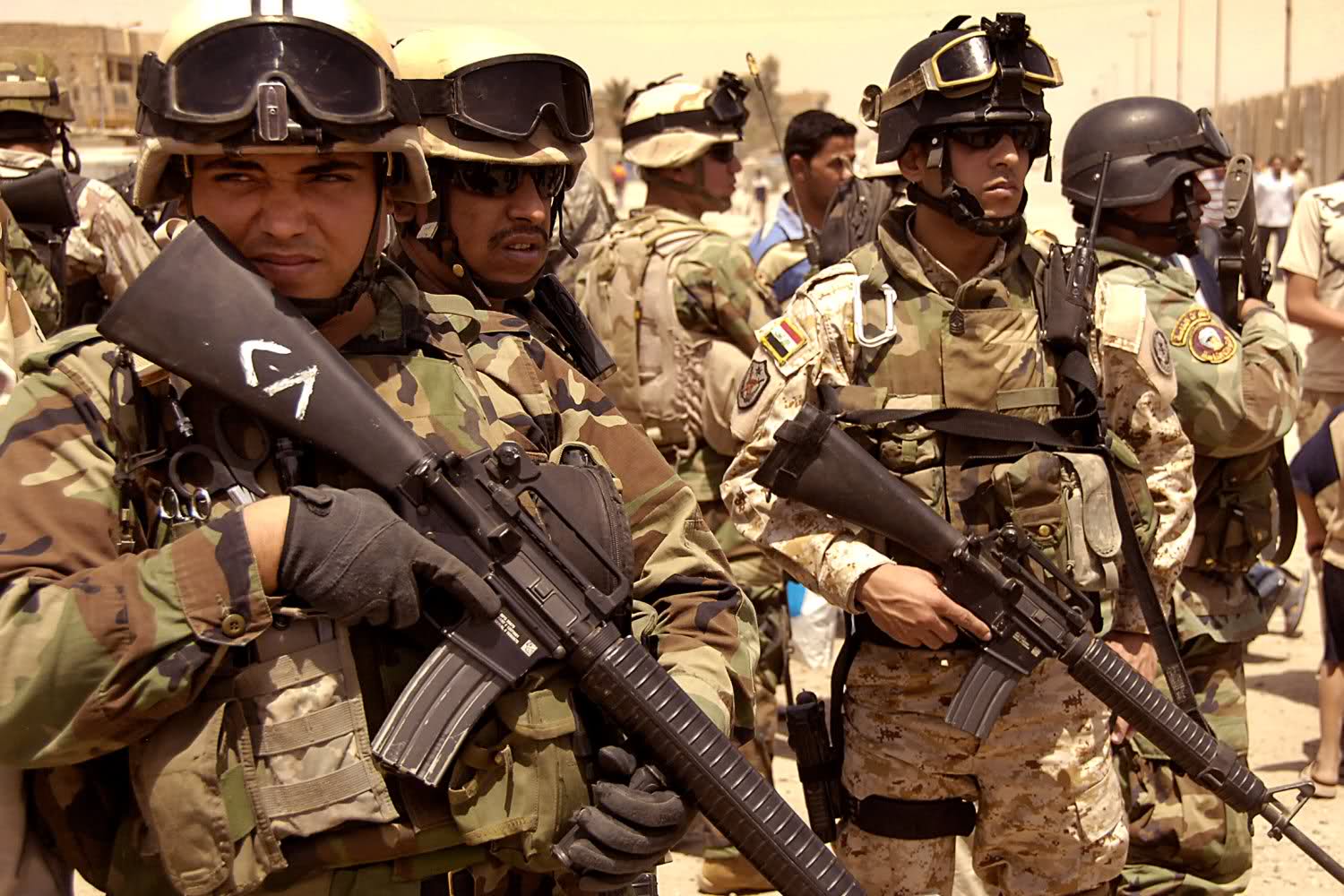
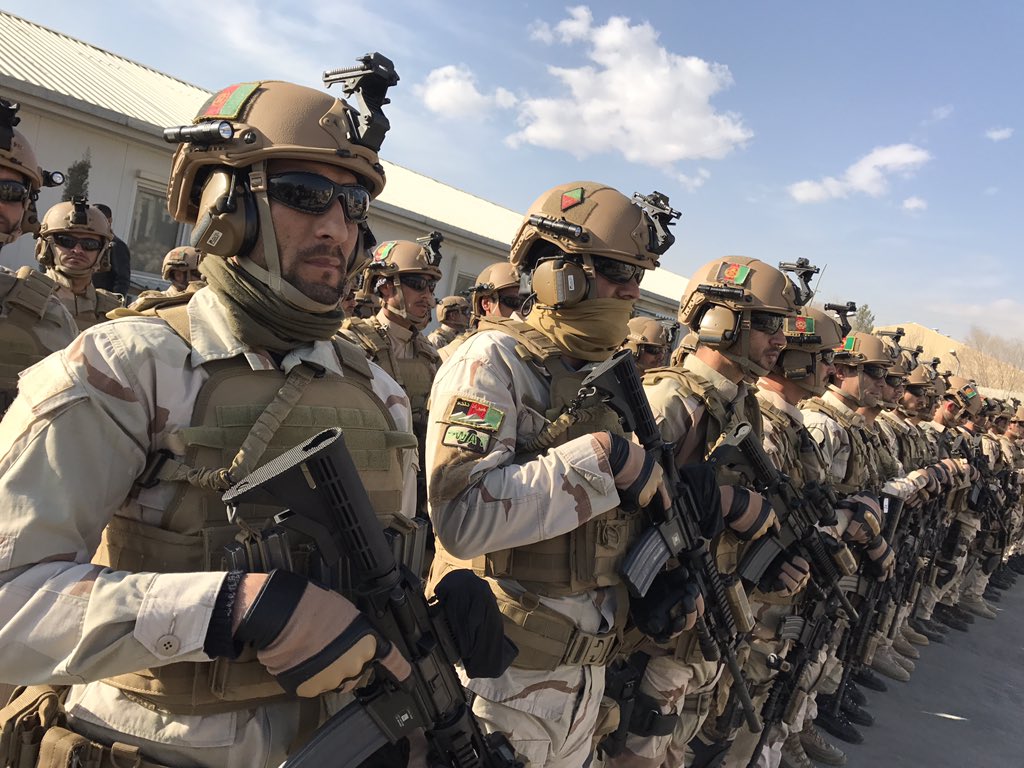
It should be noted that M16A4s are in service in Afghanistan with the Ministry of the Interior, in addition to M4/M4A1s are in service with numerous Afghan forces as well. But the amount in service in Afghanistan doesn’t seem to be proportional to the amount of M16A4s with the Iraqi Army, or circulating on the Iraqi black market.

Source- https://www.khaama.com/wp-content/uploads/2016/12/Afghan-special-forces.jpg

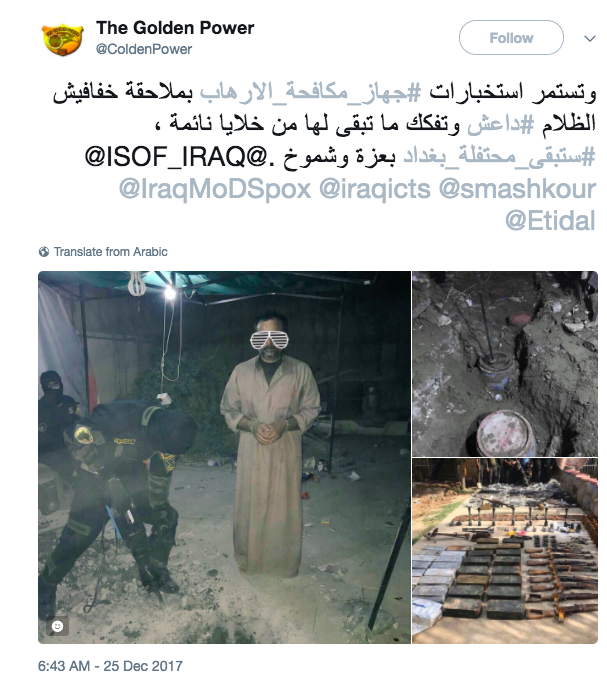
Tabuk Sniper Rifles Turn up in Baghdad Small Arms Cache

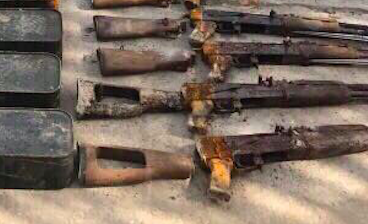
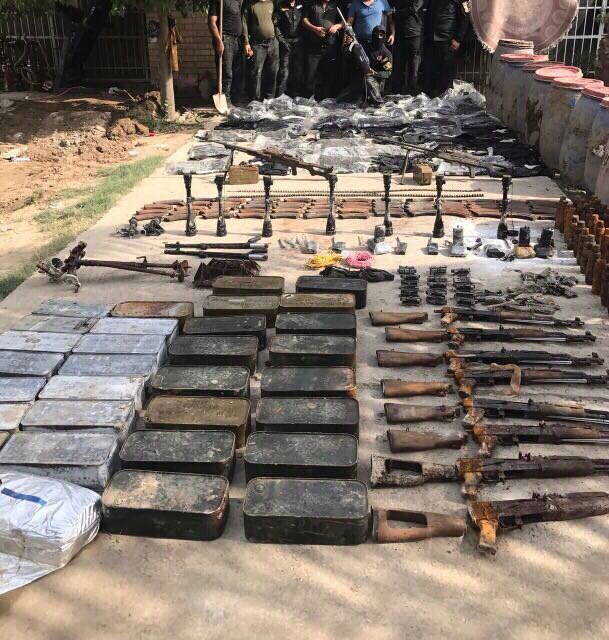
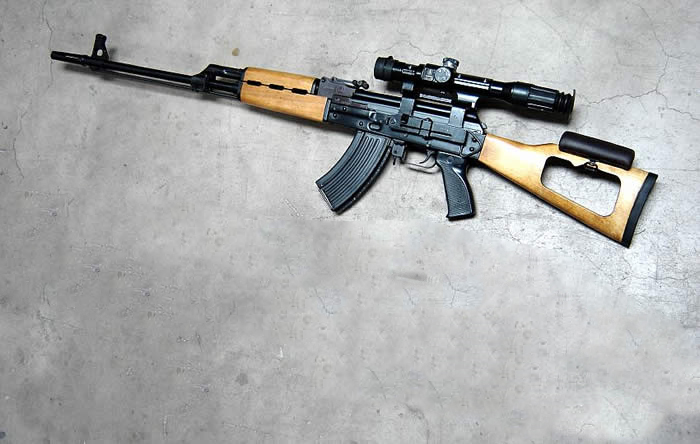
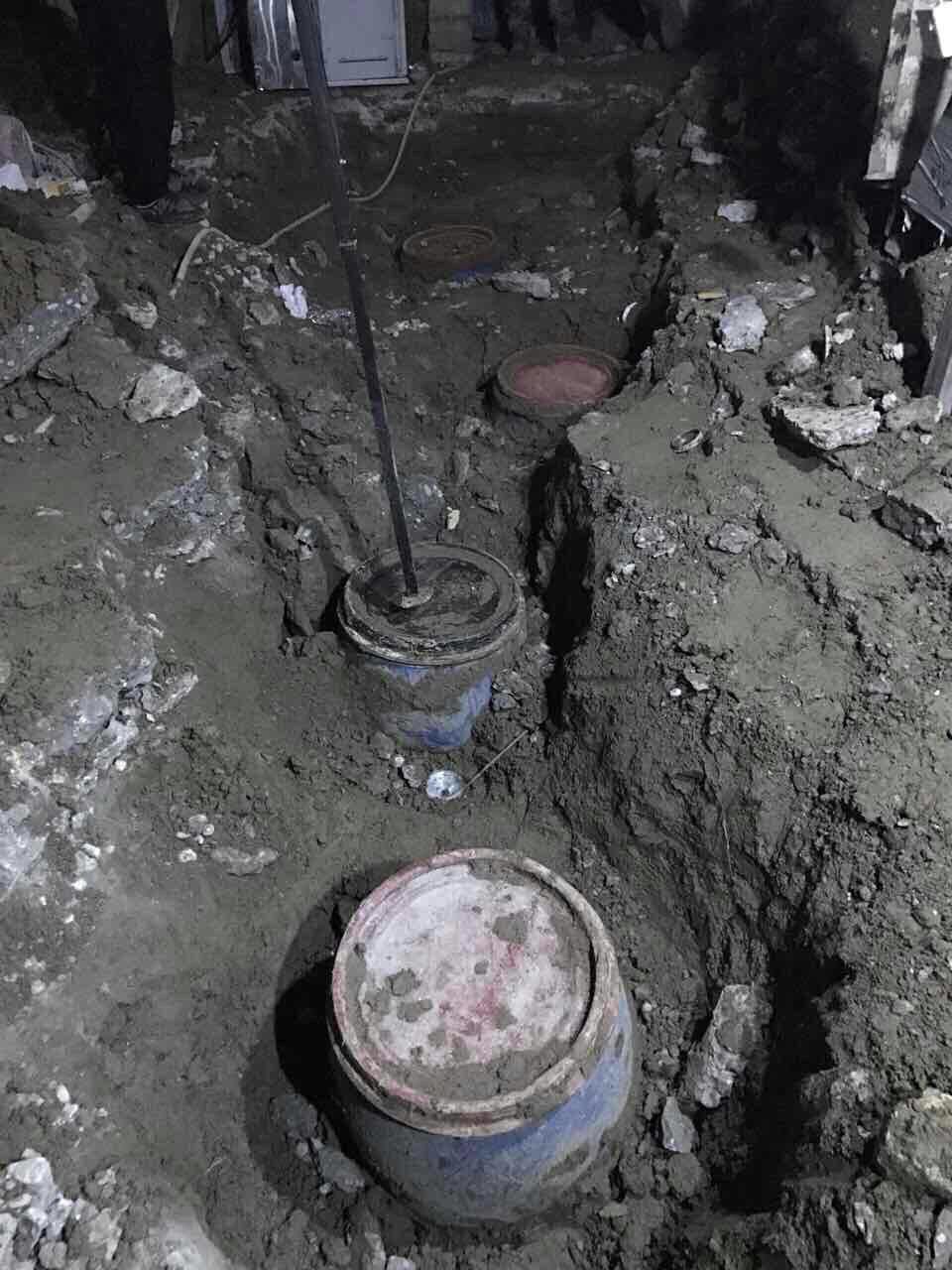
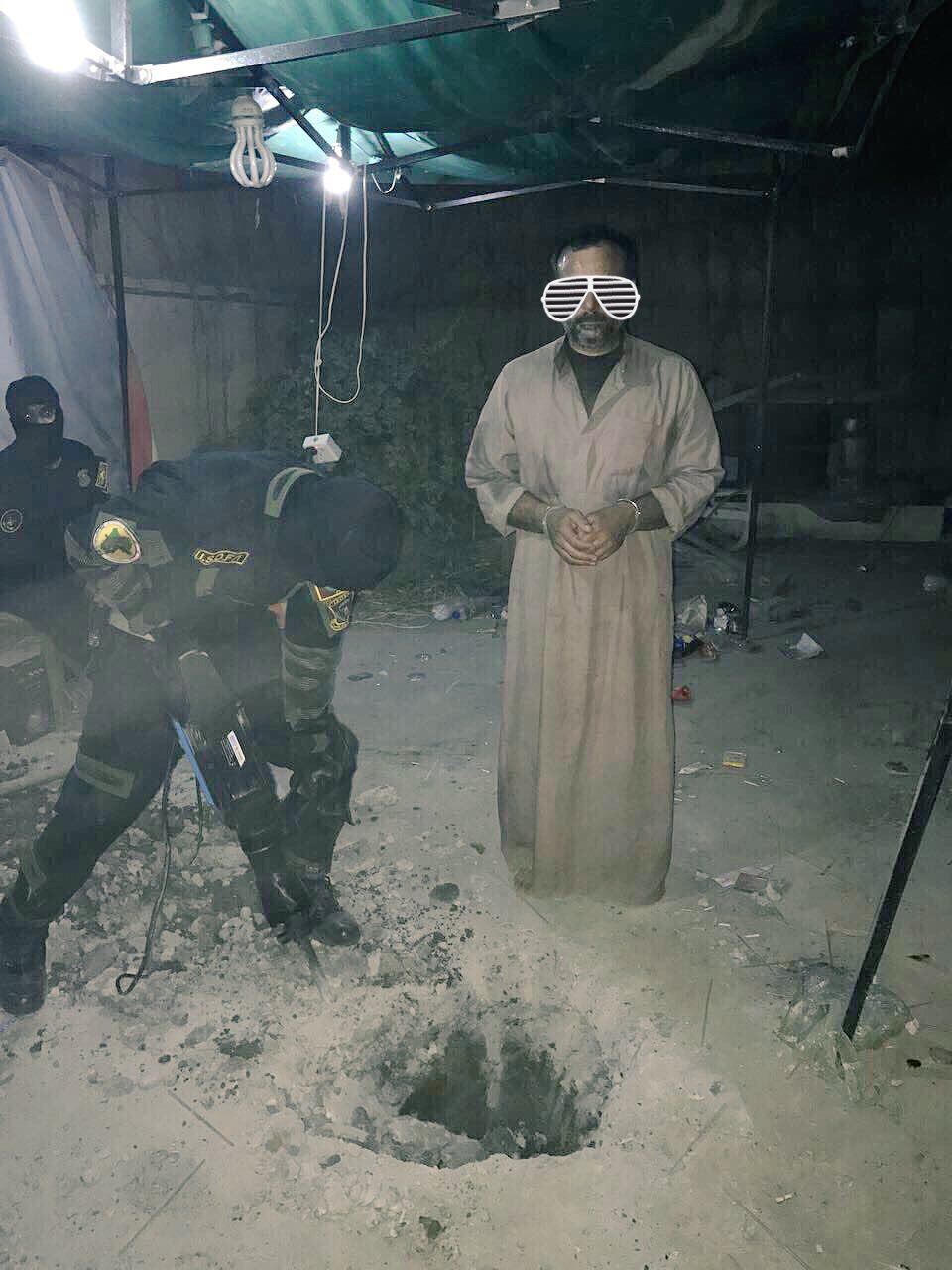
At a recent weapons cache that was turned up by Iraqi Counter-Terrorism Forces in Baghdad, what appears to be two Iraqi Tabuk Sniper rifles were among the rifles discovered in the buried cache. The Tabuk Sniper is uniquely identified by the cutout in the rear stock. Based on the Yugoslavian M70, the Tabuk sniper is a variant of the standard Tabuk rifle with full wooden stock, and the shorter version with a folding stock. It is unique among designated marksmen rifles in that it is chambered in 7.62x39mm, a round not known for its accuracy in the years it was adopted and used.

The two Tabuk Snipers in this photograph are distinguished by the aforementioned stocks and the three vents in the wooden handguard. On the above rifle there does seem to be some doubt as the receiver looks to be milled instead of stamped due to the magazine cut out portion. In addition, it is difficult to tell if the pistol grips are plastic or wooden, a key identification point about the Tabuk and M70 series. The stocks themselves are actually reversed, you are looking at the left side of the stock when it should have been the right side if aligned properly with the rifle.

The Twitter account “The Golden Power” shared the images.

The First Exhibition Drill Soloist in the U.S. was an Arab

The elaborate activity known as exhibition drill within the United States is quite unique in its execution. It evolved out of a want to push the envelope when it comes to Drill and Ceremony (shortened to D&C) competitions. For many decades, militaries all over the world have held D&C competitions, even down to the academy cadet level. The United States was no different, with the tradition possibly originating from Prussian General Friedrich Wilhelm von Steuben, who is credited with teaching D&C to American troops at Valley Forge during the Revolutionary War. However, it was only within the last century that competitions took on a more flashy or exhibition flare, with both armed and unarmed portions. The reasons for this could be many, but the author speculates that it has to do with D&C becoming less important on the battlefield and more of a measure of a unit’s discipline in the rear. For example, doing exhibition drill in the 1800s would probably be met with stern disappointment, because this was still the age where actual battles were won and lost due to a unit’s ability to maneuver in formation on a battlefield.

Today exhibition drill teams exist at every level from High School JROTC programs, Collegiate level ROTC programs, Military ceremonial units such as the Marine Corps’ Silent Drill Platoon, and even professional performance teams such as New Guard America. One of their performances is shared below.

But back to origins. The general beginnings of what we now know to be called “exhibition” drill are claimed to be a cadet unit called “Pershings Rifles” still active today at a university in Nebraska. Whether or not this cadet unit performed anything near to what would be labeled as exhibition, the research isn’t very clear. But the general consensus is that modern exhibition drill really took off in the years following the Vietnam War, growing to a huge network today.

However, before the Pershing Rifles, there was Hajji Sherif/الحاج شريف (normally colloquially as Hadji Cheriff). This name was most likely a stage name or something an American audience could easily pronounce. The first part, Hadji/Hajji is indicative of this man making the Haj pilgrimage to Mecca, and the second part Cheriff/Sherif, means “Noble” in Arabic. Although Sherif might have been apart of the man’s name, it really doesn’t give us much as to his family name, what part of the MENA region he was from, etc…

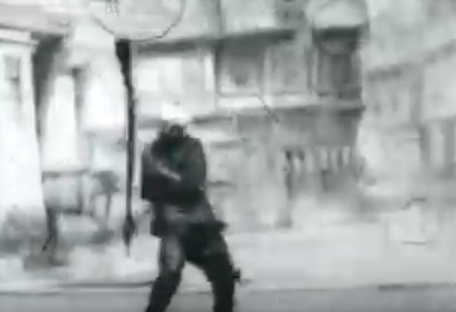
This video clip that was copyrighted by Thomas Edison in 1899 (he also had another clip of Hajji Sherif performing a dance at the inventor’s studio) specifically label Sherif as the “Arabian” Gun Twirler and recorded at what is believed to be the Midway Plaisance during during the World’s Columbian Exposition of 1893, taking place in Chicago. It shows Sherif effortlessly spinning what appears to be a muzzleloading Model 1855 Springfield .58 Caliber rifle.

The only other known video (described earlier) of him is also online-

But in this short movie that would have been aired or published as a silent movie, we see exactly what goes on today on exhibition drill decks across the United States. As the drill website, The Nationals notes–

[He is performing] a basic aerial toss (two, 1-1/2 over-hand thrown from the firing hammer) and also an over the shoulder technique with a rather remarkable display of over-the-head drill (OTH), and ends right after an under the leg inverted spin.

This film’s description from the Library of Congress reads as such–

A bearded man performs a rifle twirling act on a stage with a painted backdrop of a city street corner. He wears a white turban and a dark two-piece costume of tunic and baggy pants that narrow at the knees; perhaps the costume of an Arab infantryman. The tricks he performs include throwing the spinning rifle in the air and catching it; twirling the gun in front of him, above his head, behind his back, to the side of his torso, and under his leg; and twirling the rifle as he switches hands.From Edison films catalog: An interesting exhibit by Hadji Cheriff, of the original Midway Plaisance. Twirls his rifle over shoulder, behind back, under leg, both hands and one hand. 50 feet. $7.50.

50 feet is in reference to the overall physical length of the roll if you were to purchase it for $7.50 at the time of the short’s airing at the turn of the century in 1899.

But what else do we know of Hajji Sherif, and what is he doing? We have this description of him from IMDb–

Hadj Cheriff was both an Arabian knife juggler and an acrobat. He had little to do with filmmaking of any sort, as his debut was in the 1894 Edison short film “Hadj Cheriff” which features him performing part of his act in Edison’s Black Maria studio. Cheriff later appeared in another Edison film, “Arabian Gun Twirler” from 1899. These two shorts are apparently the only films he took part in; thus, Cheriff remained a minor part in filmmaking.

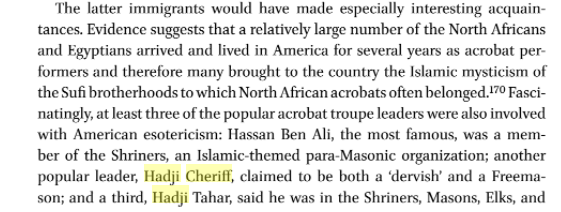
We have these references in The History of Conversion to Islam in the United States Vol II, which suggest that Sherif was a circus performer, and might have been Egyptian, and even a Sufi. Some Sufi religious orders are quite known for various practices that put them in a trance-like state, most famously the Whirling Dervishes but they number very little even in Turkey. From the book-

In 1890 we also have a clipping from a circus advertisement that clearly lists him as a “Gun Juggler”–

New York Clipper, July 19, 1890, pp. 291, 294, 295, 301, 304…. Hadji Cheriff, Arabian gun juggler

The real question that I think is important to answer as researchers is where did Hajji Sherif get the idea of twirling an unloaded rifle to entertain a crowd? One body of thought is that it might have come from his Sufi roots (if he was Sufi to begin with). Another distant train of thought is that it might be related to Yowla/اليولة, which is a traditional dance routine practiced in the Gulf Countries today, but can be traced back many years. Although not often using full-size rifles (imitation ones are used), and often using swords, there could be a connection. An important here is that traditional Yowla puts much more emphasis on the dance rather than skill with the rifle. The third option is that Sherif came up with the idea on his own of course.

Traditional Yowla performance-

https://www.youtube.com/watch?v=PUvX-1g9F7M

This is an example of Yowla with muzzleloaders today, similar to what Sherif would have had-

https://www.youtube.com/watch?v=cTFcMfPT22Q

DI Optical Reflex Optics on M2 HMGs at Turkmen Parade

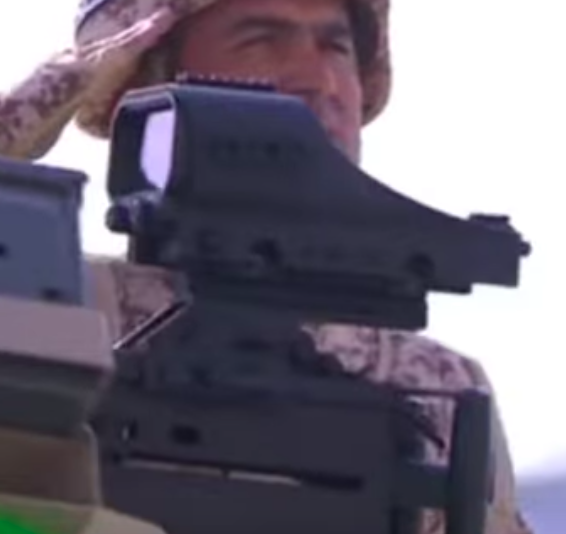
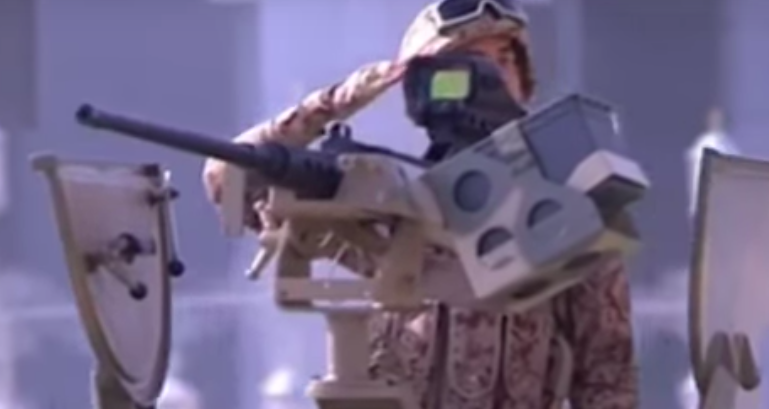
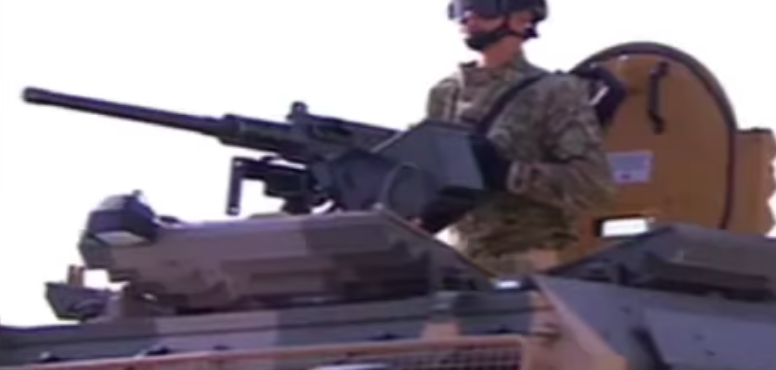
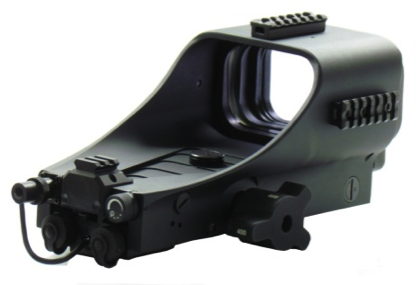
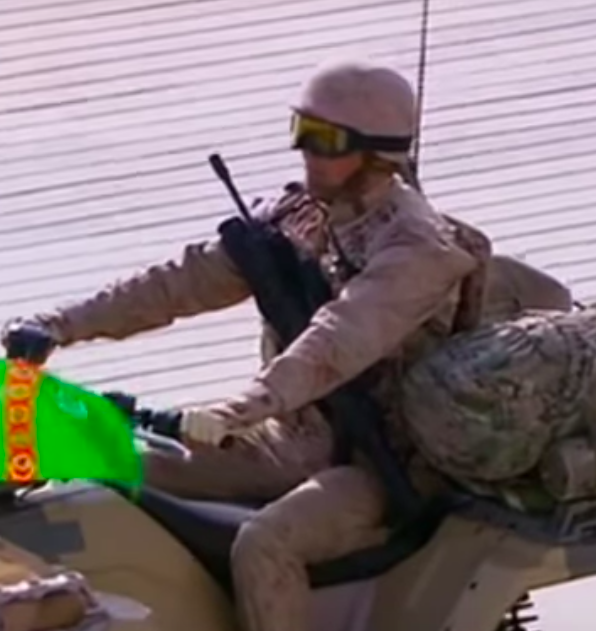
Among the latest small arms displayed at the recent Independence Day Parade were DI Optical USA DCL-120 reflex sights mounted to .50 BMG M2 Heavy Machine Guns. Currently, it isn’t known what type of mount is clamped to the receiver of the machine guns. But it certainly appears to be a Picatinny rail that allows the DCL-120 to be mounted to it.

Some of the M2 machine guns didn’t have the optics mounted on them.

From the manufacturer website-

Optical Data

System Reflex, Collimator System
Magnification No Magnification (1X)
Eye Relief Unlimited
Red Dot Size 3 MOA Dot / 40 MOA Circle
Field of View (FOV) 96 m @ 200m
Objective Lens 120 × 70 mm
Optical Coating Anti Reflex Coating All Surfaces, Multi-layer Coating for Reflection of Red Light

Electronic Data

Battery Two CR 123A 3V Lithium Battery, or External Power Source : 10~28V (Option)
Battery Life 1,000 hours
Dot Brightness Settings 1 Off & 5 Daylight Mode, 3 Twilight Mode, 3 Nightvision Mode

Mechanical Data

Housing Material High Strength Aluminum
Surface Finish Hard Anodized, Matte, Carbon Black
Mounting Solution Built-in Type (For MIL STD 1913 Picatinny Rail)
Click Adjustment 1 click = 25mm at 200m
Trajectory Ranges 200, 400, 600, 800, 1,200 meters

Dimensions

Length/Width/Height 330 mm / 180 mm / 150 mm
Weight 3,000 g

Environmental Data

Temperature Range −41 ℃ ~ +71 ℃

Beretta and Sako Presence at Turkmenistan Independence Day Parade

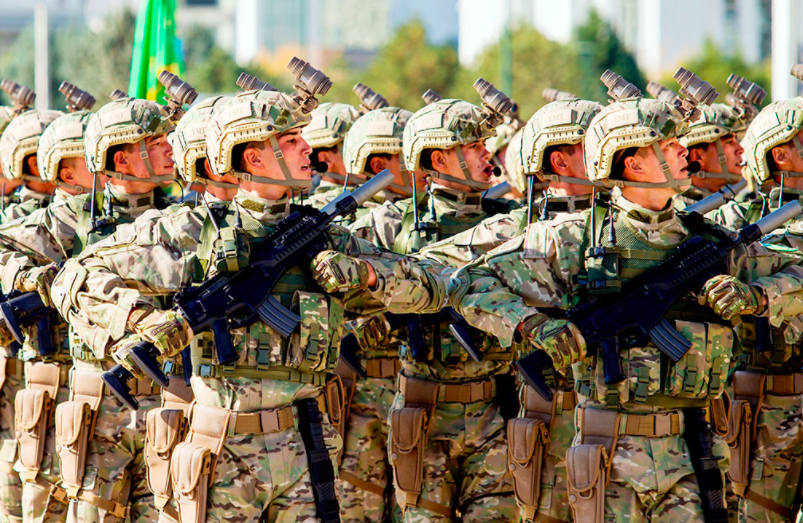
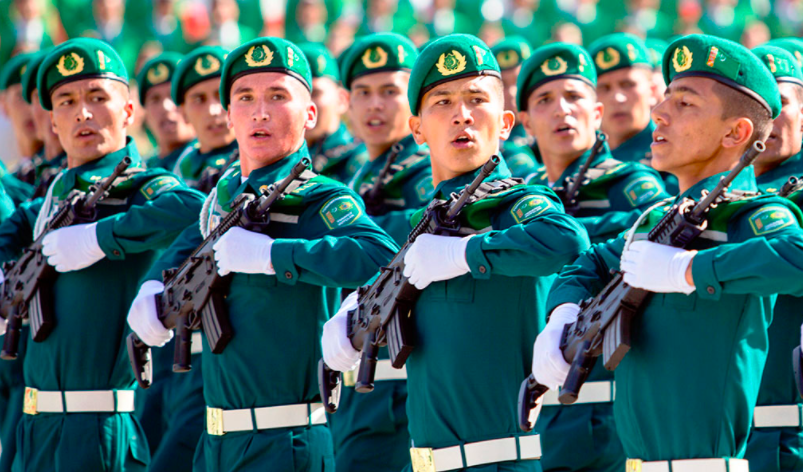
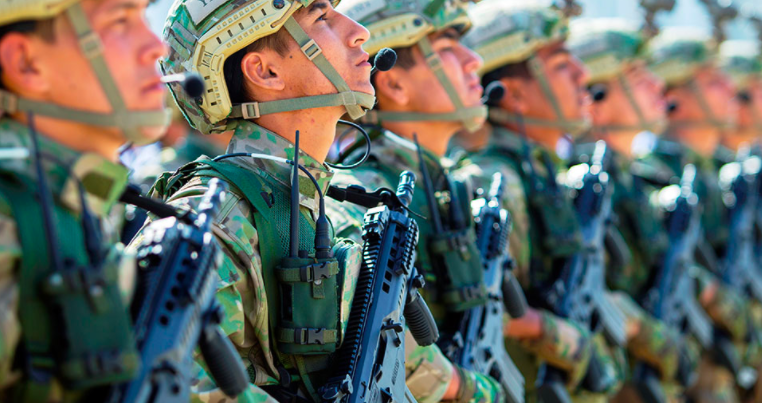
At this year’s 26th anniversary of the Independence of Turkmenistan, Beretta and Beretta owned Sako came out in large numbers among the small arms on parade. Of course, the Beretta 5.56x45mm NATO ARX160 took center stage among both the line troops and special operations component, with the SF component also being armed with IWI 5.56x45mm NATO Tavor TARs.

21st Century Asian Arms Race had this to say about the current rearming of the small Central Asian state–

Turkmenistan is often lampooned for its bizarre civic culture that combines national symbols with its leader’s personality cult. But judging by the recent military parade in Ashgabat, Turkmenistan’s armed strength is for the sole purpose of territorial defense. Unlike North Korea, Turkmenistan doesn’t pose a threat to global peace. It’s also trying to crawl out of an economic mess caused by its reliance on energy exports.

Neither does Ashgabat appear to have regional ambitions. On the contrary, it faces a grave threat from its border with Afghanistan where militants tied to either the Taliban or ISIS are active. In the greater scheme of things, Turkmenistan’s imperative is balancing its aspirations with the looming strength of China, India, Iran, Russia and Turkey.

Yet even if it’s overshadowed by larger countries in its neighborhood, when it comes to mass calisthenics, very impressive rifle drills, and costumed Turkmen archers trotting on horseback, Turkmenistan makes sure it surpasses its neighbors in pageantry.

Along with the ARX160s, there were some mounted with Beretta’s accompanying 40x46mm low-velocity GLX-160 UBGL.

And a designated Marksmans variant.

It appears that Turkmenistan has also purchased the IWI Negev light machine gun as well.

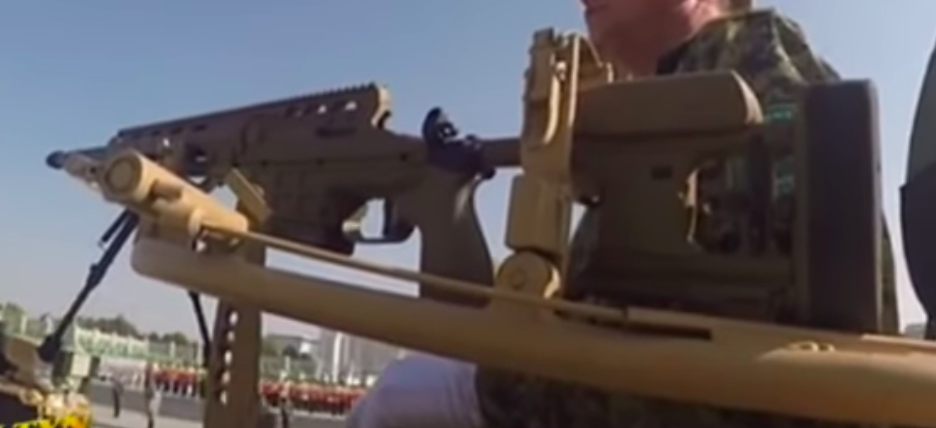
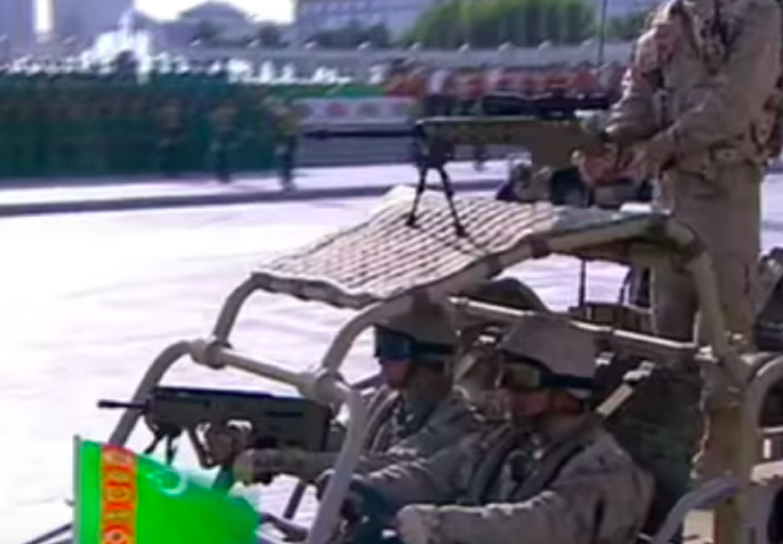
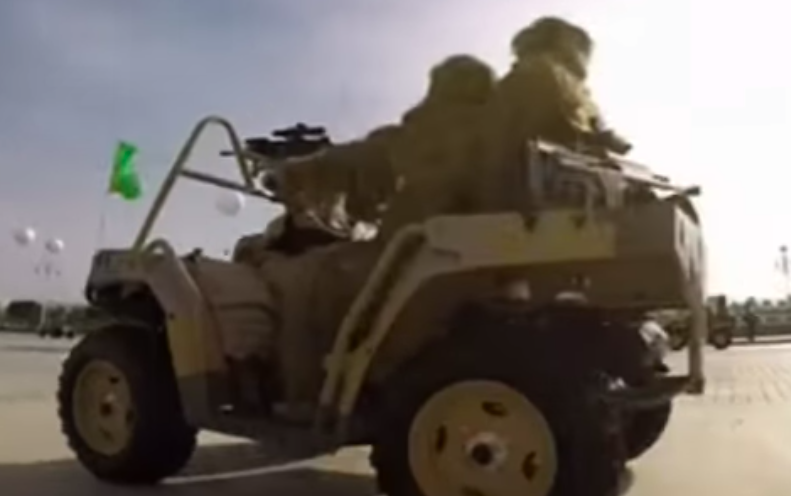
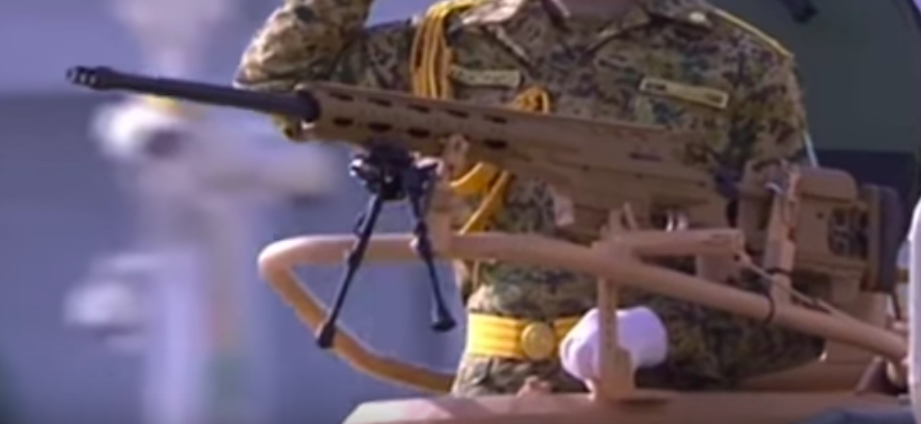
But the other significant update was with the precision rifles, that of Sako TRG M10s. These are probably chambered in 7.62x51mm NATO but could be in .338 Lapua Magnum. They were shown in a tan finish.


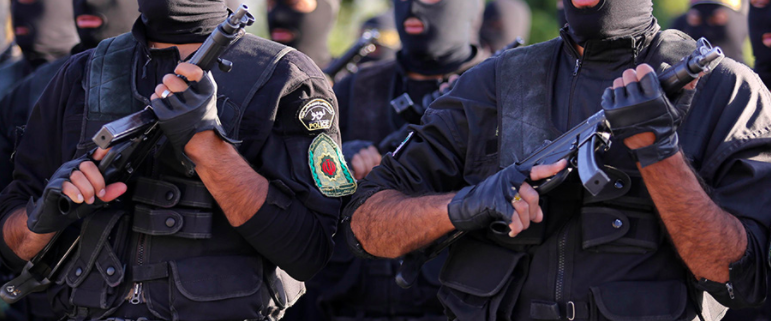
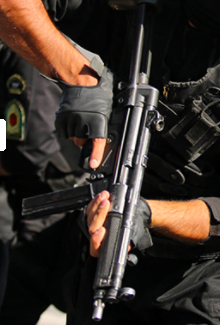
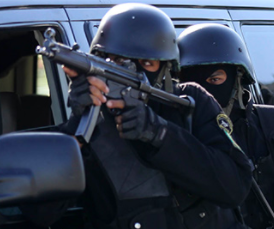
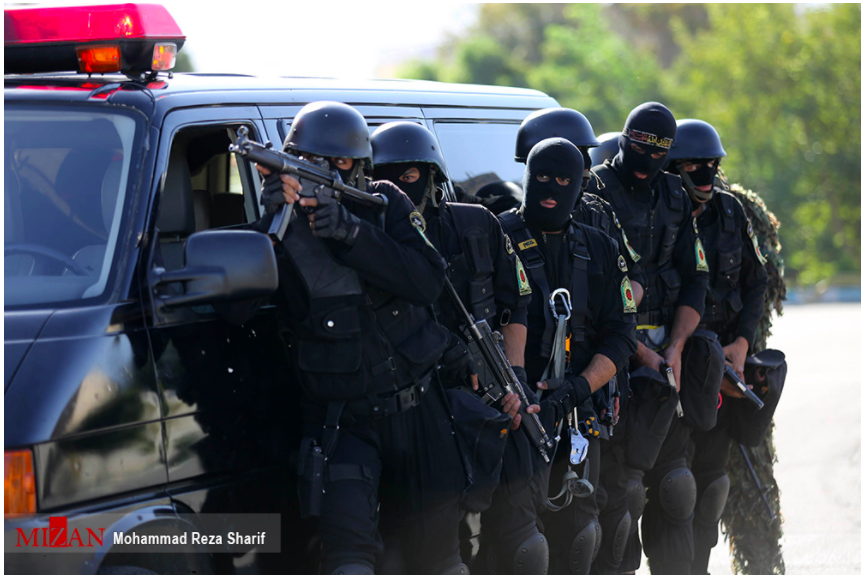
Straight MP5 Magazine spotted in Isfahan LE Demonstration

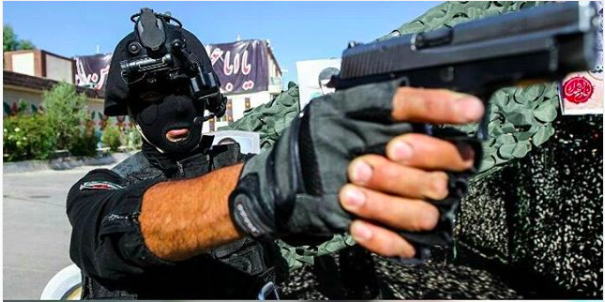
Within the Law Enforcement demonstration recently held in Isfahan (in which we posted about a thermal optic in use ), a straight walled magazine was spotted in use by one of the officers taking part in the demonstration. Iran’s Defense Industries Organization produced licensed copies of the MP5 from the time of the Shah (along with the G3), and it is still heavily employed by Iranian forces. Most of the MP5s today appear to be equipped with the curved 30 round magazine, but that is what makes this particular one stand out, due to the original straight wall design that Heckler & Koch introduced the very first MP5 variants with.

The MP5 has several variants within Iran, one of which has green polymer furniture, while there is an MP5K variant with a forward grip.

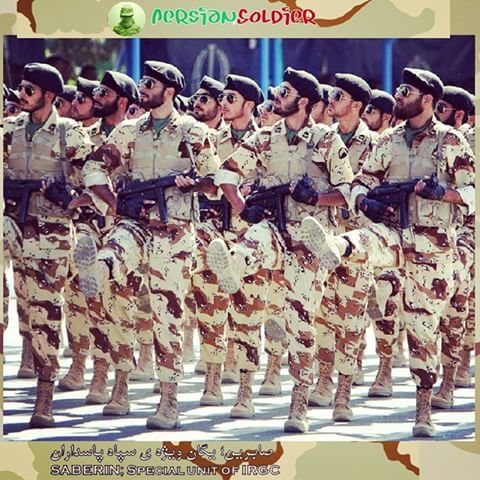
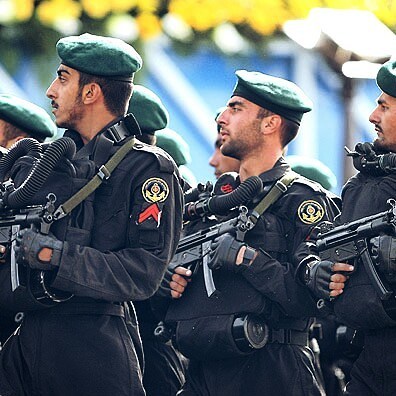
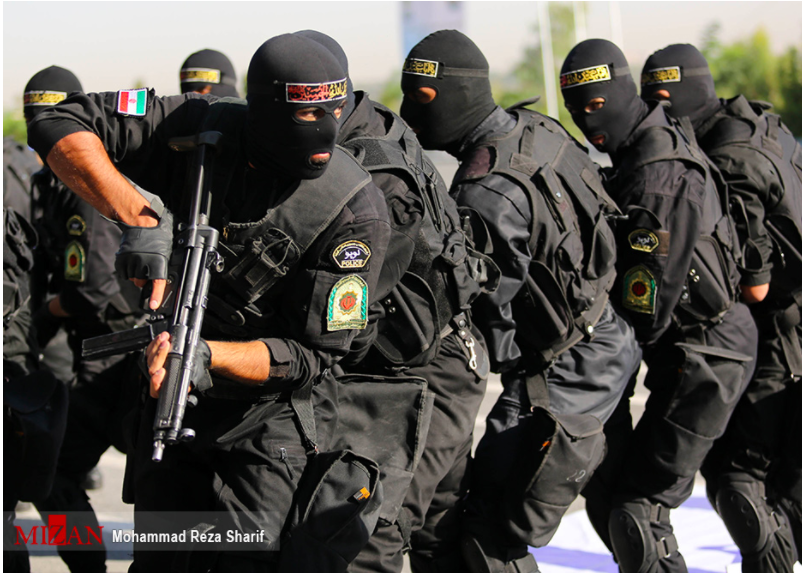
Notice the straight magazines in use with the Islamic Revolutionary Guard Corps in this formation.


Iran’s Head Mounted Thermal Optic from IPAS 2017 and Isfahan Police Demonstration

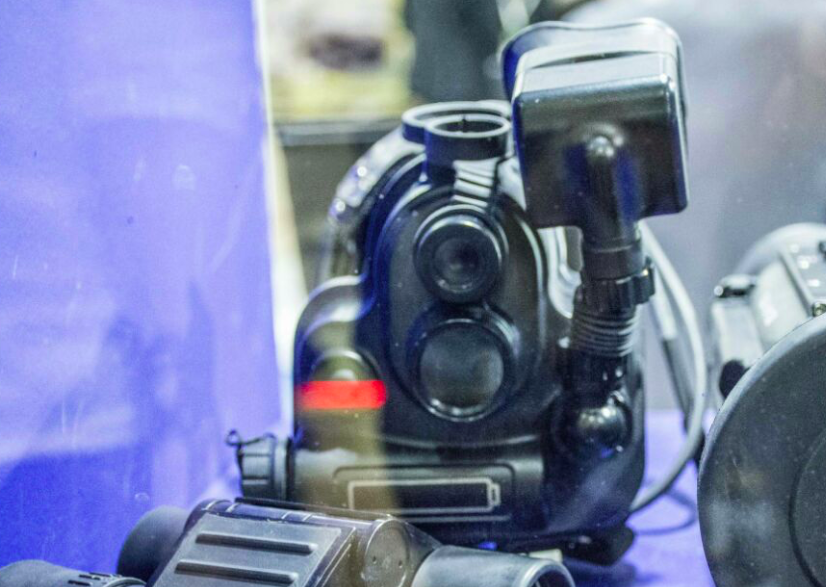
Notice the covered objective lens.

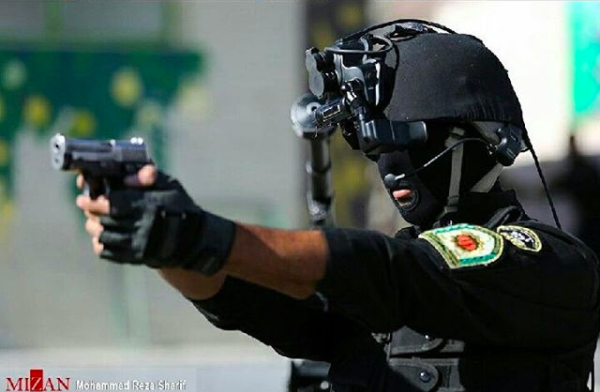
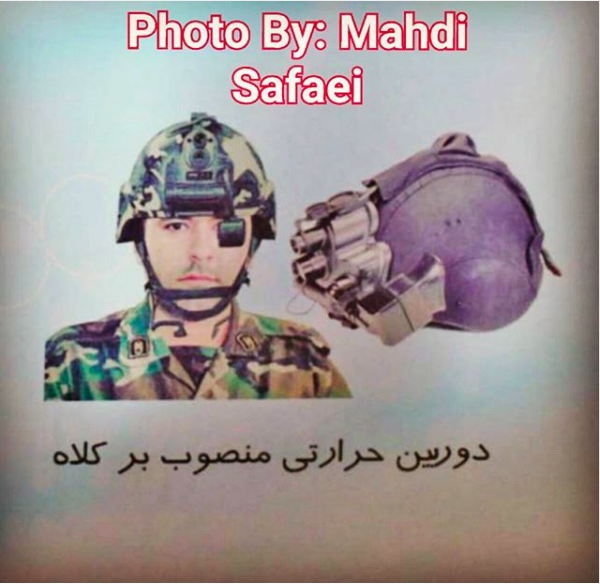
Photographs coming out of IPAS 2017 (Telegram source) and a recent demonstration put on by  Isfahan Law Enforcement have revealed what appears to be a battery powered thermal optic that attaches to a user’s helmet and has a single ocular lens attachment that covers the left eye. The optic “detects” through an objective lens on the helmet, which appears to project an image into the ocular lens. The fact that this optic is in use by what appears to be special Law Enforcement teams in Isfahan would make it seem that it has been in development for a while, and has perhaps even been available to Iranian defense forces for some time as well, due to Law Enforcement worldwide routinely lagging behind in equipment procurement.

From Farsi-“The heated (Thermal) binocular resting on a head/hat”
The optic is powered by what is most likely an AA battery inserted from the right side of the device. The two objective lens’ stay in the upper position throughout use, and are covered with a lens cap during daylight hours. The eyepiece swivels down on a ball mount for maximum flexibility.

A Closer Look at Iran’s Barrett M107 Copy, the Hoveizeh

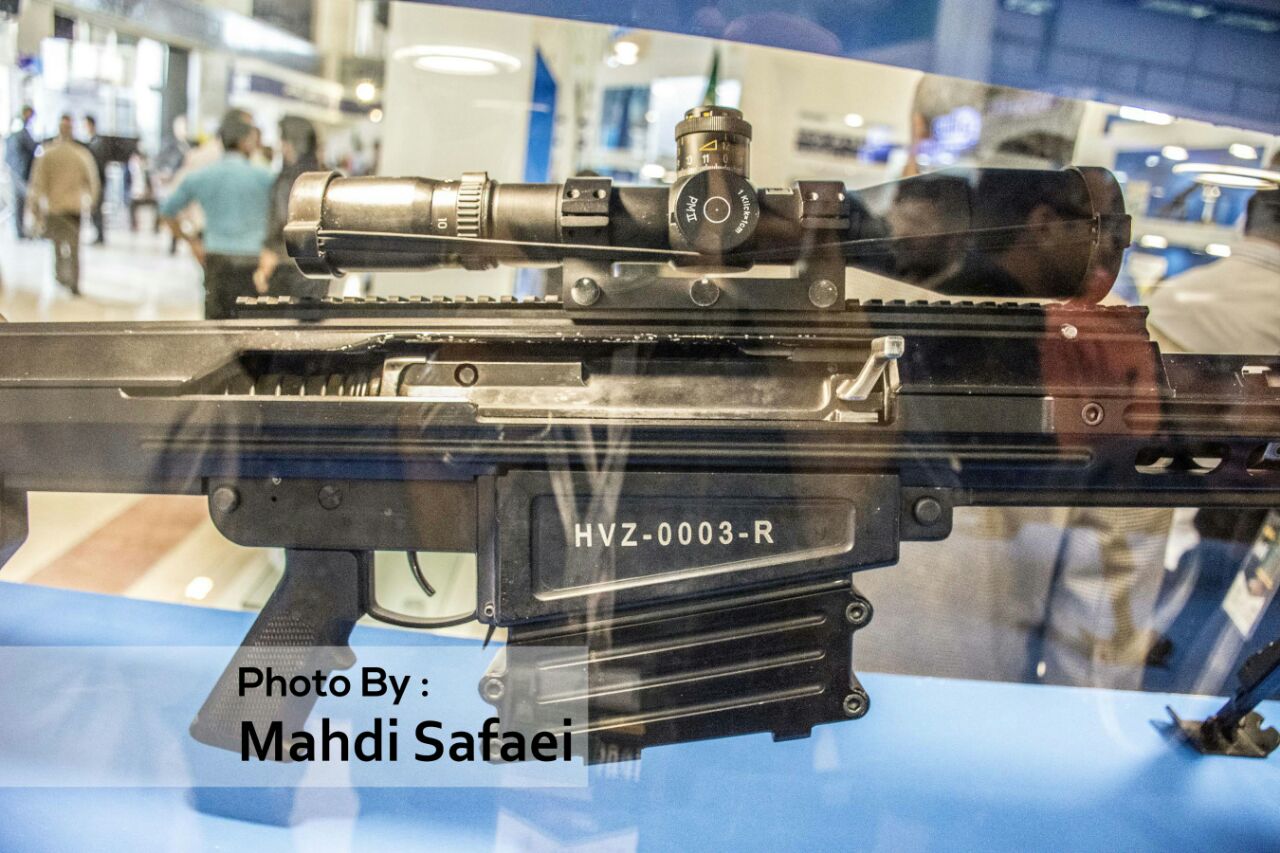
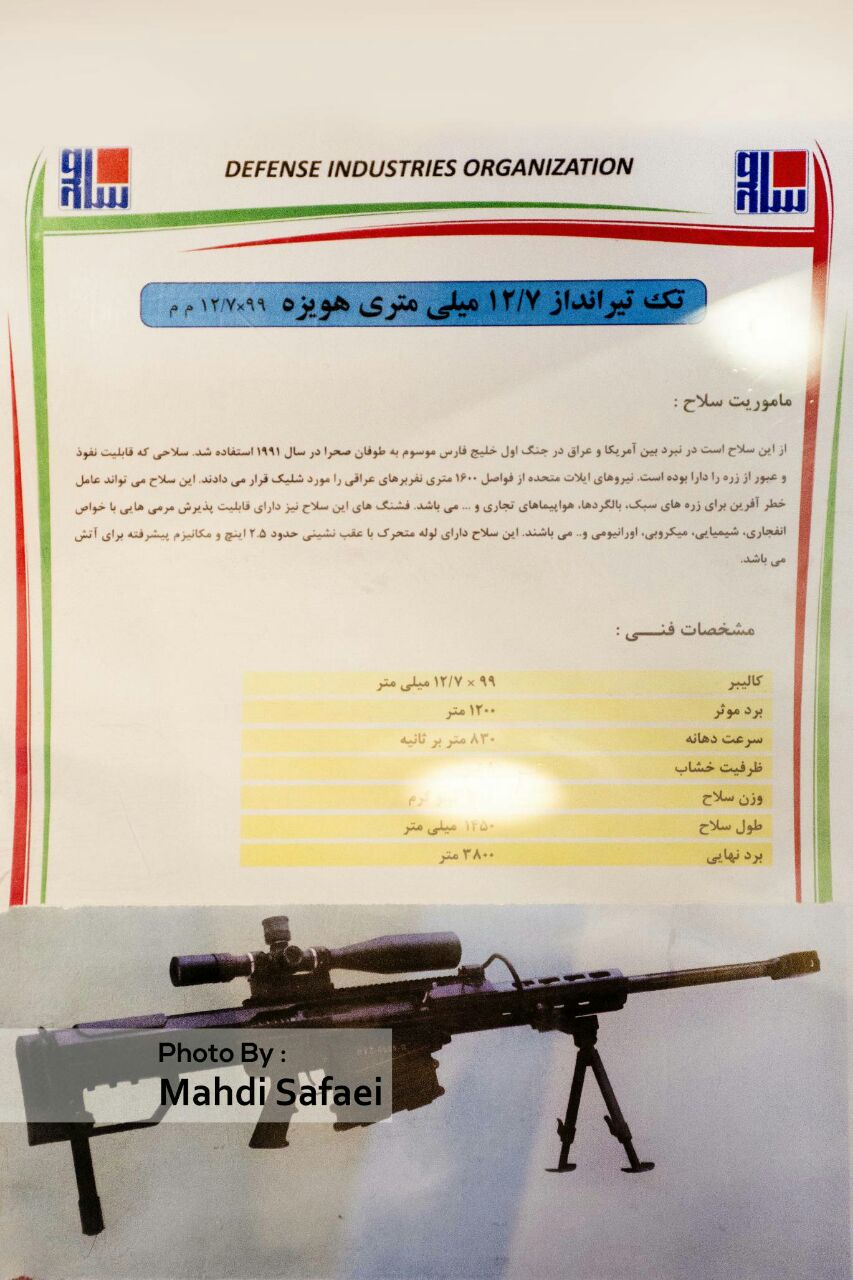
IPAS 2017 in Iran brought with it the introduction of the .50 BMG Hoveizeh anti-material rifle. Thanks in part to a popular Iranian Telegram channel we’re able to take a much closer look at the rifle and exactly what the Defense Industries Organization duplicated, and what was added. From what we can tell, the general layout and operating mechanism of the U.S. Barrett M107 was copied, but some of the exterior features of the weapon weren’t. One difference was the magazine which appears to be a polymer shell held together with screws, not unlike some Airsoft designs.

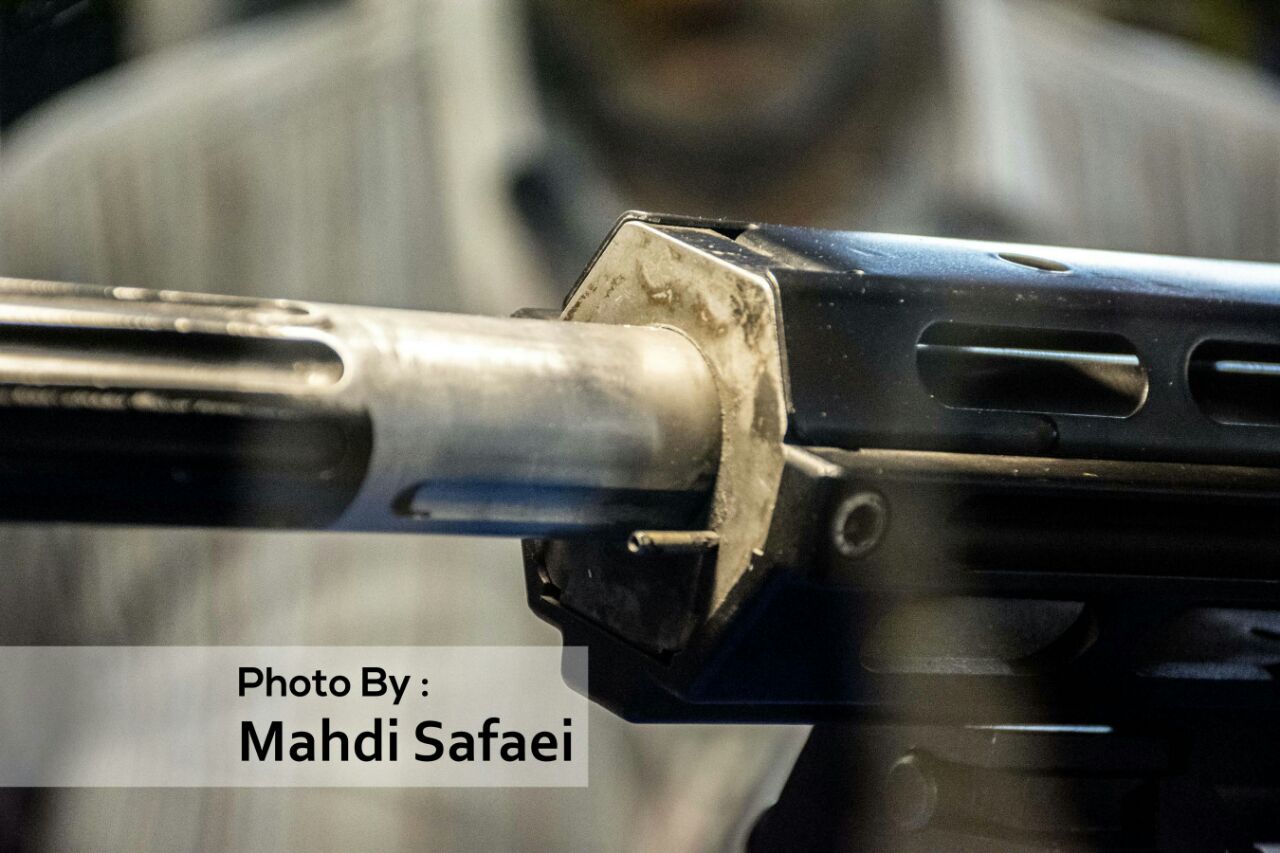
In this photograph the barrel bushing has an extra pin protruding from it that we don’t know the purpose of yet. Notice what appears to be a hex screw holding the upper frame to the receiver. In addition notice the flutes down the barrel.

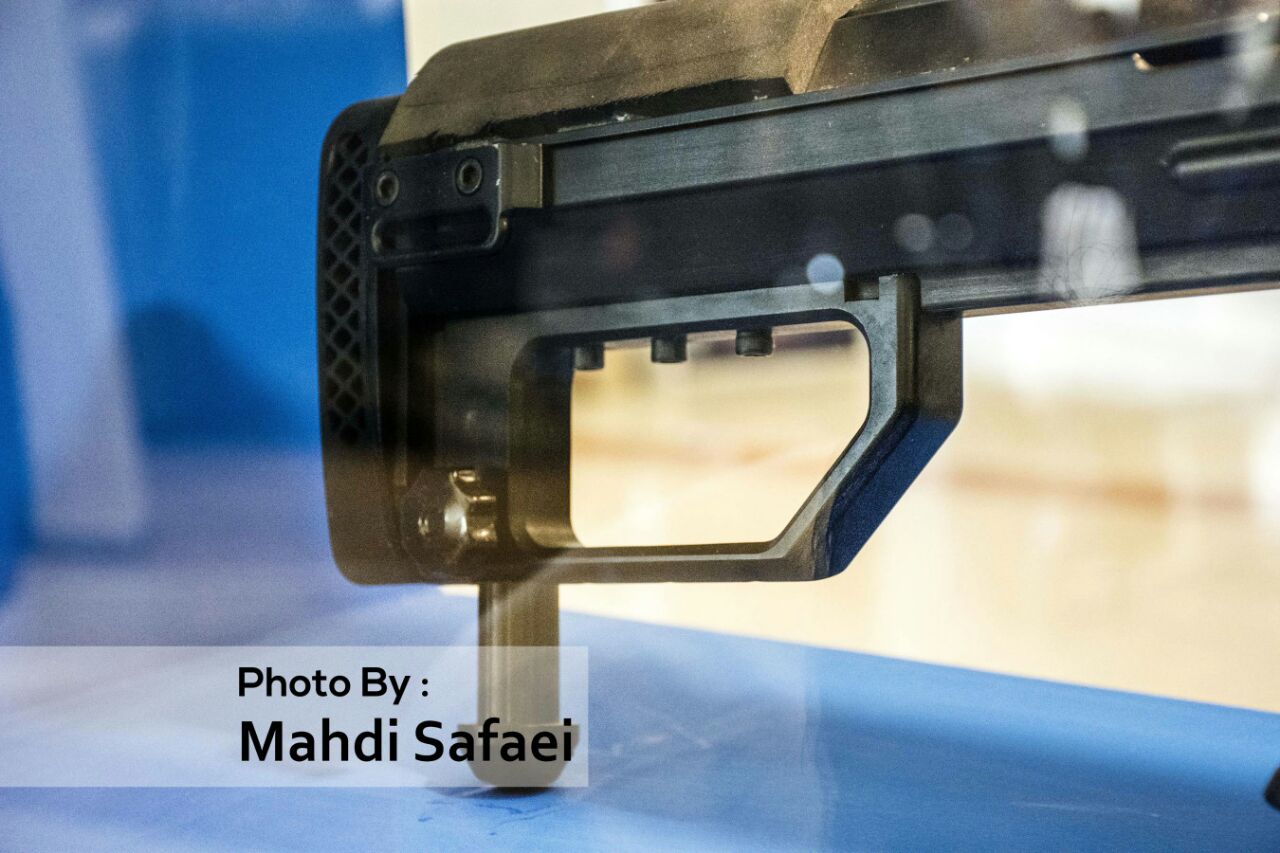
The sling swivel appears to be on a sliding arrangement where a user might be able to loosen the screws of the swivel and tighten them back down where it fits the best. However, the monopod and rear gripping surface looks to be stationary with the three screws anchoring it to the receiver of the rifle. 

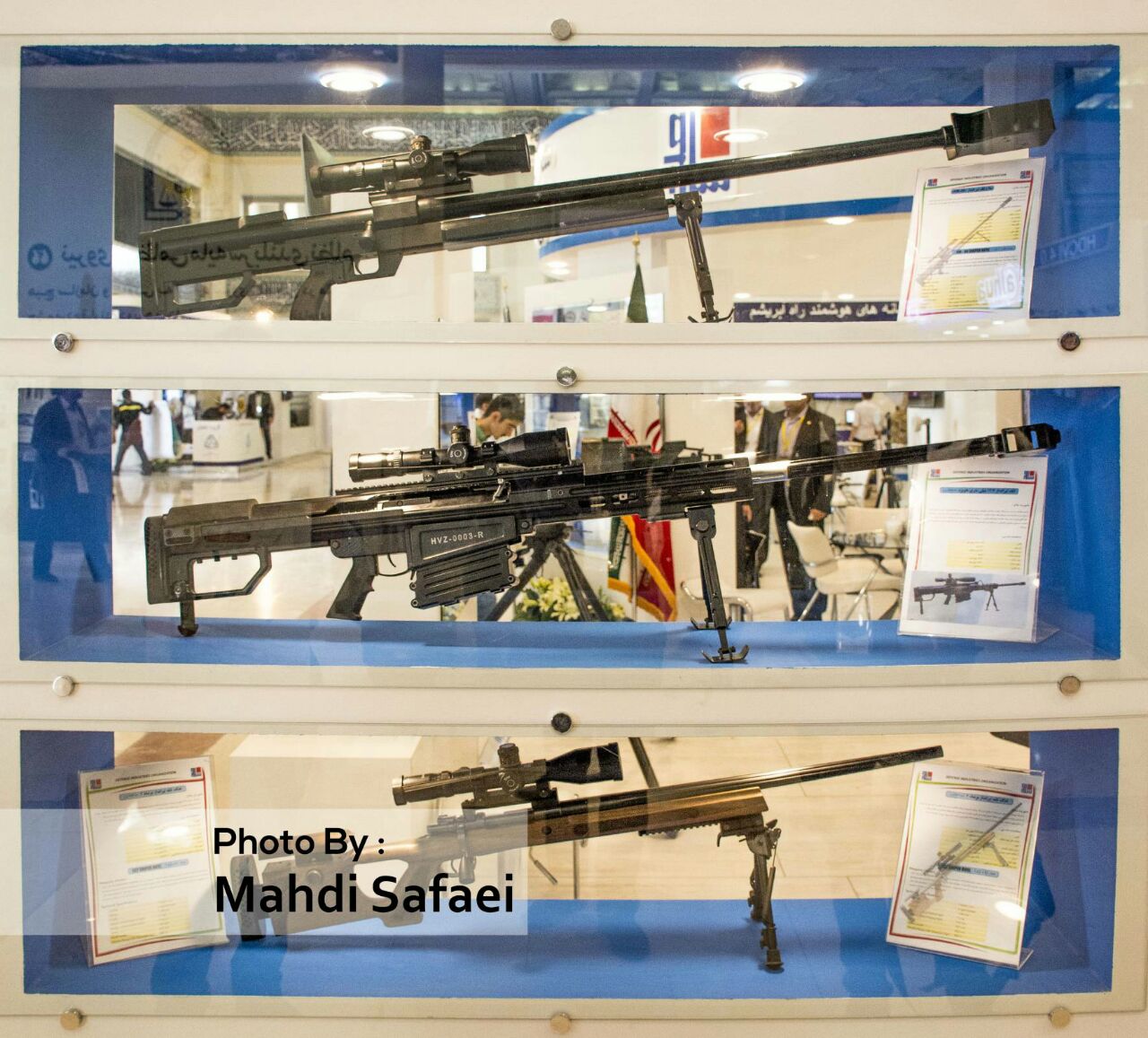
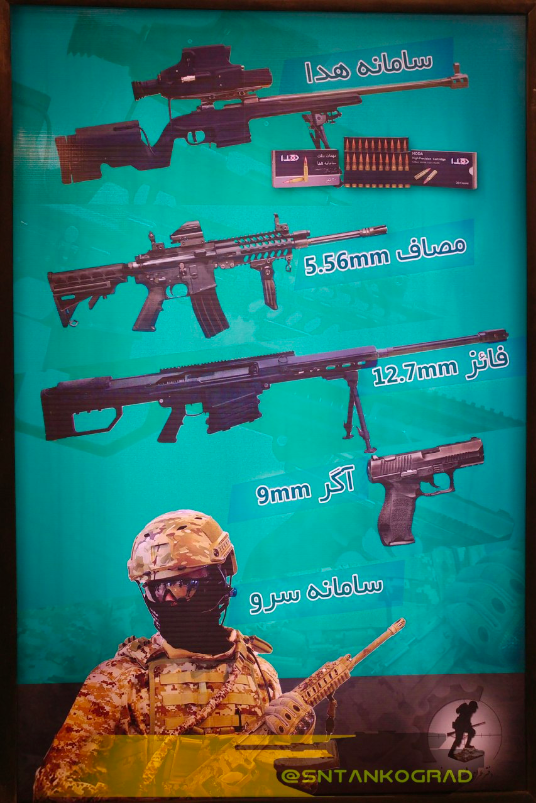
Notice the different bipods mounted on the rifle in the leaflet compared with the bipods mounted at the defense exhibition

A point of controversy lies in the name of the rifle itself. The majority of online material, show leaflets, and even abbreviated on the rifle itself on the magazine well is هویزه, however in this leaflet we clearly see the name, فائز printed next to the rifle.

IWI X95s, TAR-21s in Nigeria

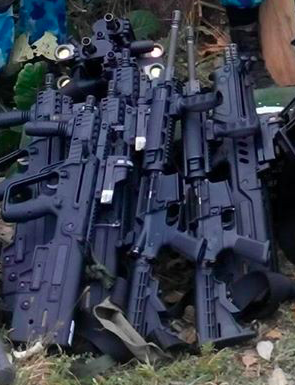
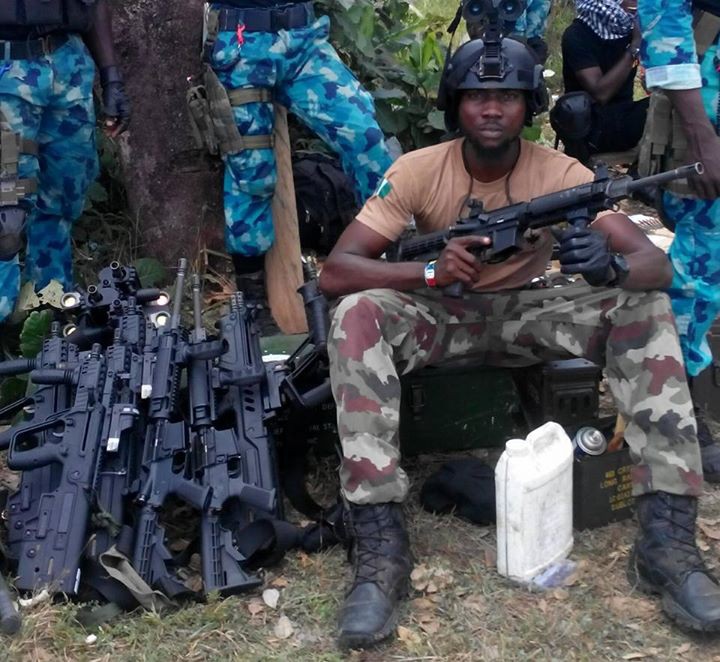
The Israeli 5.56x45mm Tavor is no stranger to the Nigerian defense forces, with the TAR 21 being introduced from Israel in a short barrel variant (around 14 inches) several years ago, and the X95 version seen in Nigeria in 2016 (possibly issued earlier). This photograph of a Nigerian soldier posing with stacked IWI rifles, some being the TAR 21 while others being the X95 versions came out in 2016 on the Nigerian public forum Nairaland, along with numerous other photographs of the defense forces.

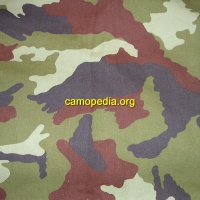
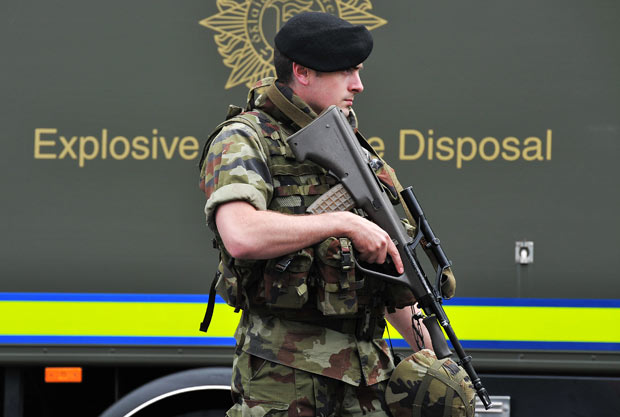
Interestingly he is wearing an Irish Army camouflage pattern introduced in the early 2000s, known as DPM or “Paddyflage” among Irish troops. Image from Camopedia–

Book Review: The Afghan Way of War

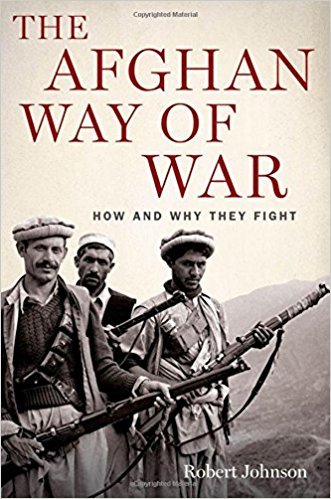
Although former British Army officer Robert Johnson wrote his book, “The Afghan War of War” in 2011, his conclusions and observations are just as valuable, if not more valuable today than ever. The premise of his book is that very few authors, officers, or politicians have throughly studied the Afghan side of many of the conflicts that have taken place in Afghanistan, whether it be Afghans against foreign invaders/occupiers, or civil war within the country such as during the 1990s. What I especially liked about the book was a number of very useful points that Johnson raises, that I honestly had not thought of before. I’ll summarize some of these points below, as these were my key takeaways from the book.

A Nation of a Thousand Tribes

Johnson goes to great lengths to make the point that Western observers have seen Afghans as “unchanging”, the “Graveyard of Empires”, and “fierce tribal fighters”, and this has stereotyped impressions of the Afghans since the first Anglo-Afghan War in the 1840s. Throughout the book we have countless counter-examples where this doesn’t seem to be the case. Where Afghan tactics have changed, altered, and have been reactive to the threats faced, in addition to being proactive and forcing Western troops to be constantly on the defensive.

But there is one constant that hasn’t changed, and that is the tribal and group dynamics that have existed for several hundred years. What we see is that instead of seeing Afghanistan as a single entity, or even an ethnic group as an entity, what is really going on is hundreds of individual tribes, sub-tribes, clans, and families that are essentially looking out for the best option for their individual group. Whether they ally with the British, or with the King, whether the Mullahs decide to go to war at all, whether peace is on the table, etc… Any of these decisions are made for the benefit of the particular group (tribe, clan, village, etc…). And these often change. What is beneficial for a village one month, may be detrimental for it the next. This means that to the British, Soviets, or Americans, it can be increasingly frustrating trying to maintain alliances and agreements.

Something that Johnson doesn’t mention, but a personal observation that I’ve made is how economy plays into these decisions. The lack of a stable exportation or cultivation of any natural resource (other than crops and opium) has been a limiting detractor throughout the countries history and still affects national security today. But when local tribes and villages can’t rely on natural resources like oil, mining, etc… the need to fight tooth and nail for alliances, positions, and funds becomes even more apparent.

Foreign Invaders Unify Afghans

In the example of every invading or occupying force, one of the constant themes is that one of the only forces that has ever truly united Afghans of different ethnic origins in some fashion has been the need to expel a foreign one. Johnson doesn’t point this out explicitly but this is evident in his descriptions of the country before several conflicts. The state of the country under the King appeared to be on the brink of falling apart on numerous occasions, when senior leadership pushed for further hostilities against the British or during the time of communism, against the Soviets. Even under the Taliban during OEF, the need to unite under an Islamic banner instead of an Afghan, or Pashtun one was strategically necessary to be able to sweep tribal differences aside.

Differences in Technology

The first Anglo-Afghan War saw the widespread use of muzzleloading rifles and muskets on both sides of the conflict, with the British armed with the Brown Bess, and the Afghans with the Jezail muzzle loading rifle. Apart from the British cannon and cavalry, the two forces were somewhat equal in terms of actual hardware.

However in the second Anglo-Afghan War this dynamic dramatically changed with the introduction of breech-loading rifles that could not only be reloaded quicker, fired faster, but also more accurately and further. This changed the way Afghan tribesmen attacked British columns. They had to close in faster, not allowing the British to use their artillery, and often attacked at night.

Similarly, in the war against the Soviets, the use of Stinger MANPODS was brought up. The popular misconception is that Stingers helped win the war. Although they did strike fear among Soviet helicopter pilots, especially the Hind attack helicopters, their introduction was too late to make a difference in 1986, when the Soviet Union had already decided to being fighting a delaying action instead of an all-out offensive. In addition, by altering their flying practices to fly at higher altitudes, the Soviets realized they could go outside of the Stinger’s capabilities and lessen the risk.

In Operation Enduring Freedom, the prevalence of IEDs took precedence over light Infantry attacks that the Taliban initially tried to use against the British in Helmand, but suffered costly casualties due to the artillery and air assets. IEDs used by the Taliban deserve to be studied much more in detail due to the complex escalation’s and counter escalation’s executed on each other throughout the entire campaign.

Operation Enduring Freedom/Operation Herrick Observations

One point I think the book could have been improved on is the OEF/Op Herrick. In retrospect, this isn’t really Johnson’s fault because the war is still ongoing, and he can’t have access to many of the after action reports, or even just the massive amount of experience associated with the current operations from hundreds of thousands of veterans and currently serving troops. He picks out specific situations and TTPs that are usually from the British perspective, that doesn’t typify what other forces might have faced in their fight against the Pashtun lead Taliban insurgency.

His conclusion though is flawless in that he identifies that any considerable gains going forward will have to be an Afghan solution to an Afghan problem. Personally I think this has to have enormous emphasis on the countries economy, and being able to become prosperous on exporting natural resources already present in order to actually provide some capitol for a government entirely propped up on international aid money.

The Afghan Way of War is available on Amazon for $35.95.