The focus of this article is a video which has been around for some time, yet seems to be somewhat obscure. So far, I have yet to see it shared amongst the firearm community interested in the Pak-Afghan region’s cottage manufacturing of small-arms. A total of 37 years, as of 2020, have elapsed since it was made and although the quality isn’t great, it is a glimpse into the distant past, a look at what process are still the same and what has changed since then.
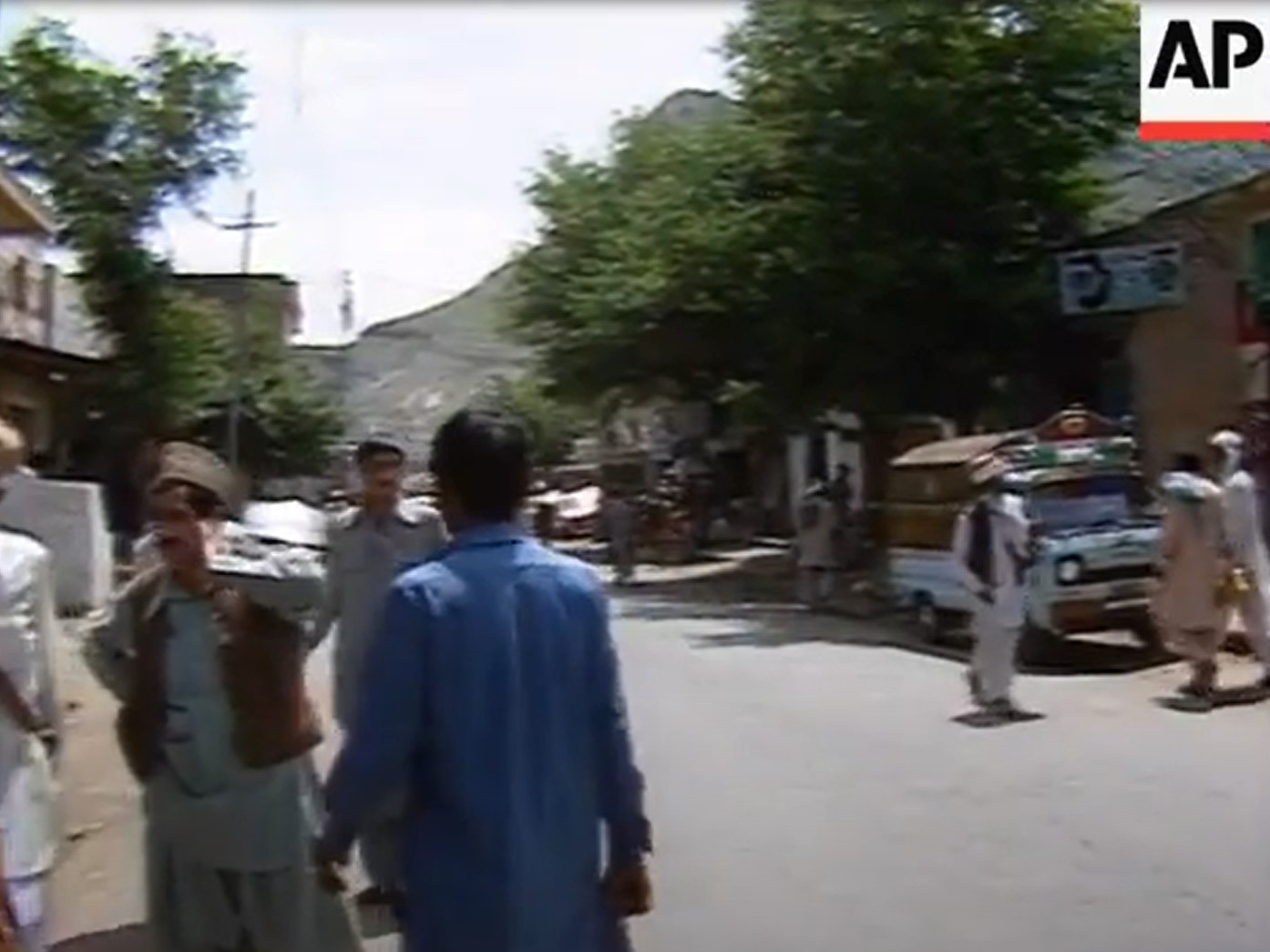
This is Darra Adamkhel a town in the Frontier Region Kohat, located between Kohat and Peshawar, within the province of Khyber Pakhtunkhwa in northwest Pakistan. The Darra Bazaar main road is seen briefly, with locals milling around, either speaking amongst each other in groups or getting on with the business of the day.
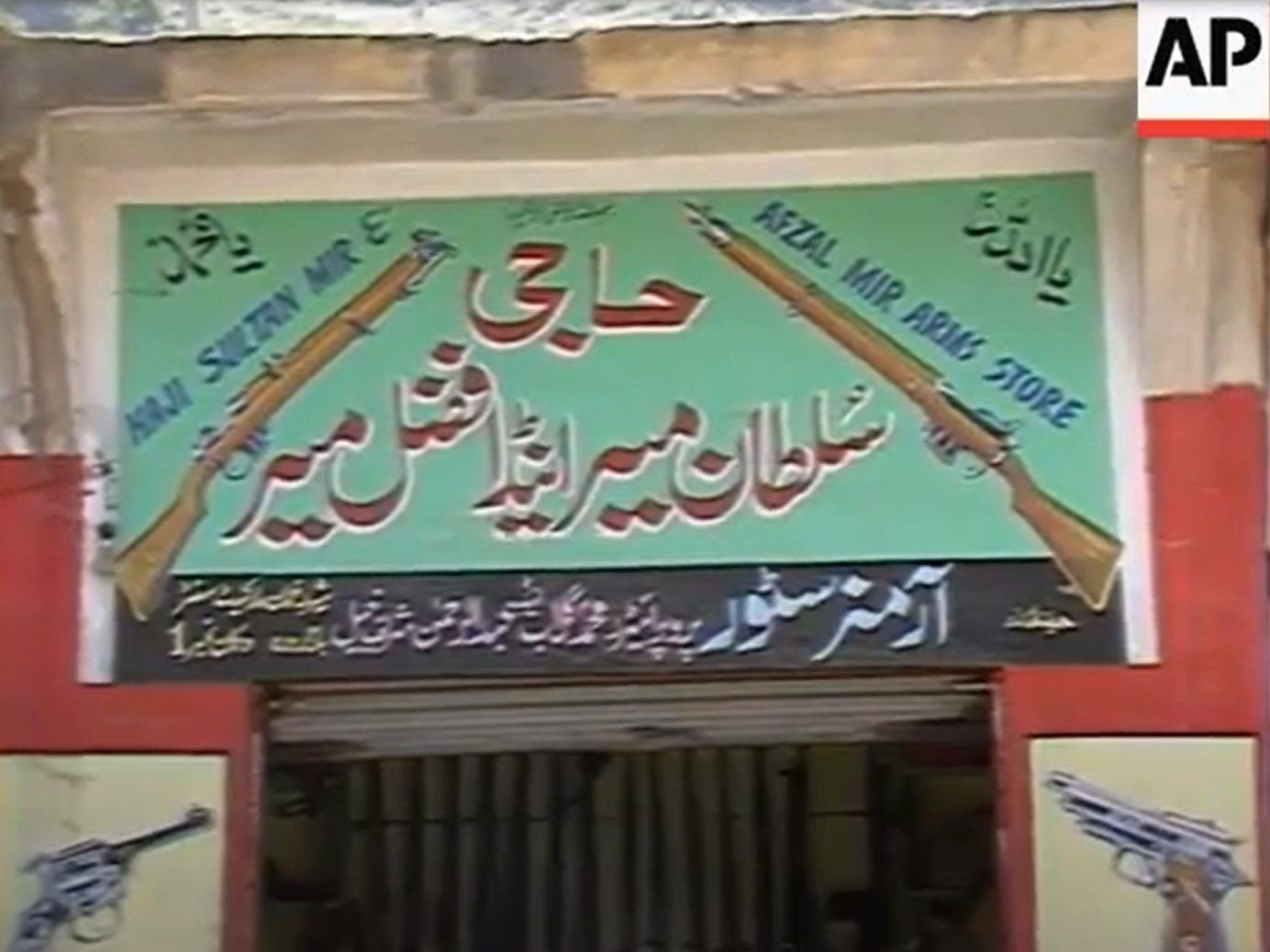
A few shop fronts are seen, named in a mixture of English and Urdu/Pashto. The first is named Haji Sultan Mir & Afzal Mir Arms Store, which is flanked by stylised illustrations of some of the old favourites – a pair of Lee-Enfield pattern rifles (a SMLE No.1 MkIII on the left and a Rifle No.4 on the right), what appears to be a Spanish Third Model Star F. 22LR self-loading pistol, and a Webley pattern revolver. Interestingly, these names do not appear to originate from the Pakhtun Afridi tribe which traditionally runs this part of the region and the trade & manufacturing of arms here. Instead, as indicated by the ‘Mir‘ (a Kashmiri family name), the names Haji Sultan Mir & Afzal Mir suggest that the shop is run by Kashmiris.
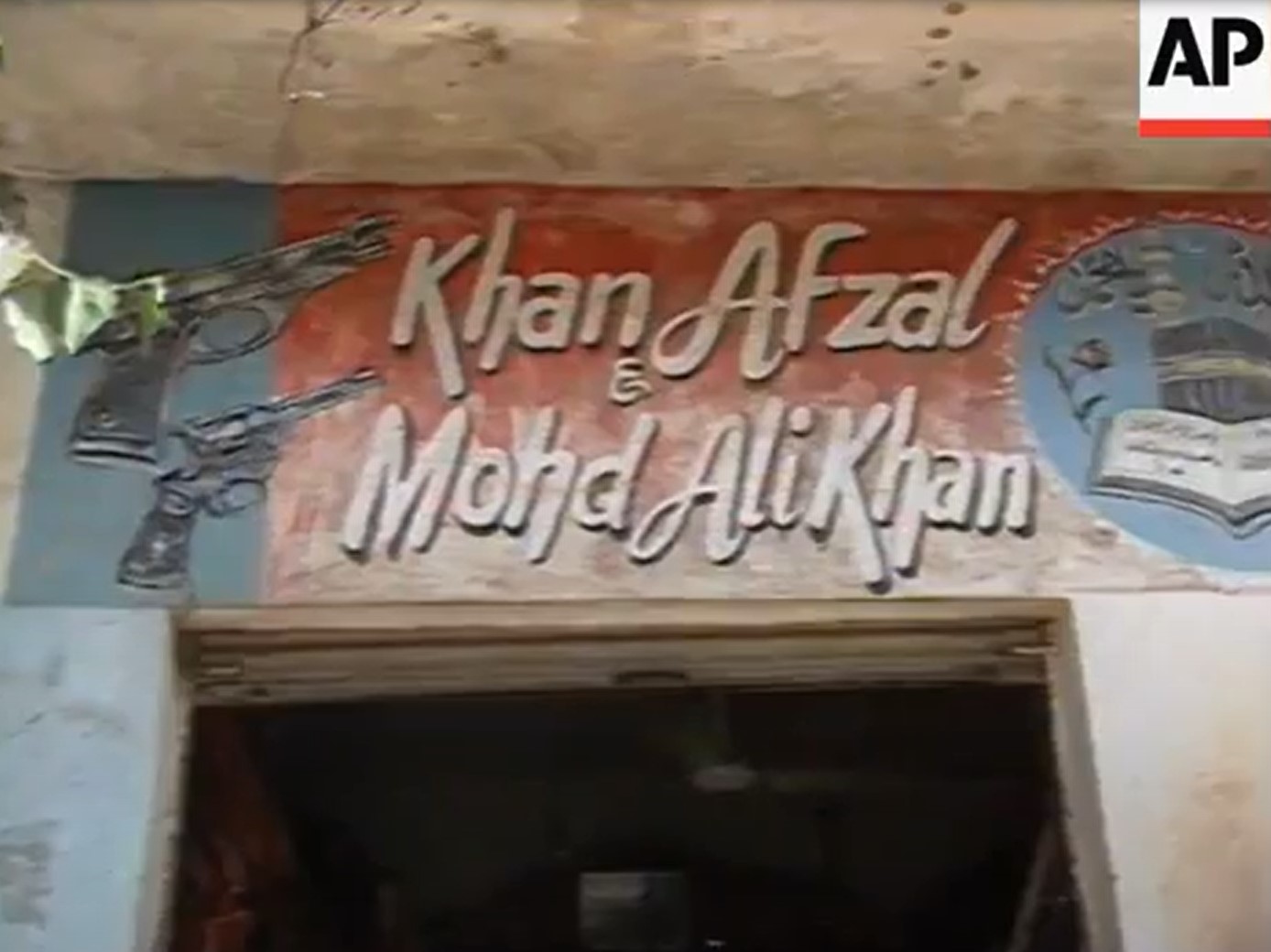
The second is; Khan Afzal & Mohd Ali Khan, with ‘Mohd’ most likely being short for Mohammad. This is flanked by an image of what seems to be a Beretta mod.70 and another Webley revolver – the illustrations are clearly not to scale.
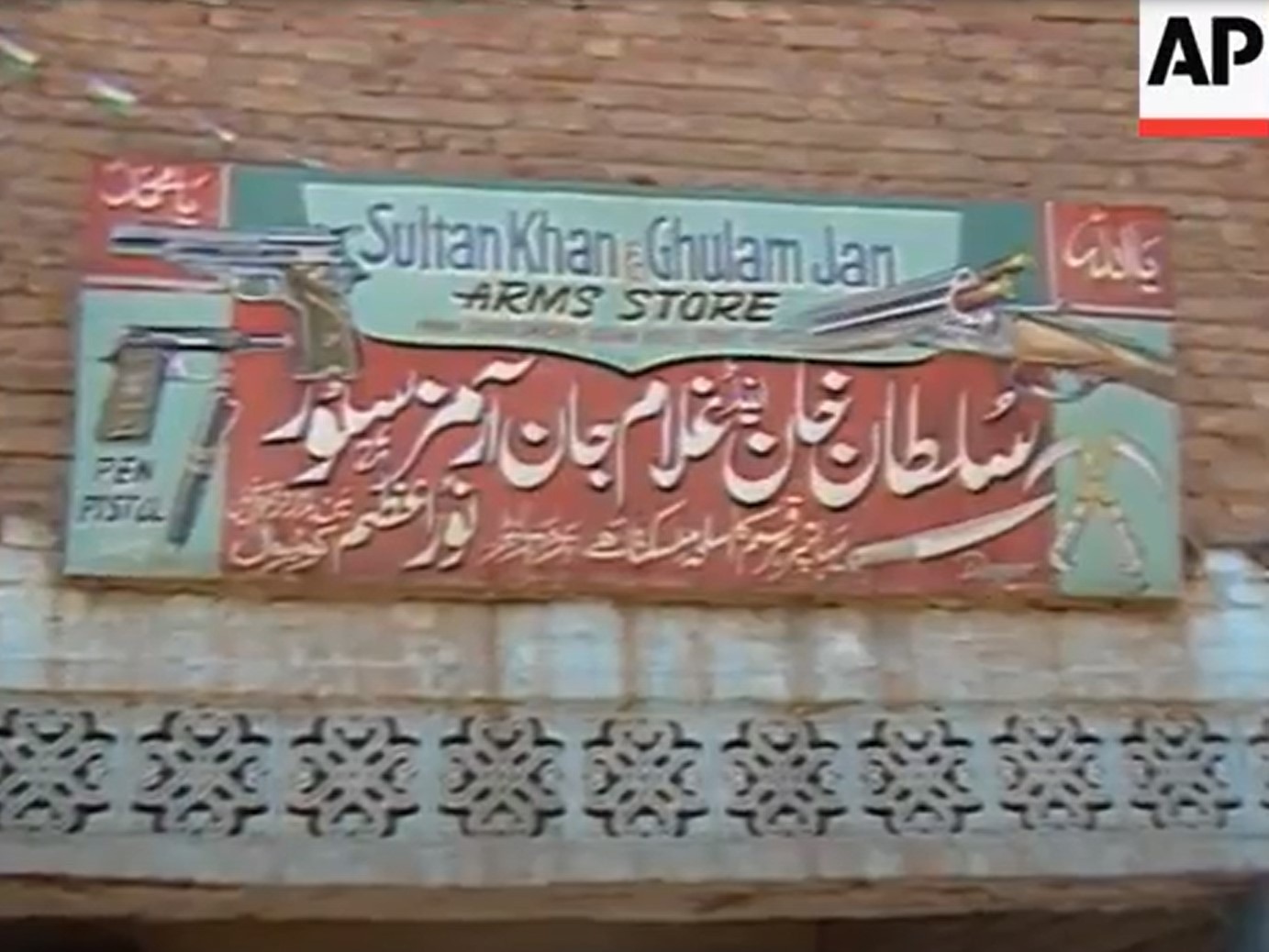
A third shop sign is also seen: the Sultan Khan & Ghulam Jan Arms Store. The shopfront board displays a Spanish pistol – a .22lr Star FR Sport target pistol, an infamous pen pistol, and what appears to be another Spanish pistol perhaps an Astra Model 4000 or a Star F pistol and a bog-standard double-barrelled shotgun – artistically ejecting some shells. A combination of image quality, artistic license and scale makes identifying some of the illustrated firearms a challenge.
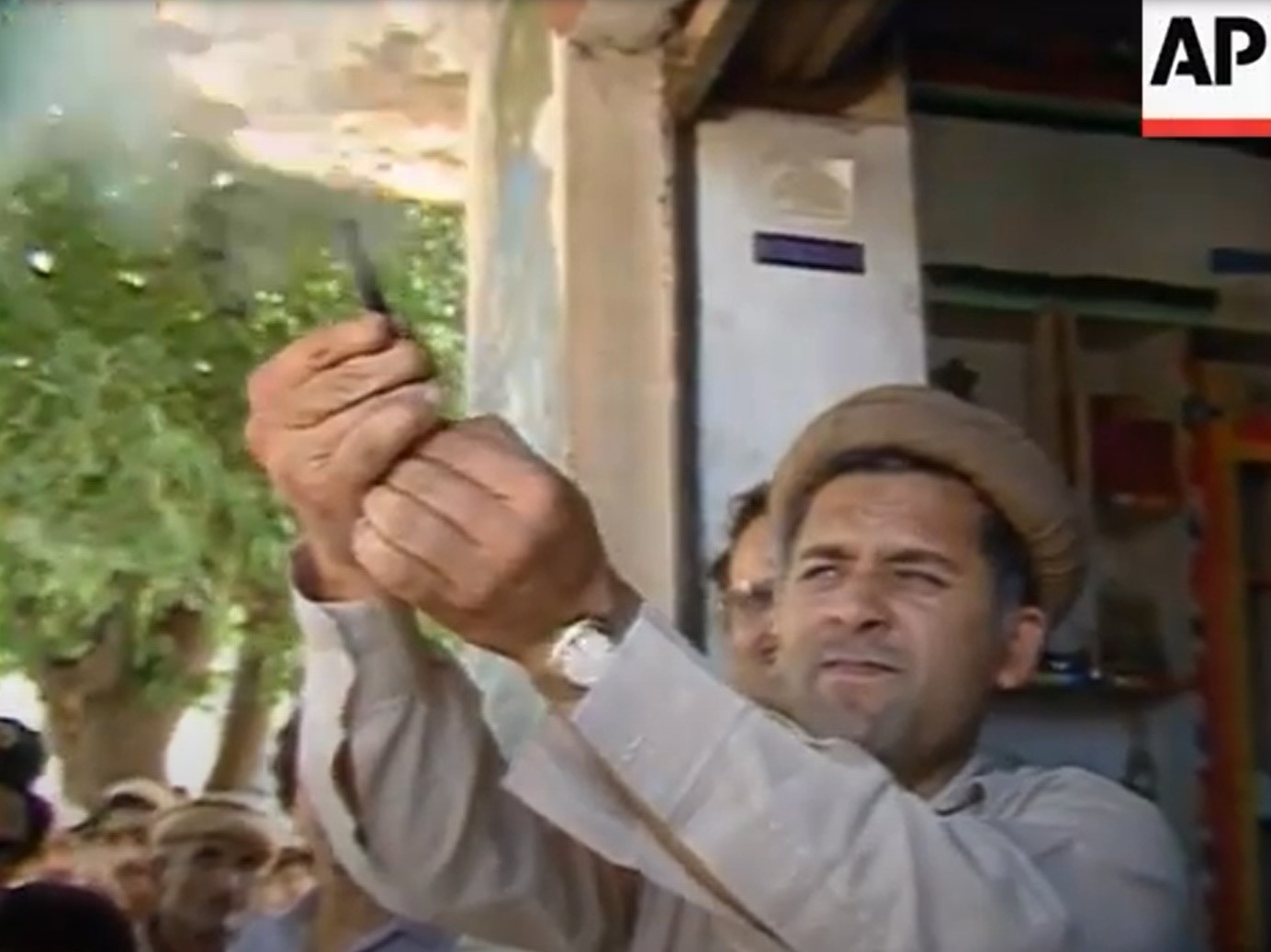
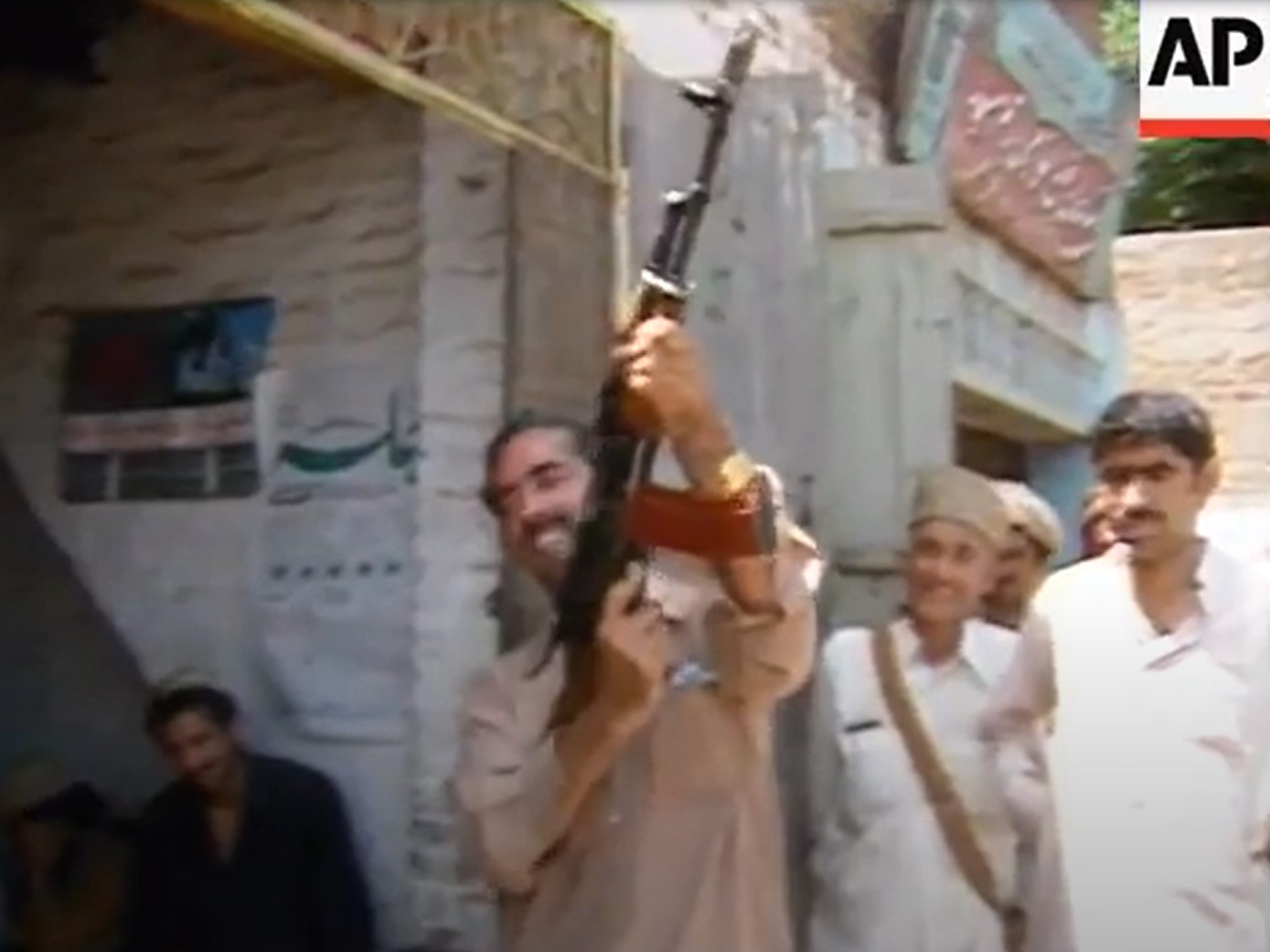
As soon as the image cuts from the shopfronts, a shop owner is shown test firing one of the pen pistols, these are chambered for .22LR. This switches to another gentleman test-firing an early AK-74 pattern rifle, which likely originated from over the border in Afghanistan and a by-product of the ongoing Soviet-Afghan conflict, he proceeds to let off a burst of rounds whilst onlookers watch with visible glee.
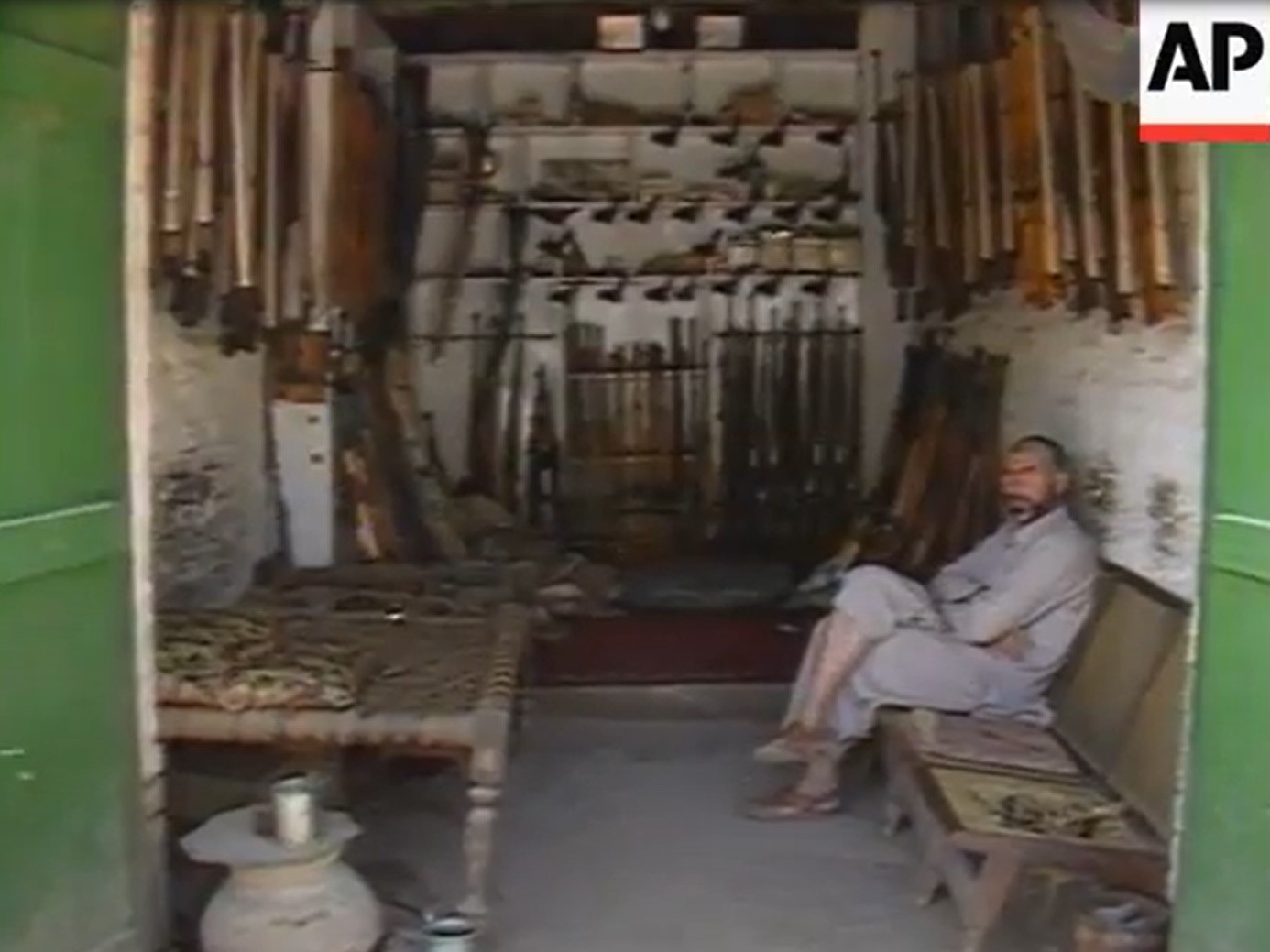
We cut back to a shopfront with a lone dealer sitting patiently surrounded by an assortment of weapons, some relatively dated and others more recent to the age. The camera cuts to another shop which shows off an impressive array of STEN pattern submachine guns, some chambered for the standard 9×19mm and some for what appears to be 7.62×25mm by the curvature of the box magazine.
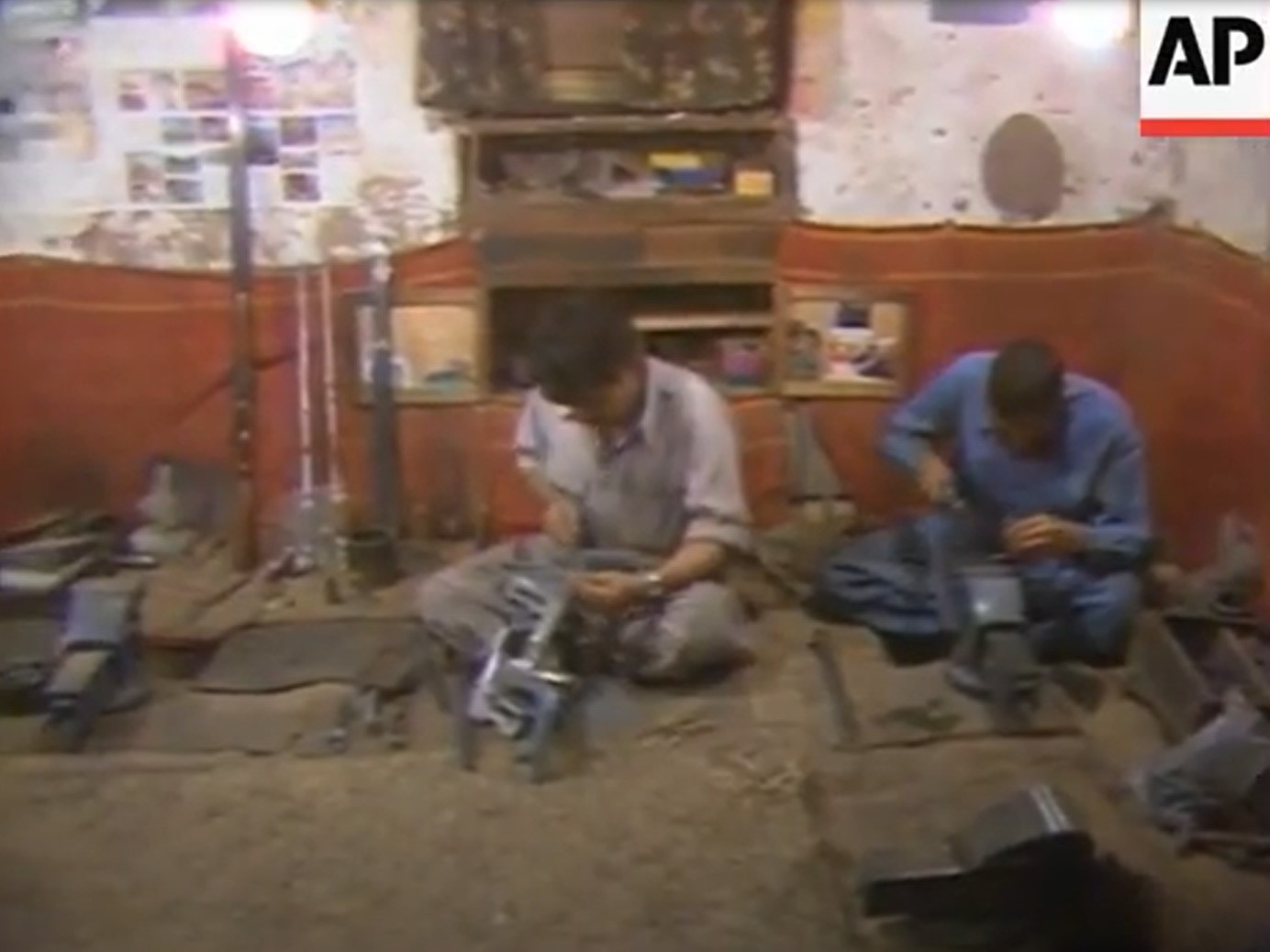
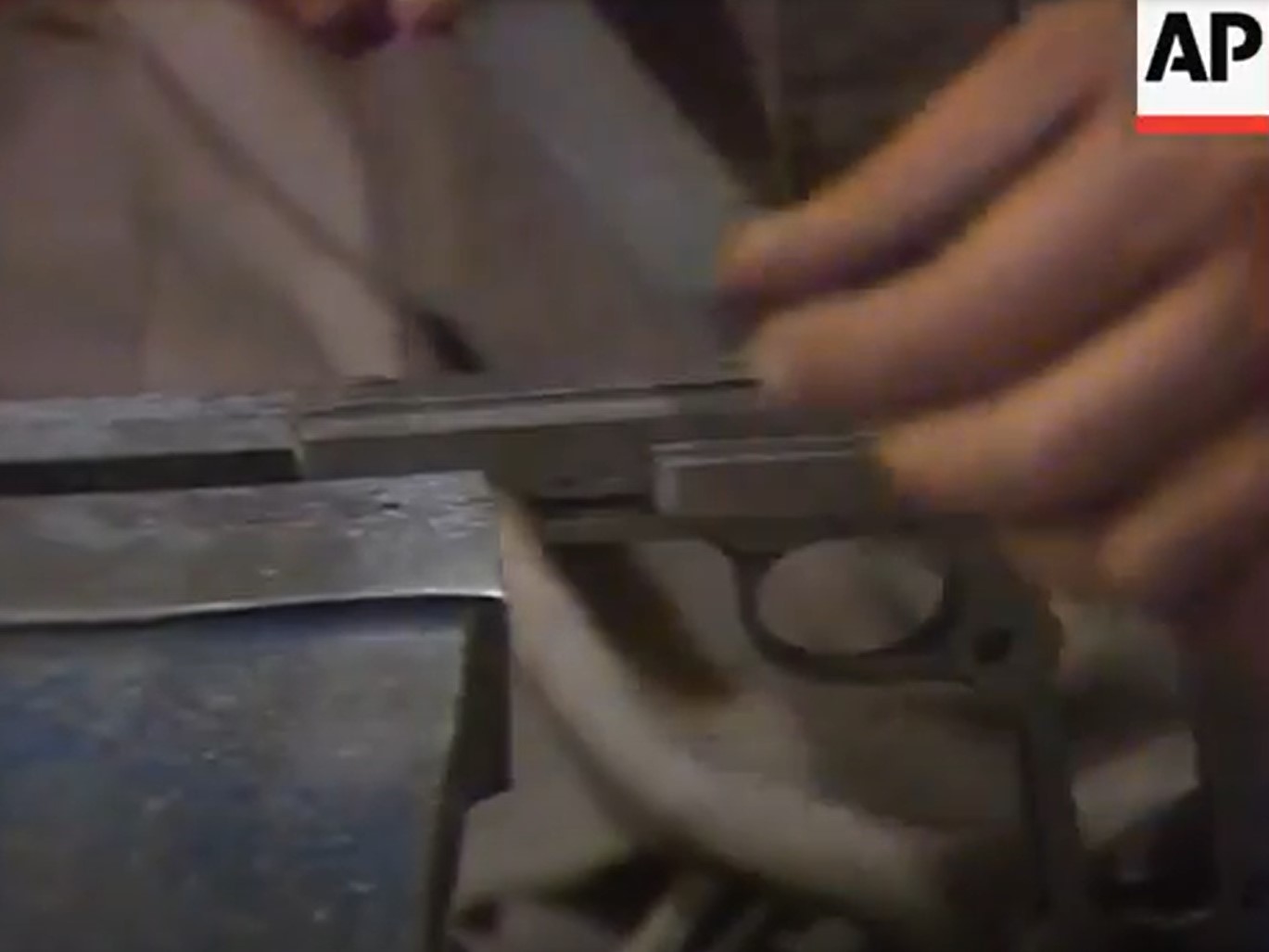
Next, the footage shows us a workshop with three men sitting cross-legged in front of a row of vices. They are hard at work fitting and assembling pistols, one of which seems to be a Browning Hi-Power or possibly a Stechkin APS.
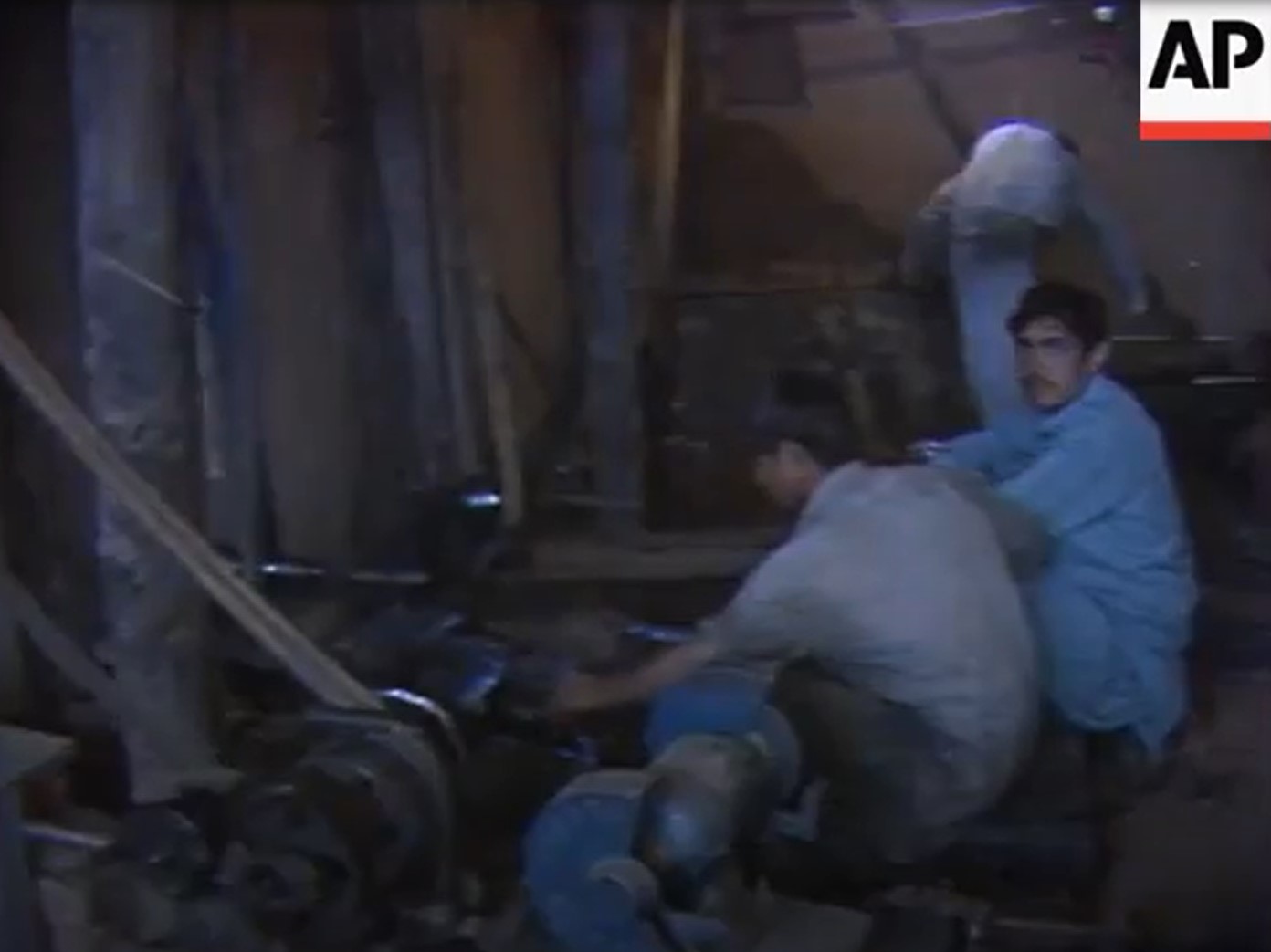
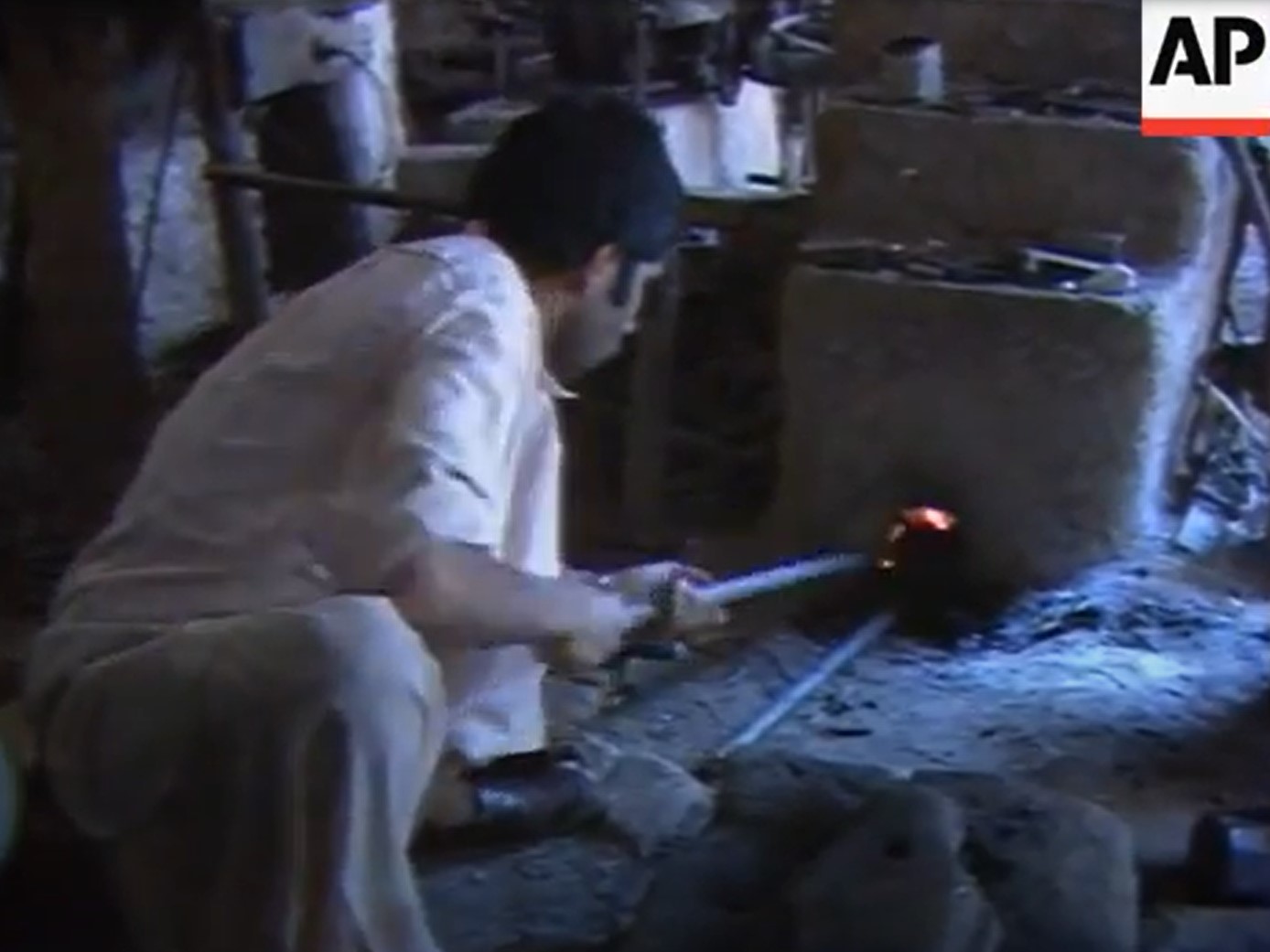
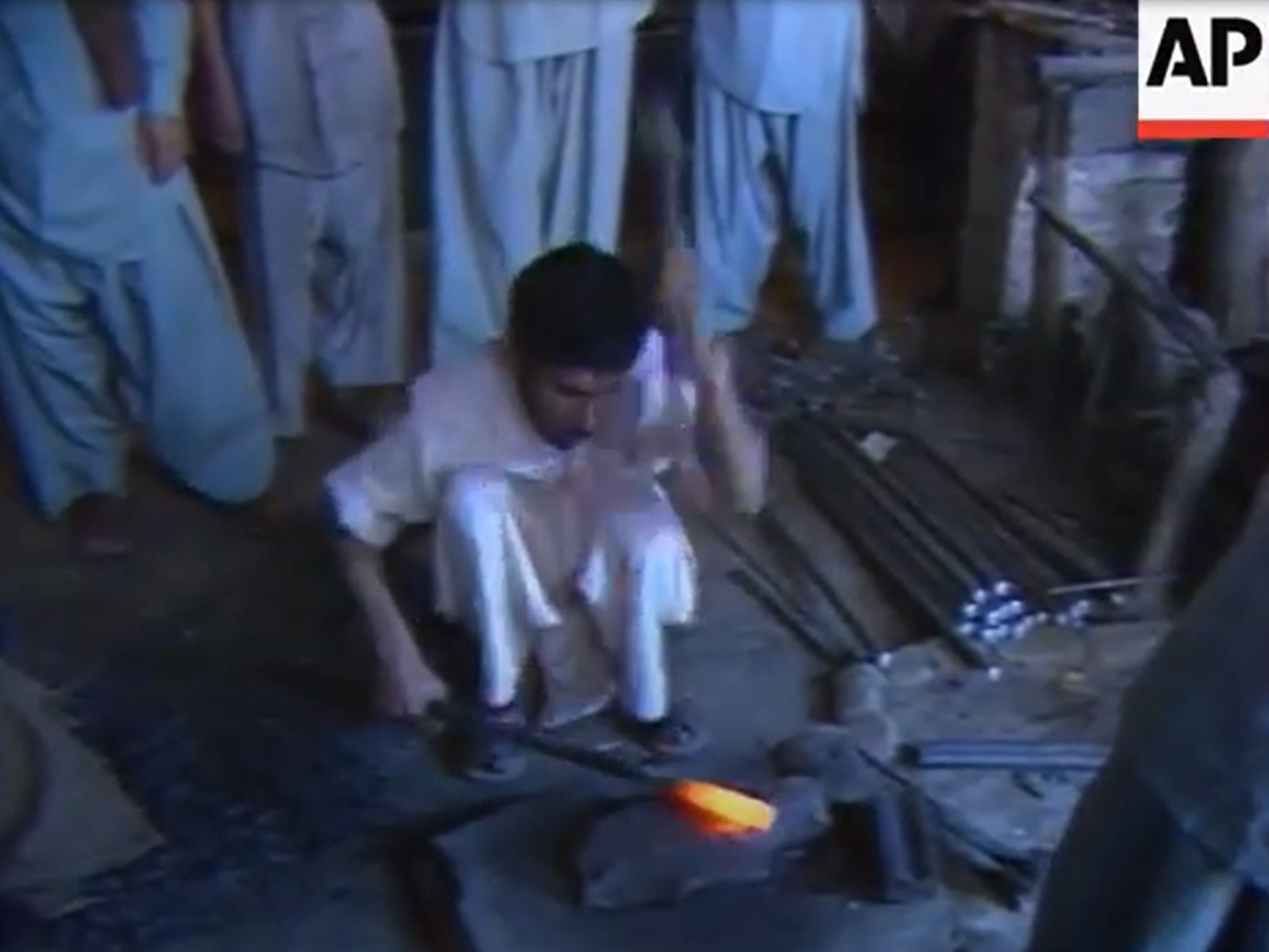
This is followed by a look at a barrel manufacturing shop. Here, power bands operate what seem to be lathes, most likely these are being used to turn down the barrels or bore them for further production stages. The camera switches to another worker sitting in front of a furnace, heating the chamber end of two lengthy barrels. Another smith is then seen beating down on the red-hot barrels, a common blacksmiths practice.
Again, we switch to see another worker filing down the side of a shotgun body, a part of the fitting and finishing process. Lastly, as the video cuts away from Darra, a young child walks down a street of workshops, a completed double-barrelled shotgun in hand on its way to a dealer’s shopfront, the sound of dozens of smiths working in the background fills the air.
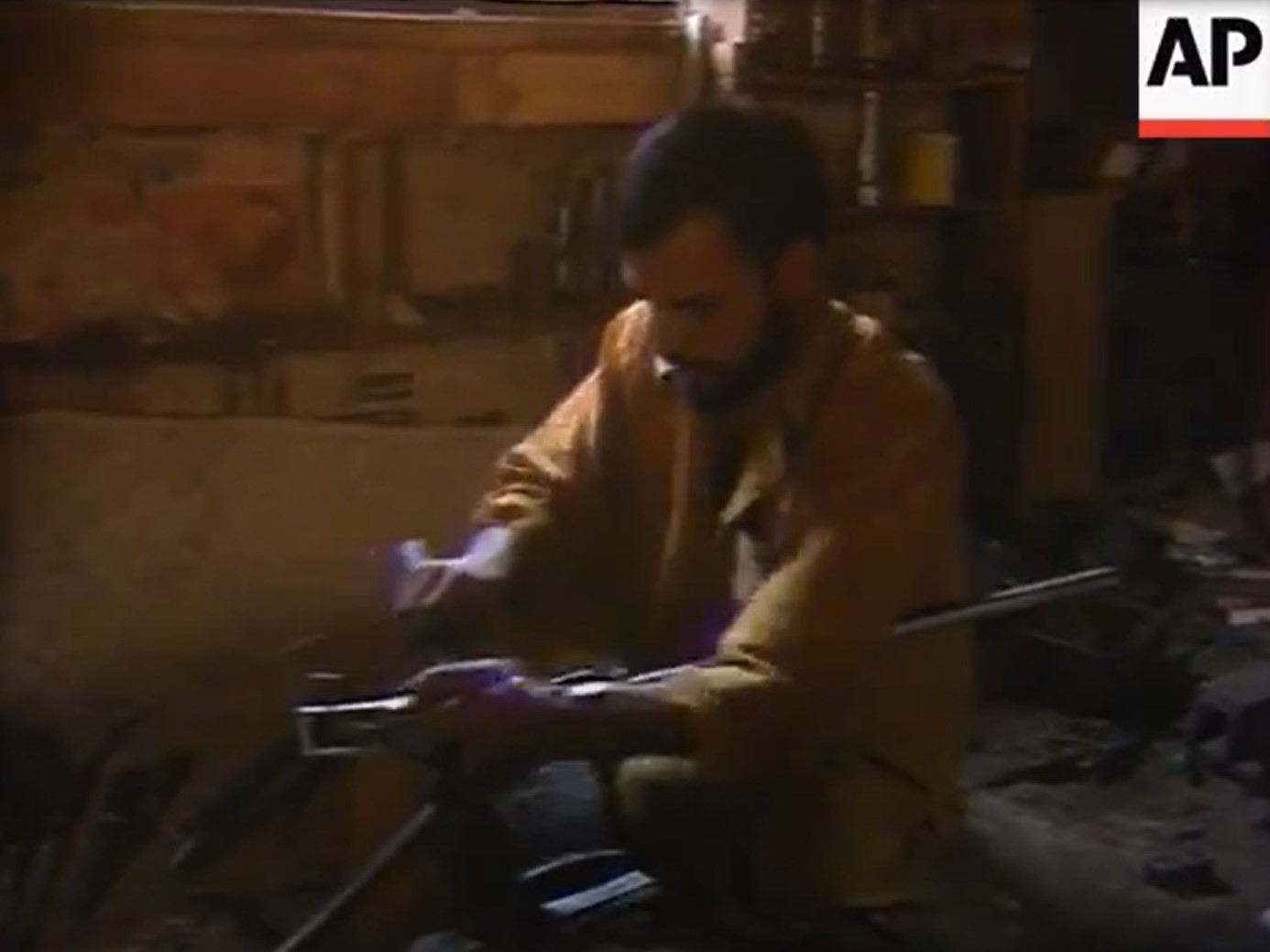
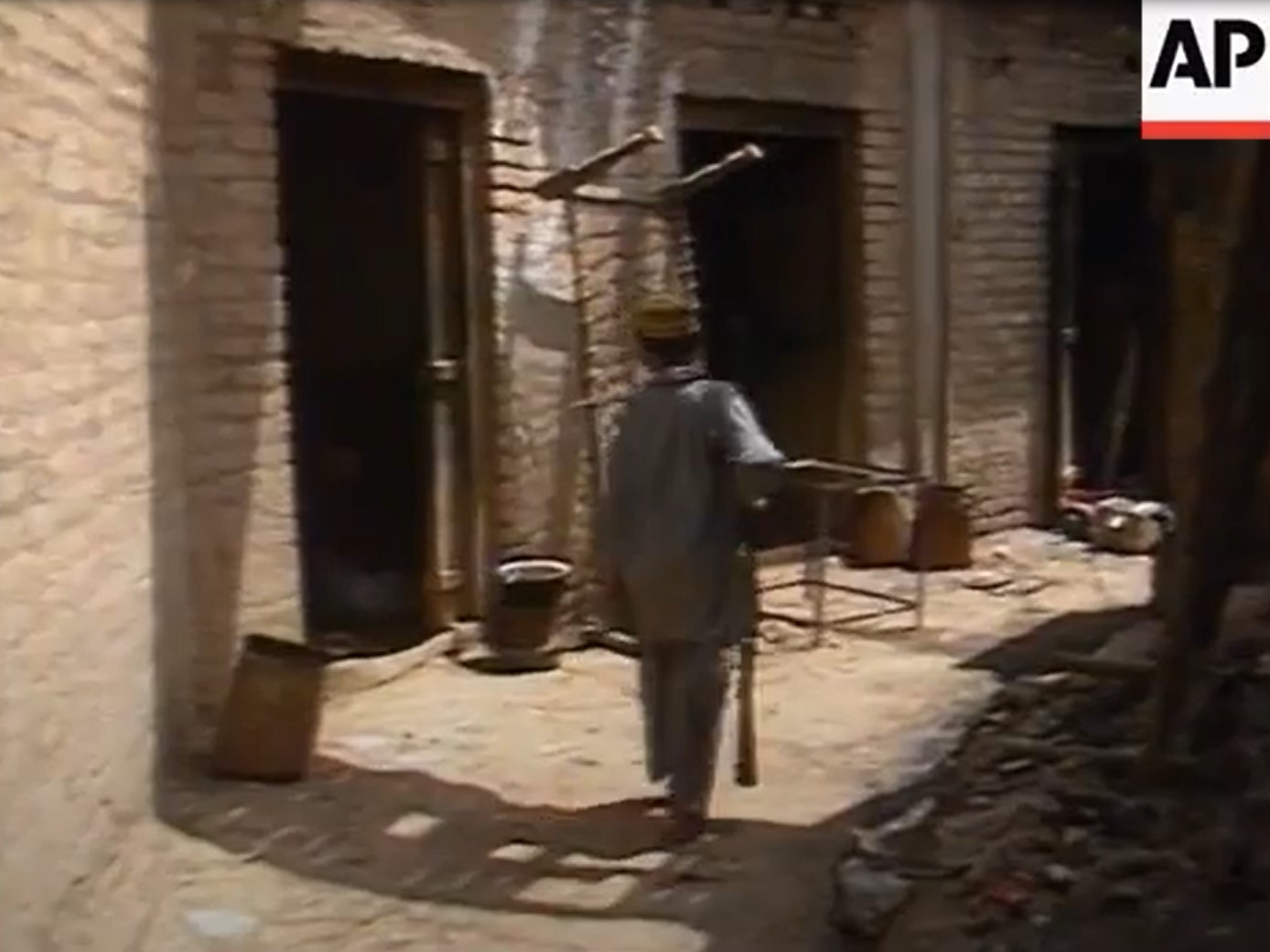
The process of fitting and assembling has changed little since the period this film was shot, it is regularly still done in such a manner. However, the use of newer tools such and milling, lathes and CNC machines has taken over from what was once a job done literally hand with primitive homemade tooling for the most part. It is a look into the days when the back streets and alleyways in Darra were still full, this isn’t the case anymore.
References:
‘Afghanistan/Pakistan: End of Soviet Occupation of Afghanistan, 1983 News Review’, AP, <https://www.youtube.com/watch?v=y9WittFZSjA>
If you enjoy our work here at Silah Report please consider support us on Patreon