
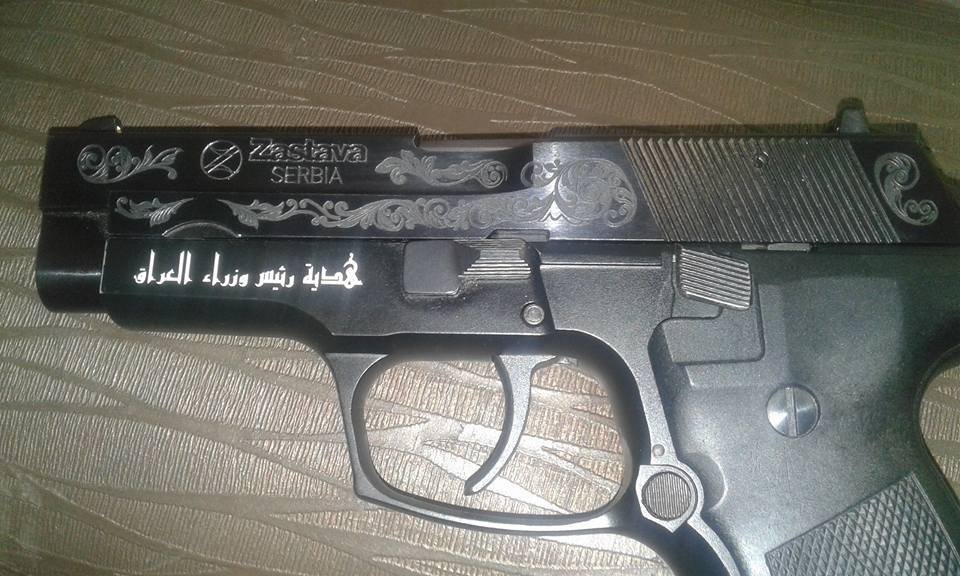
Today, examples of the Iraqi Prime Minister al-Maliki’s presentation 9 × 19 mm Zastava CZ 99 self-loading pistols can be seen infrequently on the open and online gun markets of Iraq. The pistols date back almost a decade when the CZ 99s entered Iraq as part of a purchase from Zastava in Serbia in 2008. The Iraqi presentation CZ 99s are not unique in their own right, as Zastava has several offerings of presentation-grade handguns that have been seen in open sources.
 Miles
Miles
Saddam’s Lesser Known Commemorative Tariq Variant
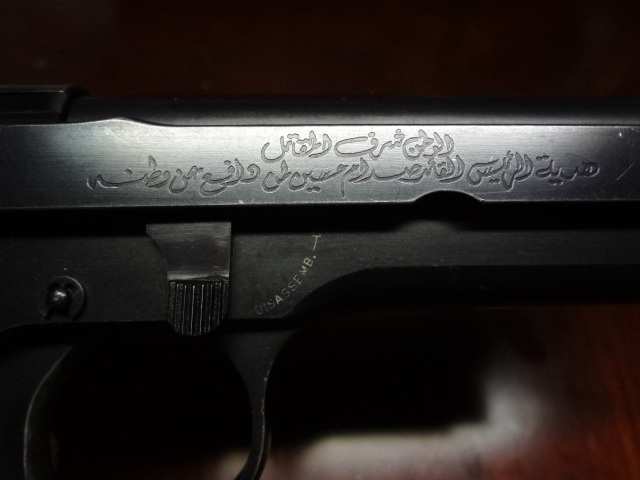
The Iraqi Tariq line of self-loading pistols, like the al-Kadessiah’s line of golden Tabuk M70-based carbines and al-Kadessiah precision presentation self-loading rifles, featured several presentation variants.
Silah Report Podcast V11: Training of Egyptian Conscripts, Changes Since 1973 to 2019 and More!
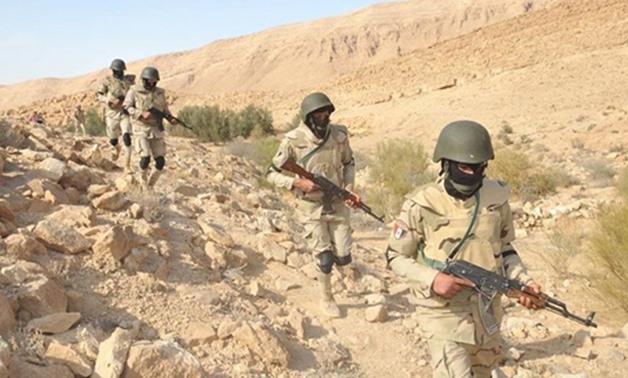
As the war on terror in Sinai drags on and as Egyptian police and military casualties continue to mount, Silah Report’s podcast team discussed the situation and the questions about the competency Egyptian forces on the ground and their commanders’ strategy for dealing with the continuing insurgency.
If you missed last week’s episode, you can find it here.
Safety in Numbers: Atatürk’s Linguistic Reforms in Gewehr 88/05 Rear Sight Ladders
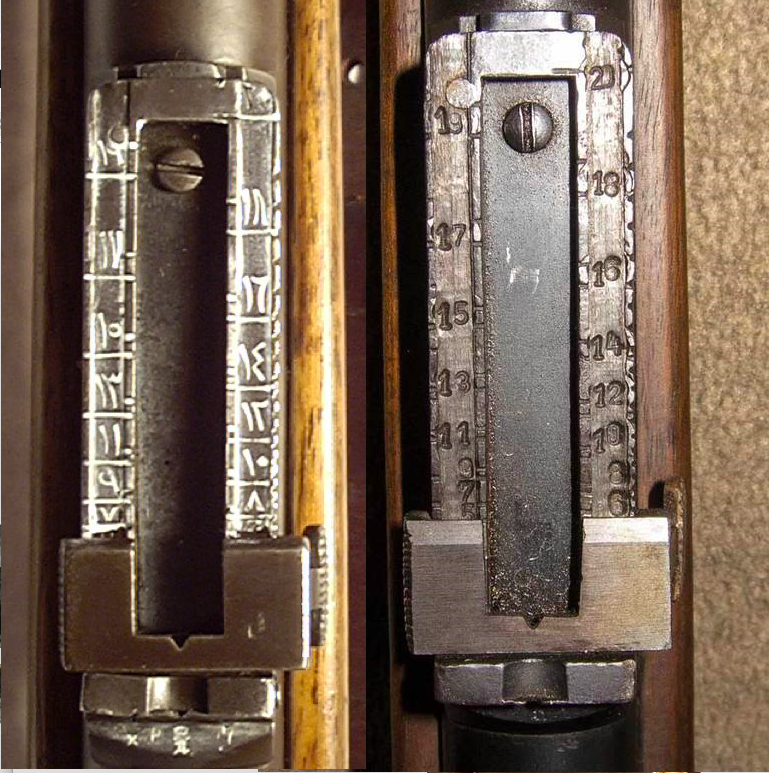
This guest article was contributed by Omer Sayadi, a researcher who studies symbols, weapon markings, and vexillology of the MENA region. He holds a Master’s degree in Arabic & Islamic Studies from KU Leuven. His work can be found on Twitter, and on his website.
The Gewehr 1888 is a 19th century German bolt-action rifle designed by the German Rifle Commission in the late 1880s. The rifle was developed in the wake of the introduction of smokeless powder in an effort to keep pace with European rivals. The German army immediately adopted this rifle for military service under the colloquial name of ‘Reichgewehr’, or commission rifle. Pressured by the French development of the Lebel Model 1886 rifle, firing 8 mm cartridges with a smokeless propellant, the Germans developed a similar type of ammunition to be used with their new commission rifle, resulting in the creation of the M/88 8 mm cartridge, loaded with a round-nose bullet.
Kalashnikov & G3 Modifications on the Yemeni Market
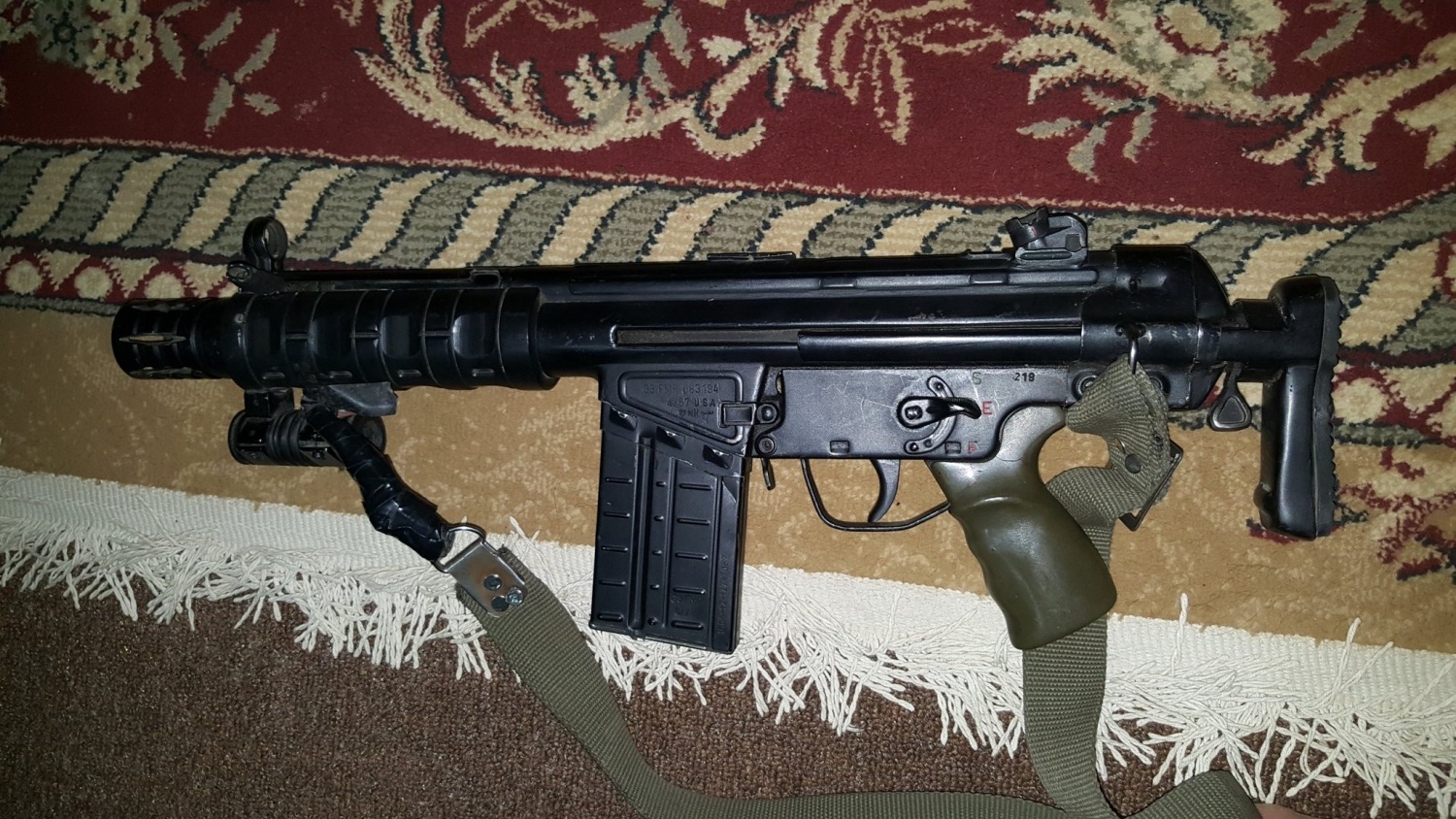
This guest article was contributed by a Yemeni enthusiast who was able to show us some of the more unique and sometimes peculiar modifications that are made to small arms in Yemen. All photographs are locally sourced unless otherwise cited.
Generally, there is only one city that is known to modify small arms extensively in Yemen: Dhamar, in North Yemen (currently Houthi-controlled). Many of these modifications are done to shorten barrels, install side-folding stocks, or ‘modernise’ older rifles.
Silah Report Joins Armament Research Services!
Silah Report is excited to announce that we have joined the Armament Research Services (ARES)
team! ARES is a specialist technical intelligence consultancy, offering expertise and analysis to a
range of government and non-government entities in the arms and munitions field.
What this means for our readers is more content—with writing and editing of a higher
standard—supported by the experience and technical expertise of ARES personnel. Together, ARES
and Silah Report will continue to produce important research into topics that are often
misunderstood or overlooked. We remain committed to supporting emerging researchers,
historians, and analysts by providing an accessible platform, with mentorship and guidance.
Silah Report will continue to operate independently and non-commercially, and will continue providing
timely, first-look research into arms and munitions in the Middle East, North Africa, and Central Asia
regions. ARES is providing core funding support and will help in raising the profile of Silah Report’s
research. All commercial engagement will be handled through ARES.
As a reader-funded outlet, providing freely and publicly available articles, we are still relying on our
readers to support our work and to help us to expand. We are deeply appreciative of the support we
have received through Patreon so far, and we encourage those of you who find our work valuable to
consider supporting us.
Miles Vining Hrachya Hayrapetyan
Co-founder Co-founder
Media/press inquiries: media@armamentresearch.com
You can find ARES’ corresponding announcement here.

Erbil’s Gunsmith: Wasta Bakhtiar-Azizz
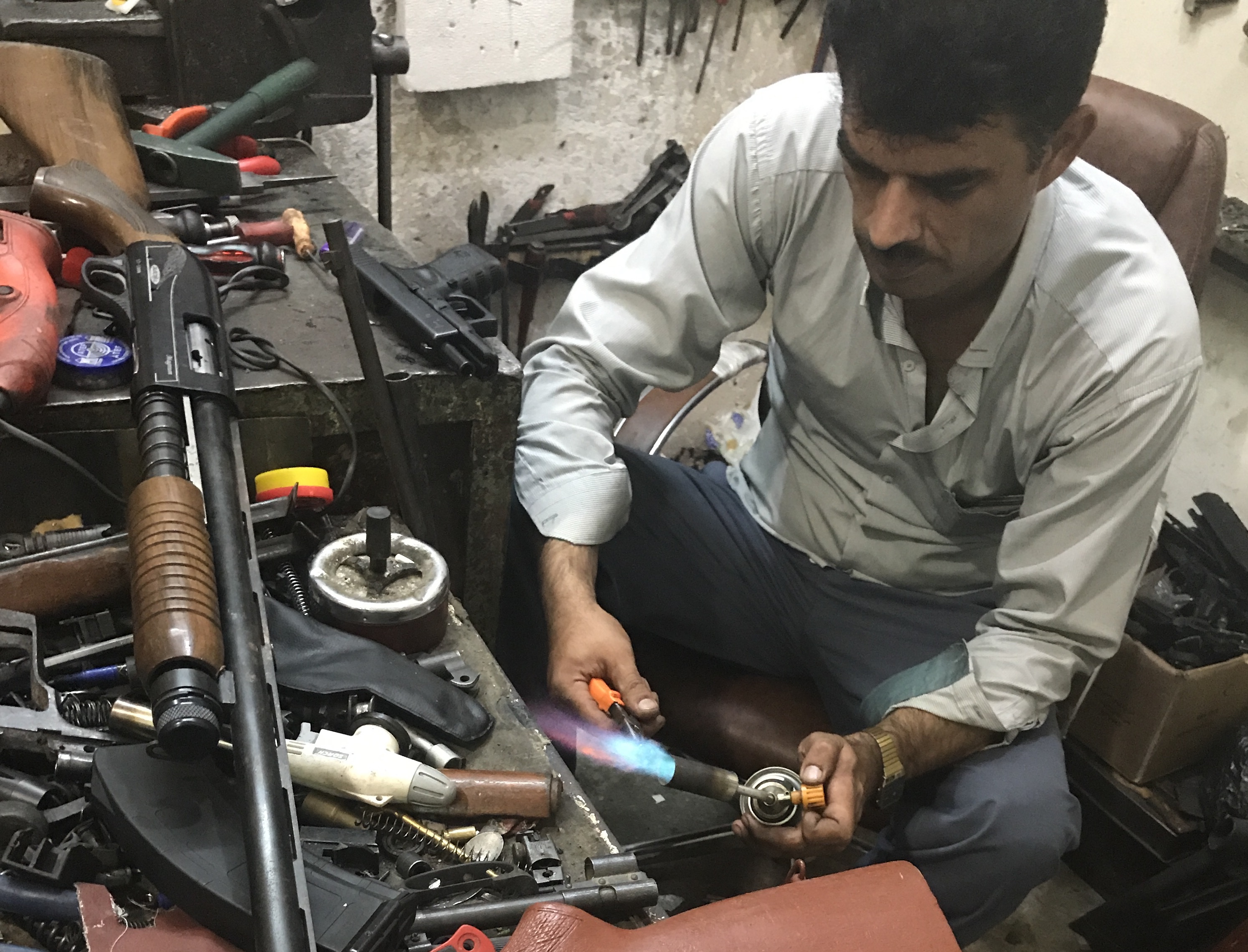
While in Erbil, we sat down with Wasta Bakhtiar-Azizz (وە ستا بە ختیار), one of the best-known and most highly respected gunsmiths in the Kurdistan region. Within Erbil and beyond, there are a number of gunsmiths that either work on small arms in need of maintenance and repair or perform services such as re-bluing, gold plating, modifications, and a number of other odd jobs that Kurdish gun owners request. Bakhtiar has worked in this community since he was a child, continuing the family’s business of his father, who was himself a renowned gunsmith. His son joins him in running the shop, and his brother owns a separate gun shop on the eastern side of Erbil. In addition to offering commercial gunsmithing services, he also volunteers his services to the Asyeish and Peshmerga, helping in maintaining and repairing their small arms.
Colloquial Names and Prices on the Yemeni Gun Market
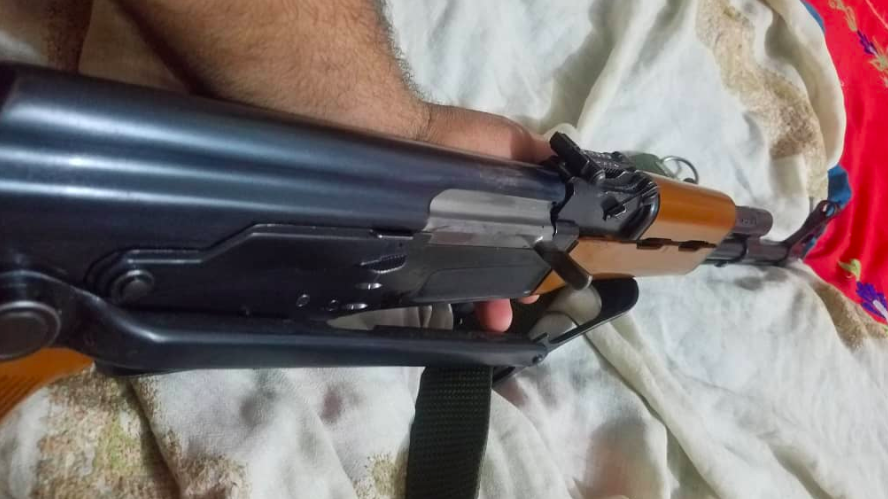
In this article a Yemeni writer looks at some of the general trends in Kalashnikov-patterned rifles within Yemen, going over serval models and some of the intricacies that exist within them. Note that although prices are given in US Dollars, the majority of the market uses Yemeni or Saudi Rials for payment.
Before 2015 the majority of our AKs were of Russians, Polish, Hungarian, Chinese, and Bulgarian origin. But in 2015 the Houthis invaded the coastal city of Aden and at that time an Arab coalition was created to support the southern resistance. When this fighting began
From the Arab alliance, the Saudis and United Arab Emirates forces supplied the southern resistance with airdrops.
V6: Bulgarian Arsenal rifles in Gaza and Egypt, Crazy AK Stocks throughout MENA, and
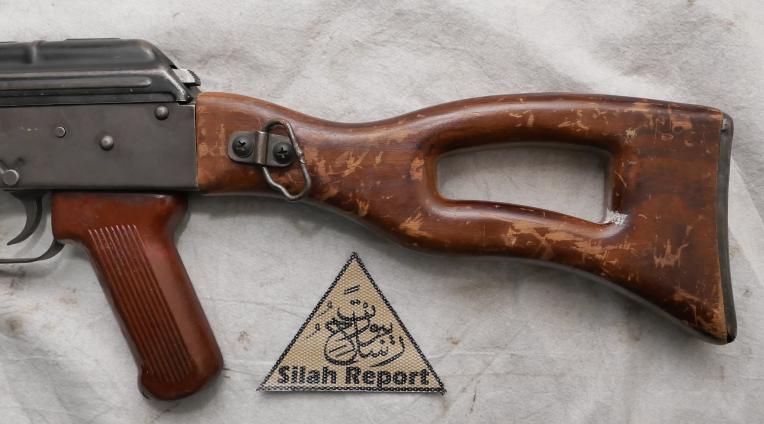
Adham, Analyst Mick, Daniel Casingena, Vladimir, and Miles talk about Egyptian small arms in the NFC Pattern Room in Leeds, mind-boggling Kalashnikov stocks and even a North Korean Type 68 rifle for sale in Idlib.
Egyptian Maadi and Polish Kbk-AKMS Arabic Rear Sight Markings
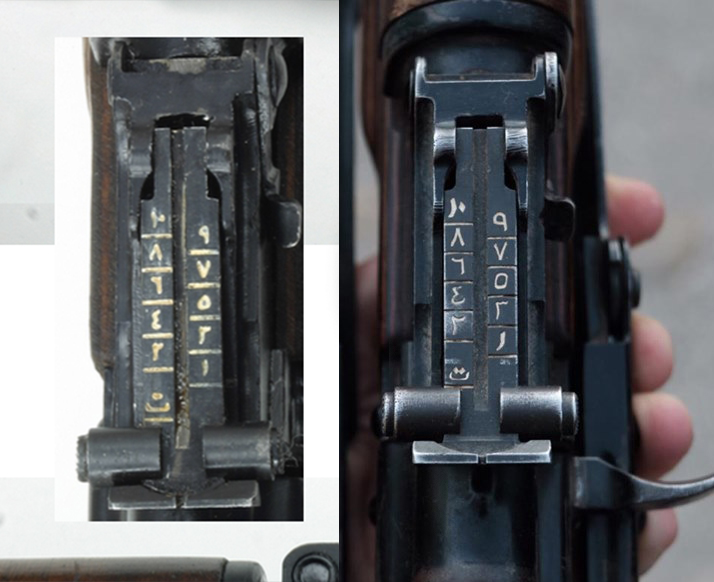
This article was recently spurred to fruition by the submission of a reader’s photograph taken in the city of Ar-Raqqa, Syria. The subject of the photo features a prominent rear sight base of an AKMS-patterned rifle with Eastern Arabic numerical markings. Important to our discussion is the origin of this particular rifle because one would be led to the conclusion that from the photograph alone, it might be an Egyptian 7.62x39mm Maadi rifle from the rear sight markings. However, our source on the ground informs us (albeit without photographs) that the rifle is in fact of Polish origin with the “Circle 11” marked trunnion. This post will explore the difference in rear markings between Polish export KbK AKM-patterned rifles and Egyptian Maadi rifles, in addition to looking at some of the U.S. reproductions. The importance of comparing these rear sights is that these three varieties are some of the only major categories of Kalashnikov-patterned rifles with rear sight designations in Eastern Arabic numerals. Unlike Western Arabic numerical font stampings, the fluid curvature found in Arabic-based fonts across the world allows for a greater degree of variety and thus gives us easier clues for identification based on rear sight range designations.