This guest post was written by Jeffrey Reardon, an avid reader and supporter of Silah Report.
In the past one hundred and eighty years, Afghanistan has been the target of multiple foreign invasions. From the British, (1839-1842, 1878-1880 and 1919) Soviet (1979-1989) and United States (2001-Present) involvement in Afghanistan. As such, we have a unique opportunity to see the small arms of yesterday back in action. Let’s look at one such example today.
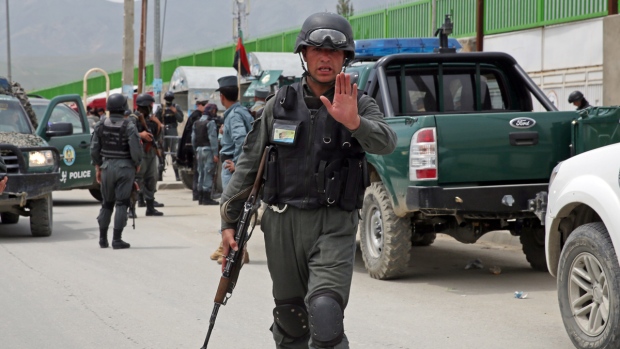
An American Marine of personal acquaintance was assigned to a Police Mentor Team (PMT) apart of 2nd Battalion, 1st Marines. These units were responsible for mentoring and training the Afghan National Police (ANP). The PMT duty consisted of patrolling to different ANP checkpoints. The PMT would spend a few days at each checkpoint then move on to thier next scheduled checkpoint. This Marine also happened to be an avid military surplus collector. This assignment would give him many opportunities to meet new people and see a myriad of Curio and Relics (C&R) in Afghanistan. In 2010, while in Garmsir, Helmand Province, Afghanistan, that’s exactly what happened to this Marine.
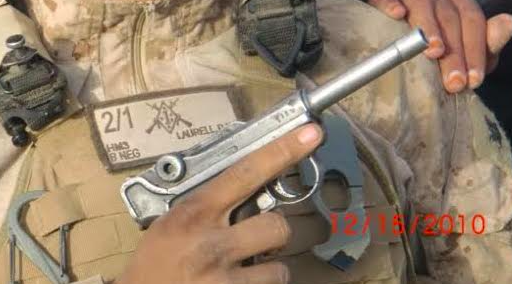
While on patrol with the ANP unit, this Marine noticed the unmistakable silhouette, of a Luger pistol that one of the ANP members was carrying. Naturally, the Marine was curious and just had to have a look at this interesting piece of military history.
In this picture, we can clearly make out the DWM rollstamp. The Deutsche Waffen- and Munitionsfabriken (German weapons and ammunition factories) was created in 1896 by, Ludwig Loewe & Company. They combined their weapons and ammunition facilities under one company. Simultaneously, Loewe transferred all shares it owned in other weapons producing companies to the newly formed DWM. These included, lesser know production facilities along with the Waffenfabrik Mauser and Fabrique National(FN). This pistols date is a little obscure in the picture. However, I was told this example is dated 1916. Just during WWI, from 1914-1918, there were approximately 2,000,000 Luger pistols made.
In this picture, another Marine poses with Luger. Here, we can see clearly see the front sight is missing. We can only guess as to what happened and how long it’s been missing. This goes along with my theory that this particular Luger is more if a badge of honour and sign if rank. Although, it would certainty get the job done in close quarters. Not having a front sight at all will put you at a disadvantage for the Marine Corps 25 meter pistol qualification.
As evident by the pictures, there is absolutely nothing left of the original finish. Which would have been a very beautiful and high gloss blue oxide on the major components. With small pieces such as the trigger and takedown lever being strawed. This process turns the metal a soft, golden colour which closely matches that of dried hay or, “straw.” In all actuality, this is exactly what one would expect. After all, it is almost a century old. Very easily a veteran of two world wars and countless other conflicts. It’s current location in southern Afghanistan, with its frequent sand storms, certainly does not help.
The Marine function tested the pistol. On a Luger, this is accomplished by grabbing the top of the toggle link and pulling up. With an empty magazine in place, the slide will stay fully locked back in then open position. I was assured that it is in operable condition. Although, the Marine did not test fire it.
There are, by this point, more than a few things I’m curious about. One question I would love to know the answer to is, to know if the ANP had the holster and spare magazine? If he didn’t, what was he using for a holster? If he wasn’t in possession of the spare magazine, was he worried about the lack of capacity?
I was told that the ANP officer was very proud of his pistol. He made it known that he was not at all interested in selling it. I often wonder, by what route did that pistol get to Afghanistan? How did that ANP officer acquire it?
Sadly, we will never know the answers to these questions. We can only be happy that our beloved military surplus small arms are still serviceable after all this time.
While doing research for another article, I came across an invention of a Kazakh arms designer named Diyar Gilmanov. This gentleman has designed a muzzle device which has quite an interesting construction.
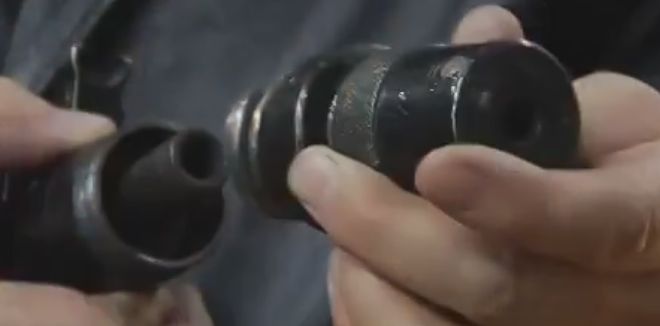
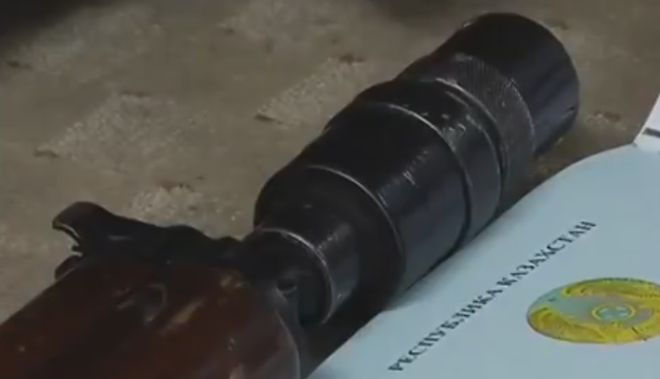
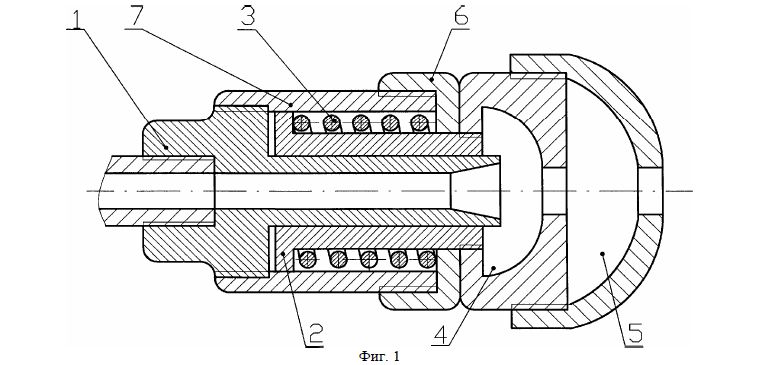
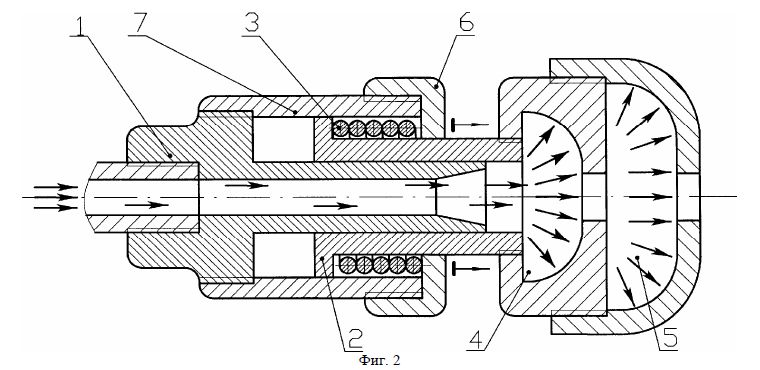
Gilmanov’s muzzle brake has a telescoping design. It consists of an inner part that is mounted onto the muzzle of the weapon and a spring-loaded mobile part. Upon firing the weapon, gasses escaping the muzzle enter the two expansion chambers (4 and 5 in the drawings) and force the spring loaded part to move forward. The spring then extends and returns the mobile assembly back to its collapsed position.
Gilmanov muzzle device before firing
According to the designer, this forward motion mitigates the recoil. It is probably accomplished by the mass of the forward moving assembly which counters the rearward motion of the bolt carrier group or the recoil mitigation occurs due to the forward impact of the mobile part onto the housing on its foremost position. The recoil reduction may also be achieved by the combination of the described two processes.
Gilmanov muzzle device during firing. Arrows show the directions of gasses escaping the muzzle.
The drawings used in this article are from the Kazakh patent #16012 granted to Diyar Gilmanov in 2009. You can view or download that patent (in Russian) by clicking here. Here is also a link to a short video (found on OK.ru social media website) showing this muzzle brake in action.
Judging by the construction of this muzzle device, I assume it may also partially reduce the flash signature and the report. Also, it should double as a booster for AK carbines and AKS-74U (Krinkov) rifles.
A report on Television One has revealed that 70 firearms and a number of cameras capable of operating at night (possibly meaning infrared capabilities) have been stolen from a central Police armory in Kabul. The article inferred that the firearms were possibly being smuggled to Pakistan but this isn’t known as of yet.
منابع خبرداده اند که هفتاد میل جنگ افزار از یک ذخیرگاه مهمات پولیس در کابل دزدی شده است.
منابع امنیتی که نخواستند نام شان فاش شود از دزدی شدن هفتاد میل جنگ افزار و سه دوربین در ذخیرگاه های مهمات پولیس در کابل خبر داده اند.
این جنگ افزارها شامل تفنگچه ها و دوربین های شب بین بوده که از یک بخش حمایوی پولیس در کابل دزدی شده است.
بر بنیاد گفته های منابع، چندین تن از سوی وزارت داخله در پیوند به این رویداد بازداشت شده اند.
با وجود تلاش های زیاد وزارت امور داخله نخواست در این باره ابراز نظر کند، اما یک مقام وزارت داخله به تلویزیون یک این موضوع را تایید کرده گفت، بررسی ها درباره این موضوع جریان دارد.
Firearms being stolen from a central police repository is somewhat alarming, especially that observing that it has happened the day before Now-Ruz, or the Persian New Year. There is the possibility that maybe the theft was to supply a possible attack in the upcoming festivities but this is most likely not the case as the firearms stolen were mostly handguns. This is most likely a case of lax regulations right before the holiday and an insider taking advantage of them. Similar to many other attacks and thefts within the Afghan government, this was most likely an inside job possibly helped by a corrupt official.
Santay Zhetesov (Сантай Жетесов) is an inventor and scientist from Karaganda, Kazakhstan. Among a number of other inventions, he has also developed a couple of firearms and caseless ammunition. In this article, we’ll take a look at Zhetesov’s firearm prototypes and ammunition patents.
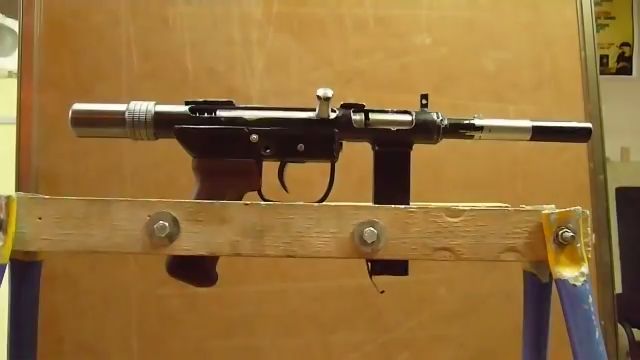
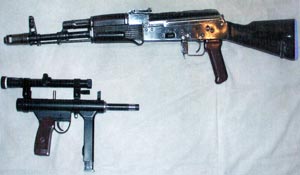
PPZh-05 Caseless Submachine Gun
PPZh-05 is an abbreviation which stands for Zhetesov submachine gun (Пистолет-Пулемет Жетесожа; Pistolet Pulemyot Zhetesova). The number 05 in the designation means that it was made in 2005.
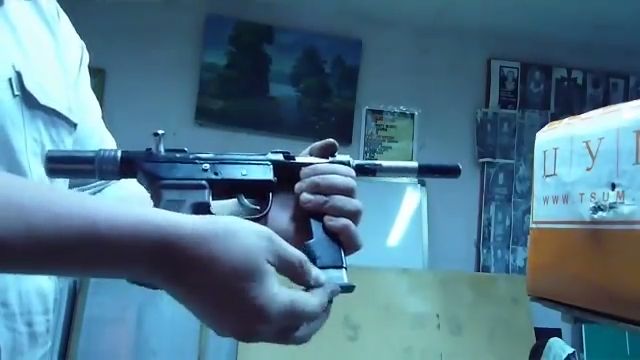
This SMG feeds from a detachable box magazine. The magazine well is a rather long one which is probably designed so to allow using it as a front grip without applying pressure to the magazine itself. The gun shoots from an open bolt. It is a fairly compact weapon.
PPZh-05 compared to an AK-74
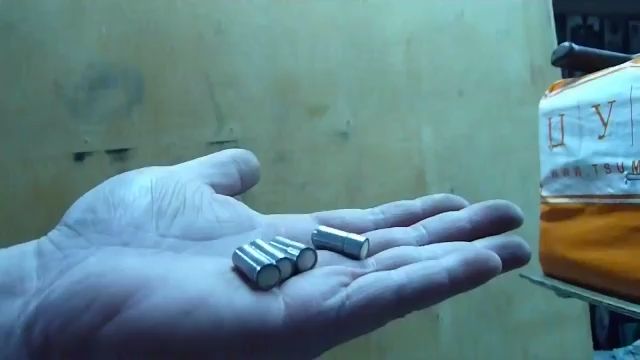
This SMG uses a type of caseless ammunition where the bullet itself contains the powder charge and the priming compound and there is no cartridge case per se. The experiments with this kind of ammunition have been conducted throughout the history of firearms development. Similar ammunition was used in the Volcanic pistol, the Gerasimenko VAG-73 pistol, Benelli CB-M2 etc.
Cartridges of the PPZh-05 SMG
Here are a couple of videos showing the test firing of PPZh-05 SMG:
Caseless Ammunition
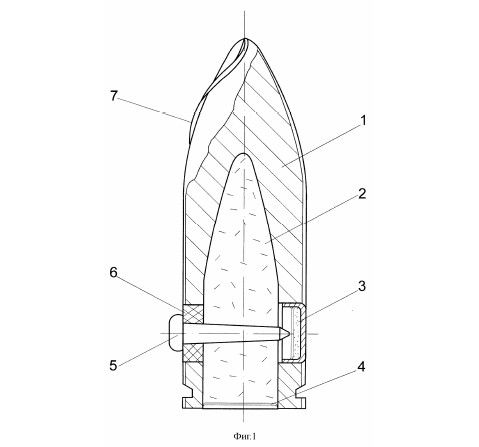
Santay Zhetesov’s caseless ammunition designs are described in the Kazakh patent #29642. The ammunition used in PPZh-05 SMG should be constructed similarly.
In the mentioned patent, it describes caseless ammunition which has a striker and primer built into the projectile/cartridge. Unfortunately, it is not specified how the cartridge will be aligned in the chamber to expose that built-in striker to the hammer. Possibly for this kind of ammunition, an annular primer could be a better idea.
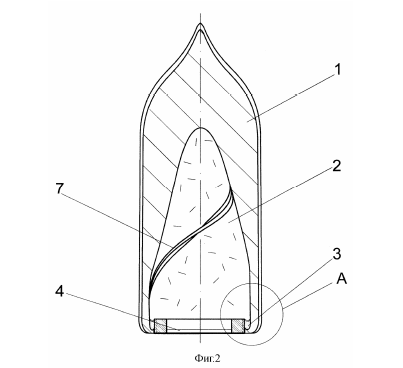
There are two versions of these cartridges described in the patent. One of them has rifling-style flutes on the ogive of the bullet (see the above image) which is said to impart spin to the projectile. The second one (see the image below) has identical grooves inside the powder charge cavity. I assume these flutes are supposed to spin stabilize the projectiles when shot in smoothbore firearms because the inventor states in the patent text that this ammunition can be used both in rifled and smoothbore barrels. There should not be a need to have that flutes if the cartridges are fired in rifled barrels.
According to Zhetesov, such cartridges of 5.47mm, 7.62mm, 9mm and 10.2mm calibers have been tested and showed “promising results”.
SPZh-06 Grenade Launcher
The model designation of this firearm stands for Zhetesov Soldier Cannon (Солдатская Пушка Жетесова; Soldatskaya Pushka Zhetesova). The “06” means that the gun is designed in 2006.
SPZh-06 and PPZh-05
This is a bolt action single shot grenade launcher. Its effective range is said to be 500 meters. Basically, this weapon is a standalone caseless grenade launcher.
The unusual stock configuration (separate pistol grip with a hunting rifle stock) is probably there because this is a prototype weapon and they just temporarily attached whatever stock they had.
Both of these guns are made in single samples. Reportedly, they have been introduced to the military officials of Kazakhstan, but have been rejected.
As soon as there is new information concerning these firearms, we will report to our readers.
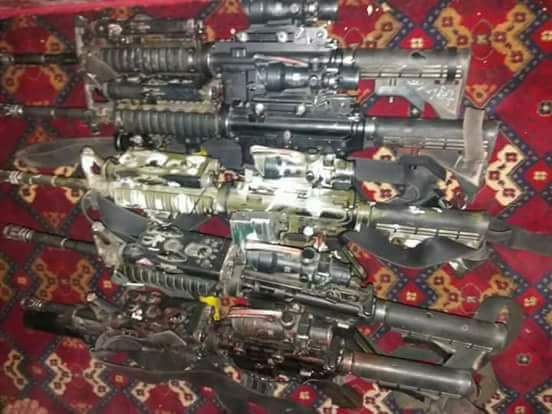
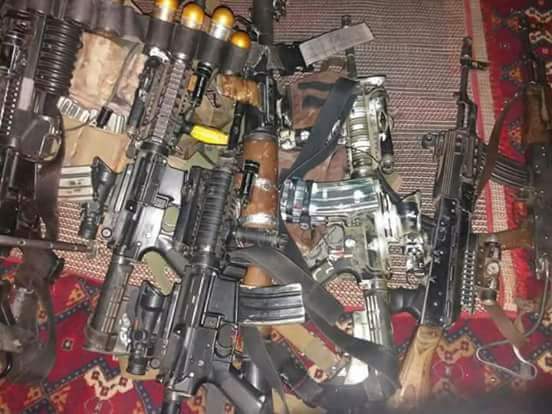
Recently disclosed photographs supplied to Silah Report have suggested that the local GoIRA supported militias are armed with more than the standard Kalashnikov self-loading rifles often seen throughout the country. One example of these forces is the Afghan Local Police, or ALP. Although these forces are seen as cost-effective, many local Afghans compare them to the days of the War Lords that roamed the country in the Civil War.
The photograph below depicts five 5.56x45mm NATO M4-patterned carbines in configurations that are identical to that of the ANA Commandos. This includes the AN/PEQ-2 TPIAL mounted at the 12 o’clock position on the Picatinny rail, the Trijicon 4x RCO day optic, the MaTech BUIS, and even the spray painted rifle in the center. Also present is a 40x46mm NATO M203 UBGL mounted to the carbine at the bottom. Notice on the painted carbine the coupled STANAG magazine inverted from a usual “rounds up” position.
As indicated by this photograph, a small arms inventory such as this is consistent with what the ANSF Commandos are generally issued.
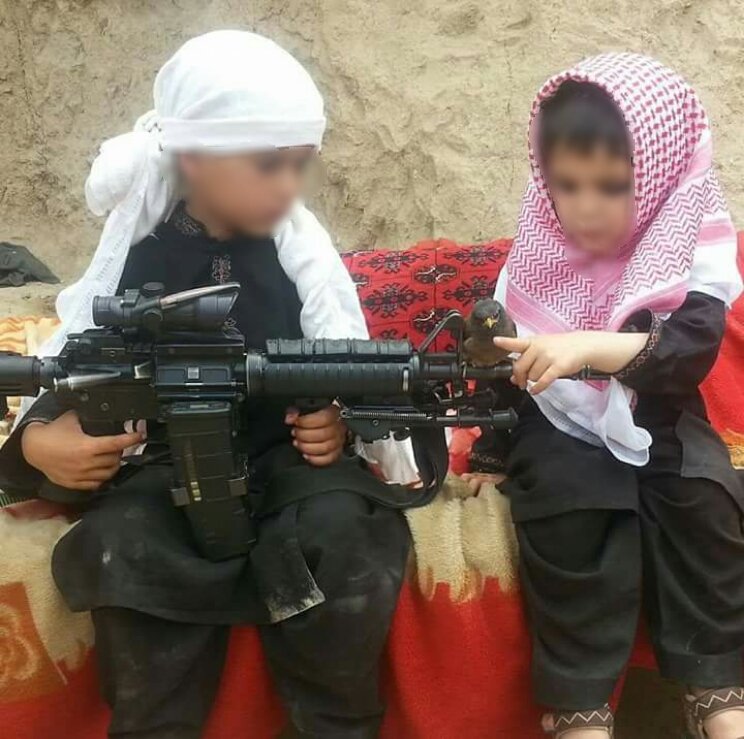
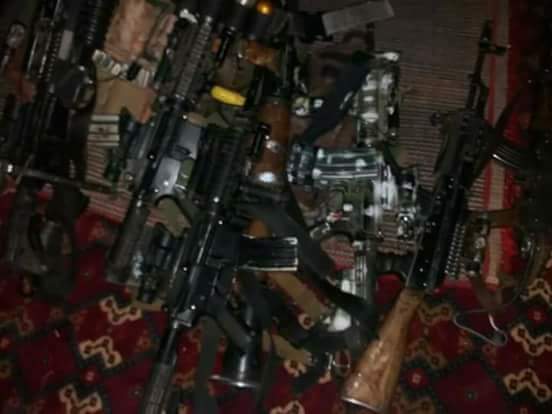
This photograph was provided by the same source and features a similar magazine coupling technique as illustrated above. What appear to be UTG rail covers and what is most likely a Harris bipod copy appear to be third party modifications from the standard issue. Myna Bird perched on the 6-inch barrel comes unissued.
MaTech BUIS as in use.
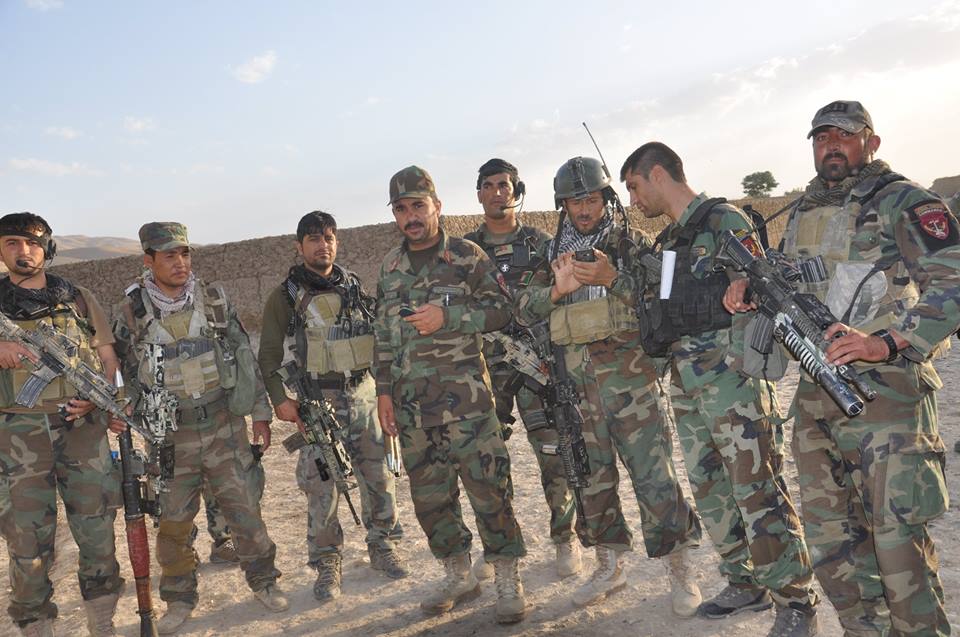
However in this angle present are Streamlight TLR Picatinny mounted weapon lights, in addition to Kalashnikov patterned rifles, which are rarely in use by ANSF Commandos, if at all. Although rare, there are some TLRs that have been spotted among the group.
Although contextual information about the photographs are scare, a source has suggested that the militia checkpoints are perhaps funded by a shadow entity with a large supply budget. Such as the “Kandahar Strike Force” that was indeed set up by the CIA. In Afghanistan, this is immediately assumed to be the “CIA”, but until we have further information, we cannot venture more into the origins of these carbines.
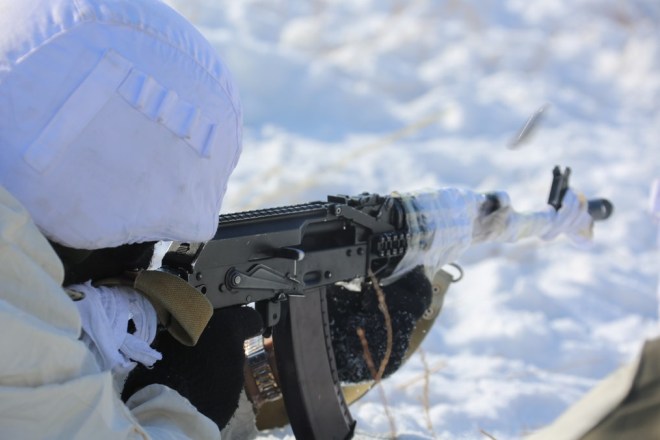
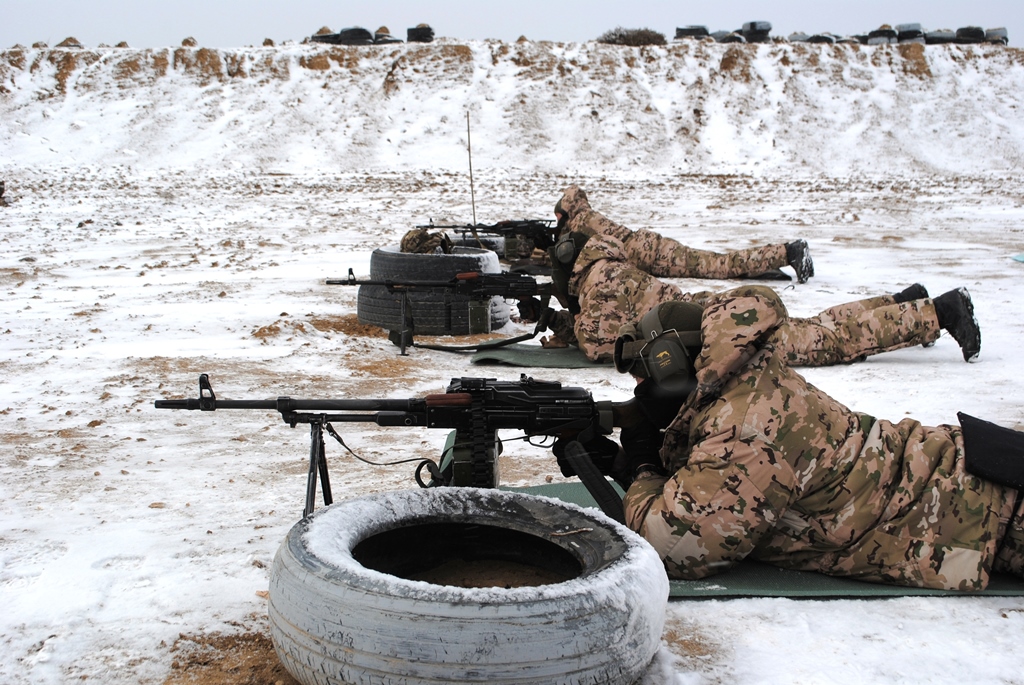
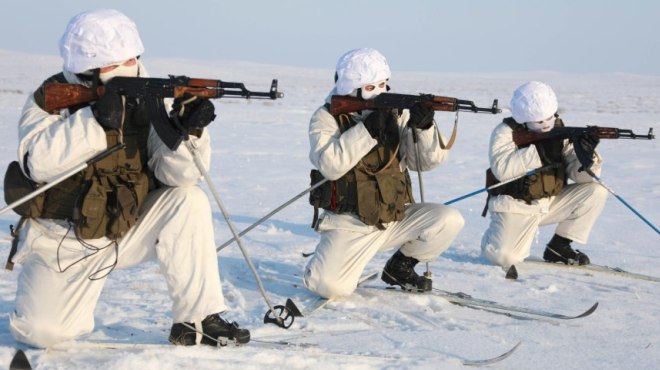
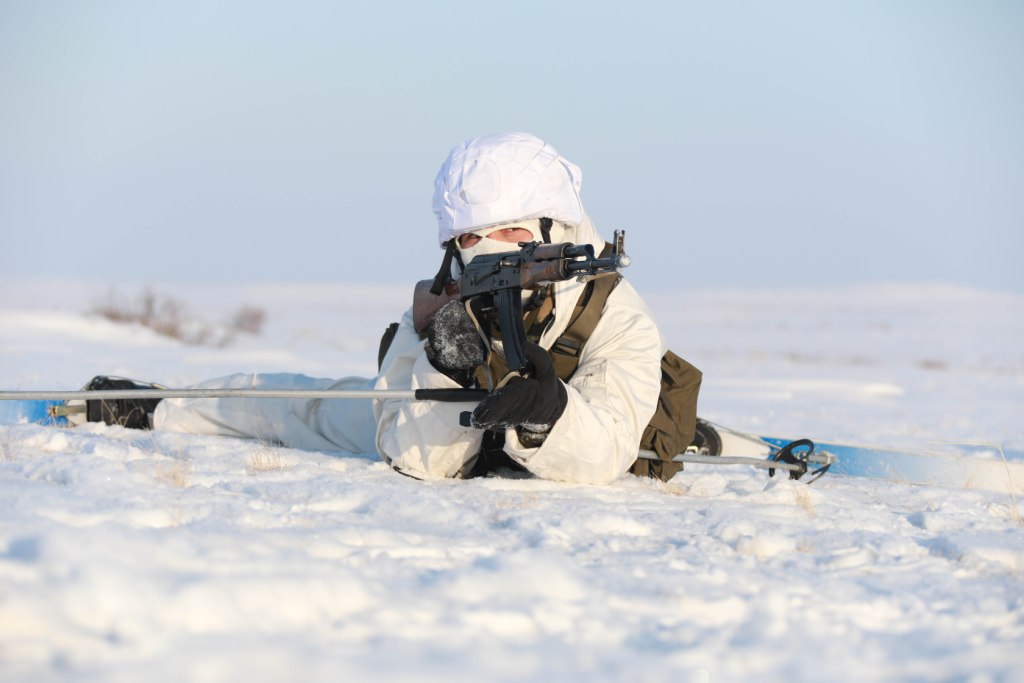
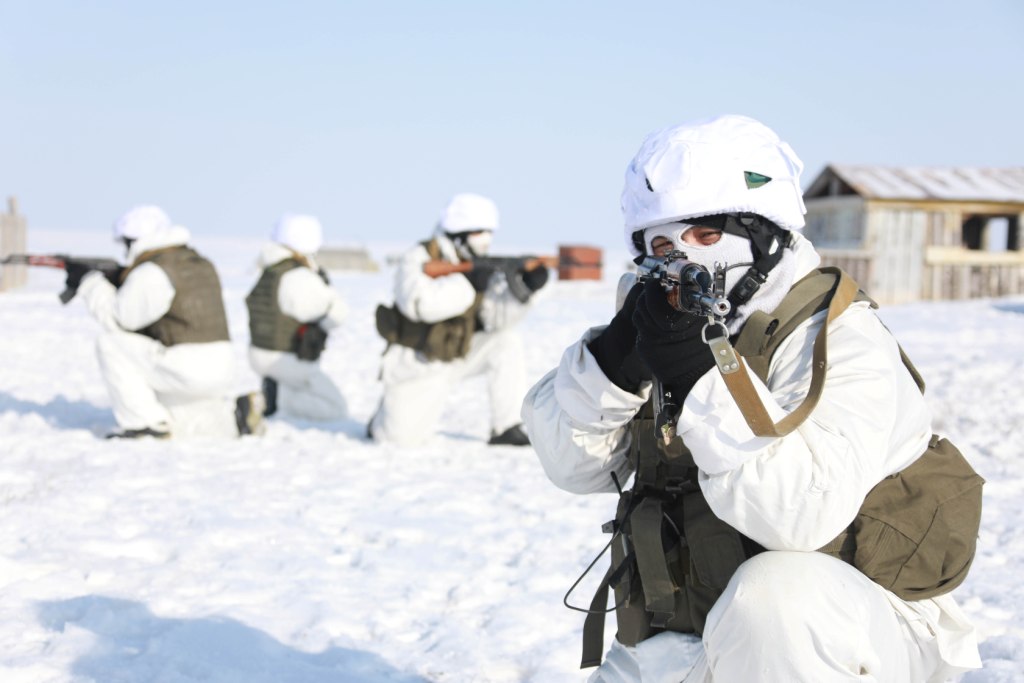
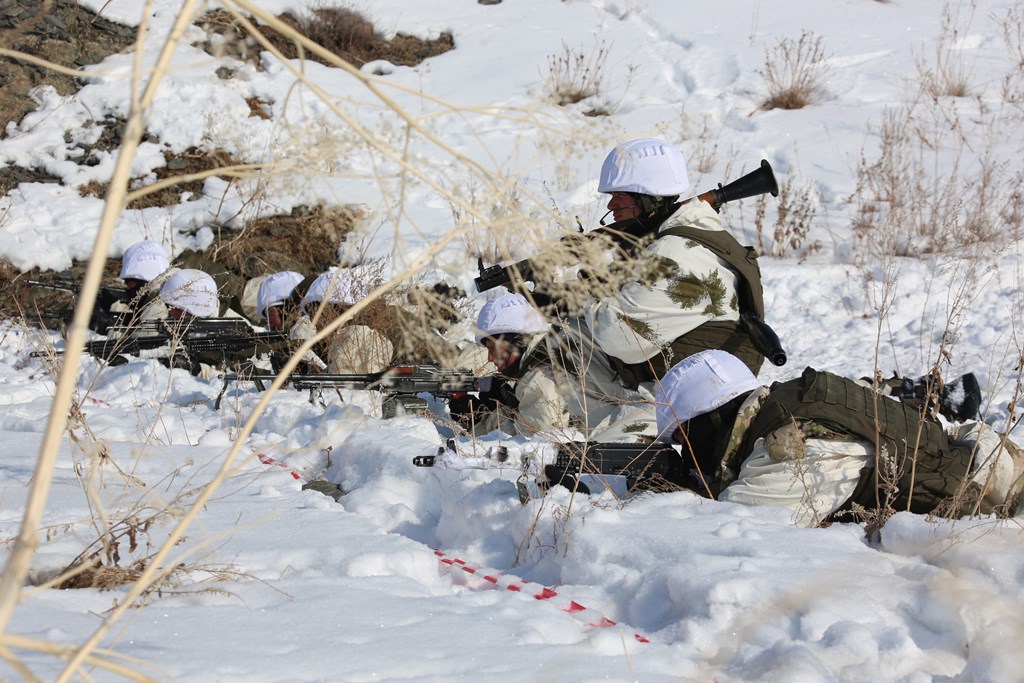
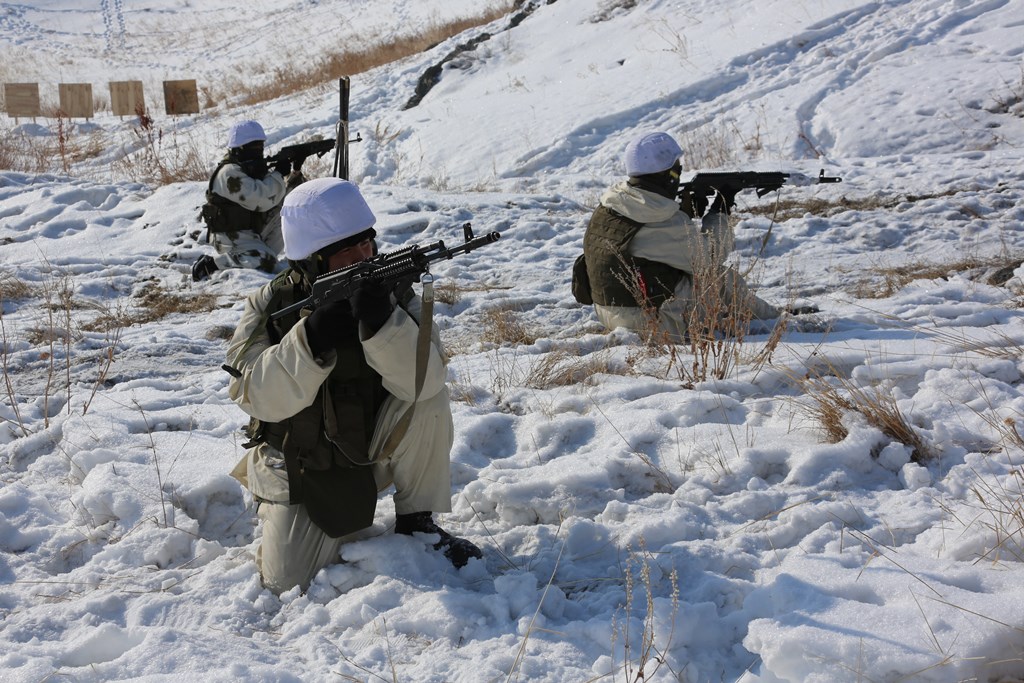
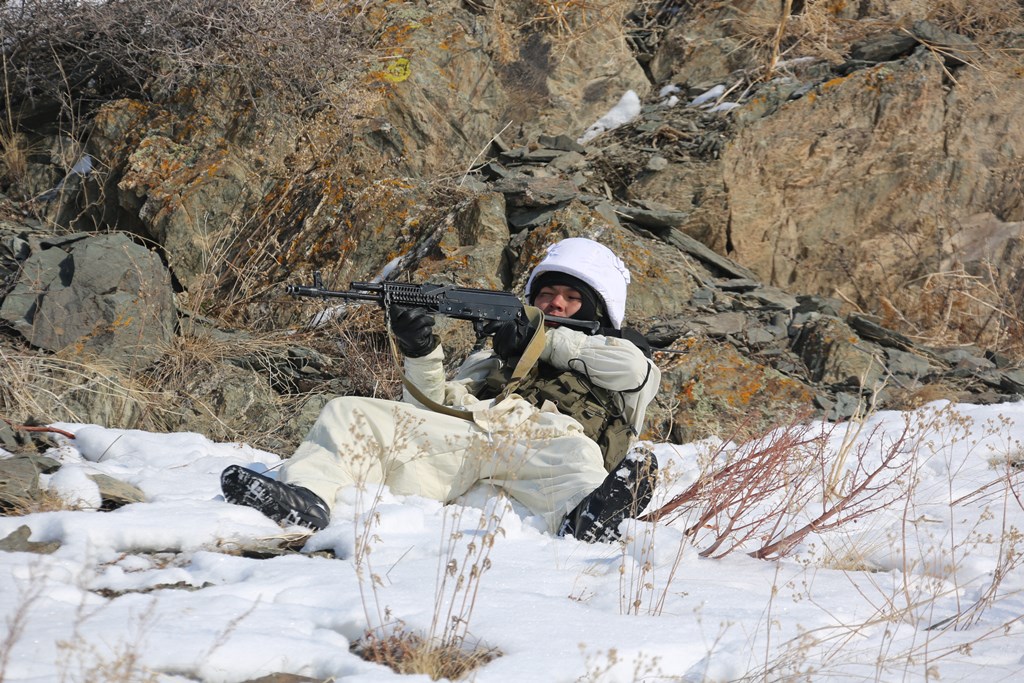
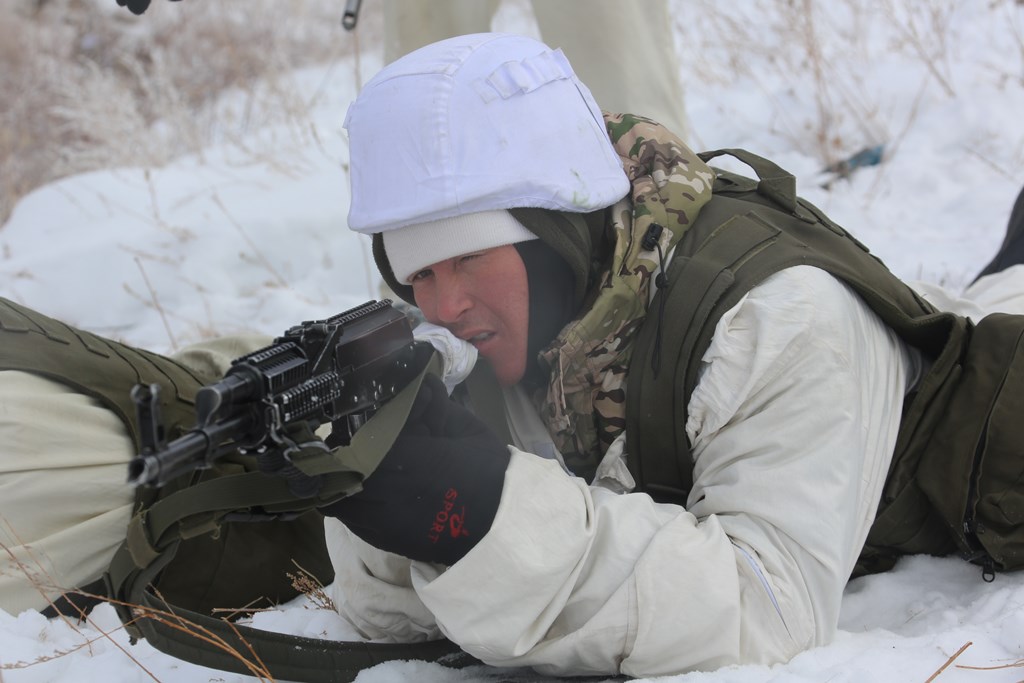
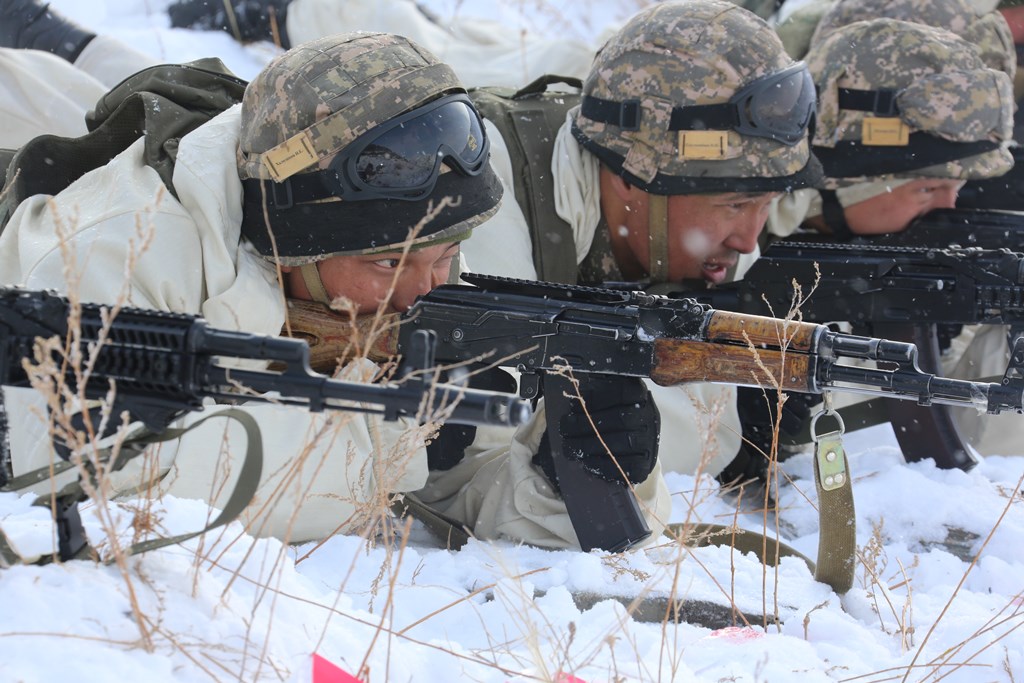
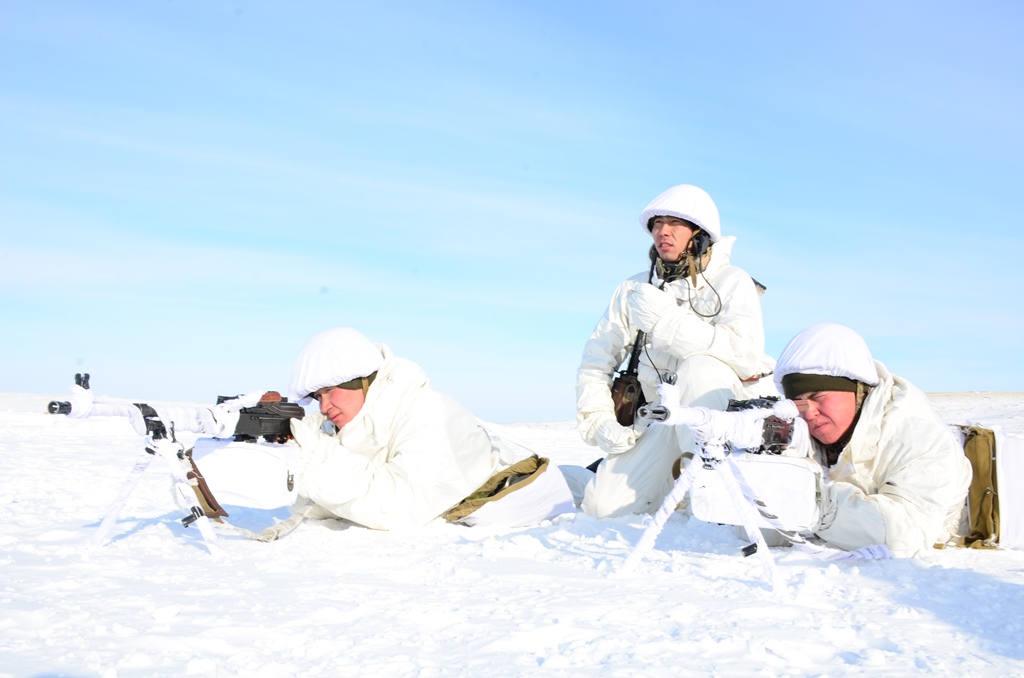
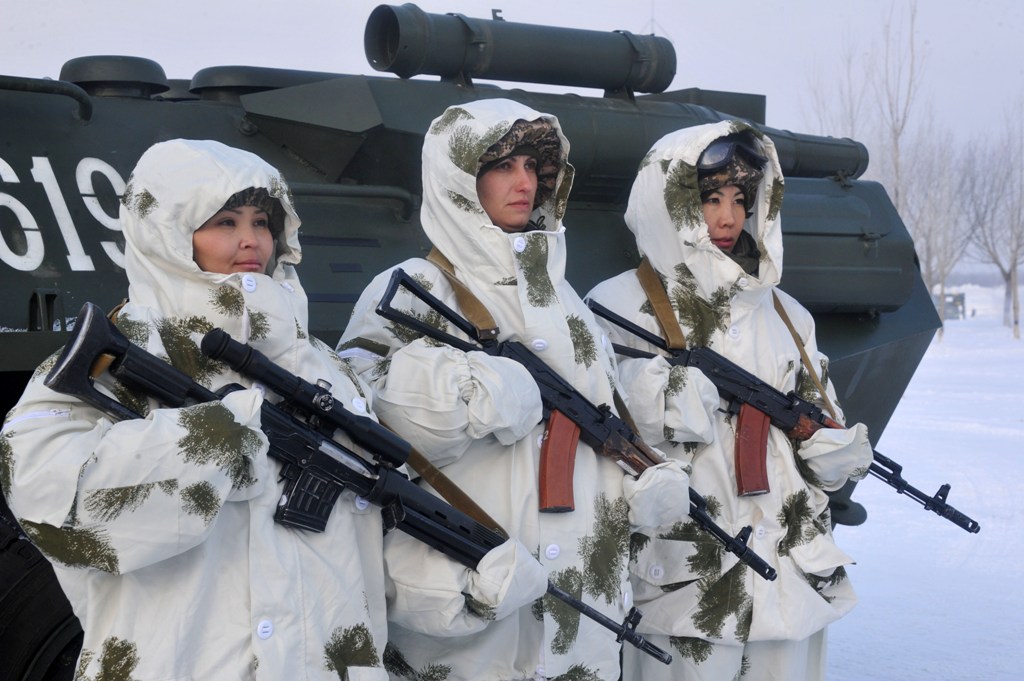
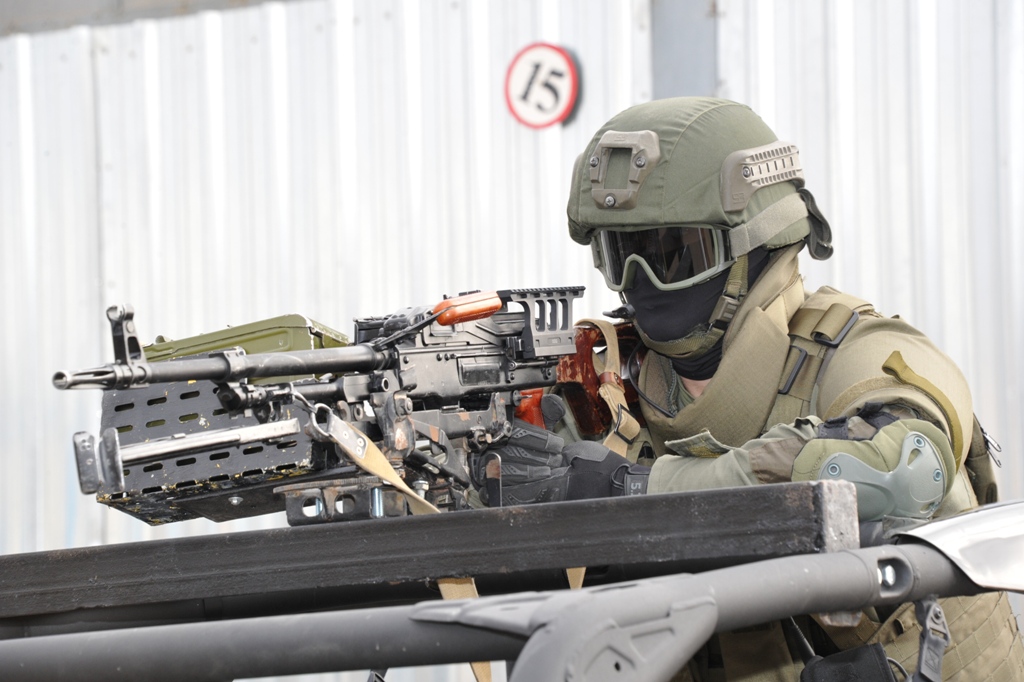
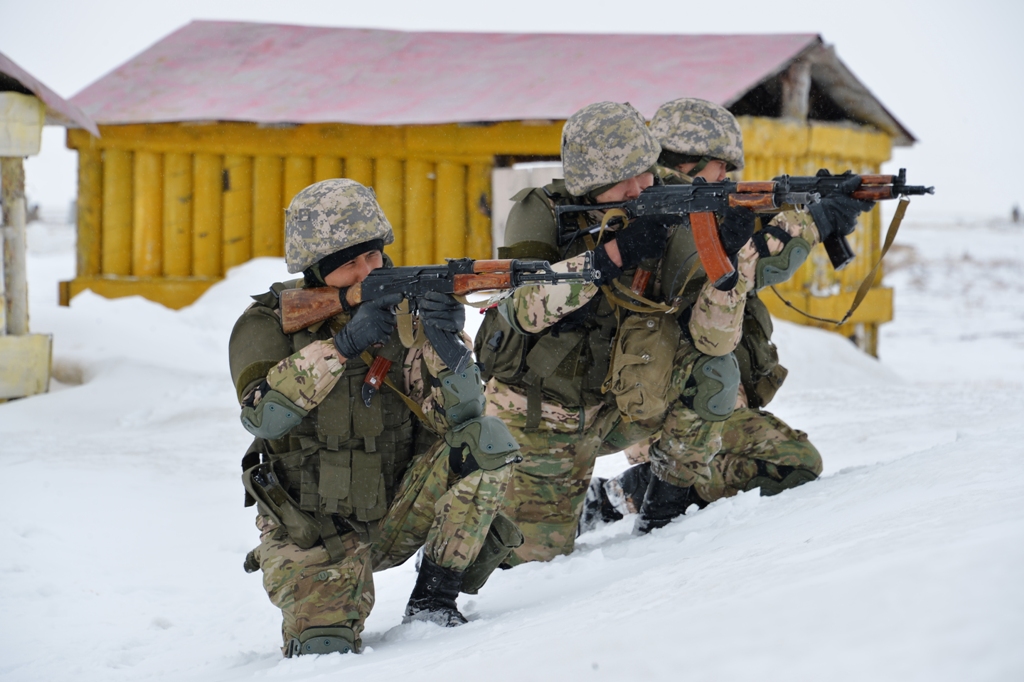
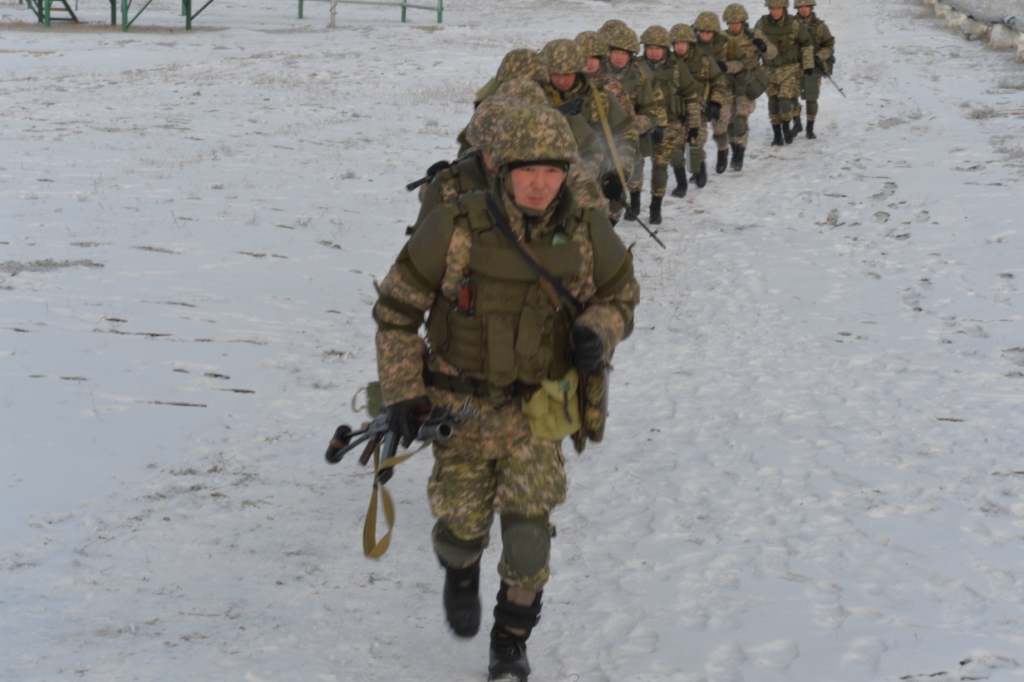
Ministry of Defense of the Republic of Kazakhstan regularly publishes news on their official website. We collected photos from various winter exercises and drills and depicting small arms in the hands of Kazakh soldiers. The units in the photos represent various branches of this country’s military.
PKMs “at work”.Note that these soldiers use skis. That should tremendously increase their mobility. Of course, it requires some knowledge and skills to manipulate the weapons and transition between different shooting positions (kneeling, prone etc.) with skis on.
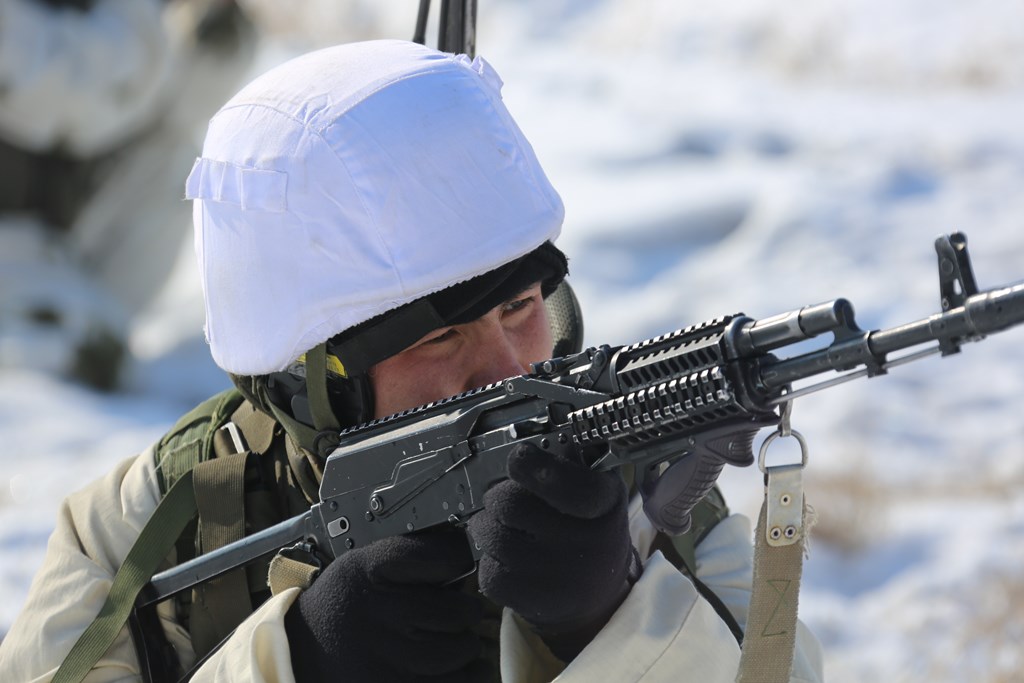
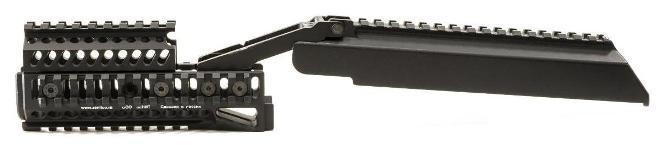
Note the Picatinny (1913) rails on the handguard, top cover and the gas tube of the AKS-74 of this recon unit soldier. It is most likely a Russian Zenit B-33 set of rails shown in the image below. The rifle is also equipped with a FAB Defense PTK angled forward grip. Surprisingly, there are no optics on the rifle.
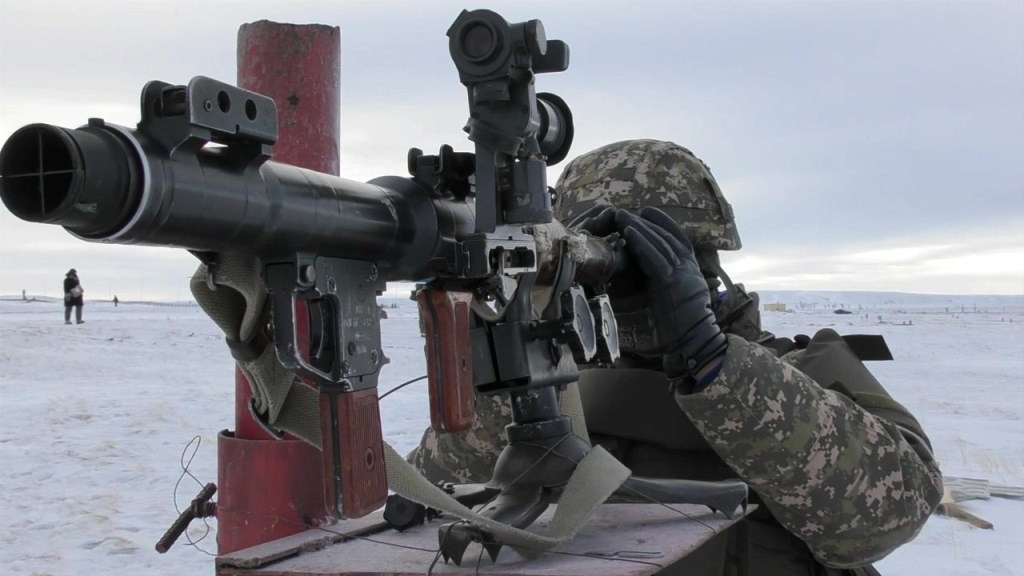
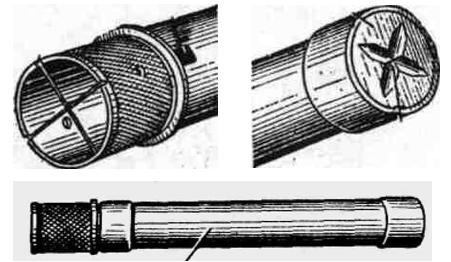
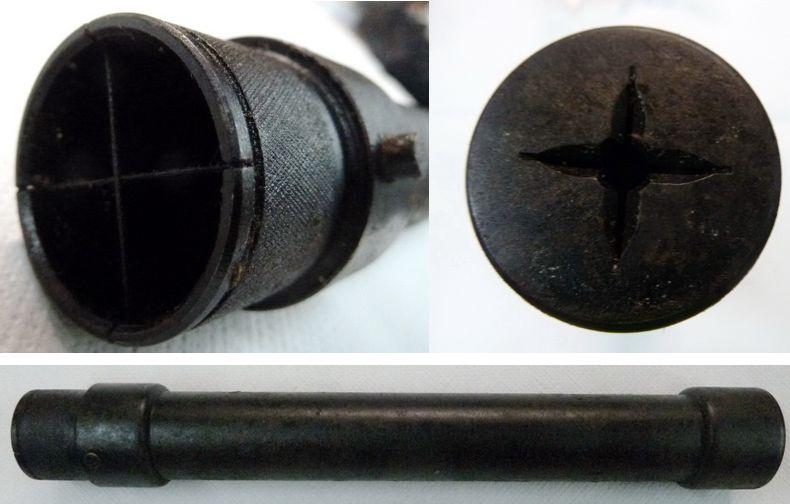
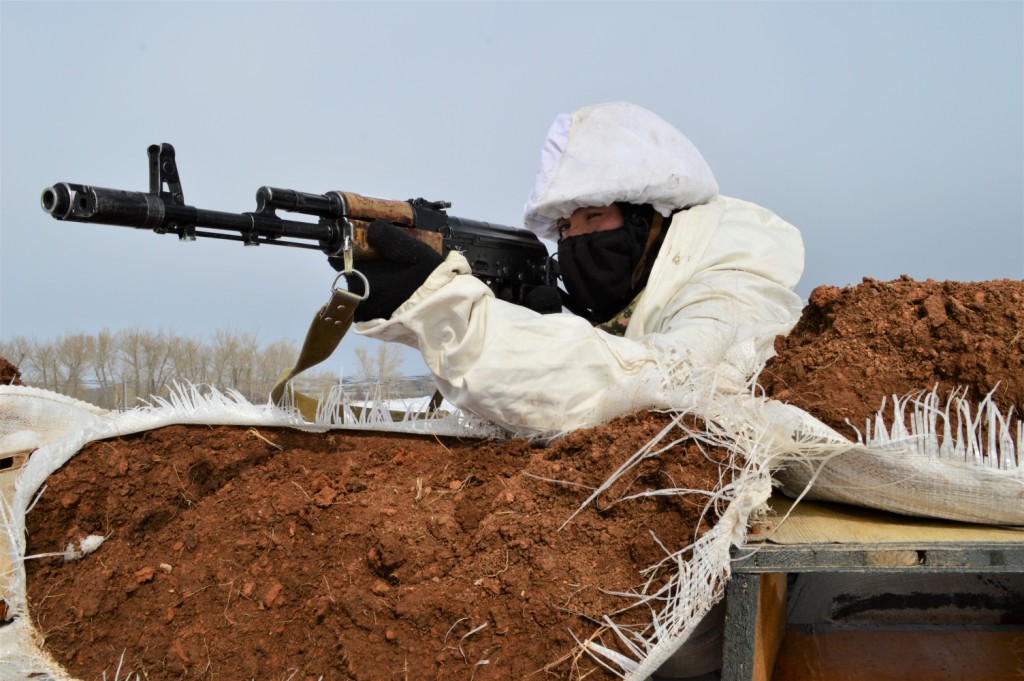
Most of the soldiers in this recon exercises have the Zenit rail system. Most, but not all of them. Note the soldier in the center of the image aiming a standard AK-74 with a side rail to top Picatinny rail conversion mount.A good example of how easy (relatively) it is to effectively blend with the surroundings in winter by merely wearing white clothes and having the guns wrapped in white fabric.This soldier is using a special device to sight in the RPG-7 grenade launcher.Images of that sighting device from an RPG-7 manual.And this is how that device looks.
Female personnel holding AKS-74 and SVD rifles.Vehicle mounted PKM machine gunNote the AKS-74U rifles and the Multicam uniform.The rifle of this soldier is equipped with an underbarrel grenade launcher (GP-25 or GP-30) and a rubber buttpad to mitigate the recoil when firing the grenade launcher.
I hope you enjoyed this set of photos. Let us know in the comments section what interesting piece of gear have you noticed.
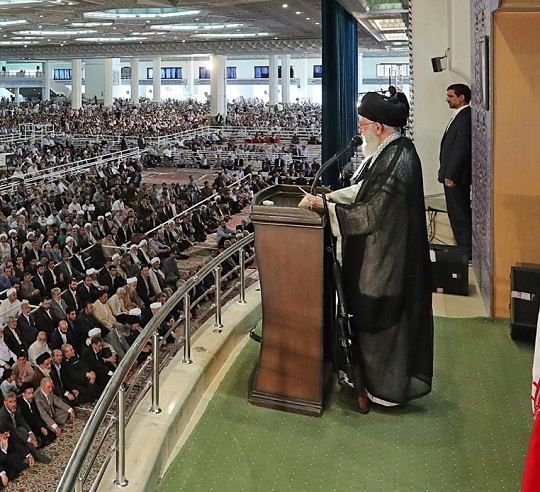
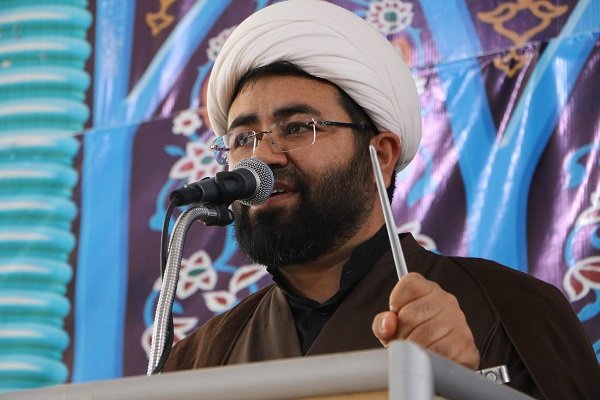
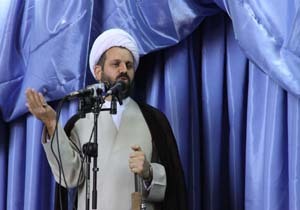
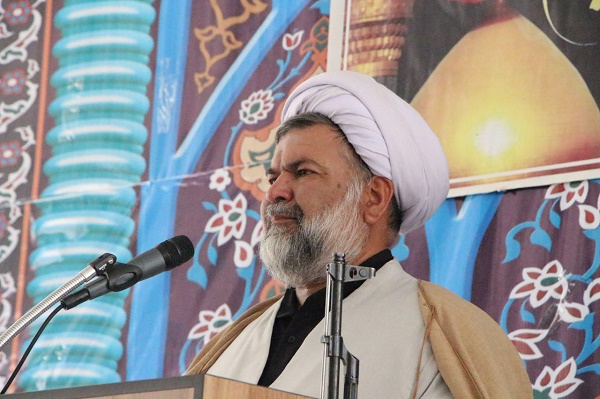
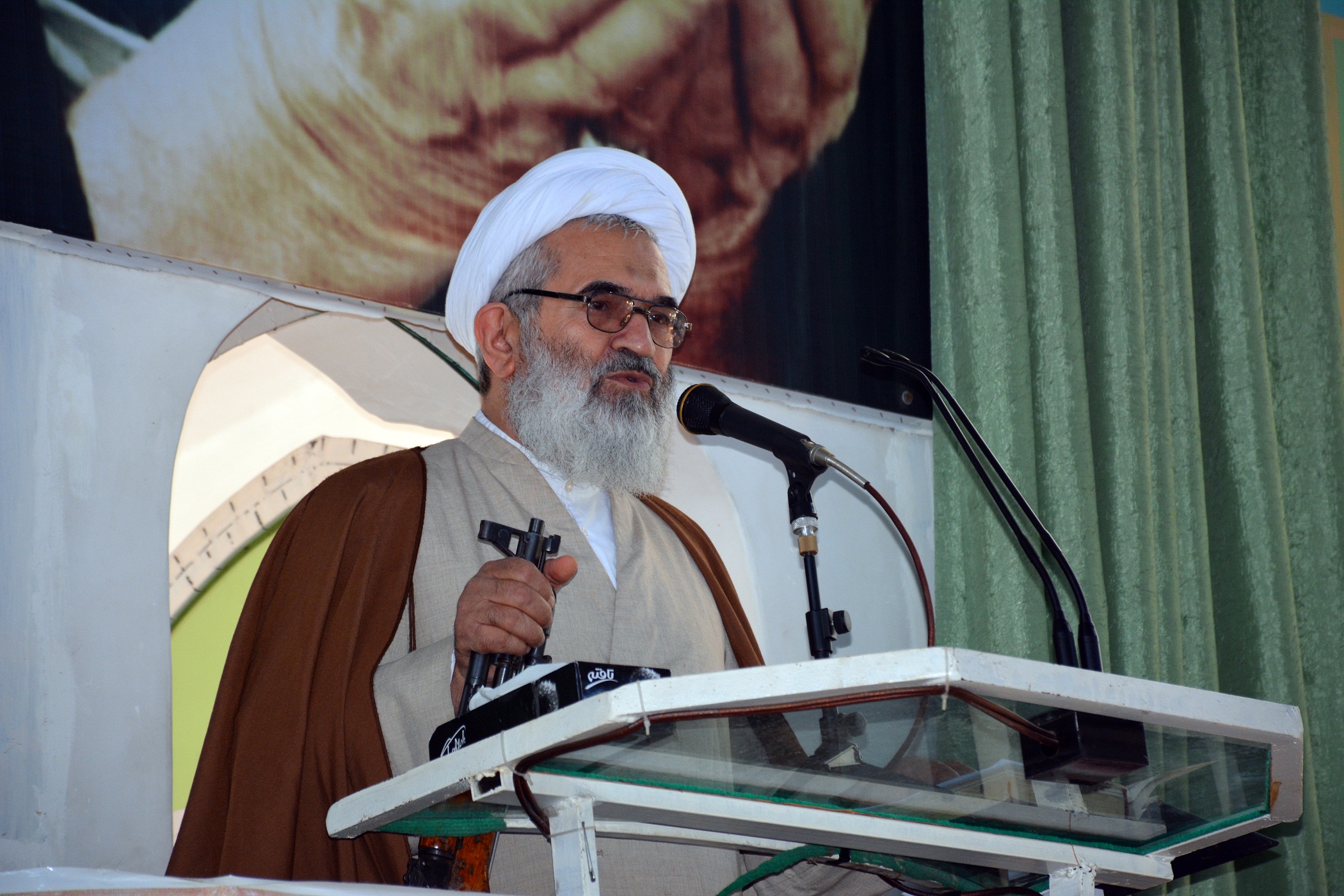
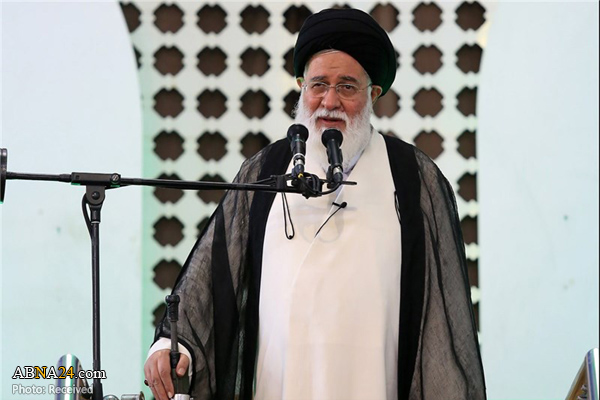
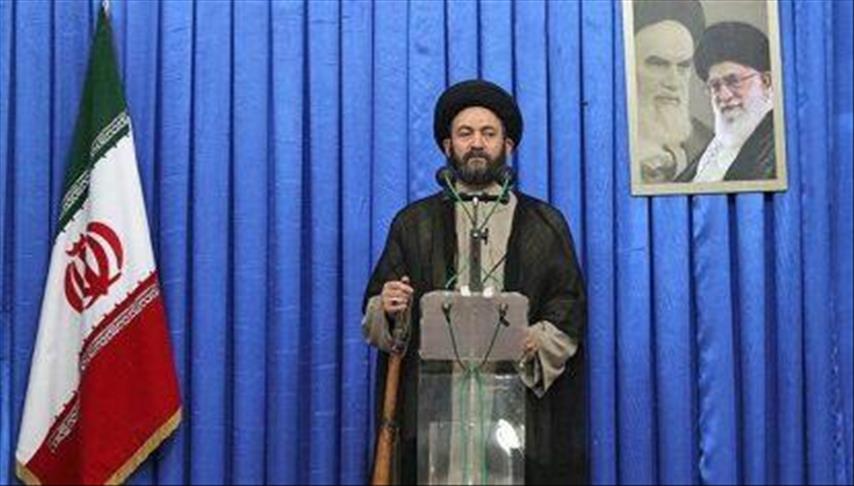
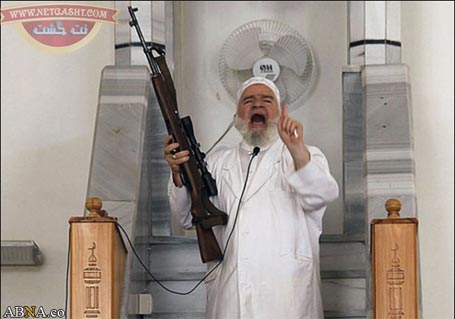
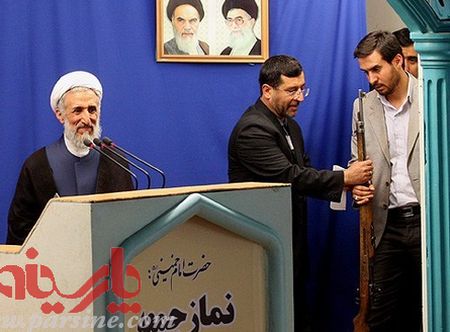
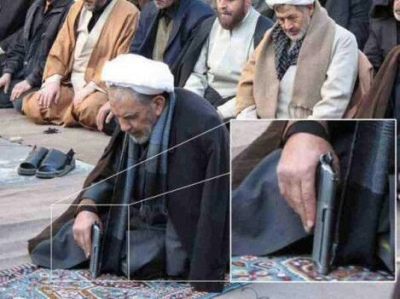
In a previous article on Silah Report authored by Ali Parsa and generously donated by him from his website Aliparsa.com, Ali specifically mentioned an interesting practice done by Iranian Shi’a Imams during Friday Khutbah Prayer services. Imam’s in Iran are known to hold on to various rifles while giving their Khutbah sermons. Ali mentions that this comes from a Sunnah of the Prophet Muhammad (ﷺ) where it mentions that the Prophet always held the “Weapon of the Day” while giving his own sermons. Going into a little searching I found this paragraph on Islam QA that gives some background behind this-
In a tradition recorded by Imam Abu Dawood, it is narrated that the companion, Hakam bin Hazn Al Kulfi (RA) said, ‘We witnessed Juma with the Prophet (SA), and while standing (to deliver the khutba), he was leaning on a staff or bow. (Abu Dawwood – Chapter of a person who delivers a khutba and leans on a bow). Based on this narration, scholars have stated that holding the staff while delivering the khutba is commendable, as it was a practice of the Prophet (SA). In this regard, the great jurist, Allama Shami recorded the following: – ‘Certainly taking the staff is a Sunnah just as standing’. (Raddul Mukhtar).
Now, I’m not nearly as versed in the Sunnah as Iranian Shi’a clerics, but in this instance it makes no mention of a “Weapon of the Day”, which Imams in Iran appear to interpret as meaning whatever primary weapon is issued that is used to defend the Islamic Republic of Iran. That is certainly one interpretation of “Weapon of the Day”, perhaps similar how a “Uniform of the Day” is in many armed forces regulations around the world informing troops what uniform to wear. The explanation above refers to a “Staff”, which the Prophet appears to simply mean something to lean on, gain physical support from, and show to emit a sense of authority in front of a congregation. We have similar examples of Prophet Moses’s staff and there are other religious texts that reference a staff as well.
A key note to mention here is that this practice is only adhered to in the Islamic Republic when it comes to gripping actual firearms during the Khutbah sermons. It doesn’t appear to even exist in other Shi’a dominated countries or countries under Iranian influence to the extent that it does in Iran.
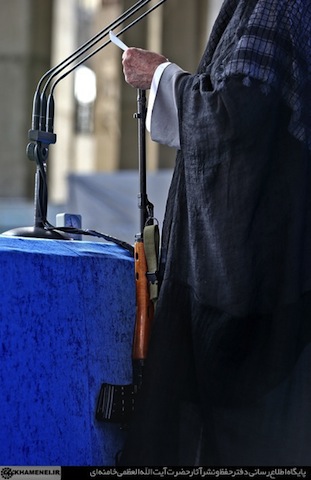
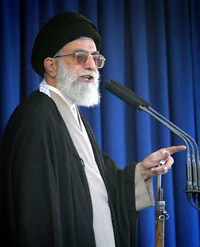
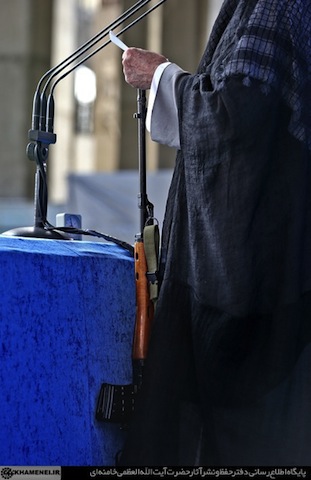
Now, going back to sort of the entire reason why Silah Report exists (apart from general small arms & light weapons analysis), is that we serve to make sense of these cultural phenomena when it comes to the intersection of small arms and the regions we are interested in. A prime example is this Blaze post in 2015 that is entitled “Can You Spot What Iran’s Khamenei Was Holding During His Speech on the Nuclear Deal? The Mainstream Media Ignored It”.
The post goes to great length to try and psychoanalyze the geopolitical ramifications of Imam-i-Khamenei gripping what is most likely a Chinese export copy of the 7.62x54r mm SVD Dragunov marksman rifle.
The article mentions that-
To drive home the point, the supreme leader’s official website posted a close up photo captured from beside the podium of the gun which even showed the magazine jutting out
…
But the most potent sign of all reflecting his message – the gun balanced under his left hand holding his speech notes – was left unmentioned.
It’s unlikely that if the speech had been given by an American or any Western politician that this scene setting detail would have been overlooked, especially given the hotly debated issue of guns.
The AP’s website had this photo of Khamenei holding the gun, but it was not mentioned in the copy in the accompanying article
By now, I hope readers of this article will realize the odd stance that The Blaze is taking on this Dragunov. Of course the Iranian media didn’t mention it because this is in fact actually a completely routine practice done by Imams at every organizational level throughout the religious hierarchy in Iran. Should the Iranian media have thoroughly mentioned the microphone in front of Imam-i-Khamenei’s face as well?
Now, this post isn’t to slander a conservative news outlet for getting something wrong. Any viewpoint from any source at all that is worthy of correcting in a cultural, historical, or social light will be equally scrutinized. This one just so happened to stand out as a prime reason why we at Silah Report are dedicated to our jobs at hand, to fill this void of historical and cultural knowledge by analyzing the technical with the cultural.
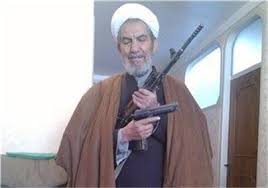
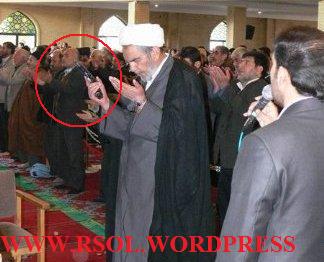
For more information on other Imams holding small arms during sermons, check out this Farsi language post on the topic, literally discussing what certain Imams prefer to hold during their Khutbahs.
From the post, in Farsi-
به گزارش پارسینه، برکف گرفتن سلاح توسط امام جمعه، سنتی است اسلامی که ریشه در صدراسلام دارد، نمادی از آمادگی دفاعی در برابر دشمنان اسلام حتی در محراب و محل نماز، بعد از پیروزی انقلاب اسلامی، مرحوم آیت الله طالقانی که با حکم امام خمینی، احیاگر سنت نماز جمعه بود، بار دیگر این سنت اسلامی را زنده کرد. آیت الله طالقانی در برابر پیشنهاد برخی از انقلابیون که به وی پیشنهاد کردند از شمشیر به عنوان سلاح خطیب امام جمعه استفاده کند، این پیشنهاد را رد کرد و “سلاح روزآمد و مدرن” را به دست گرفت.
در اوایل انقلاب اسلامی، سلاح ژ-3 تفنگی بود که امامان جمعه تهران و شهرستانها در حین ایراد خطبه جمعه به دست می گرفتند که در سالهای بعد، اسلحه از رده خارج “برنو” جای ژ3 را گرفت.
در میان ائمه جمعه، آیت الله حسنی امام جمعه ارومیه به داشتن سلاح های متعدد از جمله کلت و گرینوف در نماز جمعه شهرت دارد و معمولا بر خلاف ائمه جمعه دیگر از سلاح کلاشینکف در محراب نماز جمعه استفاده می کند.
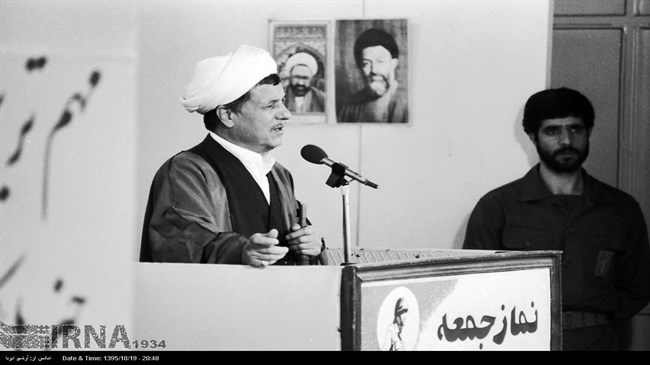
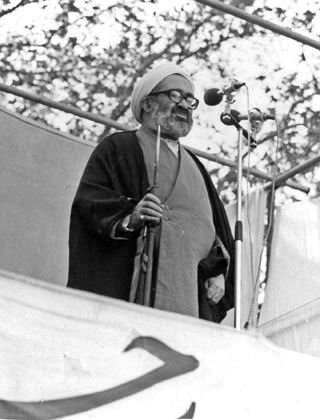
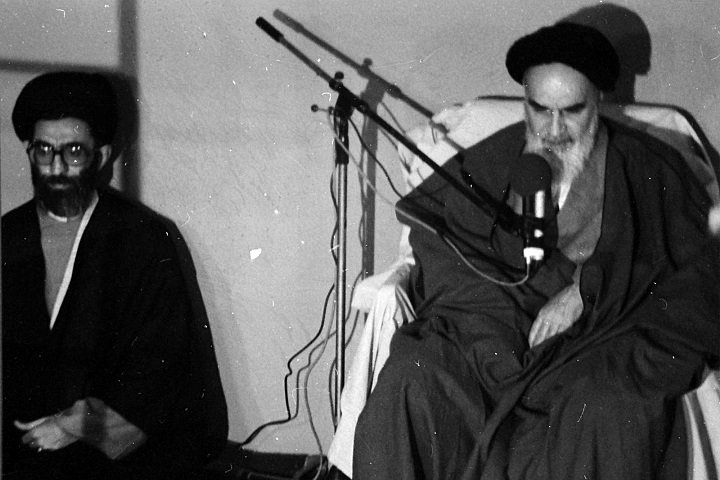
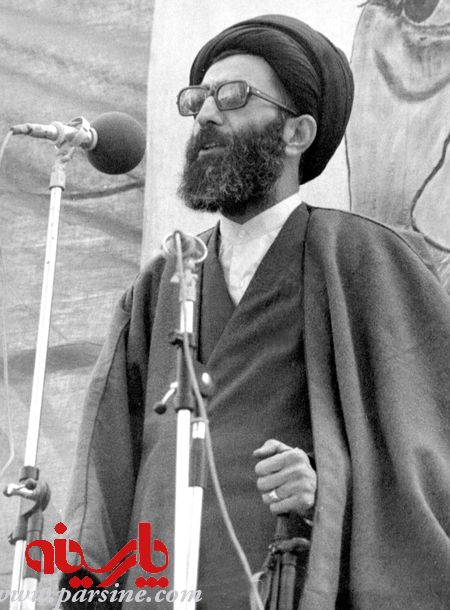
As a quick sidenote by scanning photographs online, it doesn’t appear that the initial Supreme Leader of Iran, Imam-i-Khomeni adhered to the practice. Although it should be noted that senior Imams during his time did partake in it, as evidenced in the black and white photographs above.
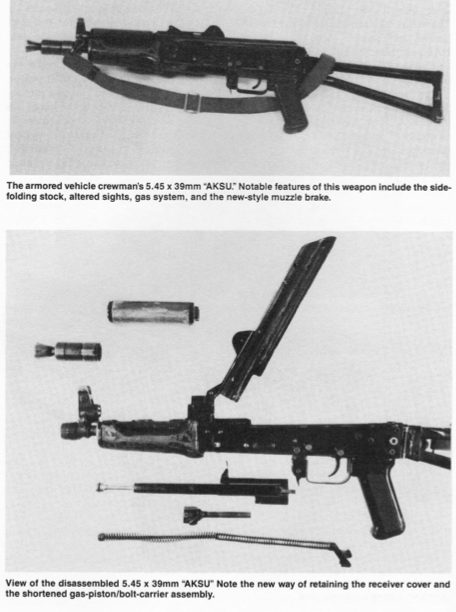
“Krinkov”, where does it come from and how have we gotten to it? There are a number of theories about it, some truer than others, but we’ll examine each one, and I will provide what I have come up with so far.
The first theory is that it is Russian. At face value, this could seem true, by simply hearing the word “Krinkov” to a non-Russian speaker, it might sound Russian. However, this is by far, not the case at all. Tim from Military Arms Channel has an excellent dialogue on this, explaining that the Russians have an entirely different nickname. I’ll take an excerpt from Maxim Popenkers site, World Guns:
Since its introduction the AKS-74U, unofficially known as a “Ksyukha” (variation of a Russian woman name) or “okurok” (cigarette stub)
In addition from Max’s book Assault Rifles, we have this entry:
Since its introduction the AKS-74U, unofficially known as a “Kysusha” (a variation of a Russian female Ksenia), “Suka” (bitch), “Suchok” (small tree branch) or “Okurok” (cigarette stub)
And this is Tim from Military Arms Channel, explaining some of that from the Russian side.
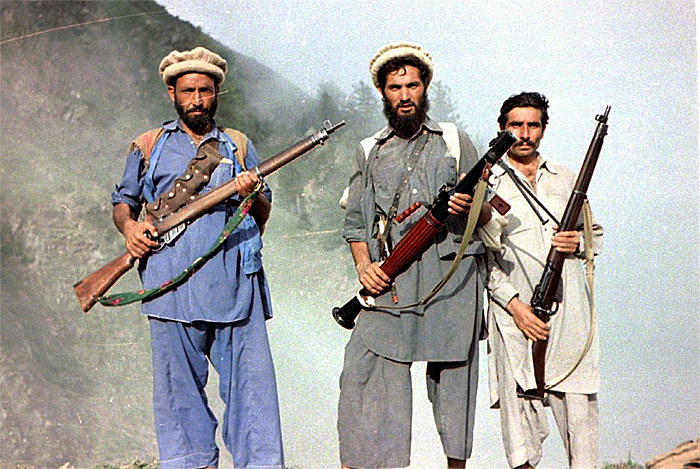
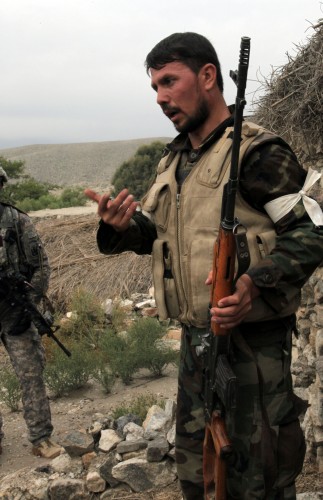
Tim is correct in his explanation of what Russians would call it, but the biggest problem I have with his explanation is that he completely dismisses the role of the Afghan Mujahaden, saying that it is a “nonsense word”. In addition, he speculates that maybe the first AKS74U taken off a Russian who was named Krinkov. The theory doesn’t hold any weight because for one, Krinkov isn’t a Russian name or in any sort of Russian vocabulary. Also, the fact that Pashtun speaking Mujahideen could speak or even read Russian is very, very rare, many of them being illiterate in their own language of Pashtu (illiteracy is an extremely large problem even in current day Afghanistan/Peshawar, and was much more so in the early 1980s). Furthermore, the circumstances of the Mujahideen capturing weapons from the Russians involved very little live prisoners. We’ll get into this in a bit as well, but for the overwhelming majority of the time, the AKS74U was issued to helicopter and armored vehicle crew members. Contrary to popular belief, the amount of Russians captured in Afghanistan during the war, and the amount of Russians fleeing to the Mujahideen side was extremely low as well. Most of the time, the only way Mujahideen could get their hands on Soviet equipment was through disabled vehicles wherein the Russian occupants would already be dead, or through the corrupt selling of Russian arms to the Mujahideen by either Russians themselves, or Afghan government troops.
Most of the Mujahideen and Pashtun speakers that would have contributed to the name “Krinkov” would have been near Peshawar and in the eastern regions of Afghanistan.
The second theory is much more recent, but it originates from a gun shop in Naples, Florida. The shop was called “Krinks” and was run by a certain Paul Mahoney, who in the early 1990s was one of the first AK builders in the States to really take advantage of deactivated AKS74U kits, and put them together. The quality of them left much to be desired, but the fact of the matter is that the first mass producer of “Krink” kits in the United States was this guy Paul Mahoney with his gunshop “Krinks”. This might have certainly been one of the reasons why the name started to gain in popularity in the States, but it doesn’t help us at all in the actual etymology of the name.
My problem in the whole name origin is that we constantly see this theme of loosely attributing it to the Mujahideen, but yet there hasn’t been a single effort to get right to the source and really examine how that name might have even come about. Maybe it is ethnocentrism, maybe it is on account of laziness, maybe it is just accepting the status quo and not moving on. Either way, I’m going to present evidence that points to that fact that the name is actually a Pashtu word that has entered into our vocabulary, and is a testament to a twist in linguistics in the Pashtu language.
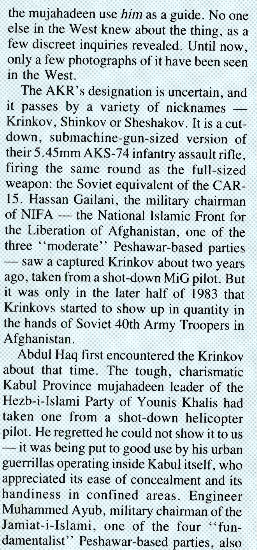
To begin with, we have to examine how the existence of this carbine became known about in the United States. I’ve often heard the claim that Soldier of Fortune magazine was the first entity to bring knowledge about the AKS74U, and even the AK74 to the West. I think this claim is more of a support for Soldier of Fortune’s reputation than any actual truth. Because just by looking at the facts, the famous Soldier of Fortune article that was run about the AK74 was in 1982, and the article about the AKS74U was in the July 1984 edition of the magazine. Looking at Jane’s Infantry Weapons from that era, and before, we see entries for the AKS74U, Sometimes labeling it as an AKSU 74, an AKSU and also as an “AKR”. This name most likely originates from Ian V. Hogg, as he was tied in with various intelligence circles at the time, that somehow came up with AKR. We still see this name in 1989, with Edward Ezell’s book, Small Arms Today.
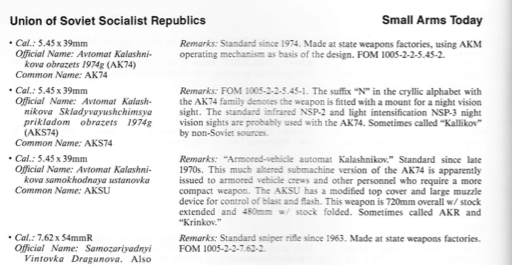
Above is from Small Arms Today, and below is from “The AK47 Story“, both by the late Edward Ezell. Above he refers to it as the AKR/Krinkov, and below the “AKSU”. Both published in the late 1980s
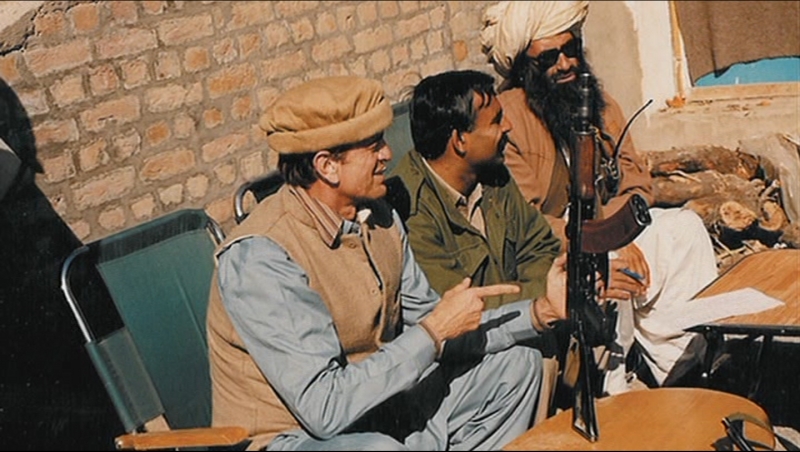
But going on to who actually deserves the credit of “discovering” the AkS74U, we have a sentence from the July 1984 edition of Soldier of Fortune, in which David Isby does an entire article about reviewing this new carbine, while he and an American Army Major are in Pakistan. He claims that initial knowledge of the carbine is from Ian Hogg, who in turn heard about it from a certain Peter Jouvenal. This guy was a video journalist, who has been in and out of Afghanistan since the late 1970s, and is extremely important because he captured one of the only video shots of Taliban leader Mullah Omar in person.
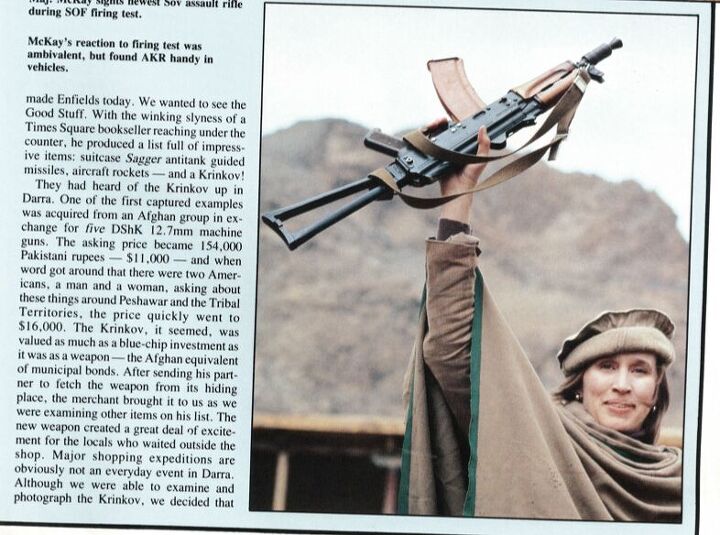
Below is the text from the Soldier of Fortune article detailing the origins and name of the AKS74U.
Peter Jouvenal, right, with Osama bin Laden. Probably the actual “discoverer” of the AKS74U in the West.
Within the Soldier of Fortune article, David Isby takes the name from the Afghans he was with. However, he mentions two other names “Shrinkov” and “Shesakov”. These two names are also important, but because of the linguistics involved, I’ll get to that in a second.
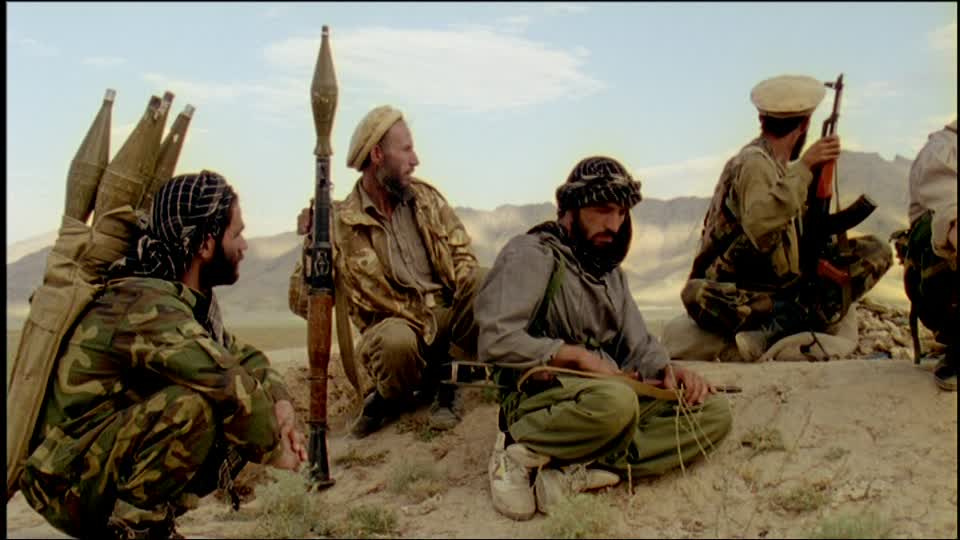
As mentioned earlier, the difference between this article, and any other article on the internet, is that I’m going to the actual source of the name, which is from the Pashtu speaking peoples of eastern Afghanistan, and Pakistan. The name is not a “nonsense” word, it is a Pashtun word. I’ll start this off by showing a clip from a movie called Son of a Lion. Quite an interesting movie, it was made by an Australian EMT on his own dime, after 9/11, going to Peshawar and filming a storyline about a young boy who works in the arms trade but really wants to go to school to become educated. The culture and language displayed in the movie are phenomenal, but from a firearms perspective, it gives us an in-depth look at the arms trade in Peshawar. Apart from a few actors, the rest of the movie is completely shot amid the markets and daily life of the North West Frontier Province of Pakistan. There aren’t any “props” or staged settings. The locations are real, and so are the small arms portrayed. But in it, we have this one scene where the main character takes a “Krinkov” out to a customer to test fire it. He also mentions the connection with Osama bin Laden.
https://youtu.be/KzN1-M37RiY?t=17m40s
Now, to understand why the reference to Osama bin Laden was even mentioned, we have to understand a little behind why the AKS74U became prominent among first the Mujahaden, and then today among families of status. As mentioned previously, the weapon was only ever issued out to crew members of helicopters and armored vehicles. Contrary to popular belief, this wasn’t a favorite of the Spetsnaz at all, although it originally started out as a proof of concept for Soviet Special Forces. It was quickly ditched for the AKS74 because the longer barrel proved to be better in the vast distances that the Spetsnaz found themselves operating in. This from an interview that I conducted with Marco Vorobiev, a Spetsnaz Veteran of the Afghan war.
Miles Vining- I noticed in some of your talks that you don’t have much love for the AKS74U?
Marco- Well its alot of fun. Lets talk about it from a far away point here. The gun is a tool in a toolbox to complete a certain job. And the job could be a regular contact fight, lets say 500-400 meters, to include maybe clearing houses or compounds. So from that regard you want something small, maybe be able to use it in close quarter combat, something really, easy to handle, easy to maintain. Well that is fine, considering if you are a police officer going through a house. It shoots 5.45 as well, so thats good for wounding. On the other hand, as a carbine, you need to be able to hit targets out to 300 meters. You can do that with an AKS74, no problem, even with an M4. But the AKSU? You might if you spray half a magazine in that particular direction. But I even have one, I shoot it for fun, I get a big old smile on my face. It’s fun to shoot, it’s just like rrrrrrrrrrp, almost like a little toy so to speak. Mikal Kalshanikov himself told me that he loved it, although he was a very anti 5.45 guy, but he was a big fan of the AKSU for some reason. But you put yourself in an actual gunfight, with people screaming everywhere, trying to get comm up, you taste the metal of adrenaline in your mouth, and now you are trying to pick out targets in the distance… it’s really hard with that gun. We were always trying to get rid of it for the AKS74.
Thus, the weapon was strictly for crew members. And if we look at the context of the Soviet-Afghan War, the biggest hinderances for the Mujahideen, were the Hind attack helicopters, and the BMPs. In fact, if you look through Soviet photographs of the war, there is much evidence to attest to this, with helicopter crews even having thigh holsters carrying their AKS74Us. Thus, taking one of these monsters out of the fight would be one enormous victory for a small band of fighters, but more importantly, proving that you took one down would show everyone how brave or good you were. And what better way to prove it than to take a weapon that only these troops would have on them, an AKS74U? It not only proves that you were competent, but it also gives you something to defend yourself with. Even in the Soldier of Fortune article, we see just how rare and sought after these things were, even rising in price after word was passed around that an American was looking for one in Peshawar.
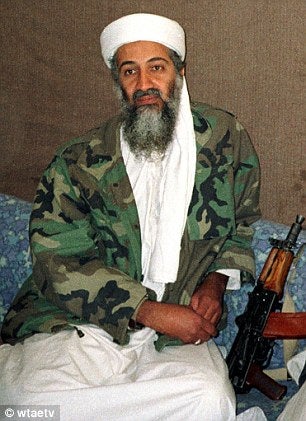
Now, Osama bin Laden claimed back to his Yemeni and Saudi buddies back home that he fought in the Soviet-Afghan War. But the actual truth of the matter is that he probably was never near any of the fighting, most likely staying in a rear echelon capacity, directing funds and supplies to the front (if he even did that). But, on his return to the area in the mid-1990s, we have a multitude of pictures of him, with an AKS74U by his side in the camera frame. This was very deliberate, to the point of the gun sellers in Peshawar even telling the customer that “This is the Osama gun”. Although Osama never took down a Soviet armored vehicle or Hind, the fact that he was carrying the carbine showed a status symbol, and he was able to identify much more easily with local Pashtuns who didn’t understand his Saudi background but absolutely understood his choice of weapon.
The placement of that AKS74U in the camera frame is entirely on purpose.
Somewhat off track, but this is important to understand how the name came to be, because even today, the AKS74U occupies a very lofty position as a status symbol in eastern Afghanistan and Peshawar.
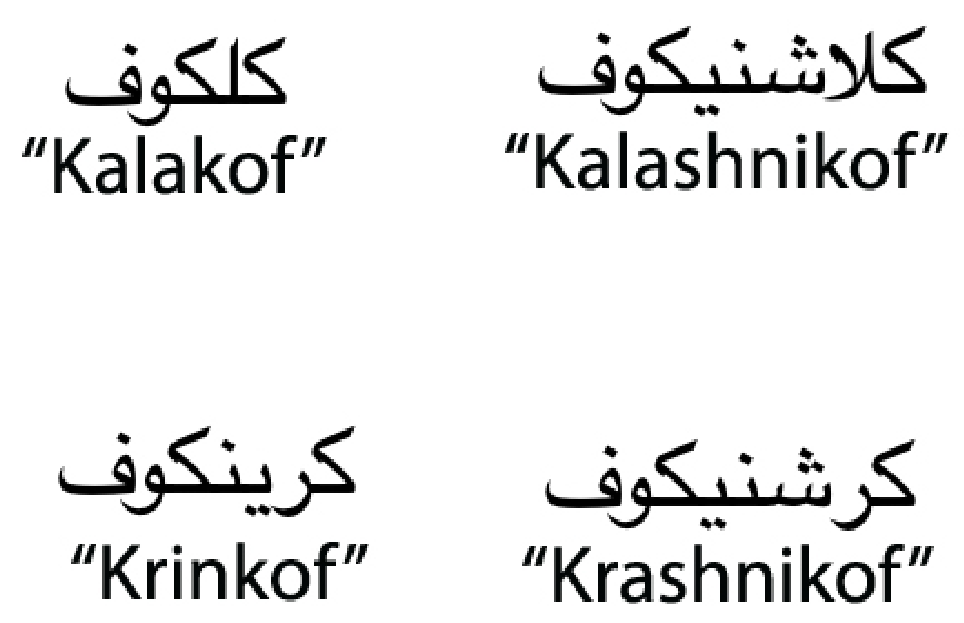
A close Afghan contact from Jalalabad mentions two names for the AKS74U, the first one which is popular in Jalalabad, is “Kalakov” and the second one is “Krinkov”. If you hear somewhat of an “F” sound at the end of the word, that is because there isn’t any “V” consonant in Pashtu, speakers instead using an “F” or a “W” sound to simulate a “V”. Now, remember what David Isby said the other names for the carbine were? “Shrinkov” and “Shesakov”? Using a little knowledge of the Pashtu language, the names pair up to be the same word. There are two dialects of Pashtu, the southern, or Kandahari, and the eastern, or the Nangahari. So looking at this words, “Krinkov” and “Shrinkov” are actually the same word, just pronounced differently, while “Kalakov” and “Shesakov” are a little more different, but dropping the “la” sound, the words are also the same.
From the full form of the word on the right, going into the nickname for the AKS74U on the left, the differences between the top and bottom are in different Pashtu areas of speaking.
But how exactly did these words come about? As my friend mentioned, adding an “ov” to any word makes it Russian-ized in Pashtu. So that explains the last part of the word, and the first part is probably a bit of vocabulary added on, to signify the importance of the AKS74U as a status symbol. Because it isn’t just any old “Kalashnikov”, its a “Krinkov”, and you know I got it from that Hind I blew out of the sky a week ago. Another tidbit that my friend brought up after the camera was off, is that for some reason, in Jalalabad, the Pashtuns refers to the Kalashnikov rifle as that, a “Kalashnikof”. However, in other parts of eastern Afghanistan, the same name is actually pronounced “Krashnikof”. And this might actually be the truest jump to “Krinkof”, as going from “Kalashnikof” to “Kalakof” is very similar, as is going from “Krashnikof” to “Krinkof”. In both cases, the “L” in the first one, and the “R” sound in the second one are maintained in their nickname for the short rifle.
I hope this was an informative article and was able to really get to the point of “Why do we call it this?”. If anything, the most important part of all of this, is that the word isn’t a made up, nonsense word, but instead has very important historical and cultural attributes and an etymology that comes from a defining moment in history. There is much evidence to point to the fact that Afghanistan might just have been the straw that broke the Soviet Unions back, and this word directly came out of that struggle. In addition, it is a Pashtun invention, and is still very much alive and well in eastern Afghanistan and Peshawar.
Silah Report took some time to ask a native Afghan from the province of Mazar-i-Sharif to talk about various colloquial names that Afghans have for popular small arms in use by the Mujahideen and in the modern era. This interview is not verbatim and has been edited for clarification.
SR- Please explain the Dragunov?
Interviewee- So the Russian name Dragunov actually isn’t used in Dari, or in Afghanistan. Instead, we call it “Draz-nuf” (درازنف) In this case, “Draz” (دراز) Dari means long or lengthy, and that name is given to that rifle due to its overall length being longer than most small arms such the Kalashnikov, Krinkov, and Shinkov. That’s why they call it “Draz-nuf”, the “Draz” for “Lengthy” or “Long”. Likewise, with names like Krinkov, or Shinkov, these are names given to various small arms by the Mujahideen in the Soviet War. They don’t represent the actual Russian name for them.
SR- Was the “Draz-nuf”/Dragunov a special rifle among those who used it? Only choose Mujahids would use it?
Interviewee- I think so because they used it as a sniper rifle due to the optics that came with it. You can focus your target very well and then shoot it. That’s what I have seen in movies as well. But it isn’t as expensive or as sought after as the Krinkov as far as I know. Carrying a Krinkov is sort of a show-off, something a Captain, a commander, would do. Everyone would talk about how “That guy was carrying a Krinkov, or his bodyguards carry a Krinkov”. But that status symbol isn’t the same with the “Draz-nof”.
SR- What are some other names? Such as PKah, Makarov, etc…?
Interviewee- Yes, PKah, they call it by another name of “Grin-nuf”.
SR- What about the RPG?
Interviewee- This is sometimes called a “Rockeet” (راکت) or “Rockeet-Tandaz” (راکت تندز) This is because “Rockeet” is obviously the missile that is fired out of that barrel, and “Andakhtan” is the Dari verb “To Throw” (انداختن) so “Rockeet-Tandoz” is an instrument that is used to throw a “Rockeet”.
SR- What about the .303 Lee Enfield?
Interviewee- We call these “See-Sahd-See-Bor” ( سه صد سه بور) See-Sahd-See means three hundred and three in Dari, meaning the caliber .303, and “Bor” for the diameter of the barrel. I’ve seen these rifles in old people’s houses and people would say “My grandfather carried this”. And “Karabine”, is another kind of gun, but it isn’t a rifle, it is shorter, shooting single rounds instead of automatic fire. We also have “Dushka” for the DShK Heavy Machine Gun.
Afghan fighters hide during Soviet bombardment, Jalalabad, Nangarhar, Afghanistan, 1981
Ali Parsa is an Iranian scientist who has a lifelong passion for sailboats. He also knows a great deal about the history of the Mauser bolt action rifles that initially entered service in Iran at the turn of the 20th Century. He wrote this article examining the history of the Persian Mauser with its roots in the Czech VZ24 being license produced in arms factories outside of Tehran. This article was written almost a decade ago and he has very generously allowed Silah Report to republish it with express permission from himself. It initially appeared on the website that bears his name, Aaliparsa.com. This edition has been lightly edited.
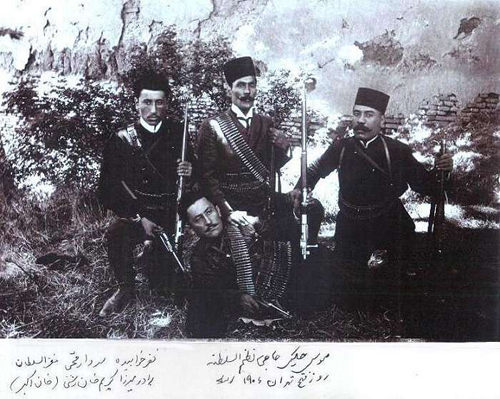
Mauser rifles first appeared in Iran before the First World War. Looking at pictures of Iran’s Constitutional Revolution era, one can spot Mauser rifles and handguns in the hands of freedom fighters of Sattar Khan and Bagher Khan, as well as other Constitutionalists in different regions of Iran.
Iranian Constitutionalists, with their Mausers, in 1906
At the end of World War I, and as a result of the Versailles treaty arms ban, Germany no longer produced these rifles, but an almost exact copy was in production in Czechoslovakia. After Hitler became the German chancellor, the production was resumed in Germany.
Later, with the invasion of Czechoslovakia, the identical rifle was produced in Germany and Czechoslovakia.
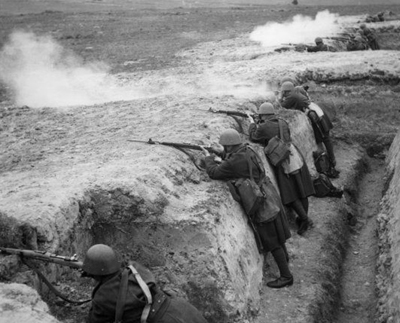
Czechoslovak Army Drill, 1938
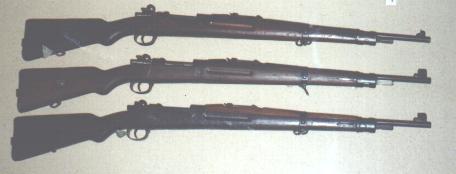
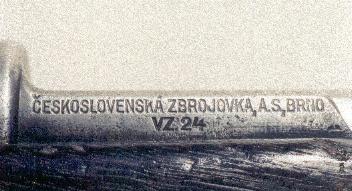
A major production center was in Brünn, or Brno, as the city is called in the Czech language. The rifles made in Brno, the Czechoslovakian model, are known as VZ24 (for Vzor24, or Model 24 in the Czech language) and had the word Brno imprinted on them.
Czechoslovakian VZ24
Markings of a VZ24
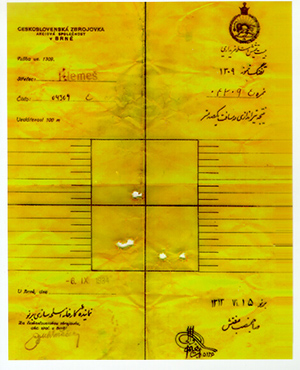
Officially, the Mauser rifle was selected for the Iranian army during Reza Shah’s time. But Iran didn’t go for the original German and ordered the identical Czechoslovakian version, the so-called Brno. The Czech firm provided Iran rifles made of many German parts. It was similar to the longer barrel version Germans designated as K98. Some official test results are available from antique arms dealers today, featuring signatures of the Brno factory representative, the Iranian in charge, and of course, satisfactory ‘grouping’ or bullet marks.
A 1934 test result document
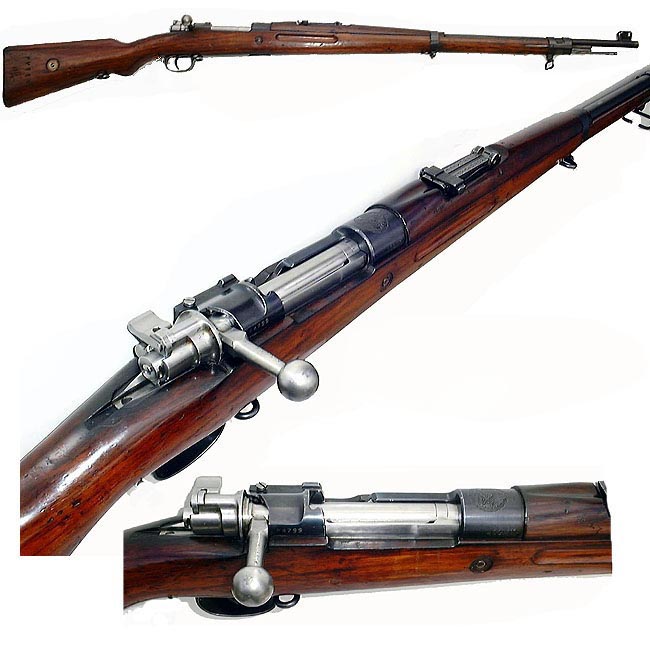
Full length ‘Brno’ with markings in Persian
At that time two other rifles were in use and very well known in Iran: the British Lee Enfield and the Russian Mosin Nagant (Noghaan, or Naaghaan, (نوغان- ناغان) in popular parlance in those days). The exact reason for preferring Brno over its rivals is not known, but one can speculate that those in charge of the Iranian army, or maybe Reza Shah himself, tried to avoid dependence of Iran to either of the two neighboring powers. Besides, the Brno and it’s Mauser original were considered to be the best military rifle of its day.
The Iranian government ordered three versions of this weapon. It was manufactured in Czechoslovakia by two firms. One was called Ceskoslovenska Zbrojovka, or CZ. These rifles are known to collectors as Persian CZ98, Persian Mauser or Persian Brno.
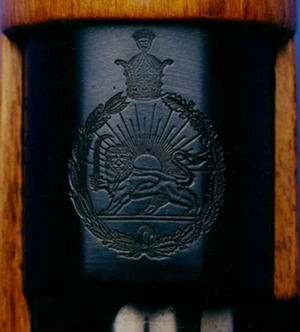
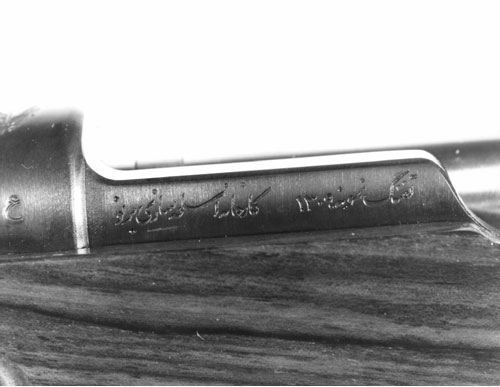
A Pahlavi crown, lion and sun crest appears near the feeding ring, as an inscription in Persian (in Nasta’liq script) on the side of its magazine giving the model and the factory name, which was in Brno. From then on the name, Brno was used by Iranians to refer to this rifle.
Lion and Sun crest of a Persian Mauser
Persian markings of a Brno made rifle
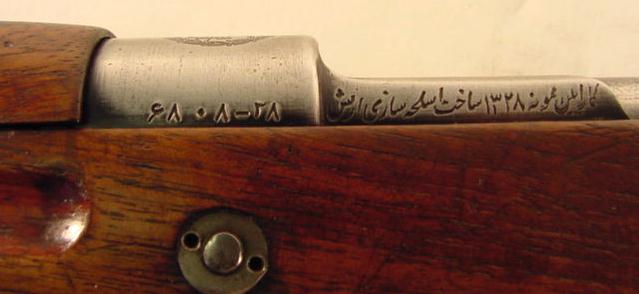
One typical such inscription read “tofang-e nemoone 1309 karkhane-ye aslahe sazi berno” (“Rifle model 1309 Made at Brno Arms factory.” The number 1309 refers to the Persian year 1309 which is the year 1930 in the Gregorian calendar).
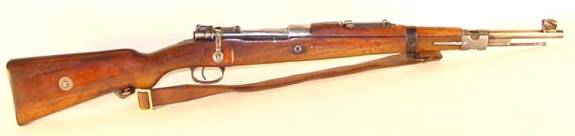
In the late 1940s Iran’s Taslihat-e Artesh (Arms Factories of the Army), popularly known as Mosalsal-sazi (the machine-gun factory), in Tehran started production of these Brno rifles. The needed machinery and technical assistance were provided to Iran through the industrial firm Škoda, which had a long history of cooperation with Iran. Iran produced two models: the regular VZ24 rifle (similar to the German Kar98k, overall length 1110 mm) and the short version (similar to the German G30, overall length 993 mm) known as “Berno kootah” (short Brno).
Berno Kootah (short Brno)
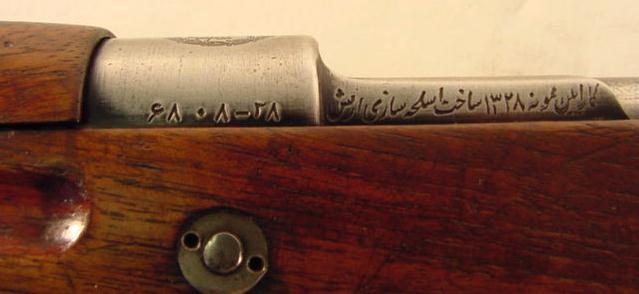
Under a licence from CZ. The difference was only in the markings on the side of reciever: instead of naming Brno as the maker, it was written “sakht-e aslah-e sazi-e artesh” (made by the Army arms factory).
Markings on an Iran made short Brno
The products are known among the collectors as Persian Mauser and are regarded to be the best and smoothest of the Mauser family of bolt-action rifles.
For many years Brno was the standard personal weapon of the Iranian armed forces, until it was replaced by the more modern, semi-automatic, American Garand M1, and later by the German Heckler & Koch G3.
The rifle was especially cherished by Iranian tribes, who are known to be firearms aficionados and able shooters. A tribesman sharpshooter would settle for nothing less than a Brno. Tribal rebels did everything to acquire one of these rifles, and they did get their hands on these in many tribal wars during Reza Shah and Mohammad Reza Shah’s time. And probably the tribal chieftains, or Khans, did get shipments from foreign sources, to be distributed among their savars (mounted fighters). One single event, which contributed to the widespread availability of Brno rifles among the tribes in Iran, was the fall of Reza Shah following the invasion of Iran by the Allied forces in 1941. At that time the Iranian army, after a short resistance, was almost disbanded and many people, especially tribesmen, got hold of the Brnos left after the soldiers abandoned the barracks.
There are many stories of the gun’s accuracy among the tribes. When Dadshah rebelled against the shah’s government in Baluchistan in the 1950s, people said that his wife, Bibi Khatoon, who accompanied him in the mountains, at one occasion, took her Brno and shot a bullet right into the barrel of the gun of a poor gendarme who was aiming at her over a long distance. Its popularity among Iranian tribes was so much that it was mentioned in some of their songs. A version of a well-known Boyer Ahmad song has a refrain that says “Mastom, Mastom, Brno kootah be dastom” (I’m drunk and have a short Brno in my hand).
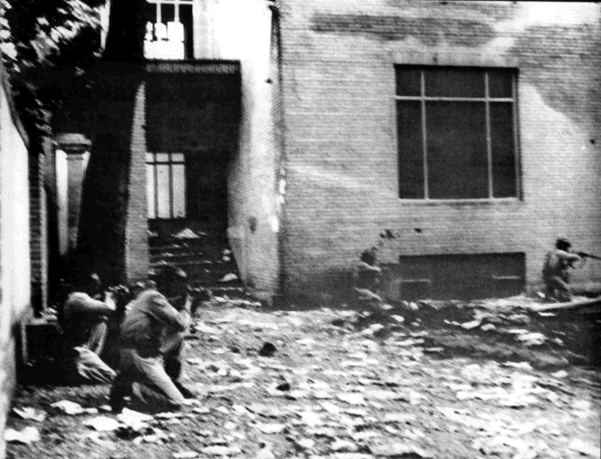
For the politically minded intellectuals of 1950s and 1960s, the rifle was a symbol of the Shah’s repressive rule. It can be seen in the pictures of soldiers attacking the house of Dr. Mossageq on the fateful day of 19 August 1953 (the infamous day of the US-British coup).
Soldiers attacking the house of Dr. Mossadiq, Aug. 1953
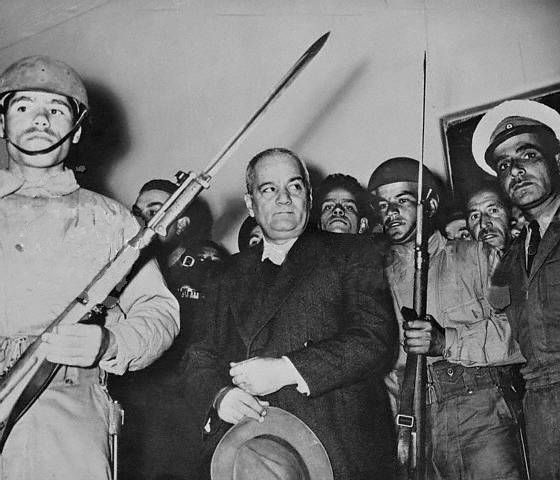
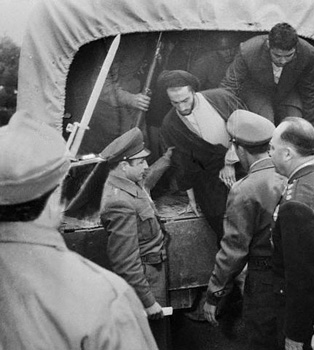
Gory pictures of executions of Tudeh party officers in the Chitgar shooting range in 1955 shows defiant young officers strapped to the stake minutes before execution, with Brnos present to do the task. When Navab-Safavi, the fundamentalist leader of Fadaiian Islam was arrested, Iranians saw his pictures being transferred to a prison under bayoneted Brnos.
Dr. Yazdi, the Tudeh party leader, after arrest in 1953, surrounded by soldiers with Brnos
Navab-Safavi, the Fadaiian-e Islam leader arrested
You can see it in pictures of 15 Khordad (June 1963) uprising in Tehran. In fact, when the Shah’s opposition cried against his “rule of the bayonet”, it was the sight of these Brnos with their bayonets attached that they were referring to.
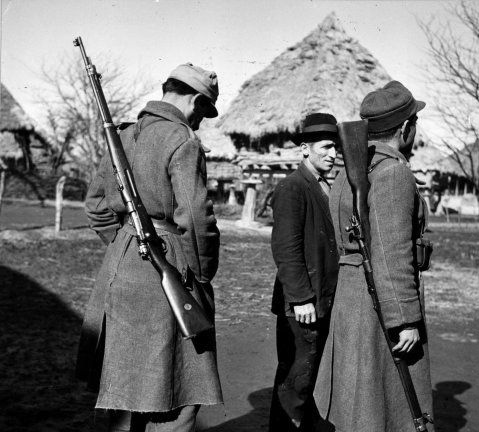
Ordinary people usually had their first encounter with the rifle while passing a guard in the street, or when they were (willingly or otherwise) recruited for the military service.
A deserter is taken to military service in a Gilan village, circa 1955
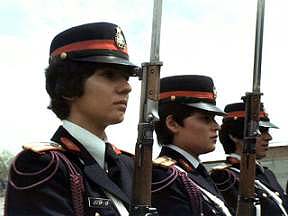
In the 1960s the semi-automatic US made M1 replaced Brno in the Iranian army, and Brno use was confined to the gendarmerie and the game wardens for a while, before it was decommissioned from active use. In the 1970s it was used mainly in ceremonial occasions.
Girl cadets of the police academy in graduation ceremony, circa 1972
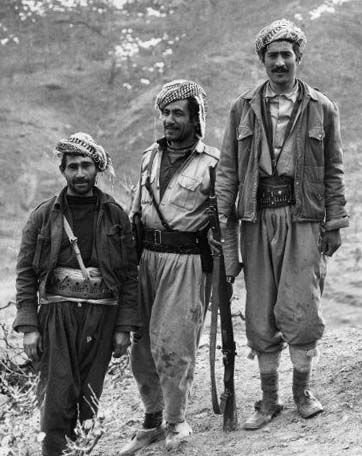
During the 1979 revolution, the gun reappeared in the hands of the revolutionaries and tribesmen, who never abandoned their Brnos. When Kurds challenged the newly established Islamic government, they used mostly modern assault rifles. But Brno still had a use: The Kurds claimed that with special cartridges that can pierce 2cm of steel, Brno can down aircraft and helicopters.
Kurdish ‘Peshmarga’s with Brno
Besides the rebels, the Islamic government too had a use for Brno: It was, and is, used in official Friday prayer ceremonies. The speaker is required to have ‘the weapon of the day’ by his side, according to the tradition of the Prophet (he apparently used a sword).
A different news source, but this shows a handgun being held by an imam leading the Khutbah.Supreme leader Ayatollah Khamenei with what appears to be a Dragunov derivative. https://www.theblaze.com/news/2015/07/20/can-you-spot-what-irans-khamenei-was-holding-during-his-speech-on-the-nuclear-deal-the-mainstream-media-ignored-it
The most likely reason for its use in such ceremonies is that it is long enough for the speaker to hold it like a walking stick while he is standing and preaching. The Mauser brothers would have been happy to hear that their rifle would be considered a ‘weapon of the day’ a century later.
For people of my generation Persian Mauser, or Brno, brings back many bittersweet memories. The coup, the executions, the NoghlAli (Iranian version of GI Joe) with his Brno in a watch-cabin, the pain of being hit by its butt in street demonstrations, the greedy gendarme guy looking for a chicken to steal, the poor poacher in a remote town using the old rifle to feed his family with meat once in a while. You see it in the old newspaper pictures of battles, ceremonies, riots and executions. It is a piece of history.
Thank you Ali Parsa for contributing to Silah Report!