Keeping it Quiet Part 1: Suppressor Use by ISIS, Al Qaeda in Iraq

Keeping it Quiet is a series of articles by the Twitter account Everest65. First published on the webpage Calibre Obscura, he has been extremely generous in allowing Silah Report to republish his findings here. Content has been lightly edited. Be sure to look for the rest of the series as it becomes published.

Amongst various militant groups in the Middle East there is a sporadic yet noteworthy use of suppressors used on firearms. I’ve been tracking this and have found that suppressors, also known as silencers or moderators, have been used by Hayat Tahir al-Sham (HTS), Islamic State (ISIS), People’s Protection Units (YPG), and some other groups. This has lead to some interesting conclusions from my observations. Whilst there doesn’t seem to be a great dearth of video or still imagery of suppressor use by any major rebel group in Syria, in this article I’ll be looking at analyzing some of them.

ISIS & AQ in Iraq

One of the most shocking videos of AQ in Iraq in the Summer of 2012 was a disguised night-time raid, which Long War Journal details:

The al Qaeda fighters are then issued uniforms that are worn by SWAT teams in the Iraqi National Police. Later that night, the militants, disguised as police commandos, get in the pickup trucks, some which have heavy machine guns mounted in the bed. Lights flashing, the al Qaeda fighters cruise the desert highways before they hit their targets: police barracks, checkpoints, and two senior Iraqi police commanders.

The Iraqi policemen appear to be stunned by the raids and comply with the al Qaeda operatives, clearly believing them to be INP commandos. The al Qaeda fighters flex-cuff the policemen, drag them outside of their positions, and line them up on the ground. The insurgents then walk down the line, and coldly shoot the policemen in the head with silenced pistols.

Whereas this raid did stand out to me because it was published online, there is evidence to suggest that this insurgent tactic was used much earlier- an article from The Guardian mentions waves of bomb and “silenced pistol” attacks across Baghdad, taking advantage of the disarray caused by the widespread issues in the 2010 election. A Senior Iraqi officer, Brigadier General Abdel-Hussein al-Kadhoumi, was killed by gunmen with suppressed pistols in May 2009. We know this tactic generally isn’t rare-with Canadian Artillery Engineer Gerald Bull being killed by suspected Iraqi or Israeli Hit Team with 5 .32 ACP bullets shot into his neck and back by a suppressed weapon- most likely to be a Beretta Model 70- another example being the unfortunate case of Laurence Foley, an American Diplomat killed in Jordan by men working on behalf of AQ in Iraq using a suppressed .32 ACP pistol in 2002. Without going over the history of use of small calibre suppressed pistols by intelligence agencies over time (Hint: It’s out of the scope of this article), it’s safe to say that this tactic is a common and oft-used one, the events quoted above being nowhere near rare. This is touched on in this excellent 2008 post from the Jamestown Foundation on Insurgent use of suppressed pistols. It refers to “7mm Pistols” which we can assume refers to 7.65mm Browning, or 32 ACP.

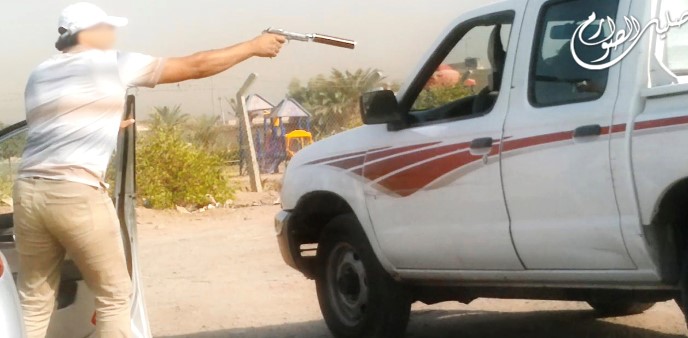
Here’s a two (cropped) images from the video that show the suppressed pistols in use:

2012_1

1: A pistol in use.

2:The same pistol, having failed to cycle, having the slide pulled back to re-cock

The size of these handguns appears to show a steel-framed pistol that seems to resemble a Walther PPK or derivative, of which cheap Interarms Clones are apparently popular. This video also gives an estimation of the volume reduction offered by a commercial suppressor- the Stealth Engineering Group “Jefferson”. In this case, this pistol could be chambered in .22lr, .32ACP or .380, all of which can be successfully suppressed:

Below are some examples of suppressed handguns in the hands of ISIS, ISIS derivatives and others being used for covert ops and assassinations, a task for which a suppressor, rudimentary & homemade it may be, would certainly assist with the destabilization of the security situation of the state the group is fighting. Also included are ones for sale, captured etc.

yemen_aug16
yemen_aug16_cycling(ISIS, Yemen, August 2016, Assassination of a Yemeni Colonel in Aden. This shows the pistol cycling)

ISIS_nov_2012-2(November 2012, then ISI, Now ISIS. Note chromed pistol- possible officer or ceremonial model- and civilian dress with lack of beard)

Desu_Dogg(ISIS, Syria, April 2015. .32 ACP Walther PPK.)

ISIS_North_Bagdad_2016-17(2017, ISIS, North Bagdad. Note successful cycling of pistol. I have obscured victim’s faces.)

Glock_19_Early(2012-13, ISIS, Iraq. Glock 19 is in use. Green laser is attached to M16, off-screen)

ISIS_Aleppo_2014(ISIS, Aleppo, Syria. Feb 2014. Pistol is PPK clone in .380 ACP or 32 ACP with Interarms import/export markings on it.)

ISIS employs rifle suppressors in seemingly a more limited role, as opposed to their common use on pistols mentioned above. The group appears, as part of its strategy of using long/accurate 5.56mm platforms in the DMR Role, to embrace suppressors to assist in the concealability and survivability of its close range and urban sniper squads. POI Shift (The shift of the bullet when a suppressor is installed) would be naturally less of an issue at shorter ranges.

M16_Iraq(Iraq, December 2016. M16A4 used in close fighting)

ISIS_Fallujah_June2016(Fallujah, Iraq, June 2016. Short Suppressor on AK type rifle. Direct Thread Mount. This shorter type would naturally be louder.)

Dragunov(Raqqa, Syria. July/Aug 2017. Rifle is SVD Dragunov used in DMR role, notice painted/sprayed camo and spotter)

ISIS_Raqqa_2017_Urban_1

ISIS_Raqqa_2017_Urban_2

ISIS_Raqqa_2017_Urban_3(In the midst of Urban Fighting against SDF, Raqqa, 2017. Note Steyr AUG used in close range role, Glock 19 as sidearm, and tape-wrapped M16A4 on spotter.)

It’s interesting to note that the Chechen sniper is using a suppressor wrap very similar to a product such as a SilencerCo Suppressor Cover:

SilencerCo_Suppressor_Cover

This wrap has a variety of uses- concealment/camouflage, ease of quick removal (Protects against burns), and also mitigating the “mirage affect” from repeated firing- as the rifle is used, the suppressor gathers a lot of heat. This heat begins to rise off of the suppressor and creates a mirage- this mirage can obstruct the users’ view making it almost impossible to see the target. In the hot conditions of Iraq and Syria this would be made worse.

Below is an interesting case-an improvised 12.7mm or 14.5mm anti-material rifle in use by ISIS (A fairly common phenomenon), but with a very large suppressor:

12.7_ISIS(Raqqa, Syria. July/Aug 2017)
Small Arms Theft Kabul Edition (Again)

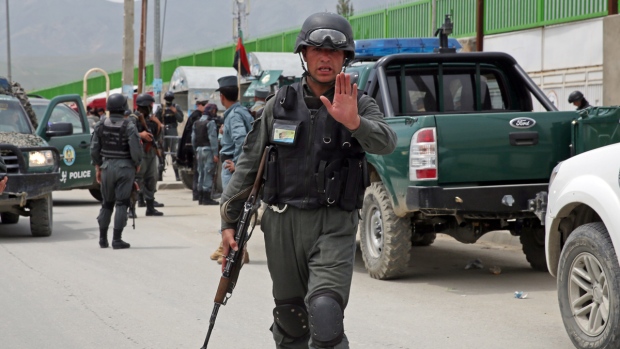
Tolo News has recently reported on a small arms theft from within the Interior Ministry’s headquarters compound in the northern part of Kabul by the international airport. This comes after another major small arms theft that occurred in March of this year. From the news report-

The office has received documents against 14 officials of the ministry over the loss of 105 AK-47 guns, 18 missiles, 80 mortars and 5,000 machine gun bullets.

Two of those accused employees have fled, two of them are in detention and 10 others have been released on bail, Attorney General’s Office spokesman Jamshid Rasuli told TOLOnews.

The nomenclature appears to have gone through some translation confusion when it comes to “missiles” and “mortars”. Kabuli Police certainly don’t use mortars so it would appear that missiles might mean RPG-7 launchers and mortars might be the PG-7 rockets for them. Machine gun bullets might also be a bit of a confusion because why would a thief make out with 105 AKM rifles but no 7.62x39mm ammunition to go with? If indeed these are 7.62x54mmR “Machine Gun Bullets”? Either way, on the current black market those AKMs sell for over a thousand dollars a rifle.

Two significant thefts of small arms within the Ministry of Interior are certainly not good news. It would appear that both of these might purely be financially black market driven rather than the work of an insurgent organization such as the Taliban or ISIS-K. Either way, both involved internal cooperation and were not by a forced or armed nature of attack.

A German DWM Luger in Helmand Province

This guest post was written by Jeffrey Reardon, an avid reader and supporter of Silah Report. 

In the past one hundred and eighty years, Afghanistan has been the target of multiple foreign invasions. From the British, (1839-1842, 1878-1880 and 1919) Soviet (1979-1989) and United States (2001-Present) involvement in Afghanistan. As such, we have a unique opportunity to see the small arms of yesterday back in action. Let’s look at one such example today. 

An American Marine of personal acquaintance was assigned to a Police Mentor Team (PMT) apart of 2nd Battalion, 1st Marines. These units were responsible for mentoring and training the Afghan National Police (ANP). The PMT duty consisted of patrolling to different ANP checkpoints. The PMT would spend a few days at each checkpoint then move on to thier next scheduled checkpoint. This Marine also happened to be an avid military surplus collector. This assignment would give him many opportunities to meet new people and see a myriad of Curio and Relics (C&R) in Afghanistan. In 2010, while in Garmsir, Helmand Province, Afghanistan, that’s exactly what happened to this Marine.

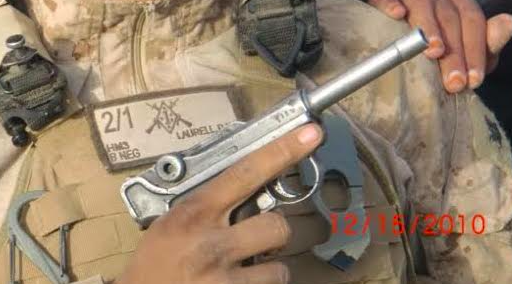
While on patrol with the ANP unit, this Marine noticed the unmistakable silhouette, of a Luger pistol that one of the ANP members was carrying. Naturally, the Marine was curious and just had to have a look at this interesting piece of military history.

In this picture, we can clearly make out the DWM rollstamp. The Deutsche Waffen- and Munitionsfabriken (German weapons and ammunition factories) was created in 1896 by, Ludwig Loewe & Company. They combined their weapons and ammunition facilities under one company. Simultaneously, Loewe transferred all shares it owned in other weapons producing companies to the newly formed DWM. These included, lesser know production facilities along with the Waffenfabrik Mauser and Fabrique National(FN). This pistols date is a little obscure in the picture. However, I was told this example is dated 1916. Just during WWI, from 1914-1918, there were approximately 2,000,000 Luger pistols made.

In this picture, another Marine poses with Luger. Here, we can see clearly see the front sight is missing. We can only guess as to what happened and how long it’s been missing. This goes along with my theory that this particular Luger is more if a badge of honour and sign if rank. Although, it would certainty get the job done in close quarters. Not having a front sight at all will put you at a disadvantage for the Marine Corps 25 meter pistol qualification.

As evident by the pictures, there is absolutely nothing left of the original finish. Which would have been a very beautiful and high gloss blue oxide on the major components. With small pieces such as the trigger and takedown lever being strawed. This process turns the metal a soft, golden colour which closely matches that of dried hay or, “straw.” In all actuality, this is exactly what one would expect. After all, it is almost a century old. Very easily a veteran of two world wars and countless other conflicts. It’s current location in southern Afghanistan, with its frequent sand storms, certainly does not help.

The Marine function tested the pistol. On a Luger, this is accomplished by grabbing the top of the toggle link and pulling up. With an empty magazine in place,  the slide will stay fully locked back in then open position. I was assured that it is in operable condition. Although, the Marine did not test fire it. 

There are, by this point, more than a few things I’m curious about. One question I would love to know the answer to is, to know if the ANP had the holster and spare magazine? If he didn’t, what was he using for a holster? If he wasn’t in possession of the spare magazine, was he worried about the lack of capacity? 

I was told that the ANP officer was very proud of his pistol. He made it known that he was not at all interested in selling it. I often wonder, by what route did that pistol get to Afghanistan? How did that ANP officer acquire it? 

Sadly, we will never know the answers to these questions.  We can only be happy that our beloved military surplus small arms are still serviceable after all this time.

*Special thanks and photo credit to Timothy Arndt

The “Female” Variant of the Galil


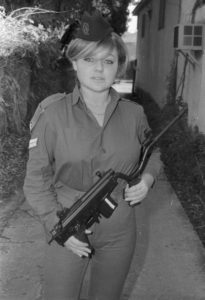
The integration of female soldiers in IDF combat roles is a much-debated topic in Israel the last decade or so. Today we will ride on the wayback machine to a time when the place of women in military service was very different.

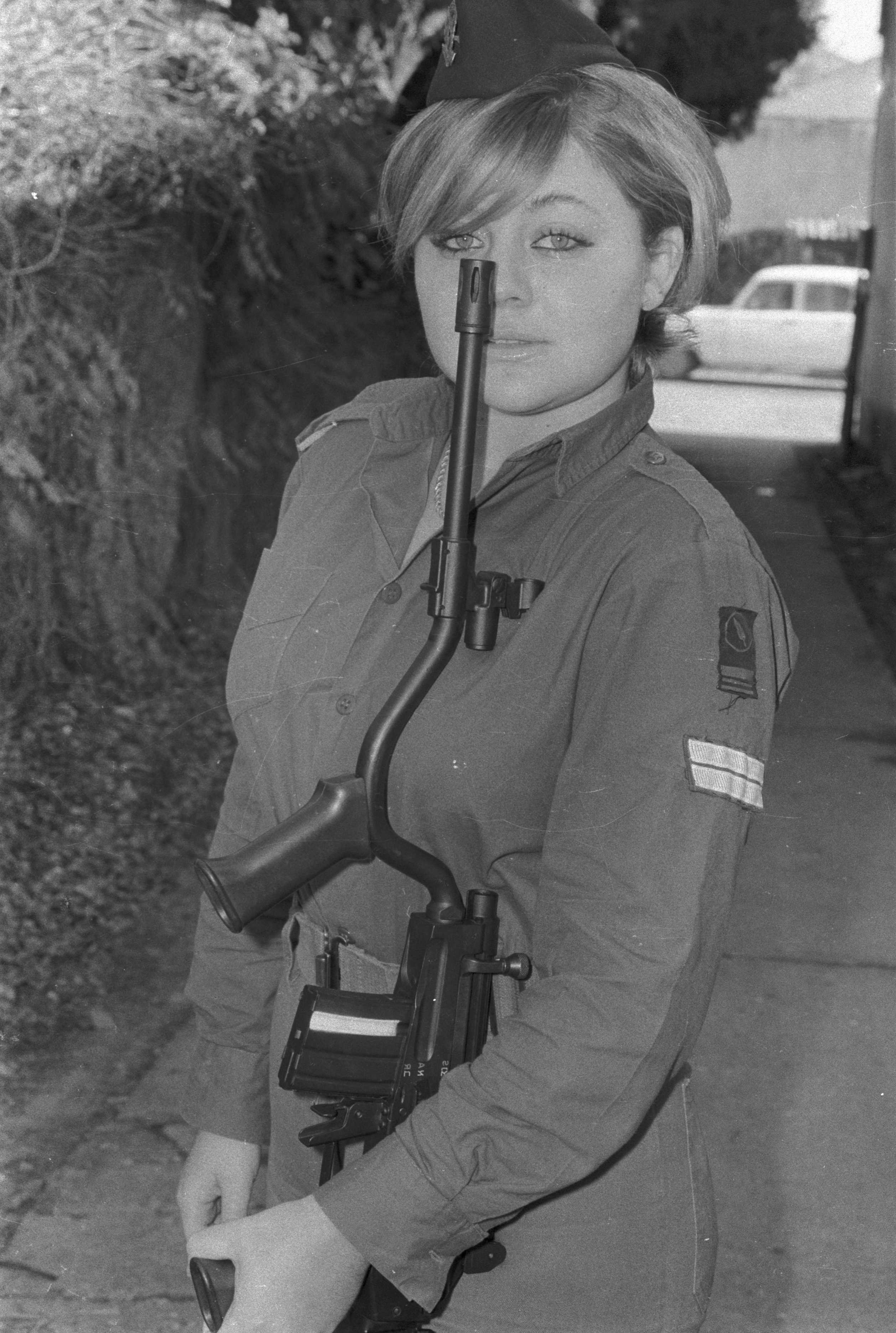
In the December 8 1982 issue of the IDF weekly magazine, Bamahane,  a short news piece was published with bold letters titled: “The end of discrimination! A major victory to the women’s liberation movement; a Galil assault rifle developed especially for female soldiers!”

The paper includes several pictures taken of an IDF female soldier ‘modeling’ a bent barrel Galil AR and further explanation states that the most problematic issue with designing a feminine rifle is that regular rifles keep colliding in the soldier’s breast whenever it was carried and practice in foot drills.

According to the news piece the development of the gun took two years and was tested by 350 female soldiers that were “carefully selected for their outstanding physical characteristics”

That ‘news piece’, as you might guess by now, wasn’t a real news report. It was the weekly satiric column called ‘על הגבול’ which literally means ‘On The Border’ but the more accurate translation means ‘Borderline’.


The prop gun was manufactured by none other than Yisrael Galil , the inventor of the Galil, for the satiric column.

The gun was a modified Galil AR with an absurdly bent barrel and vertical foregrip attached instead of the regular foregrip. The bolt carrier lacks a gas piston and there was no gas tube. All removed to achieve the described breast clearance. In one of the photos, the rifle is lacking a buttstock.

The gun was issued with a 12 round magazine, presumably to lighten the load on those top-heavy girls in uniform. The magazine is in fact a blank magazine used to propel rifle grenade.

The column summarized that since the rifles were introduced into military service they already proofed their value and the developer is flooded with purchase orders.


This article made possible by the courtesy of IDF & Defense Establishment Archives.

The photographer was Reuven Yehudai.

70 Firearms Stolen from Kabul Police Station

A report on Television One has revealed that 70 firearms and a number of cameras capable of operating at night (possibly meaning infrared capabilities) have been stolen from a central Police armory in Kabul. The article inferred that the firearms were possibly being smuggled to Pakistan but this isn’t known as of yet.

From Television One–

منابع خبرداده اند که هفتاد میل جنگ افزار از یک ذخیرگاه مهمات پولیس در کابل دزدی شده است.

منابع امنیتی که نخواستند نام شان فاش شود از دزدی شدن هفتاد میل جنگ افزار و سه دوربین در ذخیرگاه های مهمات پولیس در کابل خبر داده اند.

این جنگ افزارها شامل تفنگچه ها و دوربین های شب بین بوده که از یک بخش حمایوی پولیس در کابل دزدی شده است.

بر بنیاد گفته های منابع، چندین تن از سوی وزارت داخله در پیوند به این رویداد بازداشت شده اند.

با وجود تلاش های زیاد وزارت امور داخله نخواست در این باره ابراز نظر کند، اما یک مقام وزارت داخله به تلویزیون یک این موضوع را تایید کرده گفت، بررسی ها درباره این موضوع جریان دارد.

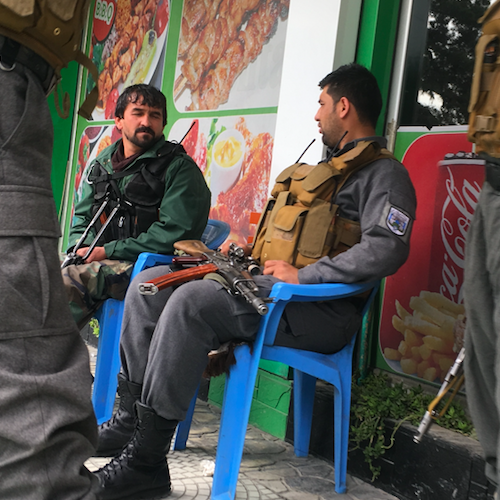
Firearms being stolen from a central police repository is somewhat alarming, especially that observing that it has happened the day before Now-Ruz, or the Persian New Year. There is the possibility that maybe the theft was to supply a possible attack in the upcoming festivities but this is most likely not the case as the firearms stolen were mostly handguns. This is most likely a case of lax regulations right before the holiday and an insider taking advantage of them. Similar to many other attacks and thefts within the Afghan government, this was most likely an inside job possibly helped by a corrupt official.

Guarding the Malikah: LWRC UWIC Carbines of the Saudi Royal Guard Regiment

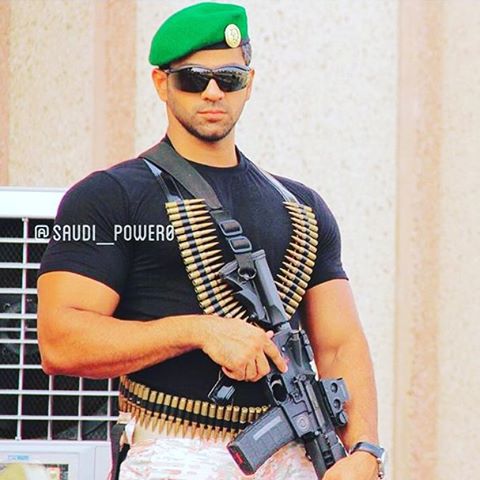
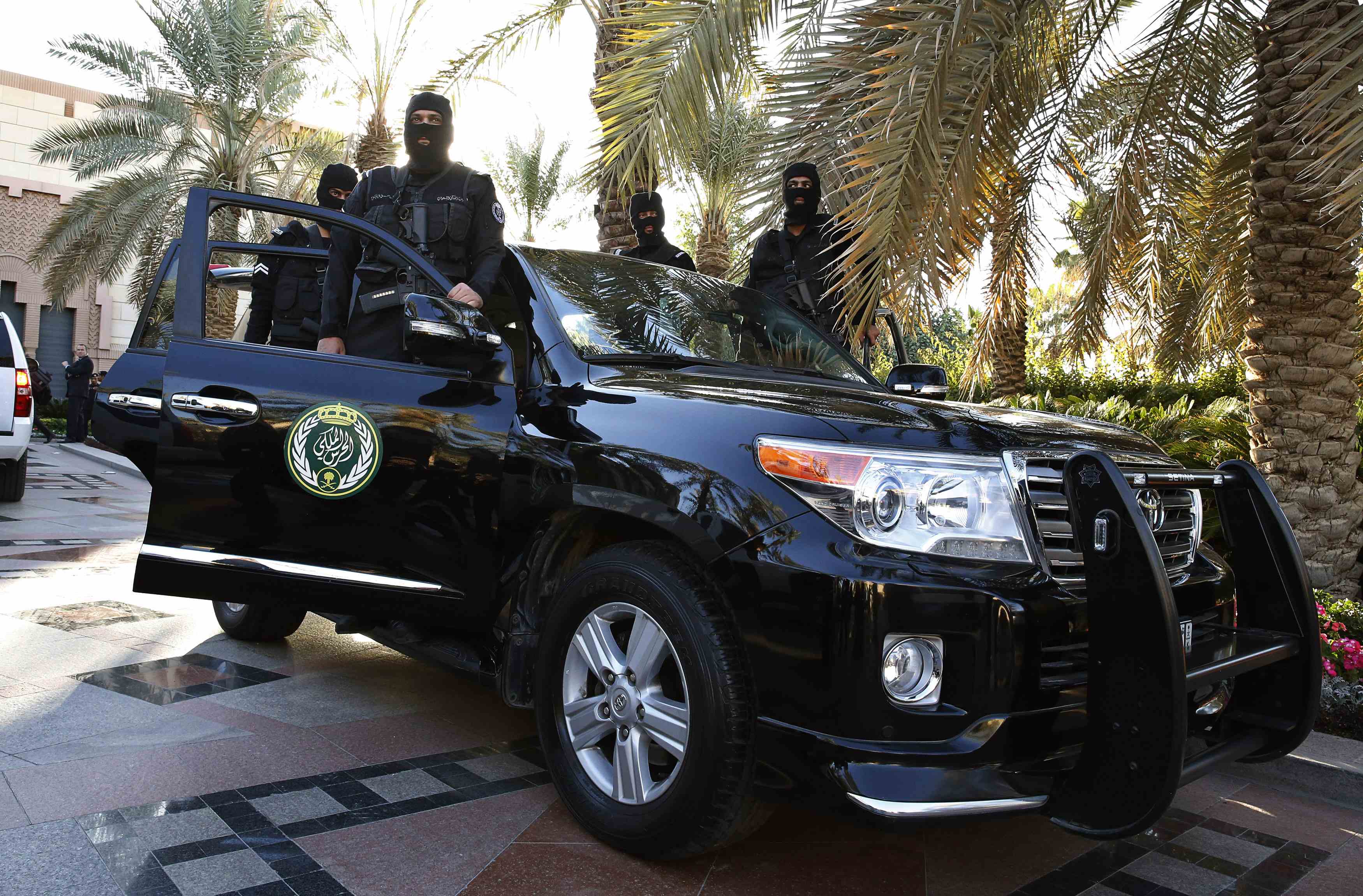
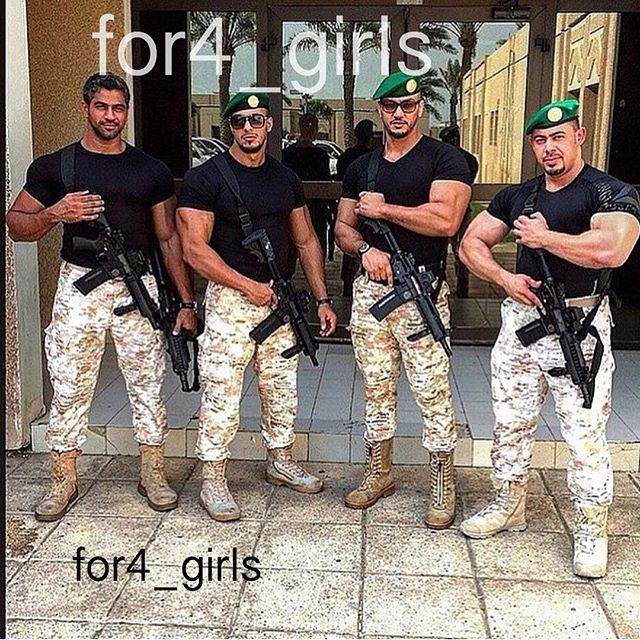
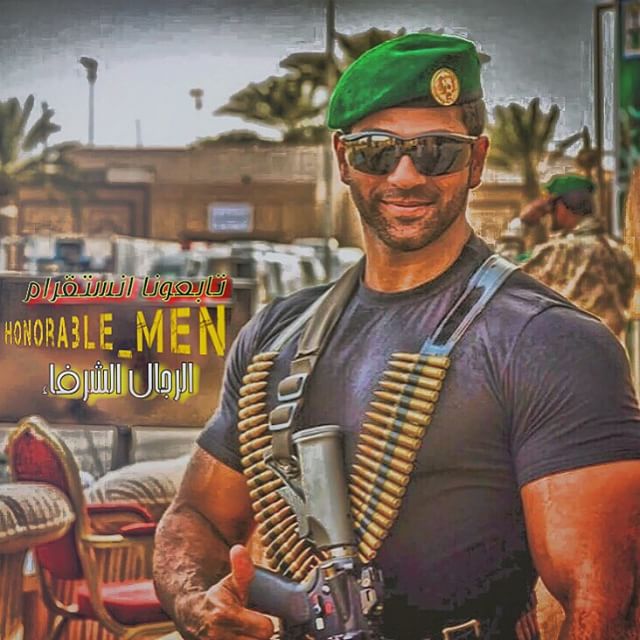
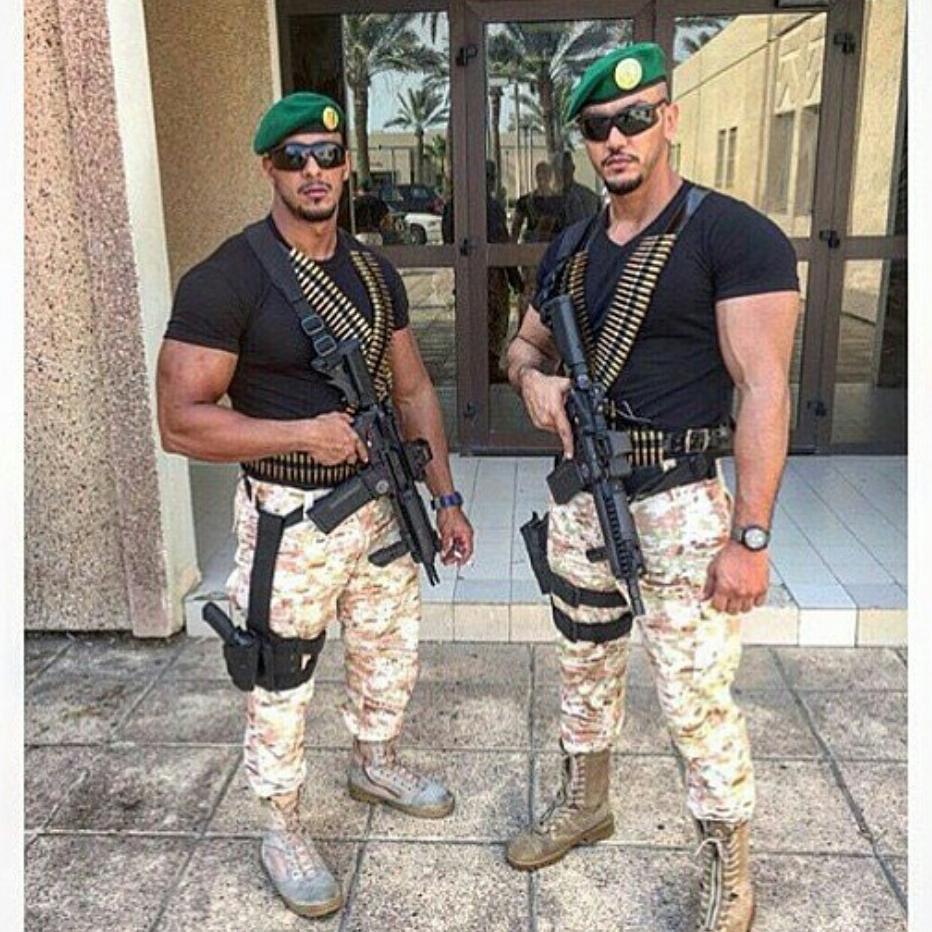
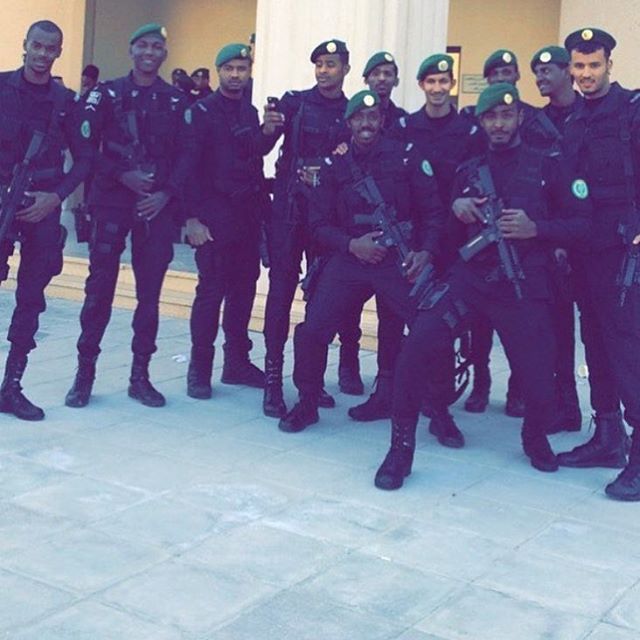
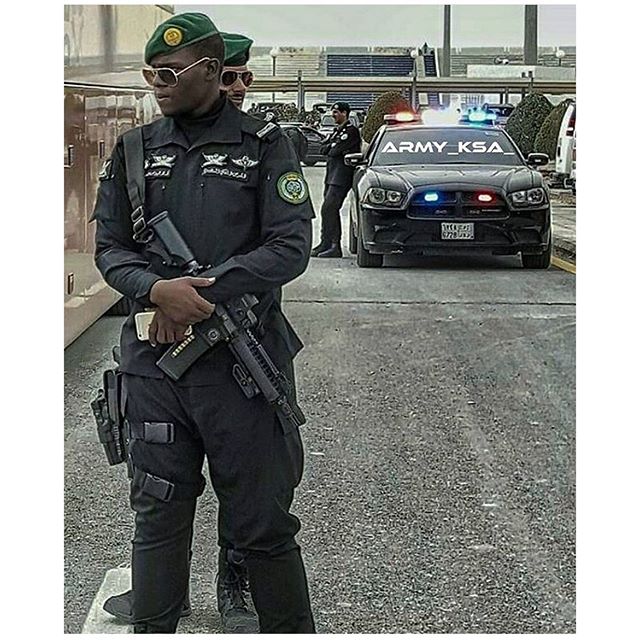
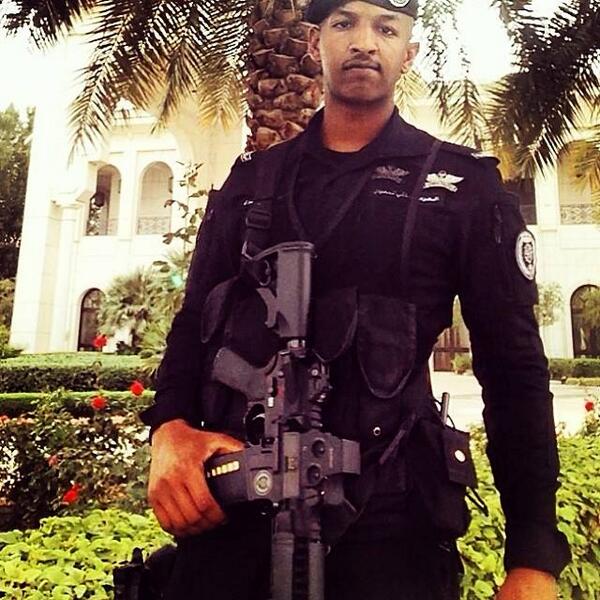
The reigning King (currently King Salman) of the Kingdom of Saudi Arabia, otherwise known as the “Custodian of the Two Holy Mosques”( خادم الحرمين الشريفين) and his enormous family has numerous lawyers of protection surrounding him due to the numerous threats upon the absolute monarch. One of these layers is known as the Saudi Royal Guard Regiment (لحرس الملكي السعودي). This unit has been profiled numerous times on social media, both in the observance of their protection duties, but also simply as casual encounters with members posting photos of themselves and their mates that eventually end up on Instagram and other social media sites. The guards are unique and identifiable in that their uniforms are black with bright green berets. However, they have been seen wearing the desert digital trousers that the Saudi Royal Army uses as well.

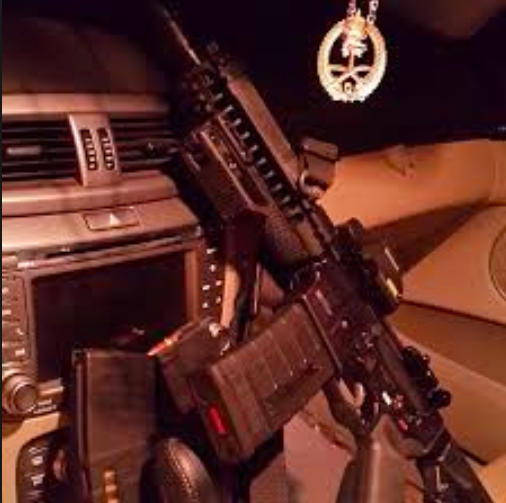
Notice the shape and design of the carbine on the left. It is an LWRC UWIC.

Saudi commandos guard the front of Erga Palace as U.S. President Barack Obama arrives to meet with Saudi Arabia’s King Salman in Riyadh January 27, 2015. Obama sought to cement ties with Saudi Arabia as he came to pay his respects on Tuesday after the death of King Abdullah, a trip that underscores the importance of a U.S.-Saudi alliance that extends beyond oil interests to regional security. REUTERS/Jim Bourg (SAUDI ARABIA – Tags: POLITICS MILITARY)

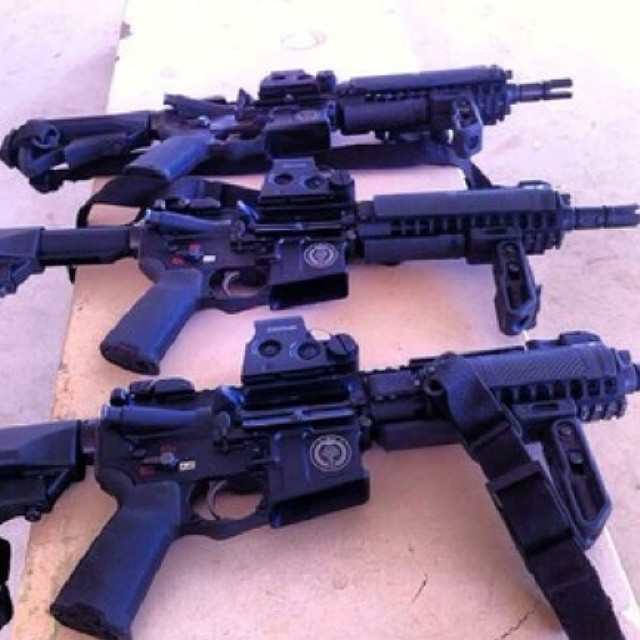
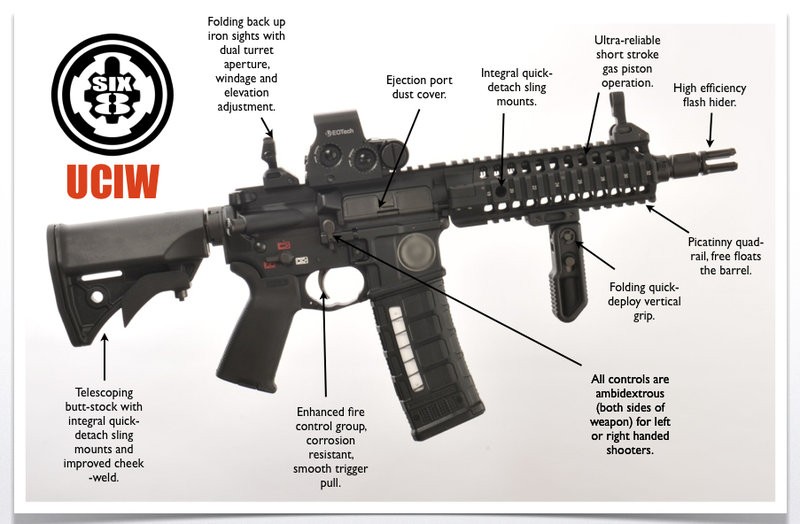
An interesting facet of this group is that it has been seen armed with LWRC UICW (Ultra-Compact Individual Weapon) carbines chambered in 6.8x43mm Remington Special Purpose Cartridge (SPC). The LWRC UICW is distinctly recognizable due to the shortened buffer tube and almost mini-SOPMOD stock. It also has an 8.5-inch barrel, making it very handy for close protection work, and moving in and out of vehicles.

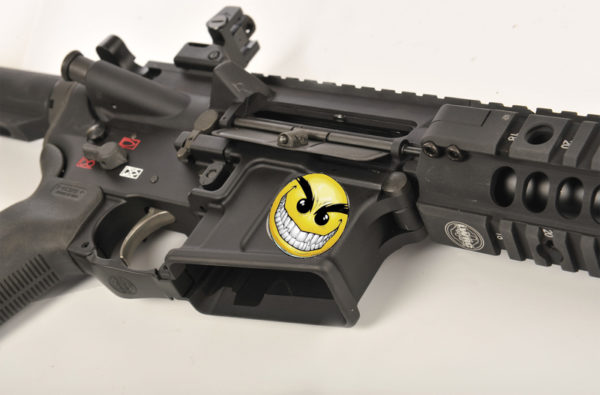
A unique point about the Saudi LWRC UICWs is that they all have the unit’s crest etched in white on the right side of the lower receiver, on the magazine well. Apart from that identifier, these carbines are outfitted with EoTech XPS2 holographic sights, Magpul pistol grips and see through 30 round magazines, Picatinny rail covers, BUIS sights, a folding vertical foregrip, and what appears to be a Vicker’s Tactical (or at least an imitation of one) two-point sling mounted on QD release points. All of the carbines have a select-fire capability. The overwhelming majority are in a black finish with matching furniture, but we do have one example so far of a green stock, with a matching green sling.

We also have this graphic that was created for the carbine as a promotional piece. Notice on the right side of the magazine well how the crest is completely blurred from view. It would appear to be that this crest was actually the Saudi Royal Guard Regiment but blurred for publication.

Very similar to the case of this one as well-

These carbines were a part of a contract with Saudi Arabia, through the U.S. State Department beginning in Feburary 2012 and ending the next year, worth $109 Million. From a statement from the LWRC Facebook page–

In Feb of 2012 LWRCI signed a $109 million dollar 18 month contract with the Government of Saudi Arabia, sanctioned by the U.S. Department of State and U.S. Congress. This is the largest direct commercial to foreign government sale of firearms in the history of the ATF Exports Branch. $109 million dollars of foreign money coming into Maryland to a company that is five years old. In these economic times, this is a story that the Department of Business and Economic Development can be very proud of. New jobs; developing a workforce; and stimulating the economy.

Specifications from Defense Review-

Caliber: 6.8mm SPC
Barrel Length: 8.5″
Weight (unloaded): 6.25lbs (8.5″ barrel)
Length (overall): 24-27.25″ (8.5″ barrel)
Rate of Fire: Semi Auto or Select Fire 700 rpm (+/- 100rpm)
Rifling: 1/10″ RH
Stock/Pistol Grip: LWRCI/Magpul MOE
Sights: LWRCI Folding BUIS Front and Rear
Magazine: Magpul 30 rd. P-Mag
Muzzle Device: LWRCI flash hider 5/8×28 TPI
Colors Available: Black”

This is a Saudi social media channel on Youtube that shows extensive footage of the Royal Guard Regiment during various training demonstrations.

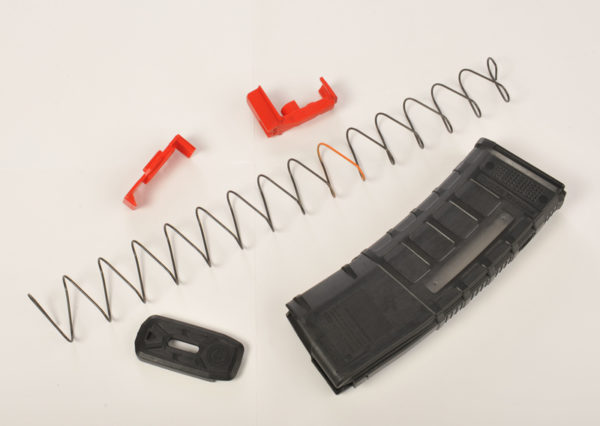
The Magpul 6.8x43mm SPC magazines that are used with the Saudi Royal Guard Regiment were actually developed in close coordination with LWRC. They are readily identifiable by the bright red follower and internal baseplate. You can still purchase them in the United States for $26.97 on Cheaper Than Dirt. From the website-

Magpul PMAG magazines are designed for the LWRC 6.8 pattern AR lower receivers. These magazines were built specifically as a result of a partnership with LWRC and Magpul industries. These magazines feature the new constant curve geometric body, anti-tilt follower and other minor improvements. The polymer magazine reduce overall magazine weight by half without sacrificing durability. Magpul 6.8 magazines are a must have if you own a compatible LWRC rifle chambered in 6.8 SPC.

Notice the bright red internal baseplate.

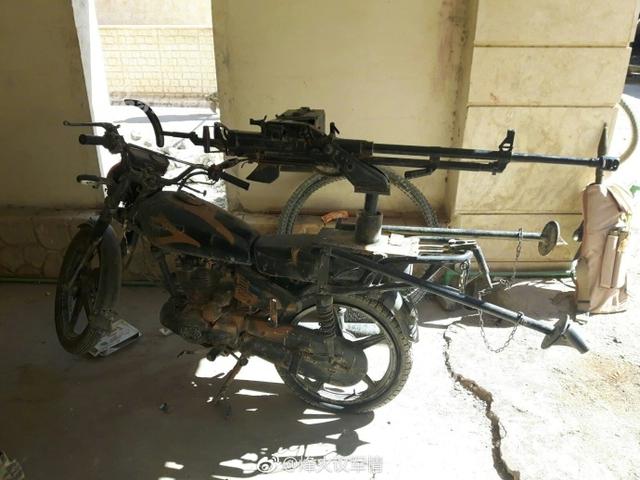
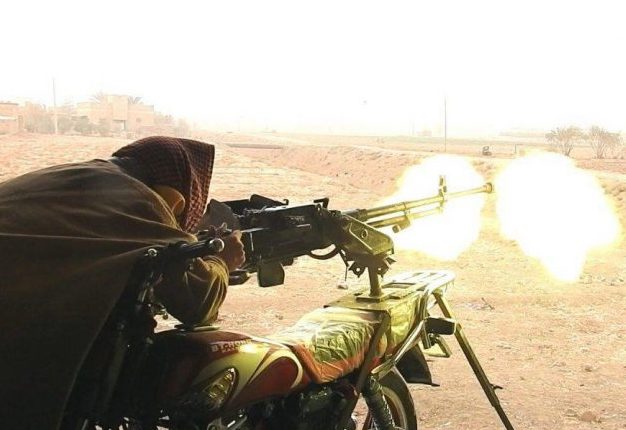
Details emerge on DShK Mounted Motorcycle

Numerous photographs of DShK mounted motorcycle “Technicals” have emerged from Syria, most extensively being shared on The Firearm Blog through this initial post of an amateur video, in addition to this one of a more detailed look through a so-called Islamic State’s Amaq propaganda video. We get a good idea of the weapon in action, but recently a photograph has emerged that shows the system in a transport mode on the motorcycle.

Notice how the bipod legs fold onto the back rack of the motorcycle while the Chinese 12.7x108mm Type 87 is pointed to the rear to be transported easier. Now, it would appear that any driver on the motorcycle would have to push the machine gun to the left or right while he is driving it

U.S. M16A4 Reportedly Among Iranian Protests

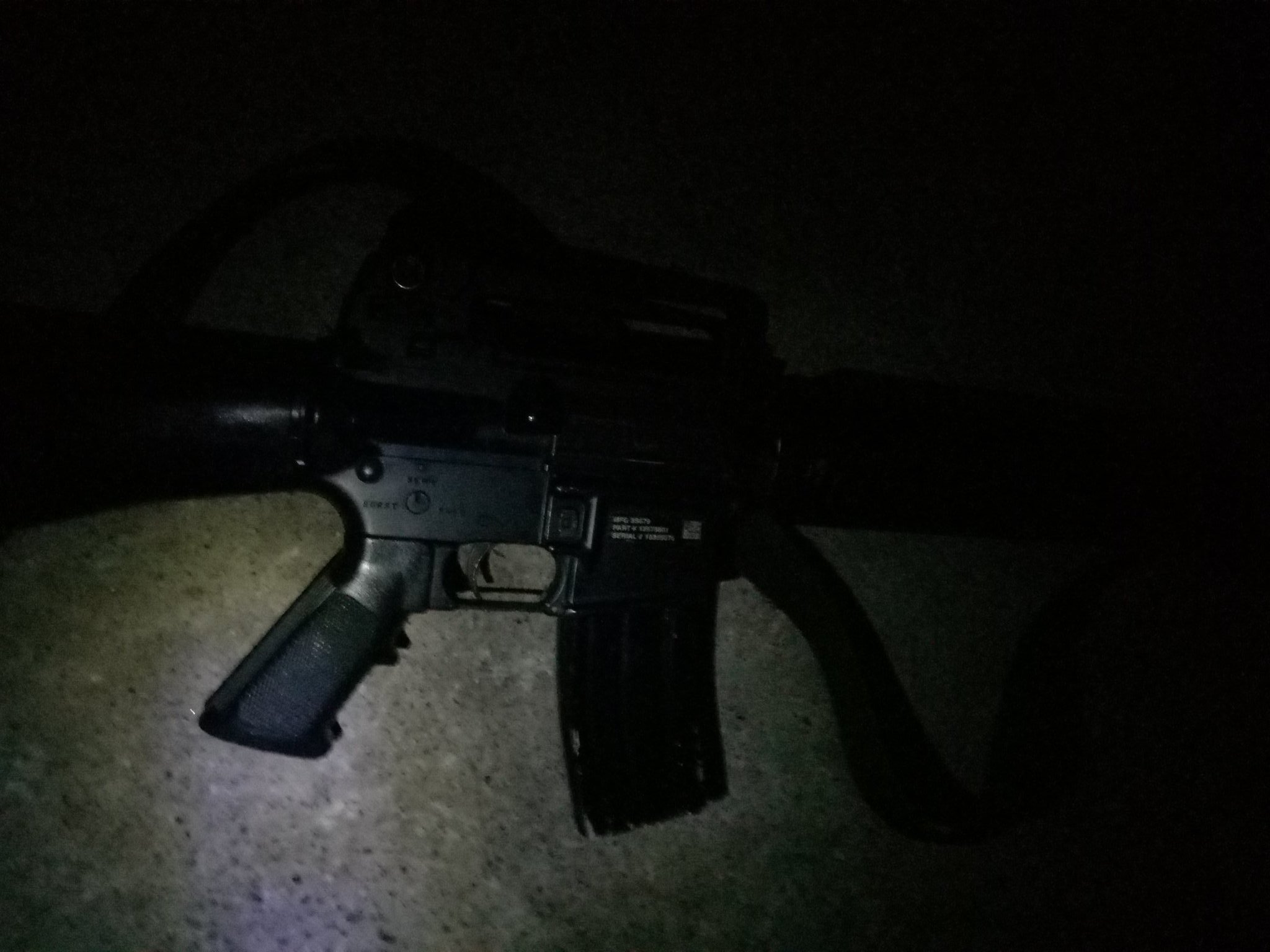
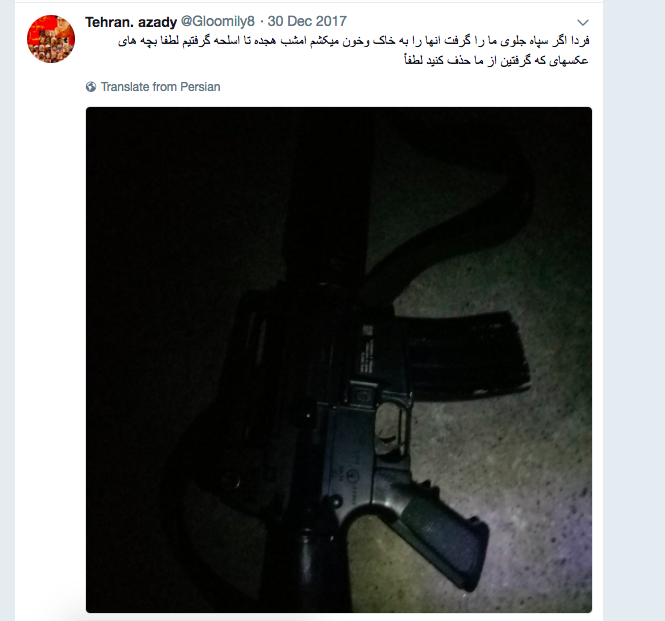
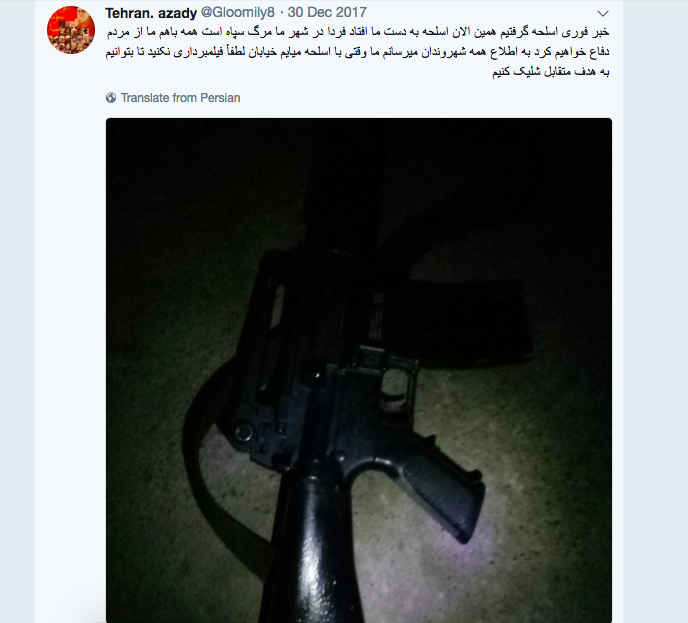
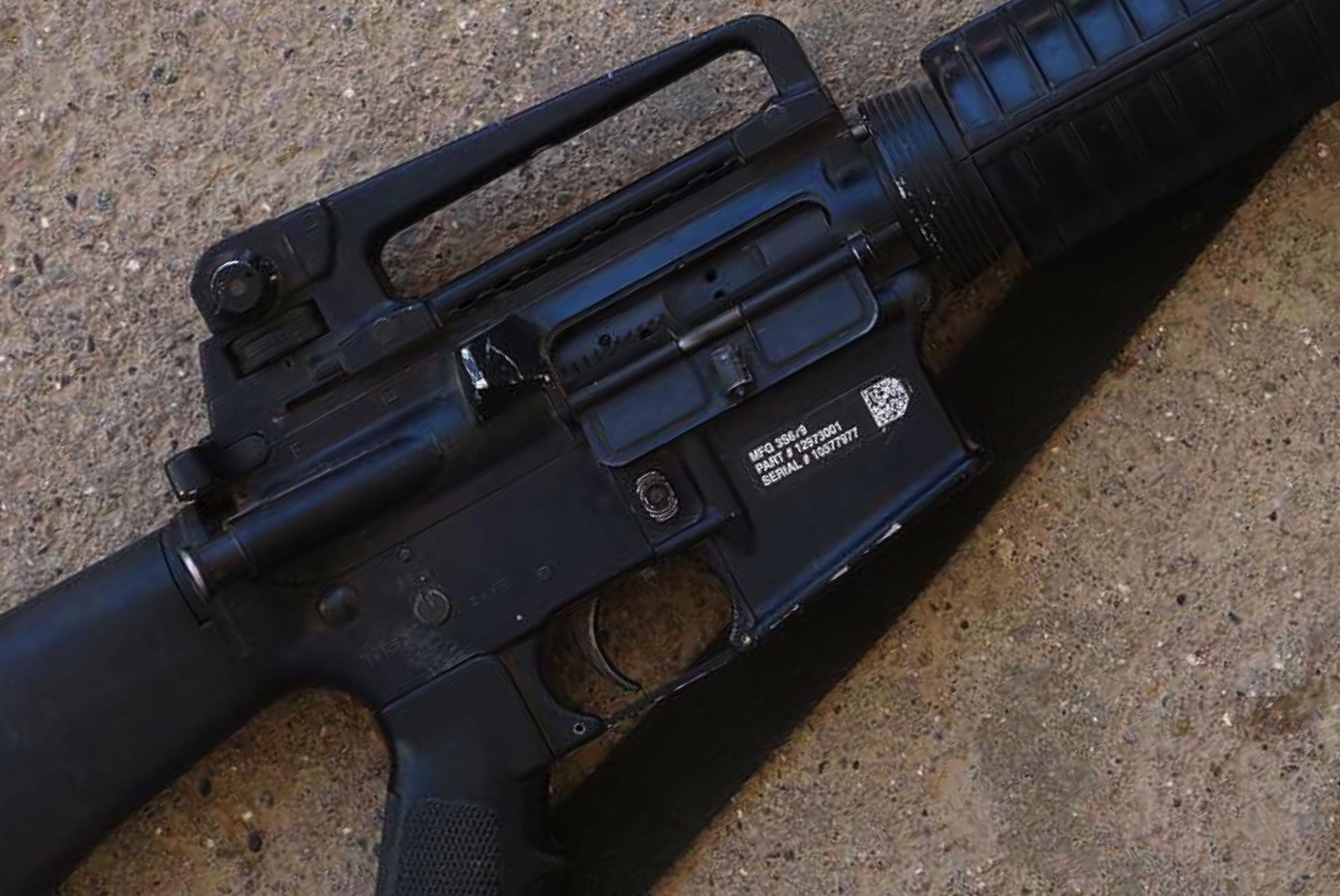
A Twitter account by the name of Tehran. azady/@Gloomily8 (Free Tehran) has posted two posts and accompanying photographs on their page depicting what appears to be an FN Herstal, former U.S. Government 5.56x45mm M16A4 Service Rifle. It is not known or confirmed if the image is actually from Tehran for that matter, but a cursory Google Image Search revealed this Twitter account appears to have been the first online poster of this particular photograph. It would also appear that these photographs are actually screenshots from a motion picture, due to the apparent movement of the light source.

Neither post makes much mention of the weapon and is more concentrated on what is going to be happening or will be planned to happen in the future in regards to the protests.

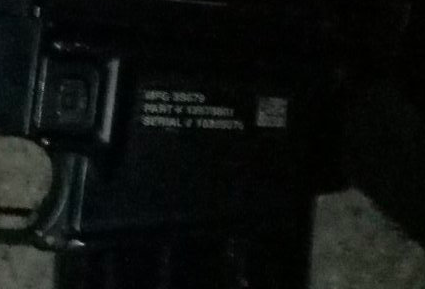
Notice the SKU imprint-

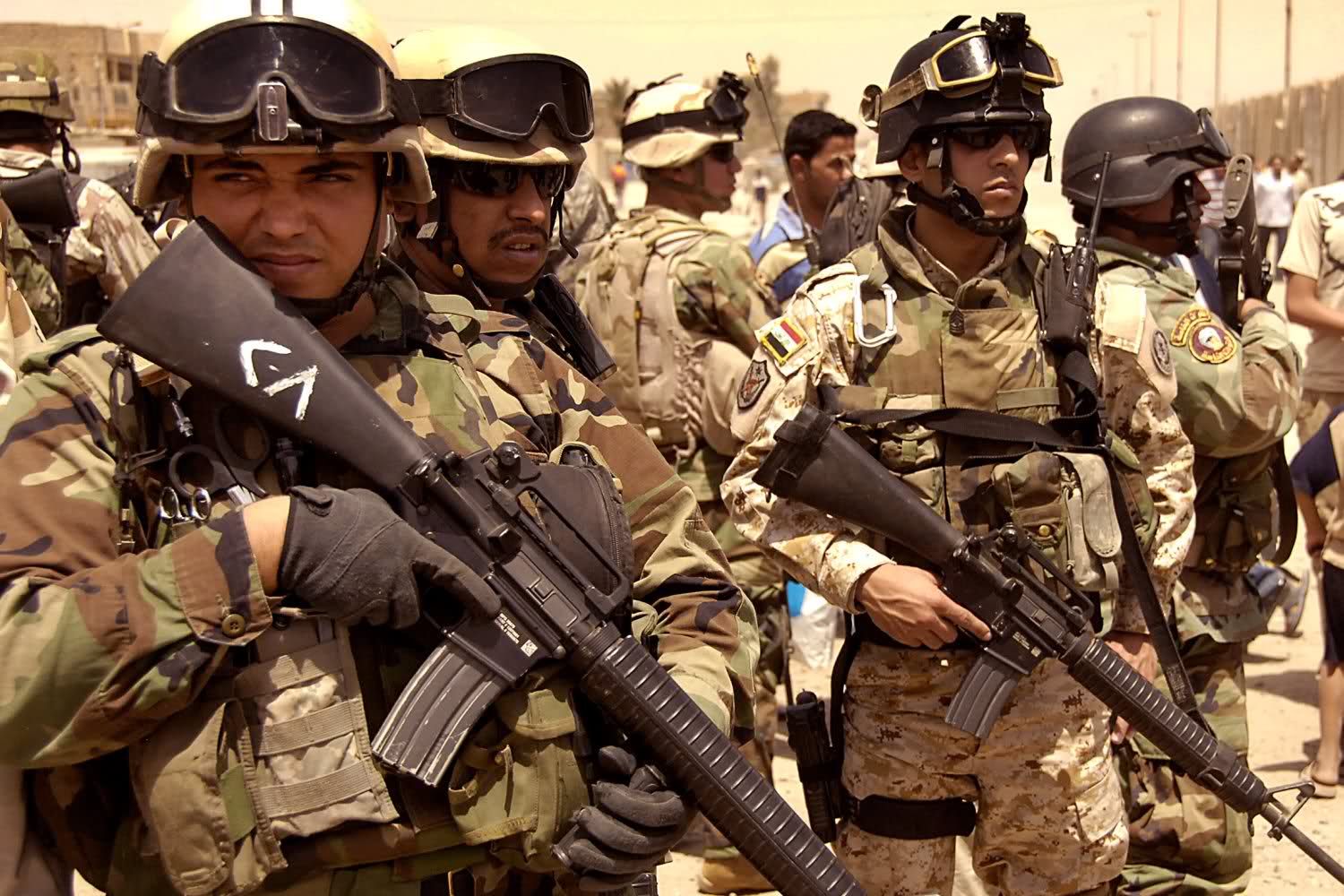
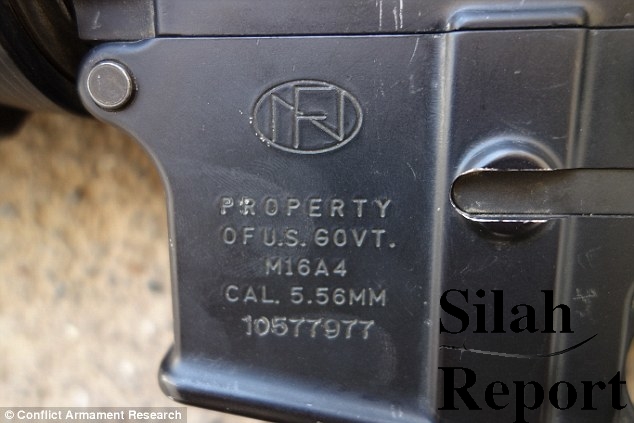
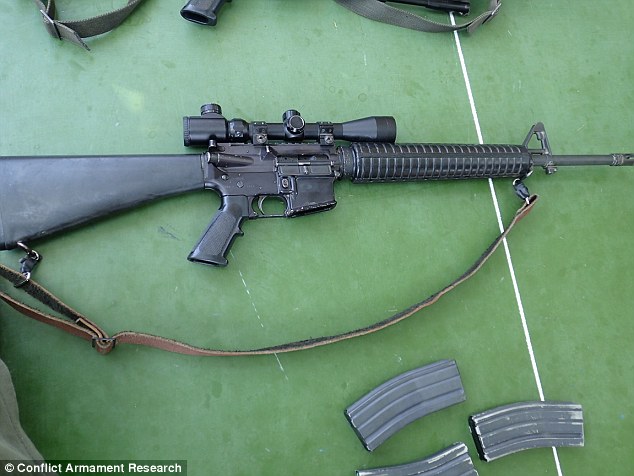
It would appear that this M16A4 is most likely diverted from U.S. Foreign Military Sales to Iraq. What could possibly confirm this is the design of the handguard. We know it is an M16A4 due to the M1913 Picatinny Rail a part of the upper receiver, of which an “A2” carrying handle is fastened to. What is being left out however, is the design of the handguard. If it is a Knight’s Armament “A4” handguard, it would be a very rare sight indeed. But most likely it is an “A2” style with the circular handguards and vertical vent ports. The “Hybrid” M16A4/A2 rifles were previously sold to the Iraqi Army-

And were subsequently seen/captured by the so-called Islamic State-

Source- Conflict Armament Research Report
Source- http://www.dailymail.co.uk/news/article-2749197/ISIS-arming-US-military-hardware-wage-jihad-Middle-East-seizing-weapons-Syrian-rebels-Iraqi-soldiers.html

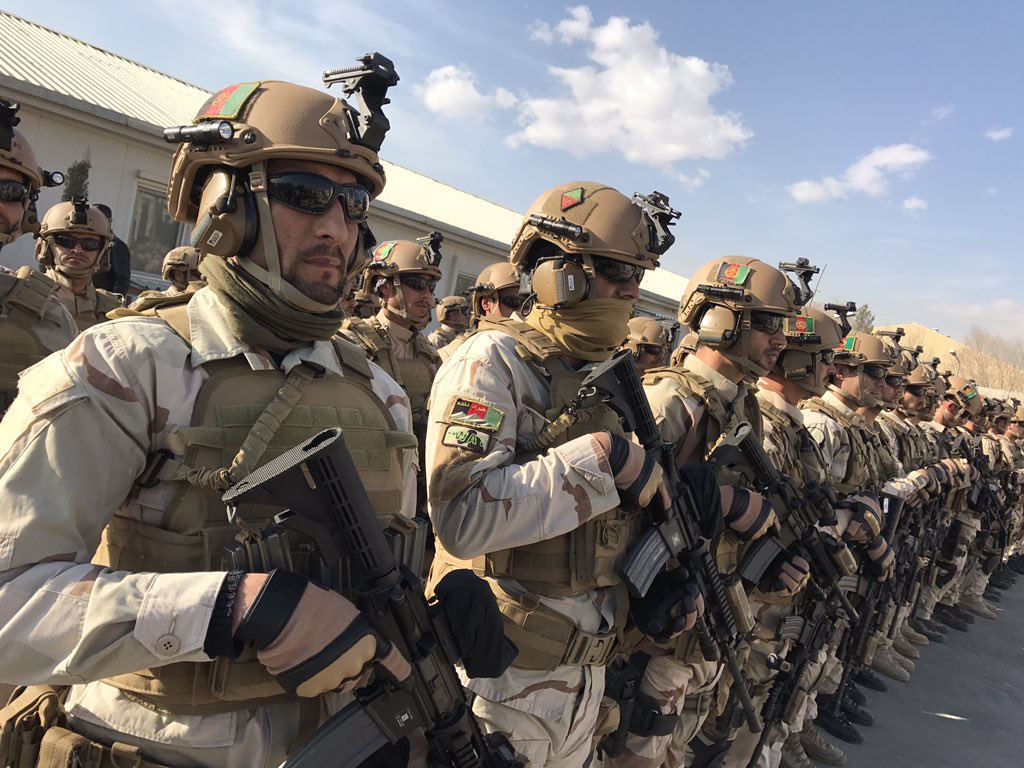
It should be noted that M16A4s are in service in Afghanistan with the Ministry of the Interior, in addition to M4/M4A1s are in service with numerous Afghan forces as well. But the amount in service in Afghanistan doesn’t seem to be proportional to the amount of M16A4s with the Iraqi Army, or circulating on the Iraqi black market.

Source- https://www.khaama.com/wp-content/uploads/2016/12/Afghan-special-forces.jpg

The First Exhibition Drill Soloist in the U.S. was an Arab

The elaborate activity known as exhibition drill within the United States is quite unique in its execution. It evolved out of a want to push the envelope when it comes to Drill and Ceremony (shortened to D&C) competitions. For many decades, militaries all over the world have held D&C competitions, even down to the academy cadet level. The United States was no different, with the tradition possibly originating from Prussian General Friedrich Wilhelm von Steuben, who is credited with teaching D&C to American troops at Valley Forge during the Revolutionary War. However, it was only within the last century that competitions took on a more flashy or exhibition flare, with both armed and unarmed portions. The reasons for this could be many, but the author speculates that it has to do with D&C becoming less important on the battlefield and more of a measure of a unit’s discipline in the rear. For example, doing exhibition drill in the 1800s would probably be met with stern disappointment, because this was still the age where actual battles were won and lost due to a unit’s ability to maneuver in formation on a battlefield.

Today exhibition drill teams exist at every level from High School JROTC programs, Collegiate level ROTC programs, Military ceremonial units such as the Marine Corps’ Silent Drill Platoon, and even professional performance teams such as New Guard America. One of their performances is shared below.

But back to origins. The general beginnings of what we now know to be called “exhibition” drill are claimed to be a cadet unit called “Pershings Rifles” still active today at a university in Nebraska. Whether or not this cadet unit performed anything near to what would be labeled as exhibition, the research isn’t very clear. But the general consensus is that modern exhibition drill really took off in the years following the Vietnam War, growing to a huge network today.

However, before the Pershing Rifles, there was Hajji Sherif/الحاج شريف (normally colloquially as Hadji Cheriff). This name was most likely a stage name or something an American audience could easily pronounce. The first part, Hadji/Hajji is indicative of this man making the Haj pilgrimage to Mecca, and the second part Cheriff/Sherif, means “Noble” in Arabic. Although Sherif might have been apart of the man’s name, it really doesn’t give us much as to his family name, what part of the MENA region he was from, etc…

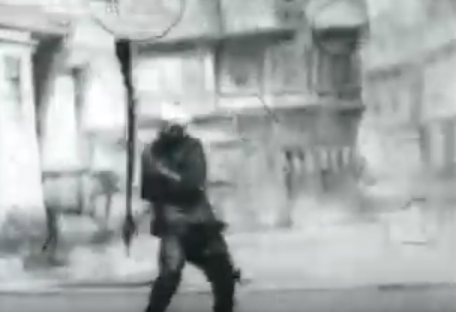
This video clip that was copyrighted by Thomas Edison in 1899 (he also had another clip of Hajji Sherif performing a dance at the inventor’s studio) specifically label Sherif as the “Arabian” Gun Twirler and recorded at what is believed to be the Midway Plaisance during during the World’s Columbian Exposition of 1893, taking place in Chicago. It shows Sherif effortlessly spinning what appears to be a muzzleloading Model 1855 Springfield .58 Caliber rifle.

The only other known video (described earlier) of him is also online-

But in this short movie that would have been aired or published as a silent movie, we see exactly what goes on today on exhibition drill decks across the United States. As the drill website, The Nationals notes–

[He is performing] a basic aerial toss (two, 1-1/2 over-hand thrown from the firing hammer) and also an over the shoulder technique with a rather remarkable display of over-the-head drill (OTH), and ends right after an under the leg inverted spin.

This film’s description from the Library of Congress reads as such–

A bearded man performs a rifle twirling act on a stage with a painted backdrop of a city street corner. He wears a white turban and a dark two-piece costume of tunic and baggy pants that narrow at the knees; perhaps the costume of an Arab infantryman. The tricks he performs include throwing the spinning rifle in the air and catching it; twirling the gun in front of him, above his head, behind his back, to the side of his torso, and under his leg; and twirling the rifle as he switches hands.From Edison films catalog: An interesting exhibit by Hadji Cheriff, of the original Midway Plaisance. Twirls his rifle over shoulder, behind back, under leg, both hands and one hand. 50 feet. $7.50.

50 feet is in reference to the overall physical length of the roll if you were to purchase it for $7.50 at the time of the short’s airing at the turn of the century in 1899.

But what else do we know of Hajji Sherif, and what is he doing? We have this description of him from IMDb–

Hadj Cheriff was both an Arabian knife juggler and an acrobat. He had little to do with filmmaking of any sort, as his debut was in the 1894 Edison short film “Hadj Cheriff” which features him performing part of his act in Edison’s Black Maria studio. Cheriff later appeared in another Edison film, “Arabian Gun Twirler” from 1899. These two shorts are apparently the only films he took part in; thus, Cheriff remained a minor part in filmmaking.

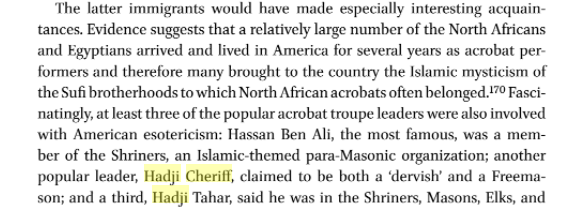
We have these references in The History of Conversion to Islam in the United States Vol II, which suggest that Sherif was a circus performer, and might have been Egyptian, and even a Sufi. Some Sufi religious orders are quite known for various practices that put them in a trance-like state, most famously the Whirling Dervishes but they number very little even in Turkey. From the book-

In 1890 we also have a clipping from a circus advertisement that clearly lists him as a “Gun Juggler”–

New York Clipper, July 19, 1890, pp. 291, 294, 295, 301, 304…. Hadji Cheriff, Arabian gun juggler

The real question that I think is important to answer as researchers is where did Hajji Sherif get the idea of twirling an unloaded rifle to entertain a crowd? One body of thought is that it might have come from his Sufi roots (if he was Sufi to begin with). Another distant train of thought is that it might be related to Yowla/اليولة, which is a traditional dance routine practiced in the Gulf Countries today, but can be traced back many years. Although not often using full-size rifles (imitation ones are used), and often using swords, there could be a connection. An important here is that traditional Yowla puts much more emphasis on the dance rather than skill with the rifle. The third option is that Sherif came up with the idea on his own of course.

Traditional Yowla performance-

https://www.youtube.com/watch?v=PUvX-1g9F7M

This is an example of Yowla with muzzleloaders today, similar to what Sherif would have had-

https://www.youtube.com/watch?v=cTFcMfPT22Q

Iran’s Head Mounted Thermal Optic from IPAS 2017 and Isfahan Police Demonstration

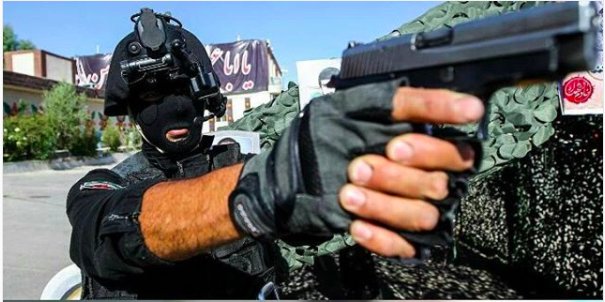
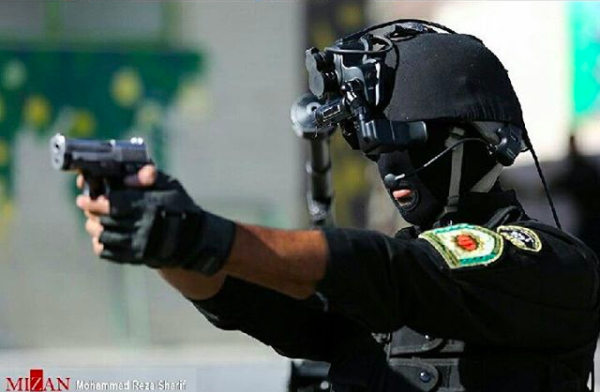
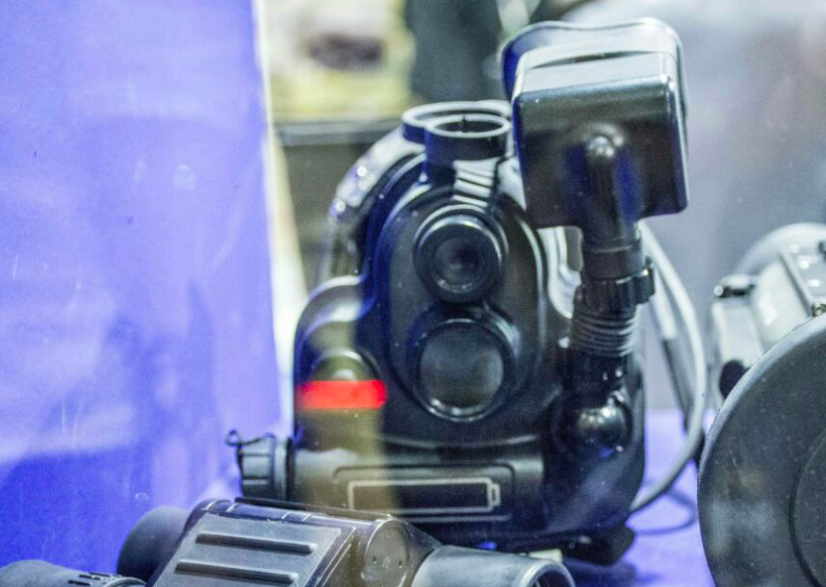
Notice the covered objective lens.

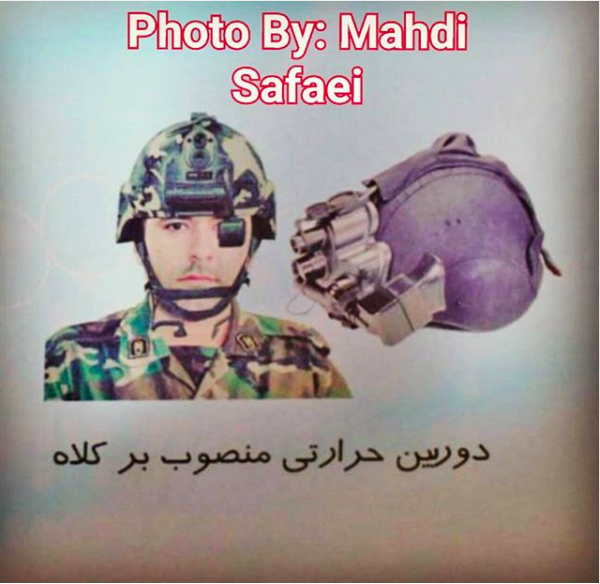
Photographs coming out of IPAS 2017 (Telegram source) and a recent demonstration put on by  Isfahan Law Enforcement have revealed what appears to be a battery powered thermal optic that attaches to a user’s helmet and has a single ocular lens attachment that covers the left eye. The optic “detects” through an objective lens on the helmet, which appears to project an image into the ocular lens. The fact that this optic is in use by what appears to be special Law Enforcement teams in Isfahan would make it seem that it has been in development for a while, and has perhaps even been available to Iranian defense forces for some time as well, due to Law Enforcement worldwide routinely lagging behind in equipment procurement.

From Farsi-“The heated (Thermal) binocular resting on a head/hat”
The optic is powered by what is most likely an AA battery inserted from the right side of the device. The two objective lens’ stay in the upper position throughout use, and are covered with a lens cap during daylight hours. The eyepiece swivels down on a ball mount for maximum flexibility.