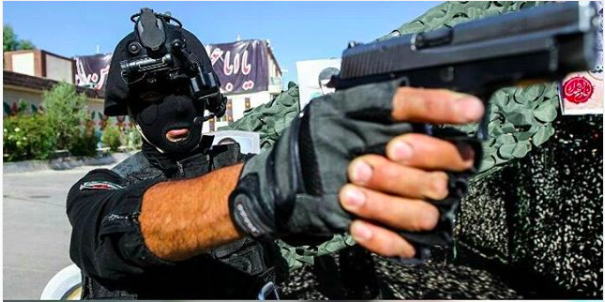
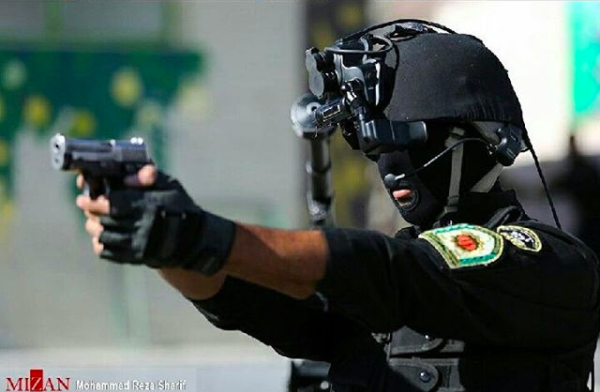
Iran’s Head Mounted Thermal Optic from IPAS 2017 and Isfahan Police Demonstration

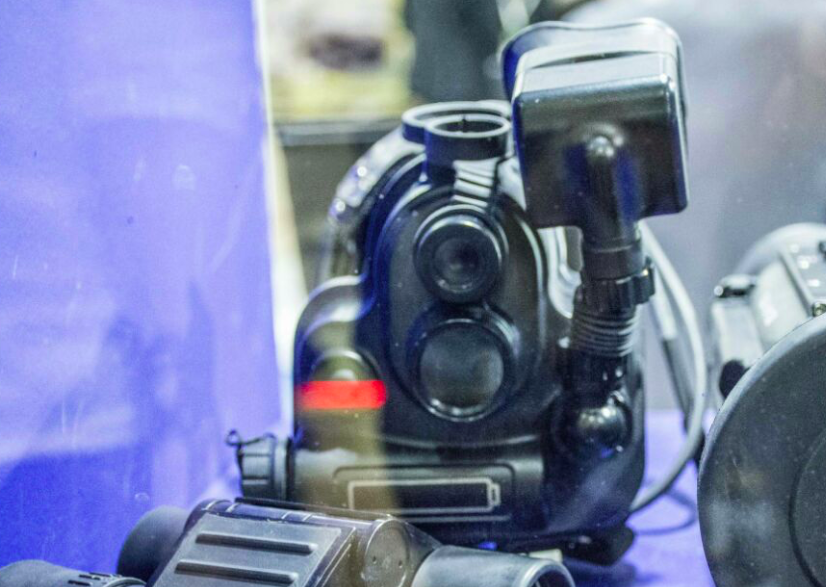
Notice the covered objective lens.

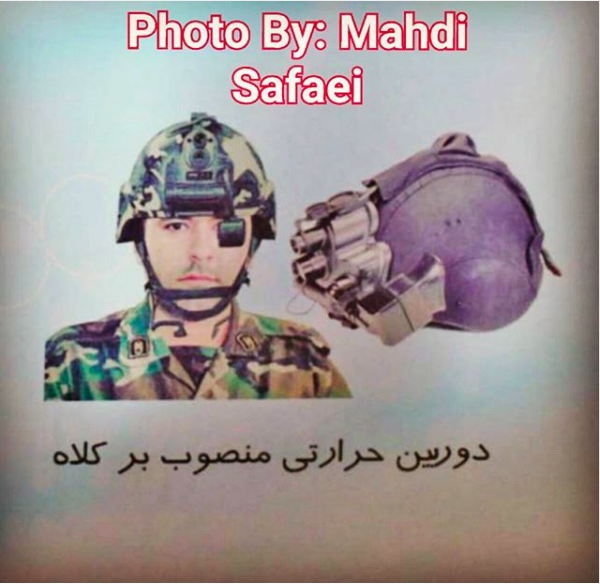
Photographs coming out of IPAS 2017 (Telegram source) and a recent demonstration put on by  Isfahan Law Enforcement have revealed what appears to be a battery powered thermal optic that attaches to a user’s helmet and has a single ocular lens attachment that covers the left eye. The optic “detects” through an objective lens on the helmet, which appears to project an image into the ocular lens. The fact that this optic is in use by what appears to be special Law Enforcement teams in Isfahan would make it seem that it has been in development for a while, and has perhaps even been available to Iranian defense forces for some time as well, due to Law Enforcement worldwide routinely lagging behind in equipment procurement.

From Farsi-“The heated (Thermal) binocular resting on a head/hat”
The optic is powered by what is most likely an AA battery inserted from the right side of the device. The two objective lens’ stay in the upper position throughout use, and are covered with a lens cap during daylight hours. The eyepiece swivels down on a ball mount for maximum flexibility.

A Closer Look at Iran’s Barrett M107 Copy, the Hoveizeh

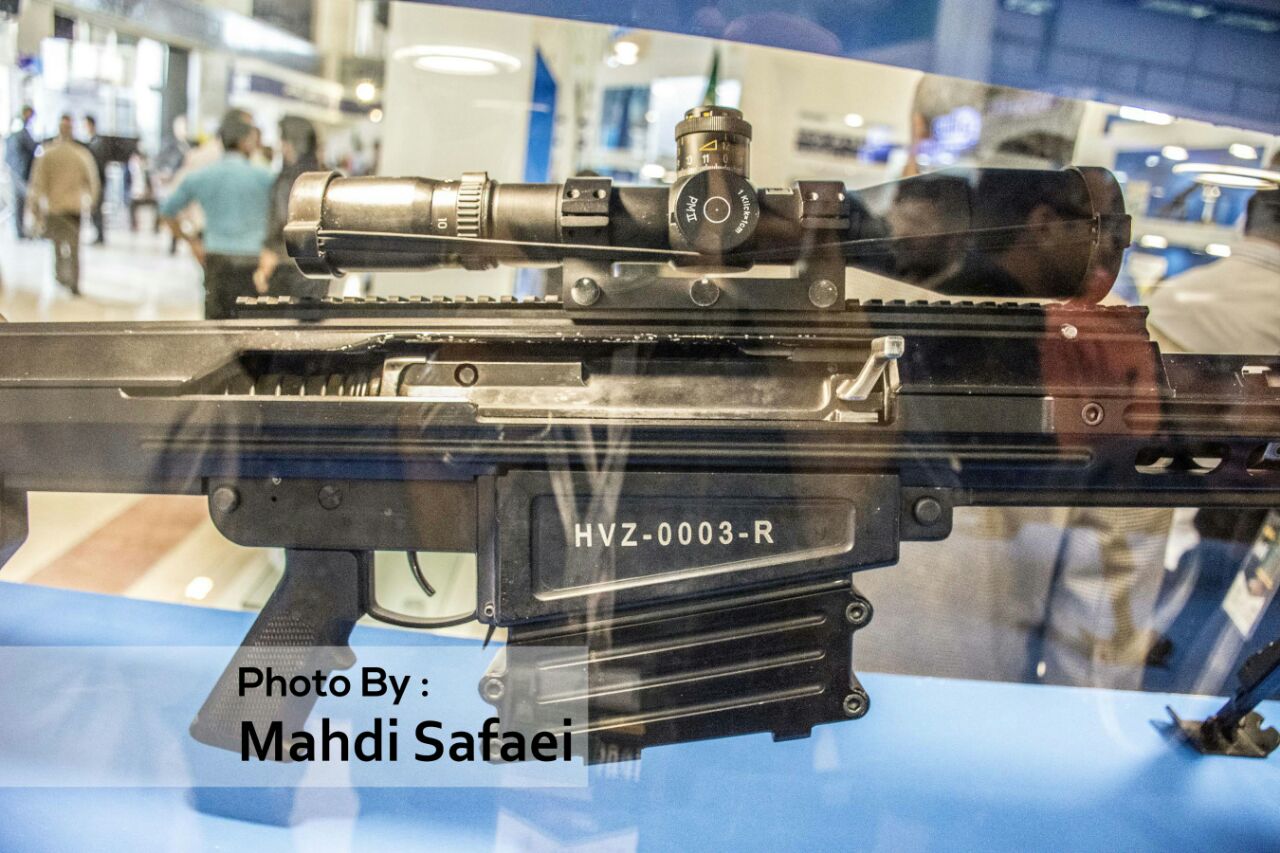
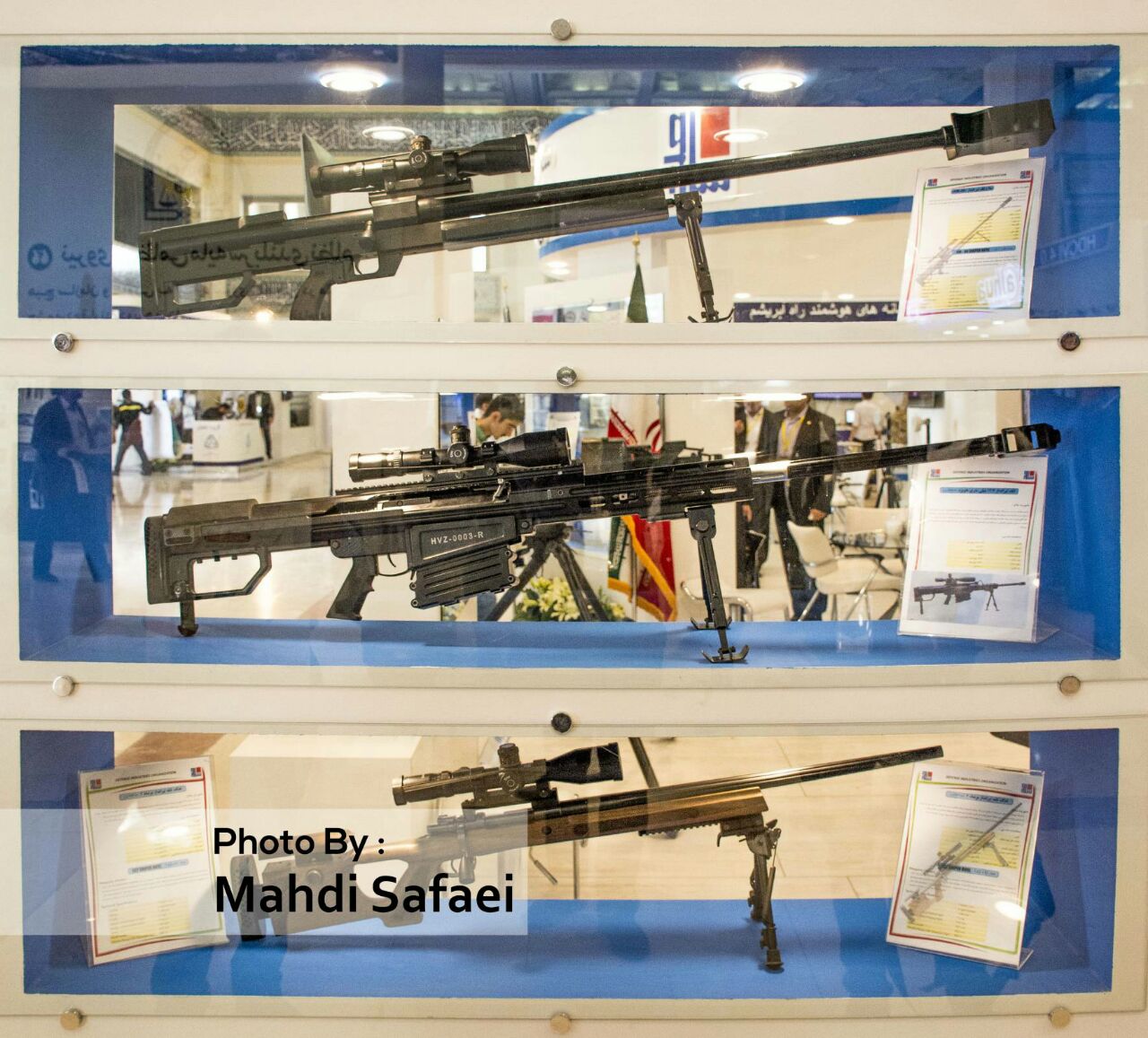
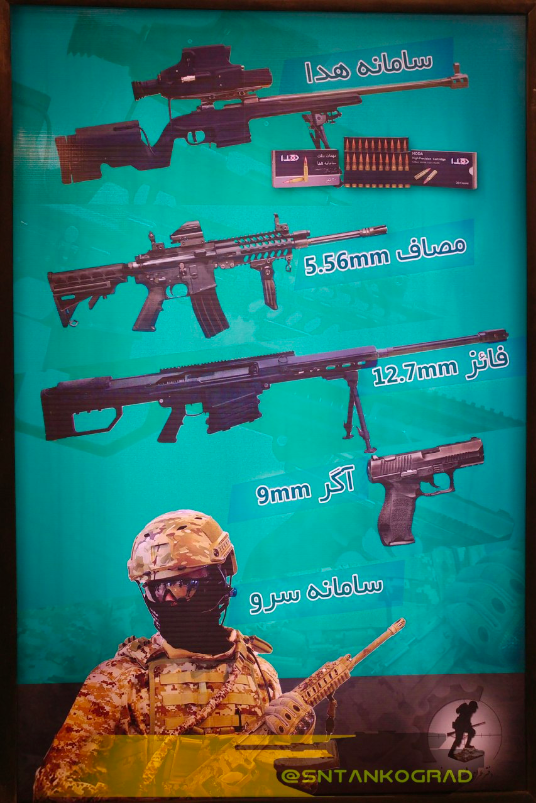
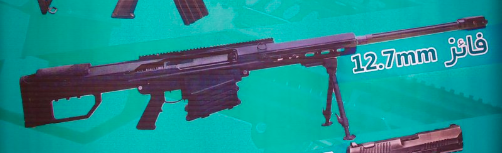
IPAS 2017 in Iran brought with it the introduction of the .50 BMG Hoveizeh anti-material rifle. Thanks in part to a popular Iranian Telegram channel we’re able to take a much closer look at the rifle and exactly what the Defense Industries Organization duplicated, and what was added. From what we can tell, the general layout and operating mechanism of the U.S. Barrett M107 was copied, but some of the exterior features of the weapon weren’t. One difference was the magazine which appears to be a polymer shell held together with screws, not unlike some Airsoft designs.

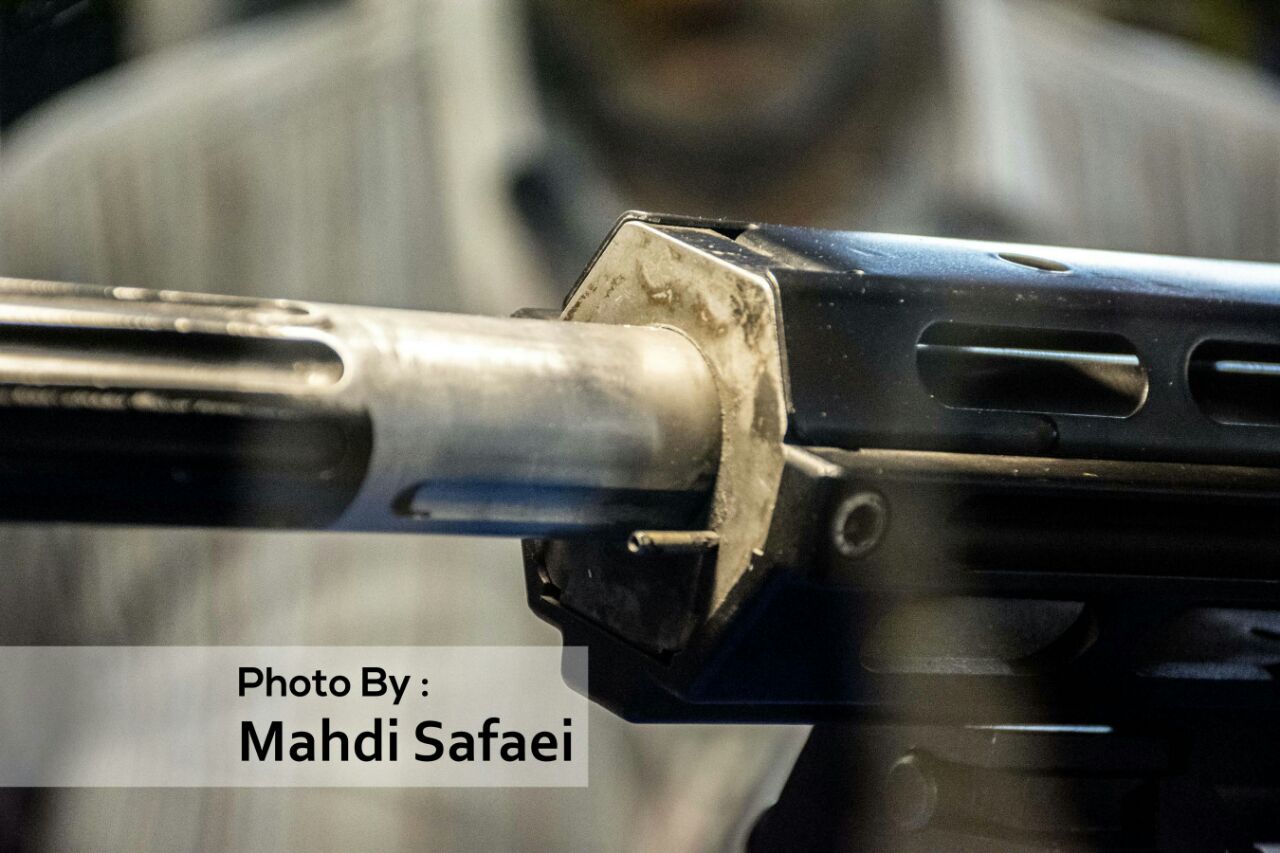
In this photograph the barrel bushing has an extra pin protruding from it that we don’t know the purpose of yet. Notice what appears to be a hex screw holding the upper frame to the receiver. In addition notice the flutes down the barrel.

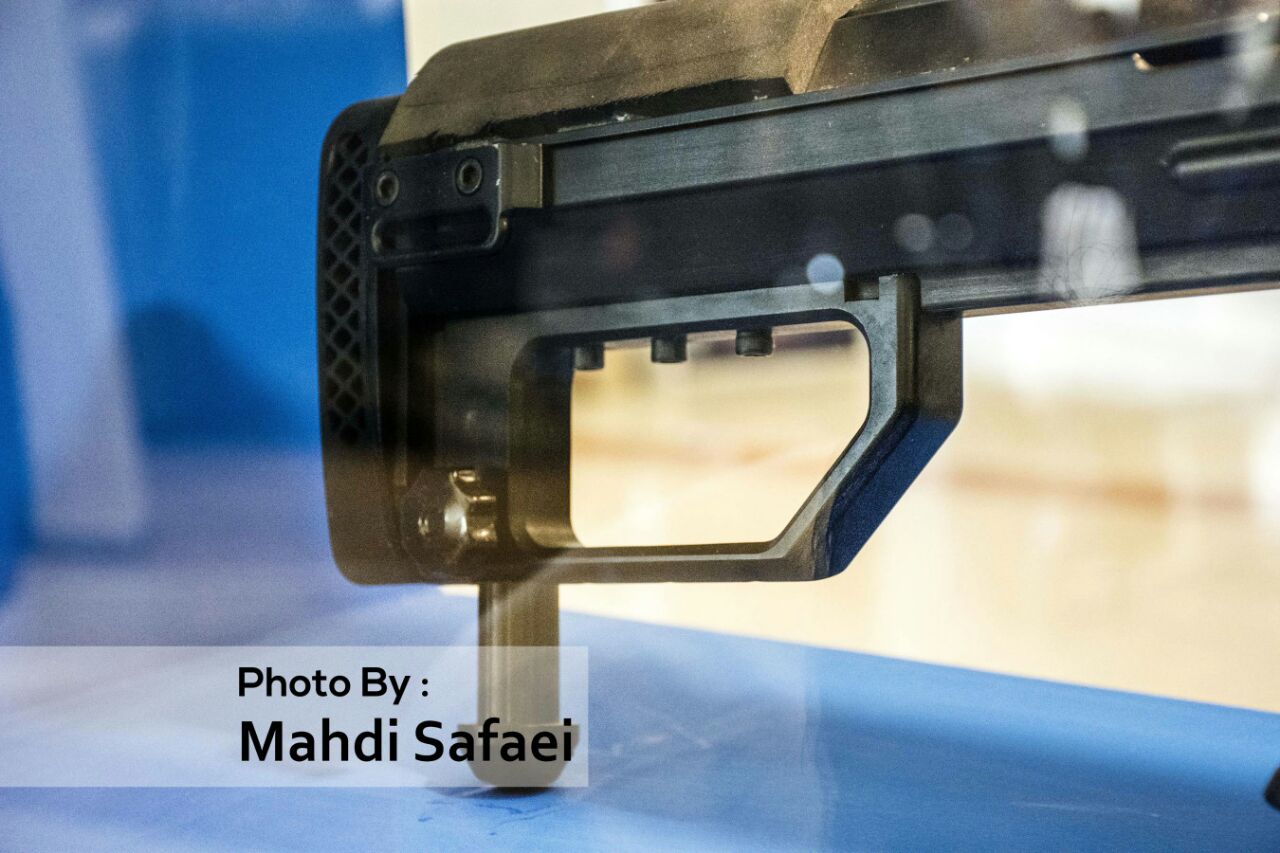
The sling swivel appears to be on a sliding arrangement where a user might be able to loosen the screws of the swivel and tighten them back down where it fits the best. However, the monopod and rear gripping surface looks to be stationary with the three screws anchoring it to the receiver of the rifle. 

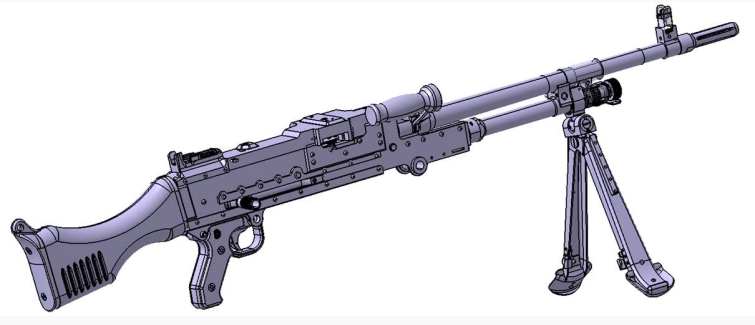
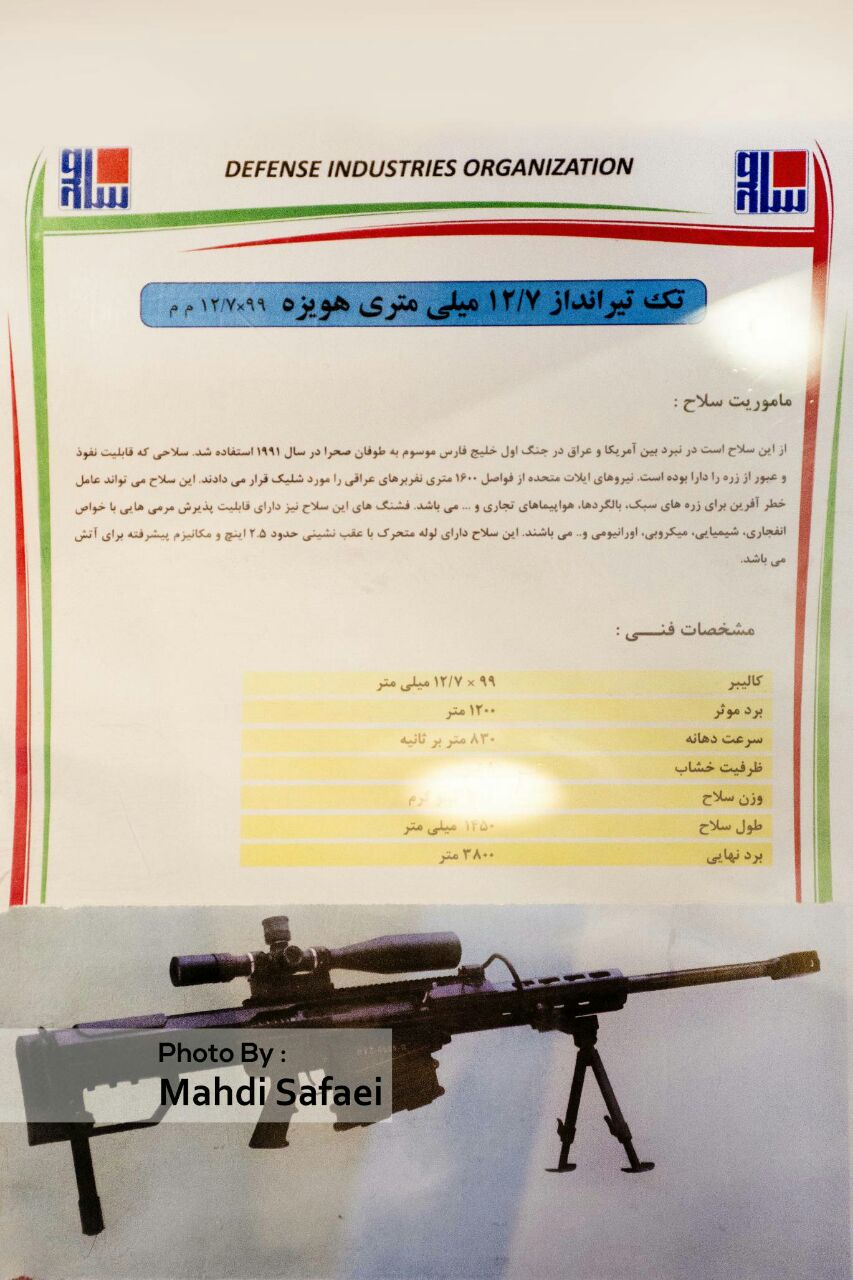
Notice the different bipods mounted on the rifle in the leaflet compared with the bipods mounted at the defense exhibition

A point of controversy lies in the name of the rifle itself. The majority of online material, show leaflets, and even abbreviated on the rifle itself on the magazine well is هویزه, however in this leaflet we clearly see the name, فائز printed next to the rifle.

Improvised Replica Firearms from the West Bank

In my previous article, we examined the Palestinian homemade Carlo submachine gun in use in the West Bank.

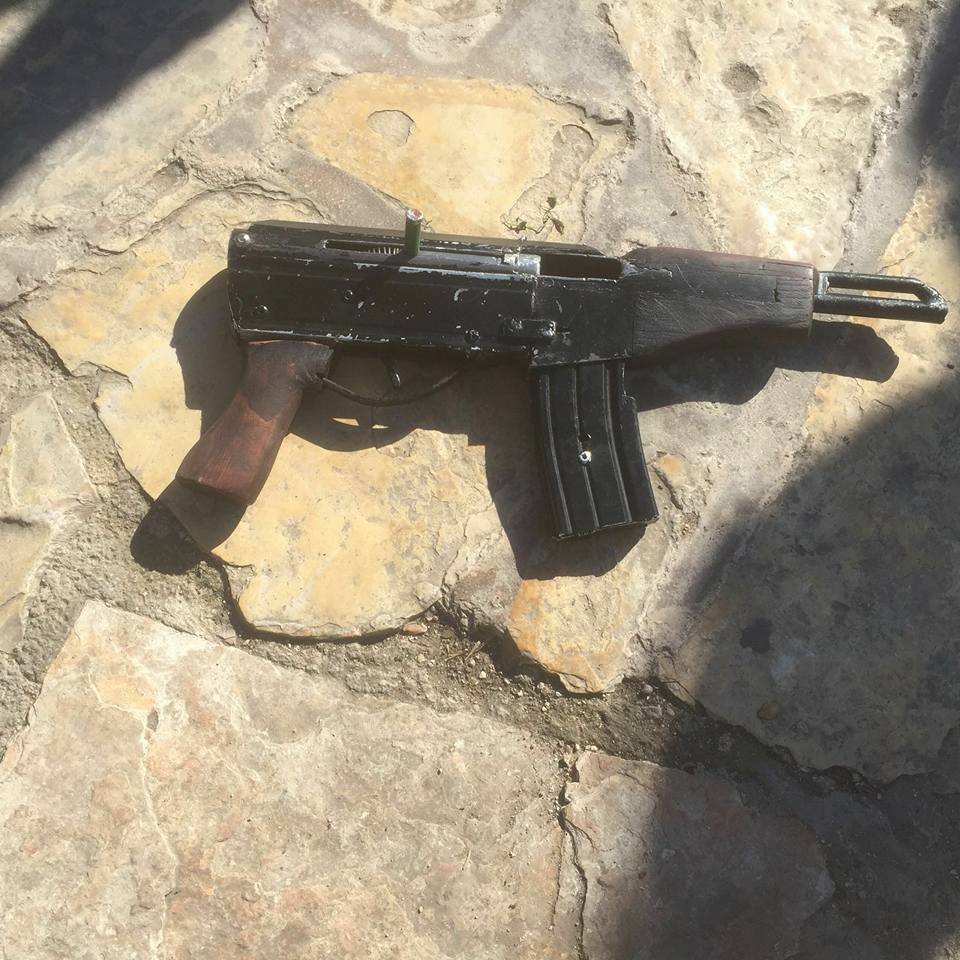
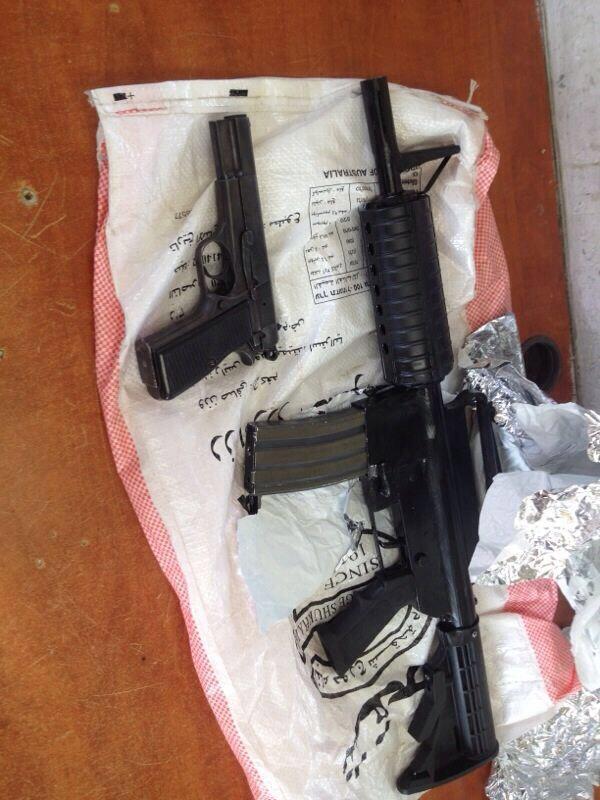
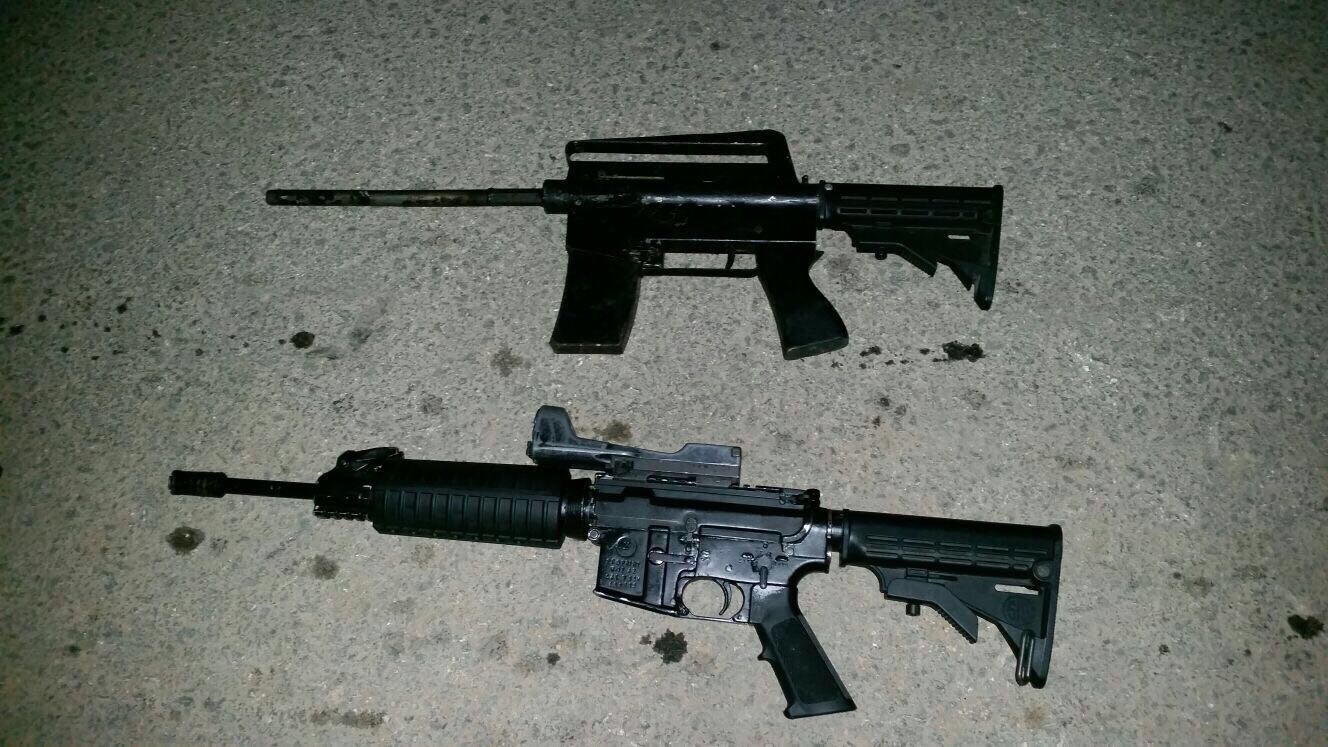
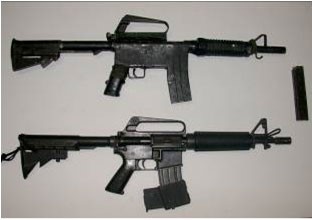
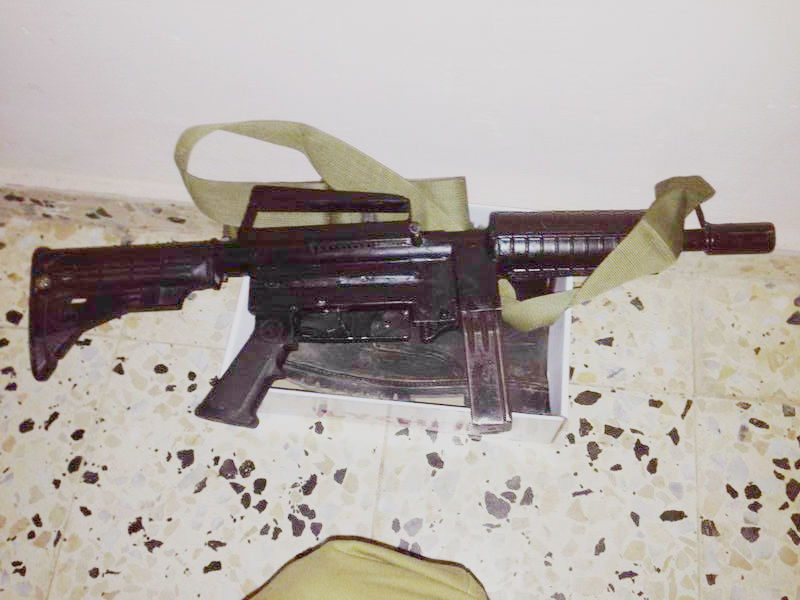
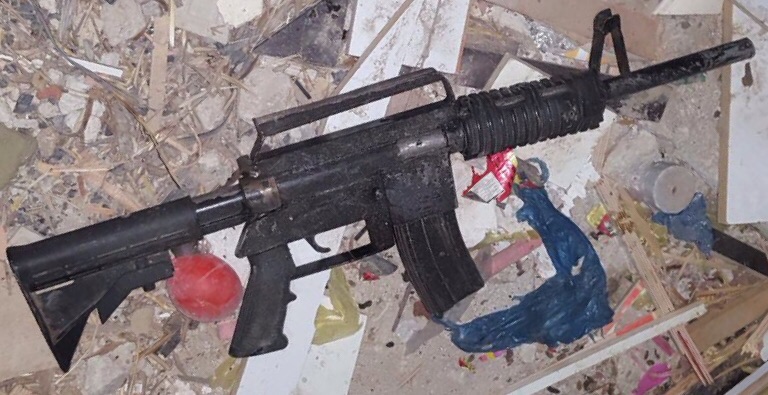
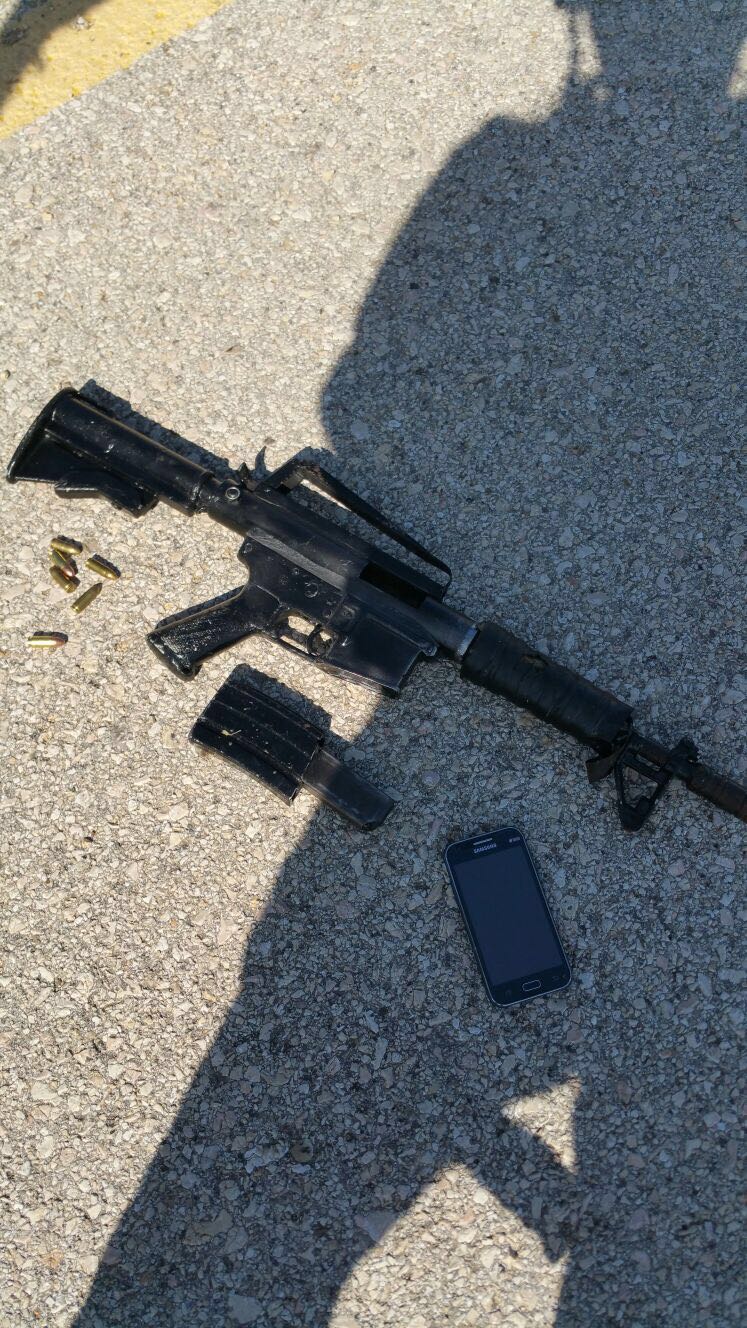
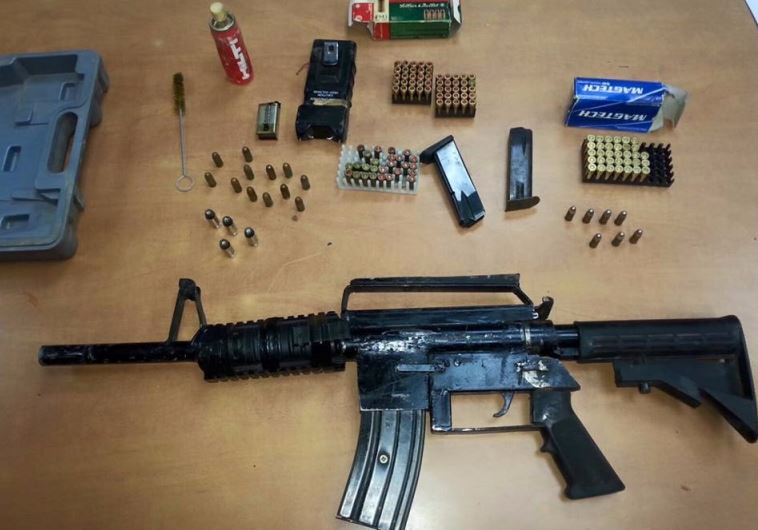
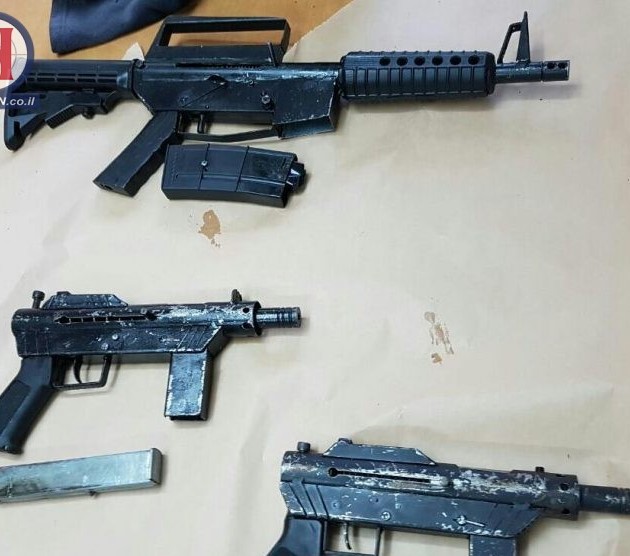
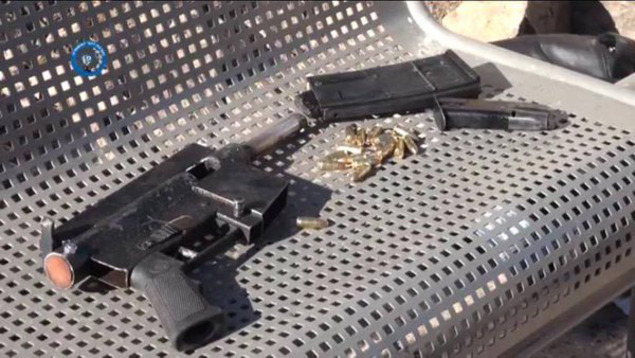
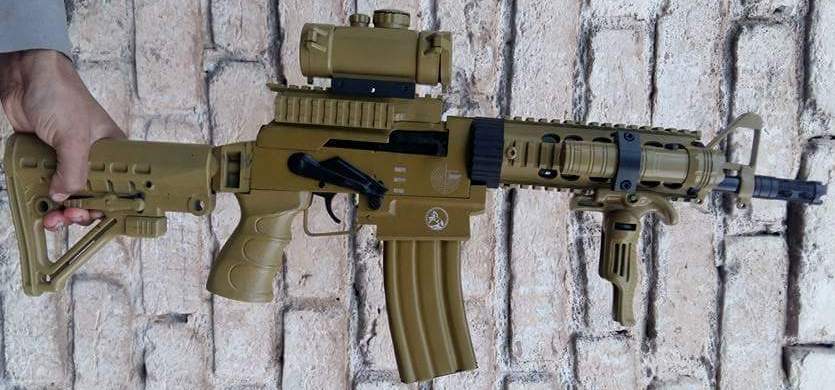
This article will examine the design and use of improvised firearms among Palestinians in the West Bank, that are otherwise known as “Replica” Carlo’s due to their similarity in appearance to the M4s and M16 rifles in use throughout Isreal that the designs are replicating. The majority of these weapons are 9x19mm NATO, fully automatic only, magazine fed, open bolt designs that are improvised from underground manufacturers that use machinery and materials purchased on the black market or outright stolen. Due to the variance in production and origins, there is no set standard of appearance for these weapons. Rather there is a general consensus that the appearance is identical to an M4 or M16 from afar, but that there are significant differences between individual models.

Motives for Producing Replicas and the Cultural Context

Availability

The prime reason to manufacture the Carlo is to resemble as closely as possible an M-16 or M-4 is the availability of furniture and magazines in Israel and the West Bank. Both guns were and still are a major part of the Israeli armament, used by the IDF, police, civil guard etc… Because of this availability of parts, Armalite based designs are favored when theft becomes an option.

From a manufacturing point of view, it makes sense to design your gun to match the existing furniture and magazines already available than to manufacture them along with the gun.

Status and Prestige

Guns have a significant role in the Arab tradition, centuries of existence in lawless regions made it essential to own weapons for self-defense and as a deterrence against other tribes who were also armed themselves with whatever they could get their hands on.

Although civilian gun ownership is largely restricted and banned by both Israel and the Palestinian Authority many Arab families in the West Bank and Israel are determined to keep their arsenals and enlarge them as much as possible.

Alongside the practicality of owning a gun the guns are symbols of status and wealth. A family or an individual that can afford high-end weapons rather than a homemade one enjoy prestige over those who compromise with the local workshop products.

Acquiring a real military grade firearm might be expensive and the common garden variety Carlos are too widespread. The Carlo replicas are a way to bridge that gap, have a more expensive and awe-inducing gun without the cost of acquiring the M4 that the replica is based on.

Imitating Popular Palestinian Figures

Many in the Arab population view the terror organizations and terrorists as freedom fighters and role models, naturally, there are those who want to imitate these heroes and want to have their guns be as identical to those who they admire. If the genuine guns and ammo are out of reach then the replicas become the alternative, relatively cheap and available supplies of ammunition to practice and show off. It is then easy to understand why some workshops making the replicas make great efforts to produce almost identical copies.

Infiltration

It has been speculated that the M4 replicas could be used for terror attacks against Israeli civilians or IDF soldiers. Due to the apparent shape of the replicas being similar to the M16 service rifle used by the IDF. This will confuse soldiers and security guards, mistaking the identity of terrorists as IDF soldiers, making them hesitate to shoot.

A fair theory, however, none of the individuals caught with these replicas has ever been caught with an IDF uniform to match the gun. Currently, the records show that after numerous attacks done by Carlo wielding terrorists none were carrying any replicas. All of the photos released by IDF and police spokesmen show a regular Carlos.

Stolen or Lost Weapons and Magazines

An obvious source for both guns and their magazines are various stocks of small arms already existing in Israel. IDF, police, border guards, private security, armed civilians and many other groups are armed with M16s and M4s. This creates an abundance of stock from which guns and magazines can be acquired, by searching IDF training areas or breaking into a police officer’s home for example.

Commercial market

Several Israeli companies, such as FAB and CAA, known in the U.S. commercial gun market for their products, are also producing and selling M16 and M4 furniture in Israel. Many IDF soldiers individually choose to upgrade their weapons at their own expense. Such equipment is sold regularly and without any background checks and it stands to reason that some of the replicas are using such legally purchased furniture.

Paintball and Airsoft Replicas

There were some on Israeli gun web forums who speculate that paintball and airsoft replicas could be the source for the Carlos replicas’ receivers.

Indeed such guns could be cannibalized to provide the Carlo replica receivers.

The 9x19mm NATO ammunition produces less pressure than intermedium cartridges do so the light structure of the paintball and airsoft might withstand the additional pressure.

However, thought technical plausible, photos taken of captured Carlos or those surface in the Arab social media don’t indicate that paintball and airsoft are used.

The replicas’ ‘receivers’ all appear to be workshop made with all the typical welding seams, rivets and out of proportions dimensions.

Embedded Magazine

Curious readers might wonder how open bolt 9x19mm submachine guns are fed with 5.56x45mm NATO STANAG magazines.

The answer is simple, the craftsmen making the guns mimic the real guns embed pistol or Uzi 9x19mm magazine inside the real STANG magazines.

Similar to Matryoshka dolls, these magazines are inside of the weapon with few exterior modifications to the STANG magazine.

Those rivets hold the inner magazine in place.

Outside of the weapon the inner magazine is revealed protruding out of the STANAG housing magazine.

Such arrangement of small caliber magazine housed inside bigger caliber magazine shell is unusual but not unique, for example, the Philippines Armscor M16 22 is a 22LR semi-auto rifle dressed as an M16A1 with a matching STANAG size magazines containing 22LR magazines inside
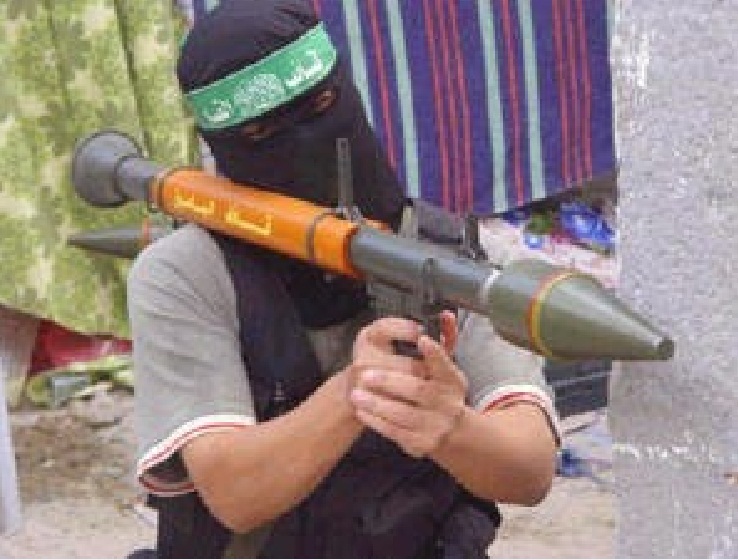
Yassin RPG – The Underground RPG of Gaza

Due to the Arab-Israeli conflict in Palestine, Hamas with its military wing al-Qassam brigades has developed their own tools of war in order to preserve self-sufficiency in order to not be affected by the blockade made on Gaza strip.

This article will spotlight on one of the more interesting craft produced rocket launchers in Gaza , which is literally underground since their production facilities are protected in underground bunkers from IDF air raids and artillery strikes.
It is designed and manufactured by Hamas, but they distribute the launchers to other resistance troops working in Gaza, including Fatah and the PFLP (Popular Front for Liberating Palestine).

History

The weapon is named after Sheikh Ahmed Yassin, the founder and the spiritual leader of Hamas who was assassinated by Hellfire missiles shot from an Israeli AH-64 Apache Helicopter gunship on March 22, 2004, at the age of 67.

It was designed by Adnan al-Ghoul who was also assassinated by an Israeli air strike on October 21st, 2004.

Characteristics

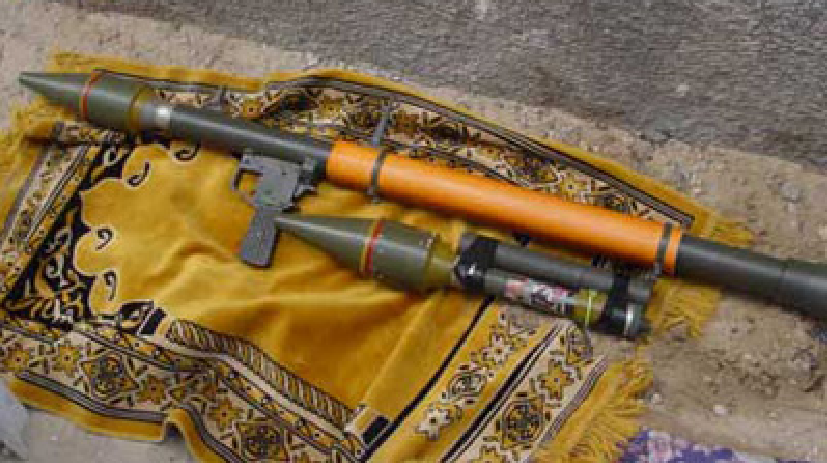
The Yassin RPG is a unique design that resembles the RPG-2 combined with RPG-7 with some improvised design features, From RPG-2 it took the launching tube design and the warhead external shape and the rocket motor which are very simple, but to improve the performance they added some features from the RPG-7 such as the nozzle at the launcher’s rear to deflect recoil generated by launching the rocket, they also added a rocket booster to be attached to the propelled grenade to extend it’s range, and the internal shaped charge of the warhead is enhanced as well.

The manufacturing process occurs in underground workshops using ordinary shop tools, but the conception and engineering of the weapon seem to have a high degree of sophistication and professionalism given the lack of technology of the design.

In Action
According to the continuous improvements of armor in Israeli armored vehicles, the RPG is believed to be not effective against them. However, Saladin brigades (the military wing of the Popular Resistance Committee in Gaza) claimed to destroy a Merkava Mk.3 MBT by targeting a weak point of the tank. Yet, the weapon is very effective against brick fortifications and soft-skinned armor as it can penetrate a 21 cm steel plate from 150 meters.

Specifications 

Model : Yassin RPG

Designer : Adnan al-Ghoul

Type : Anti-Tank, Anti-Personnel

Place of Origin : Gaza, Palestine

Manufacturer: al-Qassam brigades, R&D unit

In Service: 2004 – Current

Weight : 7 kg (15 lbs)

Length : 95 cm (37″)

Caliber: 40 mm rocket engine ; 85 mm warhead

Muzzle velocity: 295 m/s

Effective range: 300 m

Sights: Iron sights

Differences between RPG-2 (top) and RPG-7 (bottom)
Yassin RPG featuring the combination of RPG-2 and RPG-7

Diamond Arms Company of Darra Adam Khel

Darra Adam Khel is a town in Pakistan where the trade of many locals is the manufacturing of firearms and ammunition. It is normally hard to find information concerning any new guns of the local masters. However, some of these shops started using the Internet as a marketing tool and are now presented in social … Read more

IWI X95s, TAR-21s in Nigeria

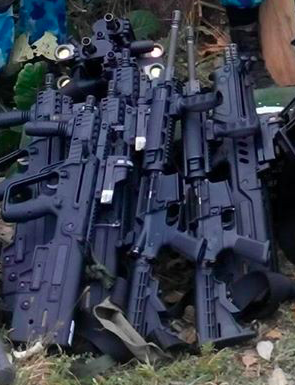
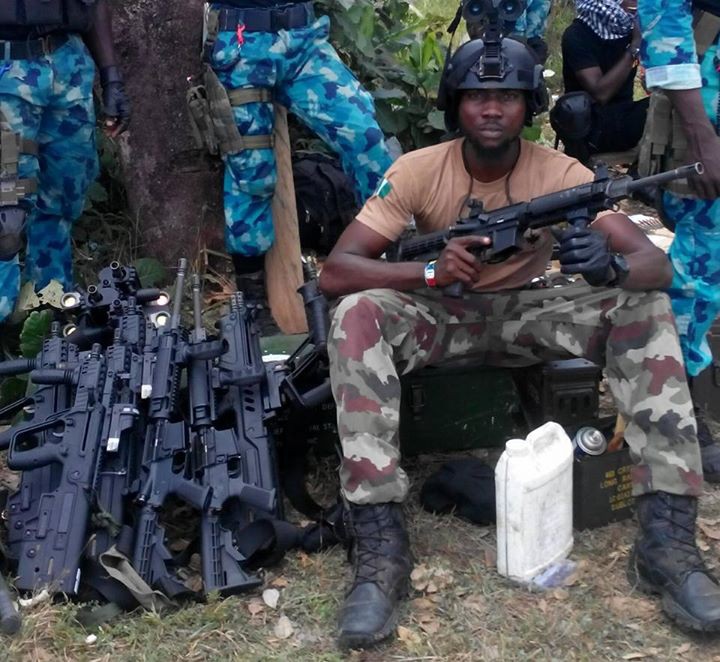
The Israeli 5.56x45mm Tavor is no stranger to the Nigerian defense forces, with the TAR 21 being introduced from Israel in a short barrel variant (around 14 inches) several years ago, and the X95 version seen in Nigeria in 2016 (possibly issued earlier). This photograph of a Nigerian soldier posing with stacked IWI rifles, some being the TAR 21 while others being the X95 versions came out in 2016 on the Nigerian public forum Nairaland, along with numerous other photographs of the defense forces.

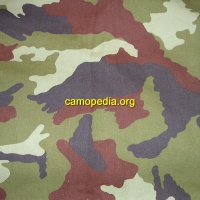
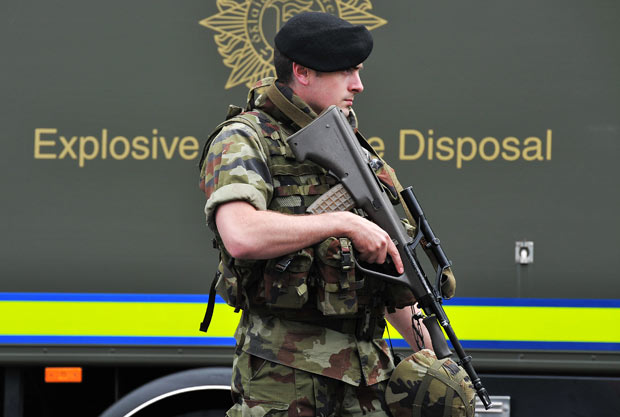
Interestingly he is wearing an Irish Army camouflage pattern introduced in the early 2000s, known as DPM or “Paddyflage” among Irish troops. Image from Camopedia–

Book Review: The Afghan Way of War

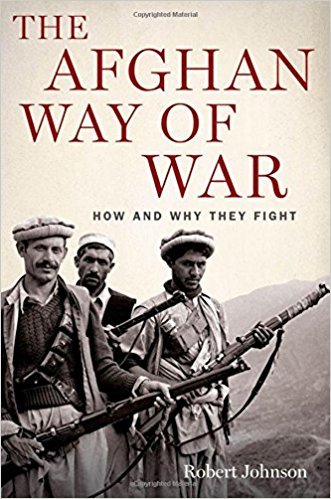
Although former British Army officer Robert Johnson wrote his book, “The Afghan War of War” in 2011, his conclusions and observations are just as valuable, if not more valuable today than ever. The premise of his book is that very few authors, officers, or politicians have throughly studied the Afghan side of many of the conflicts that have taken place in Afghanistan, whether it be Afghans against foreign invaders/occupiers, or civil war within the country such as during the 1990s. What I especially liked about the book was a number of very useful points that Johnson raises, that I honestly had not thought of before. I’ll summarize some of these points below, as these were my key takeaways from the book.

A Nation of a Thousand Tribes

Johnson goes to great lengths to make the point that Western observers have seen Afghans as “unchanging”, the “Graveyard of Empires”, and “fierce tribal fighters”, and this has stereotyped impressions of the Afghans since the first Anglo-Afghan War in the 1840s. Throughout the book we have countless counter-examples where this doesn’t seem to be the case. Where Afghan tactics have changed, altered, and have been reactive to the threats faced, in addition to being proactive and forcing Western troops to be constantly on the defensive.

But there is one constant that hasn’t changed, and that is the tribal and group dynamics that have existed for several hundred years. What we see is that instead of seeing Afghanistan as a single entity, or even an ethnic group as an entity, what is really going on is hundreds of individual tribes, sub-tribes, clans, and families that are essentially looking out for the best option for their individual group. Whether they ally with the British, or with the King, whether the Mullahs decide to go to war at all, whether peace is on the table, etc… Any of these decisions are made for the benefit of the particular group (tribe, clan, village, etc…). And these often change. What is beneficial for a village one month, may be detrimental for it the next. This means that to the British, Soviets, or Americans, it can be increasingly frustrating trying to maintain alliances and agreements.

Something that Johnson doesn’t mention, but a personal observation that I’ve made is how economy plays into these decisions. The lack of a stable exportation or cultivation of any natural resource (other than crops and opium) has been a limiting detractor throughout the countries history and still affects national security today. But when local tribes and villages can’t rely on natural resources like oil, mining, etc… the need to fight tooth and nail for alliances, positions, and funds becomes even more apparent.

Foreign Invaders Unify Afghans

In the example of every invading or occupying force, one of the constant themes is that one of the only forces that has ever truly united Afghans of different ethnic origins in some fashion has been the need to expel a foreign one. Johnson doesn’t point this out explicitly but this is evident in his descriptions of the country before several conflicts. The state of the country under the King appeared to be on the brink of falling apart on numerous occasions, when senior leadership pushed for further hostilities against the British or during the time of communism, against the Soviets. Even under the Taliban during OEF, the need to unite under an Islamic banner instead of an Afghan, or Pashtun one was strategically necessary to be able to sweep tribal differences aside.

Differences in Technology

The first Anglo-Afghan War saw the widespread use of muzzleloading rifles and muskets on both sides of the conflict, with the British armed with the Brown Bess, and the Afghans with the Jezail muzzle loading rifle. Apart from the British cannon and cavalry, the two forces were somewhat equal in terms of actual hardware.

However in the second Anglo-Afghan War this dynamic dramatically changed with the introduction of breech-loading rifles that could not only be reloaded quicker, fired faster, but also more accurately and further. This changed the way Afghan tribesmen attacked British columns. They had to close in faster, not allowing the British to use their artillery, and often attacked at night.

Similarly, in the war against the Soviets, the use of Stinger MANPODS was brought up. The popular misconception is that Stingers helped win the war. Although they did strike fear among Soviet helicopter pilots, especially the Hind attack helicopters, their introduction was too late to make a difference in 1986, when the Soviet Union had already decided to being fighting a delaying action instead of an all-out offensive. In addition, by altering their flying practices to fly at higher altitudes, the Soviets realized they could go outside of the Stinger’s capabilities and lessen the risk.

In Operation Enduring Freedom, the prevalence of IEDs took precedence over light Infantry attacks that the Taliban initially tried to use against the British in Helmand, but suffered costly casualties due to the artillery and air assets. IEDs used by the Taliban deserve to be studied much more in detail due to the complex escalation’s and counter escalation’s executed on each other throughout the entire campaign.

Operation Enduring Freedom/Operation Herrick Observations

One point I think the book could have been improved on is the OEF/Op Herrick. In retrospect, this isn’t really Johnson’s fault because the war is still ongoing, and he can’t have access to many of the after action reports, or even just the massive amount of experience associated with the current operations from hundreds of thousands of veterans and currently serving troops. He picks out specific situations and TTPs that are usually from the British perspective, that doesn’t typify what other forces might have faced in their fight against the Pashtun lead Taliban insurgency.

His conclusion though is flawless in that he identifies that any considerable gains going forward will have to be an Afghan solution to an Afghan problem. Personally I think this has to have enormous emphasis on the countries economy, and being able to become prosperous on exporting natural resources already present in order to actually provide some capitol for a government entirely propped up on international aid money.

The Afghan Way of War is available on Amazon for $35.95.