Saudi Adds AK-103 to MIC Production Line Up

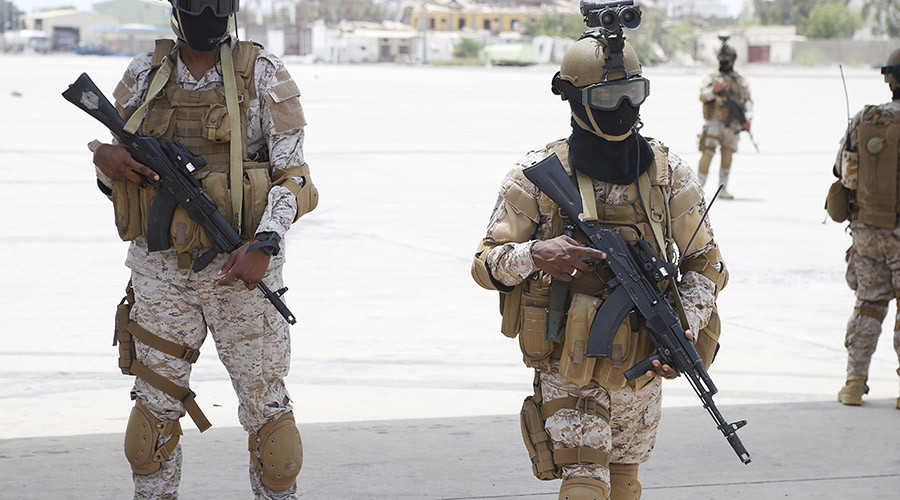
The Russian defense export company Rosoboronexport has recently announced within a larger agreement that the Saudi Arabian state owned Military Industries Corporation will soon be manufacturing 7.62x39mm AK-103 rifles in the Kingdom, along with ammunition. Saudi Arabian armed forces are already using the AK-103, along with the 5.56x45mm NATO G36K within the National Guard, but these are mostly imported from Russia itself. G36Ks have already been seeing local production for some time, many of which are ending up on arms markets in Yemen on the side of the Houthis. One of the main reasons for this move is possibly due to the cheaper cost of producing the rifles rather than buying them outright.

From the news report on Arab News-

Russia’s Rosoboronexport said it has struck an initial licensing agreement that could lead to the Kalashnikov being made in the Kingdom.
The agreement covers the “production of Kalashnikov AK-103 assault rifles and cartridges for various purposes,” a statement said.
A memorandum of understanding between the two sides could also see Russia supply Saudi Arabia with Kornet anti-tank guided missile systems, rocket launchers and automatic grenade launchers.
The preliminary deal also involves the transfer of knowledge in the defense field to Saudi Arabia. The Kingdom has set a target for half of its significant defense budget to be spent within the country.
This plan now includes the “localization” of the AK-103 assault rifle and its ammunition, according to the Saudi Press Agency.

Improvised Mauser Suppressor (OIF)

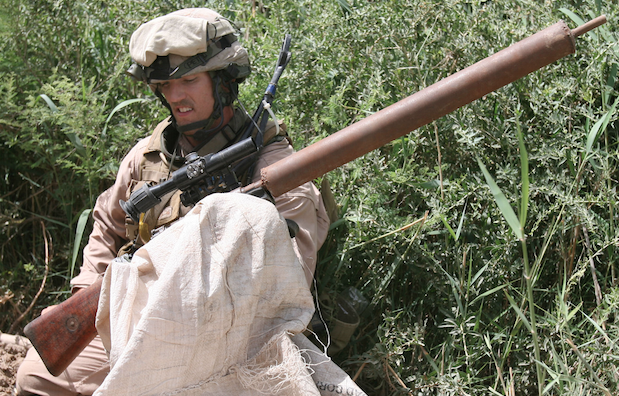
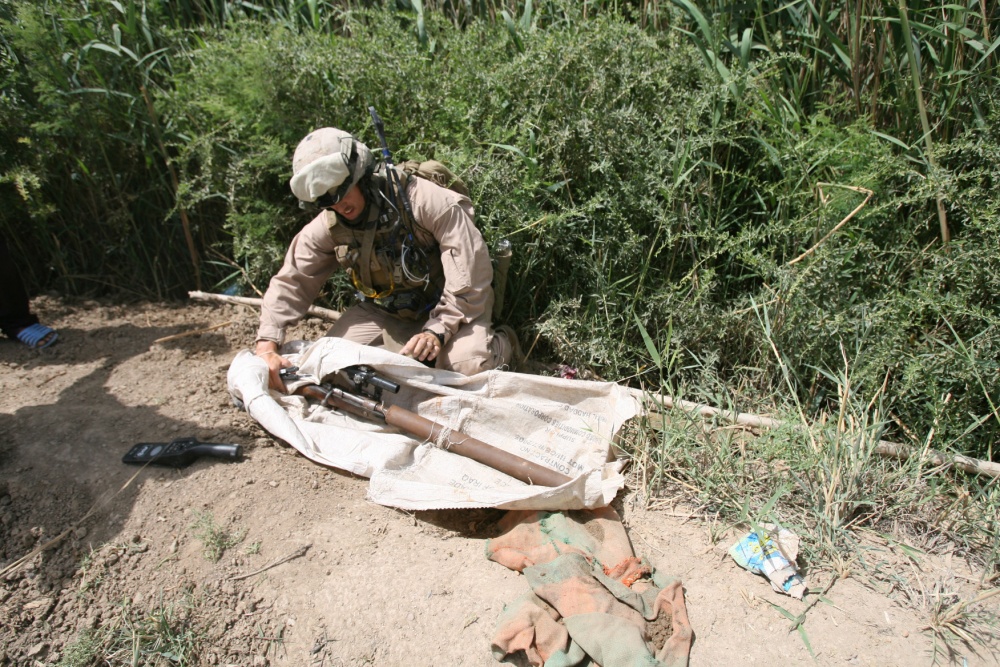
This photographs was posted on the U.S. Department of Defense Media Activity’s public domain website DVIDS along with another one featured on Silah Report. Both depict improvised suppressors captured by U.S. Infantrymen while on operations in Iraq.

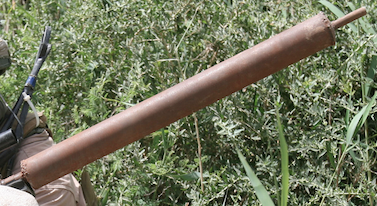
The rifle appears to be a Mauser 98K with the stock sawed off just past the chamber. Because of the proximity to Iran and the incredible amount of Iranian surplus found in Iraq, it would appear from conjecture that this rifle is a Persian Mauser, manufactured in the time of the Shah in the 1940s-50s, later being replaced by the M1 Garand through U.S. Foreign Military Sales programs in the 1960s. Unlike the previous M16A1 rifle we posted about, this improvised suppressor appears to have involved much more work, with a much larger diameter pipe being welded around the actual barrel of the rifle at both the front and rear of the pipe. There is a section of much smaller diameter pipe protruding from the main one, but this doesn’t appear to be the barrel.

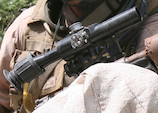
The scope mounted on this rifle is a Cold War era PSO-1 optic designed to mount on the optics rails usually riveted to the left side of a Kalashnikov or Dragunov receiver. It is unclear how this is mounted to the Mauser’s wood stock, unless an actual Warsaw Pact rail were somehow screwed into the wood stock itself.

Iraqi Insurgent Improvised M16A1 suppressor (OIF)

This photograph was posted on the U.S. Department of Defense Media Activity’s public domain website DVIDS along with another one that will be featured on Silah Report. Both depict improvised suppressors captured by U.S. Infantrymen while on operations in Iraq.

From the photograph description-

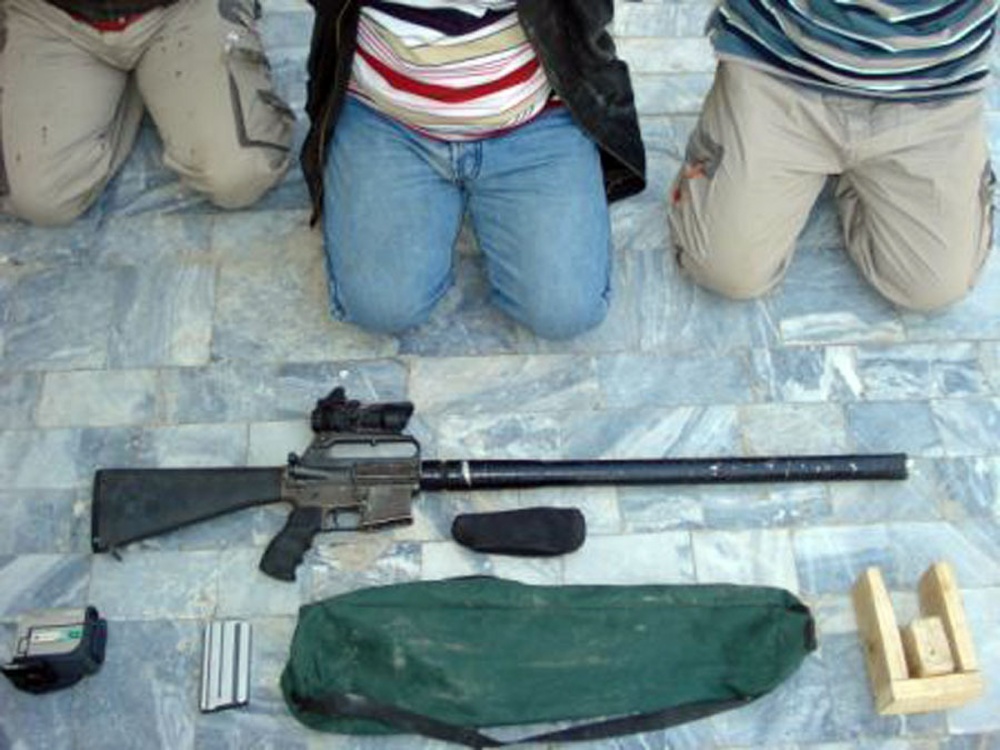
The confiscated items lay on the ground in front of three men arrested as a suspected sniper team in the northeast Baghdad neighborhood of Haay Ur, Jan. 17. The men were arrested by the 3rd Battalion, 4th Brigade, 1st National Police Division and the 3rd Battalion, 42nd Brigade, 11th Iraqi Army Division as the men attempted to carry out an attack on American forces in the area.

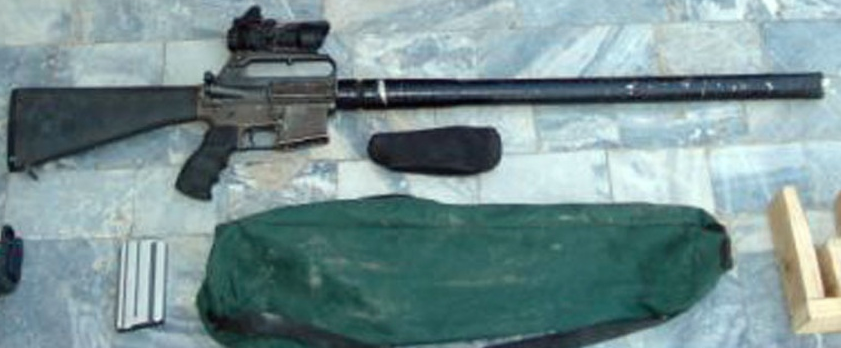
This first photograph depicts what appears to be a 5.56x45mm NATO M16A1 self-loading rifle due to the lack of a rear sight as a separate unit although the photograph is a little blurry to confirm this. The improvised suppressor appears to be some sort of muffling material wrapped around the standard 18 inch barrel of the M16A1, and then continues past the standard muzzle for about a foot of length. From the bulge just past the chamber, it appears that the standard barrel nut has been retained, and one can notice the taper of the barrel and gas tube in the shape of the suppressor. Mounted atop the carrying handle is a Trijicon 4×32 RCO. The grip is not a standard A2 grip and is most likely of commercial after market manufacture.

If the self-loading rifle is indeed an M16A1, the rifle might be a black-market trade from Lebanon or Israel where the M16A1 has seen extensive use by multiple armed entities. The presence of the pistol grip would support this assertion, as it could have been added along the way. It certainly isn’t from a captured U.S rifle. The chances of a Soldier or Marine mounting an after-market accessory such as a grip are extremely slim, and the chances of it being captured are even slimmer. In addition, the 20 round “Vietnam Era” magazine is further indicative that the rifle was initially fielded in Lebanon or Israel due to the amount of surplus equipment being sold to those countries.  It probably isn’t from a private military company either as M16A1s are rarely seen in use among these entities, 14 or 16 inch barrel length M4s being the preferred AR variant.  The Trijicon however would certainly appear to be a U.S capture or otherwise lost piece of gear, with the scope neoprene cover indicating that it was most likely newly issued or rarely used when acquired.

Construction of the improvised suppressor is harder to identify. It would appear that it is some sort of muffling or noise absorbing material stuffed inside a pipe( possibly metallic) the length of the entire suppressor. There appears to be another pipe, one of larger diameter than the main one, that connects both the main pipe and the barrel nut, thus enabling the contraption to stay in place. The entire pipe further appears to be wrapped in black tape of some sort, possibly to prevent any shine from a position of concealment. Whether or not the suppressor actually works, or how long it can adequately suppress is unknown at this point.

Sealing the deal on this capture is the video camera present, showing that the insurgents captured here were probably using the camera to film their shots on U.S troops for propaganda value, eerily  to the “Jubba” sniper videos that plagued troops based in Baghdad. Unconfirmed rumors about the “Jubba” sniper have stated that the actual shooter was using a Remington 700 shooting out of a loophole of a taxicab. A set up such as this suppressed M16A1 could just have been used in the very same way.

Silah Report Has a New Look!

Silah Report recently undertook a massive transformation, moving servers, changing appearances, working out the new kinks. Because this website is personally run, all this had to take place between actual jobs and other commitments. But we hope you like the new appearance, it certainly is much more professional than the previous one.

We will also update the country database. Originally we intended the country database to be an all encompassing snapshot at the small arms history within a particular country. Although ideal in theory, in practice we found out that it was far too much work. Instead, what we want to do now is to maintain the individual country pages, but ONLY concentrate on small arms exported/imported in large quantities into a country, and small arms produced domestically, either under license or designed indigenously. Essentially we want to recreate what World.Guns.Ru, which is fantastically run by Maxim Popenker, but centered around small arms from the MENA and Central Asian region.

The goal of this database is to allow researchers and future writers to be able to reference back to it, so they can historically piece together how a particular small arm came into a country, or where it might have been bought from, and especially in what time period.

Suppressed Tariq Handgun

This image appeared on a recent propaganda video with images attributed to Hayat Tahrir al-Sham (HTS), or an Al Queda affiliate group. Among a collection of weapons seized by HTS from a Daesh cache is what appears to be a suppressed Iraqi Tariq handgun. The location of the seizure was in Idlib. The Tariq is an Iraqi … Read more

The “Carlo” of Palestine

A fatal stoning attack against a civilian car and its driver at the Jewish New Year eve, September 13th 2015, marked the semiofficial beginning of the “Third Intifada”, also known as the “Knife Intifada” or “Stabbing Intifada” or as more accurately could be could the “Individuals’ Intifada”. Unlike previous rounds of violence led by major terror groups like Hamas or militia groups associated with the Palestinian Authority, the “Individuals’ Intifada” attacks are almost exclusively done by lone wolfs or at most pairs of attackers, unlinked to any political or armed group. Mostly those attacks committed by young men and women are motived by social media networks.

The tools of those attacks are opportunistic by nature: knives, stones, vehicle-ramming attack etc. One of those tools is the subject of this article, the Carlo sub-machinegun. The Carlo (كارلو) is a homemade sub-machine gun slightly modeled and resembling the Swedish Carl Gustav M/45 (كارلوجستاف) – a well-known sub-machinegun in the Arab world with licensed produced by Egypt under the name ‘Port-Said’ and later under ‘Akaba’ & ‘Kara’ as the simplified versions.

As a sidenote the similarity in names and appearance between the real Carl Gustav M/45 and its watered down copy create great confusion among Israeli news organizations commonly mistakably identify and report a Carlo as factory made M/45. One news outlet even reported that the Sarona-market attack terrorist’s weapon of choice was a ‘recoilless rifle’! Clearly, the reporter copy-pasted from the first item Google had to offer when searching ‘Carl Gustav’ and came up with one of the recoilless rifles under the name of ‘Carl Gustav’.       

History

Israeli police first encountered the gun at the beginning of the 2000’s in the hands of Arabs criminals in the West Bank as a self-defense gun and for celebratory gunfire. The gun, its manufacturing, and usage weren’t on the police high priority list as the phenomena seemed contained within the West Bank and as an inner Arab problem. Police operations at the West Bank also fall in the thick border line between the civilian police and the Israel Security Agency (‘Shin Bet’) areas of jurisdiction. Up until the latest Intifada, there was a minimal effort of both organizations to cooperate.

Several shooting attacks, the most notable is the June 8th 2016 attack at the Tel Aviv Sarona market where two gunmen armed with Carlos murdered four diners proved the guns efficiency at very short range attacks against unarmored people despite being inaccurate and unreliable (one of the shooters at the Sarona market attack was even caught on camera angrily throwing his Carlo after it jammed after only a few rounds).

Characteristics   

The common feature all known Carlos share is the ammunition, all known guns are chambered in 9×19mm Parabellum, which is the by far the most common pistol cartridge in Israel and used by all branches of the military, law enforce agencies, government institutions, security, private security companies and private gun owners.

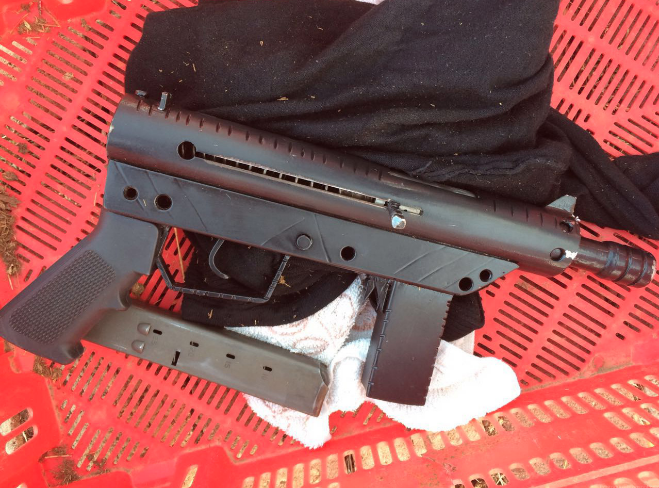
The magazines used are mostly Uzi 25 rounds magazines, inserted to a magazine well in front of the pistol grip. Pistols grips appear to be high quality factory made durable plastic M16 pistol grips as well as some M16 telescopic buttstocks when the guns are stocked. The barrels are smoothbore, usually very short, barrels which are not much more than regular steel pipes.

All Carlos are full auto only fired from an open bolt, ejection port is locate on the top side of the gun and a short charging handle is locate at the gun’s right side and it reciprocating when firing. The question of why have a right side charging handle for a gun mostly used as a machine pistol? A right-handed charging port will gain no value of a charging handle at the right side he can’t easily charge with or clearing jams without buttstock and handgrip.

Since the gun’s ejection port on top a charging handle and its slot cutout could easily place left side enabling the shooter reciprocate the bolt with left hand while holding the gun right-handed. No clear answer, the first option is by trying to leech of the M/45 popularity the makers of the Carlo also copied the location of the handle scarifies functionality in order to resemble the recognized M/45.

Second option is that machine pistol concealed under a coat is best placed left of the body in order to pull it quickly (by a right-handed), having a left side handle will poke the user side so right side handle is preferable. Another source of speculations is what appear to be sort of rectangular upper hunch on the top rear part of the gun which is quite common for the higher end Carlos. Its purpose is unknown, it raised a bit the rear sight but noting that required such large protrusion. It maybe housing of some sort of crude delayed blowback mechanism, probably leaf spring, used to lower the fire rate of fire and make it more controllable gun.

Yoel M. is a contributing writer for Silah Report, and is a firearms enthusiast based out of Israel. His first report on S.R. was about the Israeli “Hitchhiker” magazine.


If you enjoy our work here at Silah Report please consider supporting us on Patreon!
Krinkology: For Every Saudi, There is a Yemeni…

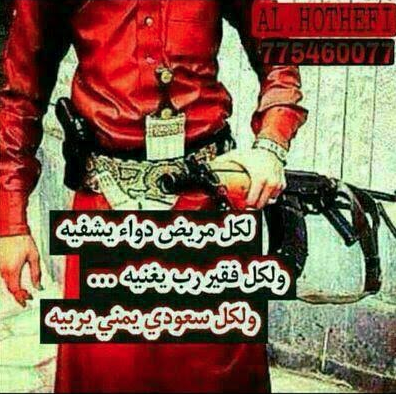
This image of a Yemeni Houthi, armed with a Zastava 7.62x39mm M92, what appears to be a Makarov, and a traditional Jambiya knife tucked into his belt has made numerous waves throughout Houthi social media over the previous several months. The rifle has a more or less standard Kalashnikov pattern sling, and as the stock unfolded.

The photograph itself of the man dressed in red has been circulated with a number of sayings attached to it as a sort of meme, some religious, but most appear to be Yemeni nationalist slogans. For example, in this iteration-

Translated from Arabic, this reads-

For every sick person, there is a cure

For every poor person, there is a God to make him rich

For every Saudi, there is a Yemeni to teach him how to behave

This version from a Twitter user–

Many of the photographs are being spread through the use of Instagram, with the different sayings attached to the pictures.

This one from Imgrum-


Krinkology is a unique SR post that exemplifies what the site stands for, in discussing the indigenous manufacture, trade, and use of small arms and light weapons within the MENA and Central Eurasian regions. Specifically, Krinkology examines the usage of short barrel Kalashnikov pattern rifles within popular culture and on the battlefield.

Analysis of Taliban Firing Positions in OEF

Due to the efforts of ISAF forces during Operation Enduring Freedom, Taliban fighters had to change their tactics constantly to stay tactically ahead of coalition efforts. Because of the reliance on fire support assets and modern armament that much of ISAF could afford, the Taliban in Helmand and Kandahar provinces couldn’t sustain a protracted fight as they could against ANA or AUP positions. Thus the insurgent force had to adapt and overcome. One of the ways in which they employed small arms against ISAF forces was through their usage of compounds and firing positions. Being in Helmand or Kandahar, firing from an open position or fields is almost certainly suicide against ISAF forces because of the lack of egress routes and being cut down. Thus, many Taliban fighters adopted the technique of utilizing “murder holes” as firing positions from compounds. Most of these compounds were taken over from the families that owned them, often threatening them with death if they spoke to coalition forces about the compound’s usage.

Compound/housing structures in rural southern Afghanistan have a number of advantages for maneuver insurgent warfare. Because the walls are made from mud, they can have holes busted through them to use as firing ports, but at the same time can be extremely resistant to incoming rounds, even up to .50 BMG. These compound walls can be anywhere from six feet to twelve feet in height and easily conceal the numerous motorcycles that the Taliban used. Motorcycles are essential for the kind of “shoot n’ scoot”maneuver warfare because of the ease of transportation and the possibility of swiftly getting away from lumbering  MRAPs and MAT-Vs along twisting narrow roads. In addition, a single PKM machine gun team could be concealed and broken up among three or five motorcycle driving Talibs. One carrying the receiver, another the barrel, another the ammunition. This way, all three could move to a new firing location discreetly, and most importantly separately.

The Taliban’s worst threat was being fixed in place and destroyed. The force knew that it could not sustain a long drawn out, small arms fight even against a single ISAF patrol. Once their position has become known, the key to surviving a protracted fight is to quickly pick up, mount up, and push to another firing position to further engage the patrol, preferably from a completely different angle than the first one. The problems thus presented to the ISAF patrol were twofold. One the one hand, it would be very difficult to determine the source of the fire, especially if it was from a PKM beyond 400-600 meters. And second, even if the Taliban location was found and positive identification was made, the patrol would have to maneuver around to get into a position to return accurate rifle and light machine gun fire, by which time the PKM position would already be broken down, and repositioned at a completely different angle to the patrol. This entire scenario is also not even taking into account the IED threat that complex ambushes would often be initiated with, thereby adding another layer of complexity to the mix of that ISAF patrol maneuvering.

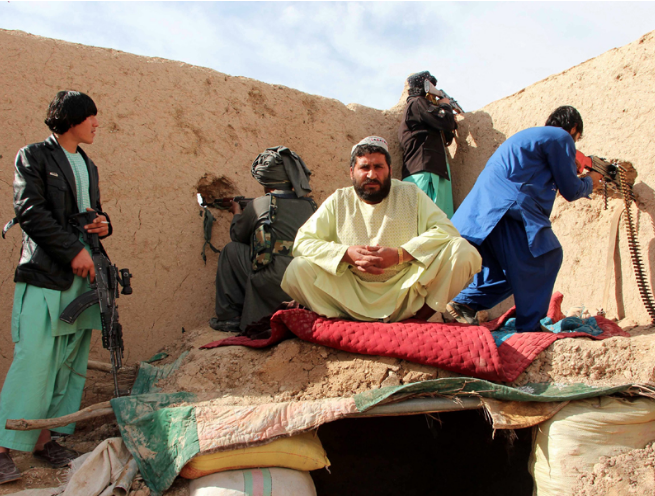
Firing positions themselves are very well thought out. As an example in the title photograph, typically Talib fighters will use a pre-existing “murder hole” or they will create one themselves as the other photograph shows. Using blankets, they will place them underneath the PKM, and then on the base of the murder hole as well. This way, the ground blanket will catch all the spent shells, and the murder hole blanket will prevent the PKM from leaving black residue on the caked mud. When the MG team leaves the position, all they have to do is wrap up the blanket with shells in it, then use the murder hole blanket to conceal the PKM parts in it and the firing position will appear to have been relatively unoccupied even if an ISAF patrol were to literally get to it after a firefight.

And to conclude this analysis, this a Talib fighter wearing a Marine Corps woodland digital utility jacket!

Note- The title photograph of the firing position is actually of Government ALP fighters, and not Taliban fighters. This photograph was used because it does display what the TTPs that the Taliban utilize. 

Trijicon RCO Mounted Directly to Taliban AKM

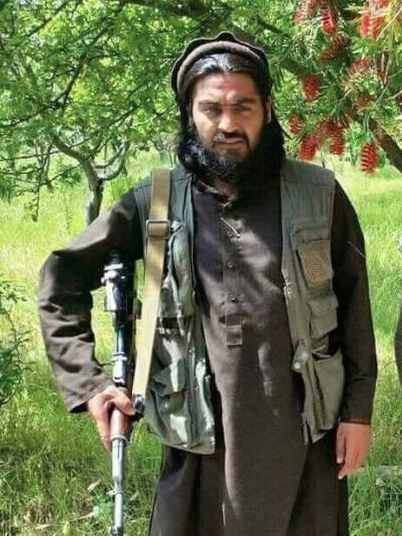
Mirwais Afghan published this on his Twitter feed earlier, of the Taliban deputy district chief for the Chaperhar district of Nangarhar province in eastern Afghanistan. He was recently killed by a U.S. airstrike.  His AKM features a Trijicon RCO with what appears to be directly mounted to the receiver cover of the rifle, possibly via a rudimentary method of welding or otherwise non-standard mounting procedure.

Of course, if this is the case, accuracy will most likely suffer greatly because of the severe vibrations of the receiver cover during the course of fire. Maintaining zero will be next to impossible. But was a status piece for a deputy district chief, it will certainly get the point across.

Barrel Rifling Device from Darra Adam Khel

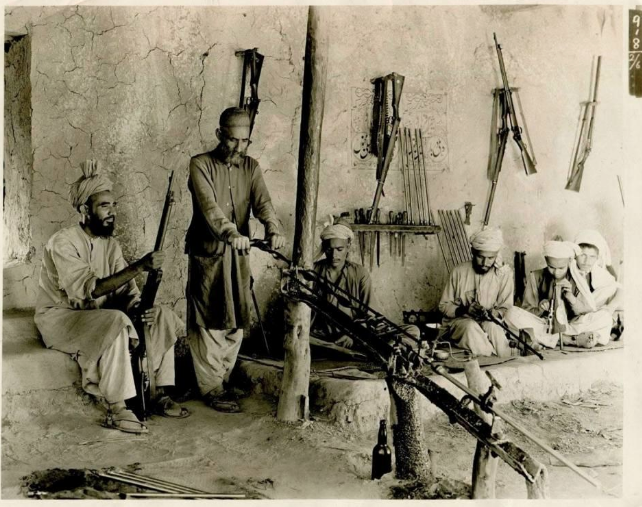
As you may know, Darra Adam Khel is a town in Pakistan which is famous for its indigenous firearms manufacturing. Many people living in this area are busy making guns and loading ammunition. There are some rough firearm clones made in Darra Adam Khel, but there are also really impressive ones both in terms of design and execution. Sometimes it is really unbelievable how these people manage to make firearms using only basic tools.

The top image of this article shows a local gunsmith operating a barrel rifling device. Although it is not confirmed, some sources say the picture is taken in 1902.

Note the barrel secured in the lower portion of the device and the gunsmith holding the handles of the cutting tool. The cutting tool itself has a spirally shaped shaft, which I assume runs on a guide pin so that when worked back and forth the cutting tool will do a spiral motion thus cutting the rifling at a certain twist rate.

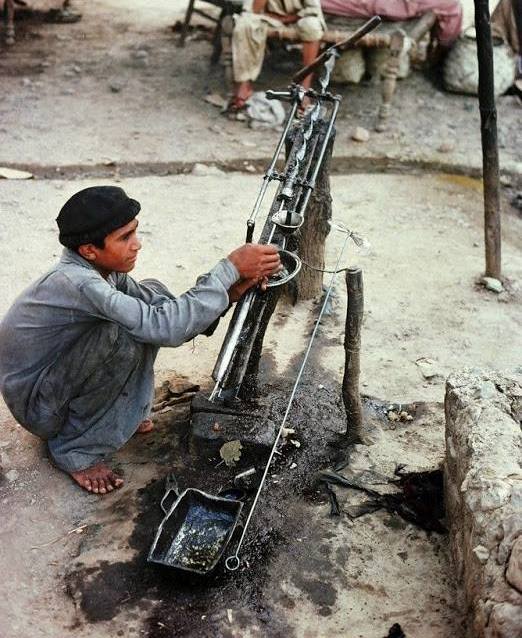
What is even more interesting is that there are newer images from Darra Adam Khel showing an exactly identical device. So even if it is a homemade rifling tool, it should be working great to be used until modern days.