Keeping it Quiet Part 3: Common Platforms, Designs, and Ammunition

Keeping it Quiet is a series of articles by the Twitter account Everest65. First published on the webpage Calibre Obscura, he has been extremely generous in allowing Silah Report to republish his findings here. Content has been lightly edited. Be sure to look for the rest of the series as it becomes published.

Pistol Caliber Suppression

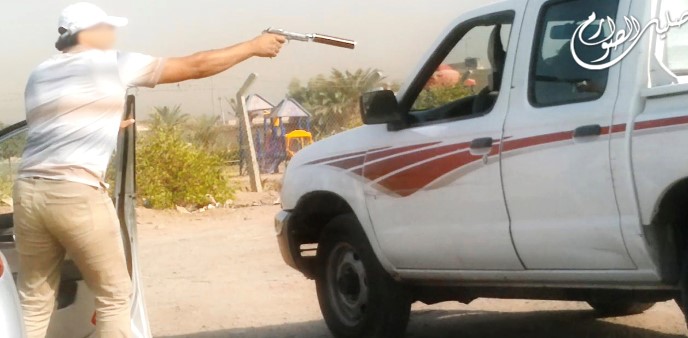
The blowback action of many PPK/Makarov type pistols is liable to be caused issues by suppression (Particularly with weaker calibers, which may lack the power to always successfully cycle with the suppressor attached). This can be observed in this video and above, in which one Terrorist clearly is encountering issues with the action cycling. These cheap and common pistols, which may well be eastern bloc clones, seem to get the job done, however there are a variety of issues why a pistol (In particular cheaper pistols and weaker cartridges) may not cycle- this including but not limited to:

  • Addding the extra weight to the barrel by screwing on a suppressor interfering with the gun’s ability to properly cycle the action after each shot- this can be experienced with browning tilting barrel design pistols- a great explainer over at The Firearm Blog, such as the Glock 19 often used by ISIS.
  • The suppressor requiring a lighter recoil spring in order to cycle the action- the suppressor reduces the recoil of the round, meaning the pistol can fail to cycle.
  • Inconsistent/weak ammunition also causing the above issue.

These issues can be solved via the use of a Muzzle booster (Also known as a Nielsen device), which typically come with a commercial suppressors in order to ensure correct operation of the pistol. This means also that the pistol does not require a change of recoil spring to use unsuppressed.

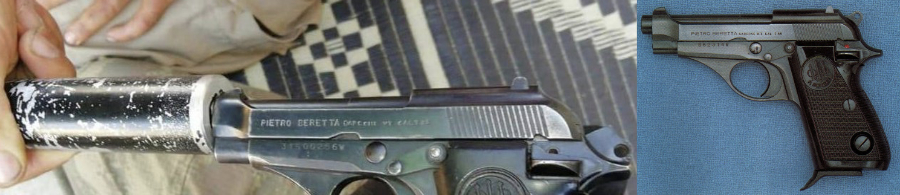
The by far most popular pistol family that I have observed being suppressed is Beretta. Including the 85FS, 70, M1935/1934, and M1951, the latter being by far the most commonly suppressed pistol- appearing in almost 40% of the occurences of suppressed pistols I have catalogued. This 9×19 pistol is extremely common in both Iraq and Syria due to the production of it by the Saddam regime from 1981-2003 (Production restarted from 2009 also, it continues today) and is known as the Tariq for Iraqi-production models. It’s currently in service with the Iraqi Police and other Iraqi forces. The M1951 was also produced in Egypt as the Helwan, and was imported by Libya. It carries 8 rounds of 9×19 ammunition, and is easily confused with a Beretta 92 (Or M9) but is actually its predecessor in terms of design.

Beretta_M1951Left Image: Tariq Pistol captured by HTS from ISIS, Idlib, July 2017.

Right Image: Credit- Bob Adams NM

This is very commonplace in general, so is naturally more likely to be used as a suppressor host.

Another pistol with a very similar operation to the Beretta M1951 is the Beretta 85, a more compact pistol than the M1951.

Beretta_85FSLeft Image: Beretta 85FS (May be 84 or similar, but closest match is 85FS) in use by the YPG to assasinate TFSA (Turkish-Free Syrian Army) militant in Jindires, Syria. 24 June 2018

Right Image: Chromed Beretta 85FS, .380 ACP, Commerical Sale in the United States

The Model 70 series is smaller again. It is chambered in .32 ACP, again uses the falling locking block design and is famously popular amongst intelligence agencies such as the Mossad, though I have only seen it used once in Syria- by the YPG. This example may be a 70, 70S or 71, meaning that it could be chamberd in .22 LR, .32 ACP, or .380 ACP. This pistol is likely the to be the quieter suppressed compared to 9x19mm Pistols.

Beretta_Model_70Left Image: Turkish Army and FSA arrested an YPG member who was carrying a Model 70 with suppressor. Afrin, Syria, July 2018. This was evidently for covert operations by the YPG.

Right Images: Beretta Model 70 Example- .32 ACP

Libya_Dec_2015(For Sale on Illicit Arms Sales Group on Facebook, Libya. December 2015. .380 ACP or .32 ACP- Beretta M1935/1934. This suppressor may be commercial production.)

It’s easy to mistake all of these pistols on first glance to the Beretta 92 (Made famous as the M9), but curiously I have yet to see any examples of these being suppressed by any party in Iraq, Syria, Yemen or Libya. One of the key advantages of these Berettas are their falling locking block operation- this results in much much less barrel movement compared to pistols such as the Glock 19, Ruger P95 (Both seen in Iraq) pistols with browning tilt-barrel designs – that need a booster or light recoil spring to cycle effectively as mentioned above.

The design of the suppressors used by ISIS Baghdad is detailed by two arabic-language videos from ISIS Baghdad in 2015, which shows some impressive craftsmanship with suppressors that resemble western supppressors such as those from Silencerco or AAC. We can see an Glock 19 in use- many thousands of these flooded Iraq after the Iraqi Police/Army was supplied them, and users promptly sold them on. A 2007 estimate gives 80,000lost, a number which is sure to have risen since.

Glock_19_23Left to right: Manufacturing the suppresor baffle, spraying the suppressor tube, and testing it. There is a noticable volume decrease.

The manufacturing abilities of ISIS are evidently mature, which any observer would know from their existing arms manufacture (Mortars, Rocket Launchers, RPG-7 clones etc.) Here’s an image of the internals of the AAC Ti-Rant 9MM, which appear similar to this ISIS design:

Ti-Rant

Glock_19_Baffle
Left 3 Images: A comparison of ISIS K baffle design
Other Images: Images of various pistol calibre K baffle designs from American commercial manufacturers

They have separate removeable baffles (Stacked as opposed to a monolithic core) that are machined using a metal lathe and certainly appear to be of high quality. These “K baffles” are regarded as harder to manufacture than a monolithic core.

The monolithic core is one solid piece of metal which has had sections machined out of it or sometimes created through casting. The stacked baffles are a series of individually created baffles which are stacked together to create the core. From a manufacturing standpoint, the monolithic core is much easier to create from time and materials. It is simply a matter of programming the design into a CNC machine then setting the machine to begin cutting the pieces of metal into the core. The stacked baffles take a little more precision, supplies, and labor. The baffles must be perfect to ensure that they are aligned straight to avoid baffle strikes, plus the baffles must almost lock into place together to keep them from moving and messing up the alignment. The second difference involves the length of the silencer in comparison to the amount of decibel reduction; “silencer efficacy”. A stacked baffle design can more effectively work the gases and therefore can make a quieter silencer with less length. The increased surface area of the stacked baffle design also helps to pull the heat out of the gases faster which also aids in reduced decibels.

Dakotasilencer.com, Monolithic Core Baffles vs Stacked Baffles

The manufacturing process for the K baffles is very similar to this video on YouTube:

This suppressor design is also modular, as an very similar design is shown and used on an MP5A3, a rare gun in ISIS hands. This Submachine gun fires at a rate of 800 rounds per minute, and is a highly formidable close quarters weapon.

Firing_MP5-1Note ejection of 9×19 casing
Muzzle_CapNote custom muzzle cap/device. This gives the appearance of an integrally suppressed to MP5 to a degree, but this model is standard.
In_OperationThe suppressed MP5A3 in action. This full auto spray put at least 10 rounds in a very short time into the side of the car in the first image. It then crashes.

Specifications given for this suppressor are identical to the Glock one, which is conceivable, but we cannot tell if the device for the Glock contains a Muzzle Booster (SMGs and Rifles don’t require one), but the diagram spotted on the wall in one section of the MP5 Video may contain a sketch of one, as well as dimensions for baffles and the suppressor itself.

hu2w-C2B.jpg-large

I’m currently trying to translate this rough draft and dimensions given into a detailed diagram of this ISIS-designed suppressor- any assistance on this would be very helpful, please contact me on Twitter if you think you recognise the parts/or read the writing.

The Video also gives some dimensions of this suppressor, whilst also allowing other observations:

  • Outside diameter is given as 38mm, inside diameter of the muzzle is given as 9mm (This must probably higher, as an exact 9mm diameter hole wouldn’t allow the .355 bullet to exit cleanly), and the length is 20cm.
  • They claim it was designed and manufactured by their mechanical workshop of Wilayat Baghdad and that tt was manufactured with “high precision” and the manufacturing division used “computers and other advanced mechanisms” in their work.
  • The size of the silencers are in line with international standards
  • The silencer can be used for a long time (Claims to be forever, though all silencers wear) and doesn’t break down easily.
  • The normal 3 lug mounting device on the MP5A3 has been removed and replaced with a new mounting system, which appears to be a threaded end welded to a end cap. This would allow using both suppressors on either weapon system, assuming a thread similar to 1/2X28. However, a possible muzzle booster would have to be removed or vice versa for interchangeable use.

There isn’t any current public data I can find regarding the manufacture of threaded barrels for any weapon that IS employs, but it would be well within their capabilites. It’s also possible that ISIS have a source for a threaded barrels for the Glock 19, as by default supplied to the Iraqi Police these did not have a threaded barrel, which disallows attachment of a suppressor. This also applies to the Beretta models shown in use, though it is entirely likely that there has been Syrian regime (Or Iraqi) leakage of suppressor ready pistols (And suppressors themselves), given the sheer amount of Ghanimah captured by IS over time. ISIS suppressors share a fairly consistent design in ISIS hands in Syria and Iraq, varying only in size, showing some level of standardisation and skill across their areas of operation.

A Second Variant?

Yemeni and Libyan examples vary in size and design details- here’s an image of a PPK Captured from ISIS in Libya with what appears to a cup style suppressor adaptor (With no suppressor visible) welded to the barrel:

Libya_PPK_CapWalther PPK in .32ACP Captured in ISIS houses along with FN FAL & AK rifles, huge quantity of ammo, Benghazi, Libya, August 2015.

Circled is what seems to be a screw hole- I think this is for mounting of suppressors- a different method than the ISIS Baghdad one above, but one that is simpler and requires less machining. In the below screenshots of a video from Yemen, a screw is shown:

Yemen_Close-1

The assasins hold the suppressor, which is not something that’s recommend or required with commerical suppressors. We also don’t see this with IS Iraq. If the mounting solution is inferior, then this can be explained, or this may just be a variation of training or typical practice of their fighters in Yemen. This below image seems similar, yet lacks the screw:

More_Workbench_Silencers_2An alternate design- From “More More Workbench Silencers – George Hollenback”

They seem to function reliably, or reliably enough to usually run through a whole magazine for the purposes of an covert assassination of a single target (Or multiple unresisting ones, which can be seen in the 2012 video mentioned above). After all, at the tactical level, if multiple rounds are being fired in quick succession, the militant is in a firefight, which these pistols and suppressors are not meant for- as opposed to their use on Rifles, though both are used for sudden covert attacks.

Rifle Calibre Suppression

My conversations with Abu Salman Belarus (A Malhama-linked Twitter account) has confirmed various details- That Malhama produce these suppressors themselves and they are indeed standardised, that these suppressors screw straight onto the rifle- meaning the muzzle break is removedand that they have at least 2 individuals (Some kind of workshop/engineering division) that manufacture these suppressors that aren’t fighters.

Whilst Western Forces have very stringent requirements for construction and durability of these devices, groups such as HTS, who are using indigenously produced versions in every recent image or video I have seen so far of them putting suppressors to use, would be able to fabricate and replace as desired.

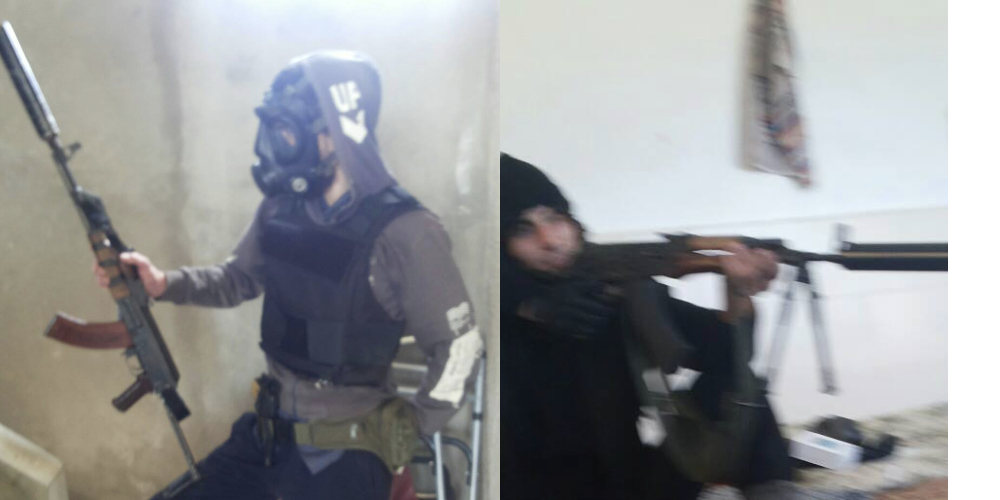
These designs are similar in external appearance to modern russian (Zenitco) suppressors and western designs. Whilst suppressors are far from generally issued (Standard equipment being essentially an AK variant, mag pouches, and some form of uniform with some body armour usage) HTS and affiliates’ Inghimasi units have used suppressors in attacks on regime positions on a number of occasions, as shown by the images in this piece.

There is also sporadic examples of Rebel suppressor use, manufacture and sale. This is again reflective of the overall trend in the theatre, but these examples do not seem to be as standardised as those shown by ISIS etc.
Keeping it Quiet Part 2: HTS, Malhama Tactical & Rebel Groups

Keeping it Quiet is a series of articles by the Twitter account Everest65. First published on the webpage Calibre Obscura, he has been extremely generous in allowing Silah Report to republish his findings here. Content has been lightly edited. Be sure to look for the rest of the series as it becomes published.

In contrast to ISIS, The most publicly visual use of suppressed long guns by non-state groups in Syria has mainly been by HTS and their semi-affiliate/trainer/self-titled PMC Malhama Tactical, though ISIS has also used suppressors more sparsely.

Malhama Tactical is the infamous “Jihadi Blackwater“, and have a liking for applying Western/Russian SOF style, equipment and accessories, although their abilities, as assessed by Miles at The Firearm Blog, do not at all meet the standard of SOF, whilst generally superior to Irregular Opposition Forces and Conscripts. They are also fond of suppressors, and have shown videos of them using them in operations and training. This has also imbued into HTS- a Malhama-linked Twitter Account has proclaimed HTS militants seen using suppressors in a surprise attack in Latakia as “students”:

Ganzz@GanzzzH

Malhama Tactical?

Abu Salman Belarus@SalmanBelorus

This is our students, not our strike team, we are working now to recover our assault team, very soon inshaaLlah, now we are teaching brothers. Malhama Tactical.

It seems that these groups have recognized the tactical benefits of use of suppressors on the battlefield, particularly in attacks and ambushes, and retain a somewhat standardized design for AK platform suppressors. This again is a reflection of current increasing trends in Western and Russian Forces to issue suppressors more widely- the Marine Corps publicly testing silencing every weapon of a battalion. It doesn’t seem that every fighter from Malhama carries suppressors also, which may indicate simple personal preference- this obviously somewhat dilutes the tactical benefits of suppressions if some in the squad are running unsuppressed.

The below 3 images and video show a small squad of HTS attacking Syrian regime troops in Latakia, and every member is using standardized suppressors, AK-74Ms and optics.

HTS_Raid

HTS_Raid2

HTS_Raid3

(Hay’at Tahrir al-Sham footage of a recent storming attack on a Syrian Ba’th regime artillery position in Jabal al-Turkman, Latakia governorate)

JaN_AKMS(Jabhat al Nusra (Later HTS) Canadian Fighter in Syria, with tripod and large suppressor. Rifle is a AKMS)

(Alwiya al-Furqan fighter identified as Abu Adam testing an AKMS with a self-manufactured silencer. Quneitra, October 2013. Similar design to the above JaN suppressor)

HTS_Bashkuy_Syria

HTS_Bashkuy_Syria2(HTS, Bashkuy, Syria. Storming regime fortifications.AK-74M, AKM, MPi-KMS-72, AK-74. Suppressors are camo wrapped.)

At least 2 of the fighters involved in the above attack were later killed and their weapons seized:

View image on TwitterView image on TwitterView image on Twitter

Syria Free News@Syria_FreeNews

killed the well-equipped militants of Jabhat al- which attacked their positions in the province of

Below are confirmed appearances of suppressors in the hands of Malhama Tactical.

group_shot(Syria, March 2017. Note M16A4 and a Steyr AUG unsuppressed. Rifle on the left is an AK-74, On right is an AKM. Note the overall optics and equipment attempting to mirror Western/Russian SOF.)

Malhama1

(Steyr Aug, Near Aleppo, Syria. 2016)

Malhama_2017

Malhama_ak74(Syria, 2016-2017. Same design as suppressors above. Training footage.)

This use of a suppressor by the YPG in Afrin on July 5 2018 as part of their campaign against the Turkish-FSA forces in that areas is unique, in that this is the first time I’ve seen the YPG use a PBS-1 Suppressor, likely on an AK variant- as the weapons used are referred to as sniper rifles this possibly a Tabuk, a “Dragunov-Lite” DMR that is based on the AK platform (Zastava M72 in particular). It has an open sight hood and the suppressor doesn’t look like a TGP-V (For Dragunov), but rather a PBS-1, a well known Soviet suppressor for 7.62×39.

The shot also seems rather loud, but the PBS-1 is at the lower end of volume reduction (AK platforms tend to suppress worse than the M16 family anyway, due to the different gas system and looser tolerances), at about 15 dB according to Wikipedia/US Testing. Modern western commercial suppressors are closer to 30 db. This is the only clearly military or commercial origin suppressor that I have seen in use by non-government actors in Syria or Iraq.

YPG_Afrin

Keeping it Quiet Part 1: Suppressor Use by ISIS, Al Qaeda in Iraq

Keeping it Quiet is a series of articles by the Twitter account Everest65. First published on the webpage Calibre Obscura, he has been extremely generous in allowing Silah Report to republish his findings here. Content has been lightly edited. Be sure to look for the rest of the series as it becomes published.

Amongst various militant groups in the Middle East there is a sporadic yet noteworthy use of suppressors used on firearms. I’ve been tracking this and have found that suppressors, also known as silencers or moderators, have been used by Hayat Tahir al-Sham (HTS), Islamic State (ISIS), People’s Protection Units (YPG), and some other groups. This has lead to some interesting conclusions from my observations. Whilst there doesn’t seem to be a great dearth of video or still imagery of suppressor use by any major rebel group in Syria, in this article I’ll be looking at analyzing some of them.

ISIS & AQ in Iraq

One of the most shocking videos of AQ in Iraq in the Summer of 2012 was a disguised night-time raid, which Long War Journal details:

The al Qaeda fighters are then issued uniforms that are worn by SWAT teams in the Iraqi National Police. Later that night, the militants, disguised as police commandos, get in the pickup trucks, some which have heavy machine guns mounted in the bed. Lights flashing, the al Qaeda fighters cruise the desert highways before they hit their targets: police barracks, checkpoints, and two senior Iraqi police commanders.

The Iraqi policemen appear to be stunned by the raids and comply with the al Qaeda operatives, clearly believing them to be INP commandos. The al Qaeda fighters flex-cuff the policemen, drag them outside of their positions, and line them up on the ground. The insurgents then walk down the line, and coldly shoot the policemen in the head with silenced pistols.

Whereas this raid did stand out to me because it was published online, there is evidence to suggest that this insurgent tactic was used much earlier- an article from The Guardian mentions waves of bomb and “silenced pistol” attacks across Baghdad, taking advantage of the disarray caused by the widespread issues in the 2010 election. A Senior Iraqi officer, Brigadier General Abdel-Hussein al-Kadhoumi, was killed by gunmen with suppressed pistols in May 2009. We know this tactic generally isn’t rare-with Canadian Artillery Engineer Gerald Bull being killed by suspected Iraqi or Israeli Hit Team with 5 .32 ACP bullets shot into his neck and back by a suppressed weapon- most likely to be a Beretta Model 70- another example being the unfortunate case of Laurence Foley, an American Diplomat killed in Jordan by men working on behalf of AQ in Iraq using a suppressed .32 ACP pistol in 2002. Without going over the history of use of small calibre suppressed pistols by intelligence agencies over time (Hint: It’s out of the scope of this article), it’s safe to say that this tactic is a common and oft-used one, the events quoted above being nowhere near rare. This is touched on in this excellent 2008 post from the Jamestown Foundation on Insurgent use of suppressed pistols. It refers to “7mm Pistols” which we can assume refers to 7.65mm Browning, or 32 ACP.

Here’s a two (cropped) images from the video that show the suppressed pistols in use:

2012_1

1: A pistol in use.

2:The same pistol, having failed to cycle, having the slide pulled back to re-cock

The size of these handguns appears to show a steel-framed pistol that seems to resemble a Walther PPK or derivative, of which cheap Interarms Clones are apparently popular. This video also gives an estimation of the volume reduction offered by a commercial suppressor- the Stealth Engineering Group “Jefferson”. In this case, this pistol could be chambered in .22lr, .32ACP or .380, all of which can be successfully suppressed:

Below are some examples of suppressed handguns in the hands of ISIS, ISIS derivatives and others being used for covert ops and assassinations, a task for which a suppressor, rudimentary & homemade it may be, would certainly assist with the destabilization of the security situation of the state the group is fighting. Also included are ones for sale, captured etc.

yemen_aug16
yemen_aug16_cycling(ISIS, Yemen, August 2016, Assassination of a Yemeni Colonel in Aden. This shows the pistol cycling)

ISIS_nov_2012-2(November 2012, then ISI, Now ISIS. Note chromed pistol- possible officer or ceremonial model- and civilian dress with lack of beard)

Desu_Dogg(ISIS, Syria, April 2015. .32 ACP Walther PPK.)

ISIS_North_Bagdad_2016-17(2017, ISIS, North Bagdad. Note successful cycling of pistol. I have obscured victim’s faces.)

Glock_19_Early(2012-13, ISIS, Iraq. Glock 19 is in use. Green laser is attached to M16, off-screen)

ISIS_Aleppo_2014(ISIS, Aleppo, Syria. Feb 2014. Pistol is PPK clone in .380 ACP or 32 ACP with Interarms import/export markings on it.)

ISIS employs rifle suppressors in seemingly a more limited role, as opposed to their common use on pistols mentioned above. The group appears, as part of its strategy of using long/accurate 5.56mm platforms in the DMR Role, to embrace suppressors to assist in the concealability and survivability of its close range and urban sniper squads. POI Shift (The shift of the bullet when a suppressor is installed) would be naturally less of an issue at shorter ranges.

M16_Iraq(Iraq, December 2016. M16A4 used in close fighting)

ISIS_Fallujah_June2016(Fallujah, Iraq, June 2016. Short Suppressor on AK type rifle. Direct Thread Mount. This shorter type would naturally be louder.)

Dragunov(Raqqa, Syria. July/Aug 2017. Rifle is SVD Dragunov used in DMR role, notice painted/sprayed camo and spotter)

ISIS_Raqqa_2017_Urban_1

ISIS_Raqqa_2017_Urban_2

ISIS_Raqqa_2017_Urban_3(In the midst of Urban Fighting against SDF, Raqqa, 2017. Note Steyr AUG used in close range role, Glock 19 as sidearm, and tape-wrapped M16A4 on spotter.)

It’s interesting to note that the Chechen sniper is using a suppressor wrap very similar to a product such as a SilencerCo Suppressor Cover:

SilencerCo_Suppressor_Cover

This wrap has a variety of uses- concealment/camouflage, ease of quick removal (Protects against burns), and also mitigating the “mirage affect” from repeated firing- as the rifle is used, the suppressor gathers a lot of heat. This heat begins to rise off of the suppressor and creates a mirage- this mirage can obstruct the users’ view making it almost impossible to see the target. In the hot conditions of Iraq and Syria this would be made worse.

Below is an interesting case-an improvised 12.7mm or 14.5mm anti-material rifle in use by ISIS (A fairly common phenomenon), but with a very large suppressor:

12.7_ISIS(Raqqa, Syria. July/Aug 2017)
Recent Turkish Tactical Bolt Action Rifles of 2018

The Turkish bolt action rifles market is probably the most emerging segment of the country’s small arms industry. Every year, Turkish companies introduce new models of bolt action rifles designed both for the hunting and tactical applications. Earlier we reported about the Yazicilarav’s Cosmos bolt action rifle. Today we’ll take a brief look at two other Turkish bolt action rifles designed for the military/LE/tactical use.

Huglu OVIS Tactical Black

Turkish bolt action tactical rifles (5)

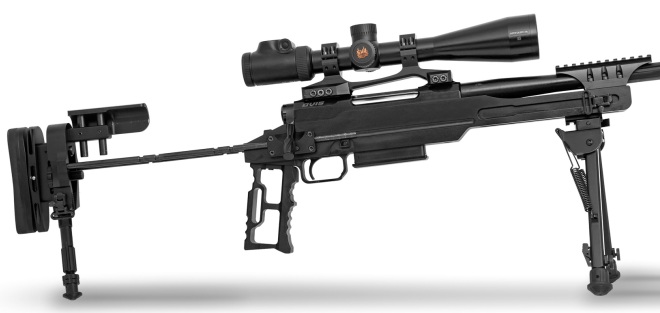
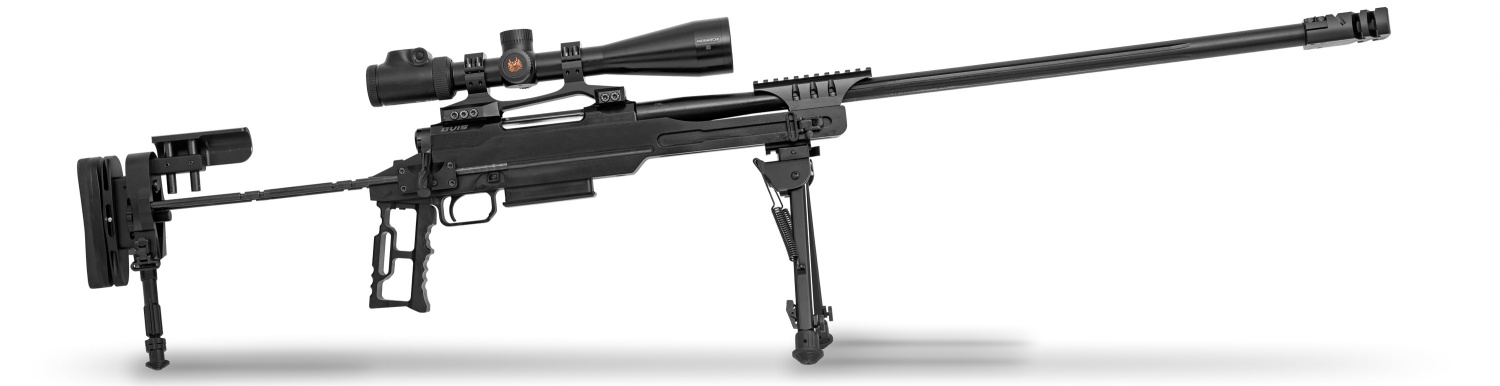
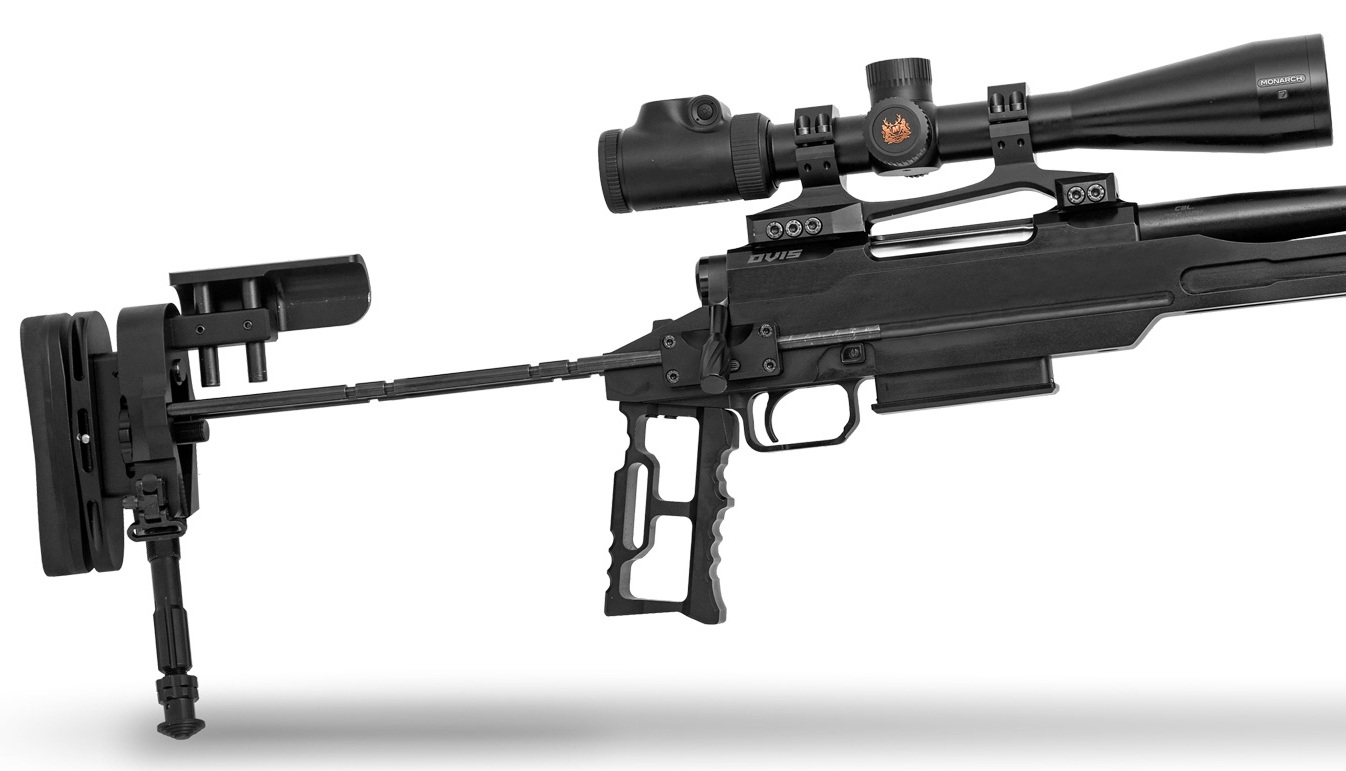
The OVIS Tactical Black rifle is designed by the Turkish company called Huglu. It features a skeletonized pistol grip, 6-lug bolt, adjustable trigger, collapsible wire stock, adjustable cheek rest and monopod. The rifle is chambered in .308 Winchester. It is fed from 5-round detachable box magazines. The free-floated barrel is 71 centimeters long (28″) and comes with an installed muzzle brake. The overall weight of this rifle is 7.5 kilograms (about 16 lbs 8 oz).

Turkish bolt action tactical rifles (7)
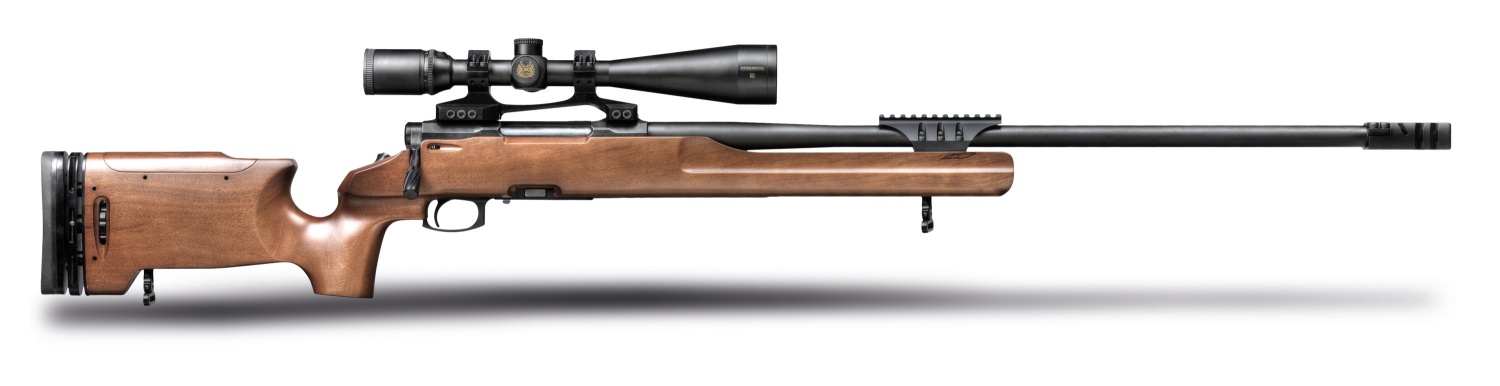
Hugku also makes a version of this rifle with a wooden stock. This iteration is called Huglu OVIS Tactical. You can see its image embedded below.

Turkish bolt action tactical rifles (4)


Ata Arms ASR308

Turkish bolt action tactical rifles (1)

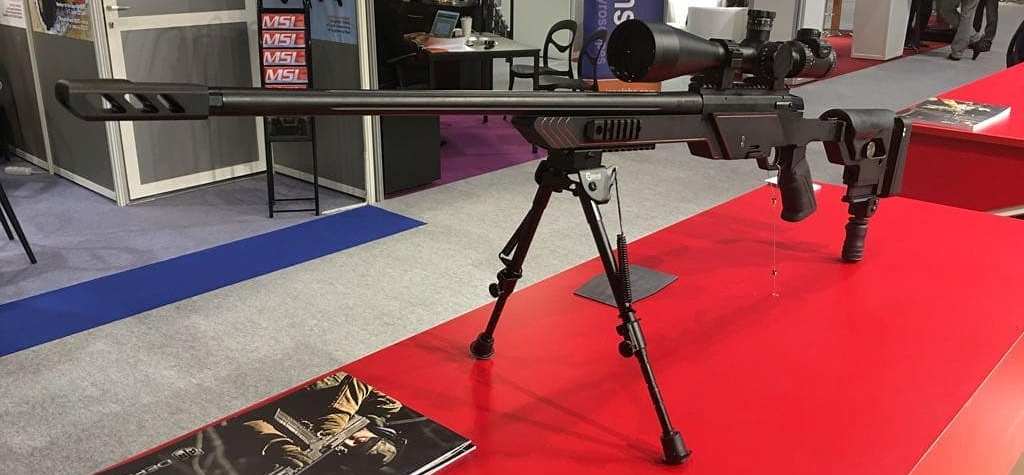
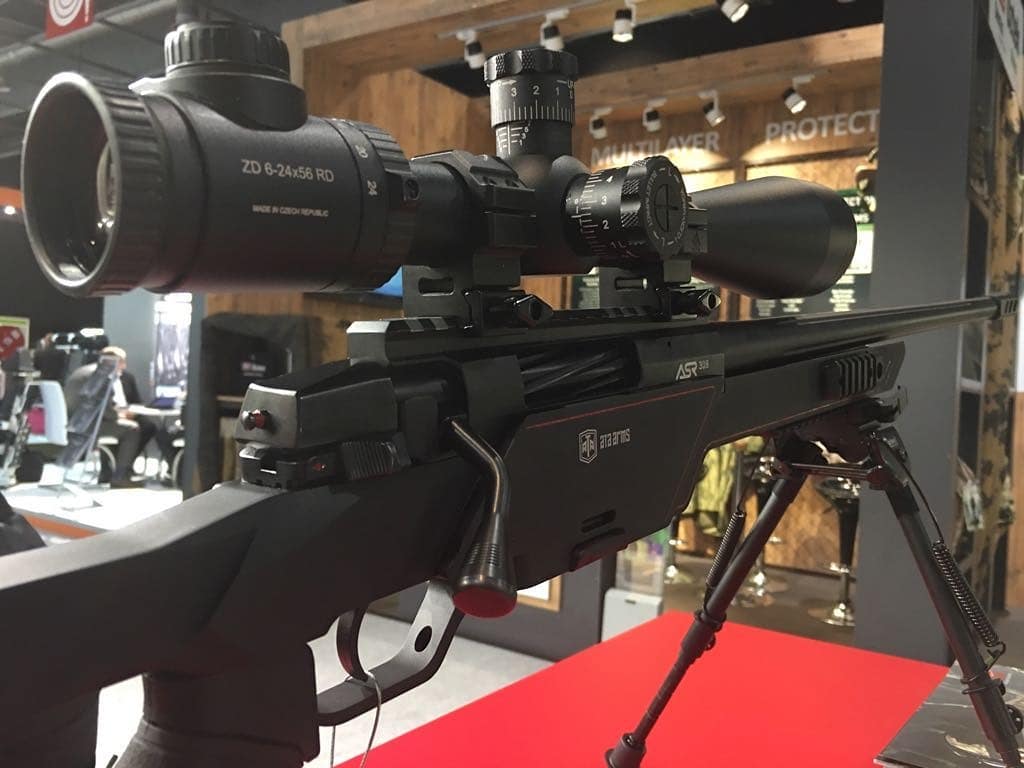
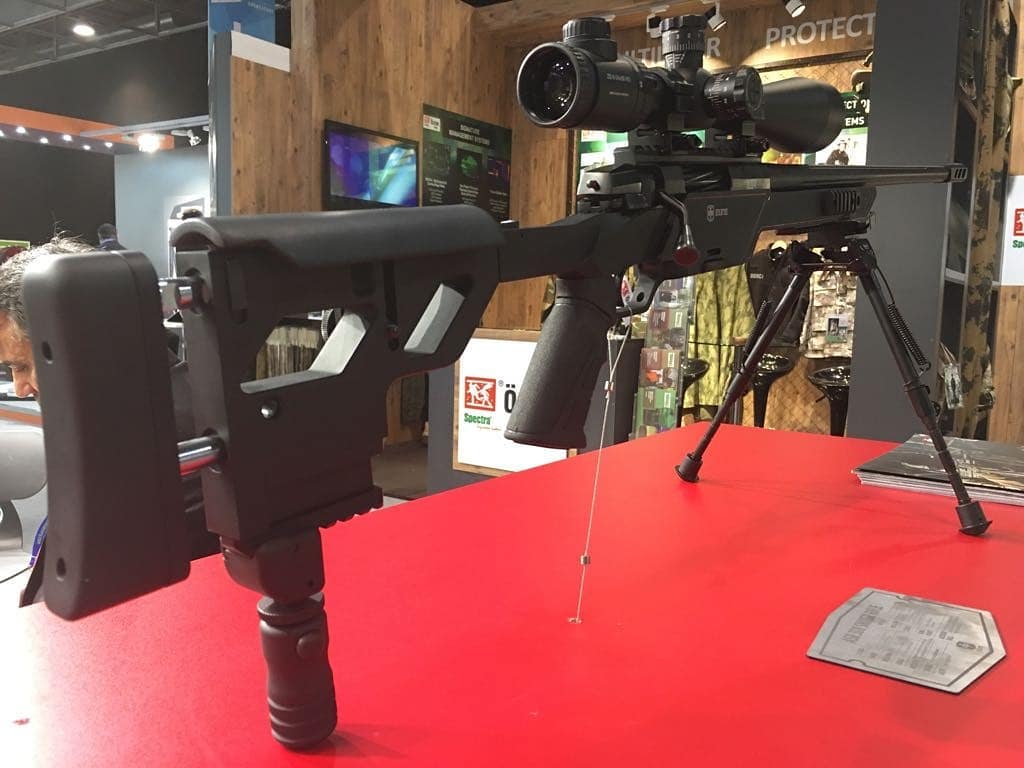
Another Turkish bolt action rifle made by Ata Arms was introduced at the recently held Eurostatory 2018 arms exhibition. Presumably, the action of the ASR308 rifle is identical to or based on the Ata Arms Turqua rifle.

Turkish bolt action tactical rifles (3)

Judging by the images published on the manufacturer’s social media pages, we can tell that the chassis of this rifle has a fixed stock with adjustable length of pull and cheek rest height. The barrel is free floated and has a three-port muzzle brake. The rifle is fed from detachable box magazines and it is most likely chambered in .308 Winchester. ASR308 has a Picatinny rail on top of the receiver for mounting a scope. There are also small rails located on 3, 6 and 9 o’clock positions of the forearm and another rail on the stock for mounting a monopod.

Turkish bolt action tactical rifles (2)


Images from www.huglu.com.tr, www.facebook.com/ataarmstr

Assorted Firearms Observed in Oman

This guest post was written by Christopher Cowan, an avid reader and supporter of Silah Report.

In reviewing material for an article about the Martini-pattern rifles I came across several other pictures I took unrelated to the subject of that article. These include several photos taken at the National Museum as well as Nizwa Sooq.

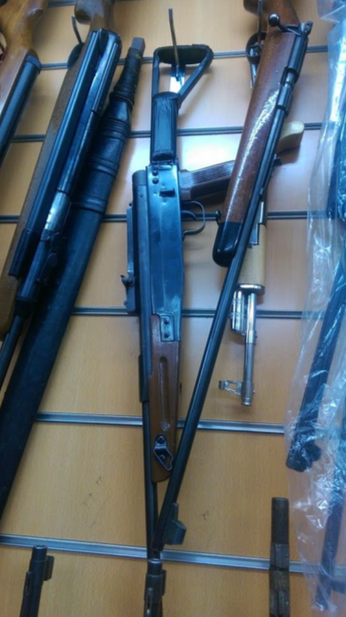
A Chinese .177 caliber BAM-3 airgun on display for sale at Nizwa Sooq. Possibly a Chinese airgunPhoto by author.
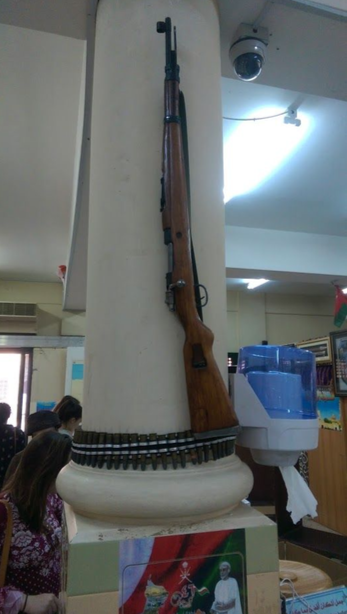
Zastava M48-pattern rifle on display in Nizwa Sooq. Note the non-corresponding Martini-Henry cartridge belt. Photo by author.
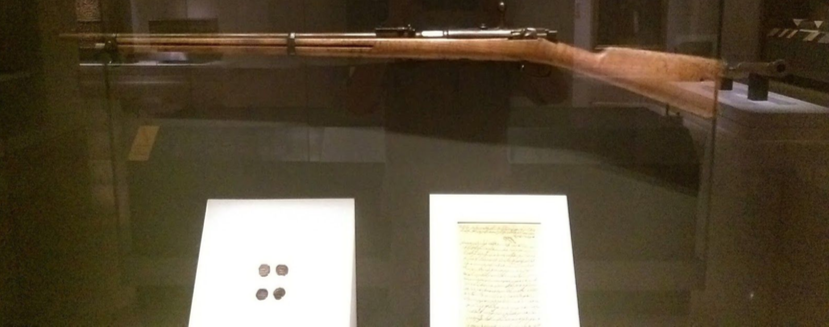
A Turkish Mauser Rifle Model 1887 originally produced in Germany in 1890 or 1891. Rifle features Turkish production markings and year according to museum description. Photo by author.
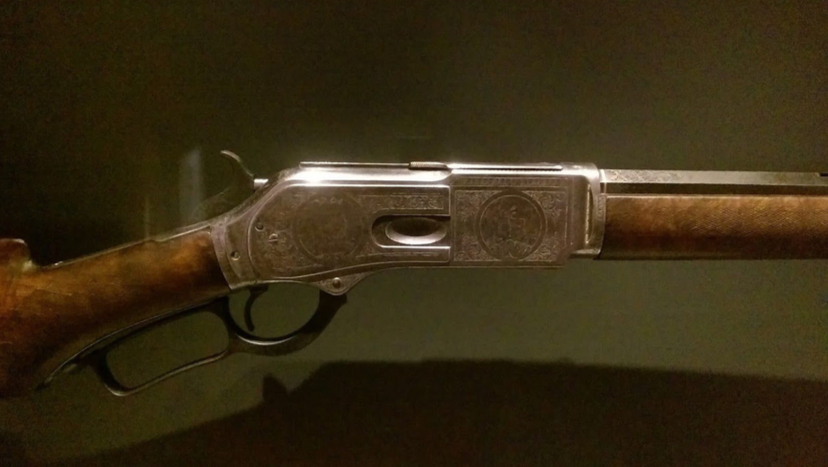
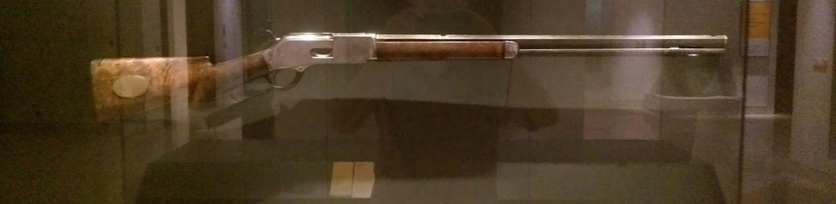
A Winchester 1876 Deluxe Model gifted by President Chester Allen Arthur to Sultan Sayyid Turki bin Said al-Busaied, Sultan of Muscat and Oman. According to the museum description, “the rifle features a nickel frame engraved with scenes of hunting and wild animals.” The rifle also features a walnut stock affixed with a brass label which reads “Presented by Chester A. Arthur President of the United States to His Majesty SEYUD TOORKEE EN SEYOUD Sultan of Muscat in token of friendship.” Photo by author.
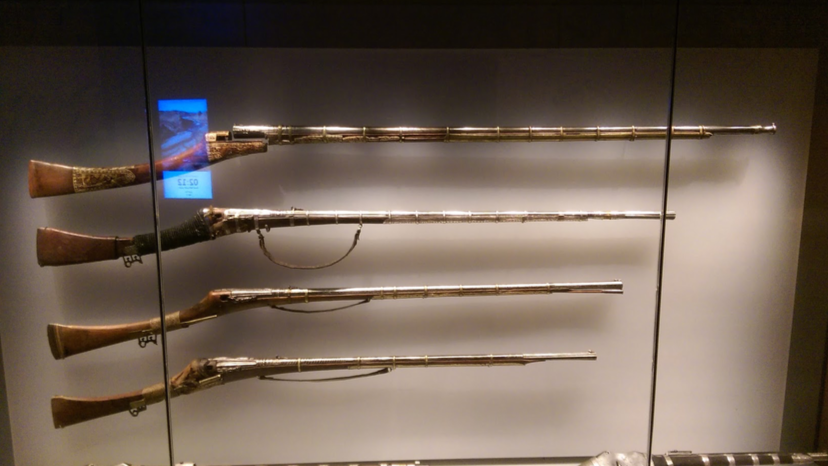
Assorted patterns of matchlock muskets. Photo by author.

The Muscat Martini: Martini Pattern Rifles in Oman

This guest article is written by Christopher Cowan, an avid reader and supporter of Silah Report.

Alongside Brown Bess muskets and Lee-Enfield pattern rifles, Martini pattern rifles are perhaps one of the most iconic and ubiquitous guns of the British Empire. First fielded in the 1870s, the Martini-Henry saw service in all corners of the Empire, from the plains of the Serengeti to the peaks of the Hindu Kush.

The Martini-Henry Rifle. Photo courtesy Creative Commons.


A single shot rifle, the Martini Henry utilizes a falling block action. It is chambered in the rather burly .577/.455 Martini Henry, a .45 caliber round-nosed slug fitted into a necked-down .577 Snider casing. The Martini Metford and Martini Enfield were the natural progression of the platform. Both firearms utilize the same falling block action, merely rechambered and/or rebarreled in .303 British. By the time they were fielded in the mid 1880s, they were of little practical use to frontline combat units given the adoption of the magazine-fed Lee-Metford (1).

That said, both the Martini Metford and Martini Enfield saw continued use among local colonial forces, as well as by civilians as sporting rifles (2). Perhaps owing to its proliferation, reliability, and simplicity, Martini-pattern rifles existed long past their official retirement as a service rifle. Widely manufactured and traded across the Middle East and South Asia for a good deal of the 20t h century, these rifles saw usage among irregular fighters as late as the Soviet invasion of Afghanistan. While likely the last time Martini-pattern rifles saw any serious usage in armed conflict, examples continue to turn up on occasion (3).

The proliferation of Martini-pattern rifles throughout South Asia is a subject for another article if not a book. Beyond Afghanistan and Pakistan, Martini-pattern rifles have remained prolific in the Sultanate of Oman. Martinis are as common a sight in souvenir shops in Muscat’s Sooq Mutrah as they are for sale alongside other assumedly functional firearms in Nizwa Sooq.

Martin-pattern rifles for sale alongside other firearms in Nizwa Sooq, Nizwa, Oman. Note modifications to the rifle in all three photos, including the polished receiver and refinished stock and handguard of the latter example. Photos by author.

Given Oman’s history, the widespread presence of the Martini-pattern rifles is understandable. Oman has historically occupied a major crossroads of Indian Ocean trade; at one point the Omani Empire itself stretched from Zanzibar off the coast of modern-day Tanzania to Gwadar, modern-day Pakistan. At the center of this empire was Muscat. Even following decline in imperial power and prestige, Muscat remained an important center for trade well into the early 20t h Century. Trade in all manner of goods, including weapons, was largely unrestricted; Muscat subsequently grew into a major regional hub for arms trading at the turn of the century (4).

While the early Twentieth Century marked a high-point in the proliferation of Martini-pattern rifles in the Arabian Peninsula as well as South Asia, Martinis remained popular weapons in Oman until rather recently. There are cases of them being used to hunt the now-protected Arabian Oryx in the 1960s, as well as documented cases of their use by irregular fighters in the Dhofar War during the 1960s and 1970s (5).

Al Wahibi Bedu man with his Martini-pattern rifle. Note the ornate barrel bands as well as the khanjar – or dagger – affixed to his belt. From “Bedouin: Nomads of the Desert” by Alan Keohane.

To this day, it is possible to occasionally see Martini-pattern rifles toted for ceremonial as well as practical purposes. In Dhofar, for example, shepherds can be observed carrying Martini-pattern rifles to protect their animals from predators. As a ceremonial piece ornately decorated Martinis are a commonplace, as are their accompanying cartridge belts. Both are often highly decorated, and frequently observed for sale to tourists. Good examples of both can also be observed in the National Museum in Muscat.

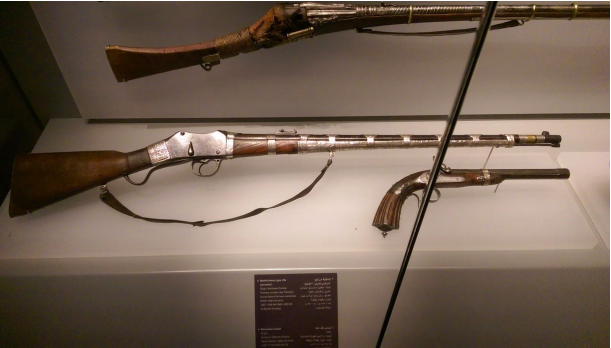
Examples of Martini-pattern rifles and cartridge belts at the National Museum in Muscat, Oman. Photos by author.

Despite being outdated by modern firearms technological and doctrinal standards, the Martini-pattern rifle has persisted long past its official military retirement in both a practical and cultural capacity. There just as much to be said of the simple elegance of the design as there is the skill required to use one effectively. Likewise, the continued prominence of the Martini-pattern rifle in Arabian firearms-culture alongside other weapons speaks to the eminence of the rifle.

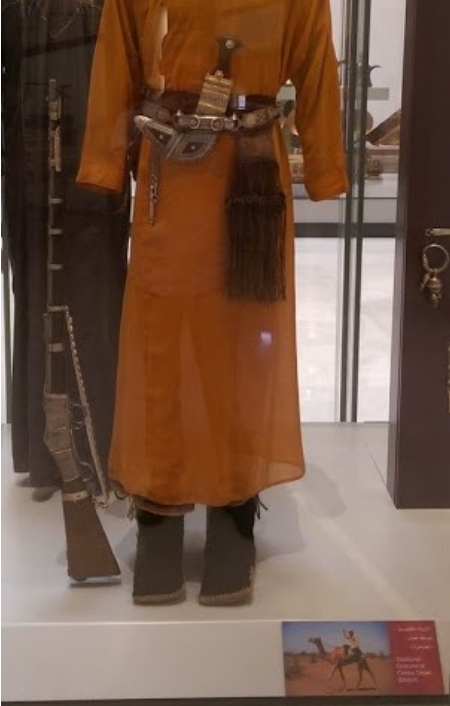
Various examples of Martini-pattern rifles and cartridge belts at the National Museum in Muscat – including alongside the traditional garb of central Oman. Photos by author.

Sources

(1) Rifles and Machine Guns
(2) Rifles and Machine Guns
(3) https://atwar.blogs.nytimes.com/2010/12/10/rifles-of-advanced-age-remain-in-use-in-afghanistan/

(4) R.M. Burrell 10; Arming the Periphery 116 5 Oryx Martini; 9781780969053

Works Cited

Burrell, Robert M. “Arms and Afghans in Makrān: an episode in Anglo-Persian relations 1905–1912.” Bulletin of the school of oriental and African Studies 49, no. 1 (1986): 8-24.

Cashner, Bob. The FN FAL Battle Rifle. Botley, Oxford: Osprey Publishing, 2013.

Chew, Emrys. “3: The Arms Trade in the Western Indian Ocean.” In Arming the Periphery: The Arms Trade in the Indian Ocean during the Age of Global Empire, 98-159. Basingstoke (GB): Palgrave Macmillan, 2012.

Chivers, C.J. “One Way to Retire an Old Rifle.” The New York Times. December 10, 2010. Accessed June 02, 2018.

https://atwar.blogs.nytimes.com/2010/12/10/rifles-of-advanced-age-remain-in-use-in-afg hanistan/.

F, Nathaniel. “Jumping The Gun (Literally): Saudis Dancing With Guns.” The Firearm Blog. August 12, 2015. Accessed June 02, 2018. http://www.thefirearmblog.com/blog/2015/08/12/jumping-the-gun-literally-saudis-dancin g-with-guns/.

Fowler, Will, and Patrick Sweeney. The World Encyclopedia of Rifles and Machine Guns. London: Anness Publishing, 2007.

Keohane, Alan. Bedouin: nomads of the desert. Trafalgar Square, 1994.

Leung, Canice. “Jumping the Gun | Pictures.” Reuters. August 11, 2015. Accessed June 02, 2018. https://uk.reuters.com/news/picture/jumping-the-gun-idUKRTX1NTN7.

Loyd, M. “The Arabian oryx jn Muscat and Oman.” African Journal of Ecology 3, no. 1 (1965): 124-127.

New Iraqi Bolt-Action Anti-Materiel Rifle Made by TDMP

New Iraqi Anti-Materiel Rifle Made by Technical Directorate for Military Production (TDMP) (1)

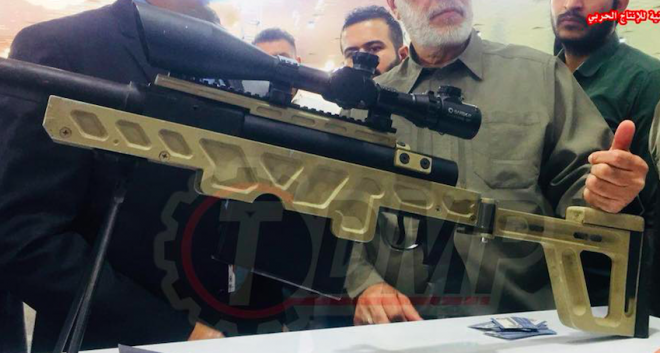
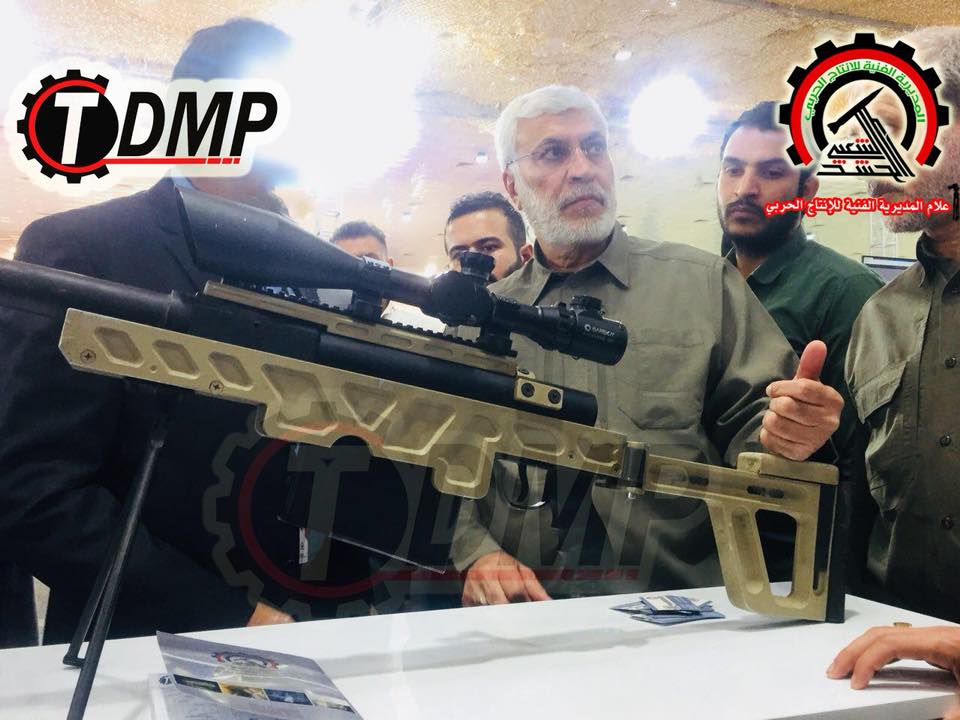
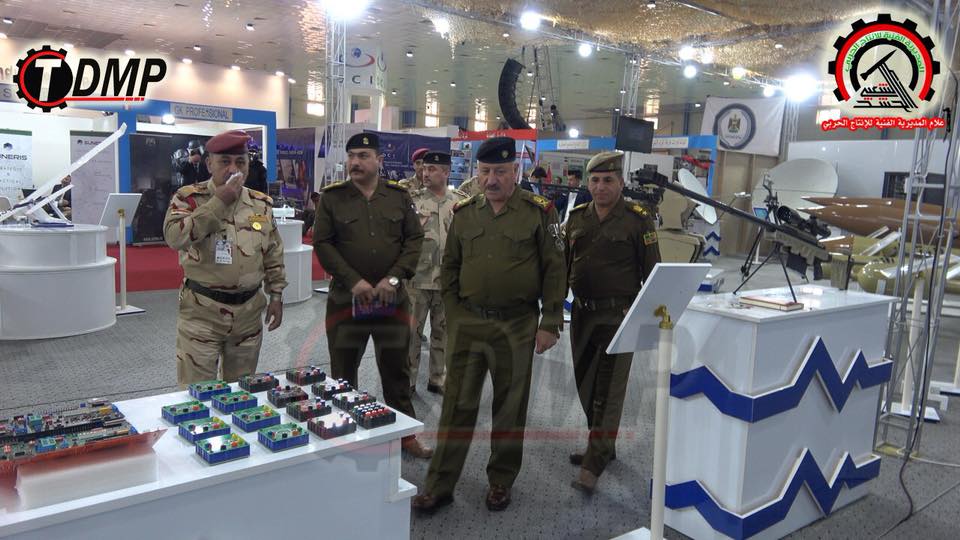
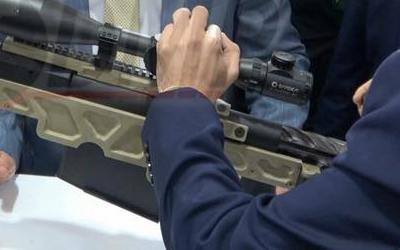
The Firearm Blog reports that Iraqi Technical Directorate for Military Production (TDMP) has released a new anti-materiel rifle during the International Defense Exhibition (IQDEX 2018) held in Baghdad, Iraq. Let’s take a closer look at the published images and see what we can notice.

New Iraqi Anti-Materiel Rifle Made by Technical Directorate for Military Production (TDMP) (1)

The chassis of the rifle looks to be made of two identical pieces of metal (most likely aluminum) with milled cuts to make it lighter. The two halves are probably assembled by the screws which heads are visible on the rifle. If so, then there must be a third inner part, too.

The folding stock looks to be simply shaped from an aluminum plate of a certain thickness. Note that the receiver also looks to be a very simple one. It is probably machined from a cylindrical steel bar. If my assumptions are correct, then this rifle must be quite easy to manufacture.

New Iraqi Anti-Materiel Rifle Made by Technical Directorate for Military Production (TDMP) (111)

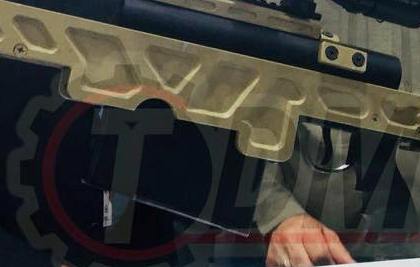
If you look closer, you can notice the magazine in the top image. It is obstructed by the watermark and blends with the background, but it is still visible. Its size suggests that it is chambered either in .50 BMG or in 12.7x108mm or maybe even a larger caliber.

New Iraqi Anti-Materiel Rifle Made by Technical Directorate for Military Production (TDMP) (3)

The rifle has a large muzzle break normally seen on anti-material rifles. The bipod is probably used for demonstration purposes only. Such a weak looking design probably wouldn’t work with the heavy and violently recoiling anti-materiel rifle.

New Iraqi Anti-Materiel Rifle Made by Technical Directorate for Military Production (TDMP) (2)

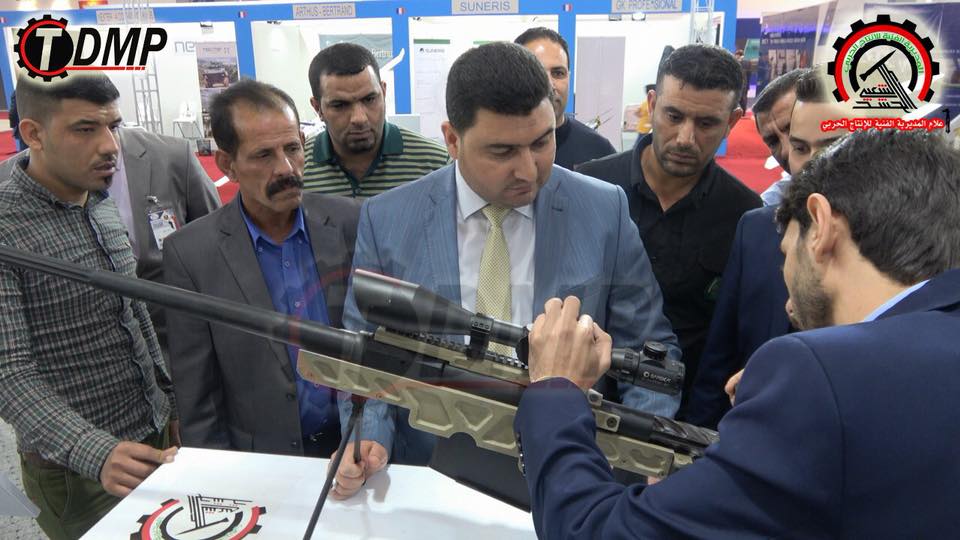
The new TDMP rifle also has a top Picatinny rail. In the above image, you can also see the fluted bolt of the rifle with an extractor groove cut in it. The small part bolted to the left side of the receiver should be the extractor and bolt disassembly lever – a pretty common design seen in many bolt action rifles.

New Iraqi Anti-Materiel Rifle Made by Technical Directorate for Military Production (TDMP) (222)

So far these images are the only information available on this rifle. Stay tuned to learn more about this rifle.

The “Female” Variant of the Galil


The integration of female soldiers in IDF combat roles is a much-debated topic in Israel the last decade or so. Today we will ride on the wayback machine to a time when the place of women in military service was very different.

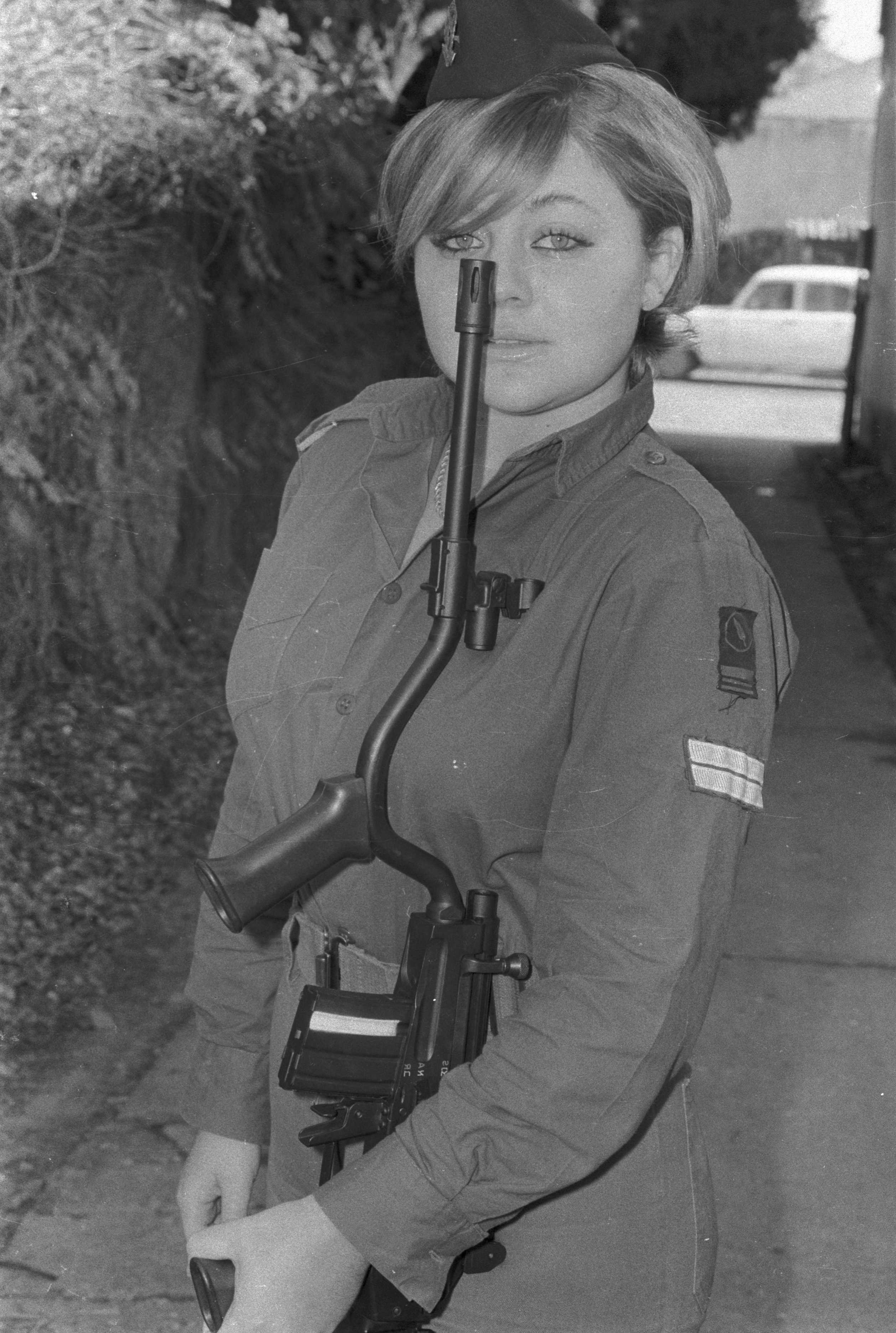
In the December 8 1982 issue of the IDF weekly magazine, Bamahane,  a short news piece was published with bold letters titled: “The end of discrimination! A major victory to the women’s liberation movement; a Galil assault rifle developed especially for female soldiers!”

The paper includes several pictures taken of an IDF female soldier ‘modeling’ a bent barrel Galil AR and further explanation states that the most problematic issue with designing a feminine rifle is that regular rifles keep colliding in the soldier’s breast whenever it was carried and practice in foot drills.

According to the news piece the development of the gun took two years and was tested by 350 female soldiers that were “carefully selected for their outstanding physical characteristics”

That ‘news piece’, as you might guess by now, wasn’t a real news report. It was the weekly satiric column called ‘על הגבול’ which literally means ‘On The Border’ but the more accurate translation means ‘Borderline’.


The prop gun was manufactured by none other than Yisrael Galil , the inventor of the Galil, for the satiric column.

The gun was a modified Galil AR with an absurdly bent barrel and vertical foregrip attached instead of the regular foregrip. The bolt carrier lacks a gas piston and there was no gas tube. All removed to achieve the described breast clearance. In one of the photos, the rifle is lacking a buttstock.

The gun was issued with a 12 round magazine, presumably to lighten the load on those top-heavy girls in uniform. The magazine is in fact a blank magazine used to propel rifle grenade.

The column summarized that since the rifles were introduced into military service they already proofed their value and the developer is flooded with purchase orders.


This article made possible by the courtesy of IDF & Defense Establishment Archives.

The photographer was Reuven Yehudai.

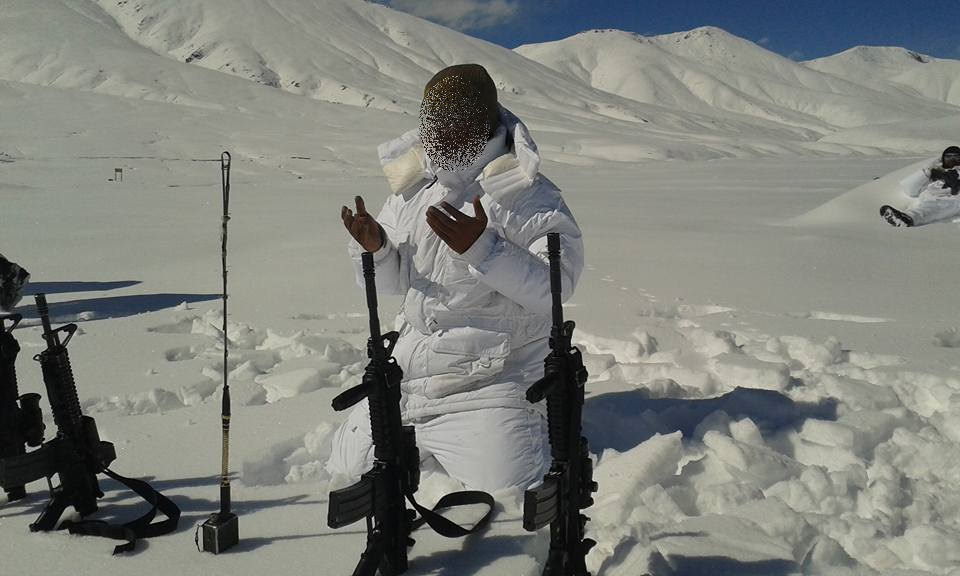
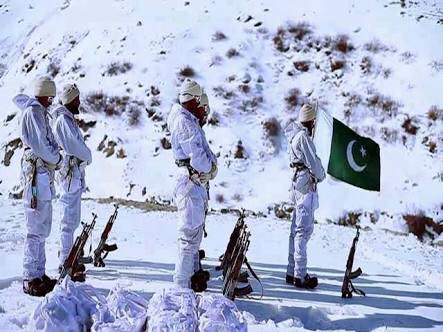
Pakistani SSG’s Rifles Function as “Prayer Barrier”

Recent photographs of Pakistan’s Special Service Group have surfaced in which members of the group are conducting mountain warfare training in the snow. Of particular interest is of the group conducting their Salat, or daily prayers. The prayers themselves aren’t so much as interesting as is what the soldiers are doing with their weapons. The M4s and in another picture, Kalashnikov patterned self-loading rifles are stuck into the snow in front of the soldiers praying, butt first.

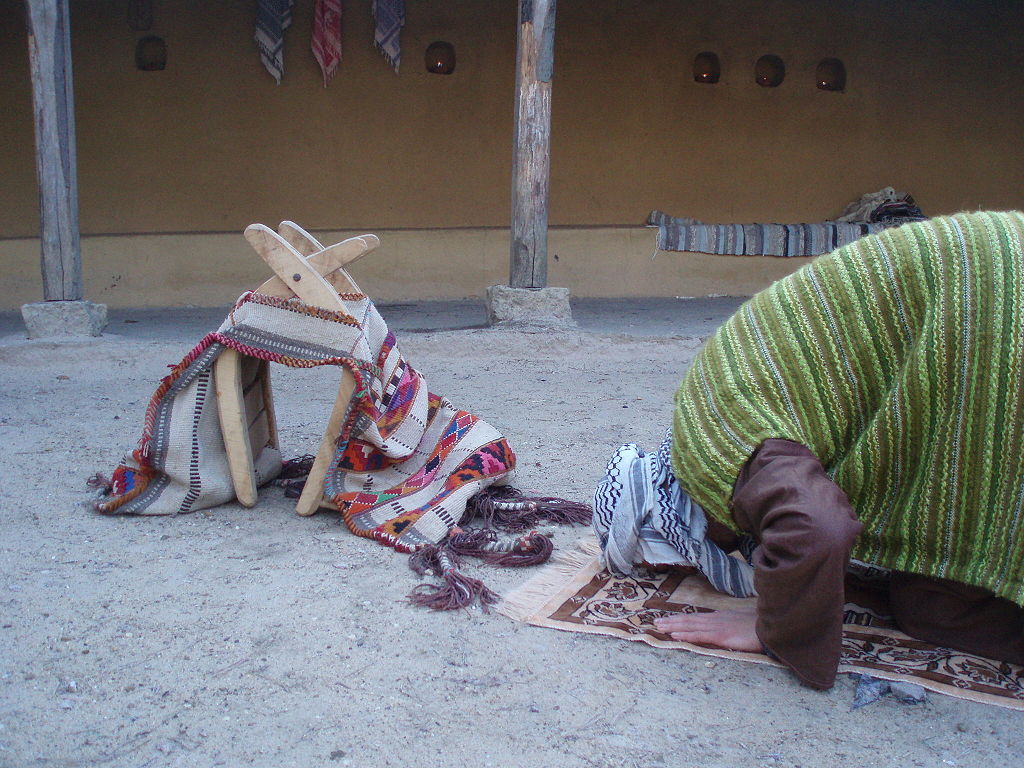
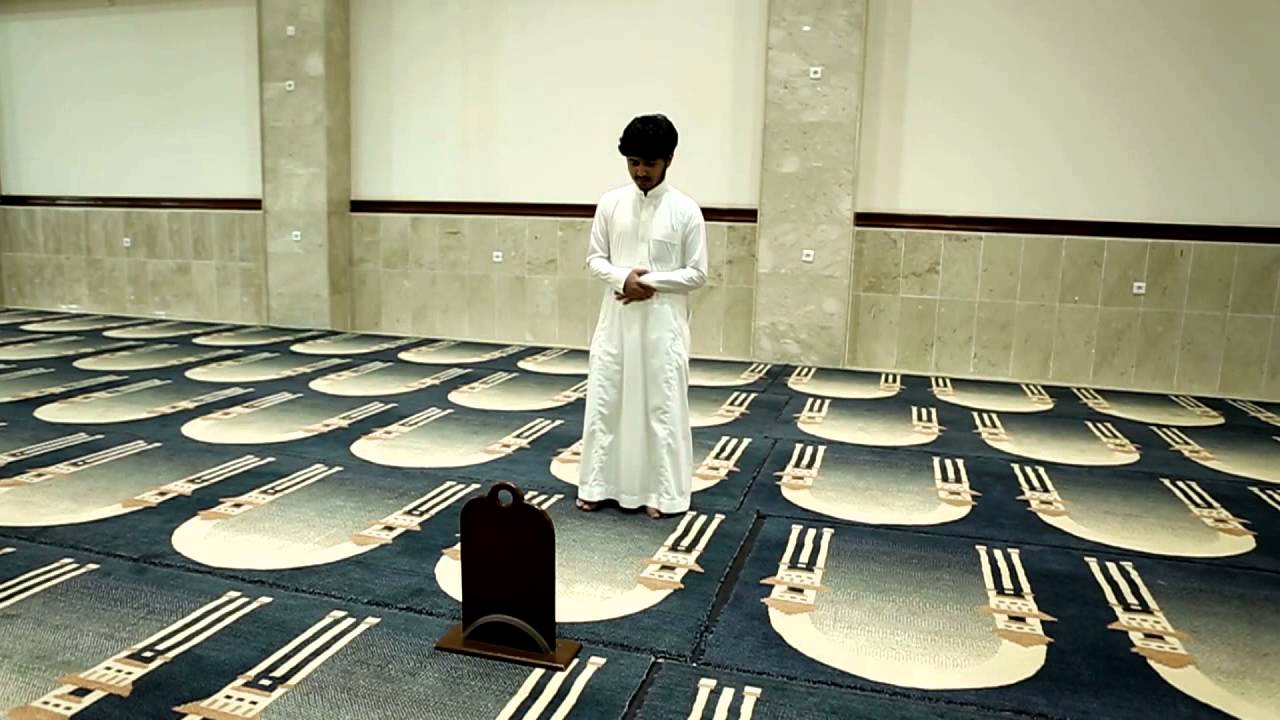
Although not really utilized today throughout the Islamic world, the practice dates back to the early Islamic period where one would place an object in front of them so other people would know not to walk in front of them during their salat. Specifically, it is called a Sutrah, or سترة in Arabic, meaning screen, or cover. There are some Hadiths on the topic but again it isn’t in wide use today.

Wikipedia lists two Hadiths in particular–

Sahl ibn Abu Hathmah narrated: إذا صلى أحدكم إلى سترة فليدن منها لا يقطع الشيطان عليه صلاته The Prophet said: When one of you prays facing a sutrah he should keep close to it, and not let the devil interrupt his prayer.

The Messenger of Allah said: لا تصل إلا إلى سترة، ولا تدع أحداً يمر بين يديك، فإن أبى فلتقاتله؛ فإن معه القرين Pray facing a sutrah, and let no one cross in front of you while praying. If he insists, then prevent him by force because he is accompanied by shaitan.

Another resource on the topic is listed here for those fluent in Arabic.

Guest Post: Iraqi Contract Sterling MK 4 in Syria

Mathew Moss comes to us as a highly esteemed writer from The Firearm Blog, but he also founded his own fascinating historical small arms research source, The Armourers Bench, in addition to runs his Twitter feed at Historical Firearms. This is his first work for Silah Report, and we hope it won’t be the last!

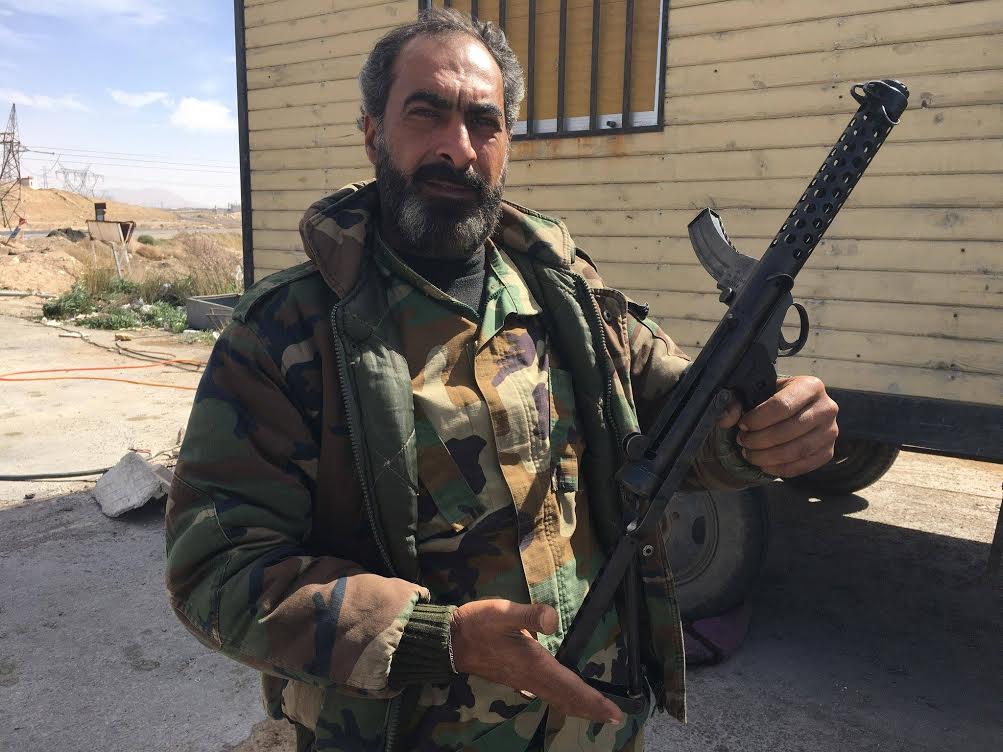
On the 10th March, Broń. Milmag, the Polish defense magazine, posted an intriguing photograph on their facebook page. The photograph had the short caption, which once translated, reads: “Syria Ad2018. 9-MM MACHINE GUN STERLING MK 4 / l2a3 used by a government soldier.”

Plenty of surplus World War Two weapons including the StG-44, MG42, Mosin-Nagant, K98ks and even French MAS-36s have been sighted in Iraq and Syria during the regions current multi-sided conflict. Sightings of the Cold War era- Sterling submachine gun, however, have been few and far between.

The Sterling submachine gun was developed by George Patchett at the Sterling Arms Company during the latter half of World War Two. Following extensive testing in the late 1940s and early 1950s the British Army adopted Patchett’s submachine gun to replace the Sten gun. It entered British service as the L2A1 in 1953, evolving quickly to its final form the L2A3. The L2A3 was produced commercially by Sterling at their plant in Dagenham, UK from 1956 until 1988 with an estimated 211,000 produced.

The Sterling was subsequently sold commercially and licensed for overseas production in both Canada (leading to the C1 Submachine Gun) and India (leading to the 1A Machine Carbine). Sterling successfully marketed the commercial version of the L2A3, the Mk4, to over a dozen countries around the world from Malaysia, to Libya, to Iraq.

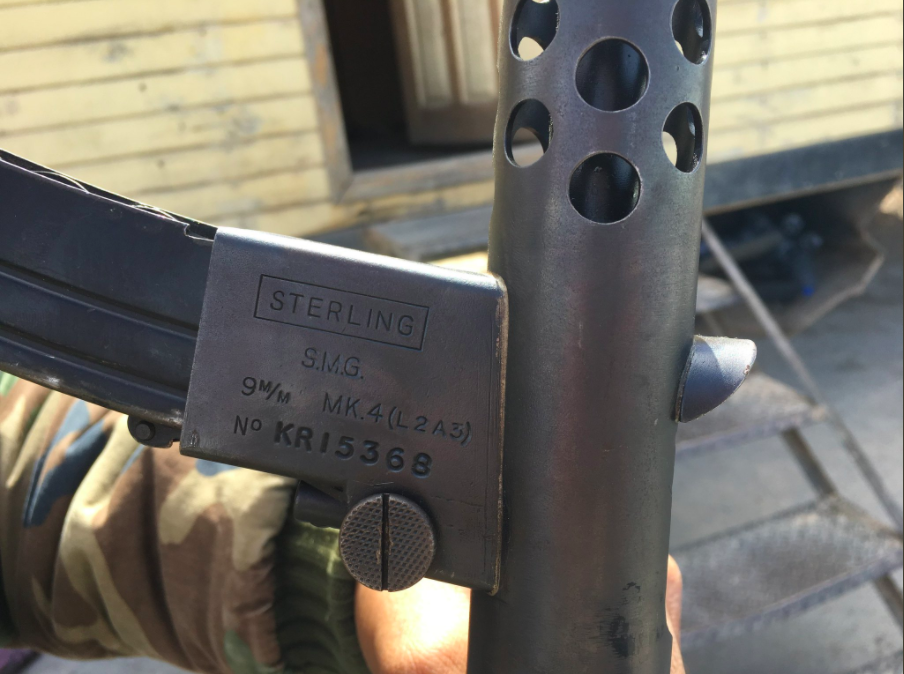
The weapon featured in the photograph appears to be in remarkably good condition. Following some digging I was able to find what I believe to be the original posting of the photograph online. Posted on Twitter by @Edward_Sn0wden on the 9th March. The twitter post includes a second photograph showing the Sterling’s magazine housing and markings. The photographs are credited to Alexander Kharchenko but sadly no location is mentioned. The caption suggests that the weapon might be a captured trophy.

From the available photographs the weapon appears to have a matte, rather than crackle paint, finish – this is either an original contract choice or a later armory refurbishment. The weapon is also fitted with an original Sterling produced commercial production 34-round curved double stack, double feed magazine – one of the most reliable submachine gun magazines ever developed.

We are lucky enough to have a second photograph showing the weapon’s markings in full: ‘STERLING SMG 9m/m MK4 (L2A3) KR15368’. The serial number, beginning with ‘KR’ dates the gun as a pre-1972 Sterling and refers to Kenton Redgrave, the Sterling company’s long-time director. The serial number dates the weapon, according to the serial number ranges, listed in The Guns of Dagenham (1996) by Peter Laidler, to 1957. This date would fit with the 1956-63 Iraqi contract which supplied 13,241 Mk4s to Iraq, first to King Faisal II’s military, and then to the Iraqi Republic, following a coup that deposed Faisal in 1958. The Iraqi Sterlings later saw action during the Iran-Iraq War and to a limited degree during both the Gulf War and during the 2003 Iraq War. 

While rare the Sterling has been spotted in the region before, three years ago CJ Chivers, the New York Times investigative conflict journalist and author of The Gun, shared a photograph of a Mk4 with a straight Sten magazine in use by the Mahdi Army in Sadr City, Iraq.

While investigating the photograph above, an Iraqi fighter came forward and told me about his ‘heirloom’ Sterling Mk4 which had belonged to his father, an Iraqi soldier killed during the Iran-Iraq war. Interestingly, this Iraqi heirloom Mk4 dated from June 1964, suggesting that the Iraq contract may have extended beyond the 1963 end date indicated by Laidler.

The Iraqi gentleman also advised that the Sterling was known to him, and possibly regionally as the ‘غداره مصريه’, which translates to ‘Egyptian Contract’ or Egyptian Submachine Gun. It seems that the Sterling has come to be confused with, or at least associated with an Egyptian submachine gun. While the Egyptian Army did purchase a number of commercial Mk3 Sterlings in 1954-5, Egypt never produced a copy of the Sterling, instead opting to copy the Carl Gustav m/45 to create to the Port Said, produced by Al Maadi.

How a Syrian government soldier might have come into possession of what is likely an Iraqi Sterling submachine gun is one of war’s intriguing mysteries. Regardless of how he acquired it appears to be in excellent condition for a 50 year old weapon.

Images:

Milmag post:

https://www.facebook.com/TheMilMag2/photos/a.871586039536290.1073741828.871547992873428/1980952581932958/?type=3&theater

Possible original source on twitter:

https://twitter.com/Edward_Sn0wden/status/972075403971055616

Rock Island Auctions photo of commercial Mk4 Sterling for Reference:

https://www.rockislandauction.com/detail/70/2504/sterling-mk-4l2a3-full-auto-sales-sample-smg-with-bayonet#detail