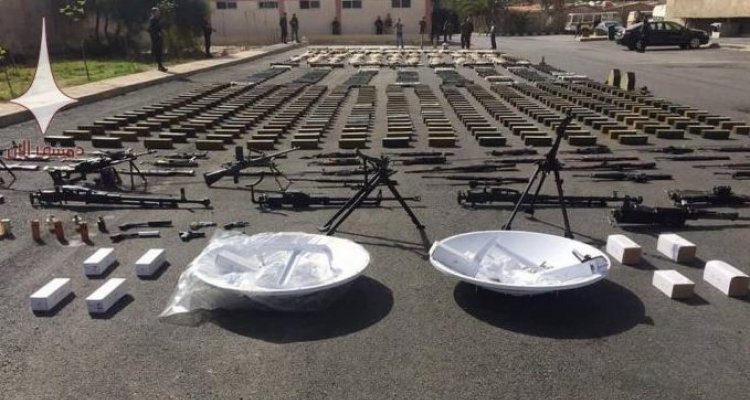
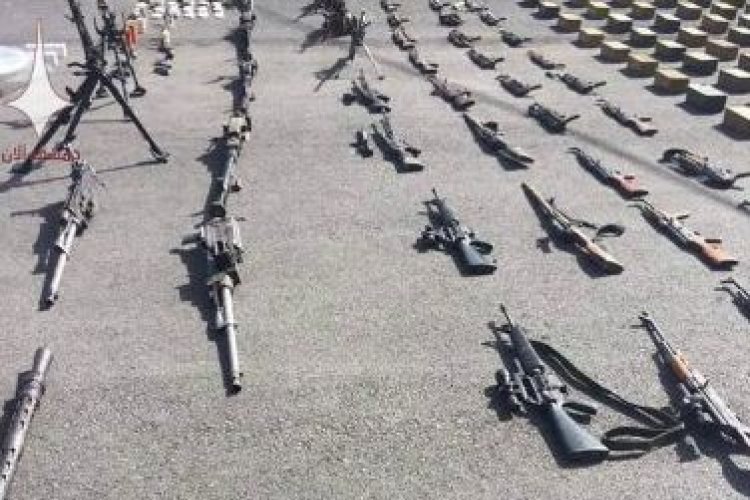
Recently, a number of news agencies reported that Syrian Army has seized a truck carrying a variety of weapons and ammunition addressed to one of the forces opposing the Syrian government. Reportedly, the truck was heading from eastern Qalamoun to East Ghouta. Let’s take a look at the photos of the seized weapons and see what types of small arms we can spot there.
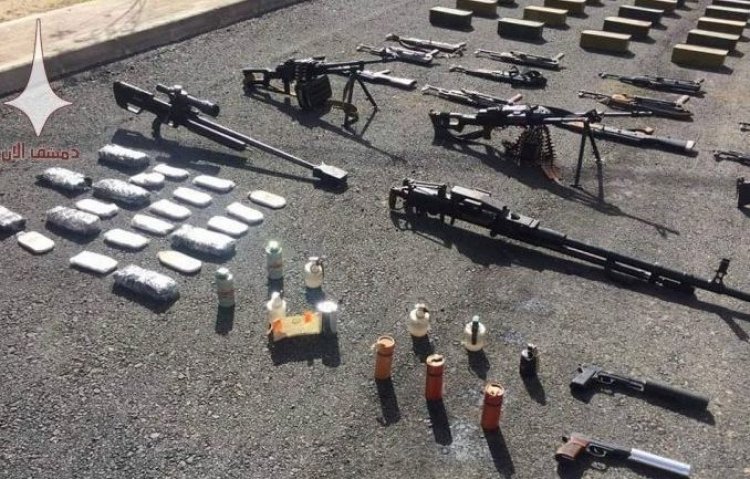
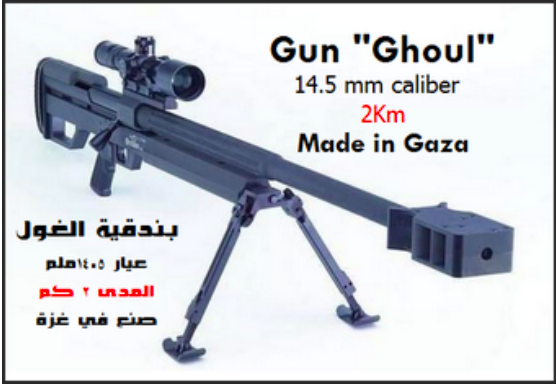
In the image below you can clearly see two PKM machine guns, a number of AK rifles and what looks to be a DShK heavy machine gun. Interestingly, there are two suppressed pistols one of which has a bright nickel colored suppressor. It should simply lack a finish which may indicate that it is a “homemade” suppressor. Arguably the most interesting piece in this picture is the scoped anti-materiel rifle. It is extremely similar to Steyr HS-50. It is also possible that this rifle is an Iranian copy of HS-50 called Sayyad or Palestinian copy called Ghoul. The Ghoul rifle is chambered in a larger caliber – 14.5x114mm. The Firearm Blog has recently published an article telling about the Ghoul anti-materiel rifle.
Palestinian Ghoul anti-materiel rifle
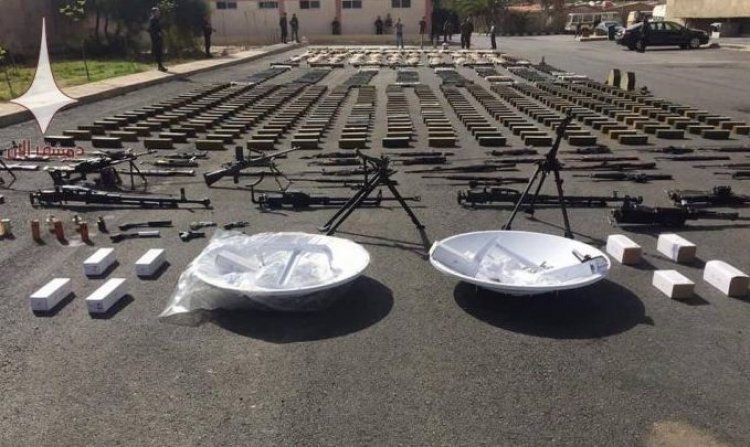
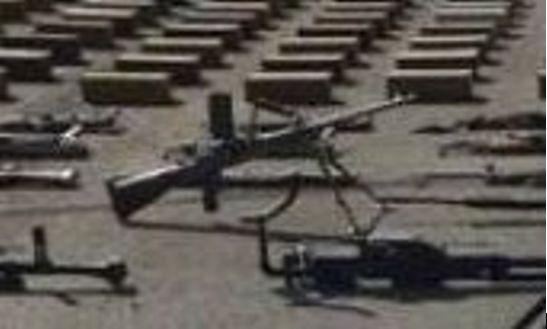
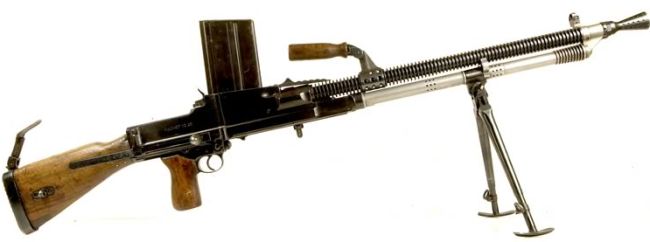
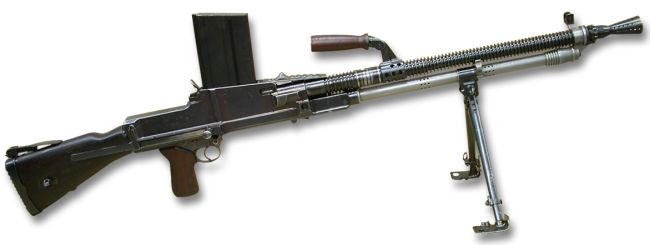
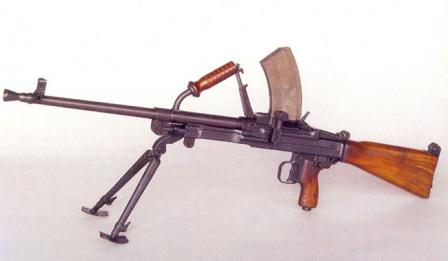
In another picture taken at a different angle, we see the silhouette of what looks to be a Czech ZB vz. 26 or ZB vz. 30 or Vz. 52 (Vz. 52/57) light machine gun.
ZB vz. 26ZB vz. 30Vz. 52/57
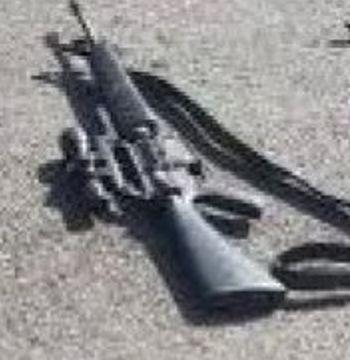
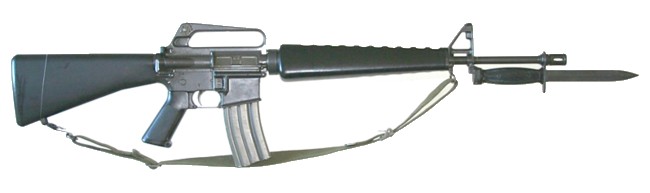
In the next image, there are several AR-15 pattern rifles among the more common (for the region) AK rifles. Judging by the stock shape, existence of a forward assist and carry handle, and by the distinctive triangular handguard, at least the closest one must be an M16A1.
M16A1
Here is also a video published by the Russian Federal News Agency showing other types of seized weapons and munitions:
https://www.youtube.com/watch?v=1A-4pZWyxzs
Sources:
“Syrian Army foils rebel attempt to smuggle heavy weapons into East Ghouta (video)”. (2018, February 28). Al-Masdar News. Retrieved from: https://www.almasdarnews.com/article/syrian-army-foils-rebel-attempt-smuggle-heavy-weapons-east-ghouta-video/
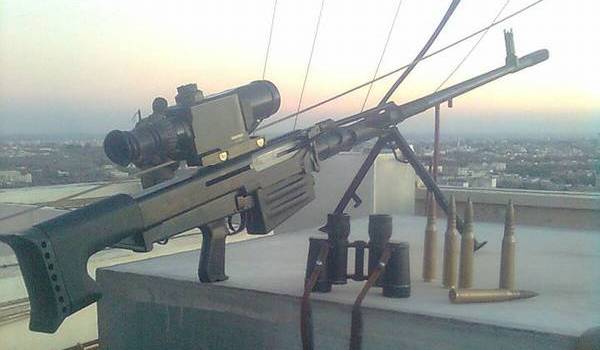
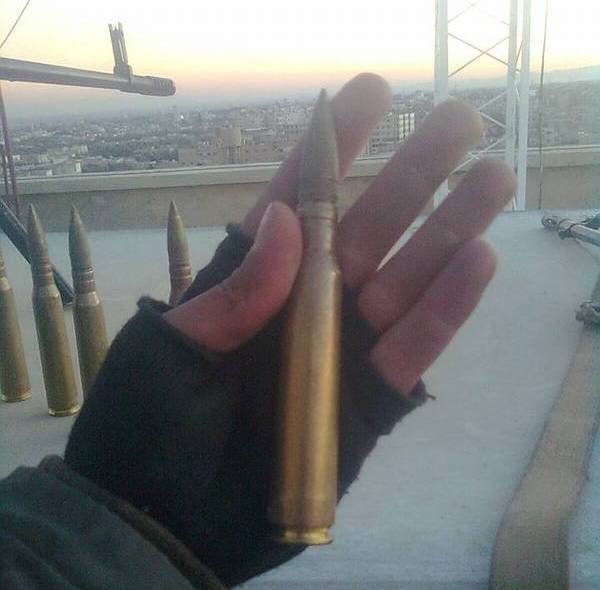
According to several Russian sources, the OSV-96 anti-materiel rifle was spotted again in Syria (see the above image). It is used by the special forces of the Syrian army. It’s been spotted in Syria starting from the very beginning of the Syrian war. Back in 2012, The Firearm Blog reported about this rifle in Syria.
The 12.7x108mm cartridge of the OSV-96 rifle
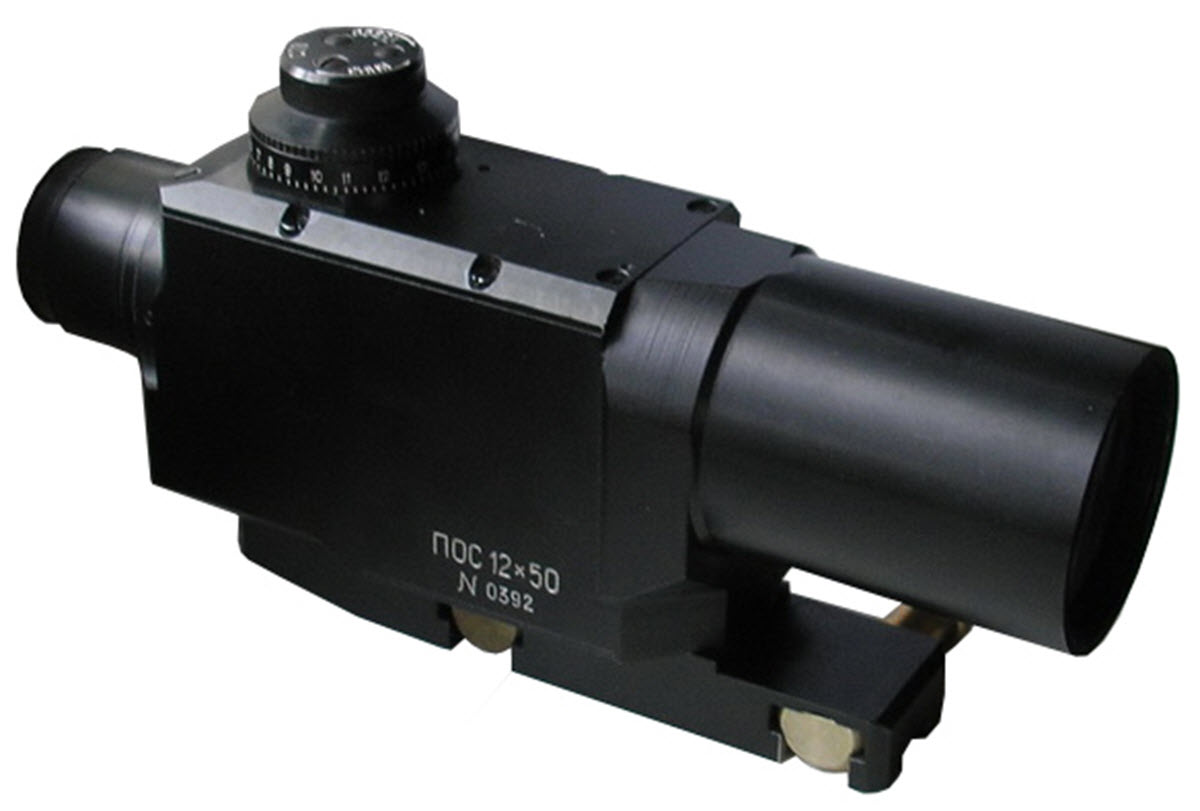
The scope on the rifle is most likely a Russian POS 12×50 (ПОС 12х50). This scope is frequently seen with the OSV-96 rifles.
POS 12×50 (ПОС 12х50) scope
In 2012, the rifle was also seen in the hands of forces fighting the Syrian army (see the video below).
———————————————————————————–
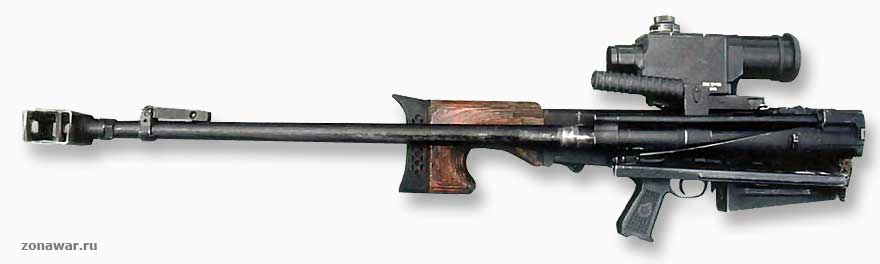
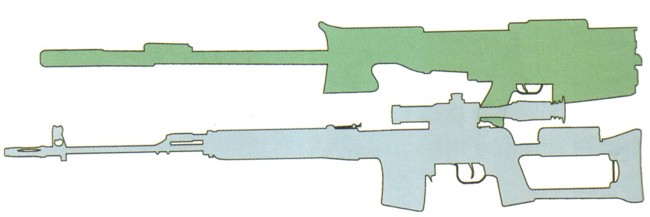
OSV-96 is designed and manufactured by a Russian arms company called TsKIB SOO. It is a magazine fed semi-auto anti-materiel rifle chambered in 12.7x108mm. It has a huge one-meter barrel (39.4″). However, its barrel folds 180 degrees to the right side of the rifle making its folded length comparable in size with the SVD rifle.
OSV-96 with folded barrel
The silhouettes of OSV-96 (folded) and SVD rifles. Image by modernfirearms.net
Here is also a video telling about this rifle.
And an animation of the rifle’s action by Noble Empire.
You can download the user manuals (in Russian) of the OSV-96 rifle and POS 12×50 scope by clicking HERE and HERE respectively.
A website called Warbook.info has also two posters (large jpg files) of this rifle, which you can download by clicking here and here.
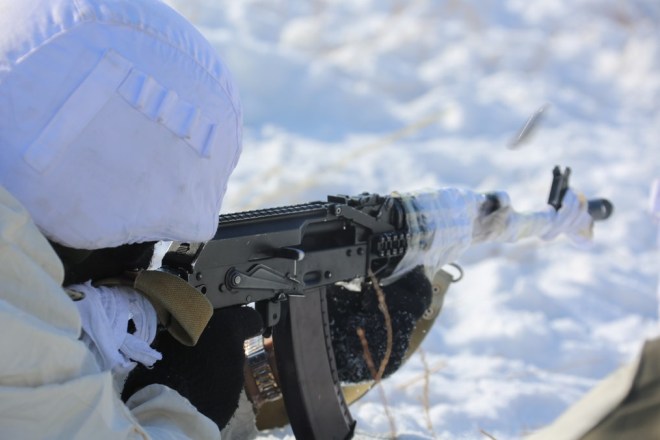
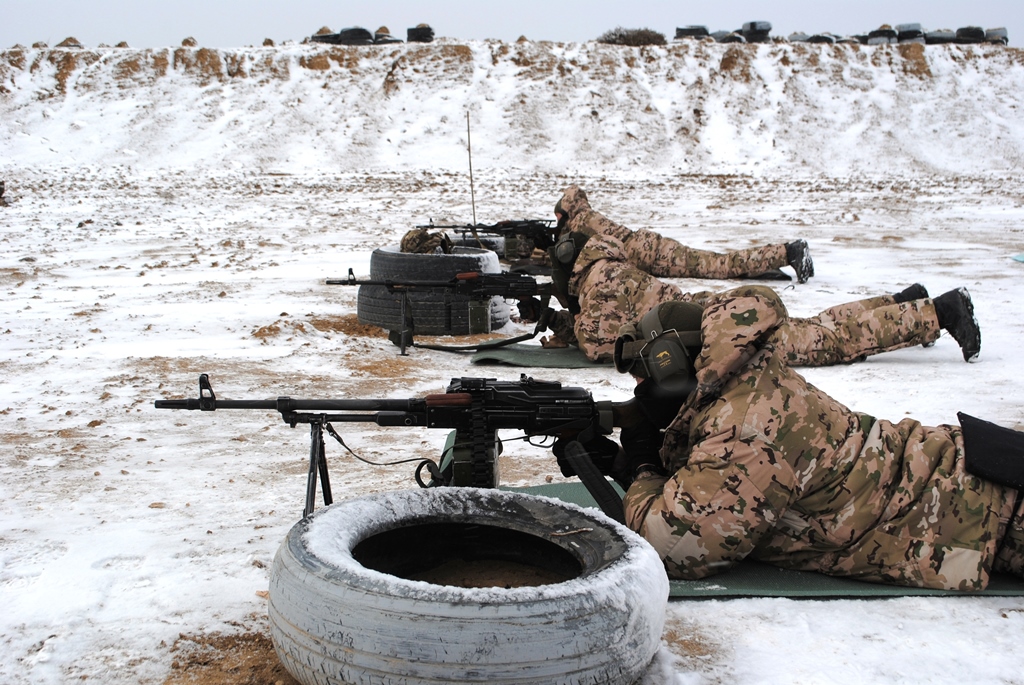
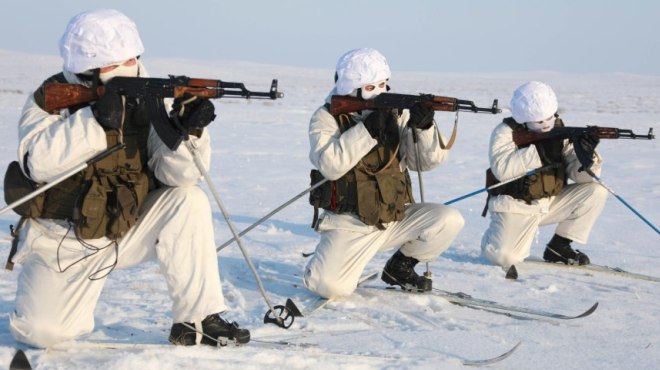
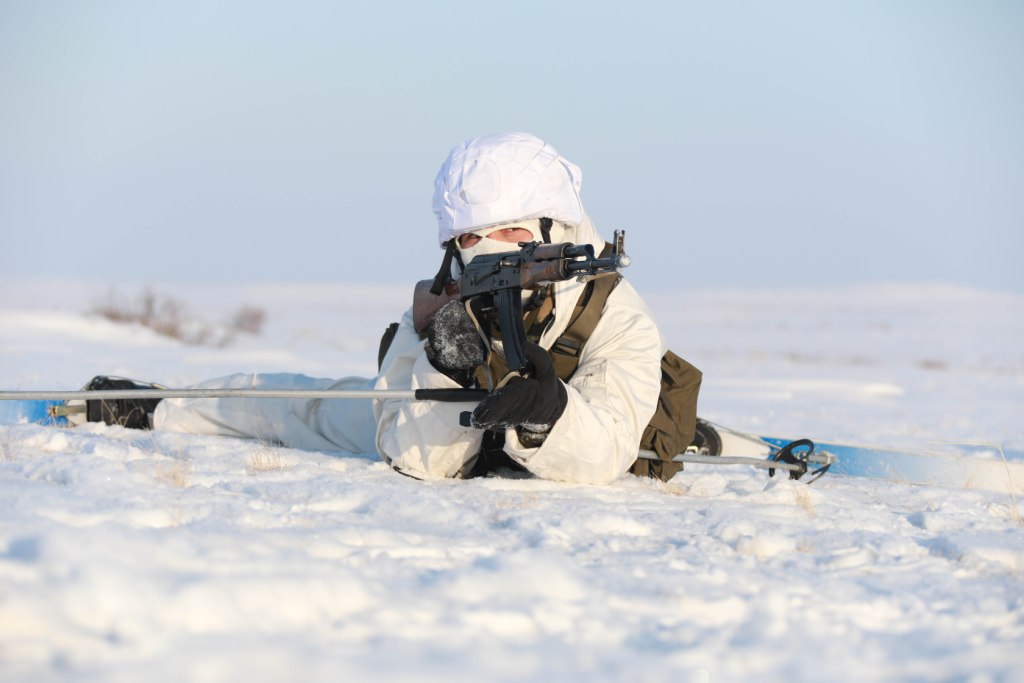
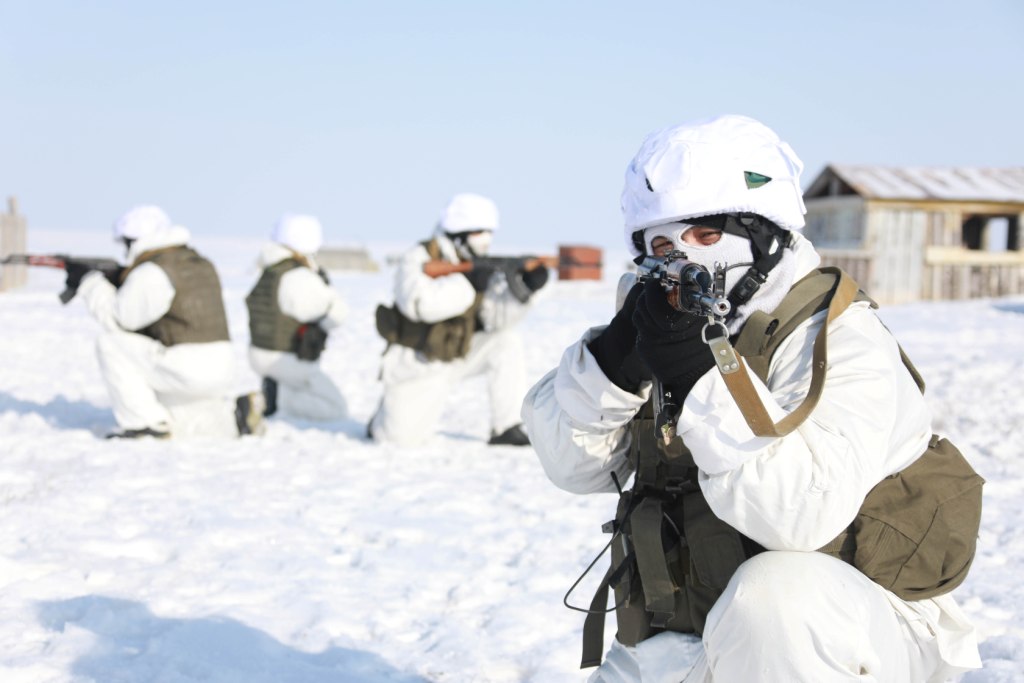
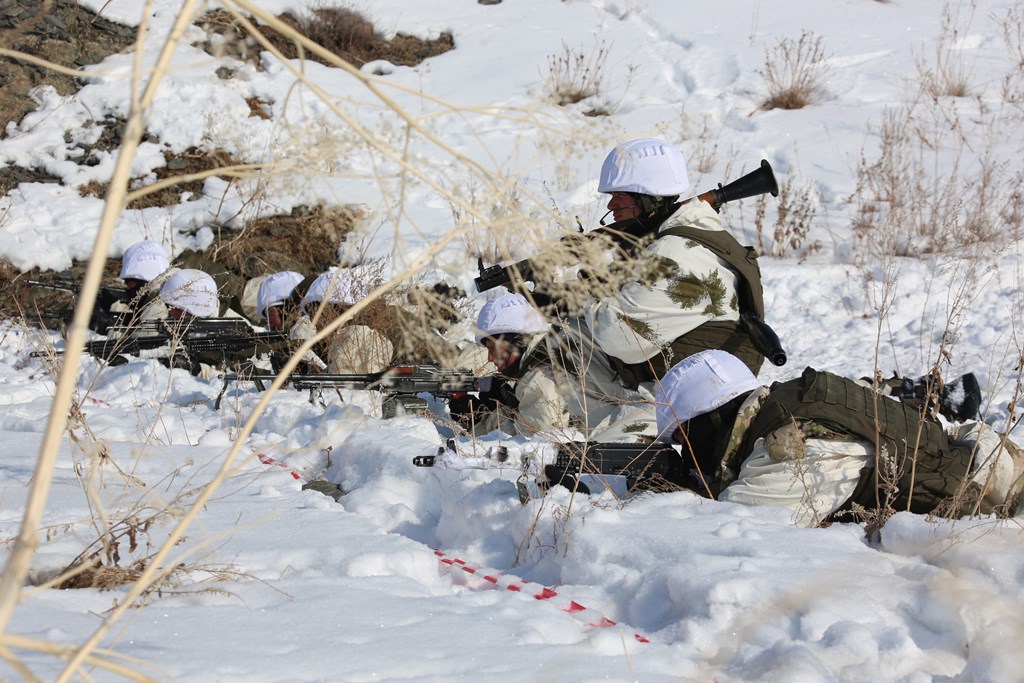
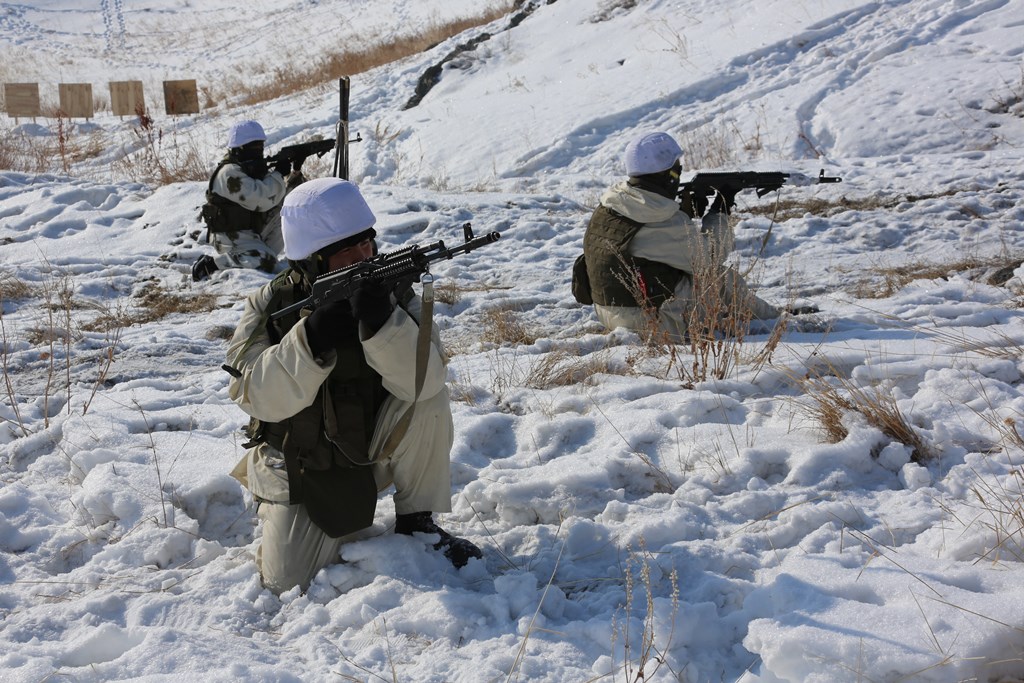
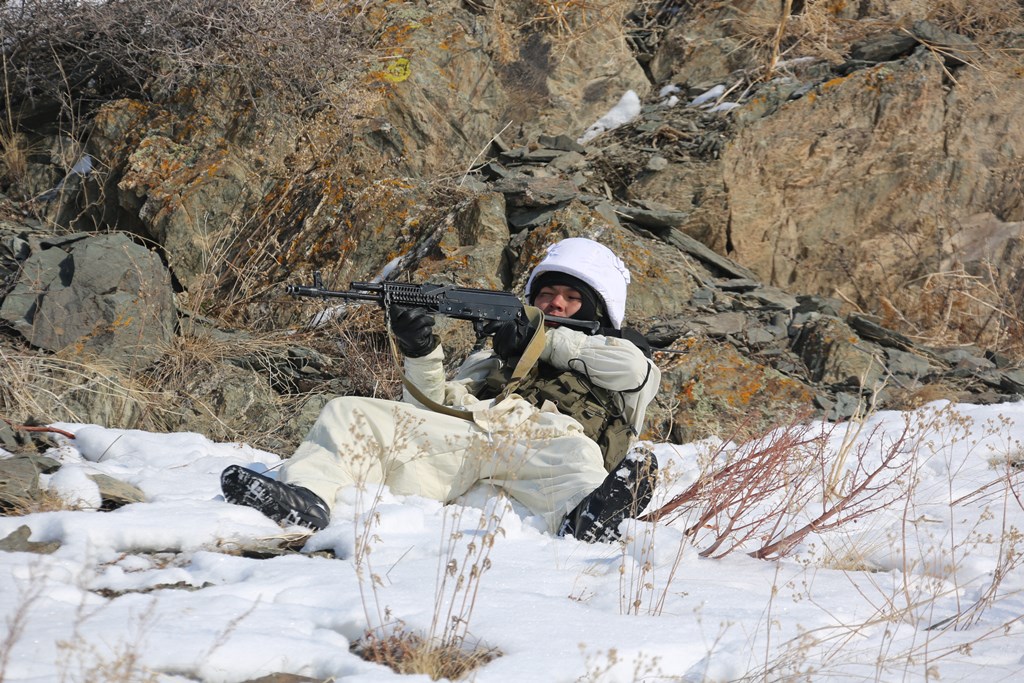
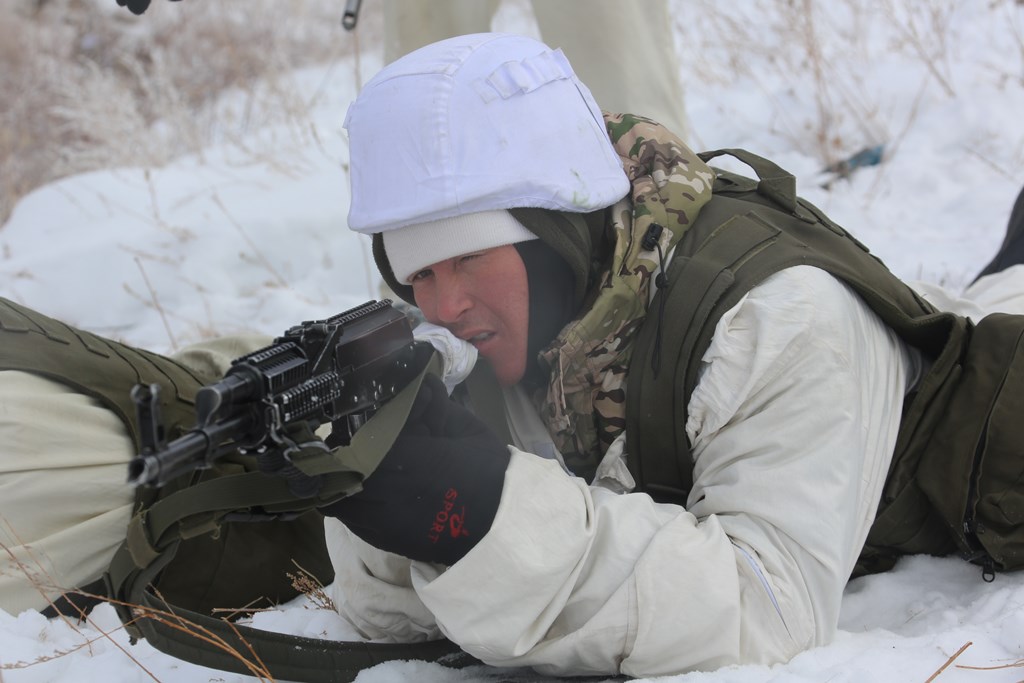
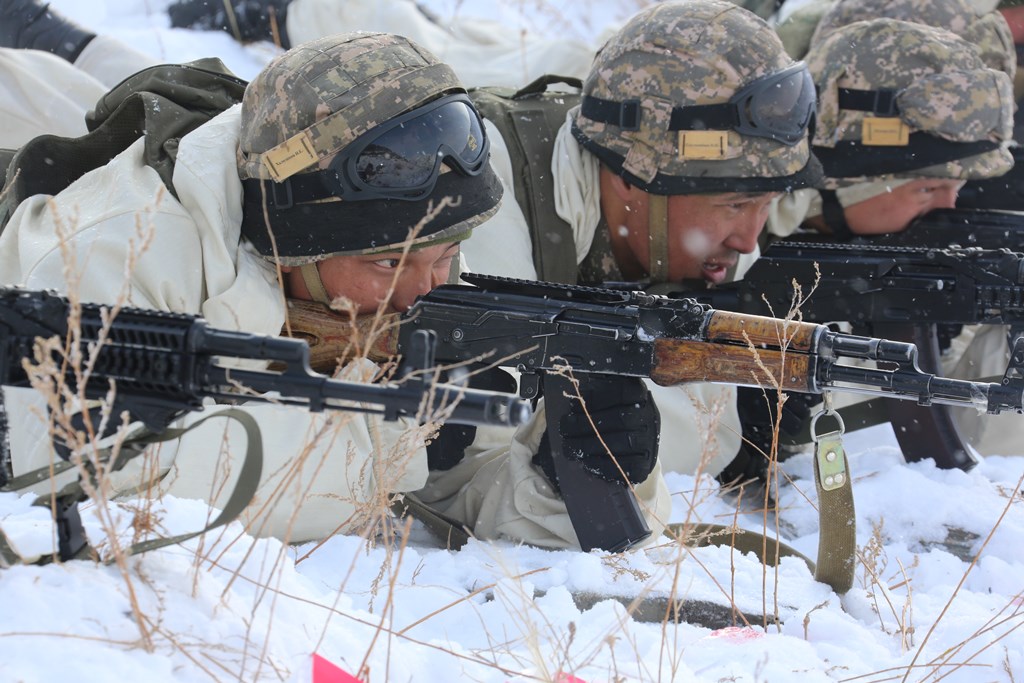
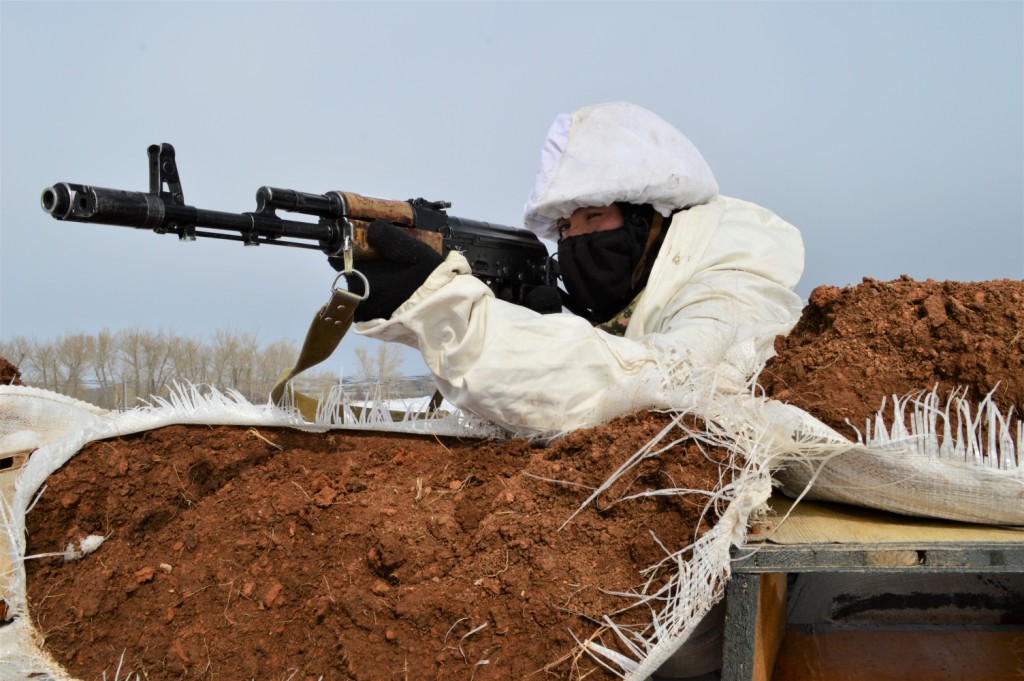
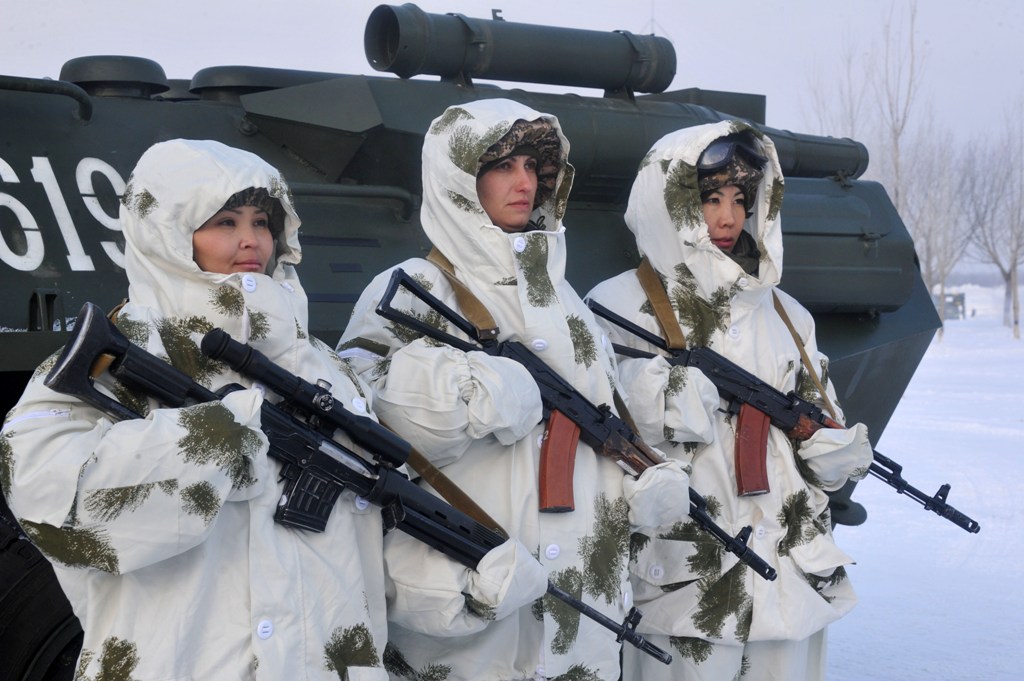
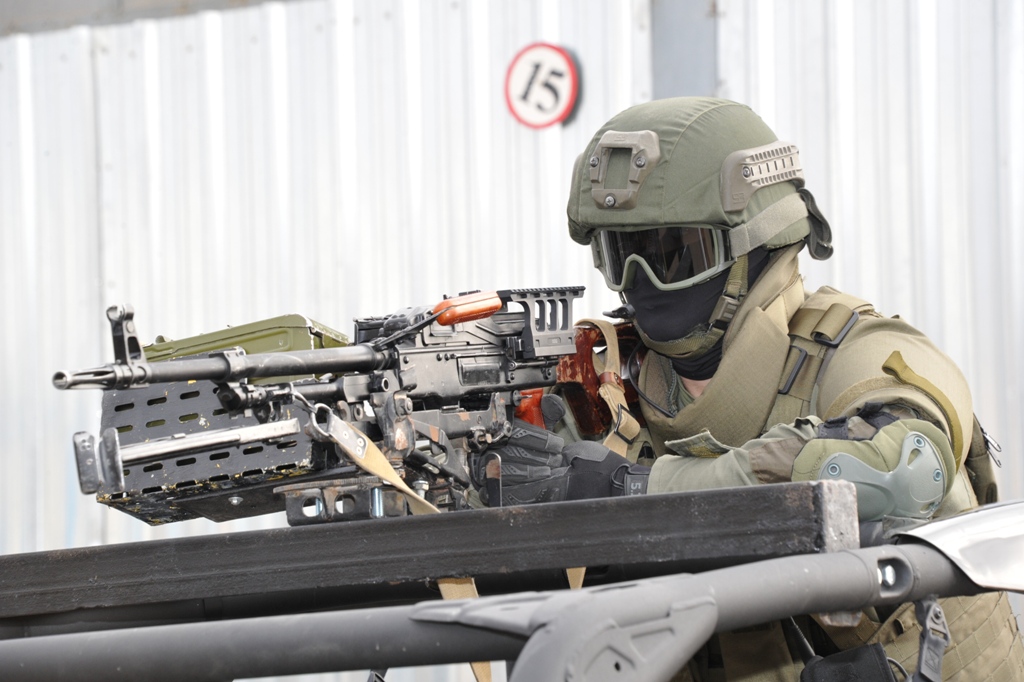
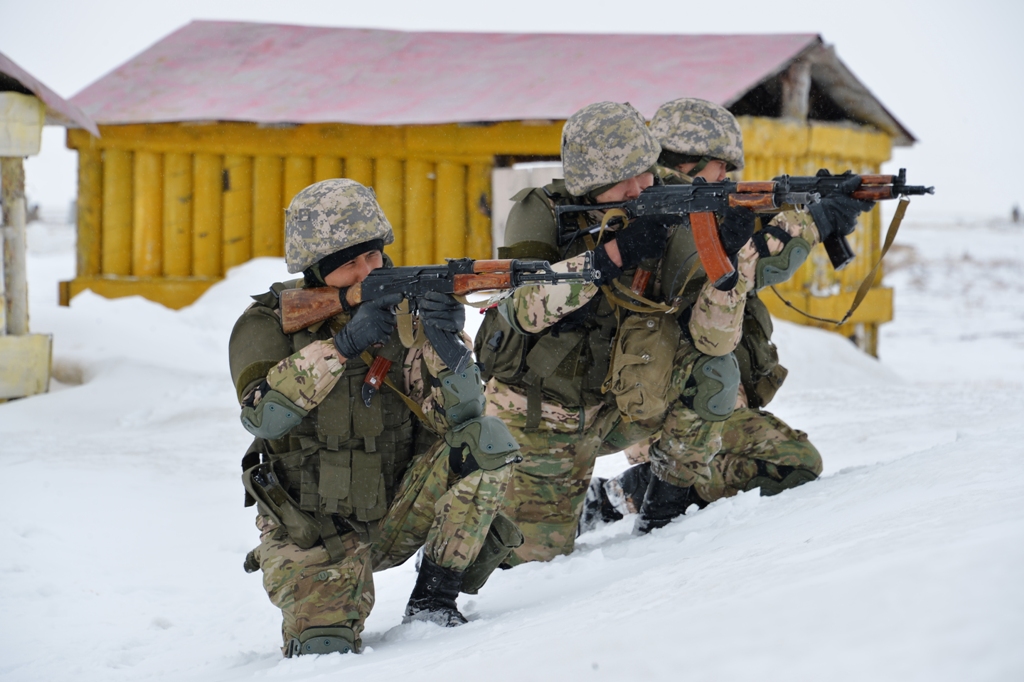
Ministry of Defense of the Republic of Kazakhstan regularly publishes news on their official website. We collected photos from various winter exercises and drills and depicting small arms in the hands of Kazakh soldiers. The units in the photos represent various branches of this country’s military.
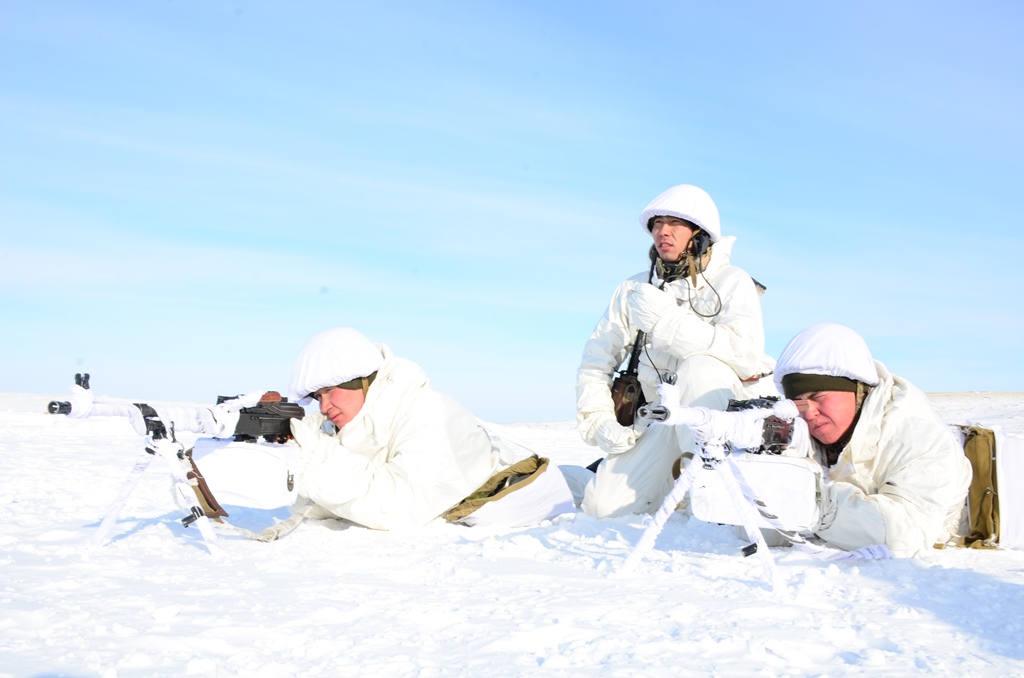
PKMs “at work”.Note that these soldiers use skis. That should tremendously increase their mobility. Of course, it requires some knowledge and skills to manipulate the weapons and transition between different shooting positions (kneeling, prone etc.) with skis on.
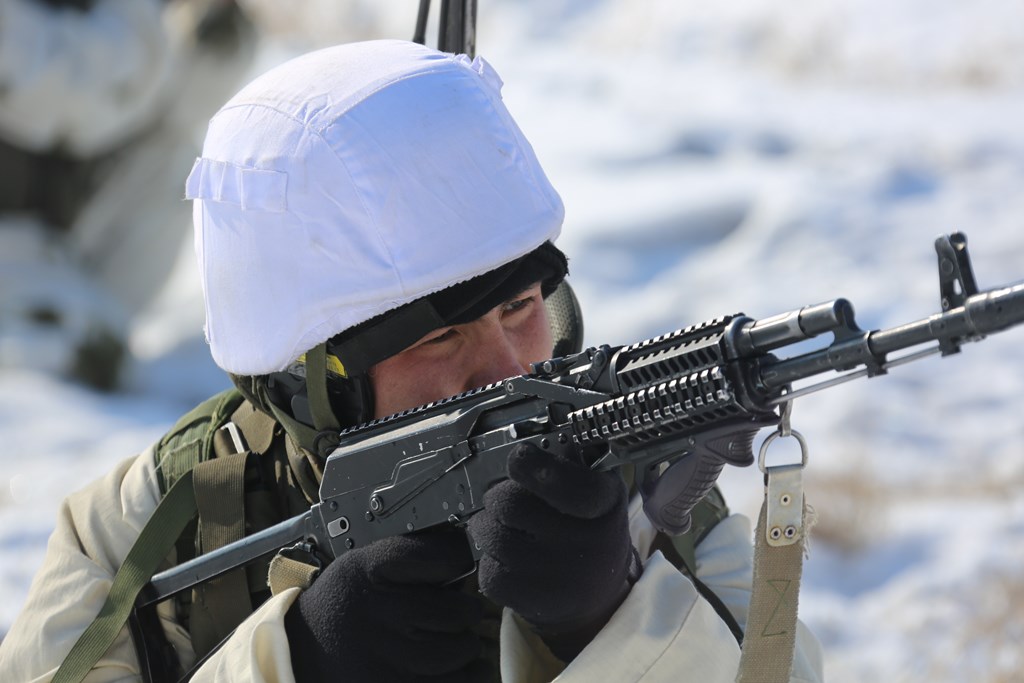
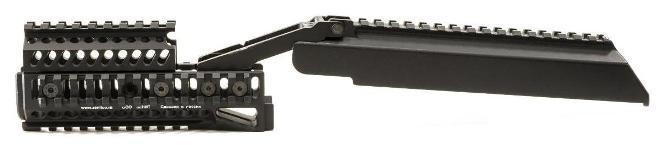
Note the Picatinny (1913) rails on the handguard, top cover and the gas tube of the AKS-74 of this recon unit soldier. It is most likely a Russian Zenit B-33 set of rails shown in the image below. The rifle is also equipped with a FAB Defense PTK angled forward grip. Surprisingly, there are no optics on the rifle.
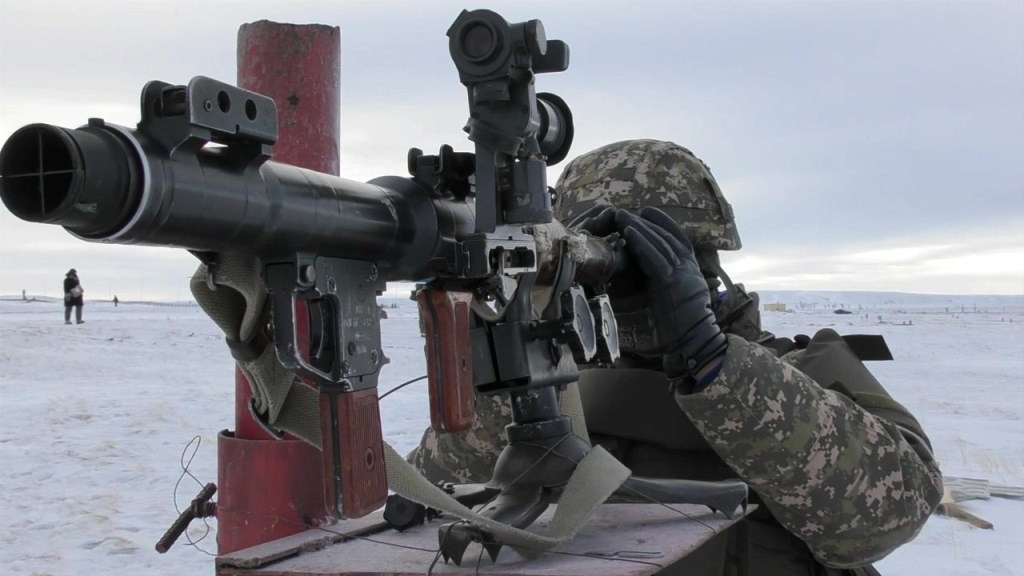
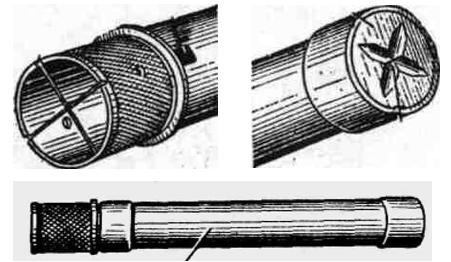
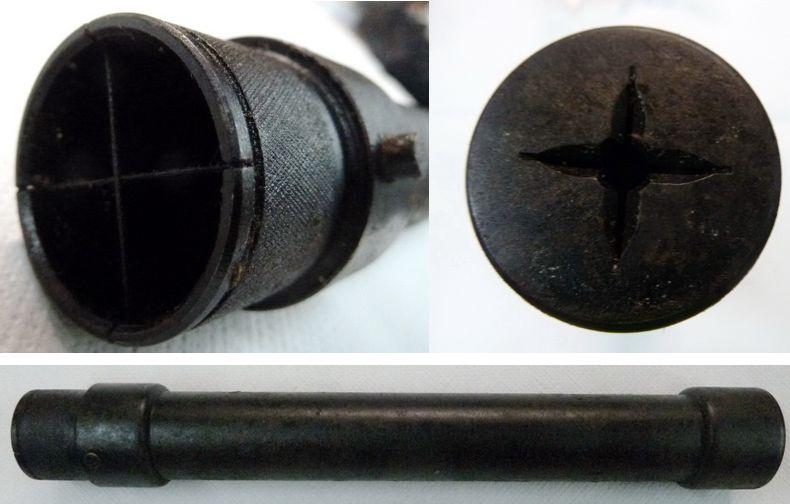
Most of the soldiers in this recon exercises have the Zenit rail system. Most, but not all of them. Note the soldier in the center of the image aiming a standard AK-74 with a side rail to top Picatinny rail conversion mount.A good example of how easy (relatively) it is to effectively blend with the surroundings in winter by merely wearing white clothes and having the guns wrapped in white fabric.This soldier is using a special device to sight in the RPG-7 grenade launcher.Images of that sighting device from an RPG-7 manual.And this is how that device looks.
Female personnel holding AKS-74 and SVD rifles.Vehicle mounted PKM machine gunNote the AKS-74U rifles and the Multicam uniform.The rifle of this soldier is equipped with an underbarrel grenade launcher (GP-25 or GP-30) and a rubber buttpad to mitigate the recoil when firing the grenade launcher.
I hope you enjoyed this set of photos. Let us know in the comments section what interesting piece of gear have you noticed.
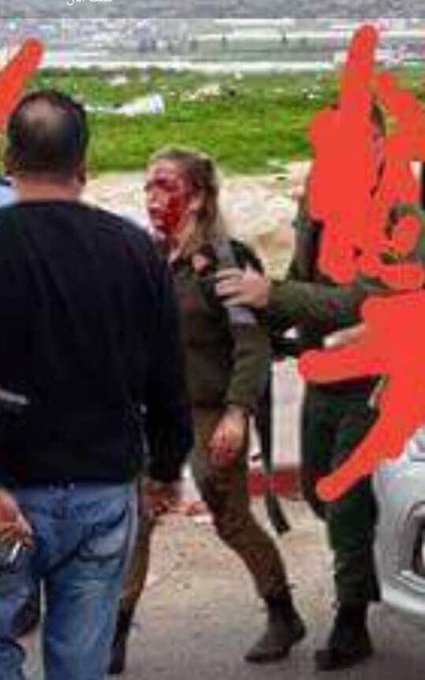
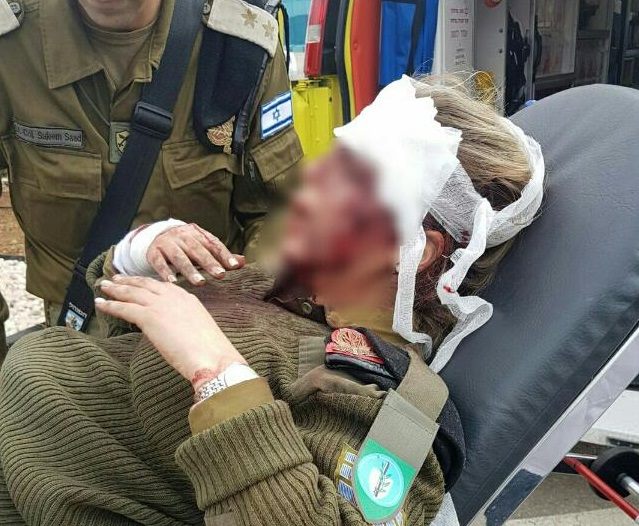
The two soldiers, a man and a woman, were lightly to moderately injured. Images of the female soldier’s bloody face circulated on social media after she was injured by shattered windshield glass. She was evacuated to a hospital in Afula.
Video from the attack shows the mob haranguing and attacking the soldiers as they cried out.
An initial investigation found that the soldiers had been misdirected to the Palestinian city by the Waze navigation app on their journey from Shavei Shomron in Samaria to Afula in the Jezreel Valley.
A Palestinian Authority policeman intervened to protect the Israeli soldiers, ultimately firing into the air to disperse the crowd. Over 100 members of the PA security forces were called out to escort the soldiers to safety and return their jeep to Israel, according to a PA security official interviewed by the Jerusalem Post, who also said that the effort was made both to protect human life and prevent Israeli reprisals against Jenin.
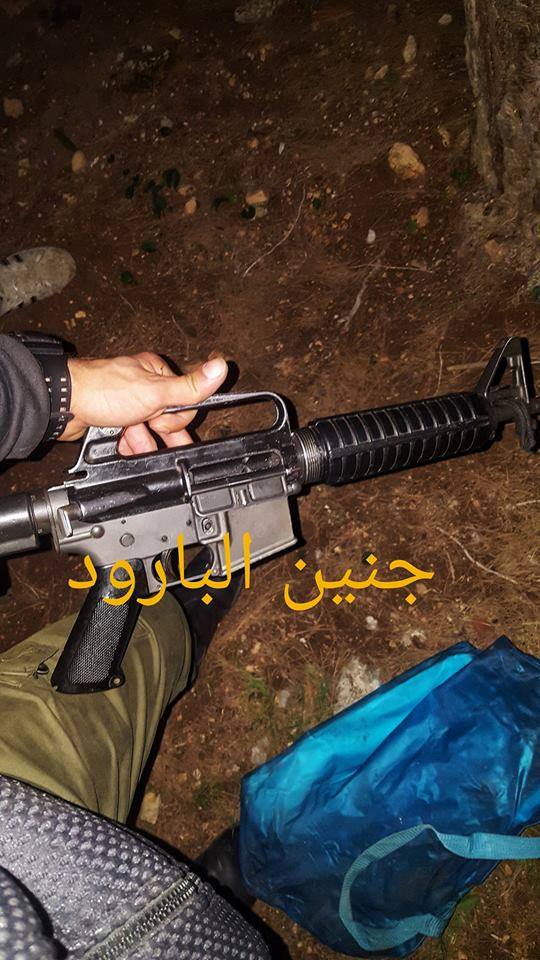
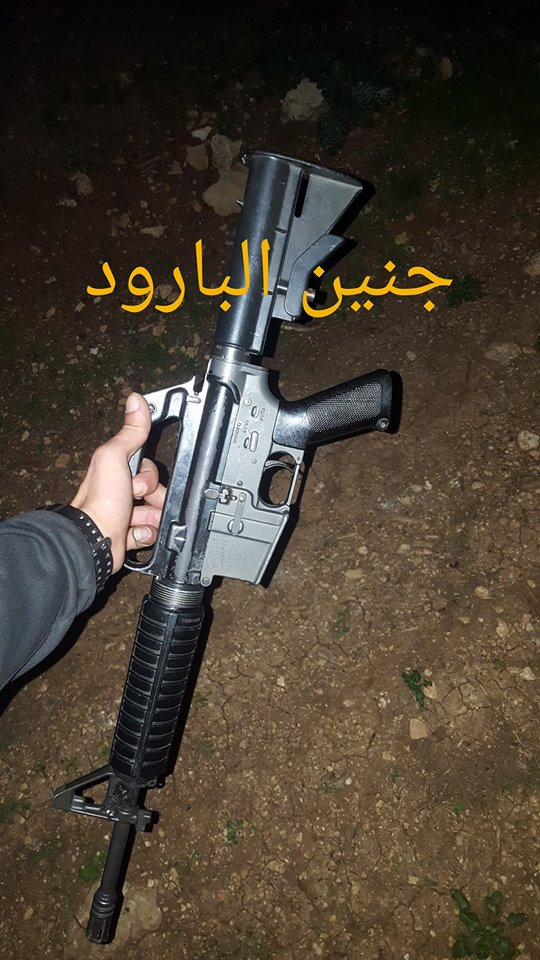
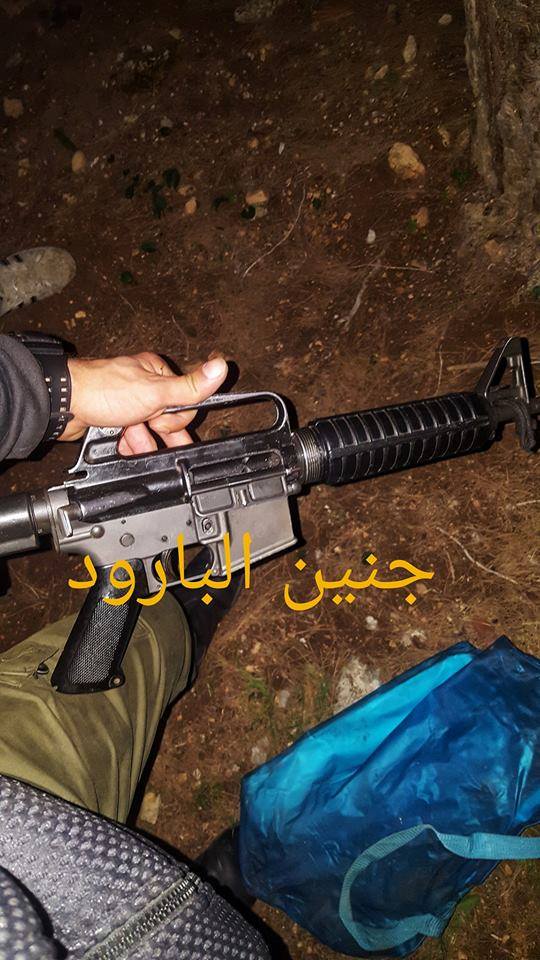
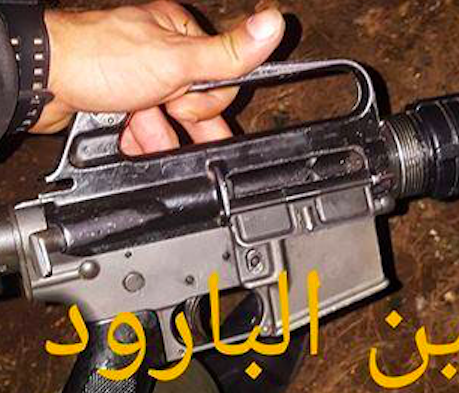
Various Palestinian social media outlets have released images of a Colt CAR15 that appeared to have been returned to IDF forces after the encounter. The IDF has made extensive use of U.S. CAR15s, M16A1s, M16A2s, and even M4s for a number of decades, currently supplementing the IWI Tavor now in service with frontline troops.
Notice the earlier A1 forward assist and A1 rotary dial rear sight. In addition, notice the shorter telescoping stock which is signatory of the CAR15 series. Also note that the upper and the lower receiver don’t match, possibly indicating that the two parts were interchanged throughout the life of the rifle.
But more interesting than the rifle is the fact that the bolt and charging handle appears to be missing from it. This could have been intentional on the part of the Palestinians who captured the rifle.
The Israeli soldiers appear to have taken a beating but fortunately are still alive. They probably could do with a remedial land navigation course, and not rely on Waze to get from one tactical objective to another.
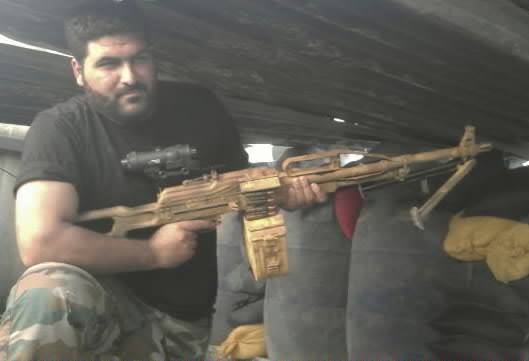
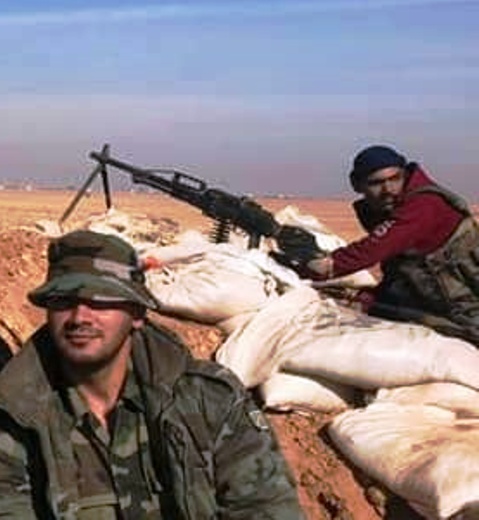
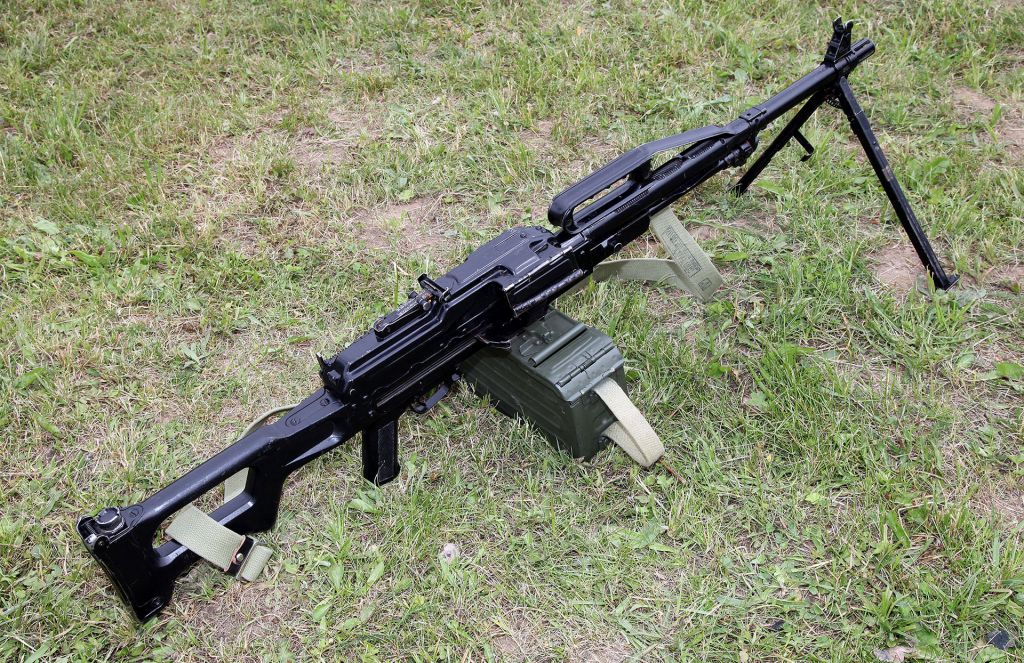
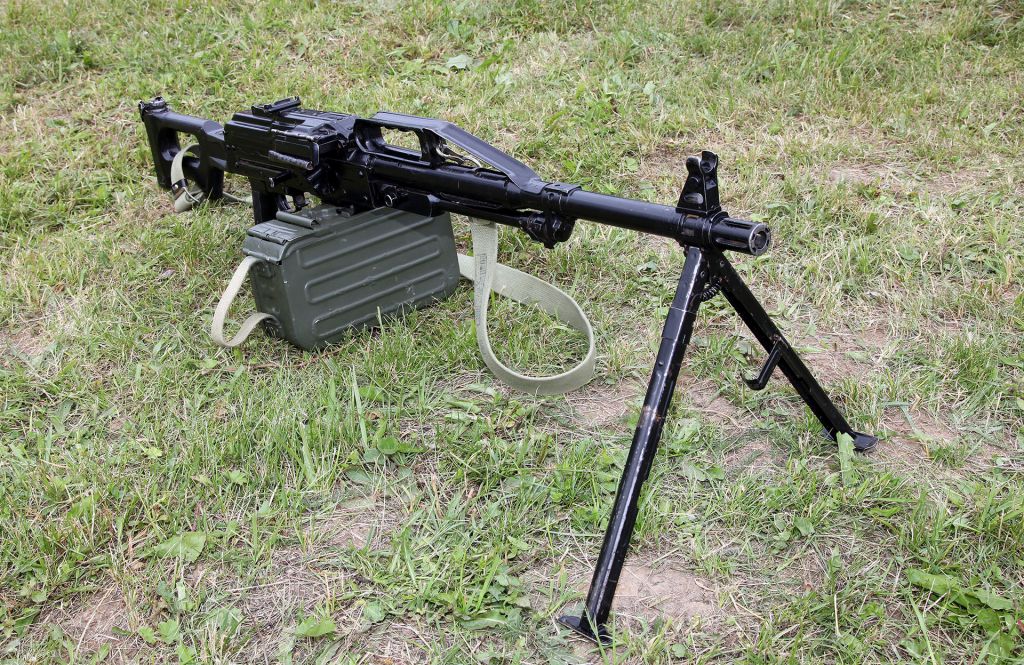
Russian PKP Pecheneg machine gun was earlier spotted in the hands of Syrian Armed Forces soldiers back in 2015. The top image of this article is taken in 2015. Lately, another image appeared in the web (see the image below) showing this machine gun again with Syrian Armed Forces. Reportedly, Pecheneg was acquired by Syria even before the civil war. It was purchased in small numbers to arm some special forces units.
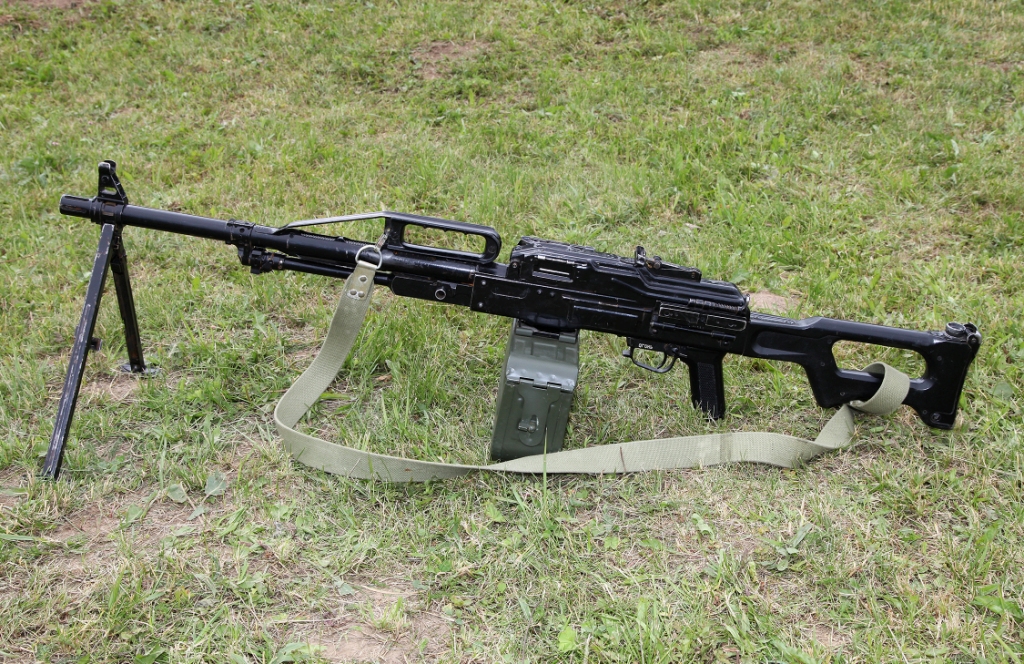
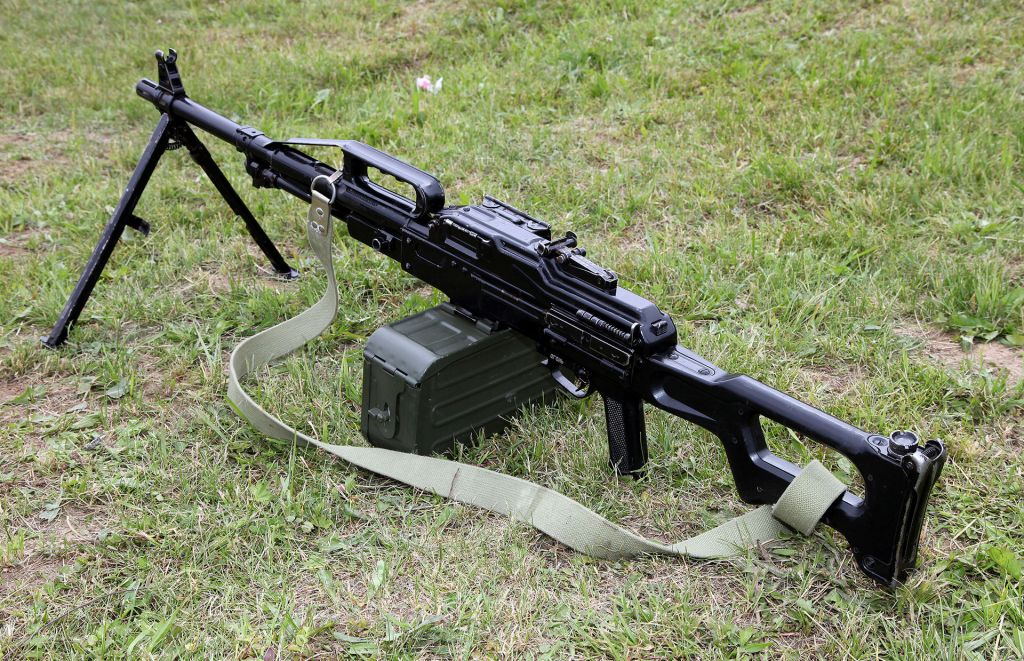
Note the distinctive carry handle shape over the barrel jacket of PKP Pecheneg machine gun
PKP Pecheneg is a general purpose machine gun chambered in 7.62x54mmR. It was designed in the late ’90s by a Russian company called TsNII TochMash. This gun is based on the PKM machine gun. Most machine guns of this category feature a quick change barrel which allows to change the heated barrel in the battlefield and keep shooting the gun with the new barrel. In the case of the Pecheneg, the designers’ goal was to get rid of the barrel changing mechanism without compromising the firepower. To achieve that goal, they had to develop a system that would allow cooling the barrel. They incorporated a forced air cooling system into the design of this machine gun. After each shot fired, the gasses escaping from the muzzle create a pumping effect forcing the air to enter the barrel jacket and pass through its length thus cooling the barrel. The barrel of PKP Pecheneg is also ribbed.
The barrel jacket also reduces the mirage coming from the heated barrel. Another difference from the PKM is the location of the bipod. Unlike the PKM, Pecheneg’s bipod is moved forward to the muzzle – much like it is seen in RPK light machine guns. Despite the described design changes, Pecheneg still has a high rate of parts compatibility with the PKM (up to 80%).
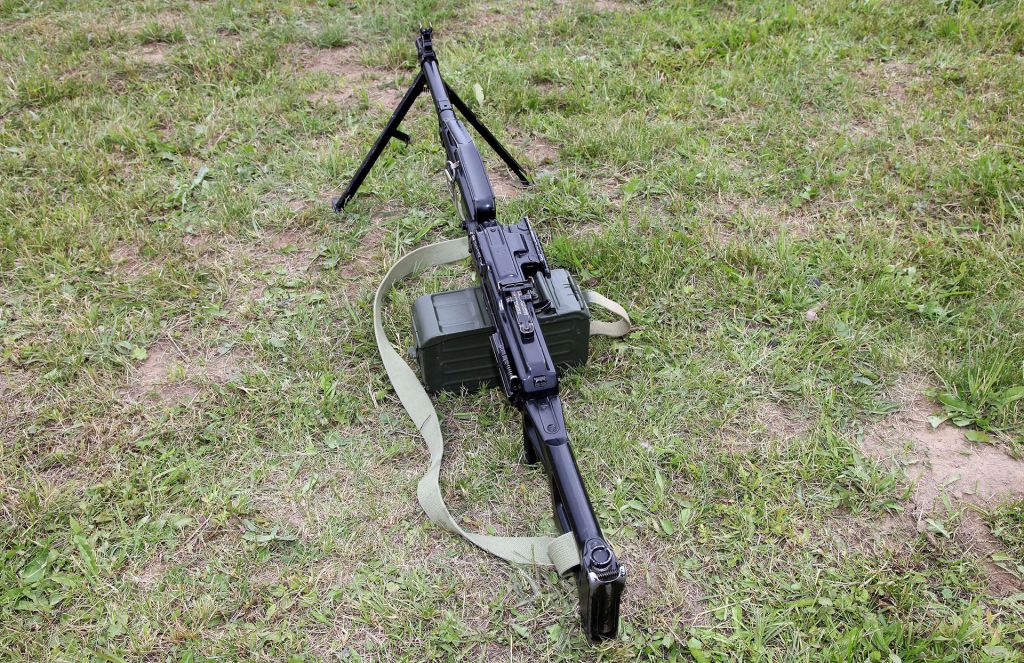
Below are several images of the PKP Pecheneg machine gun.
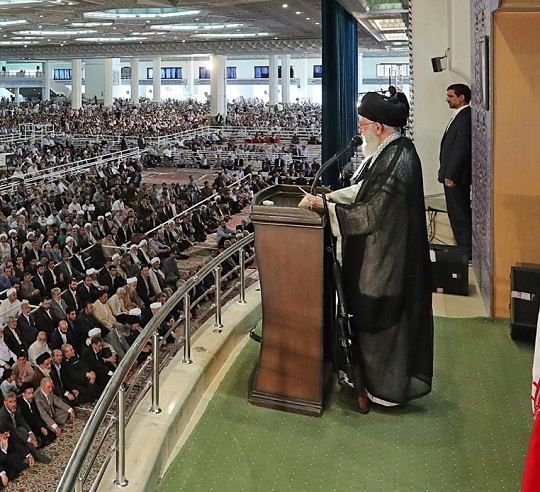
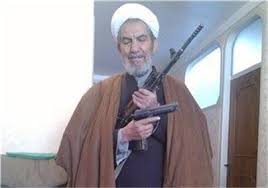
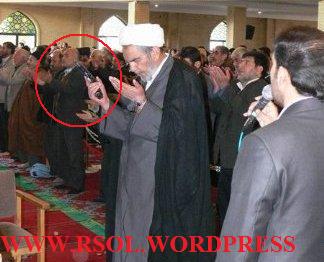
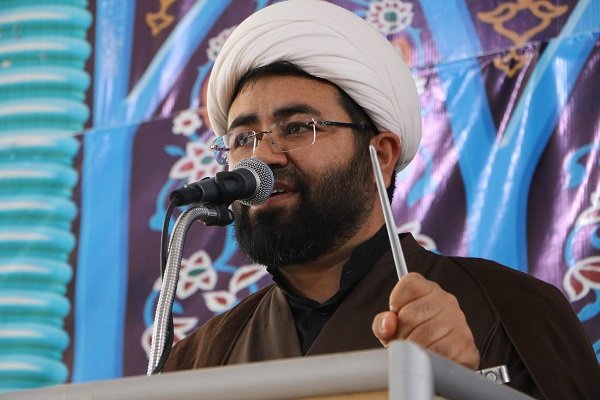
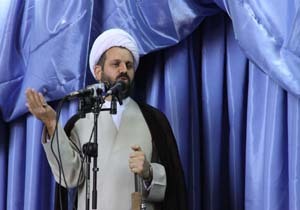
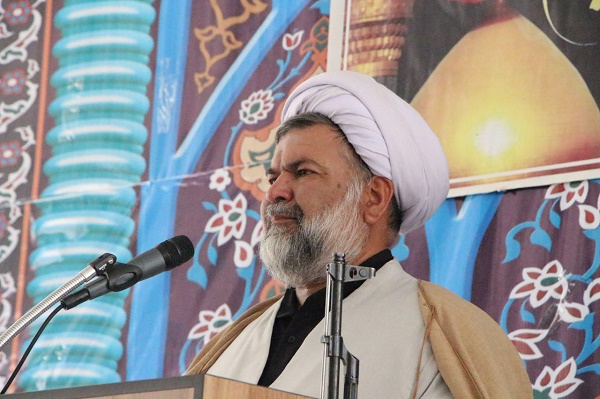
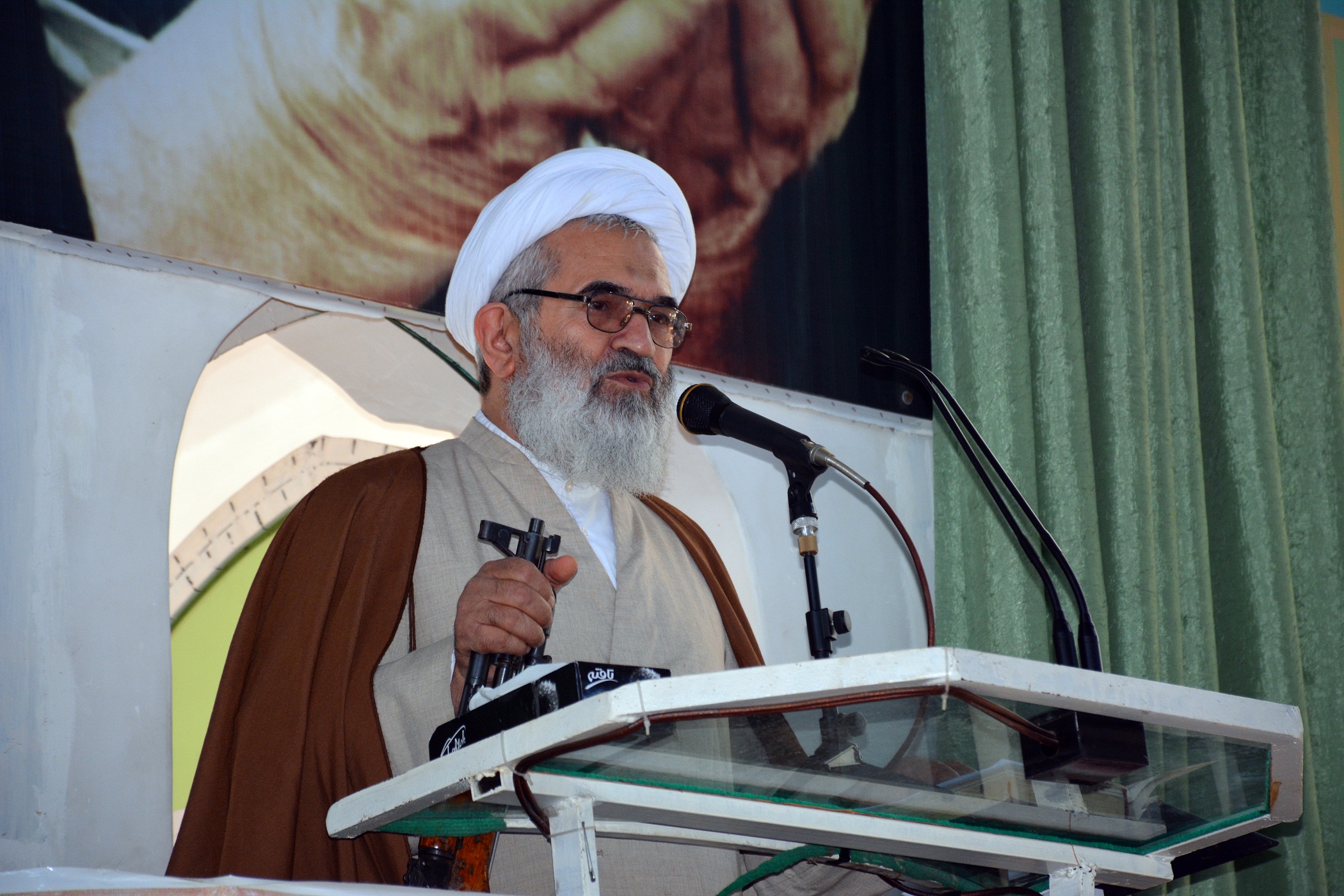
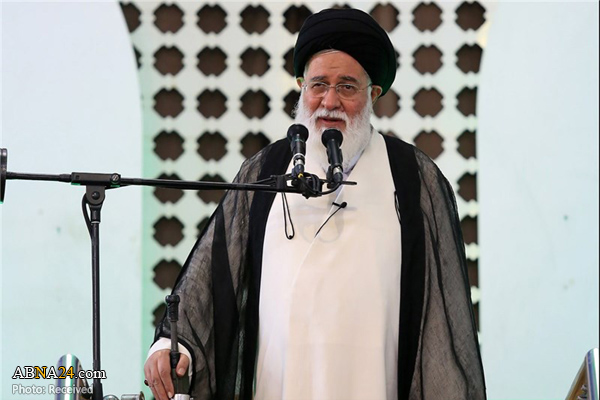
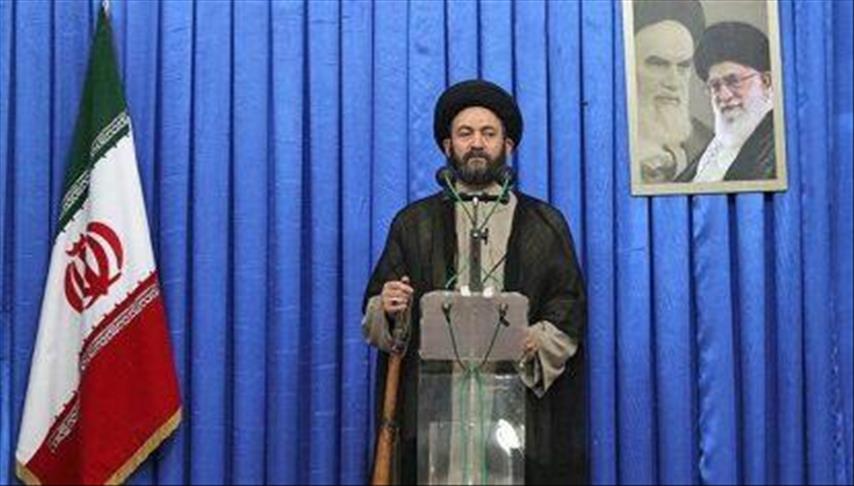
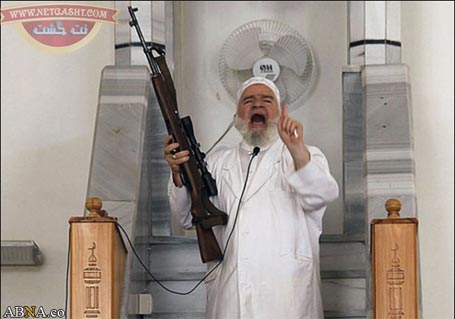
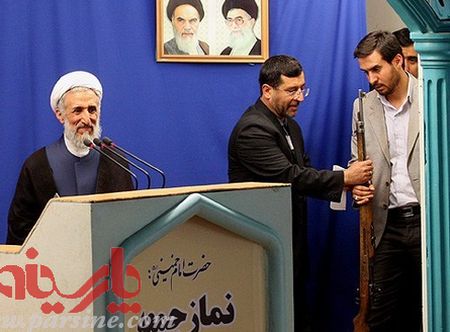
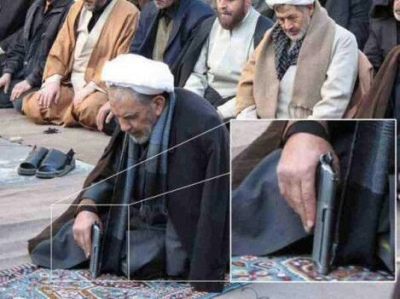
In a previous article on Silah Report authored by Ali Parsa and generously donated by him from his website Aliparsa.com, Ali specifically mentioned an interesting practice done by Iranian Shi’a Imams during Friday Khutbah Prayer services. Imam’s in Iran are known to hold on to various rifles while giving their Khutbah sermons. Ali mentions that this comes from a Sunnah of the Prophet Muhammad (ﷺ) where it mentions that the Prophet always held the “Weapon of the Day” while giving his own sermons. Going into a little searching I found this paragraph on Islam QA that gives some background behind this-
In a tradition recorded by Imam Abu Dawood, it is narrated that the companion, Hakam bin Hazn Al Kulfi (RA) said, ‘We witnessed Juma with the Prophet (SA), and while standing (to deliver the khutba), he was leaning on a staff or bow. (Abu Dawwood – Chapter of a person who delivers a khutba and leans on a bow). Based on this narration, scholars have stated that holding the staff while delivering the khutba is commendable, as it was a practice of the Prophet (SA). In this regard, the great jurist, Allama Shami recorded the following: – ‘Certainly taking the staff is a Sunnah just as standing’. (Raddul Mukhtar).
Now, I’m not nearly as versed in the Sunnah as Iranian Shi’a clerics, but in this instance it makes no mention of a “Weapon of the Day”, which Imams in Iran appear to interpret as meaning whatever primary weapon is issued that is used to defend the Islamic Republic of Iran. That is certainly one interpretation of “Weapon of the Day”, perhaps similar how a “Uniform of the Day” is in many armed forces regulations around the world informing troops what uniform to wear. The explanation above refers to a “Staff”, which the Prophet appears to simply mean something to lean on, gain physical support from, and show to emit a sense of authority in front of a congregation. We have similar examples of Prophet Moses’s staff and there are other religious texts that reference a staff as well.
A key note to mention here is that this practice is only adhered to in the Islamic Republic when it comes to gripping actual firearms during the Khutbah sermons. It doesn’t appear to even exist in other Shi’a dominated countries or countries under Iranian influence to the extent that it does in Iran.
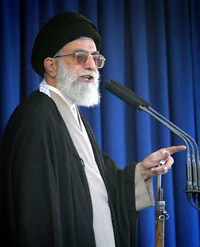
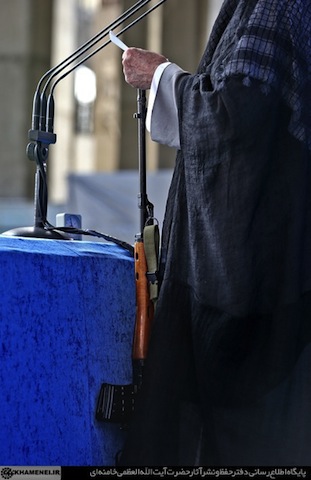
Now, going back to sort of the entire reason why Silah Report exists (apart from general small arms & light weapons analysis), is that we serve to make sense of these cultural phenomena when it comes to the intersection of small arms and the regions we are interested in. A prime example is this Blaze post in 2015 that is entitled “Can You Spot What Iran’s Khamenei Was Holding During His Speech on the Nuclear Deal? The Mainstream Media Ignored It”.
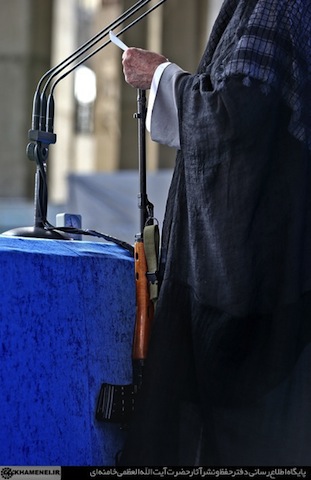
The post goes to great length to try and psychoanalyze the geopolitical ramifications of Imam-i-Khamenei gripping what is most likely a Chinese export copy of the 7.62x54r mm SVD Dragunov marksman rifle.
The article mentions that-
To drive home the point, the supreme leader’s official website posted a close up photo captured from beside the podium of the gun which even showed the magazine jutting out
…
But the most potent sign of all reflecting his message – the gun balanced under his left hand holding his speech notes – was left unmentioned.
It’s unlikely that if the speech had been given by an American or any Western politician that this scene setting detail would have been overlooked, especially given the hotly debated issue of guns.
The AP’s website had this photo of Khamenei holding the gun, but it was not mentioned in the copy in the accompanying article
By now, I hope readers of this article will realize the odd stance that The Blaze is taking on this Dragunov. Of course the Iranian media didn’t mention it because this is in fact actually a completely routine practice done by Imams at every organizational level throughout the religious hierarchy in Iran. Should the Iranian media have thoroughly mentioned the microphone in front of Imam-i-Khamenei’s face as well?
Now, this post isn’t to slander a conservative news outlet for getting something wrong. Any viewpoint from any source at all that is worthy of correcting in a cultural, historical, or social light will be equally scrutinized. This one just so happened to stand out as a prime reason why we at Silah Report are dedicated to our jobs at hand, to fill this void of historical and cultural knowledge by analyzing the technical with the cultural.
For more information on other Imams holding small arms during sermons, check out this Farsi language post on the topic, literally discussing what certain Imams prefer to hold during their Khutbahs.
From the post, in Farsi-
به گزارش پارسینه، برکف گرفتن سلاح توسط امام جمعه، سنتی است اسلامی که ریشه در صدراسلام دارد، نمادی از آمادگی دفاعی در برابر دشمنان اسلام حتی در محراب و محل نماز، بعد از پیروزی انقلاب اسلامی، مرحوم آیت الله طالقانی که با حکم امام خمینی، احیاگر سنت نماز جمعه بود، بار دیگر این سنت اسلامی را زنده کرد. آیت الله طالقانی در برابر پیشنهاد برخی از انقلابیون که به وی پیشنهاد کردند از شمشیر به عنوان سلاح خطیب امام جمعه استفاده کند، این پیشنهاد را رد کرد و “سلاح روزآمد و مدرن” را به دست گرفت.
در اوایل انقلاب اسلامی، سلاح ژ-3 تفنگی بود که امامان جمعه تهران و شهرستانها در حین ایراد خطبه جمعه به دست می گرفتند که در سالهای بعد، اسلحه از رده خارج “برنو” جای ژ3 را گرفت.
در میان ائمه جمعه، آیت الله حسنی امام جمعه ارومیه به داشتن سلاح های متعدد از جمله کلت و گرینوف در نماز جمعه شهرت دارد و معمولا بر خلاف ائمه جمعه دیگر از سلاح کلاشینکف در محراب نماز جمعه استفاده می کند.
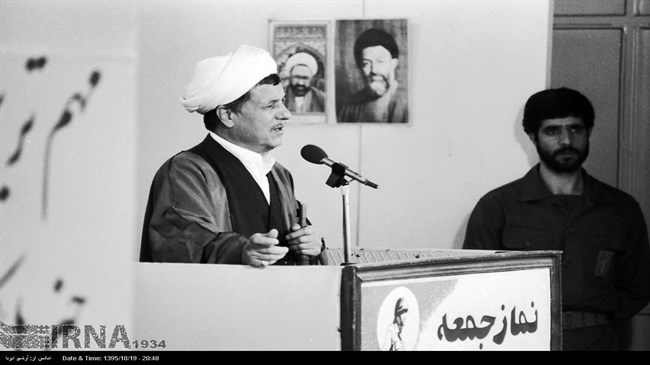
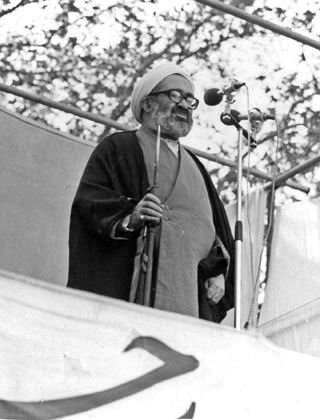
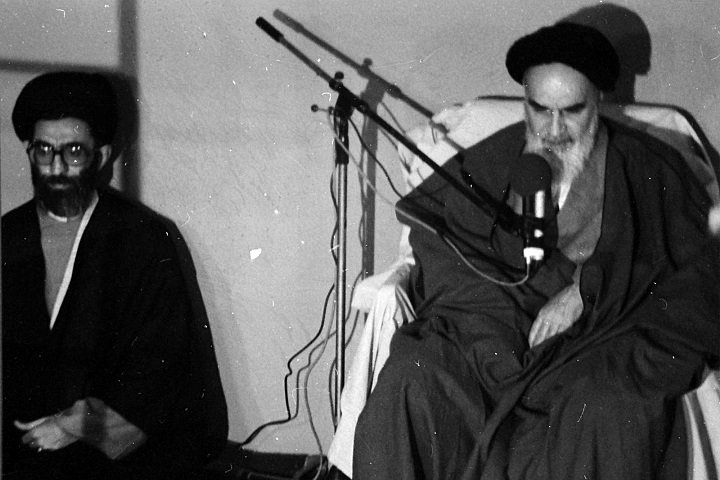
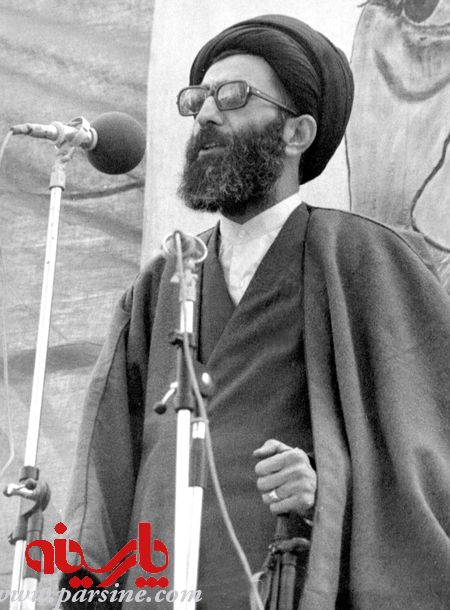
As a quick sidenote by scanning photographs online, it doesn’t appear that the initial Supreme Leader of Iran, Imam-i-Khomeni adhered to the practice. Although it should be noted that senior Imams during his time did partake in it, as evidenced in the black and white photographs above.
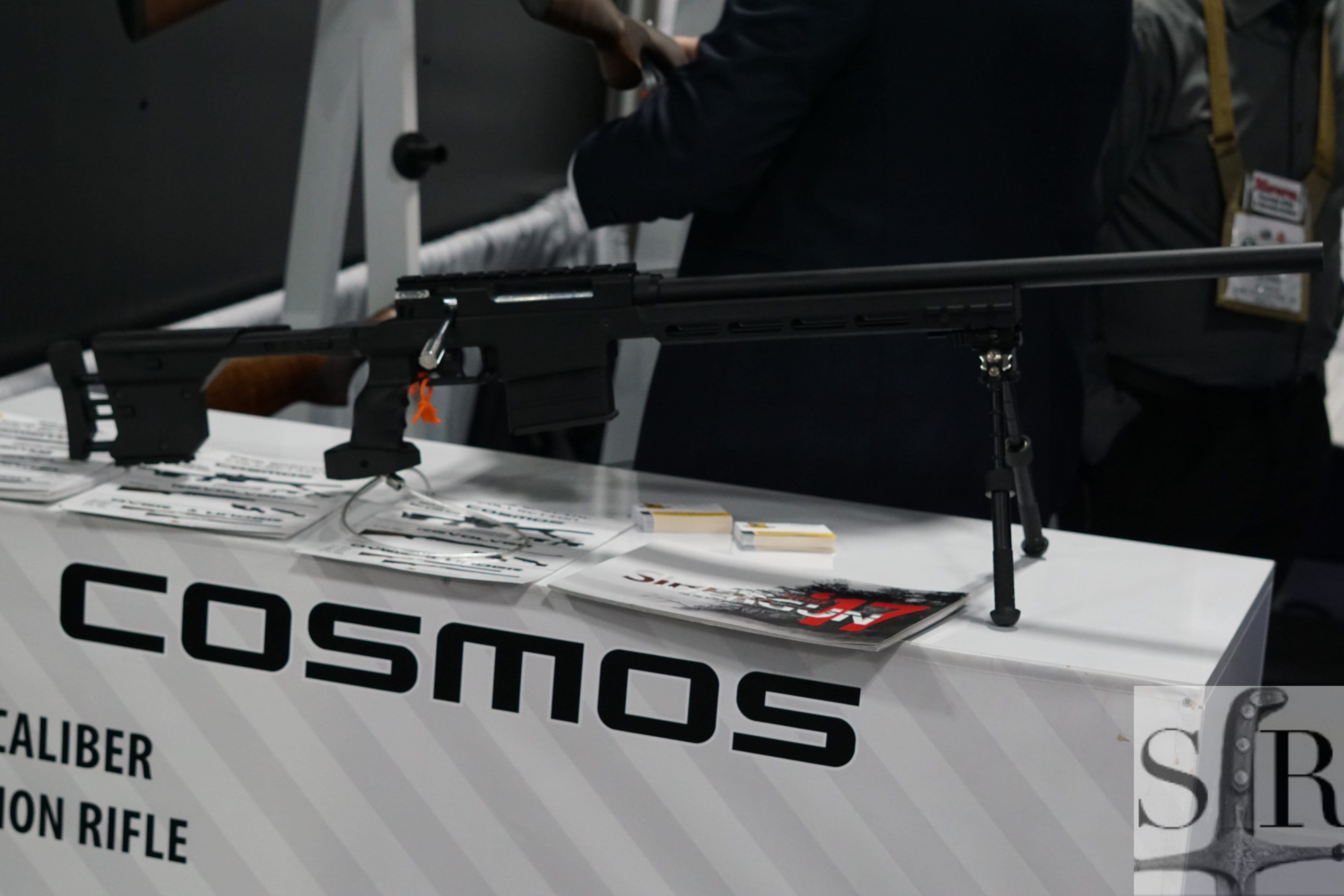
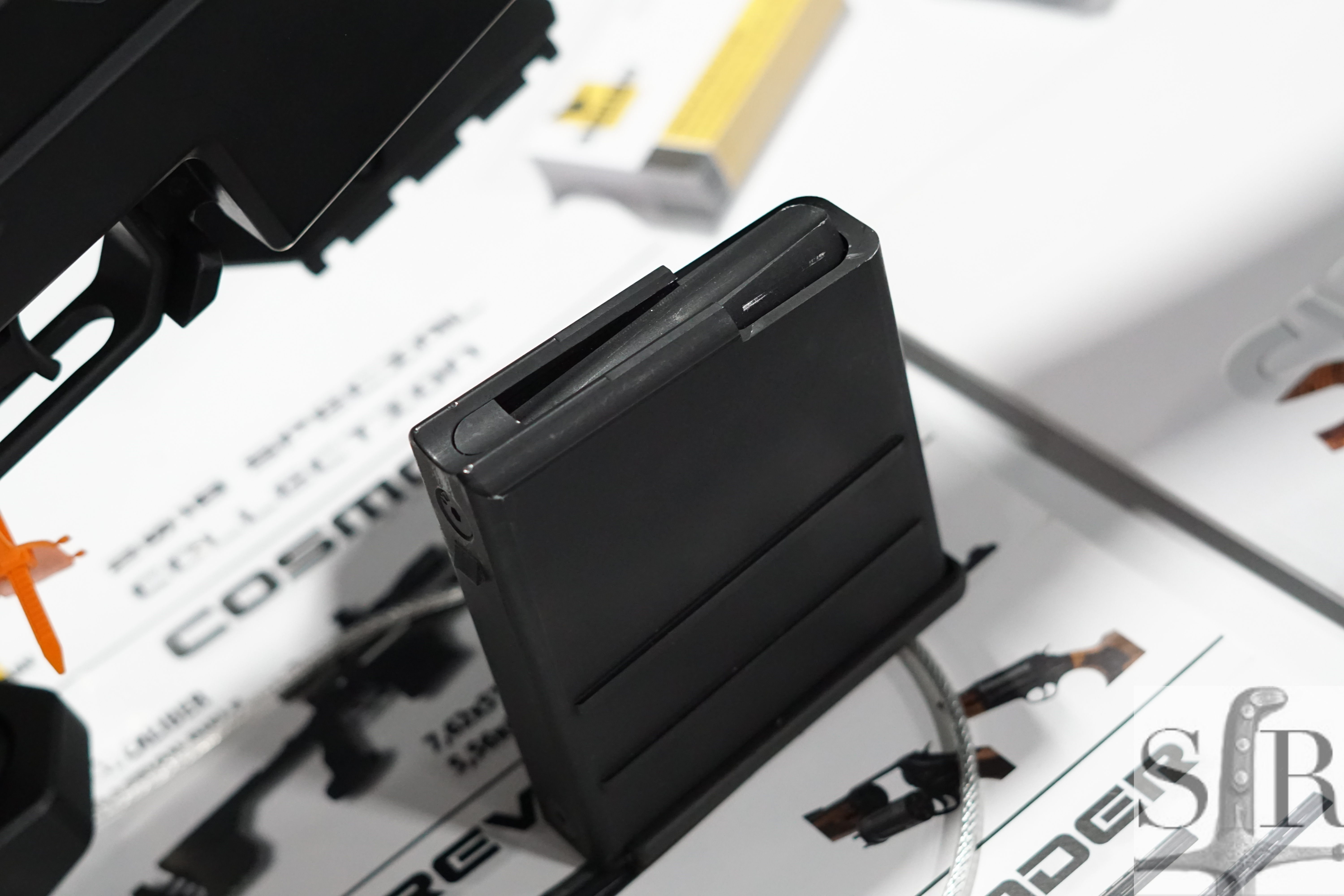
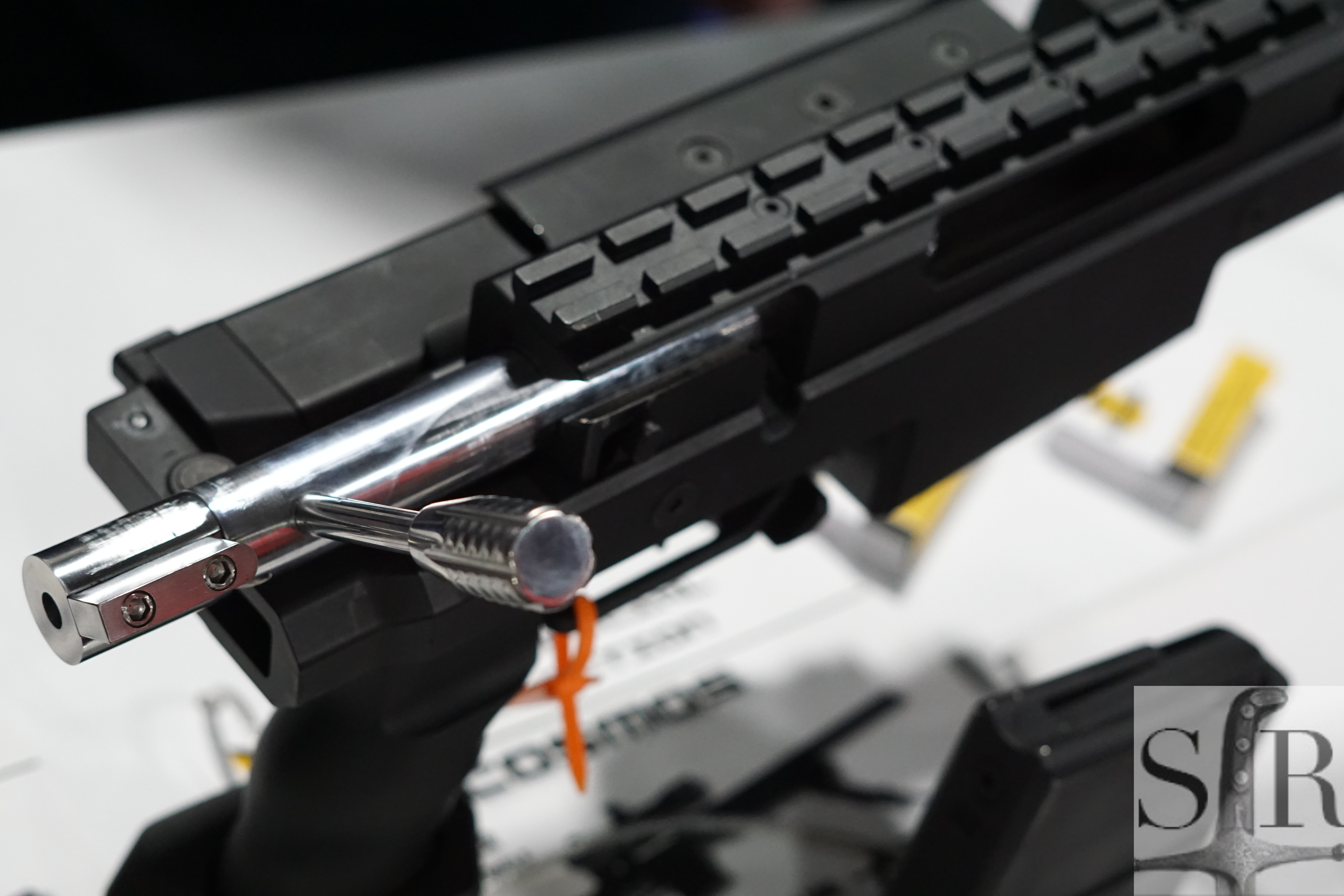
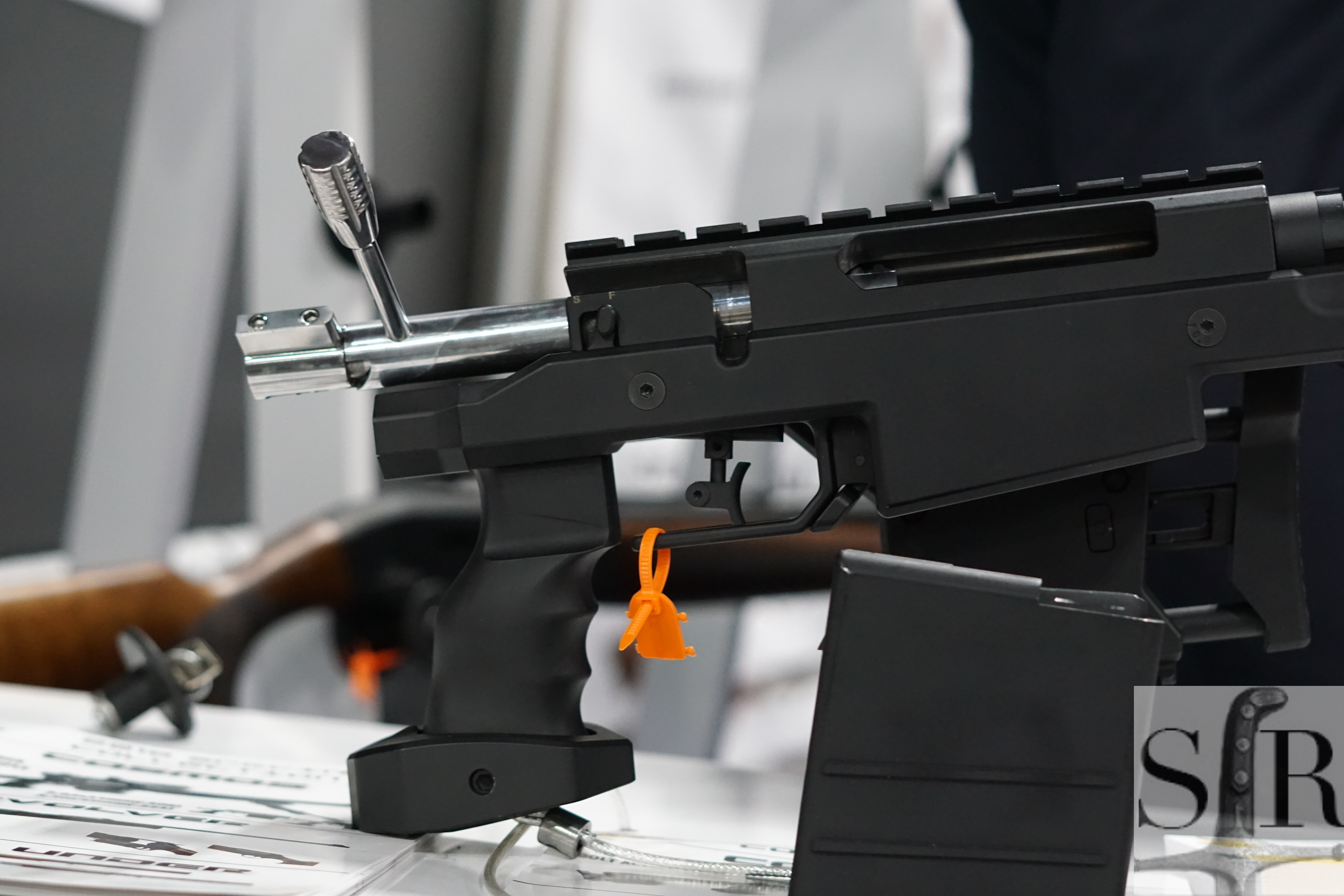
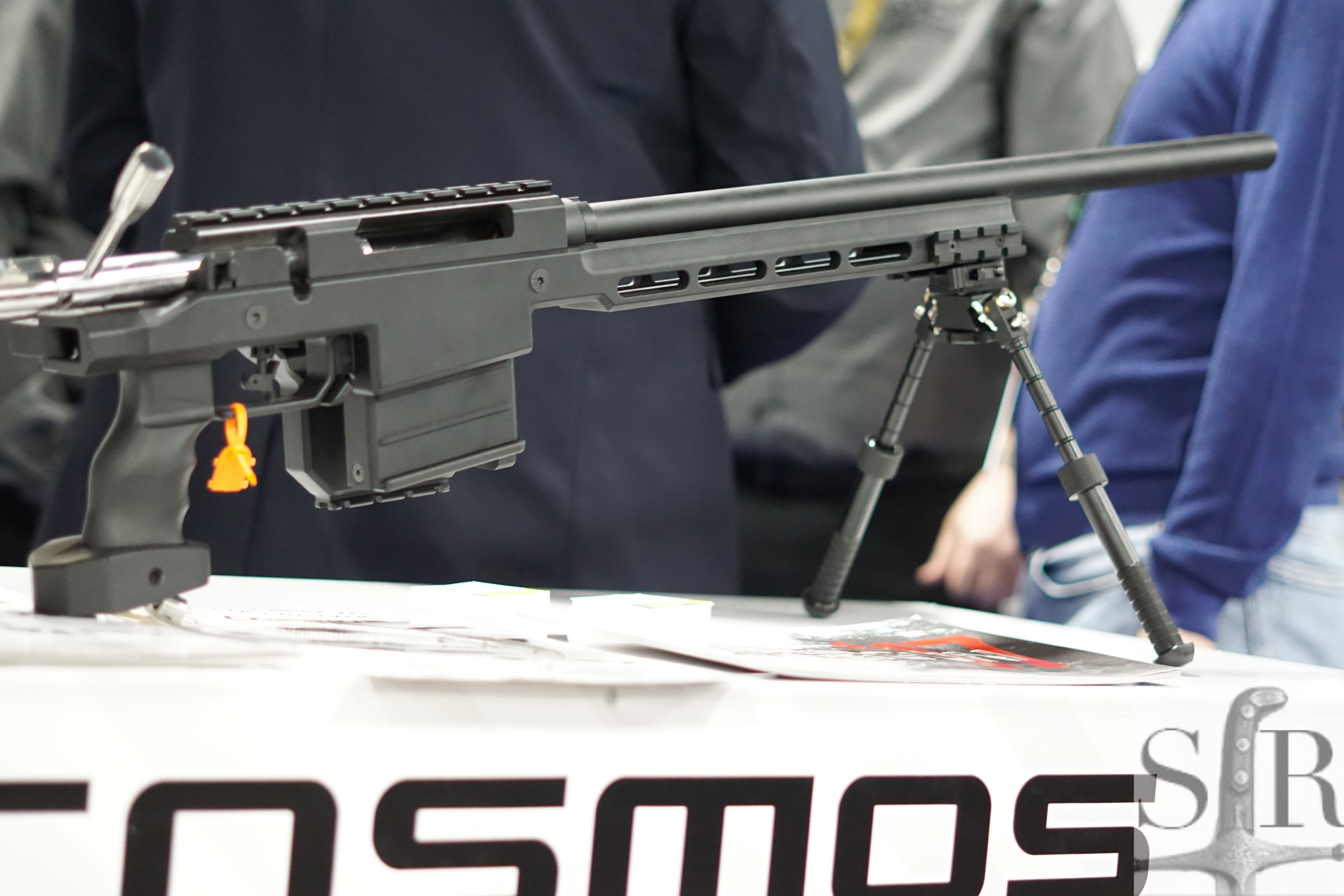
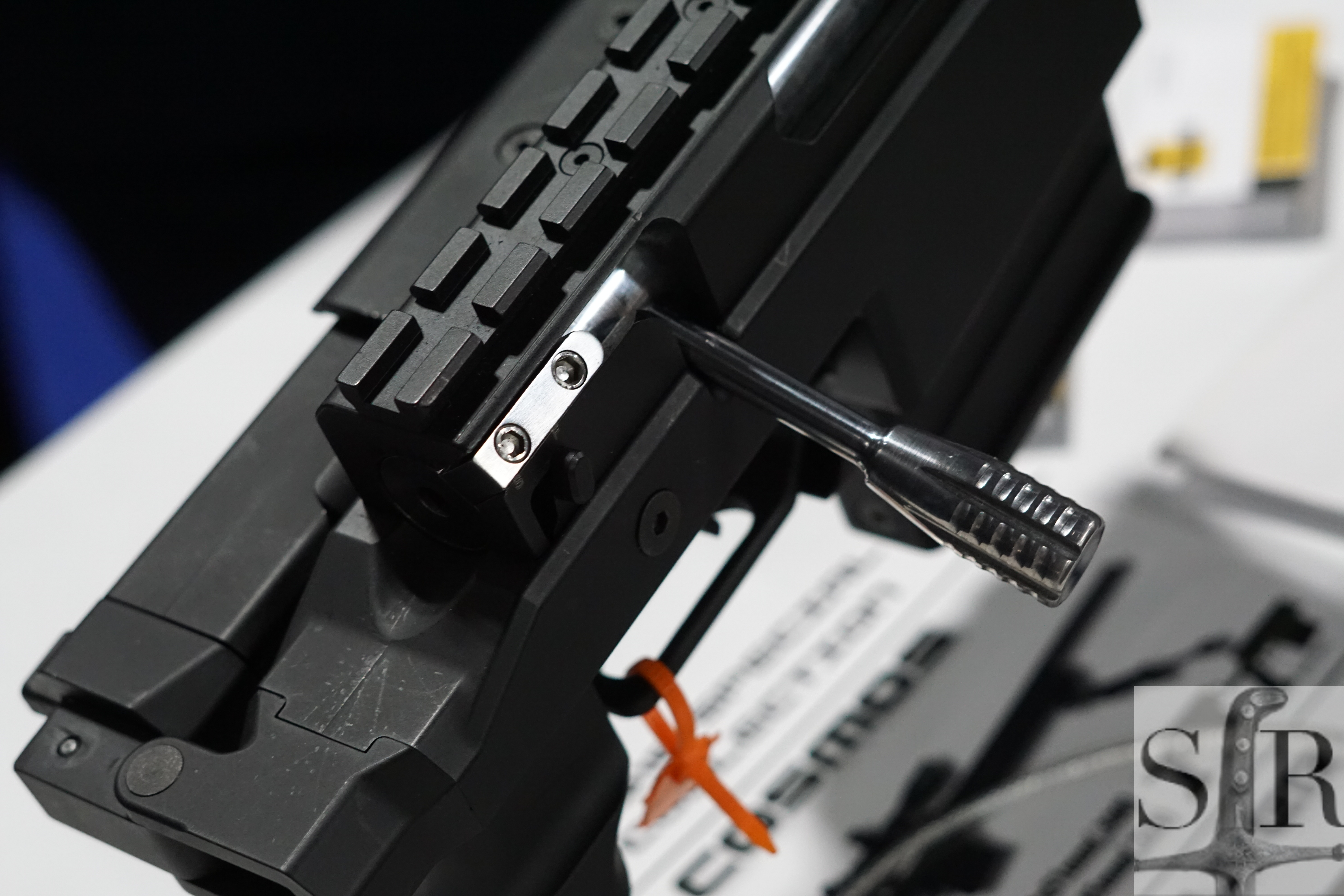
The relatively small Turkish company Yazicilarav brought out their Cosmos bolt action rifle to SHOT 2018 this year. The commercial rifle is chambered in .308 Win and .223 Rem. It also comes in a “Camo”, “NATO Green”, or “Black” finish. Although it is marketed as “Multi-Caliber”, this only appears to be in product offerings instead of a true multi-caliber interchangeable barrel. The operating mechanism is very simple, appearing to be a Mauser action, utilizing front bolt lugs to lock the action in place.
The detachable magazine has a polymer body and uses an ambidextrous magazine release.
The bolt has a 90-degree throw, has a knurled handle, and is highly polished. The stock can collapse to the left side of the rifle.
Note the adjustable trigger shoe and the safety. Also note the PSG-1-esque pistol grip.
Notice what appear to be M-Lok similar or possibly compatible rail inserts on the handguard, and the Atlas bipods attached to the rifle.
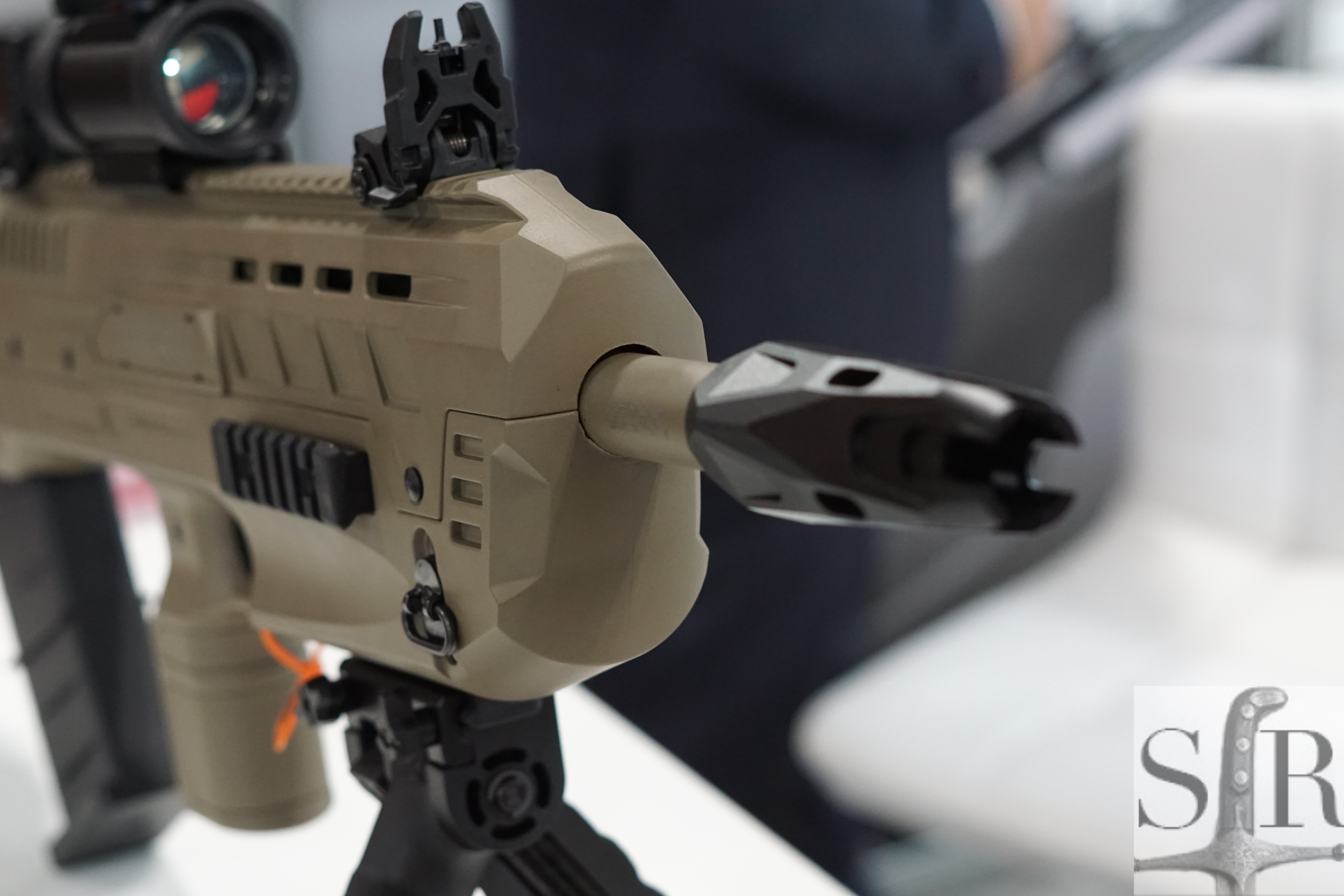
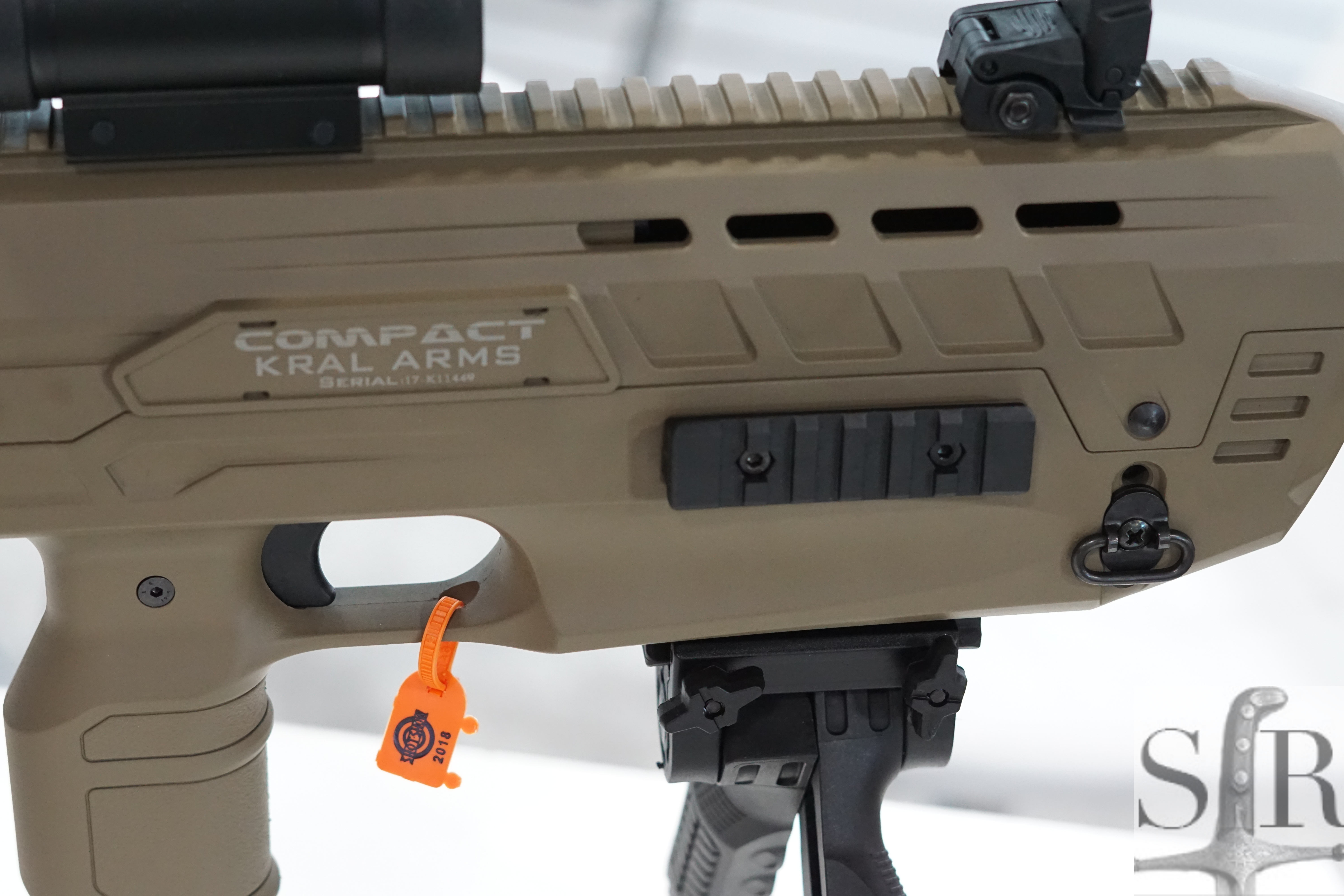
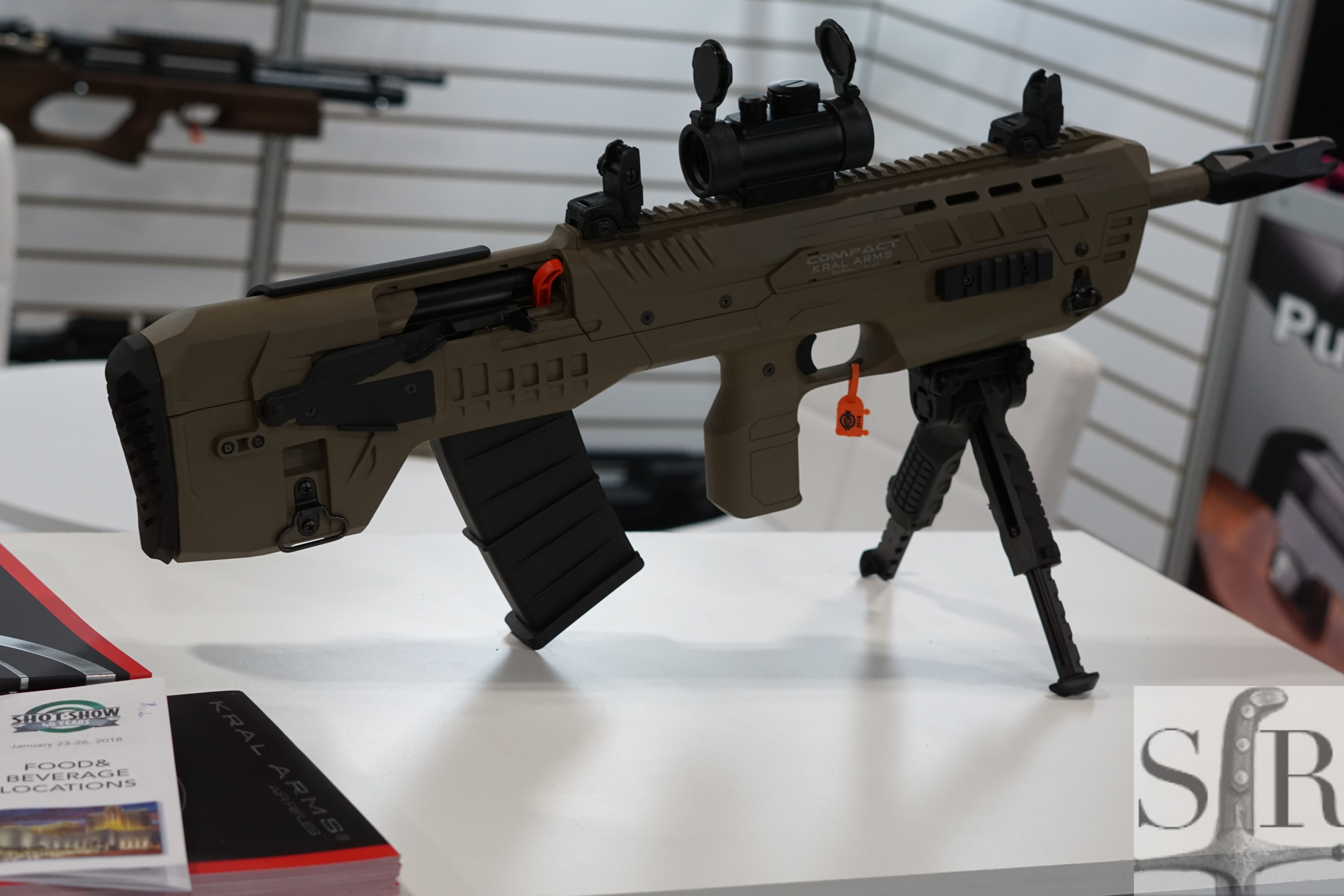
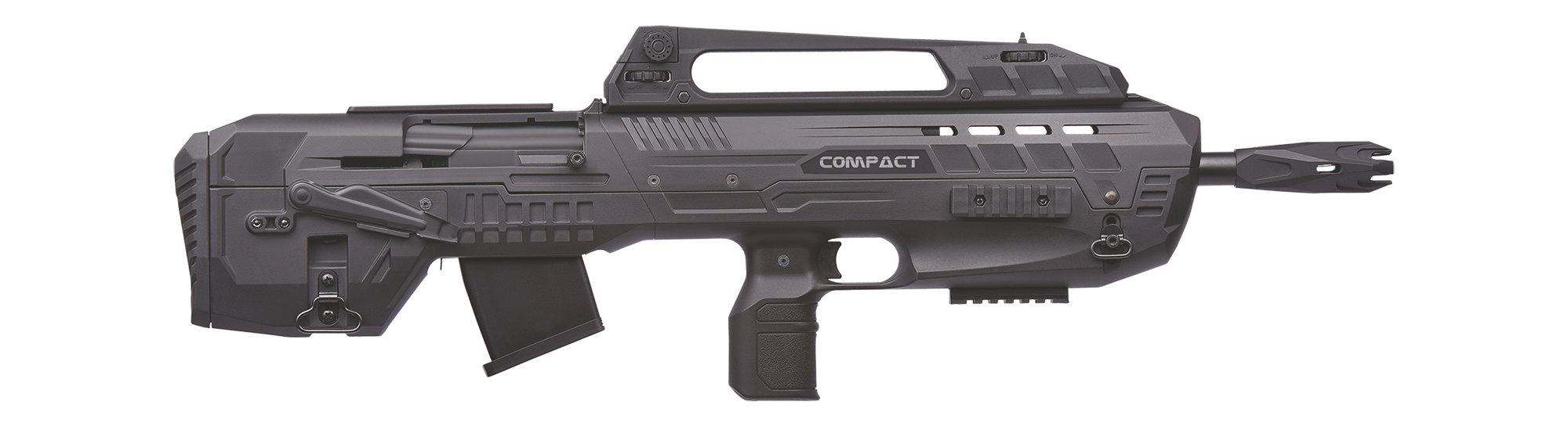
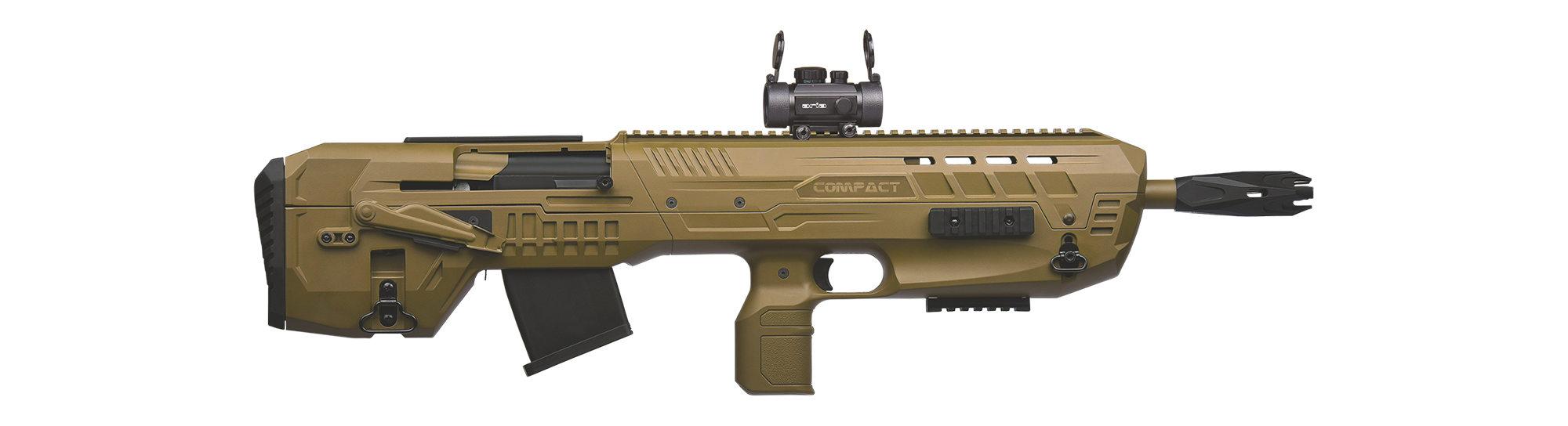
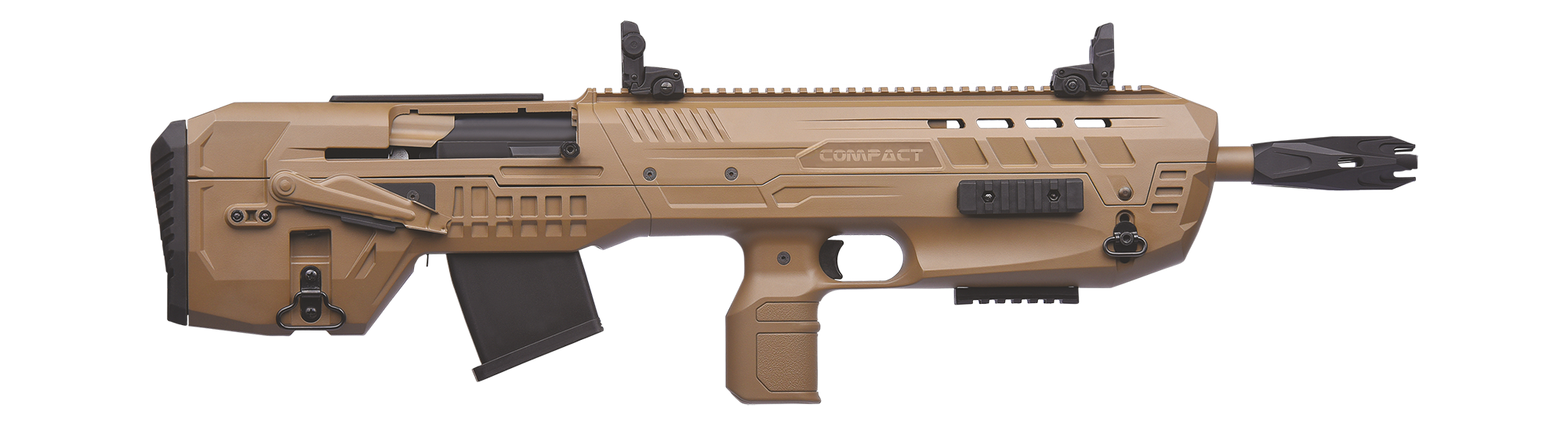
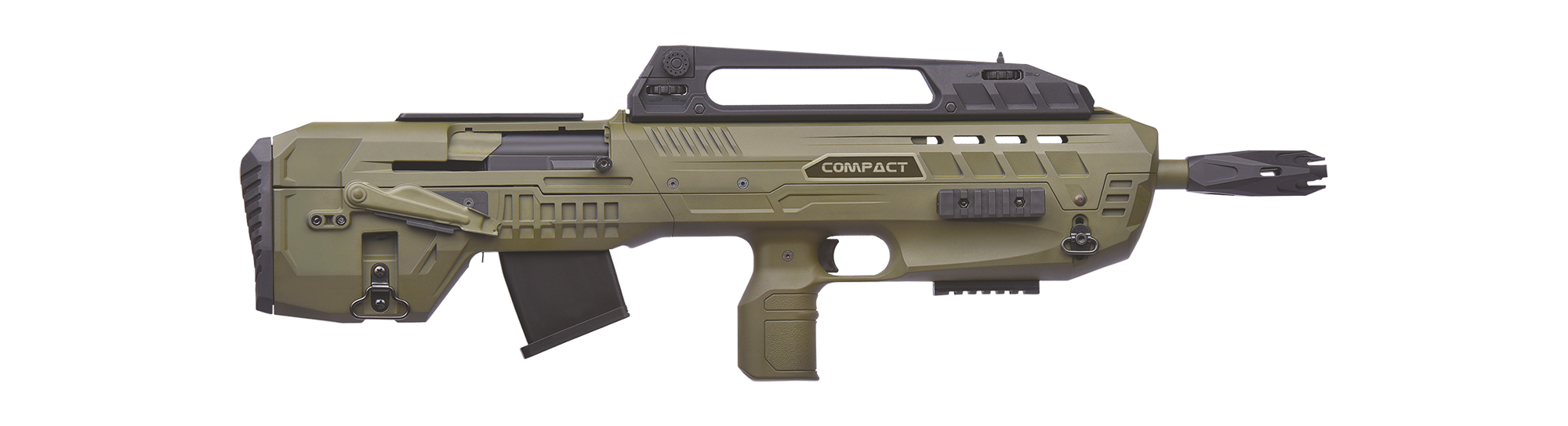
Kral Arms brought out their “Compact” 12 Gauge bullpup semiautomatic shotgun at SHOT 2018 this year. Essentially the “Compact” is the companies previous 12 Gauge XPS Kalashnikov patterned shotgun fit into the polymer frame of a bullpup. It retains the safety lever externally. There is a trigger bar that extends to the Kalashnikov trigger mechanism in the rear.
The shotguns are offered with red dot sights, plain BUIS sights, or an improvised A2 handguard that extends the entire length of the Picatinny optics rail. Magazines offered are either a 2, 5, and 8 shell configuration.
There are four available finishes: Black, Burnt Bronze Cerakoted, Dark Earth Cerakoted, and OD Green Cerakoted.
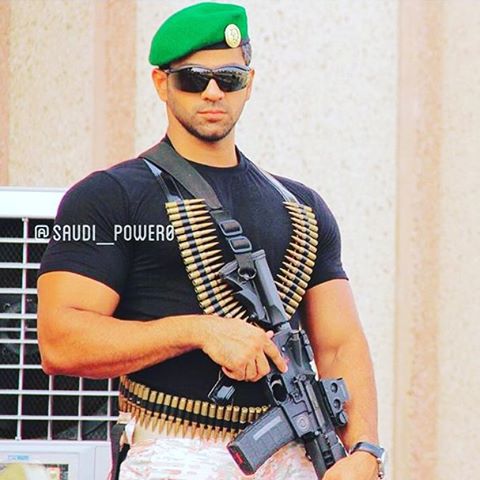
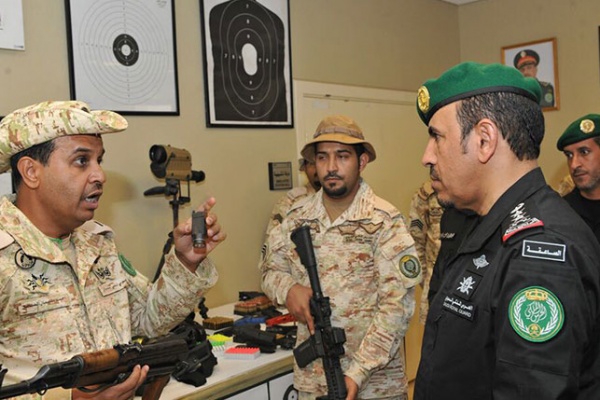
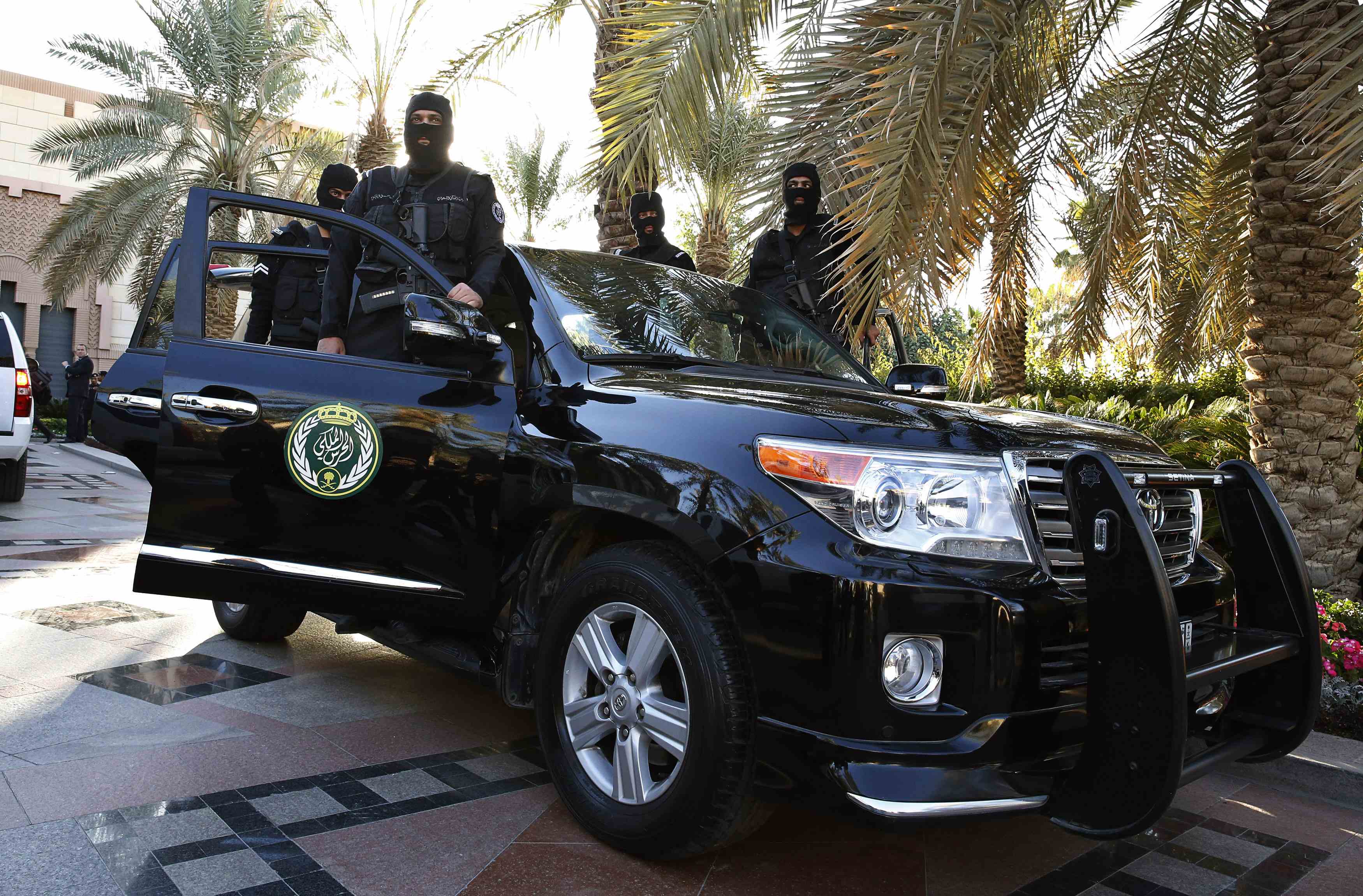
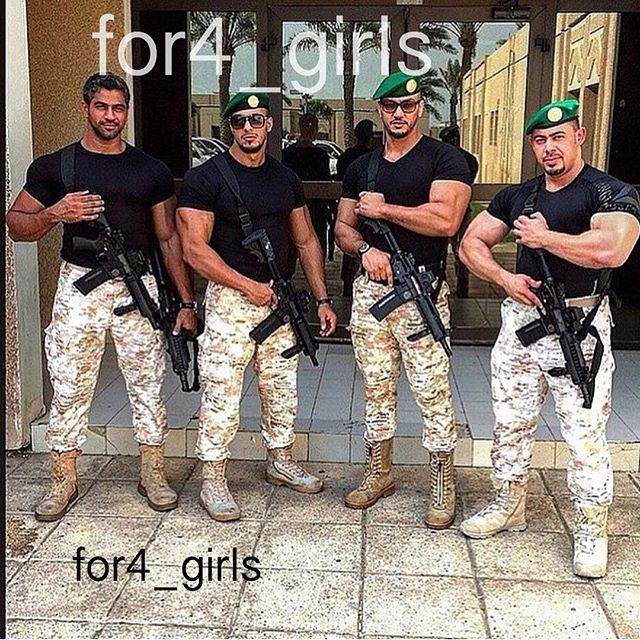
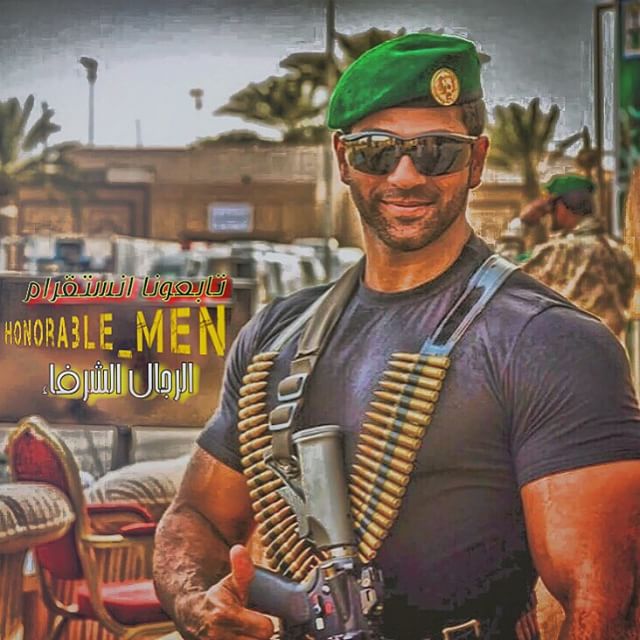
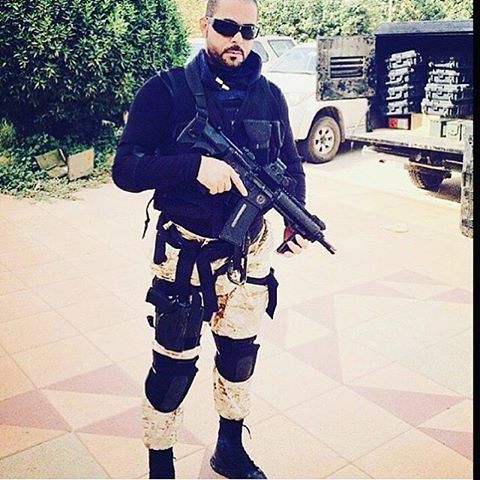
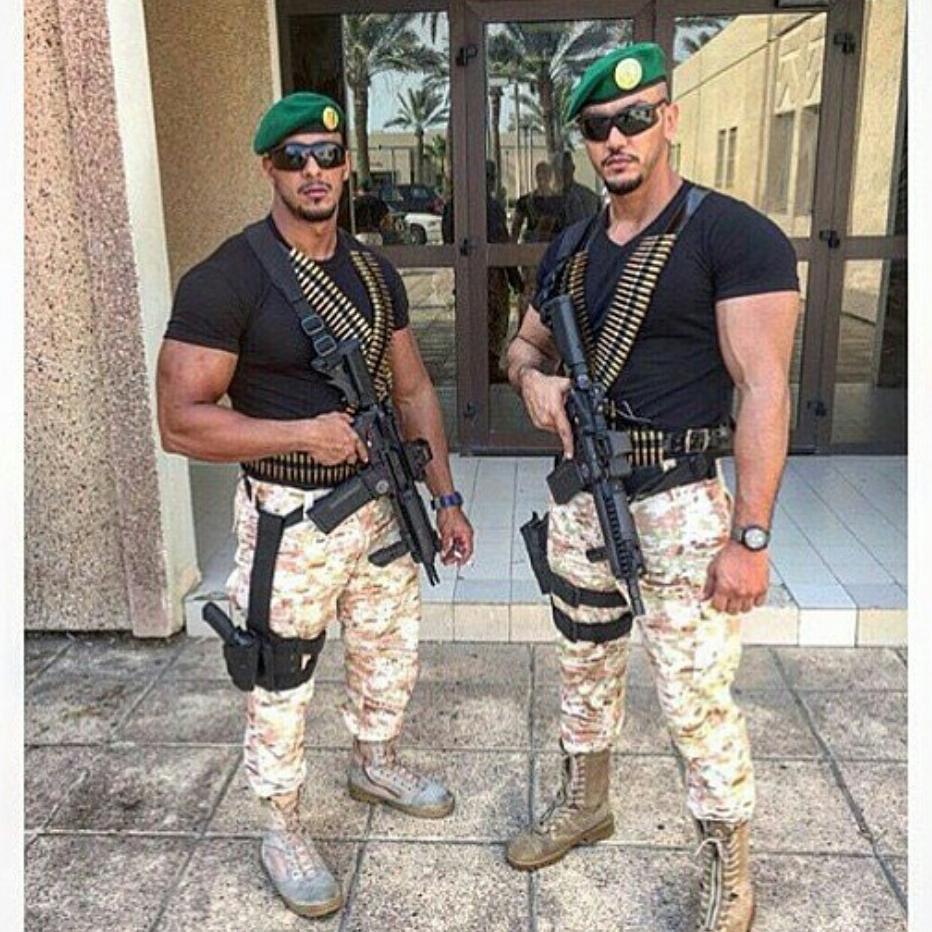
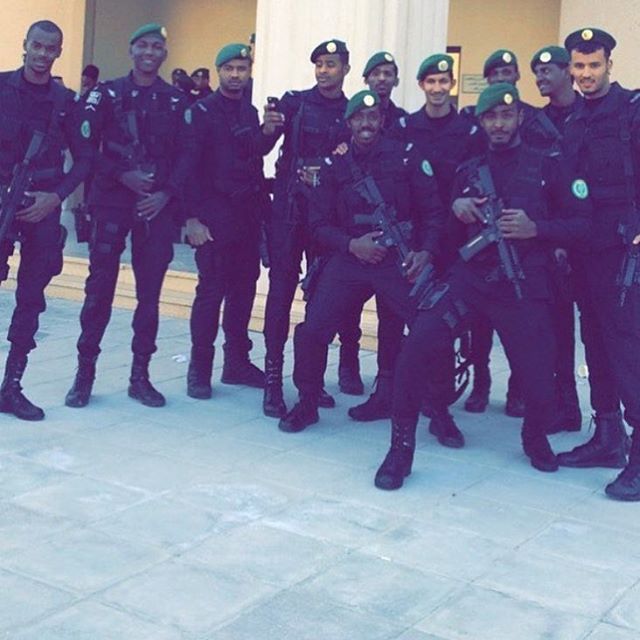
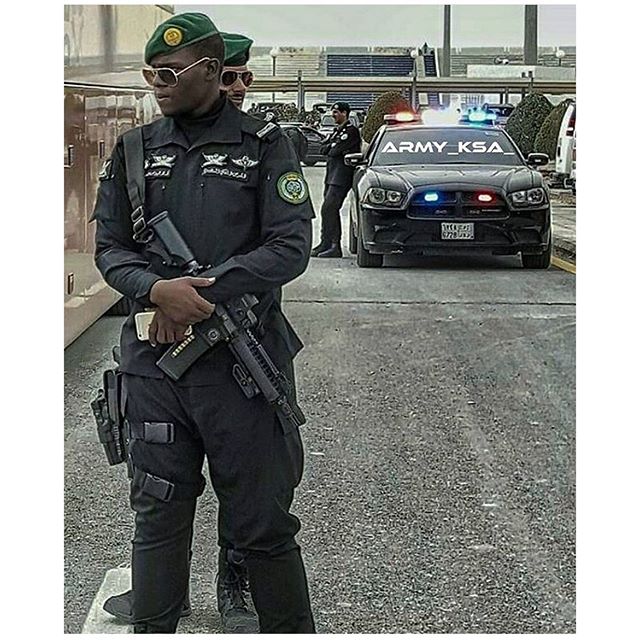
The reigning King (currently King Salman) of the Kingdom of Saudi Arabia, otherwise known as the “Custodian of the Two Holy Mosques”( خادم الحرمين الشريفين) and his enormous family has numerous lawyers of protection surrounding him due to the numerous threats upon the absolute monarch. One of these layers is known as the Saudi Royal Guard Regiment (لحرس الملكي السعودي). This unit has been profiled numerous times on social media, both in the observance of their protection duties, but also simply as casual encounters with members posting photos of themselves and their mates that eventually end up on Instagram and other social media sites. The guards are unique and identifiable in that their uniforms are black with bright green berets. However, they have been seen wearing the desert digital trousers that the Saudi Royal Army uses as well.
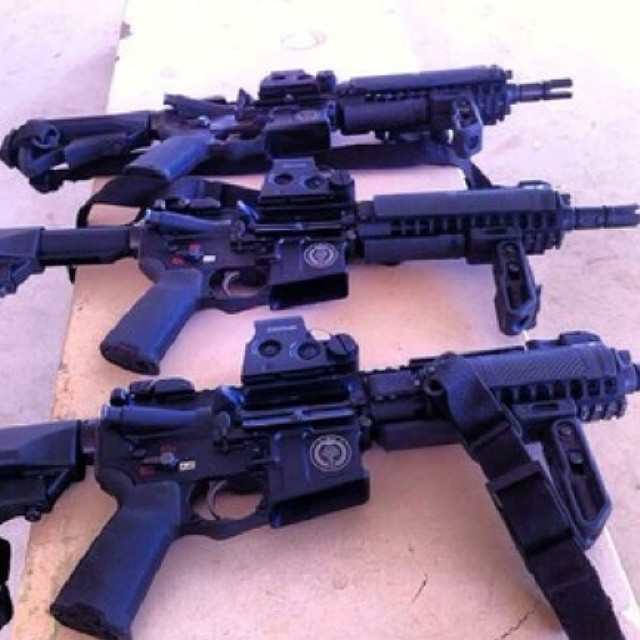
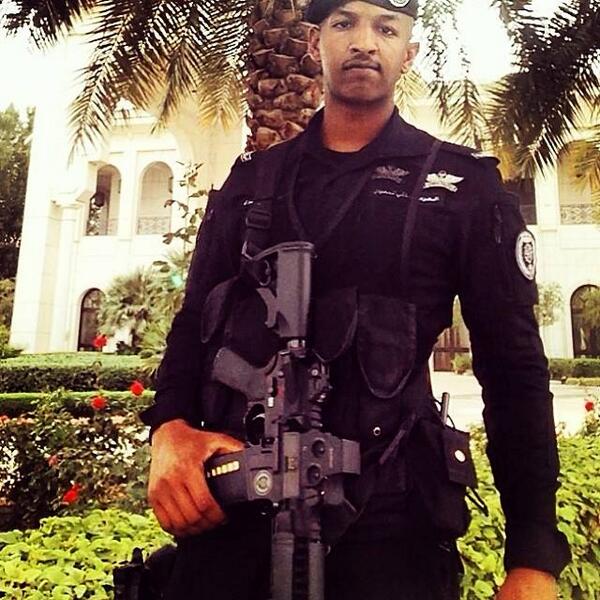
Notice the shape and design of the carbine on the left. It is an LWRC UWIC.
Saudi commandos guard the front of Erga Palace as U.S. President Barack Obama arrives to meet with Saudi Arabia’s King Salman in Riyadh January 27, 2015. Obama sought to cement ties with Saudi Arabia as he came to pay his respects on Tuesday after the death of King Abdullah, a trip that underscores the importance of a U.S.-Saudi alliance that extends beyond oil interests to regional security. REUTERS/Jim Bourg (SAUDI ARABIA – Tags: POLITICS MILITARY)
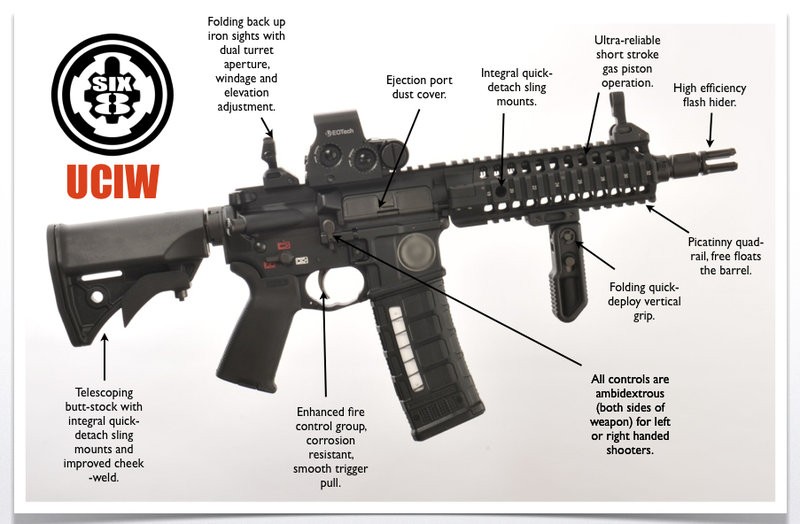
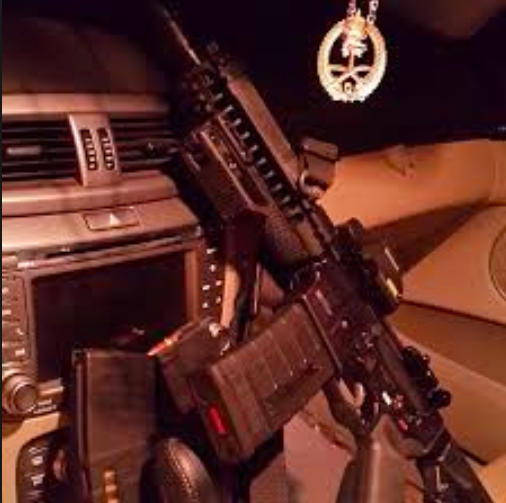
An interesting facet of this group is that it has been seen armed with LWRC UICW (Ultra-Compact Individual Weapon) carbines chambered in 6.8x43mm Remington Special Purpose Cartridge (SPC). The LWRC UICW is distinctly recognizable due to the shortened buffer tube and almost mini-SOPMOD stock. It also has an 8.5-inch barrel, making it very handy for close protection work, and moving in and out of vehicles.
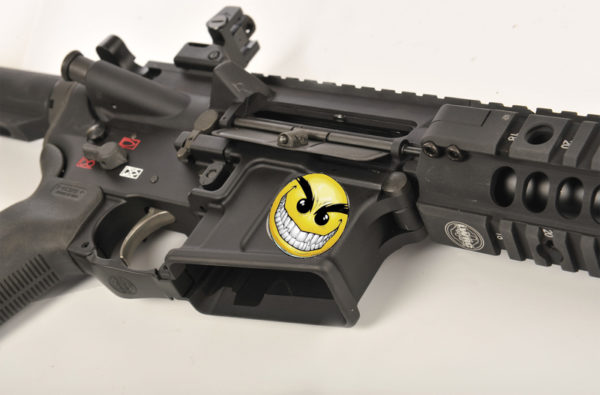
A unique point about the Saudi LWRC UICWs is that they all have the unit’s crest etched in white on the right side of the lower receiver, on the magazine well. Apart from that identifier, these carbines are outfitted with EoTech XPS2 holographic sights, Magpul pistol grips and see through 30 round magazines, Picatinny rail covers, BUIS sights, a folding vertical foregrip, and what appears to be a Vicker’s Tactical (or at least an imitation of one) two-point sling mounted on QD release points. All of the carbines have a select-fire capability. The overwhelming majority are in a black finish with matching furniture, but we do have one example so far of a green stock, with a matching green sling.
We also have this graphic that was created for the carbine as a promotional piece. Notice on the right side of the magazine well how the crest is completely blurred from view. It would appear to be that this crest was actually the Saudi Royal Guard Regiment but blurred for publication.
Very similar to the case of this one as well-
These carbines were a part of a contract with Saudi Arabia, through the U.S. State Department beginning in Feburary 2012 and ending the next year, worth $109 Million. From a statement from the LWRC Facebook page–
In Feb of 2012 LWRCI signed a $109 million dollar 18 month contract with the Government of Saudi Arabia, sanctioned by the U.S. Department of State and U.S. Congress. This is the largest direct commercial to foreign government sale of firearms in the history of the ATF Exports Branch. $109 million dollars of foreign money coming into Maryland to a company that is five years old. In these economic times, this is a story that the Department of Business and Economic Development can be very proud of. New jobs; developing a workforce; and stimulating the economy.
Specifications from Defense Review-
Caliber: 6.8mm SPC
Barrel Length: 8.5″
Weight (unloaded): 6.25lbs (8.5″ barrel)
Length (overall): 24-27.25″ (8.5″ barrel)
Rate of Fire: Semi Auto or Select Fire 700 rpm (+/- 100rpm)
Rifling: 1/10″ RH
Stock/Pistol Grip: LWRCI/Magpul MOE
Sights: LWRCI Folding BUIS Front and Rear
Magazine: Magpul 30 rd. P-Mag
Muzzle Device: LWRCI flash hider 5/8×28 TPI
Colors Available: Black”
This is a Saudi social media channel on Youtube that shows extensive footage of the Royal Guard Regiment during various training demonstrations.
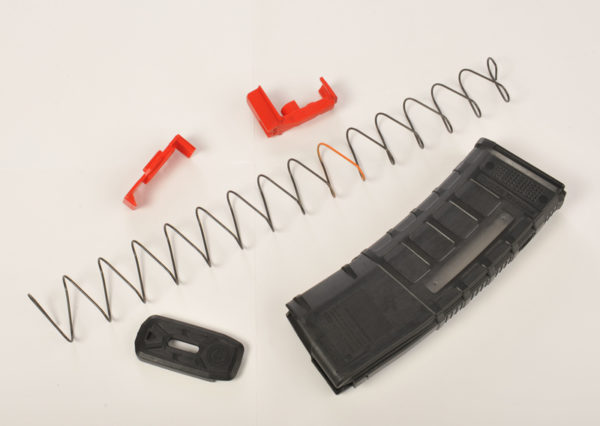
The Magpul 6.8x43mm SPC magazines that are used with the Saudi Royal Guard Regiment were actually developed in close coordination with LWRC. They are readily identifiable by the bright red follower and internal baseplate. You can still purchase them in the United States for $26.97 on Cheaper Than Dirt. From the website-
Magpul PMAG magazines are designed for the LWRC 6.8 pattern AR lower receivers. These magazines were built specifically as a result of a partnership with LWRC and Magpul industries. These magazines feature the new constant curve geometric body, anti-tilt follower and other minor improvements. The polymer magazine reduce overall magazine weight by half without sacrificing durability. Magpul 6.8 magazines are a must have if you own a compatible LWRC rifle chambered in 6.8 SPC.
Ali Parsa is an Iranian scientist who has a lifelong passion for sailboats. He also knows a great deal about the history of the Mauser bolt action rifles that initially entered service in Iran at the turn of the 20th Century. He wrote this article examining the history of the Persian Mauser with its roots in the Czech VZ24 being license produced in arms factories outside of Tehran. This article was written almost a decade ago and he has very generously allowed Silah Report to republish it with express permission from himself. It initially appeared on the website that bears his name, Aaliparsa.com. This edition has been lightly edited.
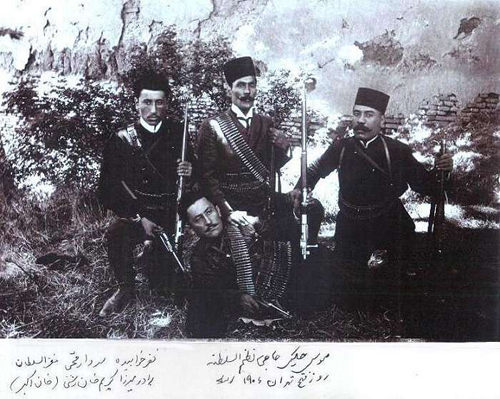
Mauser rifles first appeared in Iran before the First World War. Looking at pictures of Iran’s Constitutional Revolution era, one can spot Mauser rifles and handguns in the hands of freedom fighters of Sattar Khan and Bagher Khan, as well as other Constitutionalists in different regions of Iran.
Iranian Constitutionalists, with their Mausers, in 1906
At the end of World War I, and as a result of the Versailles treaty arms ban, Germany no longer produced these rifles, but an almost exact copy was in production in Czechoslovakia. After Hitler became the German chancellor, the production was resumed in Germany.
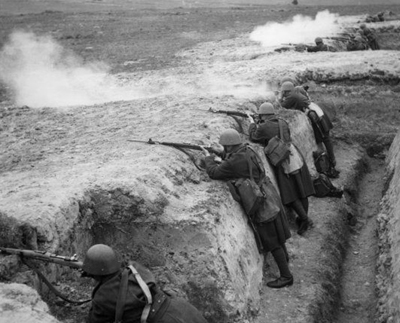
Later, with the invasion of Czechoslovakia, the identical rifle was produced in Germany and Czechoslovakia.
Czechoslovak Army Drill, 1938
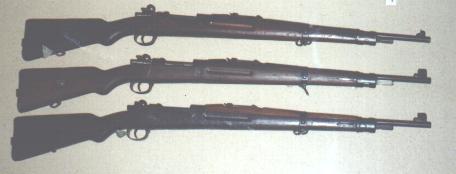
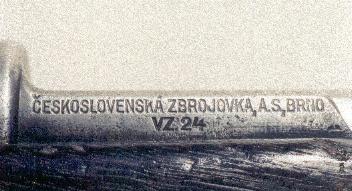
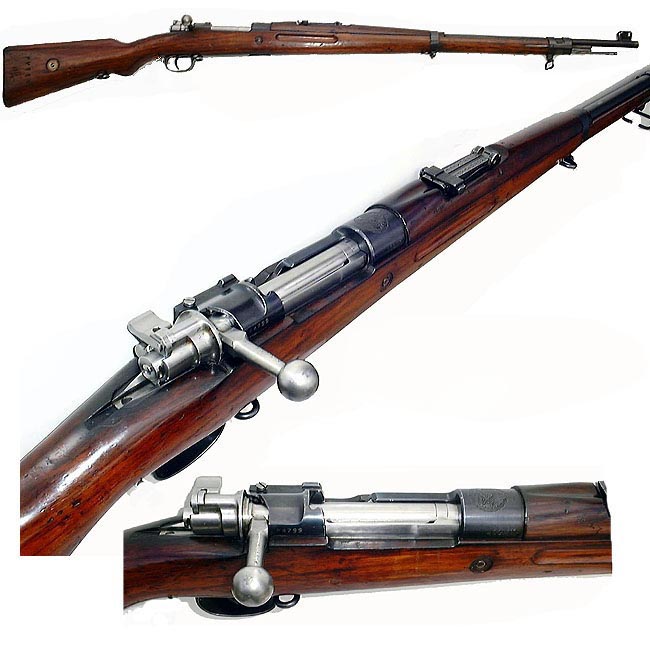
A major production center was in Brünn, or Brno, as the city is called in the Czech language. The rifles made in Brno, the Czechoslovakian model, are known as VZ24 (for Vzor24, or Model 24 in the Czech language) and had the word Brno imprinted on them.
Czechoslovakian VZ24
Markings of a VZ24
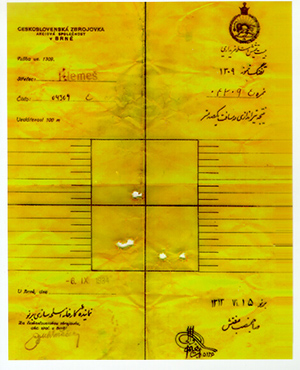
Officially, the Mauser rifle was selected for the Iranian army during Reza Shah’s time. But Iran didn’t go for the original German and ordered the identical Czechoslovakian version, the so-called Brno. The Czech firm provided Iran rifles made of many German parts. It was similar to the longer barrel version Germans designated as K98. Some official test results are available from antique arms dealers today, featuring signatures of the Brno factory representative, the Iranian in charge, and of course, satisfactory ‘grouping’ or bullet marks.
A 1934 test result document
Full length ‘Brno’ with markings in Persian
At that time two other rifles were in use and very well known in Iran: the British Lee Enfield and the Russian Mosin Nagant (Noghaan, or Naaghaan, (نوغان- ناغان) in popular parlance in those days). The exact reason for preferring Brno over its rivals is not known, but one can speculate that those in charge of the Iranian army, or maybe Reza Shah himself, tried to avoid dependence of Iran to either of the two neighboring powers. Besides, the Brno and it’s Mauser original were considered to be the best military rifle of its day.
The Iranian government ordered three versions of this weapon. It was manufactured in Czechoslovakia by two firms. One was called Ceskoslovenska Zbrojovka, or CZ. These rifles are known to collectors as Persian CZ98, Persian Mauser or Persian Brno.
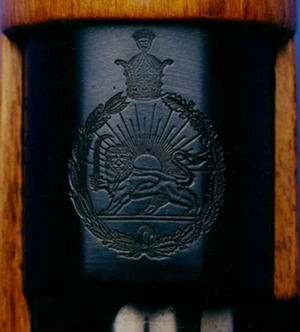
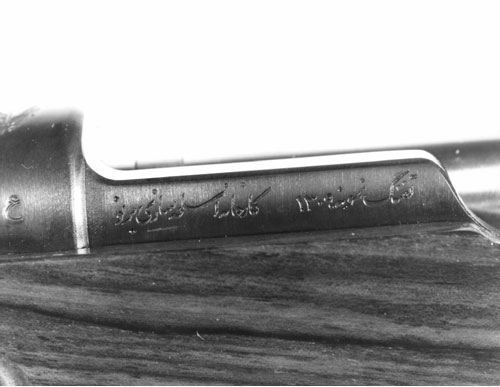
A Pahlavi crown, lion and sun crest appears near the feeding ring, as an inscription in Persian (in Nasta’liq script) on the side of its magazine giving the model and the factory name, which was in Brno. From then on the name, Brno was used by Iranians to refer to this rifle.
Lion and Sun crest of a Persian Mauser
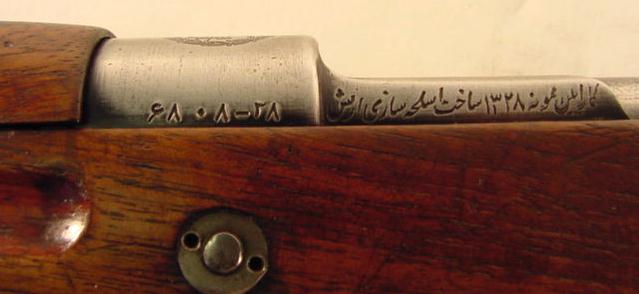
Persian markings of a Brno made rifle
One typical such inscription read “tofang-e nemoone 1309 karkhane-ye aslahe sazi berno” (“Rifle model 1309 Made at Brno Arms factory.” The number 1309 refers to the Persian year 1309 which is the year 1930 in the Gregorian calendar).
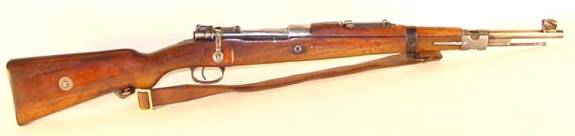
In the late 1940s Iran’s Taslihat-e Artesh (Arms Factories of the Army), popularly known as Mosalsal-sazi (the machine-gun factory), in Tehran started production of these Brno rifles. The needed machinery and technical assistance were provided to Iran through the industrial firm Škoda, which had a long history of cooperation with Iran. Iran produced two models: the regular VZ24 rifle (similar to the German Kar98k, overall length 1110 mm) and the short version (similar to the German G30, overall length 993 mm) known as “Berno kootah” (short Brno).
Berno Kootah (short Brno)
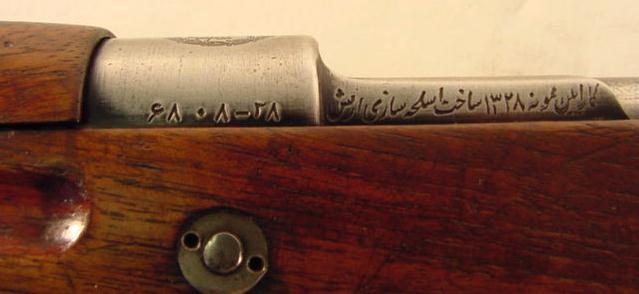
Under a licence from CZ. The difference was only in the markings on the side of reciever: instead of naming Brno as the maker, it was written “sakht-e aslah-e sazi-e artesh” (made by the Army arms factory).
Markings on an Iran made short Brno
The products are known among the collectors as Persian Mauser and are regarded to be the best and smoothest of the Mauser family of bolt-action rifles.
For many years Brno was the standard personal weapon of the Iranian armed forces, until it was replaced by the more modern, semi-automatic, American Garand M1, and later by the German Heckler & Koch G3.
The rifle was especially cherished by Iranian tribes, who are known to be firearms aficionados and able shooters. A tribesman sharpshooter would settle for nothing less than a Brno. Tribal rebels did everything to acquire one of these rifles, and they did get their hands on these in many tribal wars during Reza Shah and Mohammad Reza Shah’s time. And probably the tribal chieftains, or Khans, did get shipments from foreign sources, to be distributed among their savars (mounted fighters). One single event, which contributed to the widespread availability of Brno rifles among the tribes in Iran, was the fall of Reza Shah following the invasion of Iran by the Allied forces in 1941. At that time the Iranian army, after a short resistance, was almost disbanded and many people, especially tribesmen, got hold of the Brnos left after the soldiers abandoned the barracks.
There are many stories of the gun’s accuracy among the tribes. When Dadshah rebelled against the shah’s government in Baluchistan in the 1950s, people said that his wife, Bibi Khatoon, who accompanied him in the mountains, at one occasion, took her Brno and shot a bullet right into the barrel of the gun of a poor gendarme who was aiming at her over a long distance. Its popularity among Iranian tribes was so much that it was mentioned in some of their songs. A version of a well-known Boyer Ahmad song has a refrain that says “Mastom, Mastom, Brno kootah be dastom” (I’m drunk and have a short Brno in my hand).
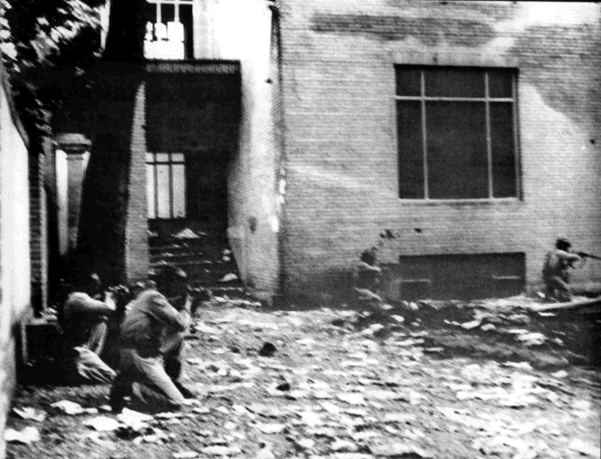
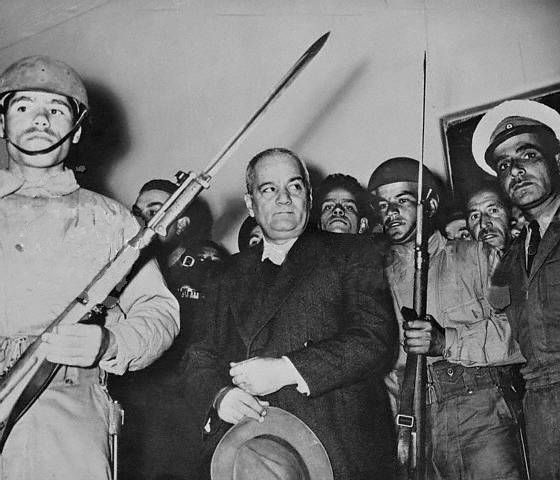
For the politically minded intellectuals of 1950s and 1960s, the rifle was a symbol of the Shah’s repressive rule. It can be seen in the pictures of soldiers attacking the house of Dr. Mossageq on the fateful day of 19 August 1953 (the infamous day of the US-British coup).
Soldiers attacking the house of Dr. Mossadiq, Aug. 1953
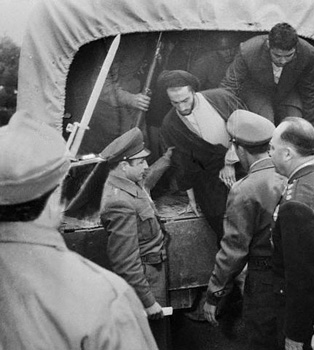
Gory pictures of executions of Tudeh party officers in the Chitgar shooting range in 1955 shows defiant young officers strapped to the stake minutes before execution, with Brnos present to do the task. When Navab-Safavi, the fundamentalist leader of Fadaiian Islam was arrested, Iranians saw his pictures being transferred to a prison under bayoneted Brnos.
Dr. Yazdi, the Tudeh party leader, after arrest in 1953, surrounded by soldiers with Brnos
Navab-Safavi, the Fadaiian-e Islam leader arrested
You can see it in pictures of 15 Khordad (June 1963) uprising in Tehran. In fact, when the Shah’s opposition cried against his “rule of the bayonet”, it was the sight of these Brnos with their bayonets attached that they were referring to.
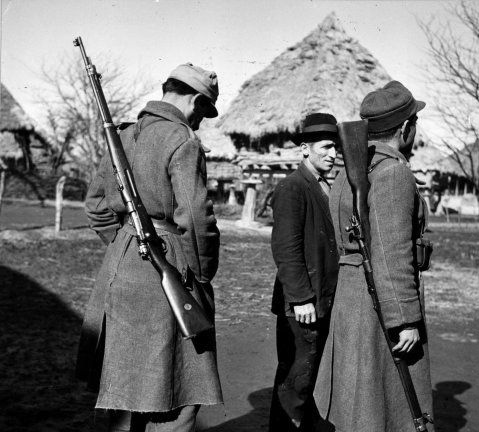
Ordinary people usually had their first encounter with the rifle while passing a guard in the street, or when they were (willingly or otherwise) recruited for the military service.
A deserter is taken to military service in a Gilan village, circa 1955
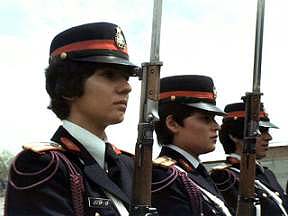
In the 1960s the semi-automatic US made M1 replaced Brno in the Iranian army, and Brno use was confined to the gendarmerie and the game wardens for a while, before it was decommissioned from active use. In the 1970s it was used mainly in ceremonial occasions.
Girl cadets of the police academy in graduation ceremony, circa 1972
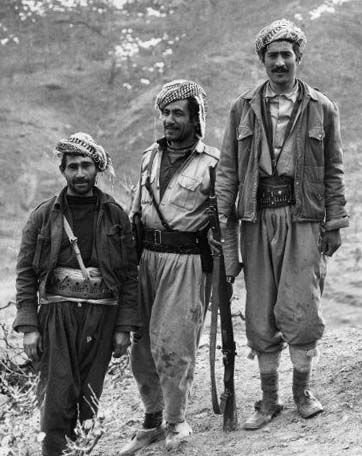
During the 1979 revolution, the gun reappeared in the hands of the revolutionaries and tribesmen, who never abandoned their Brnos. When Kurds challenged the newly established Islamic government, they used mostly modern assault rifles. But Brno still had a use: The Kurds claimed that with special cartridges that can pierce 2cm of steel, Brno can down aircraft and helicopters.
Kurdish ‘Peshmarga’s with Brno
Besides the rebels, the Islamic government too had a use for Brno: It was, and is, used in official Friday prayer ceremonies. The speaker is required to have ‘the weapon of the day’ by his side, according to the tradition of the Prophet (he apparently used a sword).
A different news source, but this shows a handgun being held by an imam leading the Khutbah.Supreme leader Ayatollah Khamenei with what appears to be a Dragunov derivative. https://www.theblaze.com/news/2015/07/20/can-you-spot-what-irans-khamenei-was-holding-during-his-speech-on-the-nuclear-deal-the-mainstream-media-ignored-it
The most likely reason for its use in such ceremonies is that it is long enough for the speaker to hold it like a walking stick while he is standing and preaching. The Mauser brothers would have been happy to hear that their rifle would be considered a ‘weapon of the day’ a century later.
For people of my generation Persian Mauser, or Brno, brings back many bittersweet memories. The coup, the executions, the NoghlAli (Iranian version of GI Joe) with his Brno in a watch-cabin, the pain of being hit by its butt in street demonstrations, the greedy gendarme guy looking for a chicken to steal, the poor poacher in a remote town using the old rifle to feed his family with meat once in a while. You see it in the old newspaper pictures of battles, ceremonies, riots and executions. It is a piece of history.
Thank you Ali Parsa for contributing to Silah Report!