“Brno”, the Persian Mauser

Ali Parsa is an Iranian scientist who has a lifelong passion for sailboats. He also knows a great deal about the history of the Mauser bolt action rifles that initially entered service in Iran at the turn of the 20th Century. He wrote this article examining the history of the Persian Mauser with its roots in the Czech VZ24 being license produced in arms factories outside of Tehran. This article was written almost a decade ago and he has very generously allowed Silah Report to republish it with express permission from himself. It initially appeared on the website that bears his name, Aaliparsa.com. This edition has been lightly edited.

Mauser rifles first appeared in Iran before the First World War. Looking at pictures of Iran’s Constitutional Revolution era, one can spot Mauser rifles and handguns in the hands of freedom fighters of Sattar Khan and Bagher Khan, as well as other Constitutionalists in different regions of Iran.
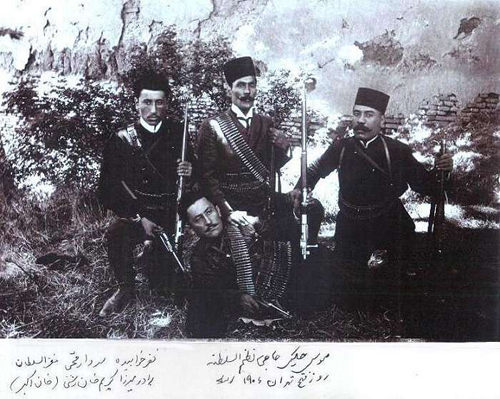

Iranian Constitutionalists, with their Mausers, in 1906

At the end of World War I, and as a result of the Versailles treaty arms ban, Germany no longer produced these rifles, but an almost exact copy was in production in Czechoslovakia. After Hitler became the German chancellor, the production was resumed in Germany.

Later, with the invasion of Czechoslovakia, the identical rifle was produced in Germany and Czechoslovakia.
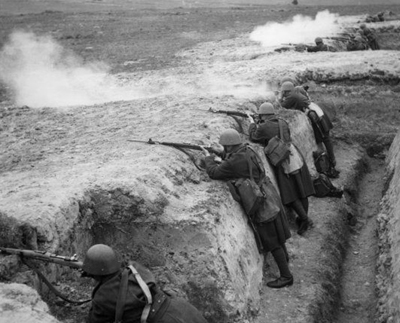

Czechoslovak Army Drill, 1938

A major production center was in Brünn, or Brno, as the city is called in the Czech language. The rifles made in Brno, the Czechoslovakian model, are known as VZ24 (for Vzor24, or Model 24 in the Czech language) and had the word Brno imprinted on them.
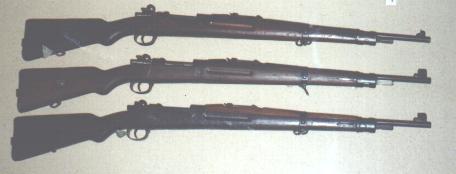

Czechoslovakian VZ24
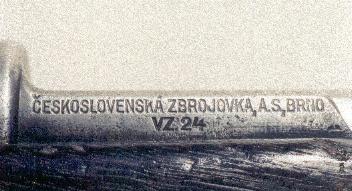

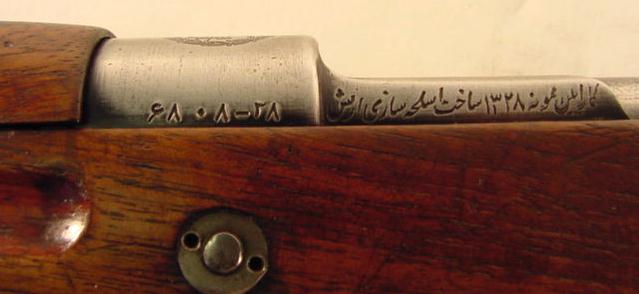
Markings of a VZ24

Officially, the Mauser rifle was selected for the Iranian army during Reza Shah’s time. But Iran didn’t go for the original German and ordered the identical Czechoslovakian version, the so-called Brno. The Czech firm provided Iran rifles made of many German parts. It was similar to the longer barrel version Germans designated as K98. Some official test results are available from antique arms dealers today, featuring signatures of the Brno factory representative, the Iranian in charge, and of course, satisfactory ‘grouping’ or bullet marks.
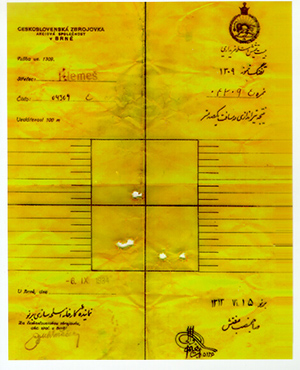

A 1934 test result document
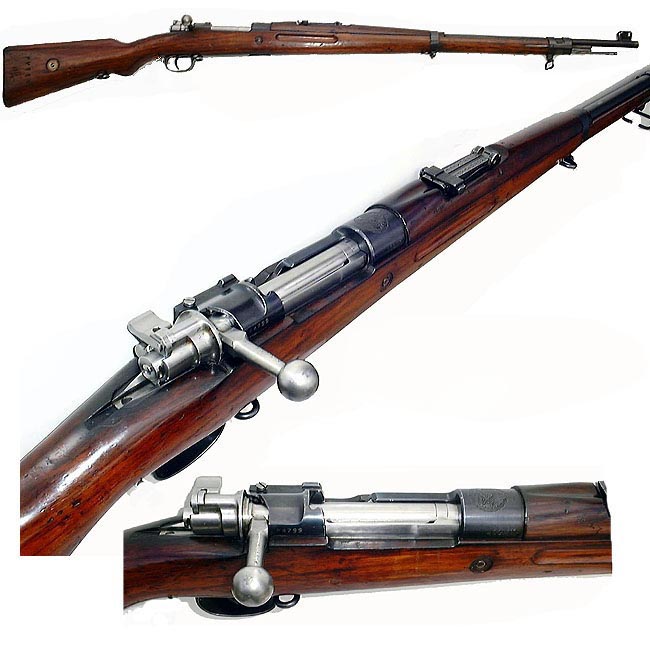

Full length ‘Brno’ with markings in Persian

At that time two other rifles were in use and very well known in Iran: the British Lee Enfield and the Russian Mosin Nagant (Noghaan, or Naaghaan, (نوغان- ناغان) in popular parlance in those days). The exact reason for preferring Brno over its rivals is not known, but one can speculate that those in charge of the Iranian army, or maybe Reza Shah himself, tried to avoid dependence of Iran to either of the two neighboring powers. Besides, the Brno and it’s Mauser original were considered to be the best military rifle of its day.

The Iranian government ordered three versions of this weapon. It was manufactured in Czechoslovakia by two firms. One was called Ceskoslovenska Zbrojovka, or CZ. These rifles are known to collectors as Persian CZ98, Persian Mauser or Persian Brno.

A Pahlavi crown, lion and sun crest appears near the feeding ring, as an inscription in Persian (in Nasta’liq script) on the side of its magazine giving the model and the factory name, which was in Brno. From then on the name, Brno was used by Iranians to refer to this rifle.
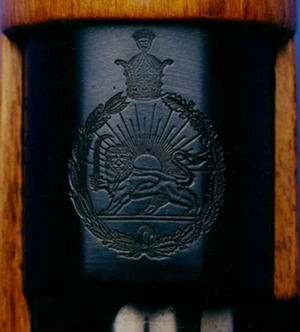

Lion and Sun crest of a Persian Mauser
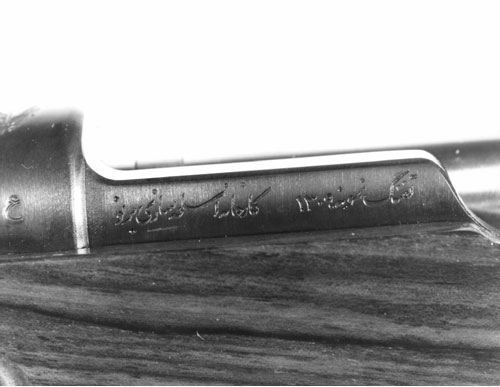

Persian markings of a Brno made rifle

One typical such inscription read “tofang-e nemoone 1309 karkhane-ye aslahe sazi berno” (“Rifle model 1309 Made at Brno Arms factory.” The number 1309 refers to the Persian year 1309 which is the year 1930 in the Gregorian calendar).

In the late 1940s Iran’s Taslihat-e Artesh (Arms Factories of the Army), popularly known as Mosalsal-sazi (the machine-gun factory), in Tehran started production of these Brno rifles. The needed machinery and technical assistance were provided to Iran through the industrial firm Škoda, which had a long history of cooperation with Iran. Iran produced two models: the regular VZ24 rifle (similar to the German Kar98k, overall length 1110 mm) and the short version (similar to the German G30, overall length 993 mm) known as “Berno kootah” (short Brno).
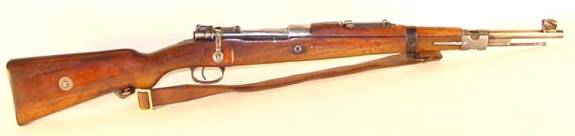

Berno Kootah (short Brno)

Under a licence from CZ. The difference was only in the markings on the side of reciever: instead of naming Brno as the maker, it was written “sakht-e aslah-e sazi-e artesh” (made by the Army arms factory).
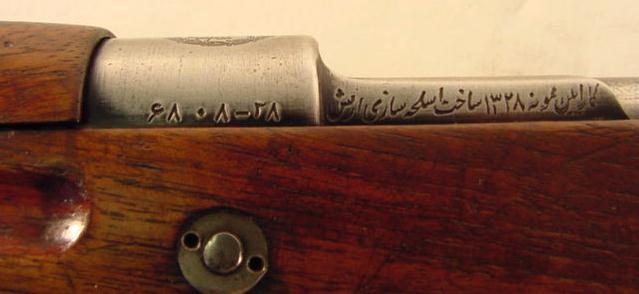

Markings on an Iran made short Brno

The products are known among the collectors as Persian Mauser and are regarded to be the best and smoothest of the Mauser family of bolt-action rifles.

For many years Brno was the standard personal weapon of the Iranian armed forces, until it was replaced by the more modern, semi-automatic, American Garand M1, and later by the German Heckler & Koch G3.

The rifle was especially cherished by Iranian tribes, who are known to be firearms aficionados and able shooters. A tribesman sharpshooter would settle for nothing less than a Brno. Tribal rebels did everything to acquire one of these rifles, and they did get their hands on these in many tribal wars during Reza Shah and Mohammad Reza Shah’s time. And probably the tribal chieftains, or Khans, did get shipments from foreign sources, to be distributed among their savars (mounted fighters). One single event, which contributed to the widespread availability of Brno rifles among the tribes in Iran, was the fall of Reza Shah following the invasion of Iran by the Allied forces in 1941. At that time the Iranian army, after a short resistance, was almost disbanded and many people, especially tribesmen, got hold of the Brnos left after the soldiers abandoned the barracks.

There are many stories of the gun’s accuracy among the tribes. When Dadshah rebelled against the shah’s government in Baluchistan in the 1950s, people said that his wife, Bibi Khatoon, who accompanied him in the mountains, at one occasion, took her Brno and shot a bullet right into the barrel of the gun of a poor gendarme who was aiming at her over a long distance. Its popularity among Iranian tribes was so much that it was mentioned in some of their songs. A version of a well-known Boyer Ahmad song has a refrain that says “Mastom, Mastom, Brno kootah be dastom” (I’m drunk and have a short Brno in my hand).

For the politically minded intellectuals of 1950s and 1960s, the rifle was a symbol of the Shah’s repressive rule. It can be seen in the pictures of soldiers attacking the house of Dr. Mossageq on the fateful day of 19 August 1953 (the infamous day of the US-British coup).
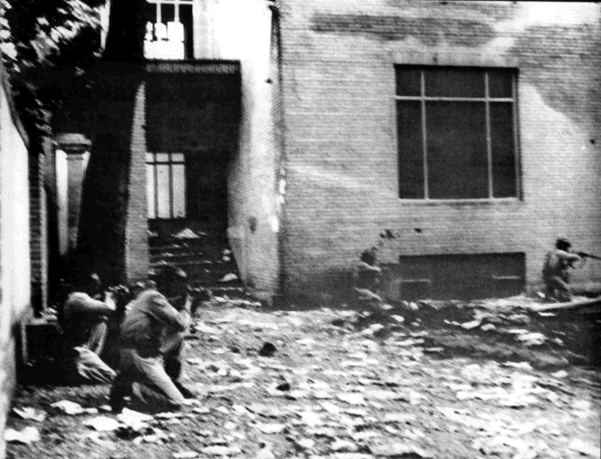

Soldiers attacking the house of Dr. Mossadiq, Aug. 1953

Gory pictures of executions of Tudeh party officers in the Chitgar shooting range in 1955 shows defiant young officers strapped to the stake minutes before execution, with Brnos present to do the task. When Navab-Safavi, the fundamentalist leader of Fadaiian Islam was arrested, Iranians saw his pictures being transferred to a prison under bayoneted Brnos.
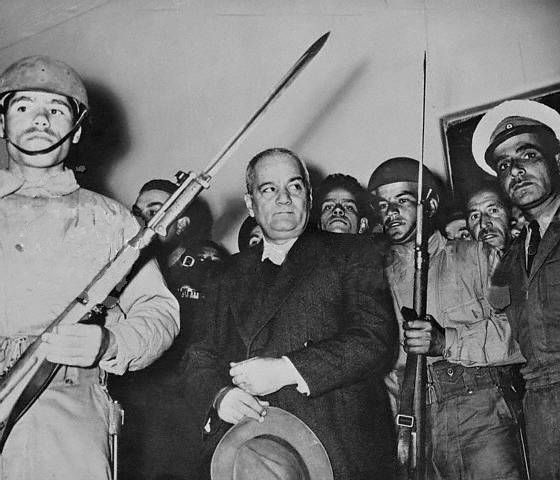

Dr. Yazdi, the Tudeh party leader, after arrest in 1953, surrounded by soldiers with Brnos
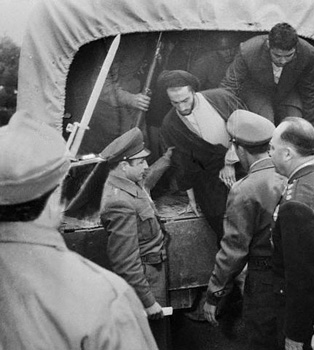

Navab-Safavi, the Fadaiian-e Islam leader arrested

You can see it in pictures of 15 Khordad (June 1963) uprising in Tehran. In fact, when the Shah’s opposition cried against his “rule of the bayonet”, it was the sight of these Brnos with their bayonets attached that they were referring to.

Ordinary people usually had their first encounter with the rifle while passing a guard in the street, or when they were (willingly or otherwise) recruited for the military service.
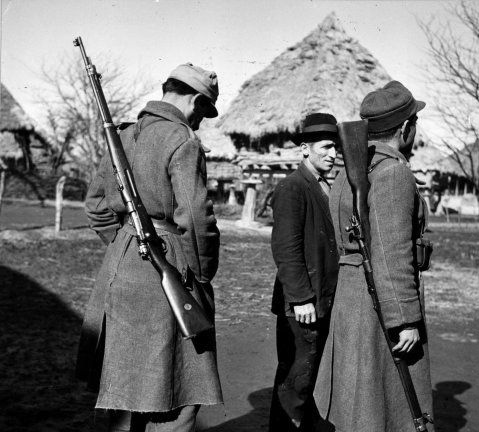

A deserter is taken to military service in a Gilan village, circa 1955

In the 1960s the semi-automatic US made M1 replaced Brno in the Iranian army, and Brno use was confined to the gendarmerie and the game wardens for a while, before it was decommissioned from active use. In the 1970s it was used mainly in ceremonial occasions.
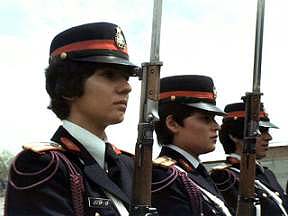

Girl cadets of the police academy in graduation ceremony, circa 1972

During the 1979 revolution, the gun reappeared in the hands of the revolutionaries and tribesmen, who never abandoned their Brnos. When Kurds challenged the newly established Islamic government, they used mostly modern assault rifles. But Brno still had a use: The Kurds claimed that with special cartridges that can pierce 2cm of steel, Brno can down aircraft and helicopters.
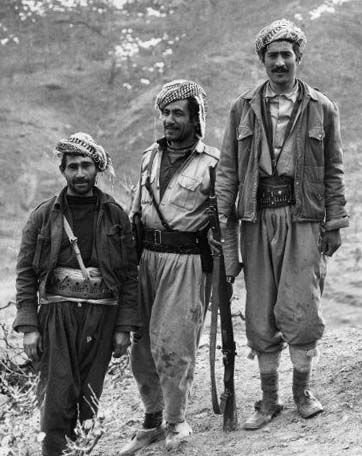

Kurdish ‘Peshmarga’s with Brno

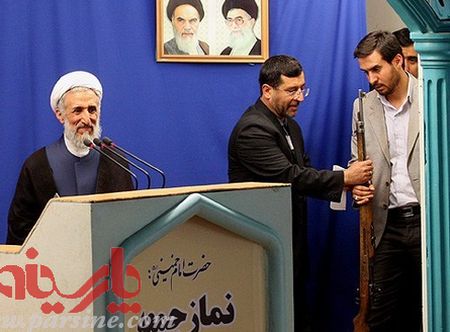
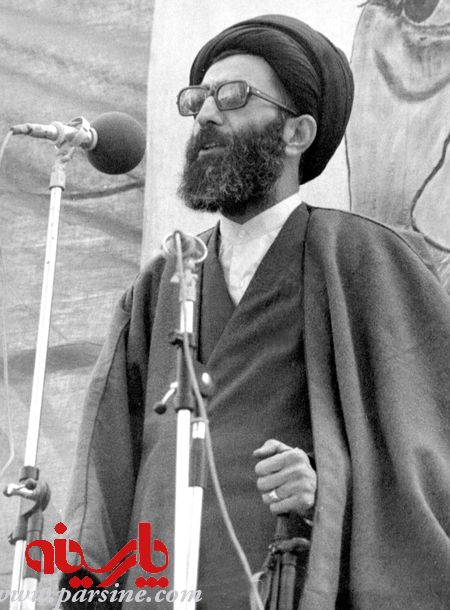
Besides the rebels, the Islamic government too had a use for Brno: It was, and is, used in official Friday prayer ceremonies. The speaker is required to have ‘the weapon of the day’ by his side, according to the tradition of the Prophet (he apparently used a sword).
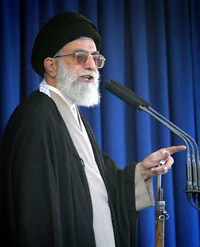

A Friday prayer session, with Brno

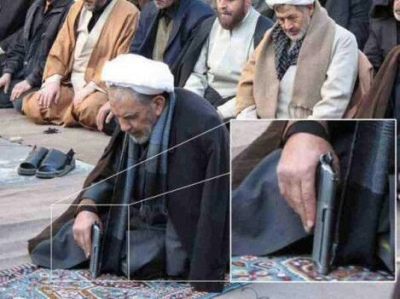
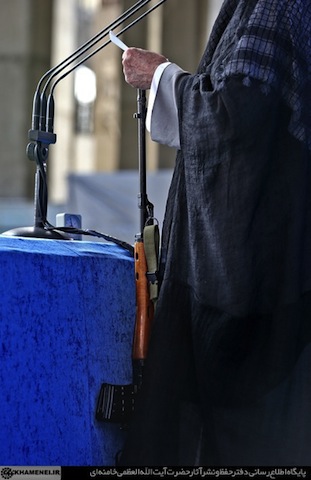
These images were collected and published on an Iranian website Parsine asking the question of “What kinds of weapons do Imam’s like?”
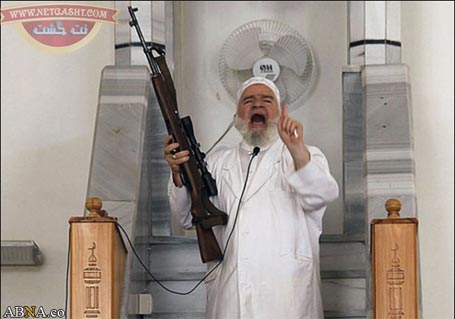


A different news source, but this shows a handgun being held by an imam leading the Khutbah.
Supreme leader Ayatollah Khamenei with what appears to be a Dragunov derivative.
https://www.theblaze.com/news/2015/07/20/can-you-spot-what-irans-khamenei-was-holding-during-his-speech-on-the-nuclear-deal-the-mainstream-media-ignored-it

The most likely reason for its use in such ceremonies is that it is long enough for the speaker to hold it like a walking stick while he is standing and preaching. The Mauser brothers would have been happy to hear that their rifle would be considered a ‘weapon of the day’ a century later.

For people of my generation Persian Mauser, or Brno, brings back many bittersweet memories. The coup, the executions, the NoghlAli (Iranian version of GI Joe) with his Brno in a watch-cabin, the pain of being hit by its butt in street demonstrations, the greedy gendarme guy looking for a chicken to steal, the poor poacher in a remote town using the old rifle to feed his family with meat once in a while. You see it in the old newspaper pictures of battles, ceremonies, riots and executions. It is a piece of history.

Thank you Ali Parsa for contributing to Silah Report!
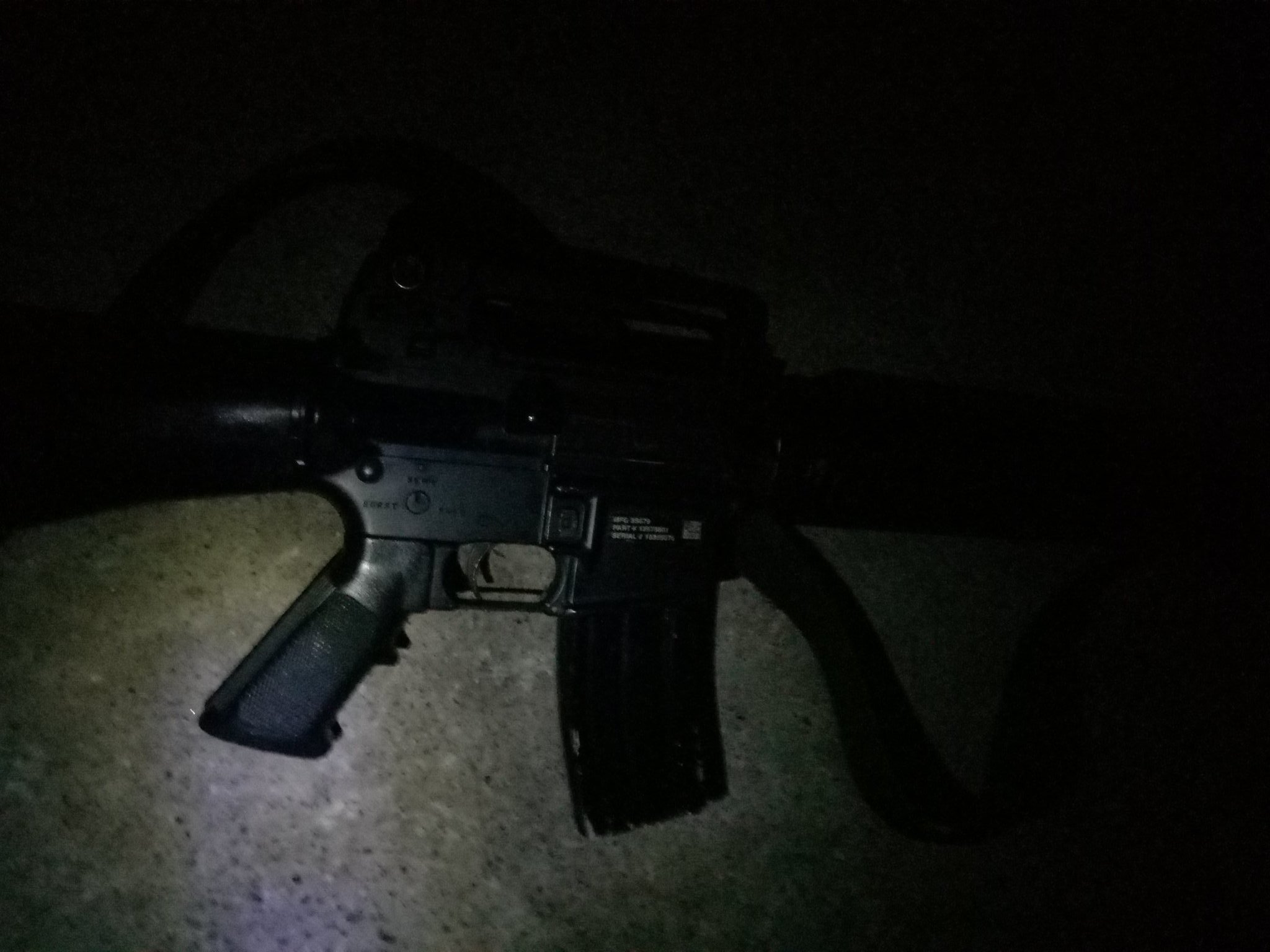
U.S. M16A4 Reportedly Among Iranian Protests

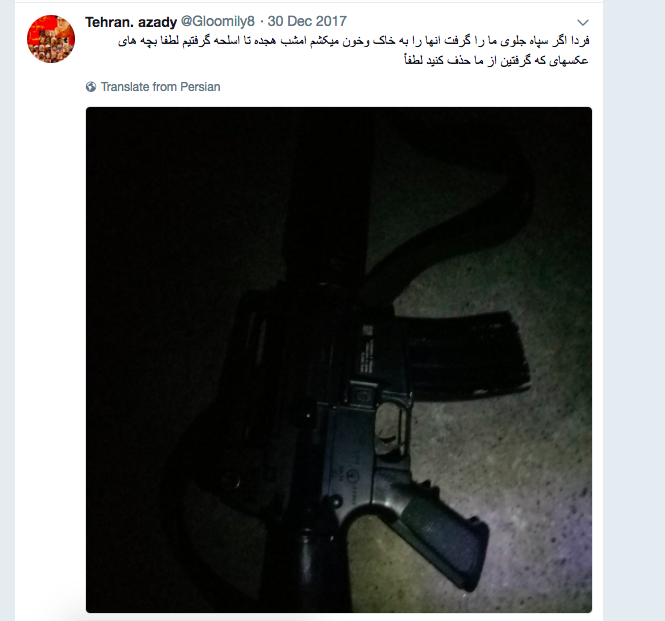
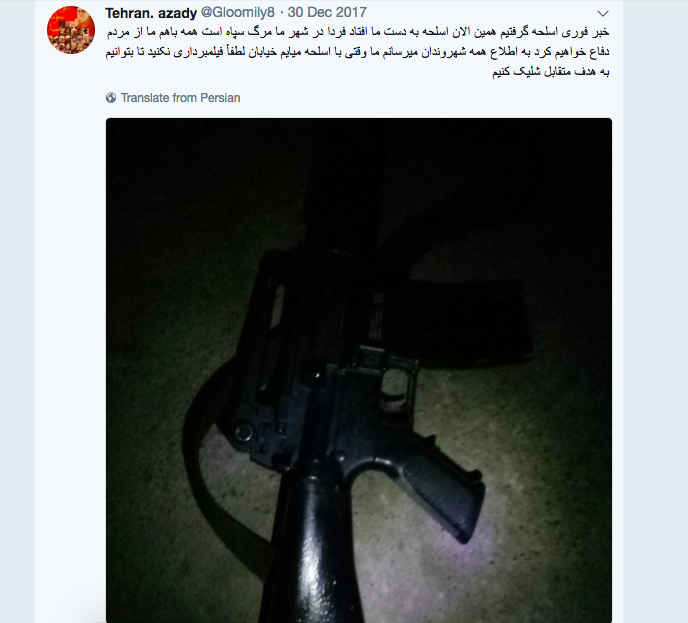
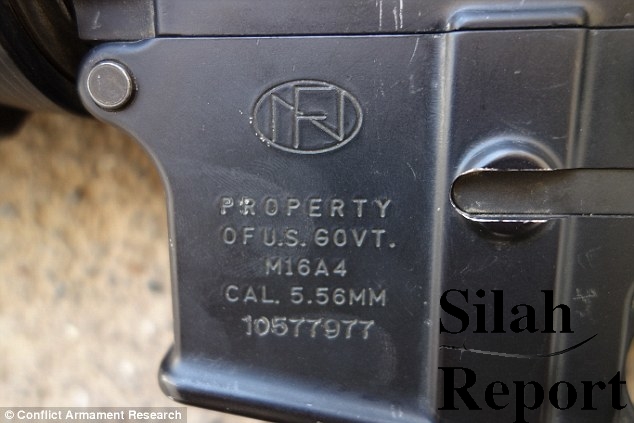
A Twitter account by the name of Tehran. azady/@Gloomily8 (Free Tehran) has posted two posts and accompanying photographs on their page depicting what appears to be an FN Herstal, former U.S. Government 5.56x45mm M16A4 Service Rifle. It is not known or confirmed if the image is actually from Tehran for that matter, but a cursory Google Image Search revealed this Twitter account appears to have been the first online poster of this particular photograph. It would also appear that these photographs are actually screenshots from a motion picture, due to the apparent movement of the light source.

Neither post makes much mention of the weapon and is more concentrated on what is going to be happening or will be planned to happen in the future in regards to the protests.

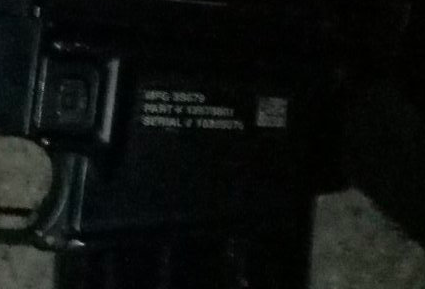
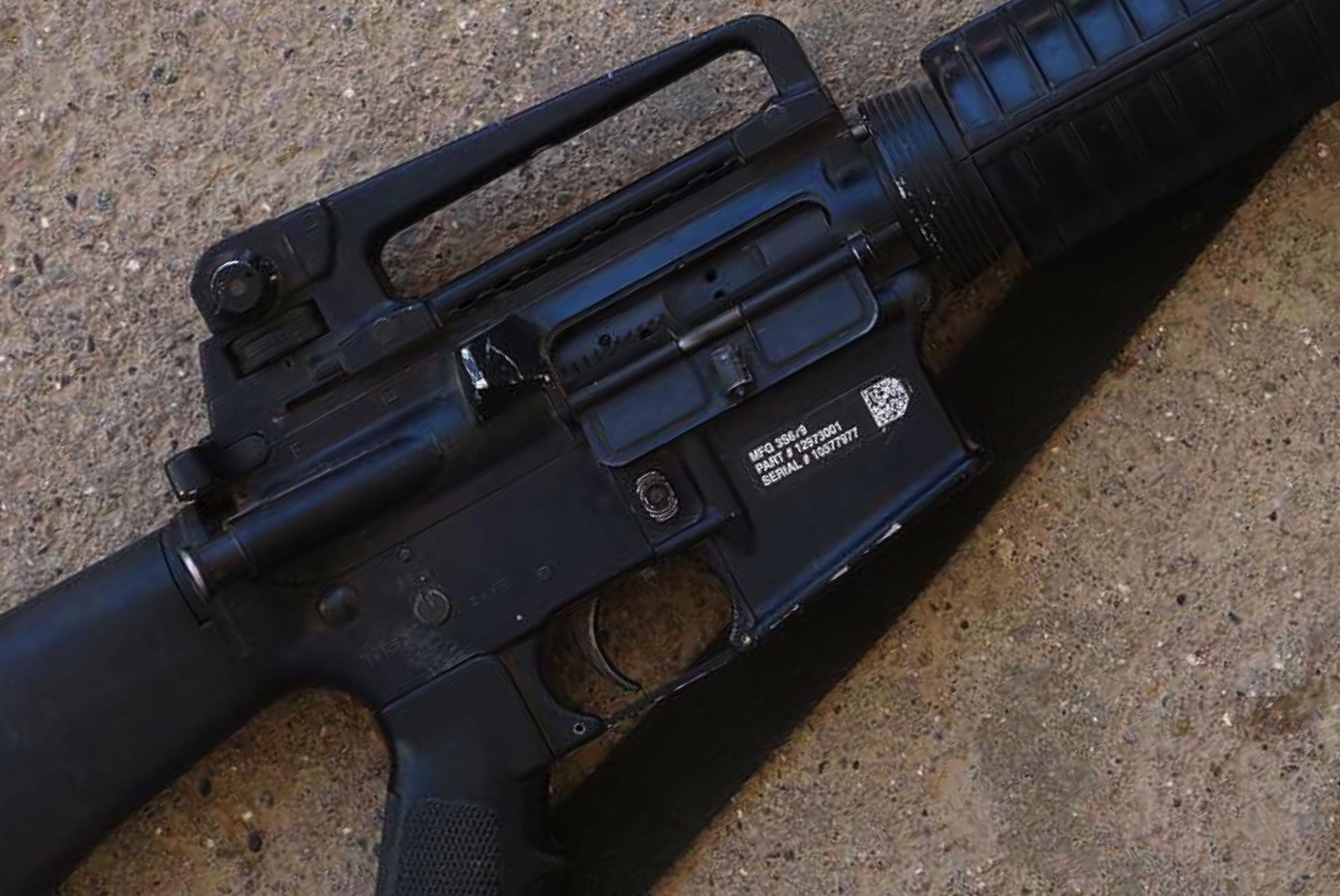
Notice the SKU imprint-

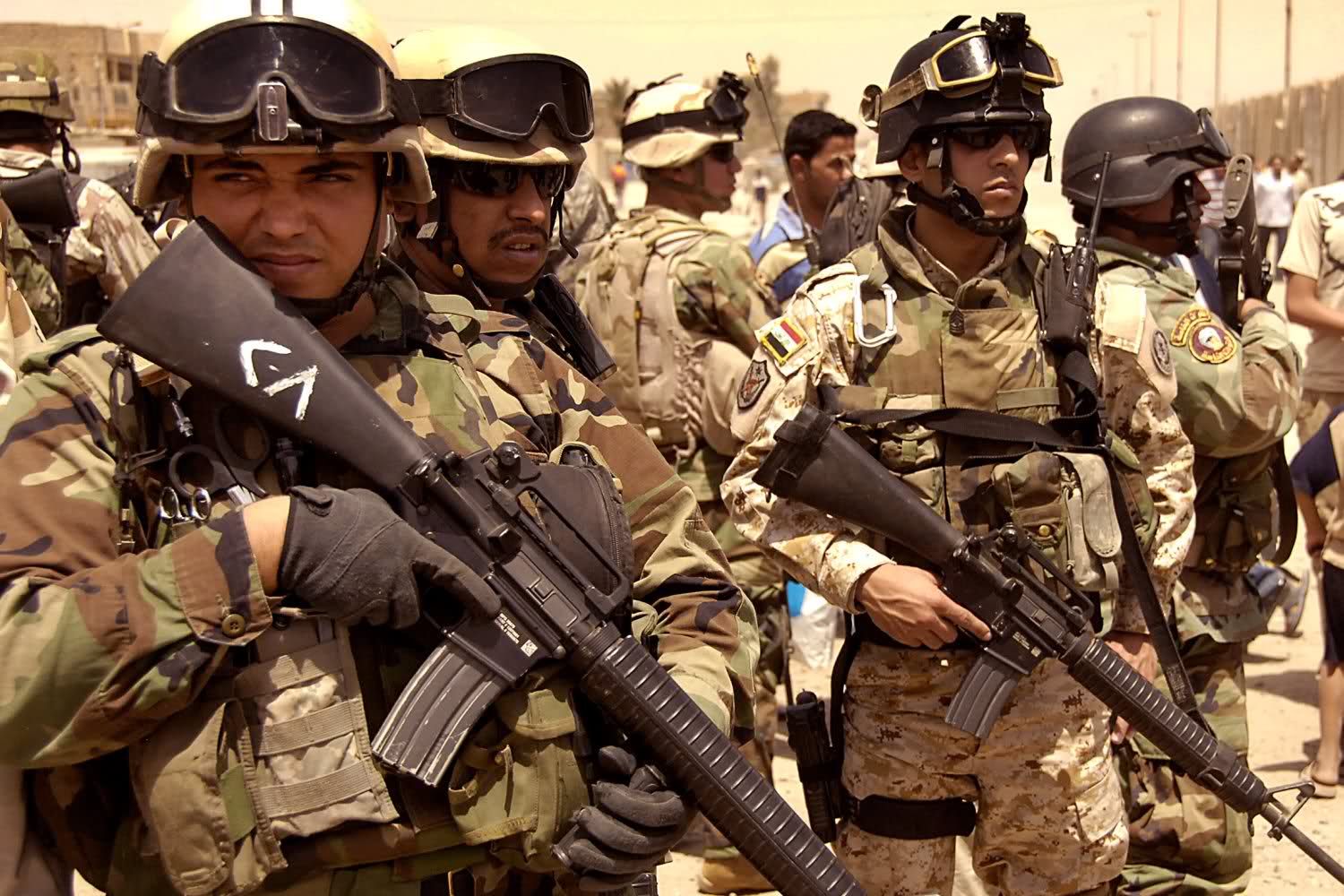
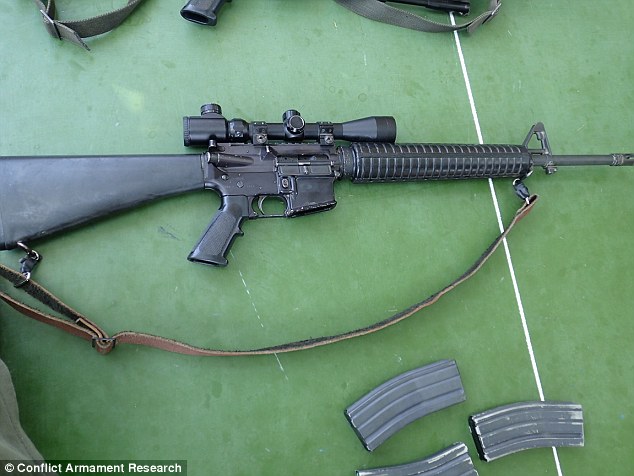
It would appear that this M16A4 is most likely diverted from U.S. Foreign Military Sales to Iraq. What could possibly confirm this is the design of the handguard. We know it is an M16A4 due to the M1913 Picatinny Rail a part of the upper receiver, of which an “A2” carrying handle is fastened to. What is being left out however, is the design of the handguard. If it is a Knight’s Armament “A4” handguard, it would be a very rare sight indeed. But most likely it is an “A2” style with the circular handguards and vertical vent ports. The “Hybrid” M16A4/A2 rifles were previously sold to the Iraqi Army-

And were subsequently seen/captured by the so-called Islamic State-

Source- Conflict Armament Research Report
Source- http://www.dailymail.co.uk/news/article-2749197/ISIS-arming-US-military-hardware-wage-jihad-Middle-East-seizing-weapons-Syrian-rebels-Iraqi-soldiers.html

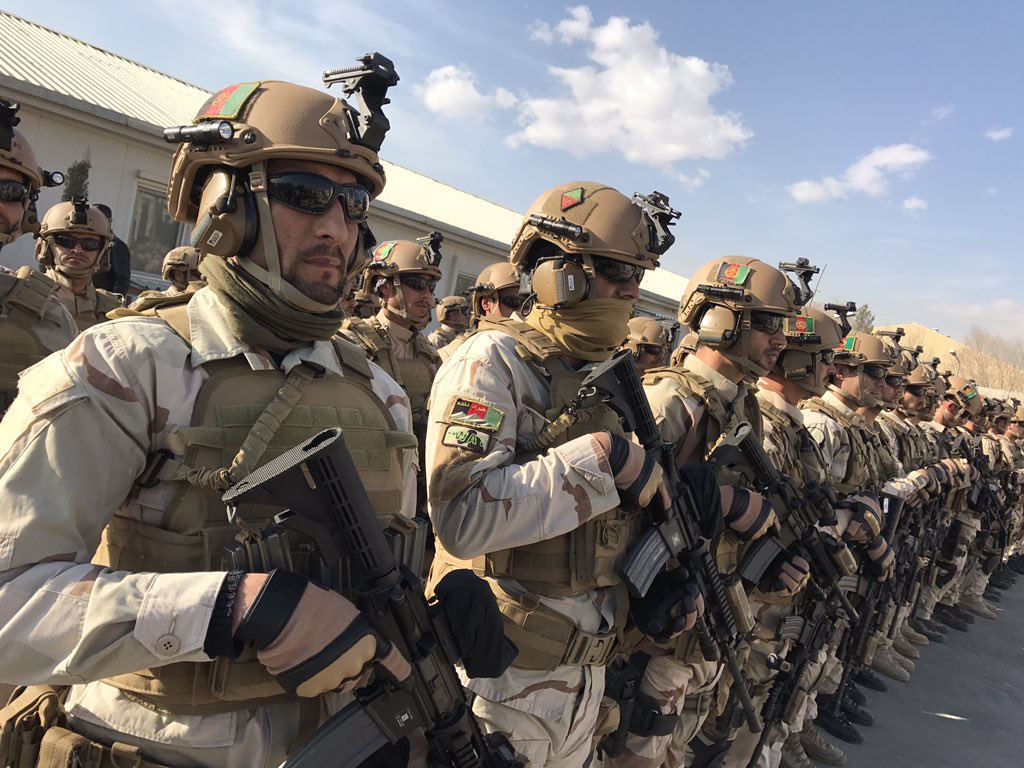
It should be noted that M16A4s are in service in Afghanistan with the Ministry of the Interior, in addition to M4/M4A1s are in service with numerous Afghan forces as well. But the amount in service in Afghanistan doesn’t seem to be proportional to the amount of M16A4s with the Iraqi Army, or circulating on the Iraqi black market.

Source- https://www.khaama.com/wp-content/uploads/2016/12/Afghan-special-forces.jpg

Tabuk Sniper Rifles Turn up in Baghdad Small Arms Cache

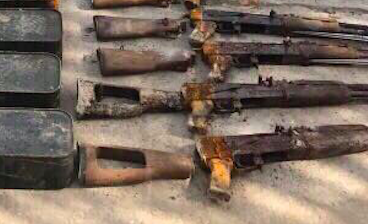
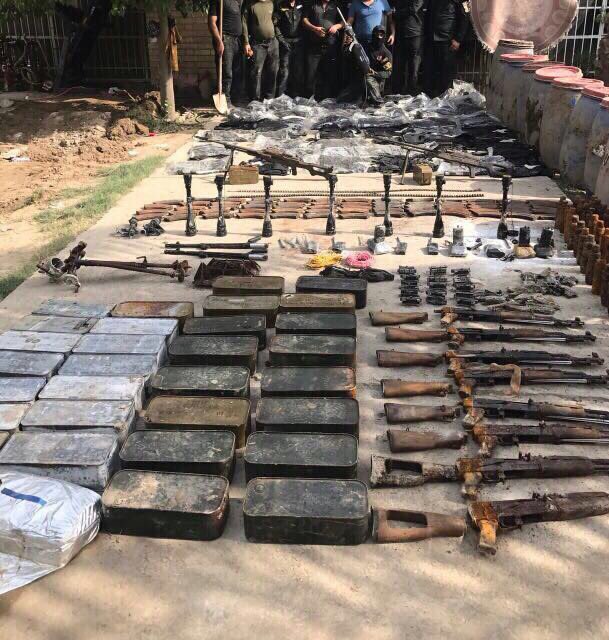
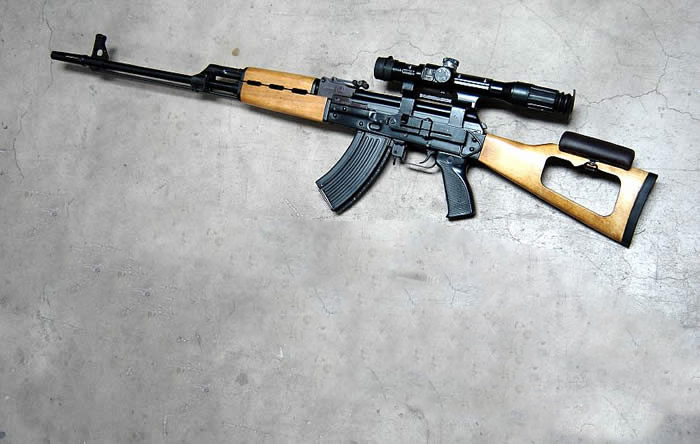
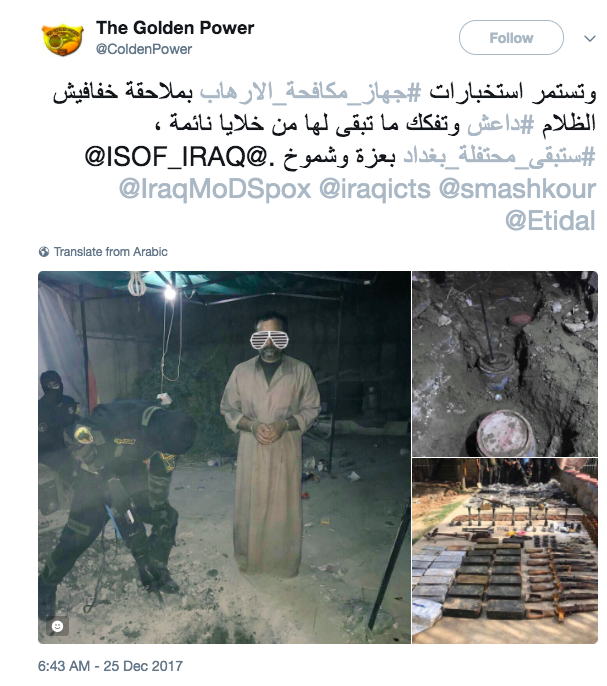
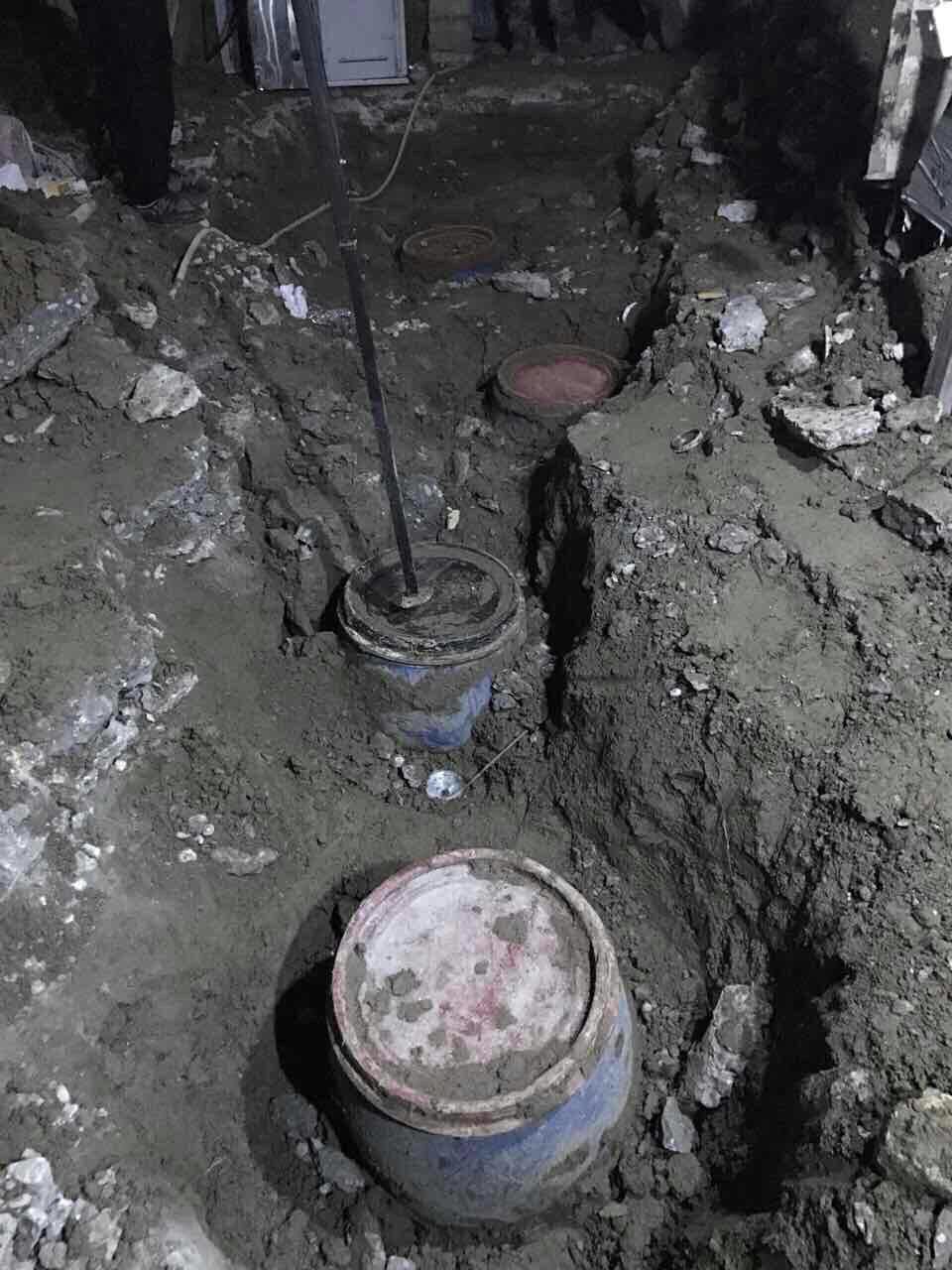
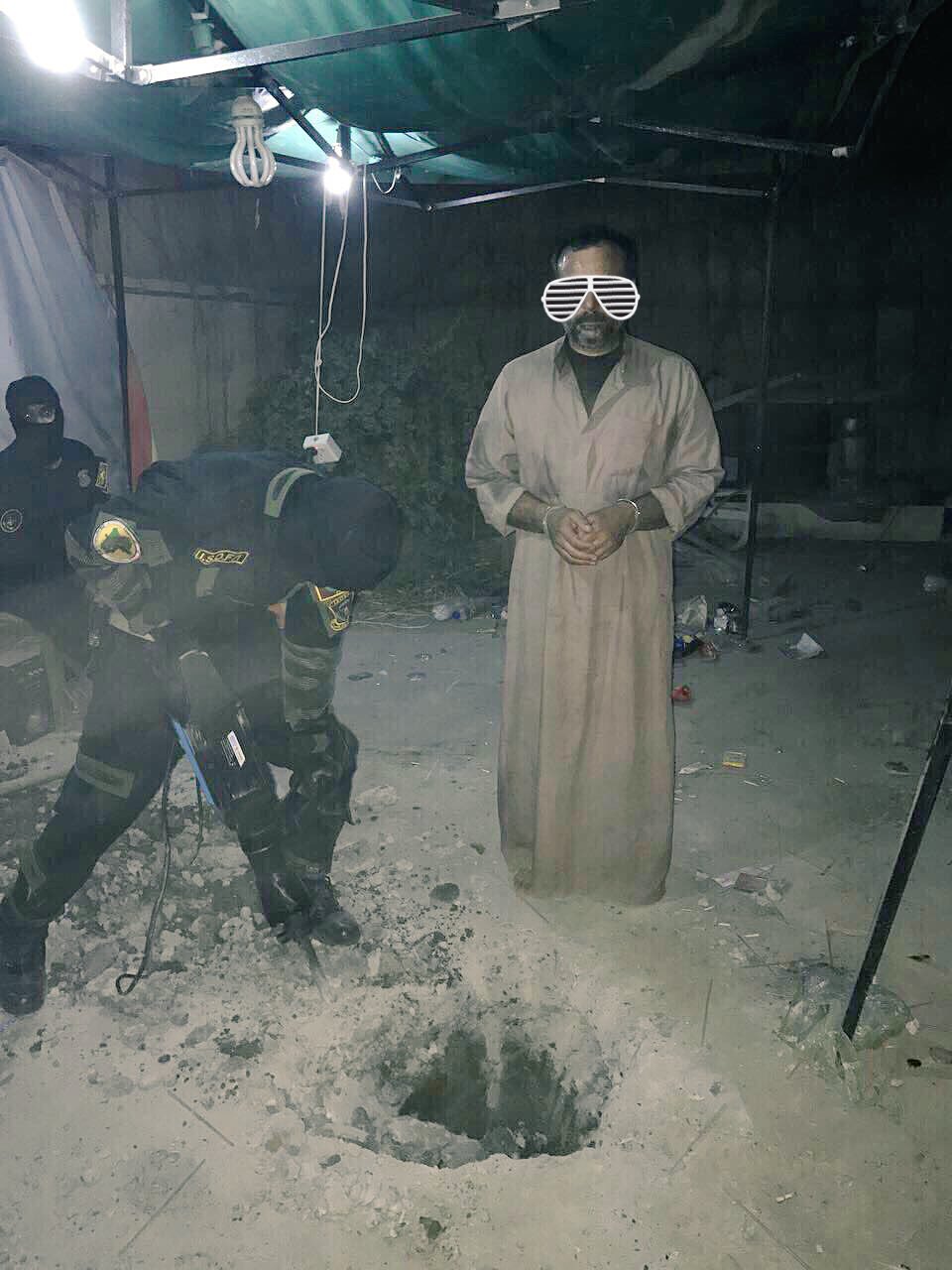
At a recent weapons cache that was turned up by Iraqi Counter-Terrorism Forces in Baghdad, what appears to be two Iraqi Tabuk Sniper rifles were among the rifles discovered in the buried cache. The Tabuk Sniper is uniquely identified by the cutout in the rear stock. Based on the Yugoslavian M70, the Tabuk sniper is a variant of the standard Tabuk rifle with full wooden stock, and the shorter version with a folding stock. It is unique among designated marksmen rifles in that it is chambered in 7.62x39mm, a round not known for its accuracy in the years it was adopted and used.

The two Tabuk Snipers in this photograph are distinguished by the aforementioned stocks and the three vents in the wooden handguard. On the above rifle there does seem to be some doubt as the receiver looks to be milled instead of stamped due to the magazine cut out portion. In addition, it is difficult to tell if the pistol grips are plastic or wooden, a key identification point about the Tabuk and M70 series. The stocks themselves are actually reversed, you are looking at the left side of the stock when it should have been the right side if aligned properly with the rifle.

The Twitter account “The Golden Power” shared the images.

The First Exhibition Drill Soloist in the U.S. was an Arab

The elaborate activity known as exhibition drill within the United States is quite unique in its execution. It evolved out of a want to push the envelope when it comes to Drill and Ceremony (shortened to D&C) competitions. For many decades, militaries all over the world have held D&C competitions, even down to the academy cadet level. The United States was no different, with the tradition possibly originating from Prussian General Friedrich Wilhelm von Steuben, who is credited with teaching D&C to American troops at Valley Forge during the Revolutionary War. However, it was only within the last century that competitions took on a more flashy or exhibition flare, with both armed and unarmed portions. The reasons for this could be many, but the author speculates that it has to do with D&C becoming less important on the battlefield and more of a measure of a unit’s discipline in the rear. For example, doing exhibition drill in the 1800s would probably be met with stern disappointment, because this was still the age where actual battles were won and lost due to a unit’s ability to maneuver in formation on a battlefield.

Today exhibition drill teams exist at every level from High School JROTC programs, Collegiate level ROTC programs, Military ceremonial units such as the Marine Corps’ Silent Drill Platoon, and even professional performance teams such as New Guard America. One of their performances is shared below.

But back to origins. The general beginnings of what we now know to be called “exhibition” drill are claimed to be a cadet unit called “Pershings Rifles” still active today at a university in Nebraska. Whether or not this cadet unit performed anything near to what would be labeled as exhibition, the research isn’t very clear. But the general consensus is that modern exhibition drill really took off in the years following the Vietnam War, growing to a huge network today.

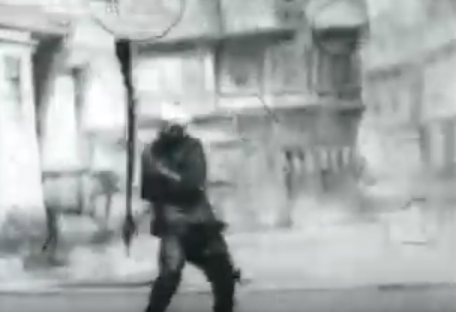
However, before the Pershing Rifles, there was Hajji Sherif/الحاج شريف (normally colloquially as Hadji Cheriff). This name was most likely a stage name or something an American audience could easily pronounce. The first part, Hadji/Hajji is indicative of this man making the Haj pilgrimage to Mecca, and the second part Cheriff/Sherif, means “Noble” in Arabic. Although Sherif might have been apart of the man’s name, it really doesn’t give us much as to his family name, what part of the MENA region he was from, etc…

This video clip that was copyrighted by Thomas Edison in 1899 (he also had another clip of Hajji Sherif performing a dance at the inventor’s studio) specifically label Sherif as the “Arabian” Gun Twirler and recorded at what is believed to be the Midway Plaisance during during the World’s Columbian Exposition of 1893, taking place in Chicago. It shows Sherif effortlessly spinning what appears to be a muzzleloading Model 1855 Springfield .58 Caliber rifle.

The only other known video (described earlier) of him is also online-

But in this short movie that would have been aired or published as a silent movie, we see exactly what goes on today on exhibition drill decks across the United States. As the drill website, The Nationals notes–

[He is performing] a basic aerial toss (two, 1-1/2 over-hand thrown from the firing hammer) and also an over the shoulder technique with a rather remarkable display of over-the-head drill (OTH), and ends right after an under the leg inverted spin.

This film’s description from the Library of Congress reads as such–

A bearded man performs a rifle twirling act on a stage with a painted backdrop of a city street corner. He wears a white turban and a dark two-piece costume of tunic and baggy pants that narrow at the knees; perhaps the costume of an Arab infantryman. The tricks he performs include throwing the spinning rifle in the air and catching it; twirling the gun in front of him, above his head, behind his back, to the side of his torso, and under his leg; and twirling the rifle as he switches hands.From Edison films catalog: An interesting exhibit by Hadji Cheriff, of the original Midway Plaisance. Twirls his rifle over shoulder, behind back, under leg, both hands and one hand. 50 feet. $7.50.

50 feet is in reference to the overall physical length of the roll if you were to purchase it for $7.50 at the time of the short’s airing at the turn of the century in 1899.

But what else do we know of Hajji Sherif, and what is he doing? We have this description of him from IMDb–

Hadj Cheriff was both an Arabian knife juggler and an acrobat. He had little to do with filmmaking of any sort, as his debut was in the 1894 Edison short film “Hadj Cheriff” which features him performing part of his act in Edison’s Black Maria studio. Cheriff later appeared in another Edison film, “Arabian Gun Twirler” from 1899. These two shorts are apparently the only films he took part in; thus, Cheriff remained a minor part in filmmaking.

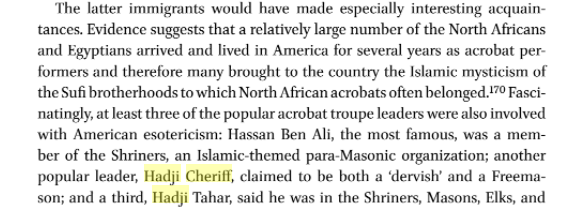
We have these references in The History of Conversion to Islam in the United States Vol II, which suggest that Sherif was a circus performer, and might have been Egyptian, and even a Sufi. Some Sufi religious orders are quite known for various practices that put them in a trance-like state, most famously the Whirling Dervishes but they number very little even in Turkey. From the book-

In 1890 we also have a clipping from a circus advertisement that clearly lists him as a “Gun Juggler”–

New York Clipper, July 19, 1890, pp. 291, 294, 295, 301, 304…. Hadji Cheriff, Arabian gun juggler

The real question that I think is important to answer as researchers is where did Hajji Sherif get the idea of twirling an unloaded rifle to entertain a crowd? One body of thought is that it might have come from his Sufi roots (if he was Sufi to begin with). Another distant train of thought is that it might be related to Yowla/اليولة, which is a traditional dance routine practiced in the Gulf Countries today, but can be traced back many years. Although not often using full-size rifles (imitation ones are used), and often using swords, there could be a connection. An important here is that traditional Yowla puts much more emphasis on the dance rather than skill with the rifle. The third option is that Sherif came up with the idea on his own of course.

Traditional Yowla performance-

https://www.youtube.com/watch?v=PUvX-1g9F7M

This is an example of Yowla with muzzleloaders today, similar to what Sherif would have had-

https://www.youtube.com/watch?v=cTFcMfPT22Q

Forgotten Weapons discusses Peshmerga Anti-Material Rifles

Ian from Forgotten Weapons  has put together an interesting overview of the 12.7mm Zagros And 14.5mm Sahar Anti-Material Rifles in use by the Kurdish Peshmerga. These improvised rifles are making quite the headway in the current Syrian civil war, due to the prevelance of VBIEDs and the complexity of fighting in urban settings.

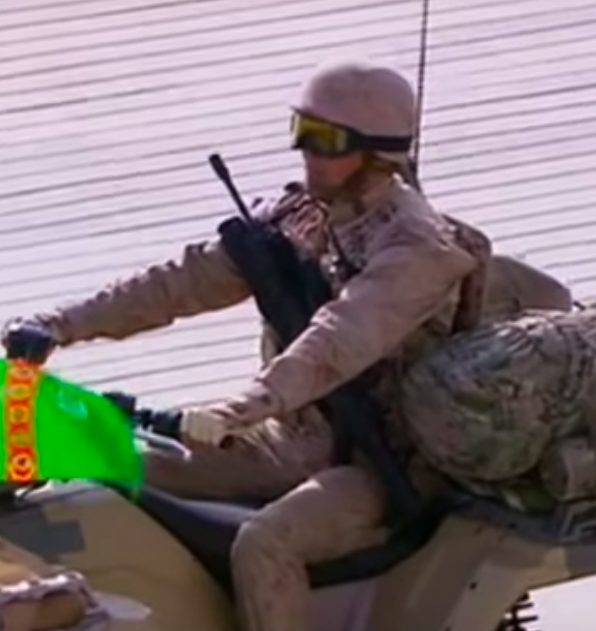
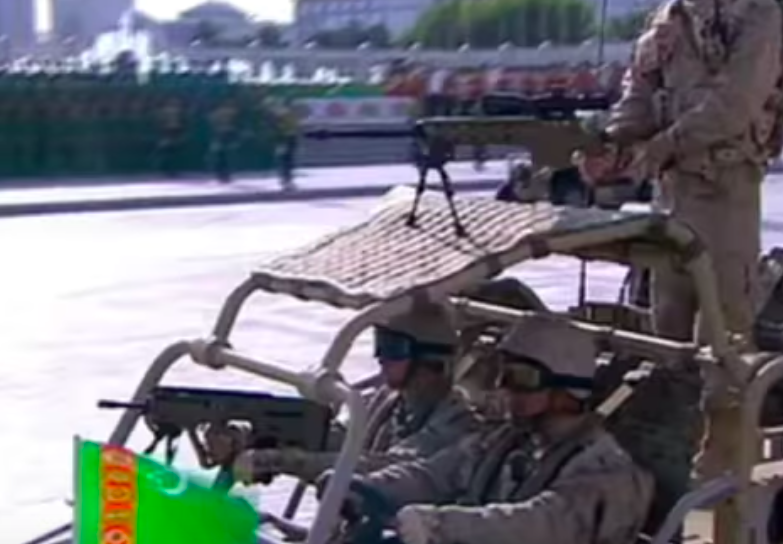
Beretta and Sako Presence at Turkmenistan Independence Day Parade

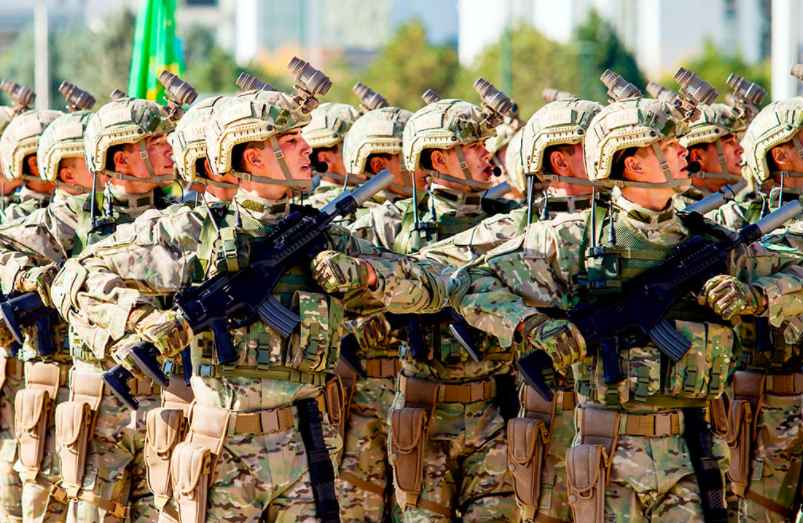
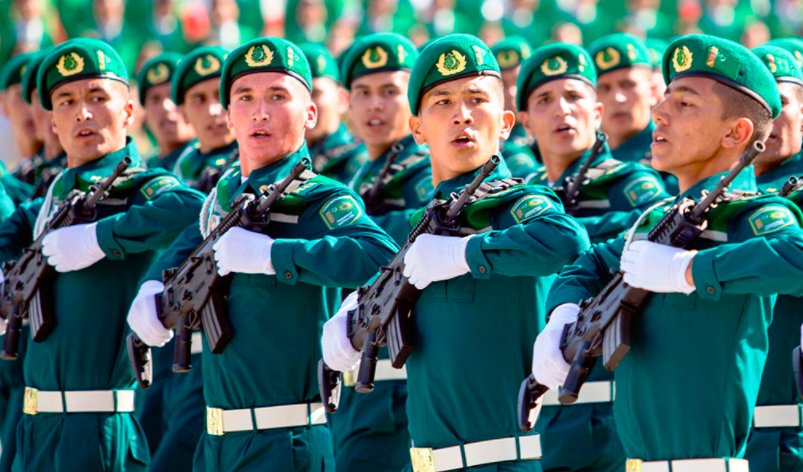
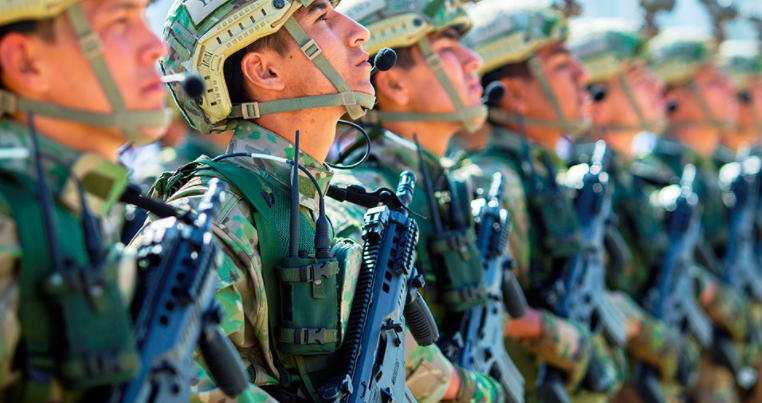
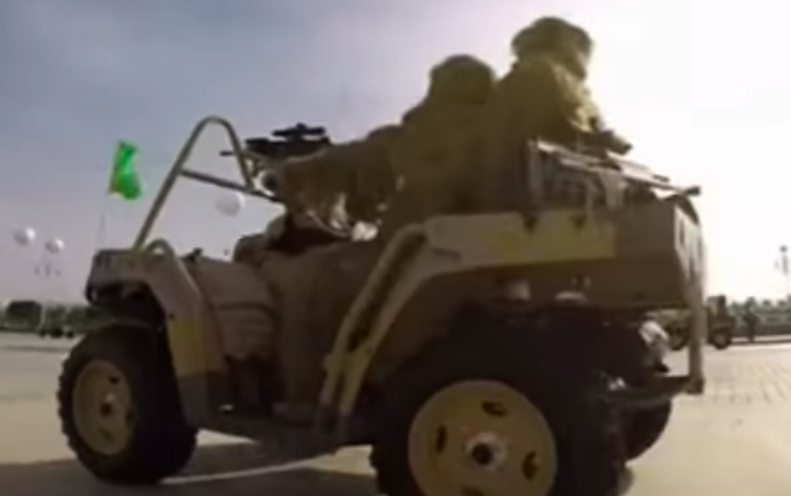
At this year’s 26th anniversary of the Independence of Turkmenistan, Beretta and Beretta owned Sako came out in large numbers among the small arms on parade. Of course, the Beretta 5.56x45mm NATO ARX160 took center stage among both the line troops and special operations component, with the SF component also being armed with IWI 5.56x45mm NATO Tavor TARs.

21st Century Asian Arms Race had this to say about the current rearming of the small Central Asian state–

Turkmenistan is often lampooned for its bizarre civic culture that combines national symbols with its leader’s personality cult. But judging by the recent military parade in Ashgabat, Turkmenistan’s armed strength is for the sole purpose of territorial defense. Unlike North Korea, Turkmenistan doesn’t pose a threat to global peace. It’s also trying to crawl out of an economic mess caused by its reliance on energy exports.

Neither does Ashgabat appear to have regional ambitions. On the contrary, it faces a grave threat from its border with Afghanistan where militants tied to either the Taliban or ISIS are active. In the greater scheme of things, Turkmenistan’s imperative is balancing its aspirations with the looming strength of China, India, Iran, Russia and Turkey.

Yet even if it’s overshadowed by larger countries in its neighborhood, when it comes to mass calisthenics, very impressive rifle drills, and costumed Turkmen archers trotting on horseback, Turkmenistan makes sure it surpasses its neighbors in pageantry.

Along with the ARX160s, there were some mounted with Beretta’s accompanying 40x46mm low-velocity GLX-160 UBGL.

And a designated Marksmans variant.

It appears that Turkmenistan has also purchased the IWI Negev light machine gun as well.

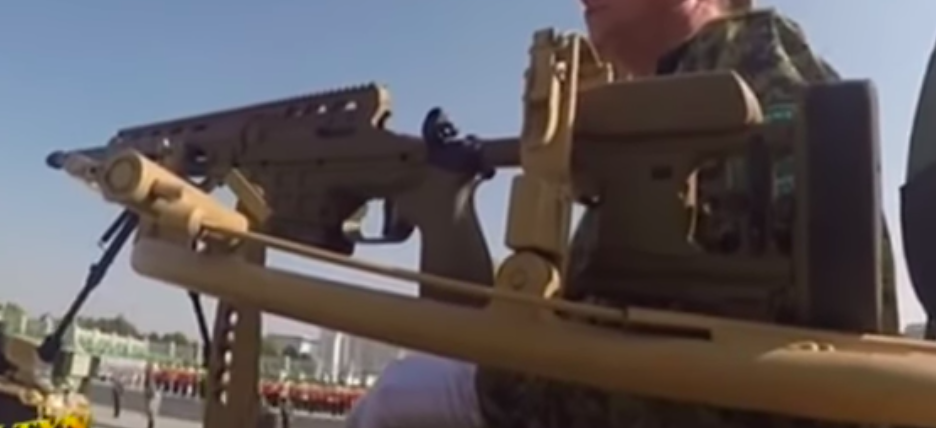
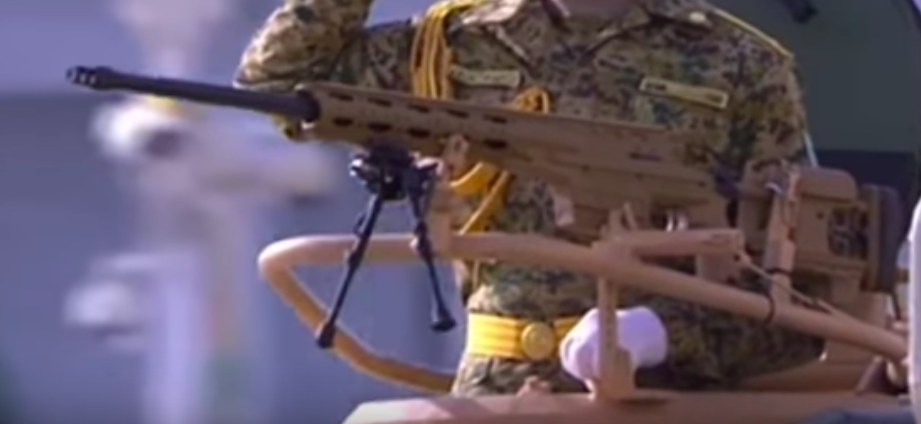
But the other significant update was with the precision rifles, that of Sako TRG M10s. These are probably chambered in 7.62x51mm NATO but could be in .338 Lapua Magnum. They were shown in a tan finish.


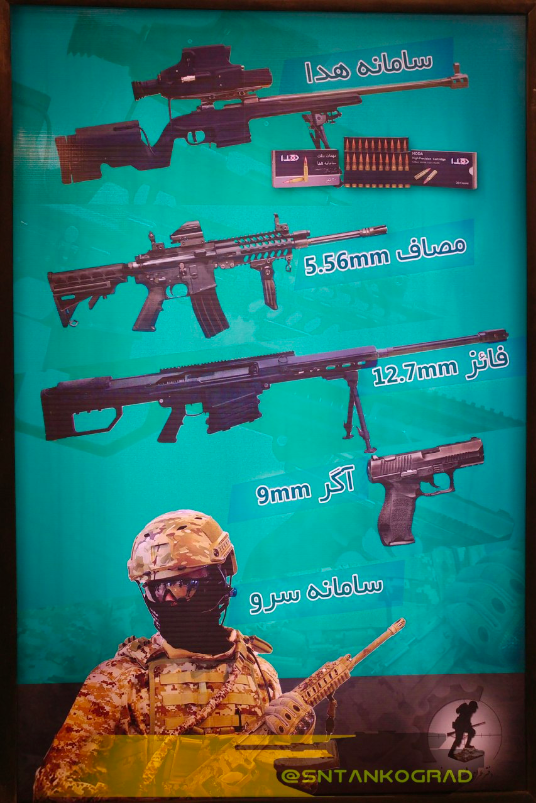
A Closer Look at Iran’s Barrett M107 Copy, the Hoveizeh

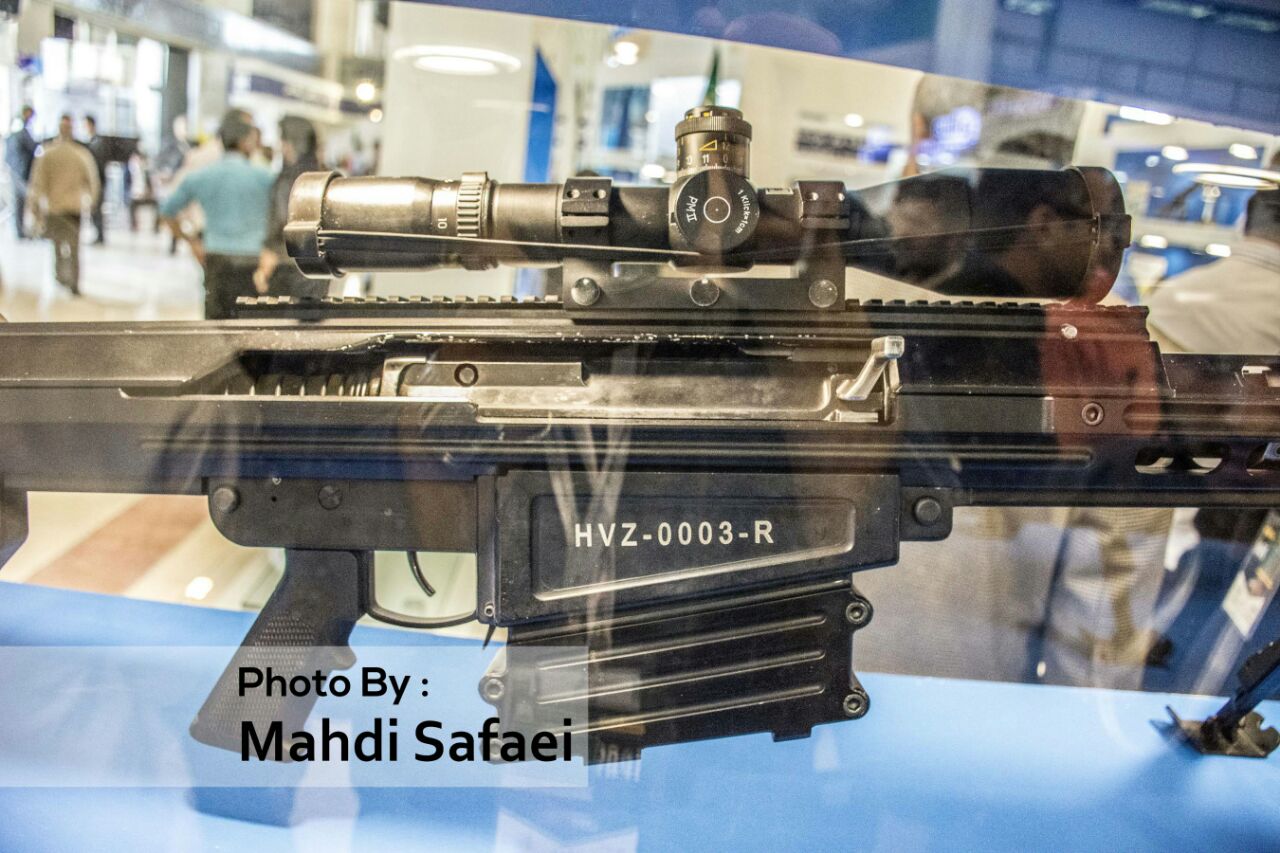
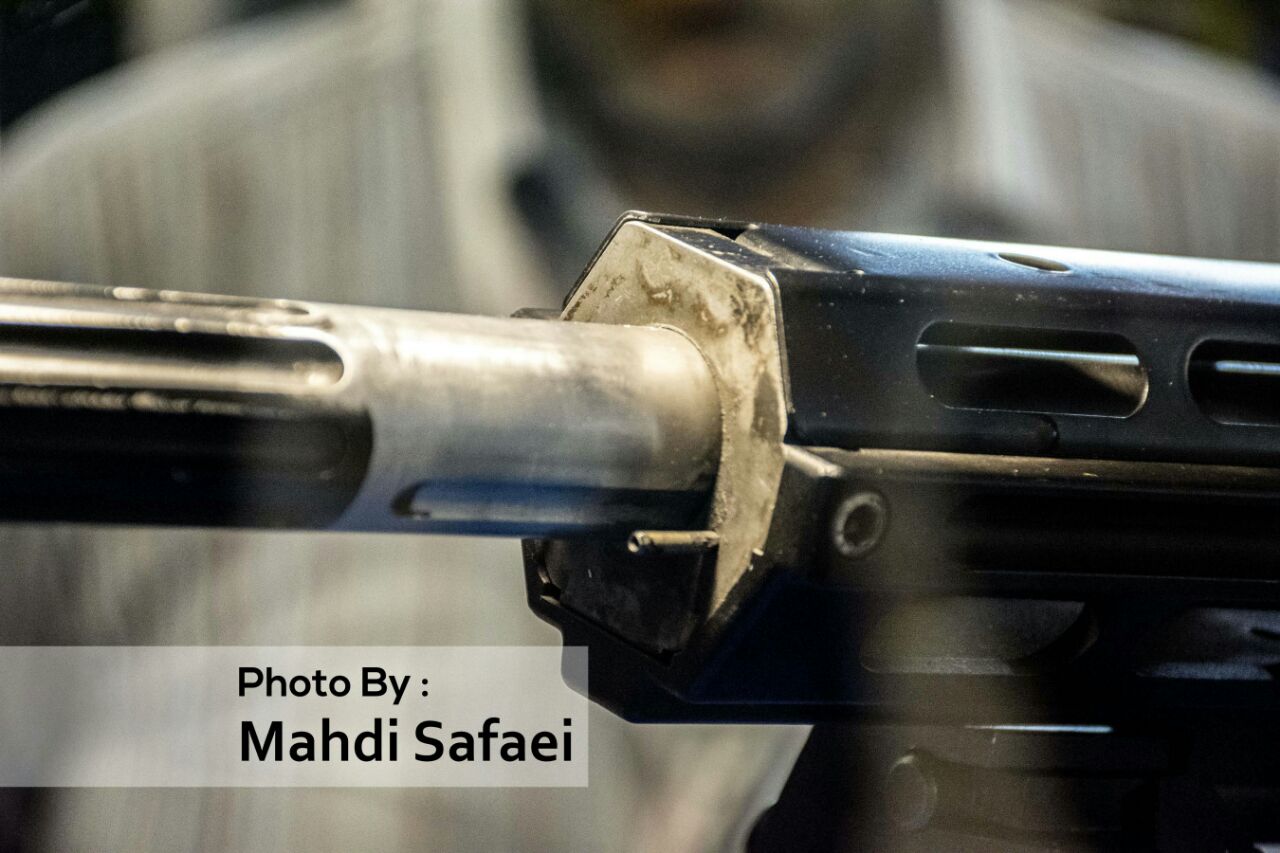
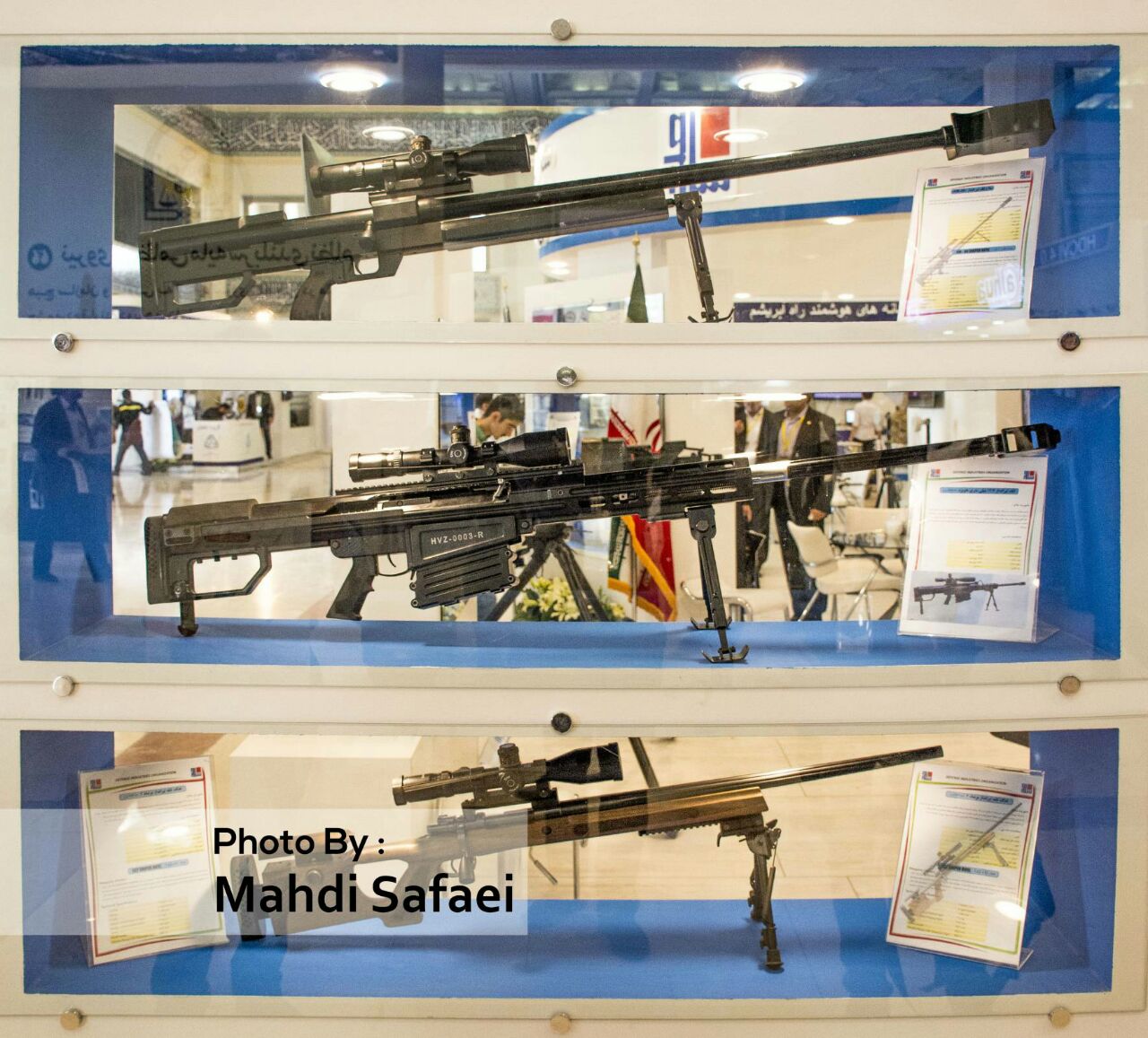
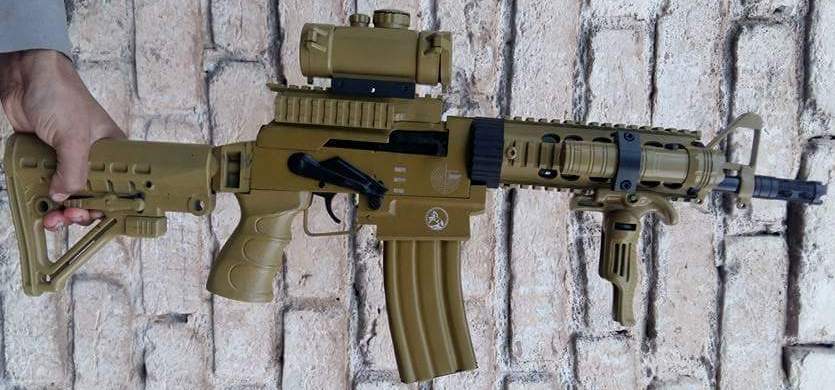
IPAS 2017 in Iran brought with it the introduction of the .50 BMG Hoveizeh anti-material rifle. Thanks in part to a popular Iranian Telegram channel we’re able to take a much closer look at the rifle and exactly what the Defense Industries Organization duplicated, and what was added. From what we can tell, the general layout and operating mechanism of the U.S. Barrett M107 was copied, but some of the exterior features of the weapon weren’t. One difference was the magazine which appears to be a polymer shell held together with screws, not unlike some Airsoft designs.

In this photograph the barrel bushing has an extra pin protruding from it that we don’t know the purpose of yet. Notice what appears to be a hex screw holding the upper frame to the receiver. In addition notice the flutes down the barrel.

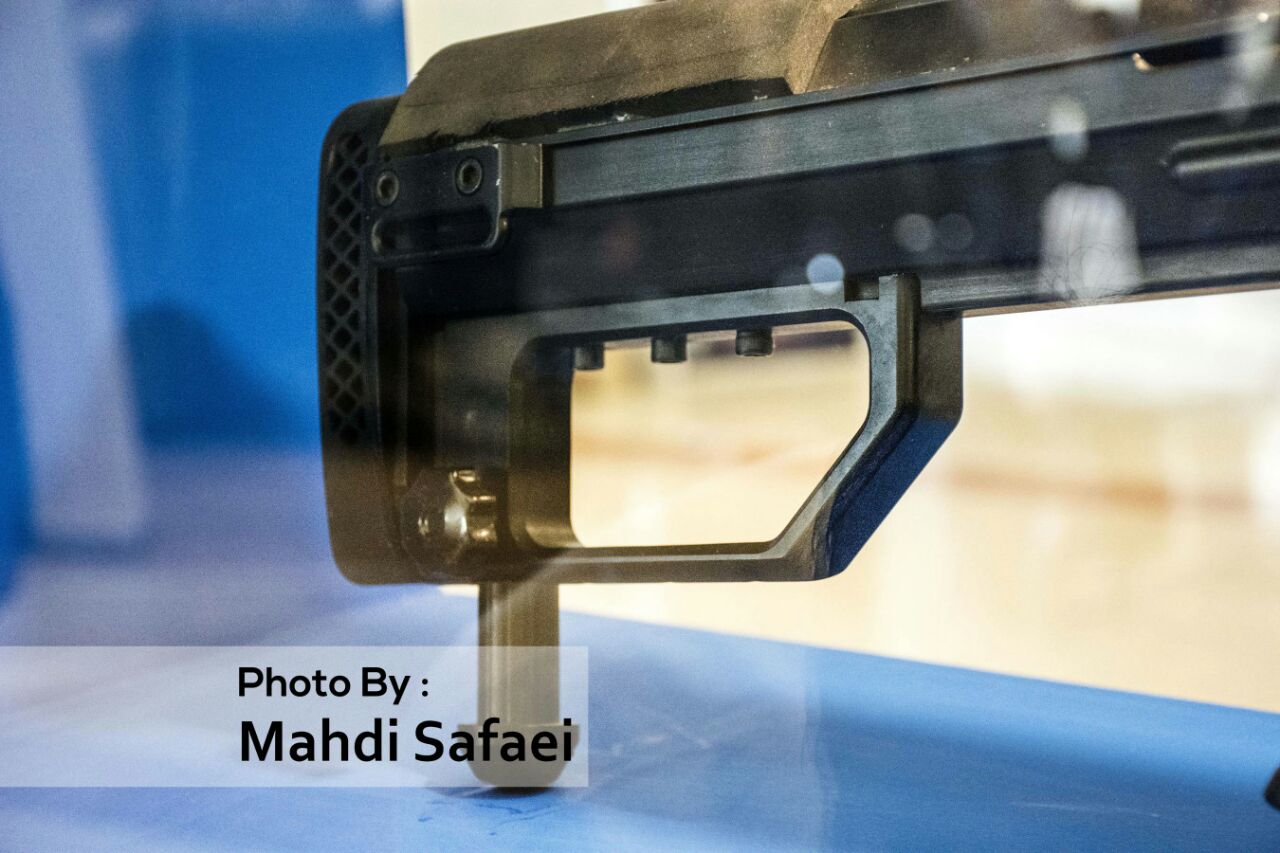
The sling swivel appears to be on a sliding arrangement where a user might be able to loosen the screws of the swivel and tighten them back down where it fits the best. However, the monopod and rear gripping surface looks to be stationary with the three screws anchoring it to the receiver of the rifle. 

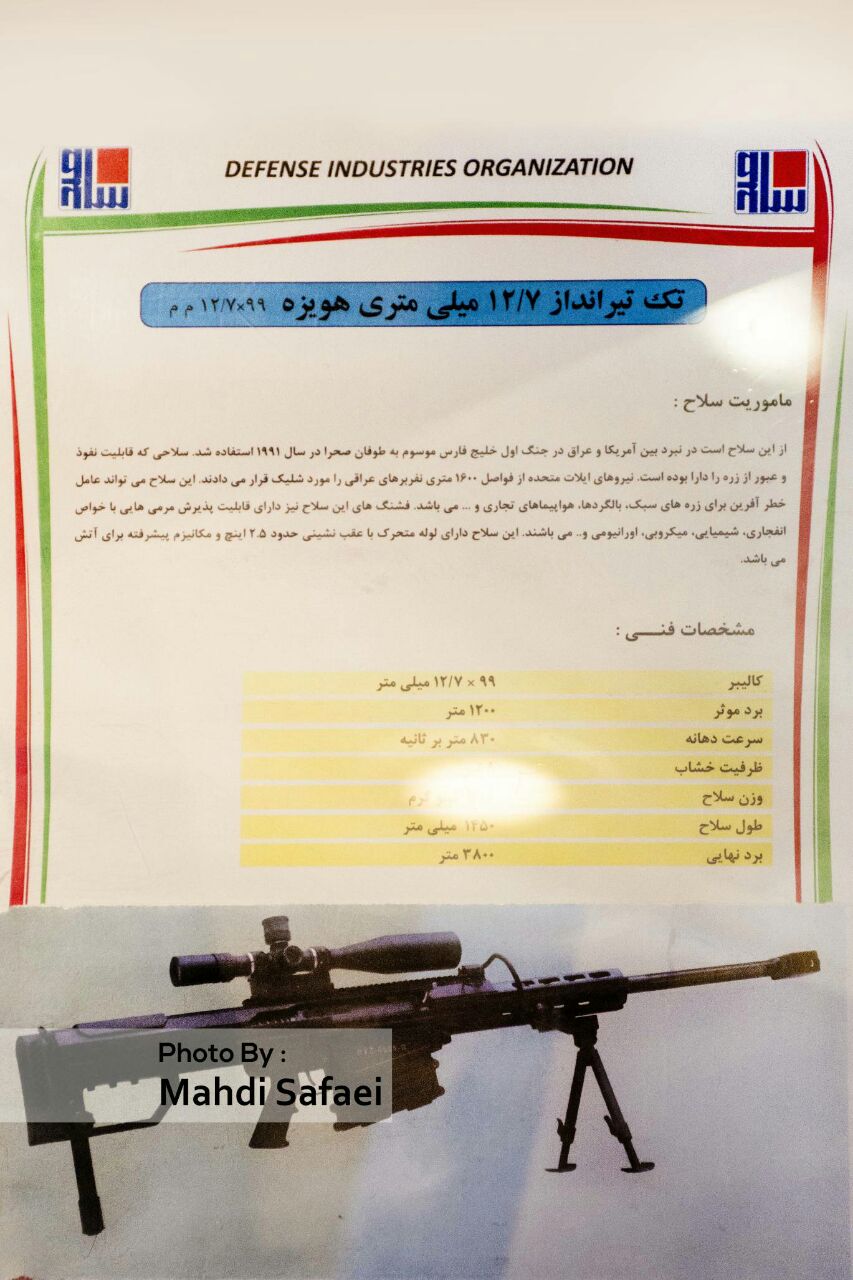
Notice the different bipods mounted on the rifle in the leaflet compared with the bipods mounted at the defense exhibition

A point of controversy lies in the name of the rifle itself. The majority of online material, show leaflets, and even abbreviated on the rifle itself on the magazine well is هویزه, however in this leaflet we clearly see the name, فائز printed next to the rifle.

Diamond Arms Company of Darra Adam Khel

Darra Adam Khel is a town in Pakistan where the trade of many locals is the manufacturing of firearms and ammunition. It is normally hard to find information concerning any new guns of the local masters. However, some of these shops started using the Internet as a marketing tool and are now presented in social … Read more

IWI X95s, TAR-21s in Nigeria

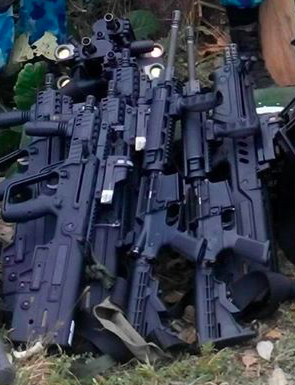
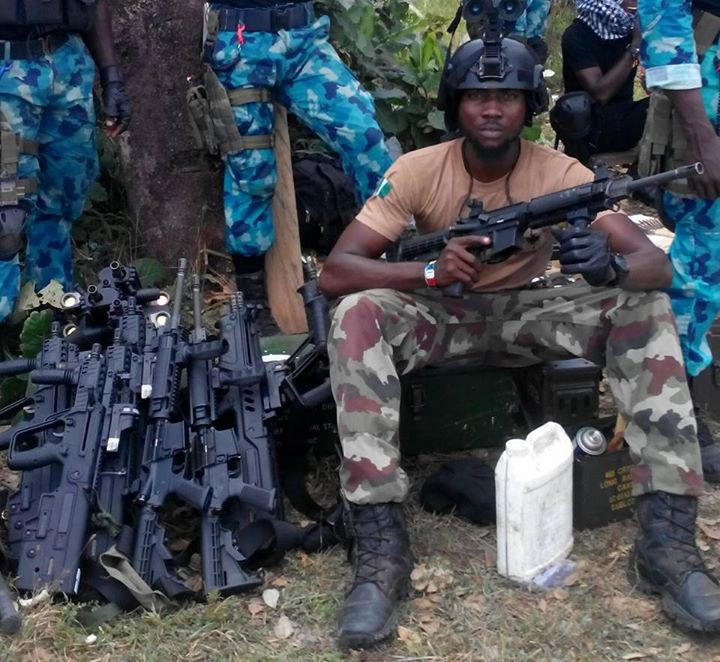
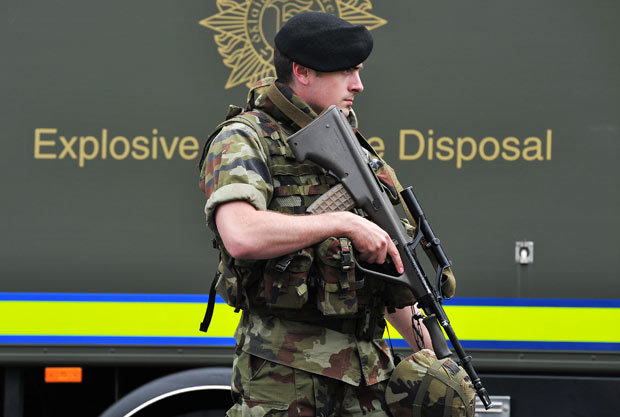
The Israeli 5.56x45mm Tavor is no stranger to the Nigerian defense forces, with the TAR 21 being introduced from Israel in a short barrel variant (around 14 inches) several years ago, and the X95 version seen in Nigeria in 2016 (possibly issued earlier). This photograph of a Nigerian soldier posing with stacked IWI rifles, some being the TAR 21 while others being the X95 versions came out in 2016 on the Nigerian public forum Nairaland, along with numerous other photographs of the defense forces.

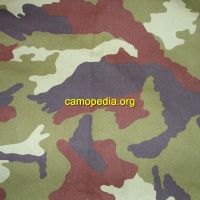
Interestingly he is wearing an Irish Army camouflage pattern introduced in the early 2000s, known as DPM or “Paddyflage” among Irish troops. Image from Camopedia–

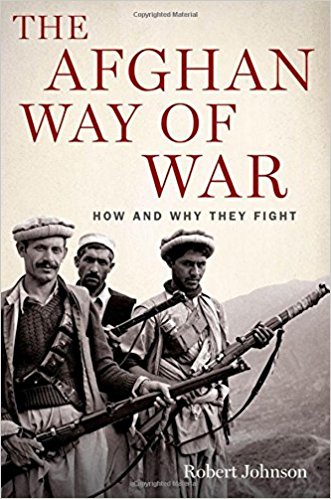
Book Review: The Afghan Way of War

Although former British Army officer Robert Johnson wrote his book, “The Afghan War of War” in 2011, his conclusions and observations are just as valuable, if not more valuable today than ever. The premise of his book is that very few authors, officers, or politicians have throughly studied the Afghan side of many of the conflicts that have taken place in Afghanistan, whether it be Afghans against foreign invaders/occupiers, or civil war within the country such as during the 1990s. What I especially liked about the book was a number of very useful points that Johnson raises, that I honestly had not thought of before. I’ll summarize some of these points below, as these were my key takeaways from the book.

A Nation of a Thousand Tribes

Johnson goes to great lengths to make the point that Western observers have seen Afghans as “unchanging”, the “Graveyard of Empires”, and “fierce tribal fighters”, and this has stereotyped impressions of the Afghans since the first Anglo-Afghan War in the 1840s. Throughout the book we have countless counter-examples where this doesn’t seem to be the case. Where Afghan tactics have changed, altered, and have been reactive to the threats faced, in addition to being proactive and forcing Western troops to be constantly on the defensive.

But there is one constant that hasn’t changed, and that is the tribal and group dynamics that have existed for several hundred years. What we see is that instead of seeing Afghanistan as a single entity, or even an ethnic group as an entity, what is really going on is hundreds of individual tribes, sub-tribes, clans, and families that are essentially looking out for the best option for their individual group. Whether they ally with the British, or with the King, whether the Mullahs decide to go to war at all, whether peace is on the table, etc… Any of these decisions are made for the benefit of the particular group (tribe, clan, village, etc…). And these often change. What is beneficial for a village one month, may be detrimental for it the next. This means that to the British, Soviets, or Americans, it can be increasingly frustrating trying to maintain alliances and agreements.

Something that Johnson doesn’t mention, but a personal observation that I’ve made is how economy plays into these decisions. The lack of a stable exportation or cultivation of any natural resource (other than crops and opium) has been a limiting detractor throughout the countries history and still affects national security today. But when local tribes and villages can’t rely on natural resources like oil, mining, etc… the need to fight tooth and nail for alliances, positions, and funds becomes even more apparent.

Foreign Invaders Unify Afghans

In the example of every invading or occupying force, one of the constant themes is that one of the only forces that has ever truly united Afghans of different ethnic origins in some fashion has been the need to expel a foreign one. Johnson doesn’t point this out explicitly but this is evident in his descriptions of the country before several conflicts. The state of the country under the King appeared to be on the brink of falling apart on numerous occasions, when senior leadership pushed for further hostilities against the British or during the time of communism, against the Soviets. Even under the Taliban during OEF, the need to unite under an Islamic banner instead of an Afghan, or Pashtun one was strategically necessary to be able to sweep tribal differences aside.

Differences in Technology

The first Anglo-Afghan War saw the widespread use of muzzleloading rifles and muskets on both sides of the conflict, with the British armed with the Brown Bess, and the Afghans with the Jezail muzzle loading rifle. Apart from the British cannon and cavalry, the two forces were somewhat equal in terms of actual hardware.

However in the second Anglo-Afghan War this dynamic dramatically changed with the introduction of breech-loading rifles that could not only be reloaded quicker, fired faster, but also more accurately and further. This changed the way Afghan tribesmen attacked British columns. They had to close in faster, not allowing the British to use their artillery, and often attacked at night.

Similarly, in the war against the Soviets, the use of Stinger MANPODS was brought up. The popular misconception is that Stingers helped win the war. Although they did strike fear among Soviet helicopter pilots, especially the Hind attack helicopters, their introduction was too late to make a difference in 1986, when the Soviet Union had already decided to being fighting a delaying action instead of an all-out offensive. In addition, by altering their flying practices to fly at higher altitudes, the Soviets realized they could go outside of the Stinger’s capabilities and lessen the risk.

In Operation Enduring Freedom, the prevalence of IEDs took precedence over light Infantry attacks that the Taliban initially tried to use against the British in Helmand, but suffered costly casualties due to the artillery and air assets. IEDs used by the Taliban deserve to be studied much more in detail due to the complex escalation’s and counter escalation’s executed on each other throughout the entire campaign.

Operation Enduring Freedom/Operation Herrick Observations

One point I think the book could have been improved on is the OEF/Op Herrick. In retrospect, this isn’t really Johnson’s fault because the war is still ongoing, and he can’t have access to many of the after action reports, or even just the massive amount of experience associated with the current operations from hundreds of thousands of veterans and currently serving troops. He picks out specific situations and TTPs that are usually from the British perspective, that doesn’t typify what other forces might have faced in their fight against the Pashtun lead Taliban insurgency.

His conclusion though is flawless in that he identifies that any considerable gains going forward will have to be an Afghan solution to an Afghan problem. Personally I think this has to have enormous emphasis on the countries economy, and being able to become prosperous on exporting natural resources already present in order to actually provide some capitol for a government entirely propped up on international aid money.

The Afghan Way of War is available on Amazon for $35.95.