“Made in Darra” Webley and Scott .32 S&W Long

Nauman Afzal is a Pakistani based writer, and writes at his own very successful blog, My Random Ramblings as well. This is his first article for Silah Report.

In our part of the world, weapons have always followed a rather strange evolutionary path, if we talk about their development only. Darra Adam Khel or as I would like to call it, “Our Wild West” is the place where one can get a copy of almost any weapon made, at a price. The evolution of weapons here has always depended on the type of ammunition being used. In other words, it was the availability of a particular caliber of ammunition that dictated its development, unlike other places. That is akin to making cars on the availability of a certain kind of fuel. So in the 1960’s and 1970’s .32 ACP and .32 S&W Long were available in wide abundance throughout Pakistan. And one could either buy a foreign made weapon, which off course was expensive (as it is still today) or a Darra made revolver, which were available and still are being produced.
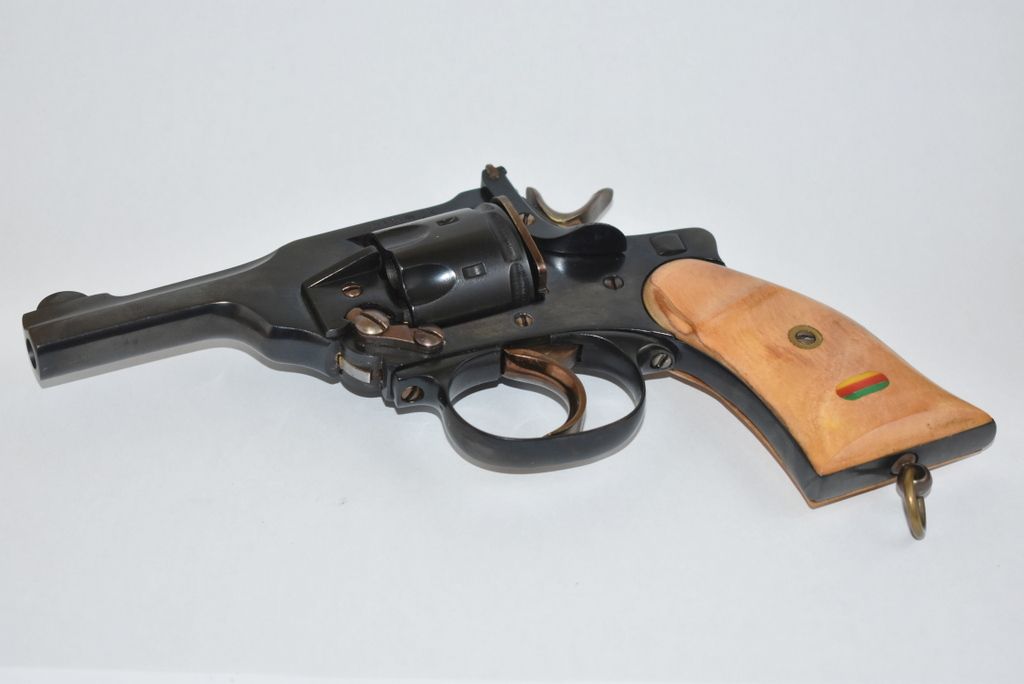
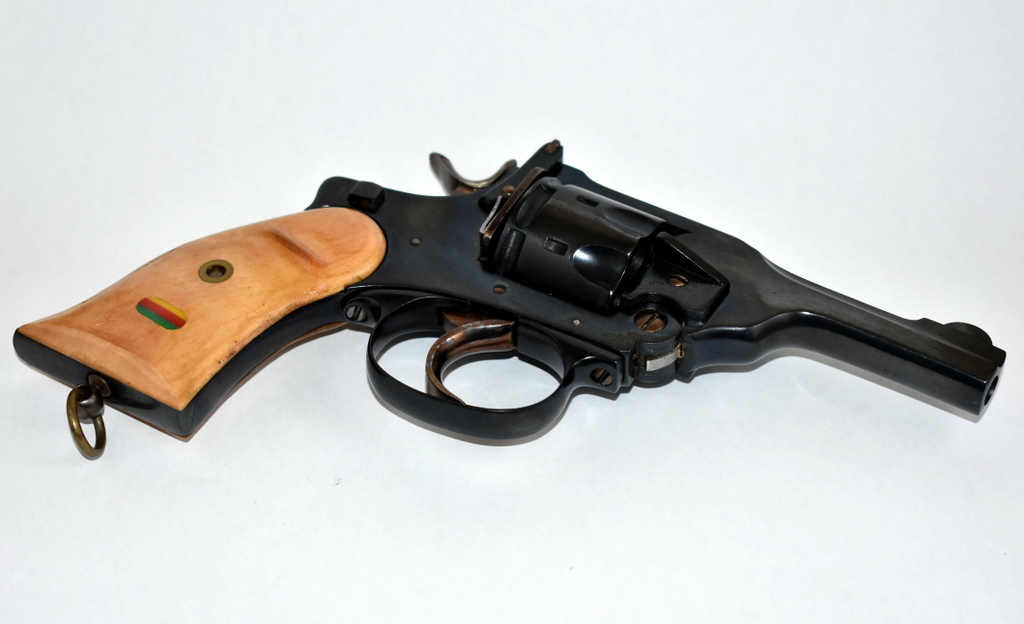
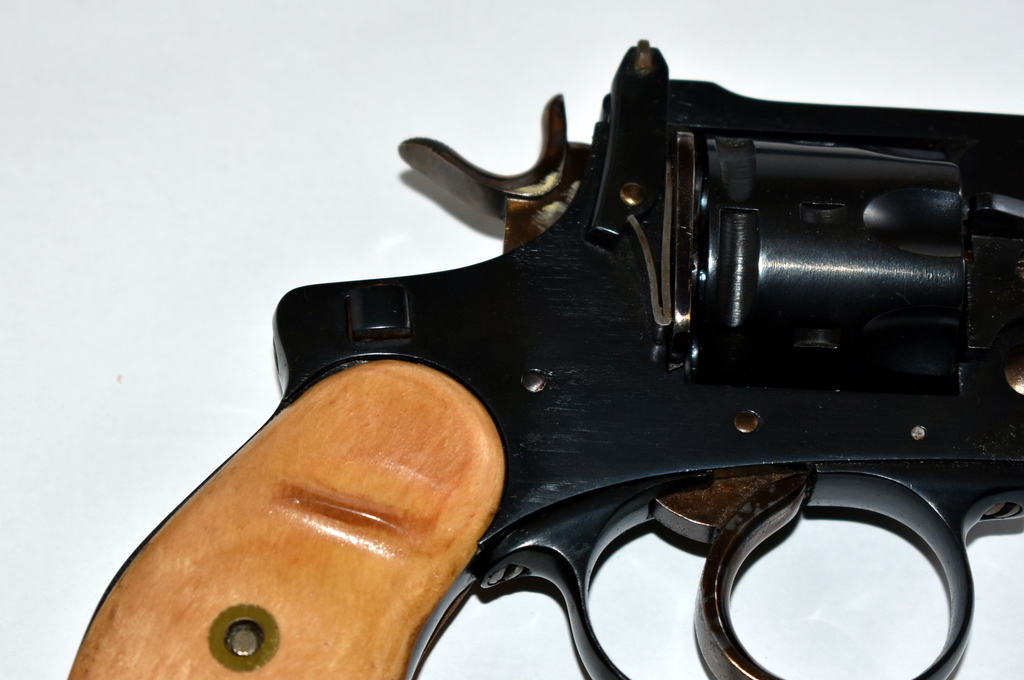
This particular piece is around 40 years old and is quite well made and kept. In those days many a “Khan” could be seen wearing this type of revolver across their chest with a dozen or more rounds inserted in the very belt holding it in place. Semiautomatic pistols were expensive and rare, so the de-facto choice was a Darra made wheeler, in .32 S&W Long, made to perfection. The local gunsmiths (who now have improved to the extent that they can and are in fact making copies of CQA the Chinese equivalent of AR15) perfected their skills to make excellent quality revolvers.
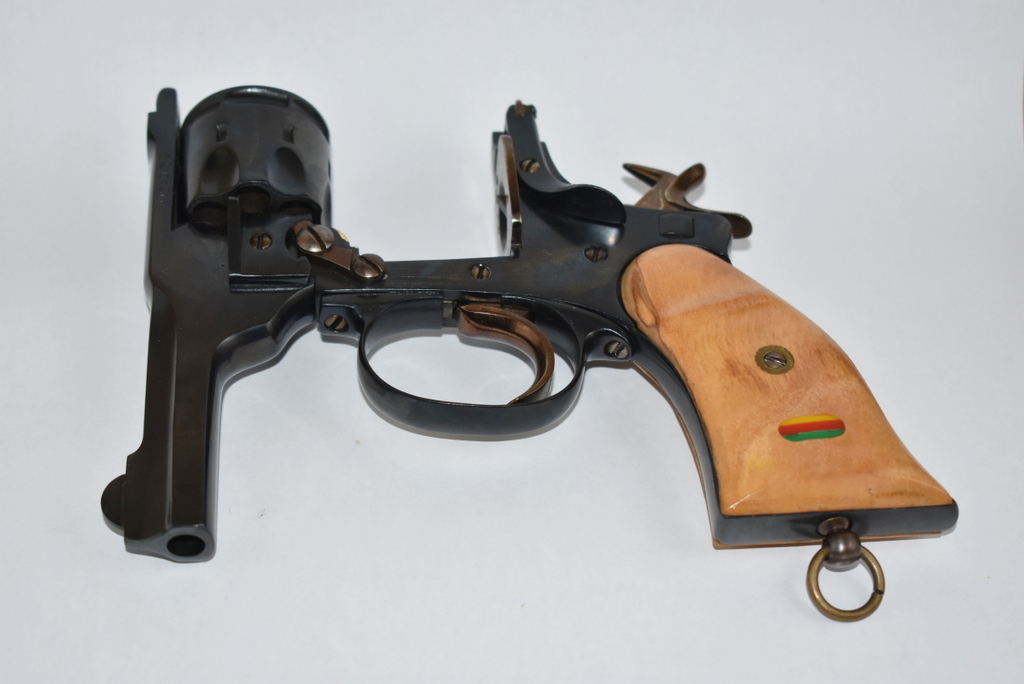
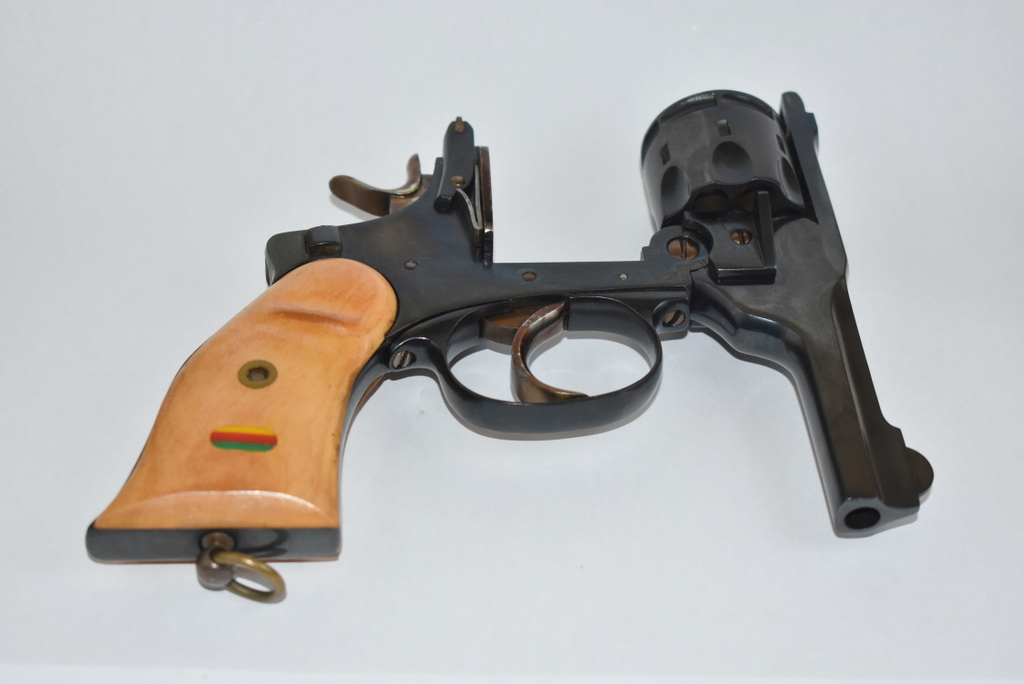
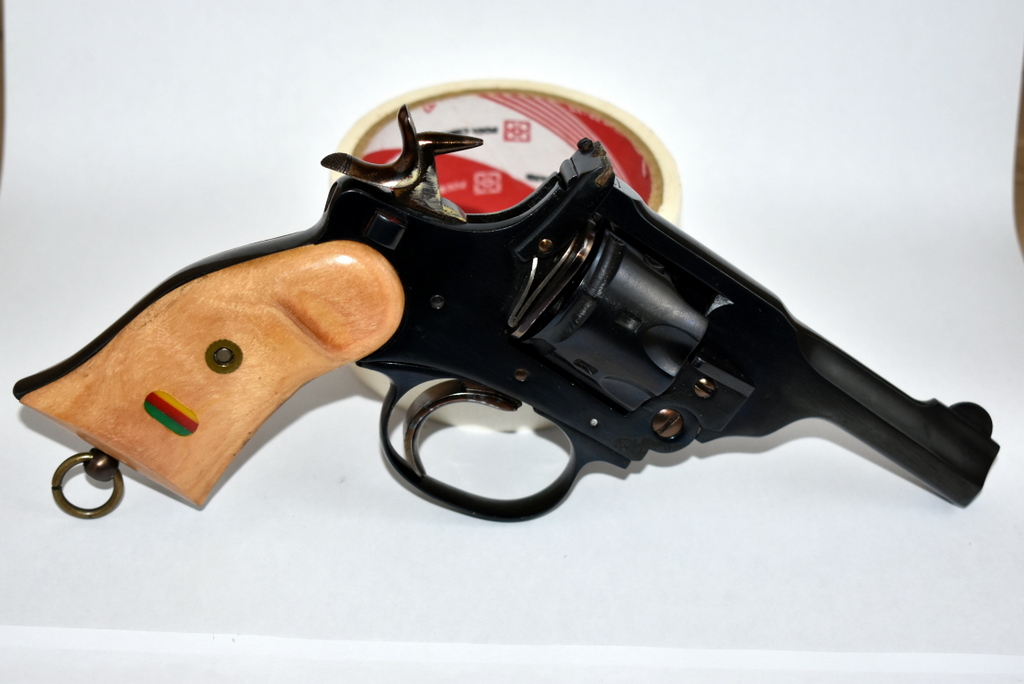
This little piece is an exact copy of the .32 Webley and Scott (Mark IV precisely), a top-break, seven shot revolver, single as well as double action brass hammer, a brass trigger and safety. 

Caliber:        .32 S&W Long

Weight:        720 grams approx

Action:                  SA/DA

Cylinder Capacity: 7 shots

Barrel length:      3.5”

Front and Rear Sight: Fixed

Top Break: With extractor for removing cartridges from the cylinder

Safety: Manual, Lateral Safety just behind the hammer

A dozen screws all along the body hold it in place, grips included. This revolver has its fair share of brass used in it; the hammer, trigger and the rear sight plate are made out of brass which gives it a shiny look when polished. The hammer, as well as the top-break lever, are knurled for a better grip.
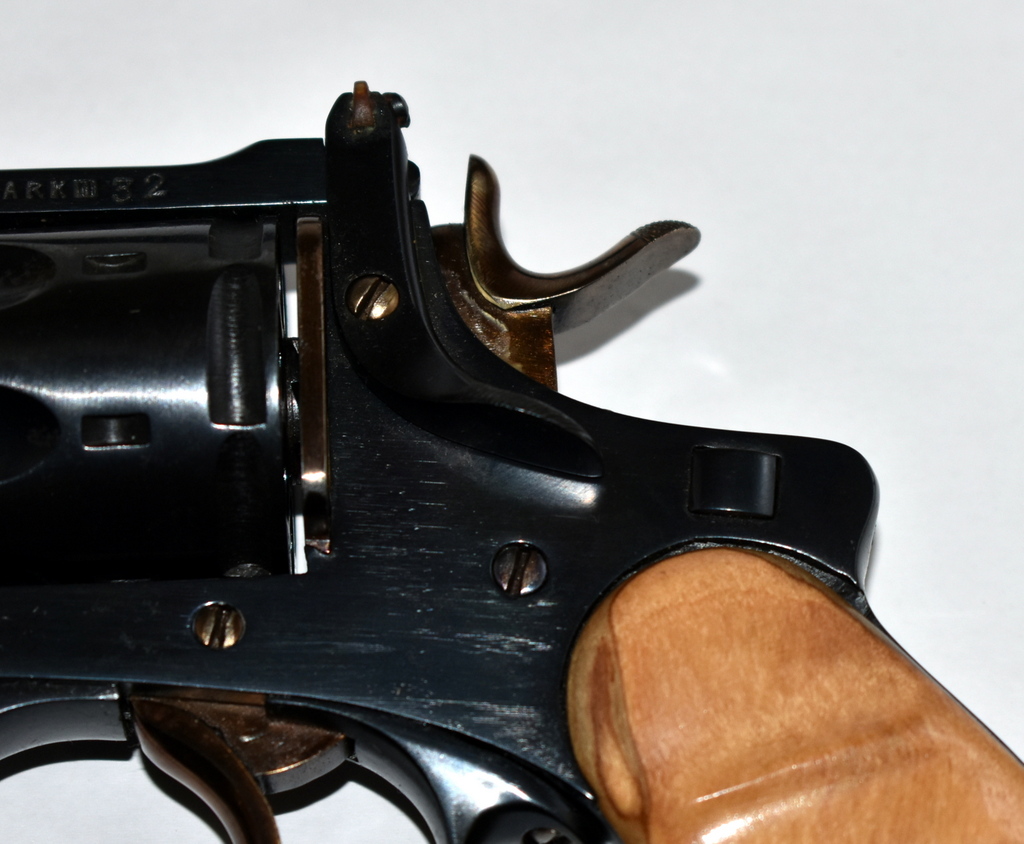
Observe the Mark IV 32 marking over the left side on top of the cylinder, which is quite reminiscent of the original Webley & Scott. Other than this there are no markings or writings on the body. The hammer itself is pointed much like a nail or needle quite unlike the original Webley.

The revolver weighs 720 grams approximately, and in this size it is a good choice for a carry weapon, even nowadays. I have seen a few newer versions of this revolver selling for around Rs. 1500 that makes it around $ 15 plus or minus few today. (But off course .32 S&W Long is expensive here. ) The newer versions lack brass and hence give it a finish that appears quite dark in texture.

Frankly, I never tried disassembling one recently, but since everything is held in place by screws taking it apart is not an issue. But then there is not much point in taking apart a revolver. This particular piece has its grips changed, the original ones are made of poor quality plastic. The wooden grips were custom made for $3, both sides. Marking 32 on the inside the cylinder indicates its caliber.
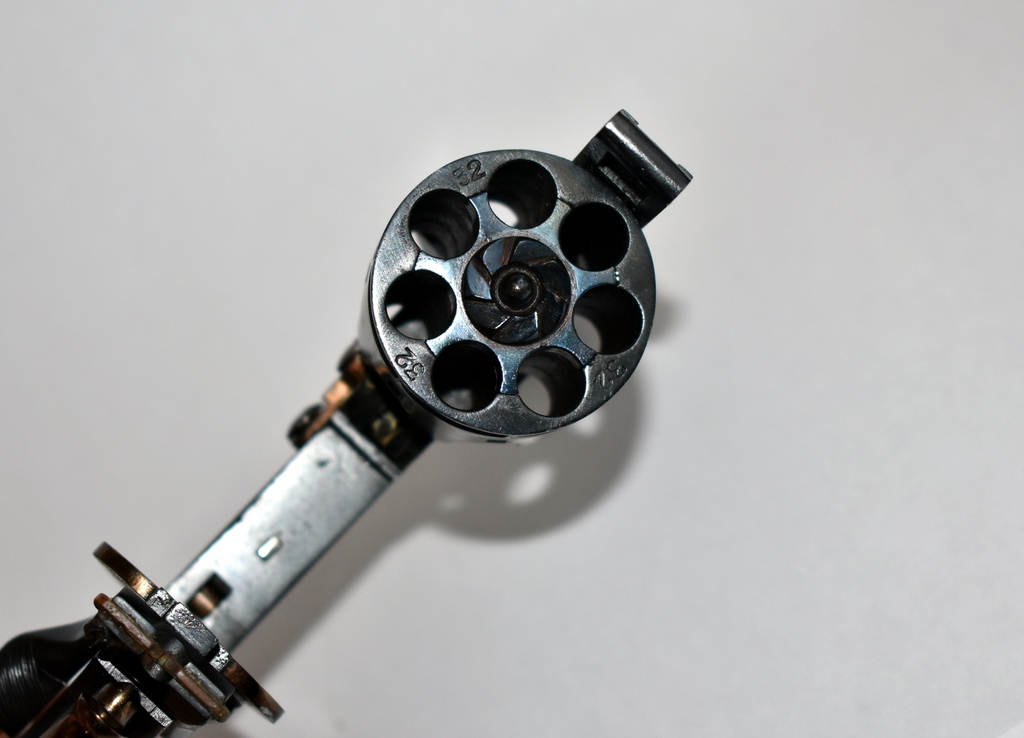
These revolvers are known to stand out in reliability, a testament to the good quality workmanship in Darra. Since the advent of semi-auto pistols and the craftsmen ability to make good copies Revolvers are less in demand, still one can find them in the market. Somehow people tend to think that revolvers are inferior in performance as compared to semi-auto pistols.

This particular piece has been in my family and has passed hands from one generation to another, with no more than a hundred rounds fired through it. It now has an emotional value attached to it, and is held in much reverence amongst gun enthusiasts.
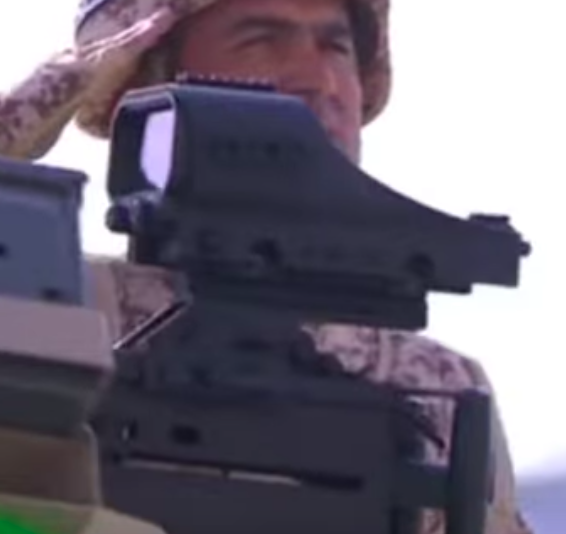
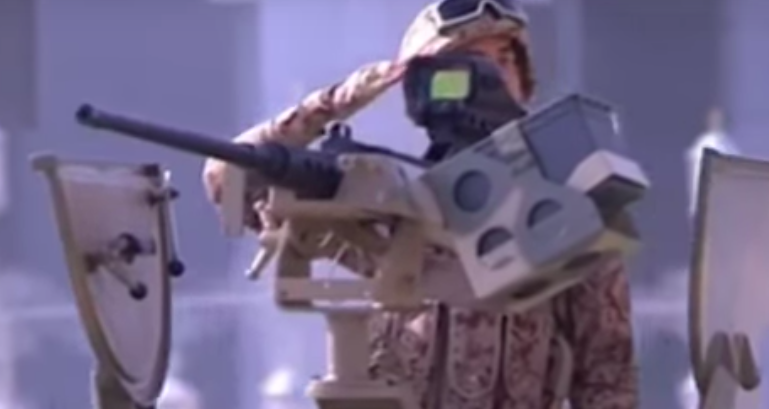
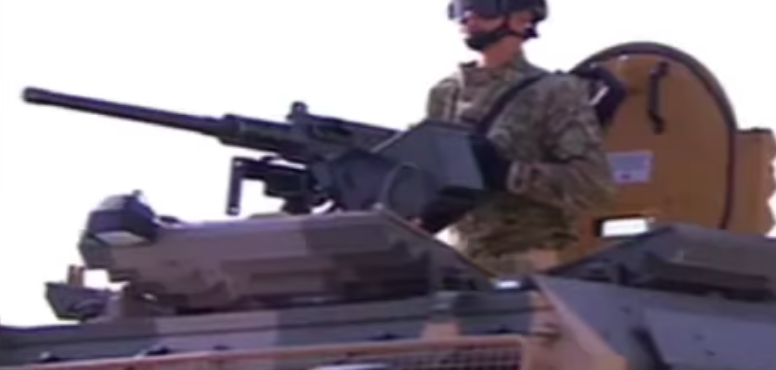
DI Optical Reflex Optics on M2 HMGs at Turkmen Parade

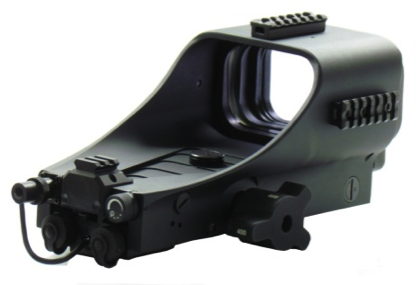
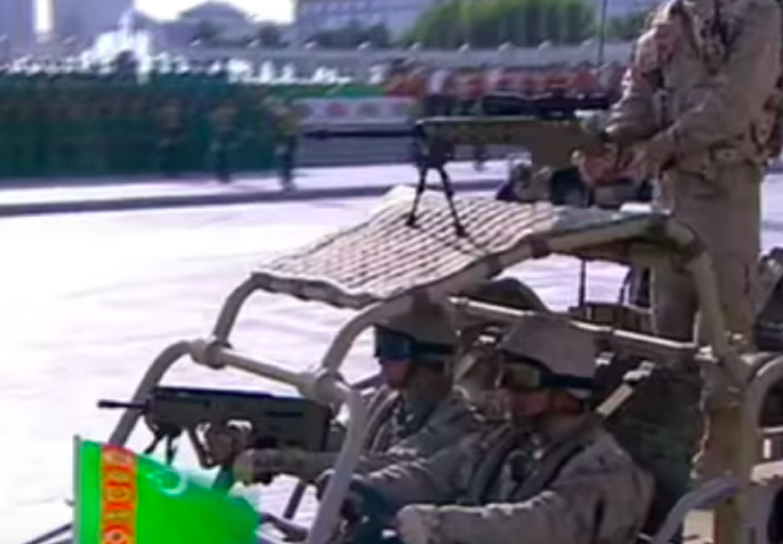
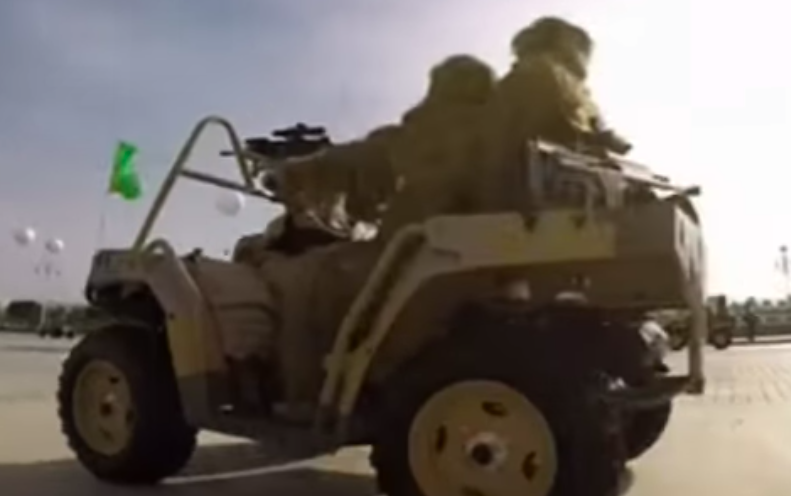
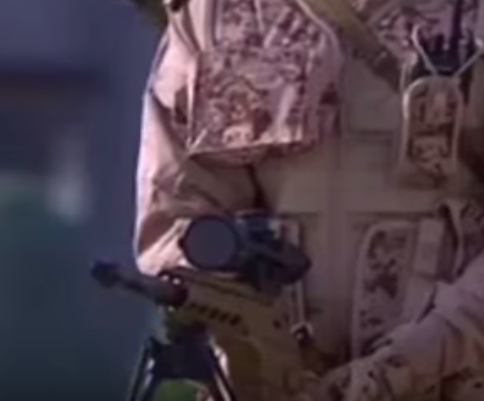
Among the latest small arms displayed at the recent Independence Day Parade were DI Optical USA DCL-120 reflex sights mounted to .50 BMG M2 Heavy Machine Guns. Currently, it isn’t known what type of mount is clamped to the receiver of the machine guns. But it certainly appears to be a Picatinny rail that allows the DCL-120 to be mounted to it.

Some of the M2 machine guns didn’t have the optics mounted on them.

From the manufacturer website-

Optical Data

System Reflex, Collimator System
Magnification No Magnification (1X)
Eye Relief Unlimited
Red Dot Size 3 MOA Dot / 40 MOA Circle
Field of View (FOV) 96 m @ 200m
Objective Lens 120 × 70 mm
Optical Coating Anti Reflex Coating All Surfaces, Multi-layer Coating for Reflection of Red Light

Electronic Data

Battery Two CR 123A 3V Lithium Battery, or External Power Source : 10~28V (Option)
Battery Life 1,000 hours
Dot Brightness Settings 1 Off & 5 Daylight Mode, 3 Twilight Mode, 3 Nightvision Mode

Mechanical Data

Housing Material High Strength Aluminum
Surface Finish Hard Anodized, Matte, Carbon Black
Mounting Solution Built-in Type (For MIL STD 1913 Picatinny Rail)
Click Adjustment 1 click = 25mm at 200m
Trajectory Ranges 200, 400, 600, 800, 1,200 meters

Dimensions

Length/Width/Height 330 mm / 180 mm / 150 mm
Weight 3,000 g

Environmental Data

Temperature Range −41 ℃ ~ +71 ℃

Beretta and Sako Presence at Turkmenistan Independence Day Parade

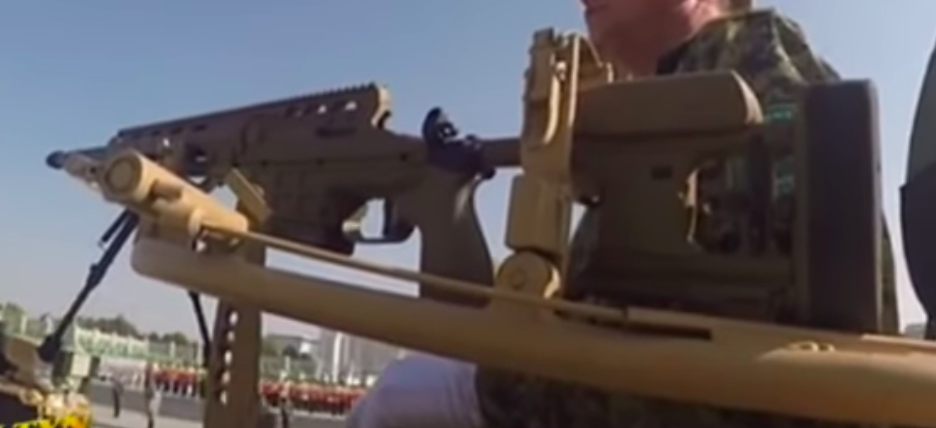
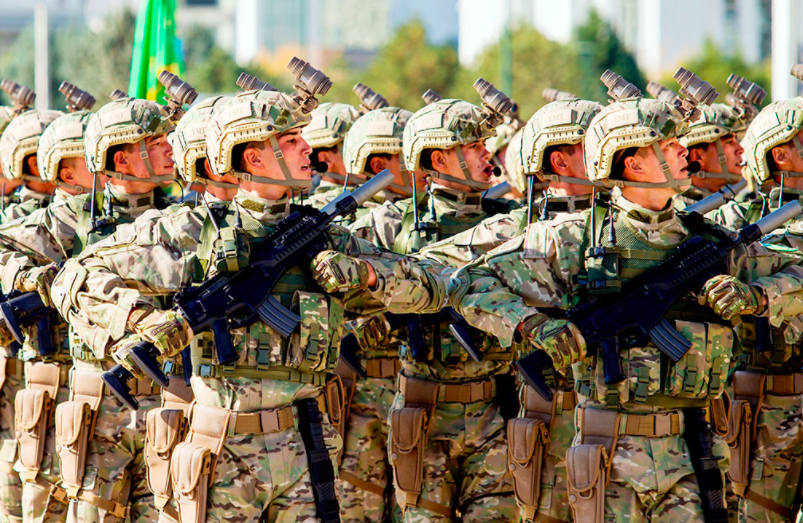
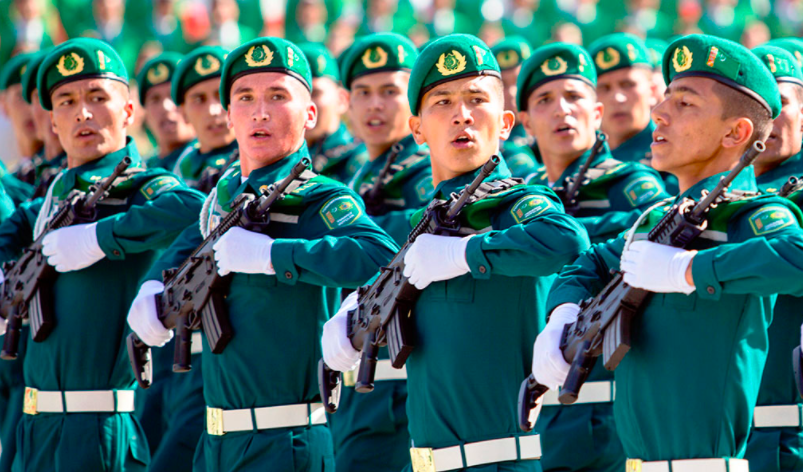
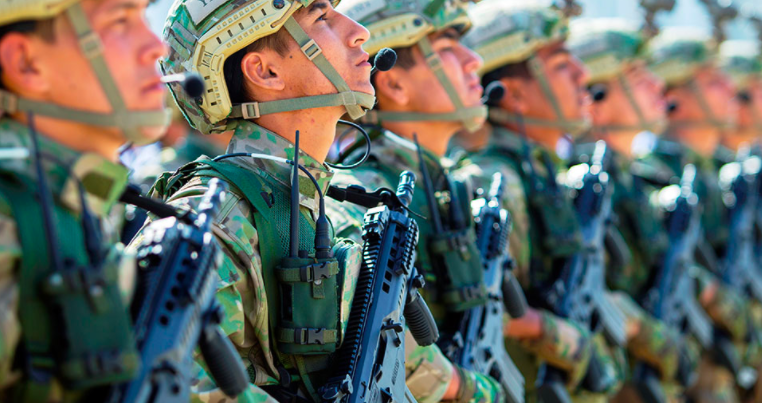
At this year’s 26th anniversary of the Independence of Turkmenistan, Beretta and Beretta owned Sako came out in large numbers among the small arms on parade. Of course, the Beretta 5.56x45mm NATO ARX160 took center stage among both the line troops and special operations component, with the SF component also being armed with IWI 5.56x45mm NATO Tavor TARs.

21st Century Asian Arms Race had this to say about the current rearming of the small Central Asian state–

Turkmenistan is often lampooned for its bizarre civic culture that combines national symbols with its leader’s personality cult. But judging by the recent military parade in Ashgabat, Turkmenistan’s armed strength is for the sole purpose of territorial defense. Unlike North Korea, Turkmenistan doesn’t pose a threat to global peace. It’s also trying to crawl out of an economic mess caused by its reliance on energy exports.
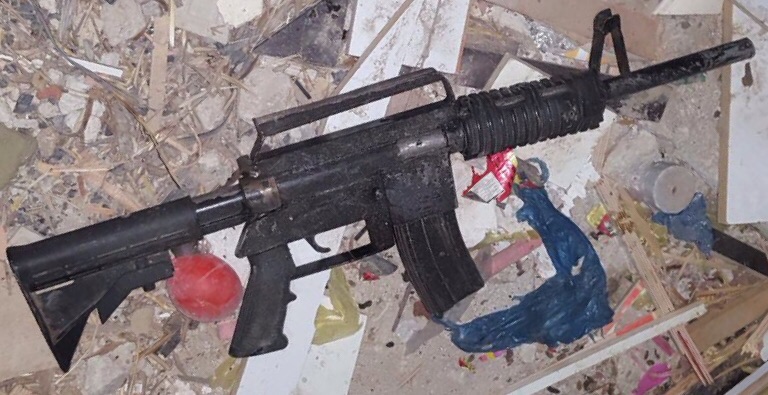
Neither does Ashgabat appear to have regional ambitions. On the contrary, it faces a grave threat from its border with Afghanistan where militants tied to either the Taliban or ISIS are active. In the greater scheme of things, Turkmenistan’s imperative is balancing its aspirations with the looming strength of China, India, Iran, Russia and Turkey.
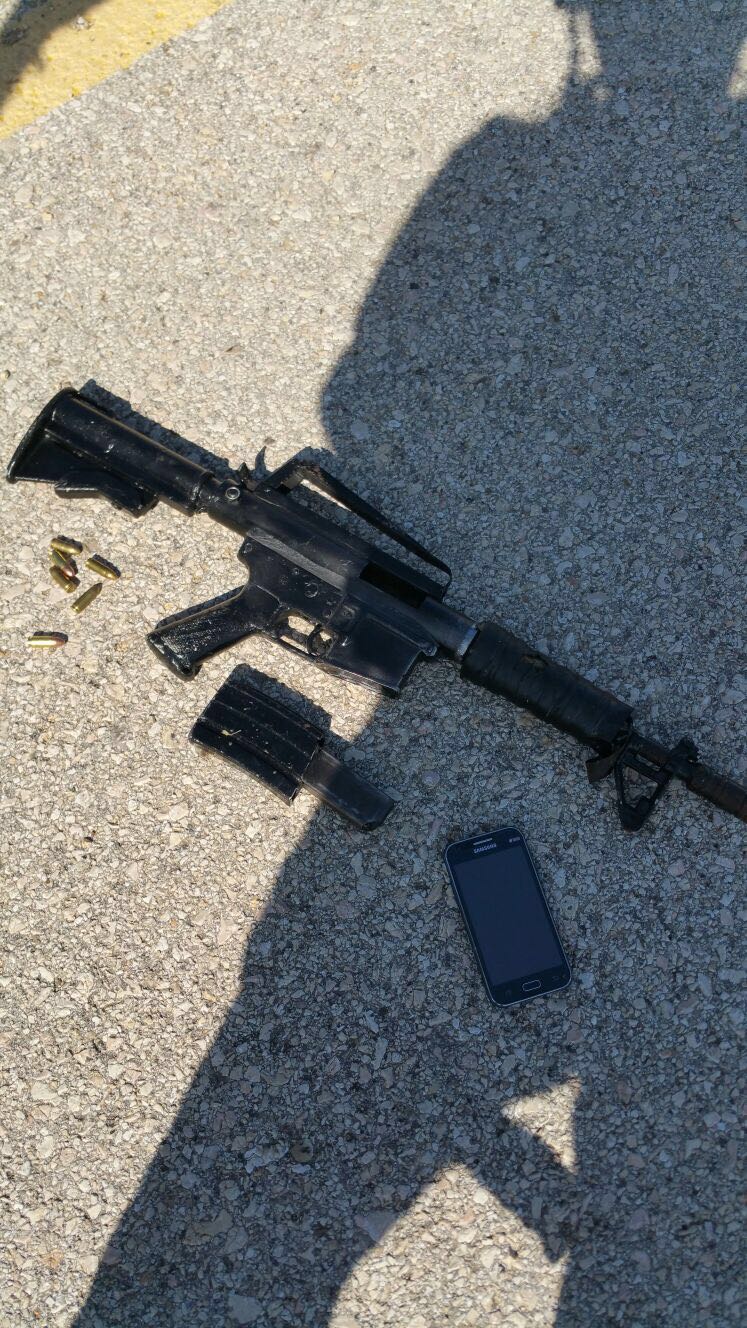
Yet even if it’s overshadowed by larger countries in its neighborhood, when it comes to mass calisthenics, very impressive rifle drills, and costumed Turkmen archers trotting on horseback, Turkmenistan makes sure it surpasses its neighbors in pageantry.

Along with the ARX160s, there were some mounted with Beretta’s accompanying 40x46mm low-velocity GLX-160 UBGL.

And a designated Marksmans variant.

It appears that Turkmenistan has also purchased the IWI Negev light machine gun as well.

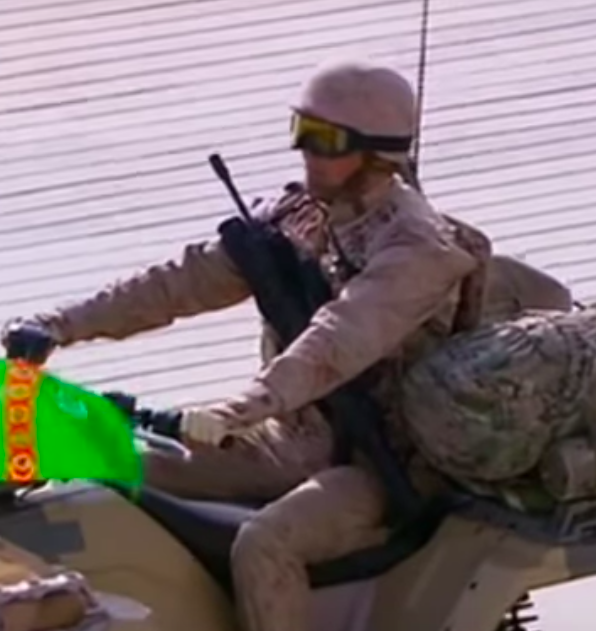
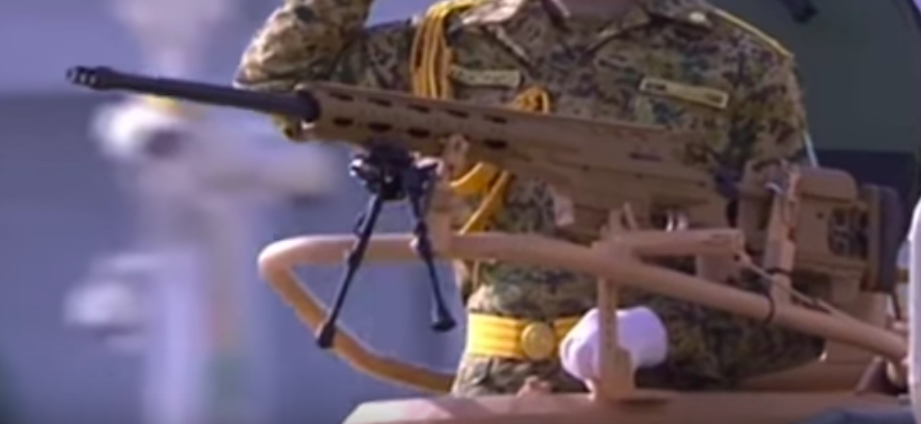
But the other significant update was with the precision rifles, that of Sako TRG M10s. These are probably chambered in 7.62x51mm NATO but could be in .338 Lapua Magnum. They were shown in a tan finish.


Straight MP5 Magazine spotted in Isfahan LE Demonstration

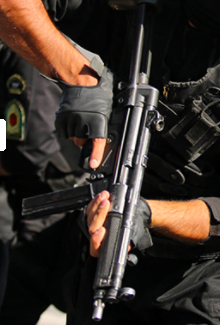
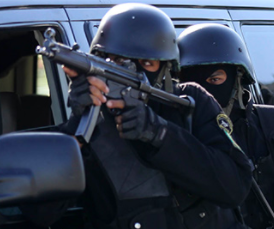
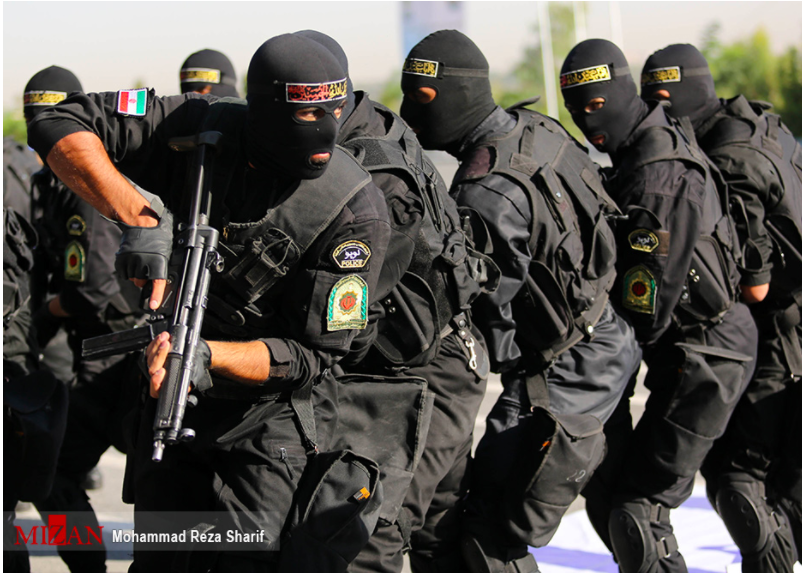
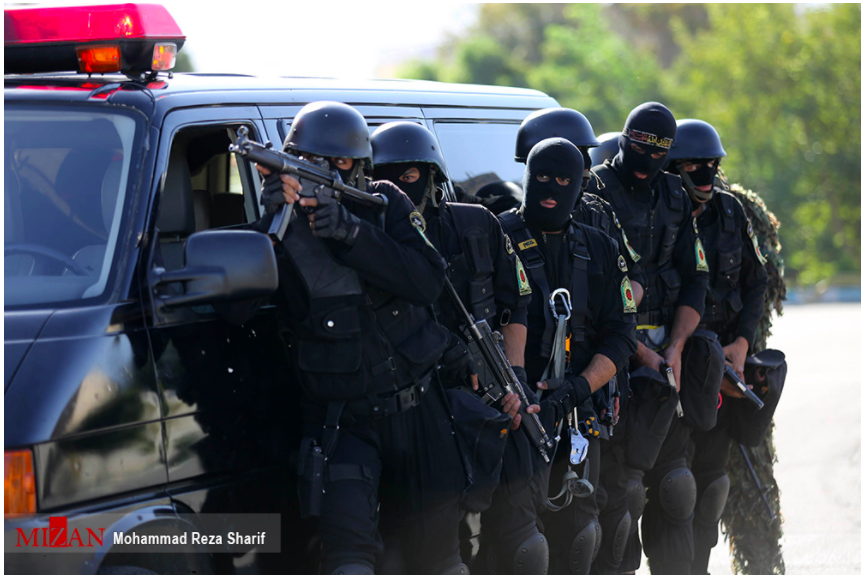
Within the Law Enforcement demonstration recently held in Isfahan (in which we posted about a thermal optic in use ), a straight walled magazine was spotted in use by one of the officers taking part in the demonstration. Iran’s Defense Industries Organization produced licensed copies of the MP5 from the time of the Shah (along with the G3), and it is still heavily employed by Iranian forces. Most of the MP5s today appear to be equipped with the curved 30 round magazine, but that is what makes this particular one stand out, due to the original straight wall design that Heckler & Koch introduced the very first MP5 variants with.

The MP5 has several variants within Iran, one of which has green polymer furniture, while there is an MP5K variant with a forward grip.

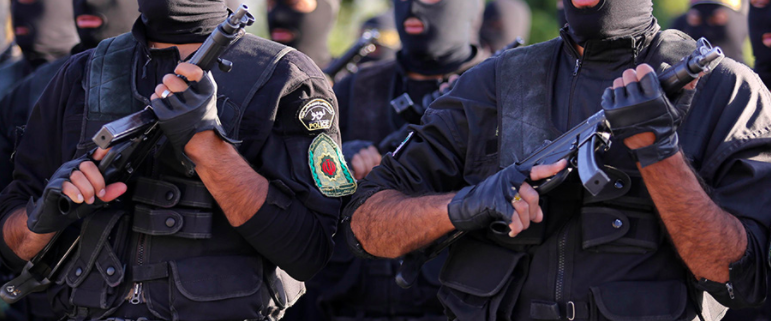
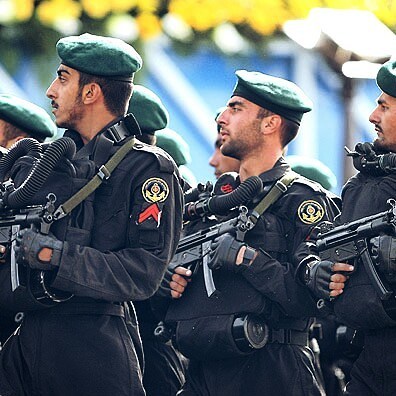
Notice the straight magazines in use with the Islamic Revolutionary Guard Corps in this formation.


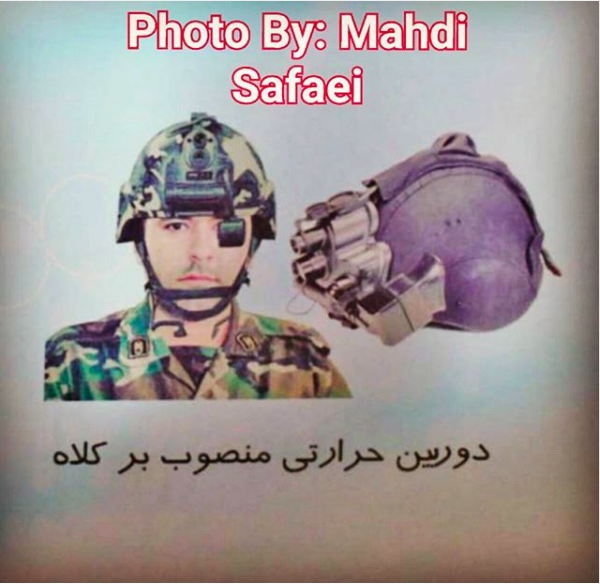
Iran’s Head Mounted Thermal Optic from IPAS 2017 and Isfahan Police Demonstration

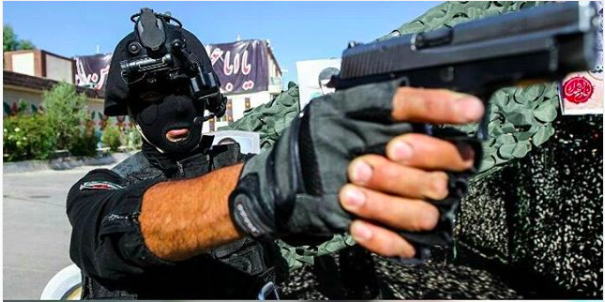
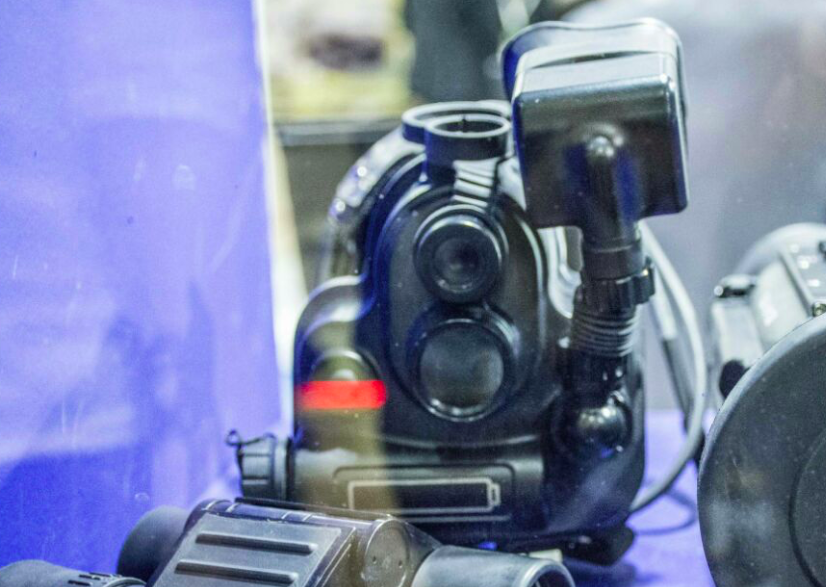
Notice the covered objective lens.

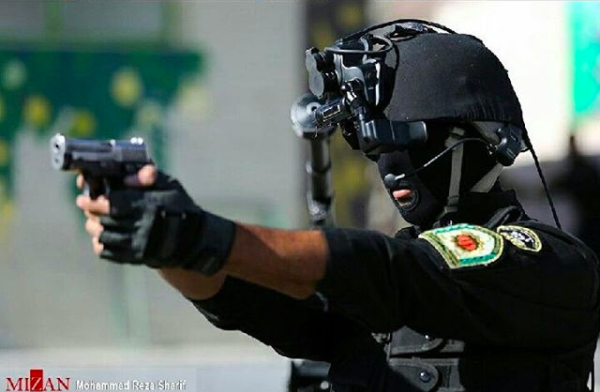
Photographs coming out of IPAS 2017 (Telegram source) and a recent demonstration put on by  Isfahan Law Enforcement have revealed what appears to be a battery powered thermal optic that attaches to a user’s helmet and has a single ocular lens attachment that covers the left eye. The optic “detects” through an objective lens on the helmet, which appears to project an image into the ocular lens. The fact that this optic is in use by what appears to be special Law Enforcement teams in Isfahan would make it seem that it has been in development for a while, and has perhaps even been available to Iranian defense forces for some time as well, due to Law Enforcement worldwide routinely lagging behind in equipment procurement.

From Farsi-“The heated (Thermal) binocular resting on a head/hat”
The optic is powered by what is most likely an AA battery inserted from the right side of the device. The two objective lens’ stay in the upper position throughout use, and are covered with a lens cap during daylight hours. The eyepiece swivels down on a ball mount for maximum flexibility.

Improvised Replica Firearms from the West Bank

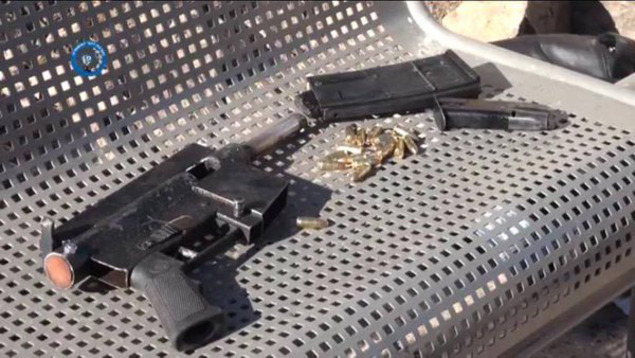
In my previous article, we examined the Palestinian homemade Carlo submachine gun in use in the West Bank.

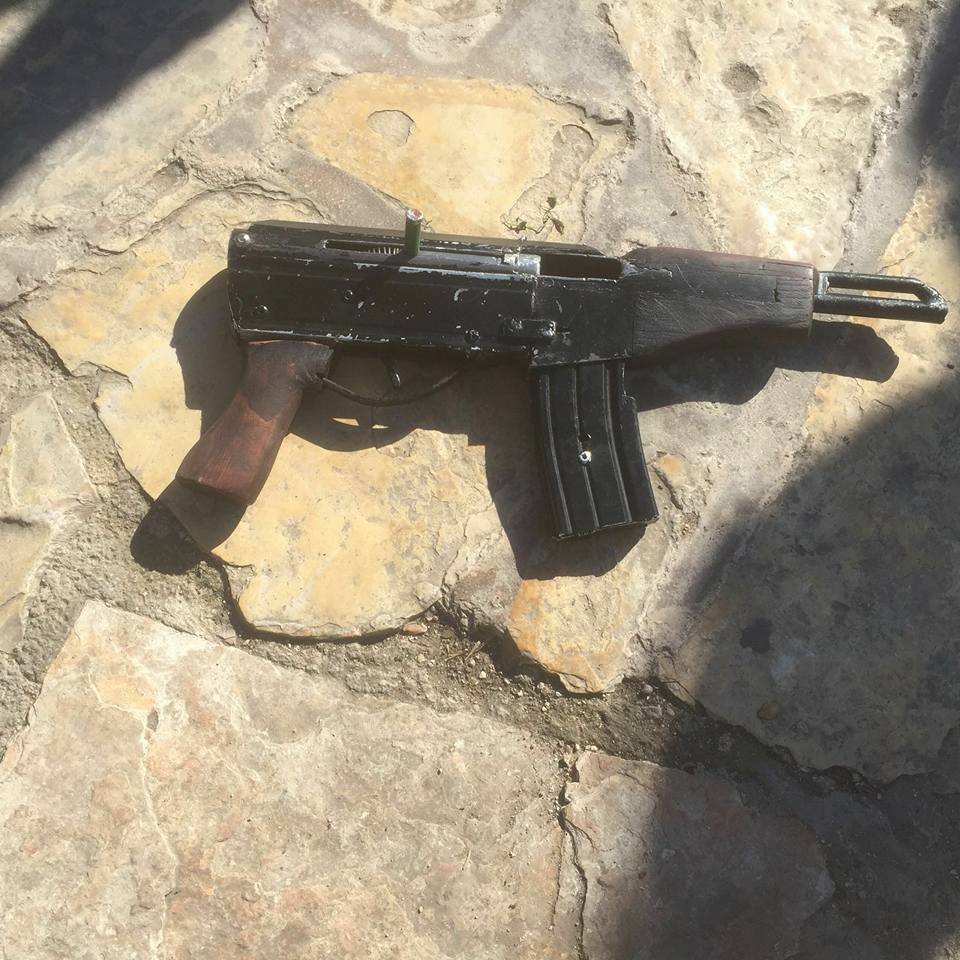
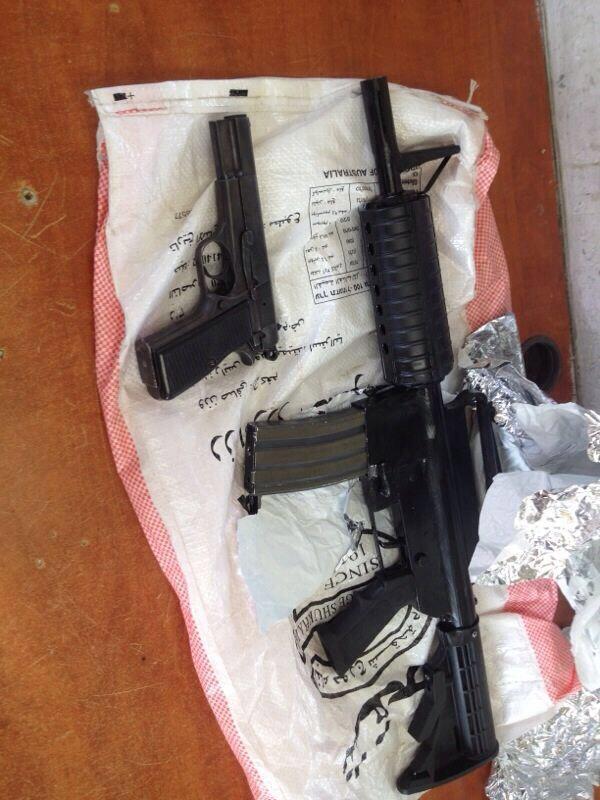
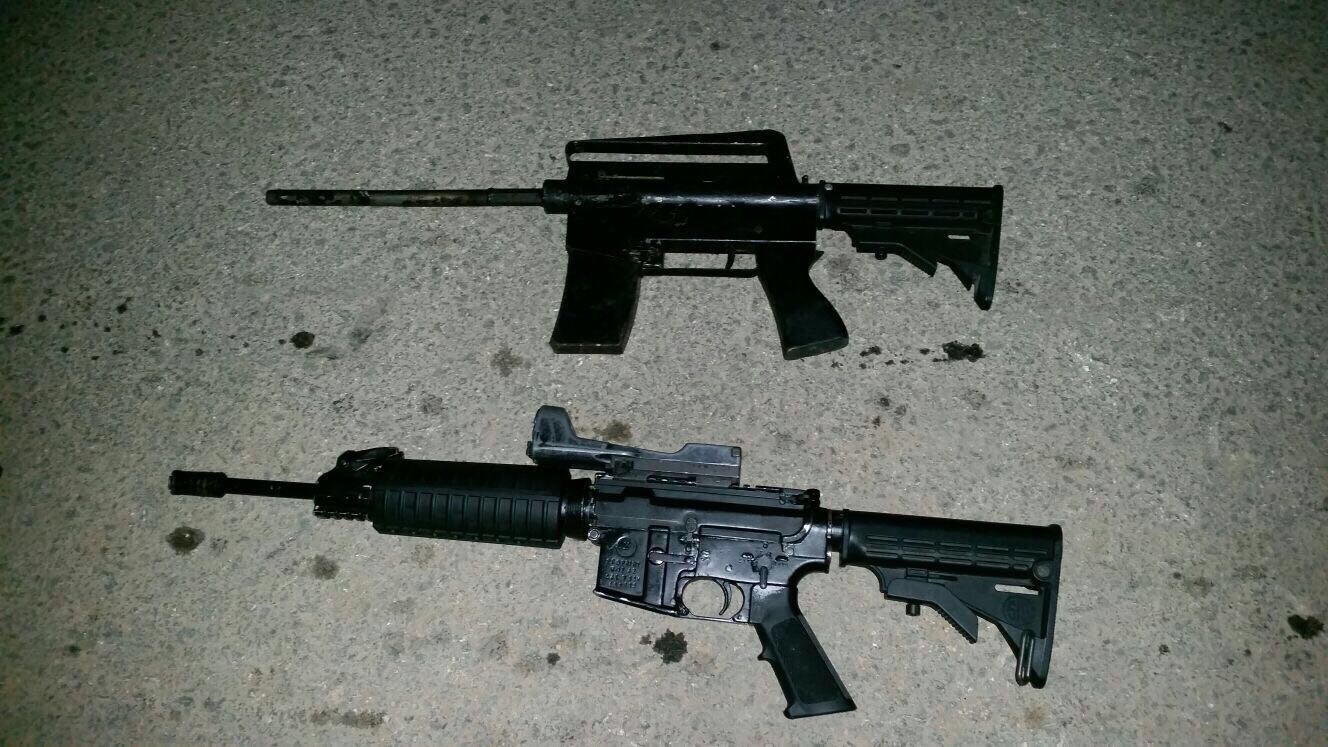
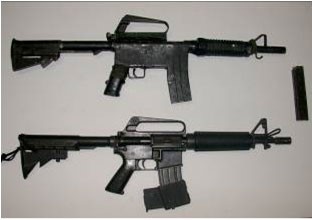
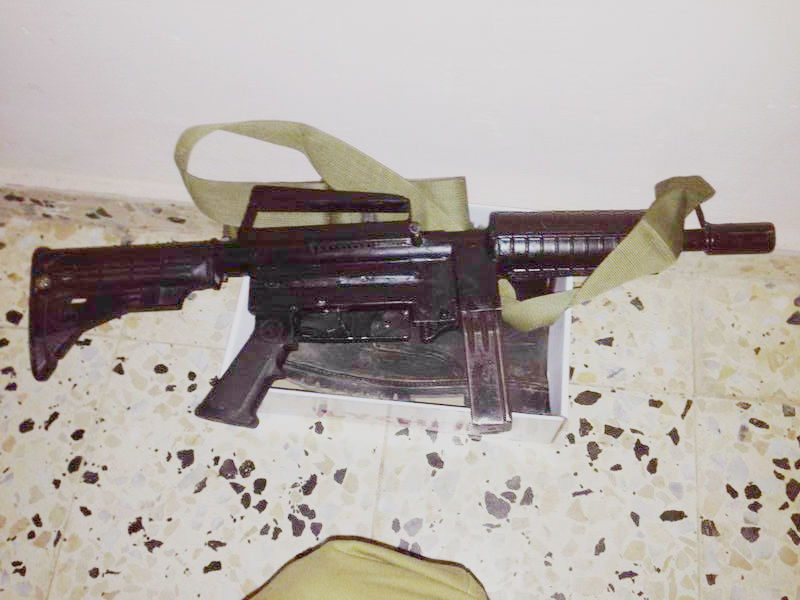
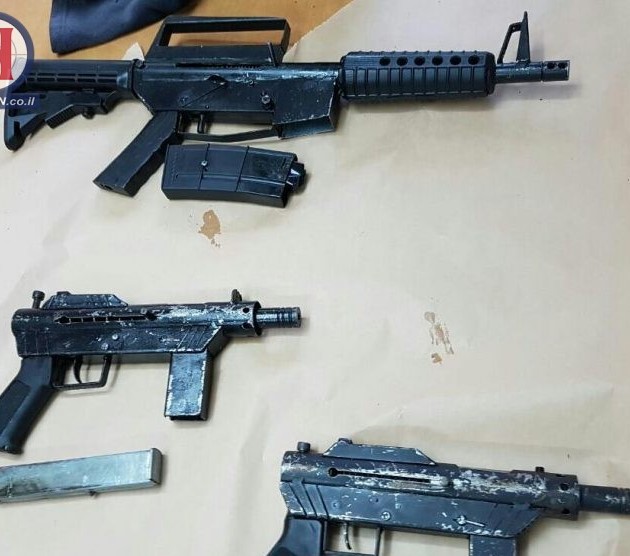
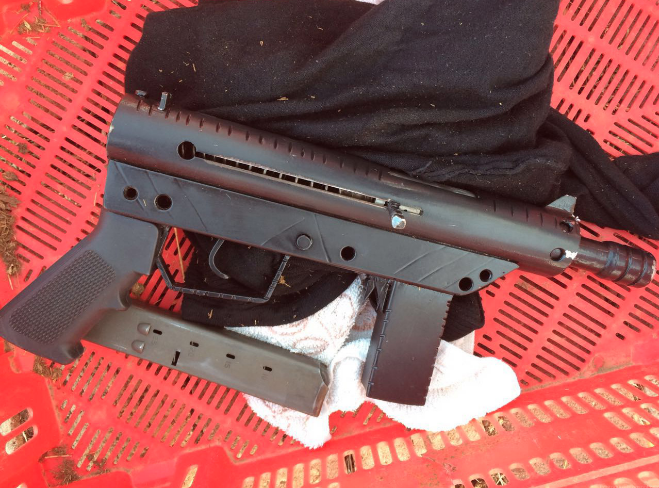
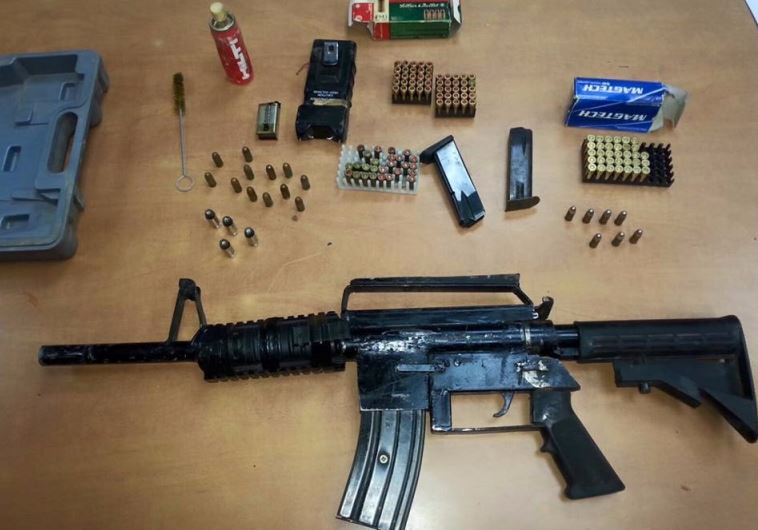
This article will examine the design and use of improvised firearms among Palestinians in the West Bank, that are otherwise known as “Replica” Carlo’s due to their similarity in appearance to the M4s and M16 rifles in use throughout Isreal that the designs are replicating. The majority of these weapons are 9x19mm NATO, fully automatic only, magazine fed, open bolt designs that are improvised from underground manufacturers that use machinery and materials purchased on the black market or outright stolen. Due to the variance in production and origins, there is no set standard of appearance for these weapons. Rather there is a general consensus that the appearance is identical to an M4 or M16 from afar, but that there are significant differences between individual models.

Motives for Producing Replicas and the Cultural Context

Availability

The prime reason to manufacture the Carlo is to resemble as closely as possible an M-16 or M-4 is the availability of furniture and magazines in Israel and the West Bank. Both guns were and still are a major part of the Israeli armament, used by the IDF, police, civil guard etc… Because of this availability of parts, Armalite based designs are favored when theft becomes an option.

From a manufacturing point of view, it makes sense to design your gun to match the existing furniture and magazines already available than to manufacture them along with the gun.

Status and Prestige

Guns have a significant role in the Arab tradition, centuries of existence in lawless regions made it essential to own weapons for self-defense and as a deterrence against other tribes who were also armed themselves with whatever they could get their hands on.

Although civilian gun ownership is largely restricted and banned by both Israel and the Palestinian Authority many Arab families in the West Bank and Israel are determined to keep their arsenals and enlarge them as much as possible.

Alongside the practicality of owning a gun the guns are symbols of status and wealth. A family or an individual that can afford high-end weapons rather than a homemade one enjoy prestige over those who compromise with the local workshop products.

Acquiring a real military grade firearm might be expensive and the common garden variety Carlos are too widespread. The Carlo replicas are a way to bridge that gap, have a more expensive and awe-inducing gun without the cost of acquiring the M4 that the replica is based on.

Imitating Popular Palestinian Figures

Many in the Arab population view the terror organizations and terrorists as freedom fighters and role models, naturally, there are those who want to imitate these heroes and want to have their guns be as identical to those who they admire. If the genuine guns and ammo are out of reach then the replicas become the alternative, relatively cheap and available supplies of ammunition to practice and show off. It is then easy to understand why some workshops making the replicas make great efforts to produce almost identical copies.

Infiltration

It has been speculated that the M4 replicas could be used for terror attacks against Israeli civilians or IDF soldiers. Due to the apparent shape of the replicas being similar to the M16 service rifle used by the IDF. This will confuse soldiers and security guards, mistaking the identity of terrorists as IDF soldiers, making them hesitate to shoot.

A fair theory, however, none of the individuals caught with these replicas has ever been caught with an IDF uniform to match the gun. Currently, the records show that after numerous attacks done by Carlo wielding terrorists none were carrying any replicas. All of the photos released by IDF and police spokesmen show a regular Carlos.

Stolen or Lost Weapons and Magazines

An obvious source for both guns and their magazines are various stocks of small arms already existing in Israel. IDF, police, border guards, private security, armed civilians and many other groups are armed with M16s and M4s. This creates an abundance of stock from which guns and magazines can be acquired, by searching IDF training areas or breaking into a police officer’s home for example.

Commercial market

Several Israeli companies, such as FAB and CAA, known in the U.S. commercial gun market for their products, are also producing and selling M16 and M4 furniture in Israel. Many IDF soldiers individually choose to upgrade their weapons at their own expense. Such equipment is sold regularly and without any background checks and it stands to reason that some of the replicas are using such legally purchased furniture.

Paintball and Airsoft Replicas

There were some on Israeli gun web forums who speculate that paintball and airsoft replicas could be the source for the Carlos replicas’ receivers.

Indeed such guns could be cannibalized to provide the Carlo replica receivers.

The 9x19mm NATO ammunition produces less pressure than intermedium cartridges do so the light structure of the paintball and airsoft might withstand the additional pressure.

However, thought technical plausible, photos taken of captured Carlos or those surface in the Arab social media don’t indicate that paintball and airsoft are used.

The replicas’ ‘receivers’ all appear to be workshop made with all the typical welding seams, rivets and out of proportions dimensions.

Embedded Magazine

Curious readers might wonder how open bolt 9x19mm submachine guns are fed with 5.56x45mm NATO STANAG magazines.

The answer is simple, the craftsmen making the guns mimic the real guns embed pistol or Uzi 9x19mm magazine inside the real STANG magazines.

Similar to Matryoshka dolls, these magazines are inside of the weapon with few exterior modifications to the STANG magazine.

Those rivets hold the inner magazine in place.

Outside of the weapon the inner magazine is revealed protruding out of the STANAG housing magazine.

Such arrangement of small caliber magazine housed inside bigger caliber magazine shell is unusual but not unique, for example, the Philippines Armscor M16 22 is a 22LR semi-auto rifle dressed as an M16A1 with a matching STANAG size magazines containing 22LR magazines inside

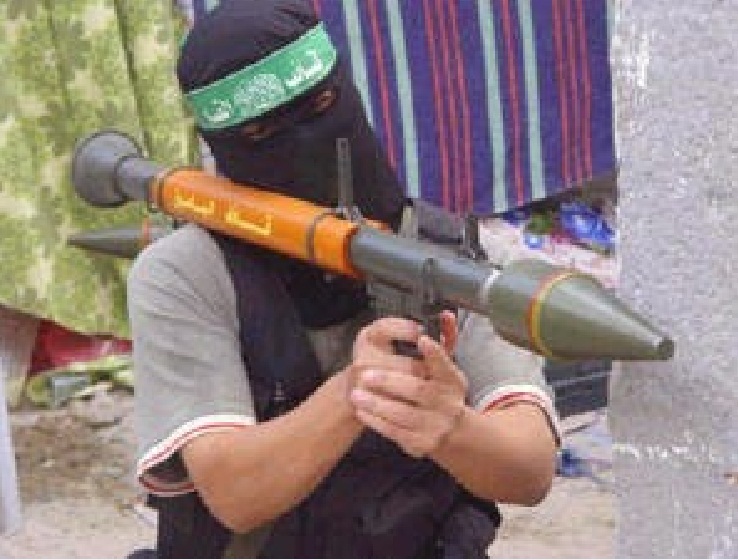
Yassin RPG – The Underground RPG of Gaza

Due to the Arab-Israeli conflict in Palestine, Hamas with its military wing al-Qassam brigades has developed their own tools of war in order to preserve self-sufficiency in order to not be affected by the blockade made on Gaza strip.

This article will spotlight on one of the more interesting craft produced rocket launchers in Gaza , which is literally underground since their production facilities are protected in underground bunkers from IDF air raids and artillery strikes.
It is designed and manufactured by Hamas, but they distribute the launchers to other resistance troops working in Gaza, including Fatah and the PFLP (Popular Front for Liberating Palestine).

History

The weapon is named after Sheikh Ahmed Yassin, the founder and the spiritual leader of Hamas who was assassinated by Hellfire missiles shot from an Israeli AH-64 Apache Helicopter gunship on March 22, 2004, at the age of 67.

It was designed by Adnan al-Ghoul who was also assassinated by an Israeli air strike on October 21st, 2004.

Characteristics

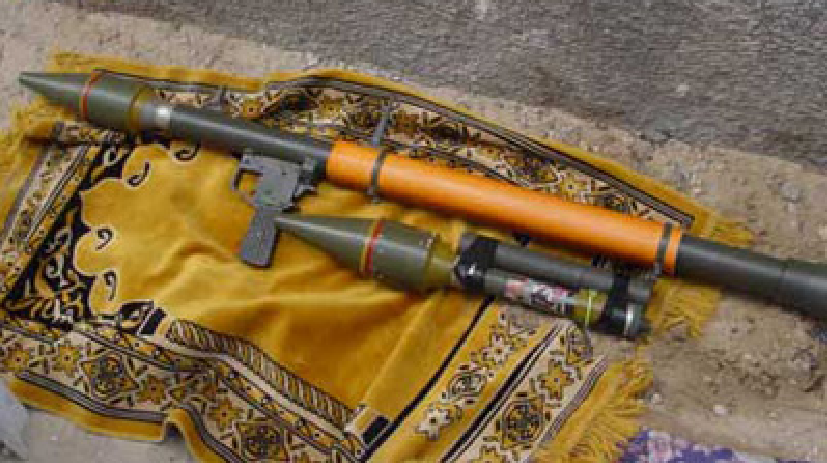
The Yassin RPG is a unique design that resembles the RPG-2 combined with RPG-7 with some improvised design features, From RPG-2 it took the launching tube design and the warhead external shape and the rocket motor which are very simple, but to improve the performance they added some features from the RPG-7 such as the nozzle at the launcher’s rear to deflect recoil generated by launching the rocket, they also added a rocket booster to be attached to the propelled grenade to extend it’s range, and the internal shaped charge of the warhead is enhanced as well.

The manufacturing process occurs in underground workshops using ordinary shop tools, but the conception and engineering of the weapon seem to have a high degree of sophistication and professionalism given the lack of technology of the design.

In Action
According to the continuous improvements of armor in Israeli armored vehicles, the RPG is believed to be not effective against them. However, Saladin brigades (the military wing of the Popular Resistance Committee in Gaza) claimed to destroy a Merkava Mk.3 MBT by targeting a weak point of the tank. Yet, the weapon is very effective against brick fortifications and soft-skinned armor as it can penetrate a 21 cm steel plate from 150 meters.

Specifications 

Model : Yassin RPG

Designer : Adnan al-Ghoul

Type : Anti-Tank, Anti-Personnel

Place of Origin : Gaza, Palestine

Manufacturer: al-Qassam brigades, R&D unit

In Service: 2004 – Current

Weight : 7 kg (15 lbs)

Length : 95 cm (37″)

Caliber: 40 mm rocket engine ; 85 mm warhead

Muzzle velocity: 295 m/s

Effective range: 300 m

Sights: Iron sights

Differences between RPG-2 (top) and RPG-7 (bottom)
Yassin RPG featuring the combination of RPG-2 and RPG-7

IWI X95s, TAR-21s in Nigeria

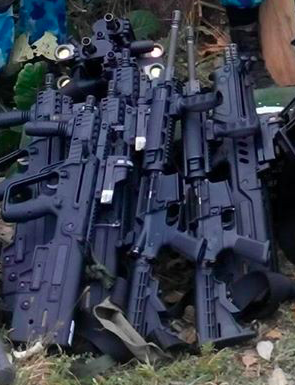
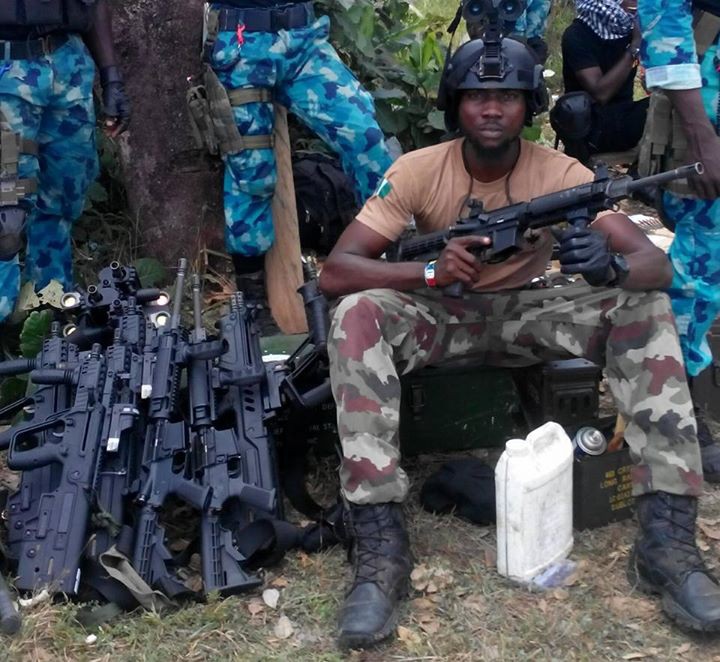
The Israeli 5.56x45mm Tavor is no stranger to the Nigerian defense forces, with the TAR 21 being introduced from Israel in a short barrel variant (around 14 inches) several years ago, and the X95 version seen in Nigeria in 2016 (possibly issued earlier). This photograph of a Nigerian soldier posing with stacked IWI rifles, some being the TAR 21 while others being the X95 versions came out in 2016 on the Nigerian public forum Nairaland, along with numerous other photographs of the defense forces.

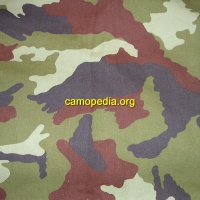
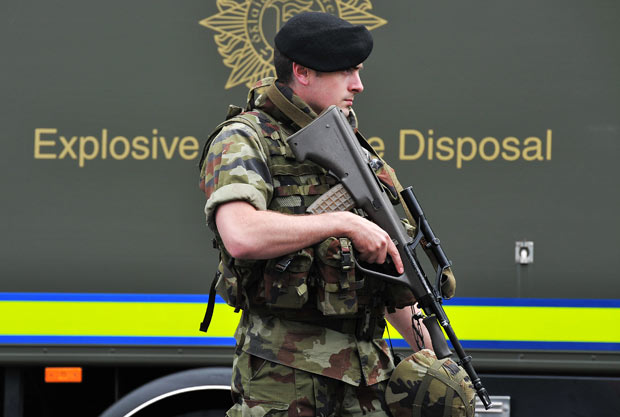
Interestingly he is wearing an Irish Army camouflage pattern introduced in the early 2000s, known as DPM or “Paddyflage” among Irish troops. Image from Camopedia–

Improvised Mauser Suppressor (OIF)

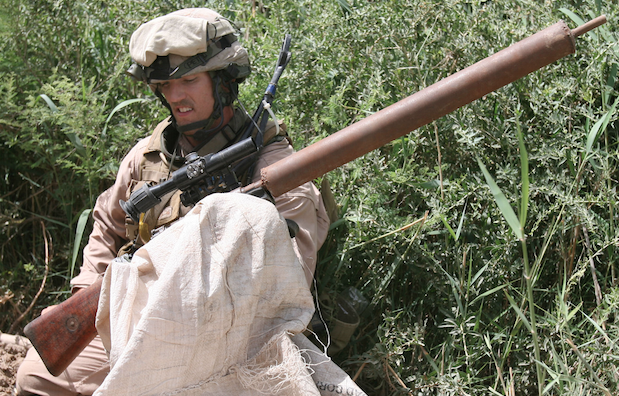
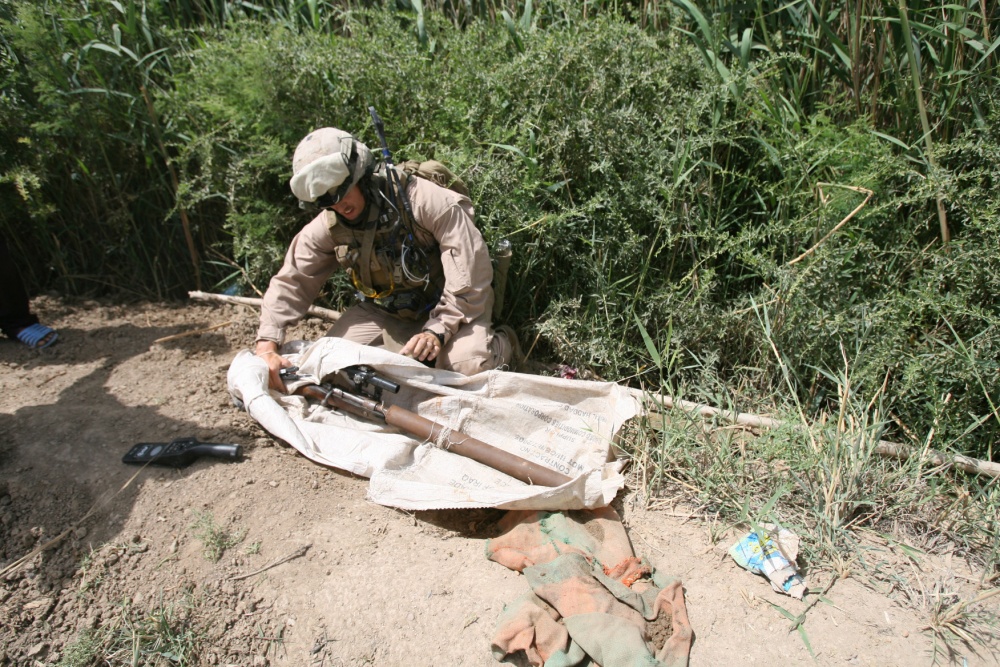
This photographs was posted on the U.S. Department of Defense Media Activity’s public domain website DVIDS along with another one featured on Silah Report. Both depict improvised suppressors captured by U.S. Infantrymen while on operations in Iraq.

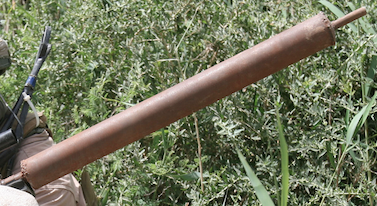
The rifle appears to be a Mauser 98K with the stock sawed off just past the chamber. Because of the proximity to Iran and the incredible amount of Iranian surplus found in Iraq, it would appear from conjecture that this rifle is a Persian Mauser, manufactured in the time of the Shah in the 1940s-50s, later being replaced by the M1 Garand through U.S. Foreign Military Sales programs in the 1960s. Unlike the previous M16A1 rifle we posted about, this improvised suppressor appears to have involved much more work, with a much larger diameter pipe being welded around the actual barrel of the rifle at both the front and rear of the pipe. There is a section of much smaller diameter pipe protruding from the main one, but this doesn’t appear to be the barrel.

The scope mounted on this rifle is a Cold War era PSO-1 optic designed to mount on the optics rails usually riveted to the left side of a Kalashnikov or Dragunov receiver. It is unclear how this is mounted to the Mauser’s wood stock, unless an actual Warsaw Pact rail were somehow screwed into the wood stock itself.

The “Carlo” of Palestine

A fatal stoning attack against a civilian car and its driver at the Jewish New Year eve, September 13th 2015, marked the semiofficial beginning of the “Third Intifada”, also known as the “Knife Intifada” or “Stabbing Intifada” or as more accurately could be could the “Individuals’ Intifada”. Unlike previous rounds of violence led by major terror groups like Hamas or militia groups associated with the Palestinian Authority, the “Individuals’ Intifada” attacks are almost exclusively done by lone wolfs or at most pairs of attackers, unlinked to any political or armed group. Mostly those attacks committed by young men and women are motived by social media networks.

The tools of those attacks are opportunistic by nature: knives, stones, vehicle-ramming attack etc. One of those tools is the subject of this article, the Carlo sub-machinegun. The Carlo (كارلو) is a homemade sub-machine gun slightly modeled and resembling the Swedish Carl Gustav M/45 (كارلوجستاف) – a well-known sub-machinegun in the Arab world with licensed produced by Egypt under the name ‘Port-Said’ and later under ‘Akaba’ & ‘Kara’ as the simplified versions.

As a sidenote the similarity in names and appearance between the real Carl Gustav M/45 and its watered down copy create great confusion among Israeli news organizations commonly mistakably identify and report a Carlo as factory made M/45. One news outlet even reported that the Sarona-market attack terrorist’s weapon of choice was a ‘recoilless rifle’! Clearly, the reporter copy-pasted from the first item Google had to offer when searching ‘Carl Gustav’ and came up with one of the recoilless rifles under the name of ‘Carl Gustav’.       

History

Israeli police first encountered the gun at the beginning of the 2000’s in the hands of Arabs criminals in the West Bank as a self-defense gun and for celebratory gunfire. The gun, its manufacturing, and usage weren’t on the police high priority list as the phenomena seemed contained within the West Bank and as an inner Arab problem. Police operations at the West Bank also fall in the thick border line between the civilian police and the Israel Security Agency (‘Shin Bet’) areas of jurisdiction. Up until the latest Intifada, there was a minimal effort of both organizations to cooperate.

Several shooting attacks, the most notable is the June 8th 2016 attack at the Tel Aviv Sarona market where two gunmen armed with Carlos murdered four diners proved the guns efficiency at very short range attacks against unarmored people despite being inaccurate and unreliable (one of the shooters at the Sarona market attack was even caught on camera angrily throwing his Carlo after it jammed after only a few rounds).

Characteristics   

The common feature all known Carlos share is the ammunition, all known guns are chambered in 9×19mm Parabellum, which is the by far the most common pistol cartridge in Israel and used by all branches of the military, law enforce agencies, government institutions, security, private security companies and private gun owners.

The magazines used are mostly Uzi 25 rounds magazines, inserted to a magazine well in front of the pistol grip. Pistols grips appear to be high quality factory made durable plastic M16 pistol grips as well as some M16 telescopic buttstocks when the guns are stocked. The barrels are smoothbore, usually very short, barrels which are not much more than regular steel pipes.

All Carlos are full auto only fired from an open bolt, ejection port is locate on the top side of the gun and a short charging handle is locate at the gun’s right side and it reciprocating when firing. The question of why have a right side charging handle for a gun mostly used as a machine pistol? A right-handed charging port will gain no value of a charging handle at the right side he can’t easily charge with or clearing jams without buttstock and handgrip.

Since the gun’s ejection port on top a charging handle and its slot cutout could easily place left side enabling the shooter reciprocate the bolt with left hand while holding the gun right-handed. No clear answer, the first option is by trying to leech of the M/45 popularity the makers of the Carlo also copied the location of the handle scarifies functionality in order to resemble the recognized M/45.

Second option is that machine pistol concealed under a coat is best placed left of the body in order to pull it quickly (by a right-handed), having a left side handle will poke the user side so right side handle is preferable. Another source of speculations is what appear to be sort of rectangular upper hunch on the top rear part of the gun which is quite common for the higher end Carlos. Its purpose is unknown, it raised a bit the rear sight but noting that required such large protrusion. It maybe housing of some sort of crude delayed blowback mechanism, probably leaf spring, used to lower the fire rate of fire and make it more controllable gun.

Yoel M. is a contributing writer for Silah Report, and is a firearms enthusiast based out of Israel. His first report on S.R. was about the Israeli “Hitchhiker” magazine.


If you enjoy our work here at Silah Report please consider supporting us on Patreon!