“Brno”, the Persian Mauser

Ali Parsa is an Iranian scientist who has a lifelong passion for sailboats. He also knows a great deal about the history of the Mauser bolt action rifles that initially entered service in Iran at the turn of the 20th Century. He wrote this article examining the history of the Persian Mauser with its roots in the Czech VZ24 being license produced in arms factories outside of Tehran. This article was written almost a decade ago and he has very generously allowed Silah Report to republish it with express permission from himself. It initially appeared on the website that bears his name, Aaliparsa.com. This edition has been lightly edited.

Mauser rifles first appeared in Iran before the First World War. Looking at pictures of Iran’s Constitutional Revolution era, one can spot Mauser rifles and handguns in the hands of freedom fighters of Sattar Khan and Bagher Khan, as well as other Constitutionalists in different regions of Iran.
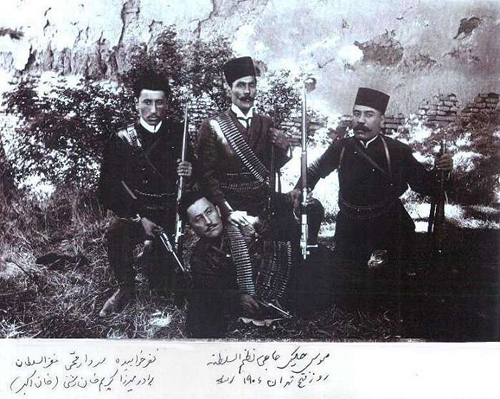

Iranian Constitutionalists, with their Mausers, in 1906

At the end of World War I, and as a result of the Versailles treaty arms ban, Germany no longer produced these rifles, but an almost exact copy was in production in Czechoslovakia. After Hitler became the German chancellor, the production was resumed in Germany.

Later, with the invasion of Czechoslovakia, the identical rifle was produced in Germany and Czechoslovakia.
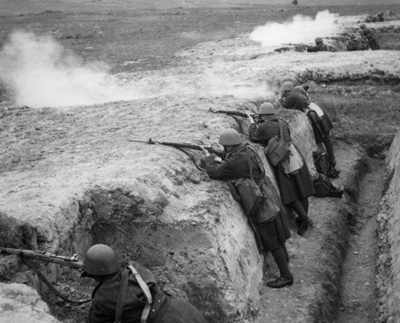

Czechoslovak Army Drill, 1938

A major production center was in Brünn, or Brno, as the city is called in the Czech language. The rifles made in Brno, the Czechoslovakian model, are known as VZ24 (for Vzor24, or Model 24 in the Czech language) and had the word Brno imprinted on them.
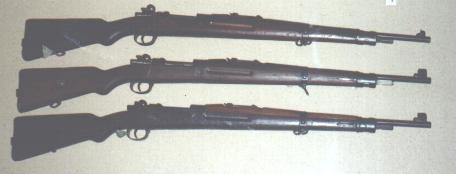

Czechoslovakian VZ24
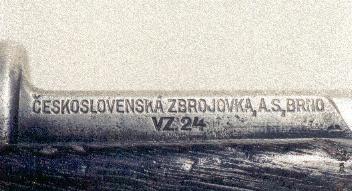

Markings of a VZ24

Officially, the Mauser rifle was selected for the Iranian army during Reza Shah’s time. But Iran didn’t go for the original German and ordered the identical Czechoslovakian version, the so-called Brno. The Czech firm provided Iran rifles made of many German parts. It was similar to the longer barrel version Germans designated as K98. Some official test results are available from antique arms dealers today, featuring signatures of the Brno factory representative, the Iranian in charge, and of course, satisfactory ‘grouping’ or bullet marks.
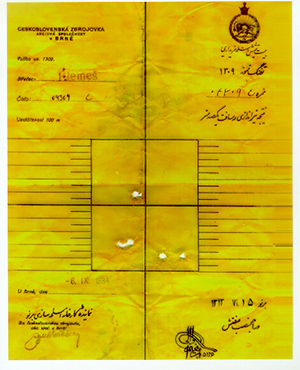

A 1934 test result document
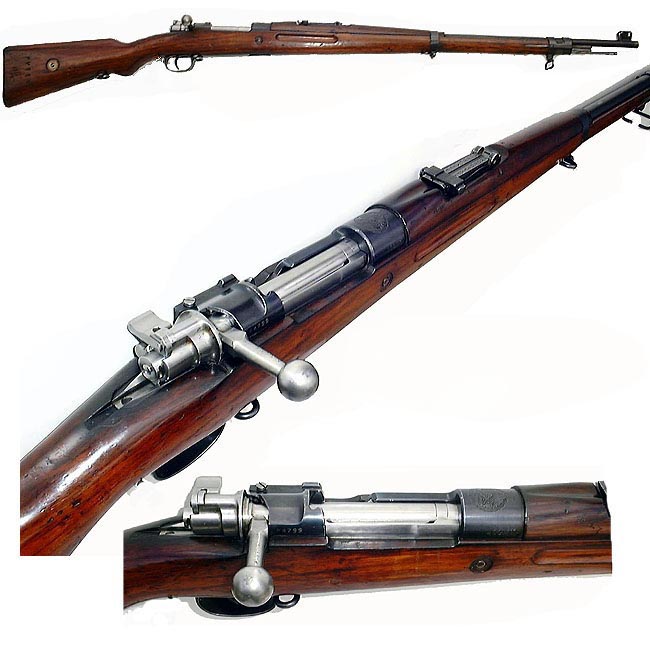

Full length ‘Brno’ with markings in Persian

At that time two other rifles were in use and very well known in Iran: the British Lee Enfield and the Russian Mosin Nagant (Noghaan, or Naaghaan, (نوغان- ناغان) in popular parlance in those days). The exact reason for preferring Brno over its rivals is not known, but one can speculate that those in charge of the Iranian army, or maybe Reza Shah himself, tried to avoid dependence of Iran to either of the two neighboring powers. Besides, the Brno and it’s Mauser original were considered to be the best military rifle of its day.

The Iranian government ordered three versions of this weapon. It was manufactured in Czechoslovakia by two firms. One was called Ceskoslovenska Zbrojovka, or CZ. These rifles are known to collectors as Persian CZ98, Persian Mauser or Persian Brno.

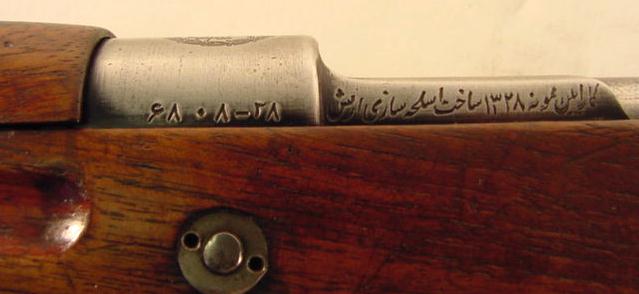
A Pahlavi crown, lion and sun crest appears near the feeding ring, as an inscription in Persian (in Nasta’liq script) on the side of its magazine giving the model and the factory name, which was in Brno. From then on the name, Brno was used by Iranians to refer to this rifle.
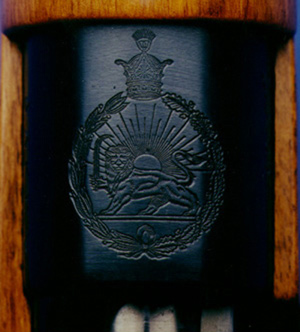

Lion and Sun crest of a Persian Mauser
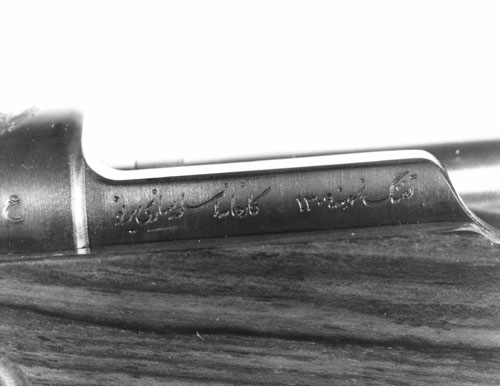

Persian markings of a Brno made rifle

One typical such inscription read “tofang-e nemoone 1309 karkhane-ye aslahe sazi berno” (“Rifle model 1309 Made at Brno Arms factory.” The number 1309 refers to the Persian year 1309 which is the year 1930 in the Gregorian calendar).

In the late 1940s Iran’s Taslihat-e Artesh (Arms Factories of the Army), popularly known as Mosalsal-sazi (the machine-gun factory), in Tehran started production of these Brno rifles. The needed machinery and technical assistance were provided to Iran through the industrial firm Škoda, which had a long history of cooperation with Iran. Iran produced two models: the regular VZ24 rifle (similar to the German Kar98k, overall length 1110 mm) and the short version (similar to the German G30, overall length 993 mm) known as “Berno kootah” (short Brno).
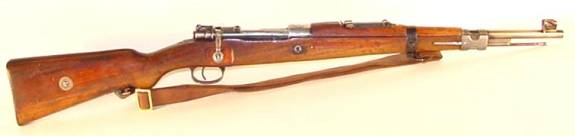

Berno Kootah (short Brno)

Under a licence from CZ. The difference was only in the markings on the side of reciever: instead of naming Brno as the maker, it was written “sakht-e aslah-e sazi-e artesh” (made by the Army arms factory).
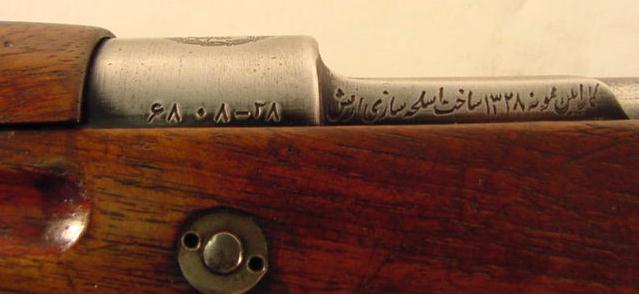

Markings on an Iran made short Brno

The products are known among the collectors as Persian Mauser and are regarded to be the best and smoothest of the Mauser family of bolt-action rifles.

For many years Brno was the standard personal weapon of the Iranian armed forces, until it was replaced by the more modern, semi-automatic, American Garand M1, and later by the German Heckler & Koch G3.

The rifle was especially cherished by Iranian tribes, who are known to be firearms aficionados and able shooters. A tribesman sharpshooter would settle for nothing less than a Brno. Tribal rebels did everything to acquire one of these rifles, and they did get their hands on these in many tribal wars during Reza Shah and Mohammad Reza Shah’s time. And probably the tribal chieftains, or Khans, did get shipments from foreign sources, to be distributed among their savars (mounted fighters). One single event, which contributed to the widespread availability of Brno rifles among the tribes in Iran, was the fall of Reza Shah following the invasion of Iran by the Allied forces in 1941. At that time the Iranian army, after a short resistance, was almost disbanded and many people, especially tribesmen, got hold of the Brnos left after the soldiers abandoned the barracks.

There are many stories of the gun’s accuracy among the tribes. When Dadshah rebelled against the shah’s government in Baluchistan in the 1950s, people said that his wife, Bibi Khatoon, who accompanied him in the mountains, at one occasion, took her Brno and shot a bullet right into the barrel of the gun of a poor gendarme who was aiming at her over a long distance. Its popularity among Iranian tribes was so much that it was mentioned in some of their songs. A version of a well-known Boyer Ahmad song has a refrain that says “Mastom, Mastom, Brno kootah be dastom” (I’m drunk and have a short Brno in my hand).

For the politically minded intellectuals of 1950s and 1960s, the rifle was a symbol of the Shah’s repressive rule. It can be seen in the pictures of soldiers attacking the house of Dr. Mossageq on the fateful day of 19 August 1953 (the infamous day of the US-British coup).
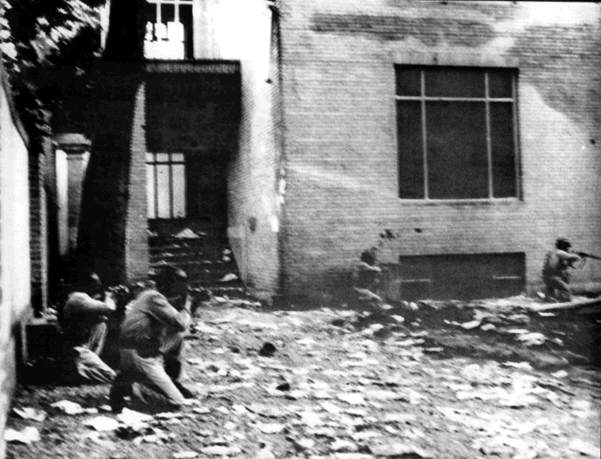

Soldiers attacking the house of Dr. Mossadiq, Aug. 1953

Gory pictures of executions of Tudeh party officers in the Chitgar shooting range in 1955 shows defiant young officers strapped to the stake minutes before execution, with Brnos present to do the task. When Navab-Safavi, the fundamentalist leader of Fadaiian Islam was arrested, Iranians saw his pictures being transferred to a prison under bayoneted Brnos.
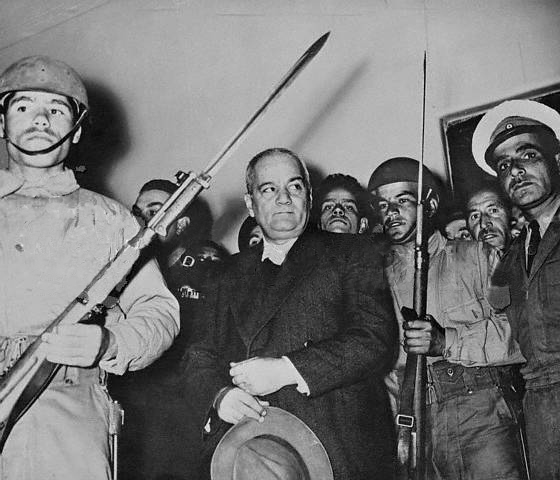

Dr. Yazdi, the Tudeh party leader, after arrest in 1953, surrounded by soldiers with Brnos
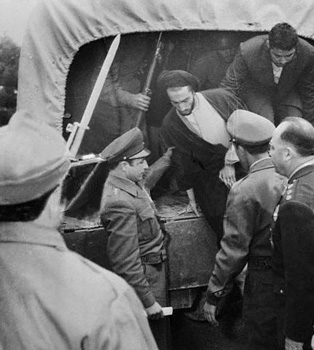

Navab-Safavi, the Fadaiian-e Islam leader arrested

You can see it in pictures of 15 Khordad (June 1963) uprising in Tehran. In fact, when the Shah’s opposition cried against his “rule of the bayonet”, it was the sight of these Brnos with their bayonets attached that they were referring to.

Ordinary people usually had their first encounter with the rifle while passing a guard in the street, or when they were (willingly or otherwise) recruited for the military service.
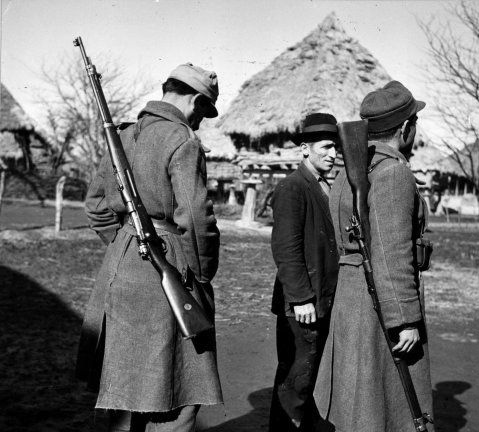

A deserter is taken to military service in a Gilan village, circa 1955

In the 1960s the semi-automatic US made M1 replaced Brno in the Iranian army, and Brno use was confined to the gendarmerie and the game wardens for a while, before it was decommissioned from active use. In the 1970s it was used mainly in ceremonial occasions.
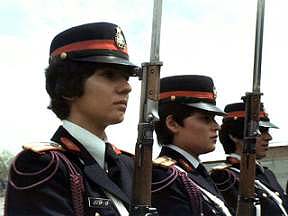

Girl cadets of the police academy in graduation ceremony, circa 1972

During the 1979 revolution, the gun reappeared in the hands of the revolutionaries and tribesmen, who never abandoned their Brnos. When Kurds challenged the newly established Islamic government, they used mostly modern assault rifles. But Brno still had a use: The Kurds claimed that with special cartridges that can pierce 2cm of steel, Brno can down aircraft and helicopters.
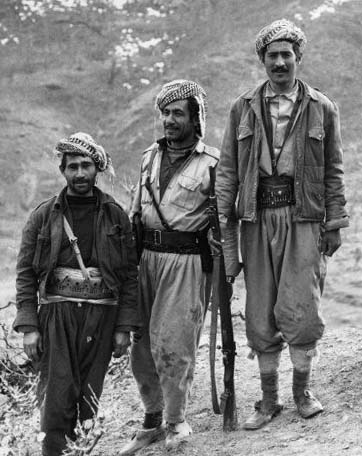

Kurdish ‘Peshmarga’s with Brno

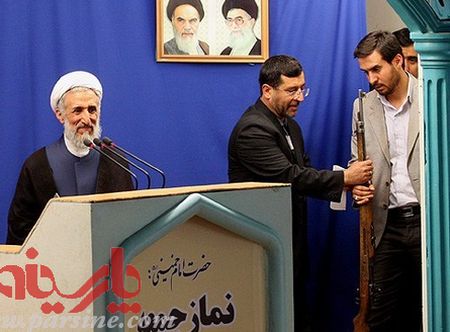
Besides the rebels, the Islamic government too had a use for Brno: It was, and is, used in official Friday prayer ceremonies. The speaker is required to have ‘the weapon of the day’ by his side, according to the tradition of the Prophet (he apparently used a sword).
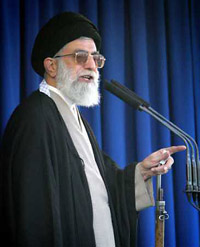

A Friday prayer session, with Brno

These images were collected and published on an Iranian website Parsine asking the question of “What kinds of weapons do Imam’s like?”
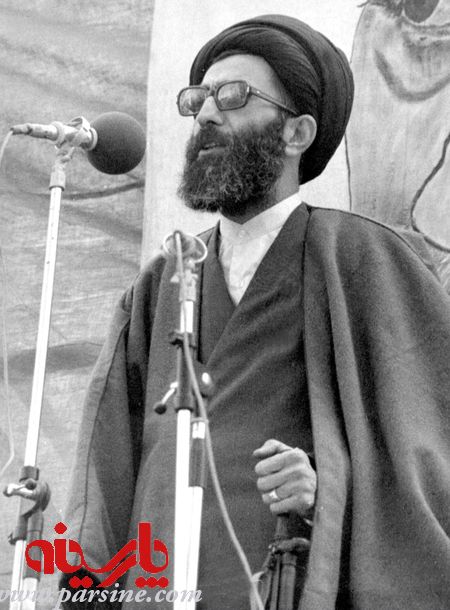
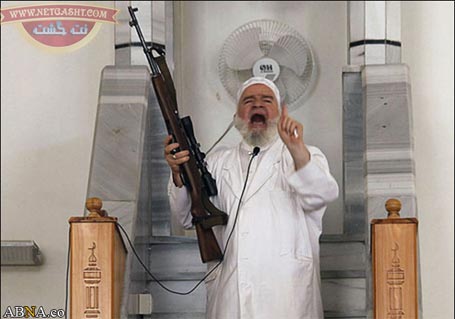


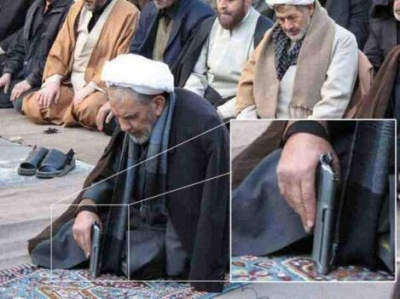
A different news source, but this shows a handgun being held by an imam leading the Khutbah.
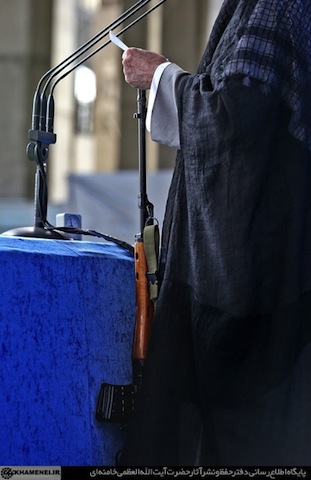
Supreme leader Ayatollah Khamenei with what appears to be a Dragunov derivative.
https://www.theblaze.com/news/2015/07/20/can-you-spot-what-irans-khamenei-was-holding-during-his-speech-on-the-nuclear-deal-the-mainstream-media-ignored-it

The most likely reason for its use in such ceremonies is that it is long enough for the speaker to hold it like a walking stick while he is standing and preaching. The Mauser brothers would have been happy to hear that their rifle would be considered a ‘weapon of the day’ a century later.

For people of my generation Persian Mauser, or Brno, brings back many bittersweet memories. The coup, the executions, the NoghlAli (Iranian version of GI Joe) with his Brno in a watch-cabin, the pain of being hit by its butt in street demonstrations, the greedy gendarme guy looking for a chicken to steal, the poor poacher in a remote town using the old rifle to feed his family with meat once in a while. You see it in the old newspaper pictures of battles, ceremonies, riots and executions. It is a piece of history.

Thank you Ali Parsa for contributing to Silah Report!

Pakistan’s locally made 7.62 x 25 Tokarev

The Tokarev (colloquially known as TT in Pakistan), received a cult following since its arrival in Pakistan somewhere in the late 1970’s, that somehow has still maintained its status as a fearsome self-defense weapon. In fact, during that period, post-Soviet invasion of Afghanistan, the two weapons that made it to Pakistani markets were the AK-47 and the Tokarev pistol. For gun aficionados, no collection was complete without these two weapons in one’s inventory. The TT was a much sought after weapon, it was semi-auto, had a very potent round and the thing to possess.

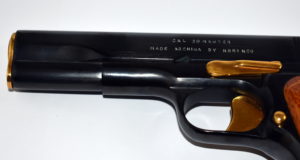
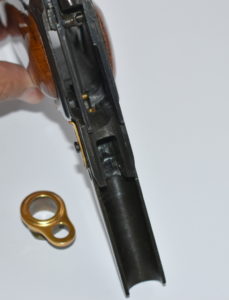
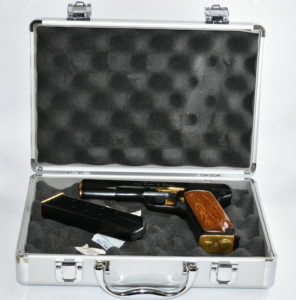
Later Chinese, as well as Serbian variants of the Russian TT, found their way in the country. For quite some time the TT ruled as a weapon of choice till the venerated 9x19mm hit the markets and turned the tide in its favor as a caliber of choice. Around the early 1980’s Pakistani made TTs found their way into the local markets simply because these were inexpensive, the ammo was dirt cheap and available in thousands or perhaps millions. Even today the average Pakistani is confident and wants a TT as a trusted reliable weapon, the fact that it is easily available and inexpensive, around $ 20-35 only, adds to its popularity.  Later these weapons started appearing in various shapes and sizes, which somehow made them appear more fearsome and attractive for the buyers. The weapon being reviewed is a local made TT, with a double stack magazine that increases its capacity from 8 to 18!! To make it more attractive this piece works only on full-auto!! Its gold plated and looks as much good as it feels good to hold in one’s hands.
Specifications

Caliber:              7.62 x 25 (.30 bore)

Length:              7.6″

Height:               5.3″

Barrel length:   4.6″

Magazine capacity:    18 rounds, double stack

Front blade, rear notch type sights

This particular piece is Fully Automatic

Weight:             1.15 kg

The weapon being made is a copy of the Chinese TT, and bears the words “Cal 30 Mauser, Made as Chine by Norinco”. Observe the gold plated, slide release, mag release, trigger and the barrel bearing. It adds to the looks of this finely finished handgun.

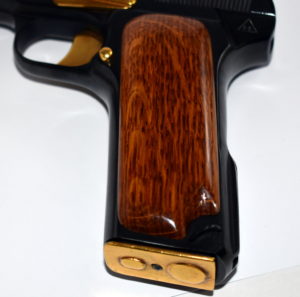
The magazine base plates are also gold plated and help to spruce up the looks on this TT. Observe the polished wooden grips.

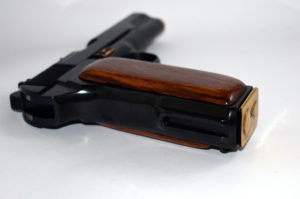
Since the handgun is full auto it has a recess for fitting in a buttstock. This piece doesn’t come with one, but it can be made to order.

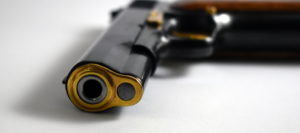
The barrel bearing is gold plated and gives a good contrast against the black finish.


The pistol has a standard front sight blade and rear notch fixed sights like the standard Tokarev.

The quality of workmanship isn’t all that bad. But one area in which the local weapons lack is good quality control. If this can be handled then they can really produce weapons which give consistent results.


This particular piece comes packed in an Aluminum box. Considering its features, look and price it isn’t a bad value for money weapon. TT’s have been around for quite some time, here in Pakistan. And now since POF is making 7.62 x 25 ammo so there’s choice of ammo to choose from Chinese, Russian and Pakistani and since ammo is inexpensive so TTs are common. So, for now, the TT is here to stay.

Tabuk Sniper Rifles Turn up in Baghdad Small Arms Cache

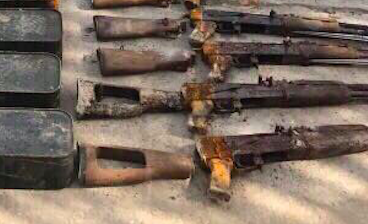
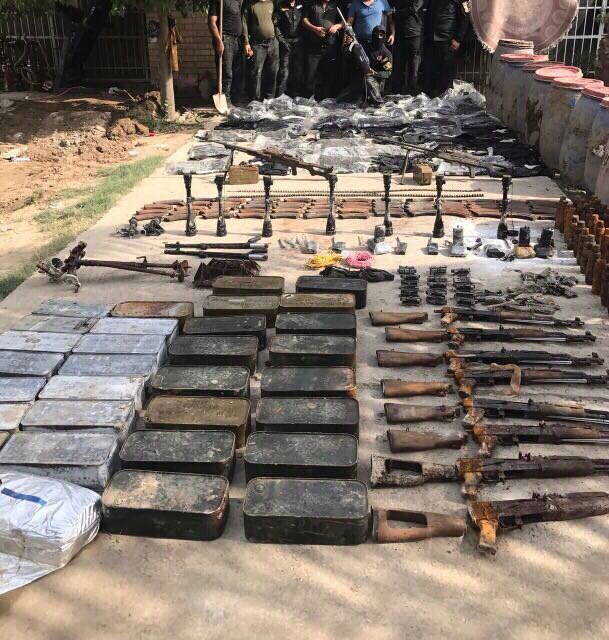
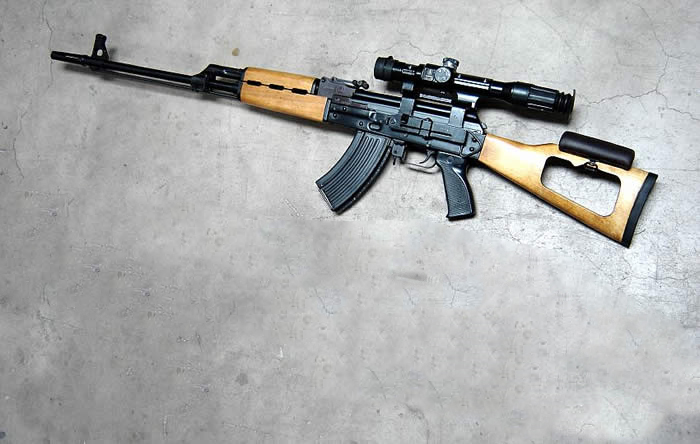
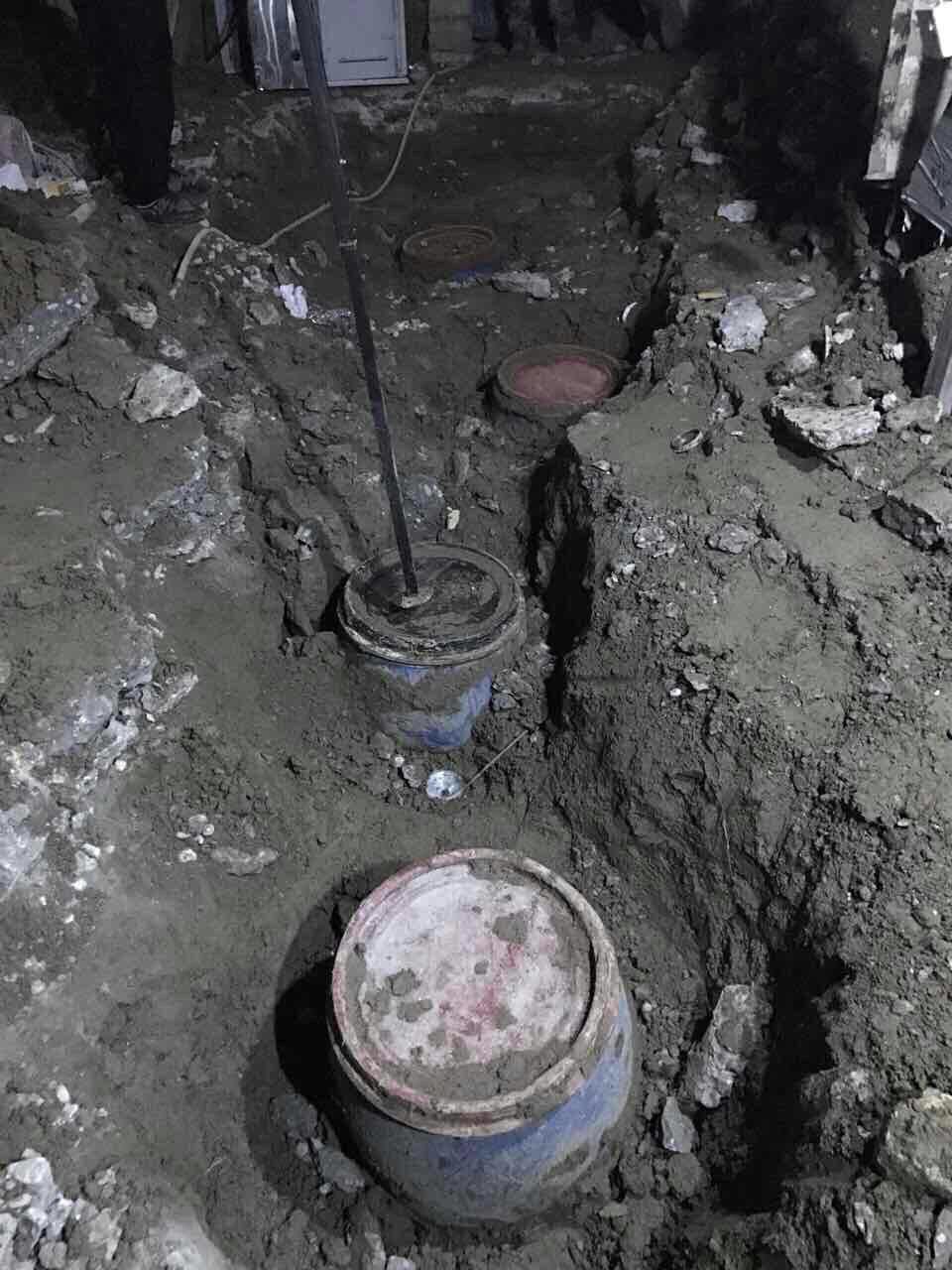
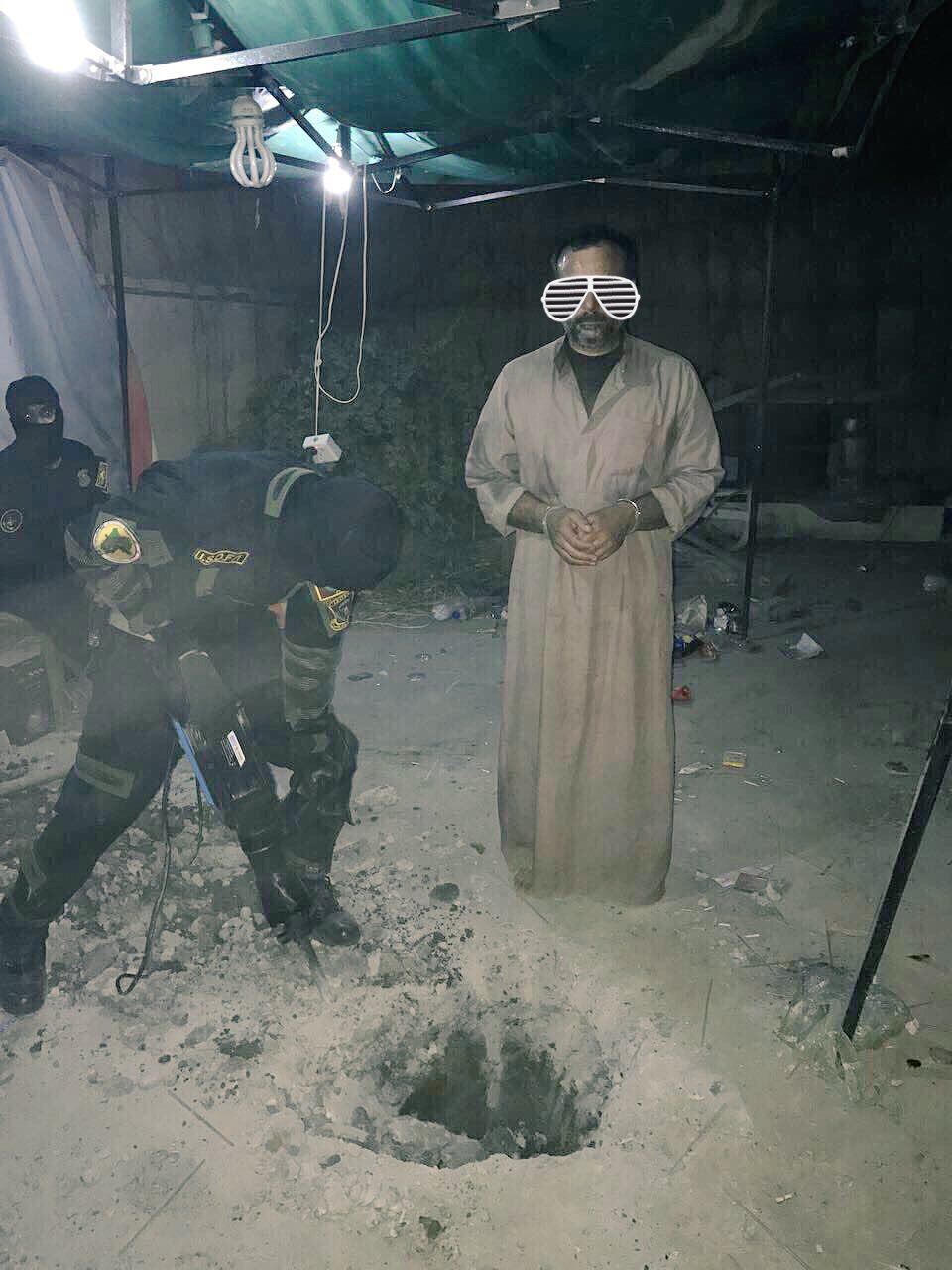
At a recent weapons cache that was turned up by Iraqi Counter-Terrorism Forces in Baghdad, what appears to be two Iraqi Tabuk Sniper rifles were among the rifles discovered in the buried cache. The Tabuk Sniper is uniquely identified by the cutout in the rear stock. Based on the Yugoslavian M70, the Tabuk sniper is a variant of the standard Tabuk rifle with full wooden stock, and the shorter version with a folding stock. It is unique among designated marksmen rifles in that it is chambered in 7.62x39mm, a round not known for its accuracy in the years it was adopted and used.

The two Tabuk Snipers in this photograph are distinguished by the aforementioned stocks and the three vents in the wooden handguard. On the above rifle there does seem to be some doubt as the receiver looks to be milled instead of stamped due to the magazine cut out portion. In addition, it is difficult to tell if the pistol grips are plastic or wooden, a key identification point about the Tabuk and M70 series. The stocks themselves are actually reversed, you are looking at the left side of the stock when it should have been the right side if aligned properly with the rifle.

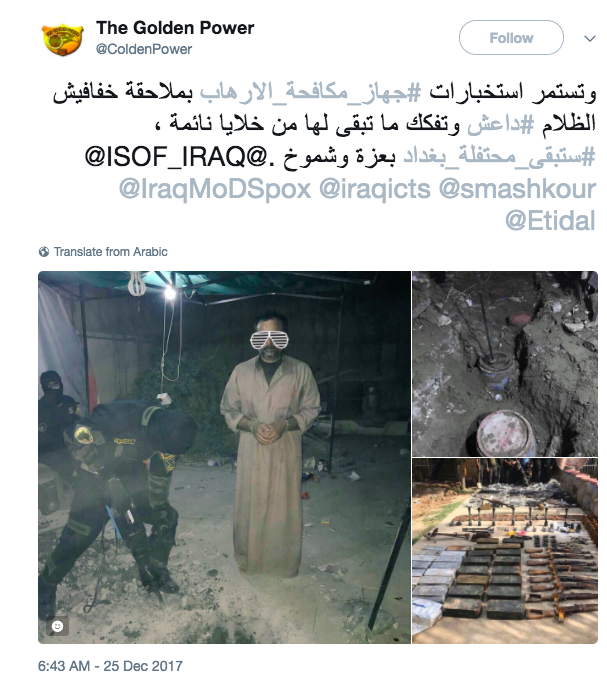
The Twitter account “The Golden Power” shared the images.

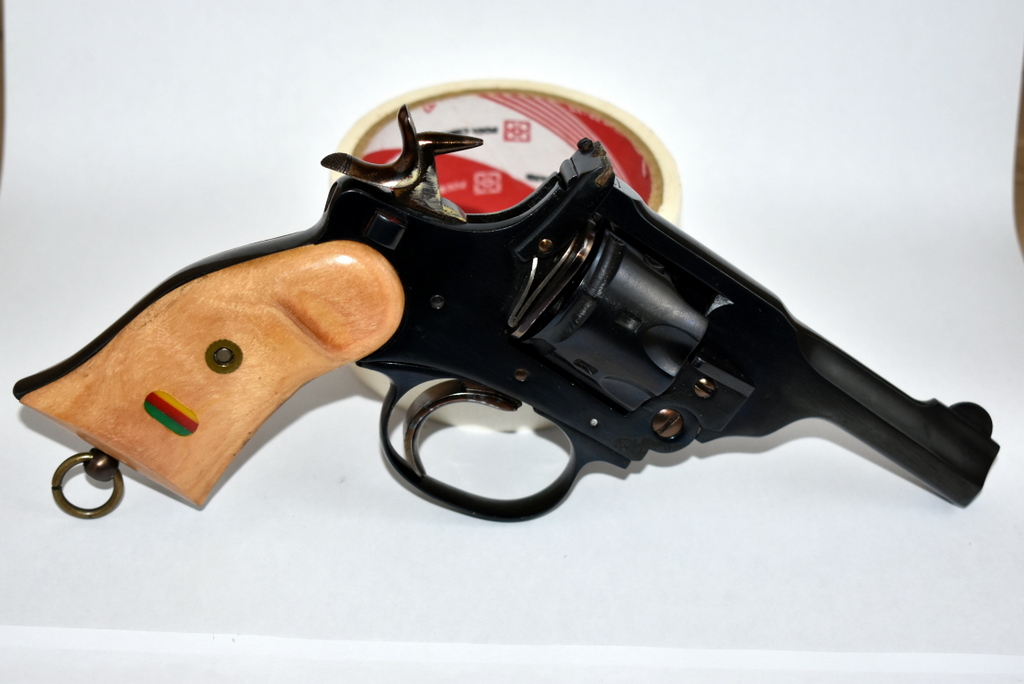
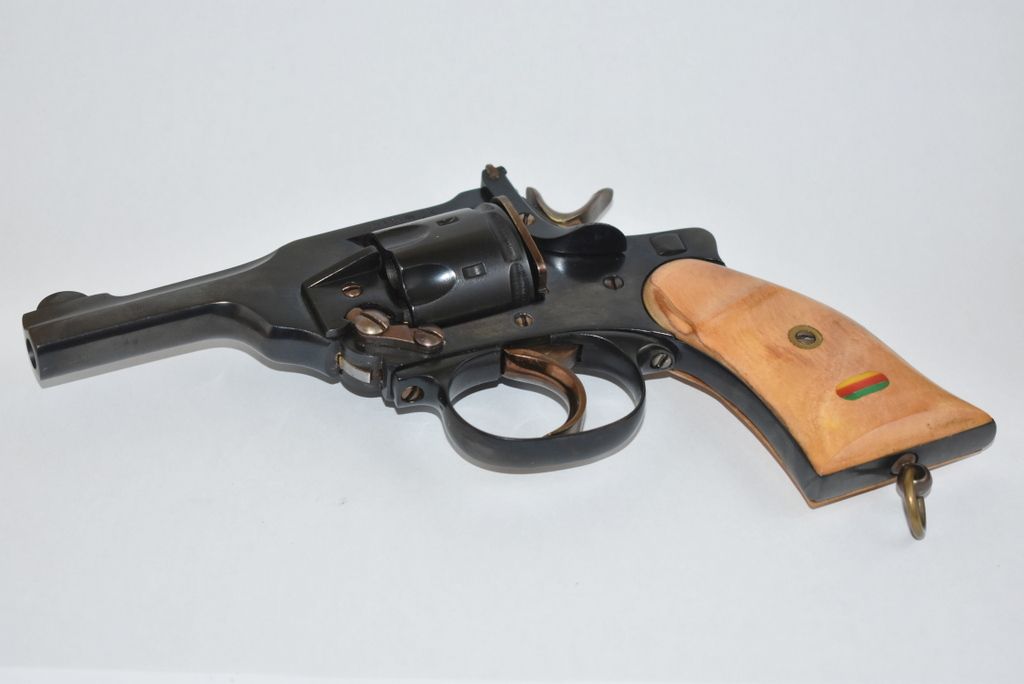
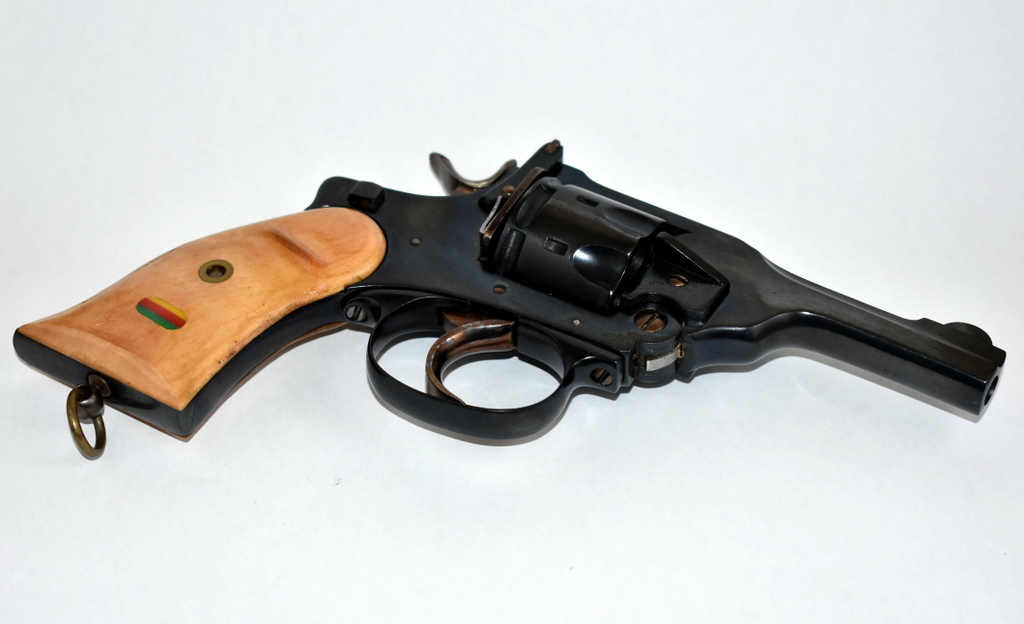
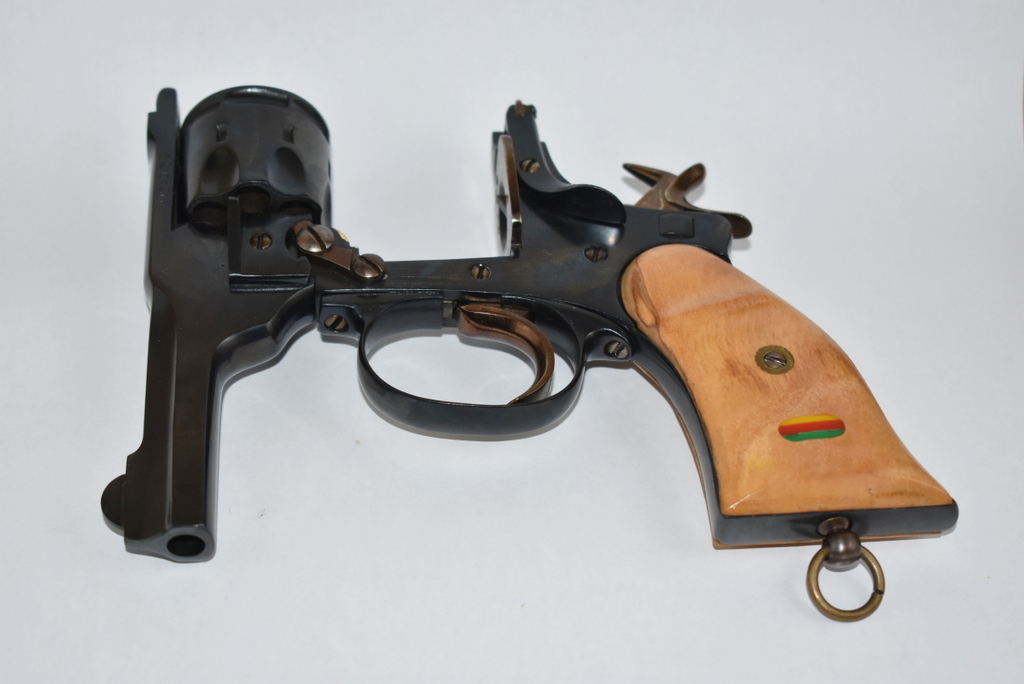
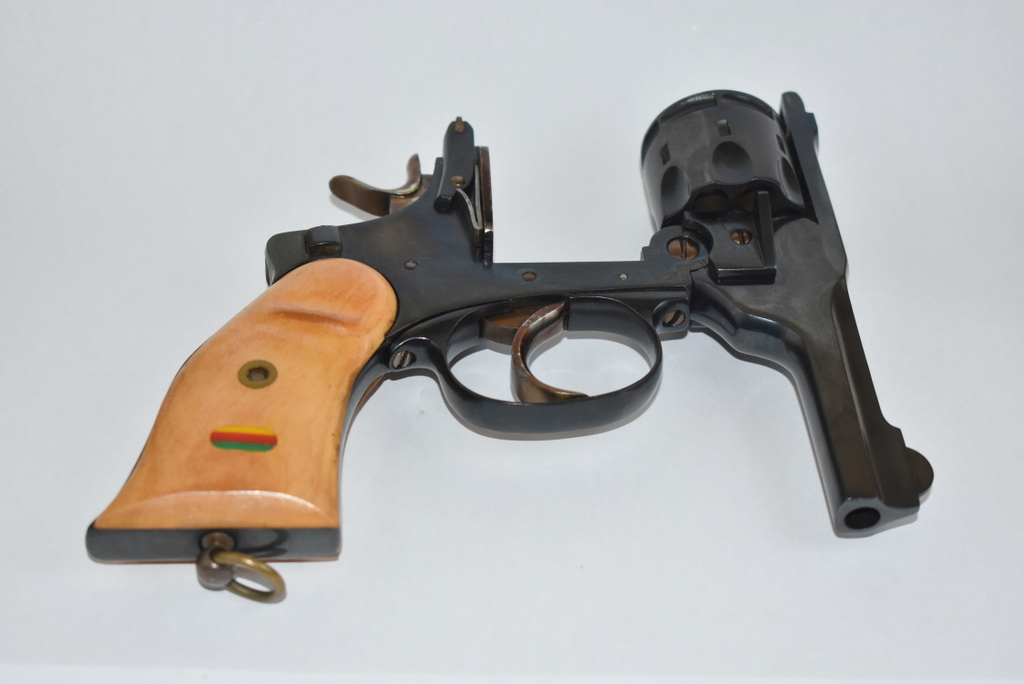
“Made in Darra” Webley and Scott .32 S&W Long

Nauman Afzal is a Pakistani based writer, and writes at his own very successful blog, My Random Ramblings as well. This is his first article for Silah Report.

In our part of the world, weapons have always followed a rather strange evolutionary path, if we talk about their development only. Darra Adam Khel or as I would like to call it, “Our Wild West” is the place where one can get a copy of almost any weapon made, at a price. The evolution of weapons here has always depended on the type of ammunition being used. In other words, it was the availability of a particular caliber of ammunition that dictated its development, unlike other places. That is akin to making cars on the availability of a certain kind of fuel. So in the 1960’s and 1970’s .32 ACP and .32 S&W Long were available in wide abundance throughout Pakistan. And one could either buy a foreign made weapon, which off course was expensive (as it is still today) or a Darra made revolver, which were available and still are being produced.

This particular piece is around 40 years old and is quite well made and kept. In those days many a “Khan” could be seen wearing this type of revolver across their chest with a dozen or more rounds inserted in the very belt holding it in place. Semiautomatic pistols were expensive and rare, so the de-facto choice was a Darra made wheeler, in .32 S&W Long, made to perfection. The local gunsmiths (who now have improved to the extent that they can and are in fact making copies of CQA the Chinese equivalent of AR15) perfected their skills to make excellent quality revolvers.

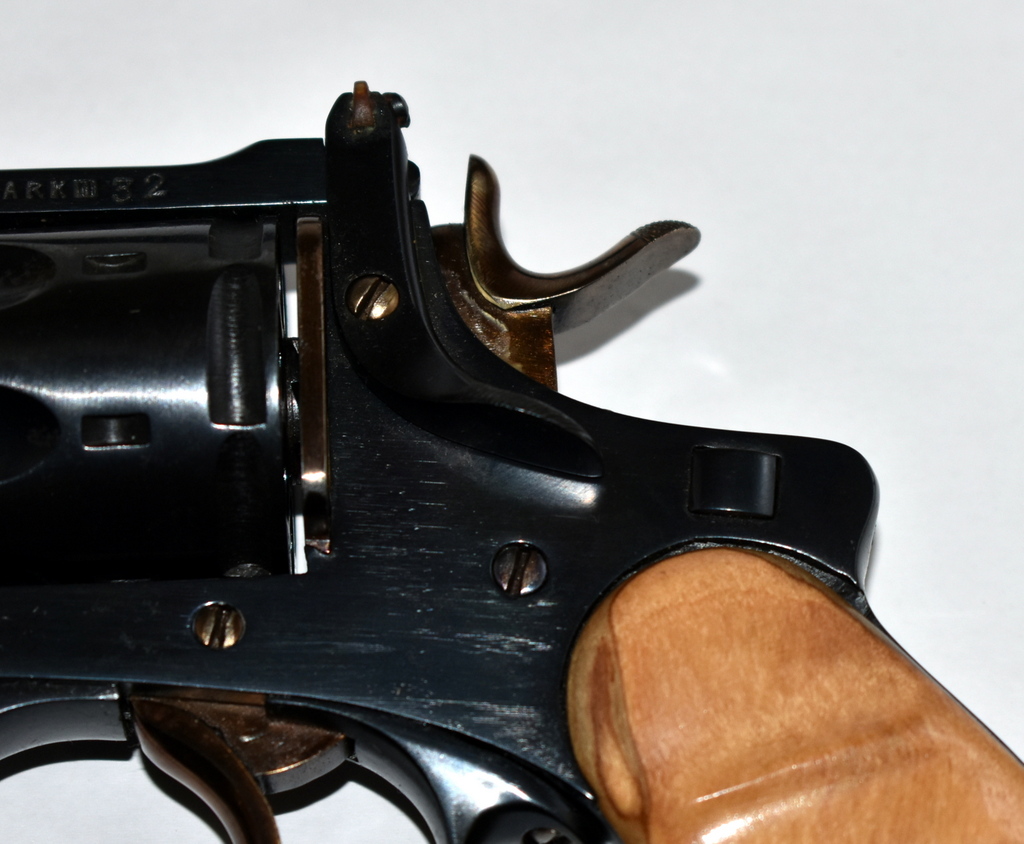
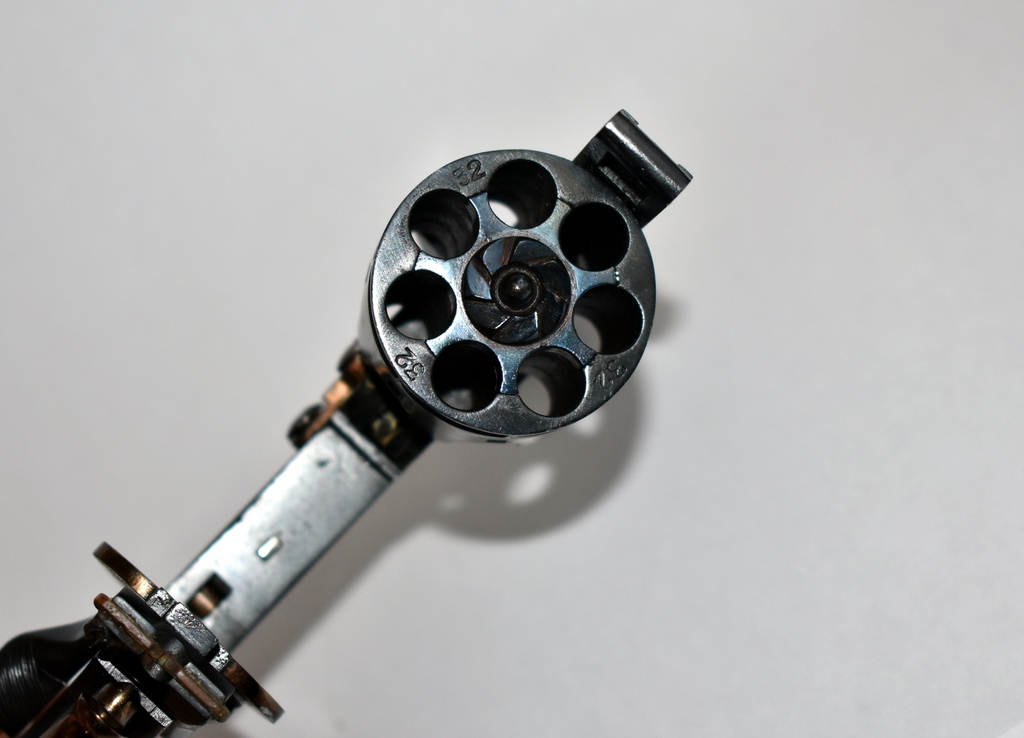
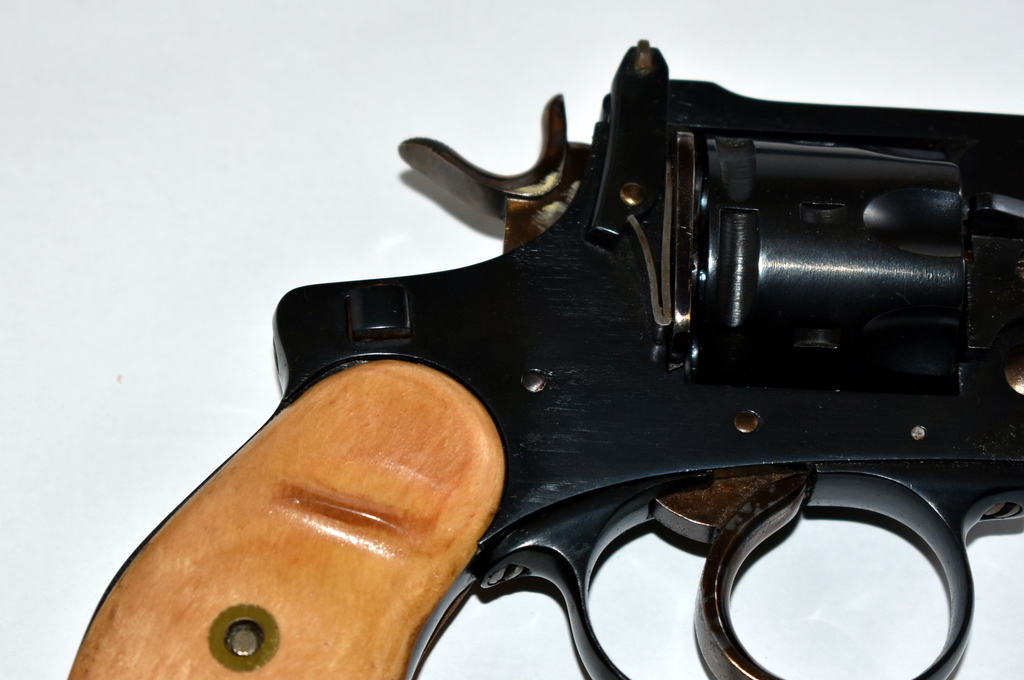
This little piece is an exact copy of the .32 Webley and Scott (Mark IV precisely), a top-break, seven shot revolver, single as well as double action brass hammer, a brass trigger and safety. 

Caliber:        .32 S&W Long

Weight:        720 grams approx

Action:                  SA/DA

Cylinder Capacity: 7 shots

Barrel length:      3.5”

Front and Rear Sight: Fixed

Top Break: With extractor for removing cartridges from the cylinder

Safety: Manual, Lateral Safety just behind the hammer

A dozen screws all along the body hold it in place, grips included. This revolver has its fair share of brass used in it; the hammer, trigger and the rear sight plate are made out of brass which gives it a shiny look when polished. The hammer, as well as the top-break lever, are knurled for a better grip.

Observe the Mark IV 32 marking over the left side on top of the cylinder, which is quite reminiscent of the original Webley & Scott. Other than this there are no markings or writings on the body. The hammer itself is pointed much like a nail or needle quite unlike the original Webley.

The revolver weighs 720 grams approximately, and in this size it is a good choice for a carry weapon, even nowadays. I have seen a few newer versions of this revolver selling for around Rs. 1500 that makes it around $ 15 plus or minus few today. (But off course .32 S&W Long is expensive here. ) The newer versions lack brass and hence give it a finish that appears quite dark in texture.

Frankly, I never tried disassembling one recently, but since everything is held in place by screws taking it apart is not an issue. But then there is not much point in taking apart a revolver. This particular piece has its grips changed, the original ones are made of poor quality plastic. The wooden grips were custom made for $3, both sides. Marking 32 on the inside the cylinder indicates its caliber.

These revolvers are known to stand out in reliability, a testament to the good quality workmanship in Darra. Since the advent of semi-auto pistols and the craftsmen ability to make good copies Revolvers are less in demand, still one can find them in the market. Somehow people tend to think that revolvers are inferior in performance as compared to semi-auto pistols.

This particular piece has been in my family and has passed hands from one generation to another, with no more than a hundred rounds fired through it. It now has an emotional value attached to it, and is held in much reverence amongst gun enthusiasts.

Forgotten Weapons discusses Peshmerga Anti-Material Rifles

Ian from Forgotten Weapons  has put together an interesting overview of the 12.7mm Zagros And 14.5mm Sahar Anti-Material Rifles in use by the Kurdish Peshmerga. These improvised rifles are making quite the headway in the current Syrian civil war, due to the prevelance of VBIEDs and the complexity of fighting in urban settings.

DI Optical Reflex Optics on M2 HMGs at Turkmen Parade

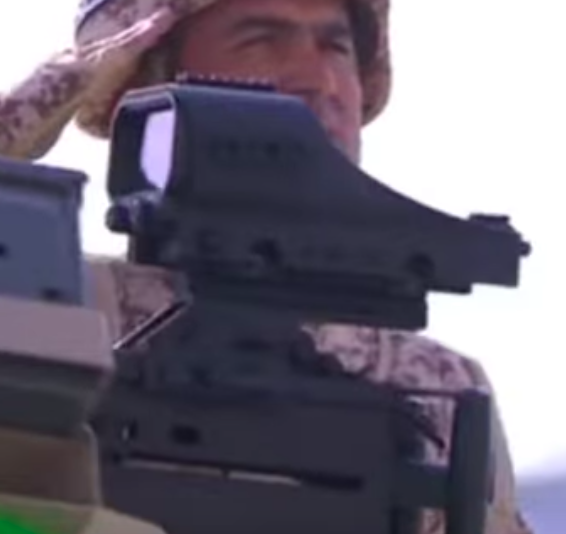
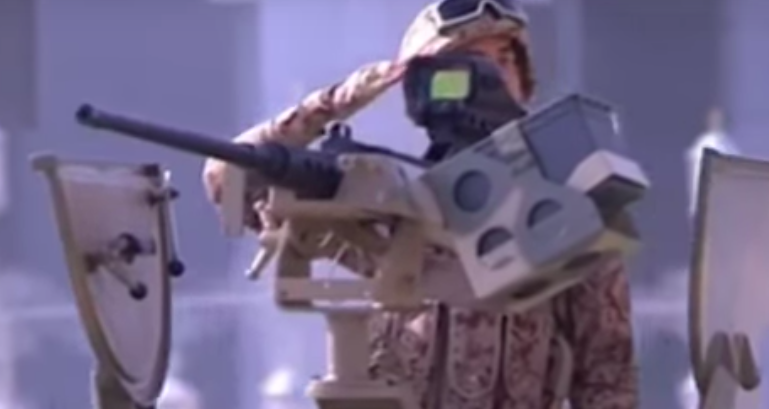
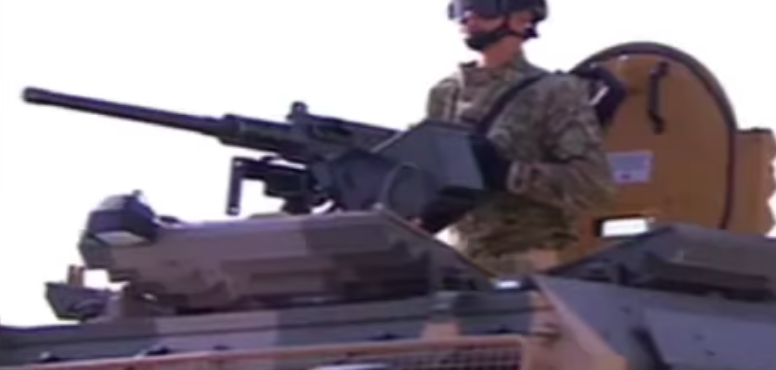
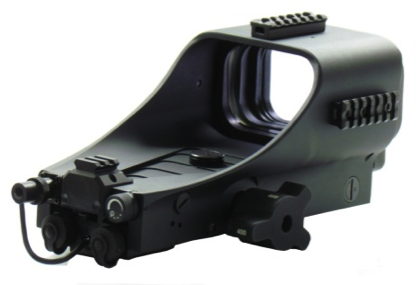
Among the latest small arms displayed at the recent Independence Day Parade were DI Optical USA DCL-120 reflex sights mounted to .50 BMG M2 Heavy Machine Guns. Currently, it isn’t known what type of mount is clamped to the receiver of the machine guns. But it certainly appears to be a Picatinny rail that allows the DCL-120 to be mounted to it.

Some of the M2 machine guns didn’t have the optics mounted on them.

From the manufacturer website-

Optical Data

System Reflex, Collimator System
Magnification No Magnification (1X)
Eye Relief Unlimited
Red Dot Size 3 MOA Dot / 40 MOA Circle
Field of View (FOV) 96 m @ 200m
Objective Lens 120 × 70 mm
Optical Coating Anti Reflex Coating All Surfaces, Multi-layer Coating for Reflection of Red Light

Electronic Data

Battery Two CR 123A 3V Lithium Battery, or External Power Source : 10~28V (Option)
Battery Life 1,000 hours
Dot Brightness Settings 1 Off & 5 Daylight Mode, 3 Twilight Mode, 3 Nightvision Mode

Mechanical Data

Housing Material High Strength Aluminum
Surface Finish Hard Anodized, Matte, Carbon Black
Mounting Solution Built-in Type (For MIL STD 1913 Picatinny Rail)
Click Adjustment 1 click = 25mm at 200m
Trajectory Ranges 200, 400, 600, 800, 1,200 meters

Dimensions

Length/Width/Height 330 mm / 180 mm / 150 mm
Weight 3,000 g

Environmental Data

Temperature Range −41 ℃ ~ +71 ℃

Beretta and Sako Presence at Turkmenistan Independence Day Parade

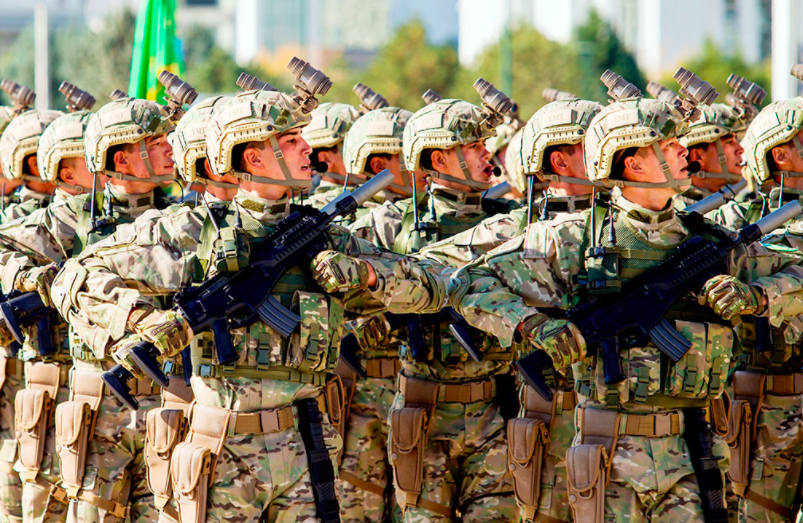
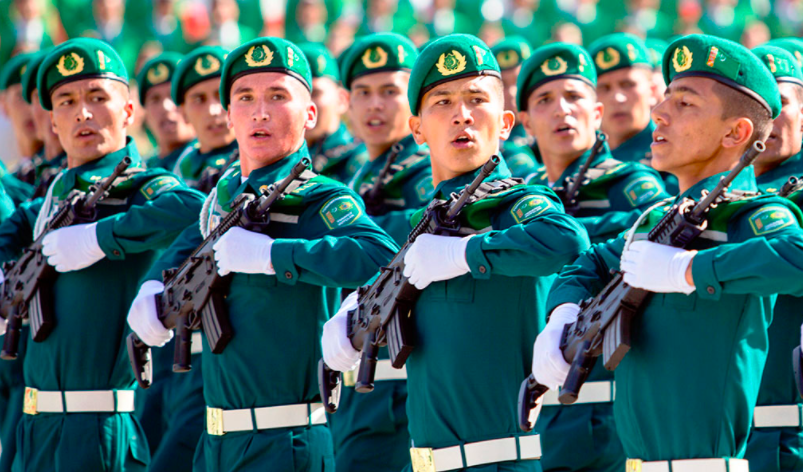
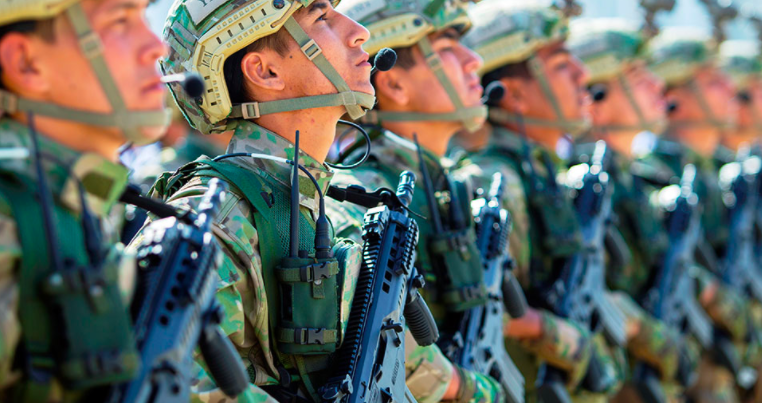
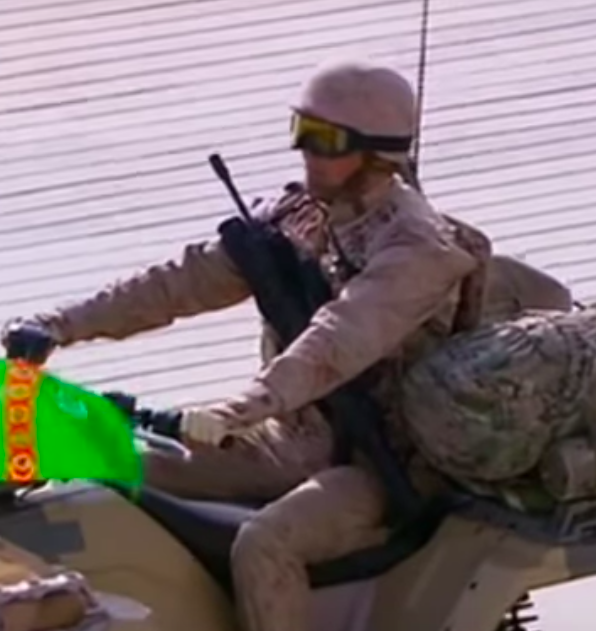
At this year’s 26th anniversary of the Independence of Turkmenistan, Beretta and Beretta owned Sako came out in large numbers among the small arms on parade. Of course, the Beretta 5.56x45mm NATO ARX160 took center stage among both the line troops and special operations component, with the SF component also being armed with IWI 5.56x45mm NATO Tavor TARs.

21st Century Asian Arms Race had this to say about the current rearming of the small Central Asian state–

Turkmenistan is often lampooned for its bizarre civic culture that combines national symbols with its leader’s personality cult. But judging by the recent military parade in Ashgabat, Turkmenistan’s armed strength is for the sole purpose of territorial defense. Unlike North Korea, Turkmenistan doesn’t pose a threat to global peace. It’s also trying to crawl out of an economic mess caused by its reliance on energy exports.

Neither does Ashgabat appear to have regional ambitions. On the contrary, it faces a grave threat from its border with Afghanistan where militants tied to either the Taliban or ISIS are active. In the greater scheme of things, Turkmenistan’s imperative is balancing its aspirations with the looming strength of China, India, Iran, Russia and Turkey.

Yet even if it’s overshadowed by larger countries in its neighborhood, when it comes to mass calisthenics, very impressive rifle drills, and costumed Turkmen archers trotting on horseback, Turkmenistan makes sure it surpasses its neighbors in pageantry.

Along with the ARX160s, there were some mounted with Beretta’s accompanying 40x46mm low-velocity GLX-160 UBGL.

And a designated Marksmans variant.

It appears that Turkmenistan has also purchased the IWI Negev light machine gun as well.

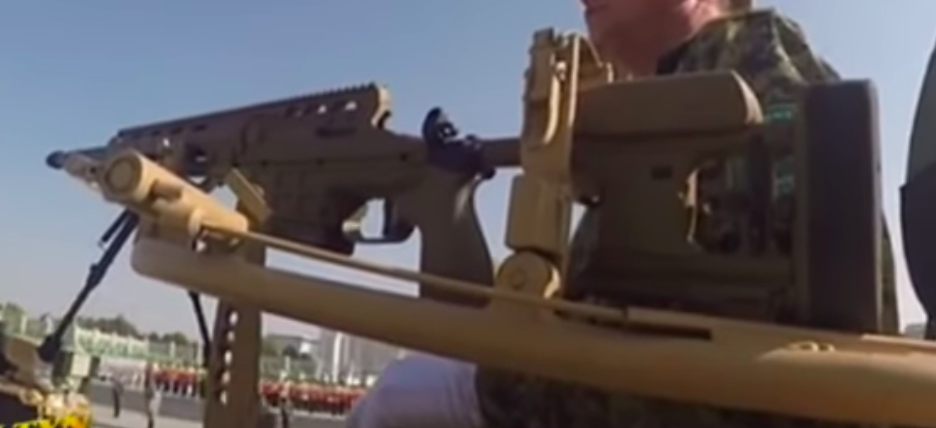
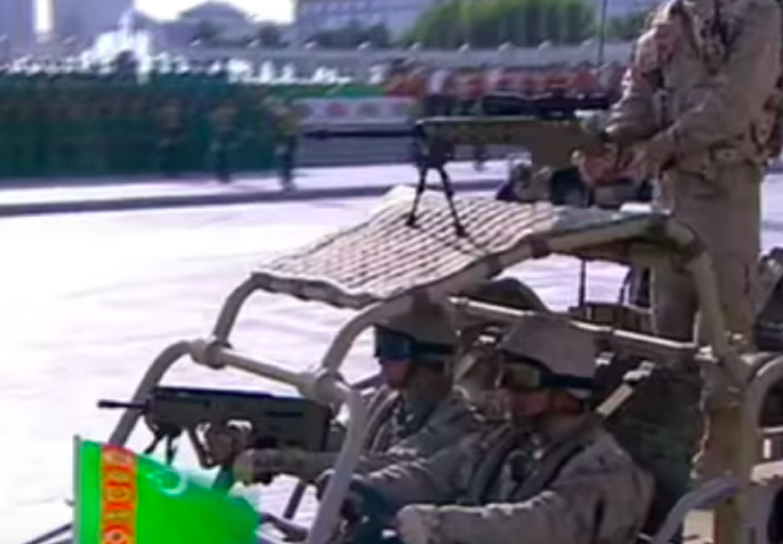
But the other significant update was with the precision rifles, that of Sako TRG M10s. These are probably chambered in 7.62x51mm NATO but could be in .338 Lapua Magnum. They were shown in a tan finish.


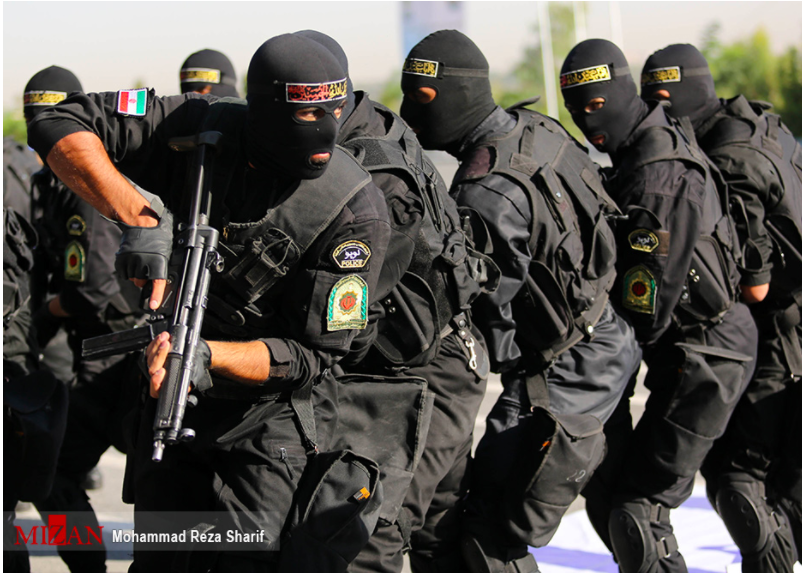
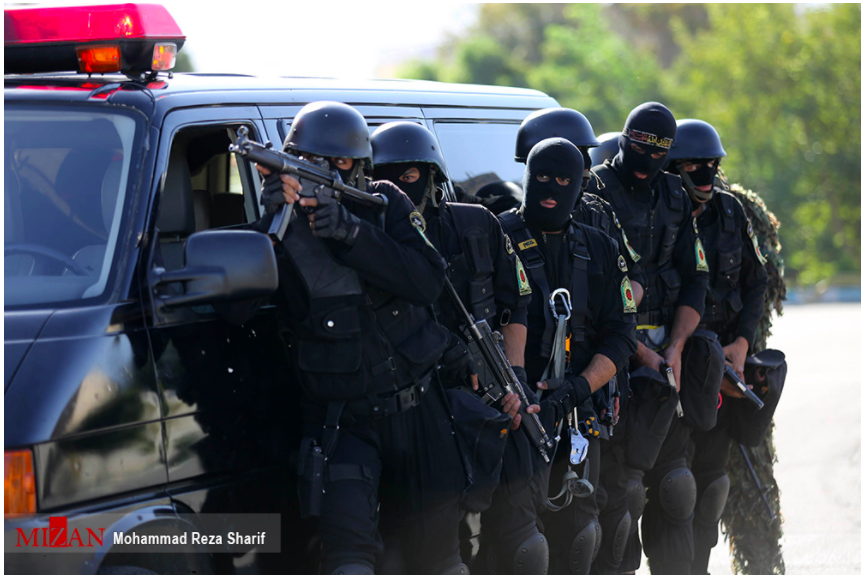
Straight MP5 Magazine spotted in Isfahan LE Demonstration

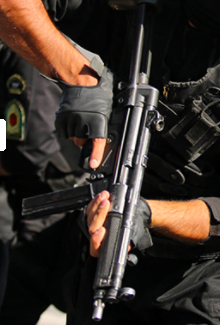
Within the Law Enforcement demonstration recently held in Isfahan (in which we posted about a thermal optic in use ), a straight walled magazine was spotted in use by one of the officers taking part in the demonstration. Iran’s Defense Industries Organization produced licensed copies of the MP5 from the time of the Shah (along with the G3), and it is still heavily employed by Iranian forces. Most of the MP5s today appear to be equipped with the curved 30 round magazine, but that is what makes this particular one stand out, due to the original straight wall design that Heckler & Koch introduced the very first MP5 variants with.

The MP5 has several variants within Iran, one of which has green polymer furniture, while there is an MP5K variant with a forward grip.

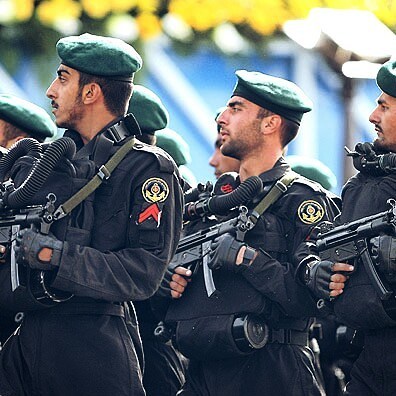
Notice the straight magazines in use with the Islamic Revolutionary Guard Corps in this formation.


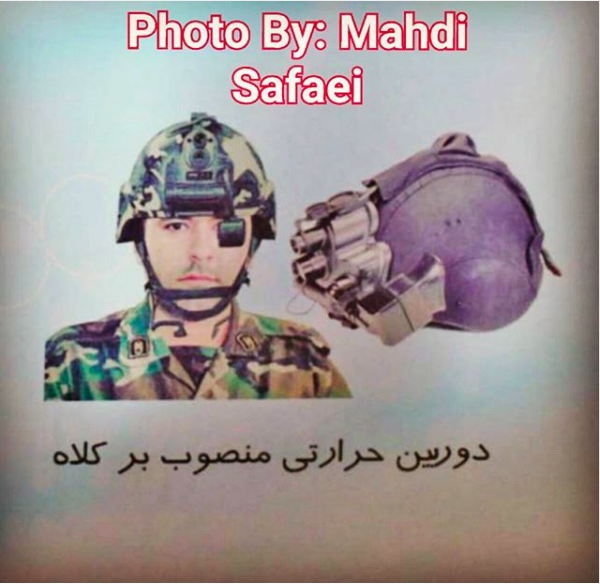
Iran’s Head Mounted Thermal Optic from IPAS 2017 and Isfahan Police Demonstration

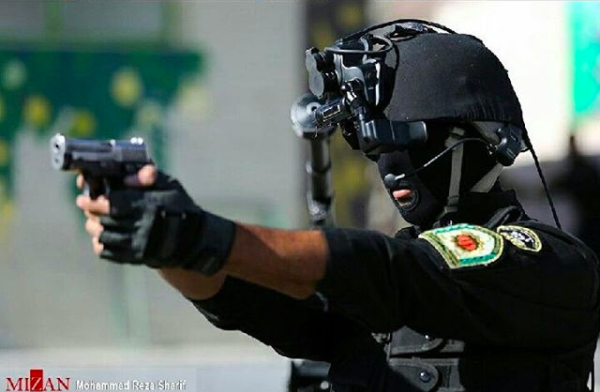
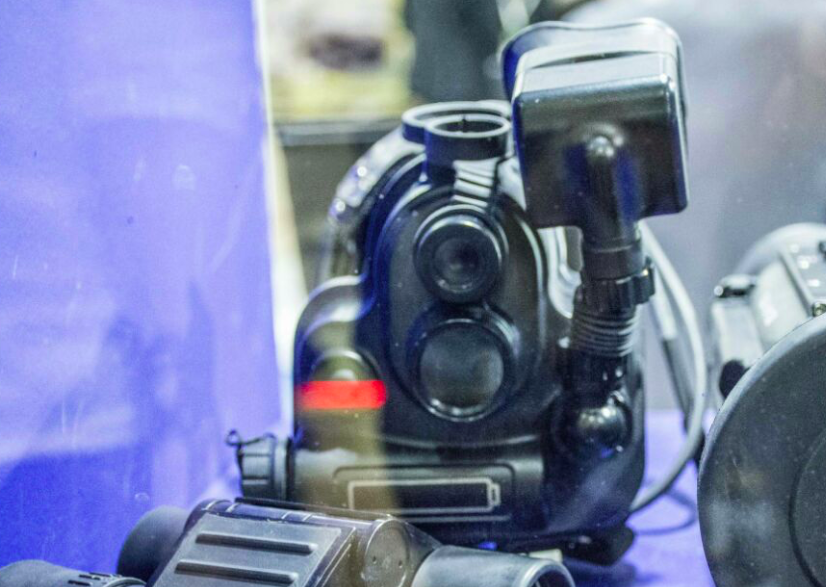
Notice the covered objective lens.

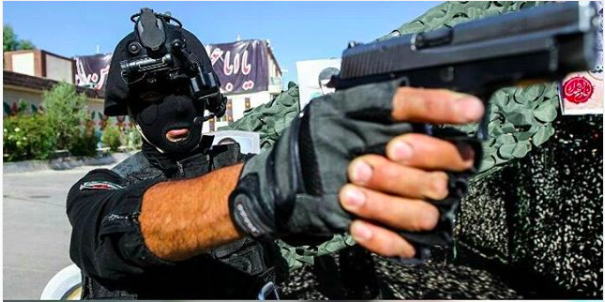
Photographs coming out of IPAS 2017 (Telegram source) and a recent demonstration put on by  Isfahan Law Enforcement have revealed what appears to be a battery powered thermal optic that attaches to a user’s helmet and has a single ocular lens attachment that covers the left eye. The optic “detects” through an objective lens on the helmet, which appears to project an image into the ocular lens. The fact that this optic is in use by what appears to be special Law Enforcement teams in Isfahan would make it seem that it has been in development for a while, and has perhaps even been available to Iranian defense forces for some time as well, due to Law Enforcement worldwide routinely lagging behind in equipment procurement.

From Farsi-“The heated (Thermal) binocular resting on a head/hat”
The optic is powered by what is most likely an AA battery inserted from the right side of the device. The two objective lens’ stay in the upper position throughout use, and are covered with a lens cap during daylight hours. The eyepiece swivels down on a ball mount for maximum flexibility.

A Closer Look at Iran’s Barrett M107 Copy, the Hoveizeh

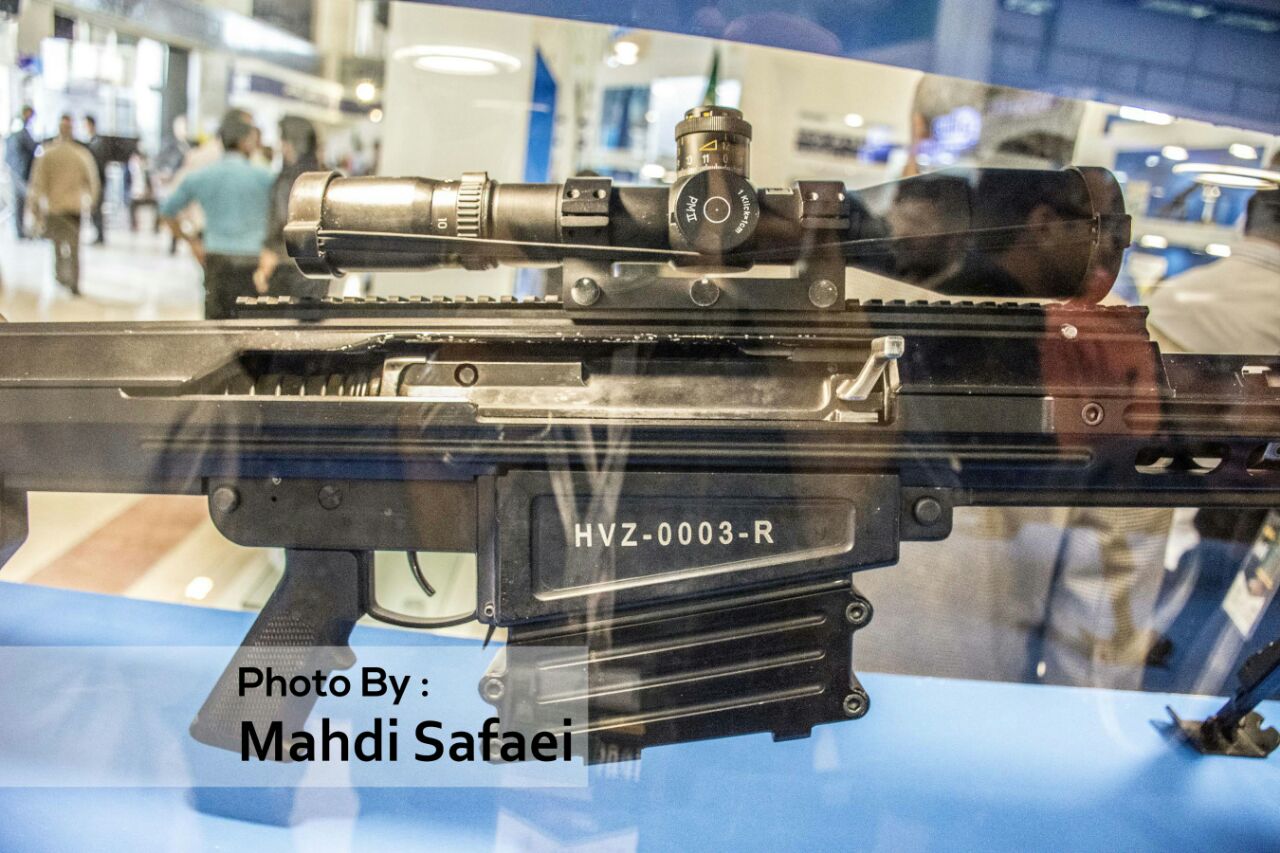
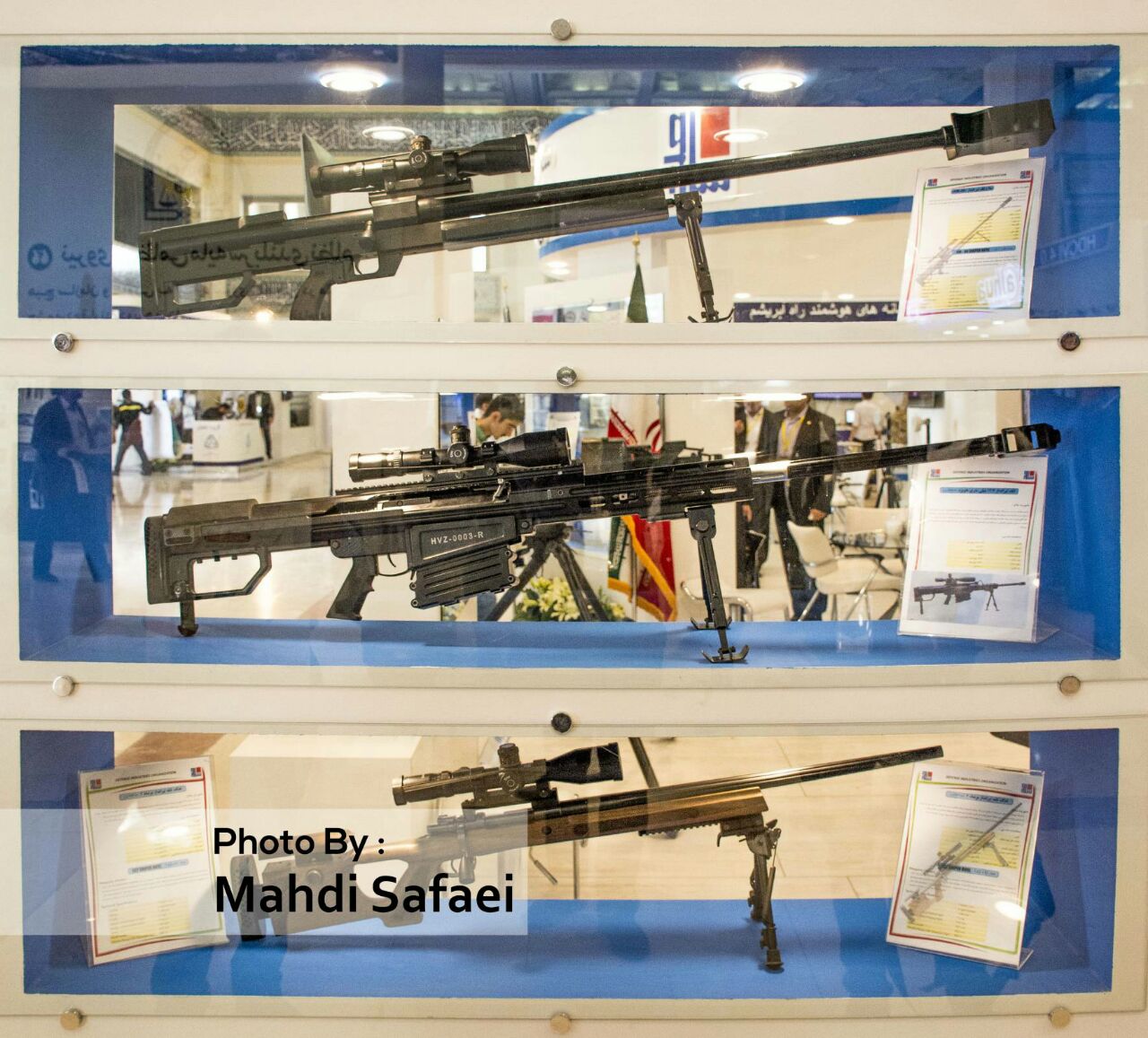
IPAS 2017 in Iran brought with it the introduction of the .50 BMG Hoveizeh anti-material rifle. Thanks in part to a popular Iranian Telegram channel we’re able to take a much closer look at the rifle and exactly what the Defense Industries Organization duplicated, and what was added. From what we can tell, the general layout and operating mechanism of the U.S. Barrett M107 was copied, but some of the exterior features of the weapon weren’t. One difference was the magazine which appears to be a polymer shell held together with screws, not unlike some Airsoft designs.

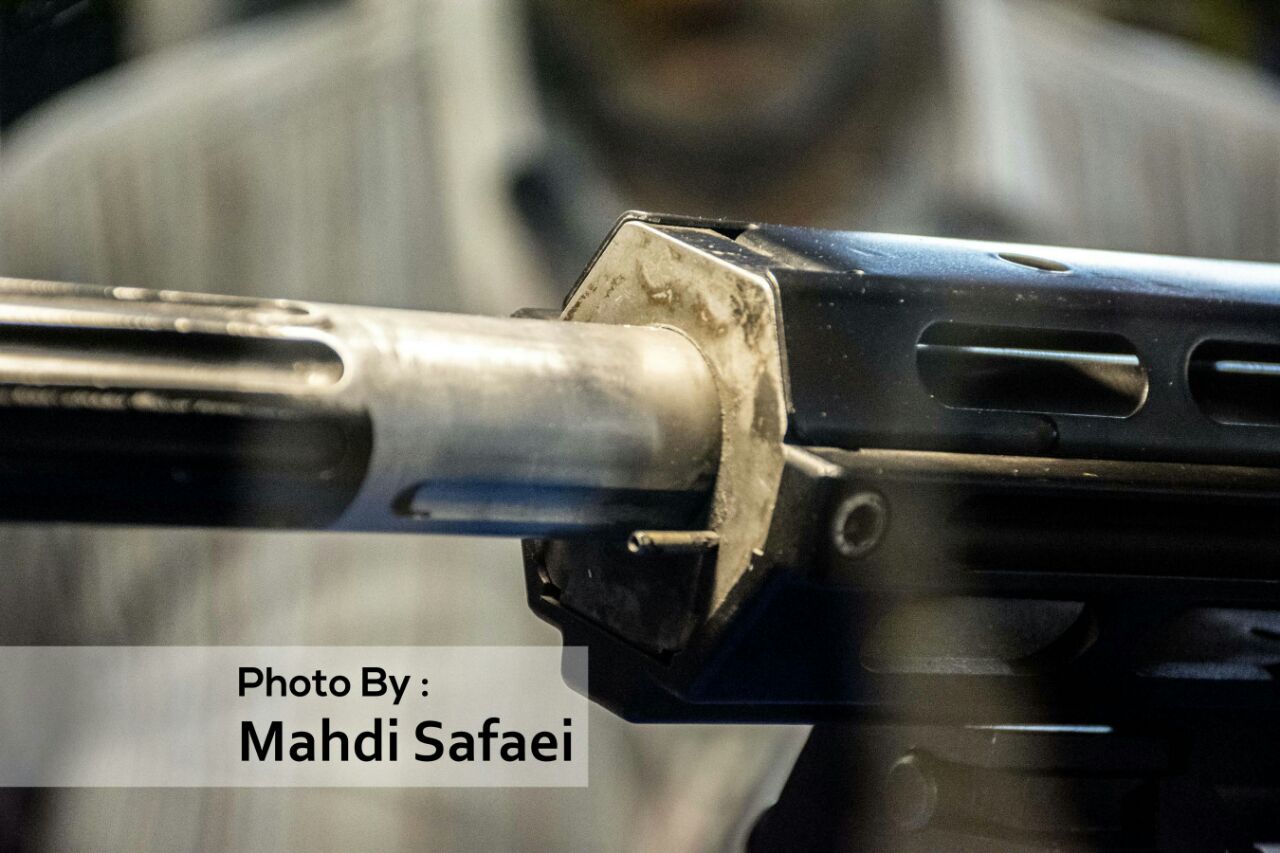
In this photograph the barrel bushing has an extra pin protruding from it that we don’t know the purpose of yet. Notice what appears to be a hex screw holding the upper frame to the receiver. In addition notice the flutes down the barrel.

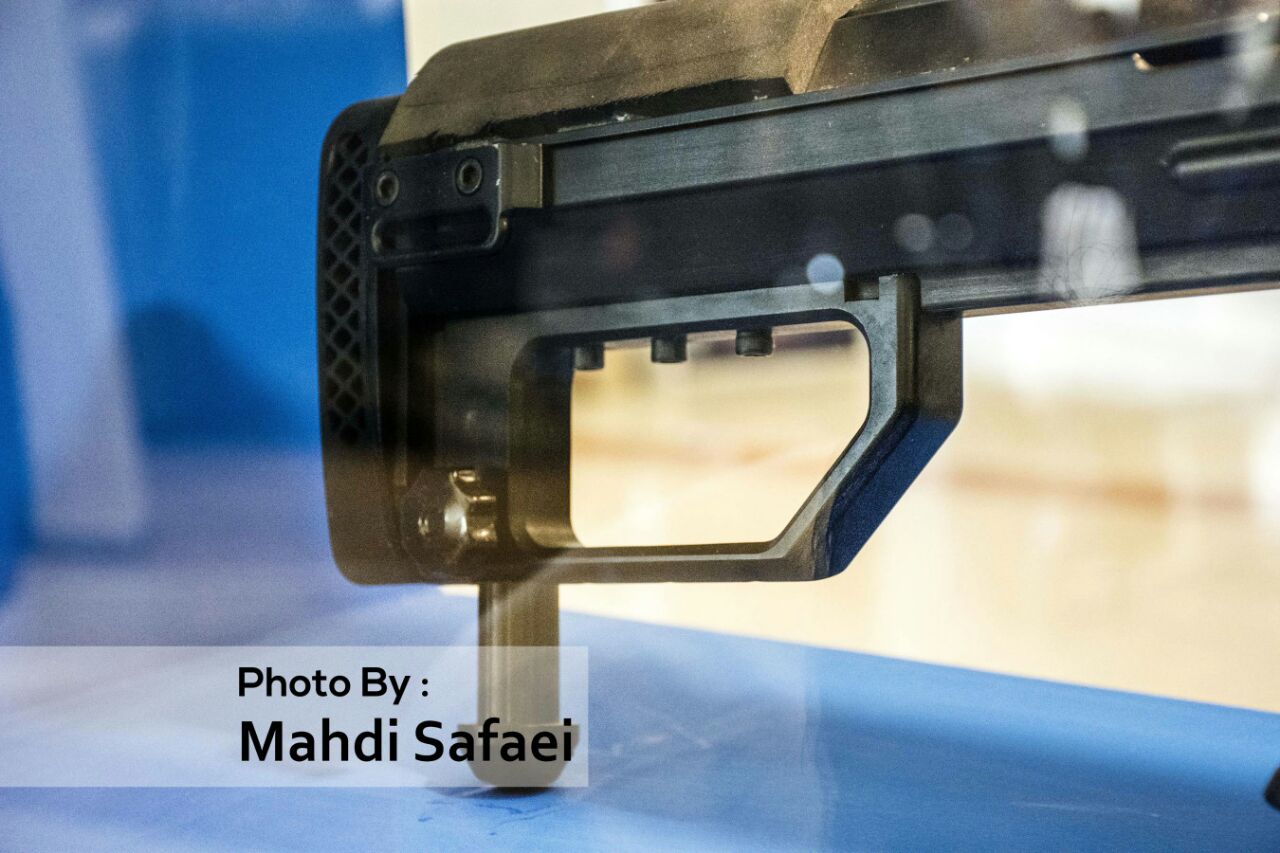
The sling swivel appears to be on a sliding arrangement where a user might be able to loosen the screws of the swivel and tighten them back down where it fits the best. However, the monopod and rear gripping surface looks to be stationary with the three screws anchoring it to the receiver of the rifle. 

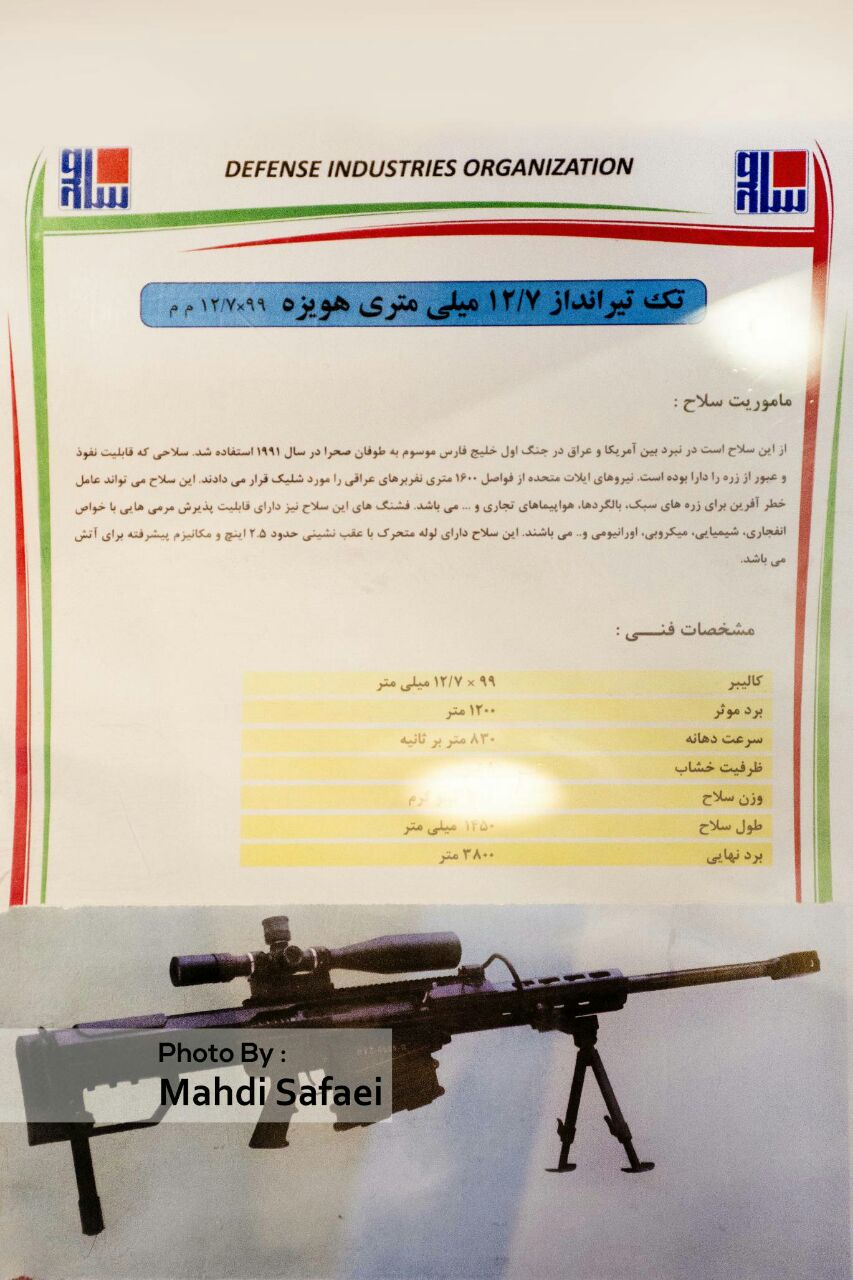
Notice the different bipods mounted on the rifle in the leaflet compared with the bipods mounted at the defense exhibition

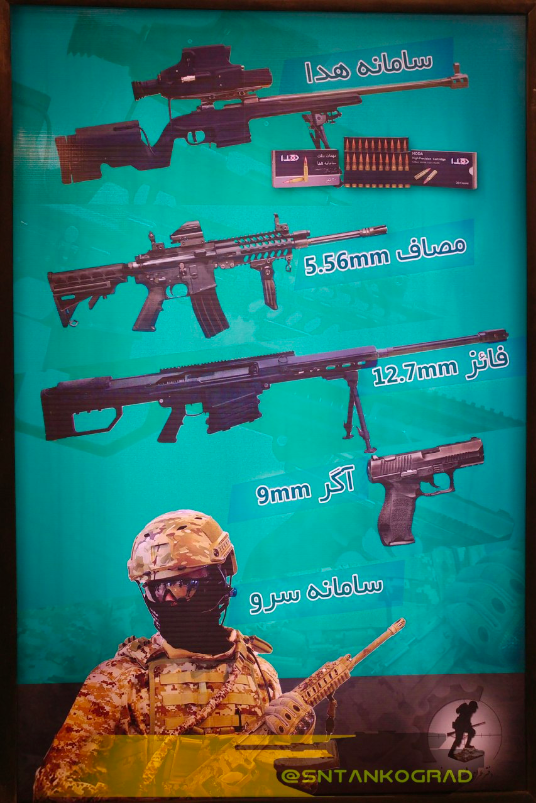
A point of controversy lies in the name of the rifle itself. The majority of online material, show leaflets, and even abbreviated on the rifle itself on the magazine well is هویزه, however in this leaflet we clearly see the name, فائز printed next to the rifle.