French MAS Rifles in Syria, a Historical Perspective

This guest article is brought to us by Bruce Marduel, taking a look at the French MAS series of bolt action and semi-automatic rifles in service throughout Syrian history.

There are plenty of exotic and obsolete weapons in the Middle East, and ancient French weapons produced by Manufacture d’Armes de St-Etienne can be spotted regularly in Syria along with StG 44, Mosin-Nagant and other relics.

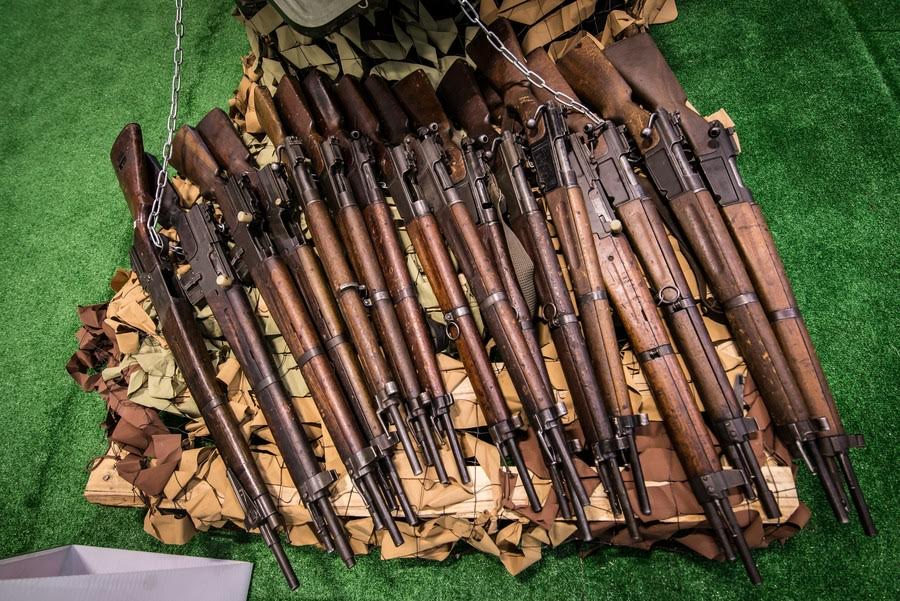
Most of the rifles produced for the French Army during the XXth century were produced by Manufacture d’Armes de St-Etienne (MAS) : from the bolt-action Fusil à répétition 7.5mm M.36 a.k.a MAS 36, to the Fusil d’Assaut de la Manufacture d’Armes de St-Etienne also called FAMAS. The MAS 36 equipped the French Army since the 1930’s, followed by MAS 49 and MAS 49/56 after WWII. These rifles have a very long service life both in France and overseas.


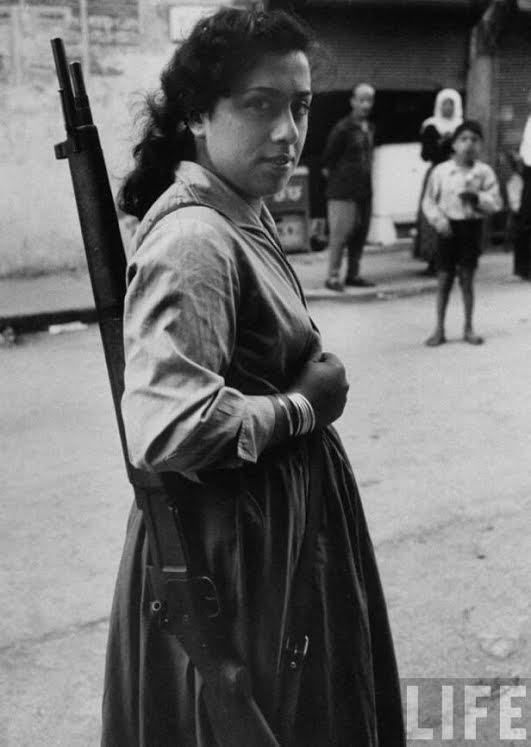
MAS 36 arrived in the Middle-East during the Mandates and Second World War, back then France ruled over Syria and Lebanon, and French troops used MAS 36. During WWII, the French authorities of the Regime de Vichy (allied with Nazi Germany) declared Lebanon independent in 1941, the decision was confirmed by Free France and Charles de Gaulle, so the country became independent after WWII. The armed forces from newly-independent Lebanon used MAS 36 as a standard-issue rifle until the 1950’s when FN FAL replaced them. Lebanese MAS were kept as a reserve rifle or sold on the civilian market, so that they are visible among militias during the 1958 troubles in Lebanon.

Civilian MAS 36 in Beirut, 1958

1958 unrest in Lebanon

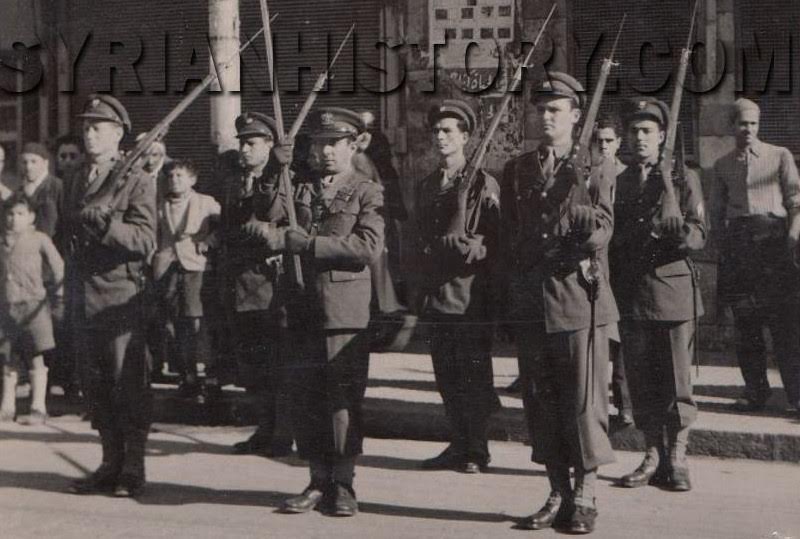
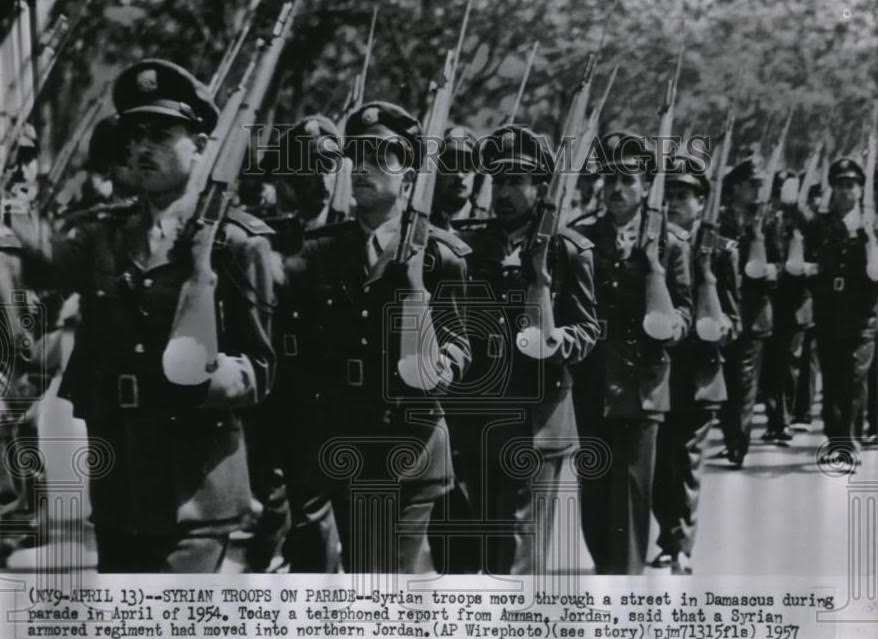
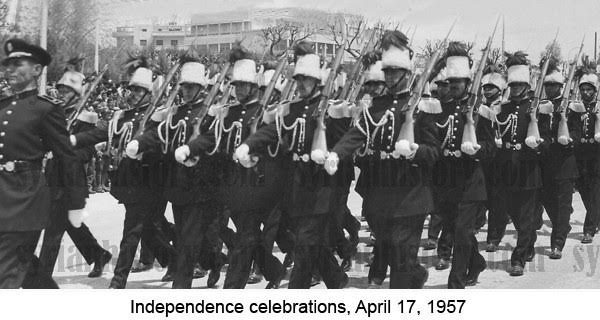
The most significant shipment of MAS rifles to the Middle-East took place in the early 1950’s, when France delivered weapons to Syria : six-thousand « Syrian contract » MAS 49 (serial number F3XXXX), twelve-thousand MAS 36 and a production line for 7,5x54mm ammunition. Photos of the Syrian Independence Day show the subsequent evolution in the armament of Syrian troops from 1946 to 1966 :

1946 parade with WWI Lebel

1954 parade with MAS 36

A file photo from Syrian Arab News Agency (SANA) archive

1957 parade with MAS 36

When Syria got closer to the Eastern Bloc (Baath putsch in 1963, and pro-soviet wing takeover in 1966) the Syrian army abandoned french rifles and adopted Kalashnikov, as showed in the video of the 1966 parade.

Use in Syrian Civil War
.

Small Arms Captured by SAA During Operation BASALT

Small Arms Captured by the Syrian Arab Army (1)

ANNA News (Abkhazian Network News Agency) has published a video where they show the arms and munitions captured by the Syrian Arab Army (SAA) as a result of Operation Basalt launched by the SAA against various armed groups in Southern Syria. Besides the tanks, armored vehicles and anti-tank weapons, there is also a wide variety of small arms which is especially interesting in the context of Silah Report. Let’s watch the mentioned video first then discuss what interesting small arms were shown in the video.

https://www.youtube.com/watch?v=JIWP9Jzbzaw

Below you will find screenshots from the video with captions describing the weapon systems shown in the image.

Small Arms Captured by the Syrian Arab Army (3)
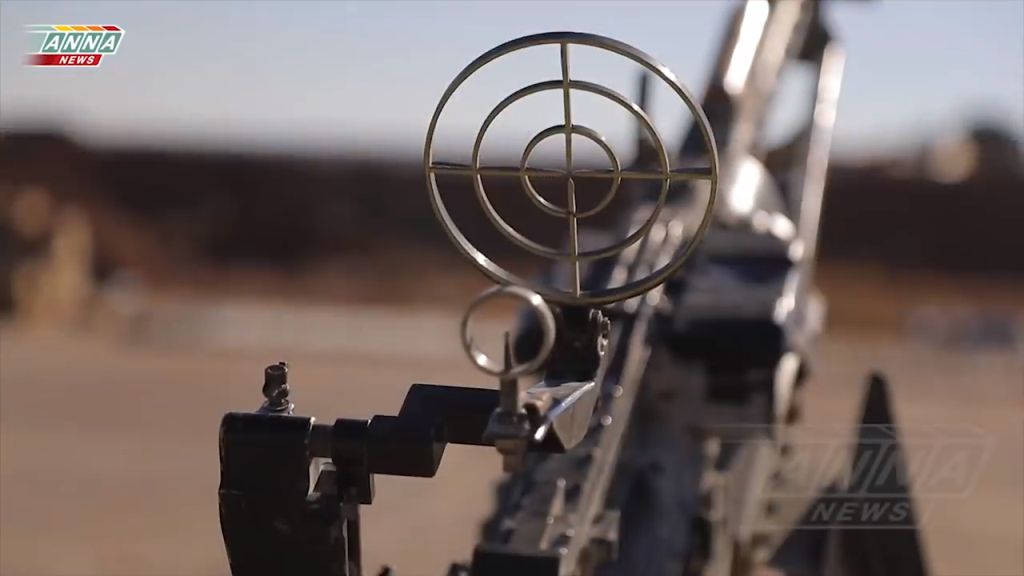
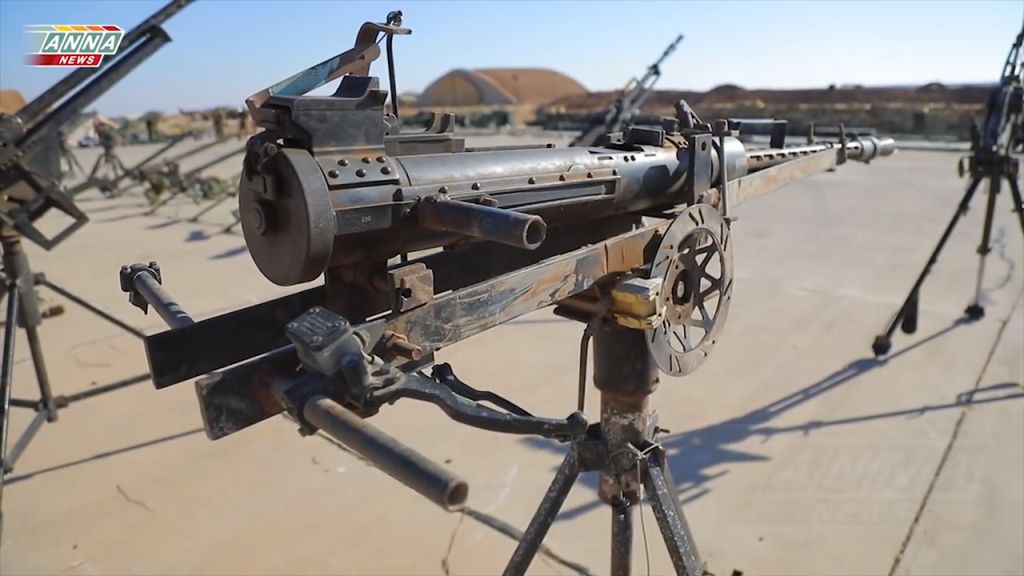
Probably the most widespread heavy machine gun in this conflict is the DShK, however, you can also see 14.5mm KPV machine guns like the one shown in this image.

Small Arms Captured by the Syrian Arab Army (6)

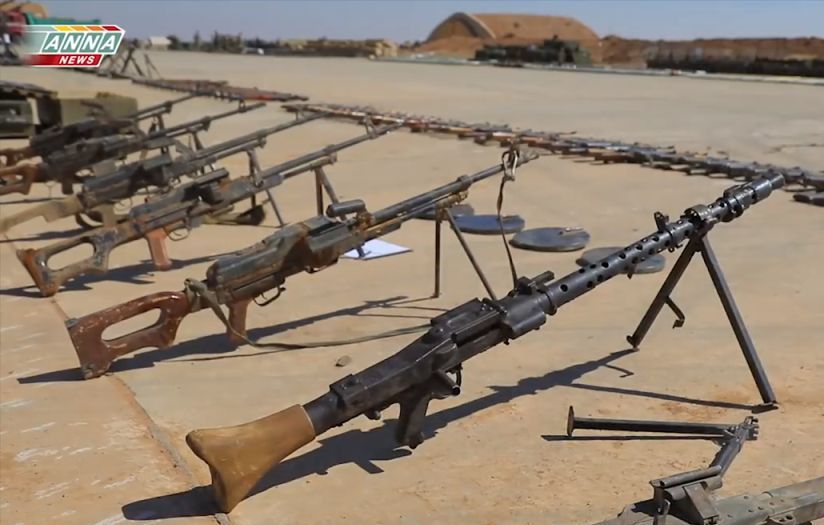
MG-34 with a number of PKM machine guns on the background. I think at some point a new wood stock for the MG-34 was made locally which should be the reason why it has a more simplified look.

Small Arms Captured by the Syrian Arab Army (4)
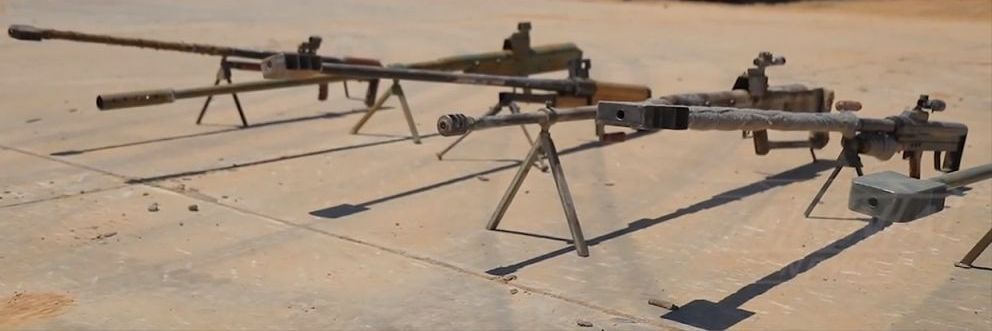
Several anti-materiel rifles. Some of them look similar to Steyr HS-50 or its Iranian copy called Sayyad or the Palestinian copy Ghoul.
Small Arms Captured by the Syrian Arab Army (5)
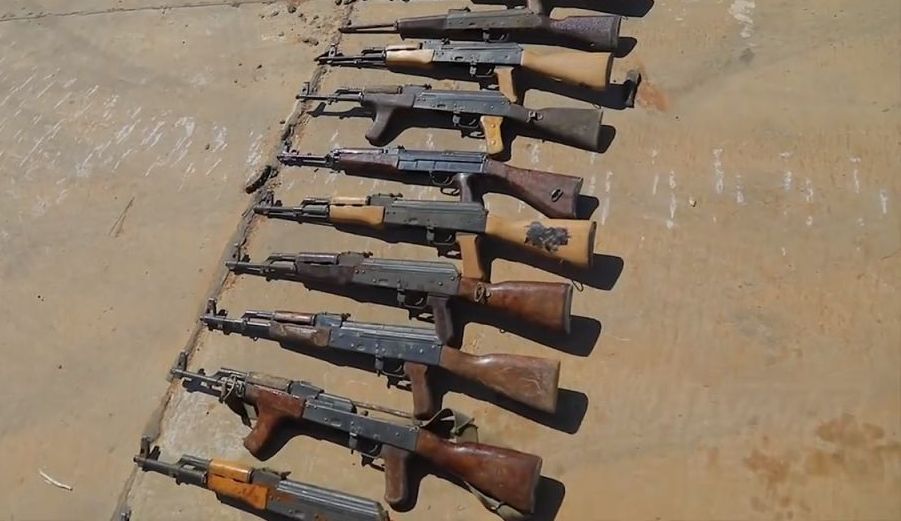
Needless to say that the most frequently seen rifle in the Middle Eastern conflicts is the AK with all its variations. In this image, you can see a number of stamped receiver AKMs including some Romanian ones with their distinct lower handguard shape which has a built-in vertical grip (a.k.a. “dong” handguard). Note also that the fourth rifle from the top is a Czech Vz. 58. And perhaps the most interesting one is the rifle on top which has an East German stock and lower handguard and lacks the pistol grip, gas tube and gas block. Let’s take a closer look at it.
Small Arms Captured by the Syrian Arab Army (9)
It is possible that this rifle is just damaged and that’s the reason why it is missing some of the parts. However, I think the chances are high that they converted it into a straight-pull bolt action rifle for whatever reason (e.g. lack of spare parts to restore it).

Small Arms Captured by the Syrian Arab Army (17)

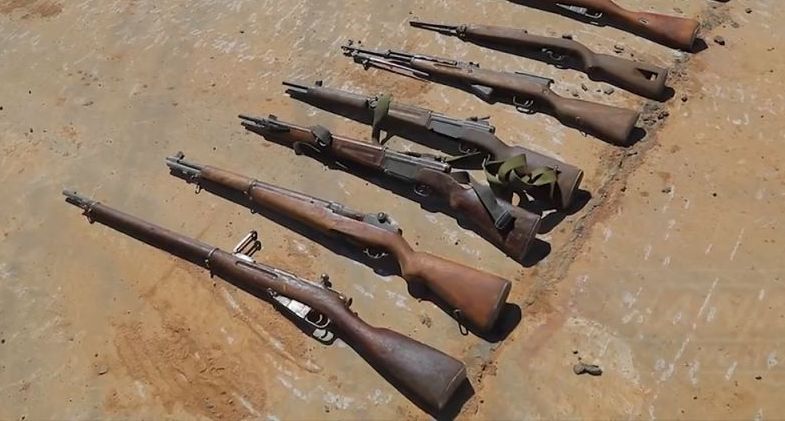
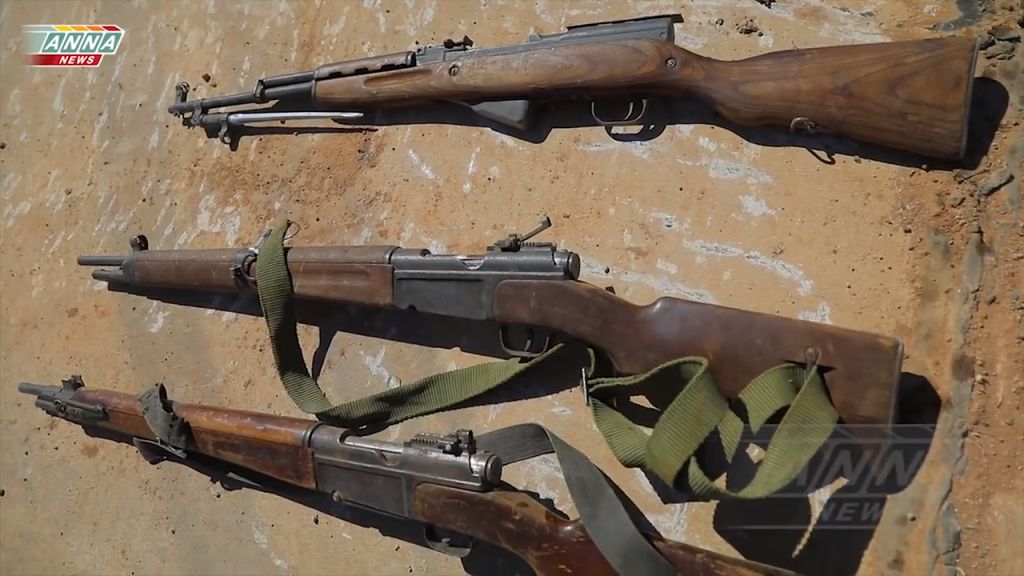
Last but not least, some WW2 weapons still in use in the Syrian war. The very bottom rifle is a Mosin-Nagant 91/30 followed by an M1 Garand and a couple of MAS-36 bolt action rifles. On top of the MAS-36 rifles, there is a Chinese SKS (Type 56) with a folding spike bayonet and an M1 Carbine.Small Arms Captured by the Syrian Arab Army (8)

If you spotted any other interesting firearm in the video or noticed a misidentified firearm, please let us know in the comments section.


Guest Post: Iraqi Contract Sterling MK 4 in Syria

Mathew Moss comes to us as a highly esteemed writer from The Firearm Blog, but he also founded his own fascinating historical small arms research source, The Armourers Bench, in addition to runs his Twitter feed at Historical Firearms. This is his first work for Silah Report, and we hope it won’t be the last!

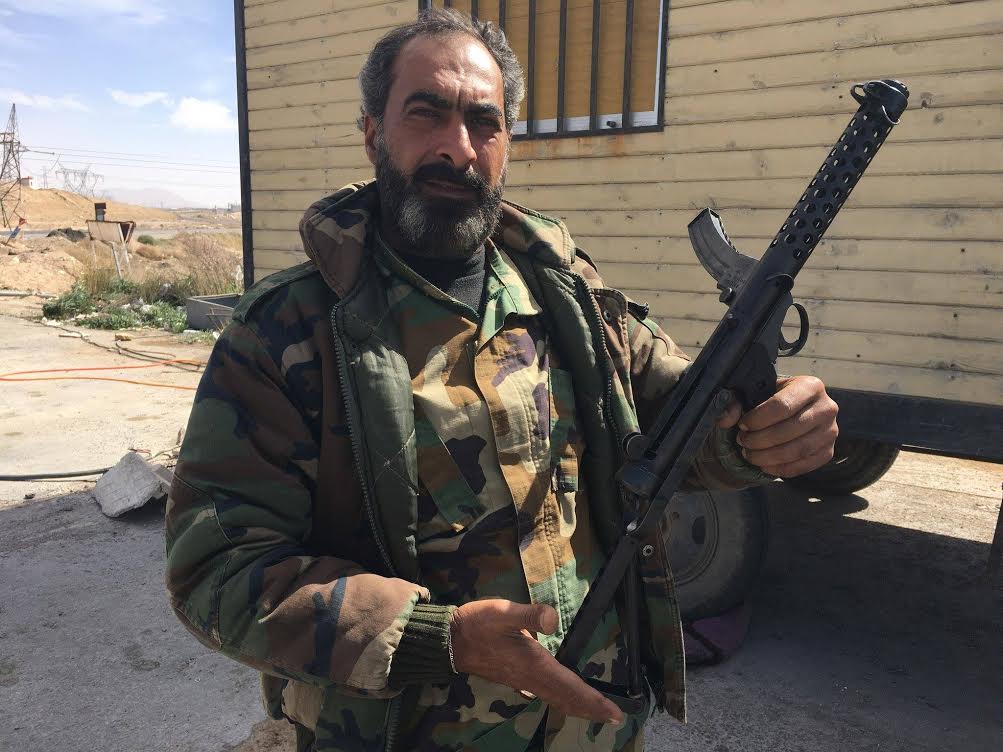
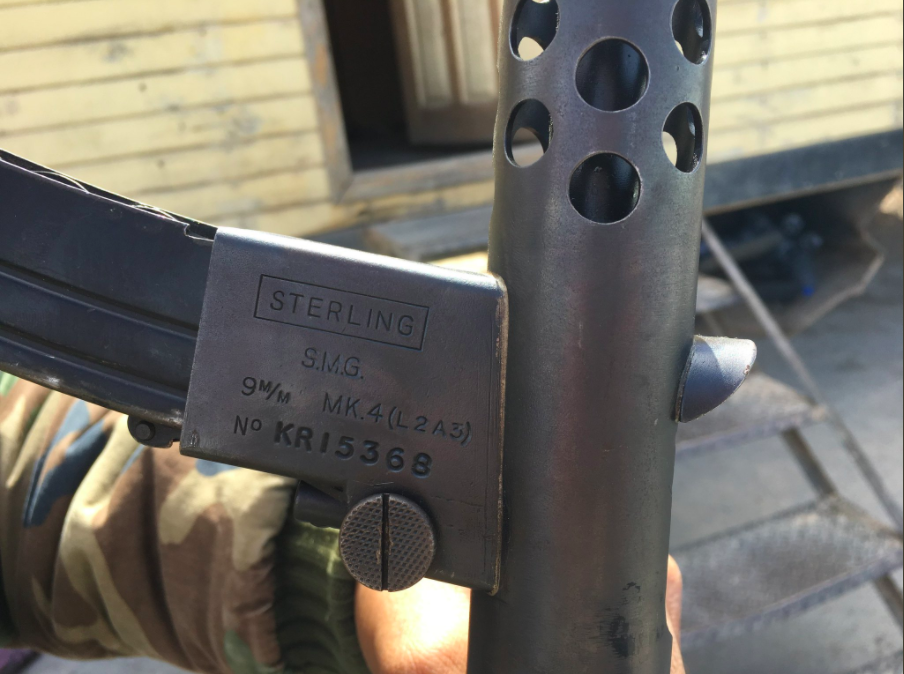
On the 10th March, Broń. Milmag, the Polish defense magazine, posted an intriguing photograph on their facebook page. The photograph had the short caption, which once translated, reads: “Syria Ad2018. 9-MM MACHINE GUN STERLING MK 4 / l2a3 used by a government soldier.”

Plenty of surplus World War Two weapons including the StG-44, MG42, Mosin-Nagant, K98ks and even French MAS-36s have been sighted in Iraq and Syria during the regions current multi-sided conflict. Sightings of the Cold War era- Sterling submachine gun, however, have been few and far between.

The Sterling submachine gun was developed by George Patchett at the Sterling Arms Company during the latter half of World War Two. Following extensive testing in the late 1940s and early 1950s the British Army adopted Patchett’s submachine gun to replace the Sten gun. It entered British service as the L2A1 in 1953, evolving quickly to its final form the L2A3. The L2A3 was produced commercially by Sterling at their plant in Dagenham, UK from 1956 until 1988 with an estimated 211,000 produced.

The Sterling was subsequently sold commercially and licensed for overseas production in both Canada (leading to the C1 Submachine Gun) and India (leading to the 1A Machine Carbine). Sterling successfully marketed the commercial version of the L2A3, the Mk4, to over a dozen countries around the world from Malaysia, to Libya, to Iraq.

The weapon featured in the photograph appears to be in remarkably good condition. Following some digging I was able to find what I believe to be the original posting of the photograph online. Posted on Twitter by @Edward_Sn0wden on the 9th March. The twitter post includes a second photograph showing the Sterling’s magazine housing and markings. The photographs are credited to Alexander Kharchenko but sadly no location is mentioned. The caption suggests that the weapon might be a captured trophy.

From the available photographs the weapon appears to have a matte, rather than crackle paint, finish – this is either an original contract choice or a later armory refurbishment. The weapon is also fitted with an original Sterling produced commercial production 34-round curved double stack, double feed magazine – one of the most reliable submachine gun magazines ever developed.

We are lucky enough to have a second photograph showing the weapon’s markings in full: ‘STERLING SMG 9m/m MK4 (L2A3) KR15368’. The serial number, beginning with ‘KR’ dates the gun as a pre-1972 Sterling and refers to Kenton Redgrave, the Sterling company’s long-time director. The serial number dates the weapon, according to the serial number ranges, listed in The Guns of Dagenham (1996) by Peter Laidler, to 1957. This date would fit with the 1956-63 Iraqi contract which supplied 13,241 Mk4s to Iraq, first to King Faisal II’s military, and then to the Iraqi Republic, following a coup that deposed Faisal in 1958. The Iraqi Sterlings later saw action during the Iran-Iraq War and to a limited degree during both the Gulf War and during the 2003 Iraq War. 

While rare the Sterling has been spotted in the region before, three years ago CJ Chivers, the New York Times investigative conflict journalist and author of The Gun, shared a photograph of a Mk4 with a straight Sten magazine in use by the Mahdi Army in Sadr City, Iraq.

While investigating the photograph above, an Iraqi fighter came forward and told me about his ‘heirloom’ Sterling Mk4 which had belonged to his father, an Iraqi soldier killed during the Iran-Iraq war. Interestingly, this Iraqi heirloom Mk4 dated from June 1964, suggesting that the Iraq contract may have extended beyond the 1963 end date indicated by Laidler.

The Iraqi gentleman also advised that the Sterling was known to him, and possibly regionally as the ‘غداره مصريه’, which translates to ‘Egyptian Contract’ or Egyptian Submachine Gun. It seems that the Sterling has come to be confused with, or at least associated with an Egyptian submachine gun. While the Egyptian Army did purchase a number of commercial Mk3 Sterlings in 1954-5, Egypt never produced a copy of the Sterling, instead opting to copy the Carl Gustav m/45 to create to the Port Said, produced by Al Maadi.

How a Syrian government soldier might have come into possession of what is likely an Iraqi Sterling submachine gun is one of war’s intriguing mysteries. Regardless of how he acquired it appears to be in excellent condition for a 50 year old weapon.

Images:

Milmag post:

https://www.facebook.com/TheMilMag2/photos/a.871586039536290.1073741828.871547992873428/1980952581932958/?type=3&theater

Possible original source on twitter:

https://twitter.com/Edward_Sn0wden/status/972075403971055616

Rock Island Auctions photo of commercial Mk4 Sterling for Reference:

https://www.rockislandauction.com/detail/70/2504/sterling-mk-4l2a3-full-auto-sales-sample-smg-with-bayonet#detail
Weapons and Ammunition Seized in Ghouta by the Syrian Army

Weapons and Ammunition Seized by Syrian Army (6)

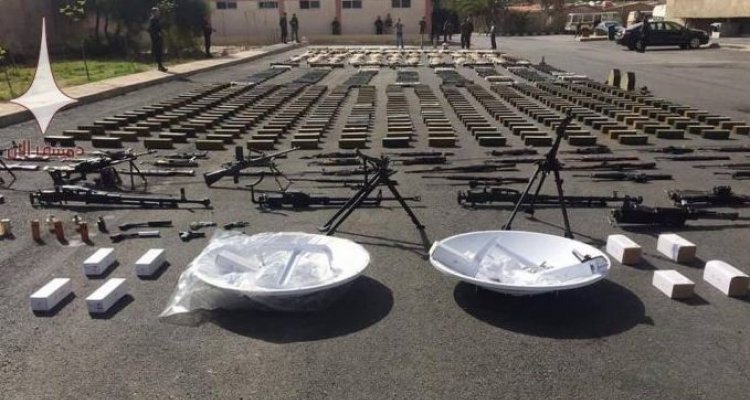
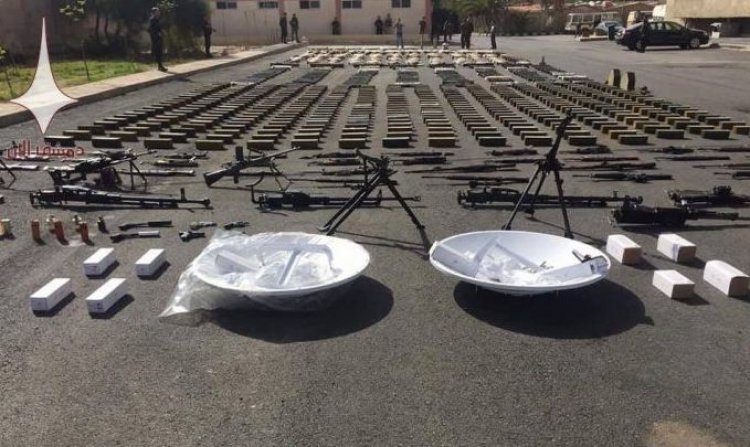
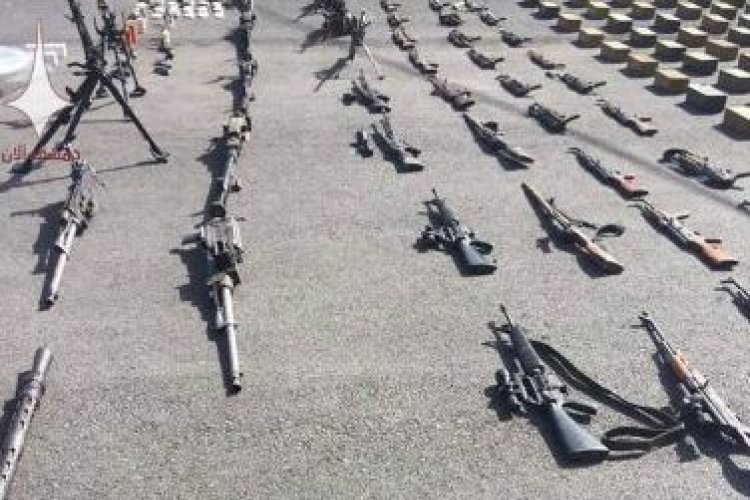
Recently, a number of news agencies reported that Syrian Army has seized a truck carrying a variety of weapons and ammunition addressed to one of the forces opposing the Syrian government. Reportedly, the truck was heading from eastern Qalamoun to East Ghouta. Let’s take a look at the photos of the seized weapons and see what types of small arms we can spot there.

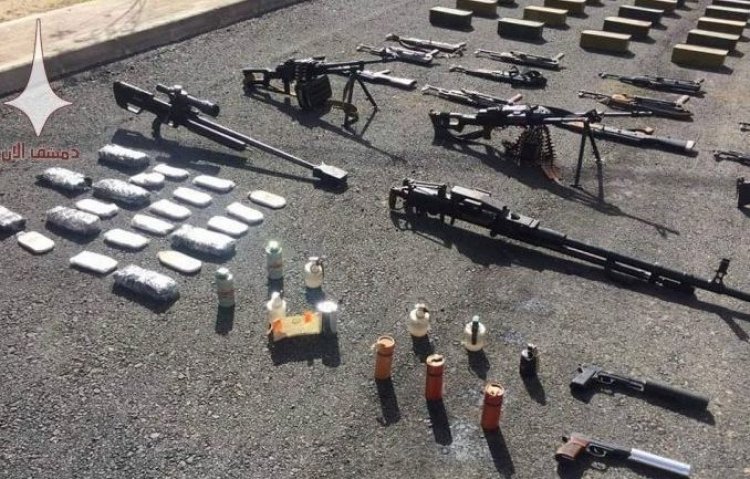
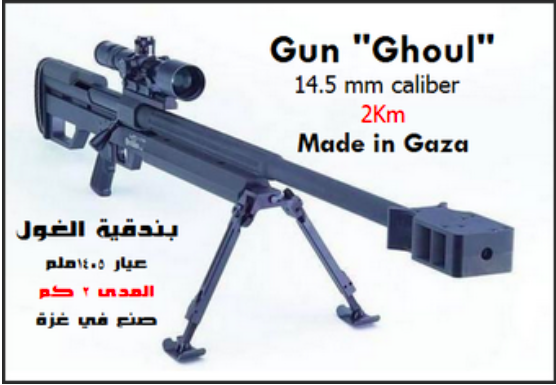
In the image below you can clearly see two PKM machine guns, a number of AK rifles and what looks to be a DShK heavy machine gun. Interestingly, there are two suppressed pistols one of which has a bright nickel colored suppressor. It should simply lack a finish which may indicate that it is a “homemade” suppressor. Arguably the most interesting piece in this picture is the scoped anti-materiel rifle. It is extremely similar to Steyr HS-50. It is also possible that this rifle is an Iranian copy of HS-50 called Sayyad or Palestinian copy called Ghoul. The Ghoul rifle is chambered in a larger caliber – 14.5x114mm. The Firearm Blog has recently published an article telling about the Ghoul anti-materiel rifle.

Weapons and Ammunition Seized by Syrian Army (1)

Weapons and Ammunition Seized by Syrian Army Ghoul
Palestinian Ghoul anti-materiel rifle

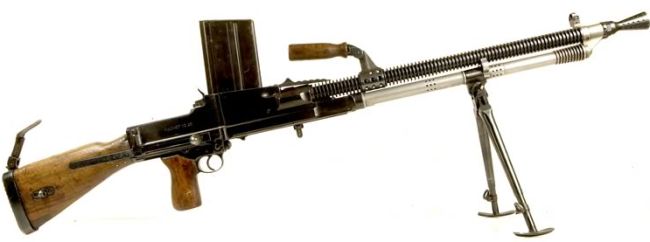
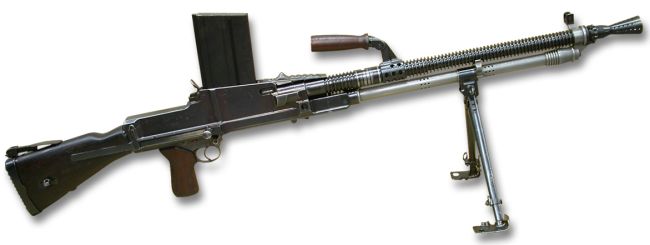
In another picture taken at a different angle, we see the silhouette of what looks to be a Czech ZB vz. 26 or ZB vz. 30 or Vz. 52 (Vz. 52/57) light machine gun.

Weapons and Ammunition Seized by Syrian Army (4)

Weapons and Ammunition Seized by Syrian Army (7)

Weapons and Ammunition Seized by Syrian Army ZB-26
ZB vz. 26
Weapons and Ammunition Seized by Syrian Army ZB-30
ZB vz. 30
Vz 52/57
Vz. 52/57

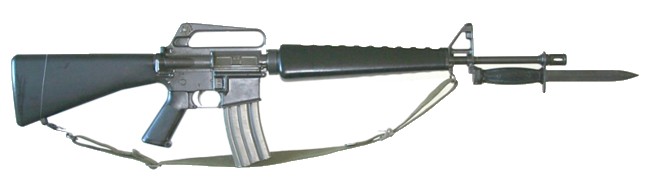
In the next image, there are several AR-15 pattern rifles among the more common (for the region) AK rifles. Judging by the stock shape, existence of a forward assist and carry handle, and by the distinctive triangular handguard, at least the closest one must be an M16A1.

Weapons and Ammunition Seized by Syrian Army (8)

Weapons and Ammunition Seized by Syrian Army M16A1

Weapons and Ammunition Seized by Syrian Army М16А1
M16A1

Here is also a video published by the Russian Federal News Agency showing other types of seized weapons and munitions:

https://www.youtube.com/watch?v=1A-4pZWyxzs


Sources:

“Syrian Army foils rebel attempt to smuggle heavy weapons into East Ghouta (video)”. (2018, February 28). Al-Masdar News. Retrieved from:  https://www.almasdarnews.com/article/syrian-army-foils-rebel-attempt-smuggle-heavy-weapons-east-ghouta-video/

Images from: www.almasdarnews.com. www.modernfirearms.net, www.thefirearmblog.com

OSV-96 Anti-Materiel Rifle Seen in Syria

OSV-96 Anti-Materiel Rifle Seen in Syria (4)

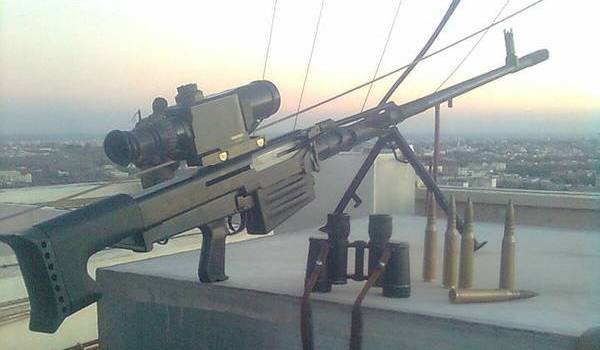
According to several Russian sources, the OSV-96 anti-materiel rifle was spotted again in Syria (see the above image). It is used by the special forces of the Syrian army. It’s been spotted in Syria starting from the very beginning of the Syrian war. Back in 2012, The Firearm Blog reported about this rifle in Syria.

OSV-96 Anti-Materiel Rifle Seen in Syria (1)
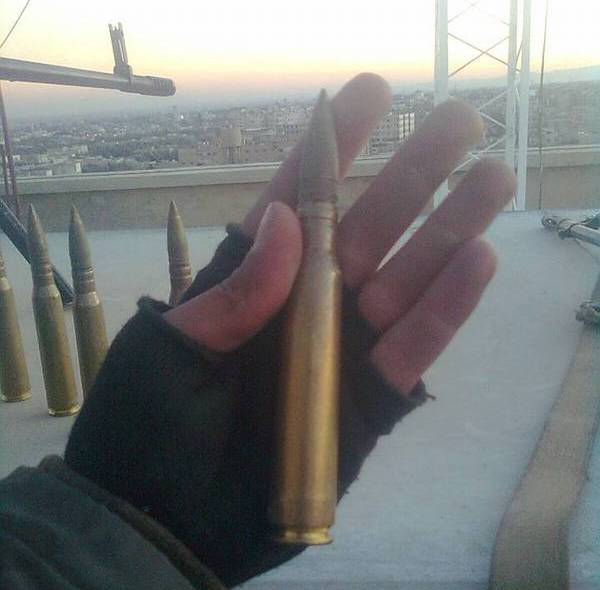
The 12.7x108mm cartridge of the OSV-96 rifle

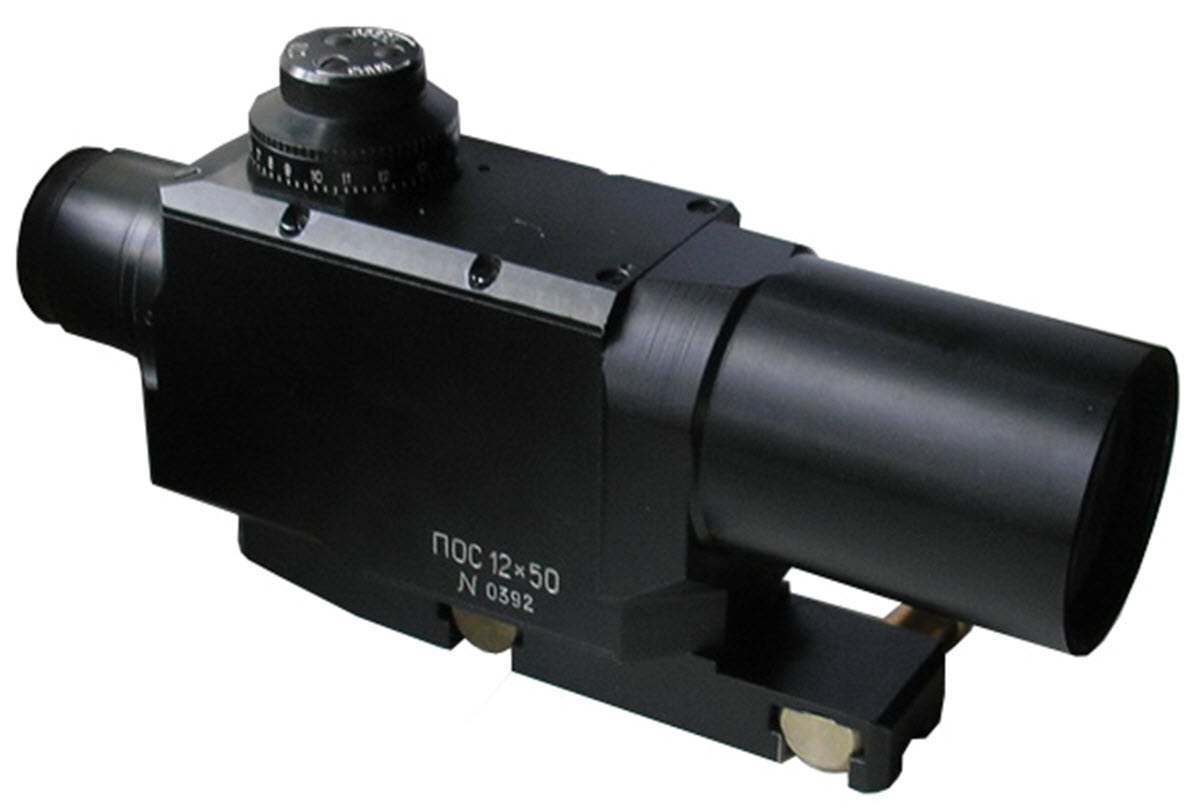
The scope on the rifle is most likely a Russian POS 12×50 (ПОС 12х50). This scope is frequently seen with the OSV-96 rifles.

OSV-96 Anti-Materiel Rifle Seen in Syria (5)
POS 12×50 (ПОС 12х50) scope

In 2012, the rifle was also seen in the hands of forces fighting the Syrian army (see the video below).

———————————————————————————–

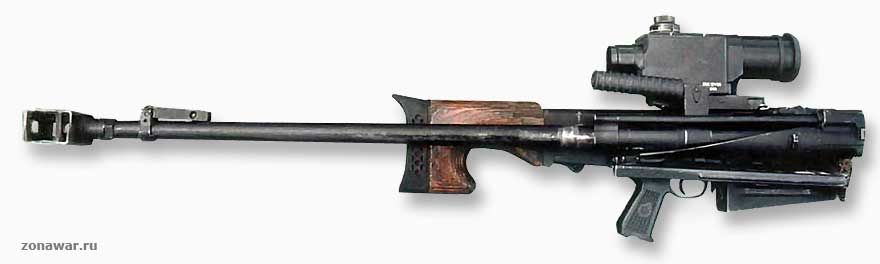
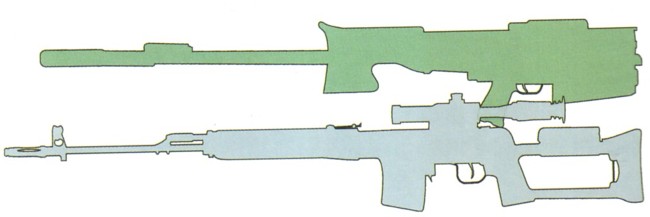
OSV-96 is designed and manufactured by a Russian arms company called TsKIB SOO. It is a magazine fed semi-auto anti-materiel rifle chambered in 12.7x108mm. It has a huge one-meter barrel (39.4″). However, its barrel folds 180 degrees to the right side of the rifle making its folded length comparable in size with the SVD rifle.

OSV-96 Anti-Materiel Rifle Seen in Syria (3)
OSV-96 with folded barrel


OSV-96 Anti-Materiel Rifle Seen in Syria (2)
The silhouettes of OSV-96 (folded) and SVD rifles.                                       Image by modernfirearms.net

Here is also a video telling about this rifle.

And an animation of the rifle’s action by Noble Empire.

You can download the user manuals (in Russian) of the OSV-96 rifle and POS 12×50 scope by clicking HERE and HERE respectively.

A website called Warbook.info has also two posters (large jpg files) of this rifle, which you can download by clicking here and here.

PKP Pecheneg Machine Gun in Syria

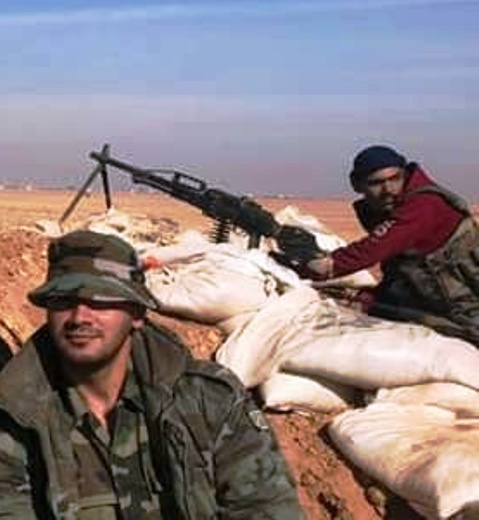
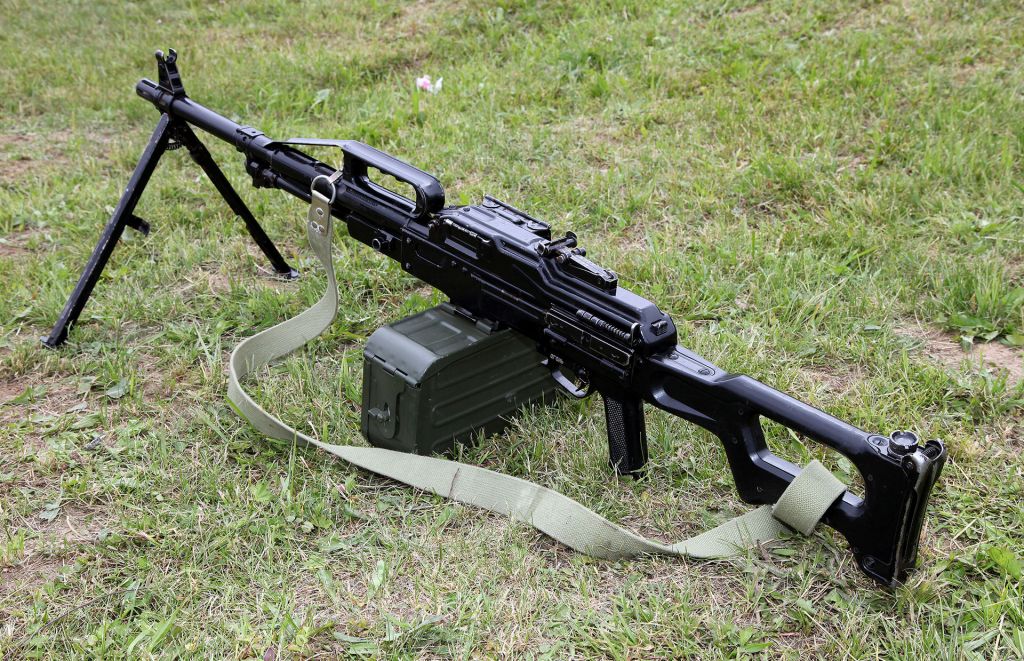
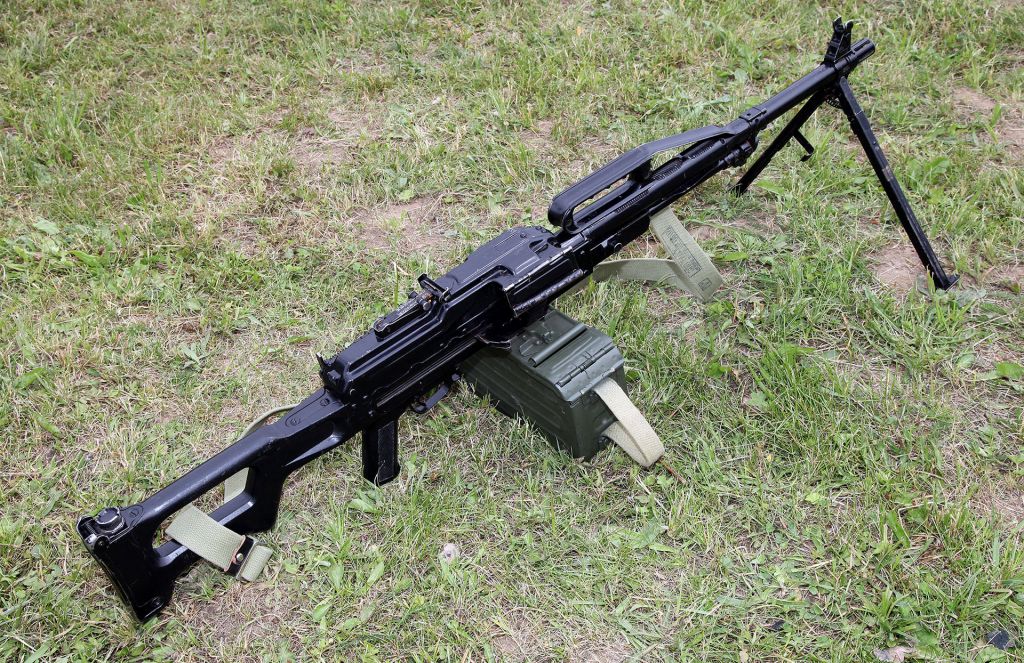
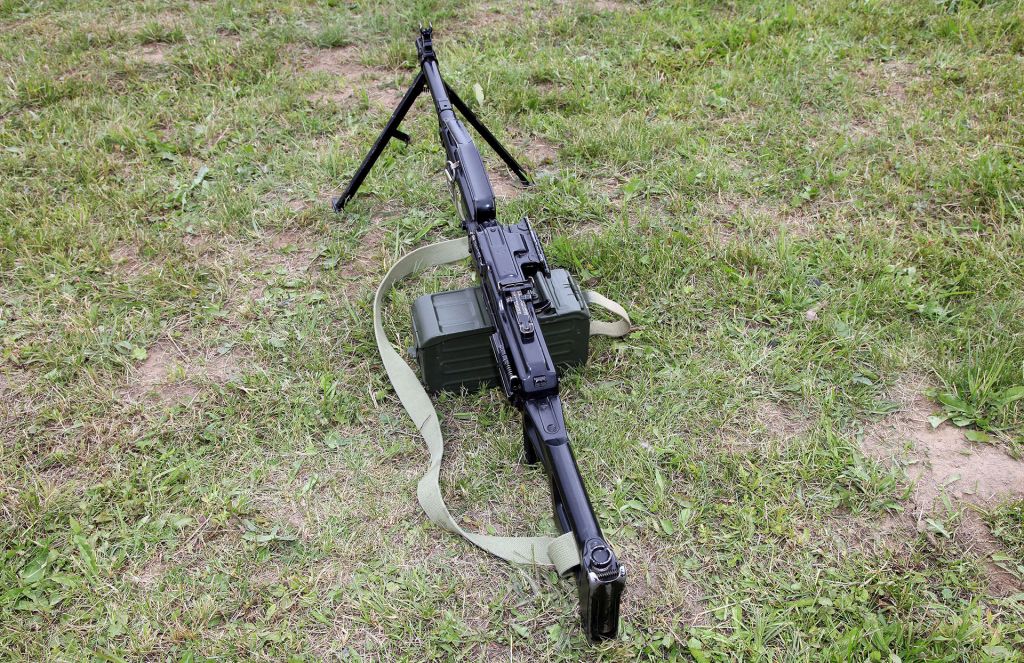
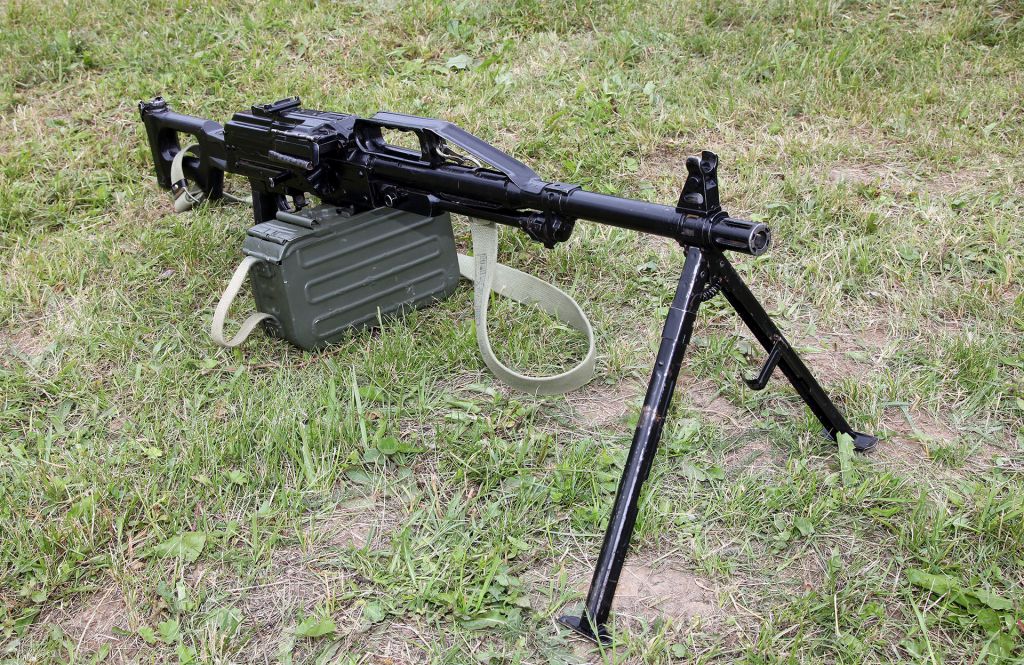
Russian PKP Pecheneg machine gun was earlier spotted in the hands of Syrian Armed Forces soldiers back in 2015. The top image of this article is taken in 2015. Lately, another image appeared in the web (see the image below) showing this machine gun again with Syrian Armed Forces. Reportedly, Pecheneg was acquired by Syria even before the civil war. It was purchased in small numbers to arm some special forces units.

PKP Pecheneg Machine Gun in Syria
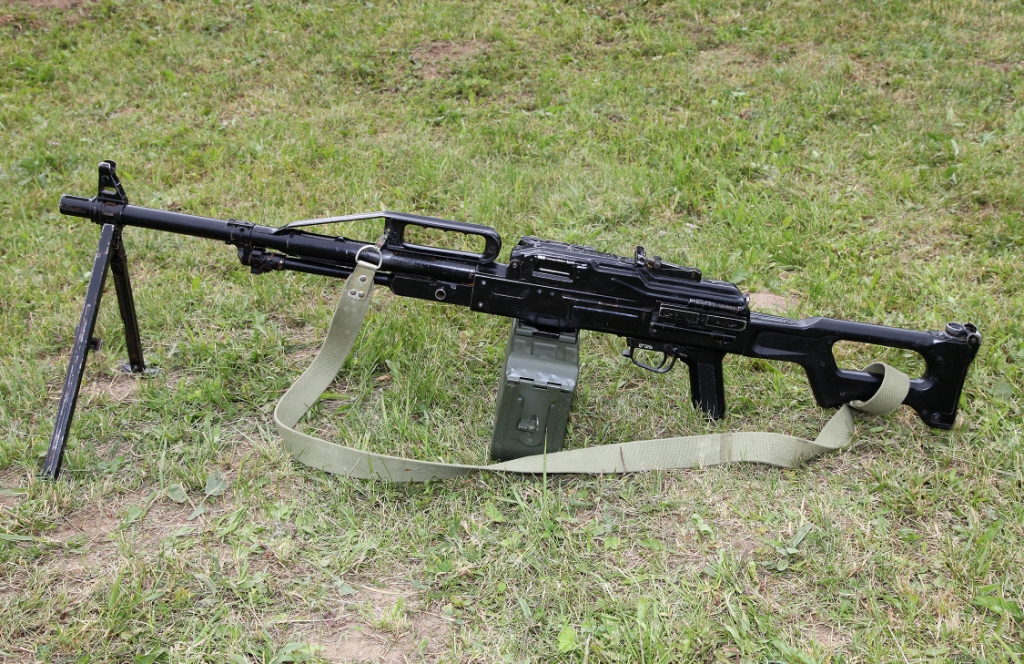
Note the distinctive carry handle shape over the barrel jacket of PKP Pecheneg machine gun

PKP Pecheneg is a general purpose machine gun chambered in 7.62x54mmR. It was designed in the late ’90s by a Russian company called TsNII TochMash. This gun is based on the PKM machine gun. Most machine guns of this category feature a quick change barrel which allows to change the heated barrel in the battlefield and keep shooting the gun with the new barrel. In the case of the Pecheneg, the designers’ goal was to get rid of the barrel changing mechanism without compromising the firepower. To achieve that goal, they had to develop a system that would allow cooling the barrel. They incorporated a forced air cooling system into the design of this machine gun. After each shot fired, the gasses escaping from the muzzle create a pumping effect forcing the air to enter the barrel jacket and pass through its length thus cooling the barrel. The barrel of PKP Pecheneg is also ribbed.

The barrel jacket also reduces the mirage coming from the heated barrel. Another difference from the PKM is the location of the bipod. Unlike the PKM, Pecheneg’s bipod is moved forward to the muzzle – much like it is seen in RPK light machine guns. Despite the described design changes, Pecheneg still has a high rate of parts compatibility with the PKM (up to 80%).

Below are several images of the PKP Pecheneg machine gun.

Images retrieved from Wikipedia.org

Details emerge on DShK Mounted Motorcycle

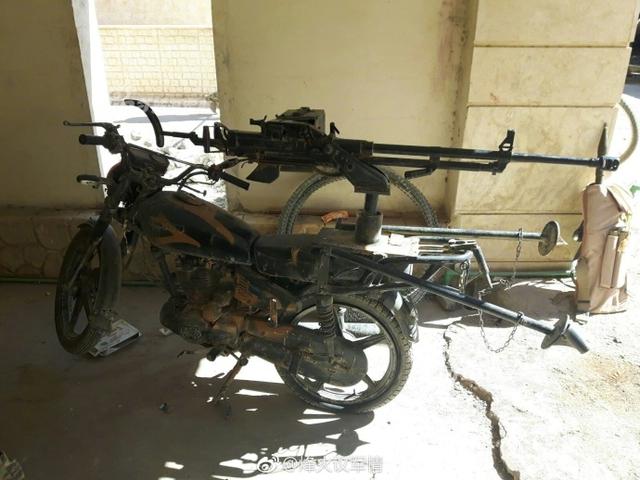
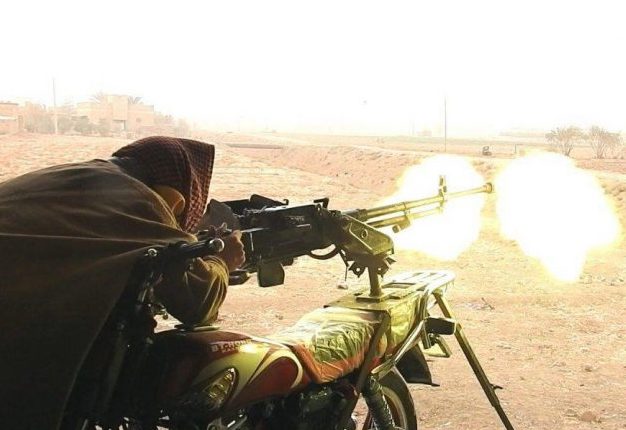
Numerous photographs of DShK mounted motorcycle “Technicals” have emerged from Syria, most extensively being shared on The Firearm Blog through this initial post of an amateur video, in addition to this one of a more detailed look through a so-called Islamic State’s Amaq propaganda video. We get a good idea of the weapon in action, but recently a photograph has emerged that shows the system in a transport mode on the motorcycle.

Notice how the bipod legs fold onto the back rack of the motorcycle while the Chinese 12.7x108mm Type 87 is pointed to the rear to be transported easier. Now, it would appear that any driver on the motorcycle would have to push the machine gun to the left or right while he is driving it

SUSAT On Peshmerga M2

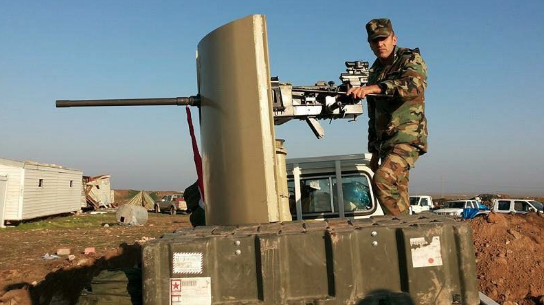
A photograph has recently come out showing a Peshmerga fighter with what appears to be a SUSAT mounted on his M2 .50 BMG Heavy Machine Gun. The mount that the machine gun is cradled in also appears to be a of British design, formerly seen in use on British armored vehicles. SR’s suspicion is that the entire contraption is supplied by British forces to the Peshmerga as defensive material. However, it would also appear that the SUSAT isn’t calibrated to the trajectory of the .50 BMG cartridge, nor is it very well suited for a heavy machine gun in the first place, being designed for a 5.56x45mm rifle.

Homemade Anti-Materiel Rifle With Iraqi Militia

C5rKjNRWAAAvjh5.jpg

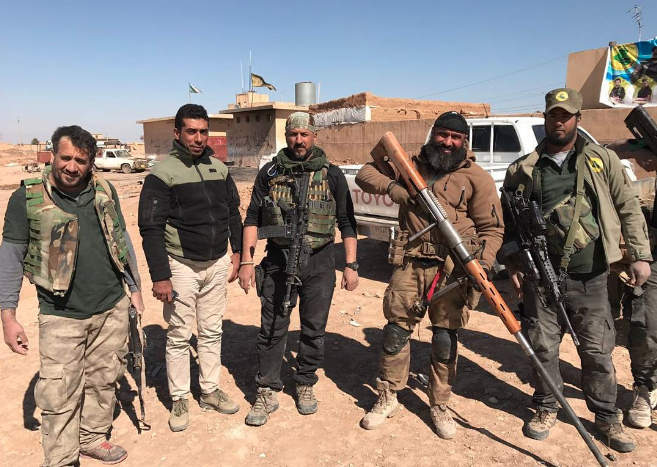
A Polish small arms magazine recently posted this to their social media page. It appears to be of a group of Iraqi militiamen from the Imam Ali Brigade, as is evidenced by the circular yellow patch with a Kalashnikov over an image of a green country profile of Iraq . The bearded militiaman is posing with a huge bolt action anti-materiel rifle. These DIY conversions had been seen multiple times during the Syrian conflict. Supposedly this gun uses either 14,5mm (from KPV or KPVT) or 23 mm (from ZU-23-2) barrel with an improvised receiver, bolt, trigger mechanism, furniture and bipod. You can also see a picatinny rail section mounted on top of the receiver for attaching a scope.
I guess they use the survived barrels from guns with damaged or destroyed mechanisms. Otherwise, it won’t be justified to take the barrel from a functional heavy machine gun or automatic cannon. Although depending on the situation it can be the case, too.
When making the new stock and forearm, the gunsmith definitely tried to make it look like an SVD/Al-Kadesiah.

Note also the other guys’ weapons: an AK, M4 Carbine and an M249 SAW LMG.

334

The Shi’a Imam Ali Brigade (Cited Source- The Observers)

The Iraqi Shiite militia known as the Imam Ali Brigades is accused of having committed multiple war crimes in the fight against the Islamic State organisation in Iraq, including summary executions and torture of captives. But its brutality isn’t the only thing fuelling the militia’s notoriety – it also has a well-oiled communications strategy.

In June 2014, Shiite leader Ayatollah Sistani made an appeal for mobilisation against the Islamic State organisation. Numerous Iraqi Shiite militias were formed after this announcement.

These new formations joined the four large, already-existing Shiite militias in Iraq: the Badr Brigade, founded in Iran in 1982; Saraya al-Salam (the “Peace Brigades”), which is directed by the radical Shiite religious cleric Moqtada al-Sadr; Asaib Ahl al-Haq (the “League of the Virtuous”); and, lastly, the Iraqi Ketaeb Hezbollah.

The Imam Ali Brigades have distinguished themselves by resorting to extreme violence. The militia, made up of combatants trained in Iran or Lebanon, has faced widening criticism since the release of a YouTube video showing men wearing the Imam Ali Brigades insignia burning a man.

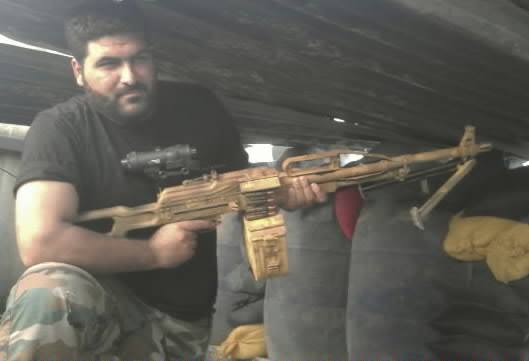
Optic Mounted PKM in Syria (2016)

Kurdistan Insider posted this video of a Syrian Army advance in Aleppo in 2016. Most of the PKM variants being used in the Syrian conflict have been seen without any sort of optics platforms mounted to them, this is mostly because of the lack of equipment that many of these rebel groups can capture.

However in this case, it appears to be a thermal or at least an IR capable optic platform due to the bulbous appearance, in addition to the numerous knobs which might be battery caps for power. In addition the eye piece appears to be fitted or contoured to the shooter’s eye, indicating a bright screen that needs to be shielded during times of low light. Because this is a Syrian Army position, it is most likely that the optic is Russian supplied.

Screen Shot 2017-02-20 at 11.34.11 PM.png

In the same video clip, what appears to be an AK century series rifle being used by frontline soldiers, possibly in 5.45x39mm due to the straighter magazine in use.
Screen Shot 2017-02-20 at 11.34.31 PM.pngScreen Shot 2017-02-20 at 11.34.21 PM.png