Santay Zhetesov (Сантай Жетесов) is an inventor and scientist from Karaganda, Kazakhstan. Among a number of other inventions, he has also developed a couple of firearms and caseless ammunition. In this article, we’ll take a look at Zhetesov’s firearm prototypes and ammunition patents.
PPZh-05 Caseless Submachine Gun
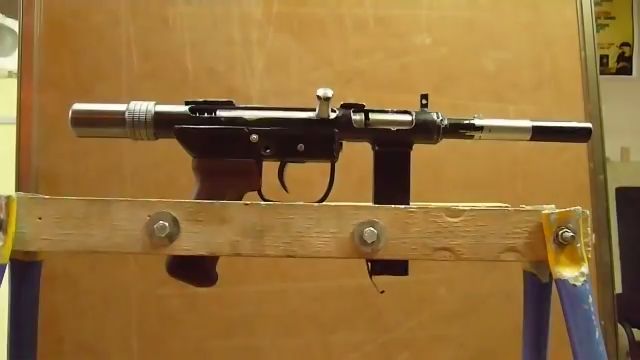
PPZh-05 is an abbreviation which stands for Zhetesov submachine gun (Пистолет-Пулемет Жетесожа; Pistolet Pulemyot Zhetesova). The number 05 in the designation means that it was made in 2005.
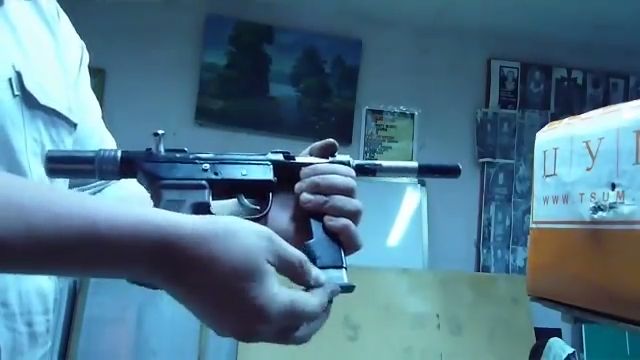
This SMG feeds from a detachable box magazine. The magazine well is a rather long one which is probably designed so to allow using it as a front grip without applying pressure to the magazine itself. The gun shoots from an open bolt. It is a fairly compact weapon.
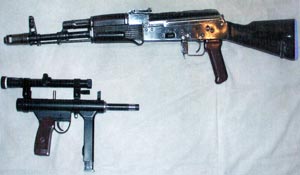
PPZh-05 compared to an AK-74
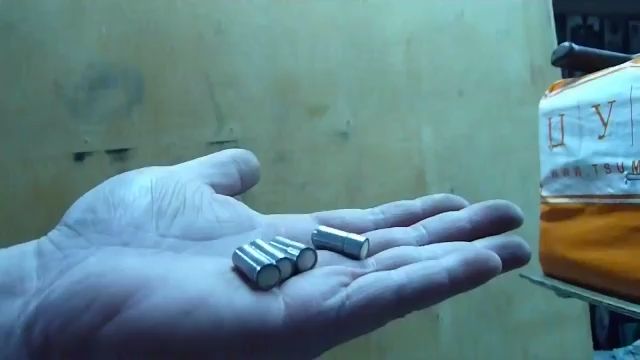
This SMG uses a type of caseless ammunition where the bullet itself contains the powder charge and the priming compound and there is no cartridge case per se. The experiments with this kind of ammunition have been conducted throughout the history of firearms development. Similar ammunition was used in the Volcanic pistol, the Gerasimenko VAG-73 pistol, Benelli CB-M2 etc.
Cartridges of the PPZh-05 SMG
Here are a couple of videos showing the test firing of PPZh-05 SMG:
Caseless Ammunition
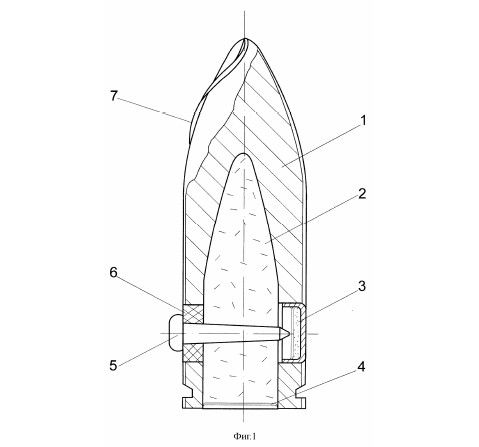
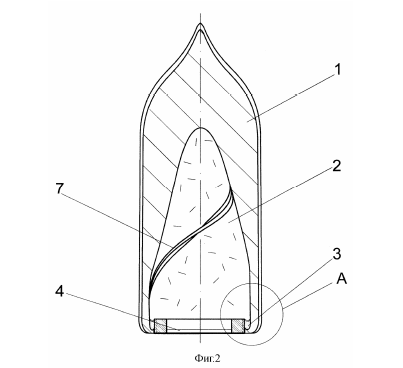
Santay Zhetesov’s caseless ammunition designs are described in the Kazakh patent #29642. The ammunition used in PPZh-05 SMG should be constructed similarly.
In the mentioned patent, it describes caseless ammunition which has a striker and primer built into the projectile/cartridge. Unfortunately, it is not specified how the cartridge will be aligned in the chamber to expose that built-in striker to the hammer. Possibly for this kind of ammunition, an annular primer could be a better idea.
There are two versions of these cartridges described in the patent. One of them has rifling-style flutes on the ogive of the bullet (see the above image) which is said to impart spin to the projectile. The second one (see the image below) has identical grooves inside the powder charge cavity. I assume these flutes are supposed to spin stabilize the projectiles when shot in smoothbore firearms because the inventor states in the patent text that this ammunition can be used both in rifled and smoothbore barrels. There should not be a need to have that flutes if the cartridges are fired in rifled barrels.
According to Zhetesov, such cartridges of 5.47mm, 7.62mm, 9mm and 10.2mm calibers have been tested and showed “promising results”.
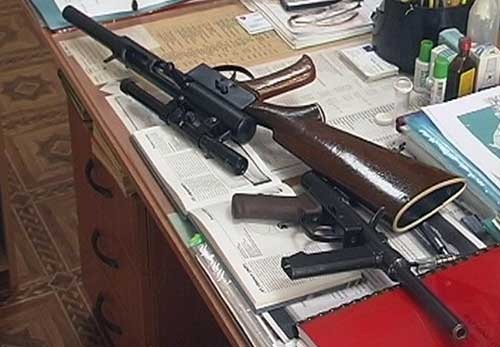
SPZh-06 Grenade Launcher
The model designation of this firearm stands for Zhetesov Soldier Cannon (Солдатская Пушка Жетесова; Soldatskaya Pushka Zhetesova). The “06” means that the gun is designed in 2006.
SPZh-06 and PPZh-05
This is a bolt action single shot grenade launcher. Its effective range is said to be 500 meters. Basically, this weapon is a standalone caseless grenade launcher.
The unusual stock configuration (separate pistol grip with a hunting rifle stock) is probably there because this is a prototype weapon and they just temporarily attached whatever stock they had.
Both of these guns are made in single samples. Reportedly, they have been introduced to the military officials of Kazakhstan, but have been rejected.
As soon as there is new information concerning these firearms, we will report to our readers.
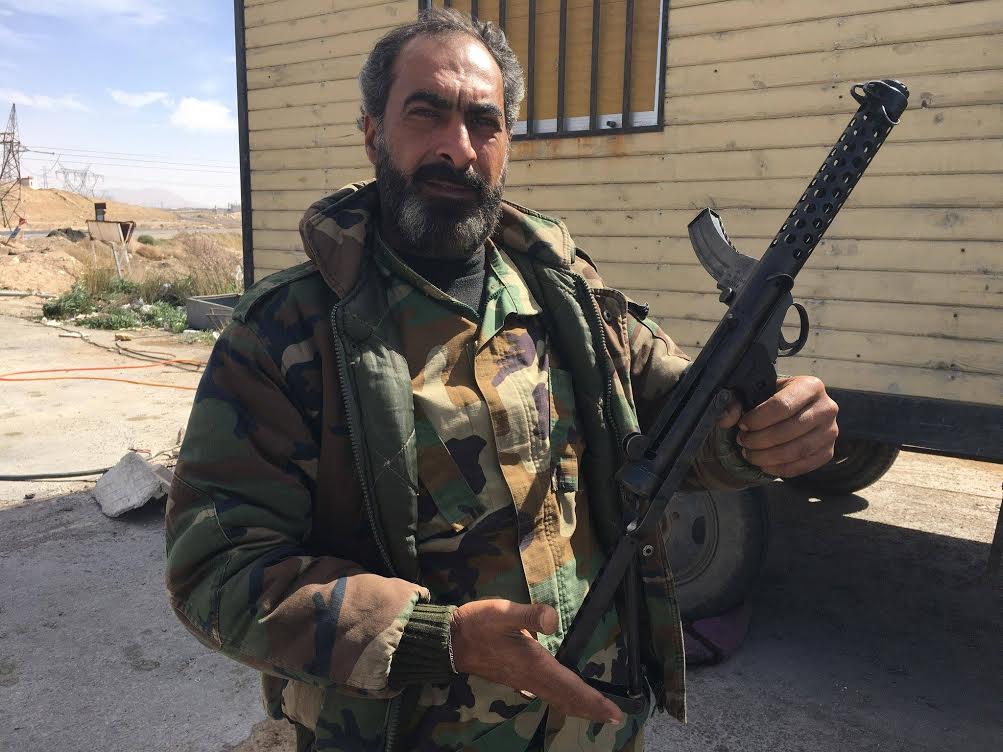
On the 10th March, Broń. Milmag, the Polish defense magazine, posted an intriguing photograph on their facebook page. The photograph had the short caption, which once translated, reads: “Syria Ad2018. 9-MM MACHINE GUN STERLING MK 4 / l2a3 used by a government soldier.”
Plenty of surplus World War Two weapons including the StG-44, MG42, Mosin-Nagant, K98ks and even French MAS-36s have been sighted in Iraq and Syria during the regions current multi-sided conflict. Sightings of the Cold War era- Sterling submachine gun, however, have been few and far between.
The Sterling submachine gun was developed by George Patchett at the Sterling Arms Company during the latter half of World War Two. Following extensive testing in the late 1940s and early 1950s the British Army adopted Patchett’s submachine gun to replace the Sten gun. It entered British service as the L2A1 in 1953, evolving quickly to its final form the L2A3. The L2A3 was produced commercially by Sterling at their plant in Dagenham, UK from 1956 until 1988 with an estimated 211,000 produced.
The Sterling was subsequently sold commercially and licensed for overseas production in both Canada (leading to the C1 Submachine Gun) and India (leading to the 1A Machine Carbine). Sterling successfully marketed the commercial version of the L2A3, the Mk4, to over a dozen countries around the world from Malaysia, to Libya, to Iraq.
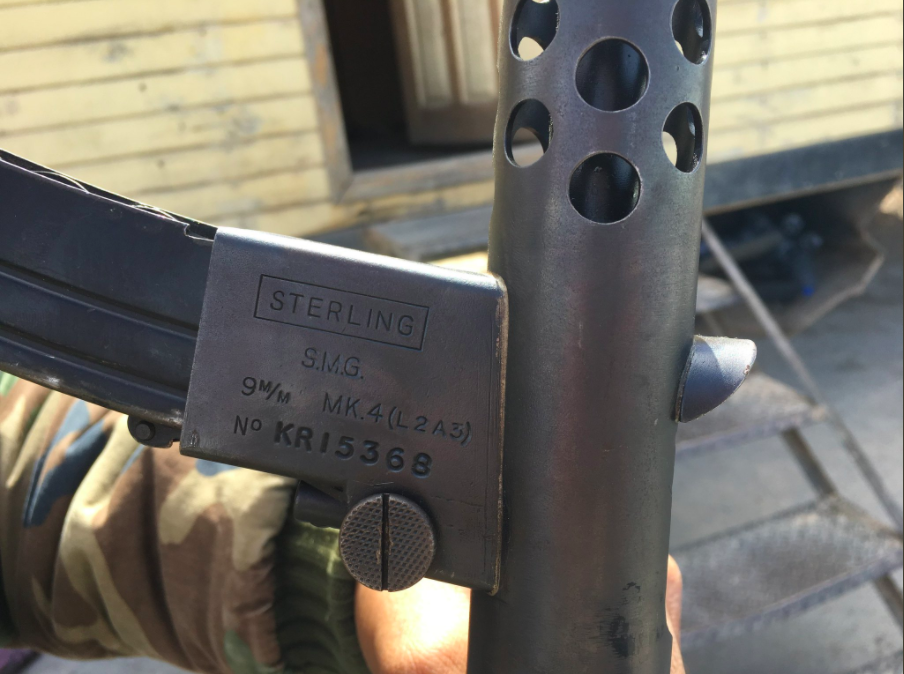
The weapon featured in the photograph appears to be in remarkably good condition. Following some digging I was able to find what I believe to be the original posting of the photograph online. Posted on Twitter by @Edward_Sn0wden on the 9th March. The twitter post includes a second photograph showing the Sterling’s magazine housing and markings. The photographs are credited to Alexander Kharchenko but sadly no location is mentioned. The caption suggests that the weapon might be a captured trophy.
From the available photographs the weapon appears to have a matte, rather than crackle paint, finish – this is either an original contract choice or a later armory refurbishment. The weapon is also fitted with an original Sterling produced commercial production 34-round curved double stack, double feed magazine – one of the most reliable submachine gun magazines ever developed.
We are lucky enough to have a second photograph showing the weapon’s markings in full: ‘STERLING SMG 9m/m MK4 (L2A3) KR15368’. The serial number, beginning with ‘KR’ dates the gun as a pre-1972 Sterling and refers to Kenton Redgrave, the Sterling company’s long-time director. The serial number dates the weapon, according to the serial number ranges, listed in The Guns of Dagenham (1996) by Peter Laidler, to 1957. This date would fit with the 1956-63 Iraqi contract which supplied 13,241 Mk4s to Iraq, first to King Faisal II’s military, and then to the Iraqi Republic, following a coup that deposed Faisal in 1958. The Iraqi Sterlings later saw action during the Iran-Iraq War and to a limited degree during both the Gulf War and during the 2003 Iraq War.
While rare the Sterling has been spotted in the region before, three years ago CJ Chivers, the New York Times investigative conflict journalist and author of The Gun, shared a photograph of a Mk4 with a straight Sten magazine in use by the Mahdi Army in Sadr City, Iraq.
While investigating the photograph above, an Iraqi fighter came forward and told me about his ‘heirloom’ Sterling Mk4 which had belonged to his father, an Iraqi soldier killed during the Iran-Iraq war. Interestingly, this Iraqi heirloom Mk4 dated from June 1964, suggesting that the Iraq contract may have extended beyond the 1963 end date indicated by Laidler.
The Iraqi gentleman also advised that the Sterling was known to him, and possibly regionally as the ‘غدارهمصريه’, which translates to ‘Egyptian Contract’ or Egyptian Submachine Gun. It seems that the Sterling has come to be confused with, or at least associated with an Egyptian submachine gun. While the Egyptian Army did purchase a number of commercial Mk3 Sterlings in 1954-5, Egypt never produced a copy of the Sterling, instead opting to copy the Carl Gustav m/45 to create to the Port Said, produced by Al Maadi.
How a Syrian government soldier might have come into possession of what is likely an Iraqi Sterling submachine gun is one of war’s intriguing mysteries. Regardless of how he acquired it appears to be in excellent condition for a 50 year old weapon.
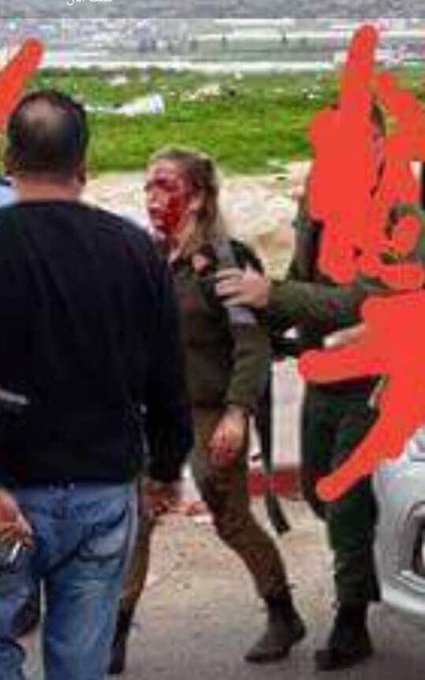
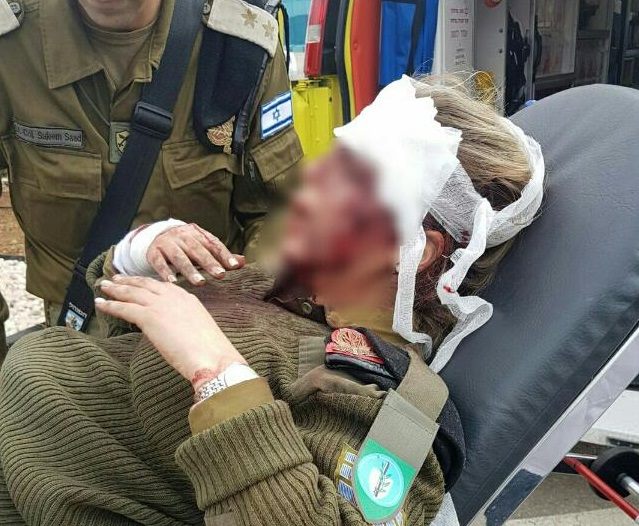
The two soldiers, a man and a woman, were lightly to moderately injured. Images of the female soldier’s bloody face circulated on social media after she was injured by shattered windshield glass. She was evacuated to a hospital in Afula.
Video from the attack shows the mob haranguing and attacking the soldiers as they cried out.
An initial investigation found that the soldiers had been misdirected to the Palestinian city by the Waze navigation app on their journey from Shavei Shomron in Samaria to Afula in the Jezreel Valley.
A Palestinian Authority policeman intervened to protect the Israeli soldiers, ultimately firing into the air to disperse the crowd. Over 100 members of the PA security forces were called out to escort the soldiers to safety and return their jeep to Israel, according to a PA security official interviewed by the Jerusalem Post, who also said that the effort was made both to protect human life and prevent Israeli reprisals against Jenin.
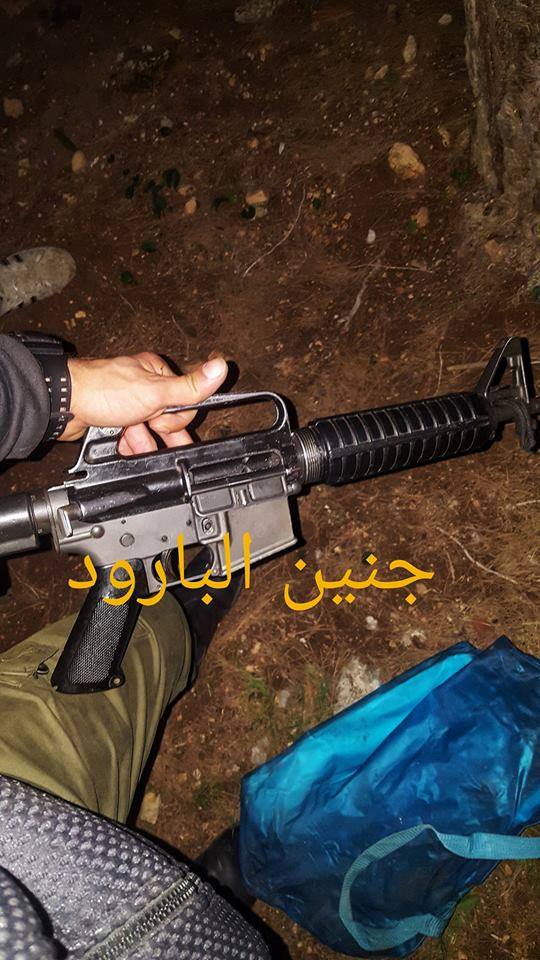
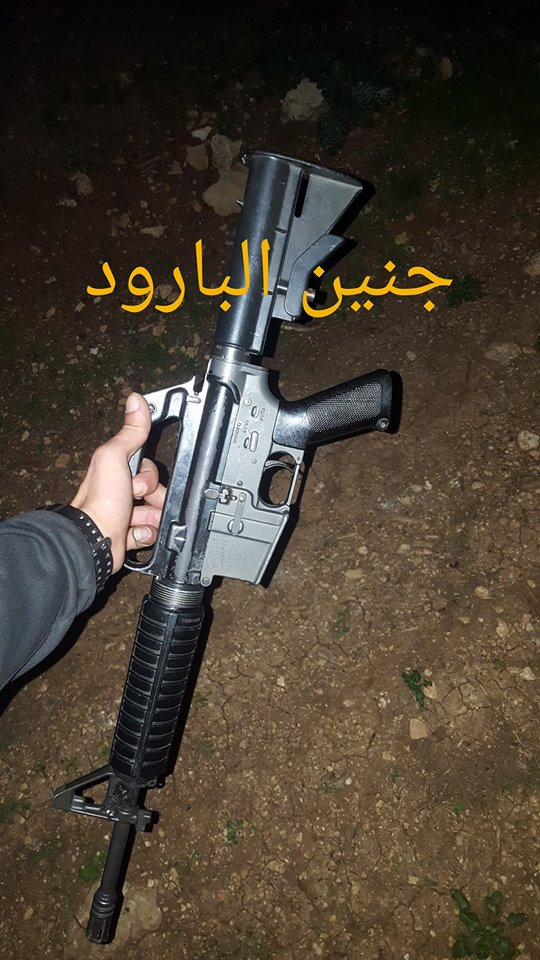
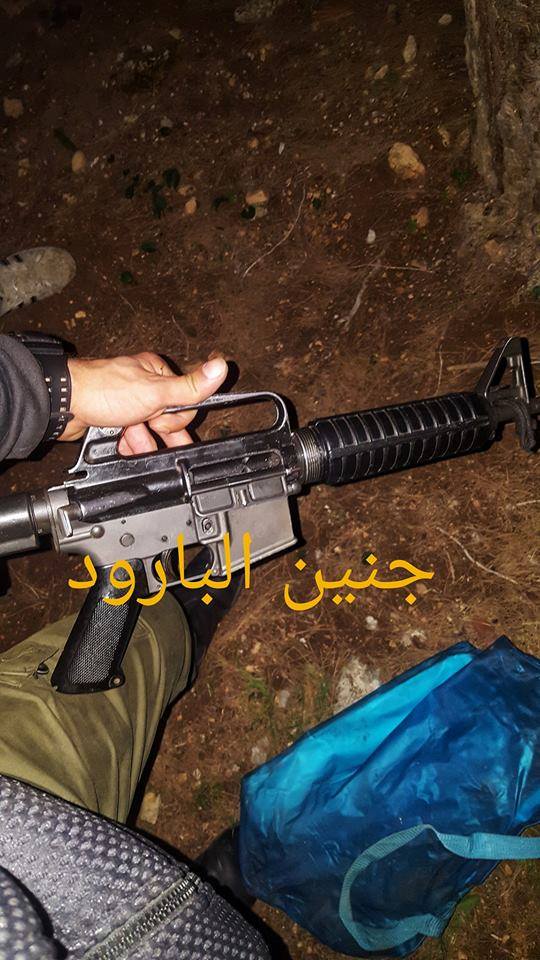
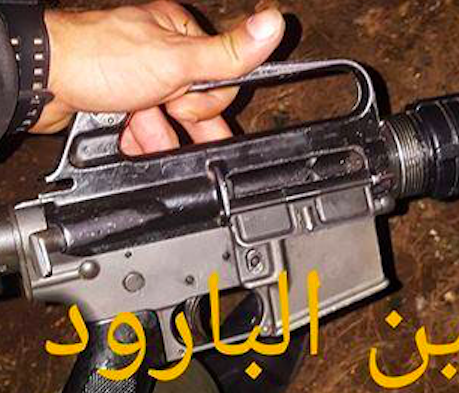
Various Palestinian social media outlets have released images of a Colt CAR15 that appeared to have been returned to IDF forces after the encounter. The IDF has made extensive use of U.S. CAR15s, M16A1s, M16A2s, and even M4s for a number of decades, currently supplementing the IWI Tavor now in service with frontline troops.
Notice the earlier A1 forward assist and A1 rotary dial rear sight. In addition, notice the shorter telescoping stock which is signatory of the CAR15 series. Also note that the upper and the lower receiver don’t match, possibly indicating that the two parts were interchanged throughout the life of the rifle.
But more interesting than the rifle is the fact that the bolt and charging handle appears to be missing from it. This could have been intentional on the part of the Palestinians who captured the rifle.
The Israeli soldiers appear to have taken a beating but fortunately are still alive. They probably could do with a remedial land navigation course, and not rely on Waze to get from one tactical objective to another.
“Krinkov”, where does it come from and how have we gotten to it? There are a number of theories about it, some truer than others, but we’ll examine each one, and I will provide what I have come up with so far.
The first theory is that it is Russian. At face value, this could seem true, by simply hearing the word “Krinkov” to a non-Russian speaker, it might sound Russian. However, this is by far, not the case at all. Tim from Military Arms Channel has an excellent dialogue on this, explaining that the Russians have an entirely different nickname. I’ll take an excerpt from Maxim Popenkers site, World Guns:
Since its introduction the AKS-74U, unofficially known as a “Ksyukha” (variation of a Russian woman name) or “okurok” (cigarette stub)
In addition from Max’s book Assault Rifles, we have this entry:
Since its introduction the AKS-74U, unofficially known as a “Kysusha” (a variation of a Russian female Ksenia), “Suka” (bitch), “Suchok” (small tree branch) or “Okurok” (cigarette stub)
And this is Tim from Military Arms Channel, explaining some of that from the Russian side.
Tim is correct in his explanation of what Russians would call it, but the biggest problem I have with his explanation is that he completely dismisses the role of the Afghan Mujahaden, saying that it is a “nonsense word”. In addition, he speculates that maybe the first AKS74U taken off a Russian who was named Krinkov. The theory doesn’t hold any weight because for one, Krinkov isn’t a Russian name or in any sort of Russian vocabulary. Also, the fact that Pashtun speaking Mujahideen could speak or even read Russian is very, very rare, many of them being illiterate in their own language of Pashtu (illiteracy is an extremely large problem even in current day Afghanistan/Peshawar, and was much more so in the early 1980s). Furthermore, the circumstances of the Mujahideen capturing weapons from the Russians involved very little live prisoners. We’ll get into this in a bit as well, but for the overwhelming majority of the time, the AKS74U was issued to helicopter and armored vehicle crew members. Contrary to popular belief, the amount of Russians captured in Afghanistan during the war, and the amount of Russians fleeing to the Mujahideen side was extremely low as well. Most of the time, the only way Mujahideen could get their hands on Soviet equipment was through disabled vehicles wherein the Russian occupants would already be dead, or through the corrupt selling of Russian arms to the Mujahideen by either Russians themselves, or Afghan government troops.
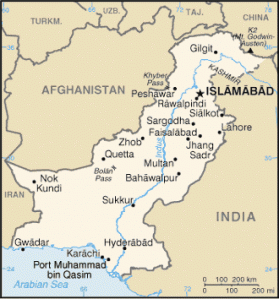
Most of the Mujahideen and Pashtun speakers that would have contributed to the name “Krinkov” would have been near Peshawar and in the eastern regions of Afghanistan.
The second theory is much more recent, but it originates from a gun shop in Naples, Florida. The shop was called “Krinks” and was run by a certain Paul Mahoney, who in the early 1990s was one of the first AK builders in the States to really take advantage of deactivated AKS74U kits, and put them together. The quality of them left much to be desired, but the fact of the matter is that the first mass producer of “Krink” kits in the United States was this guy Paul Mahoney with his gunshop “Krinks”. This might have certainly been one of the reasons why the name started to gain in popularity in the States, but it doesn’t help us at all in the actual etymology of the name.
My problem in the whole name origin is that we constantly see this theme of loosely attributing it to the Mujahideen, but yet there hasn’t been a single effort to get right to the source and really examine how that name might have even come about. Maybe it is ethnocentrism, maybe it is on account of laziness, maybe it is just accepting the status quo and not moving on. Either way, I’m going to present evidence that points to that fact that the name is actually a Pashtu word that has entered into our vocabulary, and is a testament to a twist in linguistics in the Pashtu language.
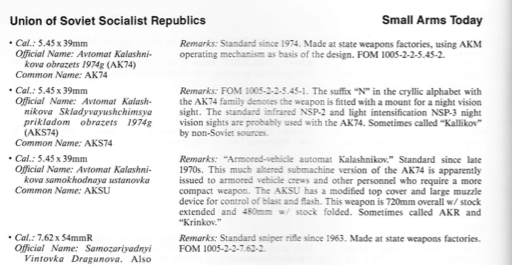
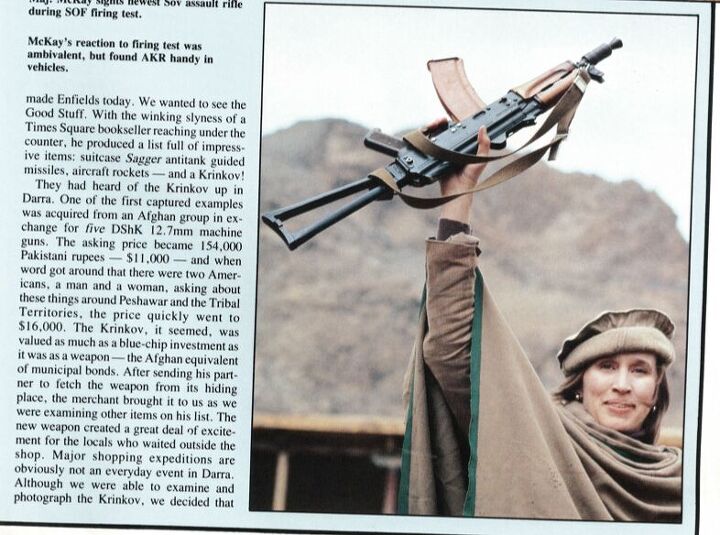
To begin with, we have to examine how the existence of this carbine became known about in the United States. I’ve often heard the claim that Soldier of Fortune magazine was the first entity to bring knowledge about the AKS74U, and even the AK74 to the West. I think this claim is more of a support for Soldier of Fortune’s reputation than any actual truth. Because just by looking at the facts, the famous Soldier of Fortune article that was run about the AK74 was in 1982, and the article about the AKS74U was in the July 1984 edition of the magazine. Looking at Jane’s Infantry Weapons from that era, and before, we see entries for the AKS74U, Sometimes labeling it as an AKSU 74, an AKSU and also as an “AKR”. This name most likely originates from Ian V. Hogg, as he was tied in with various intelligence circles at the time, that somehow came up with AKR. We still see this name in 1989, with Edward Ezell’s book, Small Arms Today.
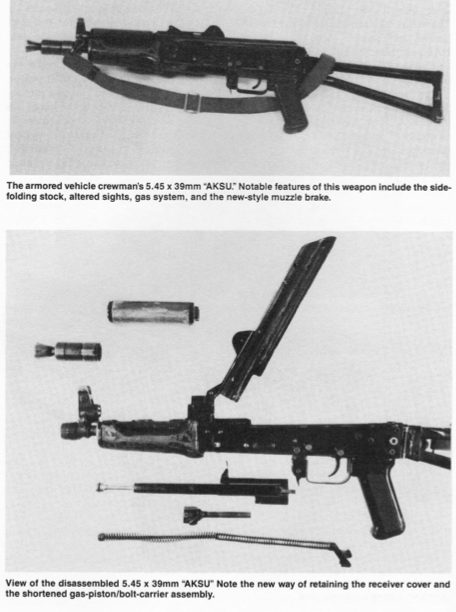
Above is from Small Arms Today, and below is from “The AK47 Story“, both by the late Edward Ezell. Above he refers to it as the AKR/Krinkov, and below the “AKSU”. Both published in the late 1980s
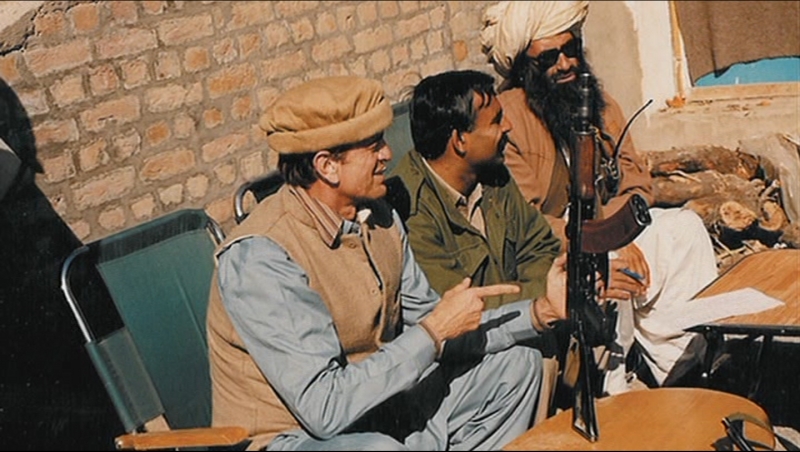
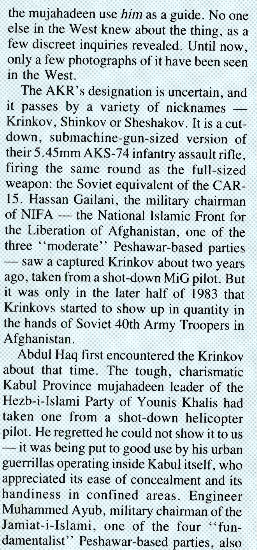
But going on to who actually deserves the credit of “discovering” the AkS74U, we have a sentence from the July 1984 edition of Soldier of Fortune, in which David Isby does an entire article about reviewing this new carbine, while he and an American Army Major are in Pakistan. He claims that initial knowledge of the carbine is from Ian Hogg, who in turn heard about it from a certain Peter Jouvenal. This guy was a video journalist, who has been in and out of Afghanistan since the late 1970s, and is extremely important because he captured one of the only video shots of Taliban leader Mullah Omar in person.
Below is the text from the Soldier of Fortune article detailing the origins and name of the AKS74U.
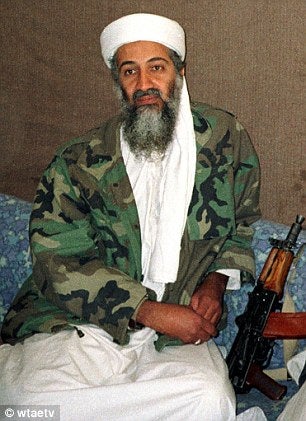
Peter Jouvenal, right, with Osama bin Laden. Probably the actual “discoverer” of the AKS74U in the West.
Within the Soldier of Fortune article, David Isby takes the name from the Afghans he was with. However, he mentions two other names “Shrinkov” and “Shesakov”. These two names are also important, but because of the linguistics involved, I’ll get to that in a second.
As mentioned earlier, the difference between this article, and any other article on the internet, is that I’m going to the actual source of the name, which is from the Pashtu speaking peoples of eastern Afghanistan, and Pakistan. The name is not a “nonsense” word, it is a Pashtun word. I’ll start this off by showing a clip from a movie called Son of a Lion. Quite an interesting movie, it was made by an Australian EMT on his own dime, after 9/11, going to Peshawar and filming a storyline about a young boy who works in the arms trade but really wants to go to school to become educated. The culture and language displayed in the movie are phenomenal, but from a firearms perspective, it gives us an in-depth look at the arms trade in Peshawar. Apart from a few actors, the rest of the movie is completely shot amid the markets and daily life of the North West Frontier Province of Pakistan. There aren’t any “props” or staged settings. The locations are real, and so are the small arms portrayed. But in it, we have this one scene where the main character takes a “Krinkov” out to a customer to test fire it. He also mentions the connection with Osama bin Laden.
https://youtu.be/KzN1-M37RiY?t=17m40s
Now, to understand why the reference to Osama bin Laden was even mentioned, we have to understand a little behind why the AKS74U became prominent among first the Mujahaden, and then today among families of status. As mentioned previously, the weapon was only ever issued out to crew members of helicopters and armored vehicles. Contrary to popular belief, this wasn’t a favorite of the Spetsnaz at all, although it originally started out as a proof of concept for Soviet Special Forces. It was quickly ditched for the AKS74 because the longer barrel proved to be better in the vast distances that the Spetsnaz found themselves operating in. This from an interview that I conducted with Marco Vorobiev, a Spetsnaz Veteran of the Afghan war.
Miles Vining- I noticed in some of your talks that you don’t have much love for the AKS74U?
Marco- Well its alot of fun. Lets talk about it from a far away point here. The gun is a tool in a toolbox to complete a certain job. And the job could be a regular contact fight, lets say 500-400 meters, to include maybe clearing houses or compounds. So from that regard you want something small, maybe be able to use it in close quarter combat, something really, easy to handle, easy to maintain. Well that is fine, considering if you are a police officer going through a house. It shoots 5.45 as well, so thats good for wounding. On the other hand, as a carbine, you need to be able to hit targets out to 300 meters. You can do that with an AKS74, no problem, even with an M4. But the AKSU? You might if you spray half a magazine in that particular direction. But I even have one, I shoot it for fun, I get a big old smile on my face. It’s fun to shoot, it’s just like rrrrrrrrrrp, almost like a little toy so to speak. Mikal Kalshanikov himself told me that he loved it, although he was a very anti 5.45 guy, but he was a big fan of the AKSU for some reason. But you put yourself in an actual gunfight, with people screaming everywhere, trying to get comm up, you taste the metal of adrenaline in your mouth, and now you are trying to pick out targets in the distance… it’s really hard with that gun. We were always trying to get rid of it for the AKS74.
Thus, the weapon was strictly for crew members. And if we look at the context of the Soviet-Afghan War, the biggest hinderances for the Mujahideen, were the Hind attack helicopters, and the BMPs. In fact, if you look through Soviet photographs of the war, there is much evidence to attest to this, with helicopter crews even having thigh holsters carrying their AKS74Us. Thus, taking one of these monsters out of the fight would be one enormous victory for a small band of fighters, but more importantly, proving that you took one down would show everyone how brave or good you were. And what better way to prove it than to take a weapon that only these troops would have on them, an AKS74U? It not only proves that you were competent, but it also gives you something to defend yourself with. Even in the Soldier of Fortune article, we see just how rare and sought after these things were, even rising in price after word was passed around that an American was looking for one in Peshawar.
Now, Osama bin Laden claimed back to his Yemeni and Saudi buddies back home that he fought in the Soviet-Afghan War. But the actual truth of the matter is that he probably was never near any of the fighting, most likely staying in a rear echelon capacity, directing funds and supplies to the front (if he even did that). But, on his return to the area in the mid-1990s, we have a multitude of pictures of him, with an AKS74U by his side in the camera frame. This was very deliberate, to the point of the gun sellers in Peshawar even telling the customer that “This is the Osama gun”. Although Osama never took down a Soviet armored vehicle or Hind, the fact that he was carrying the carbine showed a status symbol, and he was able to identify much more easily with local Pashtuns who didn’t understand his Saudi background but absolutely understood his choice of weapon.
The placement of that AKS74U in the camera frame is entirely on purpose.
Somewhat off track, but this is important to understand how the name came to be, because even today, the AKS74U occupies a very lofty position as a status symbol in eastern Afghanistan and Peshawar.
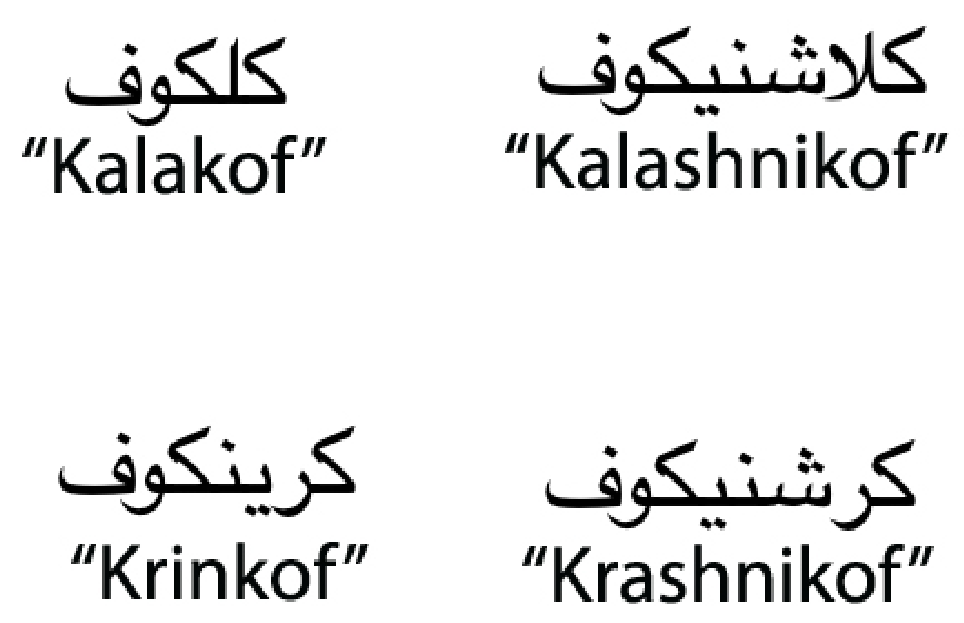
A close Afghan contact from Jalalabad mentions two names for the AKS74U, the first one which is popular in Jalalabad, is “Kalakov” and the second one is “Krinkov”. If you hear somewhat of an “F” sound at the end of the word, that is because there isn’t any “V” consonant in Pashtu, speakers instead using an “F” or a “W” sound to simulate a “V”. Now, remember what David Isby said the other names for the carbine were? “Shrinkov” and “Shesakov”? Using a little knowledge of the Pashtu language, the names pair up to be the same word. There are two dialects of Pashtu, the southern, or Kandahari, and the eastern, or the Nangahari. So looking at this words, “Krinkov” and “Shrinkov” are actually the same word, just pronounced differently, while “Kalakov” and “Shesakov” are a little more different, but dropping the “la” sound, the words are also the same.
From the full form of the word on the right, going into the nickname for the AKS74U on the left, the differences between the top and bottom are in different Pashtu areas of speaking.
But how exactly did these words come about? As my friend mentioned, adding an “ov” to any word makes it Russian-ized in Pashtu. So that explains the last part of the word, and the first part is probably a bit of vocabulary added on, to signify the importance of the AKS74U as a status symbol. Because it isn’t just any old “Kalashnikov”, its a “Krinkov”, and you know I got it from that Hind I blew out of the sky a week ago. Another tidbit that my friend brought up after the camera was off, is that for some reason, in Jalalabad, the Pashtuns refers to the Kalashnikov rifle as that, a “Kalashnikof”. However, in other parts of eastern Afghanistan, the same name is actually pronounced “Krashnikof”. And this might actually be the truest jump to “Krinkof”, as going from “Kalashnikof” to “Kalakof” is very similar, as is going from “Krashnikof” to “Krinkof”. In both cases, the “L” in the first one, and the “R” sound in the second one are maintained in their nickname for the short rifle.
I hope this was an informative article and was able to really get to the point of “Why do we call it this?”. If anything, the most important part of all of this, is that the word isn’t a made up, nonsense word, but instead has very important historical and cultural attributes and an etymology that comes from a defining moment in history. There is much evidence to point to the fact that Afghanistan might just have been the straw that broke the Soviet Unions back, and this word directly came out of that struggle. In addition, it is a Pashtun invention, and is still very much alive and well in eastern Afghanistan and Peshawar.
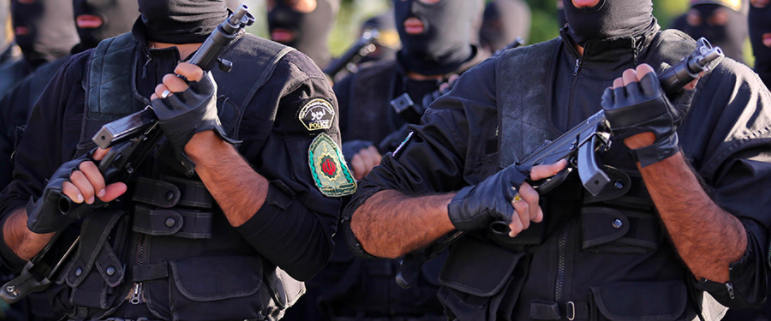
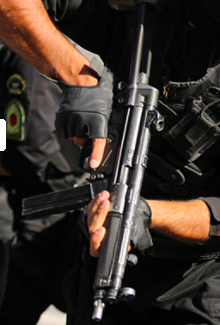
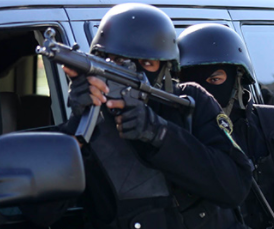
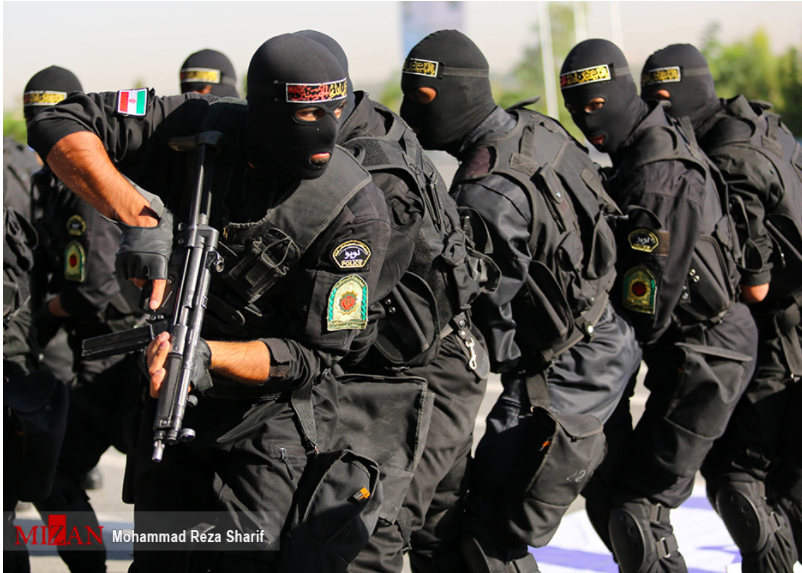
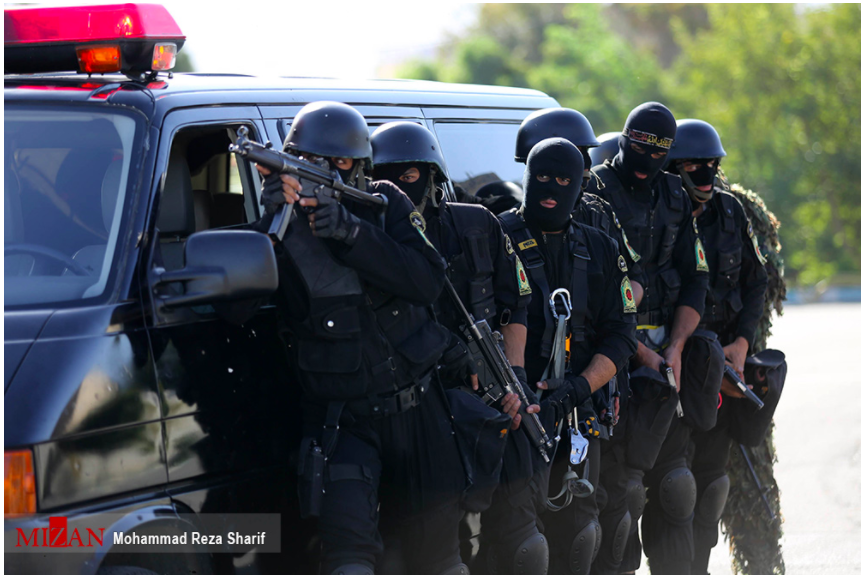
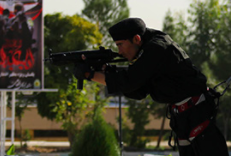
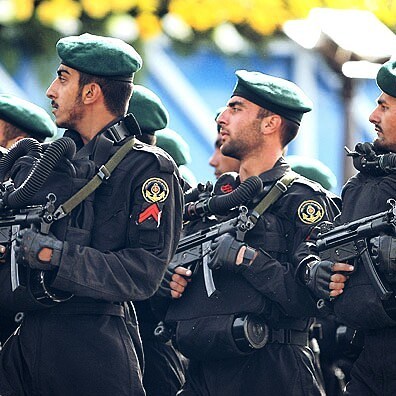
Within the Law Enforcement demonstration recently held in Isfahan (in which we posted about a thermal optic in use ), a straight walled magazine was spotted in use by one of the officers taking part in the demonstration. Iran’s Defense Industries Organization produced licensed copies of the MP5 from the time of the Shah (along with the G3), and it is still heavily employed by Iranian forces. Most of the MP5s today appear to be equipped with the curved 30 round magazine, but that is what makes this particular one stand out, due to the original straight wall design that Heckler & Koch introduced the very first MP5 variants with.
The MP5 has several variants within Iran, one of which has green polymer furniture, while there is an MP5K variant with a forward grip.
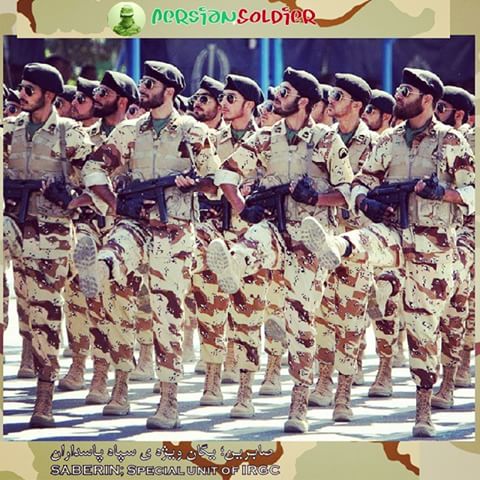
Notice the straight magazines in use with the Islamic Revolutionary Guard Corps in this formation.
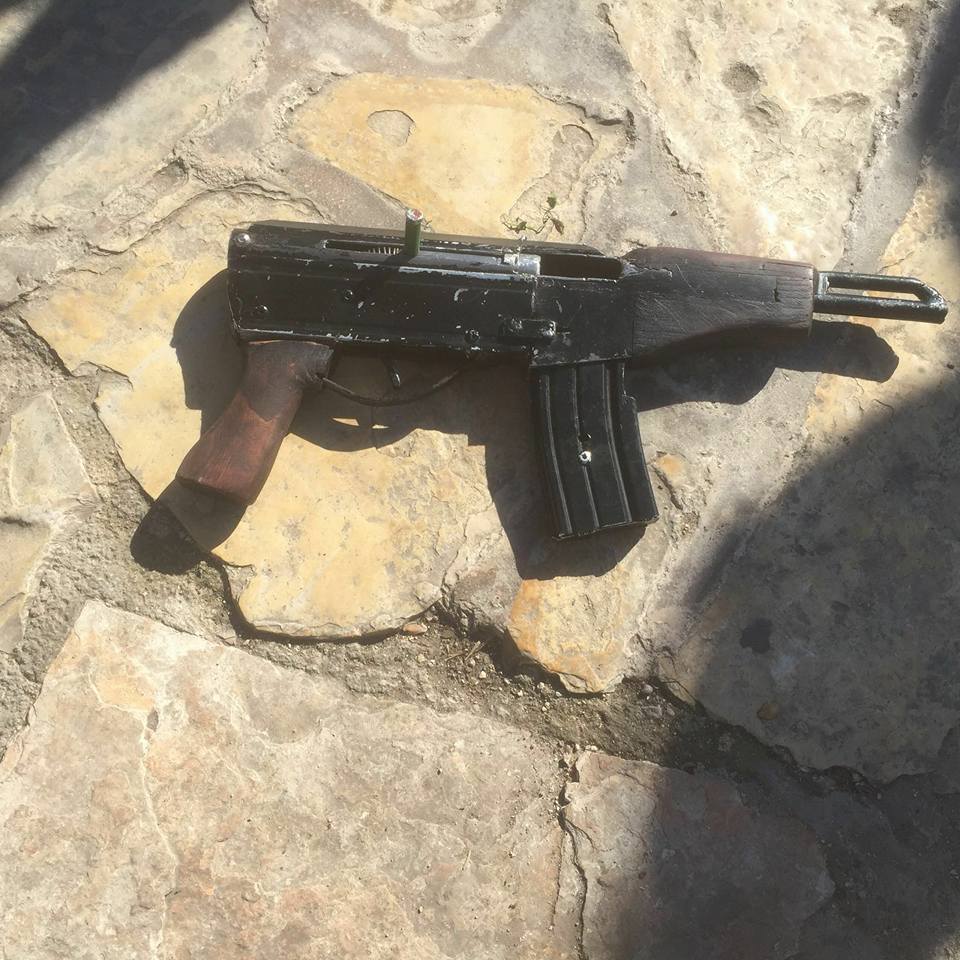
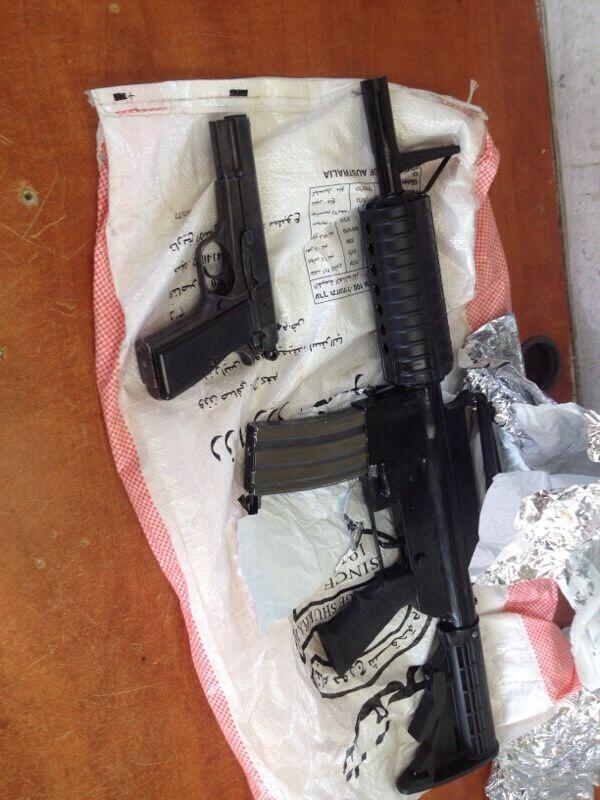
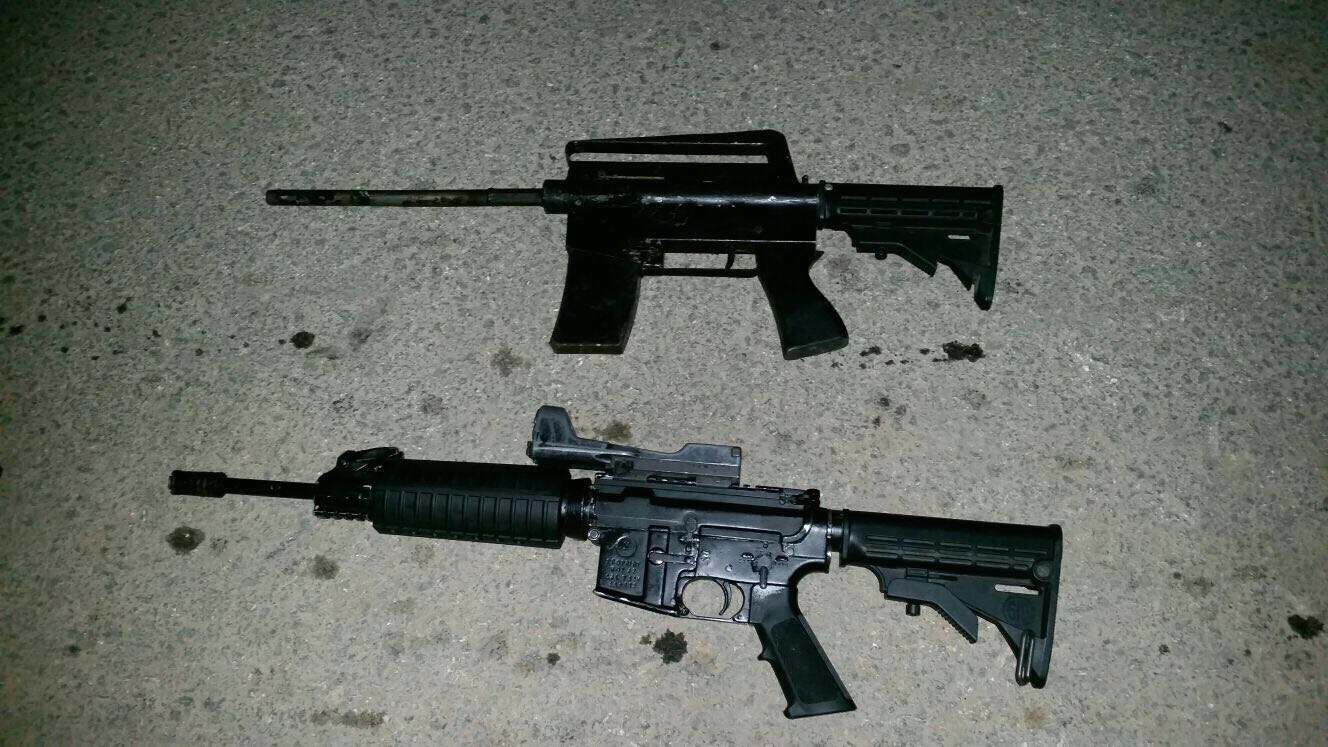
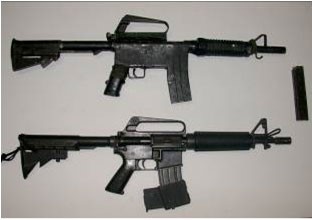
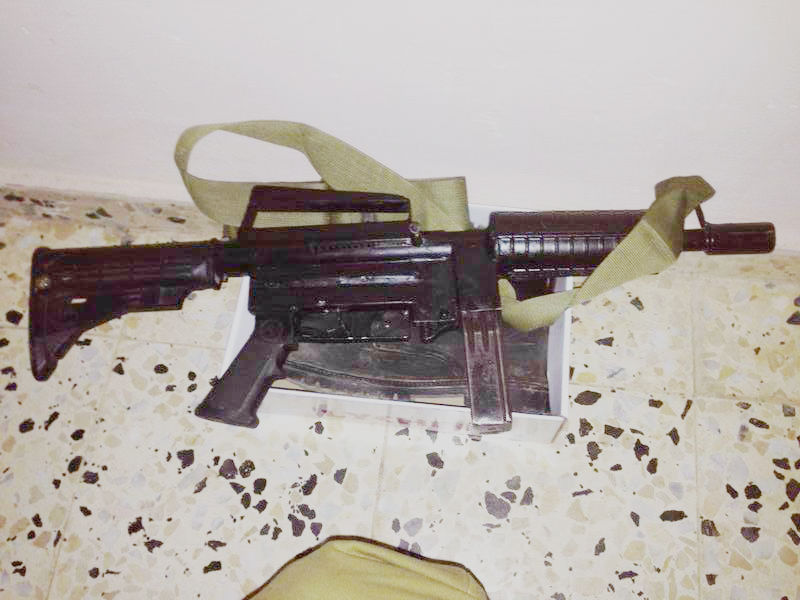
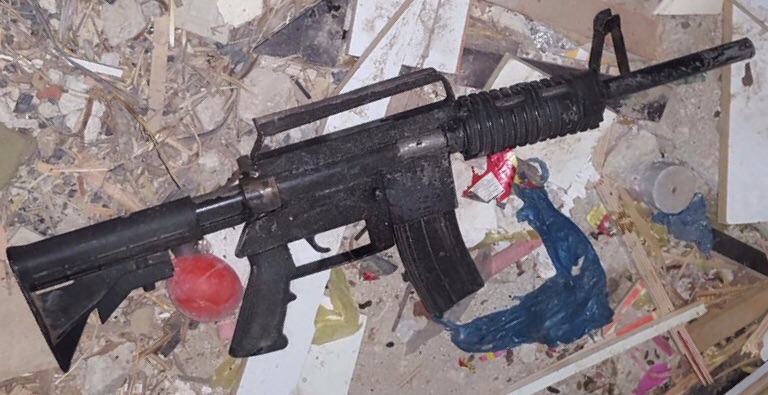
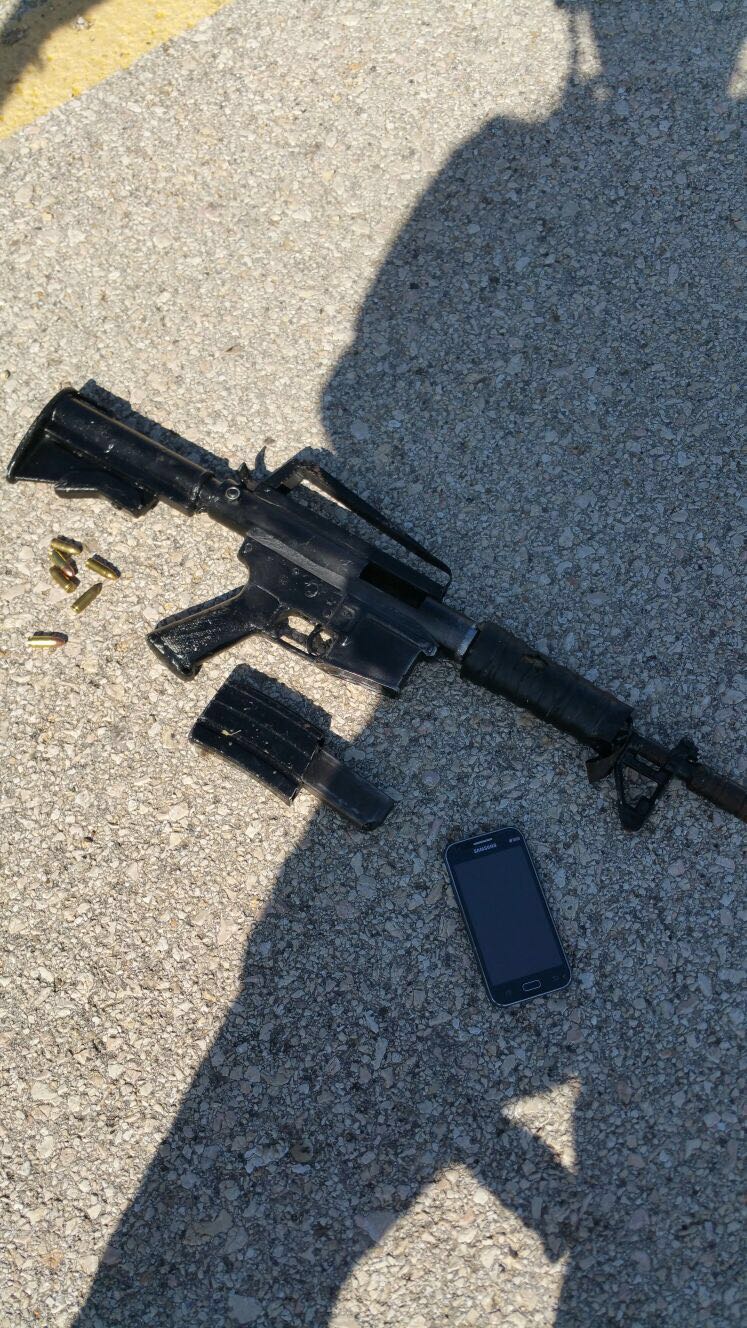
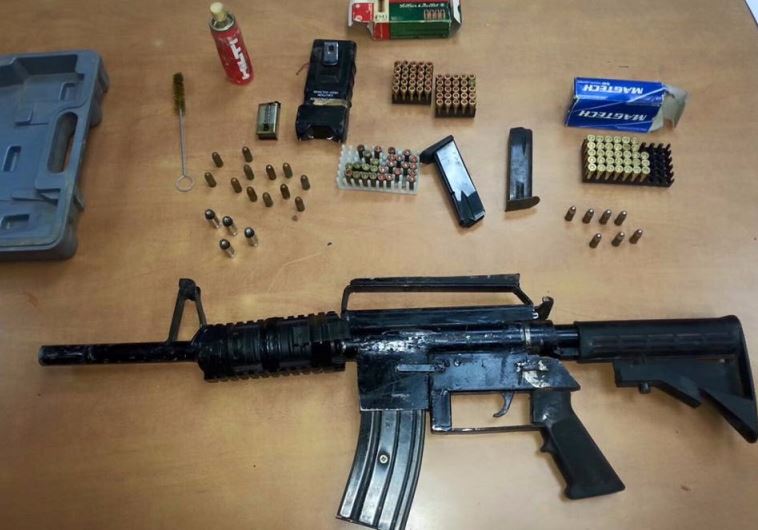
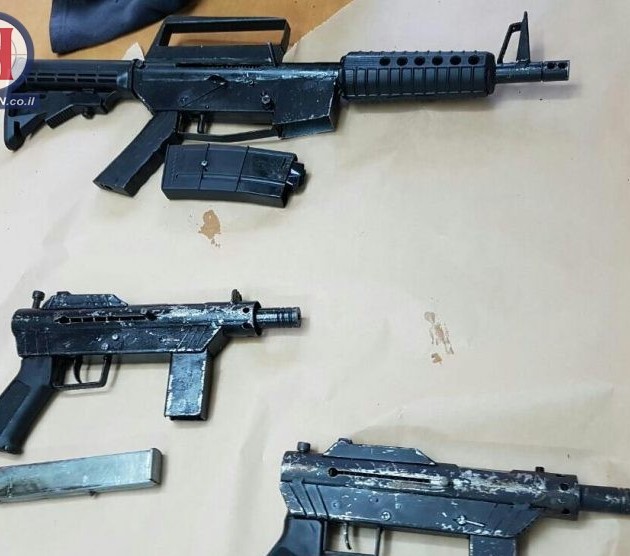
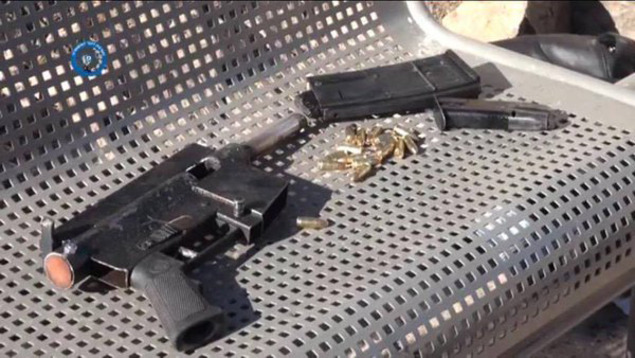
This article will examine the design and use of improvised firearms among Palestinians in the West Bank, that are otherwise known as “Replica” Carlo’s due to their similarity in appearance to the M4s and M16 rifles in use throughout Isreal that the designs are replicating. The majority of these weapons are 9x19mm NATO, fully automatic only, magazine fed, open bolt designs that are improvised from underground manufacturers that use machinery and materials purchased on the black market or outright stolen. Due to the variance in production and origins, there is no set standard of appearance for these weapons. Rather there is a general consensus that the appearance is identical to an M4 or M16 from afar, but that there are significant differences between individual models.
Motives for Producing Replicas and the Cultural Context
Availability
The prime reason to manufacture the Carlo is to resemble as closely as possible an M-16 or M-4 is the availability of furniture and magazines in Israel and the West Bank. Both guns were and still are a major part of the Israeli armament, used by the IDF, police, civil guard etc… Because of this availability of parts, Armalite based designs are favored when theft becomes an option.
From a manufacturing point of view, it makes sense to design your gun to match the existing furniture and magazines already available than to manufacture them along with the gun.
Status and Prestige
Guns have a significant role in the Arab tradition, centuries of existence in lawless regions made it essential to own weapons for self-defense and as a deterrence against other tribes who were also armed themselves with whatever they could get their hands on.
Although civilian gun ownership is largely restricted and banned by both Israel and the Palestinian Authority many Arab families in the West Bank and Israel are determined to keep their arsenals and enlarge them as much as possible.
Alongside the practicality of owning a gun the guns are symbols of status and wealth. A family or an individual that can afford high-end weapons rather than a homemade one enjoy prestige over those who compromise with the local workshop products.
Acquiring a real military grade firearm might be expensive and the common garden variety Carlos are too widespread. The Carlo replicas are a way to bridge that gap, have a more expensive and awe-inducing gun without the cost of acquiring the M4 that the replica is based on.
Imitating Popular Palestinian Figures
Many in the Arab population view the terror organizations and terrorists as freedom fighters and role models, naturally, there are those who want to imitate these heroes and want to have their guns be as identical to those who they admire. If the genuine guns and ammo are out of reach then the replicas become the alternative, relatively cheap and available supplies of ammunition to practice and show off. It is then easy to understand why some workshops making the replicas make great efforts to produce almost identical copies.
Infiltration
It has been speculated that the M4 replicas could be used for terror attacks against Israeli civilians or IDF soldiers. Due to the apparent shape of the replicas being similar to the M16 service rifle used by the IDF. This will confuse soldiers and security guards, mistaking the identity of terrorists as IDF soldiers, making them hesitate to shoot.
A fair theory, however, none of the individuals caught with these replicas has ever been caught with an IDF uniform to match the gun. Currently, the records show that after numerous attacks done by Carlo wielding terrorists none were carrying any replicas. All of the photos released by IDF and police spokesmen show a regular Carlos.
Stolen or Lost Weapons and Magazines
An obvious source for both guns and their magazines are various stocks of small arms already existing in Israel. IDF, police, border guards, private security, armed civilians and many other groups are armed with M16s and M4s. This creates an abundance of stock from which guns and magazines can be acquired, by searching IDF training areas or breaking into a police officer’s home for example.
Commercial market
Several Israeli companies, such as FAB and CAA, known in the U.S. commercial gun market for their products, are also producing and selling M16 and M4 furniture in Israel. Many IDF soldiers individually choose to upgrade their weapons at their own expense. Such equipment is sold regularly and without any background checks and it stands to reason that some of the replicas are using such legally purchased furniture.
Paintball and Airsoft Replicas
There were some on Israeli gun web forums who speculate that paintball and airsoft replicas could be the source for the Carlos replicas’ receivers.
Indeed such guns could be cannibalized to provide the Carlo replica receivers.
The 9x19mm NATO ammunition produces less pressure than intermedium cartridges do so the light structure of the paintball and airsoft might withstand the additional pressure.
However, thought technical plausible, photos taken of captured Carlos or those surface in the Arab social media don’t indicate that paintball and airsoft are used.
The replicas’ ‘receivers’ all appear to be workshop made with all the typical welding seams, rivets and out of proportions dimensions.
Embedded Magazine
Curious readers might wonder how open bolt 9x19mm submachine guns are fed with 5.56x45mm NATO STANAG magazines.
The answer is simple, the craftsmen making the guns mimic the real guns embed pistol or Uzi 9x19mm magazine inside the real STANG magazines.
Similar to Matryoshka dolls, these magazines are inside of the weapon with few exterior modifications to the STANG magazine.
Those rivets hold the inner magazine in place.
Outside of the weapon the inner magazine is revealed protruding out of the STANAG housing magazine.
Such arrangement of small caliber magazine housed inside bigger caliber magazine shell is unusual but not unique, for example, the Philippines Armscor M16 22 is a 22LR semi-auto rifle dressed as an M16A1 with a matching STANAG size magazines containing 22LR magazines inside
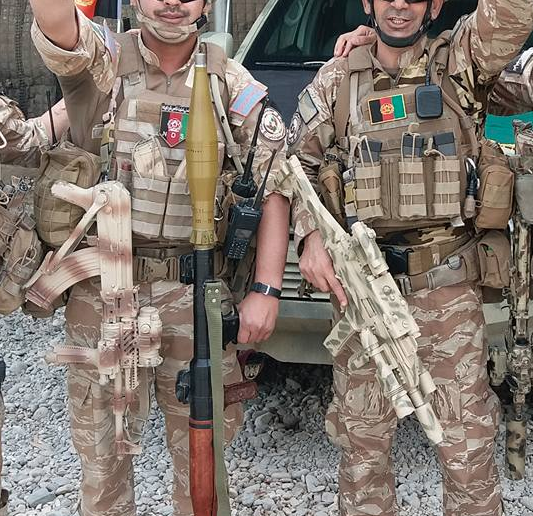
This photograph appeared very recently on Afghan social media pages, showing two ANA Commandos in desert Tiger Stripe camouflage uniforms and most interestingly a 9x19mm CZ Scorpion submachine gun with corresponding magazine pouches. The submachine gun has a number of accessories mounted to the M1913 Picatinny rails, such as the AN/PEQ-2 ATPIAL at the 12 o’clock position, what appear to be two sets of lights at the 3 o’clock and 9 o’clock positions, and what might be an Aimpoint M62 CCO red dot optic. The entire package was given a decent camouflage application that wasn’t applied to the spare magazines.
Judging from the amount of accessories, the lack of camouflaging spare magazines, and the overall presence of a submachine gun in an environment where it would not be very effective, my initial thoughts are that the ANA Commando who is armed with it, is a commander who is carrying the Scorpion as a status symbol. He isn’t actually engaging Taliban with it on combat patrols, but instead allows the weapon to signify his rank. The follow on question however, should be how it and the spare magazines got to the ANA. It would seem highly doubtful that it came through a U.S. supply line due to resources directed towards the ANA are already limited and at that are usually not afforded to such ineffective submachine guns in the battlefield that the ANA and Taliban often find themselves arranged in.
Although this these images are from a post that is several years old and on an Airsoft forum, the historical relevance is still very important to consider when examining small arms in the MENA region. These photographs came out during the massive unrest in Libya during and following the Libyan unrest otherwise known as “17 February” that overthrew long-time ruler Muammar Gaddafi. Although many of these small arms were actually used in fighting, the photographs appear to show a lull, where militia forces aren’t actually engaged but are rather conducting target practice or celebrating.
Two variants of the U.S. 1919 are shown, the first one appears to be a heavily modified 1919A4 variant, while the second one is a 1919A6. At first glance, these may appear to be 7.62x51mm NATO variants that Israel modified to use in the IDF during the 1950s and 1960s. However, a closer look at the belt of ammunition reveals the length of the rounds do appear to be .30-06 Spr and thus are most likely original manufacture 1919A4s and A6s.
The photo below shows a Browning Hi Power, Sterling SMG, and a Caracano rifle in the background.
The proceeding two photographs are of a Russian 7.62x54Rmm DP28 light machine gun. These might have arrived in Libya as a form of surplus support from the Soviet Union during the Cold War.
At an initial glance, this would appear to be a German 9x19mm MP40, but instead, due to the circular opening in the magazine well it is in fact, the predecessor to the MP40, the MP38.
This rifle appears to be a Mauser K98 with a broken stock that has been replaced
17 February Unrest Summary (Wikipedia)-
The first Libyan Civil War, also referred to as the Libyan Revolution[33] or 17 February Revolution,[34] was an armed conflict in 2011, in the North African country of Libya, fought between forces loyal to Colonel Muammar Gaddafi and those seeking to oust his government.[35][36] The war was preceded by protests in Zawiya on 8 August 2009, and finally ignited by protests in Benghazi beginning on Tuesday, 15 February 2011, which led to clashes with security forces that fired on the crowd.[37] The protests escalated into a rebellion that spread across the country,[38] with the forces opposing Gaddafi establishing an interim governing body, the National Transitional Council.
The United Nations Security Council passed an initial resolution on 26 February, freezing the assets of Gaddafi and his inner circle and restricting their travel, and referred the matter to the International Criminal Court for investigation.[39] In early March, Gaddafi’s forces rallied, pushed eastwards and re-took several coastal cities before reaching Benghazi. A further UN resolution authorised member states to establish and enforce a no-fly zone over Libya, and to use “all necessary measures” to prevent attacks on civilians.[40] The Gaddafi government then announced a ceasefire, but fighting continued.[41][42] Throughout the conflict, rebels rejected government offers of a ceasefire and efforts by the African Union to end the fighting because the plans set forth did not include the removal of Gaddafi.[43]
Recently coming out of Baghdad are these images of a very well worn down German STG44 and what comparatively appears to be a less used 9x19mm MP40 submachine gun. There were not any close up photographs of the internals of the small arms so it is hard to ascertain what year in WWII either was made in.
STG44s have been reported in abundance in neighboring Syria, often arming Daesh troops in Raqqa. There is even an inside report on these rifles by a source in Syria from TFB. The largest issue with them is that 7.62x33mm Kurz is extremely hard to come by, although the rifles themselves are very plentiful and in like new condition.
Notice on the MP40 the grip sleeve. These are used on a number of handguns in Iraq and is actually an Airsoft import from China. They come in a number of colors, from green to tan, to black.






 The photo below shows a Browning Hi Power, Sterling SMG, and a Caracano rifle in the background.


