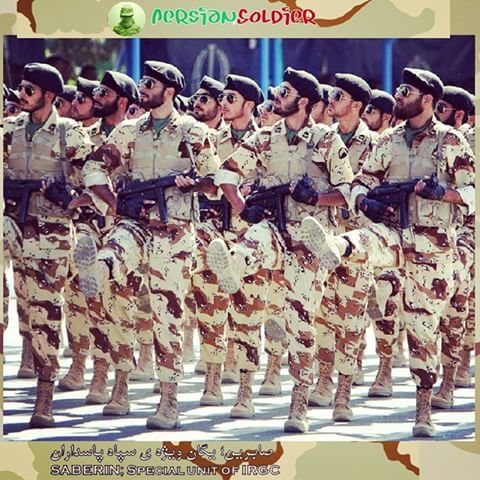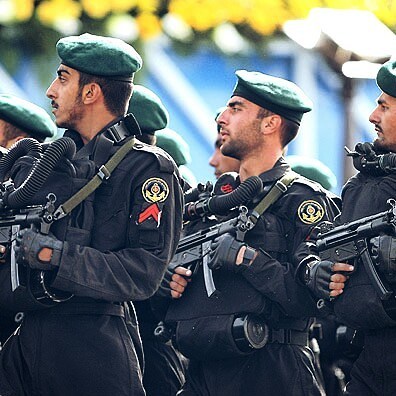
When designing a new flag or representative banner of any given social group, one of the most important pillars of vexillology (the study of flags) one should keep in mind is clarity. Any serious flag should at least be indicative of what it represents, and how the people brandishing it wish to be perceived by the outside world. A clueless spectator means failure in offering a sufficiently suggestive flag for the group’s representation to the public. A flag is an important attribute for any group, presenting a visual introduction and identification through colors, symbols and objects featured on the banner.
Iran
V16: Sniper Rifles and Tactics Against IS in Syria, a SMLE in Afghanistan, and a Counterfeit Revolver in Iran
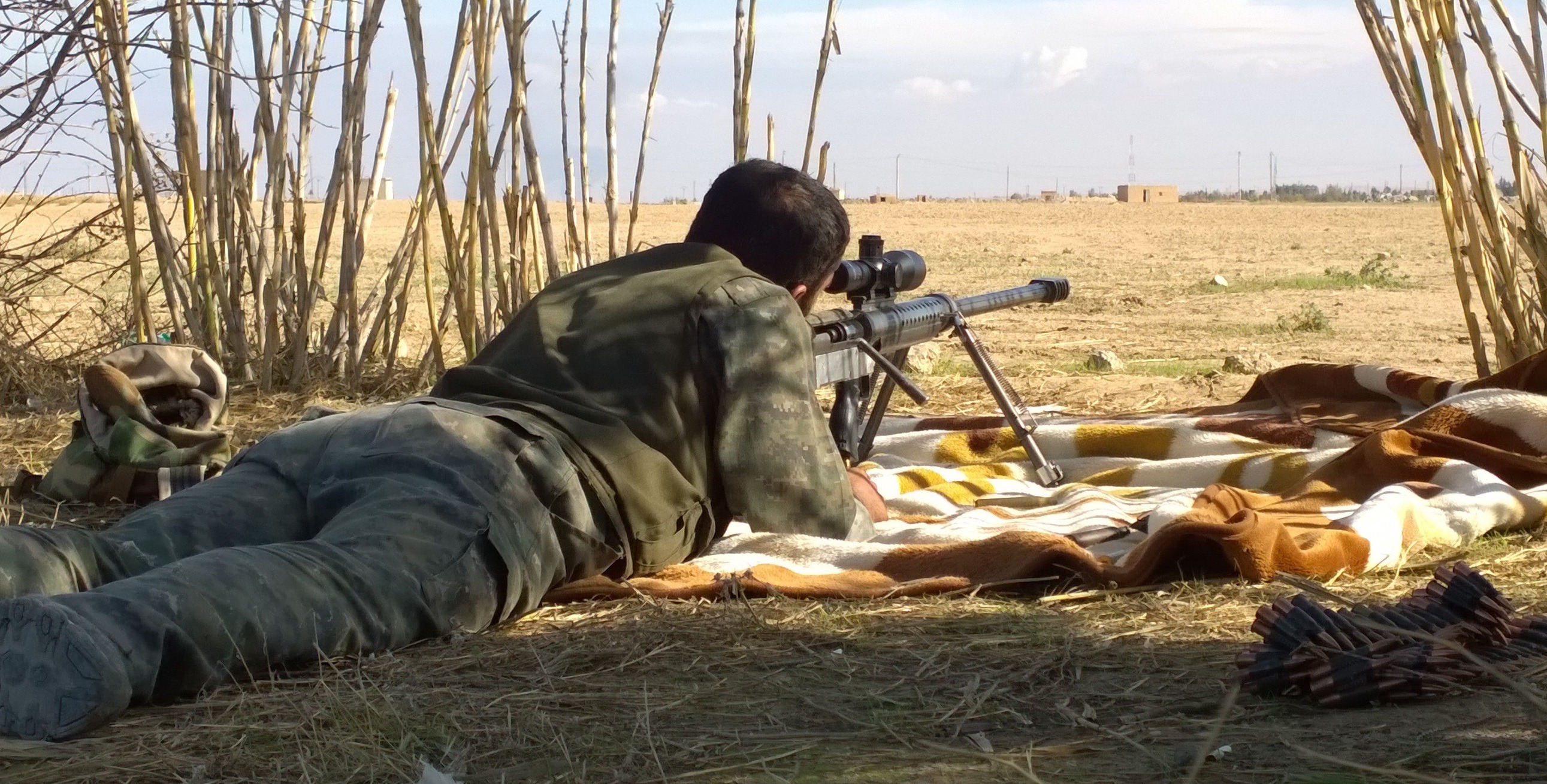
Our guest speaker and main presenter in this week’s edition of the SR podcast is Ed Nash, author of Desert Sniper. Ed took part in the fighting against the so-called Islamic State when he travelled to Syria to fight with the Syrian Democratic Forces, ending up as a precision rifleman in the campaigns of Hasakah, Shadaddi, and eventually Minbij where he ended his tour. He covers everything from the odd tactics in use with the YPG, types of precision rifles employed, and some of the bits of kit that helped him through the fighting.
5 Iranian Firearms Seen In December 2019 Rock Island Premier Firearms Auction Catalog
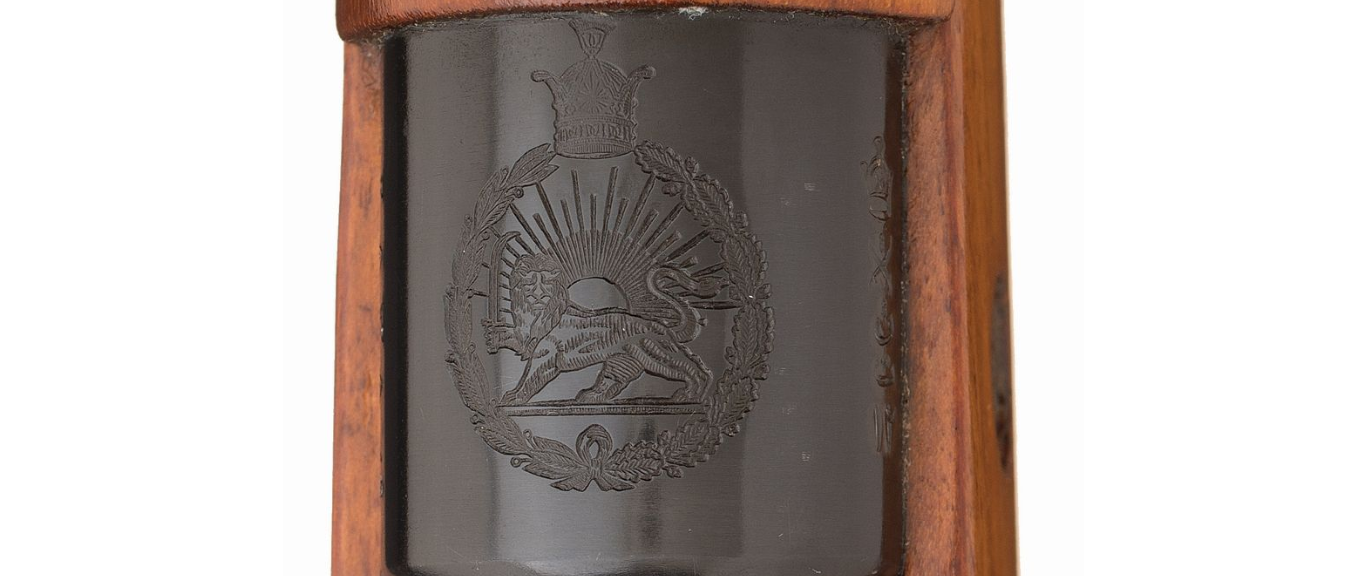
The last Rock Island Premier Auction of the year will take place on December 06, 07 and 08. As in the case of other premier auctions, the online catalog was published about a month before the auction starts.
Being one of the largest firearm auctions in the USA and perhaps in the world, its catalog is full of one of a kind lots including those related to the MENA region which is one of the focus research regions of Silah Report. We browsed the RIAC December 2019 auction catalog and found an interesting selection of Iranian firearms which we’ll take a look at in this article.
Silah Report Podcast V10: Missile and Drone strikes on KSA’s Oil Refineries,AK74s in Syria and More!
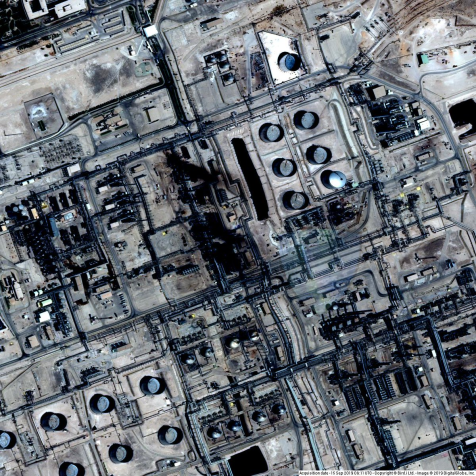
In the latest episode of Silah Report Podcast, we spoke about the shocking news of missile and drone strikes on Saudi Arabia’s oil refineries, discussing how this was possible in the first place and which players in the region may be behind it. As well as the types of drones and missiles which may have been used. We also discussed 5.45 x 39mm smalls arms in Iraq and Syria.
FN 1906 Pistol Attributed to Iranian Prince Abdul Reza
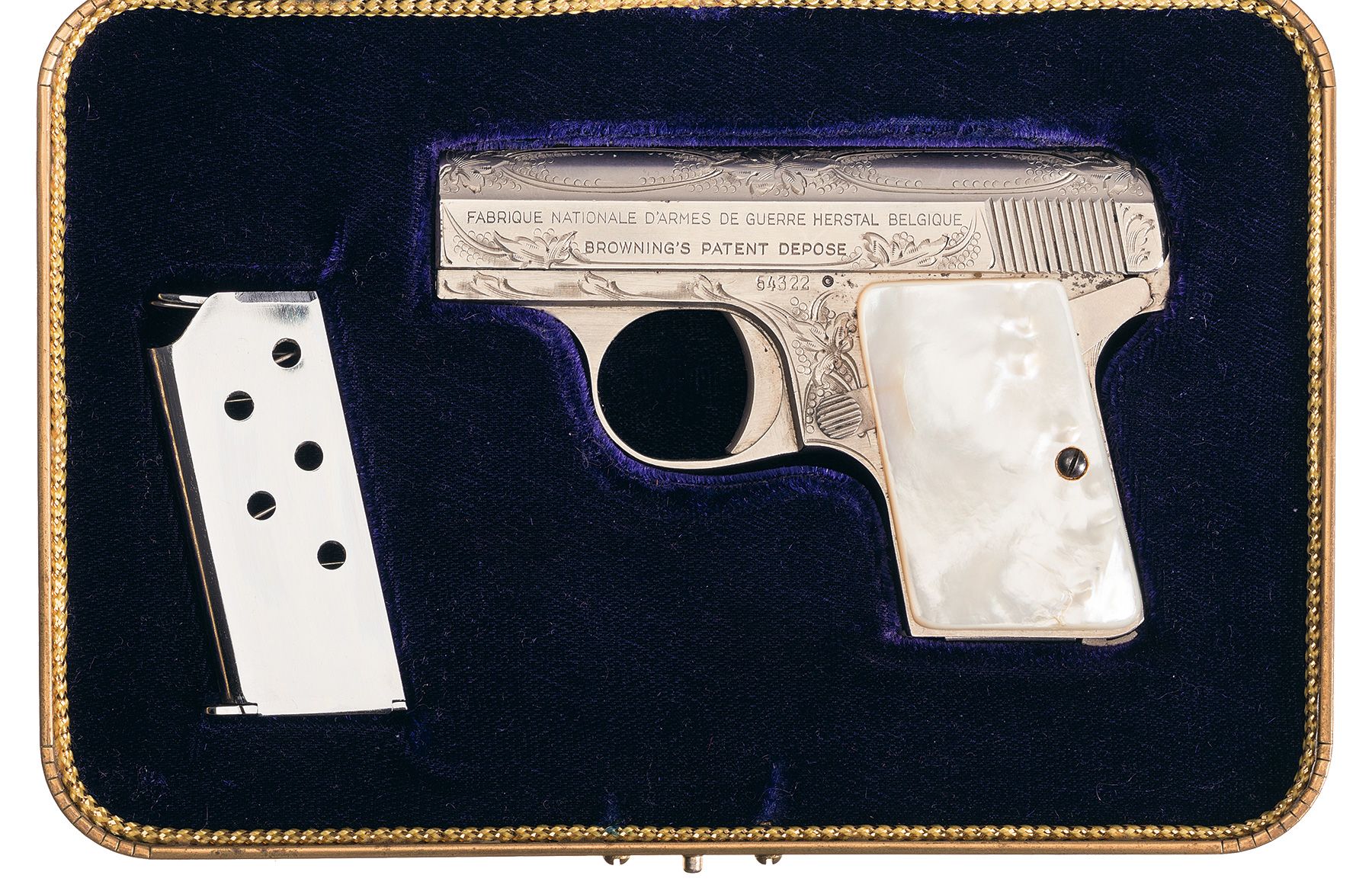
In one of our previous articles, we talked about the gold-plated Tariq pistol attributed to Saddam Hussein and auctioned at the Rock Island December 2018 Premiere Firearms Auction. Today, we’ll take a look at another interesting lot from that auction – an FN 1906 pocket pistol that presumably belonged to the Iranian Prince Abdul Reza Pahlavi.
Iranian PPSh-41 Production During the Second World War
In the interwar period, Iran’s military industry was primarily dominated by the German investments. In 1933, with the German support, Iran established a powder plant in Parchin (25 kilometers to the south-west from Tehran). Starting from 1934, Tehran Military Arsenal started assembling Mauser rifles from parts kits imported from the Czechoslovak Republic with only stock being locally made. Later they started manufacturing these rifles in Fritz Werner factory which was another plant built by Germans. There was also an ammunition plant and Krupp artillery shell manufacturing plant established in Sultanabad. In 1940 Germany built a gas mask manufacturing factory near Tehran. A German and Czech joint company called “Nabar” was building a new plant in one of the districts of Tehran that was supposed to make ZB-26 and ZB-50 machine guns.
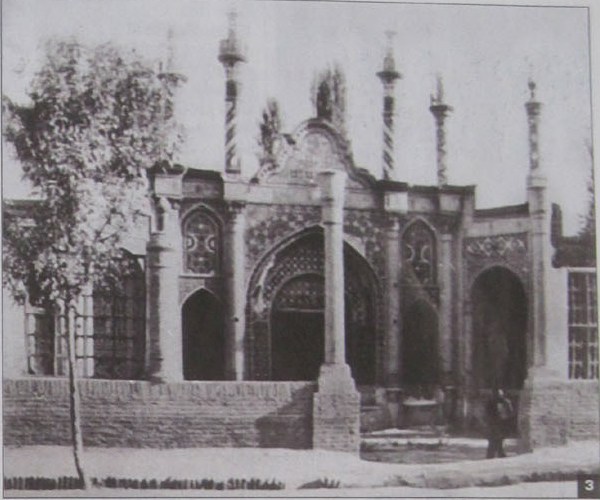
Besides the above-described investments in small arms and ammunition manufacturing, Germany had large investments in other segments of the Iranian military industry, too. UK and USSR were concerned with such strong German presence which probably was one of the reasons of the Anglo-Soviet invasion of Iran. Here is an excerpt from the Wikipedia article describing this invasion:
The Anglo-Soviet invasion of Iran, also known as the Anglo-Soviet invasion of Persia, was the joint invasion of Iran in 1941 during the Second World War by the British Commonwealth and the Soviet Union. The invasion lasted from 25 August to 17 September 1941 and was codenamed Operation Countenance. Its purpose was to secure Iranian oil fields and ensure Allied supply lines (see the Persian Corridor) for the USSR, fighting against Axis forces on the Eastern Front. Though Iran was neutral, the Allies considered Reza Shah to be friendly to Germany, deposed him during the subsequent occupation and replaced him with his young son Mohammad Reza Pahlavi.
In 1941 Soviet small arms industry was not in its best shape, to say the least. Many plants were evacuated but hadn’t yet settled in new locations and there was a huge demand for new weapons and ammunition in the frontline. The Soviet Union decided to purchase small arms from its ally nations. Particularly, they were planning to buy from Iran 100,000 rifles, 500 LMGs, 400 medium machine guns, and 15 million cartridges. They were especially interested in buying as much of estimated 8,000 Iranian Maxim machine guns that they could.
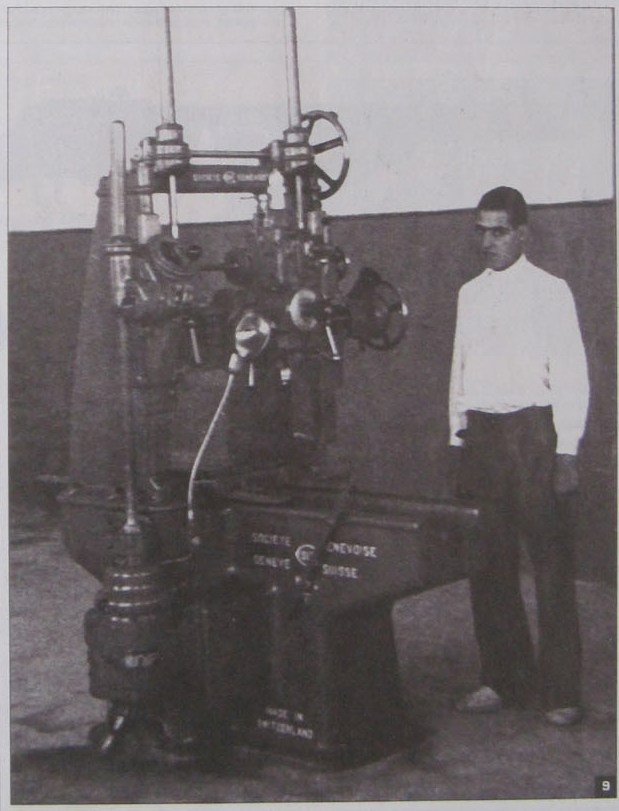
In 1942, the evacuated Soviet plants were already established in new locations and started working. However, the war has been escalating and there were even more losses of personnel and small arms. The demand for small arms was the all-time high. The Soviet Union officials started to think about sourcing more weapons and equipment from their allies. They were initially planning to buy from Iran the Tehran Arsenal, the unfinished machinegun plant, as well as powder and ammunition plants. Later, they decided not to buy them but place orders in Iranian plants, help to finish the machinegun plant construction, deliver equipment, assign specialists and qualified workers to Iran as well as supply the raw materials necessary to fulfill the Soviet orders. As a result of these negotiations, on January 23, 1943, a contract was signed between the two countries.
According to the contract, by January 1944, the Iranian machine gun factory was supposed to have manufactured 30,000 PPSh SMGs each equipped with six box magazines, spare parts and accessories. They were planning to start the manufacturing process in August 1943 with a production rate of 4,000 PPSh SMGs per month. That rate had to be increased to 6,000 SMGs per month. The #367 plant in Vyatskiye Polyany (today’s Molot Oruzhie) which was the main manufacturer of PPSh SMGs, sent the technical drawings and raw materials necessary for accomplishing the manufacturing plan of first two months (8,000 SMGs and 48,000 magazines). According to the contract, Iran could also make these weapons for their own use both during the war and after its end. The only restriction was that it was forbidden to transfer the technology to third countries.
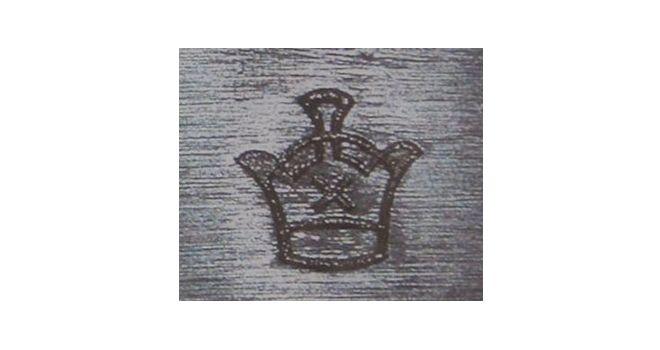
Despite the terms of the contract, the deadlines were not met and there were continuous delays for multiple different reasons. In 1943, only 214 PPSh SMGs were made in the Iranian plant. 11 from these 214 guns were sent to the Main Artillery Directorate of the Red Army as presentation guns for high ranking military and political officials. One of the SMGs was presented to Shah of Iran. The PPSh shown in the images of this article was presented to Anastas Mikoyan, the Minister of Foreign Trade of Soviet Union. These guns were hand finished and had multiple unique markings. The models that were supposed to be supplied to the Soviet army had only the crown on top of the receiver with other markings being identical to the Soviet guns.
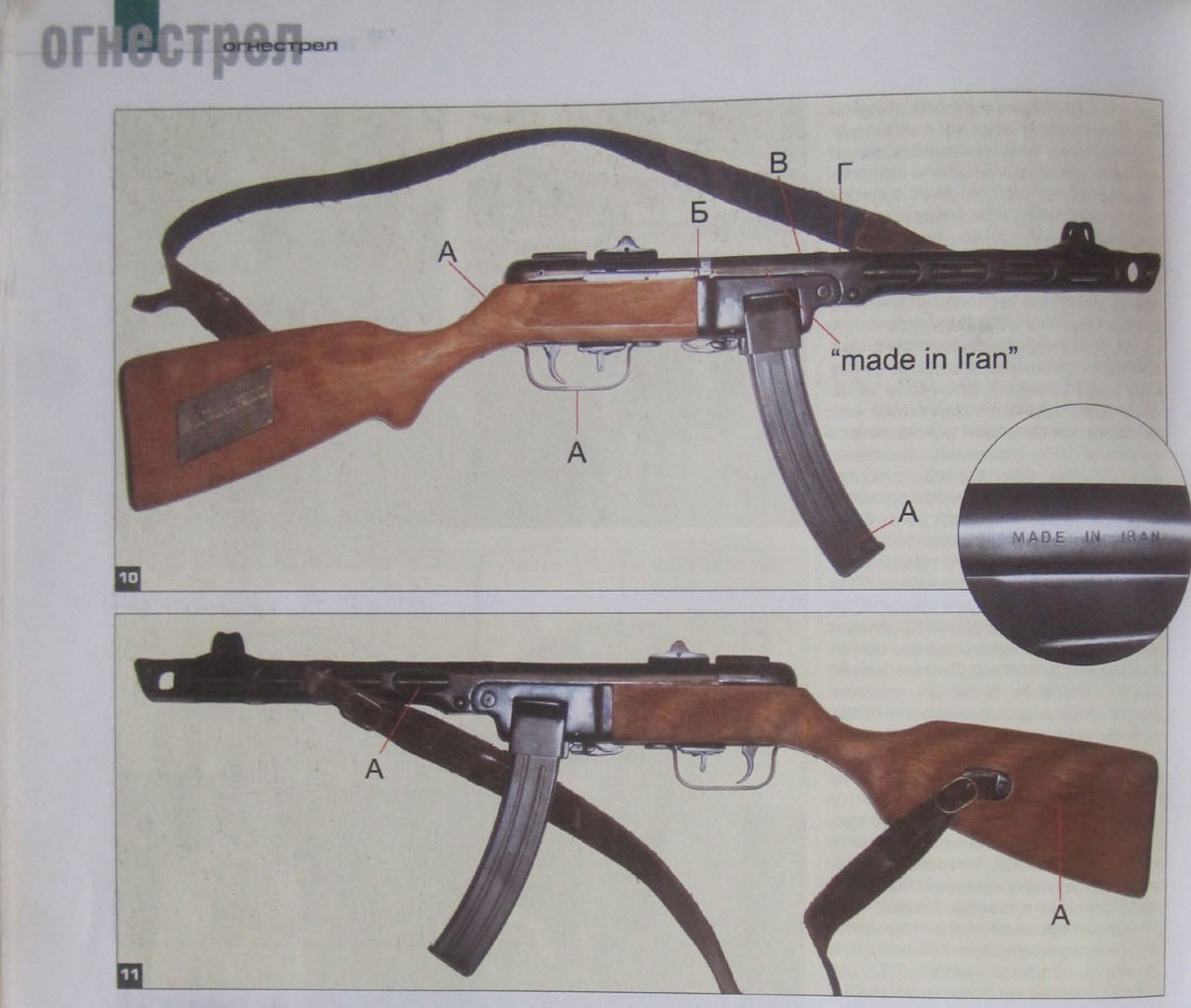
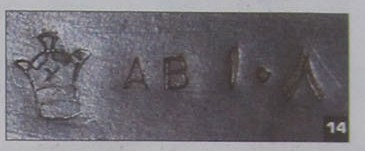
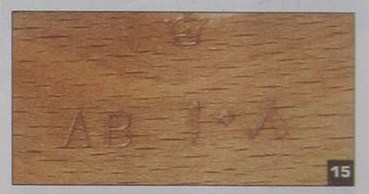
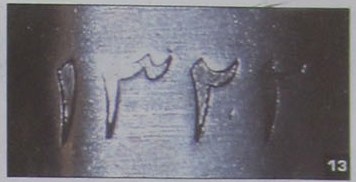
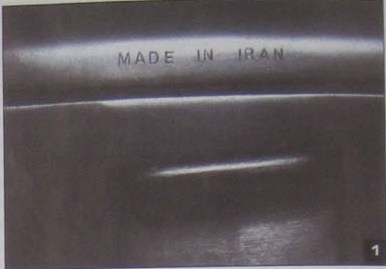
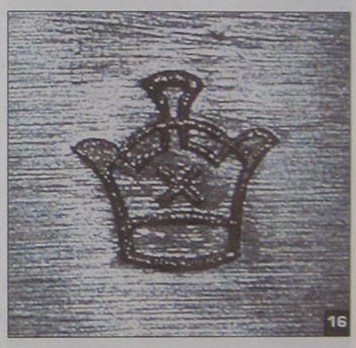
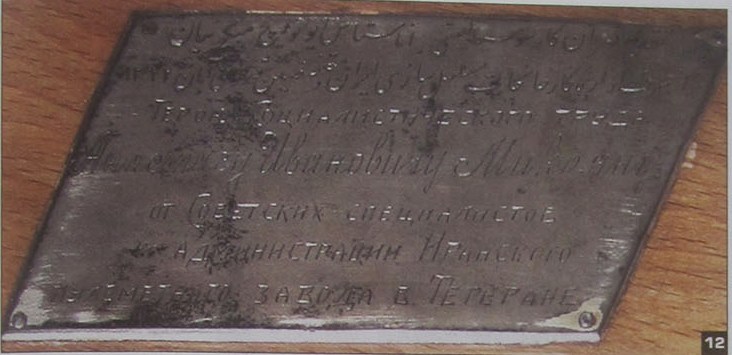
The production of these Iranian PPShs never met the set deadlines and it is unknown how many of them were supplied to the Soviet Union (various sources have various numbers). Reportedly, Iran made some PPShs for their own needs after the war, but there are no confirmed numbers either. The Iranian PPSh presented to Anastas Mikoyan is kept in the Central Armed Forces Museum of Russian Federation located in Moscow, Russia.
Sources:
Davidov B.V. (December 2005). “PPSH – Made in Iran”. “Mir Oruzhiya” Magazine.
The Odd Case of Iranian Imams Holding the “Weapon of the Day” During Khutbah Prayer Sermons
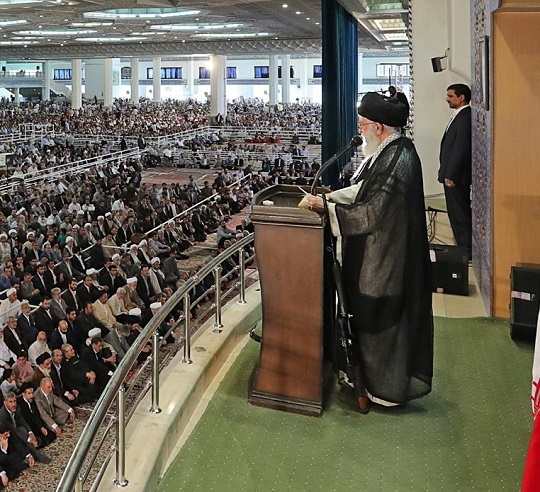
In a previous article on Silah Report authored by Ali Parsa and generously donated by him from his website Aliparsa.com, Ali specifically mentioned an interesting practice done by Iranian Shi’a Imams during Friday Khutbah Prayer services. Imam’s in Iran are known to hold on to various rifles while giving their Khutbah sermons. Ali mentions that this comes from a Sunnah of the Prophet Muhammad (ﷺ) where it mentions that the Prophet always held the “Weapon of the Day” while giving his own sermons. Going into a little searching I found this paragraph on Islam QA that gives some background behind this-
In a tradition recorded by Imam Abu Dawood, it is narrated that the companion, Hakam bin Hazn Al Kulfi (RA) said, ‘We witnessed Juma with the Prophet (SA), and while standing (to deliver the khutba), he was leaning on a staff or bow. (Abu Dawwood – Chapter of a person who delivers a khutba and leans on a bow). Based on this narration, scholars have stated that holding the staff while delivering the khutba is commendable, as it was a practice of the Prophet (SA). In this regard, the great jurist, Allama Shami recorded the following: – ‘Certainly taking the staff is a Sunnah just as standing’. (Raddul Mukhtar).
Now, I’m not nearly as versed in the Sunnah as Iranian Shi’a clerics, but in this instance it makes no mention of a “Weapon of the Day”, which Imams in Iran appear to interpret as meaning whatever primary weapon is issued that is used to defend the Islamic Republic of Iran. That is certainly one interpretation of “Weapon of the Day”, perhaps similar how a “Uniform of the Day” is in many armed forces regulations around the world informing troops what uniform to wear. The explanation above refers to a “Staff”, which the Prophet appears to simply mean something to lean on, gain physical support from, and show to emit a sense of authority in front of a congregation. We have similar examples of Prophet Moses’s staff and there are other religious texts that reference a staff as well.
A key note to mention here is that this practice is only adhered to in the Islamic Republic when it comes to gripping actual firearms during the Khutbah sermons. It doesn’t appear to even exist in other Shi’a dominated countries or countries under Iranian influence to the extent that it does in Iran.
Now, going back to sort of the entire reason why Silah Report exists (apart from general small arms & light weapons analysis), is that we serve to make sense of these cultural phenomena when it comes to the intersection of small arms and the regions we are interested in. A prime example is this Blaze post in 2015 that is entitled “Can You Spot What Iran’s Khamenei Was Holding During His Speech on the Nuclear Deal? The Mainstream Media Ignored It”.
The post goes to great length to try and psychoanalyze the geopolitical ramifications of Imam-i-Khamenei gripping what is most likely a Chinese export copy of the 7.62x54r mm SVD Dragunov marksman rifle.
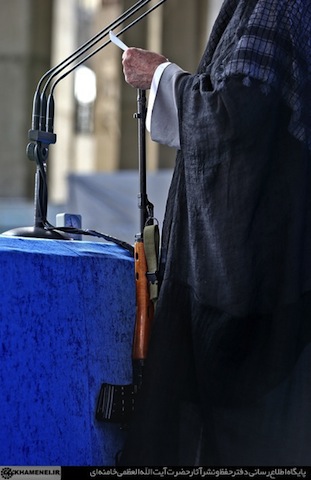
The article mentions that-
To drive home the point, the supreme leader’s official website posted a close up photo captured from beside the podium of the gun which even showed the magazine jutting out
…
But the most potent sign of all reflecting his message – the gun balanced under his left hand holding his speech notes – was left unmentioned.
It’s unlikely that if the speech had been given by an American or any Western politician that this scene setting detail would have been overlooked, especially given the hotly debated issue of guns.
The AP’s website had this photo of Khamenei holding the gun, but it was not mentioned in the copy in the accompanying article
By now, I hope readers of this article will realize the odd stance that The Blaze is taking on this Dragunov. Of course the Iranian media didn’t mention it because this is in fact actually a completely routine practice done by Imams at every organizational level throughout the religious hierarchy in Iran. Should the Iranian media have thoroughly mentioned the microphone in front of Imam-i-Khamenei’s face as well?
Now, this post isn’t to slander a conservative news outlet for getting something wrong. Any viewpoint from any source at all that is worthy of correcting in a cultural, historical, or social light will be equally scrutinized. This one just so happened to stand out as a prime reason why we at Silah Report are dedicated to our jobs at hand, to fill this void of historical and cultural knowledge by analyzing the technical with the cultural.
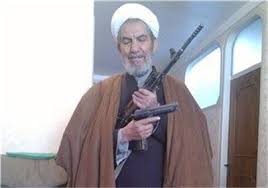
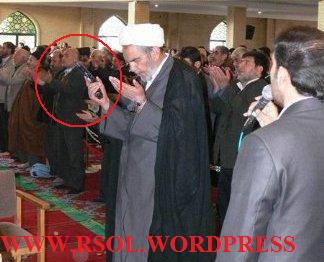
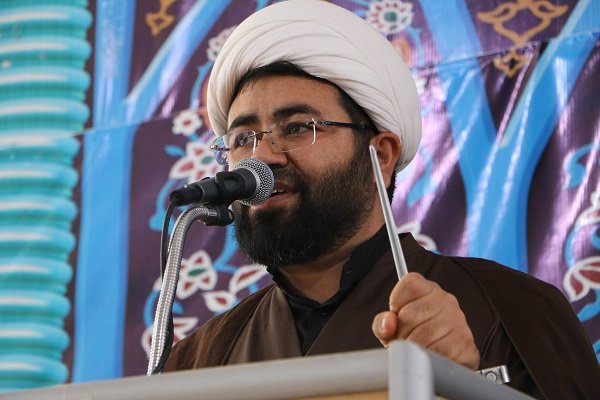
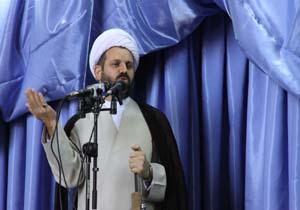
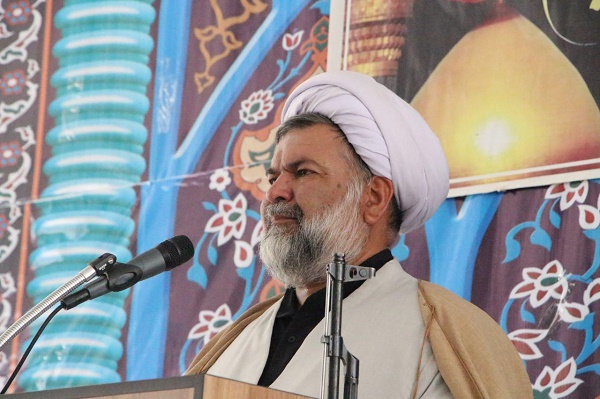
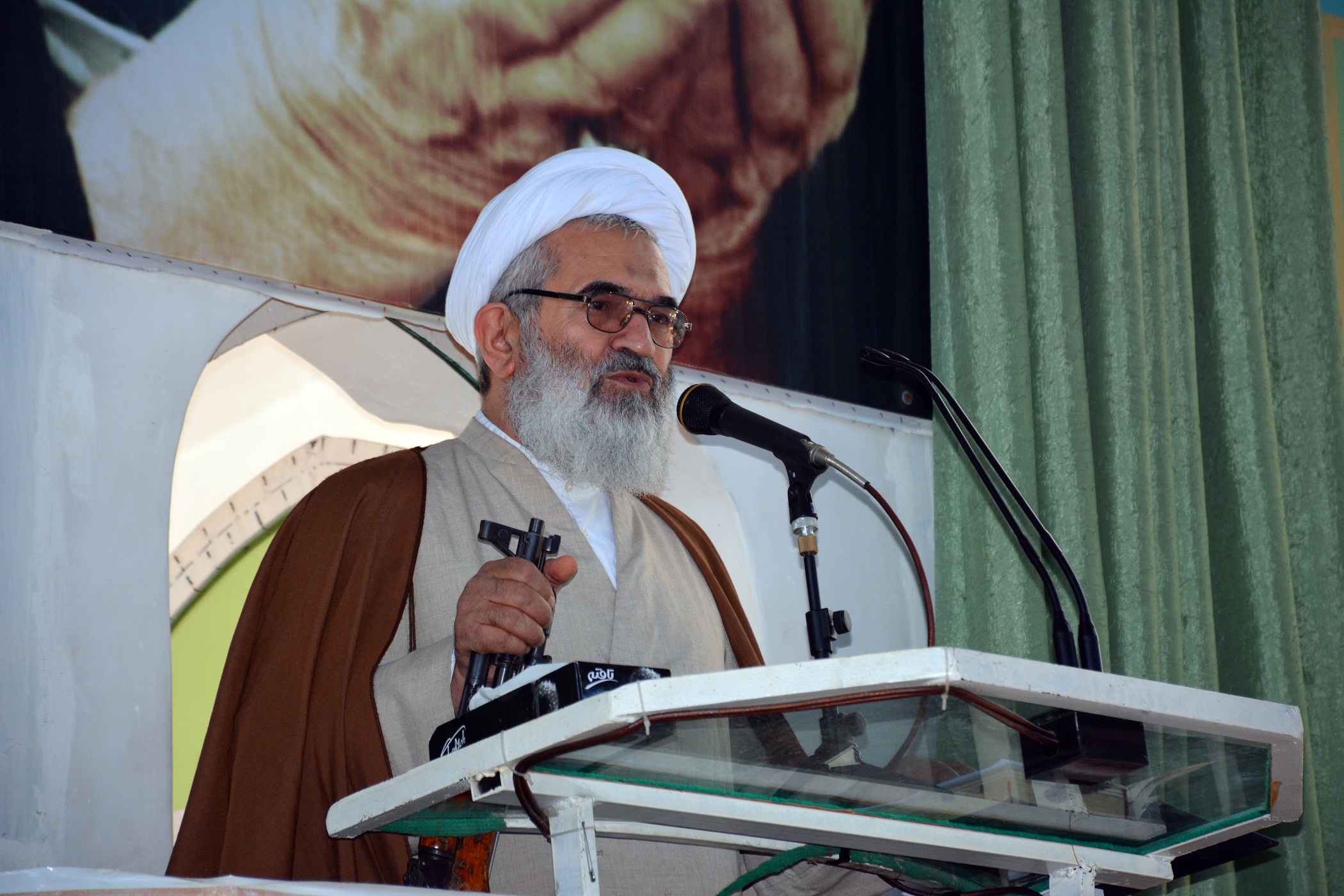
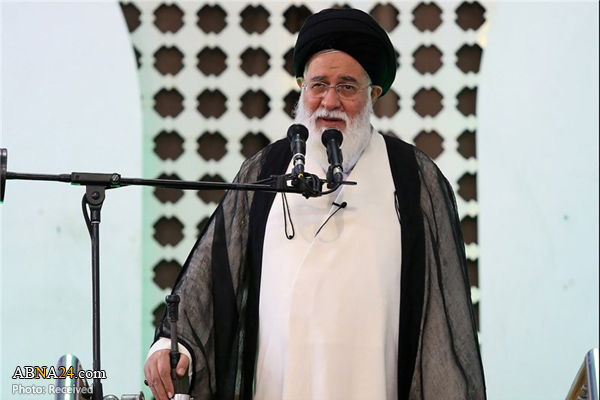
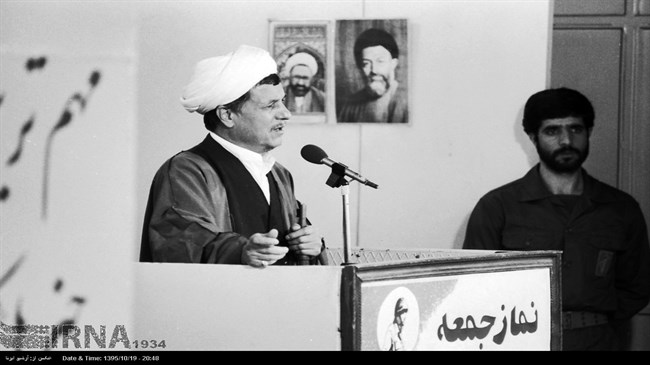
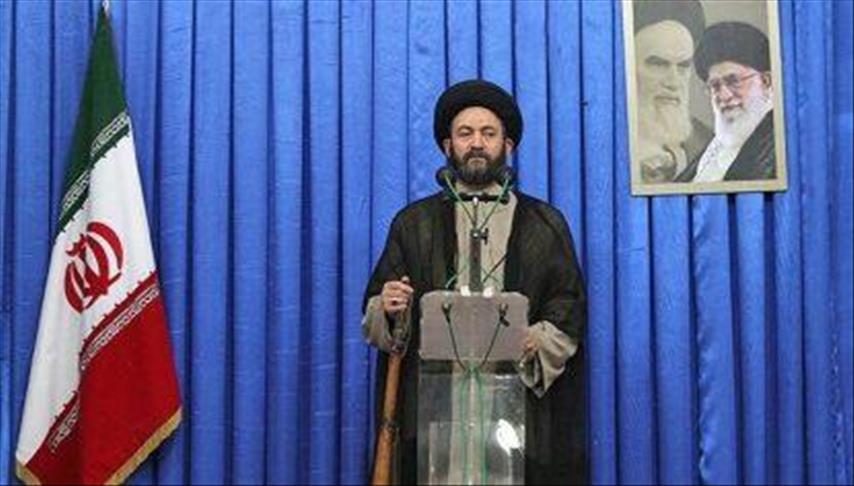
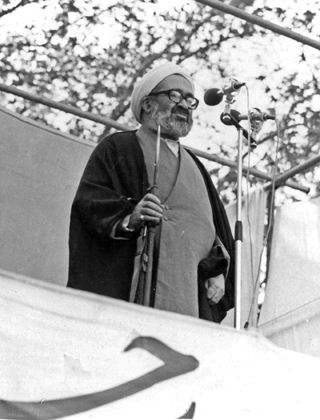
For more information on other Imams holding small arms during sermons, check out this Farsi language post on the topic, literally discussing what certain Imams prefer to hold during their Khutbahs.
From the post, in Farsi-
به گزارش پارسینه، برکف گرفتن سلاح توسط امام جمعه، سنتی است اسلامی که ریشه در صدراسلام دارد، نمادی از آمادگی دفاعی در برابر دشمنان اسلام حتی در محراب و محل نماز، بعد از پیروزی انقلاب اسلامی، مرحوم آیت الله طالقانی که با حکم امام خمینی، احیاگر سنت نماز جمعه بود، بار دیگر این سنت اسلامی را زنده کرد. آیت الله طالقانی در برابر پیشنهاد برخی از انقلابیون که به وی پیشنهاد کردند از شمشیر به عنوان سلاح خطیب امام جمعه استفاده کند، این پیشنهاد را رد کرد و “سلاح روزآمد و مدرن” را به دست گرفت.
در اوایل انقلاب اسلامی، سلاح ژ-3 تفنگی بود که امامان جمعه تهران و شهرستانها در حین ایراد خطبه جمعه به دست می گرفتند که در سالهای بعد، اسلحه از رده خارج “برنو” جای ژ3 را گرفت.
در میان ائمه جمعه، آیت الله حسنی امام جمعه ارومیه به داشتن سلاح های متعدد از جمله کلت و گرینوف در نماز جمعه شهرت دارد و معمولا بر خلاف ائمه جمعه دیگر از سلاح کلاشینکف در محراب نماز جمعه استفاده می کند.
As a quick sidenote by scanning photographs online, it doesn’t appear that the initial Supreme Leader of Iran, Imam-i-Khomeni adhered to the practice. Although it should be noted that senior Imams during his time did partake in it, as evidenced in the black and white photographs above.
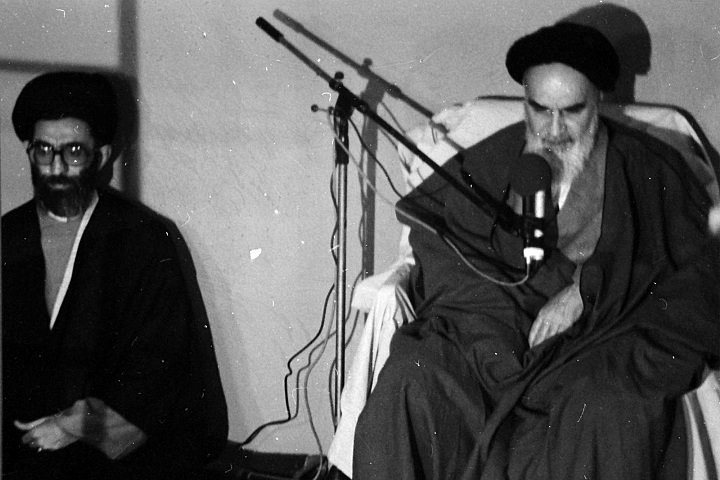
“Brno”, the Persian Mauser
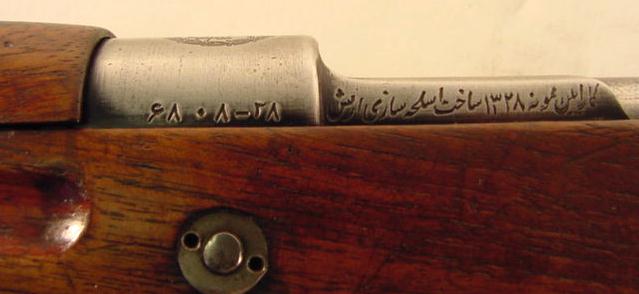
Ali Parsa is an Iranian scientist who has a lifelong passion for sailboats. He also knows a great deal about the history of the Mauser bolt action rifles that initially entered service in Iran at the turn of the 20th Century. He wrote this article examining the history of the Persian Mauser with its roots in the Czech VZ24 being license produced in arms factories outside of Tehran. This article was written almost a decade ago and he has very generously allowed Silah Report to republish it with express permission from himself. It initially appeared on the website that bears his name, Aaliparsa.com. This edition has been lightly edited.
Mauser rifles first appeared in Iran before the First World War. Looking at pictures of Iran’s Constitutional Revolution era, one can spot Mauser rifles and handguns in the hands of freedom fighters of Sattar Khan and Bagher Khan, as well as other Constitutionalists in different regions of Iran.
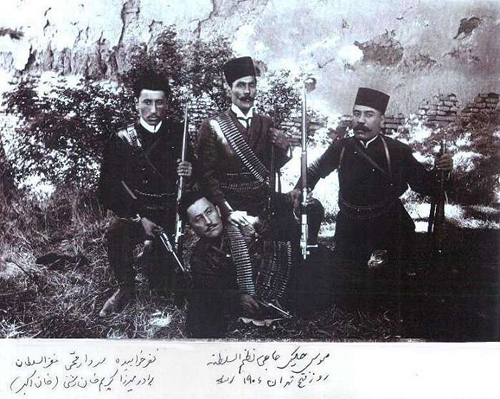
Iranian Constitutionalists, with their Mausers, in 1906
At the end of World War I, and as a result of the Versailles treaty arms ban, Germany no longer produced these rifles, but an almost exact copy was in production in Czechoslovakia. After Hitler became the German chancellor, the production was resumed in Germany.
Later, with the invasion of Czechoslovakia, the identical rifle was produced in Germany and Czechoslovakia.
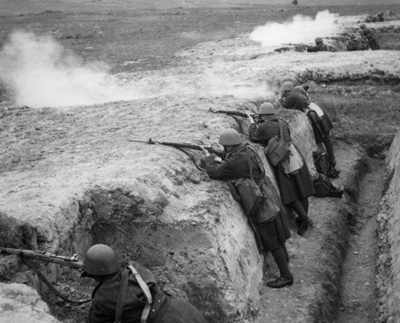
Czechoslovak Army Drill, 1938
A major production center was in Brünn, or Brno, as the city is called in the Czech language. The rifles made in Brno, the Czechoslovakian model, are known as VZ24 (for Vzor24, or Model 24 in the Czech language) and had the word Brno imprinted on them.
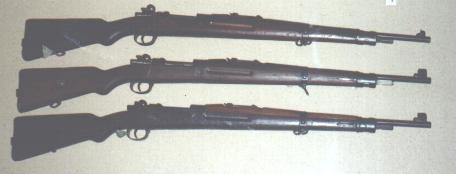
Czechoslovakian VZ24
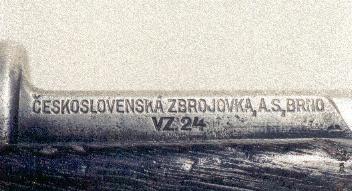
Markings of a VZ24
Officially, the Mauser rifle was selected for the Iranian army during Reza Shah’s time. But Iran didn’t go for the original German and ordered the identical Czechoslovakian version, the so-called Brno. The Czech firm provided Iran rifles made of many German parts. It was similar to the longer barrel version Germans designated as K98. Some official test results are available from antique arms dealers today, featuring signatures of the Brno factory representative, the Iranian in charge, and of course, satisfactory ‘grouping’ or bullet marks.
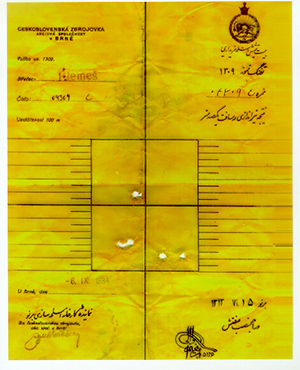
A 1934 test result document
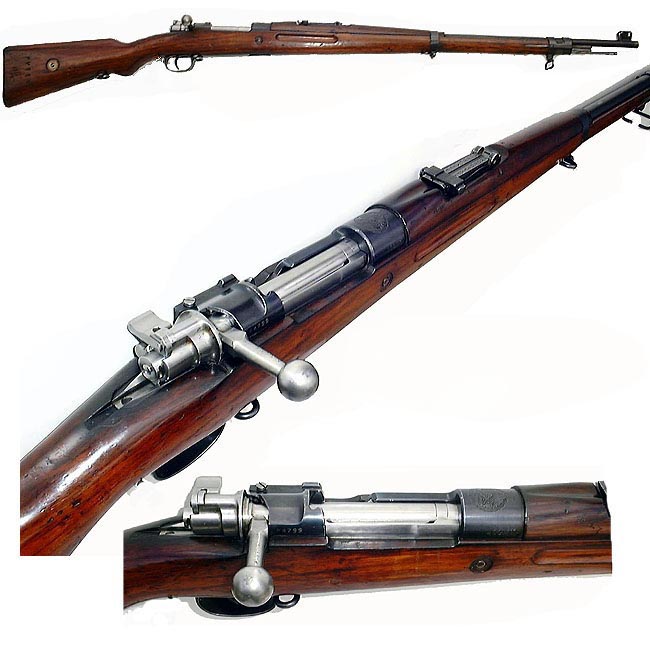
Full length ‘Brno’ with markings in Persian
At that time two other rifles were in use and very well known in Iran: the British Lee Enfield and the Russian Mosin Nagant (Noghaan, or Naaghaan, (نوغان- ناغان) in popular parlance in those days). The exact reason for preferring Brno over its rivals is not known, but one can speculate that those in charge of the Iranian army, or maybe Reza Shah himself, tried to avoid dependence of Iran to either of the two neighboring powers. Besides, the Brno and it’s Mauser original were considered to be the best military rifle of its day.
The Iranian government ordered three versions of this weapon. It was manufactured in Czechoslovakia by two firms. One was called Ceskoslovenska Zbrojovka, or CZ. These rifles are known to collectors as Persian CZ98, Persian Mauser or Persian Brno.
A Pahlavi crown, lion and sun crest appears near the feeding ring, as an inscription in Persian (in Nasta’liq script) on the side of its magazine giving the model and the factory name, which was in Brno. From then on the name, Brno was used by Iranians to refer to this rifle.
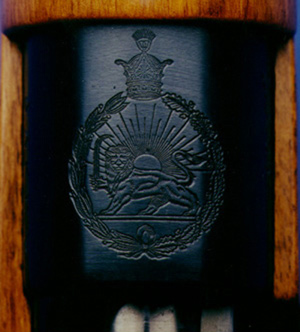
Lion and Sun crest of a Persian Mauser
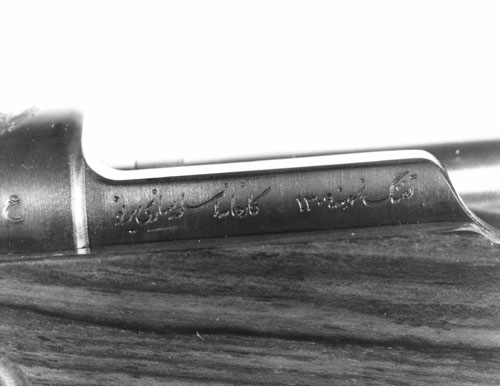
Persian markings of a Brno made rifle
One typical such inscription read “tofang-e nemoone 1309 karkhane-ye aslahe sazi berno” (“Rifle model 1309 Made at Brno Arms factory.” The number 1309 refers to the Persian year 1309 which is the year 1930 in the Gregorian calendar).
In the late 1940s Iran’s Taslihat-e Artesh (Arms Factories of the Army), popularly known as Mosalsal-sazi (the machine-gun factory), in Tehran started production of these Brno rifles. The needed machinery and technical assistance were provided to Iran through the industrial firm Škoda, which had a long history of cooperation with Iran. Iran produced two models: the regular VZ24 rifle (similar to the German Kar98k, overall length 1110 mm) and the short version (similar to the German G30, overall length 993 mm) known as “Berno kootah” (short Brno).
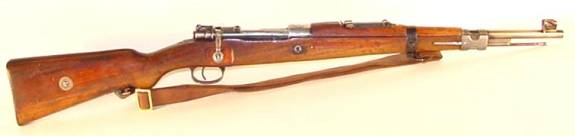
Berno Kootah (short Brno)
Under a licence from CZ. The difference was only in the markings on the side of reciever: instead of naming Brno as the maker, it was written “sakht-e aslah-e sazi-e artesh” (made by the Army arms factory).
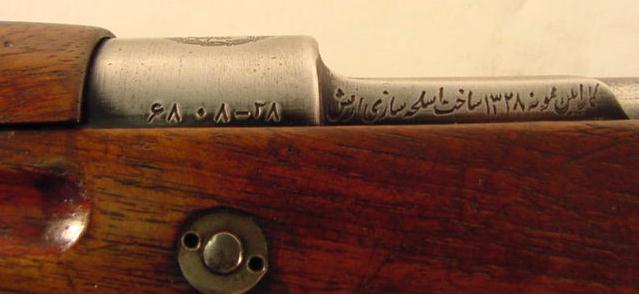
Markings on an Iran made short Brno
The products are known among the collectors as Persian Mauser and are regarded to be the best and smoothest of the Mauser family of bolt-action rifles.
For many years Brno was the standard personal weapon of the Iranian armed forces, until it was replaced by the more modern, semi-automatic, American Garand M1, and later by the German Heckler & Koch G3.
The rifle was especially cherished by Iranian tribes, who are known to be firearms aficionados and able shooters. A tribesman sharpshooter would settle for nothing less than a Brno. Tribal rebels did everything to acquire one of these rifles, and they did get their hands on these in many tribal wars during Reza Shah and Mohammad Reza Shah’s time. And probably the tribal chieftains, or Khans, did get shipments from foreign sources, to be distributed among their savars (mounted fighters). One single event, which contributed to the widespread availability of Brno rifles among the tribes in Iran, was the fall of Reza Shah following the invasion of Iran by the Allied forces in 1941. At that time the Iranian army, after a short resistance, was almost disbanded and many people, especially tribesmen, got hold of the Brnos left after the soldiers abandoned the barracks.
There are many stories of the gun’s accuracy among the tribes. When Dadshah rebelled against the shah’s government in Baluchistan in the 1950s, people said that his wife, Bibi Khatoon, who accompanied him in the mountains, at one occasion, took her Brno and shot a bullet right into the barrel of the gun of a poor gendarme who was aiming at her over a long distance. Its popularity among Iranian tribes was so much that it was mentioned in some of their songs. A version of a well-known Boyer Ahmad song has a refrain that says “Mastom, Mastom, Brno kootah be dastom” (I’m drunk and have a short Brno in my hand).
For the politically minded intellectuals of 1950s and 1960s, the rifle was a symbol of the Shah’s repressive rule. It can be seen in the pictures of soldiers attacking the house of Dr. Mossageq on the fateful day of 19 August 1953 (the infamous day of the US-British coup).
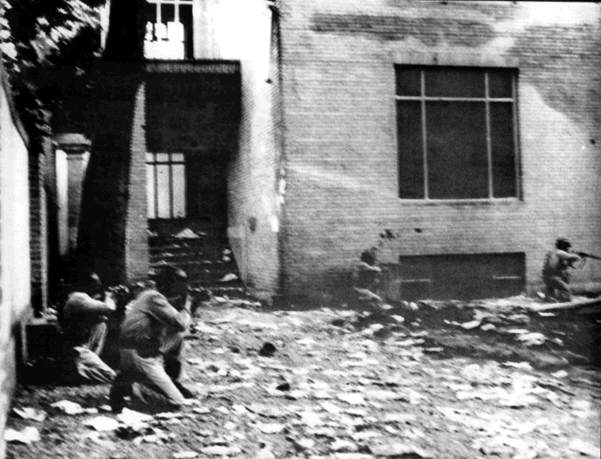
Soldiers attacking the house of Dr. Mossadiq, Aug. 1953
Gory pictures of executions of Tudeh party officers in the Chitgar shooting range in 1955 shows defiant young officers strapped to the stake minutes before execution, with Brnos present to do the task. When Navab-Safavi, the fundamentalist leader of Fadaiian Islam was arrested, Iranians saw his pictures being transferred to a prison under bayoneted Brnos.
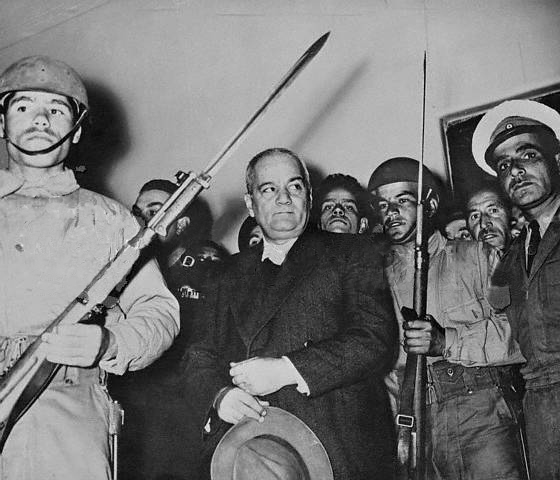
Dr. Yazdi, the Tudeh party leader, after arrest in 1953, surrounded by soldiers with Brnos
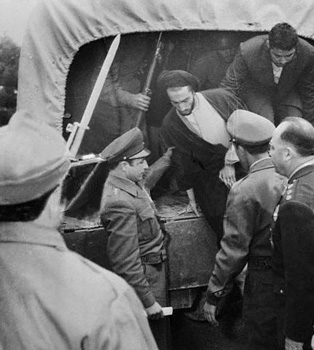
Navab-Safavi, the Fadaiian-e Islam leader arrested
You can see it in pictures of 15 Khordad (June 1963) uprising in Tehran. In fact, when the Shah’s opposition cried against his “rule of the bayonet”, it was the sight of these Brnos with their bayonets attached that they were referring to.
Ordinary people usually had their first encounter with the rifle while passing a guard in the street, or when they were (willingly or otherwise) recruited for the military service.
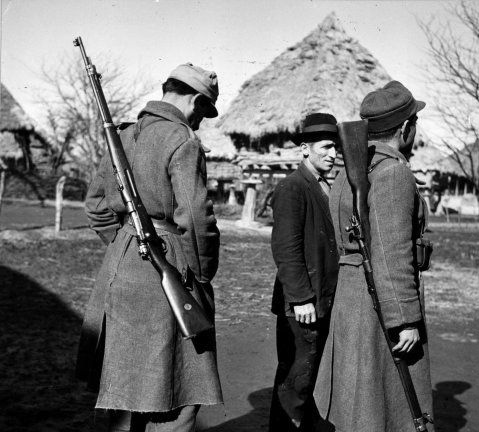
A deserter is taken to military service in a Gilan village, circa 1955
In the 1960s the semi-automatic US made M1 replaced Brno in the Iranian army, and Brno use was confined to the gendarmerie and the game wardens for a while, before it was decommissioned from active use. In the 1970s it was used mainly in ceremonial occasions.
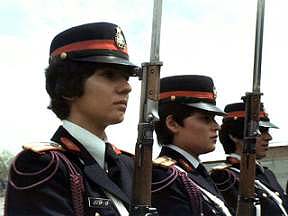
Girl cadets of the police academy in graduation ceremony, circa 1972
During the 1979 revolution, the gun reappeared in the hands of the revolutionaries and tribesmen, who never abandoned their Brnos. When Kurds challenged the newly established Islamic government, they used mostly modern assault rifles. But Brno still had a use: The Kurds claimed that with special cartridges that can pierce 2cm of steel, Brno can down aircraft and helicopters.
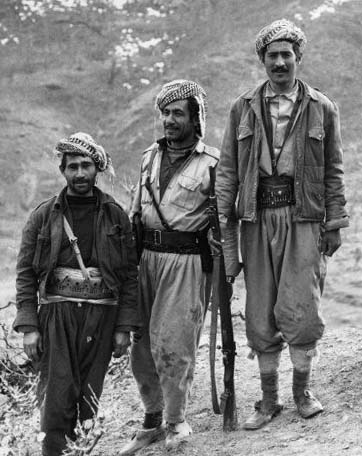
Kurdish ‘Peshmarga’s with Brno
Besides the rebels, the Islamic government too had a use for Brno: It was, and is, used in official Friday prayer ceremonies. The speaker is required to have ‘the weapon of the day’ by his side, according to the tradition of the Prophet (he apparently used a sword).
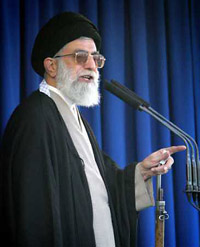
A Friday prayer session, with Brno
These images were collected and published on an Iranian website Parsine asking the question of “What kinds of weapons do Imam’s like?”
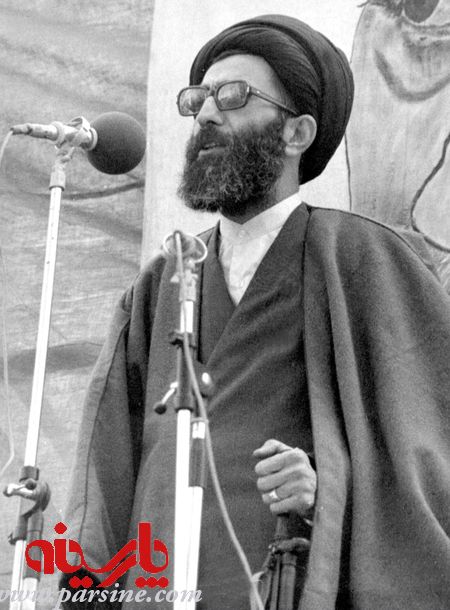
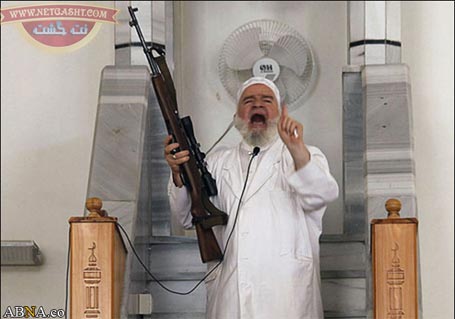
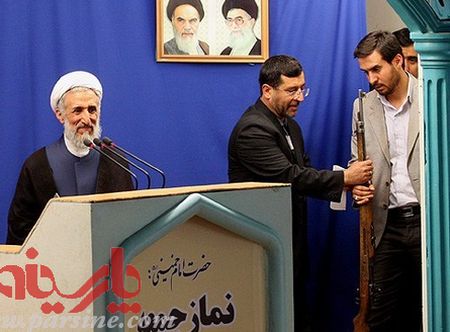
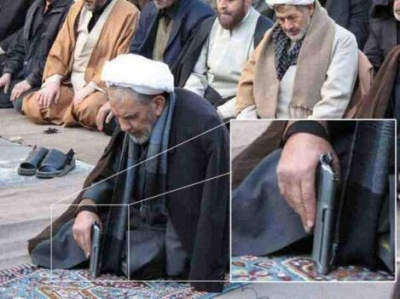
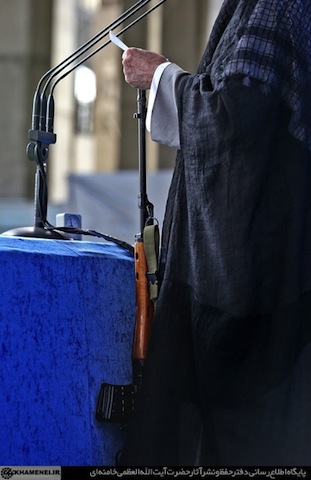
https://www.theblaze.com/news/2015/07/20/can-you-spot-what-irans-khamenei-was-holding-during-his-speech-on-the-nuclear-deal-the-mainstream-media-ignored-it
The most likely reason for its use in such ceremonies is that it is long enough for the speaker to hold it like a walking stick while he is standing and preaching. The Mauser brothers would have been happy to hear that their rifle would be considered a ‘weapon of the day’ a century later.
For people of my generation Persian Mauser, or Brno, brings back many bittersweet memories. The coup, the executions, the NoghlAli (Iranian version of GI Joe) with his Brno in a watch-cabin, the pain of being hit by its butt in street demonstrations, the greedy gendarme guy looking for a chicken to steal, the poor poacher in a remote town using the old rifle to feed his family with meat once in a while. You see it in the old newspaper pictures of battles, ceremonies, riots and executions. It is a piece of history.
Thank you Ali Parsa for contributing to Silah Report!
U.S. M16A4 Reportedly Among Iranian Protests
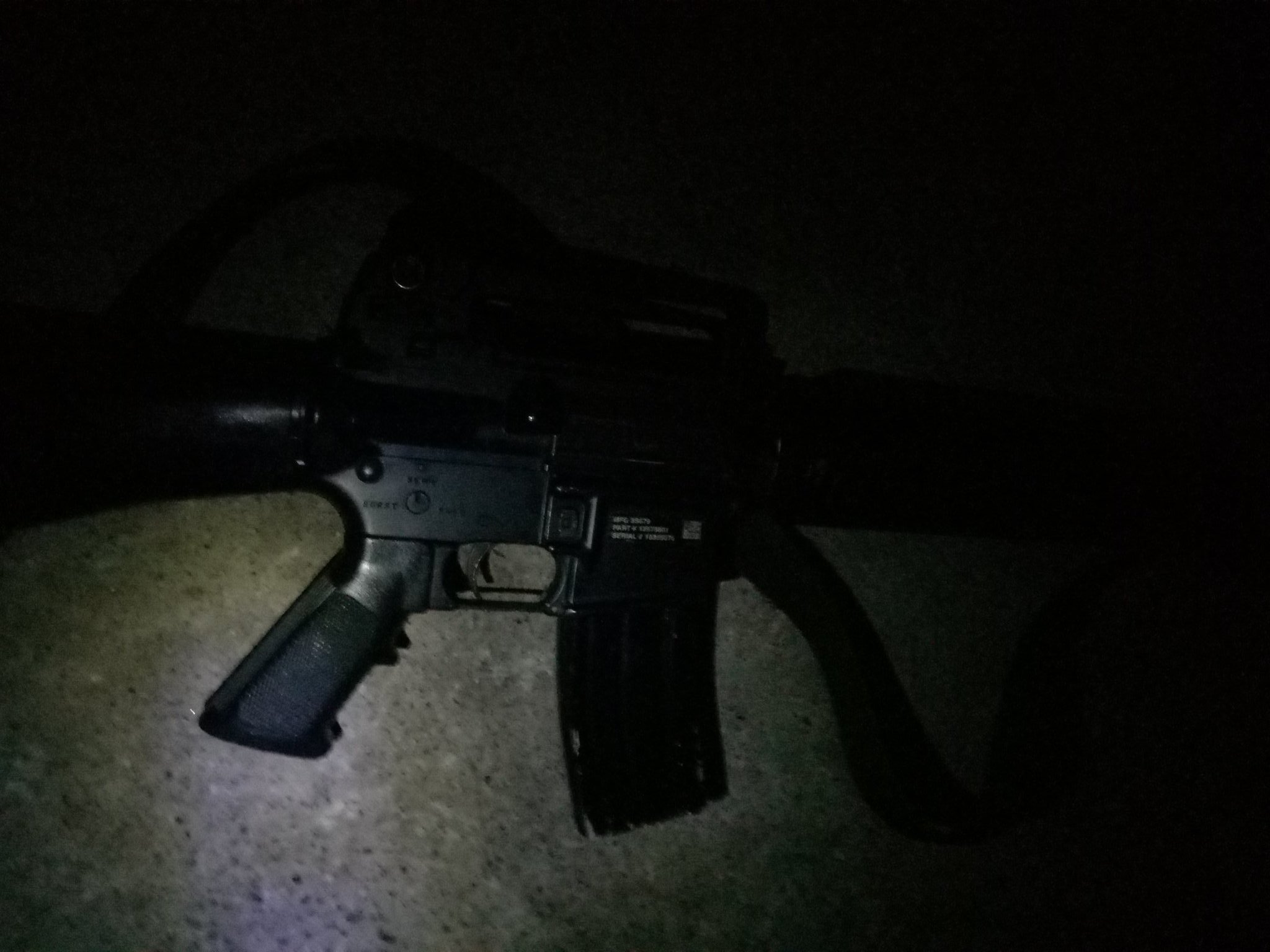
A Twitter account by the name of Tehran. azady/@Gloomily8 (Free Tehran) has posted two posts and accompanying photographs on their page depicting what appears to be an FN Herstal, former U.S. Government 5.56x45mm M16A4 Service Rifle. It is not known or confirmed if the image is actually from Tehran for that matter, but a cursory Google Image Search revealed this Twitter account appears to have been the first online poster of this particular photograph. It would also appear that these photographs are actually screenshots from a motion picture, due to the apparent movement of the light source.
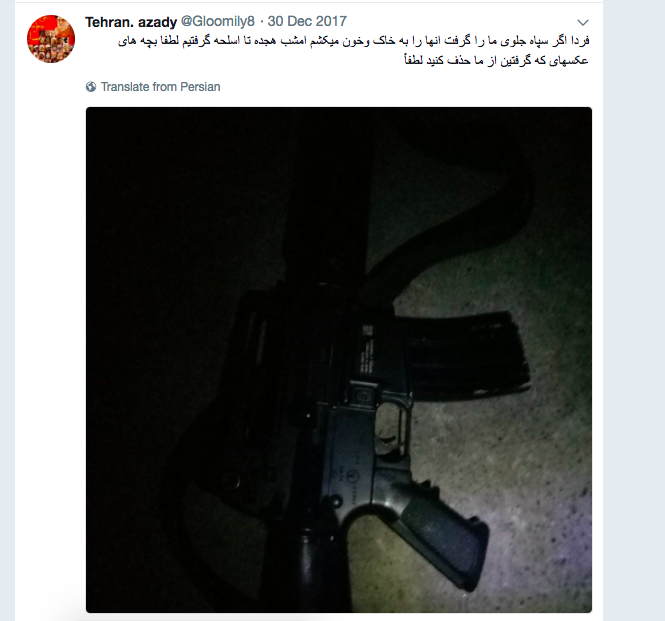
Neither post makes much mention of the weapon and is more concentrated on what is going to be happening or will be planned to happen in the future in regards to the protests.
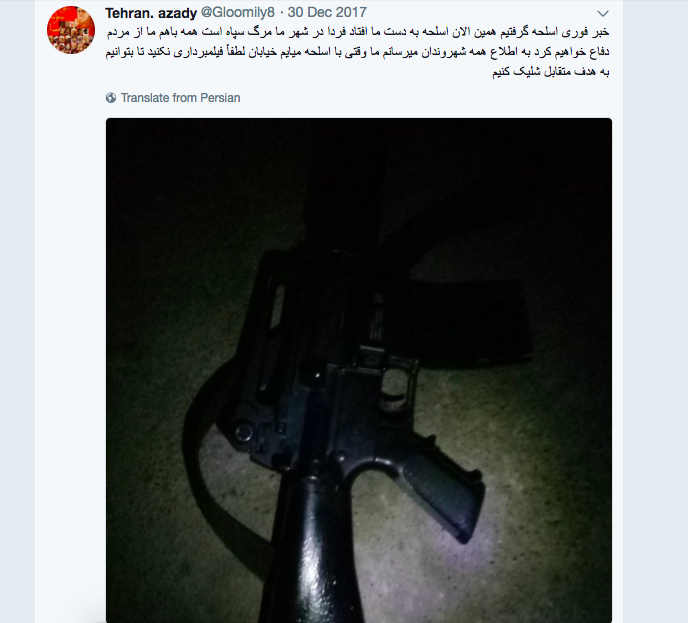
Notice the SKU imprint-
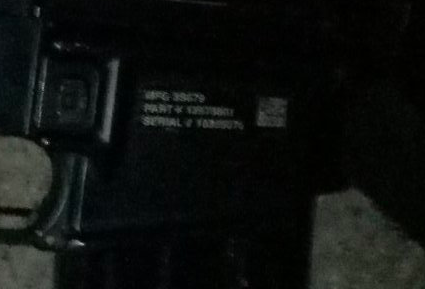
It would appear that this M16A4 is most likely diverted from U.S. Foreign Military Sales to Iraq. What could possibly confirm this is the design of the handguard. We know it is an M16A4 due to the M1913 Picatinny Rail a part of the upper receiver, of which an “A2” carrying handle is fastened to. What is being left out however, is the design of the handguard. If it is a Knight’s Armament “A4” handguard, it would be a very rare sight indeed. But most likely it is an “A2” style with the circular handguards and vertical vent ports. The “Hybrid” M16A4/A2 rifles were previously sold to the Iraqi Army-
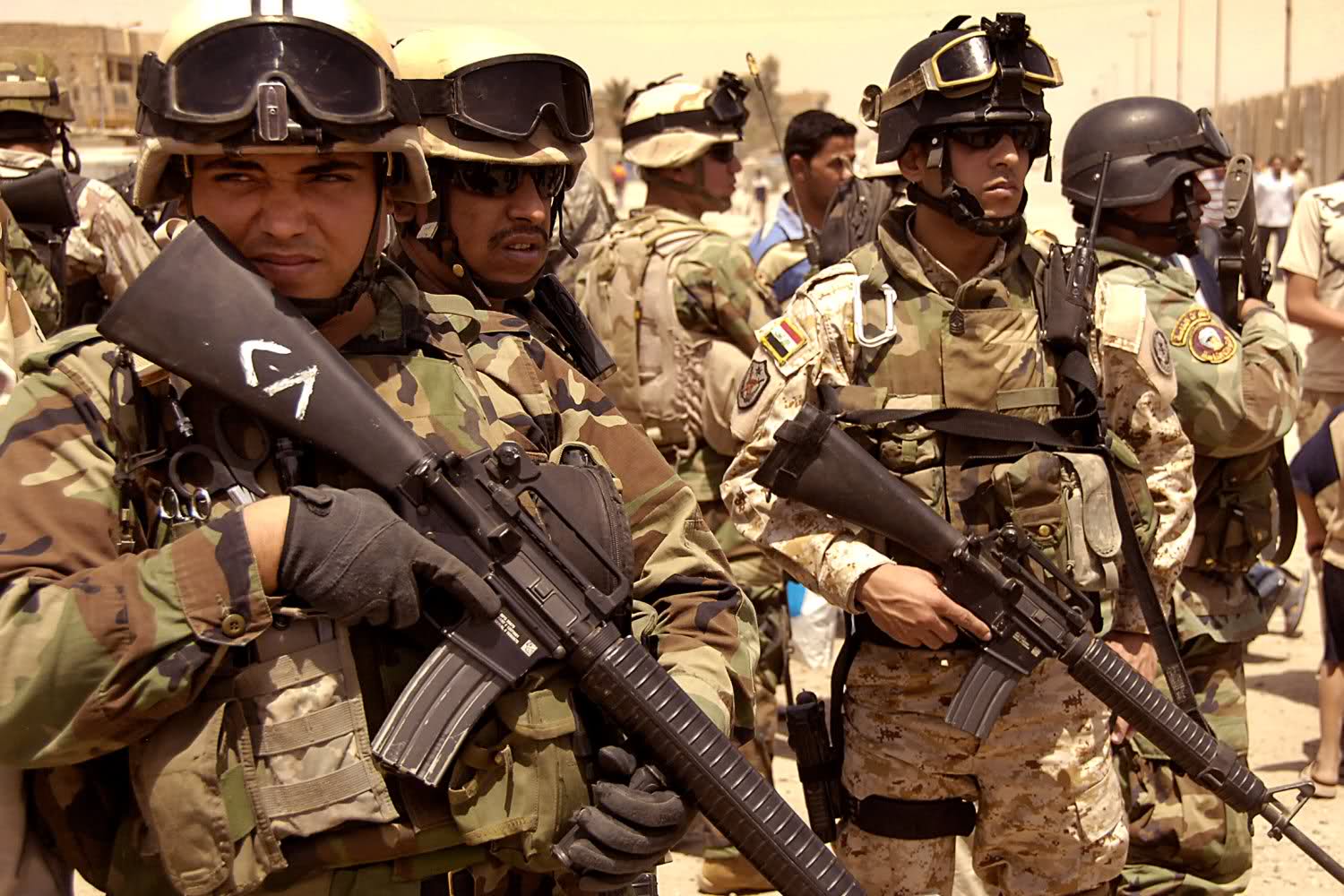
And were subsequently seen/captured by the so-called Islamic State-
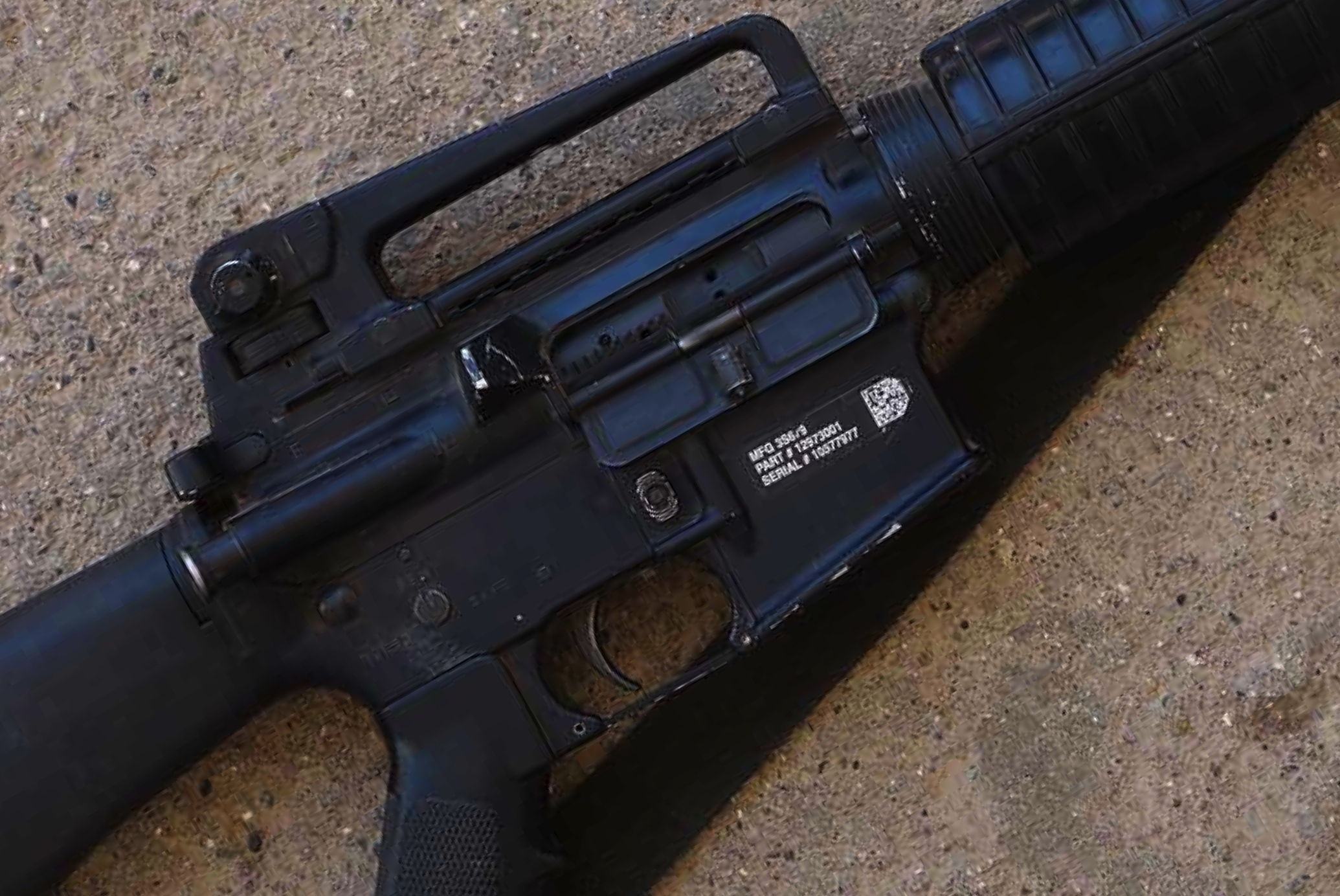
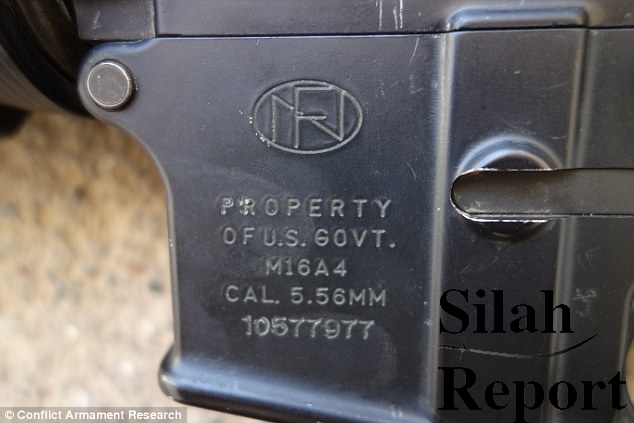
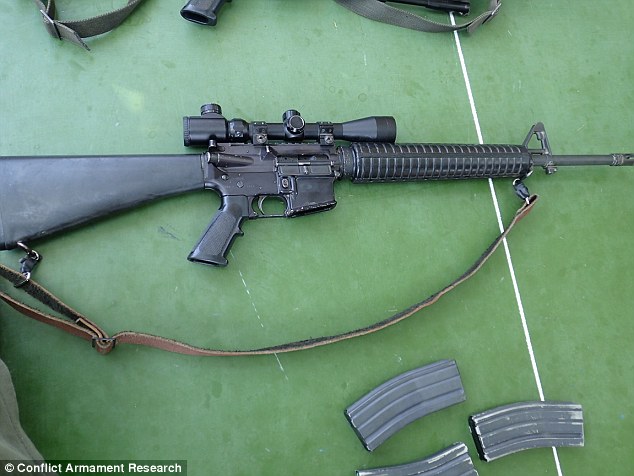
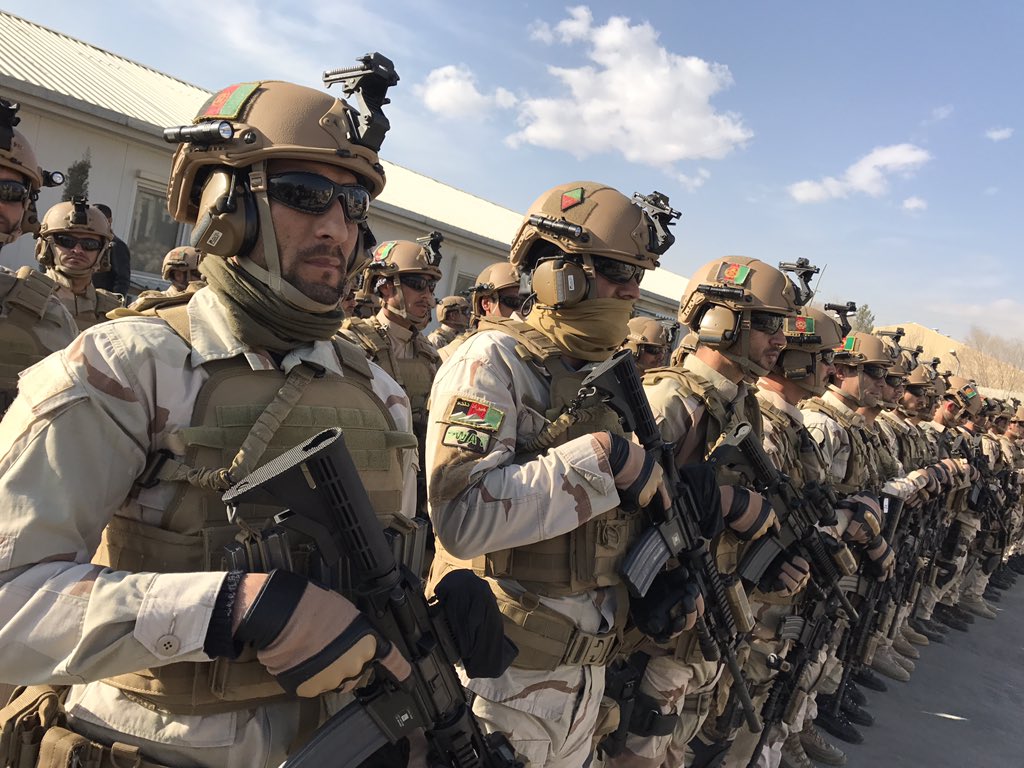
It should be noted that M16A4s are in service in Afghanistan with the Ministry of the Interior, in addition to M4/M4A1s are in service with numerous Afghan forces as well. But the amount in service in Afghanistan doesn’t seem to be proportional to the amount of M16A4s with the Iraqi Army, or circulating on the Iraqi black market.
Straight MP5 Magazine spotted in Isfahan LE Demonstration
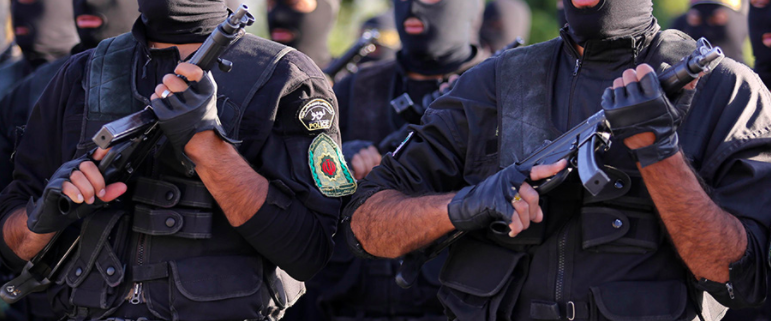
Within the Law Enforcement demonstration recently held in Isfahan (in which we posted about a thermal optic in use ), a straight walled magazine was spotted in use by one of the officers taking part in the demonstration. Iran’s Defense Industries Organization produced licensed copies of the MP5 from the time of the Shah (along with the G3), and it is still heavily employed by Iranian forces. Most of the MP5s today appear to be equipped with the curved 30 round magazine, but that is what makes this particular one stand out, due to the original straight wall design that Heckler & Koch introduced the very first MP5 variants with.
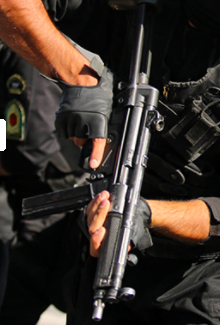
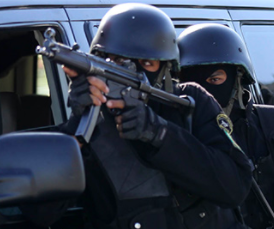
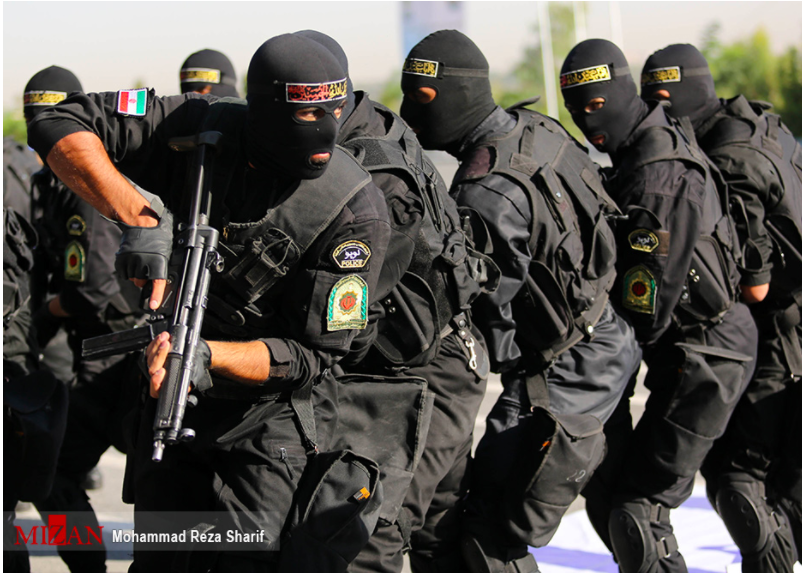
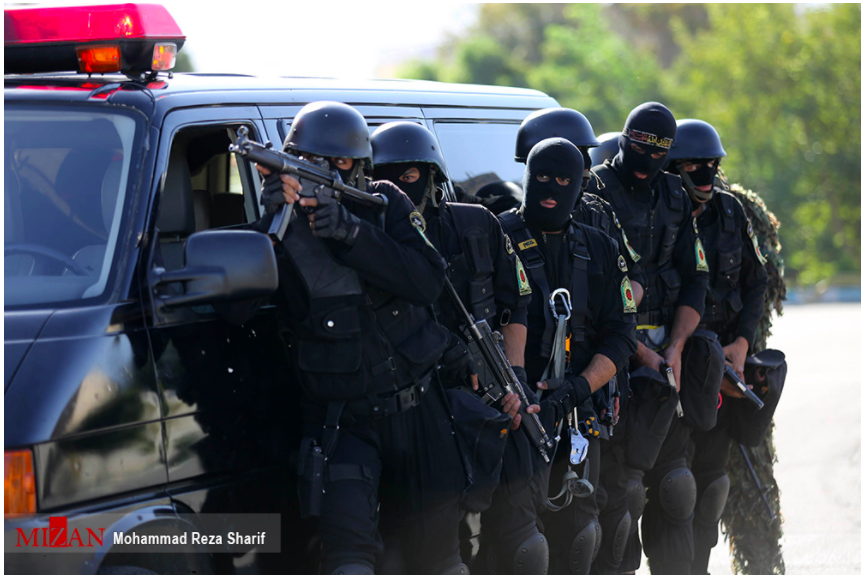
The MP5 has several variants within Iran, one of which has green polymer furniture, while there is an MP5K variant with a forward grip.